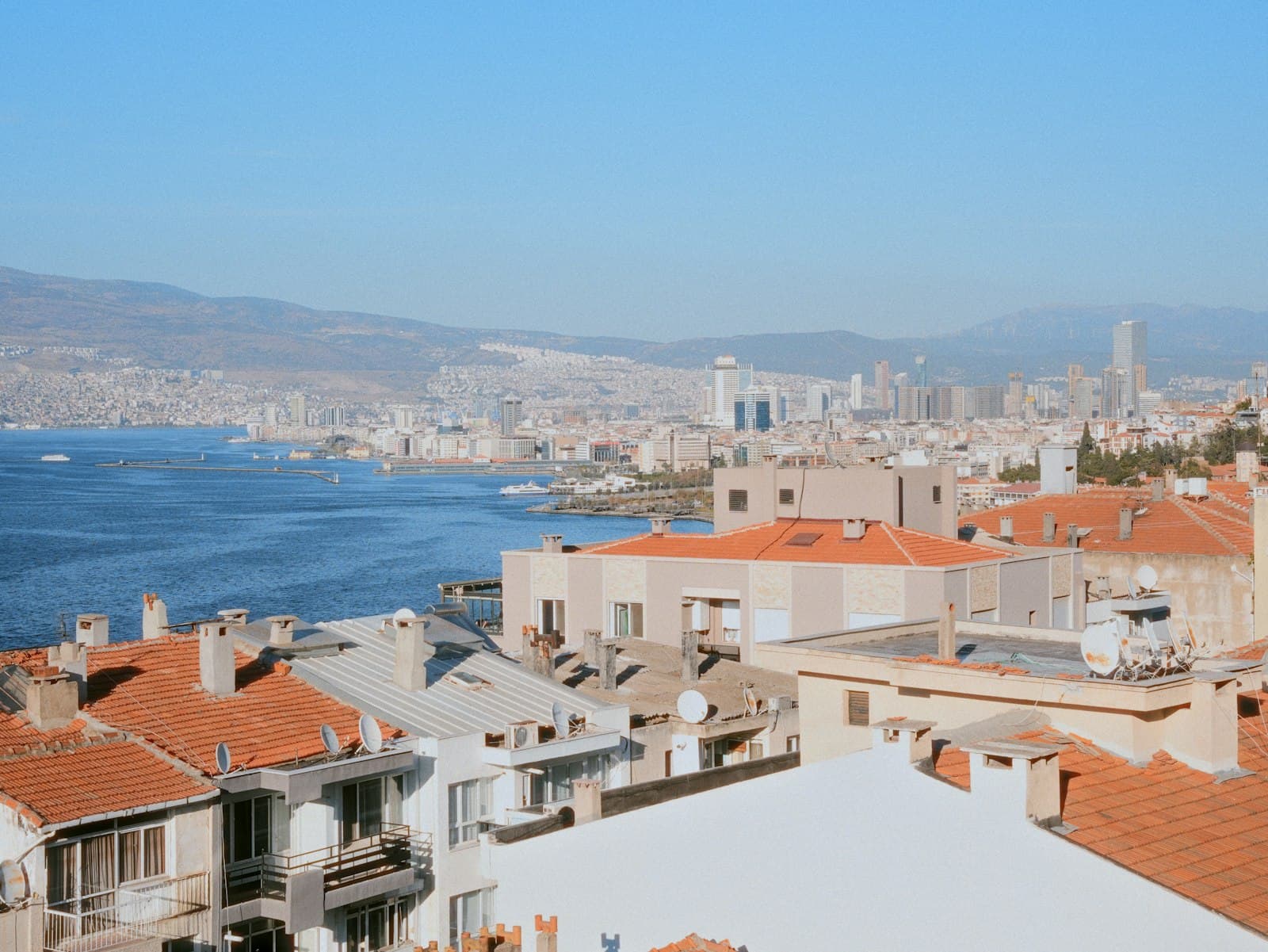
Izmir is one of the oldest continuously inhabited cities on earth, ancient Smyrna, and yet most of what you walk through today rose after most of it burned. In September of nineteen twenty-two, at the close of the Greco-Turkish war, a catastrophic fire consumed much of the old cosmopolitan port, and within a year the Greek, Armenian, and Levantine communities that had made it a Mediterranean crossroads were gone. The city that came back turned to face the water. It wrapped its ancient bones, a Roman agora, a filled-in harbour, a hilltop castle older than the successors of Alexander, around a long seafront promenade. To understand Izmir you have to hold both cities at once: the ancient and Ottoman city of bazaar, agora, and castle, and the modern city reborn along the sea.
That is the through-line of the Izmir walking tours, and it is the whole argument of one walk in particular, The City Reborn from the Sea, which moves from the waterfront civic heart inland and uphill through the old city, then back down to memory and the water.
A city that walks over its own harbour
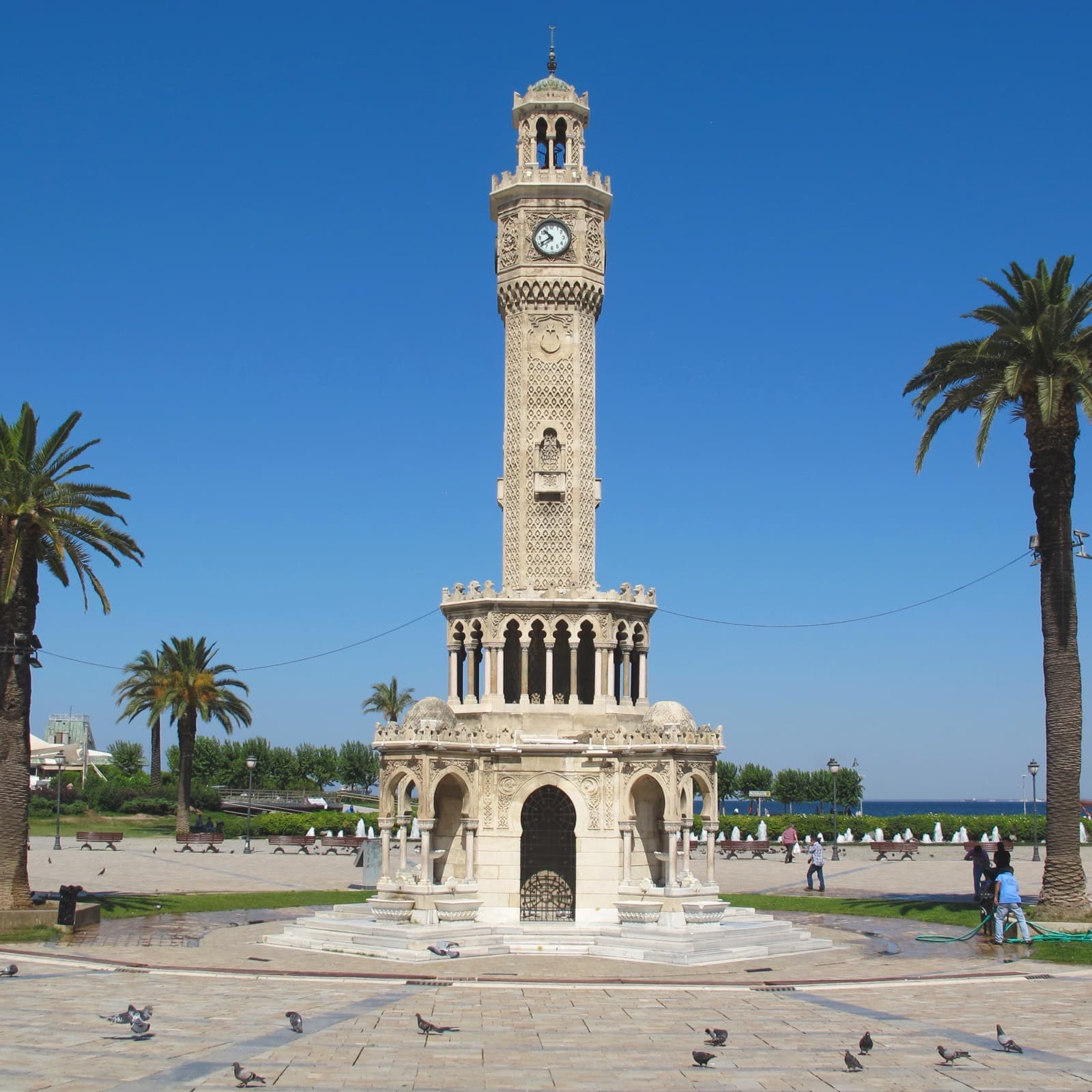
Start at Konak Square, where the city meets the gulf. The marble Clock Tower here, the Saat Kulesi, is the emblem of the whole city and appears on the municipal seal. Ground was broken on the first of September, nineteen hundred, and it was inaugurated on the first of September, nineteen oh one, to mark the twenty-fifth anniversary of the accession of Sultan Abdulhamid the Second. Raymond Charles Pere, a French-Levantine architect, gave it an octagonal plan rising about twenty-five metres, four floors of marble and stone over an iron-and-lead skeleton, with four small fountains at the base. Beside it sits the small tiled Konak Mosque, a working shore mosque. The square faces the sea deliberately. The old city climbs behind it; the modern city runs ahead along the water.
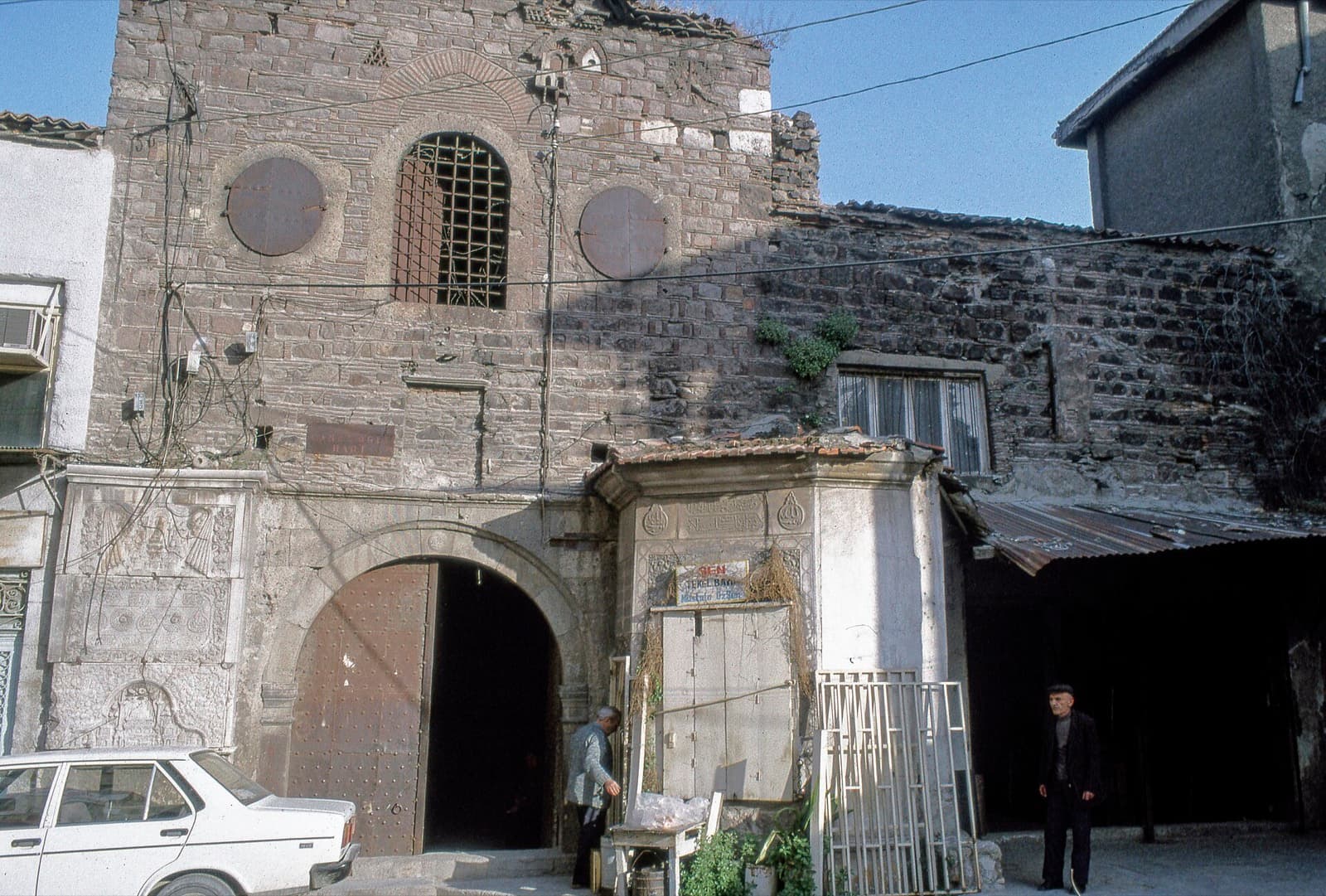
Turn inland and the light changes. Kemeralti, the great historic bazaar, is a labyrinth of covered lanes, workshops, courtyards, mosques, and hans, the old merchants' inns. Its name means under the arches, and its shape is the memory of the sea. The bazaar grew along the curve of the old inner harbour, a shallow bay reclaimed mostly between sixteen fifty and sixteen seventy. When the lanes bend, they trace a waterline that no longer exists. You are walking on a buried harbour. The Hisar Mosque within the maze dates to the fifteen nineties and is counted the oldest significant Ottoman landmark in the city, raised on the site of a former Genoese fort. Konak Square itself, laid out in eighteen twenty-nine, marks the southern edge of all this. The great fire swept through here too, destroying hundreds of commercial buildings and leaving only about a dozen of the old hans partly standing. Kemeralti survived, and it remains the working heart of the old city.
At the center of the bazaar stands something grander than the lanes: the Kizlaragasi Han, a caravanserai built in seventeen forty-four. It was commissioned by Haci Besir Aga, who held the office of Kizlar Agasi, the chief eunuch of the imperial harem. That a han in a provincial port carries the name of a palace official tells you how far Izmir's trade reached. Two storeys of stone wrap a broad central courtyard within a building of roughly four thousand square metres: commerce and storage below, lodging above. The Turkish Ministry of Culture and Tourism counts it among the largest and most magnificent of the city's hans. Restored, it works again as a market, full of coppersmiths hammering, jewellers, carpet sellers, and quiet tea houses, old crafts still practised in an old building.
The oldest marketplaces, one on top of the next
Hear a stop from this walk
Kemeralti: The Great Bazaar of Old Smyrna
Drop out of the Ottoman city and into a much older one. The Agora of Smyrna sits in a hollow below the castle hill, the marketplace and civic centre of the ancient city. It was first laid out in the fourth century B C, in the Hellenistic age. Then in the year one hundred and seventy-eight A D an earthquake brought it down, and it was rebuilt by order of the emperor Marcus Aurelius. Most of what stands today is that Roman rebuilding in marble: the North Stoa basilica hall, the West Stoa with its Corinthian colonnade, a gate named for Faustina, the wife of Marcus Aurelius, remains of an ancient paved street, and, underfoot, vaulted basement galleries where water channels once ran. Archaeologists began digging here in nineteen thirty-three, and the work continues. The point is not the ruins alone. The bazaar you just left is only the latest marketplace on this ground. This agora was one of the first.
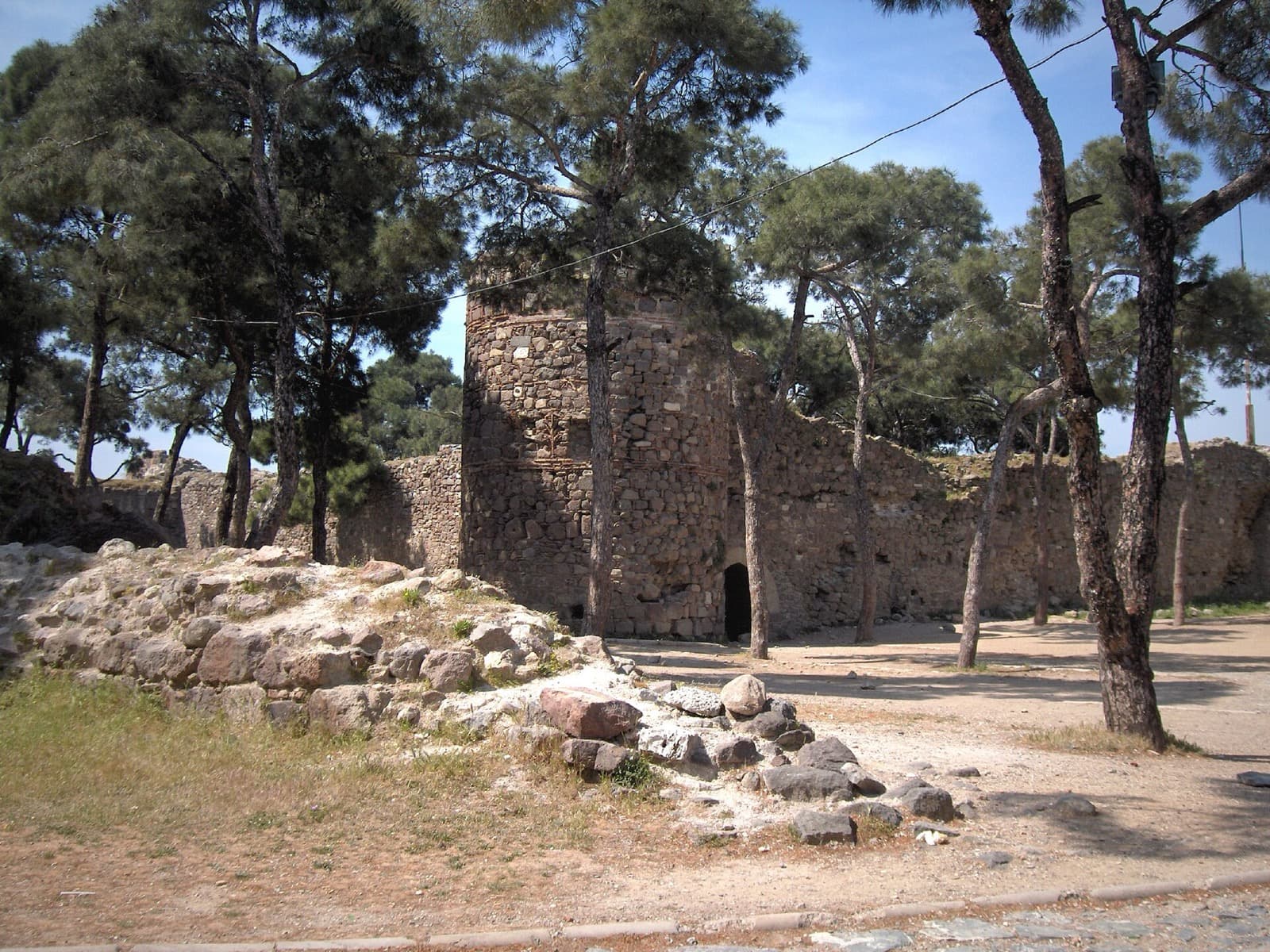
Above it rises the climb that pulls the walk together. Kadifekale crowns Mount Pagos, about one hundred and eighty-six metres above the city, on the acropolis of ancient Smyrna. Its name means Velvet Castle. The earliest walls are attributed to Lysimachos, a successor of Alexander the Great who became a king ruling over Thrace and Asia Minor in the third century B C, and above those Hellenistic stones you can read Byzantine and Ottoman phases layered one on the next. Renovation began in two thousand and seven, and in twenty twenty the castle joined the tentative World Heritage list with the rest of the historical port city of Izmir, as did the agora. There is a legend here, worth telling as legend: the ancient writer Pausanias records a tradition that Alexander, resting under a plane tree, was told in a dream to found a new city on this height. Modern archaeology does not confirm it. From the top, both Izmirs come into view at once, the ancient hill underfoot and the reborn city below, with the wide water beyond.
The plural city, and the promenade over its ashes
Come down to the water's edge at Karatas and to a machine that is also a monument: the Asansor, a public lift built into a cliff face in nineteen oh seven by Nesim Levi Bayrakli, a wealthy Jewish businessman, to carry people and goods between the seaside street and the hillside above. Karatas is the historic Sephardic Jewish quarter, and that matters. The city that burned was a plural city, Greek, Armenian, Levantine, Turkish, and Jewish all at once. The street below the lift, once Asansor Street, was later renamed Dario Moreno Street after the Izmir-born singer who lived there in the nineteen forties and carried the name of this city out into the world. It is a place for memory, not nostalgia.
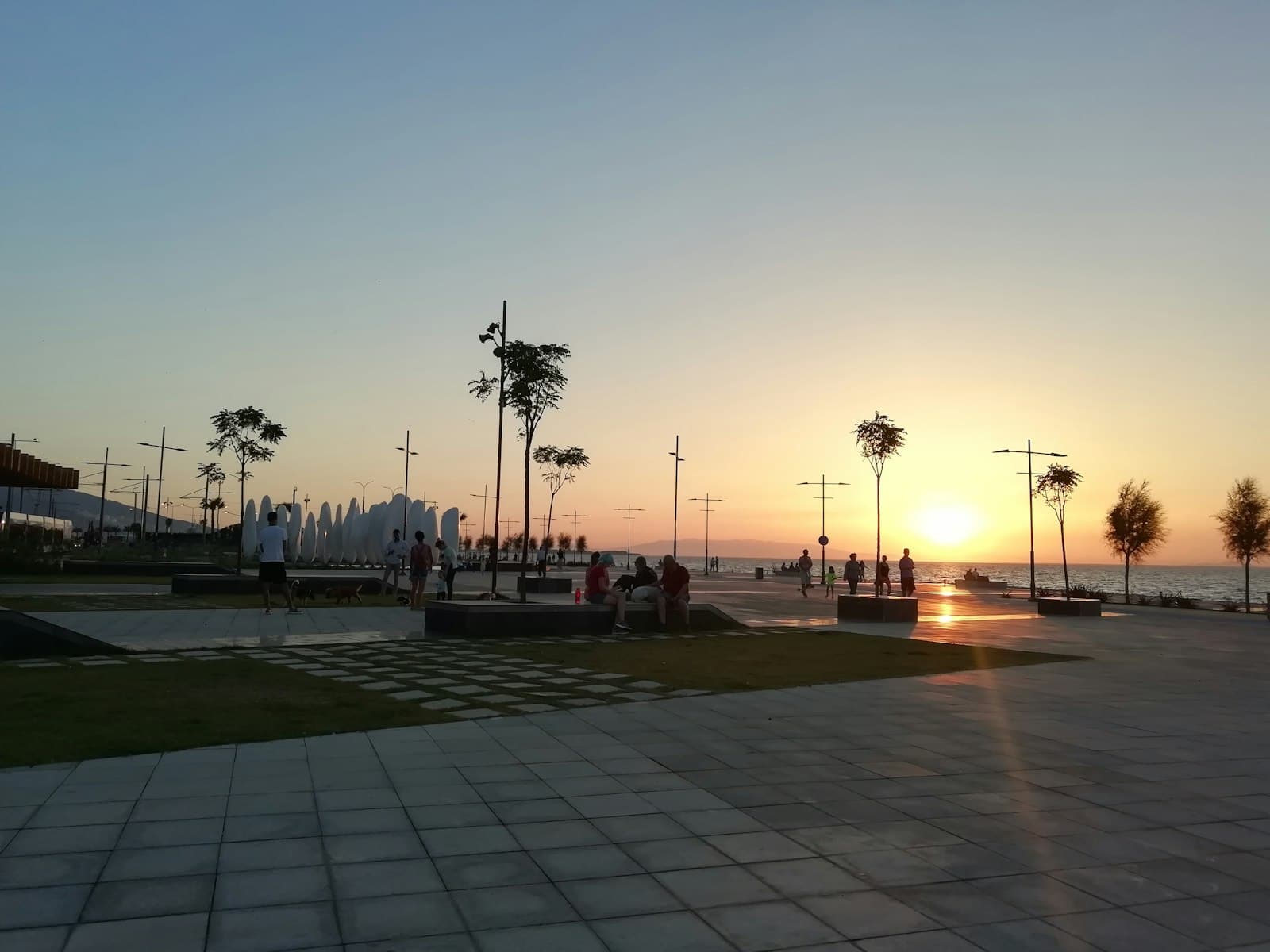
The walk ends where the city chose to end, by the sea. The Kordon is the long seafront promenade that runs along the gulf for roughly three kilometres, the face of the modern city, and it is modern for a hard reason. Historians record that the fire broke out on the thirteenth of September, nineteen twenty-two, days after Turkish forces entered the city on the ninth, and burned until about the twenty-second. It destroyed the Greek, Armenian, and Levantine quarters while sparing the Muslim and Jewish ones. Tens of thousands of refugees crowded this waterfront. How many died is genuinely disputed, with scholarly estimates ranging from around ten to fifteen thousand upward to far higher figures. What is certain is the aftermath: in nineteen twenty-three came the compulsory exchange of populations between Greece and Turkey, and the cosmopolitan Greek, Armenian, and Levantine life of the old port was gone within a year. Then the city turned to face the water and rebuilt along it. Today the Kordon is where Izmir gathers at sunset, grass and horse carriages and evening walkers.
That is why the City Reborn from the Sea walk refuses to resolve its two halves. Izmir is a place of loss and a place of renewal, and the promenade is what rose where the plural port stood. Hold both at once, and the city makes sense.
Sources
Frequently asked questions
- Why does Izmir feel modern if it is one of the oldest cities on earth?
- Izmir is ancient Smyrna, continuously inhabited for thousands of years, but much of the old cosmopolitan port burned in a catastrophic fire in September of nineteen twenty-two at the close of the Greco-Turkish war. The city rebuilt afterward and turned to face the sea, so most of what you walk through today is the reconstructed modern city wrapped around its ancient bones like the Roman agora and the hilltop castle.
- What happened during the great fire of Smyrna in 1922?
- Historians record that the fire broke out on the thirteenth of September, nineteen twenty-two, days after Turkish forces entered the city on the ninth, and burned until about the twenty-second. It destroyed the Greek, Armenian, and Levantine quarters while sparing the Muslim and Jewish ones. The compulsory exchange of populations between Greece and Turkey followed in nineteen twenty-three, and the old plural port life was gone within a year.
- Why do the lanes of the Kemeralti bazaar curve the way they do?
- Kemeralti grew along the line of an old inner harbour, a shallow bay that was reclaimed and filled in mostly between sixteen fifty and sixteen seventy. The bending lanes trace the vanished waterline, so shoppers effectively walk over a buried harbour. The Hisar Mosque within the maze dates to the fifteen nineties and is counted the oldest significant Ottoman landmark in the city.
- Who built the Agora of Smyrna and when?
- The agora was first laid out in the fourth century B C in the Hellenistic age. After an earthquake in the year one hundred and seventy-eight A D destroyed it, it was rebuilt by order of the emperor Marcus Aurelius, and most of what survives is that Roman rebuilding in marble, including the North Stoa, the West Stoa, and the Faustina Gate. Excavations began in nineteen thirty-three and continue today.
- What is Kadifekale and why is it worth the climb?
- Kadifekale, meaning Velvet Castle, crowns Mount Pagos about one hundred and eighty-six metres above the city on the acropolis of ancient Smyrna. Its earliest walls are attributed to Lysimachos, a successor of Alexander the Great, in the third century B C, with Byzantine and Ottoman phases layered above. From the top you can see both the ancient hill and the reborn city and gulf below at once.
Ready to experience it?
Kemeralti Bazaar and the Kordon: The City Reborn from the Sea
120 min · 7.2 km · challenging
More from Izmir
Explore more at your own pace.
Izmir Travel Guide: Days, Transport, Safety, and Budget
One Day in Izmir: A Walkable Route From the Clock Tower to the Kordon
The Kordon: Why Izmir Faces the Sea It Once Feared
Konak Clock Tower: Reading the Seam Between Two Izmirs
The Blue Mosque: Reading the Ottoman Answer to Hagia Sophia