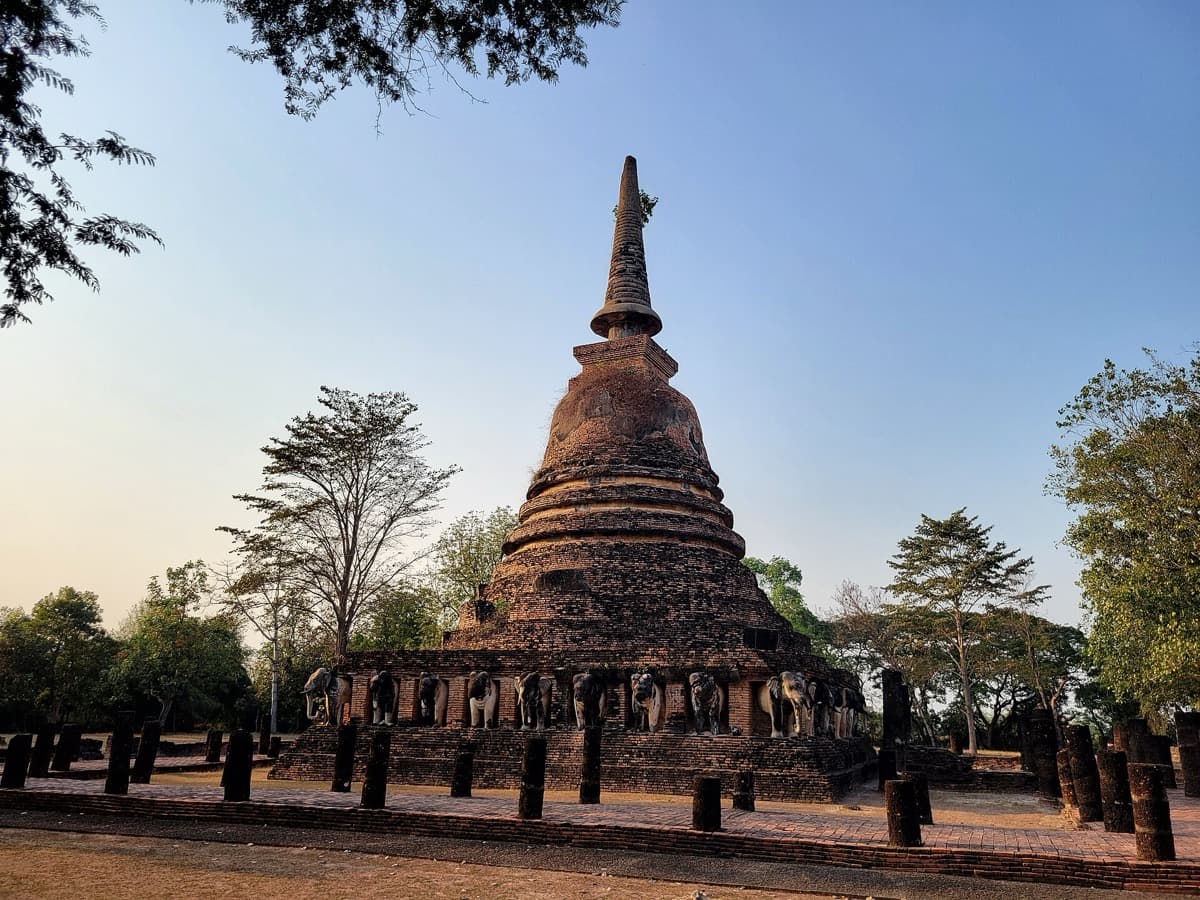
The Hydraulic City
A walk that reads the ruins of Sukhothai as one idea held in two hands: an earthen dam that stored the monsoon, and a religion that climbed the hills to sit closer to the sky. Follow the water uphill, from elephant girded temples on the plain to a giant Buddha waiting at the summit.
4.34|150 minutes|11 km|5 Stops
Start
Wat Chang Lom: The Temple Surrounded by Elephants
1
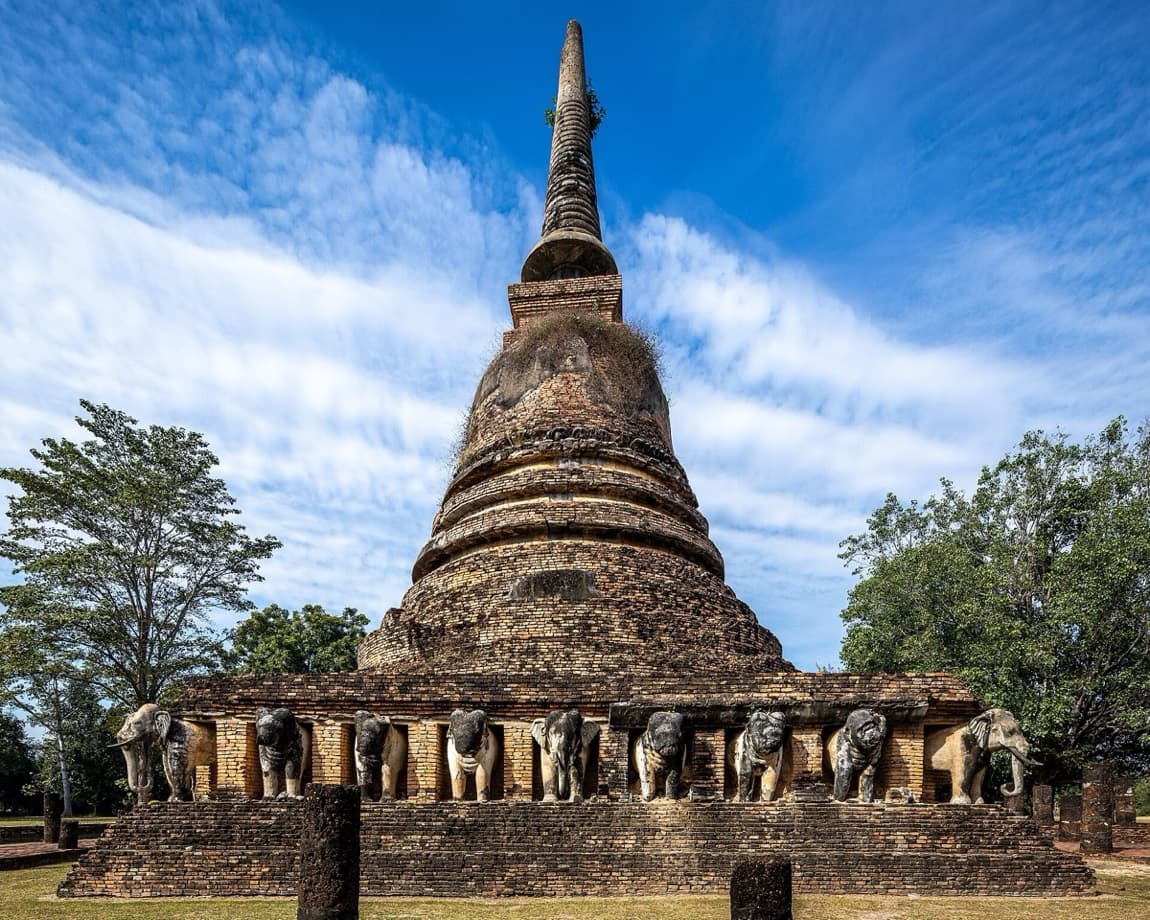
Wat Chang Lom: The Temple Surrounded by Elephants
A Ceylonese style bell shaped tower on a square brick base, girdled at its feet by rows of stucco elephants that seem to carry the whole structure on their backs.
2
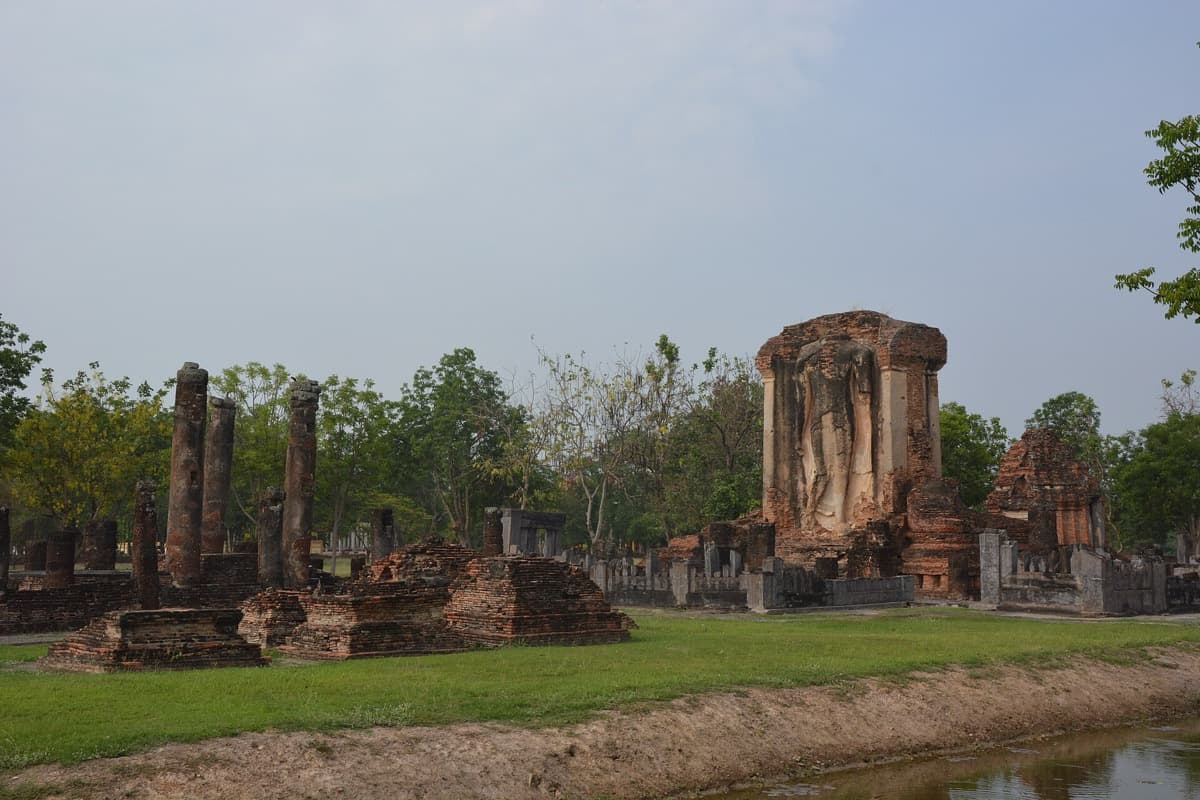
Wat Chetuphon: The Buddha in Four Postures
A temple whose heart is not a great tower but a single shrine that presented the Buddha in four postures at once, one facing each direction.
3
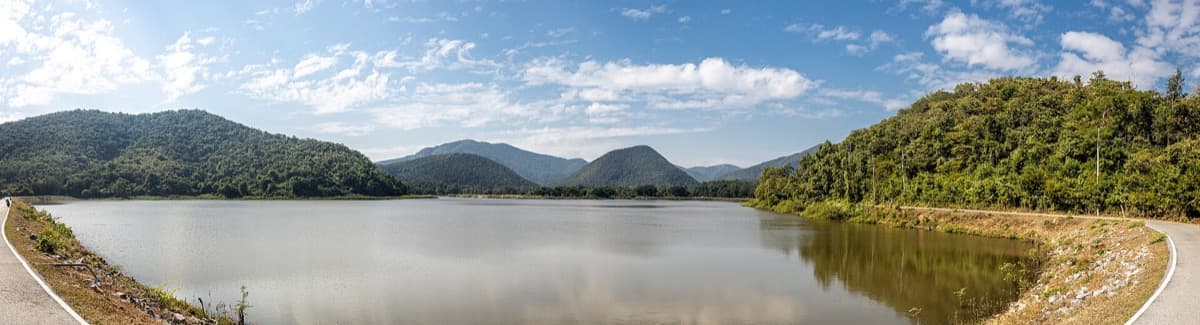
Saritphong Dam: The Earthwork That Made a City
An unglamorous earthen dam raised between two hills to trap the monsoon, the load bearing fact beneath every beautiful temple on this walk.
4
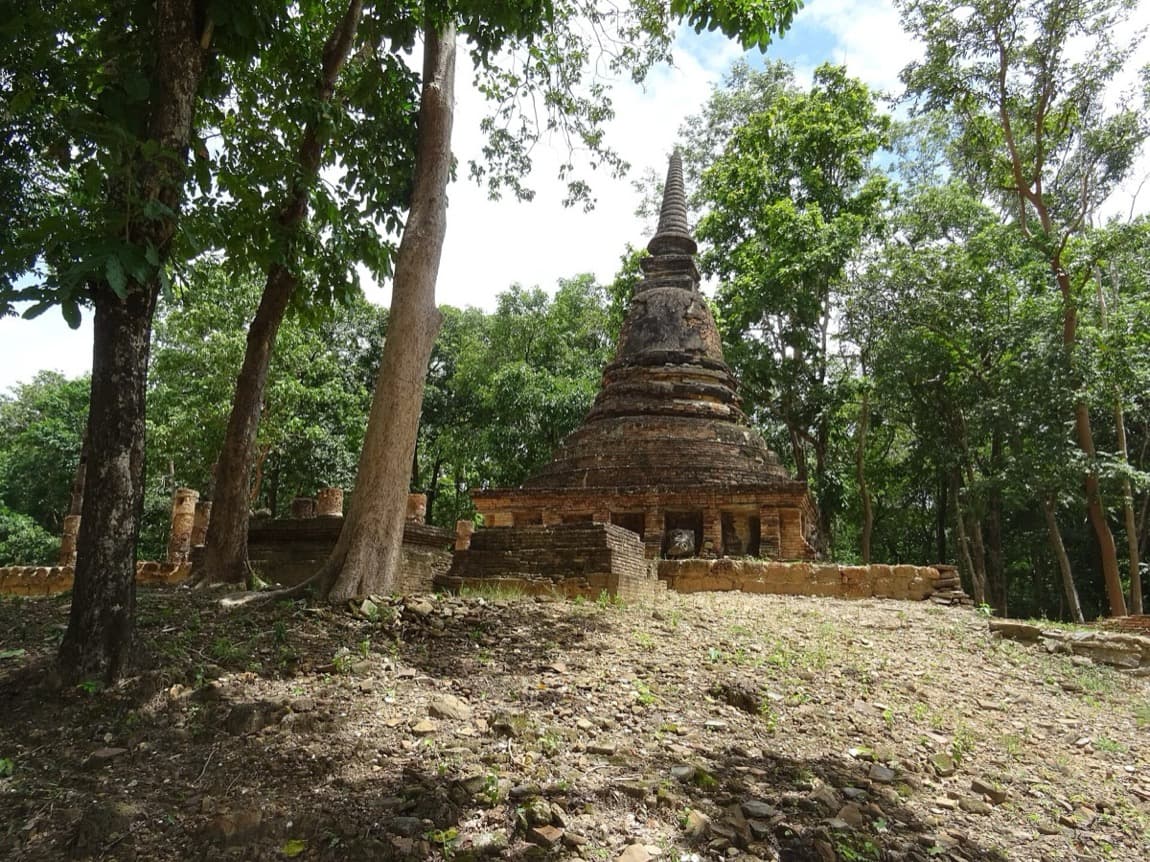
Wat Chang Rop: The Threshold of the Forest
A hillside forest temple where the city grid ends and the sacred monastery ridge begins, its bell tower once ringed with elephants like the one on the plain.
5
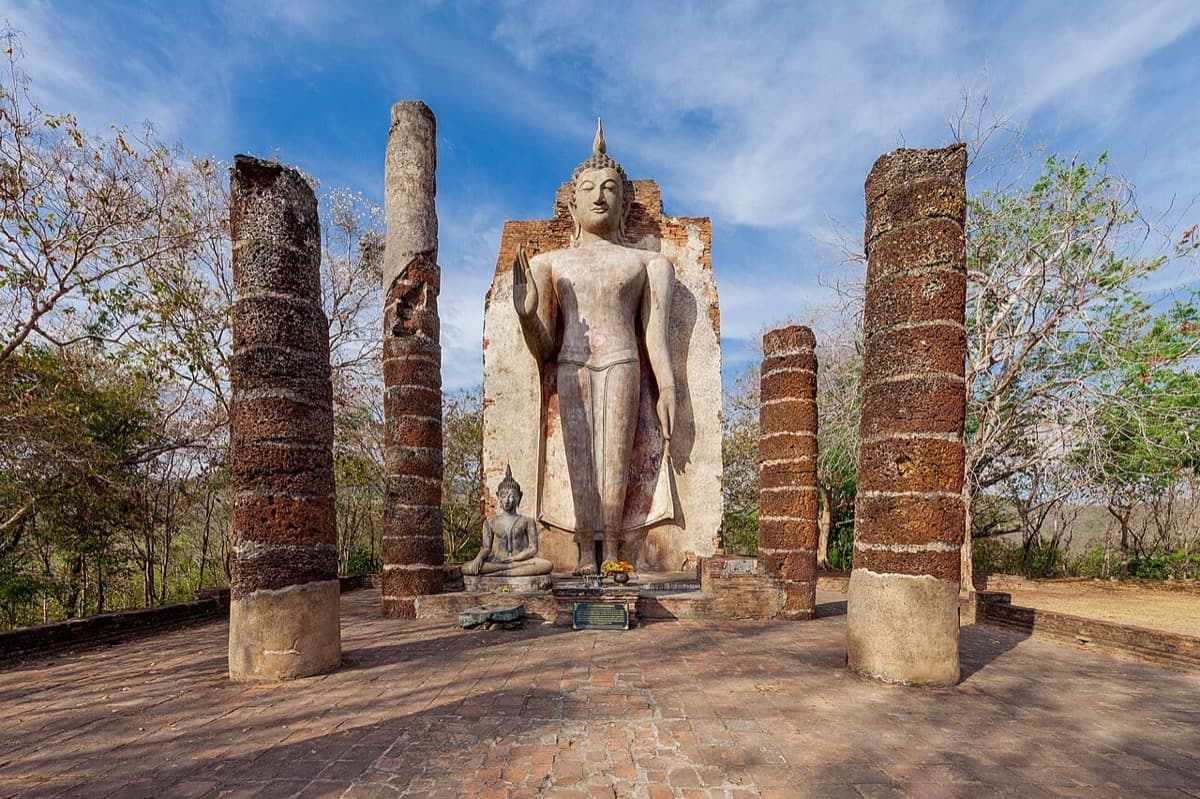
Wat Saphan Hin: The Stone Bridge to the Sky
A stone stair climbing a forested hill to a colossal standing Buddha who raises his hand against fear and looks back over the watered plain below.
Best Time to Visit
The cool dry season, roughly November through February, is the most comfortable time to walk Sukhothai, with lower humidity and gentler heat. Within the day, arrive early in the morning or in the last hours before closing, when the light is soft, the crowds are thin, and the western ridge in particular feels almost empty. Midday sun on the exposed plains and the open stone stair can be punishing, so plan the uphill stops for cooler hours.
Pro Tips
- •This is a spread out route across multiple zones, so consider renting a bicycle or arranging a driver to move between stops; the western ridge in particular is a distance from the plain temples.
- •The western zone temples, Wat Chang Rop and Wat Saphan Hin, carry a ticket of about one hundred twenty baht, while the southern and eastern stops, Wat Chetuphon and Wat Chang Lom, are often reachable within the central zone ticket; carry a little cash and expect a small bicycle surcharge.
- •Save the stone stair up to Wat Saphan Hin for a cooler part of the day and take it slowly; the slate slabs can be uneven and the climb is longer than it looks from the base.
- •Walk the full circle of each elephant girded base rather than viewing it from one side; the sculptors varied every animal, and the details reward a slow loop.
- •Bring more water than you think you need, especially for the ridge stops, where shade and facilities thin out considerably.
- •Read the ruins patiently: many of the finest images, like the walking Buddha at Wat Chetuphon, are headless and weathered, so give your eye time to reconstruct what the sculptors intended.
Safety & Precautions
- Heat and humidity are the real hazard here; the plains and the open stone stair offer little shade, so pace yourself, rest often, and carry water to avoid heat exhaustion.
- These are active religious and heritage sites, so dress respectfully with shoulders and knees covered, keep your voice low, and never climb on the chedis, Buddha images, or elephant sculptures; some shrines may require you to remove your shoes before entering.
- During the monsoon months, roughly May through October, sudden heavy rain can make the slate stair and earthen paths slick and muddy, so watch your footing on the climb to the ridge and near the dam.
- Because the route crosses roads between zones and shares lanes with bicycles and vehicles, stay alert to traffic when moving between the plain temples and the western hills, and use strong sun protection throughout.
Gallery
Related Reading
Go deeper on what you'll see, hear, and walk through.
Overview
Best Self-Guided Walking Tours in Sukhothai (2026)
3 min
Overview
One Day in Sukhothai: A Walkable Morning-to-Evening Itinerary
8 min
Overview
Sukhothai Travel Guide: Days, Transport, Costs, and Safety
7 min
Thematic
Sukhothai: The Kingdom Thailand Reads as Its Beginning
7 min
Companion
Wat Saphan Hin: Reading Sukhothai's Ruins as One Idea in Two Hands
7 min
Read
What to Eat in Sukhothai: The Noodle Bowl That Carries the Town's Name
6 min