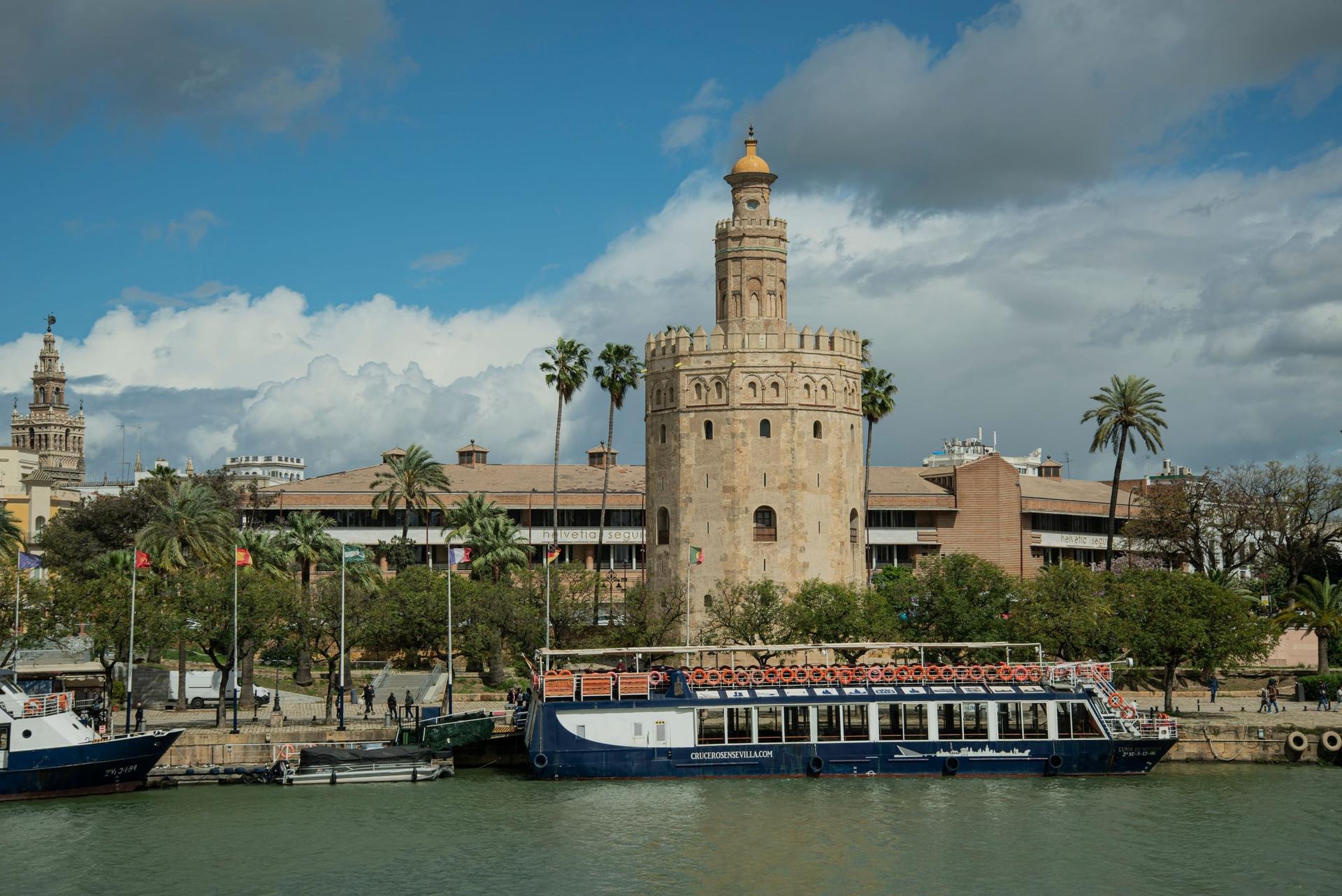
Seville's old port between the city wall and the river, where the Indies fleets loaded. From the royal mint past the Torre del Oro, the Caridad and the royal shipyards, through the coopers' lanes to the bullring and Magellan's riverbank, ending at the Triana bridge.
Start · Real Casa de la Moneda: the King's Mint
DirectionsStops
- 1
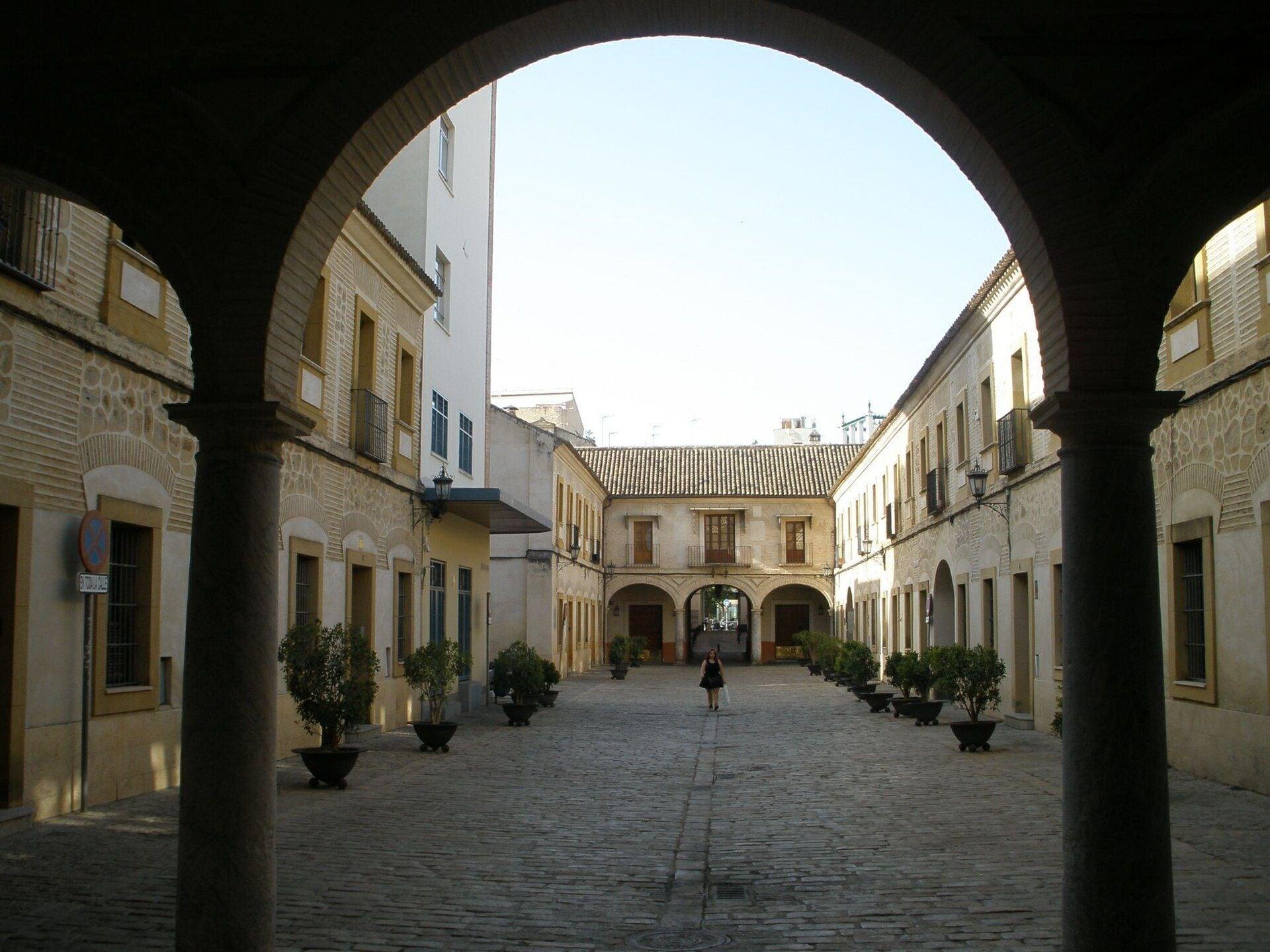
Real Casa de la Moneda: the King's Mint
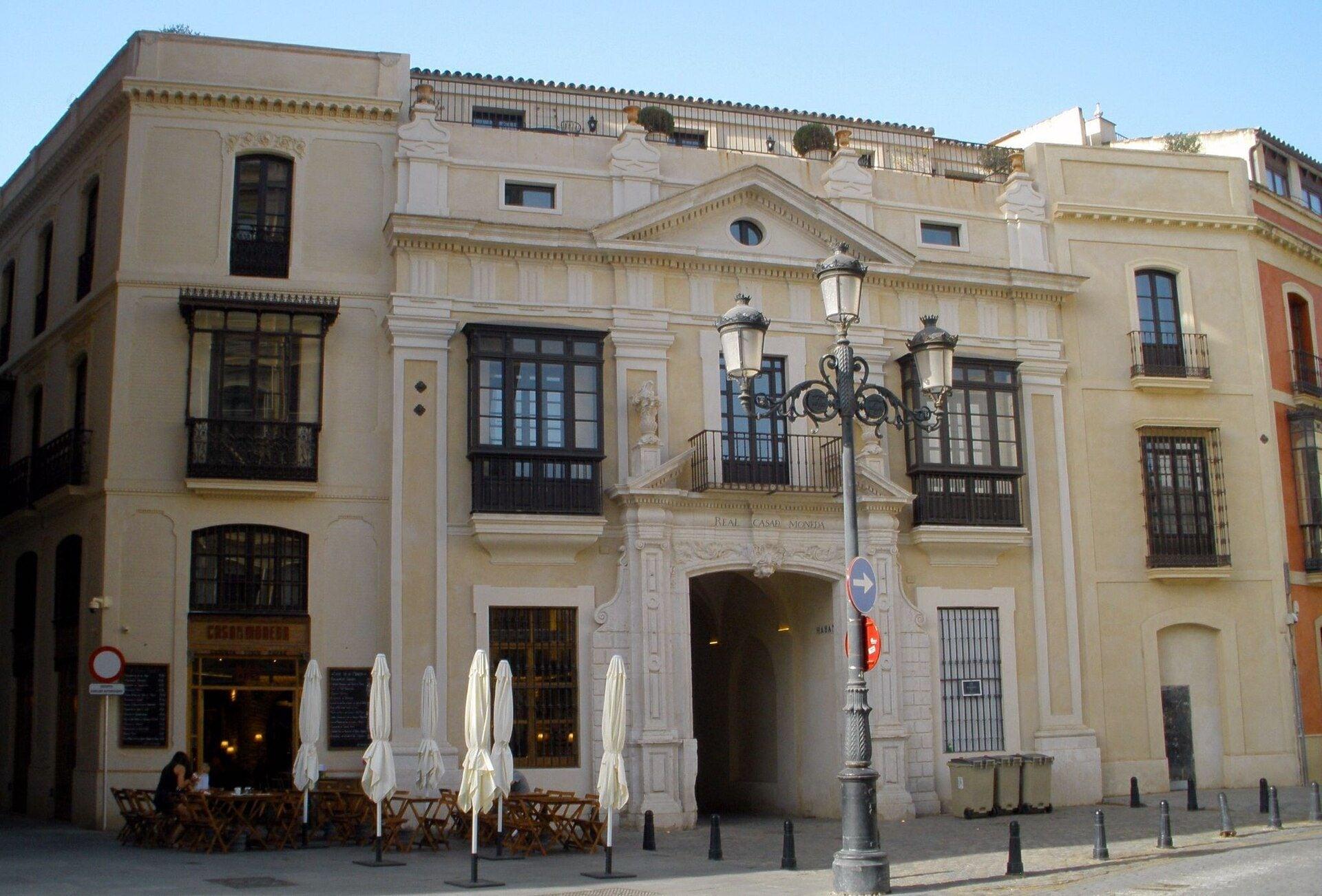
A walled yard became the mint. The lanes of the Real Casa de la Moneda, the royal mint founded in 1584 inside an old walled yard beside the port.
- 2
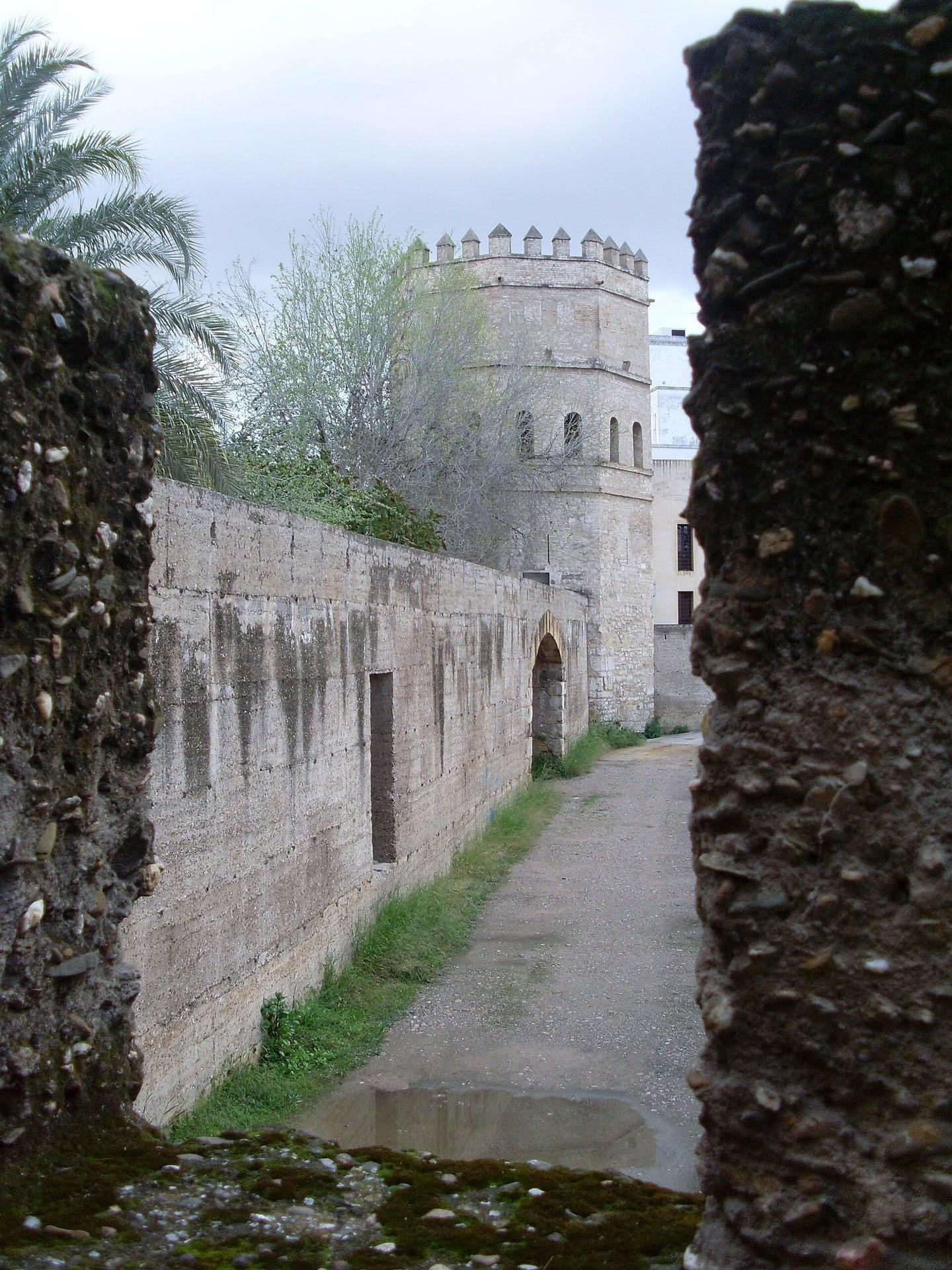
Torre de la Plata: the Other Tower
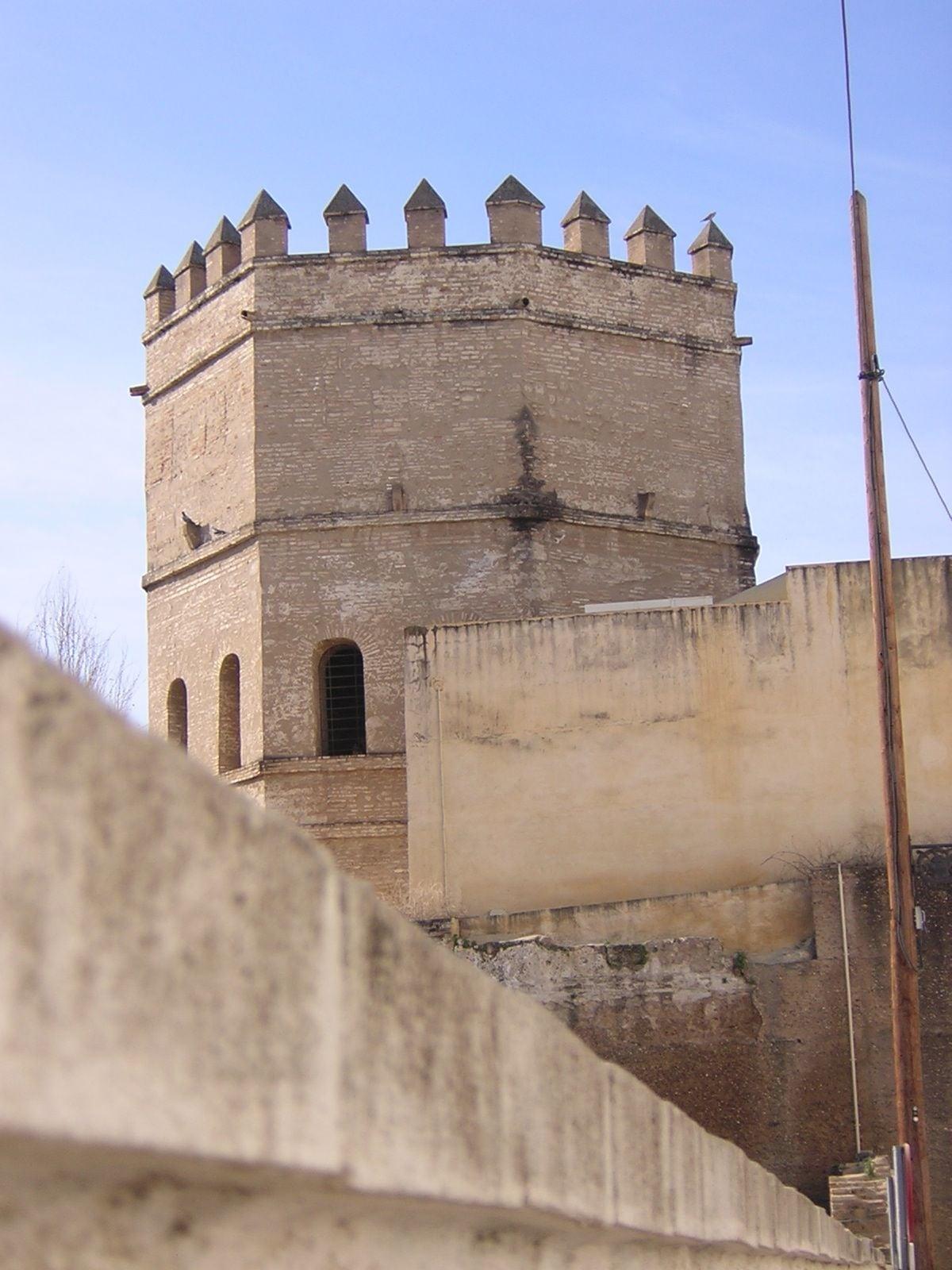
The smaller neighbor of a famous tower. The eight-sided Torre de la Plata on Calle Santander, a tower of the wall that ran from the Alcázar to the river.
- 3
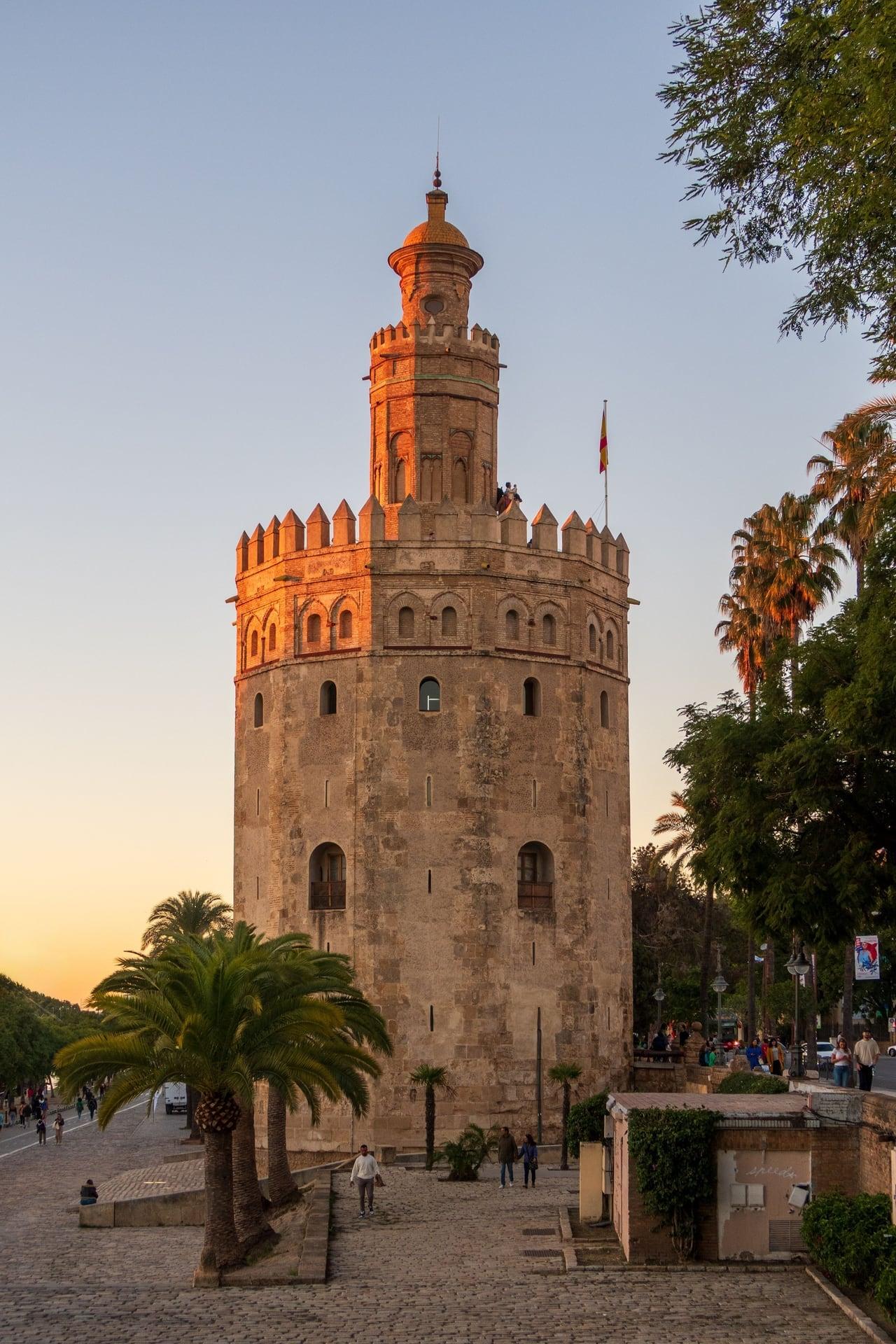
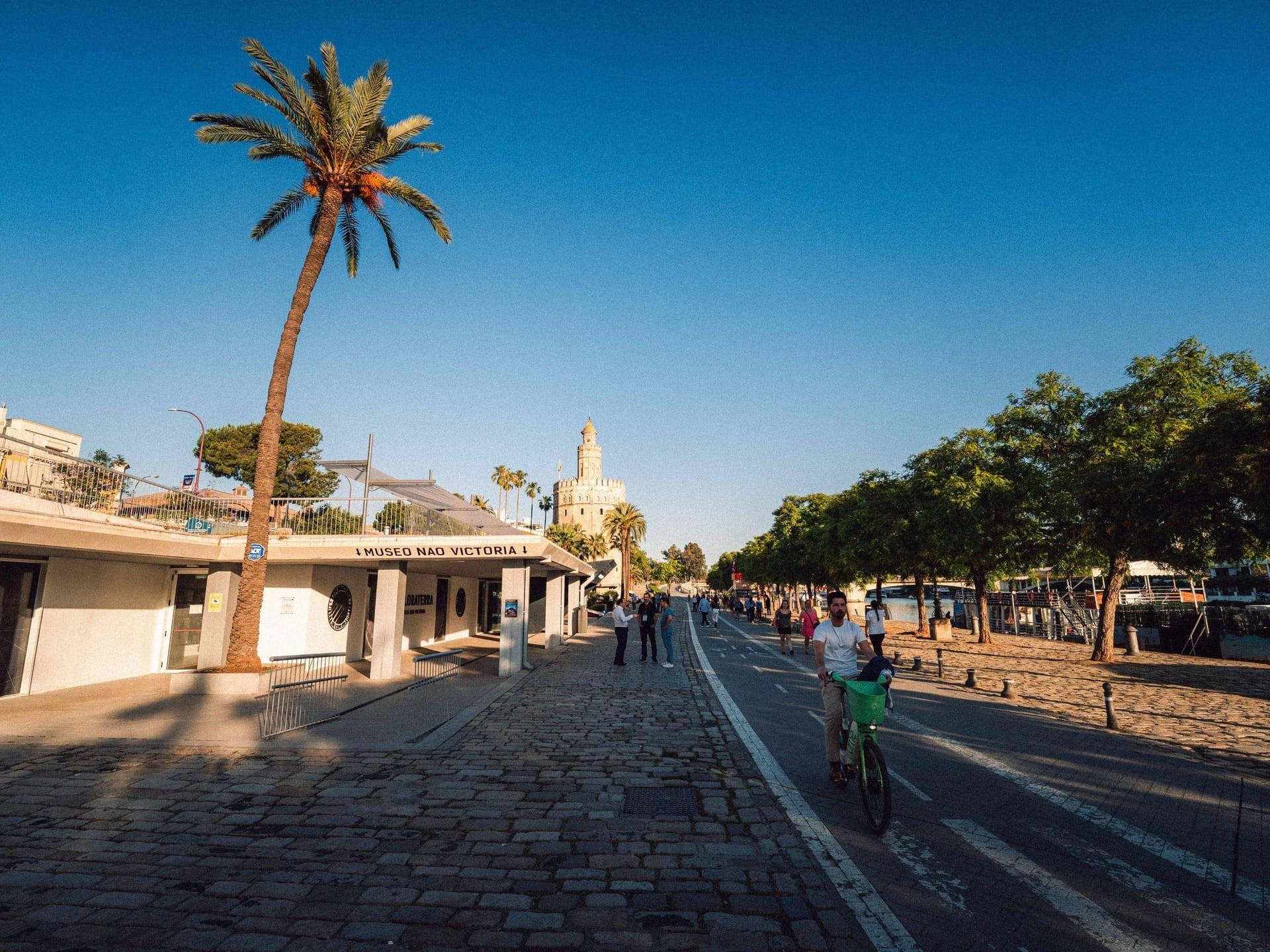
Torre del Oro: Why It Shone
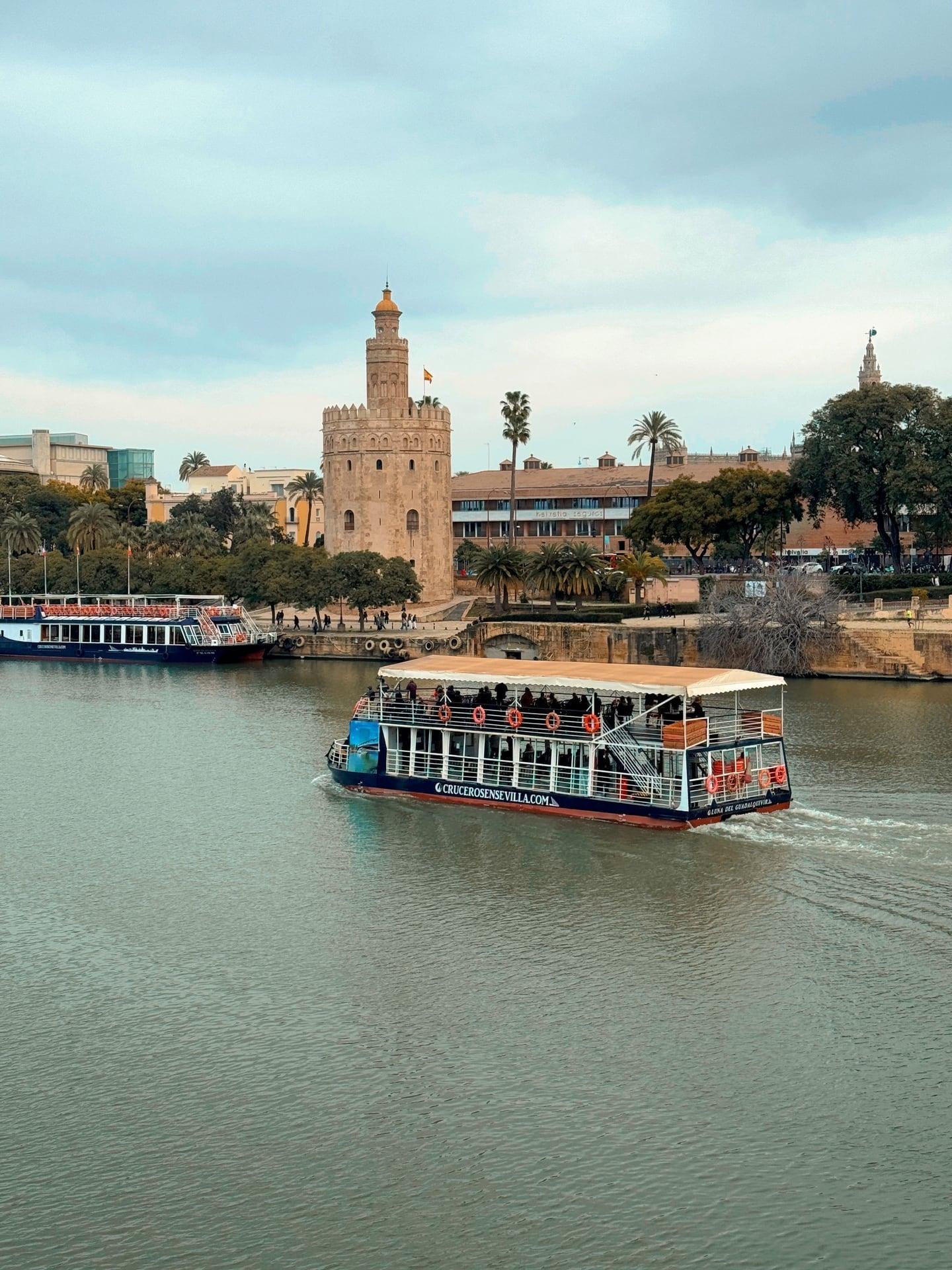
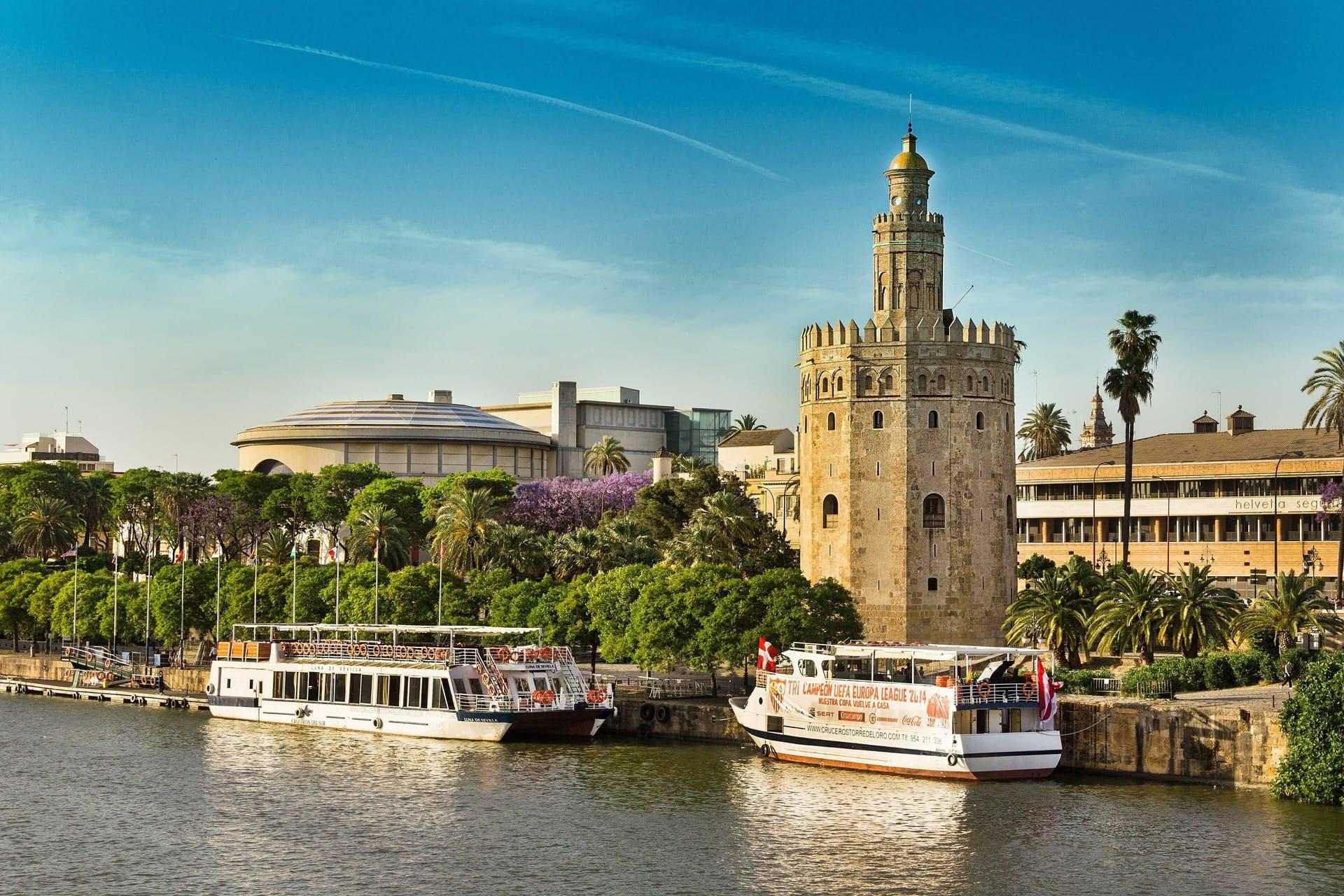
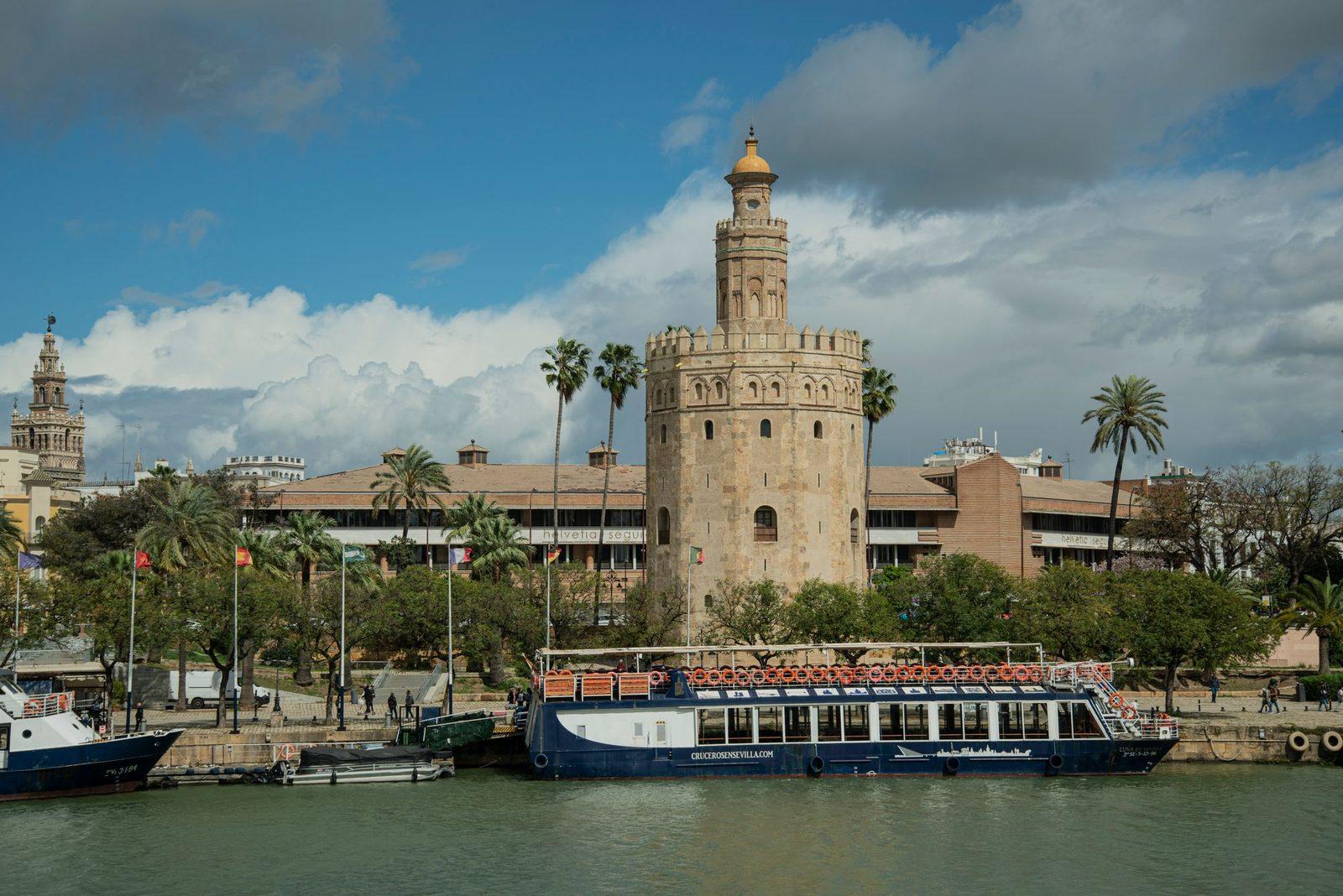
The tower that guarded the port. The Torre del Oro, an Almohad tower of 1221 that closed the city wall at the river, seen across the Paseo de Colón.
- 4
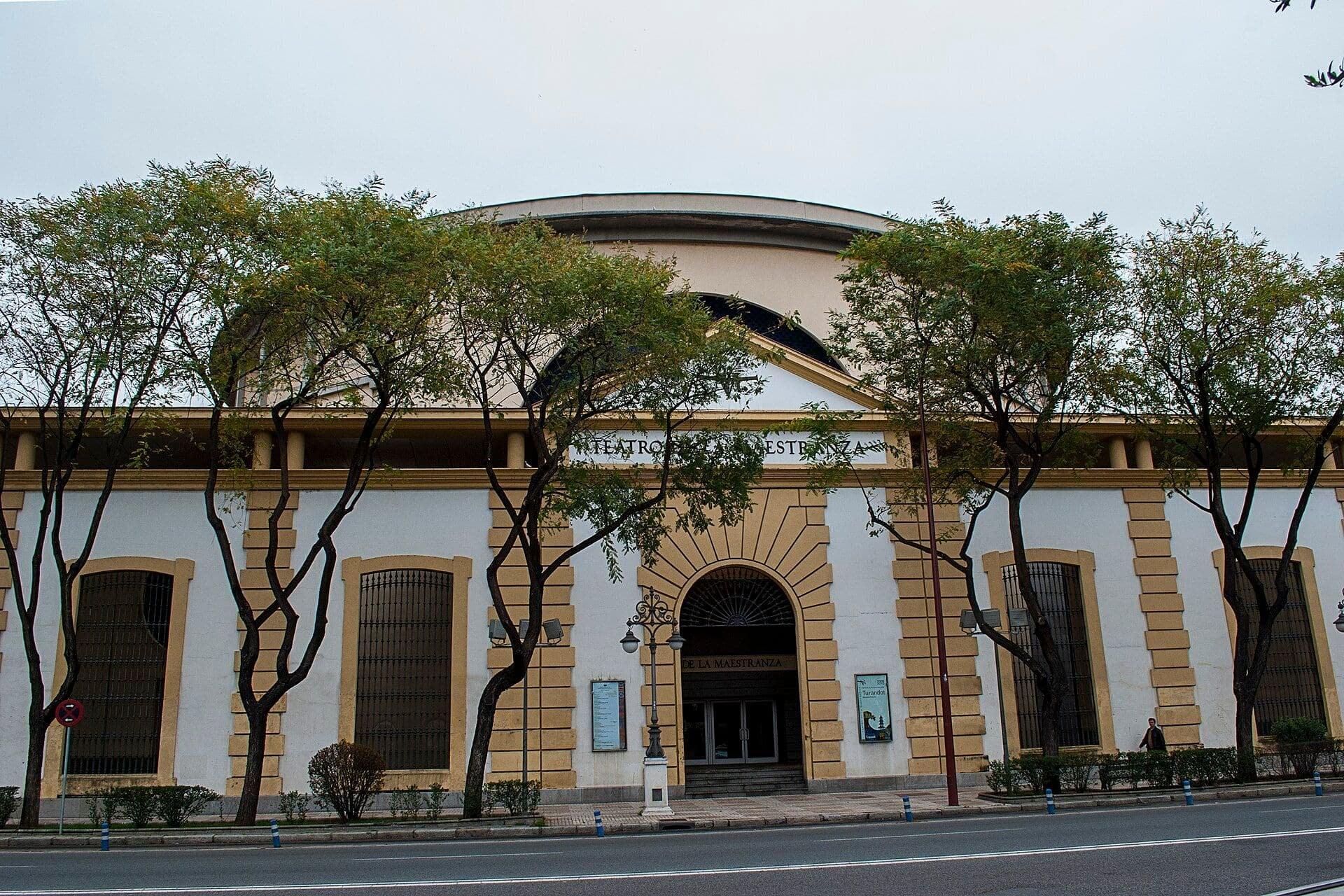
Teatro de la Maestranza: Guns to Opera
An arsenal front became an opera house. The Teatro de la Maestranza, opened in 1991 behind the kept front of the royal artillery works of 1587.
- 5
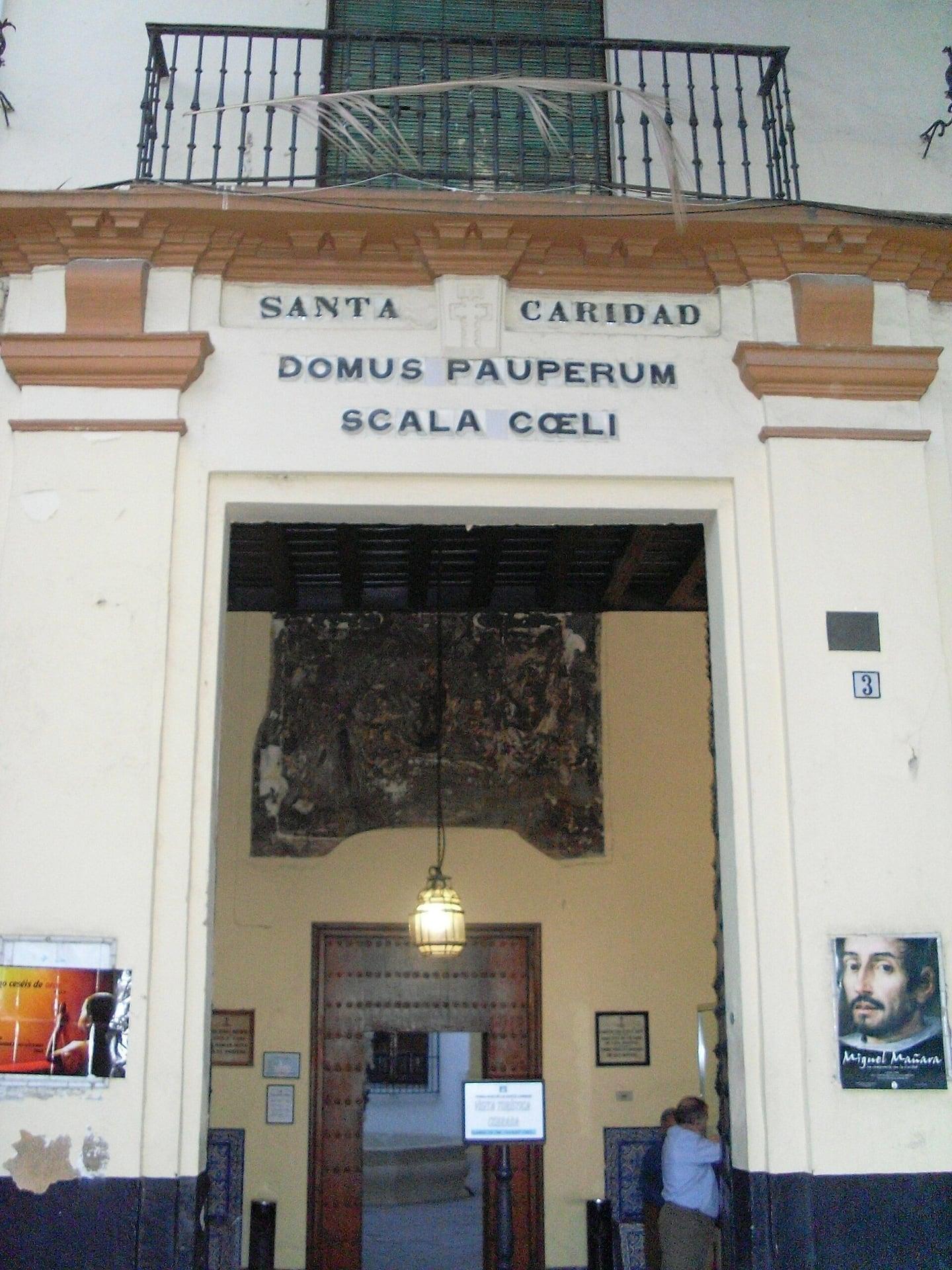
Hospital de la Caridad: Miguel Mañara's Wards
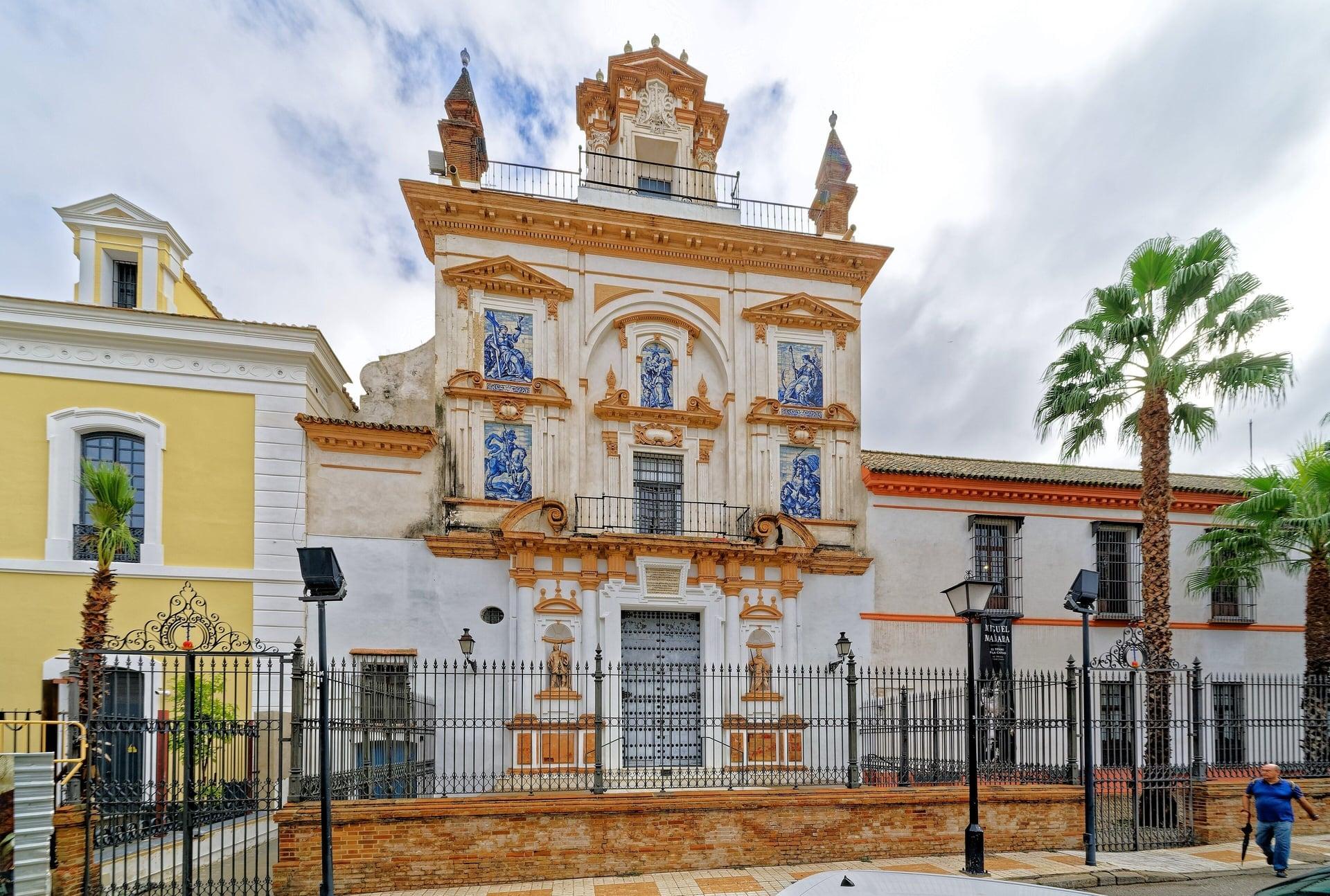
One rich man's turn to charity. The church and hospital of the Hermandad de la Santa Caridad, where Miguel Mañara turned shipyard halls into wards.
- 6
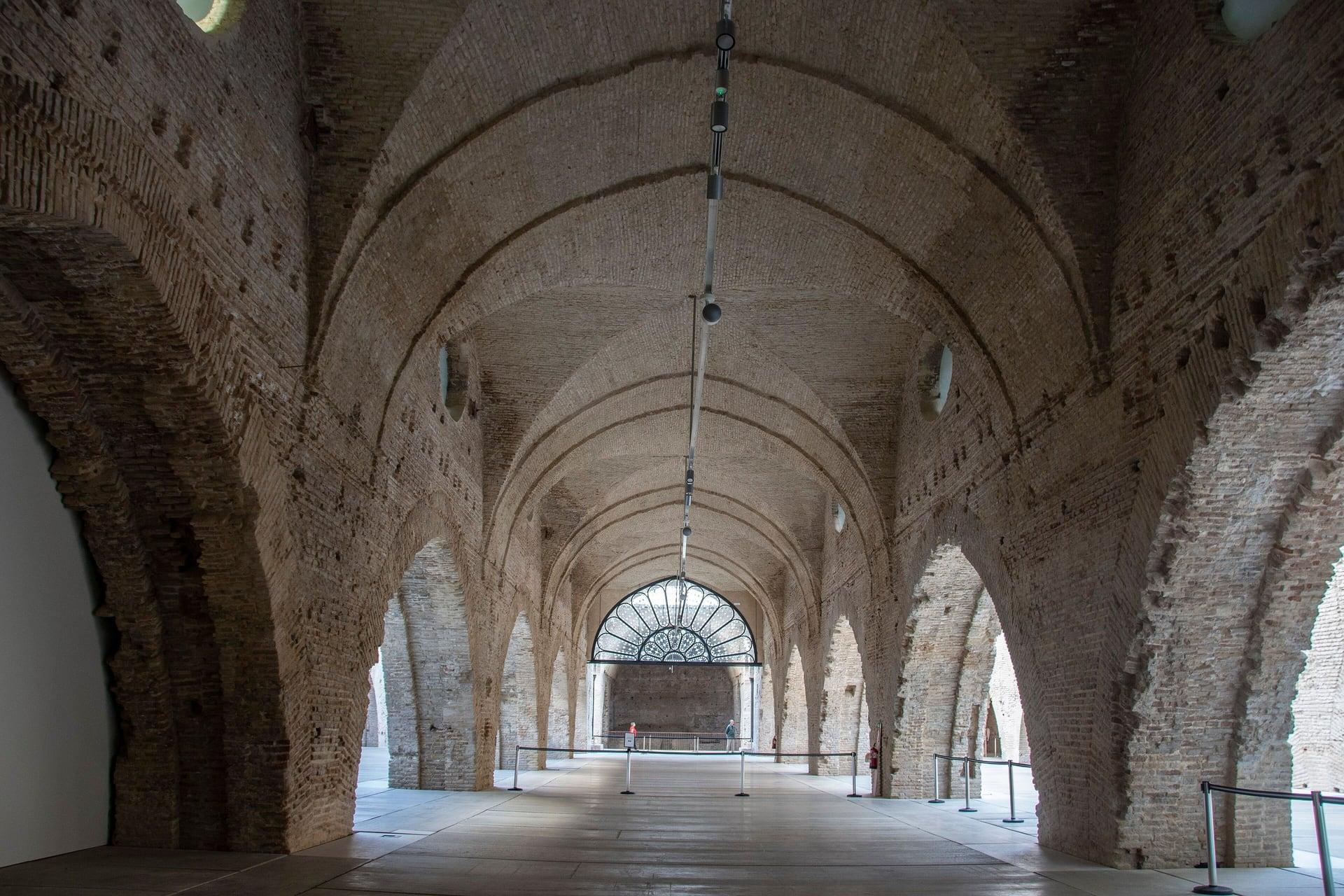
Reales Atarazanas: the Royal Shipyards
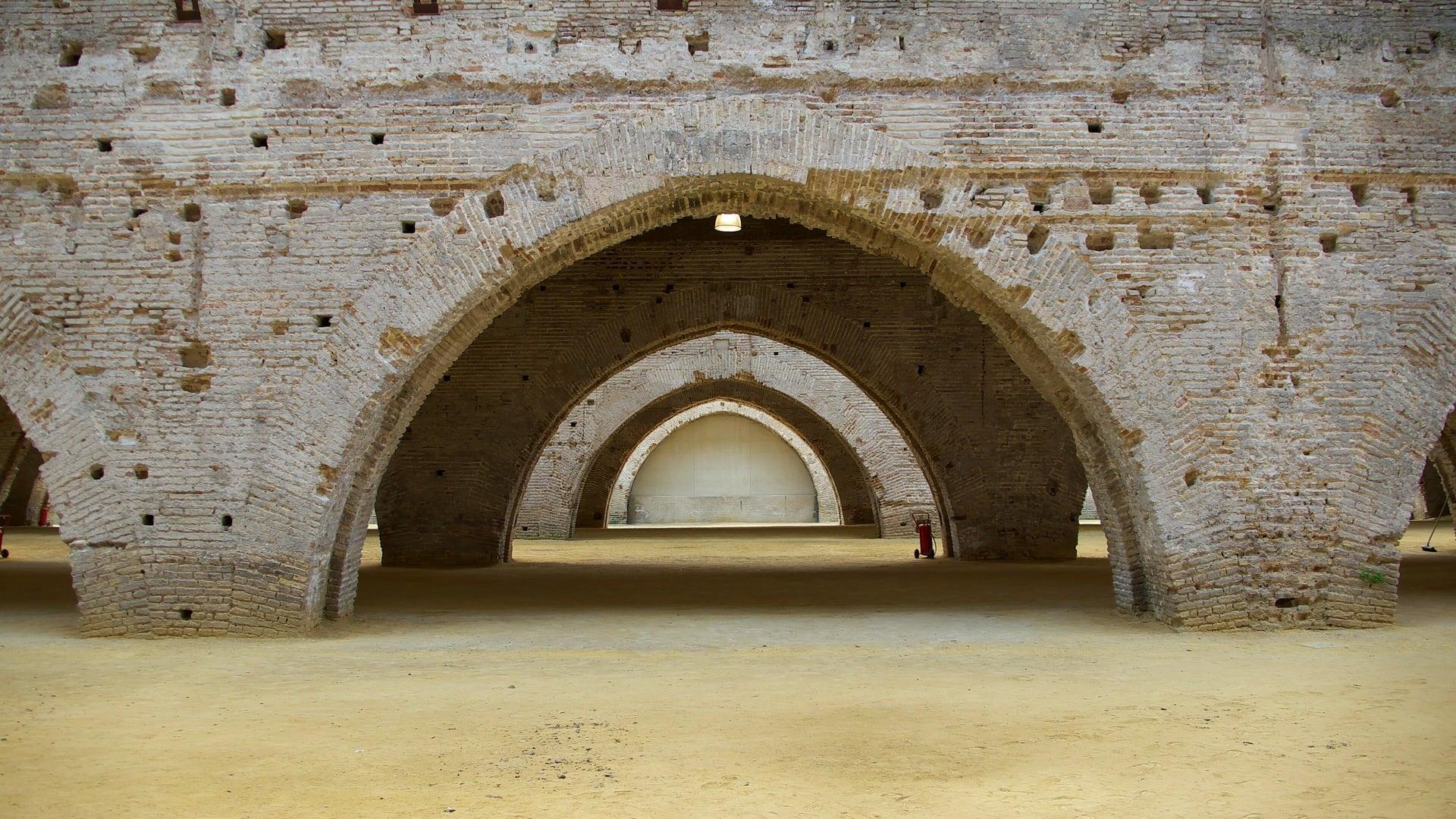
The royal shipyards are waiting to open. The Reales Atarazanas, the thirteenth century royal shipyards, restored from 2022 and not yet open.
- 7
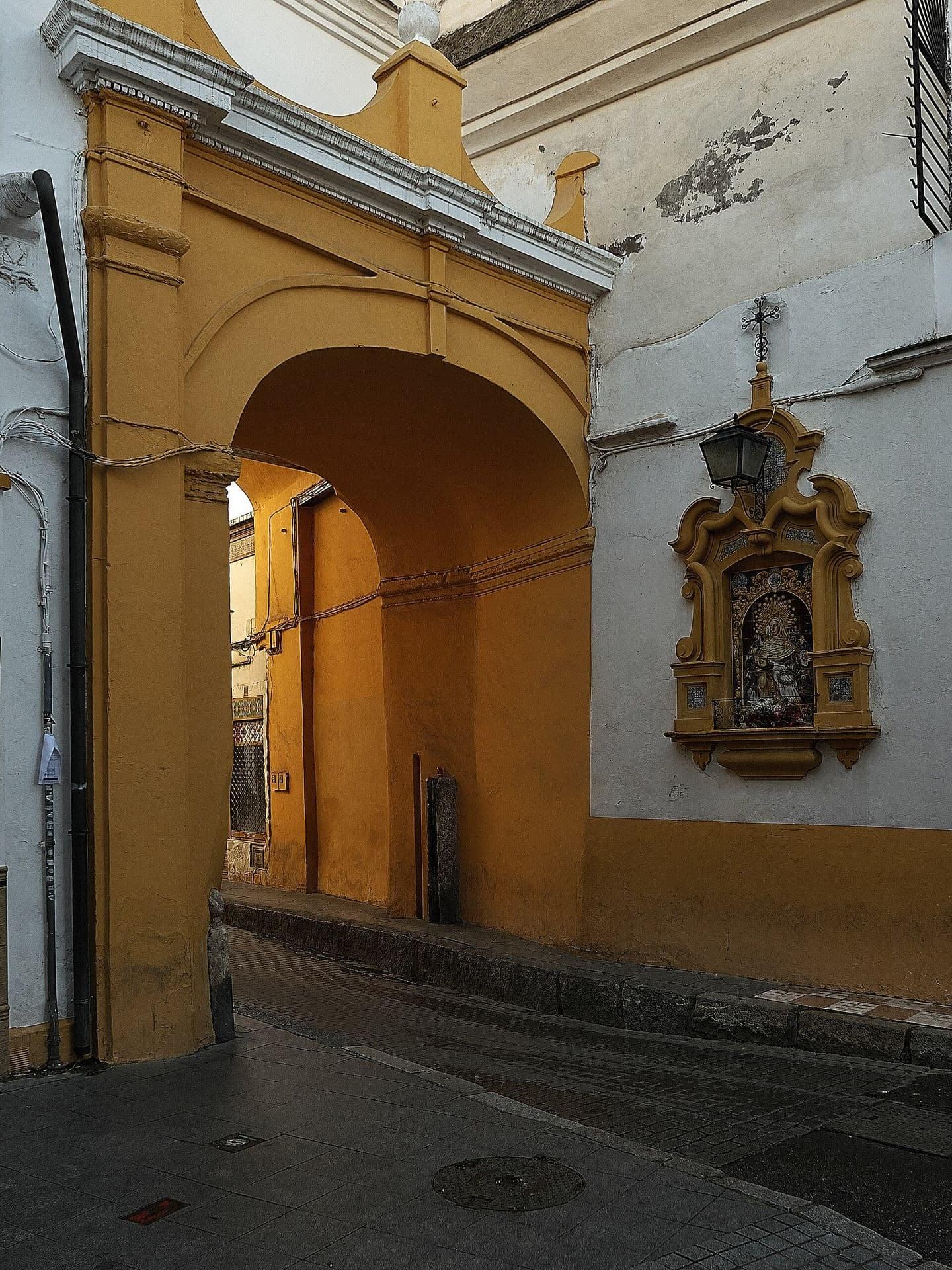
Postigo del Aceite: the Oil Gate
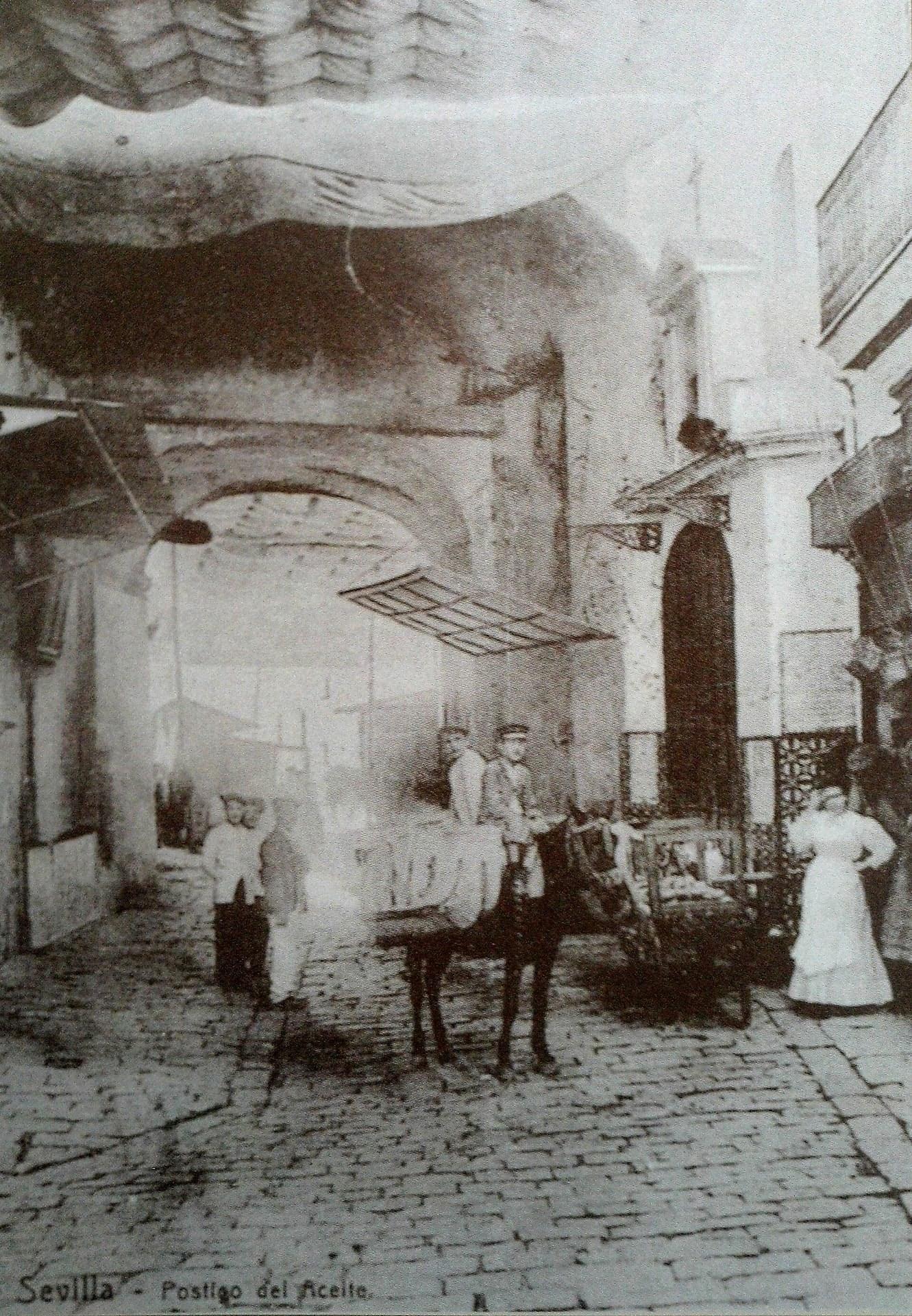
One of the gates the walls kept. The Postigo del Aceite, a surviving gate of the city wall onto the port, with a chapel built into its side.
- 8
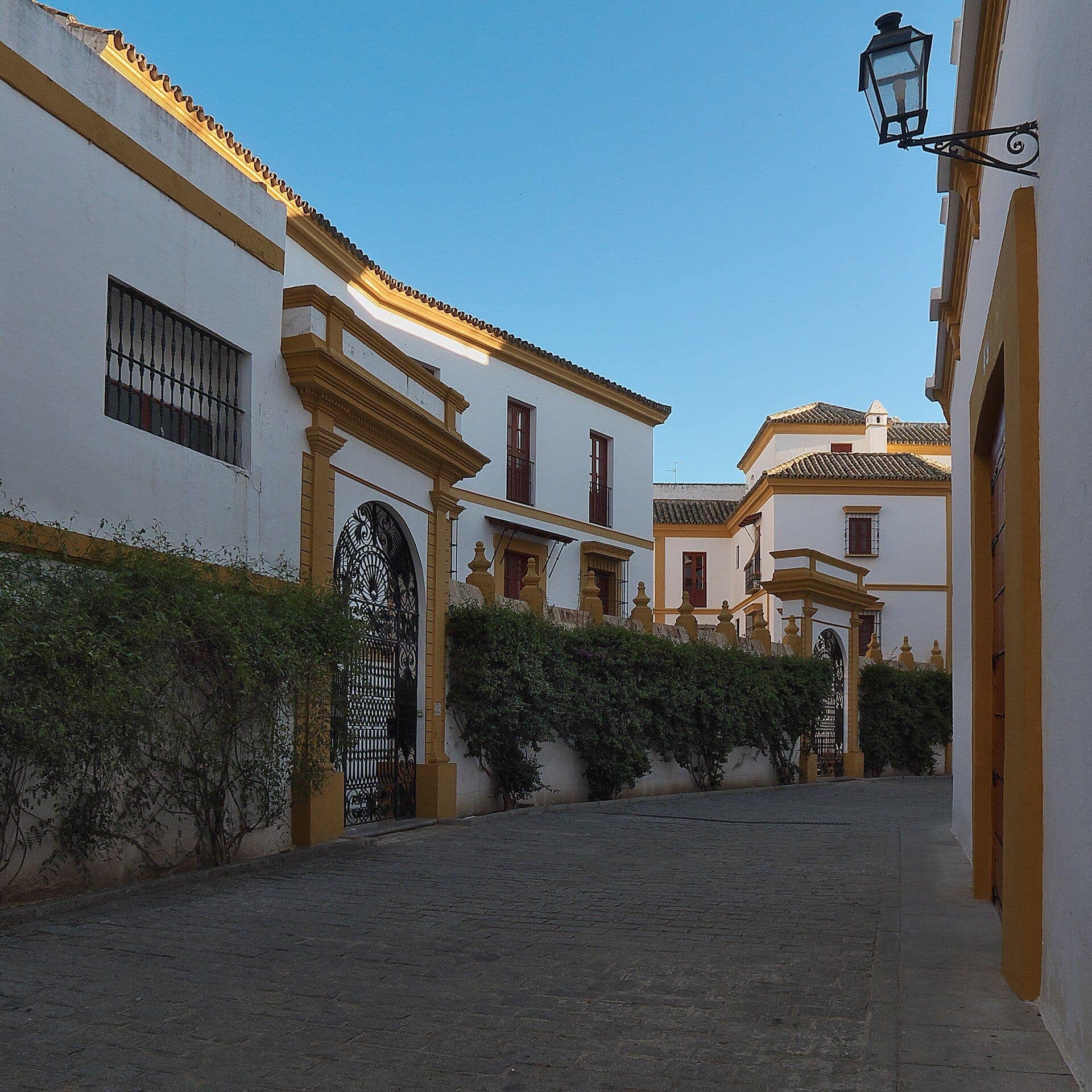
Calle Toneleros: the Coopers' Street
The port's trades on the street signs. The corner of Calle Toneleros and Real de la Carretería, the coopers' and cart makers' lanes of the old Arenal.
- 9
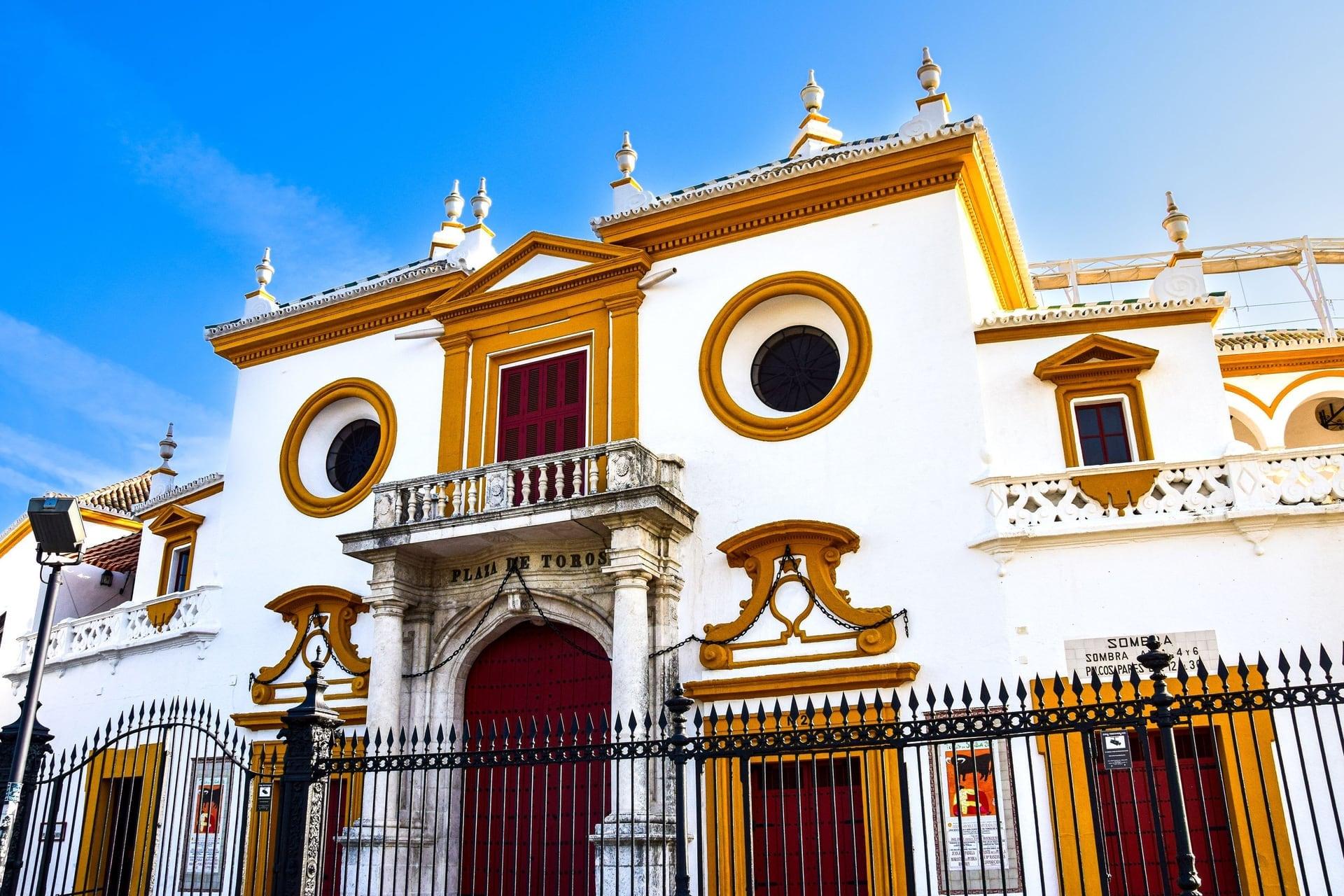
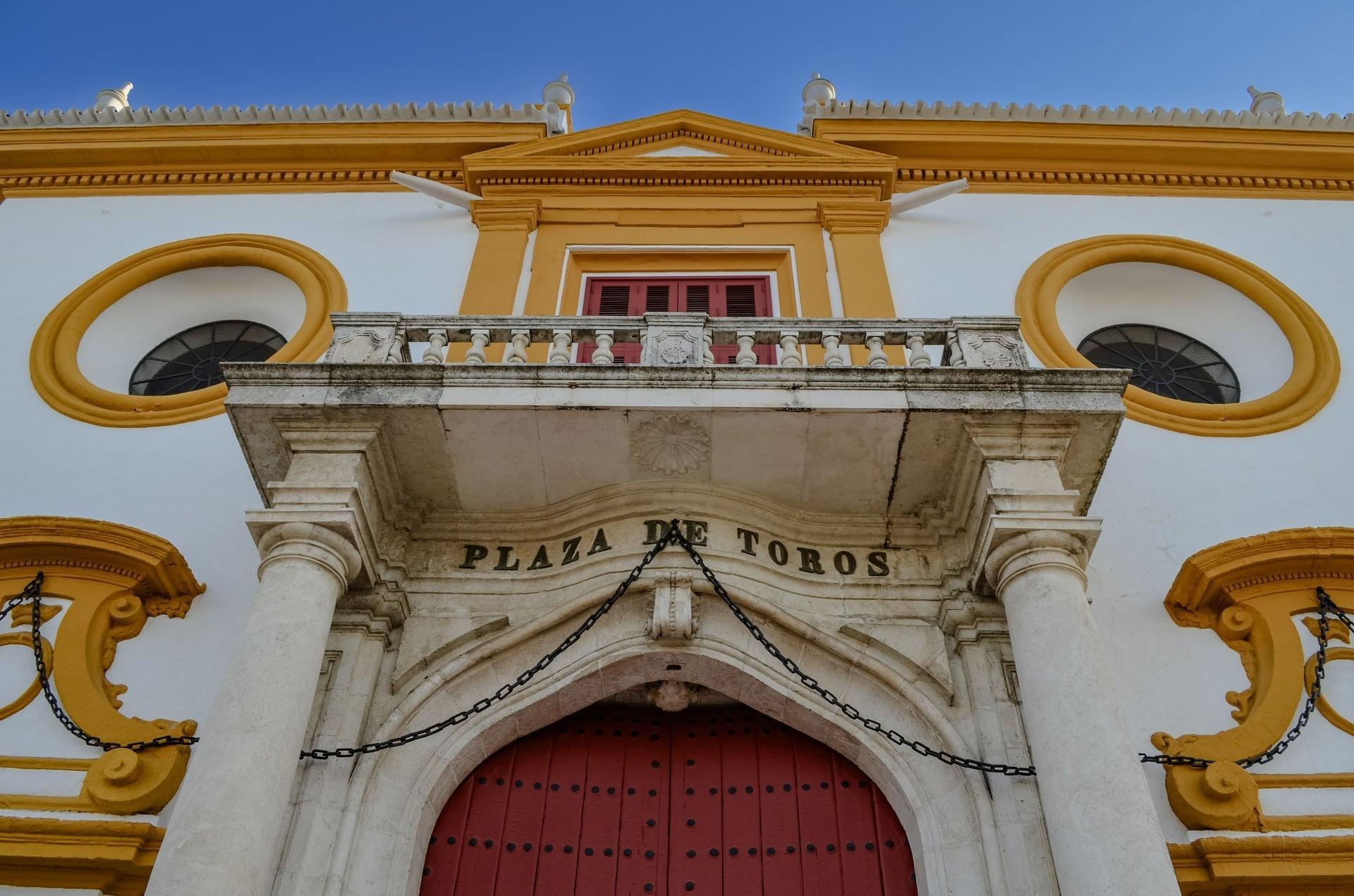
Plaza de Toros: a Ring on a Rubbish Hill
A bullring raised over 120 years. The Real Maestranza's bullring, begun in stone in 1761 and closed in 1881, near the old Baratillo rubbish hill.
- 10
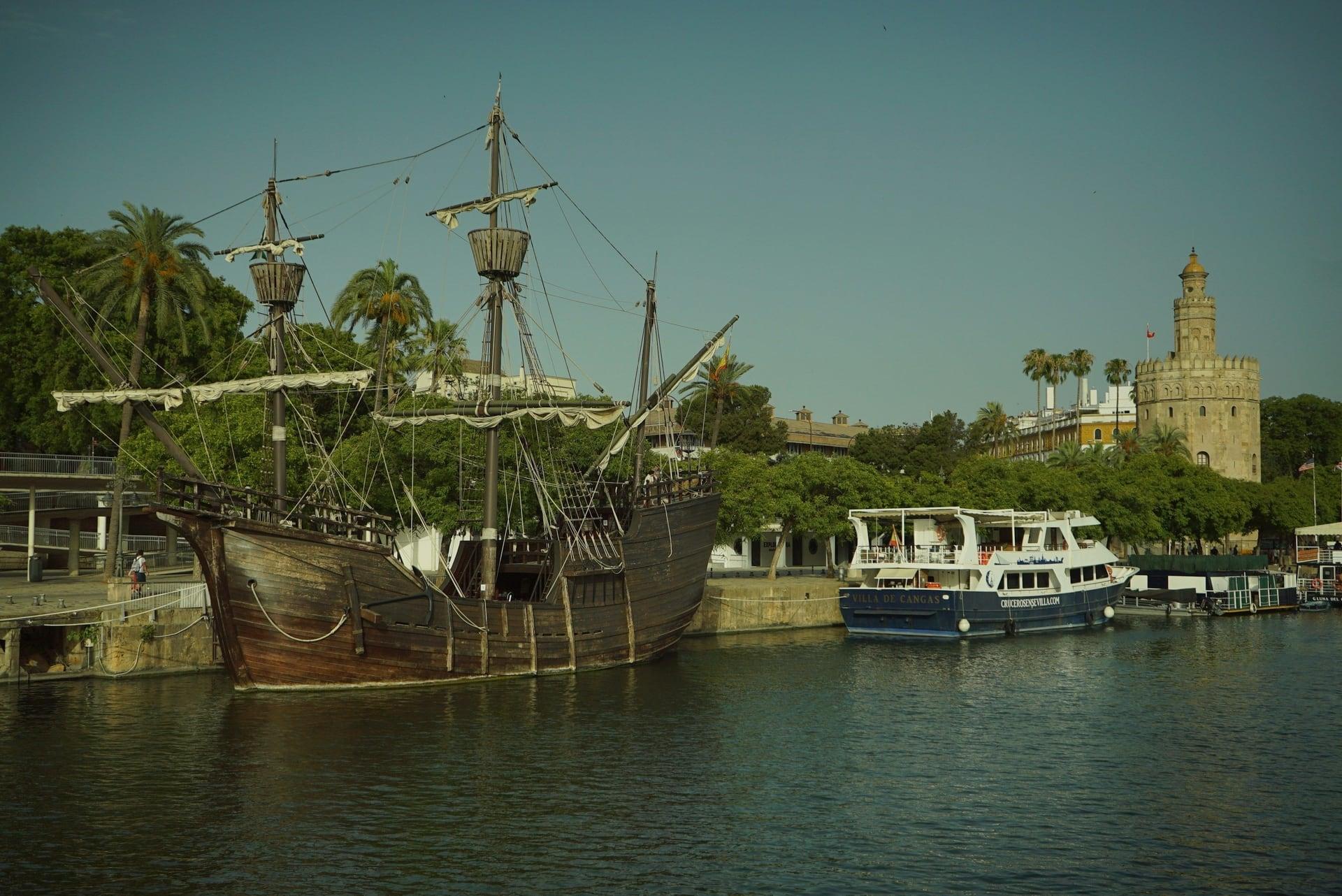
Port of the Indies: Magellan's Riverbank
The quay that made the city rich. The river bank of the Arenal, the port of the Indies trade, where Magellan's ships set sail in August 1519.
- 11
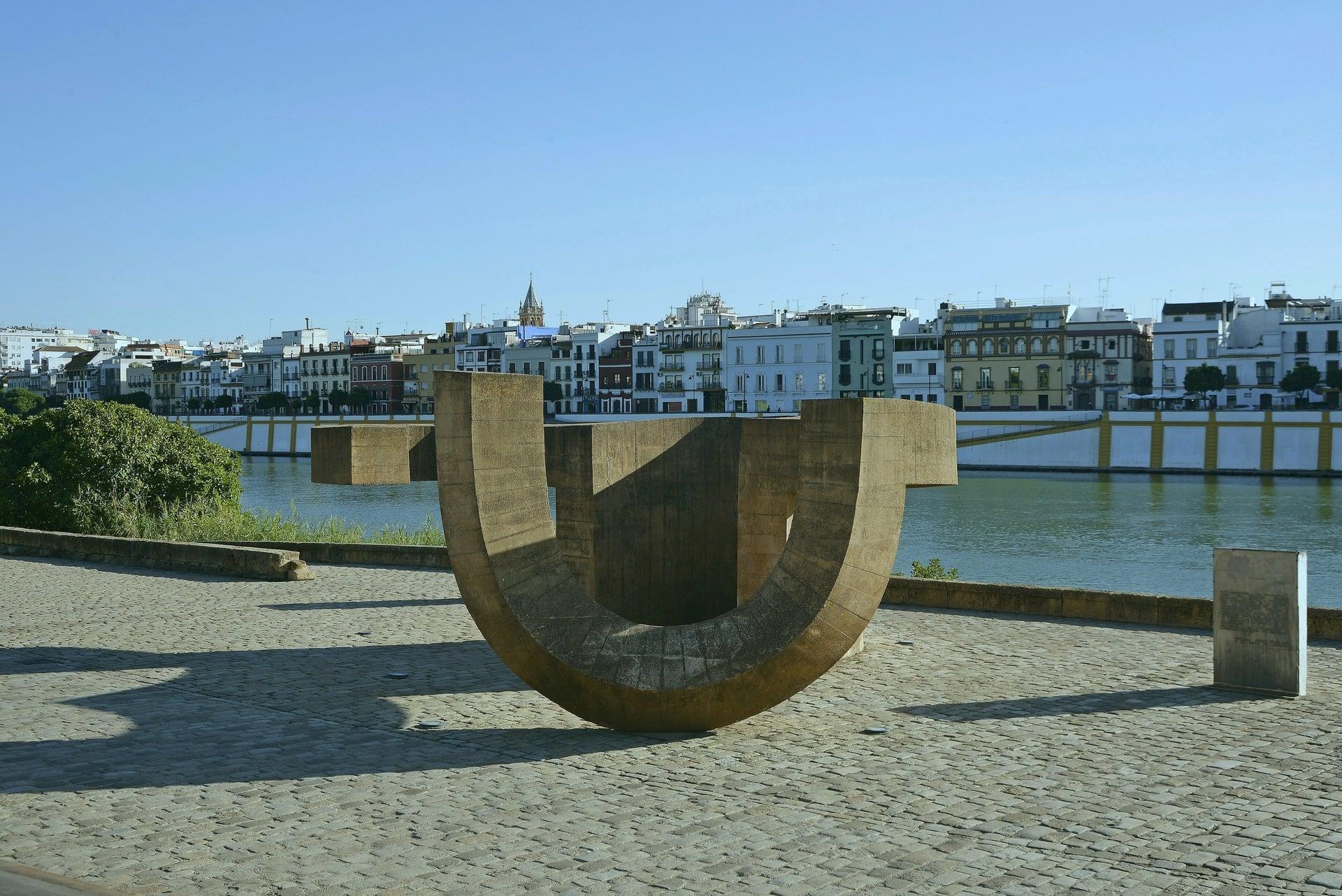
Monumento a la Tolerancia: the Salt Quay
A sculpture on the old salt quay. The Monument to Tolerance, a concrete sculpture of 1992 on the Muelle de la Sal, raised in memory of the Jews expelled in 1492.
- 12
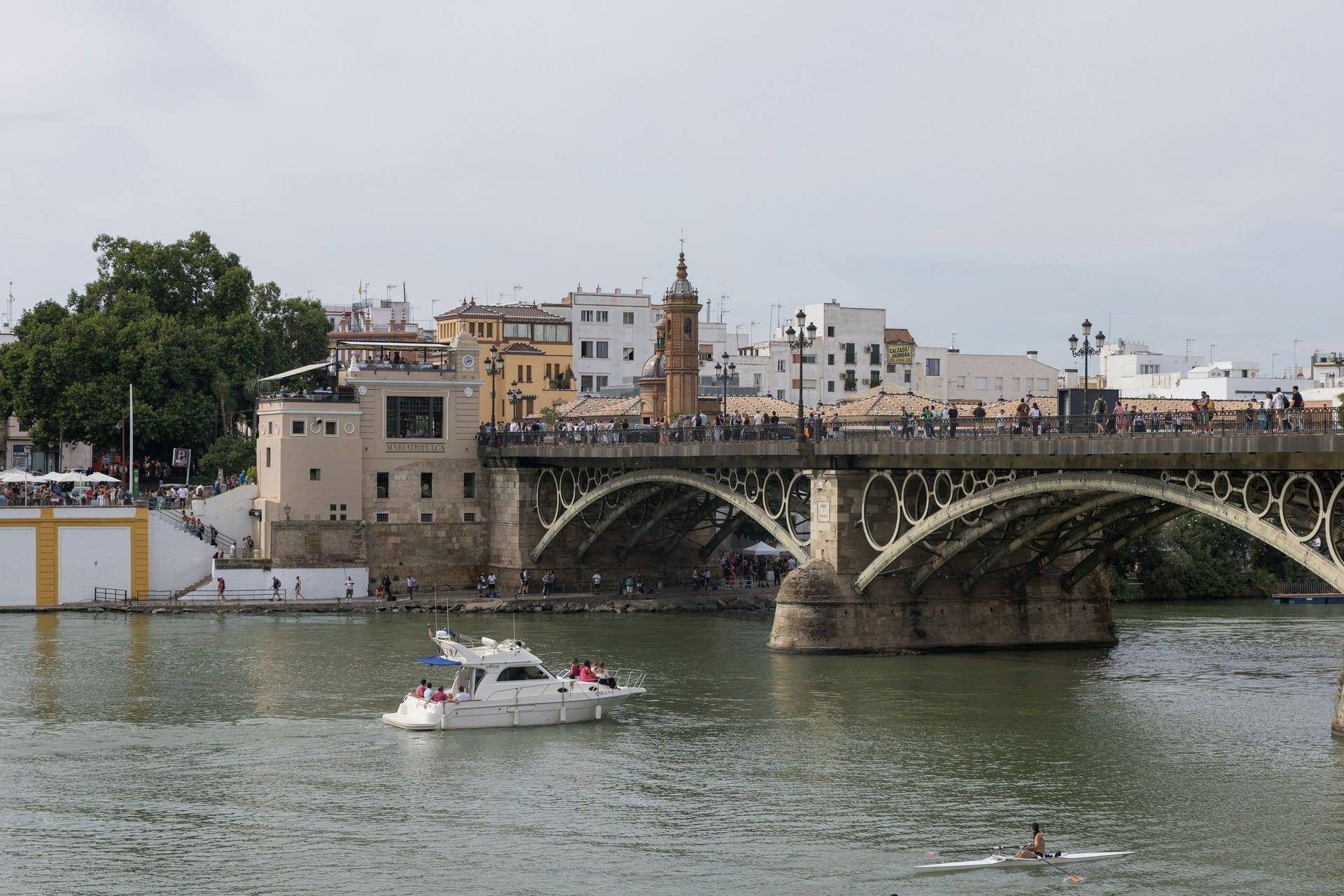
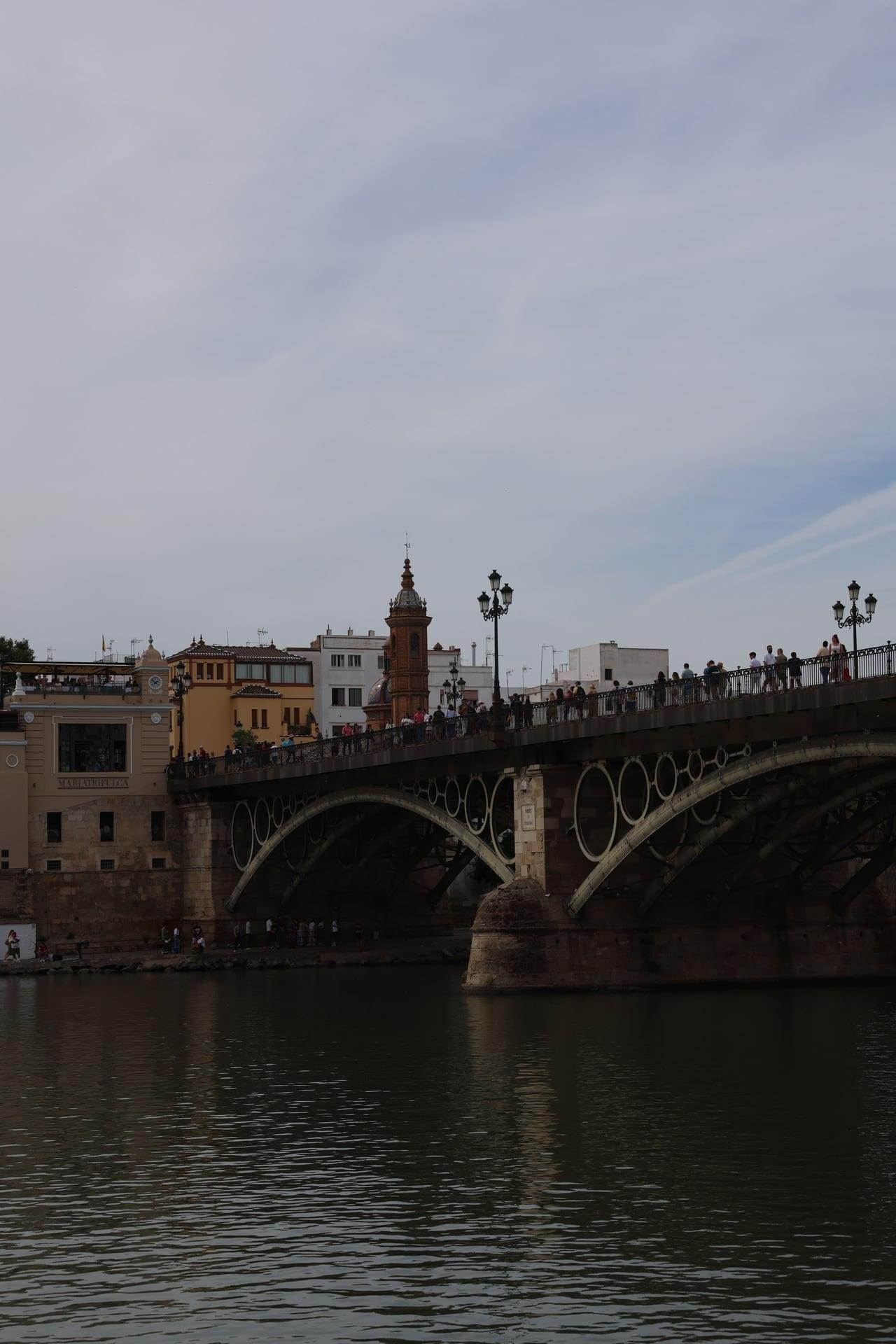
Puente de Triana: From Boats to Iron
Where the bridge of boats once crossed. The iron Puente de Isabel II, Seville's Triana bridge, which replaced the old bridge of boats to Triana.
Details
Best Time to Visit
Any day, about 75 minutes before sunset, so the last three stops on the river face the sunset over Triana (sunset 18:07 on 1 December, 18:09 on 21 December, 18:16 on 1 January, 18:47 on 1 February; computed). Mornings are quiet in the mint's lanes and the Carretería. In summer go early or late: July highs average 36 °C (AEMET normals). Avoid the start area on the evening of Friday 27 November 2026 (Christmas lights switch-on on the Avenida de la Constitución from 17:30) unless you want the crowds. The Feria del Belén nativity market (7 November to 22 December 2026) stands on the Avenida de la Constitución, a block east of the start; the walk does not pass it. Holy Week (21 to 28 March 2027) fills the Arenal's streets with processions.
Pro Tips
- •Getting to the start: Metro line 1 or the MetroCentro tram to Puerta de Jerez, then about 120 m north up Calle Habana into the old mint's lanes. Tussam buses stop at 'Paseo Colón (Torre del Oro)' (lines 3, 21, 40, 41, A2, C4 and EA per the Armada's museum page). Checked 23 November 2026.
- •No stop on the walk needs a ticket. The Torre del Oro's maritime museum is free (voluntary contribution) and takes about 30 minutes: go in after stop 3 or come back at the end. The Caridad's church and the bullring visits are ticketed and not included.
- •If the gate of the Jardines de la Santa Caridad is shut (between stops 4 and 5; hours not published), go back south along the Paseo's sidewalk, left up Calle Postigo del Carbón and left up Calle Temprado to the Caridad: about 250 m.
- •The Reales Atarazanas (stop 6) were restored but not open on 23 November 2026; a first exhibition was announced for late 2026 or early 2027. If it has opened, expect a queue on Calle Temprado.
- •The walk ends at the steps up to the Puente de Isabel II: cross for our Triana walk, or walk about 500 m east via Calle Reyes Católicos to the Plaza Nueva tram stop.
- •GPS can fire late in the narrow lanes of the Carretería (stop 8); if a stop has not started, tap it on the map.
Safety & Precautions
- •Bike lanes: a green two-way carril bici runs beside the Paseo de Colón's sidewalk (legs 2 to 4) and the river quay path is a shared bike path (leg 11 to 12). Cyclists come fast both ways: keep to the building side and keep right.
- •The walk's one big road crossing is the Paseo de Colón at the traffic lights by the bullring (leg 9 to 10): the bike lane first, then six lanes. Wait for the green man. Calle Antonia Díaz is crossed at lights just before stop 9.
- •Cobbles in the mint's lanes and the Carretería, nine steps down in the Caridad garden, and a short path down to the quay at stop 11. Polished stone is slippery in winter rain.
- •The lanes of the mint and the Carretería are residential and shared with cars and delivery vans: keep your voice down and step aside for vehicles.
- •The Caridad and the chapel in the Postigo del Aceite are places of worship: keep quiet at the doors and do not photograph people at prayer.
- •The Torre del Oro museum is closed 24, 25 and 31 December and 1 and 6 January; the bullring's visits end at 15:00 on bullfight days. Checked 23 November 2026.
Travel advisory: Exercise Increased Caution (Level 2).
Gallery
Related Reading
Go deeper on what you'll see, hear, and walk through.
Overview
One Day in Seville: A Walkable Old-Town and Triana Itinerary (2026)
6 min
Overview
Seville Monument Tickets, Hours and Closures (Checked November 2026)
6 min
Overview
Seville Travel Guide: How Many Days, Getting Around, When to Go (2026)
6 min
Thematic
Best History Walking Tours in Seville (2026)
3 min
Companion
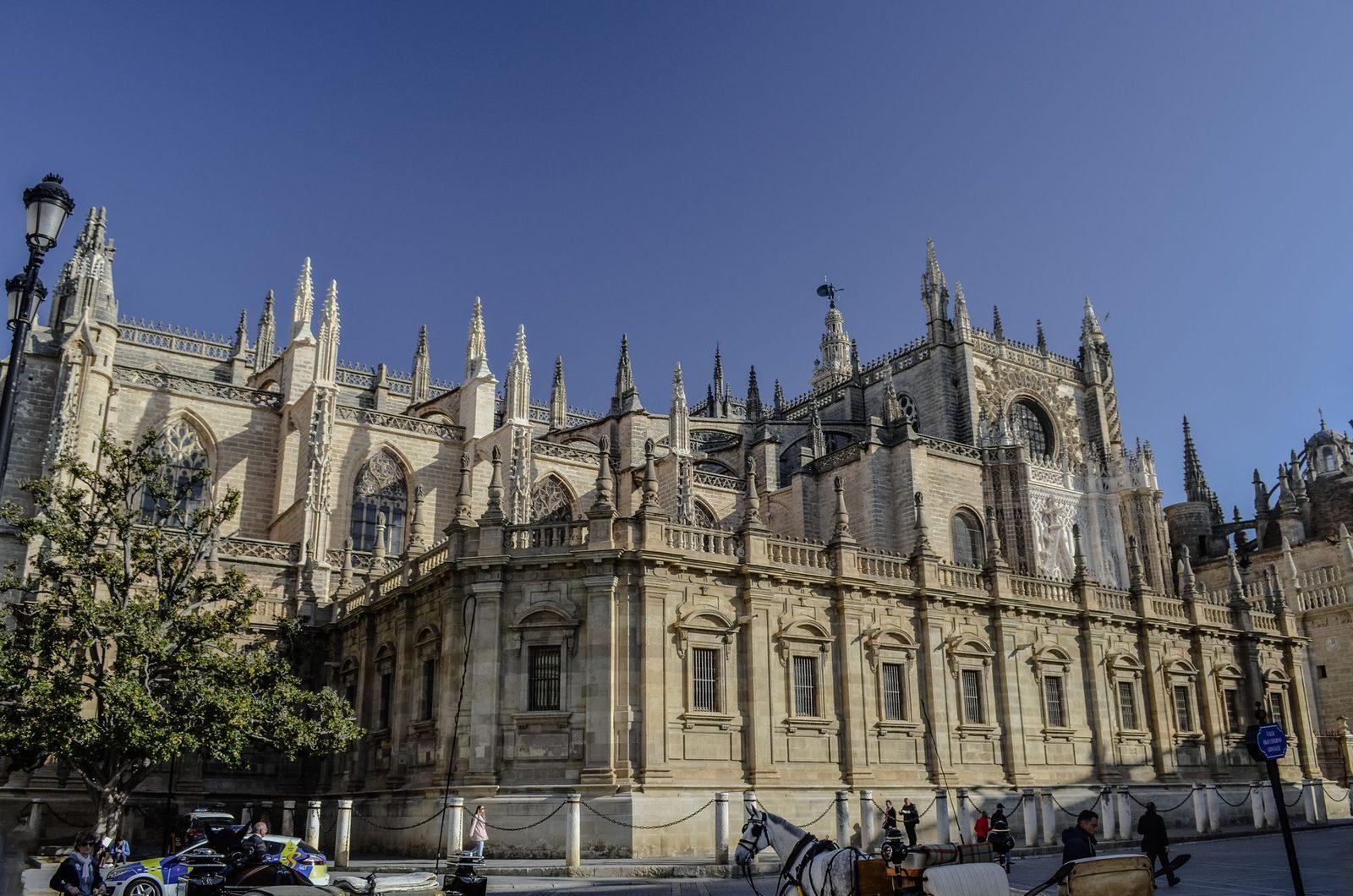
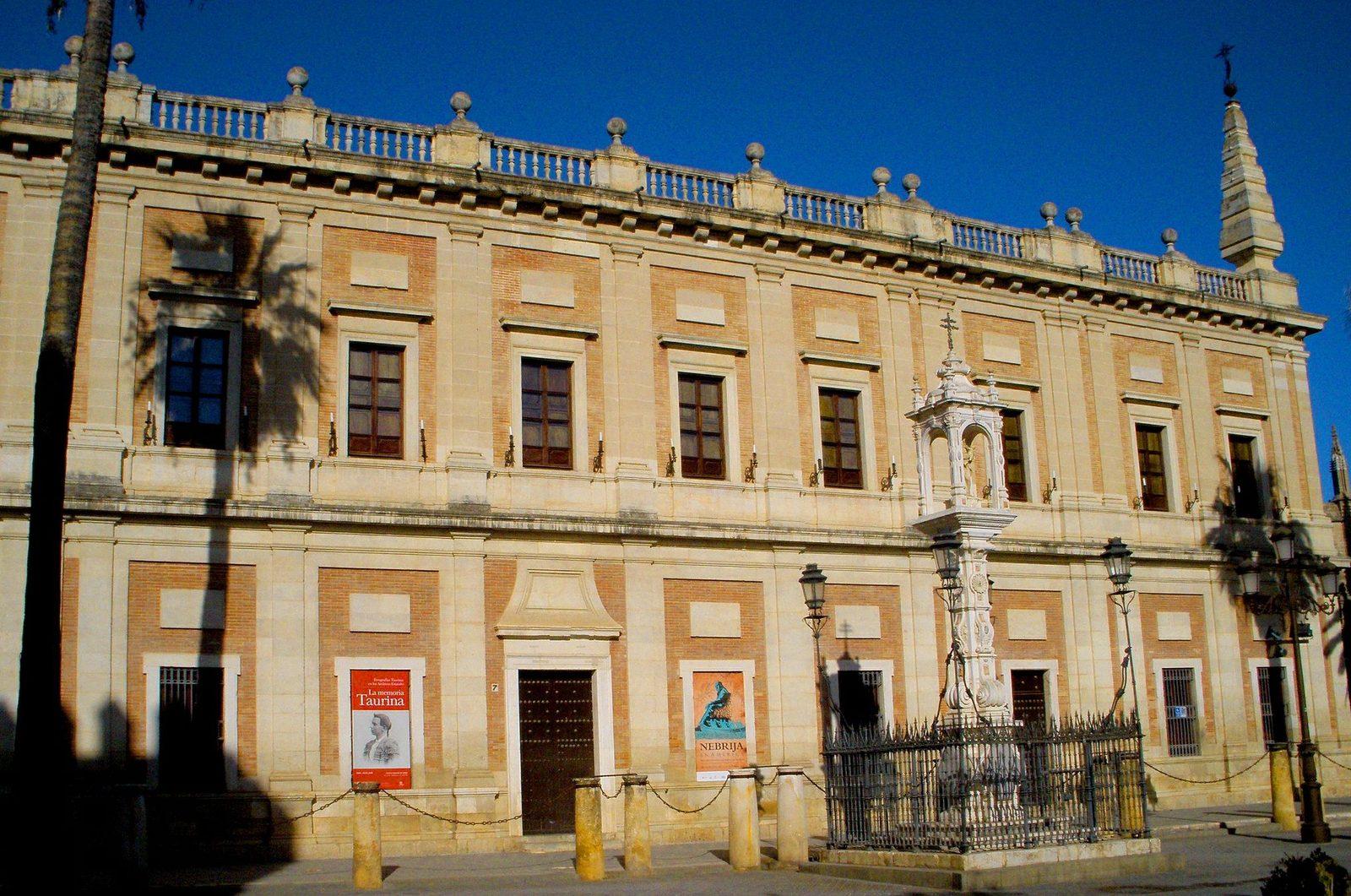
Archivo de Indias: The Casa de Contratación Was Never in This Building
4 min
Companion
El Arenal, Seville: The Port That Monopolized the New World
5 min
Deep dive
Torre del Oro, Seville: Why the Gold Tower Shone
4 min
Read the walk
The full story of Torre del Oro and El Arenal: The Port of the Indies, in words. Prefer to listen? Play it narrated, from home or on location.
Introduction
Seville grew rich on a river. For two centuries the crown ran the whole trade with the Americas from this city, up the Guadalquivir, and the sandy ground between the city wall and the water, the Arenal, became the port of the Indies. This walk follows the money's way out: from the royal mint, past the Gold Tower and the royal shipyards, through the lanes of the barrel makers, to the bullring and the riverbank where Magellan's ships set sail in fifteen nineteen.
Three people come with us: Miguel Manara, a merchant's son who turned shipyard halls into a hospital; Ferdinand Magellan, whose fleet sailed from this bank; and Juan Sebastian Elcano, who brought its last ship back.
The walk is twelve stops over about one point four kilometers, just under a mile, and takes about seventy minutes. It is flat, with cobbles in the lanes and nine steps down in a small garden. The Gold Tower's museum, the Caridad's church and the bullring can each be visited separately, and none of them is included; the royal shipyards are restored but not yet open. Every stop works from the street. If the small garden on the way is locked, go around by the street.
The tram does not cross this route, but green two-way bike lanes run beside the main river road: cyclists come fast in both directions. The road itself is crossed once, at the lights by the bullring. In winter, rain comes in short, heavy bursts, and polished stone gets slippery. The walk ends on the river quay at the Triana bridge, facing the sunset over Triana in the late afternoon.
To reach the start, take Metro line one or the tram to Puerta de Jerez, then walk a couple of minutes north up Calle Habana. When you arrive at the Real Casa de la Moneda, begin with stop one.
1. Real Casa de la Moneda: the King's Mint
These quiet lanes and low houses stand inside what was once a factory. This is the Real Casa de la Moneda, the Royal Mint of Seville, and the lanes run between what were once its yards and workshops. People live here now, so keep your voice down.
In March fifteen eighty four a new mint was ordered for Seville, on this spot. The site was an old walled yard, and a document of the time gives the reason: it was surrounded on all four sides by wall and towers, it was roomy, and it stood close to the house that ran the trade with the Indies, to the merchants' exchange, and to the customs house. Money needed walls, and it needed to be near the people who counted it.
Before the mint, the yard had been a prison for men of noble birth, and for a while a playhouse. The new building was planned as a closed town: workshops, smelting furnaces, stores, offices for business, and housing for the workers, all inside. A few steps down this lane, the old royal foundry still stands. It is a theater now.
A novel of the time imagines Seville's thieves posting lookouts here. They followed anyone who carried money out of the trade house or the mint, to see where it went.
That is the thread of this walk. The Arenal, the sandy ground between the city wall and the river, was the port of the Indies. We follow the money's way out: from the mint, past the towers that guarded the port, the shipyards and the charity that merchant money built, the oil gate and the barrel makers, to the bullring and the quay where the fleets loaded. Our Historic Center walk tells the merchants' exchange, now the Archive of the Indies.
Follow the route. Next, a tower most visitors never notice.
2. Torre de la Plata: the Other Tower
Just ahead, behind its railings, stands a squat, eight-sided tower. This is the Torre de la Plata, the Silver Tower. Most visitors walk past it on their way to its famous neighbor and never look up.
It was part of a wall. From the royal palace of the Alcazar, a wall ran down toward the river to protect the port, and this tower stood on its line. A document of sixteen oh eight about the stockades in this corner names the stretch from the coal gate and the Silver Tower to the Torre del Oro, the Gold Tower, which was the wall's last word at the water's edge. A historian's plan of this corner, drawn from a city map of seventeen seventy one, puts the two towers side by side on this bank.
The name is usually explained as a match for the Gold Tower. Nobody has proved where it came from, and the sources found for this walk do not settle the tower's date. What is certain is the arrangement: walls, towers and gates, all built to close off the port's riverbank.
Ignore the old story that a chain ran across the river from a twin tower on the far bank. This tower is on this bank, and no record found for this walk confirms the chain.
Follow the route down the narrow street toward the river road.
3. Torre del Oro: Why It Shone
At the bottom of the street, cross its mouth at the lights onto the wide sidewalk, then look back across the big road to the river bank. That twelve-sided tower is the Torre del Oro, the Gold Tower.
Watch the green bike lane beside this sidewalk: cyclists come fast in both directions, and on this walk you cross the main road only once, later, at the lights by the bullring.
Inside is the navy's maritime museum, free to enter, with a small voluntary contribution asked, and a terrace on top. It is not part of this walk, but it is a good half hour afterward.
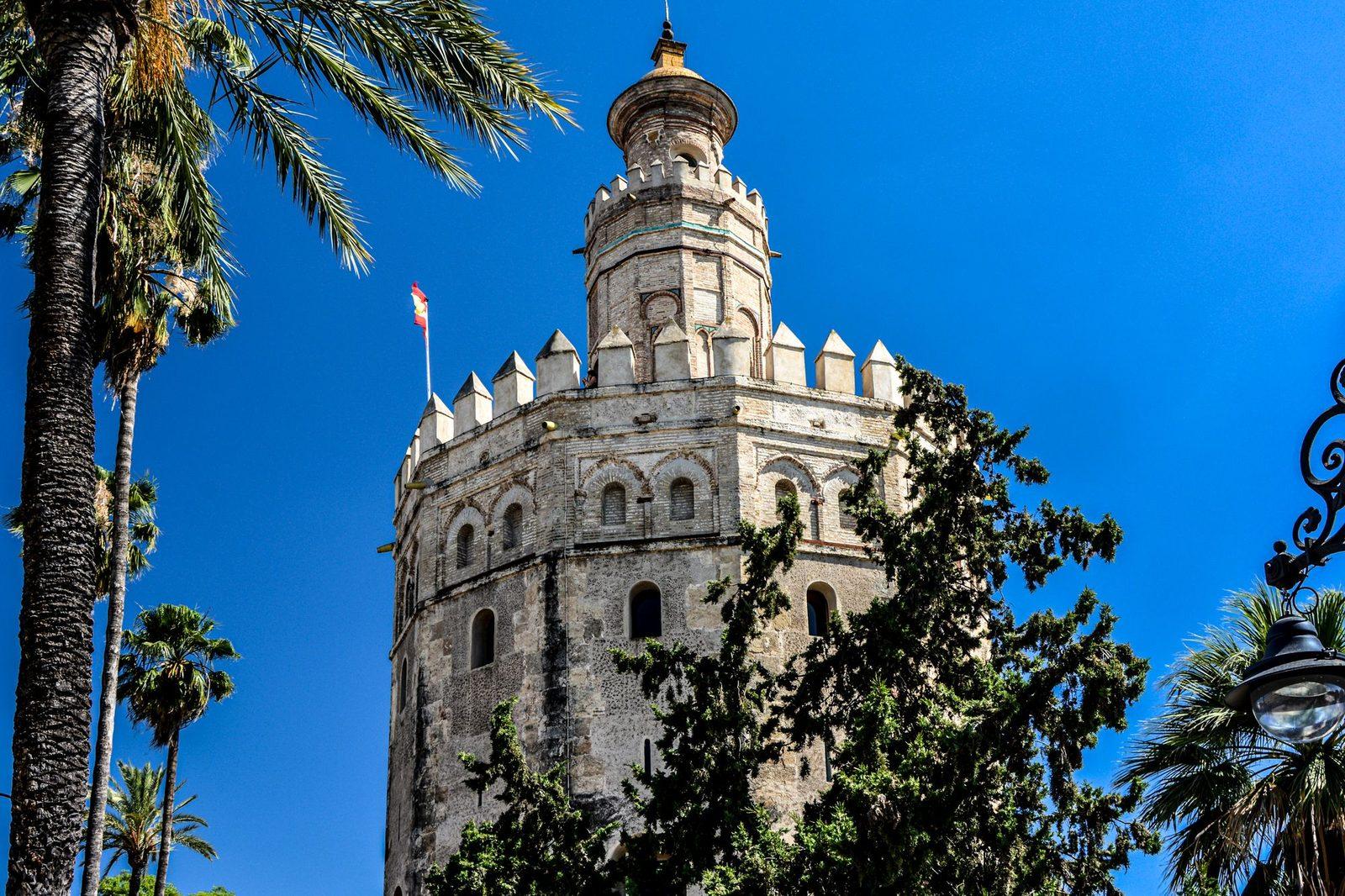
The navy, which runs the tower, calls it an Almohad tower from the first third of the thirteenth century. The Almohads ruled Seville before the Christian conquest. The tower was the end of the walls that ran from the Alcazar, and it defended the port and the bridge of boats that crossed to Triana. Its two lower stages, both twelve-sided, were built together in twelve twenty-one. The round top stage with its dome came much later, in seventeen sixty.
Now the name. The tower's Arabic name spoke of the golden shine it threw on the river. For centuries people assumed the gleam came from glazed tiles. During the restoration of two thousand five, the restorers showed it came from the wall surface itself: a mix of lime mortar and pressed straw. Not gold, and not a facing of tiles. Only the later dome on top is tiled.
You may hear that a chain was stretched across the river from here to stop enemy ships. It is a good story, and no record found for this walk confirms it.
Follow the route along this sidewalk, with the river road beside you.
4. Teatro de la Maestranza: Guns to Opera
Ahead, on the building side of the sidewalk, is the portico of the Teatro de la Maestranza, Seville's opera house. Stand clear of the bike lane to look.
The theater opened on the second of May, nineteen ninety one. Under it lay the Maestranza de Artilleria, the royal artillery works, founded by the king in fifteen eighty seven: a military base and a working foundry, a short walk from the shipyards and the quay. A port that sent fleets across the ocean needed its own guns.
The architects kept the barracks' nineteenth century front as the theater's main entrance. So the classical face you see is the old arsenal's, and the opera house sits behind it.
The theater likes to point out that one hundred and fifty three operas are set in Seville, while the city long had no proper stage for them. It also says that when Magellan's expedition came home, its last ship dropped anchor only meters from here. We will reach that riverbank later on.
Follow the route through the garden gate beside you and down the steps.
5. Hospital de la Caridad: Miguel Mañara's Wards
Across the street, straight ahead as you come down from the garden, is the front of the church of the Santa Caridad, the Holy Charity. The church and the hospital behind it can be visited on a ticket. The walk tells it from here. The brotherhood of the Caridad is recorded from…
Full narration for this stop unlocks with the tour.
6. Reales Atarazanas: the Royal Shipyards
On the far side of the street runs a long, plain wall of brick: the Reales Atarazanas, the Royal Shipyards. The Caridad's wards fill its southern halls, and the rest stretches on up the street. The shipyards were built in the thirteenth century, on the order of a king of…
Full narration for this stop unlocks with the tour.
7. Postigo del Aceite: the Oil Gate
Straight ahead, an arch cuts through a thick stretch of old wall, with a small chapel built into its side. This is the Postigo del Aceite. A postigo is a small gate, a postern, and aceite means oil. You are standing outside the wall, on the port side. According to the city's…
Full narration for this stop unlocks with the tour.
8. Calle Toneleros: the Coopers' Street
At this corner, look for the street names on the walls. One says Toneleros, the coopers, the barrel makers. The other says Real de la Carreteria, the street of the cart makers. The names are the port's inventory. The city's guide describes the neighborhoods that spread between…
Full narration for this stop unlocks with the tour.
9. Plaza de Toros: a Ring on a Rubbish Hill
Ahead, on your side of the road, rises the curved wall of the bullring of the Real Maestranza de Caballeria, the noble riding society that built it and owns it. The ring can be visited on a ticket, every day from nine in the morning. The walk tells it from outside. This was…
Full narration for this stop unlocks with the tour.
10. Port of the Indies: Magellan's Riverbank
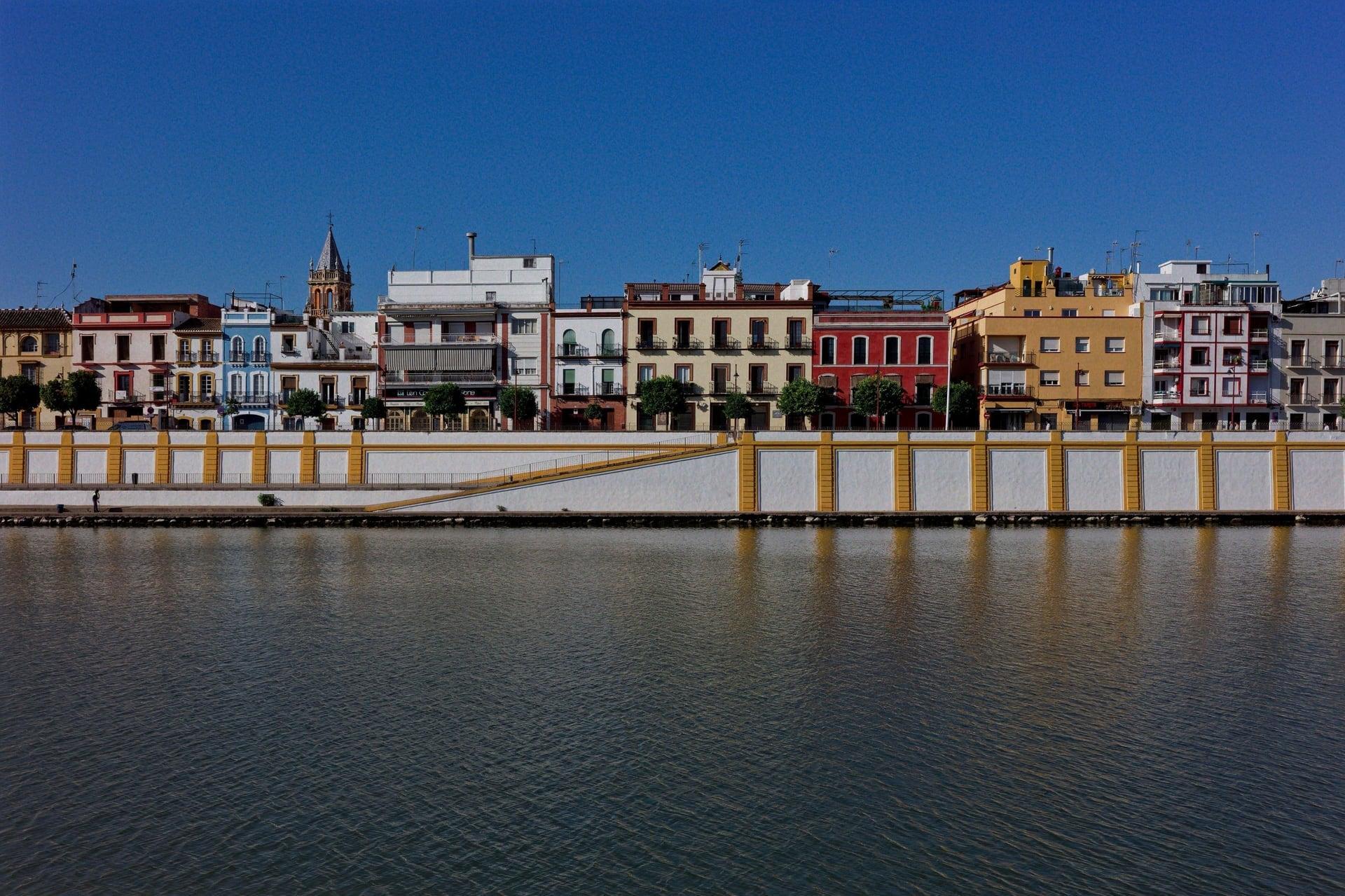
Below the wall on the river side is the Guadalquivir, and across it, the houses of Calle Betis in Triana. Look back across the road, too: the long front of the bullring. This bank was the port of the Indies. For two centuries the crown made Seville the only port for the trade…
Full narration for this stop unlocks with the tour.
11. Monumento a la Tolerancia: the Salt Quay
Ahead, by the water, stands a big sculpture of pale concrete. Take the short path down to it. This is the Monumento a la Tolerancia, the Monument to Tolerance, unveiled on the first of April nineteen ninety two. The idea dated from nineteen eighty. It stands on the Muelle de la…
Full narration for this stop unlocks with the tour.
12. Puente de Triana: From Boats to Iron
Ahead, the iron arches of the bridge span the river. Its official name is the Puente de Isabel the Second, but most people in Seville call it the Triana bridge. For centuries there was no fixed bridge here. The city's guide says Seville and Triana were joined by a bridge of…
Full narration for this stop unlocks with the tour.
- Vista del teatro de la Maestranza (Sevilla). — Anual, CC BY-SA 4.0 · source
- The Hospital Santa Caridad in Sevilla. — Holger Uwe Schmitt, CC BY-SA 4.0 · source
- Vista del interior de las atarazanas de Sevilla tras su rehabilitación en 2025 — Anual, CC BY-SA 4.0 · source
- Arcadas góticas de las naves. — José Luis Filpo Cabana, CC BY 4.0 · source
- Postigo del Aceite (Sevilla). Antigua puerta o postigo de la muralla musulmana utilizada para la entrada del aceite en la ciudad. — Jl FilpoC, CC BY-SA 4.0 · source
- CC BY 3.|El Arenal. Sevilla.jpg — Jose Luis Filpo Cabana, CC BY 3.0 · source
- Sevilla-2025 — Alberto-g-rovi, CC BY 4.0 · source
Images may be cropped or resized. Other photos via Unsplash and Pexels.