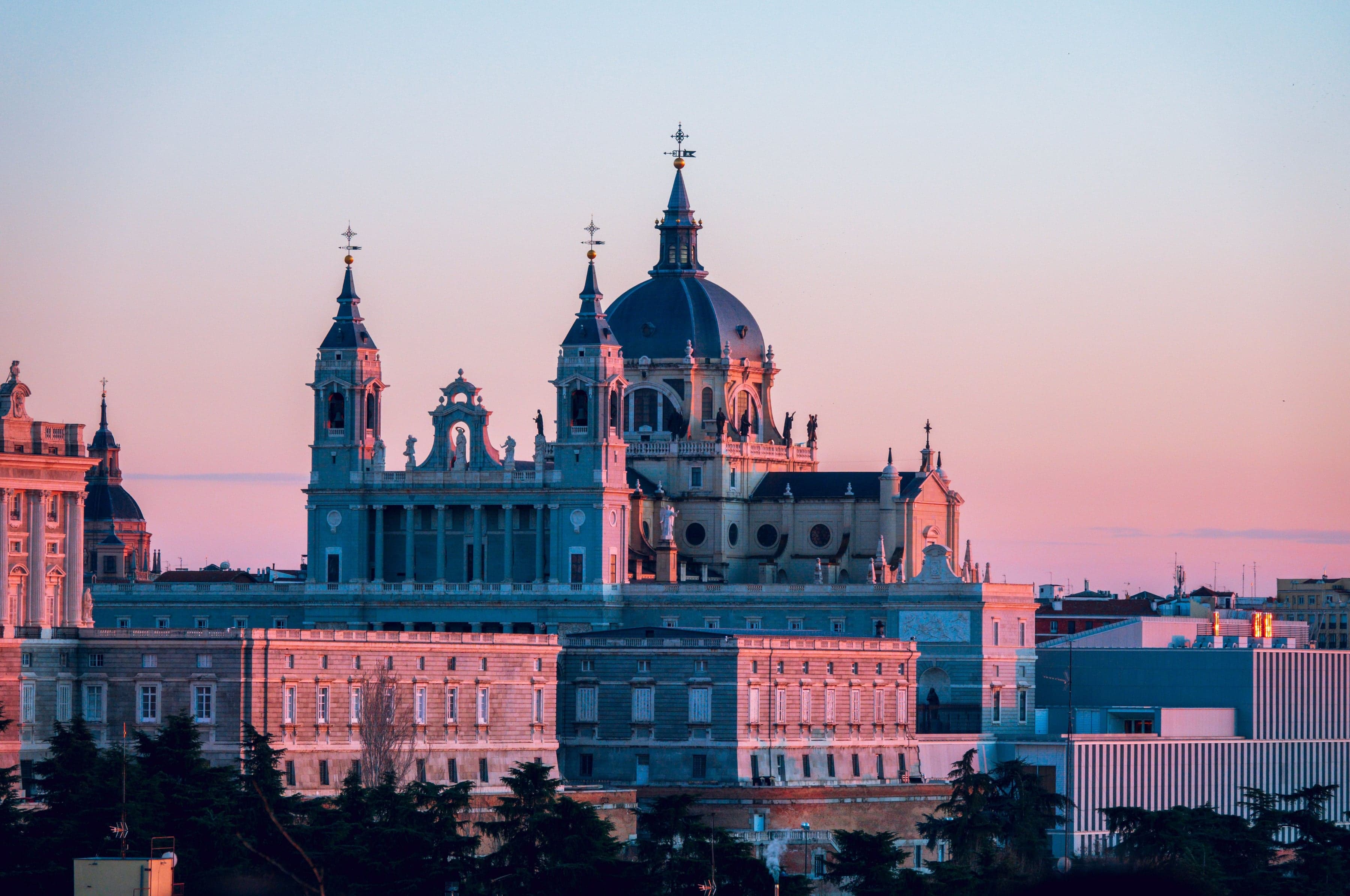
From the opera house past Philip IV's horse, the Royal Palace and the Almudena to the ninth-century wall, down into the Campo del Moro, through the Sabatini Gardens and up to the Temple of Debod.
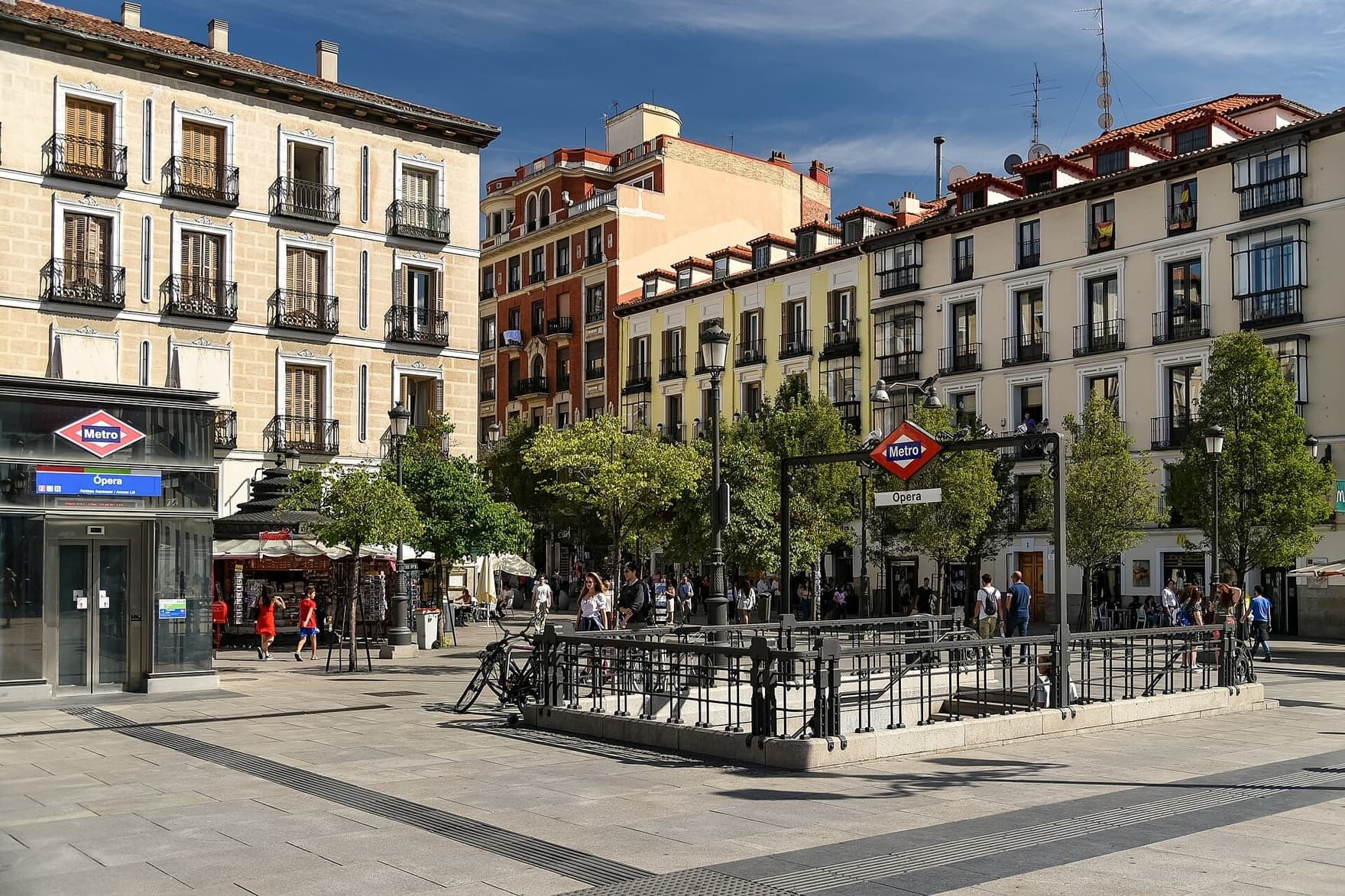
Start · Plaza de Isabel II: The Opera House on a Spring
DirectionsStops
- 1
Plaza de Isabel II: The Opera House on a Spring
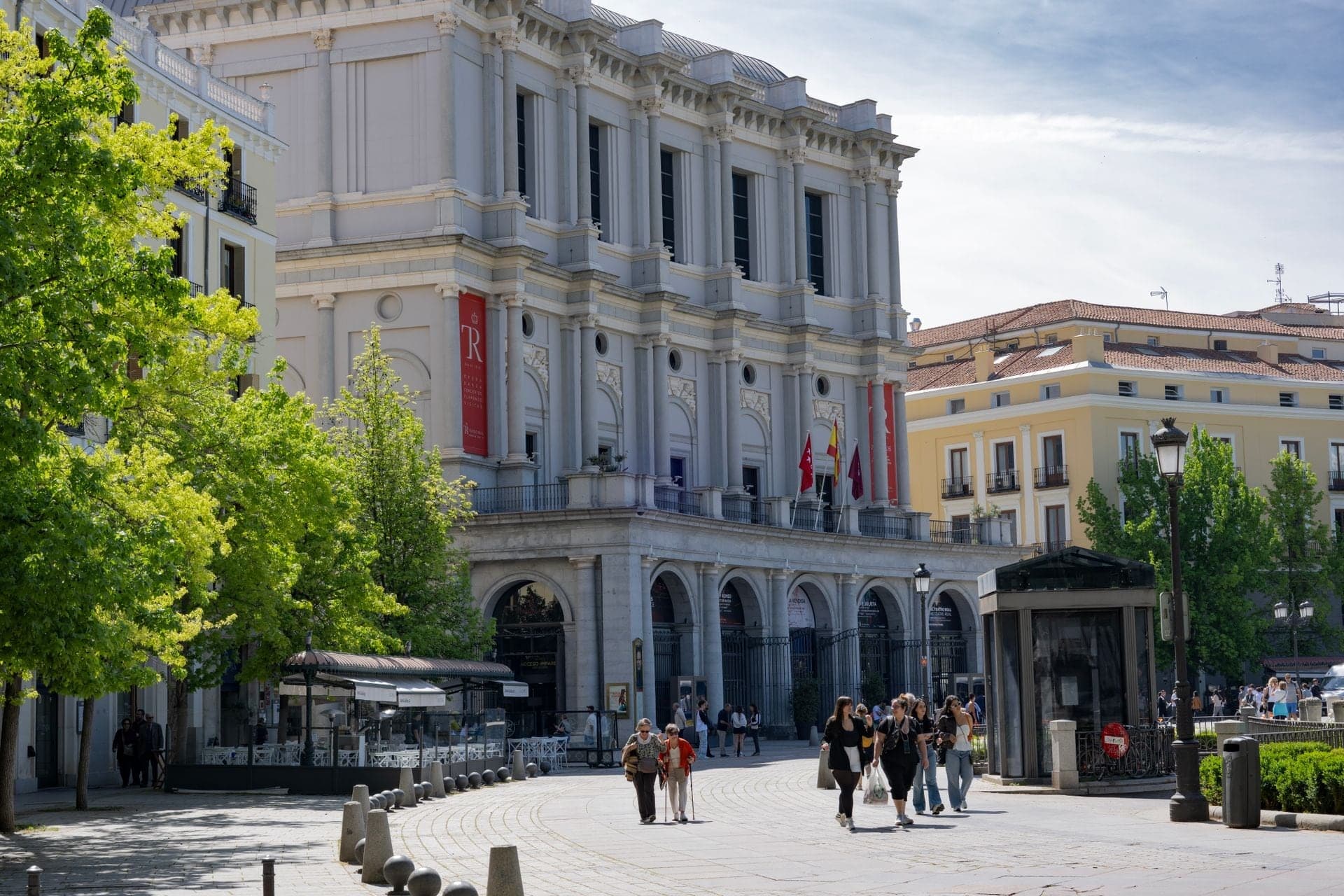
Madrid's opera house stands on the springs that ruined the theatre before it, with their old fountain under the square.
- 2
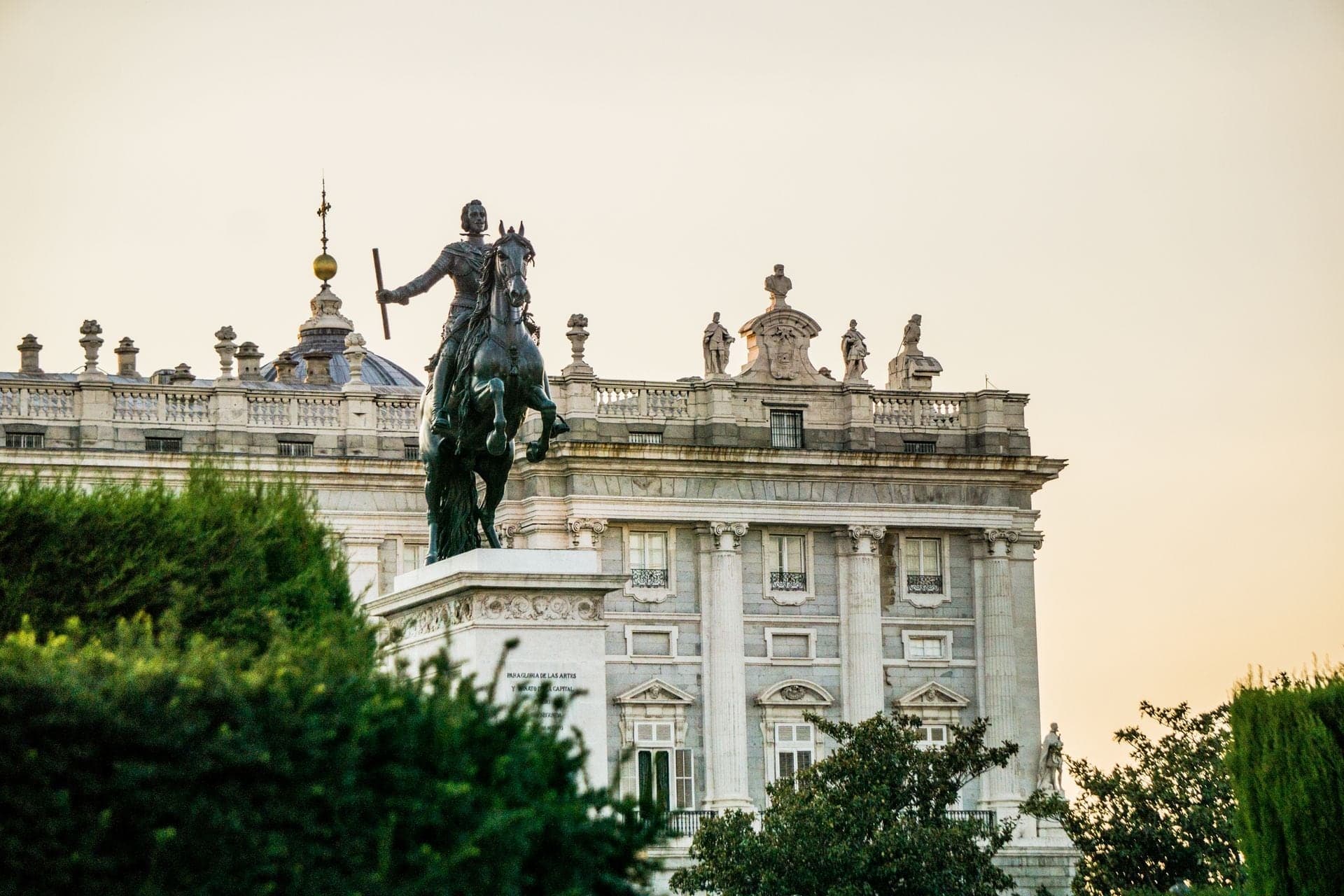
Plaza de Oriente: Philip IV's Rearing Horse
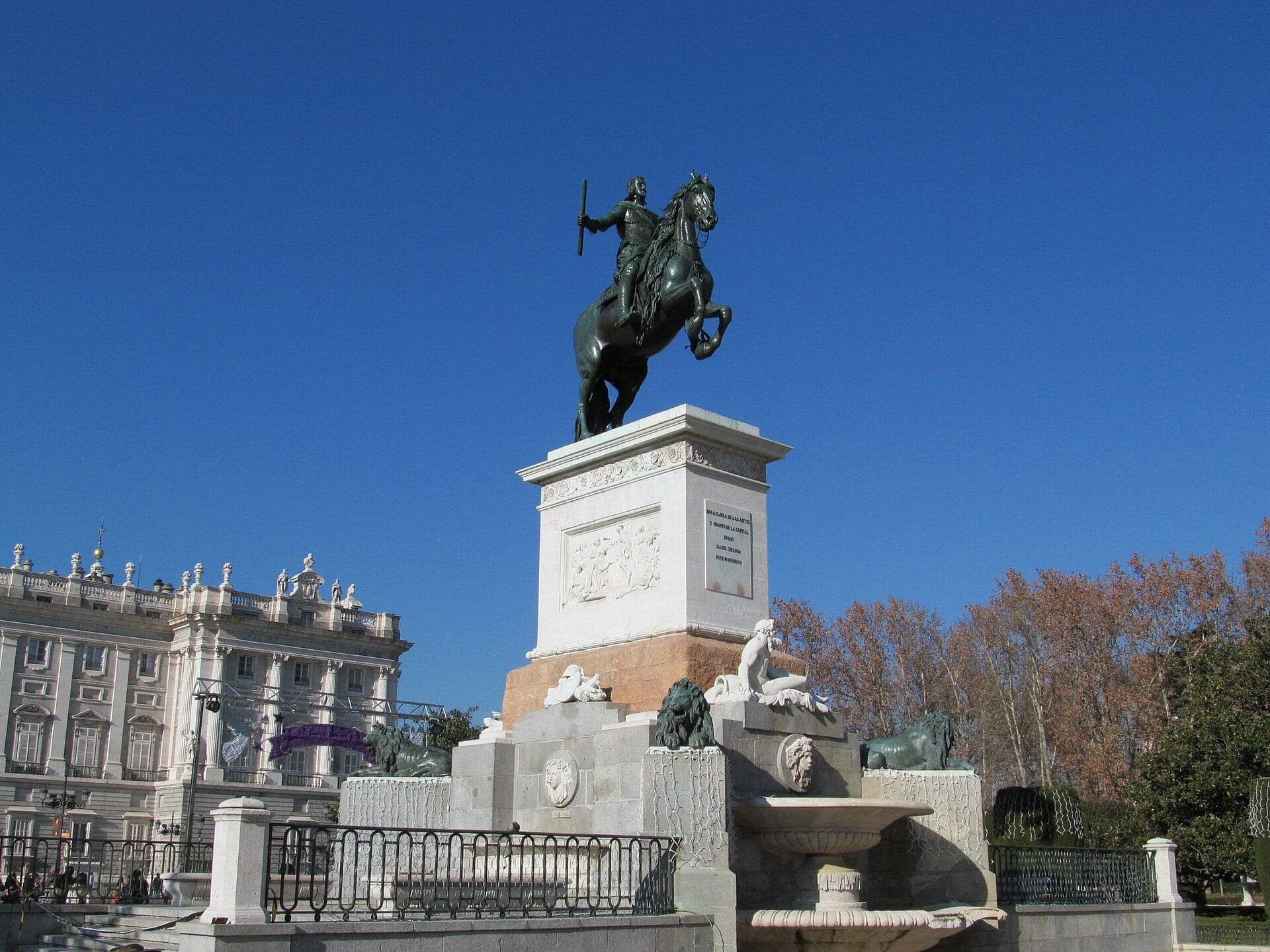
A bronze king on a horse balanced on its hind legs, drawn by Velázquez and cast in Florence, in the palace's garden square.
- 3
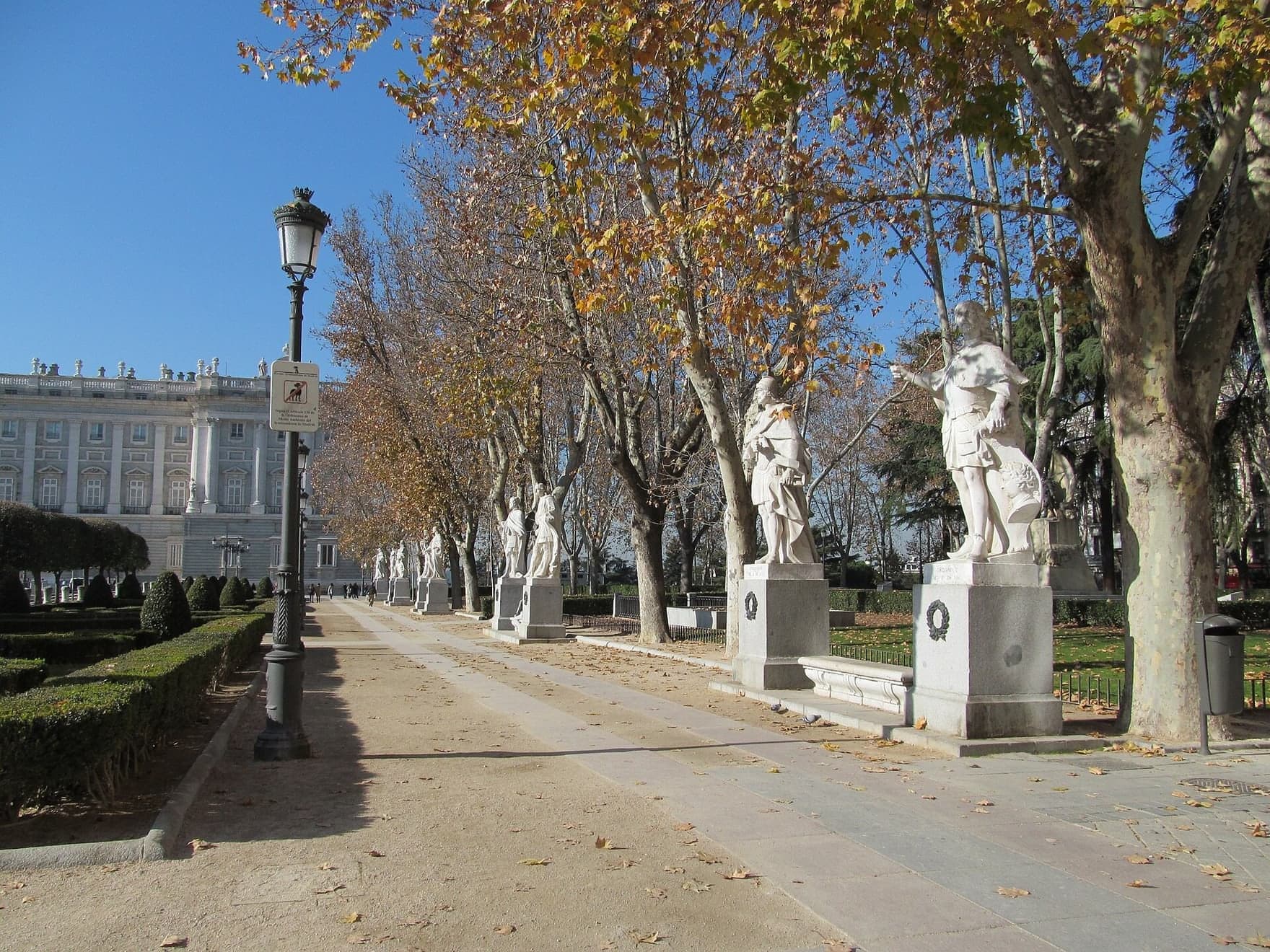
Royal Palace East Front: The Kings off the Roof
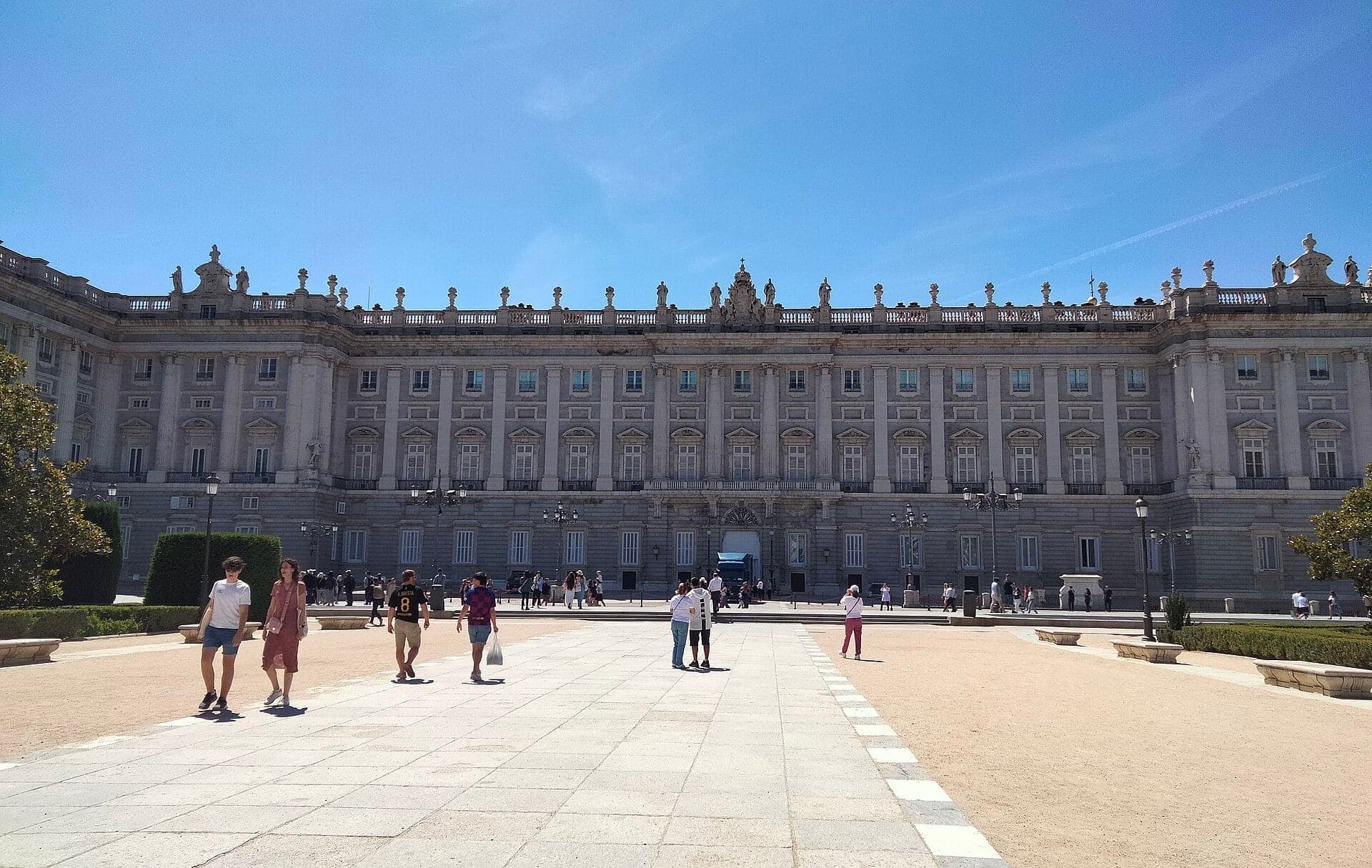
The first full view of the Royal Palace, beside stone kings carved for its roofline and taken down by Carlos III.
- 4
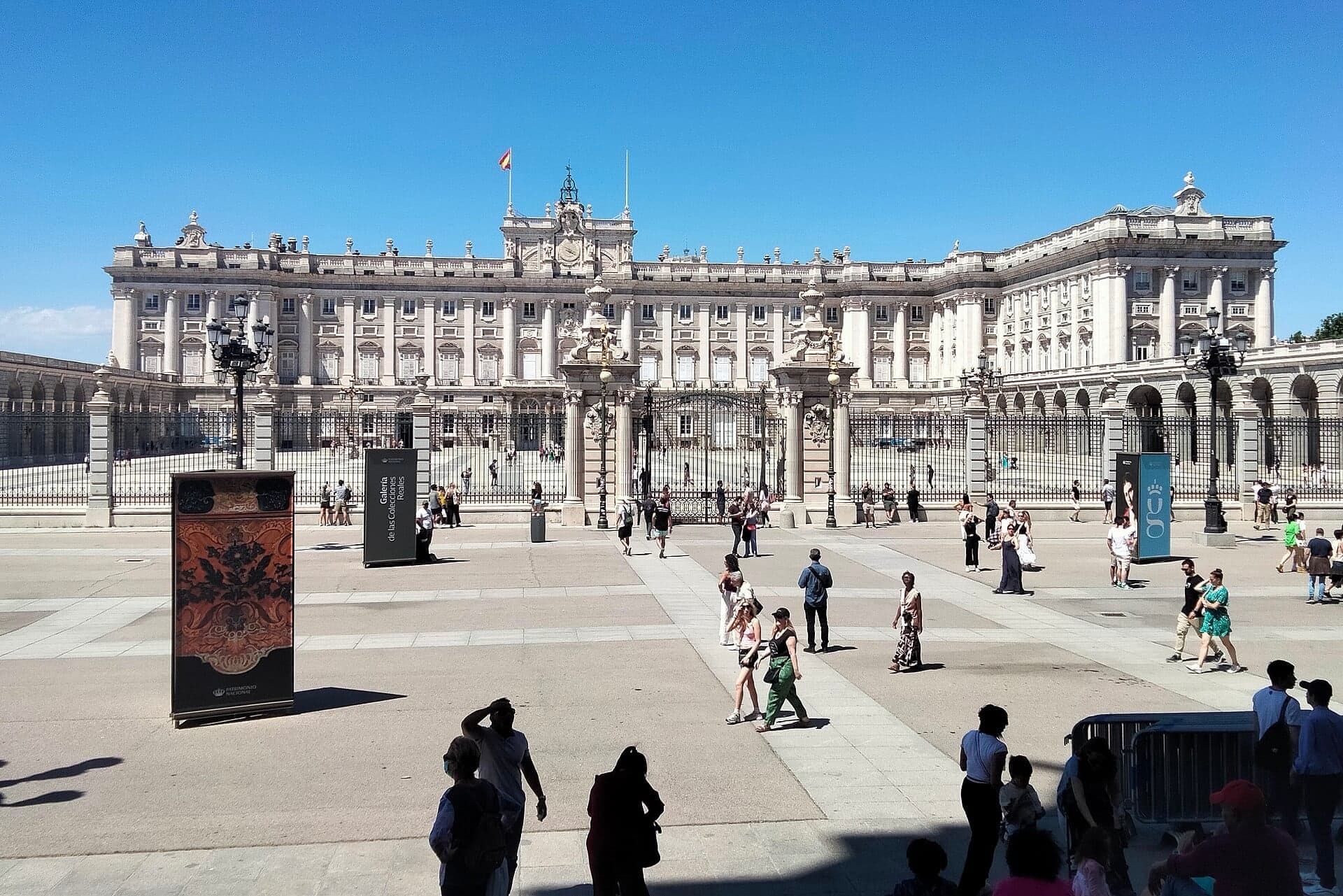
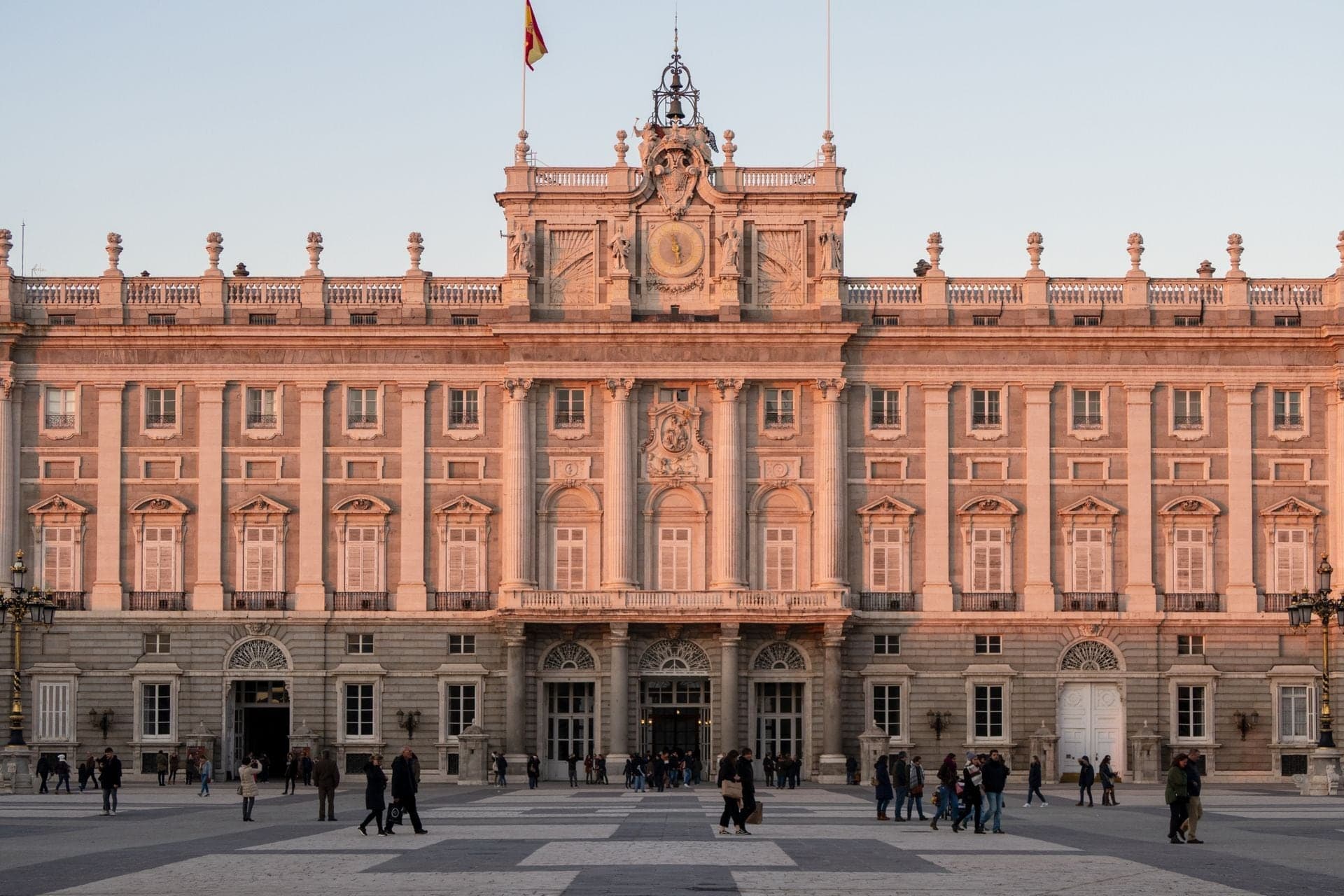
Plaza de la Armería: Palace and Cathedral Face to Face
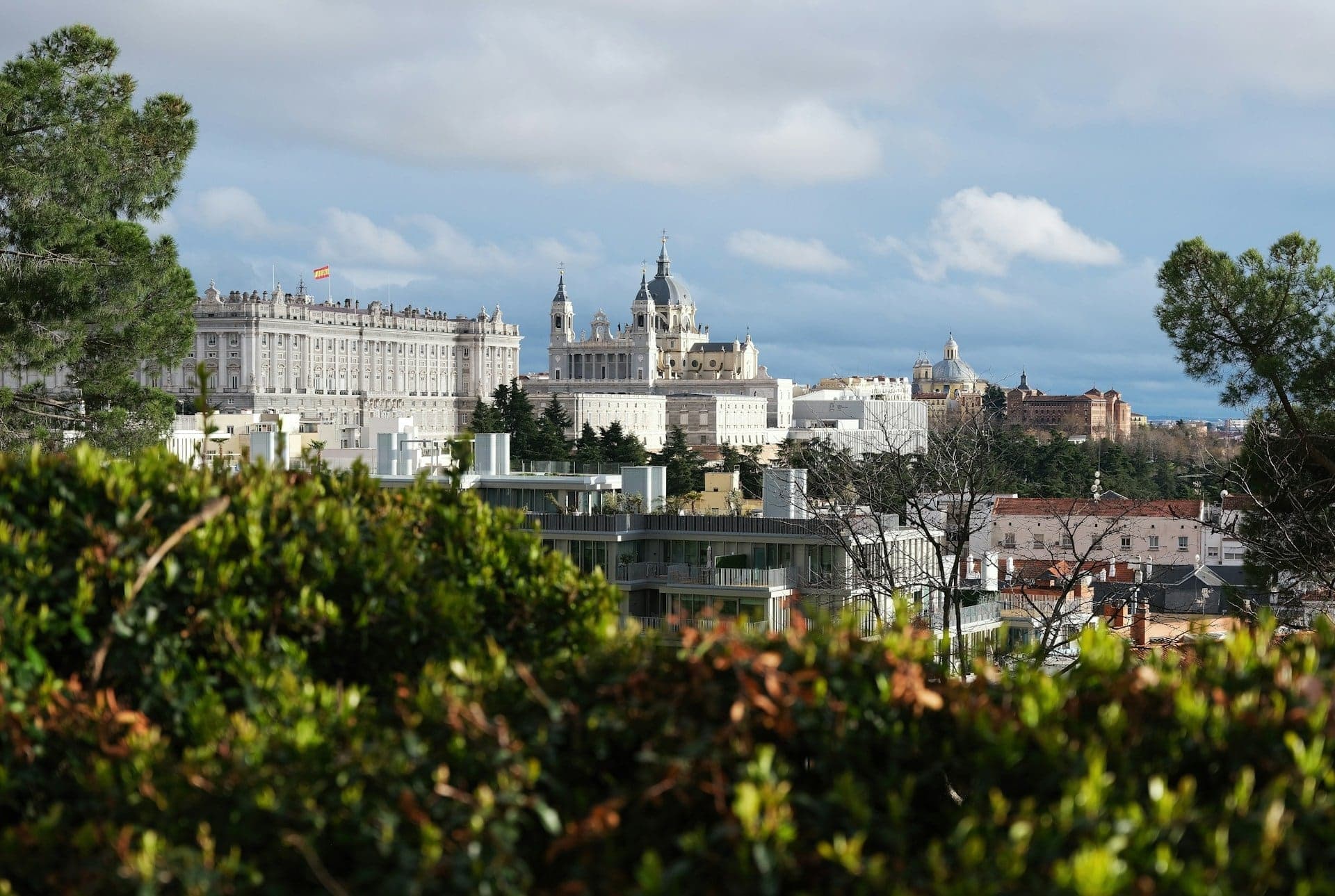
The palace's main front with Sabatini's clock faces the Almudena Cathedral, finished in 1993, across one parade ground.
- 5
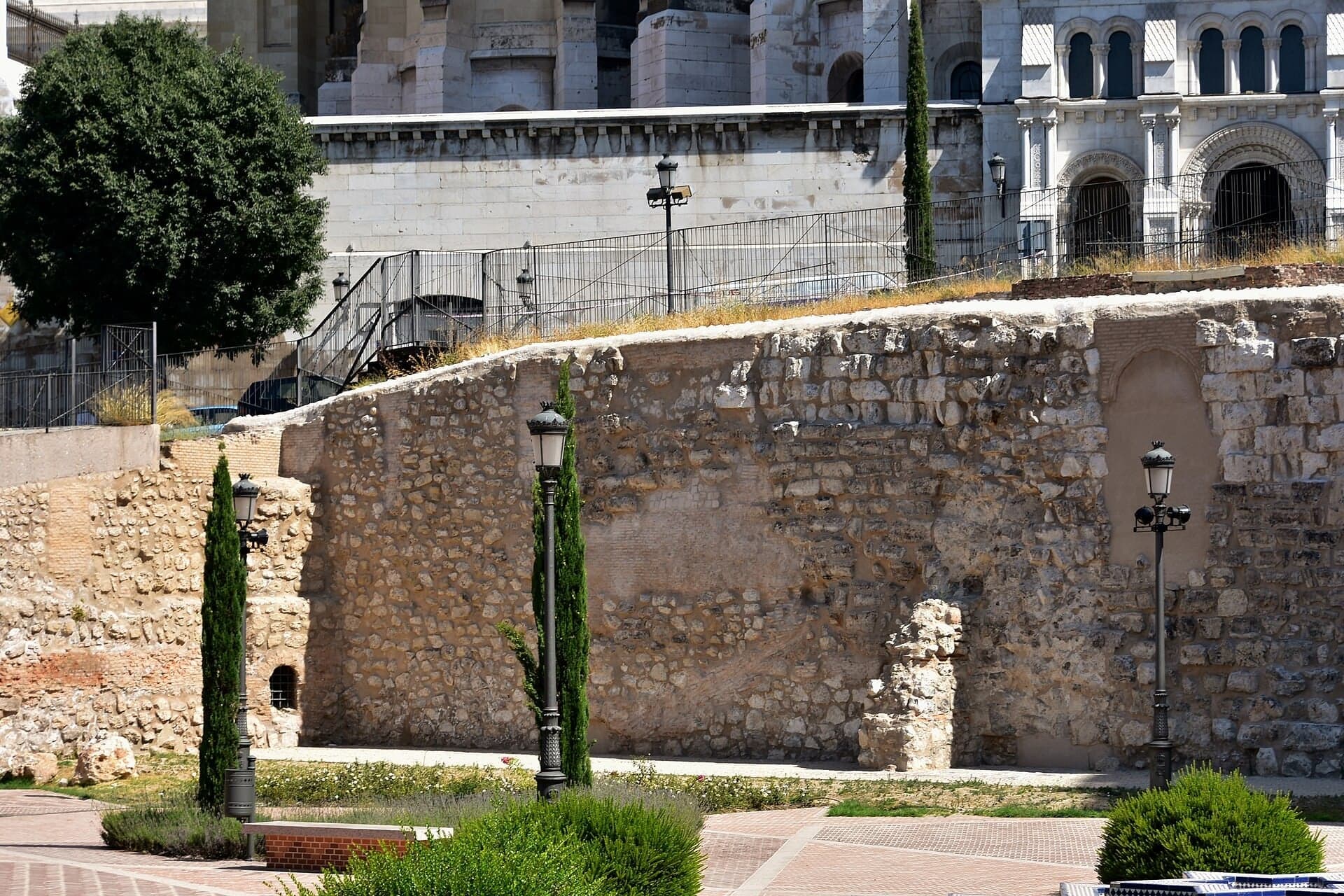
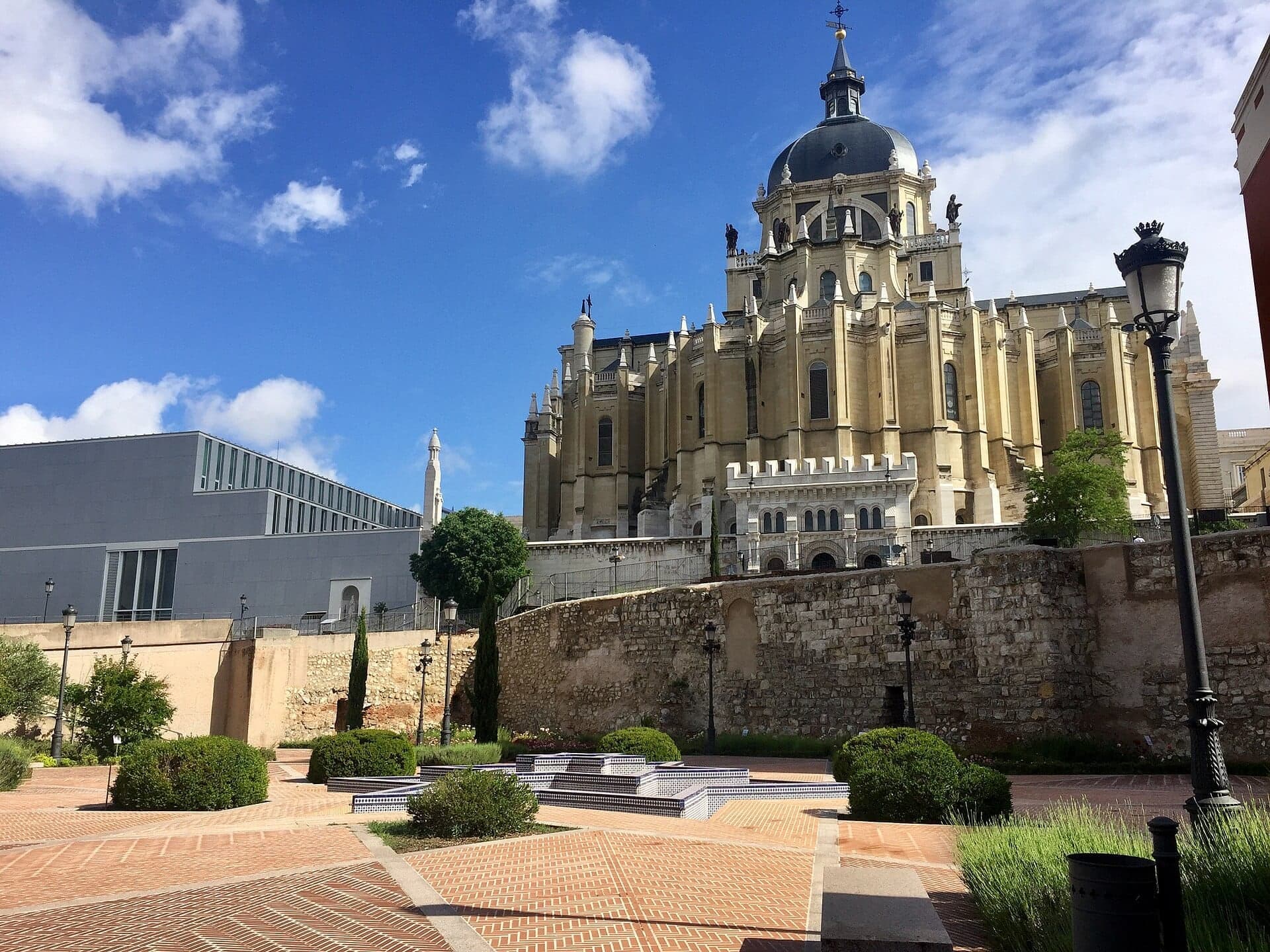
Muralla Árabe: Madrid's Ninth-Century Wall
The oldest stretch of Madrid's walls you can still see, built by the emirs of Córdoba on the bluff above the river.
- 6
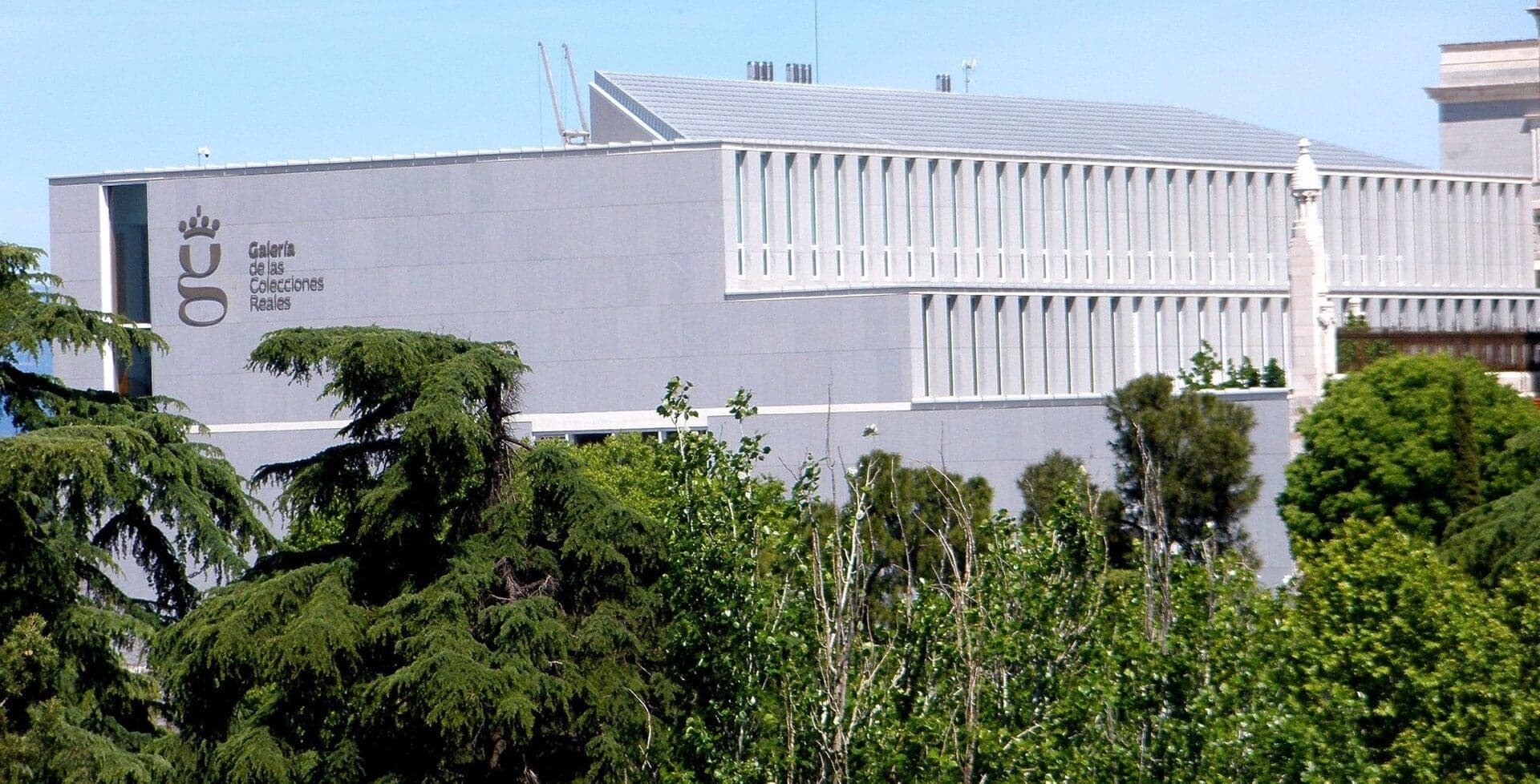
Campo del Moro: The Garden Under the Cliff
Inside the Campo del Moro, below the palace's cliff, where a royal museum has been dug into the slope.
- 7
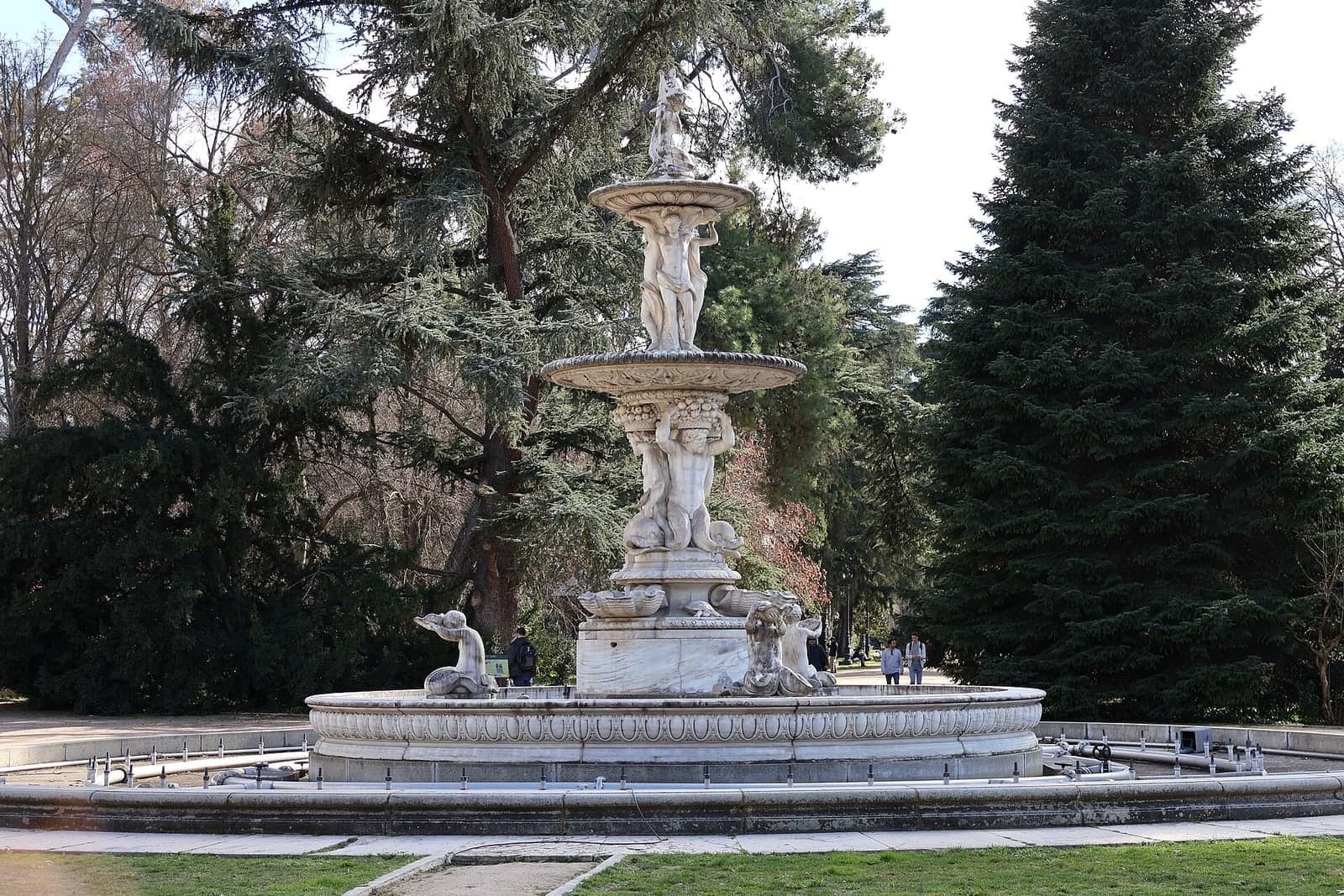
Fuente de las Conchas: The Palace's Tall Side
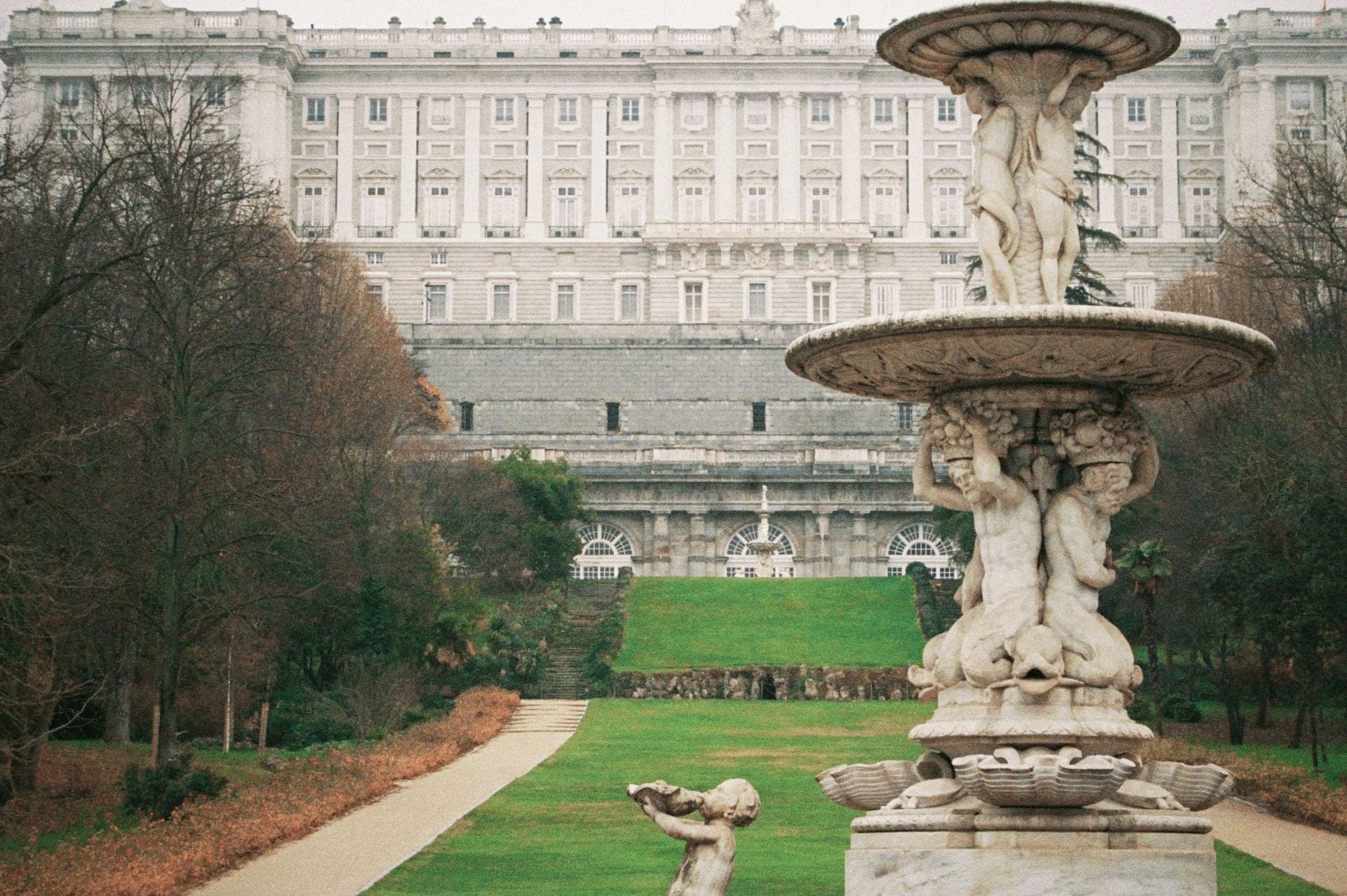
From the Shell Fountain, a long lawn rises past a second fountain to the palace's west front on its cliff.
- 8
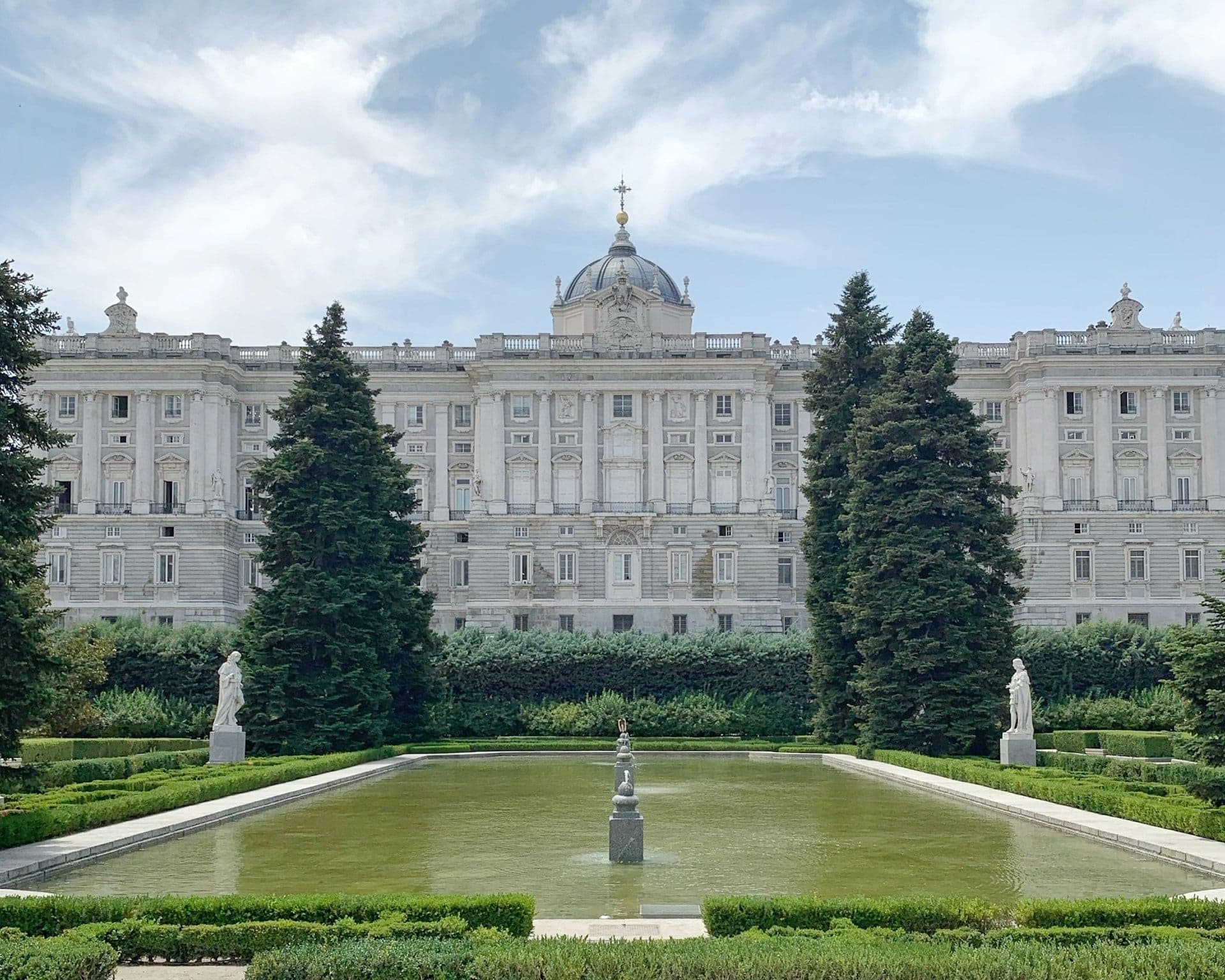
Jardines de Sabatini: Stables into a Garden
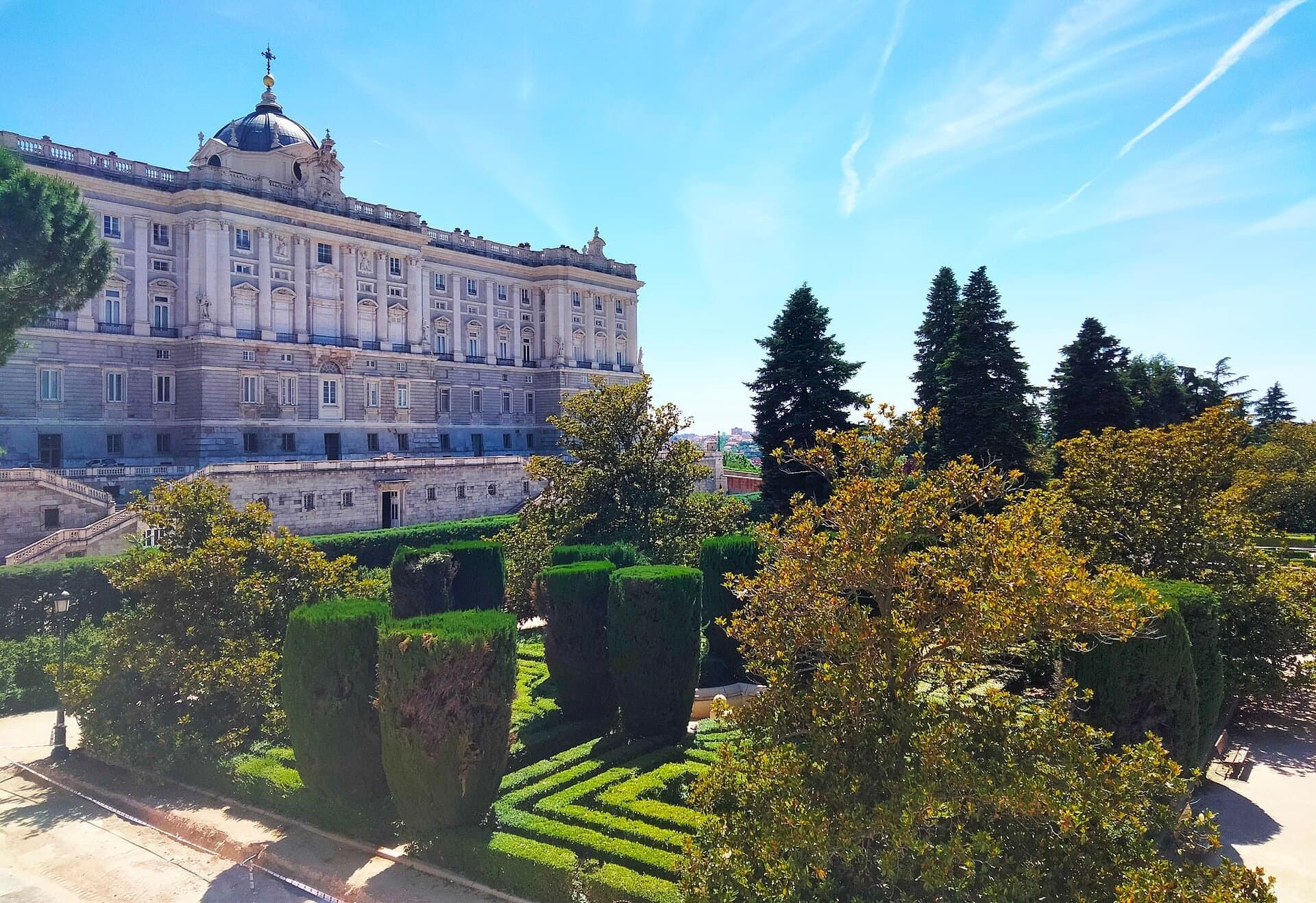
A public garden of clipped hedges and a long pond, opened in 1950 where Sabatini's royal stables stood, with kings round the pond.
- 9
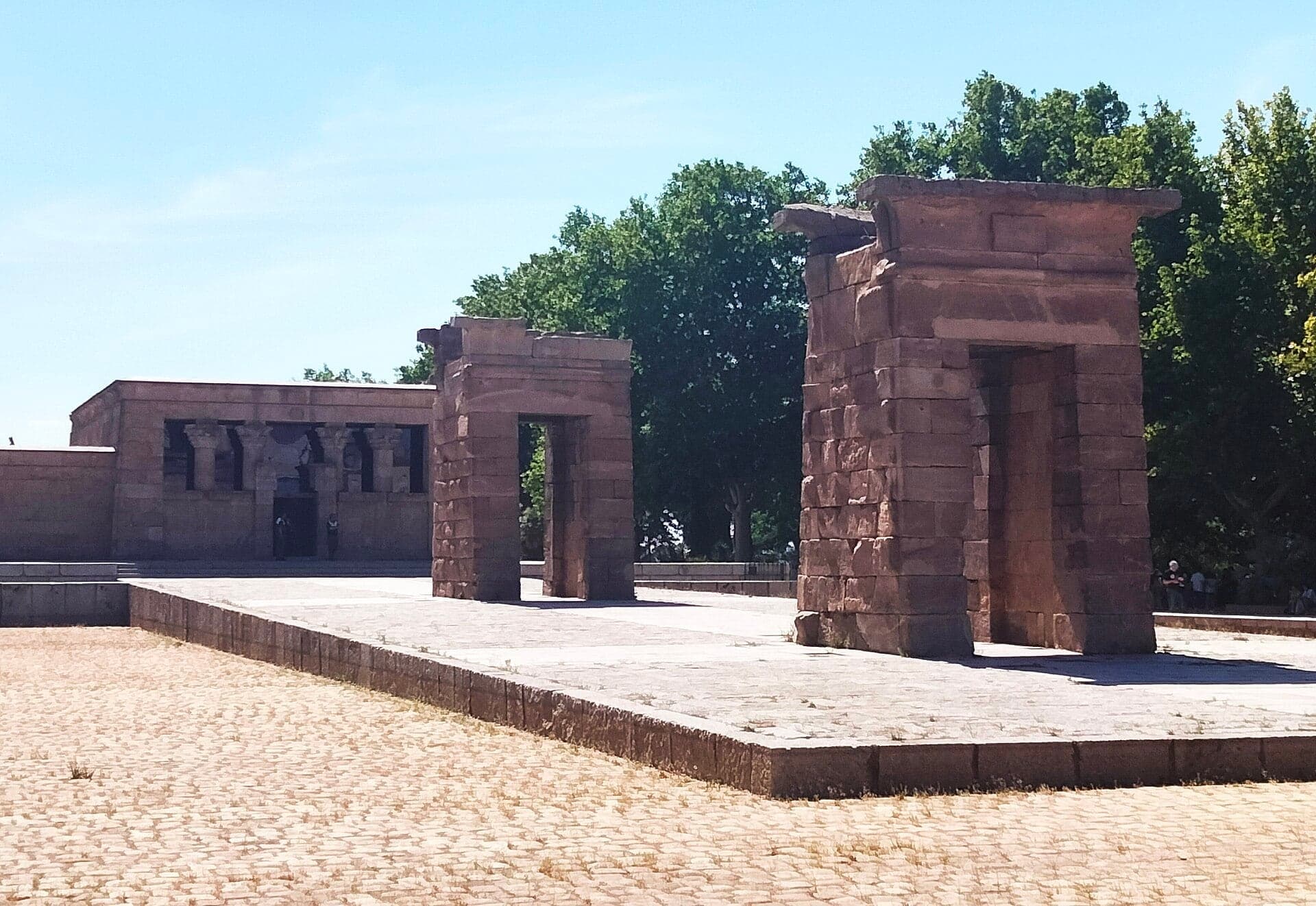
Templo de Debod: A Temple from the Nile
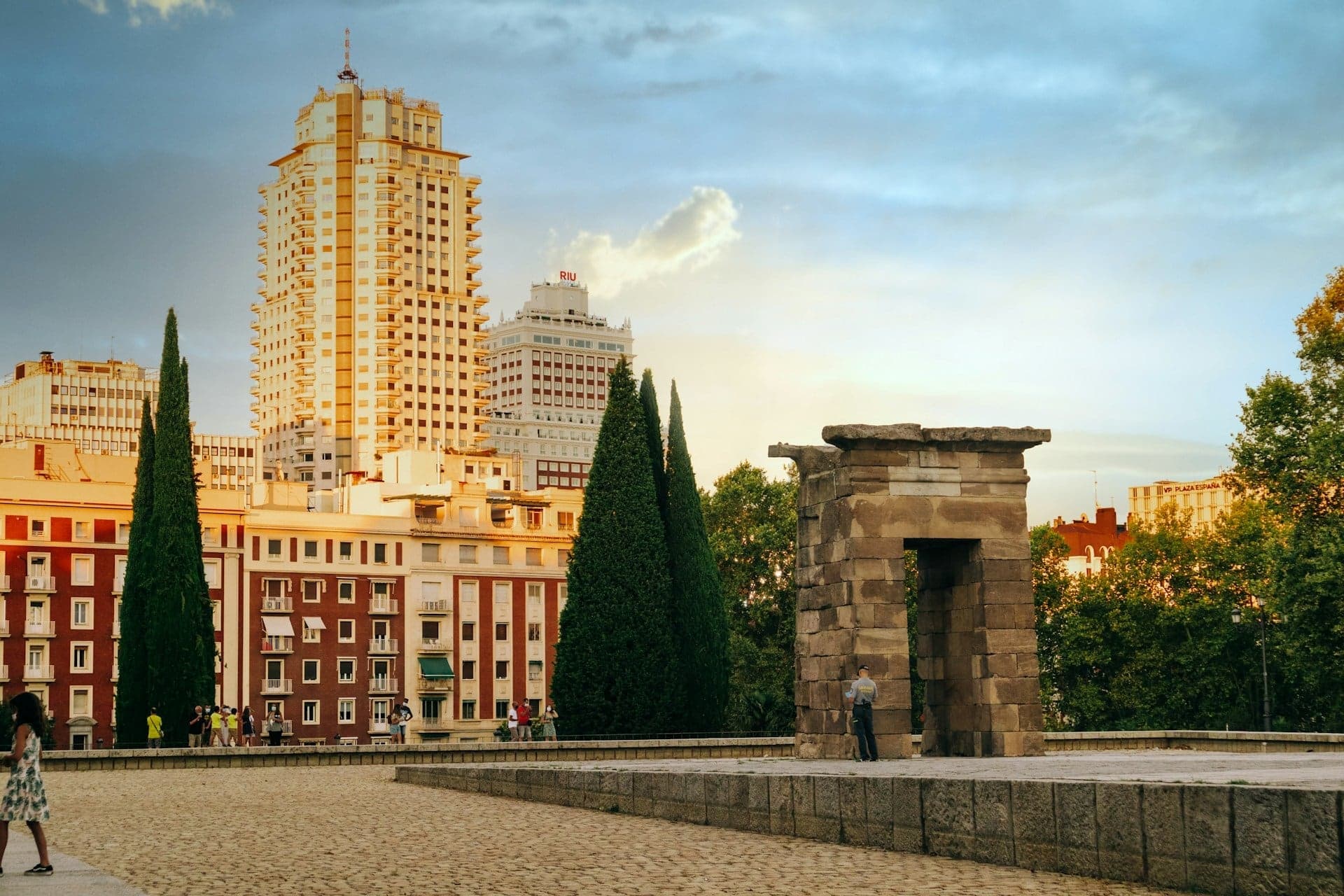
An Egyptian temple of the second century BC, a gift from Egypt, rebuilt stone by stone where a barracks once stood.
- 10
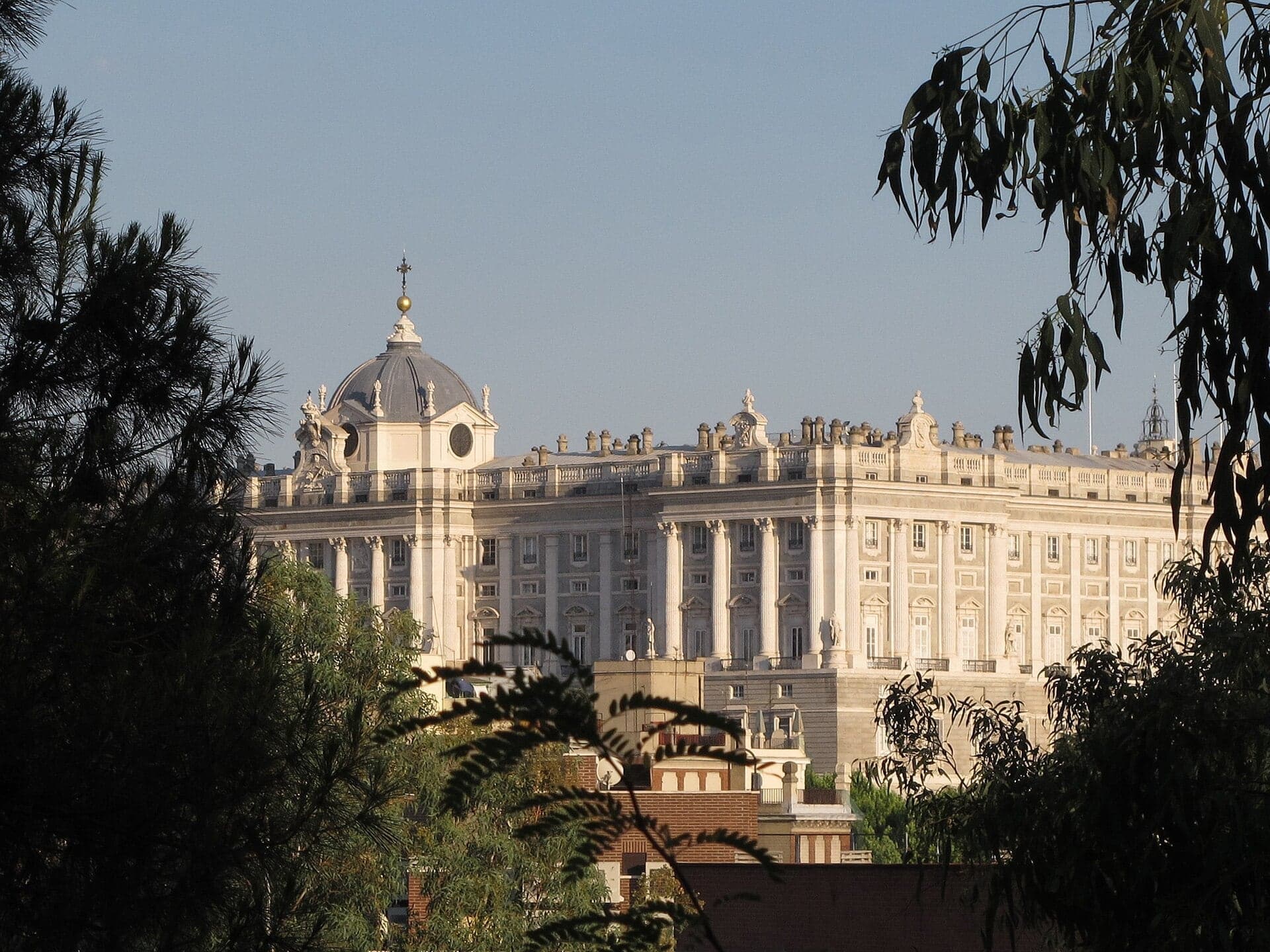
Mirador del Templo de Debod: The Edge Again
The walk ends at the viewpoint on the temple's platform, looking west over the river valley to the Casa de Campo.
Details
Best Time to Visit
Any day but the three days the Campo del Moro closes (25 December, 1 January and 1 May), starting in the early afternoon so you reach the Temple of Debod for the evening light. The Campo del Moro's exit gate on the Cuesta de San Vicente closes at 18:00 from October to March and 20:00 from April to September, so start by about 16:00 in winter and 18:00 in summer. The Temple of Debod's interior is closed on Mondays. On Wednesdays and Saturdays (not July to September), the Changing of the Guard takes place at the palace before an early-afternoon start (the monthly Relevo Solemne is at 12:00), so see it first. Checked 14 October 2026.
Pro Tips
- •Getting to the start: Ópera Metro (lines 2 and 5, and the Ramal shuttle to Príncipe Pío) opens straight onto Plaza de Isabel II. Checked 14 October 2026.
- •Getting away from the end: Plaza de España (lines 2, 3 and 10) and Ventura Rodríguez (line 3) are each about 550 metres from the viewpoint; Príncipe Pío (lines 6, 10 and the Ramal, plus Cercanías trains) is about 500 metres downhill. Checked 14 October 2026.
- •Late start or closed garden: skip the Campo del Moro. From the wall (stop 5), walk back up the Calle de Bailén pavement past the palace to the Sabatini Gardens, then on to the temple: 8 stops, about 2.3 km. The Sabatini Gardens themselves close in the evening (about 21:00 from October to April and 22:00 from May to September, hours not confirmed by the city); after that, go straight up the Bailén pavement to Plaza de España. The app plays a stop by itself only when it is the next one, so on this route tap the Sabatini Gardens stop when you reach it.
- •Caños del Peral, under stop 1: the remains of the 16th-century fountain and the palace's aqueduct are shown free in Ópera Metro station, Friday 16:00 to 20:00, Saturday 10:00 to 14:00 and 16:00 to 20:00, Sunday 10:00 to 14:00. Checked 14 October 2026.
- •Royal Palace (entrance in the Plaza de la Armería, stop 4): October to March Monday to Saturday 10:00 to 18:00, Sundays and holidays 10:00 to 16:00, last entry one hour before closing; free Monday to Thursday 16:00 to 18:00 in winter and 17:00 to 19:00 from April to September for EU and Ibero-American citizens and EU residents with ID. It can close for official events. Check prices and closures on Patrimonio Nacional's site. Checked 14 October 2026.
- •Changing of the Guard: Wednesdays and Saturdays, except July to September. The full ceremony, the Relevo Solemne, is on the first Wednesday of the month (not January, August or September); the next is 4 November 2026 at 12:00. Checked 14 October 2026.
- •From the far west end of the Plaza de la Armería, the Mirador de la Cornisa looks over the Campo del Moro to the Casa de Campo. It is a dead end: come back the same way.
- •Campo del Moro: free, open daily except 25 December, 1 January and 1 May. Cuesta de la Vega gate 10:00 to 20:00 all year; Cuesta de San Vicente gate 10:00 to 18:00 October to March, 10:00 to 20:00 April to September. Opening depends on the weather and official events. There are toilets and a café inside. Checked 14 October 2026.
- •Step-free help: maps show a lift at the Sabatini Gardens' corner on the Cuesta de San Vicente, added in the 2024 to 2025 works (working order not confirmed). A step-free way up onto the Temple of Debod's platform has not been confirmed; the route uses two flights with handrails.
Safety & Precautions
- •The Campo del Moro's San Vicente gate, where the walk leaves the garden, closes at 18:00 from October to March. Do not enter the garden after about 17:00 in winter: use the evening route in the tips.
- •Between stops 5 and 6 the pavement follows the Cuesta de la Vega's switchbacks downhill. The last 30 metres to the garden gate are on a shared lane with no pavement: keep to the edge, cars are rare.
- •Outside the Campo del Moro's San Vicente gate, do not cross the Cuesta de San Vicente at the lights. Turn right and walk up the pavement for about 100 metres. It runs beside a busy dual carriageway.
- •Between stops 8 and 9 the route crosses Plaza de España's slow lanes and a one-way side street at marked or unmarked crossings, and climbs 21 and then 33 steps with handrails.
- •The palace's ticket queue forms in the Plaza de la Armería. The square closes for official events and at 20:00 from October to March; the stop works from the railing on the pavement.
- •The Temple of Debod's pond has been out of service and drained since 2018 because of leaks; the basin may be fenced. The cable car to the Casa de Campo was closed for works. Checked 14 October 2026.
- •Pickpockets work the Ópera Metro exits and Plaza de Isabel II, and the Debod platform is crowded at sunset. Keep bags closed and in front of you.
- •The Almudena Cathedral cannot be visited during services. Keep voices low inside.
Travel advisory: Exercise Increased Caution (Level 2).
Gallery
Related Reading
Go deeper on what you'll see, hear, and walk through.
Overview
Madrid Travel Guide: How Many Days, Getting Around, When to Go (2026)
5 min
Overview
One Day in Madrid: A Walkable Center-to-Prado Itinerary (2026)
6 min
Thematic
Best History Walking Tours in Madrid (2026)
2 min
Thematic
Capital by Decree: Why Madrid Is the Capital of Spain
5 min
Companion
Reading Madrid's Historic Center: The Wall You Cannot See
6 min
Read the walk
The full story of Royal Palace and Temple of Debod: Madrid on the Edge, in words. Prefer to listen? Play it narrated, from home or on location.
Introduction
Madrid, the capital of Spain, began on a cliff. In the ninth century an emir of Córdoba built a small walled fort on a bluff above the Manzanares river, watching the valley crossing on the road between Toledo and Segovia. The fort grew into a royal castle, the Alcázar, which burned for three days from Christmas Eve, seventeen thirty-four. The palace that replaced it still stands on the same edge.
This walk sees that palace from all four sides, one of them from the gardens at the foot of its cliff, and ends at an Egyptian temple on the next hill.
Diego Velázquez, the court painter, designed the bronze horse in the palace square. Carlos the Third, the first king to live in the palace, changed its skyline. And Francesco Sabatini, his architect, designed the clock on its main front and built royal stables that are now a public garden.
The walk is ten stops over nearly three kilometers, about a mile and three quarters, and takes about seventy-five minutes. It goes downhill into the Campo del Moro gardens, then climbs back up, with two flights of steps near the end. The palace is ticketed, and every stop works from outside. The garden's exit gate closes at six in the evening from October to March, so in winter, start by four. The walk begins outside Ópera Metro and ends at the temple's viewpoint, a favorite place for sunset.
1. Plaza de Isabel II: The Opera House on a Spring
Welcome to Plaza de Isabel Segunda, the square outside Ópera Metro, where this walk begins. Pickpockets work the Metro exits and this square, so keep your bag closed and in front of you.
Look across the square at the big building that closes its far end. That is the Teatro Real, Madrid's opera house. It runs ticketed tours, and this stop works from out here. The statue nearer you is Isabel the Second, the queen who opened it.
Start with what is under your feet. In the sixteenth century, spring water was gathered here, beside a stream, in a public fountain and washing place, the Caños del Peral. Its stones survive about ten meters below the square, in a small museum inside the Metro station, along with an aqueduct that carried water to the royal palace for nearly three centuries.
A theater took the fountain's name and opened here in seventeen thirty-eight. In eighteen thirteen, Spain's parliament sat in it for some months. Then the water won. In eighteen sixteen an architect reported the building an irrecoverable ruin because of an underground stream, and it was pulled down.
Its replacement had a problem of shape. The king was redesigning the square on the far side, and its outline was fixed first, so the new opera house had to fit the space left over. That is why its plan is an odd six-sided shape, which its own history compares to a coffin. It took more than thirty years to build, and it opened on the queen's birthday, in November eighteen fifty.
It did not stay open. In nineteen twenty-five part of the structure collapsed, and the house was closed for forty-one years. It came back as a concert hall in nineteen sixty-six, and as an opera house in nineteen ninety-seven.
Follow the route round the side of the opera house. Next is a bronze horse standing on two legs.
2. Plaza de Oriente: Philip IV's Rearing Horse
Walk on into the garden of Plaza de Oriente and stop on the path near the big bronze horseman. Find the horse first: it is rearing, its front hooves in the air.
The rider is King Philip the Fourth. His father already had a bronze horse in the Plaza Mayor, and Philip wanted a better one. A walking horse was proposed and turned down: his chief minister wanted it rearing, and the sculptor had to start his model again.
The sculptor was in Florence. He worked from a design by Diego Velázquez, the king's painter, and from a model of the king's head made by another sculptor, as a guide to the face.
Now the problem. A rearing horse puts all that bronze over two thin hind legs. Look at the tail. It sweeps down and touches the base, and it quietly takes some of the weight. The story goes that the sculptor consulted Galileo on the balance. However it was solved, this is one of the first, perhaps the first, large bronze horses balanced on its hind legs.
It was not made for this square. It was set up in sixteen forty-two at the Buen Retiro, the king's palace on the other side of the city, and moved here in the eighteen forties, under Queen Isabel the Second, and the pedestal's reliefs were added then. One of them shows the king giving Velázquez the cross of the Order of Santiago, the painter honored on the base of the statue he designed.
Then step back and look along the square. The opera house stands at one end, the palace at the other, and this horse rides between them. Around it stand two shell fountains and four bronze lions.
Follow the route toward the palace. Next are stone kings who were meant to stand on its roof.
3. Royal Palace East Front: The Kings off the Roof
Walk on to the western edge of the square, where a row of stone kings stands on pedestals, and stop by the first of them. Across the paving is the Royal Palace. It is ticketed, with its entrance at the next stop, and this stop works from out here. The busy road you might expect here runs in a tunnel under your feet.
Look at the kings first. Their names are carved on the pedestals, and the nearest are Visigothic kings, the first in the series, such as Ataúlfo. They were carved in the middle of the seventeen hundreds for the palace, to stand along the top of its walls: a parade of the rulers of Spain from the Visigoths down to the builders' own day.
Now look up at the palace's roofline. That is where they were meant to be. Carlos the Third, the first king to live here, wanted a plainer, more classical skyline, and he had the statues that stood out from the cornices taken down. So the kings ended up at street level, where you can read them.
The palace replaced the Alcázar, the old fortress palace, which burned for three days from Christmas Eve, seventeen thirty-four. Only some walls and one tower were left standing. The king, Philip the Fifth, hired the Italian architect Filippo Juvarra, whose scheme was four times the size of this, with twenty-three courtyards. Juvarra died, and his pupil fitted a smaller plan onto the narrow, sloping site, building from seventeen thirty-eight.
Nobody had forgotten the fire. The palace is vaulted in stone and brick throughout, with wood only in the doors and windows, so it could never burn the same way.
Follow the route along the palace front. Next is the parade ground where the palace and the cathedral face each other.
4. Plaza de la Armería: Palace and Cathedral Face to Face
Walk on through the railings into the wide square and stop a few steps inside. This is the Plaza de la Armería, the palace's parade ground. It is free, open from mid-morning to the evening and closed for official events. The palace's ticket entrance is here, so step out of any…
Full narration for this stop unlocks with the tour.
5. Muralla Árabe: Madrid's Ninth-Century Wall
Walk on down the Cuesta de la Vega and stop on the pavement where you can look across the street into a fenced garden below the cathedral. In it runs a long wall of rough stone blocks, with square towers. This is the oldest stretch of Madrid's walls you can still see. It was…
Full narration for this stop unlocks with the tour.
6. Campo del Moro: The Garden Under the Cliff
Walk on through the gate into the Campo del Moro gardens and stop on the path just inside. The garden is free. This gate is open from ten in the morning to eight in the evening all year, but the gate where we leave, on the far side, closes at six from October to March. Look up…
Full narration for this stop unlocks with the tour.
7. Fuente de las Conchas: The Palace's Tall Side
Walk on to the long lawn and stop beside the fountain with the carved shells, then face up the lawn, toward the palace. This is the view the garden was made for. The city's tourist office calls it one of Madrid's best: the palace behind a great green carpet set with fountains.…
Full narration for this stop unlocks with the tour.
8. Jardines de Sabatini: Stables into a Garden
Walk on down the steps into the lower garden and stop on the gravel path, facing the long pond with the palace beyond it. This is the palace's fourth side, its north front, framed like a stage set. These are the Sabatini Gardens, and the name is a clue to what is missing.…
Full narration for this stop unlocks with the tour.
9. Templo de Debod: A Temple from the Nile
Walk on to the east end of the temple's platform and stop on the path. Look along the long basin: two stone gateways stand one behind the other, and beyond them is the temple. The basin was a pond. It stopped working in two thousand eighteen, and it has been drained while the…
Full narration for this stop unlocks with the tour.
10. Mirador del Templo de Debod: The Edge Again
Walk on to the western edge of the platform, where the view opens out, and stop there. This is the end of the walk. Look out over the valley. Down there, below the trees, runs the river, the Manzanares, and beyond it, the great green spread of the Casa de Campo, the park that…
Full narration for this stop unlocks with the tour.
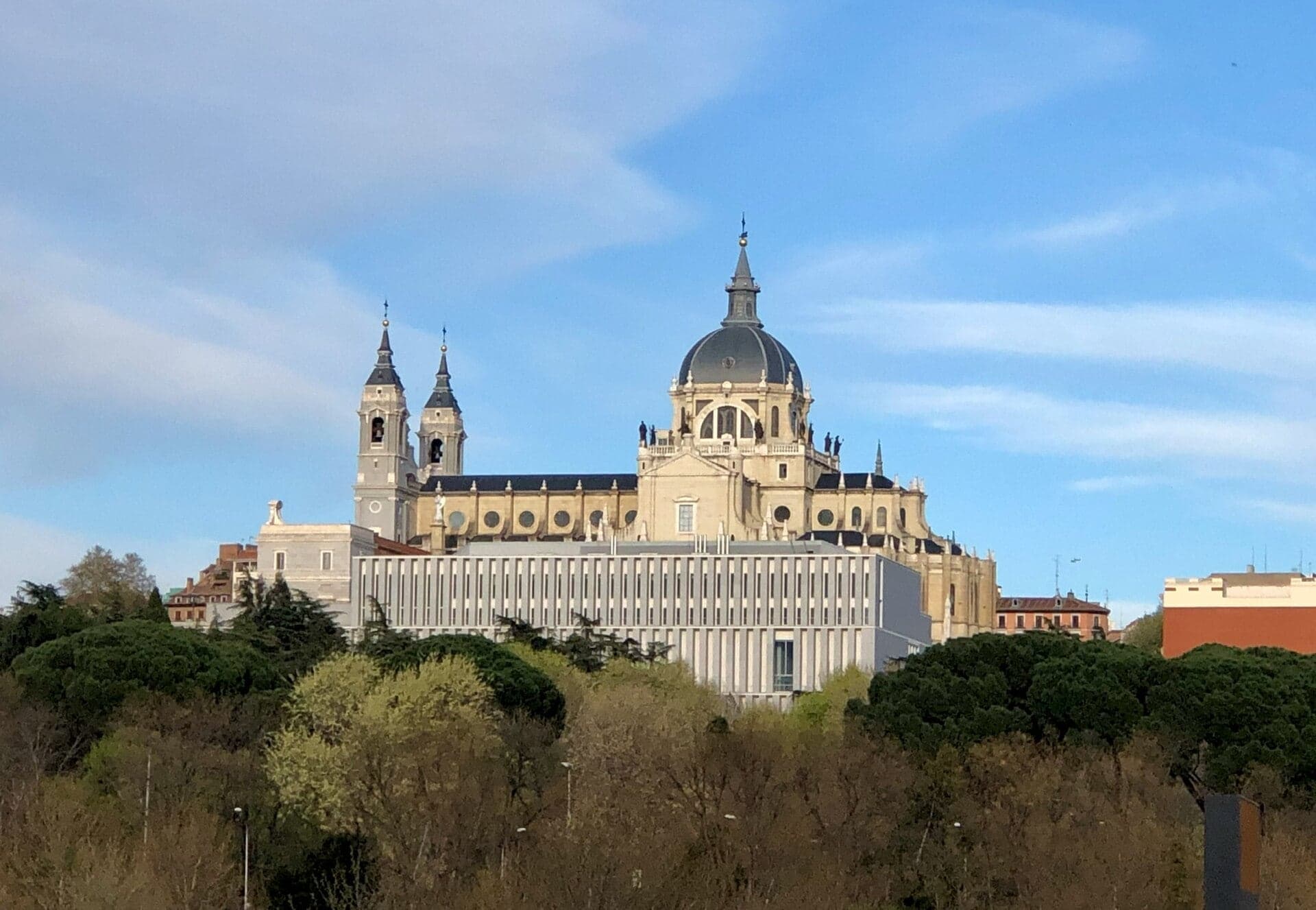
- Street scene from the Metro Opera, Madrid, Spain — Jorge Franganillo, CC BY 2.0 · source
- La estatua ecuestre de bronce de Felipe IV de España data de 1640 ubicada en la Plaza de Oriente de Madrid (España) e inaugurada en 1843. — Basilio, CC BY-SA 4.0 · source
- Palacio Real de Madrid, façana est, des de la Plaza de Oriente — Enric, CC BY-SA 4.0 · source
- Palacio Real de Madrid: Estatuas, Plaza de Oriente — Basil Sixto, CC BY-SA 2.0 · source
- Plaza de la Armería (Madrid), al fons el Palacio Real — Enric, CC BY-SA 4.0 · source
- Arab wall of Mayrit (Madrid), 9th century and after (2) — Richard Mortel from Riyadh, Saudi Arabia, CC BY 2.0 · source
- Fachada posterior de la Catedral de la Almudena. Madrid, España Vista desde el Parque Mohamed I, con los restos de la muralla islámica. — Riozujar, CC BY-SA 4.0 · source
- Fachada oeste de la Catedral de la Almudena, Madrid, España. Vista desde el Puente de Segovia. — Riozujar, CC BY-SA 4.0 · source
- Fuente de las Conchas en los jardines de Campo del Moro, en Madrid (España). — Américo Toledano, CC BY-SA 4.0 · source
- Jardines de Sabatini i façana nord del Palacio Real (Madrid), des de la Calle de Bailén — Enric, CC BY-SA 4.0 · source
- Templo de Debod, Parque del Oeste (Madrid) — Enric, CC BY-SA 4.0 · source
- La montaña del Príncipe Pío se encuentra situada en Madrid, entre la plaza de España y las calles de la Princesa, Marqués de Urquijo y Ferra — jacinta lluch valero from madrid * barcelona...., (España-Spain), CC BY-SA 2.0 · source
Images may be cropped or resized. Other photos via Unsplash and Pexels.