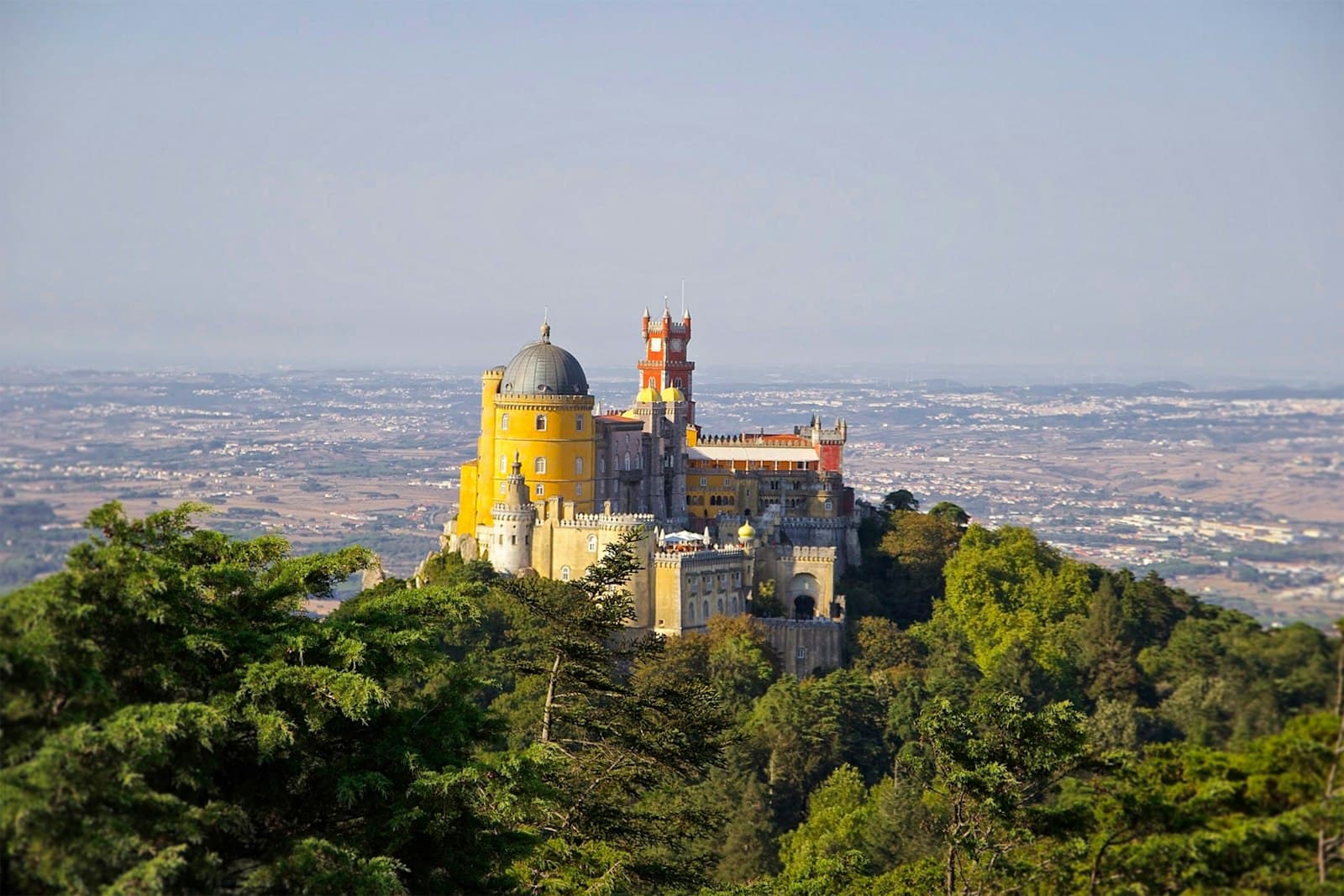
Sintra looks like the most ancient dream in Europe, yet almost everything you fall in love with here was designed on purpose in the eighteen hundreds. This walk up the cool green mountain reads the fairy tale as a deliberate masterpiece.
Start · Serra de Sintra: The Mountain of the Moon
DirectionsStops
- 1
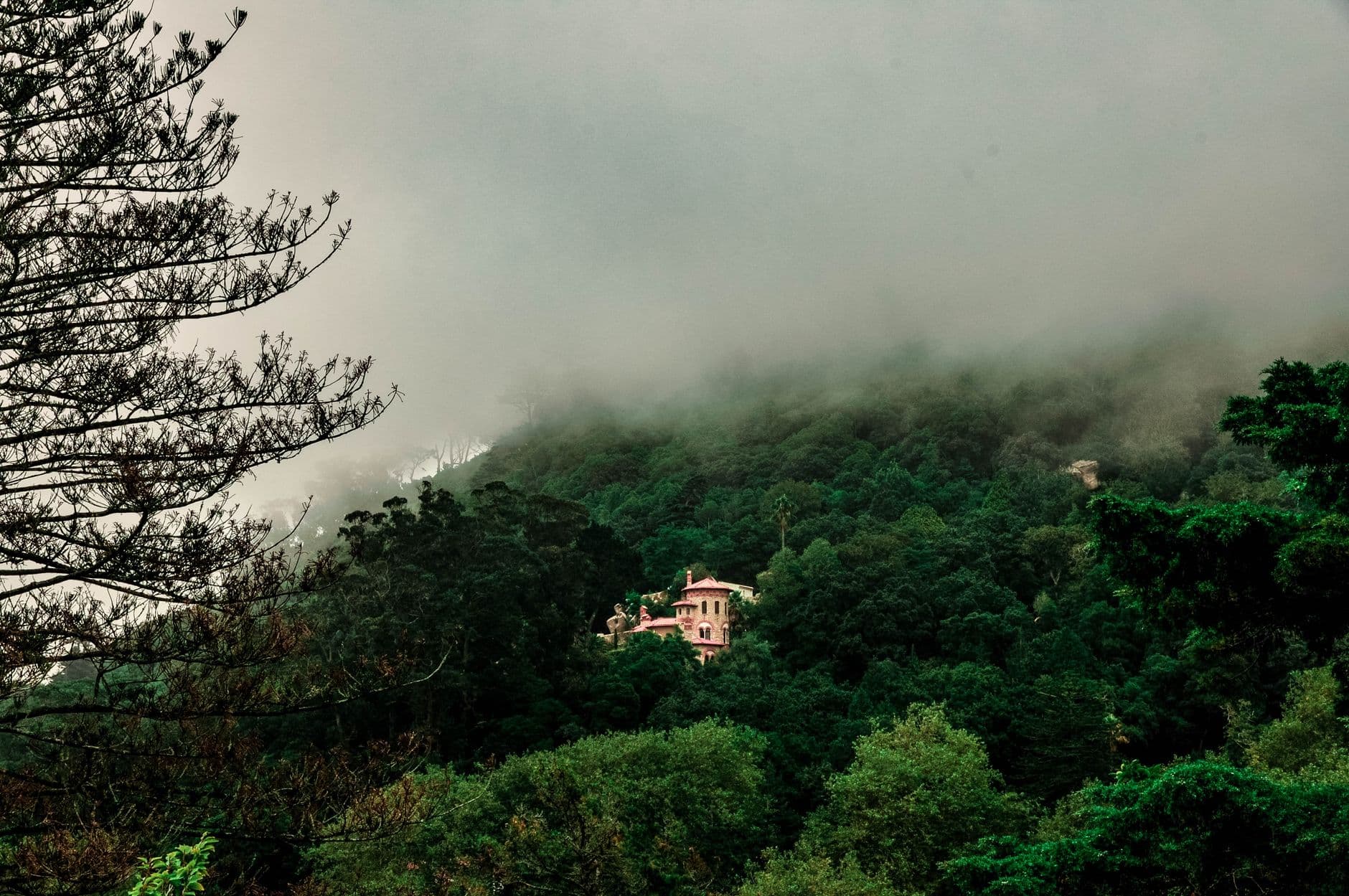
Serra de Sintra: The Mountain of the Moon
The cool, misty granite mountain whose damp forest microclimate drew monks, kings, and Romantics alike, and whose fame comes from deliberate nineteenth-century authorship.
- 2
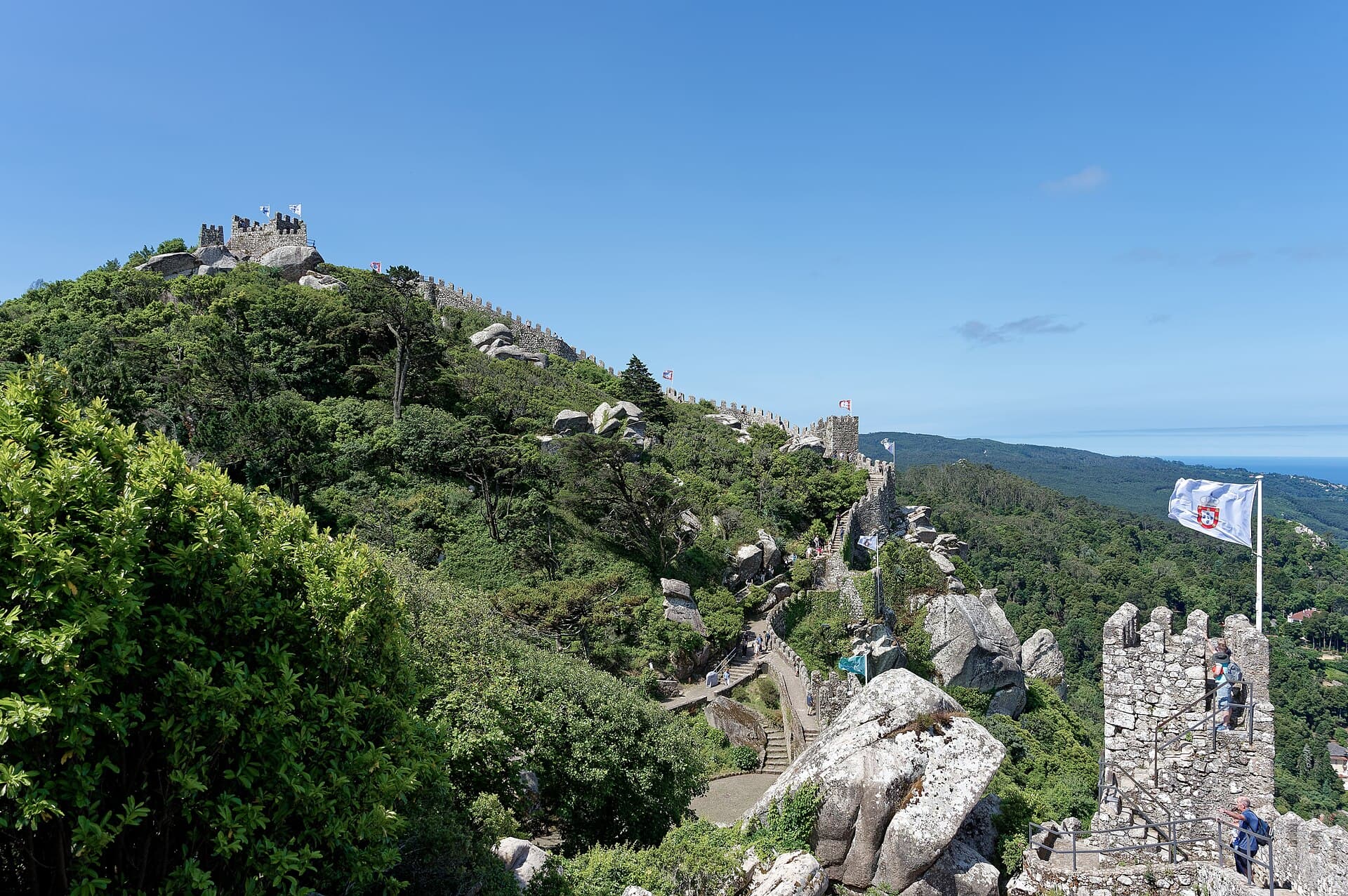
Castelo dos Mouros: The Genuinely Ancient Ruin, Curated
A hilltop castle built by the Moors in the eighth and ninth centuries, the one truly old thing on the mountain, yet what you walk today is largely Ferdinand the Second's Romantic restoration of a ruin.
- 3
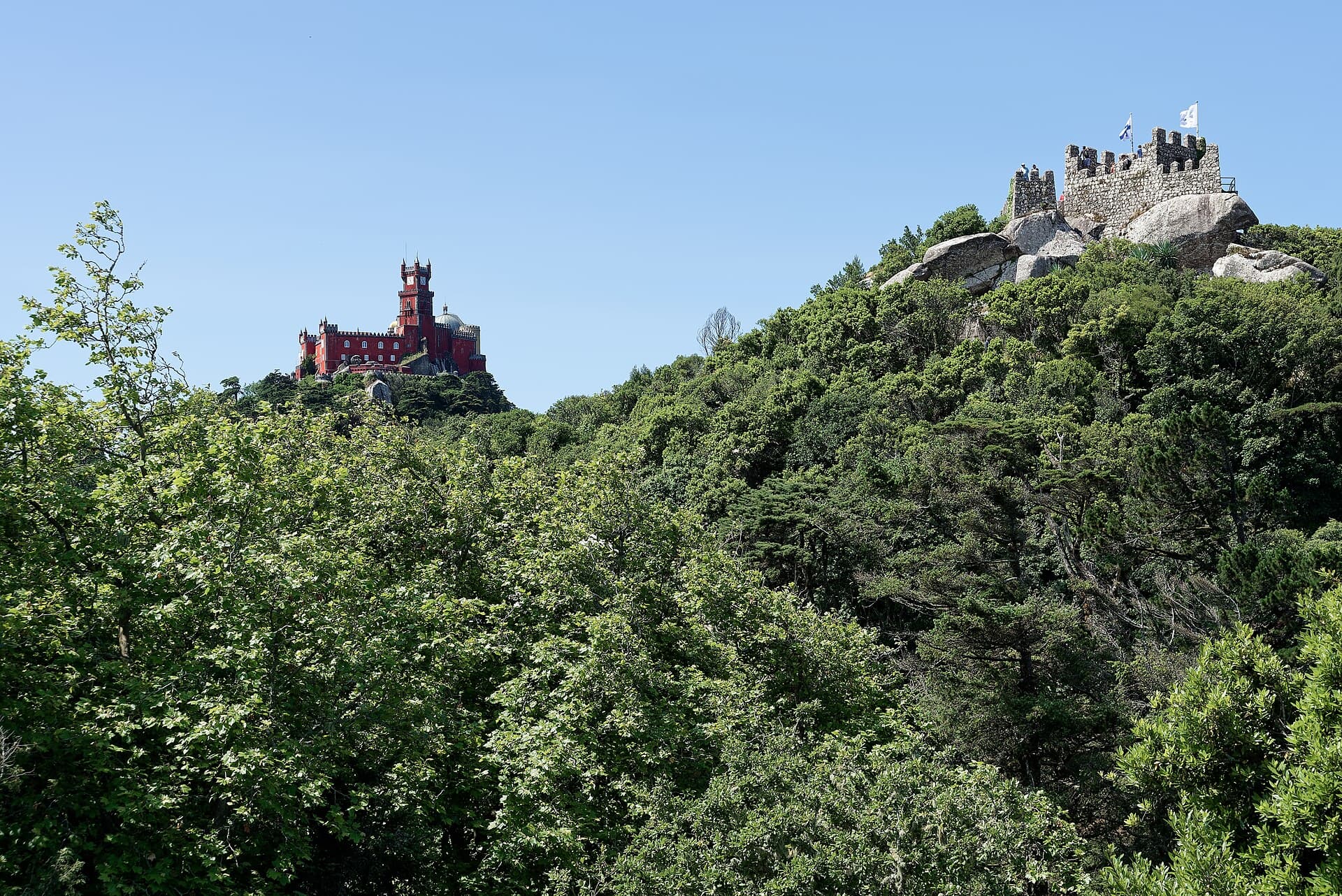
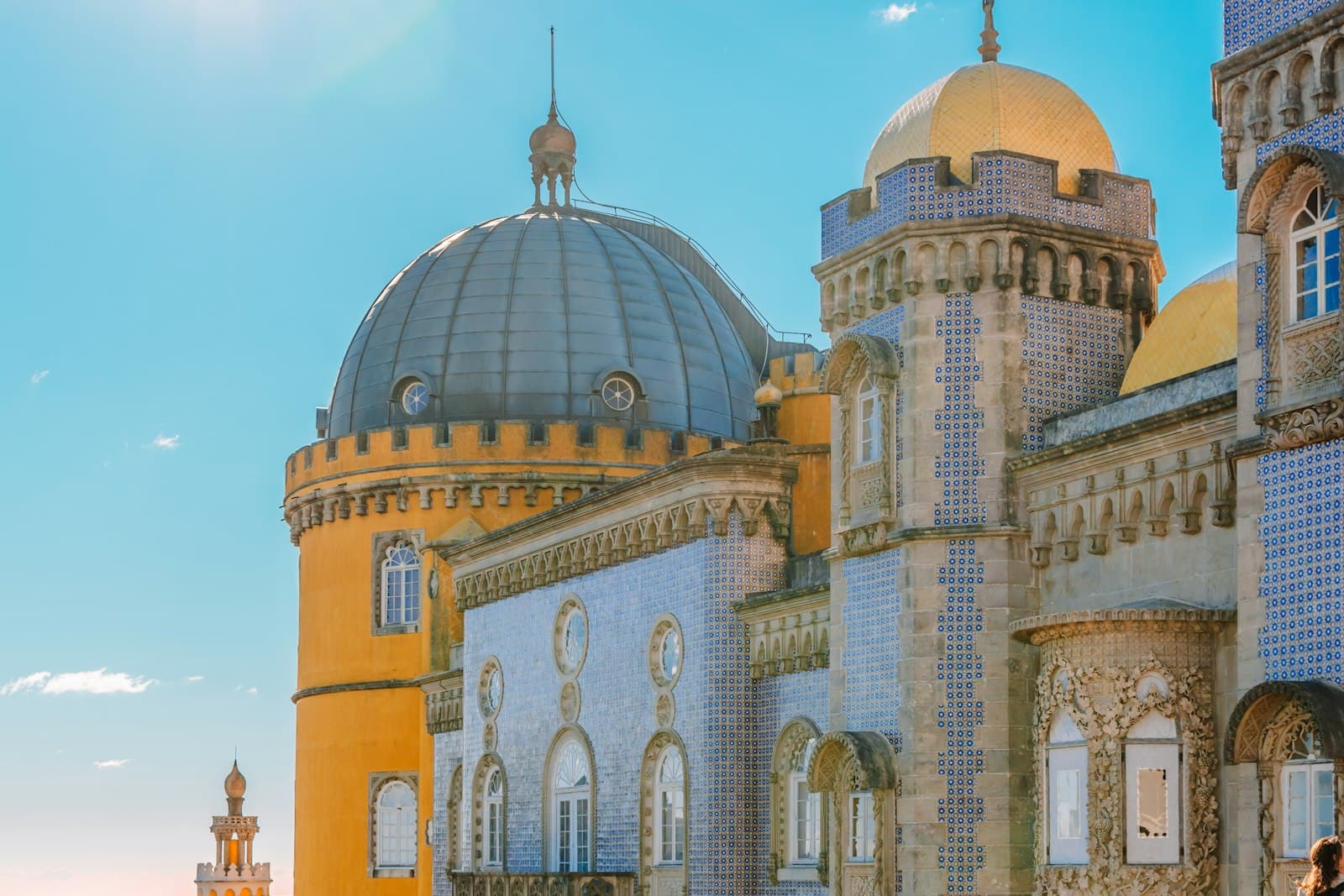
Palácio Nacional da Pena: The Invented Medieval Palace
An eclectic Romanticist palace on the peak, built by Ferdinand the Second from eighteen forty-two on the ruins of a monastery, and deliberately designed to look older and stranger than anything that ever really stood here.
- 4
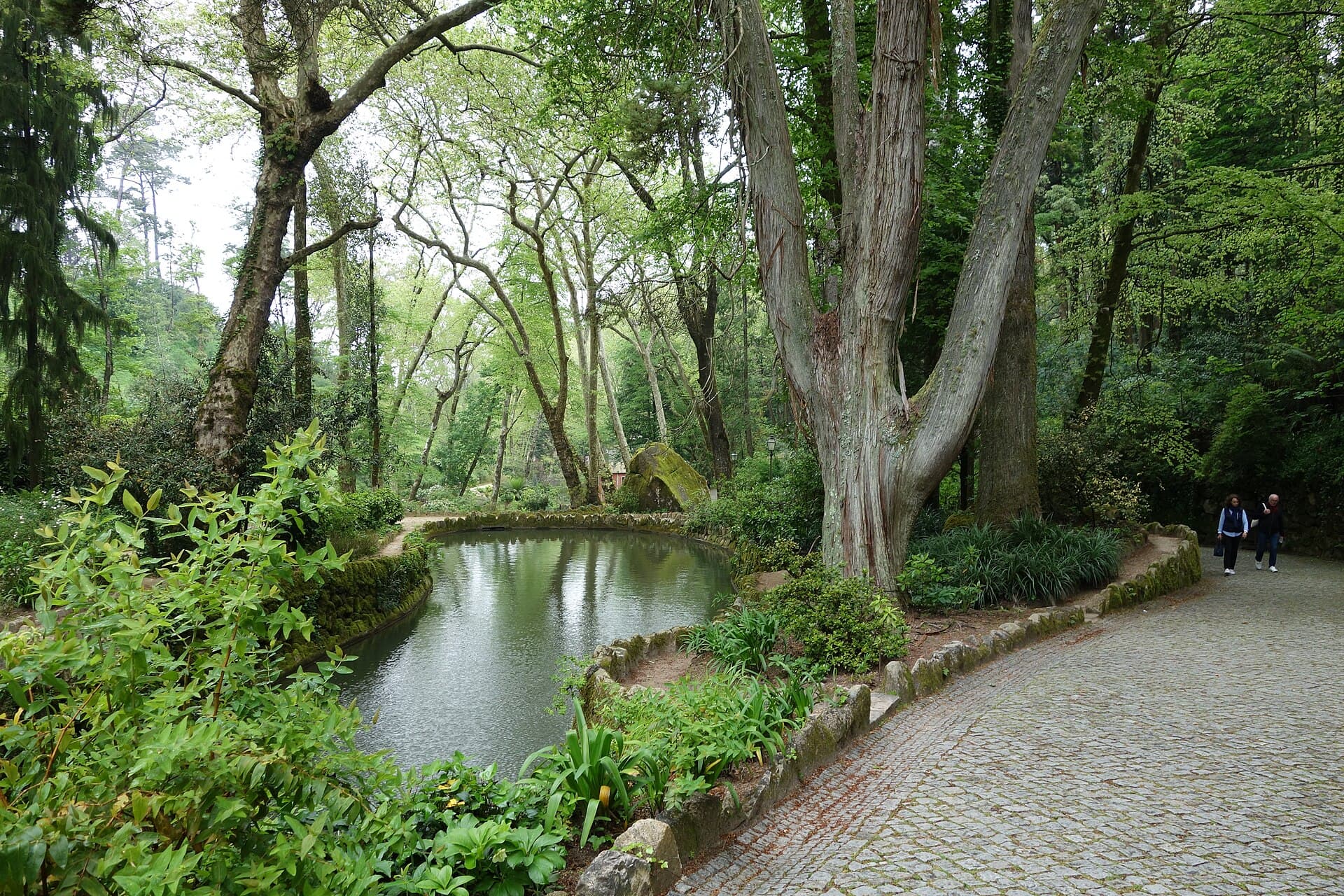
Parque da Pena: The Wilderness That Was Planted
The exotic forest Ferdinand the Second designed and planted around the palace, described as the most important arboretum in Portugal, a designed wildness assembled tree by tree from every continent.
- 5
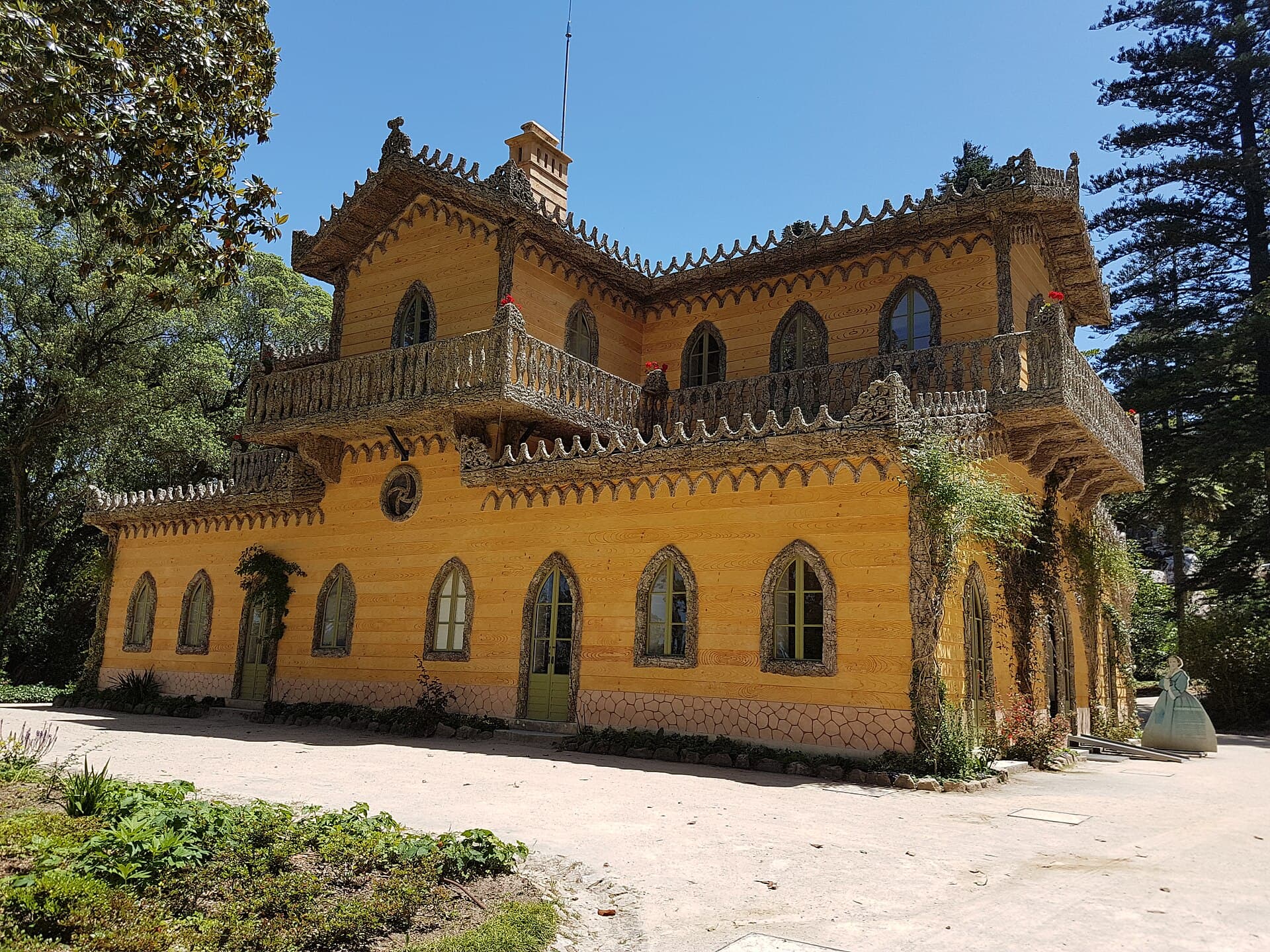
Chalet da Condessa d'Edla: The King's Second Romance
An Alpine-style chalet Ferdinand the Second built with the opera singer Elise Hensler between eighteen sixty-four and eighteen sixty-nine, authorship at human scale, away from the grand palace.
- 6
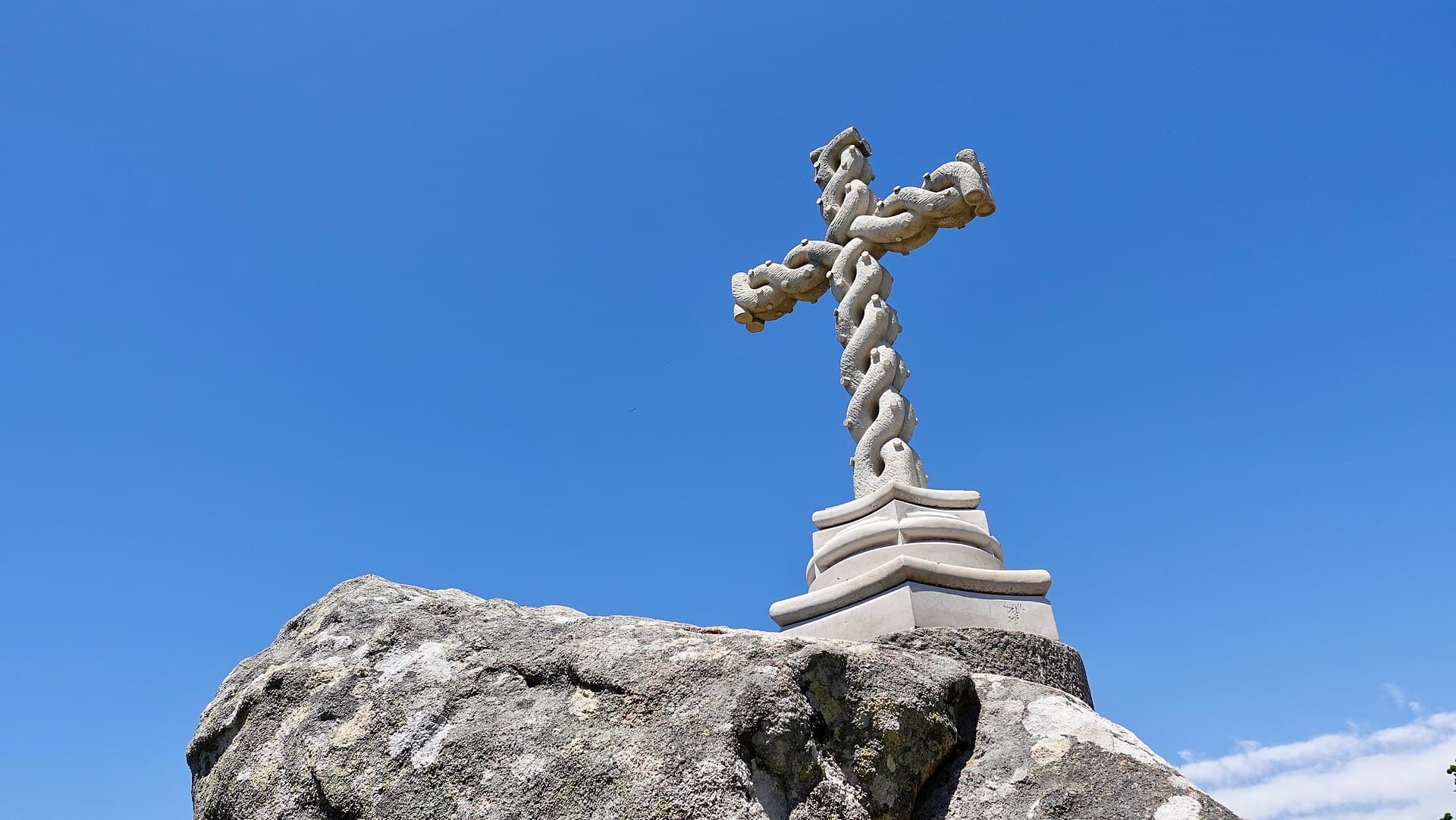
Cruz Alta: Where the Made Landscape Resolves
The highest point of the Serra de Sintra at five hundred and twenty-nine metres, a viewpoint where the entire authored landscape resolves into a single panorama out to the Atlantic.
Details
Best Time to Visit
Arrive early, ideally right at opening, or in the late afternoon. Sintra's mountain draws heavy midday crowds, and the monuments and their entrances back up sharply between late morning and early afternoon. Mornings often carry a beautiful sea mist that suits the Romantic mood, though it can hide the summit views, so a clear late afternoon rewards you at Cruz Alta. Spring brings the camellias and gentle temperatures, while summer is busiest and warmest. Weekdays are far calmer than weekends.
Pro Tips
- •Buy tickets to Pena and the Castle of the Moors online in advance with a timed entry slot. On-site queues at the busiest monuments can eat an hour or more.
- •The walk is a genuine climb on steep, uneven cobblestones. Wear proper closed shoes with grip, not sandals, especially if the stones are damp with mountain mist.
- •The mountain makes its own weather. Bring a light waterproof layer even on a clear day, since fog and drizzle can roll in within minutes at this altitude.
- •Give yourself far more time than the distance suggests. Three kilometres here means constant uphill plus the interiors, so plan for at least half a day if you go inside Pena and the Chalet.
- •Carry water and a small snack. Options on the mountain are limited and can be crowded, and the climb between stops is thirsty work.
- •Save Cruz Alta for a clear moment. If mist is sitting on the peak when you reach it, linger or return later, because the whole authored landscape only reveals itself when the air is clear.
Safety & Precautions
- •The paths are steep and paved in old calcada cobblestones that turn slippery when wet from rain or mountain fog. Step carefully, use handrails on stairs, and take the descents slowly.
- •Weather on the summit can shift fast from warm sun to cold, damp mist. In summer the lower slopes and town can also get genuinely hot, so bring both sun protection and a warm layer.
- •The palace, the old monastery spaces, and the chapels are places of quiet and heritage. Dress respectfully, keep your voice low indoors, and follow any signs on photography and restricted areas.
- •The lanes up to the monuments are narrow and shared with tourist buses, tuk-tuks, and cars. Walk on marked paths where they exist, stay alert at blind bends, and step well aside for passing vehicles.
Travel advisory: Exercise Normal Precautions (Level 1).
Gallery
Related Reading
Go deeper on what you'll see, hear, and walk through.
Overview
Best Self-Guided Walking Tours in Sintra (2026)
3 min
Overview
One Day in Sintra: A Walkable Itinerary From Morning to Evening
8 min
Overview
Sintra Travel Guide: Days, Transport, Tickets, and Timing
7 min
Thematic
Sintra: The Fantasy Mountain That Was Built on Purpose
8 min
Companion
The Moorish Castle Above Sintra Is Real, and It Was Composed on Purpose
6 min
Deep dive
Serra de Sintra: The Mountain Whose Fairy Tale Was Built on Purpose
7 min
Read
What to Eat in Sintra: Queijadas, Travesseiros, and the Suckling Pig
7 min
Read the walk
The full story of Pena Palace: The Fairy Tale Built on Purpose, in words. Prefer to listen? Play it narrated, from home or on location.
Introduction
There is a mountain just outside Lisbon that looks like it grew a fairy tale on its own. Cool, damp, green, wrapped in mist, crowned with a castle on one ridge and an impossible painted palace on the next. Sintra, in Portugal, is the kind of place that feels a thousand years old and slightly enchanted. Here is the secret this walk holds, gently, the whole way up. Almost everything your eye loves here was built on purpose in the eighteen hundreds. The old Moorish castle was restored into a picturesque ruin. The wild forest was planted tree by tree from every continent. The medieval palace was designed to look older and stranger than anything that ever really stood on this peak. The romance is completely real. It is also authored. This route has six stops and covers roughly five and a half kilometres, though it climbs steeply, so give yourself around two and a half to three hours, more if you go inside the monuments. Go at your own pace. Every stop is short, and you can skip any of them and still follow the story. You will move from the mountain itself, up to the two summits in conversation, through the exotic forest and a quiet private chalet, and finally to the highest point of all, where the whole made landscape resolves into one view of the sea. Wear real shoes. The cobblestones are steep and often wet. When you arrive at the Serra de Sintra, the mountain approach into town, begin with stop one.
1. Serra de Sintra: The Mountain of the Moon
Start with the mountain, because the mountain is the reason for everything else. This is the Serra de Sintra, and Serra simply means mountain range. It is a spine of granite that rises to about five hundred and twenty-nine metres and runs some sixteen kilometres from here out to Cabo da Roca, where Europe ends at the Atlantic. Notice how the air changes as you climb. The sea sits so close that clouds catch on these slopes and wring themselves out, so it rains more here than down in Lisbon, and the forest stays cool and damp when the plains are baking. The ancients felt it too. They called this place Lunae Mons, the Mountain of the Moon. That cool green refuge is why everyone came. Monks looking for solitude, kings looking for a summer retreat, and later, in the eighteen hundreds, the Romantics, who looked at this misty ridge and saw a dream they wanted to build. And here is the paradox this whole walk turns on. The mountain looks primeval, older than memory. But its fame is modern and deliberate. In nineteen ninety-five, UNESCO inscribed the Cultural Landscape of Sintra on its World Heritage list, and it was the first site in Europe ever listed as a cultural landscape, meaning a place shaped by human imagination rather than nature alone. UNESCO's own citation says that here, in the nineteenth century, Sintra became the first centre of European Romantic architecture. So as you go up, hold two ideas at once. This looks ancient. It was authored. That second story is the more astonishing one.
2. Castelo dos Mouros: The Genuinely Ancient Ruin, Curated
This is the Castelo dos Mouros, the Castle of the Moors, and Castelo means castle. Of everything on this mountain, this is the one thing that is genuinely, deeply old. The Moors built it here in the eighth and ninth centuries, in the time of Muslim Iberia, as a strategic fortress watching over the farmland below. Together with Santarem it was one of the key points in the Muslim military plan for the central province. Walk these serpentine walls along the ridge and you can feel why. You can see for miles. In the year eleven forty-seven, after the great siege of Lisbon under Afonso Henriques, this castle surrendered to Christian forces, and a settlement charter followed a few years later. A Jewish community lived within the walls for centuries afterward, until the expulsions under Manuel the First, and then the castle was abandoned. The earthquake of seventeen fifty-five cracked its chapel and loosened its stones. So here is the twist, the same twist as the whole mountain. What you are walking is old, but it is also a nineteenth-century picture of old. From eighteen thirty-eight onward, King Ferdinand the Second acquired this ruin and had it restored, not to make it a working fortress again, but to make it beautiful. He brought in a German architect, Wilhelm Ludwig von Eschwege, who consolidated the crumbling walls, reforested the slopes, and carved out little nooks and overlooks so that you would round a corner and gasp. The old castle was itself turned into a view. Even the most ancient thing here was, in the end, composed.
3. Palácio Nacional da Pena: The Invented Medieval Palace
And now the masterpiece. The Palácio Nacional da Pena, the Pena National Palace, and Palacio means palace. Onion domes, drawbridges, painted battlements in yellow and blood red, a stone sea monster arching over a doorway. It looks like a medieval fever dream, and that is exactly…
Full narration for this stop unlocks with the tour.
4. Parque da Pena: The Wilderness That Was Planted
Step off the palace terrace and into the trees, and the story deepens. This is the Parque da Pena, the Park of Pena, and Parque means park. It feels like an ancient enchanted forest, ferns dripping, giant trees closing overhead, paths twisting off into green shadow. Now look…
Full narration for this stop unlocks with the tour.
5. Chalet da Condessa d'Edla: The King's Second Romance
Tucked away in the lower woods, far from the grand palace, is a smaller and much more personal story. This is the Chalet da Condessa d'Edla, the Chalet of the Countess of Edla. After the loss of his first wife, Queen Maria the Second, Ferdinand the Second was a widower, and one…
Full narration for this stop unlocks with the tour.
6. Cruz Alta: Where the Made Landscape Resolves
This is the top. The Cruz Alta, the High Cross, the highest point of the entire Serra de Sintra at five hundred and twenty-nine metres. Take a breath, and turn slowly. To the south, the land falls away toward Lisbon and the wide silver mouth of the River Tagus. To the north, the…
Full narration for this stop unlocks with the tour.