Sintra's three signature foods are the queijada de Sintra, a small cheese tart of requeijao, egg yolks, sugar, flour, and cinnamon; the travesseiro, a flaky puff-pastry pillow filled with almond and egg cream; and leitao de Negrais, wood-oven roasted suckling pig from a nearby village. Everyday plates feature bacalhau, salted cod.

Pena Palace: The Fairy Tale Built on Purpose
150 min · 5.6 km · challenging
To eat well in Sintra, start with the two heritage sweets the town is built around, the queijada de Sintra and the travesseiro, then move to the savory tradition that the mountain villages are known for: leitao, the wood-oven roasted suckling pig from nearby Negrais. Order the pastries fresh from the counter in the old vila, buy queijadas by the six-pack, and sit down for leitao only if you have a longer afternoon, because the best of it is roasted a short drive out of town. Everything else you will eat here (salt cod in its many forms, a strong bica coffee) is standard Portuguese fare done well, but the queijada, the travesseiro, and the Negrais pig are the three things specific to this particular mountain.
Below is what each dish is, where the tradition comes from, and how to order it without fuss. When you are done tasting, the old town itself reads as a food history, and the self-guided Sintra walking tours that start in the vila walk you straight past the counters and the spring water that made all of it possible.
The queijada de Sintra: the ancient cheese tart
The queijada is a small round cheese tart, roughly five to six centimeters across, with a thin crisp shell and a dense filling of requeijao (a fresh Portuguese cheese much like ricotta) blended with egg yolks, sugar, flour, and cinnamon. It is not sweet in the heavy way a custard tart is. The cinnamon and the fresh cheese carry it, and a good one is faintly grainy inside.
The origin story you will hear everywhere is that the queijada dates to the thirteenth century, during the reign of King Sancho the Second. The official Visit Sintra tourism site does state this, describing it as a secular regional sweet whose origin goes back to the thirteenth century. Treat that as tradition rather than a documented fact, because the early written record is thin. What is documented is more concrete and more interesting: until the middle of the eighteenth century, queijadas were homemade and used to pay foros, the feudal rents owed to landholders. The little tart was, in effect, currency.
Industrial production is documented from 1756, when a baker known as Maria Sapa settled in Ranholas, and the Sapa house (Fabrica das Verdadeiras Queijadas da Sapa, now on the Volta do Duche that links the train station to the old town) still makes them. Other well-known queijada houses in the vila include Piriquita, Gregorio, Casa do Preto, and Dona Estefania. There is no single "correct" counter. The queijada belongs to the town, not to one shop.
How to order like a local: ask for queijadas by the six, not one at a time. They are traditionally sold in a paper-wrapped bundle of six, and they are cheap, about one euro each. Eat them the same day. They are best slightly warm and go stale fast.
The travesseiro: the almond pillow
Hear a stop from this walk
Serra de Sintra: The Mountain of the Moon
The travesseiro (the word means "pillow," and the pastry is shaped like one) is a long rectangle of flaky puff pastry folded around a cream of ground almonds and egg custard, then baked golden and dusted lightly with sugar. It is richer and more filling than the queijada, and for most visitors it is the more immediately lovable of the two.
It is also much younger. The travesseiro is tied to Casa Piriquita, a bakery founded in 1862 in the old town, and the recipe was created there in the 1940s. The Piriquita family has kept the recipe private for five generations. Because the pastry originated at one house rather than growing out of convent and farm kitchens the way the queijada did, this is the one Sintra sweet where a specific bakery genuinely is the source.
How to order like a local: ask for a travesseiro and a bica (an espresso) and eat it standing or at a small table. On busy days there is often a queue at Piriquita, and locals simply buy a box to take away. If the front counter is mobbed, the second Piriquita location a short walk along the same street usually moves faster.
Leitao de Negrais: the suckling pig
The savory dish Sintra is known for is not eaten in the postcard part of town at all. It is leitao, roasted suckling pig, from Negrais, a village roughly fifteen kilometers northeast of the Sintra vila. Roast suckling pig is long associated with the Bairrada region in central Portugal, but Negrais built its own tradition around it, and the difference is in the oven: where Bairrada sews the pig shut, Negrais roasts it laid open and flat. The pig is cooked whole in a wood-fired oven, seasoned with a garlic and paprika marinade, and roasted hot so the skin comes out crackling and caramelized. The meat is served in pieces with the crisp skin, usually alongside potatoes or plain bread and a simple salad.
The Negrais roasting trade traces to the late nineteenth century, when a handful of local families roasted pigs and sold them at the district fairs, later shipping them into Lisbon by rail. Several long-running family houses in Negrais still specialize in it. Getting there means a short drive or taxi from the vila, so leitao is an outing, not a quick stop. If you have a car or a free afternoon, it is the most local meal you can eat near Sintra. If you are on foot for the day, know that some restaurants in the town itself serve Negrais-style leitao without the trip.
How to order like a local: order leitao assado by the portion (uma dose) to share, and ask for it with the skin (com pele). A glass of local wine or a beer is the standard accompaniment. This is a sit-down, unhurried meal.
Salt cod and the everyday plate
Beyond the three signatures, the everyday food in Sintra is Portuguese comfort cooking, and the anchor is bacalhau, salted cod. You will find it fried into golden pasteis de bacalhau (cod fritters, a good walking snack), stirred into bacalhau a bras (shredded cod with onions, thin potato, and egg), or baked. It is reliable, filling, and everywhere. Order a couple of cod fritters from a counter when you want something savory between pastries, and save a proper bacalhau plate for a sit-down lunch.
How to fit the food into a day in Sintra
Sintra rewards slowness, and food is the reason to slow down. A realistic plan: arrive early, before the day-trip crowds pour in from Lisbon, walk the old vila while it is quiet, and eat the sweets first, when the bakeries are freshest and least crowded. Do the free, ground-level walk through the town (the palace square, the great white kitchen chimneys, the mountain fountains, the parish church) and let the pastry stops fall along the way. This is exactly the route the Sintra old town walking tour follows, and it puts the queijada and travesseiro counters on your path rather than sending you hunting.
Save the famous hilltop sites (Pena, the Quinta da Regaleira, Monserrate) for a separate block of the day, since each is a serious visit reached by shuttle bus or a steep climb. Keep leitao for the end or for a return trip, because the best of it is out in Negrais. Wear shoes with grip: the vila is paved in calcada, the traditional Portuguese cobblestone, and the mountain mist makes it slick.
Sources
- Visit Sintra (official tourism), Queijadas de Sintra: https://visitsintra.travel/en/eat-drink/regional-flavours/queijadas-de-sintra
- Visit Sintra (official tourism), Travesseiros: https://visitsintra.travel/en/eat-drink/regional-flavours/travesseiros
- Comercio com Historia (Portuguese government heritage registry), Queijadas da Sapa: https://www.comerciocomhistoria.gov.pt/en/listings/queijadas-da-sapa-3707/
- Comercio com Historia (Portuguese government heritage registry), Piriquita Antiga Fabrica de Queijadas: https://www.comerciocomhistoria.gov.pt/en/listings/piriquita-antiga-fabrica-de-queijadas-3708/
- Junta de Freguesia de Almargem do Bispo, Pero Pinheiro e Montelavar, Leitao assado a moda de Negrais: https://www.jf-apm.pt/pt/articles/locais-de-interesse/leitao-assado-a-moda-de-negrais
Frequently asked questions
- What food is Sintra famous for?
- Sintra is best known for two heritage pastries: the queijada de Sintra, a small cheese tart made with fresh requeijao cheese, egg yolks, sugar, flour, and cinnamon, and the travesseiro, a flaky puff-pastry pillow filled with almond and egg cream. The region is also known for leitao, wood-oven roasted suckling pig, from the nearby village of Negrais. Everyday plates lean heavily on bacalhau, or salted cod.
- What is a queijada de Sintra?
- A queijada de Sintra is a small round cheese tart, roughly five to six centimeters across, with a thin crisp shell and a dense filling of requeijao (a fresh cheese similar to ricotta) blended with egg yolks, sugar, flour, and cinnamon. Tradition dates it to the thirteenth century, and the official Visit Sintra site notes that until the mid-eighteenth century queijadas were used to pay feudal rents called foros. Industrial production is documented from 1756 under the baker Maria Sapa.
- Where can I buy travesseiros in Sintra?
- The travesseiro was created at Casa Piriquita, a bakery founded in the old town of Sintra in 1862, and the family has kept the recipe private for five generations. Because the pastry originated at that one house rather than as a general town tradition, Piriquita is genuinely the source. There is often a queue at the main counter, and a second Piriquita location on the same street usually moves faster.
- What is leitao de Negrais?
- Leitao de Negrais is roast suckling pig from Negrais, a village about fifteen kilometers northeast of the Sintra old town. The pig is roasted whole in a wood-fired oven, laid open and flat, seasoned with a garlic and paprika marinade, and cooked hot for crackling skin. The Negrais roasting trade traces to the late nineteenth century, and eating it usually means a short drive out to one of the village's specialist restaurants.
- How much do Sintra pastries cost?
- Queijadas and travesseiros are inexpensive. Queijadas run about one euro each, and travesseiros roughly one to two and a half euros each. Queijadas are traditionally sold in paper-wrapped bundles of six, so most people buy them by the pack. Eat them the same day, since they are best fresh and go stale quickly.
- Is there more to eat in Sintra than pastries?
- Yes. Beyond the queijada, travesseiro, and Negrais suckling pig, everyday food in Sintra is standard Portuguese comfort cooking centered on bacalhau, or salted cod. You will find it as pasteis de bacalhau (fried cod fritters that make a good walking snack), as bacalhau a bras (shredded cod with onion, potato, and egg), and baked in various dishes.
Ready to experience it?
Pena Palace: The Fairy Tale Built on Purpose
150 min · 5.6 km · challenging
More from Sintra
Explore more at your own pace.
One Day in Sintra: A Walkable Itinerary From Morning to Evening
Sintra: The Fantasy Mountain That Was Built on Purpose
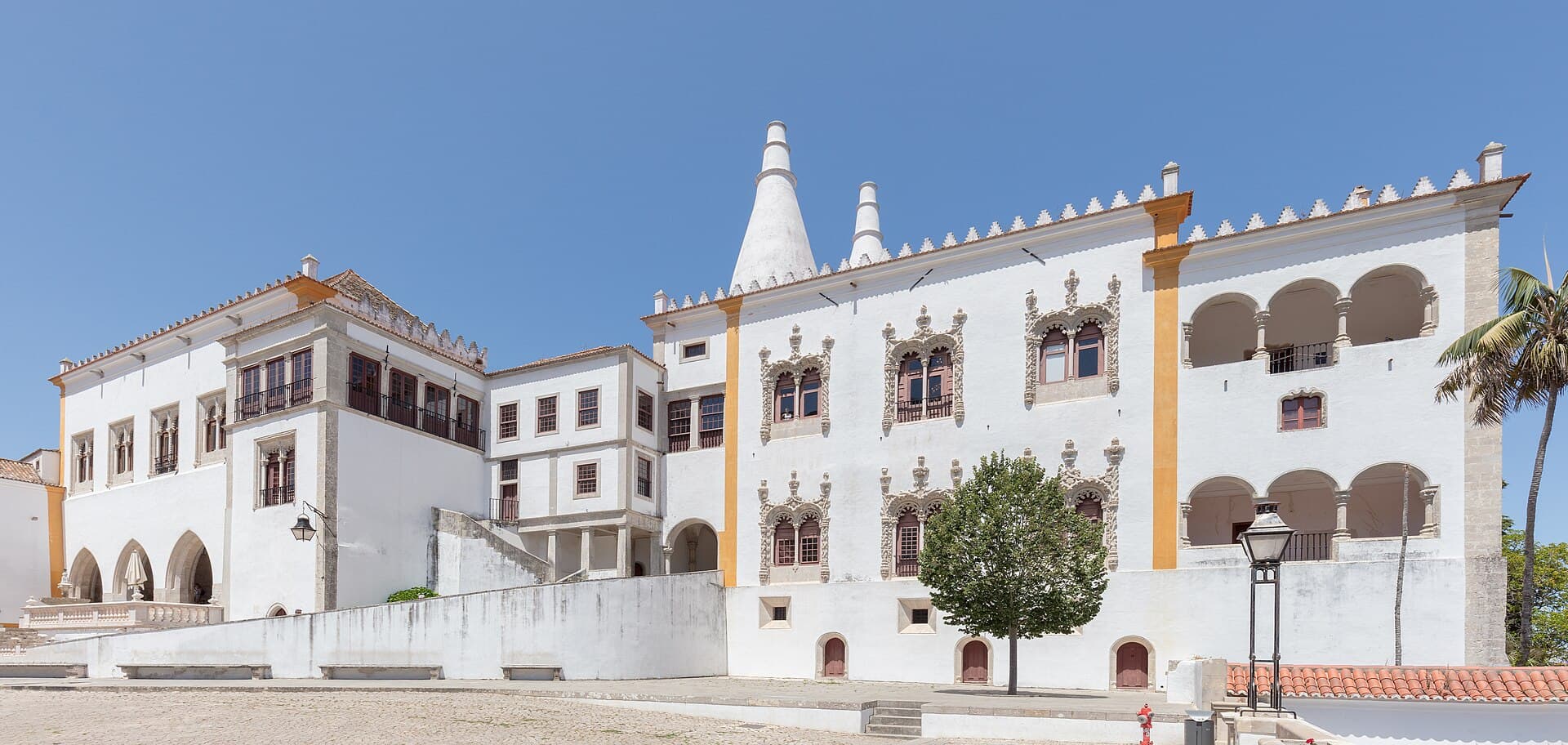
Sintra National Palace: The Royal Town Beneath the Famous Peaks
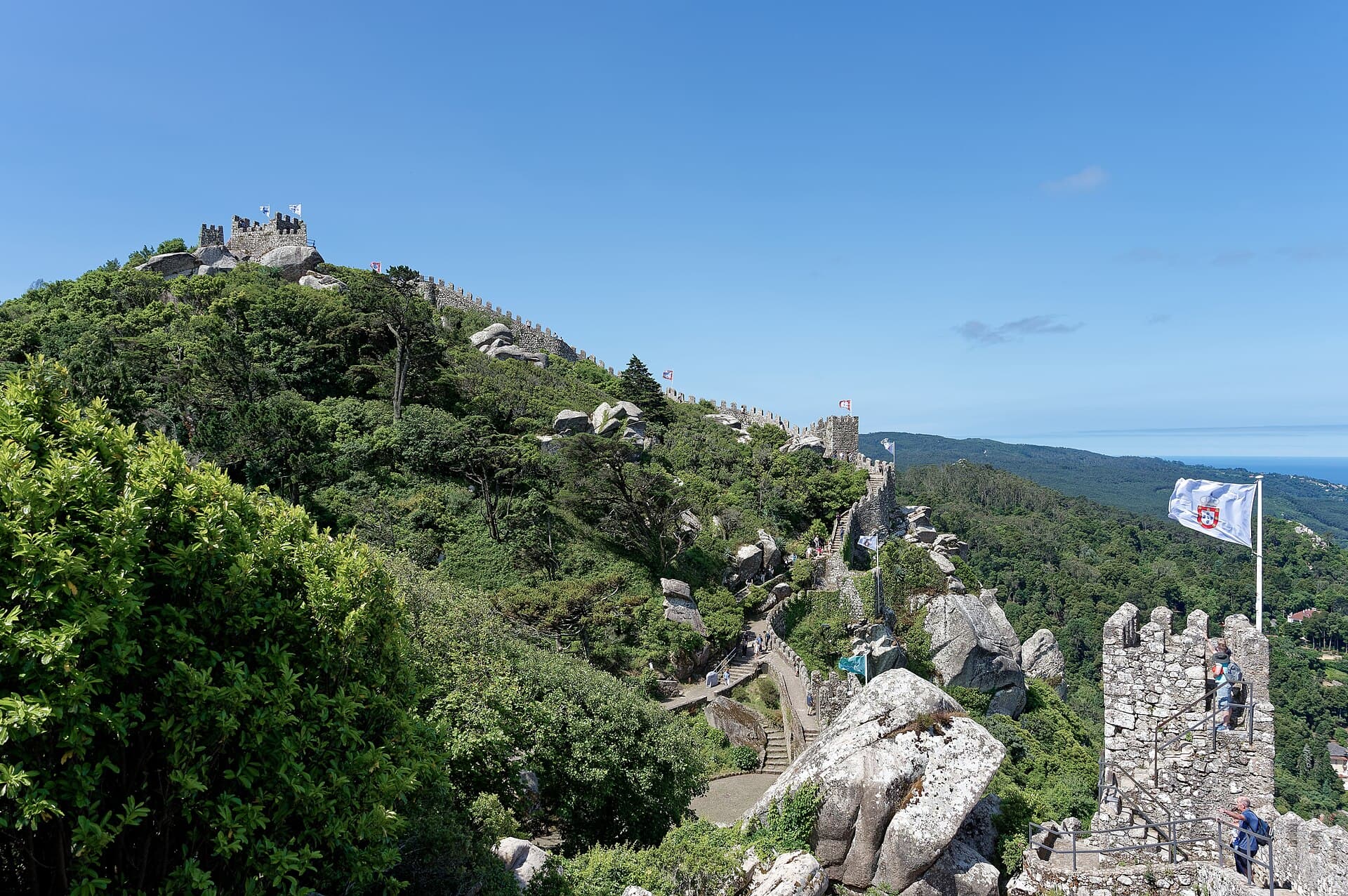
The Moorish Castle Above Sintra Is Real, and It Was Composed on Purpose
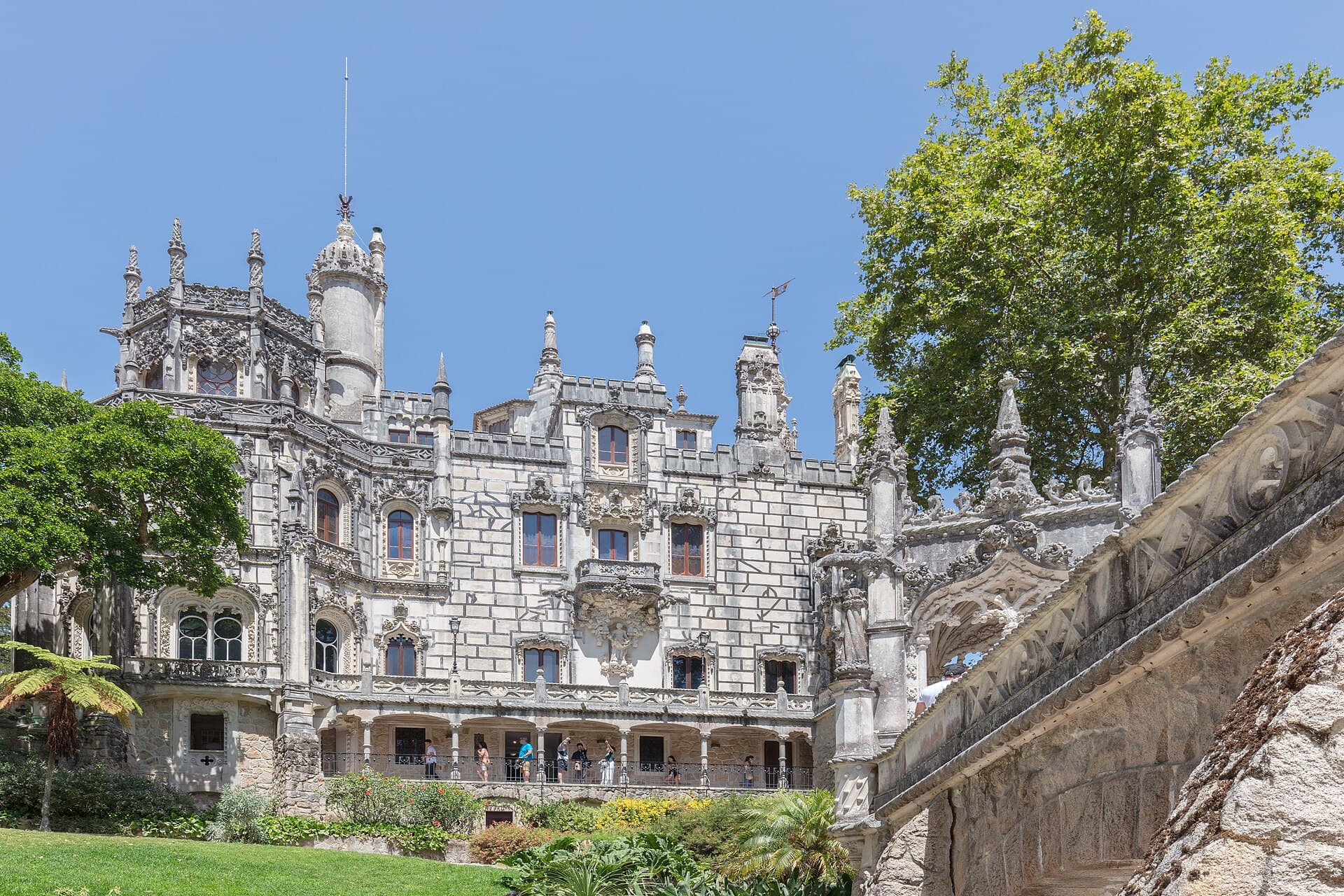
Quinta da Regaleira: The Garden Built to Be Read