Pena Palace: The Fairy Tale Built on Purpose
150 min · 5.6 km · challenging
Sintra is a mountain of deliberate fantasy. It looks like the most ancient dream in Europe, a granite ridge outside Lisbon wrapped in mist and crowned with painted palaces, yet almost everything the eye loves here was authored on purpose in the eighteen hundreds. Kings first came for one plain reason, the cool damp air. Then Romantics looked at the misty ridge and built eclectic palaces, planted whole forests, and coded gardens to be read like sentences. The romance is completely real. It is also composed. The three Sintra walks in the Sintra walking tours collection read that made landscape from three different heights: the summit that was designed, the estate that was coded, and the royal town at the foot that explains why anyone climbed at all.
The paradox is baked into the ground itself. In nineteen ninety-five, UNESCO inscribed the Cultural Landscape of Sintra, and it was the first site in Europe ever listed as a cultural landscape, meaning a place shaped by human imagination rather than nature alone. UNESCO's own citation says that here, in the nineteenth century, Sintra became the first centre of European Romantic architecture. So the mountain that looks older than memory is famous precisely because people authored a dream onto it. Hold two ideas at once as you climb: this looks ancient, and it was made.
The summit that was designed
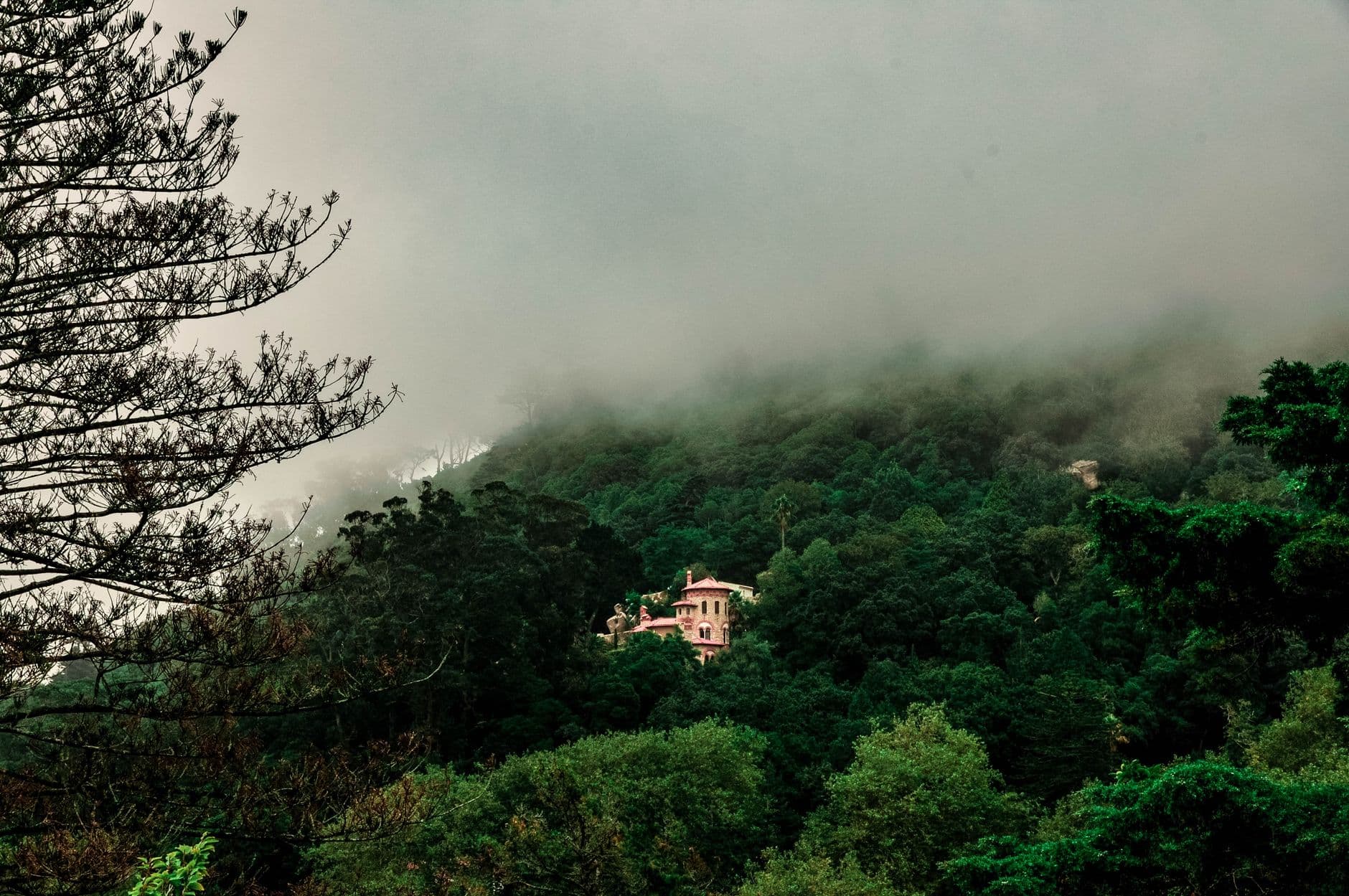
The first walk, The Fairy Tale Built on Purpose, climbs the Serra de Sintra and reads the peaks as a masterpiece of authorship. The mountain is a spine of granite rising to about five hundred and twenty-nine metres, so close to the sea that clouds catch on its slopes and wring themselves out. The ancients called it Lunae Mons, the Mountain of the Moon. That cool green refuge drew monks, then kings, then the Romantics who built the dream you see today.
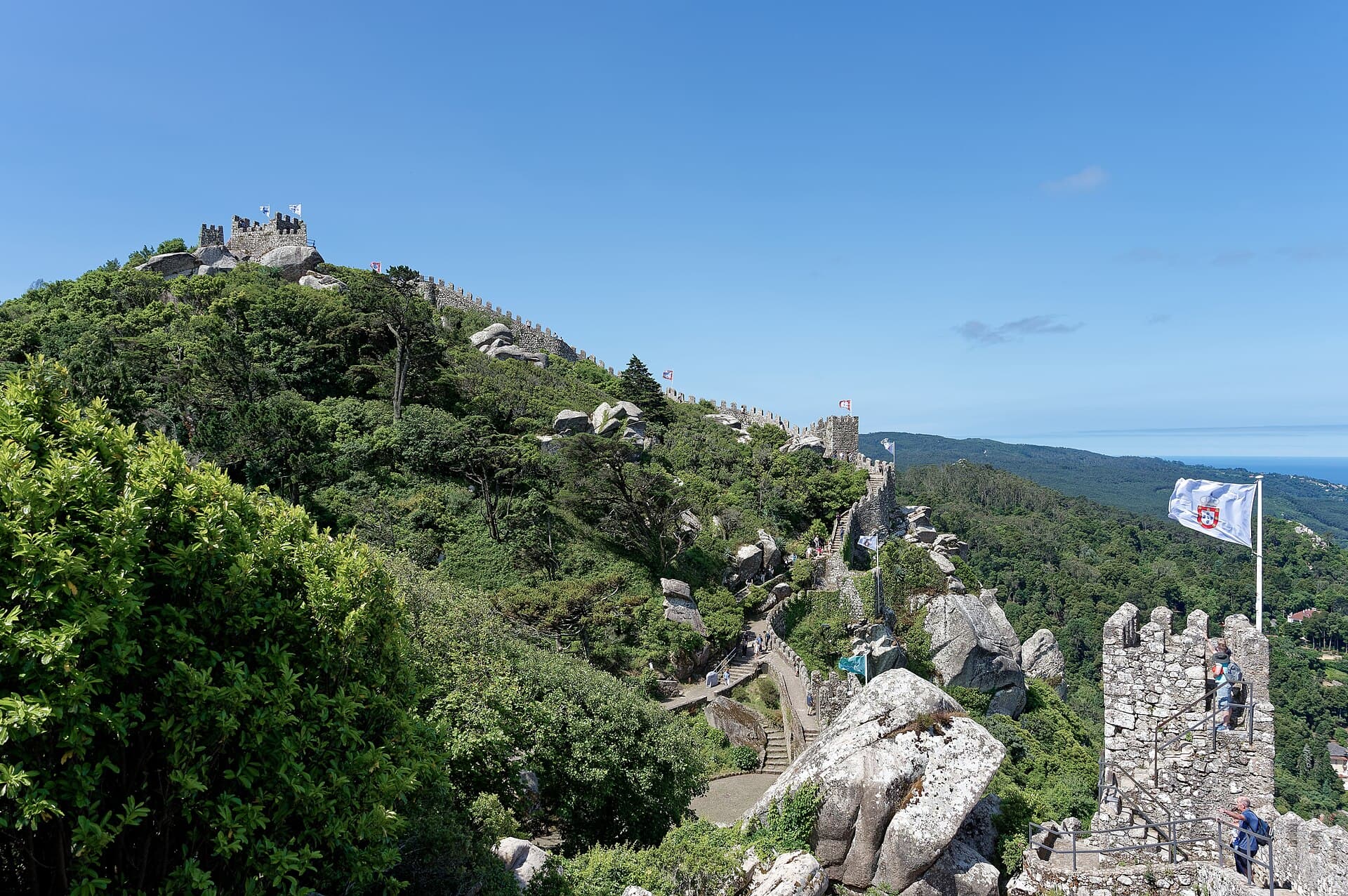
Even the genuinely old thing on the mountain was curated into a picture. The Castelo dos Mouros was built by the Moors in the eighth and ninth centuries, and in the year eleven forty-seven, after the siege of Lisbon under Afonso Henriques, it surrendered to Christian forces. The seventeen fifty-five earthquake cracked its chapel. Then, from eighteen thirty-eight, King Ferdinand the Second acquired the ruin and had it restored, not to make it a working fortress but to make it beautiful. He brought in the German engineer Wilhelm Ludwig von Eschwege, who consolidated the crumbling walls and carved out overlooks so a visitor would round a corner and gasp. The old castle was turned into a view.
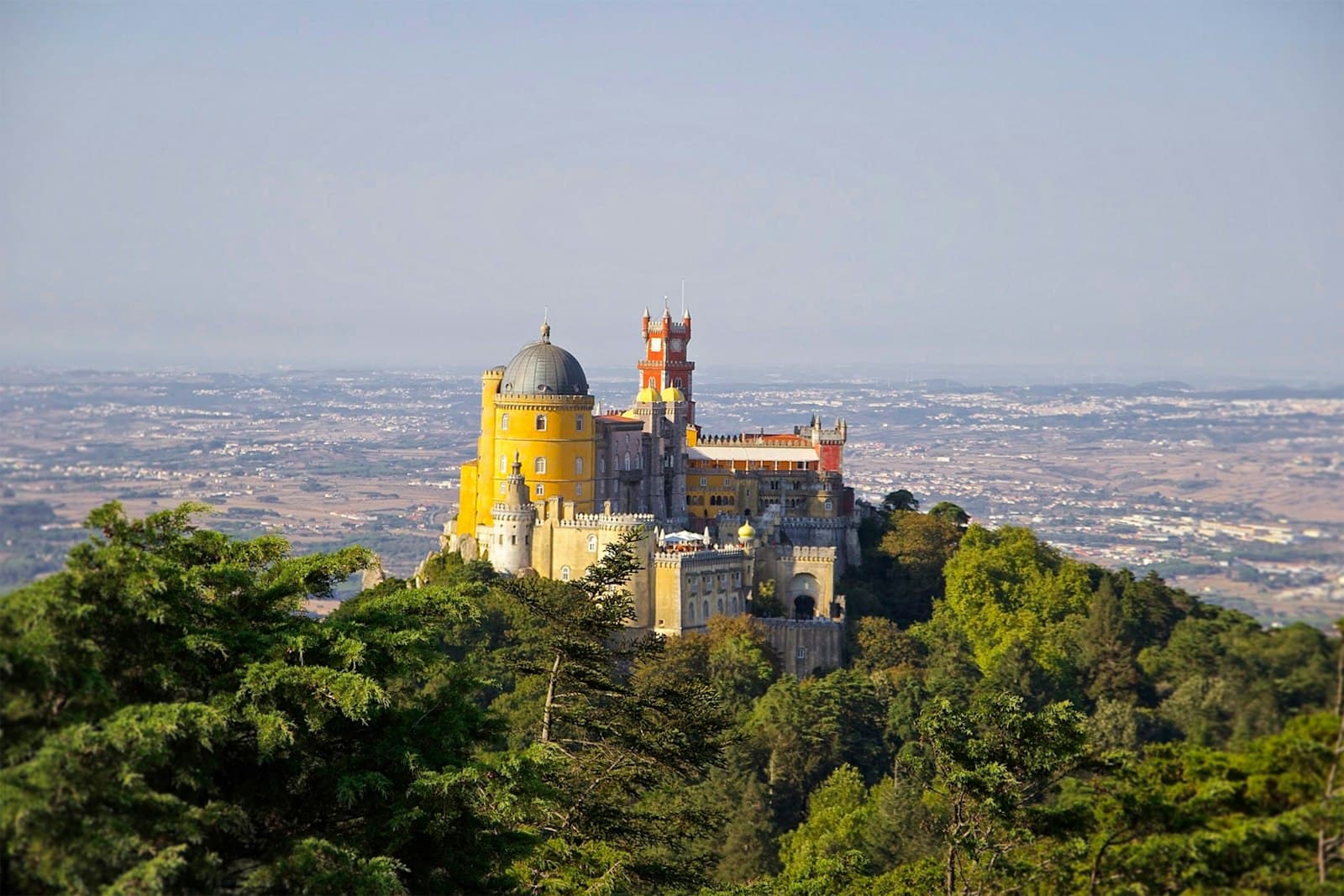
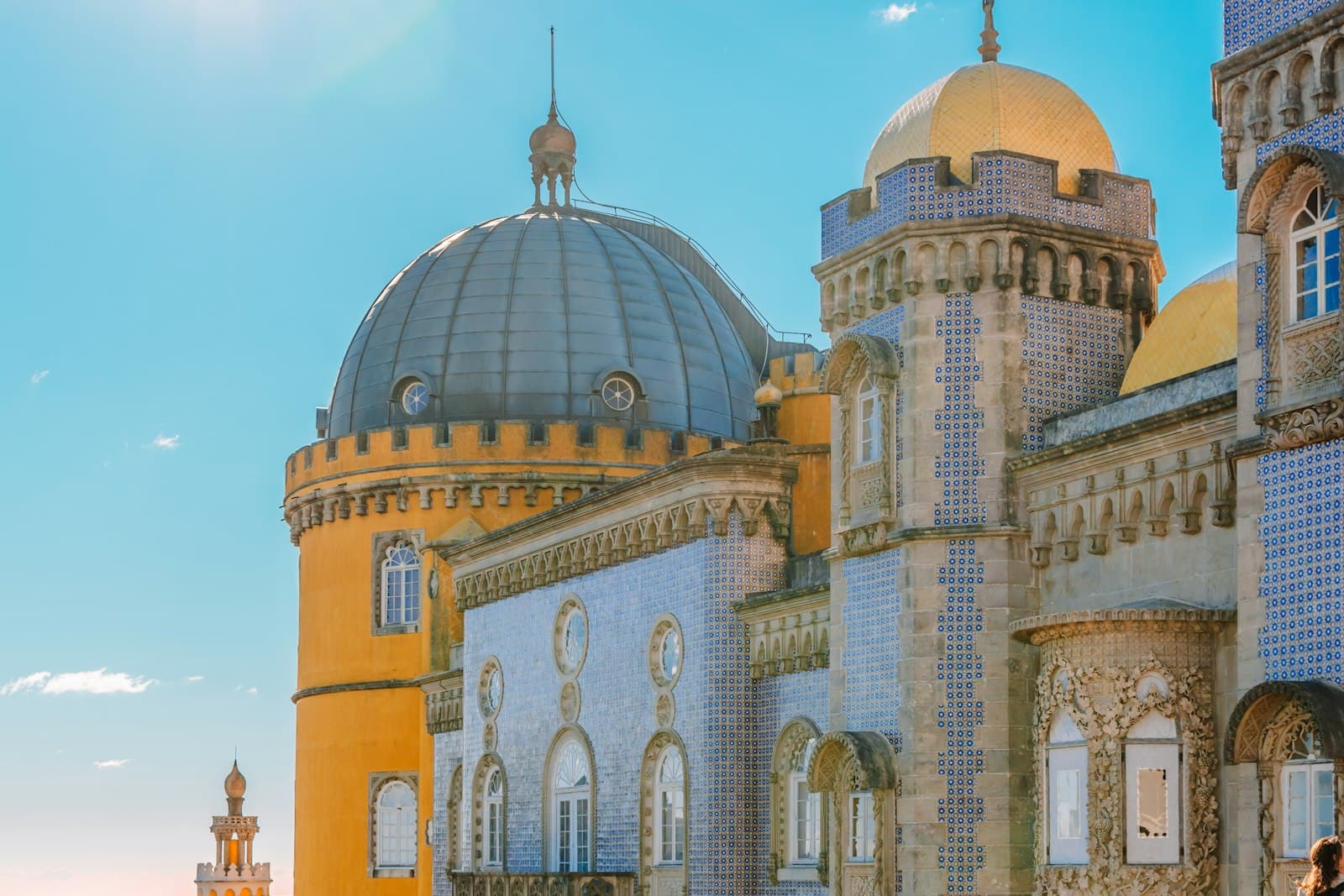
The palace above it invents its own past outright. The Palácio Nacional da Pena grew from a Hieronymite monastery founded in fifteen eleven under Manuel the First, ruined by lightning and the seventeen fifty-five earthquake and abandoned after eighteen thirty-four. Ferdinand the Second, a prince of the House of Saxe-Coburg and Gotha, bought the ruin in eighteen thirty-eight and, again with Eschwege, built the palace between eighteen forty-two and eighteen fifty-four. Its own official description names it as an intentional mixture of Neo-Gothic, Neo-Manueline, Neo-Islamic, and Neo-Renaissance styles. That word intentional is the whole point. This is a nineteenth-century imagination reaching backward and inventing a medieval past that never existed, and it is counted among the Seven Wonders of Portugal.
Even the forest is a fiction. The Parque da Pena feels like an ancient enchanted wood, but Ferdinand did not find it. He planted it. Across roughly eighty-five hectares he laid out what Parques de Sintra calls the most important arboretum in Portugal, gathering trees from every continent: Californian sequoias, Asian ginkgos, southern tree ferns, and great camellia collections introduced in the eighteen forties that still make the park a winter landmark. Every winding turn was composed to feel accidental. Lower in the woods sits authorship at human scale, the Chalet da Condessa d'Edla, built between eighteen sixty-four and eighteen sixty-nine by Ferdinand and the opera singer Elise Hensler, born in Switzerland in eighteen thirty-six and given the title Countess of Edla. Much of its timber cladding is not timber at all but flat plaster painted to imitate wood, trimmed with Portuguese cork. The walk ends at Cruz Alta, the highest point at five hundred and twenty-nine metres, where the ancient castle, the painted palace, and the planted forest resolve into one panorama out to the Atlantic. Even the cross there was remade, the current one carved from a single block of limestone in two thousand and eight after lightning felled its predecessor in nineteen ninety-seven.
The estate that was coded
Hear a stop from this walk
Serra de Sintra: The Mountain of the Moon
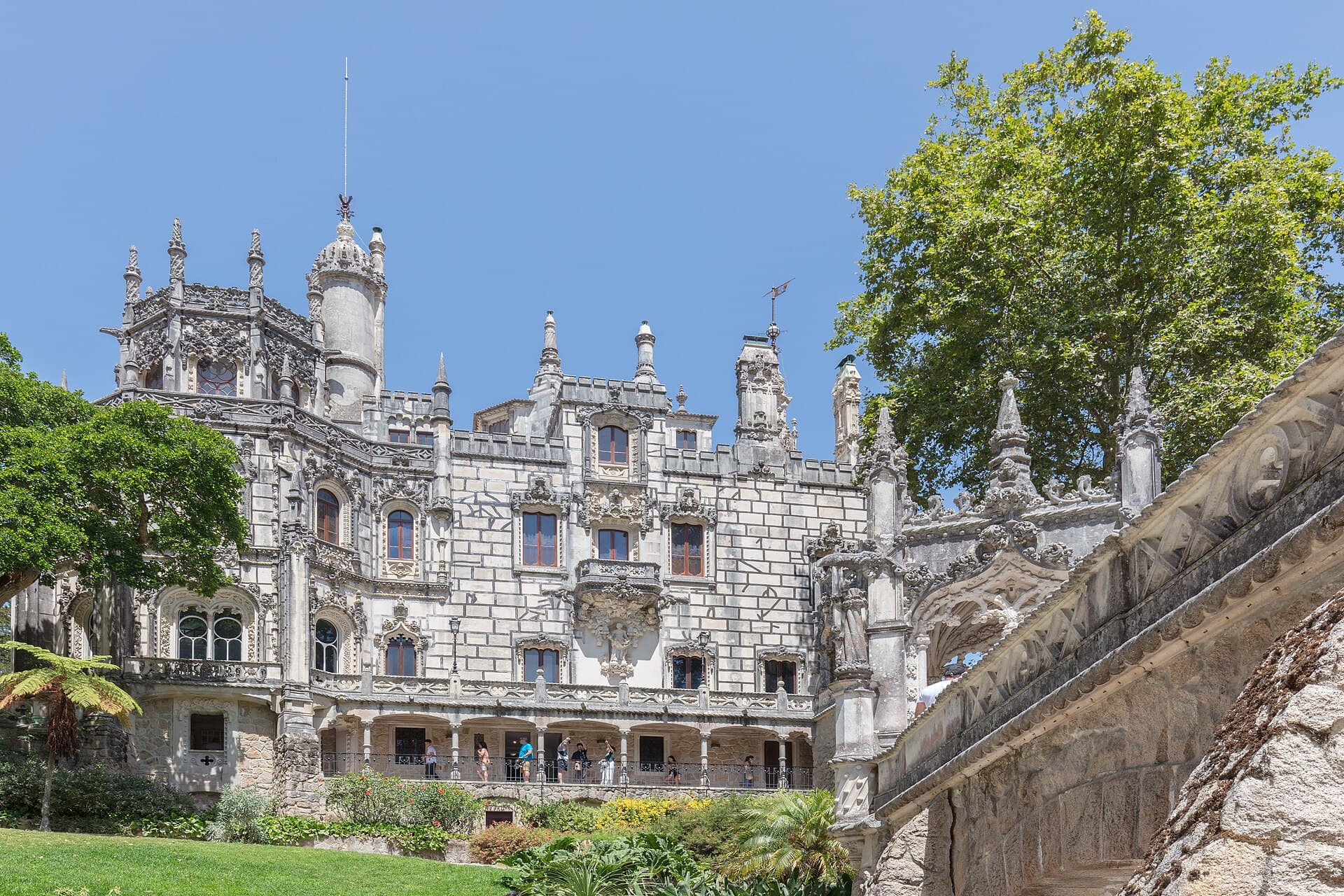
The second walk, The Well That Goes Down, reads a different kind of authorship: a garden built not to be looked at but to be interpreted. Its maker was Antonio Augusto Carvalho Monteiro, born in Rio de Janeiro in eighteen forty-eight and died in nineteen twenty, a collector who made his fortune in coffee and precious stones and was nicknamed Monteiro dos Milhoes, Monteiro the Millionaire. He bought the Quinta da Regaleira in eighteen ninety-two and hired the Italian Luigi Manini, a scenographer who designed stage sets. Construction began in nineteen o four. If the place feels theatrical, it is because it was built by a man who staged illusions for a living.
The estate's centrepiece is the Initiation Well, an inverted tower that spirals twenty-seven metres down into the earth across nine flights, with a stone compass over a Knights Templar cross set into the floor at the bottom. From there a network of tunnels surfaces at grottoes, a chapel, the Waterfall Lake, and Leda's Cave beneath the Regaleira Tower. The sequence of descent, dark passage, and re-emergence is composed theatre. Many readers tie the nine flights to the Templars or to Dante's nine circles of Hell, and this walk is scrupulous about the line between fact and interpretation. Monteiro was a Freemason and the symbols are real and deliberate, but he left no manual explaining them. The symbolic reading is a tradition layered onto Manini's stagecraft, not a decoded message from the maker.
The walk then widens west to the Palacio de Monserrate, where the same impulse takes a botanical form. The English merchant Francis Cook subleased the property in eighteen fifty-six, was made Viscount of Monserrate by King Luis the First, and built the eclectic palace with architect James Knowles, layering Moorish and Mudejar revival, neo-Gothic, and Indian motifs over a garden Gothic novelist William Beckford had begun in the seventeen nineties. Where Monteiro coded his garden with symbols, Cook composed his with continents, planting species from Australia, New Zealand, Mexico, and Japan. Both treated the Sintra slopes as a canvas for something meaning-laden, a landscape you read rather than merely see.
The town that explains the climb
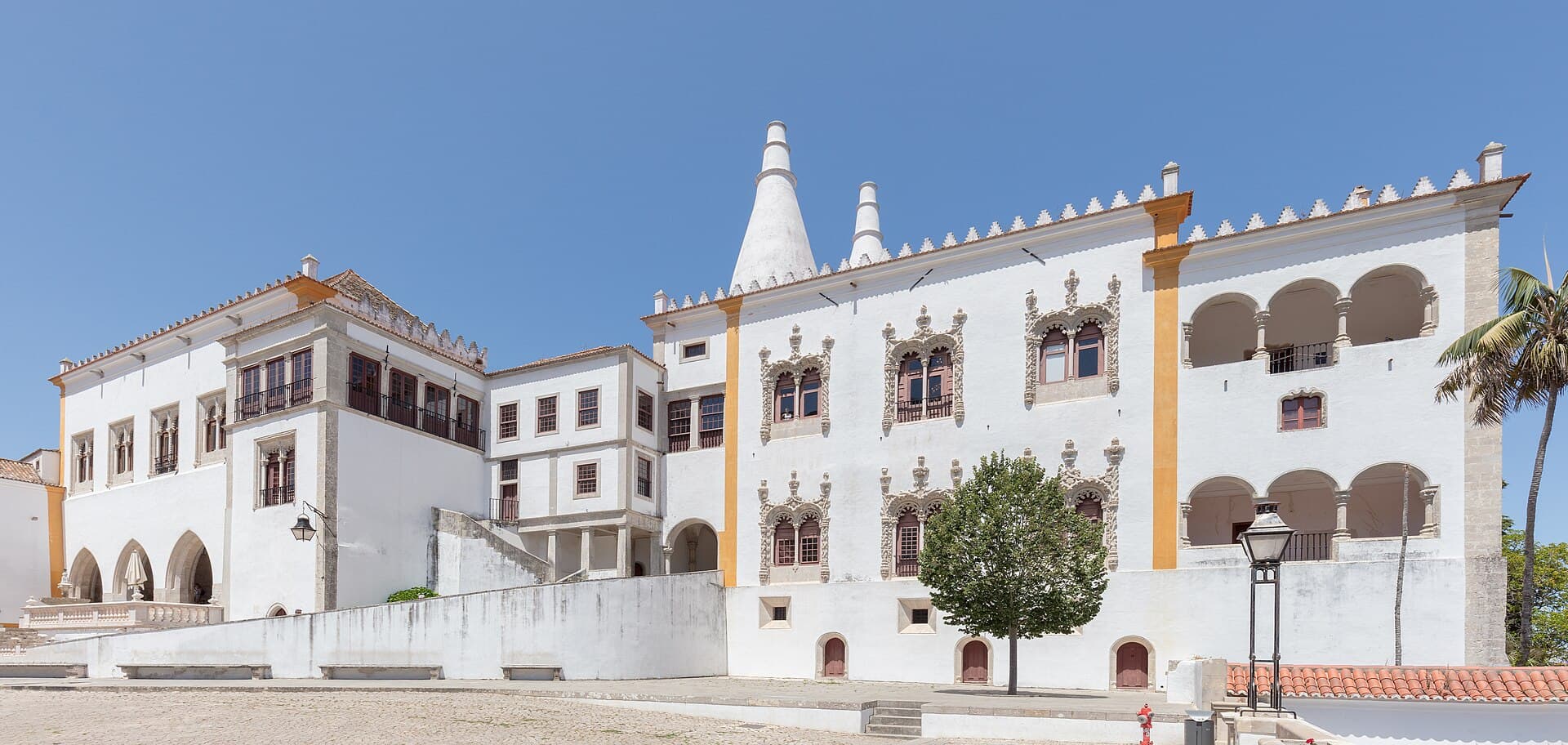
The third walk, The Cool Mountain of Kings, stays down in the old vila and recovers the plain reason all of this exists. Before anyone built dream palaces on the ridge, Portuguese kings came here because summers on the Lisbon plain were brutal and the mountain air stayed cool and damp, its springs running clear. The Palacio Nacional de Sintra, the best-preserved medieval royal residence in Portugal, held a court more or less continuously from the early fifteenth century to the late nineteenth. King Joao the First launched its main campaign around fourteen fifteen; Afonso the Fifth was born inside these walls in fourteen thirty-two; Manuel the First later added the Coats of Arms Room between fifteen fifteen and fifteen eighteen, with seventy-two heraldic shields across its ceiling.
The town's emblem is pure practicality dressed as fantasy: two enormous white conical chimneys venting the smoke of the royal kitchens built under Joao the First. Even the sweets belong to the story of feeding a mobile court, the queijada cheese tart once used to pay feudal rents and commercialised from seventeen fifty-six, and the almond travesseiro tied to the early twentieth century. The fountains make the whole thesis literal. The Fonte Mourisca, in Moorish-revival style, was designed in nineteen twenty-two by Jose da Fonseca, another nineteenth-and-twentieth-century flourish honoring the mountain's real gift, its water. The walk ends at the Igreja de Sao Martinho, rebuilt in the sober Pombaline style after the seventeen fifty-five earthquake.
Read together, the three walks tell one story from three heights. The kings came for the climate. The Romantics came for the mood and then built it, restoring a castle into a view, inventing a palace, planting a forest, coding a garden, and remaking even the cross at the summit. The fairy tale is convincing because it was designed to be, and knowing that it was authored turns out to be the more wonderful truth.
Sources
- UNESCO World Heritage Centre, Cultural Landscape of Sintra (inscribed nineteen ninety-five, cultural criteria two, four, and five)
- Parques de Sintra, Pena Palace and Park, Chalet of the Countess of Edla, and Castle of the Moors official histories
- Parques de Sintra, Palace of Monserrate history (Francis Cook, William Beckford, James Knowles)
- Quinta da Regaleira and the Initiation Well, estate and Portuguese national monument records
- Palacio Nacional de Sintra, official history of the national palace and its royal use
Frequently asked questions
- Is Sintra's fairy-tale look actually old, or was it built later?
- Most of what visitors love in Sintra was authored on purpose in the eighteen hundreds. The Pena Palace was built between eighteen forty-two and eighteen fifty-four on a ruined monastery, its surrounding forest was planted tree by tree, and even the ancient Moorish castle was restored into a picturesque view from eighteen thirty-eight. Only the Castle of the Moors dates genuinely to the eighth and ninth centuries.
- Why is Sintra a UNESCO World Heritage Site?
- UNESCO inscribed the Cultural Landscape of Sintra in nineteen ninety-five, and it was the first site in Europe ever listed as a cultural landscape, a place shaped by human imagination rather than nature alone. The citation recognizes Sintra as the first centre of European Romantic architecture in the nineteenth century. The listing covers the whole composed environment, not a single building.
- Who built the Pena Palace and its park?
- King Ferdinand the Second, a prince of the House of Saxe-Coburg and Gotha, bought the ruined monastery in eighteen thirty-eight and built the palace with the German engineer Wilhelm Ludwig von Eschwege between eighteen forty-two and eighteen fifty-four. Ferdinand also planted the surrounding Pena Park, which Parques de Sintra calls the most important arboretum in Portugal.
- Is the symbolism at Quinta da Regaleira real?
- The symbols are real and deliberate, but their meanings are interpretation rather than documented fact. The estate's maker, Antonio Augusto Carvalho Monteiro, was a Freemason, and his Italian architect Luigi Manini was a stage-set designer. Monteiro left no manual explaining the alchemical or Templar readings, so they are a tradition of interpretation layered onto Manini's stagecraft.
- Why did Portuguese kings come to Sintra?
- Kings came for the cool, damp mountain air and clear springs. Summers on the Lisbon plain were brutal, while the Serra de Sintra traps Atlantic mist and stays cool. The Palacio Nacional de Sintra held a royal court more or less continuously from the early fifteenth century to the late nineteenth, making it the best-preserved medieval royal residence in Portugal.
Ready to experience it?
Pena Palace: The Fairy Tale Built on Purpose
150 min · 5.6 km · challenging
More from Sintra
Explore more at your own pace.
One Day in Sintra: A Walkable Itinerary From Morning to Evening
Sintra Travel Guide: Days, Transport, Tickets, and Timing
Sintra National Palace: The Royal Town Beneath the Famous Peaks
The Moorish Castle Above Sintra Is Real, and It Was Composed on Purpose
Quinta da Regaleira: The Garden Built to Be Read