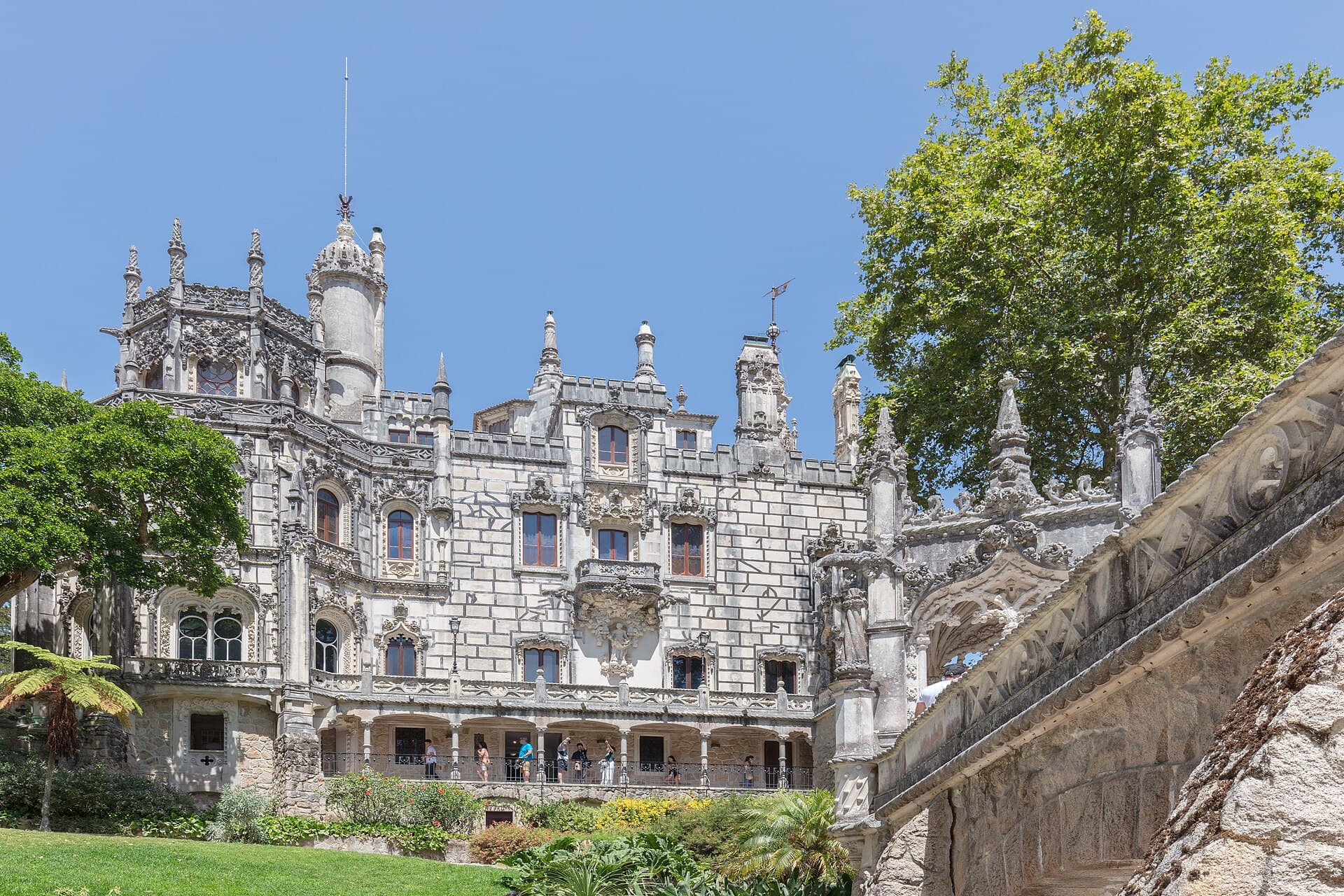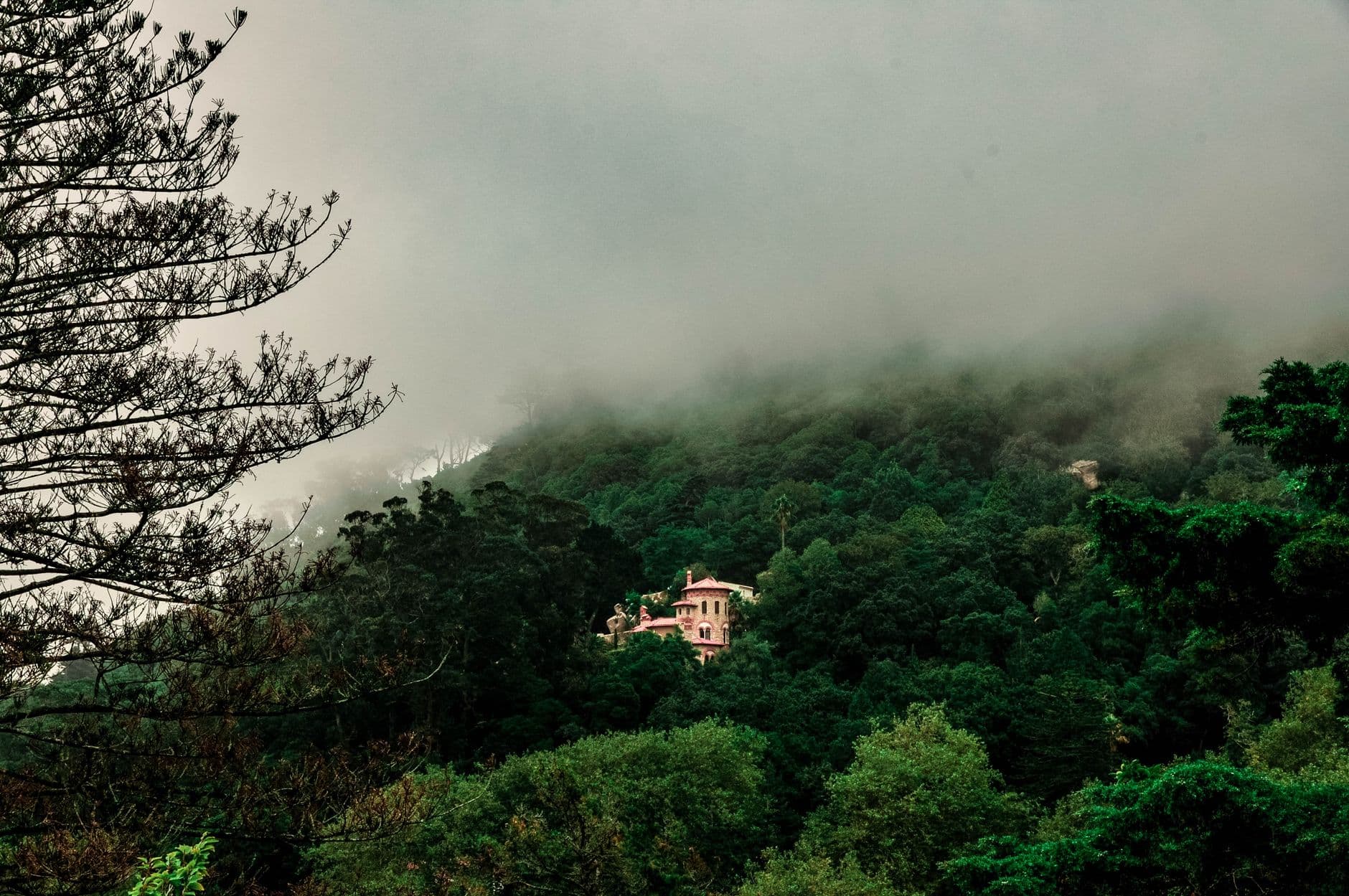
Sintra looks primeval, older than memory, but the mountain that anchors this landscape earned its fame on purpose in the eighteen hundreds. The Serra de Sintra is a spine of granite, and standing at its foot the useful thing to understand is not that a fairy tale grew here by accident. The fairy tale was authored. The mountain supplied the raw material: a cool, damp, misted forest with its own weather. Nineteenth-century imagination did the rest, restoring a castle into a picture, planting a forest tree by tree, and inventing a palace that never had a medieval original. Read the range as a piece of deliberate design and the whole ridge starts to make engineering sense.
What the mountain actually is
The Serra de Sintra is a granitic massif. It rises to about five hundred and twenty-nine metres at its highest point and runs roughly sixteen kilometres westward, from the slopes above town out to Cabo da Roca, where the European continent ends at the Atlantic. That geometry matters more than it first appears. The range sits close enough to the ocean that incoming clouds catch on its slopes and wring themselves out. The result is a microclimate: it rains more here than on the Lisbon plains a short distance inland, and the forest stays cool and damp when the lowlands bake.
You feel this as you climb. The air changes. That single physical fact, a wet, temperate pocket lifted above a hot region, is the reason for everything built here later. The mountain supports around nine hundred indigenous plant species, roughly a tenth of them found nowhere else, which tells you the microclimate is not a traveler's impression but a measurable ecological condition. The Romans registered the same strangeness. They called the range Lunae Mons, the Mountain of the Moon.
Why a cool green refuge became the point
Hear a stop from this walk
Serra de Sintra: The Mountain of the Moon
Treat the Serra as a system and the human history follows the climate. A damp, shaded, elevated refuge above a hot plain is exactly what certain people go looking for. Monks came for solitude. Kings came for a summer retreat from Lisbon's heat. Then, in the eighteen hundreds, the Romantics arrived, looked at the misted ridge, and did something different from everyone before them. They did not merely retreat into the mountain. They saw a dream they wanted to construct, and they had the money and the architectural appetite to build it.
This is the shift worth holding onto as you walk. Earlier arrivals used the mountain for what it already offered. The nineteenth-century builders treated the mountain as a foundation to compose on. That distinction is the difference between shelter and design, and it explains why Sintra reads as a single coherent stage set rather than a random cluster of old buildings.
The authorship you should be able to see
Here is the paradox the whole mountain turns on, and once you can see it, you cannot unsee it. Sintra looks ancient. It was authored. Almost everything the eye loves on these slopes was made or remade in the eighteen hundreds, on purpose, to look older and stranger than anything that ever genuinely stood here.
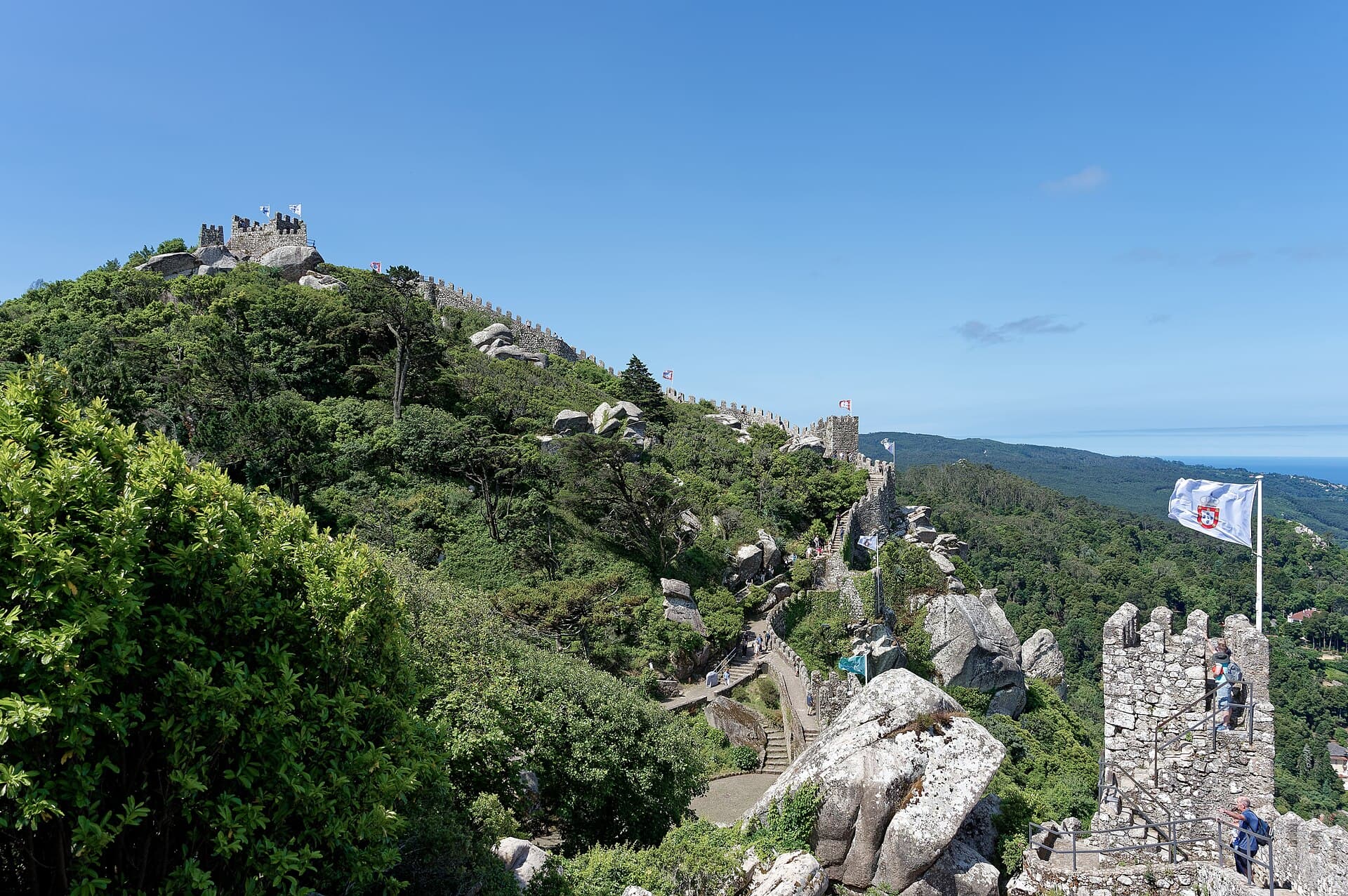
The evidence sits at three points up the ridge. The old Moorish castle, the one truly ancient structure on the mountain, was acquired and restored into a picturesque ruin, curated so that rounding a corner delivers a view. The forest that closes overhead like an enchanted wood was planted, gathered species by species from every continent, then threaded with paths designed to feel accidental. And the medieval-looking palace on the peak was invented, fused out of a ruined monastery into an eclectic composition that fakes a past no palace here ever had. The romance is completely real. It is also completely composed. What looks like inheritance is authorship, and the second story is the more astonishing one.
The line that changed how the mountain is read
There is a specific, verifiable moment when the wider world formally recognized what these builders had done. In nineteen ninety-five, UNESCO inscribed the Cultural Landscape of Sintra on its World Heritage list. It was the first site in Europe ever listed as a cultural landscape, a category meaning a place shaped by human imagination rather than by nature alone. UNESCO's own citation goes further: it states that here, in the nineteenth century, Sintra became the first centre of European Romantic architecture.
That designation is the whole argument in institutional form. The listing is not for a rare geology or an untouched wilderness. It is for a landscape that people designed. The inscription rests on cultural criteria, recognizing Sintra as the birthplace of European Romantic architecture and landscape design. When a heritage body reserves its highest recognition for the deliberate shaping of a mountain, it is confirming the thing you should carry uphill: the enchantment is a made object.
Standing at the foot of it
If you take one idea from the Serra de Sintra before you start climbing, make it this. Hold two thoughts at once. This looks primeval. It was authored. Every stop above will test that idea and confirm it, from a genuinely eighth-century castle turned into a nineteenth-century picture, to a forest that arrived tree by tree from California, Asia, and the far southern hemisphere, to a summit cross remade more than once.
The mountain rewards that double vision because the design was good enough to hide itself. The paths feel accidental. The forest feels ancient. The palace feels medieval. None of it is, and knowing that does not spoil the effect. It sharpens it, because you begin to admire the intent behind every wet, green, deliberate corner. The wonder is not that a mountain happened to grow a fairy tale. The wonder is that people loved this granite ridge enough to author one, and did it so well that a global heritage body called it the first of its kind on the continent.
The best way to test all of this is on foot, at your own pace, reading each structure against the climate and the design that produced it. The full climb up the Serra, from the mountain approach to the restored castle, the invented palace, the planted forest, and the summit view out to the Atlantic, is the sintra-pena-palace route. If you want to compare it against the other routes up this same mountain, browse the Sintra walking tours collection first, then walk the one that reads the fairy tale as the deliberate masterpiece it is.
Sources
- Cultural Landscape of Sintra, UNESCO World Heritage Centre (List 723): the official inscription confirming the nineteen ninety-five listing, cultural criteria, and Sintra as the first centre of European Romantic architecture.
- Sintra Mountains, Wikipedia: geographic overview of the granitic range, its elevation and length toward Cabo da Roca, oceanic microclimate, and indigenous plant diversity.
- Roamer tour transcript, "The Fairy Tale Built on Purpose" (fact-audited, audit score 96): the primary narration establishing the Lunae Mons name, the authored-landscape thesis, and the sequence of monuments up the ridge.
- Parques de Sintra (visitsintra.travel): the official steward of Sintra's monuments and parks, source for the Romantic restorations and the designed forest surrounding the palace.
Ready to experience it?
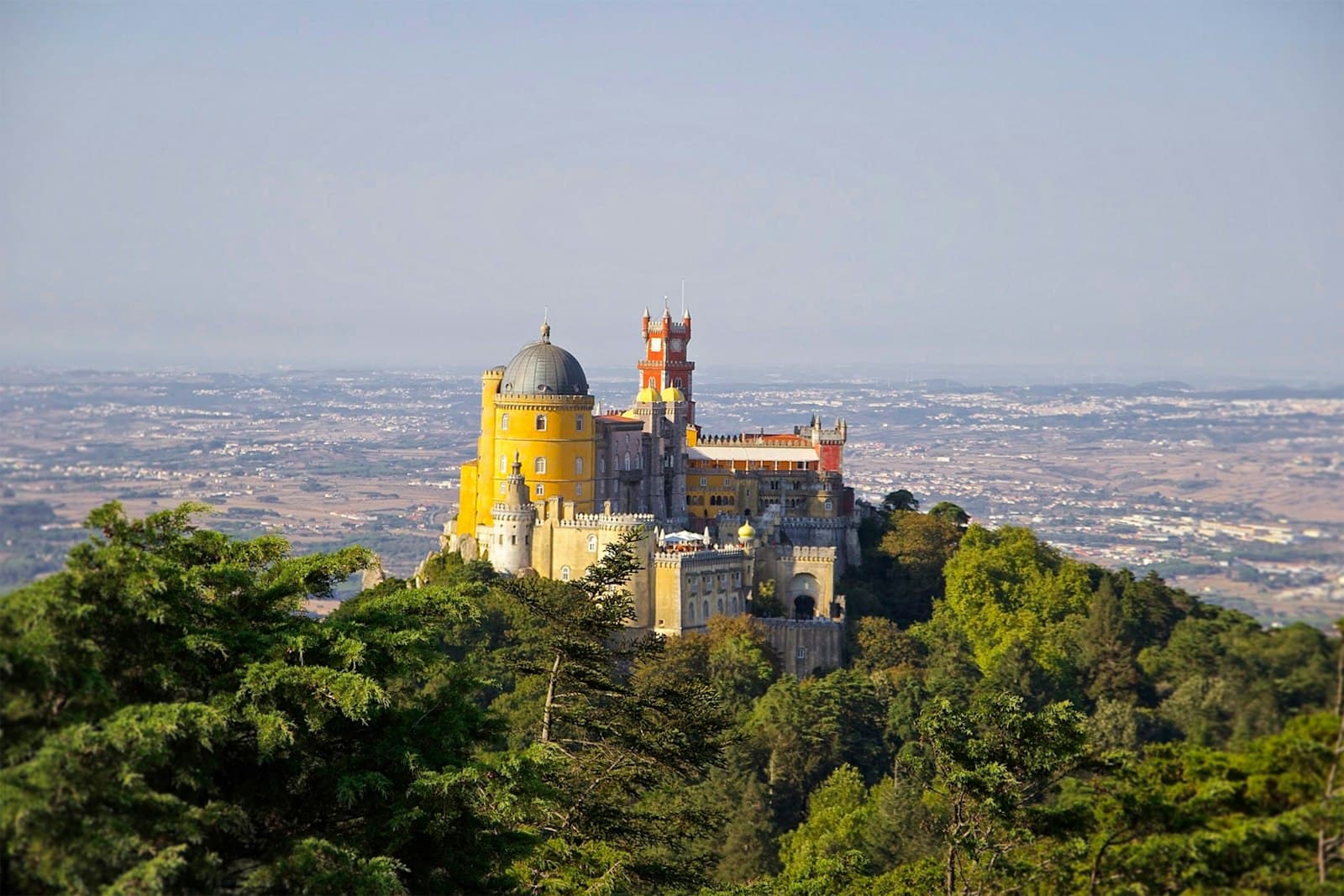
Pena Palace: The Fairy Tale Built on Purpose
150 min · 5.6 km · challenging
More from Sintra
Explore more at your own pace.
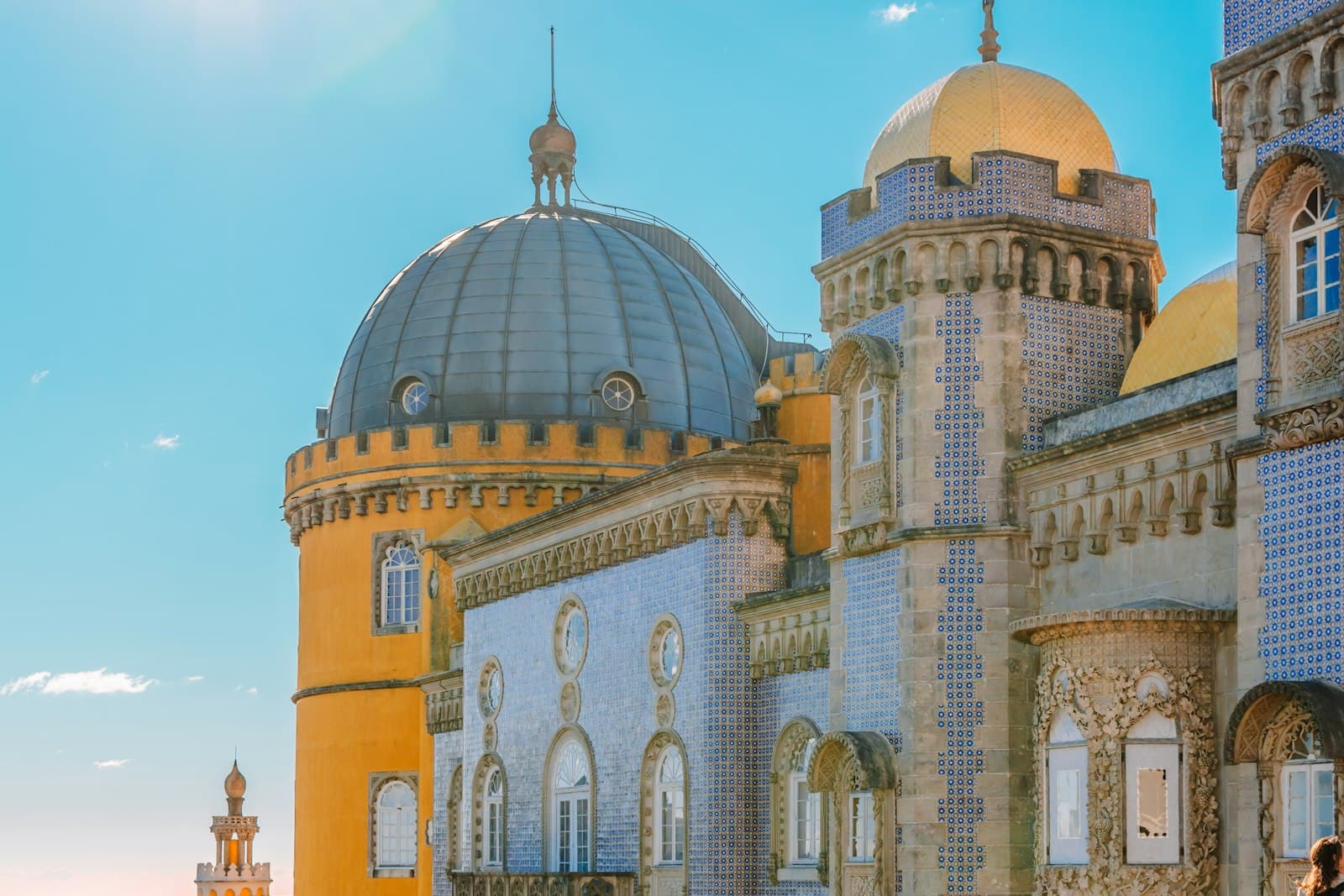
One Day in Sintra: A Walkable Itinerary From Morning to Evening
Sintra Travel Guide: Days, Transport, Tickets, and Timing
Sintra: The Fantasy Mountain That Was Built on Purpose
Sintra National Palace: The Royal Town Beneath the Famous Peaks
The Moorish Castle Above Sintra Is Real, and It Was Composed on Purpose