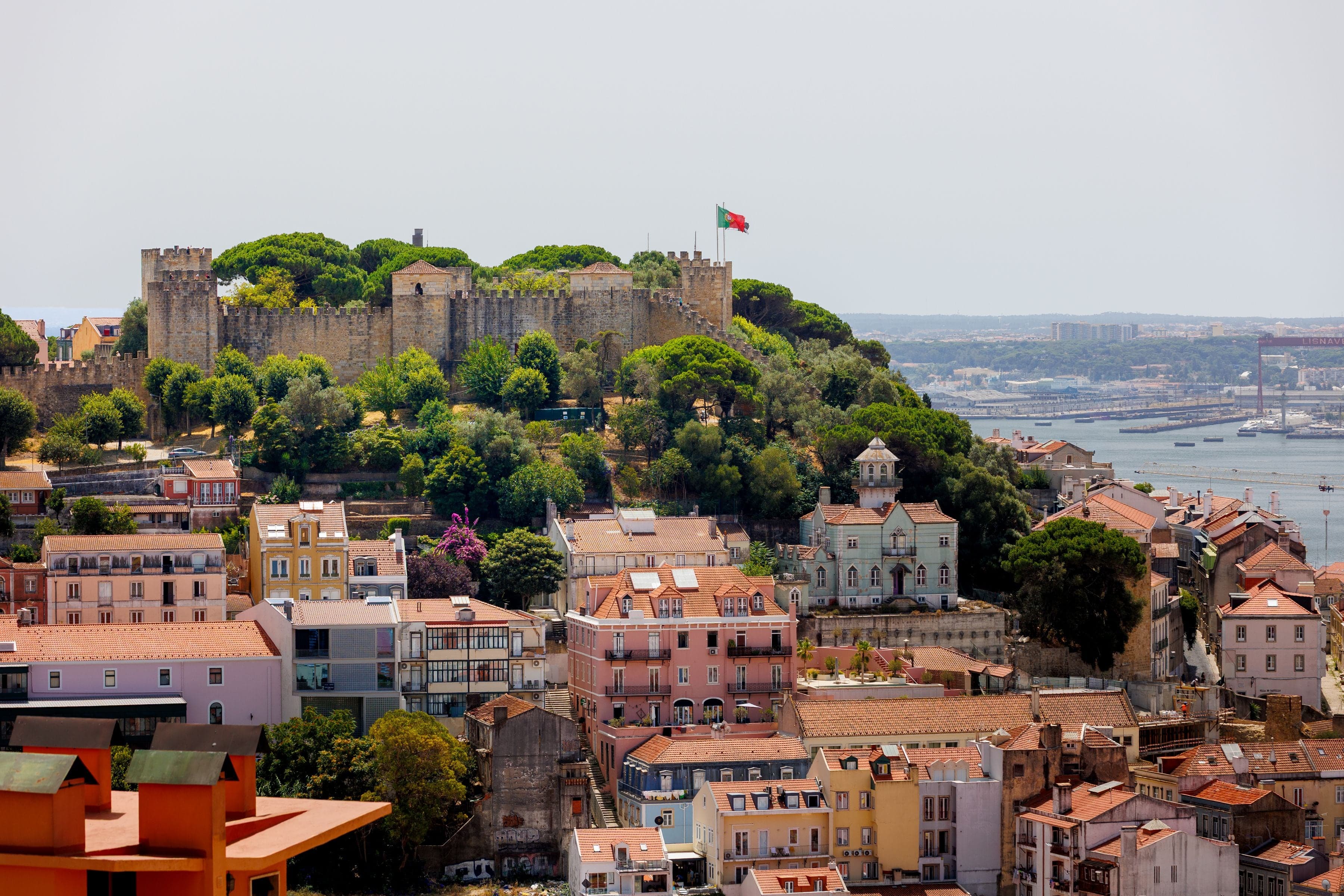
Climb from Martim Moniz through Mouraria's fado lanes, past Largo da Severa and a wall of neighbors' portraits, through the Arco de São Jorge and the Santa Cruz quarter to the castle's ticket office.
Start · Praça do Martim Moniz and the Saúde Chapel
DirectionsStops
- 1
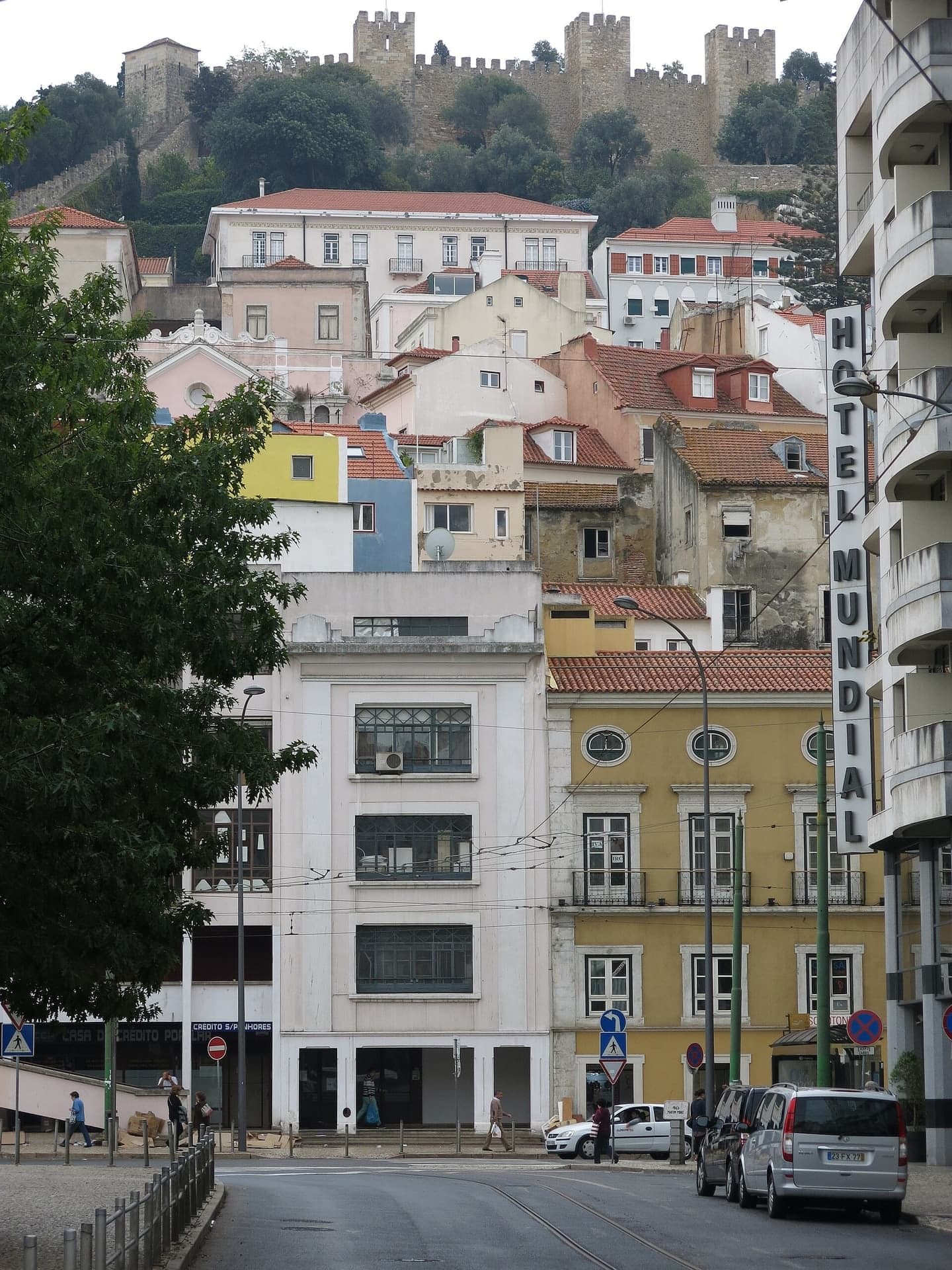
Praça do Martim Moniz and the Saúde Chapel
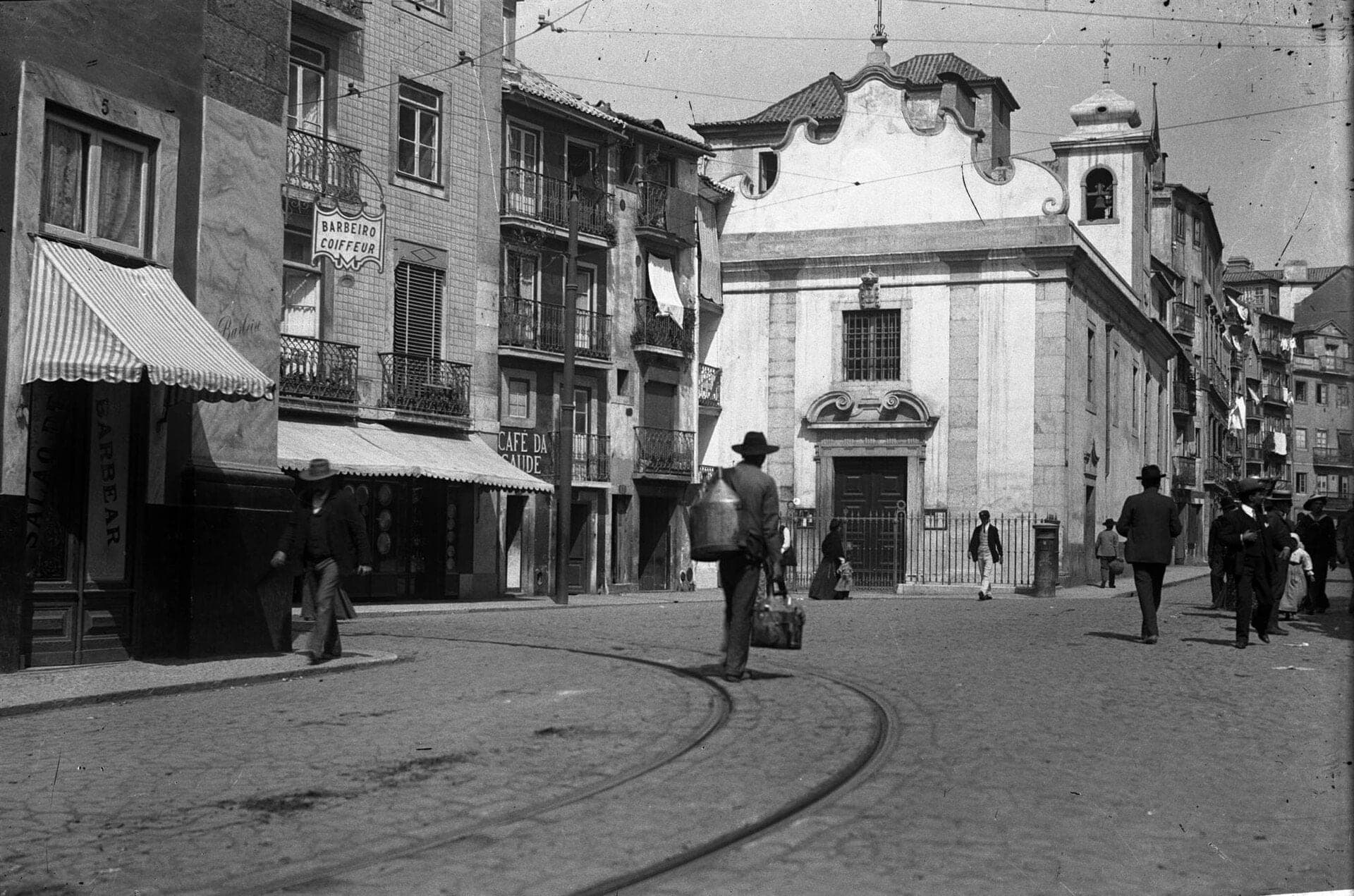
A gunners' plague vow stands here, at the foot of the hill, in a white chapel founded in 1505 whose statue moved in after a quarrel.
- 2
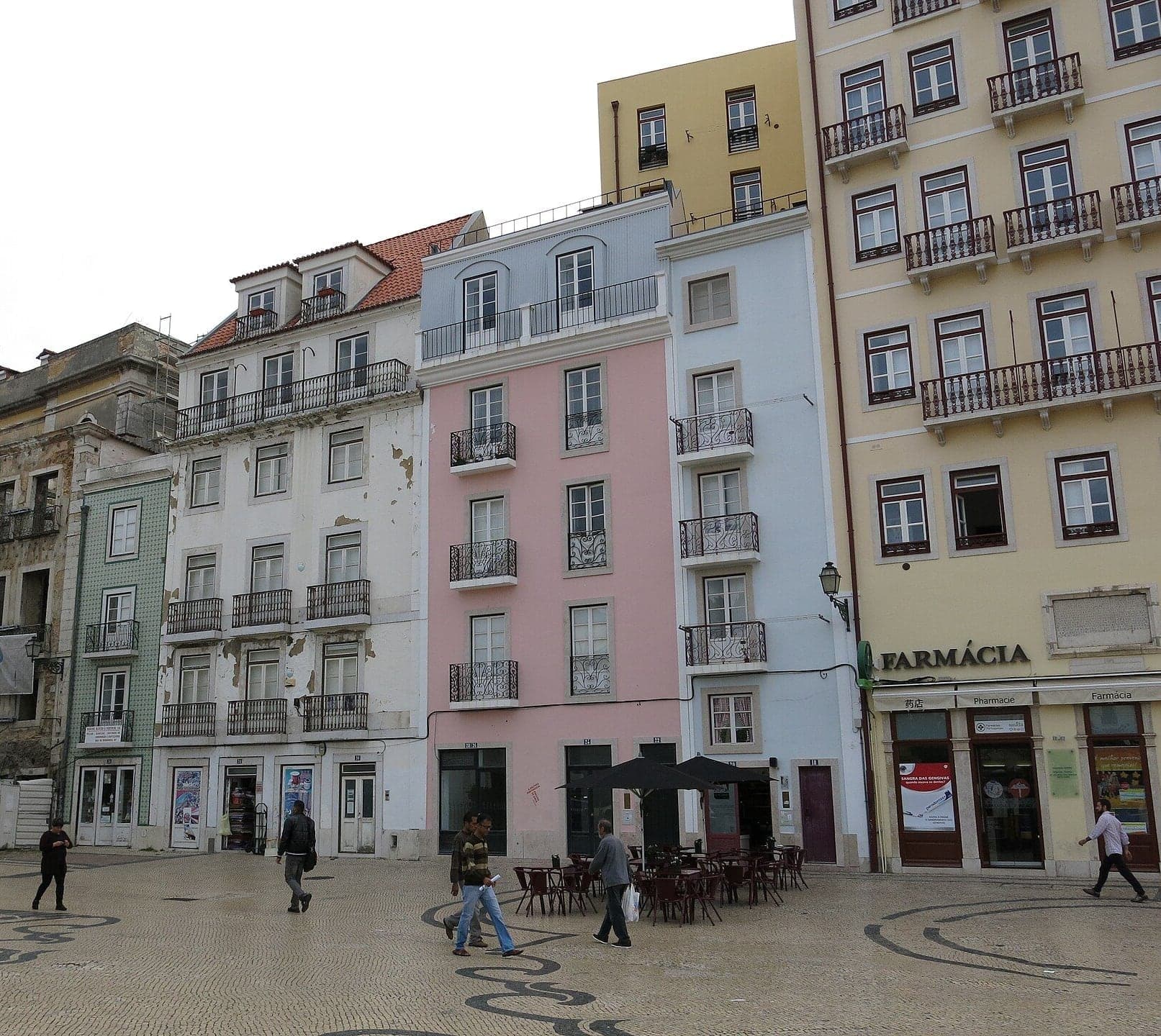
Rua da Mouraria: Closed at the Curfew Bell
The Moorish quarter closed at curfew, here at the bell, until the forced choice of 1496, beside an orphans' school with a remarkable door.
- 3
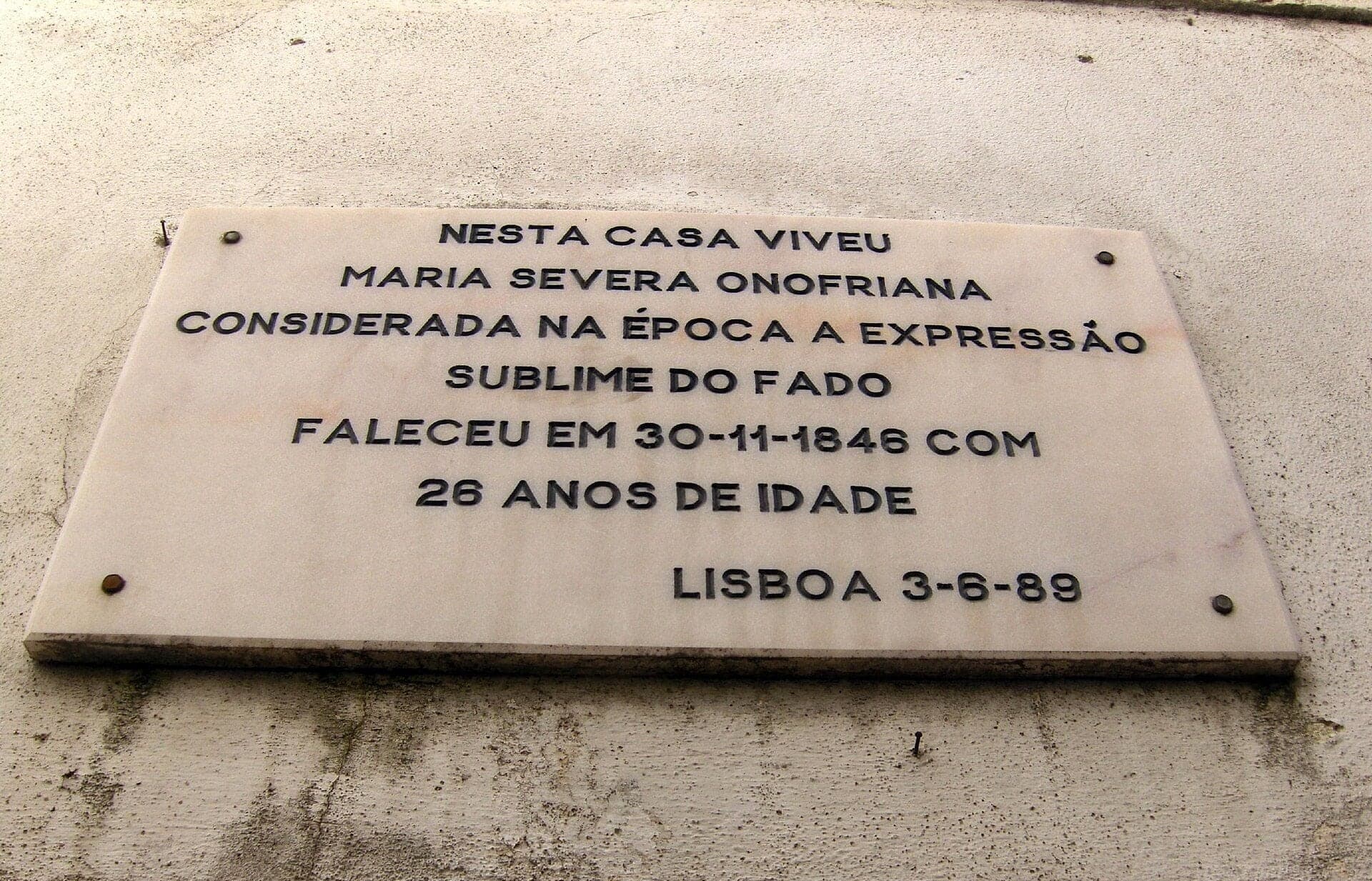
Largo da Severa: Fado's First Remembered Name
Fado's first remembered name belongs here, in this lane, where the records give Maria Severa twenty-six years and a sudden death.
- 4
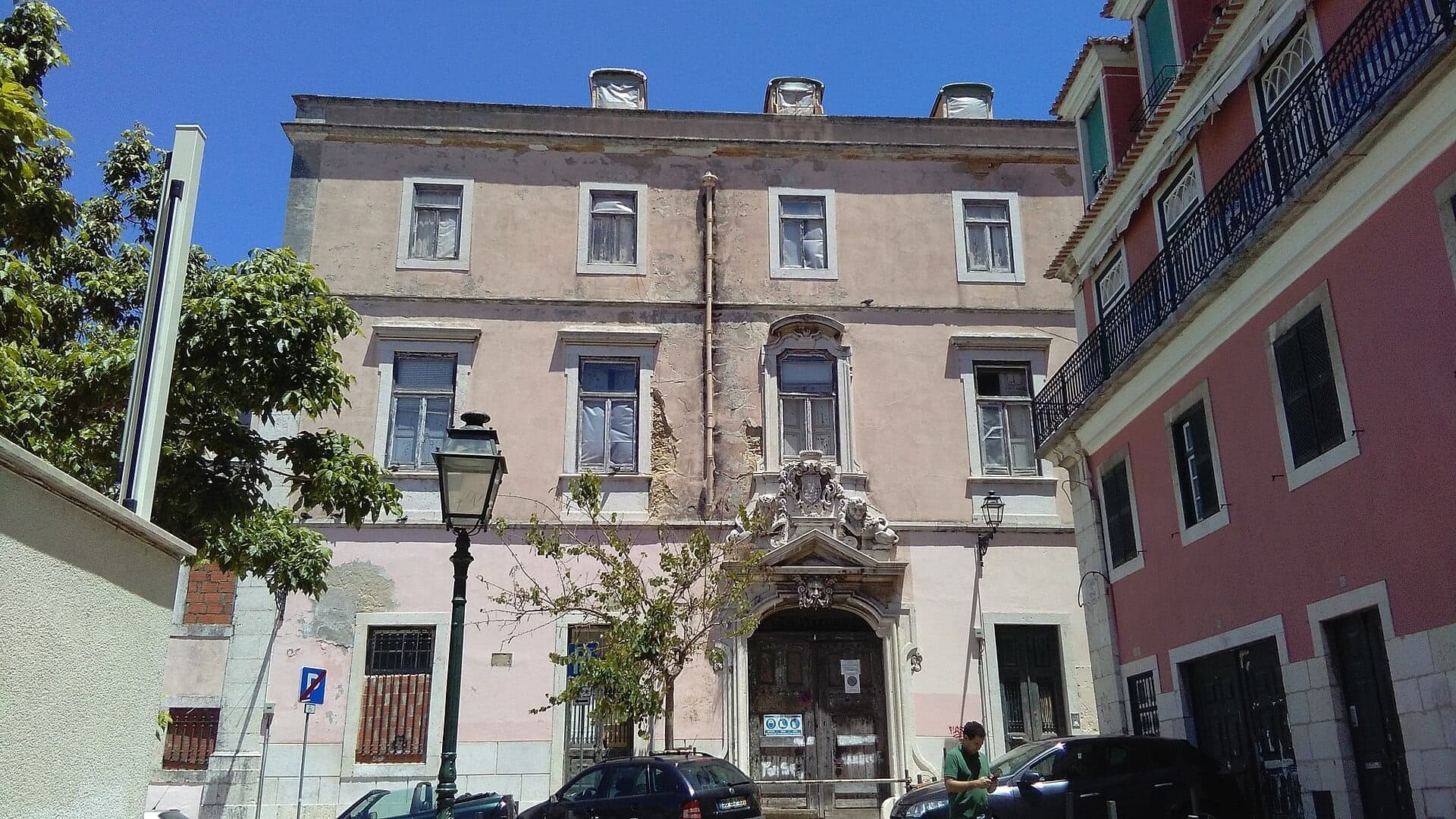
Largo da Rosa and São Lourenço: Noble Money Uphill
A palace and a church stand uphill, above the old lanes, with a coat of arms over the door and hotel works behind it.
- 5
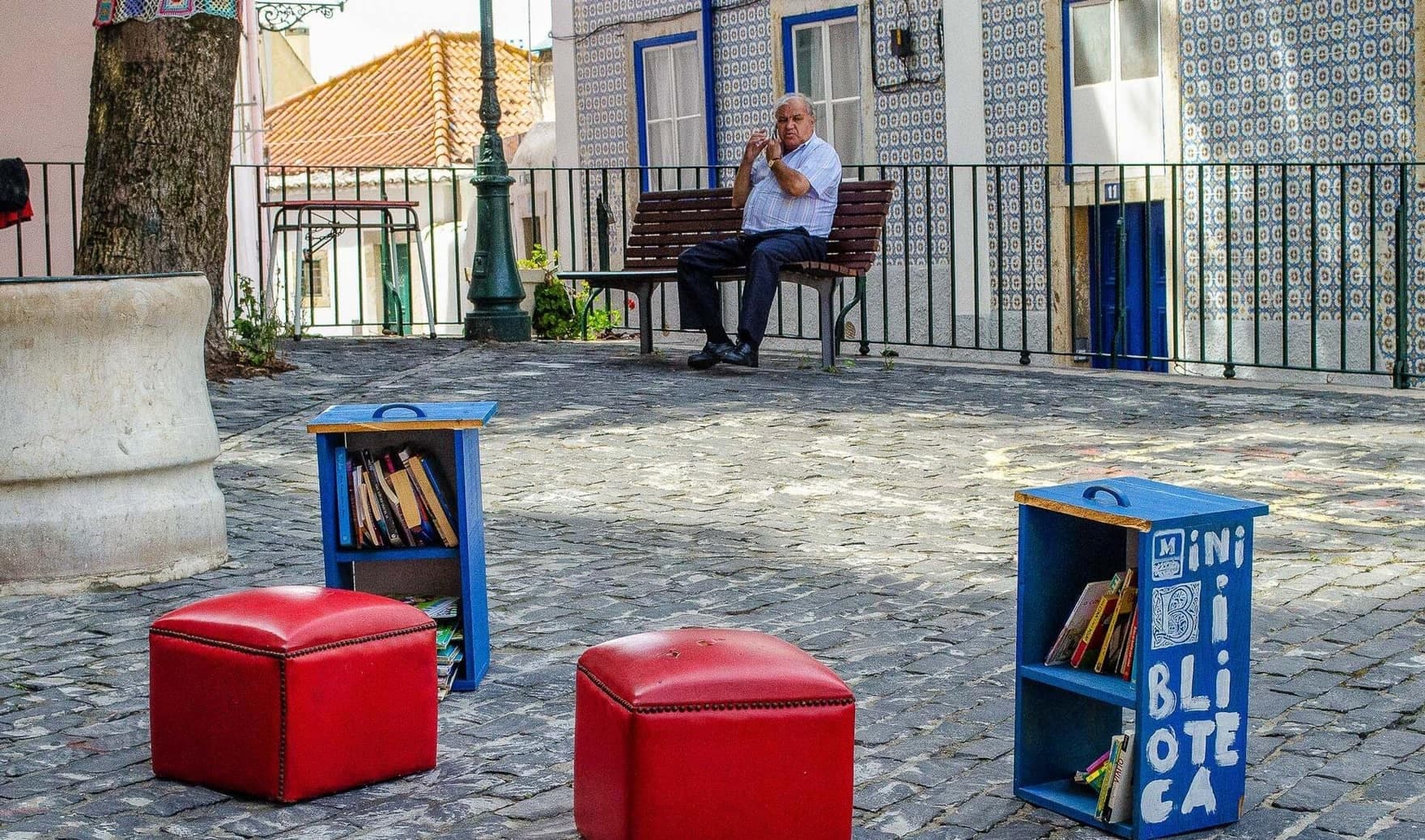
Largo dos Trigueiros: Faces on the Walls
Neighbors' faces line these walls. A photographer put them there, then moved away from the tourist crowds.
- 6
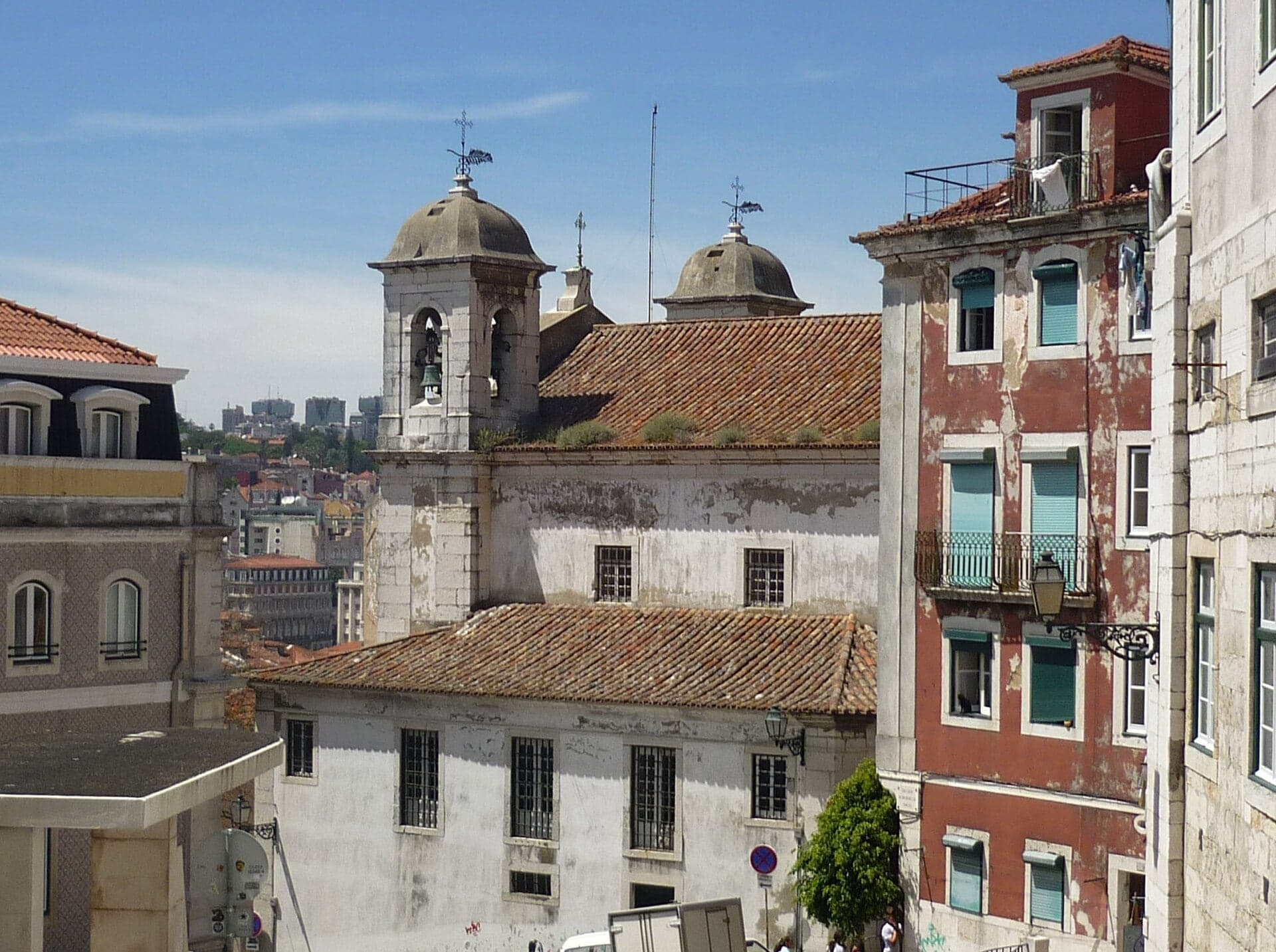
Largo de São Cristóvão: A Mural Paid for by Singing
Street singing paid for this mural, the neighborhood's own, beside a church that came through 1755 better than most.
- 7
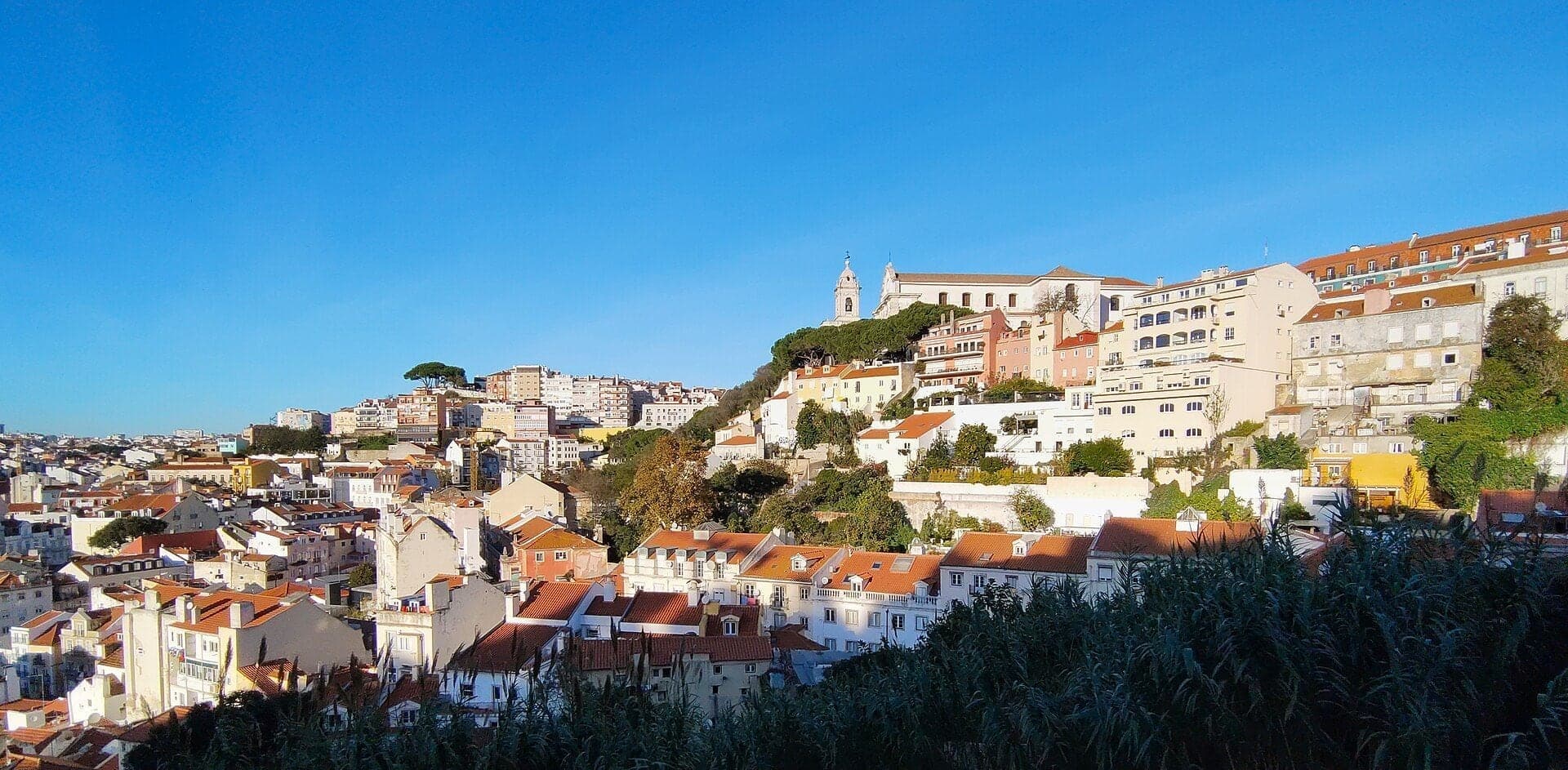
Costa do Castelo: The Chão do Loureiro Bridge
An old market became a car park, on the slope, with a roof terrace that looks out over roofs toward the river.
- 8
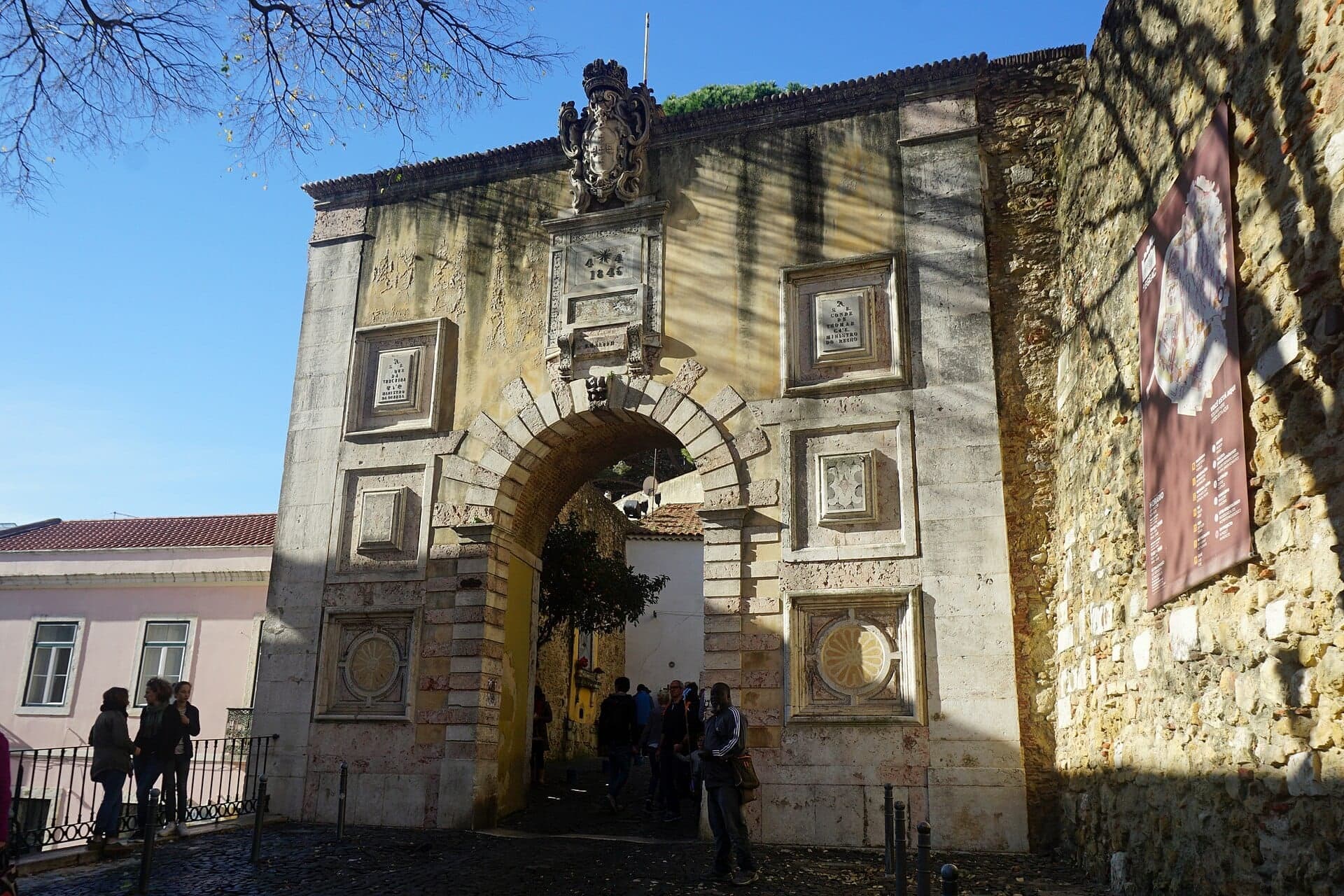
Arco de São Jorge: Younger Than It Looks
The gate was finished in 1846. It looks medieval, in marble taken from a convent chapel.
- 9
Miradouro do Recolhimento: A Terrace Behind the Castle
A garden terrace looks over the Tagus. It is free, with red roofs below, on the street where a soldiers' hospital stood until the earthquake.
- 10
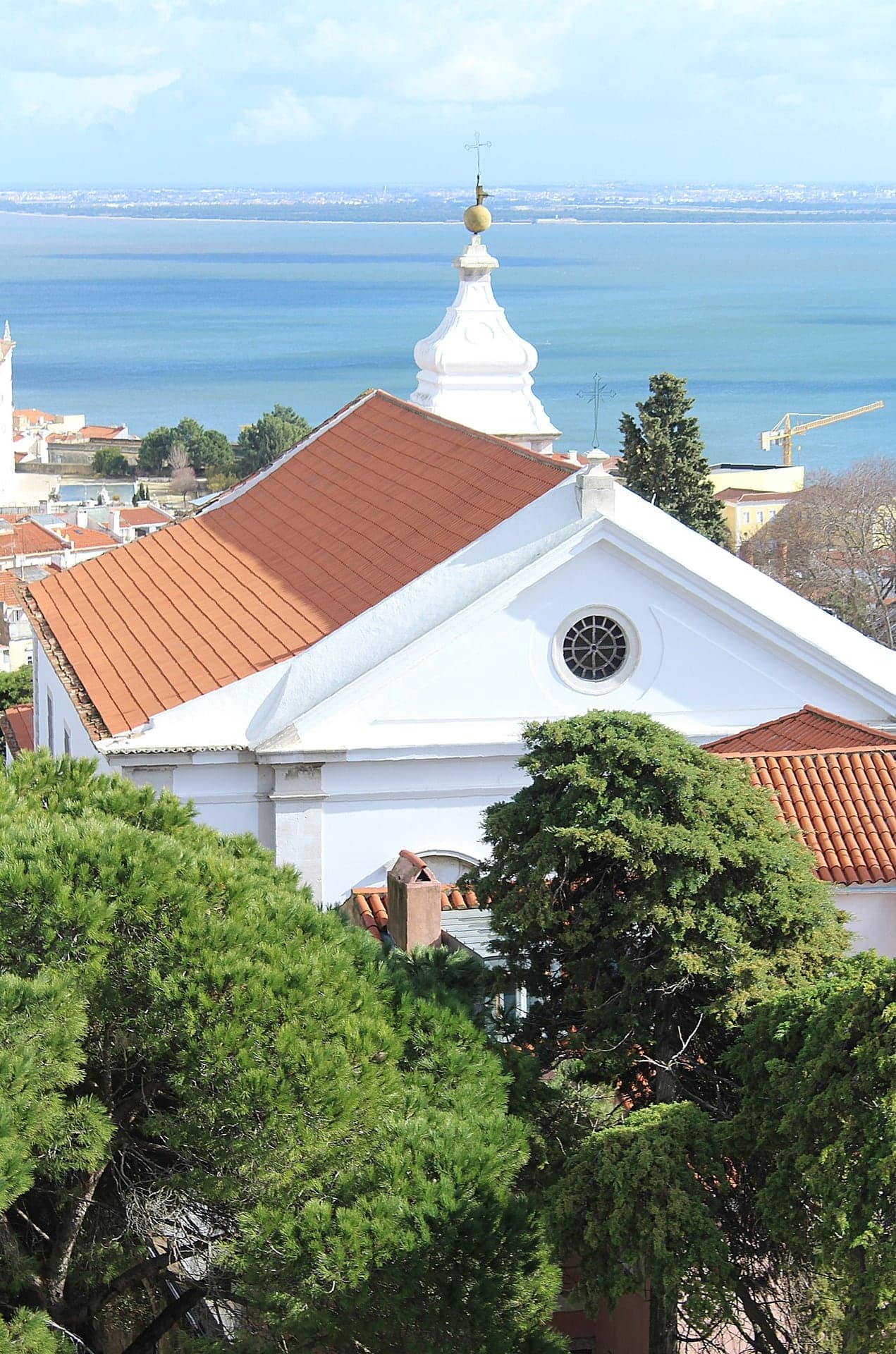
Largo de Santa Cruz do Castelo: A Parish Inside the Walls
A parish lives on inside the citadel, around a church the record says began as a mosque.
- 11
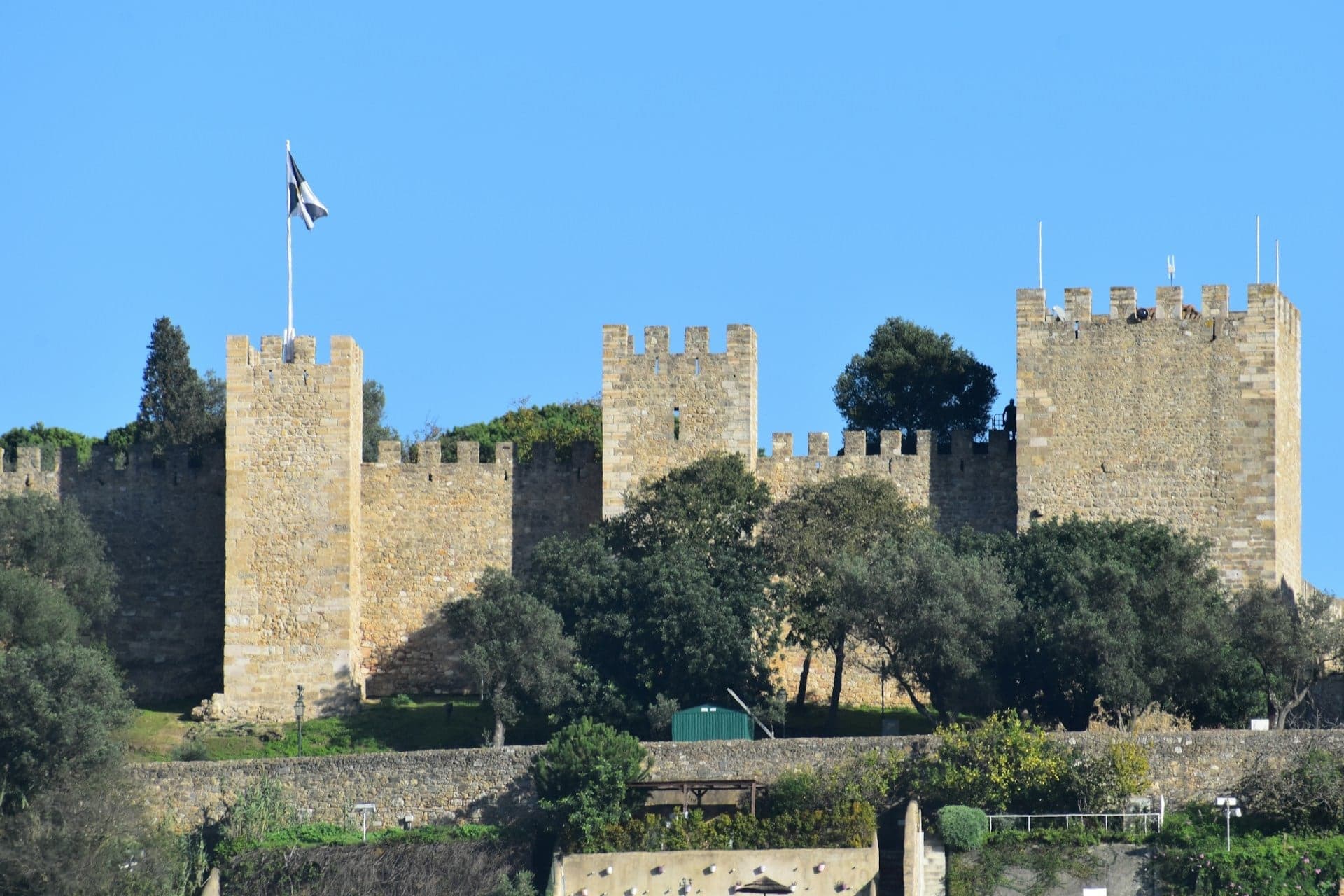
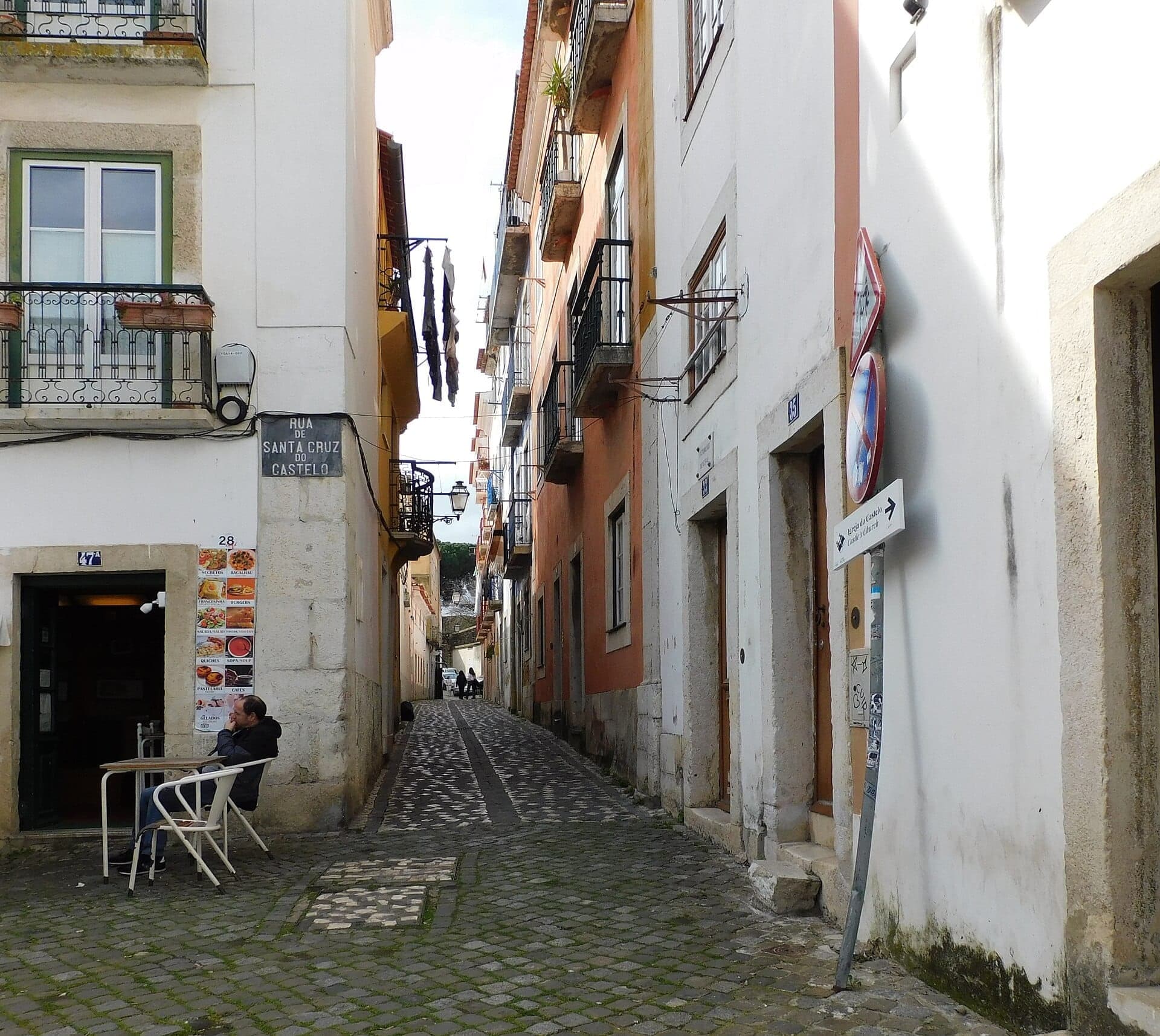
Castle Gate on Rua de Santa Cruz: Where the Ticket Starts
The castle gate stands just ahead, with the ticket office, on Rua de Santa Cruz.
Details
Best Time to Visit
Start by mid-morning so the Recolhimento terrace is open when you reach it (listings give it from 10am) and you still have time for the castle. From November to February the castle's last entry is 5.30pm, and from March to October it is 8.30pm, though its wall-walks may shut from 6pm. Avoid 1 January, 1 May, and 24, 25 and 31 December, when the castle is closed. Dry days are kinder on the polished stone. Checked 2 November 2026.
Pro Tips
- •Getting to the start: Martim Moniz Metro station is on the far side of the road and tram tracks from stop 1. Cross on the zebra crossing by the shopping center (no lights, no island, tram tracks), look both ways, then walk along the chapel's side to its front. Tram 28E's Martim Moniz stop is about 30 to 60 meters from the start, with only a service lane to cross. Checked 2 November 2026.
- •Getting away from the end: bus 737 from Rua do Chão da Feira, through the arch, runs to Praça da Figueira. Tram 28E stops at Santa Luzia and Portas do Sol, about 5 minutes on foot. The castle also lists two lifts down to the Baixa (Largo do Caldas and Rua dos Fanqueiros 176), but no 2026 status was found, and this walk does not rely on them. Checked 2 November 2026.
- •The 48 steps (between stops 4 and 5) are the only flight on the route. To avoid them, stay on Rua das Farinhas, turn up Beco das Farinhas to Largo dos Trigueiros, and come back down the same lane. That makes the route step-free on the map, though the stone and the gradients are not easy for wheelchairs.
- •Castle tickets (stop 11): sold at the office and machines on Rua de Santa Cruz, beside the entrance. Online, BOL is the only authorized seller. Adult 17 EUR. The museum is temporarily closed. Full details are on stop 11's card, from castelodesaojorge.pt. Checked 2 November 2026.
- •Miradouro do Recolhimento (stop 9): free. Time Out says a 2017 remodel renamed it Parque Infantil e de Lazer do Recolhimento, so a sign may use that name. Time Out gives closing at 7pm in summer and 5.30pm in winter (September 2024), and 10am to 7pm without seasons (June 2026). No official hours page was found. If the gate is shut, skip the terrace and stay on Rua do Recolhimento; the route still works. Checked 2 November 2026.
- •Chão do Loureiro roof terrace (stop 7): a restaurant's terrace reported as open to the public, with restaurant hours of 10am to 11pm (Time Out, 2016). No recent source was found, so treat it as a bonus. Checked 2 November 2026.
- •Santa Cruz church tower (stop 10): Largo de Santa Cruz 15, 50 steps, its own ticket. Guides give about 3.50 to 6 EUR, and the current price could not be confirmed. Checked 2 November 2026.
- •São Cristóvão (stop 6): an old listing (January 2018) gives Monday to Saturday 10am to 7pm and Sunday 10am to 1pm. No official hours were found, so go in only if the door is open. The Saúde chapel's hours (stop 1) were not found either. Checked 2 November 2026.
- •The Saúde procession goes out on the first or second Sunday of May.
Safety & Precautions
- •On Rua Bartolomeu de Gusmão and Rua do Chão da Feira, between stops 7 and 8, bus 737 runs one-way DOWN toward you. There are pavements on most of it, but none for a short stretch round the bend. Walk where you can see the bus and step well in to let it pass.
- •Between stops 7 and 8 is the steepest stretch, about 9% in places, on polished stone that is slippery when wet.
- •One flight of 48 steps goes down between stops 4 and 5, with a handrail. The way round is in the tips.
- •Lanes with no pavement, where you share the road with residents' cars: the arch itself, Rua de Santa Cruz above the gate, the north part of Rua do Recolhimento, Costa do Castelo, Rua do Capelão and Largo da Severa. On Rua das Farinhas, traffic comes against you for a short way. Costa do Castelo has deliveries from 8am to 11am and 3pm to 5pm.
- •Mouraria and Santa Cruz are lived-in neighborhoods. Stay out of doorways and courtyards, and keep your voice down around stops 3, 5 and 10.
- •No official statement says the Santa Cruz quarter is outside the castle's ticket line. In practice the check is at the castle entrance, on the evidence up to February 2025. If that has changed, skip stops 9 and 10 and finish at the gate. Porta de Santa Cruz, the iron gate into the castle from the Largo side, is not a way in.
- •Palácio da Rosa (stop 4) was being converted into a hotel by November 2024, so its front may be behind scaffolding, and the Largo can close for deliveries.
- •A redesign of Praça do Martim Moniz had been approved but not begun at 30 September 2026, with no date given. Hoardings may appear; stop 1 stands at the square's edge.
- •The Recolhimento terrace has no lighting and shuts in the early evening. On the bridge at stop 7, the sun is in your face from the afternoon. If the bridge is closed in the evening, stop on Costa do Castelo at its end.
- •Queues form at the 28E terminus by stop 1 and at the ticket office at stop 11. Stand clear of the ticket line.
Travel advisory: Exercise Normal Precautions (Level 1).
Gallery
Related Reading
Go deeper on what you'll see, hear, and walk through.
Overview
Lisbon Travel Guide: Days, Transport, Timing, Safety, Budget
9 min
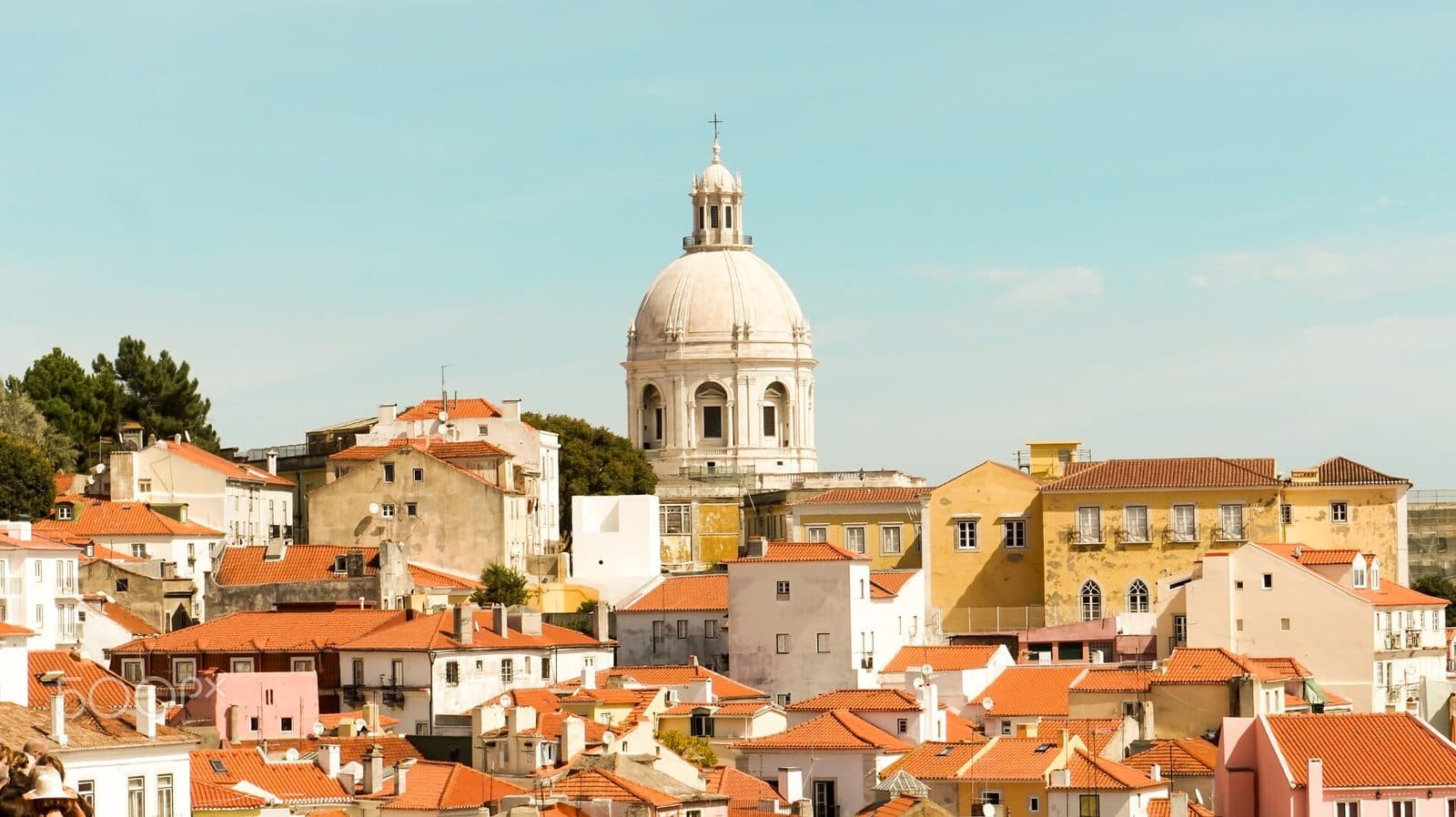
Thematic
Lisbon Rebuilt by Reason: Three Answers to Catastrophe
7 min
Deep dive
Castelo de São Jorge: What Is Really Old on Lisbon's Castle Hill
6 min
Read
What to Eat in Lisbon: The Dishes, Their Origins, and How to Order Like a Local
7 min
Read the walk
The full story of São Jorge Castle and Mouraria: Who Lived Below the Walls, in words. Prefer to listen? Play it narrated, from home or on location.
Introduction
Lisbon, the capital of Portugal, keeps its castle on a hill, and this walk goes up that hill from below, through the lanes of Mouraria, the Moorish quarter, to the castle's front door.
It climbs on purpose. After the citadel fell in eleven forty-seven, the Muslims who stayed were confined outside the walls, in a quarter at the foot of this slope. So the bottom is where the story starts, and it goes up in the hill's own order: an orphans' school, the lanes where fado found its first remembered name, a gate, and a parish inside the walls. It ends at the castle's ticket office, not inside, because the castle is ticketed. By then you will know what it stands on, and you can choose.
Three people come up along the way: Maria Severa, the first fado singer anyone remembers by name; Martim Moniz, a knight who may be more legend than man; and Camilla Watson, a photographer who put her neighbors on the walls.
This is eleven stops over about one point seven kilometers, a little over a mile, in about seventy minutes. It rises about seventy meters, spread out, with the steepest stretch after stop seven. There is one flight of forty-eight steps, going down, between stops four and five, and you will hear the way round it. You finish at the castle gate on Rua de Santa Cruz do Castelo, high on the hill.
1. Praça do Martim Moniz and the Saúde Chapel
Welcome to Martim Moniz, at the foot of the castle hill. If you have just come out of the Metro, you are still across the road and the tram tracks from the start. Cross on the zebra crossing by the shopping center. It has no lights and no island, and the tram is quiet until it is on you, so look both ways before you step out. Then walk along the side of the white chapel to its front, on the paved square where a pedestrian street begins.
Look at that front: white walls, stone pilasters, a stepped gable with Mary's monogram, and a small railed forecourt. This is the chapel of Nossa Senhora da Saúde, Our Lady of Health.
It began as a promise. In fifteen oh five, after an epidemic, the gunners of the Lisbon garrison raised a chapel here to Saint Sebastian, the protector against plague, to keep a vow. In fifteen seventy, after another outbreak, the city held its first procession of Our Lady of Health, with a statue kept in a school for orphan boys across the way. Then the school and the statue's brotherhood quarreled, and the gunners offered their chapel. The statue moved there in sixteen sixty-two, and the chapel took its name. The procession still goes out each May.
The square is named for a knight, Martim Moniz, who, the story goes, jammed the castle gate open with his own body. You will meet him again at the top.
The castle is up there, but the roofs hide it from here, and the lanes ahead hide it for most of the climb.
The queue for the twenty-eight tram forms close by, and pickpockets work it, so keep your bag in front of you.
Follow the route up the pedestrian street, past number sixty-four, a door in a many-lobed stone arch, with stone bollards in front.
2. Rua da Mouraria: Closed at the Curfew Bell
Walk on up the patterned pavement and stop by the marble block with a Portuguese guitar carved into it, at the mouth of a narrow lane. The block's name calls Mouraria the cradle of fado. That comes next.
First, the door you just passed, at number sixty-four. A many-lobed arch stands on small columns, with a plain door on each side and a balcony window above. That building was the orphans' school, the one that kept the chapel's statue. It was traditionally founded in twelve seventy-three, and Queen Catarina refounded it in fifteen forty-nine for thirty poor boys, schooled for the missions to Africa and Brazil. The arch is in the Manueline manner, the ornate Portuguese style of that age. The state's heritage record calls it a later revival, though guides date it to the fifteen hundreds. One guide says the tops and bottoms of its small columns were put back the wrong way round. A short way back down the street, you can judge for yourself.
Now the street's name. Mouraria means the Moorish quarter. After Lisbon fell in eleven forty-seven, the Muslims who stayed were confined outside the walls, at the foot of this slope, under a charter of eleven seventy. They had their own baths, prison, butcher, school, cemetery and two mosques. The quarter closed at a curfew bell. Christians were barred, and a woman entering alone risked death in law. In fourteen ninety-six, its people were given a forced choice: expulsion or baptism.
Today you see iron balconies and souvenir racks, and the name on the street sign. This is a lived-in neighborhood, with people above these shops and along these lanes. So keep your voice down, and stay out of doorways and courtyards.
Follow the route into the lane beside the guitar, Rua do Capelão, where portraits of fado singers line the way. Next is Largo da Severa.
3. Largo da Severa: Fado's First Remembered Name
Walk on to the small square at the end of the lane, and look for a plaque on a house wall with the name Maria Severa Onofriana. Translated, it says: in this house lived Maria Severa Onofriana, considered in her time the sublime expression of fado. She died on the thirtieth of November, eighteen forty-six, aged twenty-six.
Severa is the first fado singer anyone remembers by name, and the paper trail is thin. A baptism record gives her birth in July eighteen twenty. A death record gives her address on Rua do Capelão, the lane you just walked, and her cause of death as apoplexy, a sudden collapse, without the last rites. She was single.
So the city's records give her twenty-six years, an address on this street, and a sudden death. Beyond that, a few men who met her left accounts. One described her singing at the palace of the Count of Vimioso, in a newspaper article. The Fado Museum tells of an affair with him, a story it says hardened into myth. The Fado Museum says the places she sang cannot be identified, and that they are thought to be tied to the prostitution circuits, mainly in the Bairro Alto and here in Mouraria.
Everything else grew afterward. Fado itself went on to the UNESCO list of humanity's intangible heritage in twenty eleven, and its origins are still argued over. The woman at the start of its memory fits on one small plaque. The plaque claims this house. The death record gives only the street. And behind that front, the house was gutted and rebuilt in twenty twelve as a fado restaurant, so only its face is old.
Follow the route uphill, the first steady climb of the walk. Watch the gaps between the houses: the towers may show for a moment, or they may not. Next is Largo da Rosa.
4. Largo da Rosa and São Lourenço: Noble Money Uphill
Walk on into Largo da Rosa and stop on the pavement, across the lane from the church wall.
The church is São Lourenço, Saint Lawrence. City records say a royal physician founded it in the second half of the twelve hundreds. Look for its pink wall behind the parked cars.
The long building beside it is the Palácio da Rosa, the Rose Palace, probably from the sixteen hundreds, and held by noble families after that. Look for its grand door: a mask on the keystone, a triangular pediment, and a coat of arms above it. It came through seventeen fifty-five damaged, and its top floors were added only in nineteen oh four to nineteen oh six.
You may see scaffolding instead. The city bought the palace in nineteen seventy, it was sold at public auction in two thousand three, and it stood empty for about fifteen years. By November twenty twenty-four, works had begun to turn it into a boutique hotel. So noble money climbed above the Moorish quarter, and now hotel money sits in the same walls.
Something else is behind these roofs, out of sight. A branch of King Ferdinand's city wall of thirteen seventy-three came down this hill to a gate called the Porta de São Lourenço, gone by seventeen hundred. Its tower still stands close by, about nine meters square at the base. A wall came all this way to reach a gate that is no longer here.
Follow the route along Rua das Farinhas. Soon it drops down a flight of forty-eight steps with a handrail, the Escadinhas da Rua das Farinhas. To avoid them, stay on Rua das Farinhas, turn up Beco das Farinhas, and come into the next square from below. Next is Largo dos Trigueiros.
5. Largo dos Trigueiros: Faces on the Walls
Come into this small stepped square and stop on its flat part. Keep your voice down: houses stand close on every side. There is no monument here. What matters on this square is a studio that has gone. The photographer Camilla Watson worked here, and in two thousand nine she…
Full narration for this stop unlocks with the tour.
6. Largo de São Cristóvão: A Mural Paid for by Singing
Walk on to the pavement of the little square, with the church across it. If the door is open, step in. Look at the front. A triangular pediment sits between two bell towers, with a glazed niche over the door. This is São Cristóvão, Saint Christopher, already known by that name…
Full narration for this stop unlocks with the tour.
7. Costa do Castelo: The Chão do Loureiro Bridge
Walk out onto the short footbridge from the street and stop before its far end. You are about thirty meters above where you started, and you have reached the street along the castle's slope, Costa do Castelo. The roof at the end of this bridge belongs to the old Chão do…
Full narration for this stop unlocks with the tour.
8. Arco de São Jorge: Younger Than It Looks
Walk on along the lane until the stone arch stands ahead of you, and stop to one side. Cars and the bus use this lane. Look at the arch: a pale stone frame with carved square panels, dark water stains running down it, and a crowned coat of arms on top. Beside it is a rough…
Full narration for this stop unlocks with the tour.
9. Miradouro do Recolhimento: A Terrace Behind the Castle
Walk on out onto the terrace. It is free, and it is not always open: the gate closes in the early evening, earlier in winter. If the gate was shut, you are hearing this from the street, so stay there and go on. Then look out. Red roofs fall away below you, the church of Santo…
Full narration for this stop unlocks with the tour.
10. Largo de Santa Cruz do Castelo: A Parish Inside the Walls
Walk on up to the small square and stop with the white church in view. Keep your voice low. This is the highest point of the walk, and people live here, inside the walls of the citadel. Look at the church: white render, stone corners, a red door. This is Santa Cruz do Castelo,…
Full narration for this stop unlocks with the tour.
11. Castle Gate on Rua de Santa Cruz: Where the Ticket Starts
Walk on down the lane until the ticket office is ahead of you, and stop clear of the line. This is the end of the walk, and the start of the ticket. The Castelo de São Jorge is ticketed, and the details are on this stop's card. Tickets are sold here, at the office or the…
Full narration for this stop unlocks with the tour.
- Facade of Rosa Palace in Lisbon, Portugal. This building was substantially altered in the 18th-century, possibly following the Lisbon Earthq — Ricardo Filipe Pereira, CC BY-SA 4.0 · source
- Lisboa, Largo dos Trigueiros — Turismo En Portugal, CC BY 2.0 · source
- Igreja de São Cristóvão (Christophoruskirche) in Lissabon — SchiDD, CC BY 3.0 · source
- View from Costa do Castelo: Mouraria, Graça. — Šarūnas Burdulis, CC BY-SA 2.0 · source
- Main gate to Castelo de São Jorge, Lisboa, Portugal — Mariordo (Mario Roberto Durán Ortiz), CC BY-SA 4.0 · source
- Ulica Rua do Recolhimento przy Rua de Santa Cruz do Castelo w Lizbonie — Panek, CC BY-SA 4.0 · source
- Lisbon, the Igreja de Santa Cruz do Castelo — Dguendel, CC BY 4.0 · source
Images may be cropped or resized. Other photos via Unsplash and Pexels.