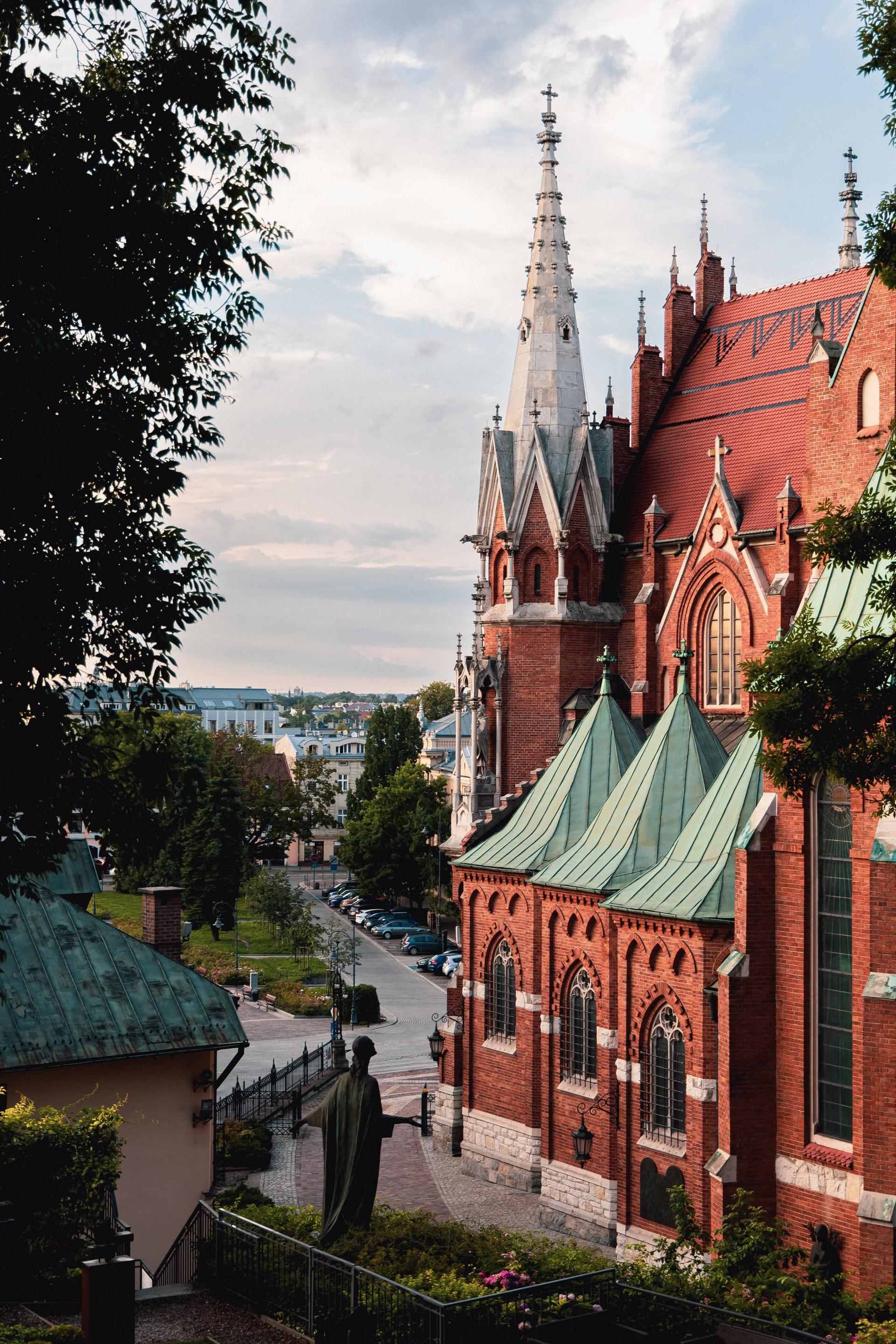
Across the river from Kazimierz, the small town of Podgórze, where the Germans walled in Kraków's Jews from 1941 to 1943. From the Father Bernatek footbridge through the ghetto's main gate, streets and assembly square to a surviving stretch of wall and the gate of Oskar Schindler's factory.
Start · Bernatek Footbridge
DirectionsStops
- 1
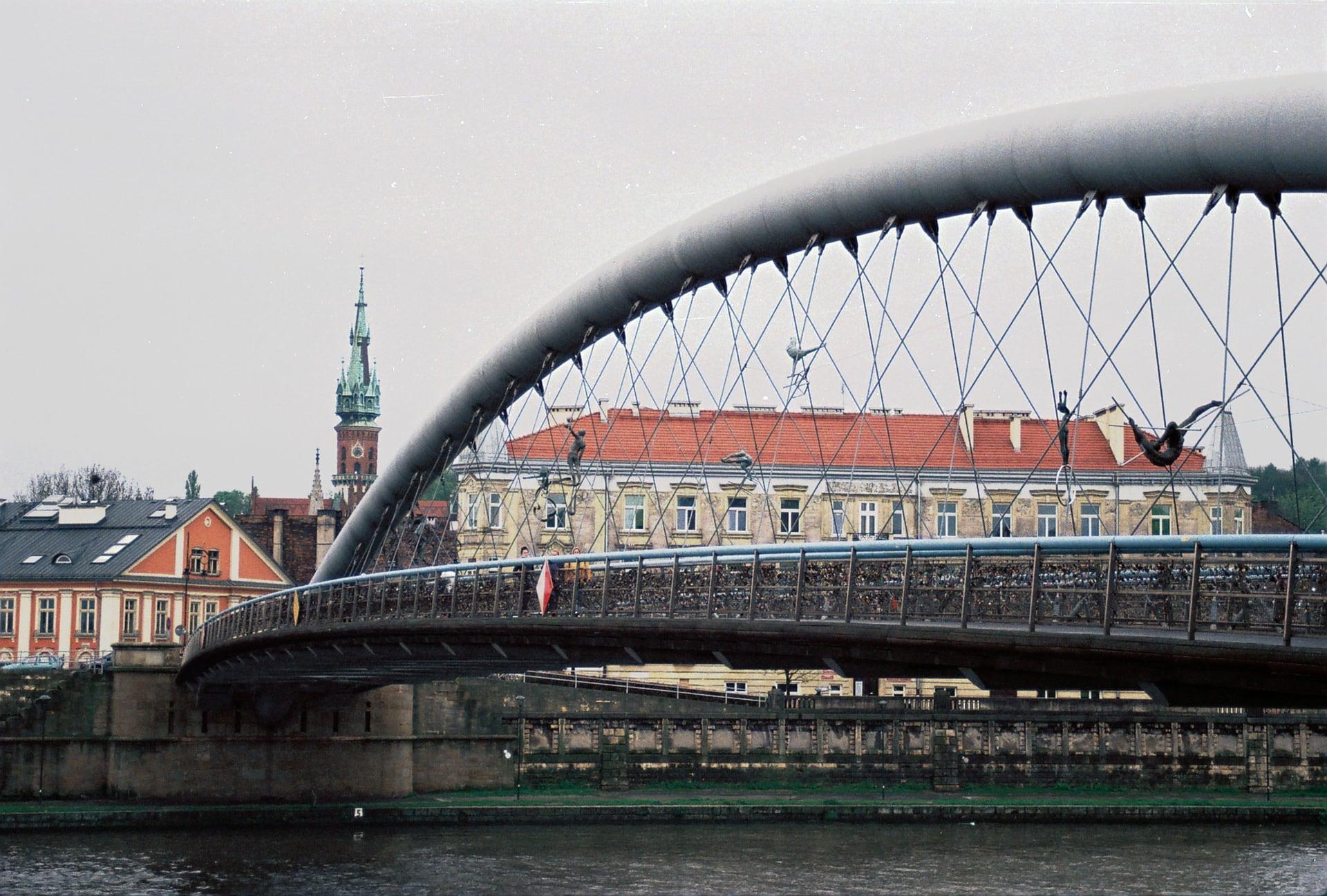
Bernatek Footbridge
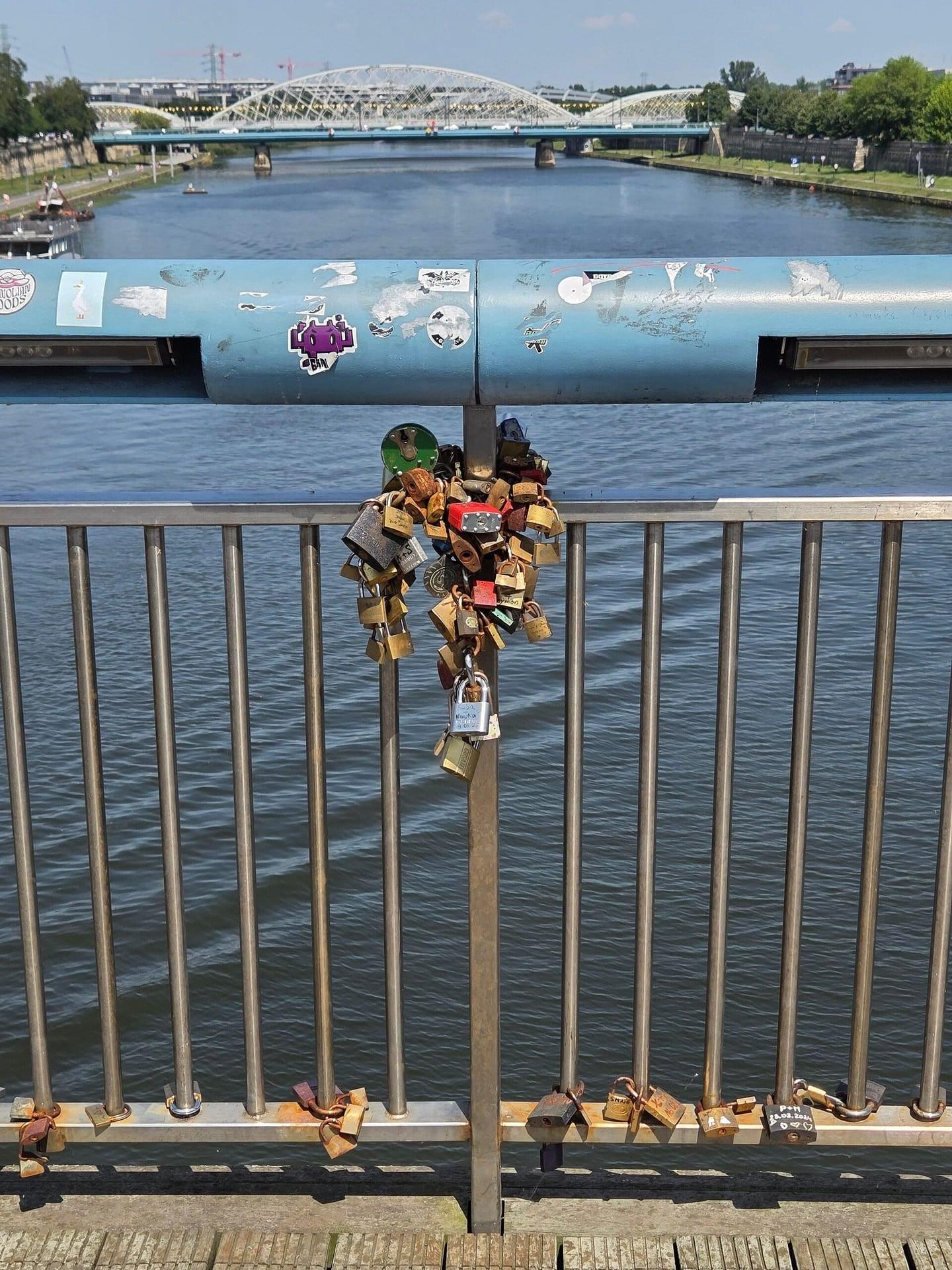
Two towns face each other here. The Father Bernatek footbridge of 2010 links Kazimierz with Podgórze, across the river Kraków's Jews were made to cross in March 1941.
- 2
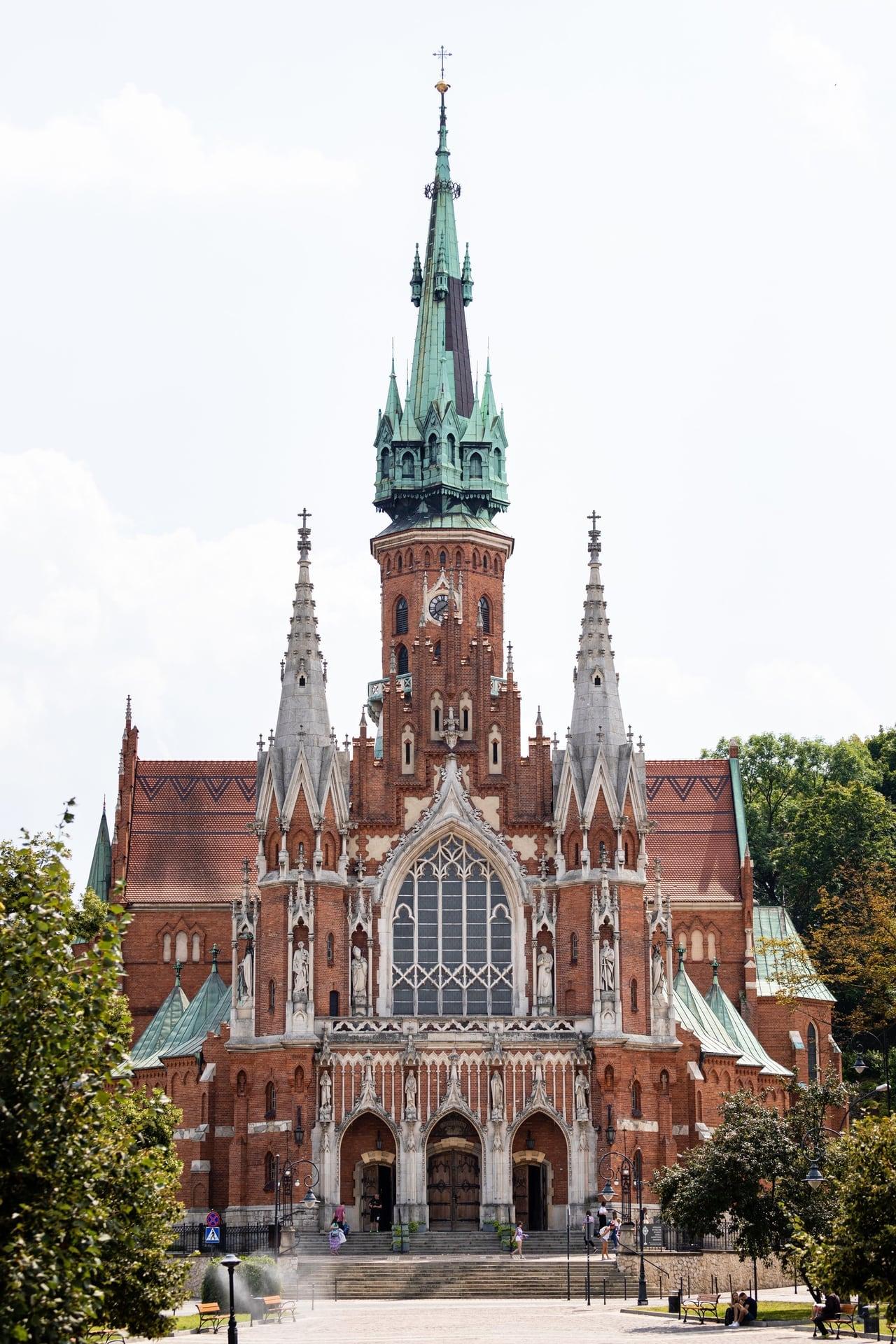
Rynek Podgórski
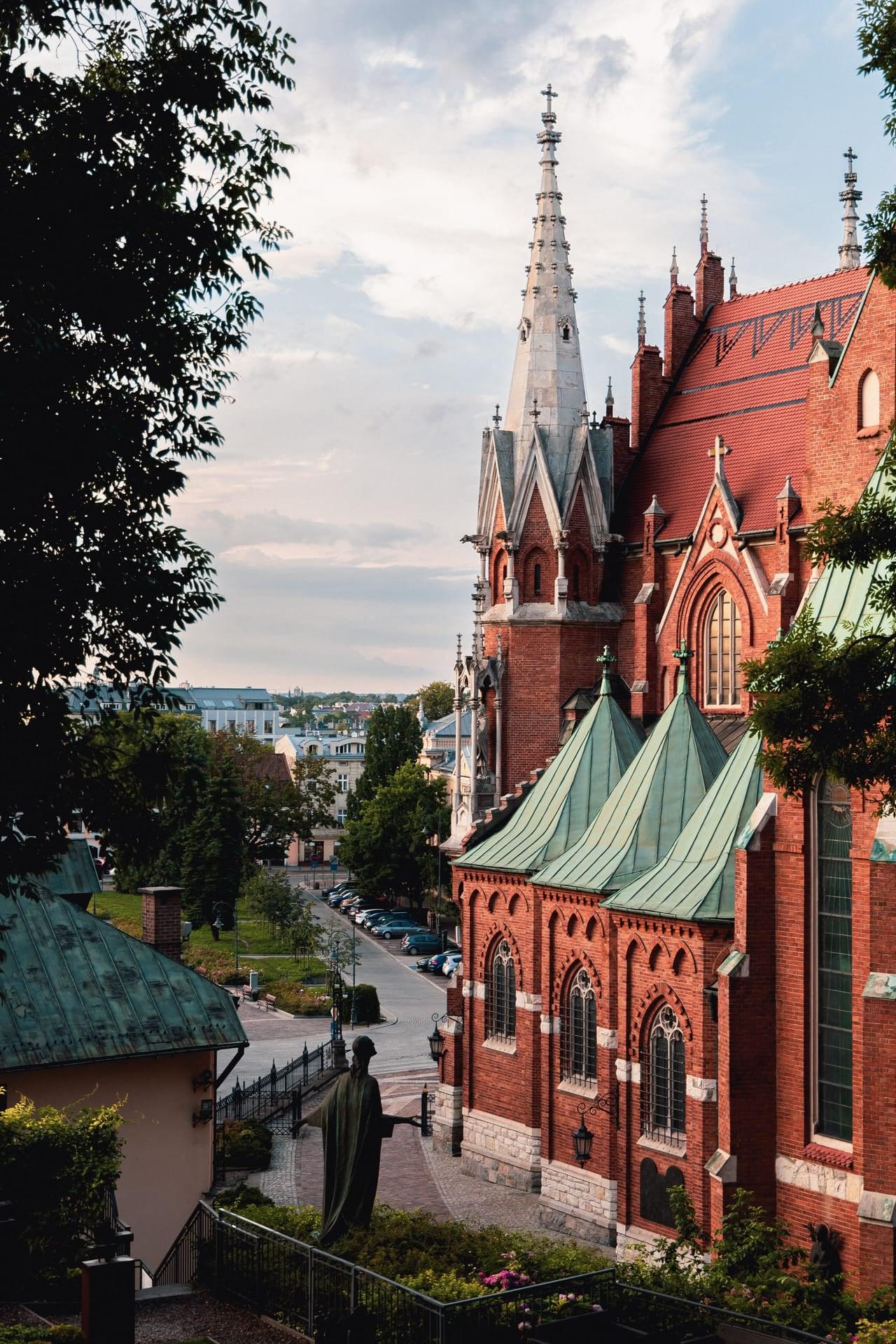
A free town's own market square. Rynek Podgórski, heart of the royal free town of Podgórze from 1784 to 1915, closed at its south end by St Joseph's neo-Gothic church.
- 3
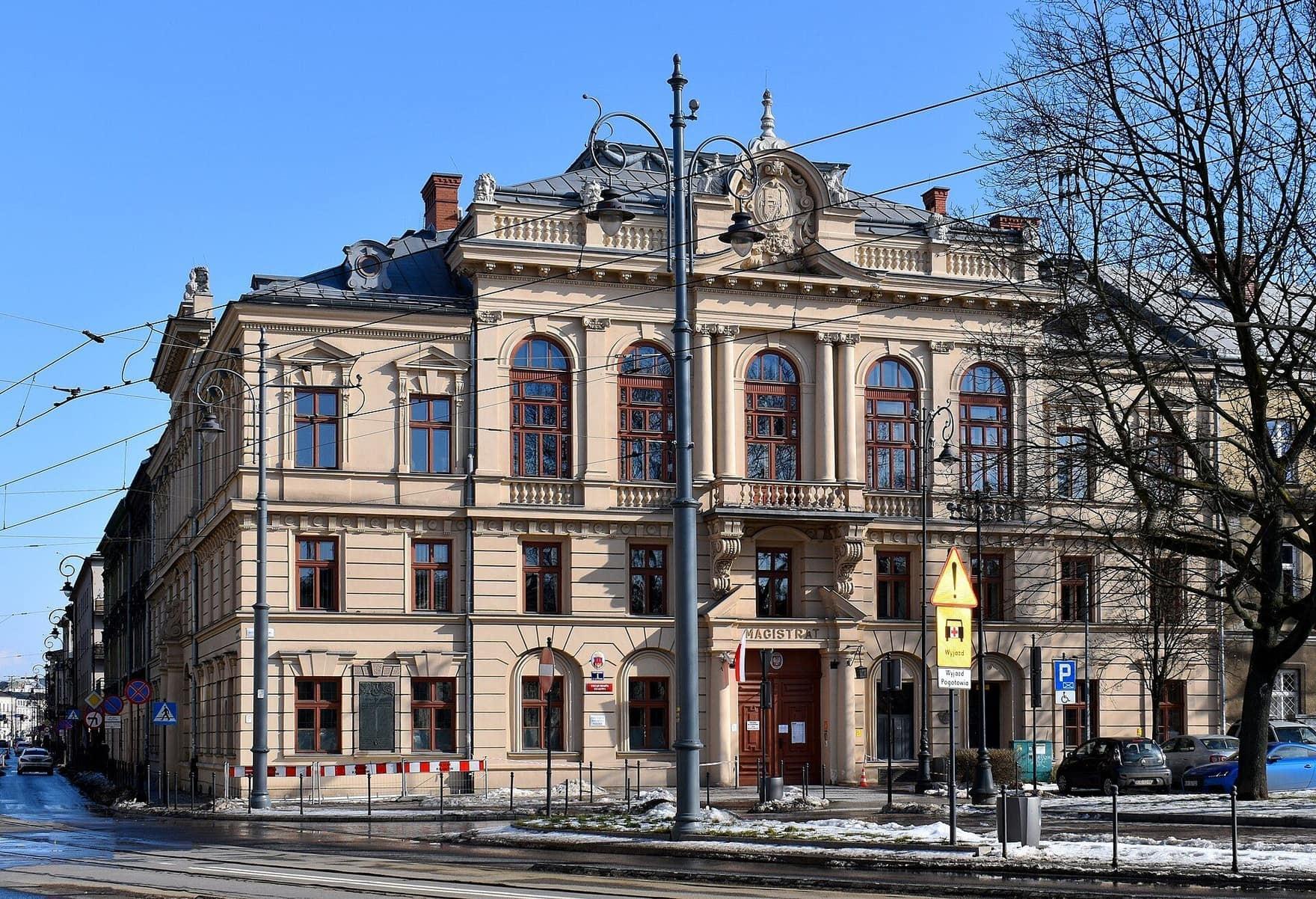
Former Town Hall and the Main Gate
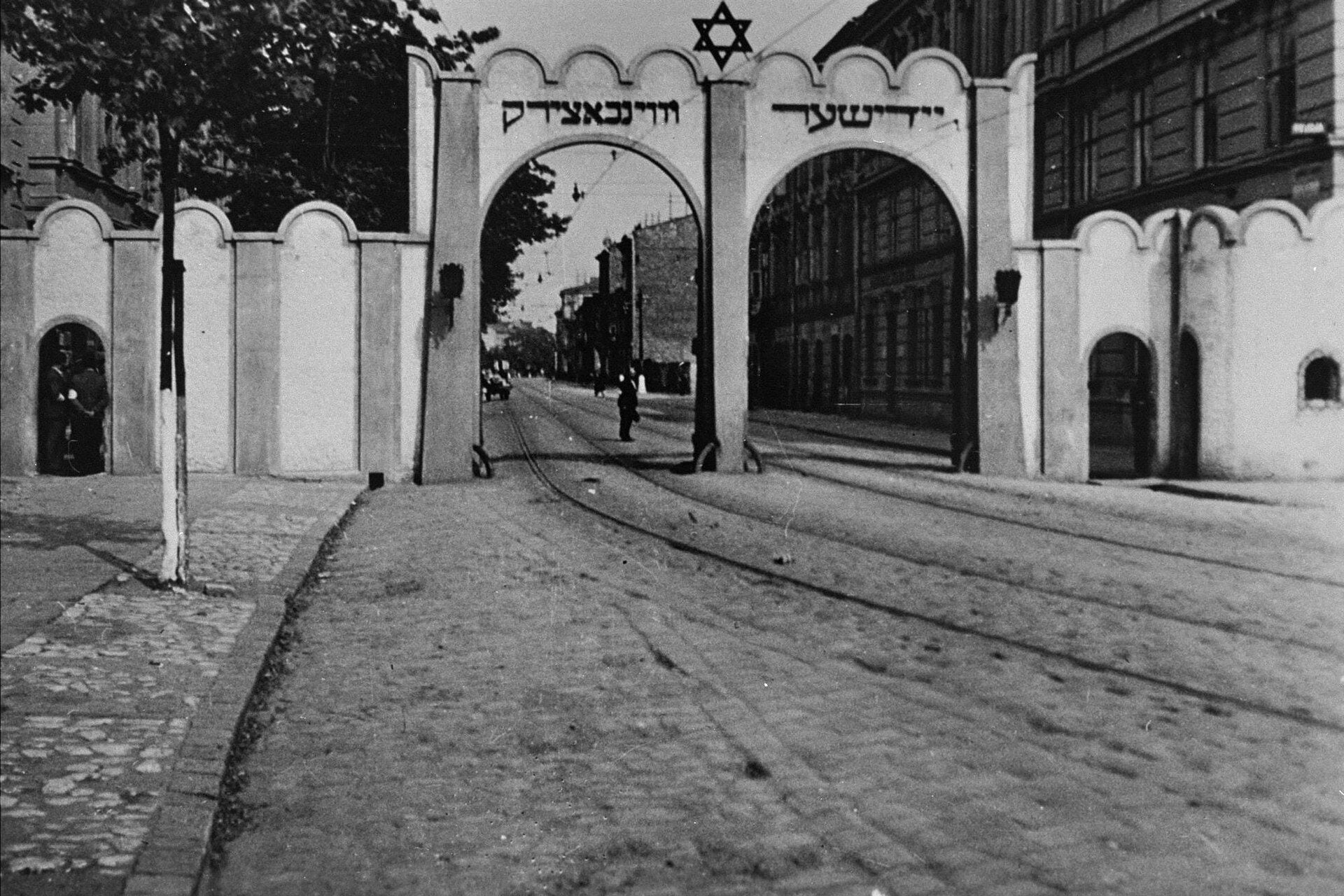
The ghetto's main gate stood here. Podgórze's former town hall at Rynek Podgórski 1, seat of the Judenrat, beside the mouth of Limanowskiego, where the main gate spanned the street.
- 4
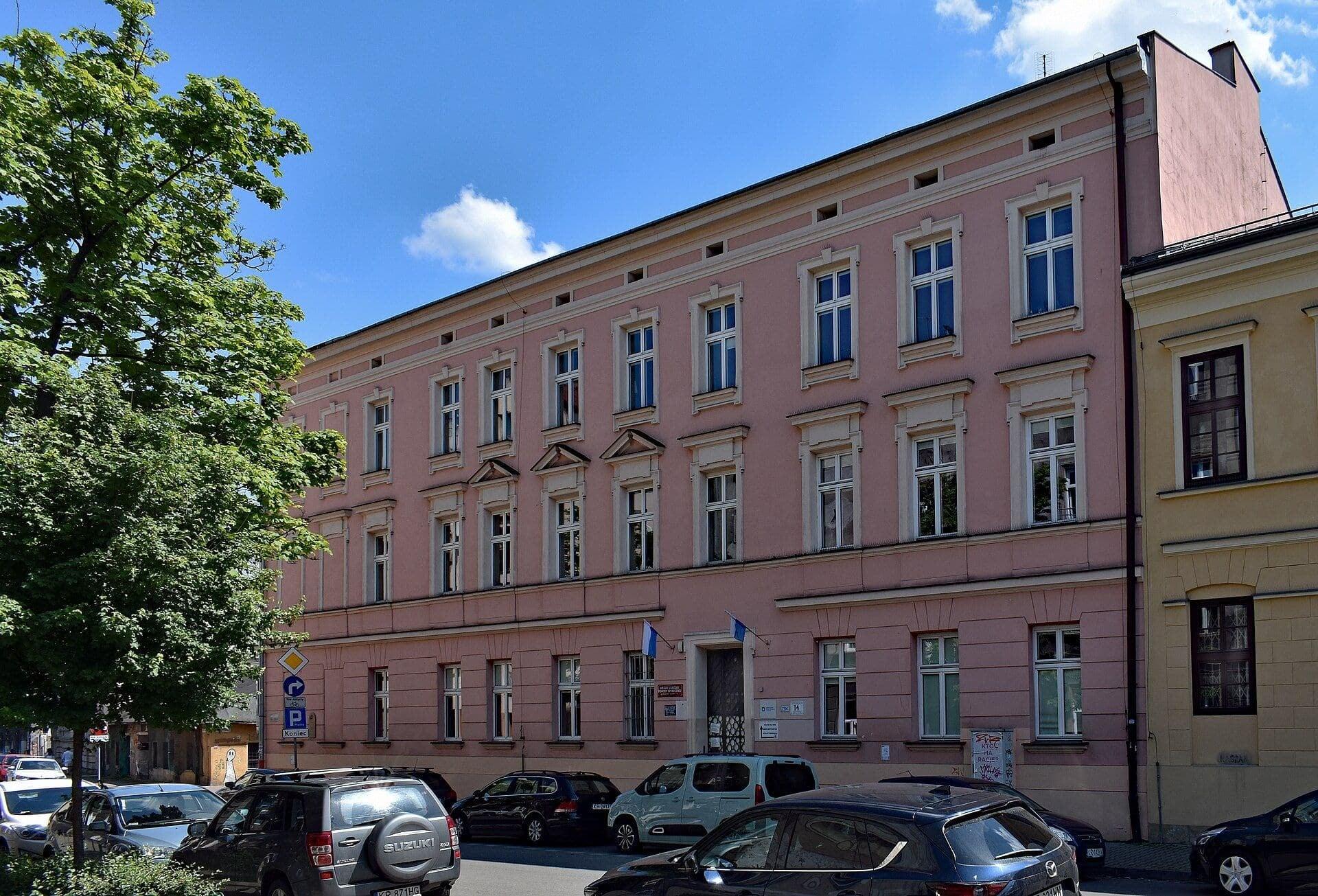
Józefińska and Węgierska
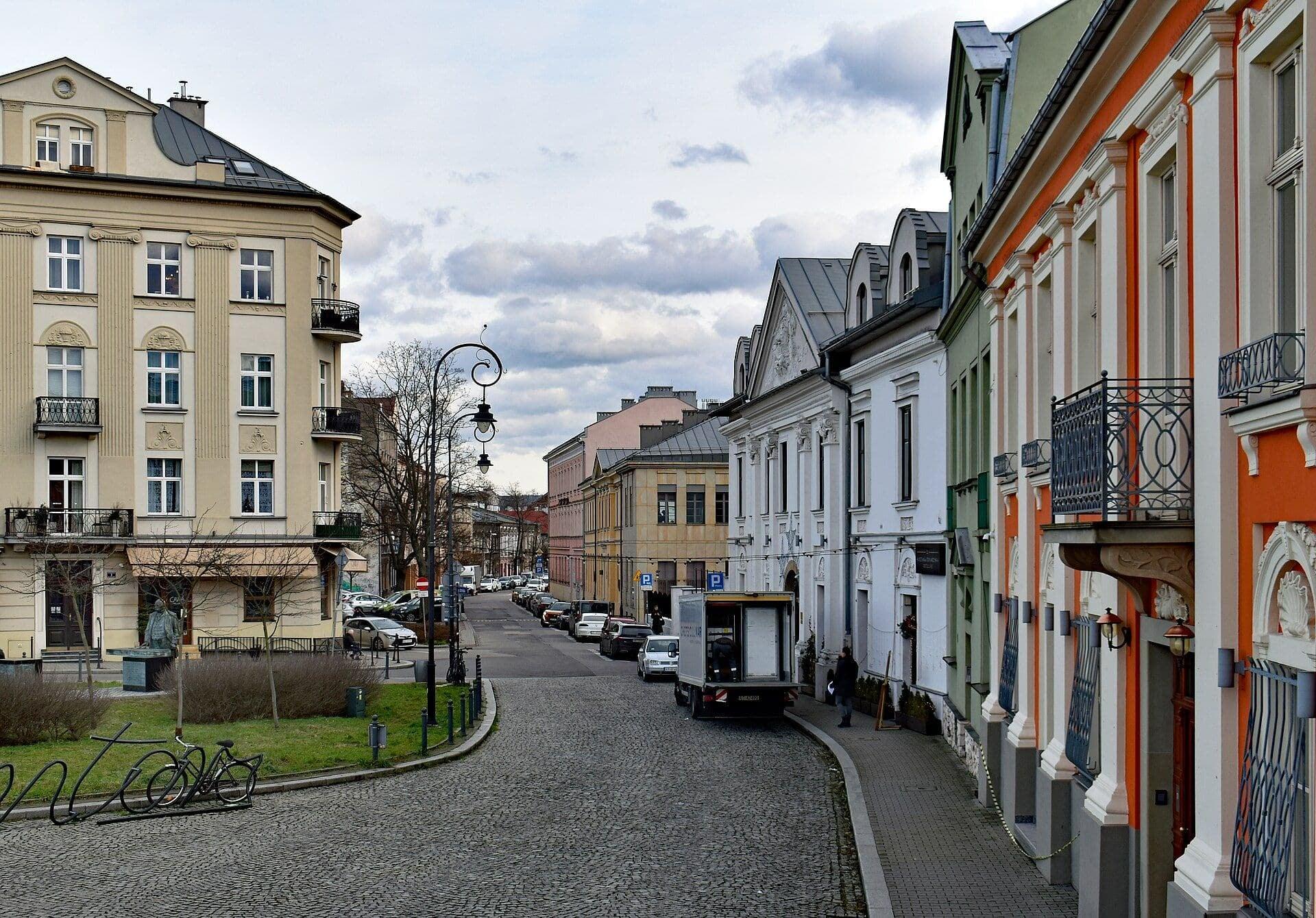
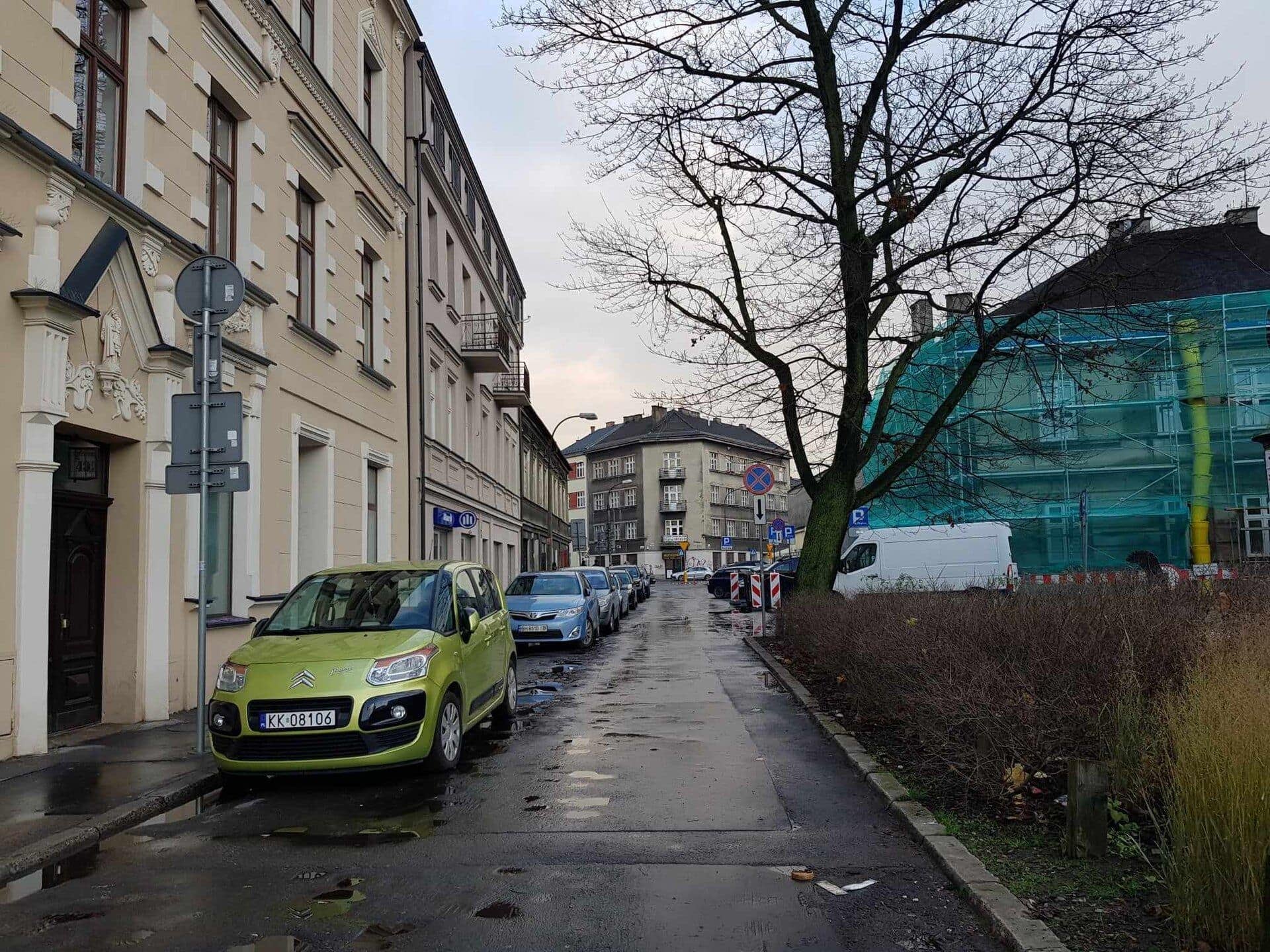
A hospital in an ordinary house. The corner of Józefińska and Węgierska, where city plaques record the ghetto's Jewish Hospital and its labor office.
- 5
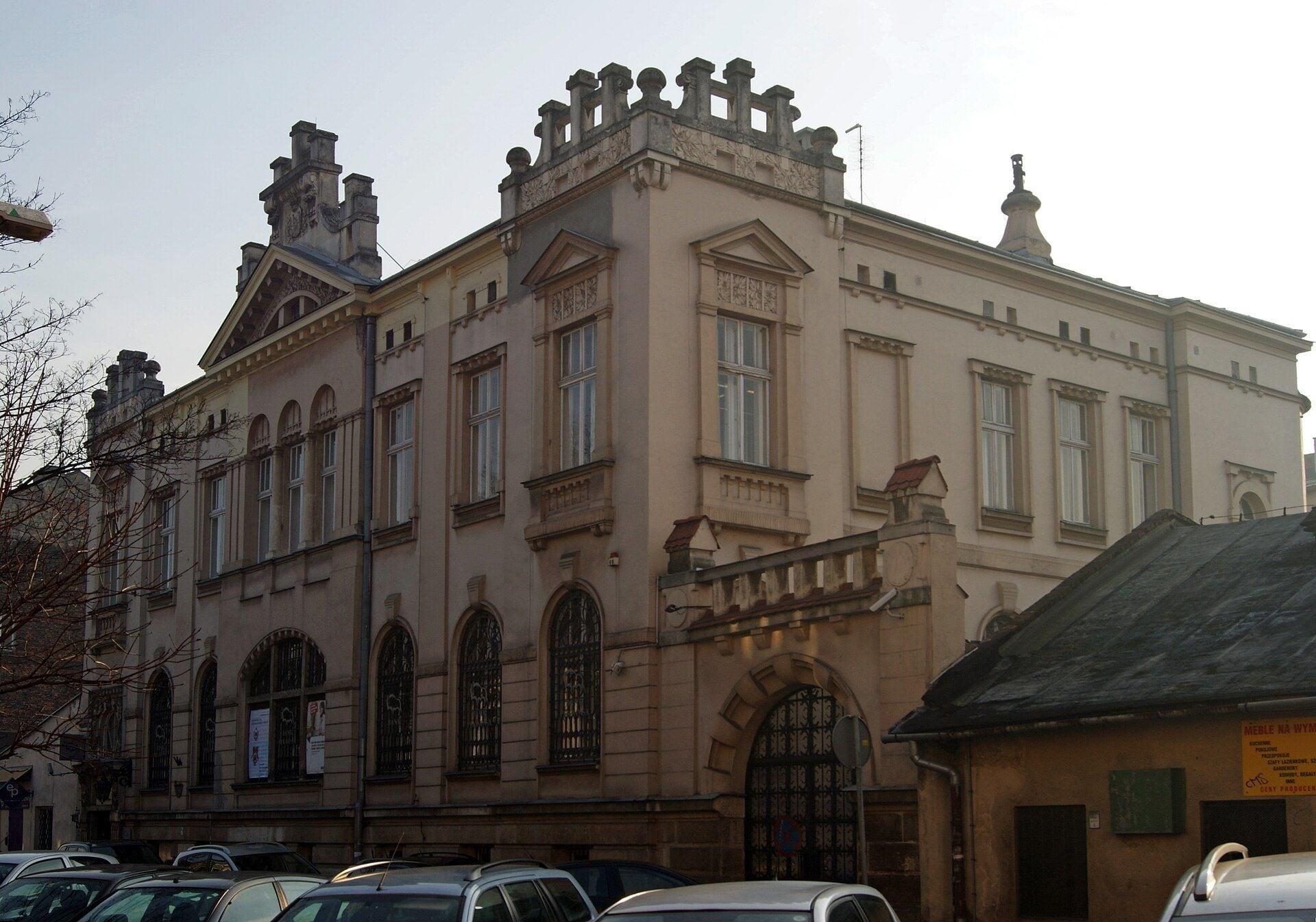
Józefińska 18 to 22
Plaques for the ghetto's children. Józefińska 18, seat of the Jewish Social Self-Help, and No. 22, where a day home for children stood until March 1943.
- 6
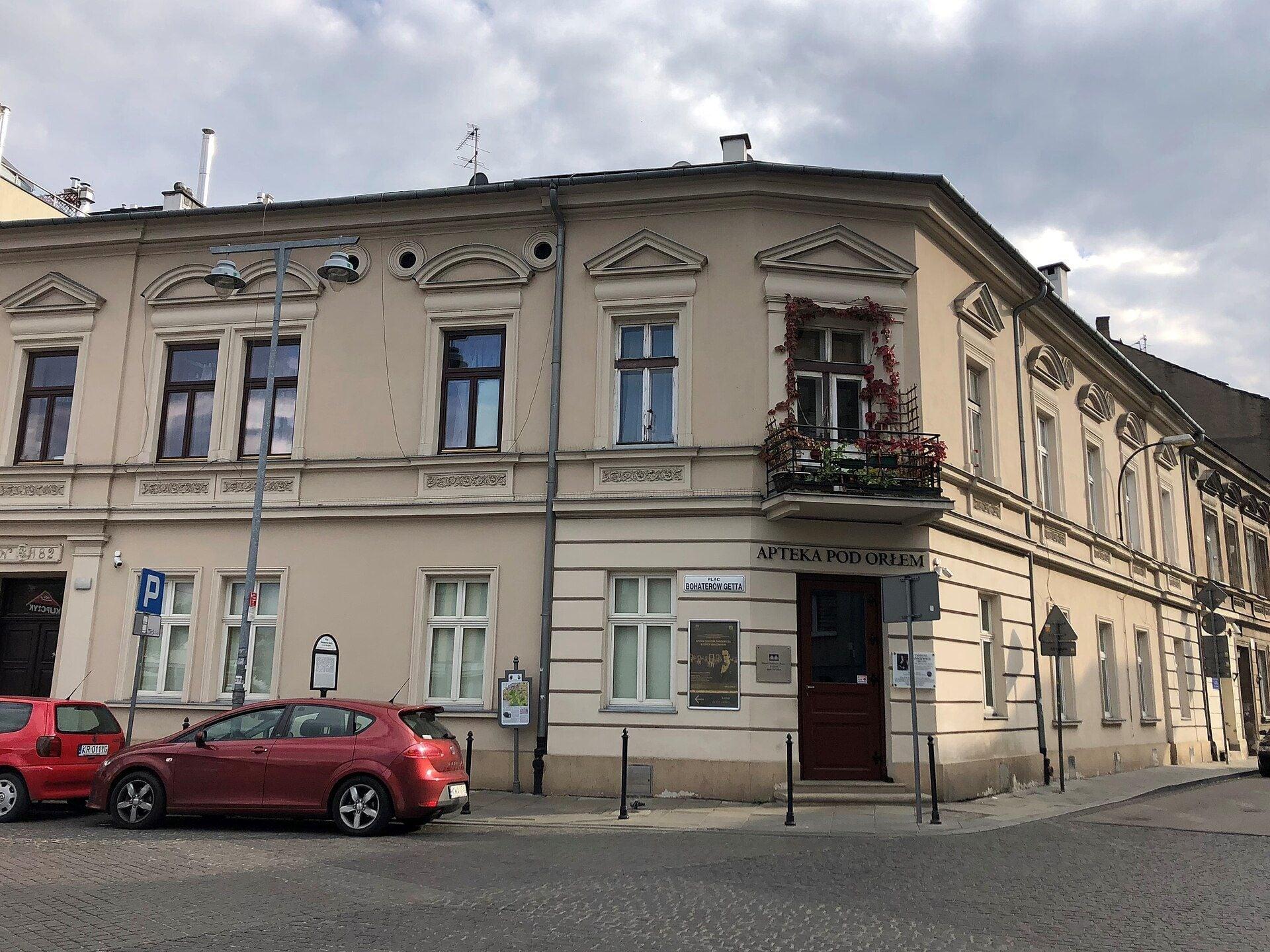
Pharmacy Under the Eagle
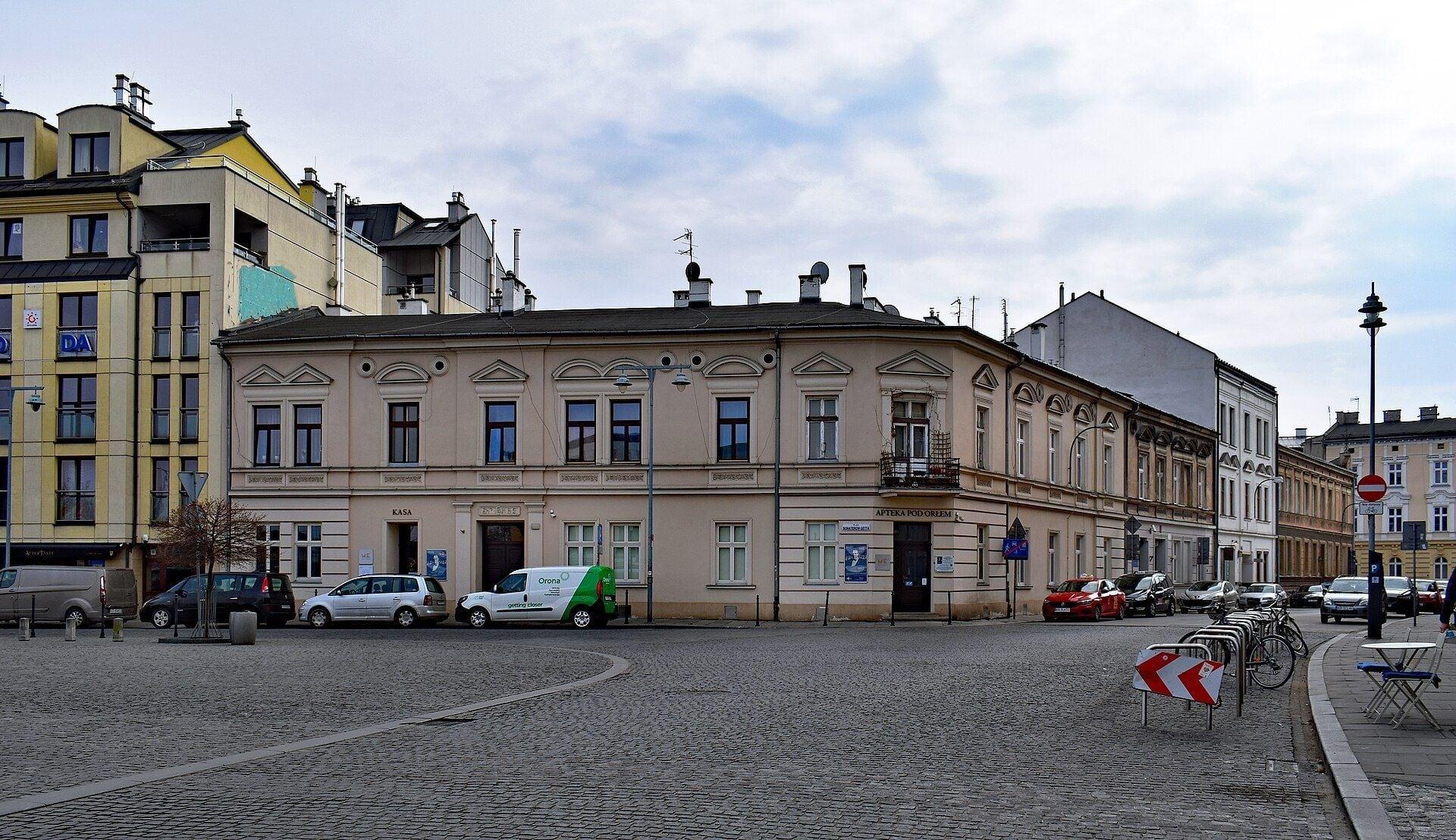
One pharmacy stayed open inside. The Pharmacy Under the Eagle on Plac Bohaterów Getta, run in the ghetto by Tadeusz Pankiewicz; now a Muzeum Krakowa branch, ticketed, seen from outside.
- 7
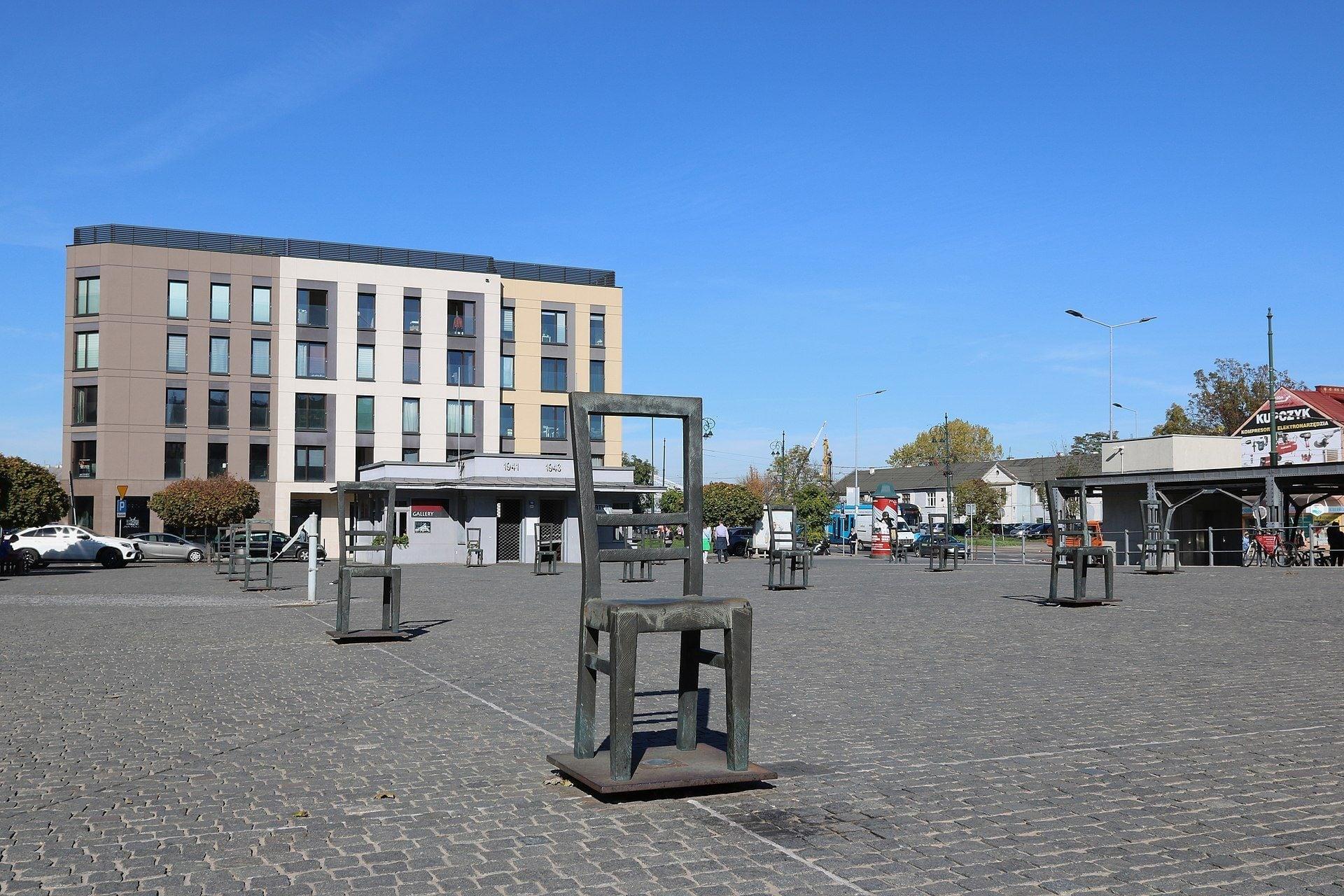
Ghetto Heroes Square
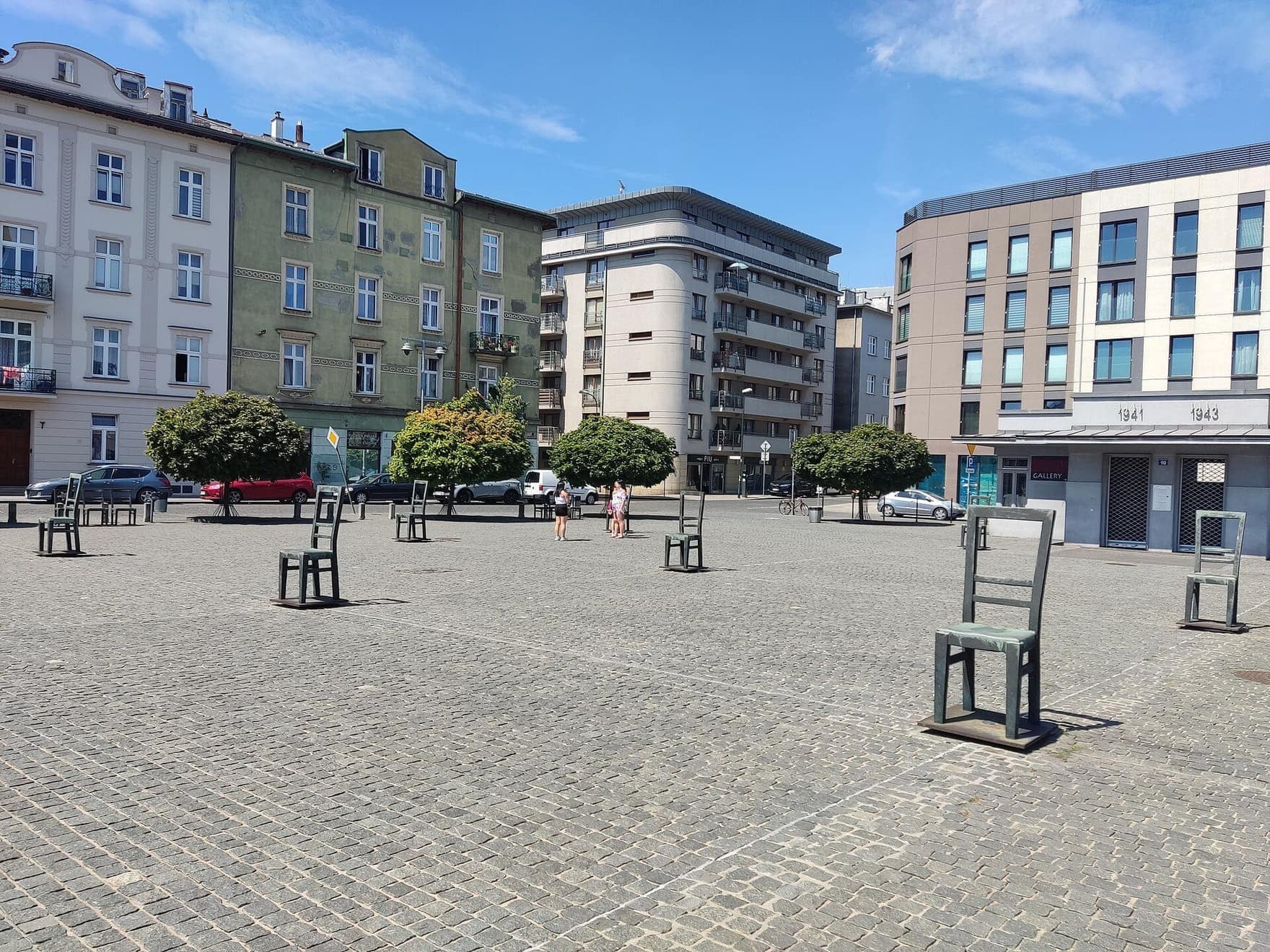
Rows of empty chairs on a square. Plac Bohaterów Getta, once Plac Zgody, the ghetto's assembly ground for deportations, with its memorial of empty chairs from 2005.
- 8
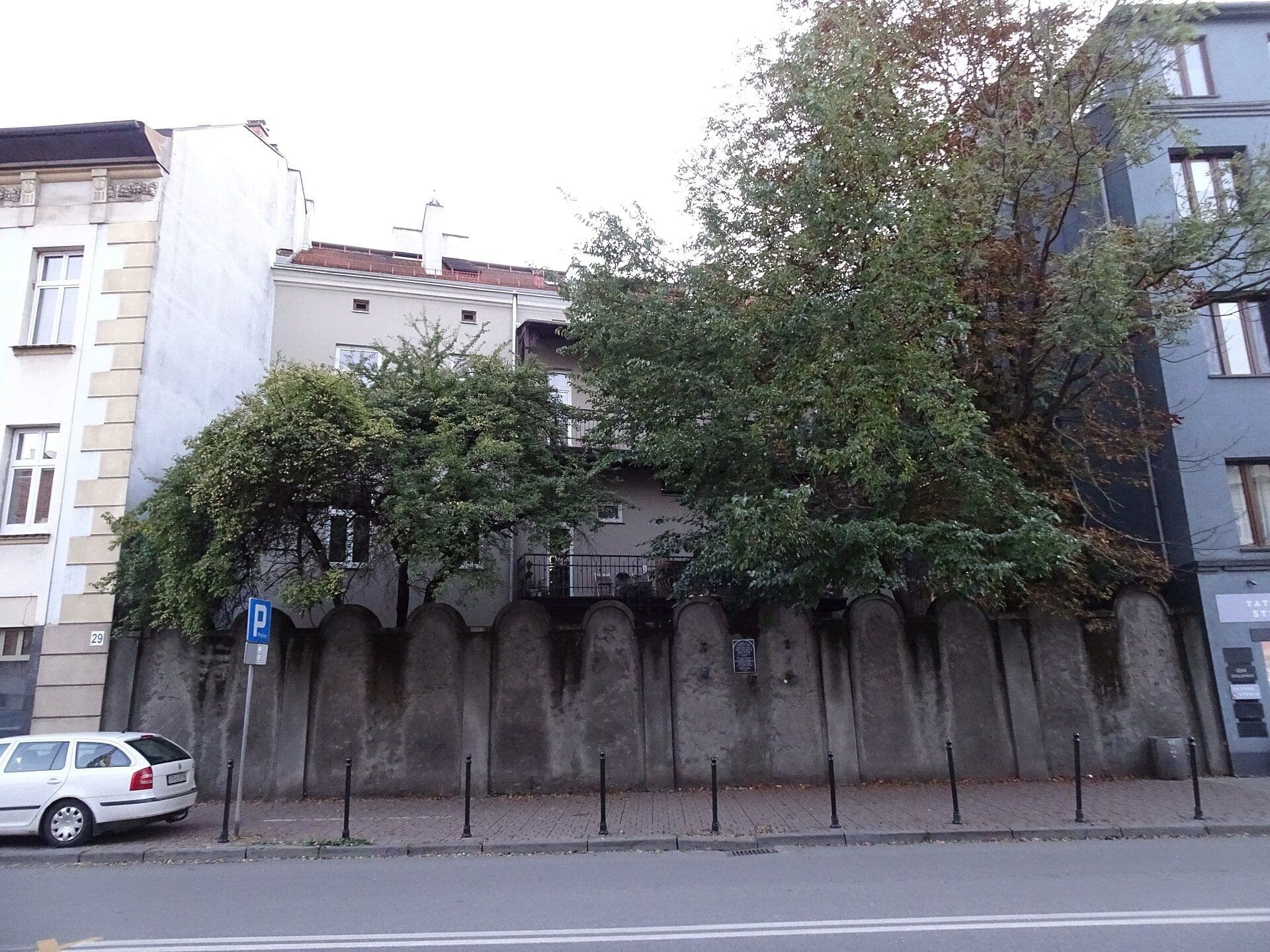
Lwowska Wall
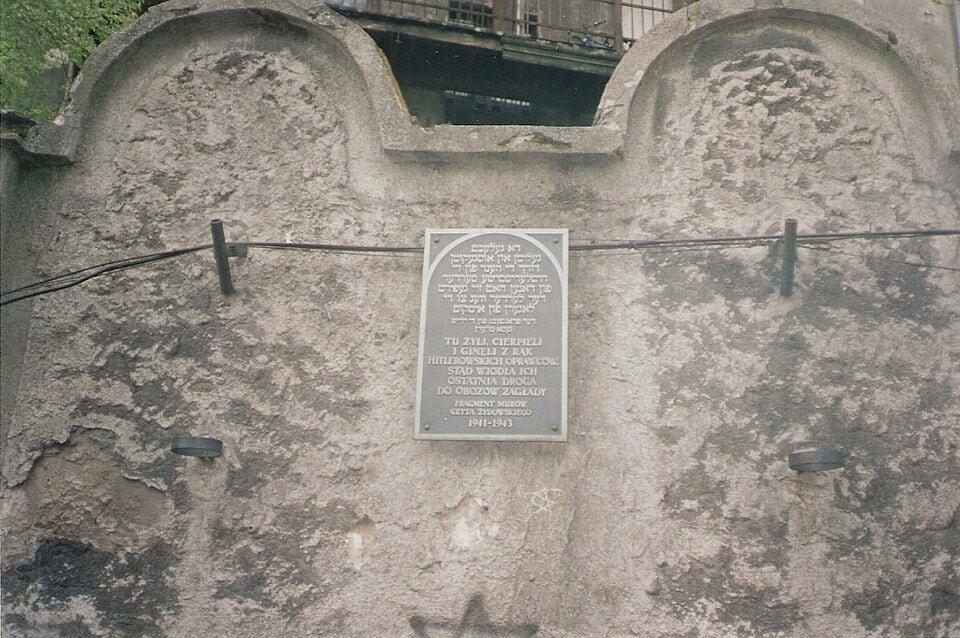
The wall built like headstones. A surviving fragment of the ghetto wall on Lwowska, its arched tops shaped like Jewish headstones, with a memorial plaque.
- 9
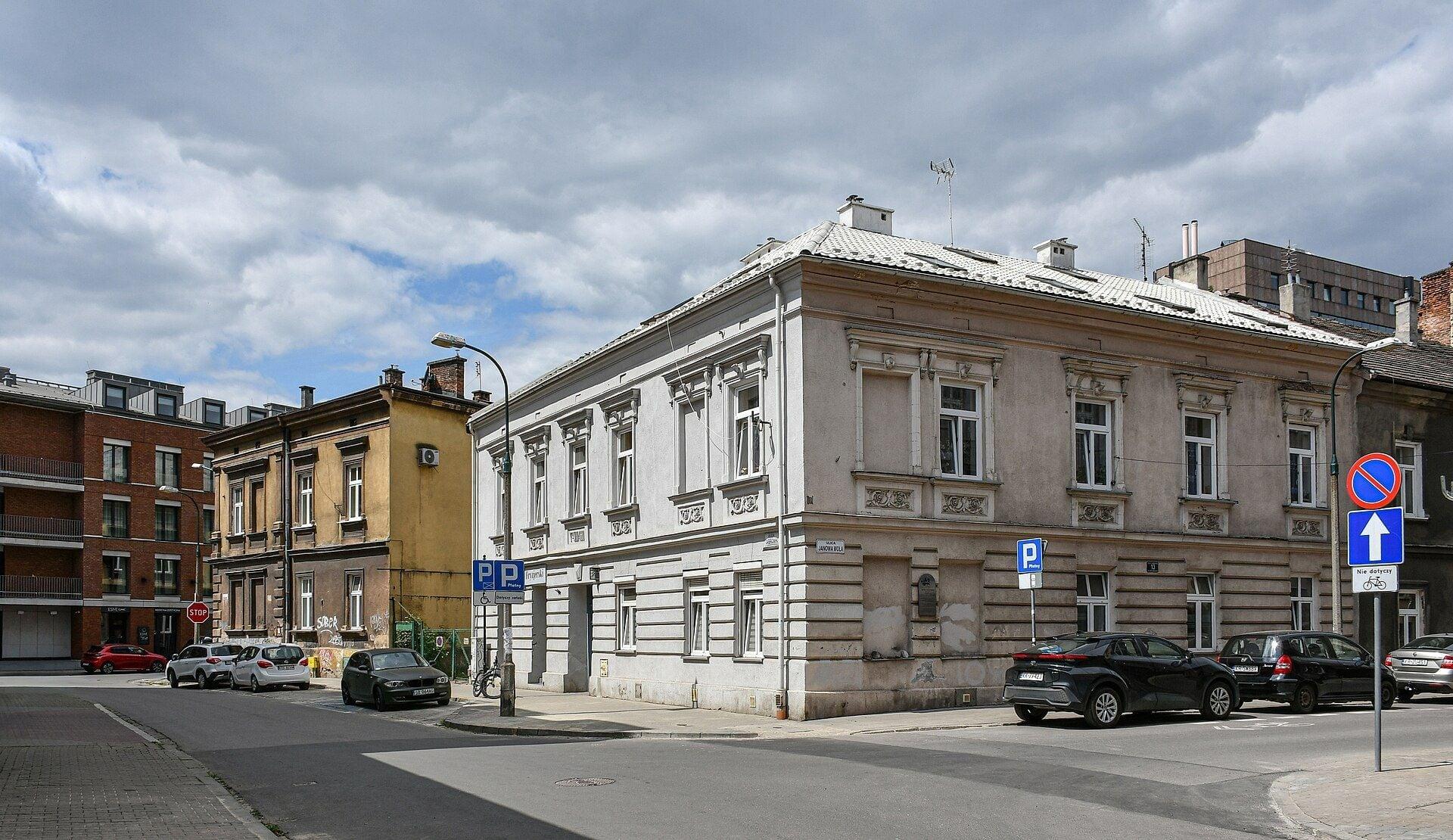
Dąbrówki and Janowa Wola
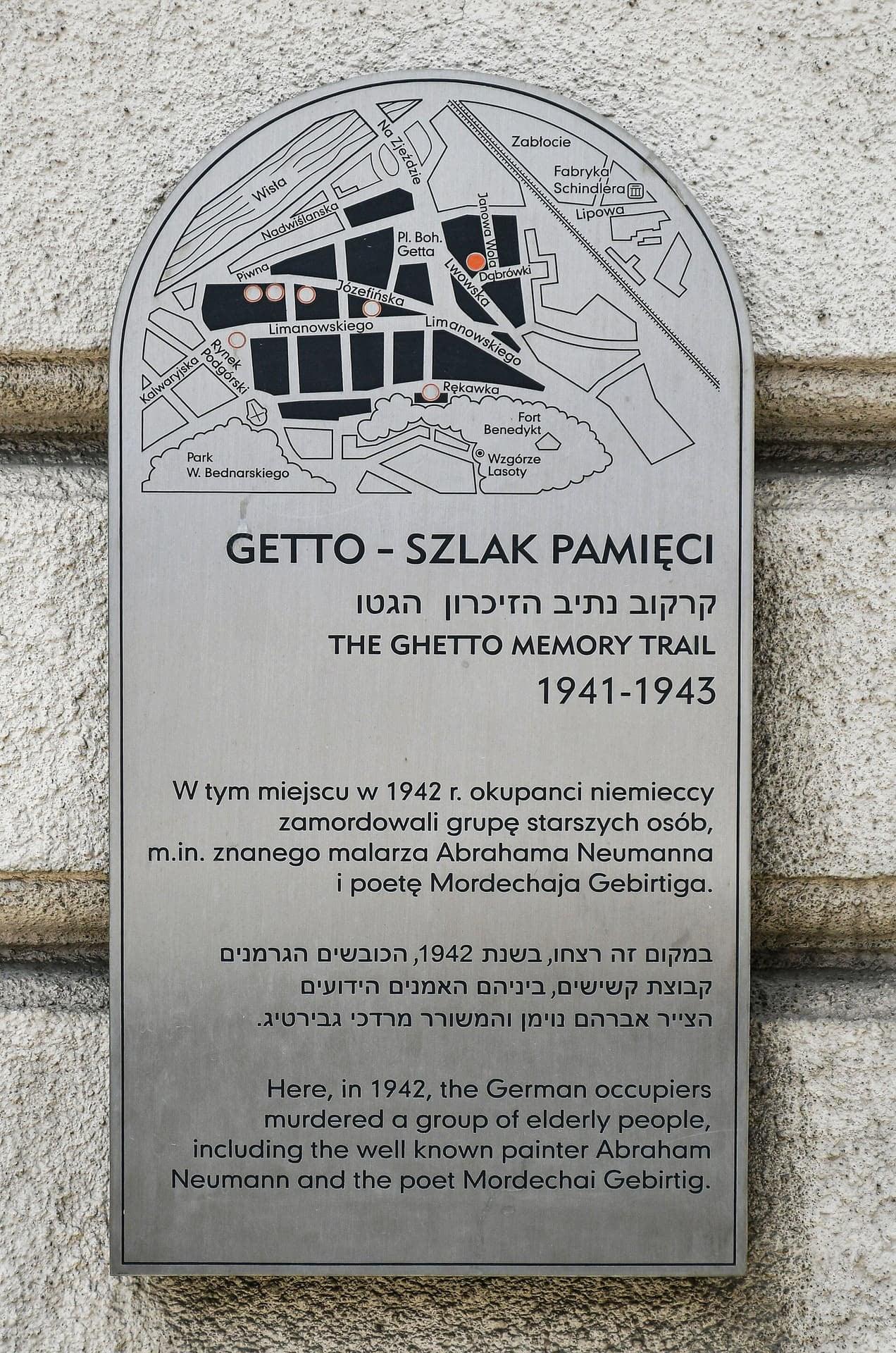
A poet's name on a street corner. The corner of Dąbrówki and Janowa Wola, where a city plaque records the killing of the poet Mordechaj Gebirtig in 1942.
- 10
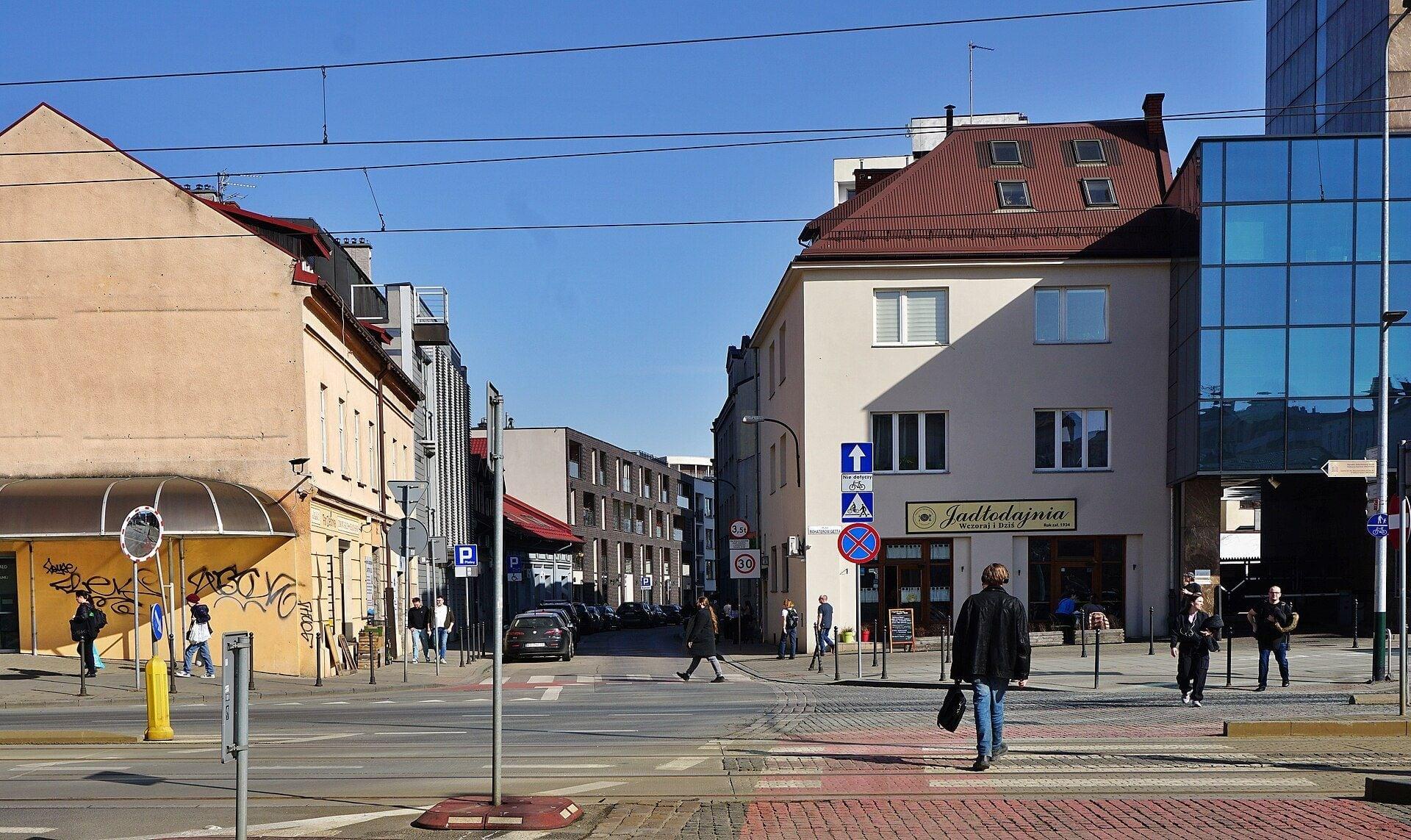
Under the Railway
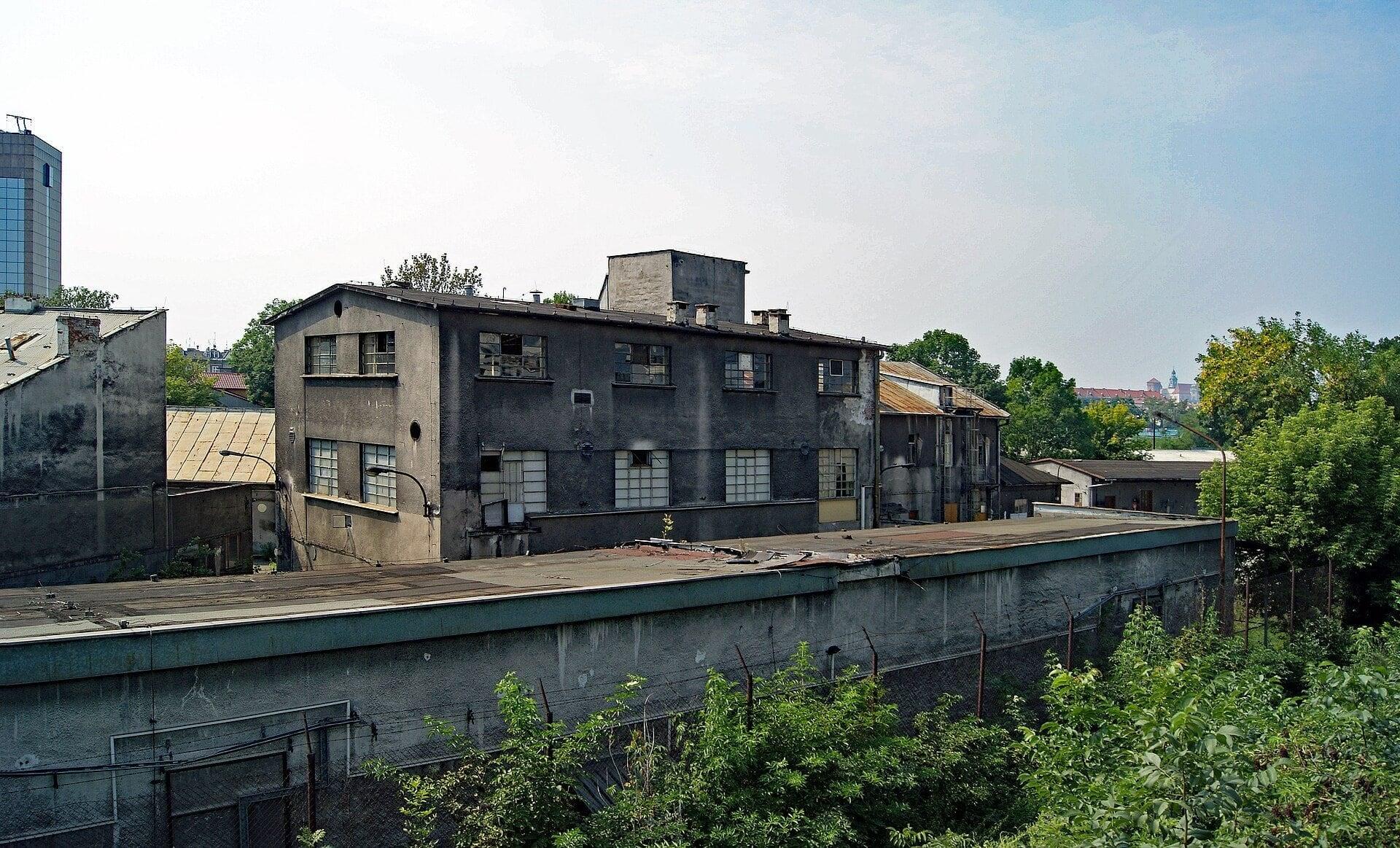
The way out to work, under the line. Lipowa just past the tunnel under the railway, where Podgórze meets the factory district of Zabłocie.
- 11
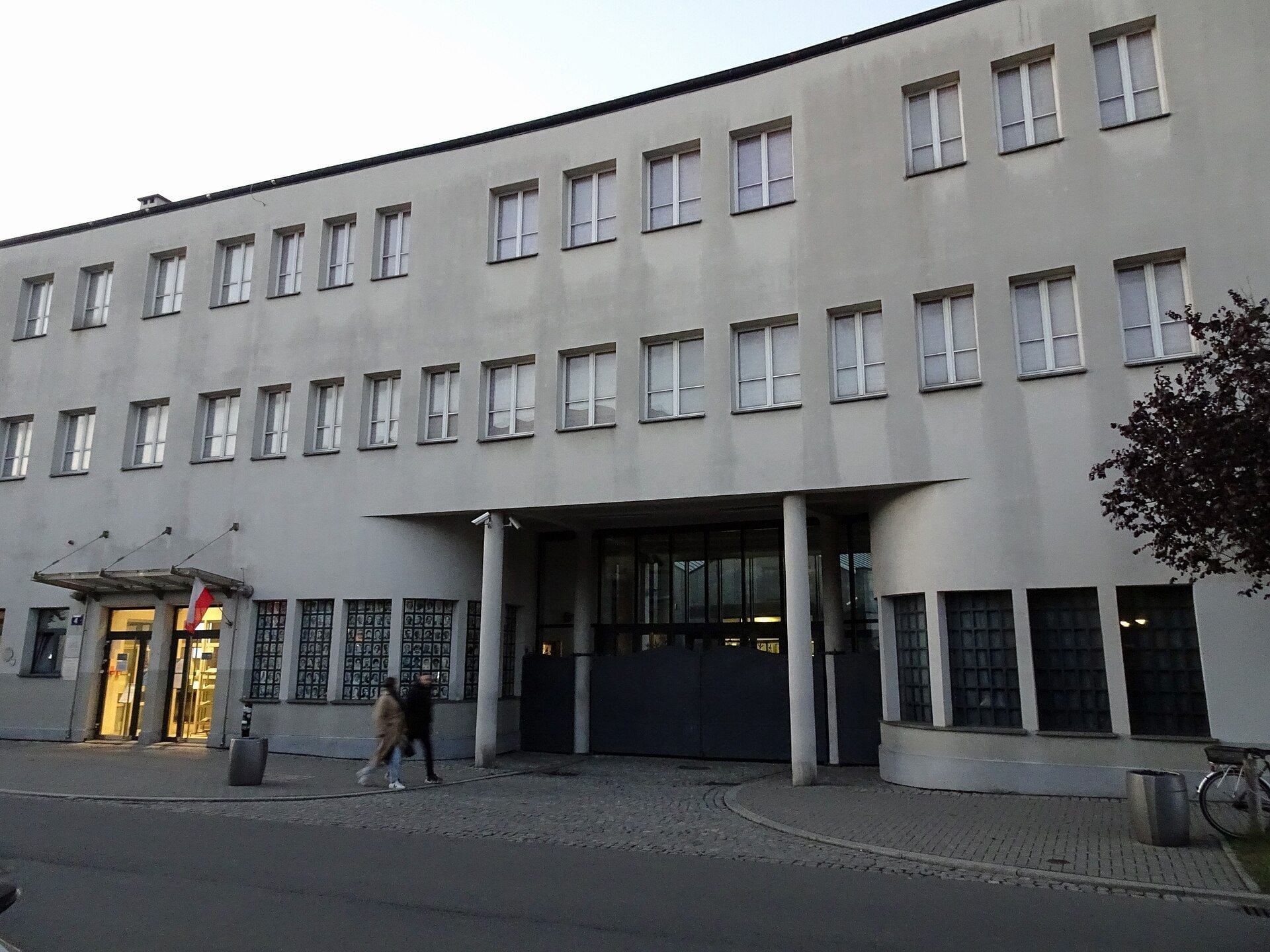
Schindler's Factory
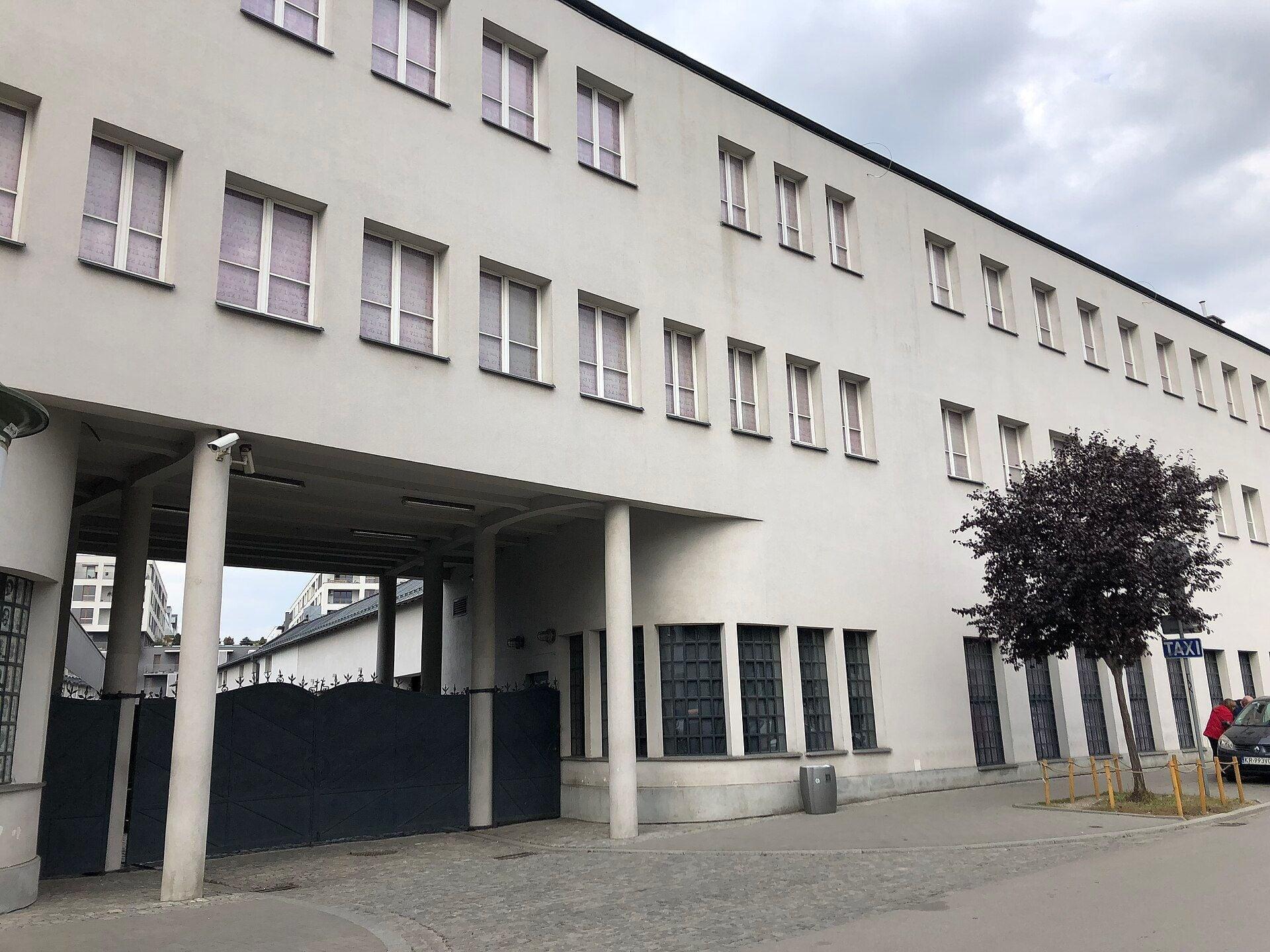
A factory gate most people know. The gate and front of Lipowa 4, Oskar Schindler's enamel factory, now Muzeum Krakowa's exhibition on Kraków under occupation; ticketed, seen from outside.
Details
Best Time to Visit
Daytime, best Wednesday to Sunday if you also want to visit the pharmacy (closed Monday and Tuesday; its front still works). In December start by 13:30 so the wall and the factory are seen in daylight: sunset about 15:41 on 1 December, 15:38 in mid December, 15:49 on 1 January, 16:34 on 1 February (computed). The factory museum's gate is busiest late morning with coaches and queues. Around the anniversary of the ghetto's liquidation (a Sunday near 14 March; the 2027 date is not announced) the March of Remembrance and wreath layings pass stops 7 and 8.
Pro Tips
- •Getting to the start: from Kazimierz walk down to the Vistula and cross the Father Bernatek footbridge (about 10 minutes from Szeroka; our Kazimierz walk ends at the Remuh). By tram: stops Korona (Rynek Podgórski) or Plac Bohaterów Getta; line numbers change with track works, so check MPK Kraków or Jakdojade.
- •Museum tickets are not included. Eagle Pharmacy: Wednesday to Sunday 9:00 to 17:00, free on Wednesdays. Oskar Schindler's Enamel Factory: timed entry, book online (sales close up to 6 hours before); Monday is free but tickets are limited and cannot be booked. A factory ticket also admits to the pharmacy within 7 days.
- •At stop 8 the wall is across Lwowska: the zebra beside the pin takes you over to stand at the wall and read the plaque; come back the same way.
- •The pedestrian tunnel on Kącik (between stops 9 and 10) is lit and short; keep walking through it, the next stop starts as you come out.
- •Getting home from stop 11: back along Lipowa and Kącik to the Plac Bohaterów Getta tram stop, about 650 m; Kraków Zabłocie railway station stands beside the tunnel.
Safety & Precautions
- •Three tram-track crossings, all zebras with no signals: at the north-west corner of Rynek Podgórski, across Limanowskiego by Rynek Podgórski 1, and across Na Zjeździe at the south-east corner of Plac Bohaterów Getta. Traffic keeps right: look left first and let trams pass.
- •Winter: short days and wet or icy paving on the square and the riverside footway. On winter smog days, check Kraków's air-quality notices.
- •GPS drops inside the railway tunnel on Kącik (about 55 m); cyclists share the tunnel.
- •Plac Bohaterów Getta and the Lwowska wall are places of memory, and the plaque houses are homes: keep your voice low and do not photograph residents.
- •Both museums close over Christmas and New Year: the pharmacy on 24, 25, 26, 31 December and 1, 6 January, the factory on 24, 25 December and 1, 6 January (and the first Tuesday of each month). Checked 23 November 2026.
Travel advisory: Exercise Normal Precautions (Level 1).
Gallery
Related Reading
Go deeper on what you'll see, hear, and walk through.
Overview
Krakow Travel Guide: Days, Getting In, Winter Timing and What Costs Money
5 min
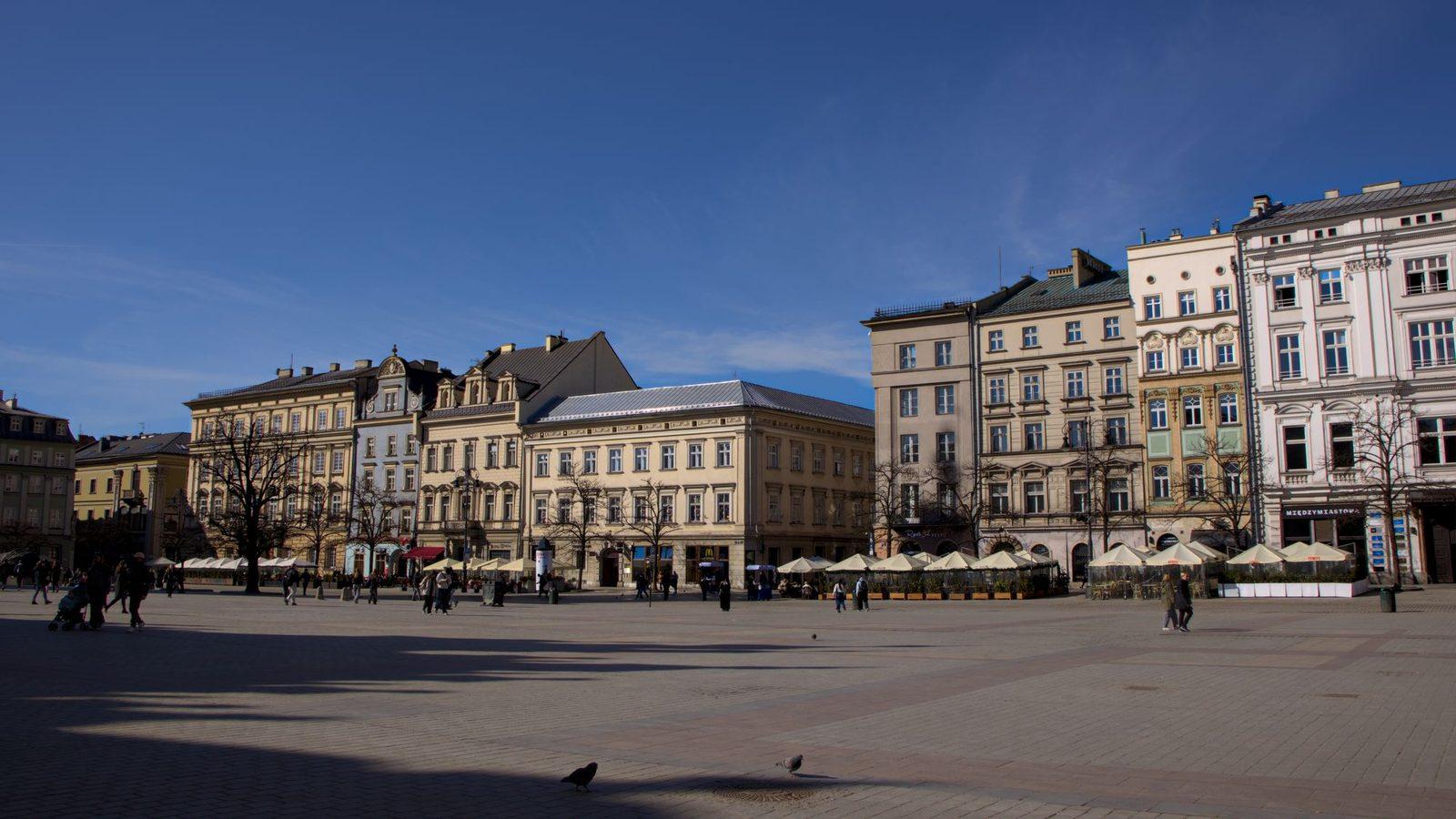
Overview
One Day in Krakow: A Walkable Morning-to-Evening Itinerary
5 min
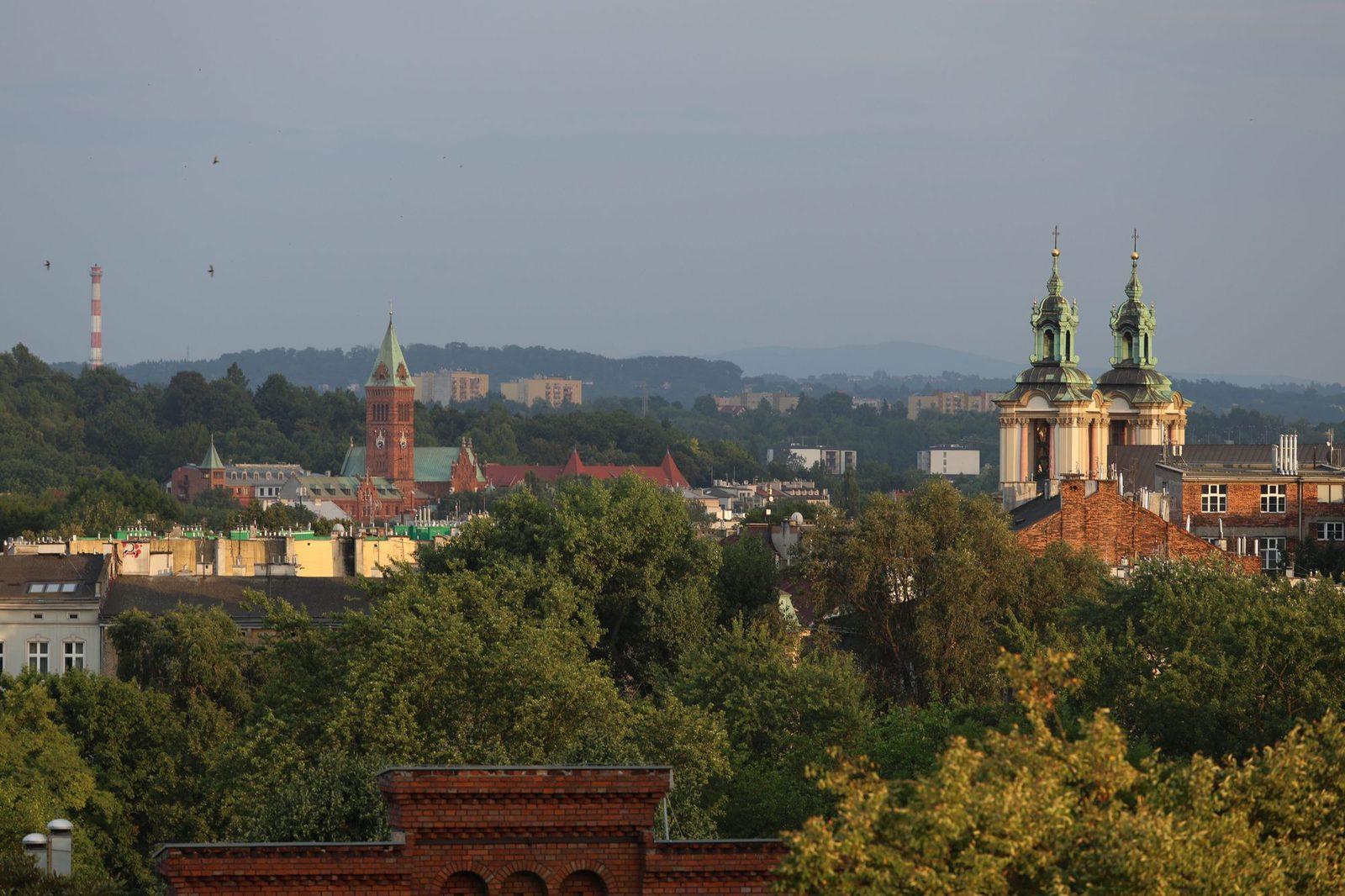
Thematic
Krakow: The Square, the Coronation Hill, the Jewish Town, and Two Grounds Beyond
5 min
Companion
Podgorze and the Ghetto: A Town Walled In
5 min
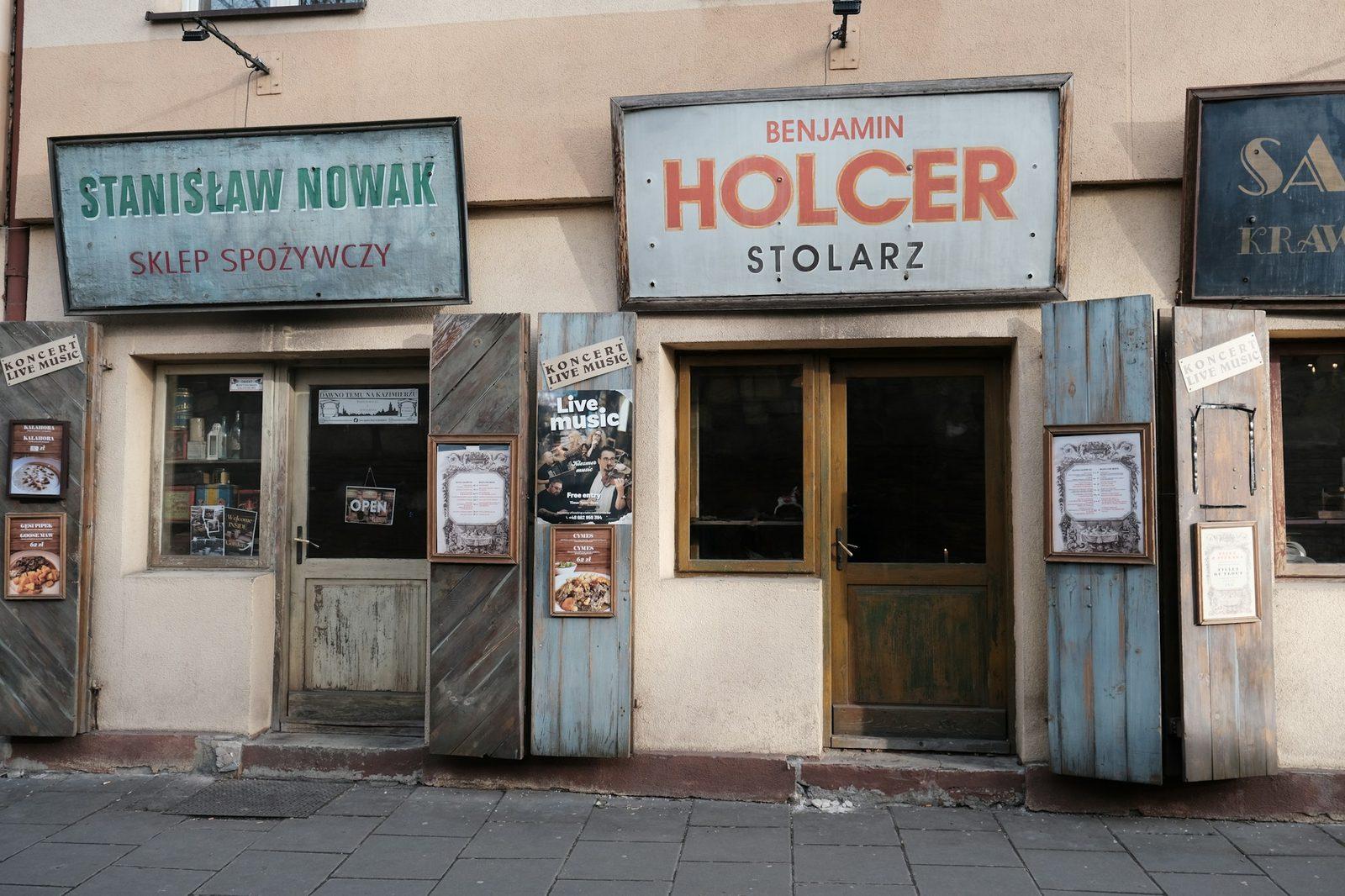
Companion
The Remuh Synagogue and Cemetery: Kazimierz's Working Synagogue
4 min
Read the walk
The full story of Podgórze and the Ghetto: A Town Walled In, in words. Prefer to listen? Play it narrated, from home or on location.
Introduction
Across the river from Krakow's old Jewish quarter lies Podgorze, once a town of its own. In March nineteen forty one the German occupiers chose its oldest streets for a ghetto, and ordered every Jew in Krakow to move into them by the twentieth of March. This walk follows that ghetto from its main gate, along its streets and plaques, to a surviving stretch of its wall, and out to a factory where its people were sent to work.
The Holocaust is told here plainly, from the city's memorial plaques, Poland's Institute of National Remembrance and the United States Holocaust Memorial Museum. Several stops are places of memory, and people live in these houses: keep your voice low, and ask before photographing anyone.
There are eleven stops over about two kilometers, a mile and a quarter, and the walk takes about seventy five minutes. It is flat. It begins at the south end of the Bernatek footbridge and finishes outside Oskar Schindler's former factory on Lipowa.
The walk crosses tram tracks three times, each on a zebra crossing with no lights. Traffic keeps to the right, so look left first, then both ways again, and let any tram pass.
Two museums stand on the way, the Pharmacy Under the Eagle and Oskar Schindler's Enamel Factory, both part of the Museum of Krakow. Their tickets are not included. The pharmacy is closed on Mondays and Tuesdays, and the factory sells timed tickets. Every stop works from the street.
Winter days are short, with sunset before four in December, and paving can be icy. Start by half past one for daylight at the wall.
From Kazimierz, walk down to the river and cross the footbridge, about ten minutes.
When you arrive at the Bernatek Footbridge, begin with stop one.
1. Bernatek Footbridge
Behind you, the footbridge climbs over the Vistula to Kazimierz, the old Jewish quarter on the far bank. It opened in two thousand ten, with one deck for people on foot and one for bikes. This bank is Podgorze.
For most of its history this bank was not Krakow at all. It was a town of its own, with its own square, town hall and church, and it joined Krakow only in nineteen fifteen. The next stop is that town's square.
In March nineteen forty one this river was crossed in both directions at once. The German occupiers had ordered a ghetto here, in the oldest corner of Podgorze, and every Jew in Krakow had to move into it by the twentieth of March. A young Jewish woman wrote in her diary of furniture vans going one way and Poles going the other, because the people of this part of Podgorze had to empty their flats for the newcomers. A doctor who lived through it remembered the traffic between the two banks as enormous: carts, prams and wheelbarrows, all heading for Podgorze.
There was no footbridge then. People crossed the river with whatever they could carry. About three thousand people had lived in the streets chosen for the ghetto. Now those streets had to hold about eleven thousand, and in time as many as twenty thousand.
Follow the route along the river, then over the tram tracks on the zebra at the corner of the square.
2. Rynek Podgórski
This is Rynek Podgorski, the market square of Podgorze. Turn around to see the church that closes its far end, Saint Joseph's, with a slim clock tower rising over its crossing.
In seventeen eighty four the Austrian emperor, by a decree issued in Vienna, made the small settlement growing on this bank a royal free town. Its freedoms drew merchants and craftsmen to settle here. It stayed separate from Krakow for a hundred and thirty years. The two towns merged on the first of July, nineteen fifteen, and three days later their mayors shook hands on a bridge over the river.
The church is younger than it looks. The first church on this square went up in eighteen thirty two and was pulled down in nineteen oh five because it was in poor condition. The new one, consecrated in nineteen oh nine, was designed by an architect from Lviv, who used a design he had drawn earlier for a church in Warsaw and never built there. Look for the colored glazed bricks in its walls. It is a working parish church, so during a service, admire it from here.
This square stayed outside the ghetto. The boundary ran past the corner you were facing as you arrived, where the tram tracks leave the square, and the Germans took the old streets beyond it. The corner building there, the former town hall, is the next stop.
Follow the route across the square and over the tram tracks by the corner building.
3. Former Town Hall and the Main Gate
Stop here, with the tram tracks beside you. Across them stands the corner building of the square, number one, the former town hall of Podgorze. Look for the city's memorial plaque on its wall.
The plaque says that in nineteen forty one and forty two this building held the Jewish Council, the Judenrat, set up by the occupier to carry out its orders. And it says that at the start of this street, Limanowskiego, stood the main gate of the ghetto.
This is that gateway. The gate was as wide as the roadway, and the tram tracks beside you ran straight through it. Trams kept crossing the ghetto, in through this gate and out the other side, without stopping inside. Above the gate a sign in Hebrew style letters read, in German, Jewish residential district. The German police kept its keys, and passes were issued in the building across the tracks. The Institute of National Remembrance says this gate was used until June nineteen forty two, when the boundary was first changed; another, on the far side of the ghetto, stayed open to the end.
The ghetto was not built from nothing. It was a piece of an ordinary town, sealed off. The streets ahead covered about twenty hectares, with three hundred and twenty houses, most of them low and poor. They were meant to hold all of Krakow's Jews.
Follow the route along this street with the tracks beside you, then up the first side street.
4. Józefińska and Węgierska
Ahead and to your left, where this narrow street meets Jozefinska, stands a plain corner building. Look for the city's plaque on it.
It says that from nineteen forty one to nineteen forty three this building was the Jewish Hospital. In March nineteen forty three, during the liquidation of the ghetto, everyone who was in the hospital was killed.
Just around that corner, at Jozefinska ten and twelve, another plaque records the labor office, which sent the ghetto's people to forced labor, and a hospital for the chronically ill and convalescent, run by two doctors. A few streets away, a doctor had opened a hospital for infectious diseases in a Jewish school.
This is how a ghetto worked. A whole city's institutions, its hospitals, welfare offices and schools, had to fit into a few streets of small houses, wherever a room could be found. Behind you, beyond the tram street, a bankrupt chocolate factory called Optima became living quarters for Jews brought in from the villages around Krakow, then a concert hall, then workshops.
Jozefinska, the street ahead, was the ghetto's quiet spine. The walk follows it now, past more of these plaques.
Follow the route along Jozefinska.
5. Józefińska 18 to 22
The houses beside you on this side of the street are numbers eighteen and twenty two. Look for the plaque on number eighteen, just behind you. It says that from nineteen forty one to nineteen forty three this was the seat of the Jewish Social Self Help, the community's own…
Full narration for this stop unlocks with the tour.
6. Pharmacy Under the Eagle
Turn around and look along the south side of the square, to the low corner building close behind you. That is the Pharmacy Under the Eagle. Today it is a branch of the Museum of Krakow, with its own ticket, not included in this walk, and it is closed on Mondays and Tuesdays. Its…
Full narration for this stop unlocks with the tour.
7. Ghetto Heroes Square
Turn around and look back across the square. Rows of empty chairs stand on it, a little larger than ordinary chairs, set out in a grid across the paving. Before the war this was Plac Zgody, Concord Square. During the ghetto it was where people were made to gather before they…
Full narration for this stop unlocks with the tour.
8. Lwowska Wall
Ahead and to your right, across Lwowska, a stretch of old wall stands on the far sidewalk, with a row of rounded tops along it and a plaque in the middle. This is one of two pieces of the ghetto wall that survive. The Germans put up barbed wire first and began the wall in April…
Full narration for this stop unlocks with the tour.
9. Dąbrówki and Janowa Wola
Beside you, on the corner building, is another of the city's plaques. It says that at this place in nineteen forty two the German occupiers murdered, among others, a well known painter and the poet Mordechaj Gebirtig. A local history of the ghetto calls Gebirtig a well known…
Full narration for this stop unlocks with the tour.
10. Under the Railway
Out of the tunnel, with the railway embankment behind you, this is Lipowa, in the old factory district of Zablocie. The main line runs over the tunnel you just came through. Most of the ghetto's people did not work inside it. A local history of the ghetto says they were mostly…
Full narration for this stop unlocks with the tour.
11. Schindler's Factory
On your left, across the street, stands a gate, and behind it a plain administration building. This is Lipowa four, Oskar Schindler's enamel factory. Today the building is a branch of the Museum of Krakow, with timed tickets, not included in this walk. Its main exhibition is…
Full narration for this stop unlocks with the tour.
- [s3] Podgorze City Hall (new), 1 Rynek Podgórski, Podgorze, Krakow, Poland — Zygmunt Put Zetpe0202, CC BY-SA 4.0 · source
- [s4] Tenement house, 14 Józefińska Street, Kraków, Poland — Zygmunt Put, CC BY-SA 4.0 · source
- Józefińska Street, view from W, Kraków, Poland — Zygmunt Put, CC BY-SA 4.0 · source
- Bank, 18 Jozefinska street, Podgórze, Krakow, Poland — Zygmunt Put Zetpe0202, CC BY-SA 4.0 · source
- Józefińska Street in Krakow in District XIII Podgórze in Podgórze. View southeast of the Ghetto Heroes' Square. — Igor123121, CC BY-SA 4.0 · source
- Ghetto Heroes Square in the Krakow ghetto (1940s), Southern Krakow, Poland. — Bjoertvedt, CC BY-SA 4.0 · source
- Pharmacy Pod Orłem (Under the Eagle), 18 Bohaterów Getta (Ghetto Heroes) square, Podgórze, Kraków, Poland — Zygmunt Put, CC BY-SA 4.0 · source
- Krakow - Empty Chairs Monument at Plac Bohaterów Getta — Ingo Mehling, CC BY-SA 4.0 · source
- Ghetto Heroes Square Monument in Kraków — Stella T98, CC BY 4.0 · source
- The Ghetto Memory Trail, The intersection of Dąbrówki and Janowa Wola streets, Podgórze, Kraków, Poland — Jeremiah Z. Cockroach, CC BY-SA 4.0 · source
- The Ghetto Memory Trail, 13 Janowa Wola Street, Podgórze, Kraków, Poland — Jeremiah Z. Cockroach, CC BY-SA 4.0 · source
- [Kącik Kraków] Kącik street, view from W, Kraków, Poland — Igor123121, CC BY-SA 4.0 · source
- [Kącik Kraków] Former J. Pischinger Chocolate Factory (2), 22 Kącik Street, Kraków, Poland — Zygmunt Put, CC BY-SA 4.0 · source
- Otto Schindler's Factory in southern Krakow, Poland. — Bjoertvedt, CC BY-SA 4.0 · source
Images may be cropped or resized. Other photos via Unsplash and Pexels.