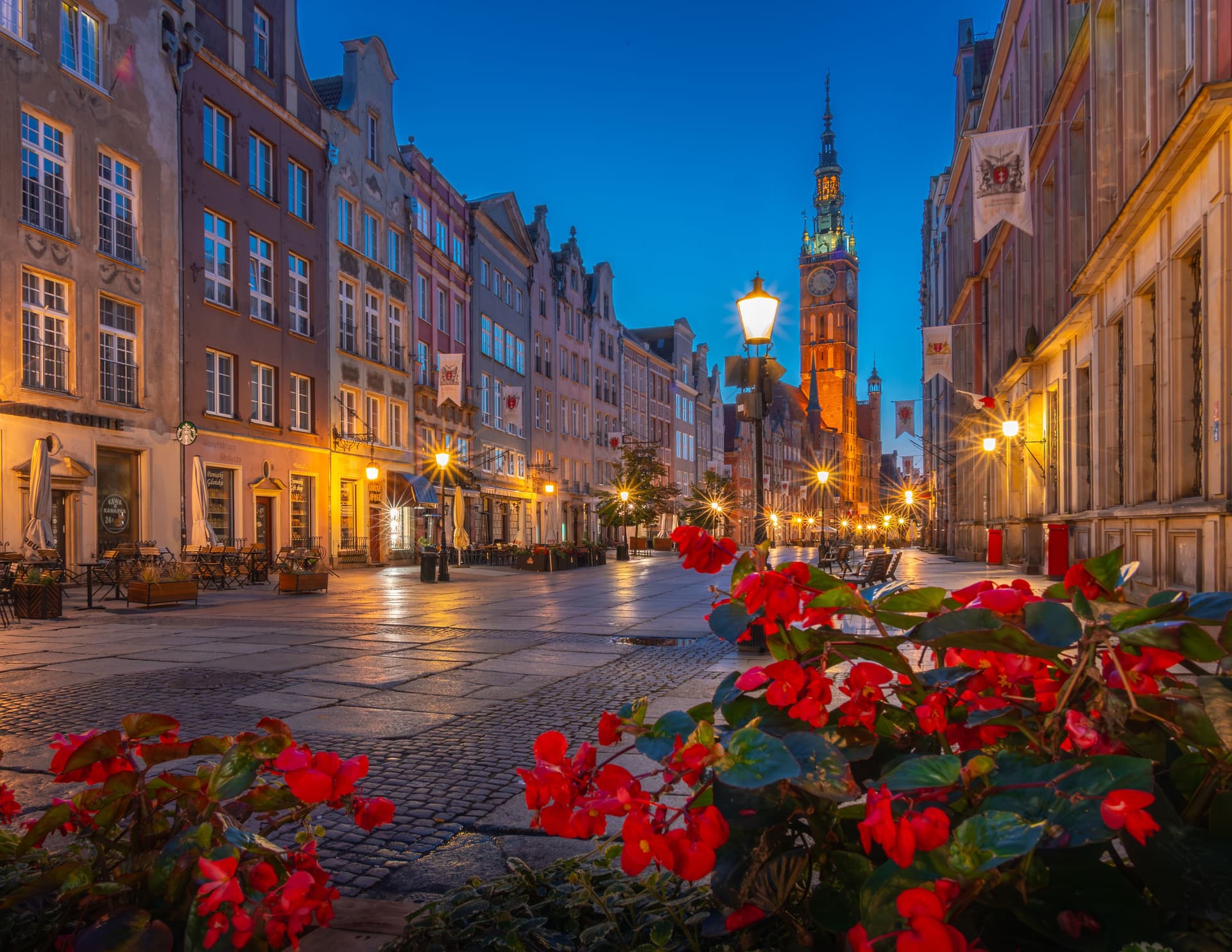
The Royal Route through Gdańsk's Main Town, the heart of the Old Town: the road Polish kings rode in on, built and run by a merchant city on its own terms.
Start · Upland Gate and Golden Gate: A Blessing and a Warning
DirectionsStops
- 1
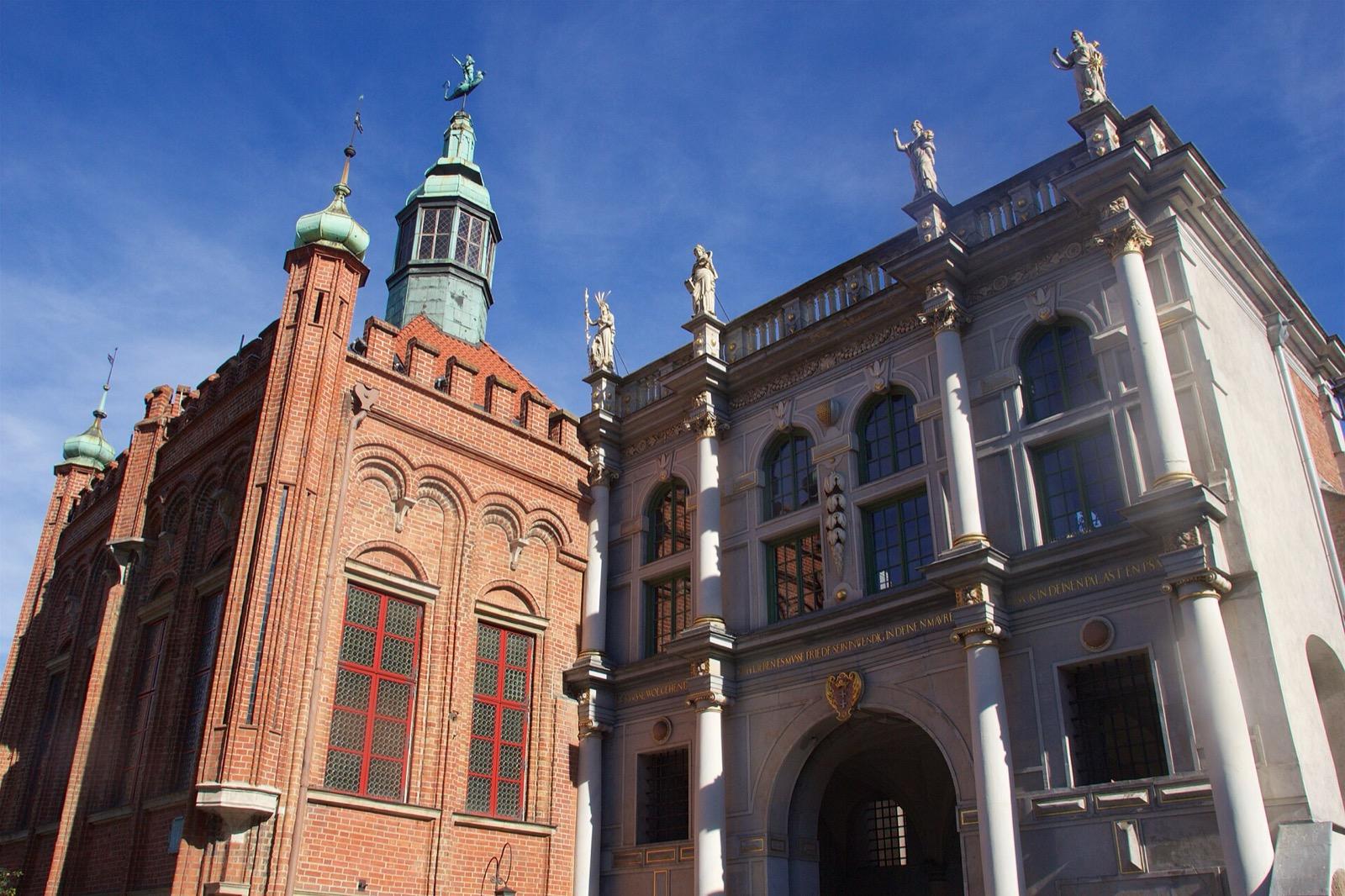
Upland Gate and Golden Gate: A Blessing and a Warning
Two ceremonial gates at the start of the Royal Way, where the city welcomed its kings and spoke to them in stone.
- 2
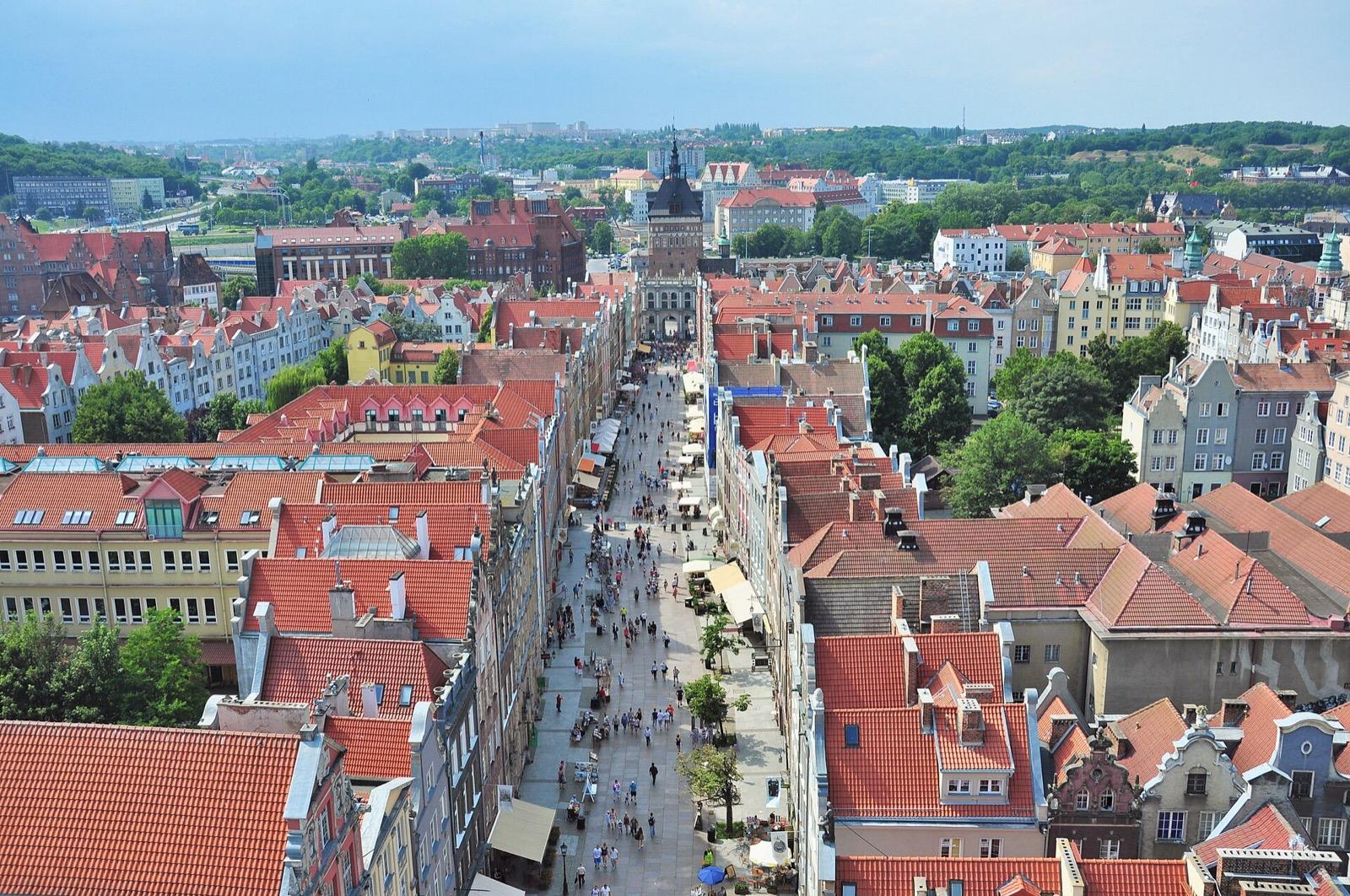
Długa: The Merchants' Street, Rebuilt by Choice
The kings' road into the city: Długa, the main street of the Main Town, lined with merchant houses rebuilt in the 1950s.
- 3
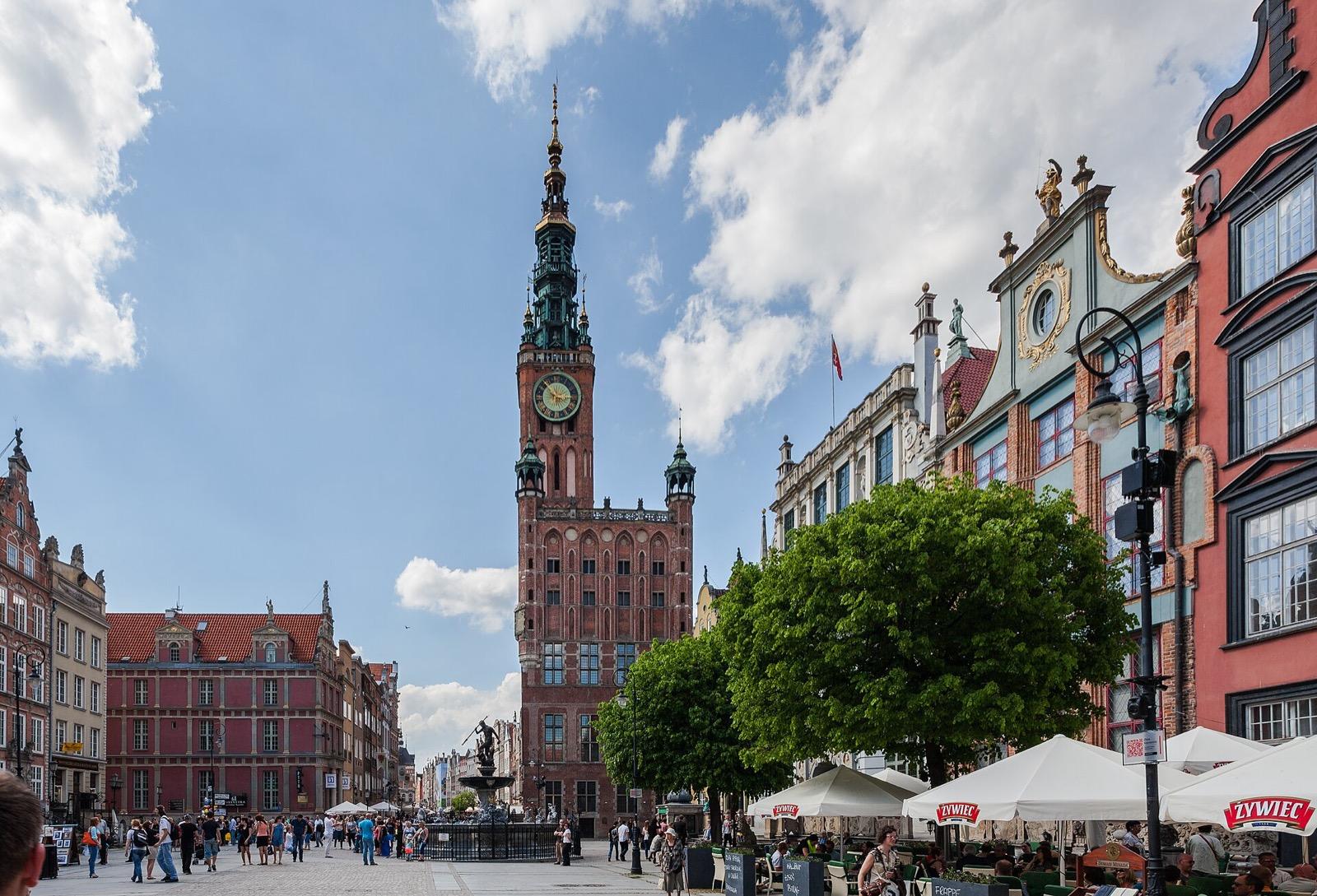
Main Town Hall: The King on the Roof
The seat of the city's government for almost six centuries, where King Casimir Jagiellon stayed in 1457 and granted Gdańsk its Great Privilege.
- 4
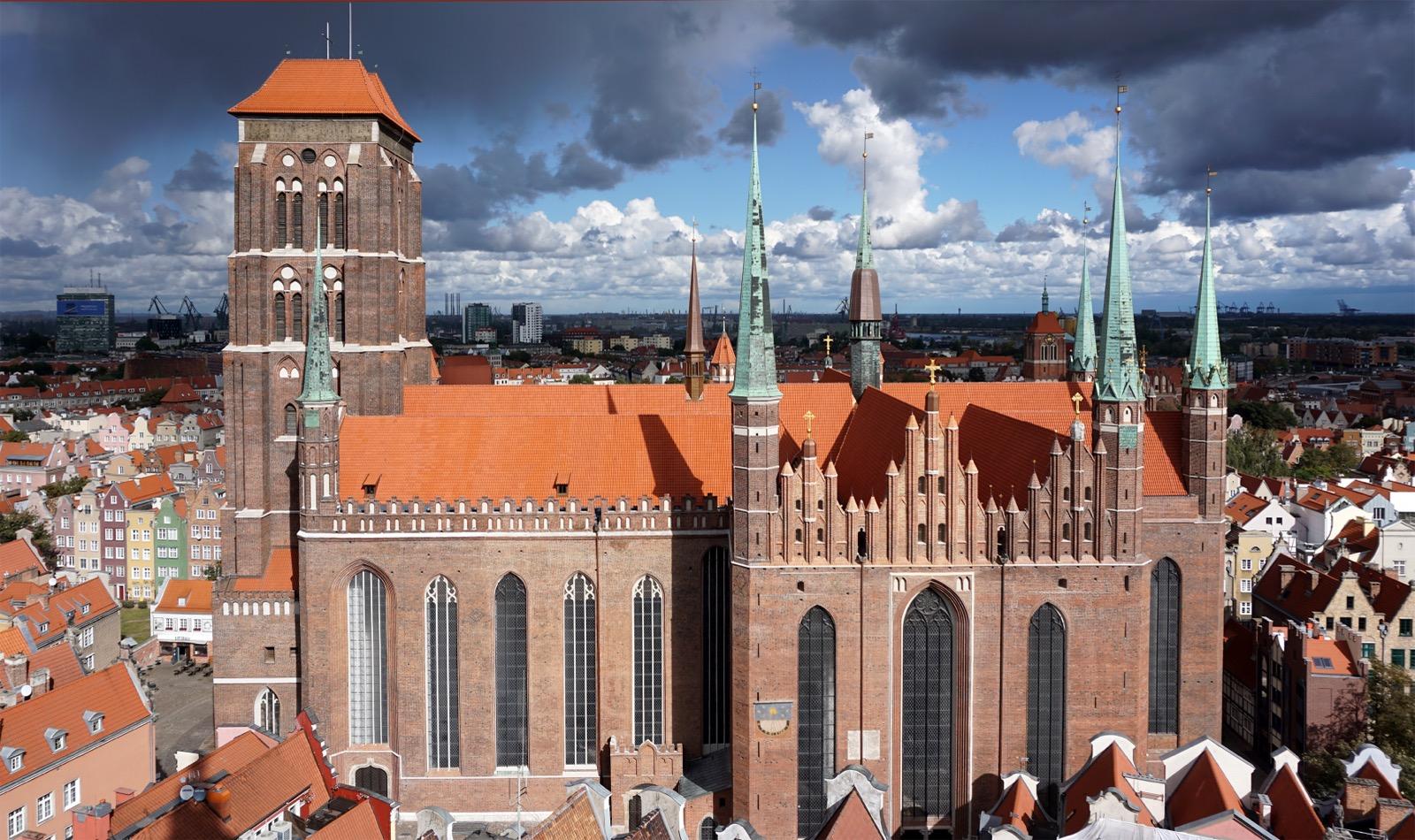
St Mary's Church: The City's Own Church
One of the largest brick churches in the world, the Main Town's great parish church, Lutheran from the Reformation until 1945.
- 5
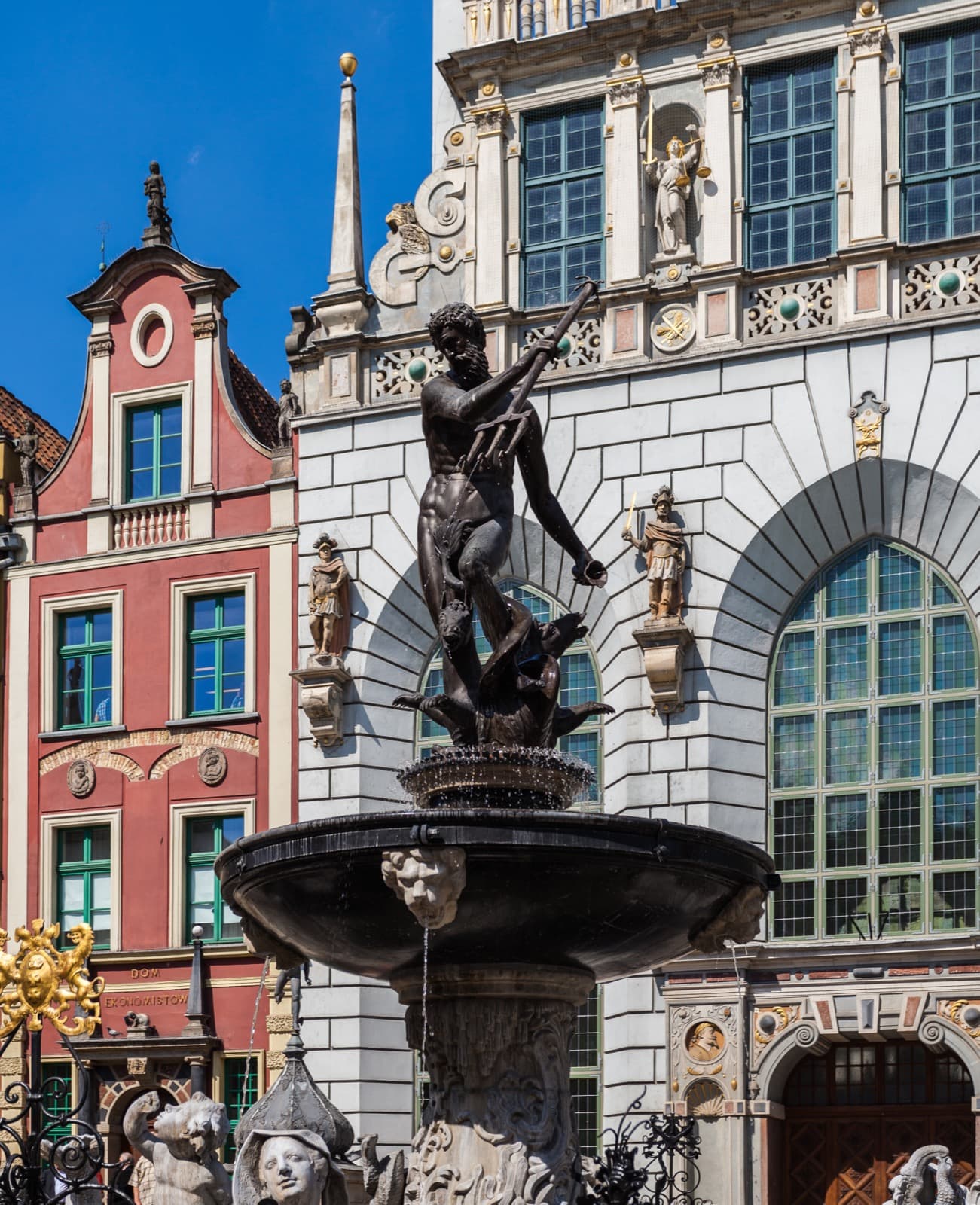
Long Market and Neptune: Where Kings Were Guests
The widest stretch of the Royal Way, with the bronze Neptune at its centre and the townhouses where visiting kings lodged.
- 6
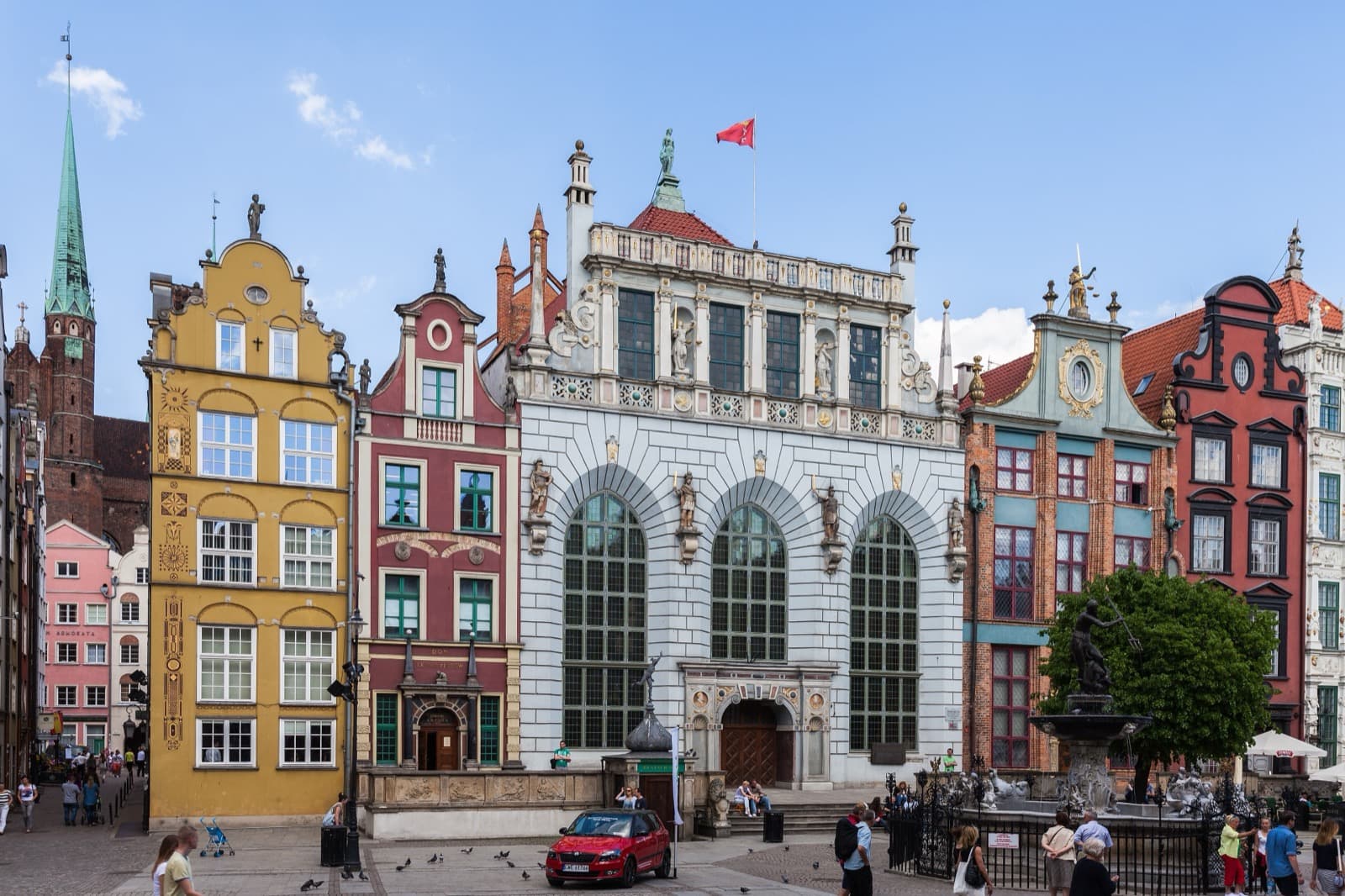
Artus Court and the Golden House: Who Ran the Road
The merchants' hall named for King Arthur and a mayor's house carved with Polish kings, side by side on the Long Market.
- 7
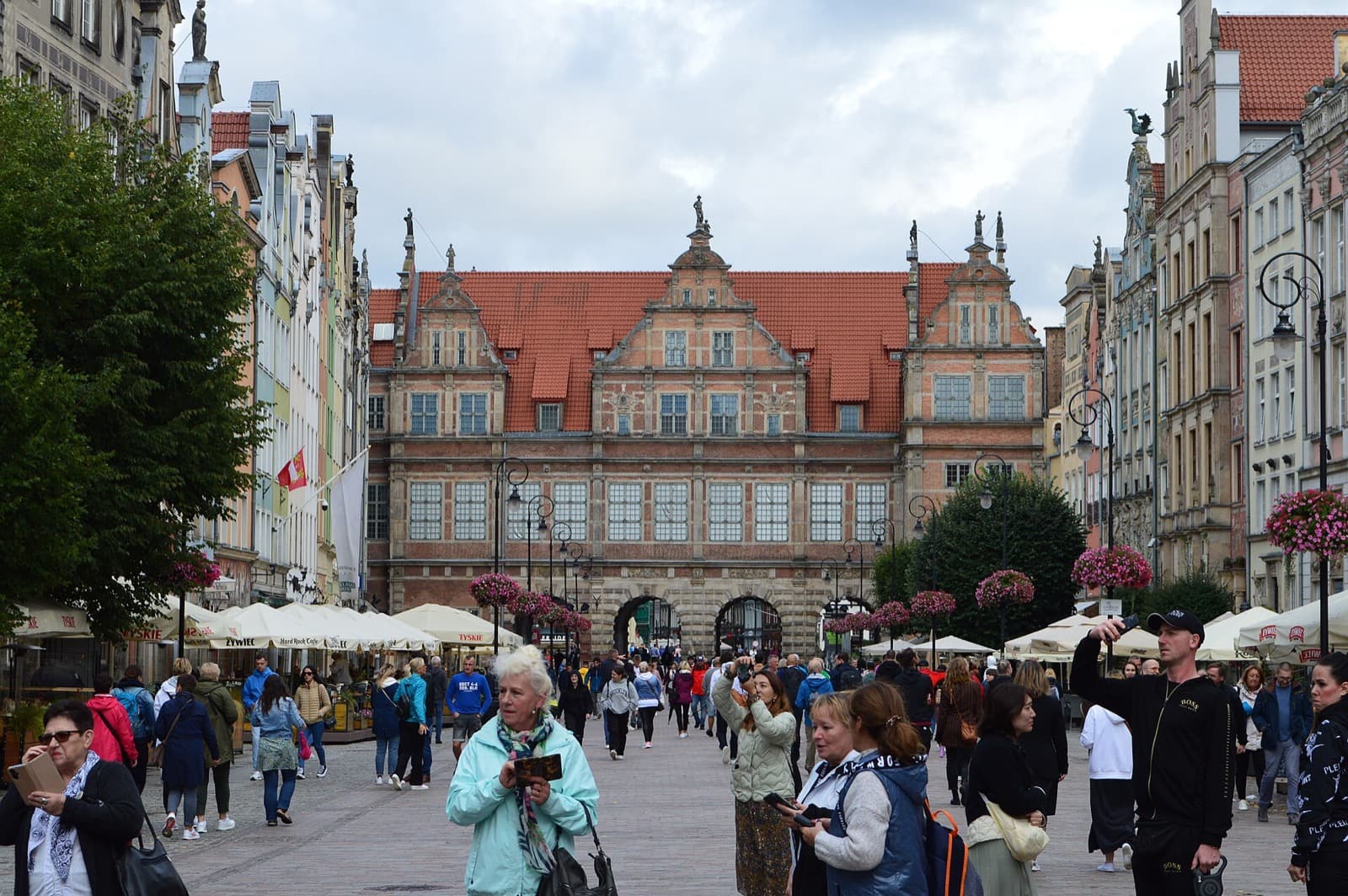
Green Gate: A Royal Lodging on the City's Scales
The gate at the end of the Royal Way, nominally a lodging for kings, built over the city's weighing scales by the river.
Details
Best Time to Visit
Late spring to early autumn gives the longest light on the facades. Early morning is the quietest time on Długa and the Long Market; by late morning in summer the Main Town fills with visitors, and during St Dominic's Fair each summer stalls line these streets. Blue hour, just after sunset, is when the Town Hall tower and the gables are lit.
Pro Tips
- •The walk ends at the Green Gate, where the Waterfront walk (The Crane, the Shipyards, and Solidarity) begins, so the two tours join into one longer outing.
- •The Prison Tower between the Upland and Golden Gates was showing a Museum of Gdańsk exhibition on the rebuilding of the city after 1945, with a viewing terrace included in the ticket (18 zł, checked September 2026).
- •The Main Town Hall and Artus Court (both Museum of Gdańsk) are free on Mondays from 12:00 to 18:00. The Town Hall's observation tower was closed for renovation as of September 2026.
- •St Mary's tower is 409 steps to the viewing platform (20 zł, checked September 2026) and closes in bad weather. The parish lists no entry fee for the church itself, and sightseeing pauses during Mass.
- •St Mary's astronomical clock runs its figure show every day at 11:57.
- •The Green Gate's National Museum galleries are closed on Mondays.
Safety & Precautions
- •Długa and the Long Market are paved with smooth granite, but the lanes on the loop to St Mary's are cobbled and can be slippery after rain, so wear sturdy shoes.
- •Wind and showers come in off the Baltic even in summer, so carry a layer.
- •St Mary's is a working church: dress respectfully, keep your voice down, and avoid sightseeing during Mass.
- •The Long Market is one of the busiest places in the city in high season, so keep valuables close.
Travel advisory: Exercise Normal Precautions (Level 1).
Gallery
Related Reading
Go deeper on what you'll see, hear, and walk through.
Overview
Best Self-Guided Walking Tours in Gdansk (2026)
3 min
Overview
Gdansk Travel Guide: Days Needed, Getting Around, Safety, and Budget
8 min
Overview
One Day in Gdansk: A Walkable Morning-to-Evening Itinerary
8 min
Thematic
Best History Walking Tours in Gdansk (2026)
2 min
Thematic
Gdansk: The Hanseatic Port Where Solidarity Was Born
9 min
Companion
Neptune's Fountain and the Long Market: The Heart of Gdansk's Royal Way
8 min
Deep dive
St Mary's Church in Gdansk: The Brick Giant That Was Protestant for Four Centuries
8 min
Read
What to Eat in Gdansk: Herring, Pierogi, and Gold-Flecked Goldwasser
7 min
Read the walk
The full story of Old Town: The Royal Way the Merchants Built, in words. Prefer to listen? Play it narrated, from home or on location.
Introduction
In fifteen seventy-seven the new king of Poland, Stefan Batory, laid siege to Gdansk, the greatest port in his own kingdom, and could not take it. The city had refused to swear loyalty until he confirmed its privileges. By December the city had apologised and promised to pay, and the king had confirmed every privilege. That is the double story of the Royal Way. It was the ceremonial road by which Polish kings entered Gdansk, lined with gates, statues and carved facades. But the city that built it and ran it belonged to its merchants: mostly Lutheran, largely German-speaking, and loyal to the crown on terms they had bargained for. Around sixteen hundred, three quarters of Poland's trade with other countries passed through this one port. Gdansk sits on the Motlawa River near the Baltic coast of northern Poland, and this walk follows the Royal Way through its Main Town, the part most visitors call the Old Town. Seven stops, about seven hundred metres, and around an hour at your own pace, from the landward gates down Long Street to the Green Gate by the river, with a short loop to the church of St Mary's. Almost everything you will see was rebuilt after nineteen forty-five. When you arrive at the gates at the western end of Long Street, begin with stop one.
1. Upland Gate and Golden Gate: A Blessing and a Warning
Welcome to the start of the Royal Way. You are standing between two gates, and between them they tell you how this city spoke to its kings. To the west is the Upland Gate, the old main entrance from the landward side, where the city welcomed visiting monarchs. Its brick gate went up in fifteen seventy-four and fifteen seventy-five, and in fifteen eighty-eight it was faced with carved stone by Willem van den Blocke. On its outer face, the side a rider saw first, three Latin mottoes greet whoever arrives. One says that justice and piety are the foundations of all kingdoms. Another says that the goods cities want most are peace, liberty and harmony. Between the gates stands the brick bulk of the Foregate, a prison tower and a torture house. To the east is the Golden Gate, built between sixteen twelve and sixteen fourteen to a design by Abraham van den Blocke, in the shape of a Roman triumphal arch. Remember his name. You will meet his work three more times on this walk. Look up at the stone figures along its top. On this western side stand Peace, Freedom, Wealth and Fame. On the far side, facing down Long Street, stand Harmony, Justice, Piety and Prudence. The inscriptions split the same way. This side quotes a psalm in German: may there be peace within your walls. The side facing the city says in Latin that harmony makes small states grow, and discord brings great ones down. Visitors got a blessing. Citizens got a warning. The figures you see were carved again in the nineteen nineties, and the king from the introduction, Stefan Batory, never made a ceremonial entry into the city at all, despite an invitation. Walk through the Golden Gate onto Long Street, and keep your eyes on the house fronts.
2. Długa: The Merchants' Street, Rebuilt by Choice
You are on Long Street, the main street of Gdansk since the thirteen twenties and the road Polish kings rode down into the city. It runs about three hundred metres, from the Golden Gate behind you to the Long Market ahead. Start with the houses, because the houses are the point. Tall, narrow and shoulder to shoulder, they belonged to the merchants who made this city rich. At the turn of the seventeenth century, about three quarters of Poland's trade with other countries passed through Gdansk, and most of what left the port was grain, floated down the Vistula from the fields of the kingdom. A king riding down this street rode between the fortunes that grain had built. Now the second thing, the one most people walk straight past. Almost nothing here is as old as it looks. In March nineteen forty-five the Main Town was nearly destroyed, and for years people argued about whether to rebuild it at all. In nineteen forty-eight the conservator Jan Zachwatowicz settled on a limited reconstruction, and between nineteen fifty and nineteen fifty-three Long Street rose again from old plans and engravings. The planners made a choice. They did not rebuild the street as it had stood in nineteen thirty-nine. They gave the facades the look they had before their nineteenth-century makeovers, and Gdansk artists carved and painted new decoration for them. So you are looking at two eras at once: the merchant city before eighteen hundred, as the nineteen fifties imagined it. Pick one gable and follow it up to the roofline. The carving is new. The ambition is old. Walk on toward the tall spire ahead. Under it, the kings of Poland once slept.
3. Main Town Hall: The King on the Roof
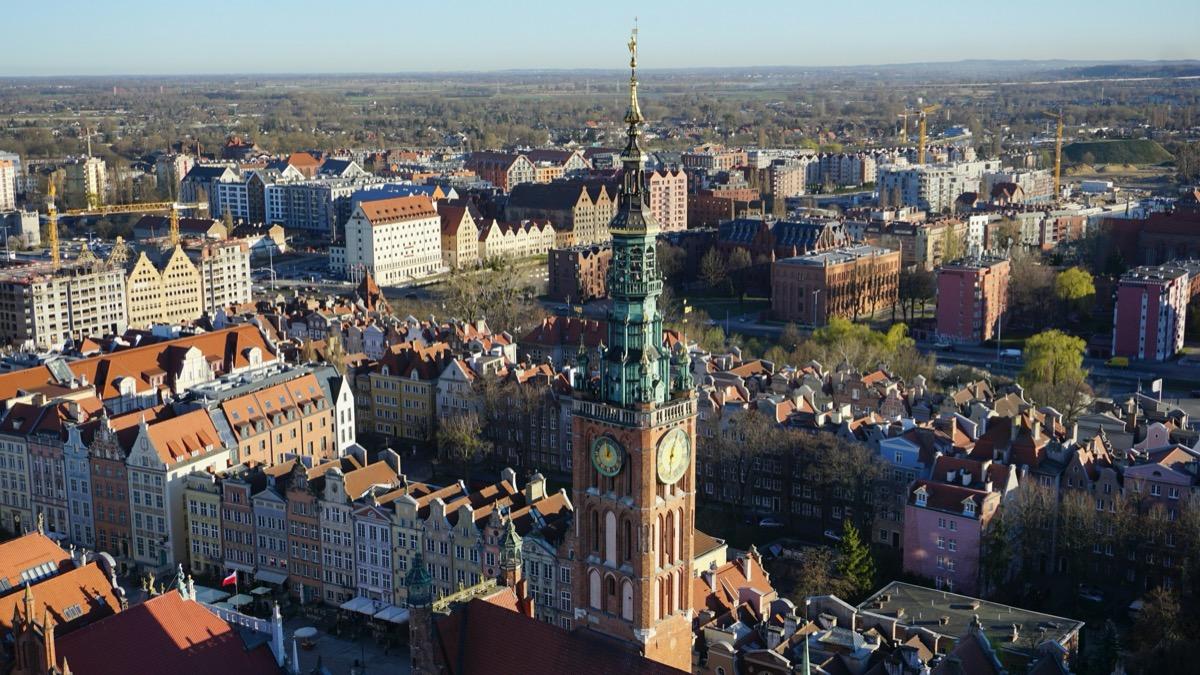
Ahead of you rises the Main Town Hall, the seat of the city's government from the middle of the fourteenth century until nineteen twenty-one. Its tower climbs about eighty metres, and at the very top stands a gilded king. Since fifteen sixty-one a figure traditionally identified as King Sigismund Augustus has crowned the spire, and he is a weathervane: he turns with the wind. The figure up there now went back up in nineteen fifty. A merchant city put its king on the roof, and let him turn in the breeze. Kings did sleep here. Until the fifteen twenties, visiting monarchs lodged in this building. The visit that mattered most came in May fourteen fifty-seven. Three years earlier the cities of Prussia had broken with the Teutonic Knights and accepted King Casimir Jagiellon, and Gdansk had paid heavily for the war that followed. Now Casimir came in person. On the ninth of May the burghers swore loyalty to him, the city lent him a large sum, and he stayed in this Town Hall for several weeks. On the fifteenth of May he granted the Great Privilege. The council would fill the city's own church and civic offices. Gdansk would run its own mint, though its coins had to carry the king's portrait. The city would govern the Prussian coast. And the king gave up the right to build a castle near the city. Hold on to that list, because it is the bargain behind this whole walk: the crown got loyalty and money, and the merchants got their city. The Town Hall was badly damaged in nineteen forty-five and was the first historic secular building in Gdansk to be rebuilt. It houses the Museum of Gdansk today. In a few steps, turn left up the narrow lane toward the great brick tower. At the top stands the city's church of St Mary's.
4. St Mary's Church: The City's Own Church
Welcome to St Mary's, one of the largest brick churches in the world. You are at its south-west corner. The foundation stone was laid in thirteen forty-three, and the last brick of the vaults went in in fifteen oh two, one hundred and fifty-nine years later. The church is about…
Full narration for this stop unlocks with the tour.
5. Long Market and Neptune: Where Kings Were Guests
You have come out onto the Long Market, the widest stretch of the Royal Way. In front of you is Neptune's Fountain, the bronze sea god who became the symbol of Gdansk. Neptune was a city project from the start. Work began in sixteen oh six on the initiative of the mayor…
Full narration for this stop unlocks with the tour.
6. Artus Court and the Golden House: Who Ran the Road
You have just passed Artus Court, the tall pale stone front back along this side of the square. The narrow house in front of you, its facade picked out in gold, is the Golden House. Together they show who really ran the Royal Way. Artus Court was the merchants' meeting hall,…
Full narration for this stop unlocks with the tour.
7. Green Gate: A Royal Lodging on the City's Scales
You have reached the end of the Royal Way. The Green Gate closes the Long Market, and on its far side lie the Motlawa River and the old harbour. It was built between fifteen sixty-four and fifteen sixty-eight, under a master builder from Amsterdam and then the city builder Hans…
Full narration for this stop unlocks with the tour.