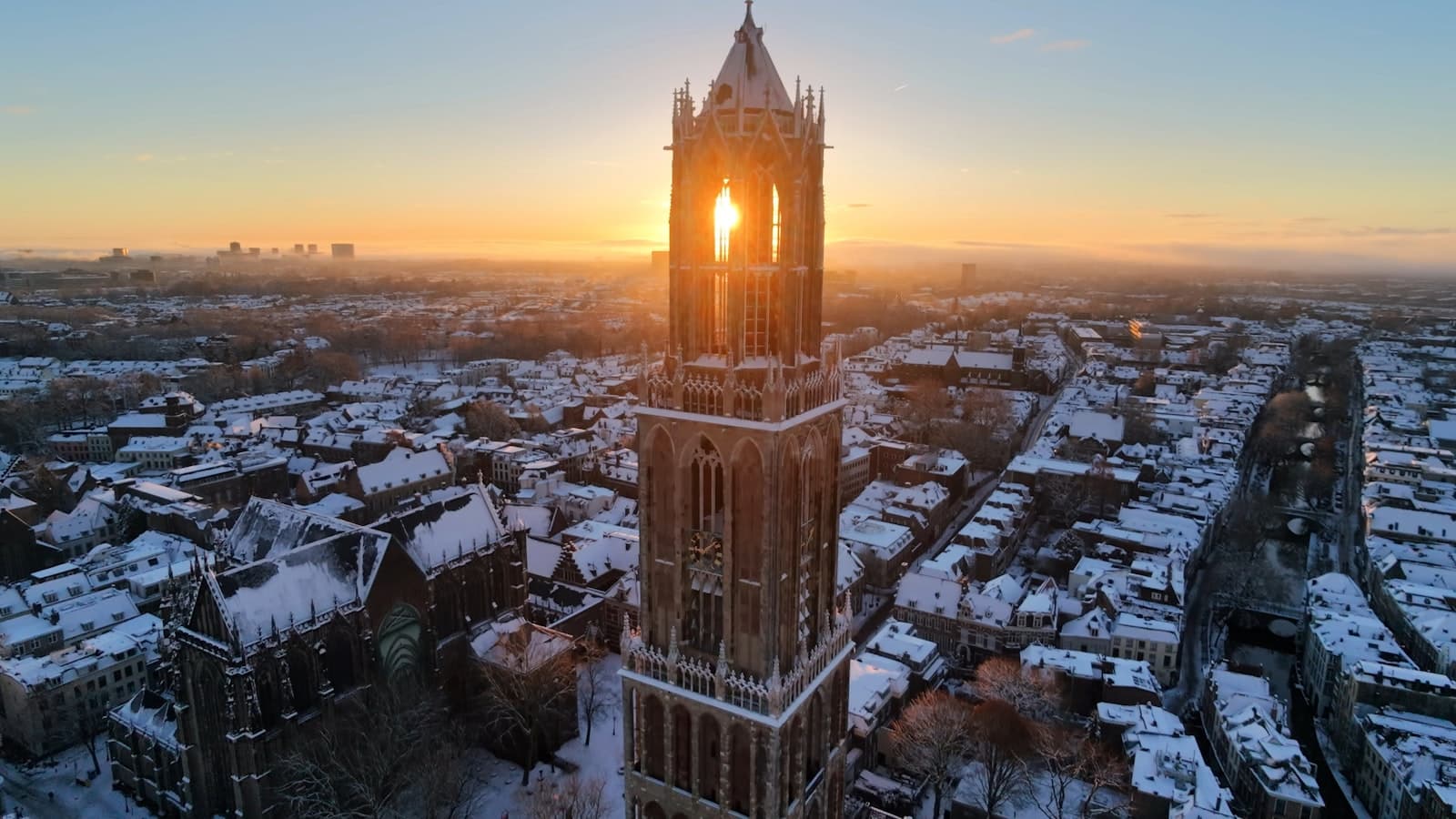
On one small hill in Utrecht, a tower and a church face each other across an empty square, and the emptiness is the story. This level walk reads two thousand years stacked on a single Roman crossing.
Start · Domplein: the Roman fort of Traiectum
DirectionsStops
- 1
Domplein: the Roman fort of Traiectum
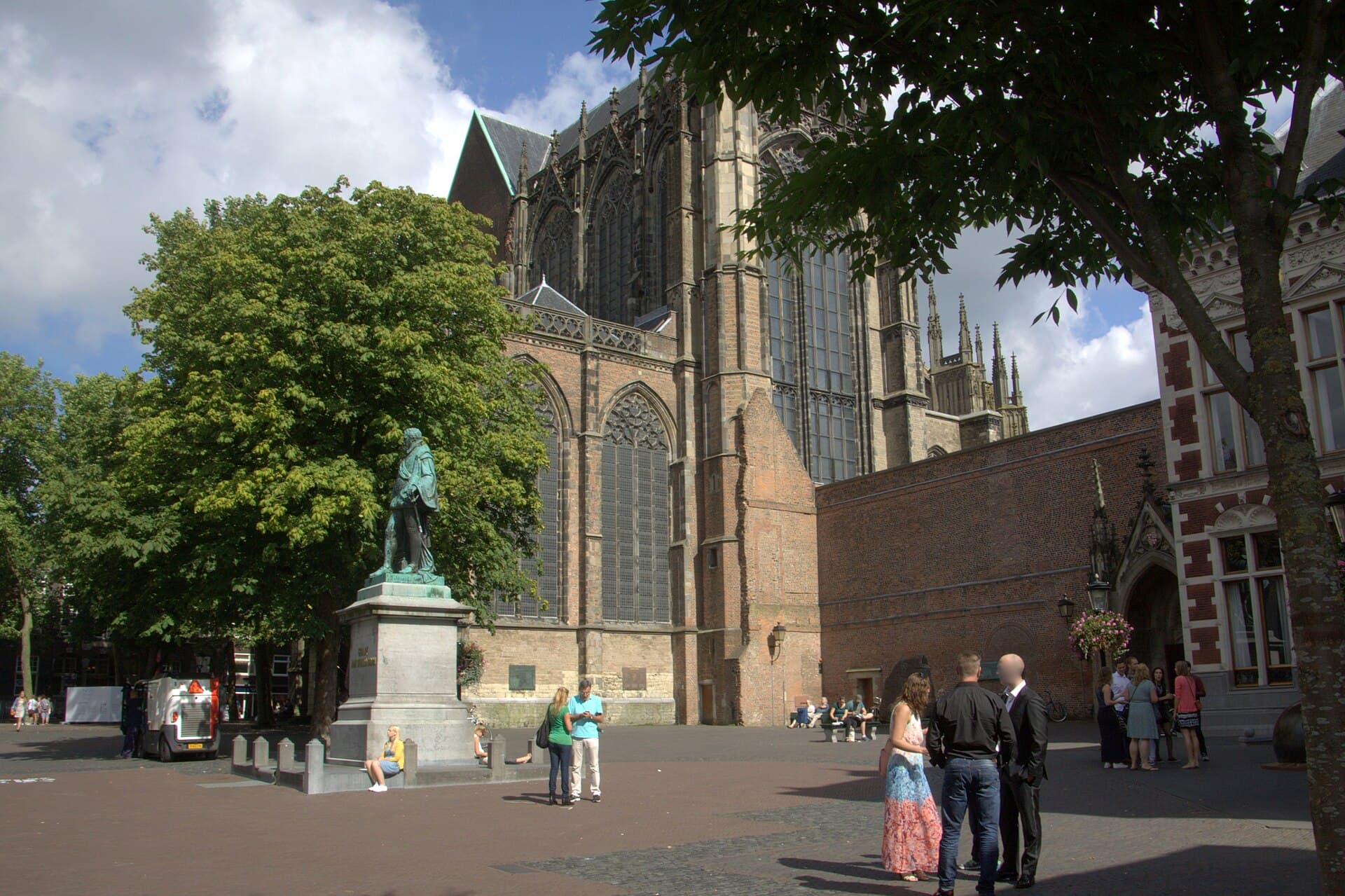
The open square at the heart of Utrecht sits directly on top of the Roman river fort that gave the city its start.
- 2
Domtoren: the freestanding Dom Tower
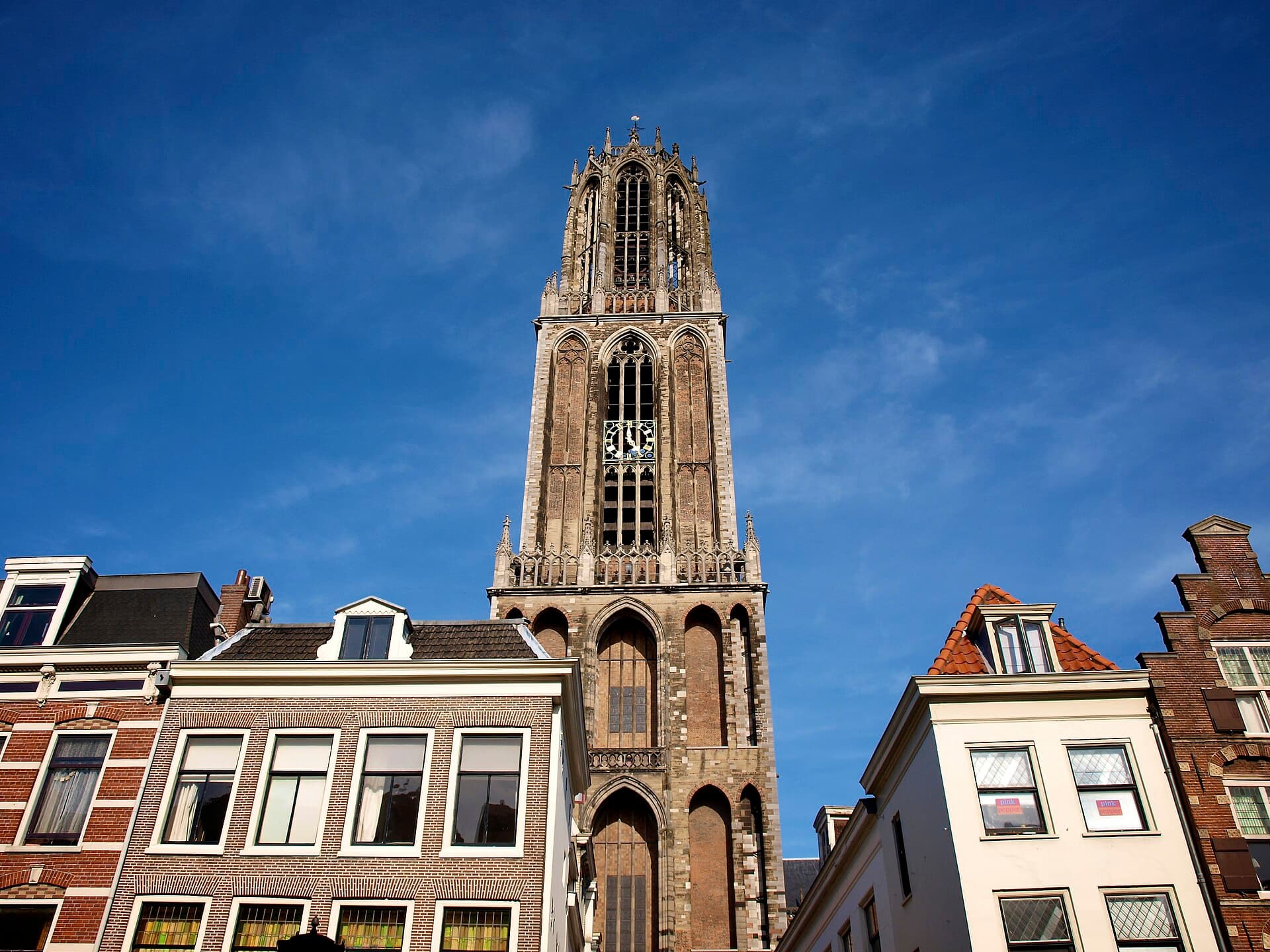
The Gothic bell tower of Utrecht is the tallest church tower in the Netherlands, and it has stood alone since the church behind it fell.
- 3
Domkerk: the church and its lost nave
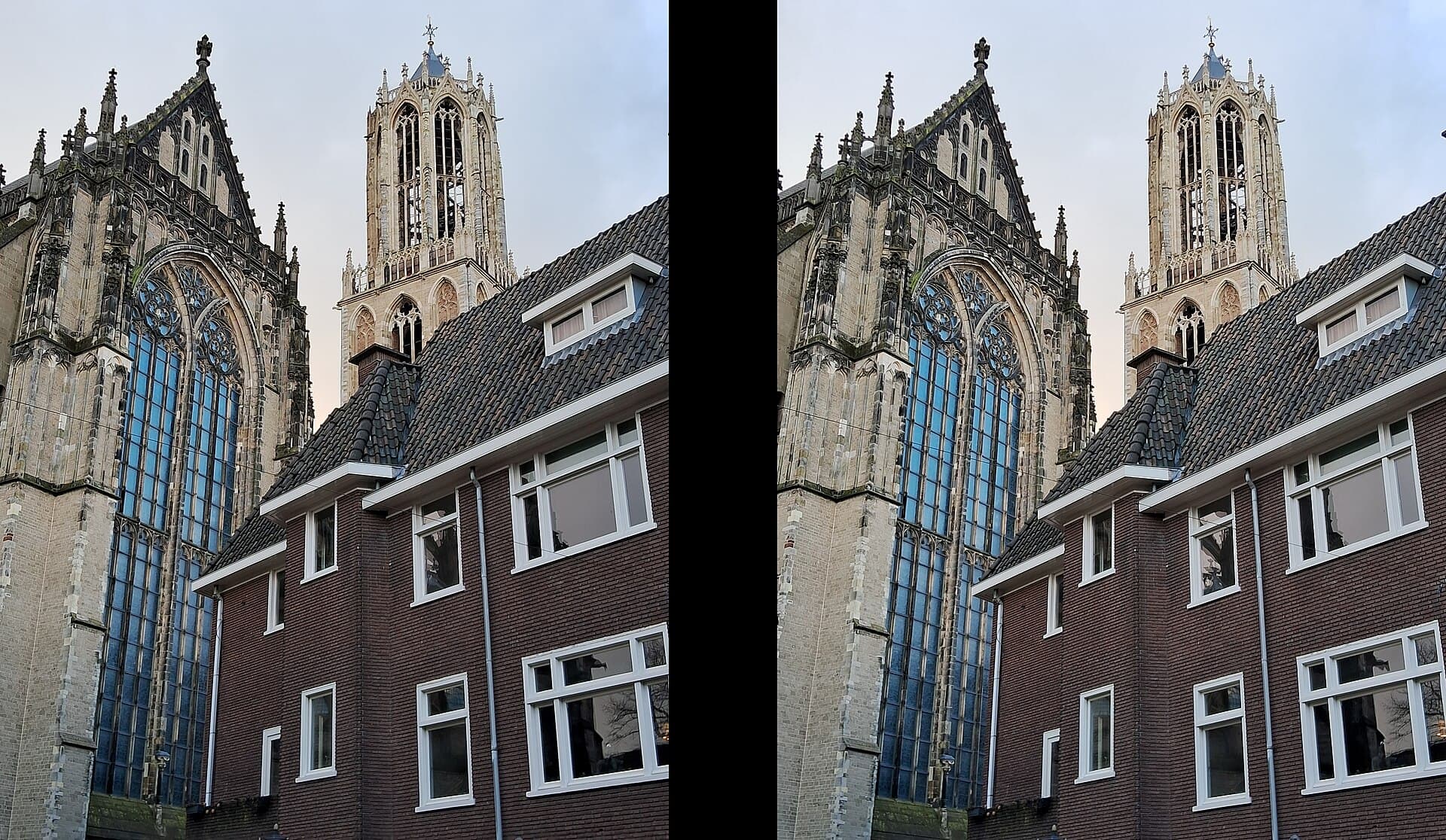
The surviving cathedral of Saint Martin is the only pre-Reformation cathedral in the Netherlands, and the empty square in front of it marks the nave a storm took away.
- 4
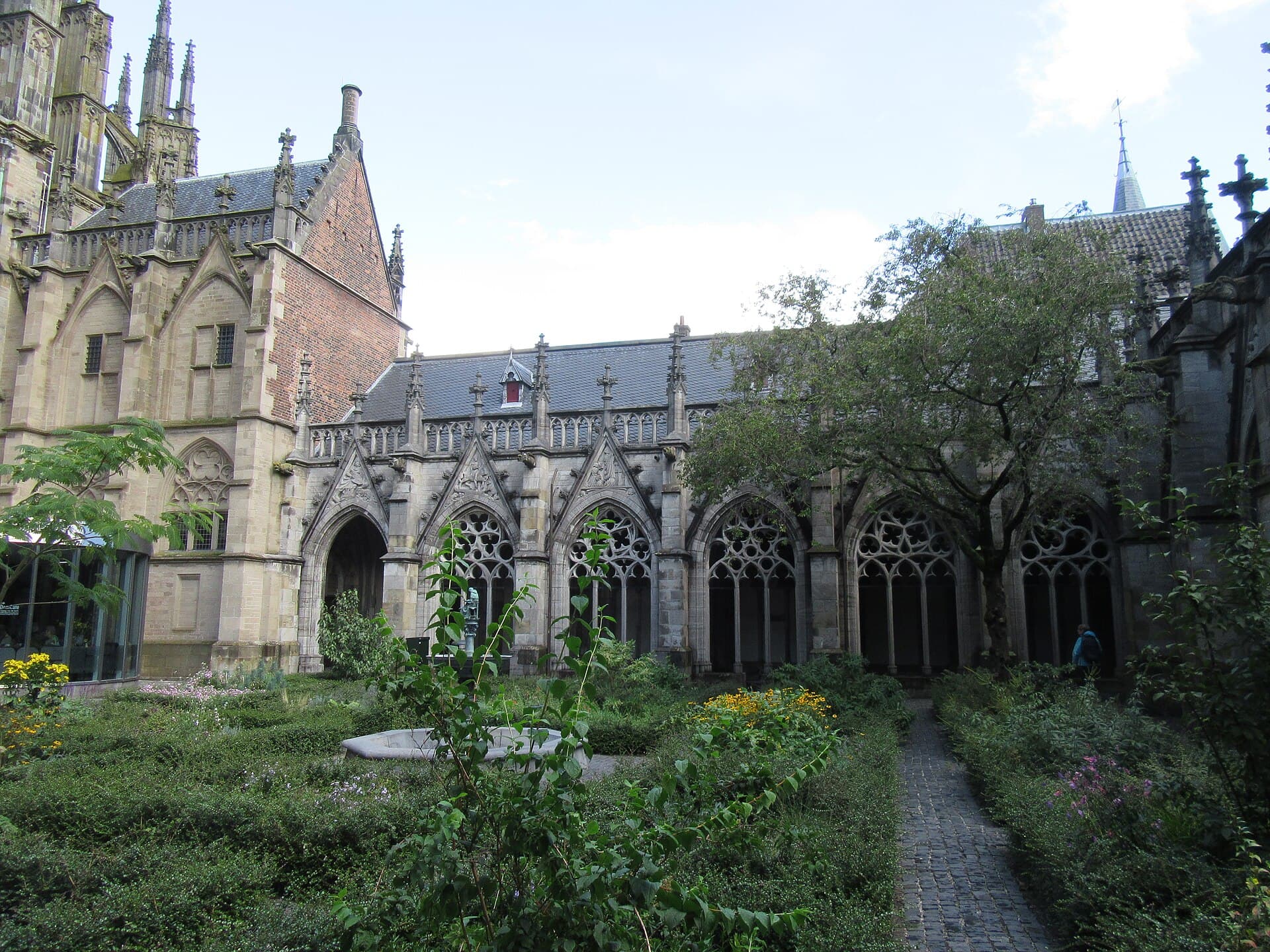
Pandhof: the cloister garden of the Dom
A quiet medieval-style garden enclosed by a Gothic cloister, tucked between the church and the old chapter buildings.
- 5
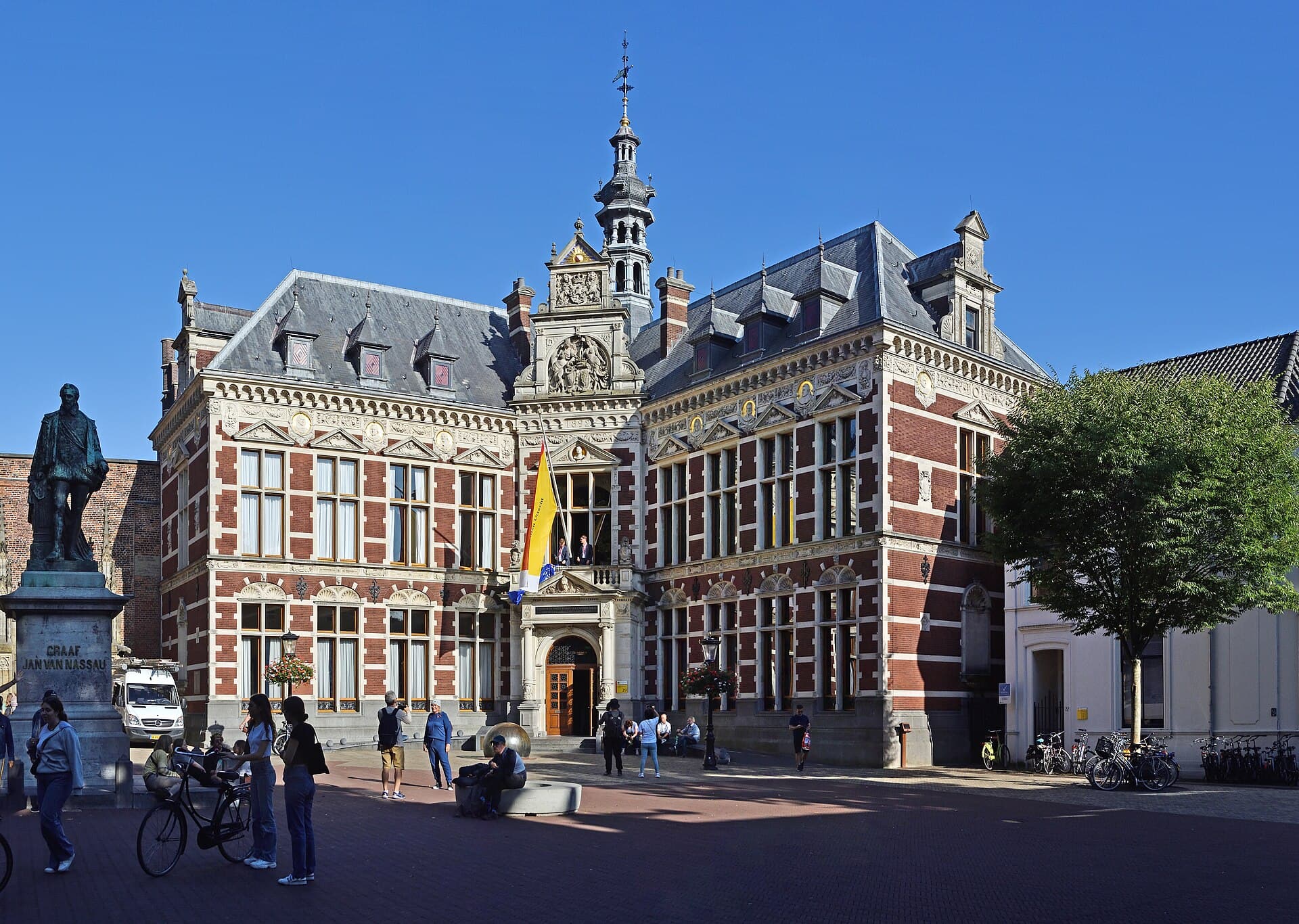
Academiegebouw: the Union of Utrecht
The main building of Utrecht University stands beside the medieval chapter house where a founding document of the Dutch Republic was signed.
- 6
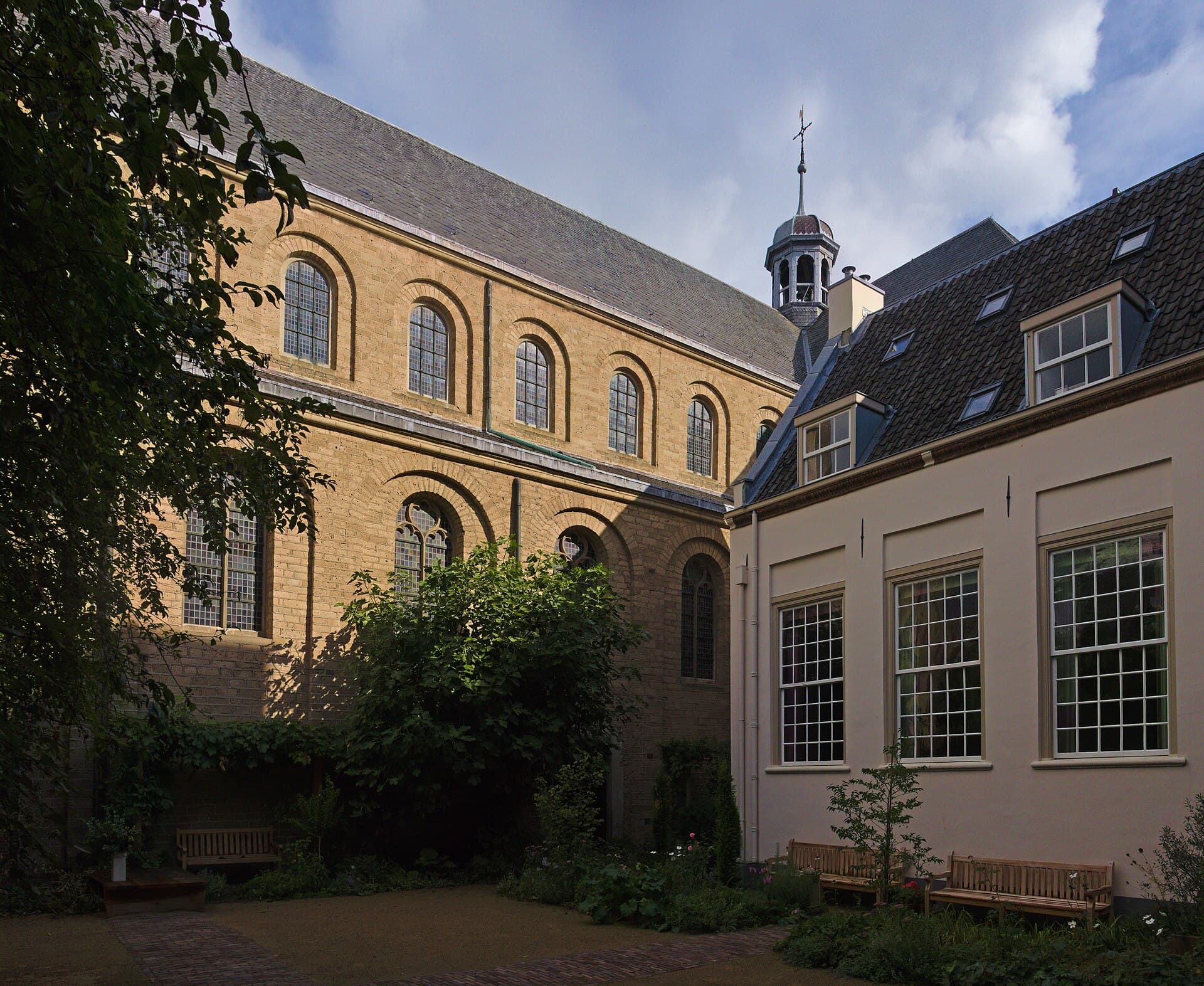
Pieterskerk and the church-cross
One of the oldest churches in the Netherlands, and a corner of the debated ring of churches said to form a cross around the Dom.
- 7
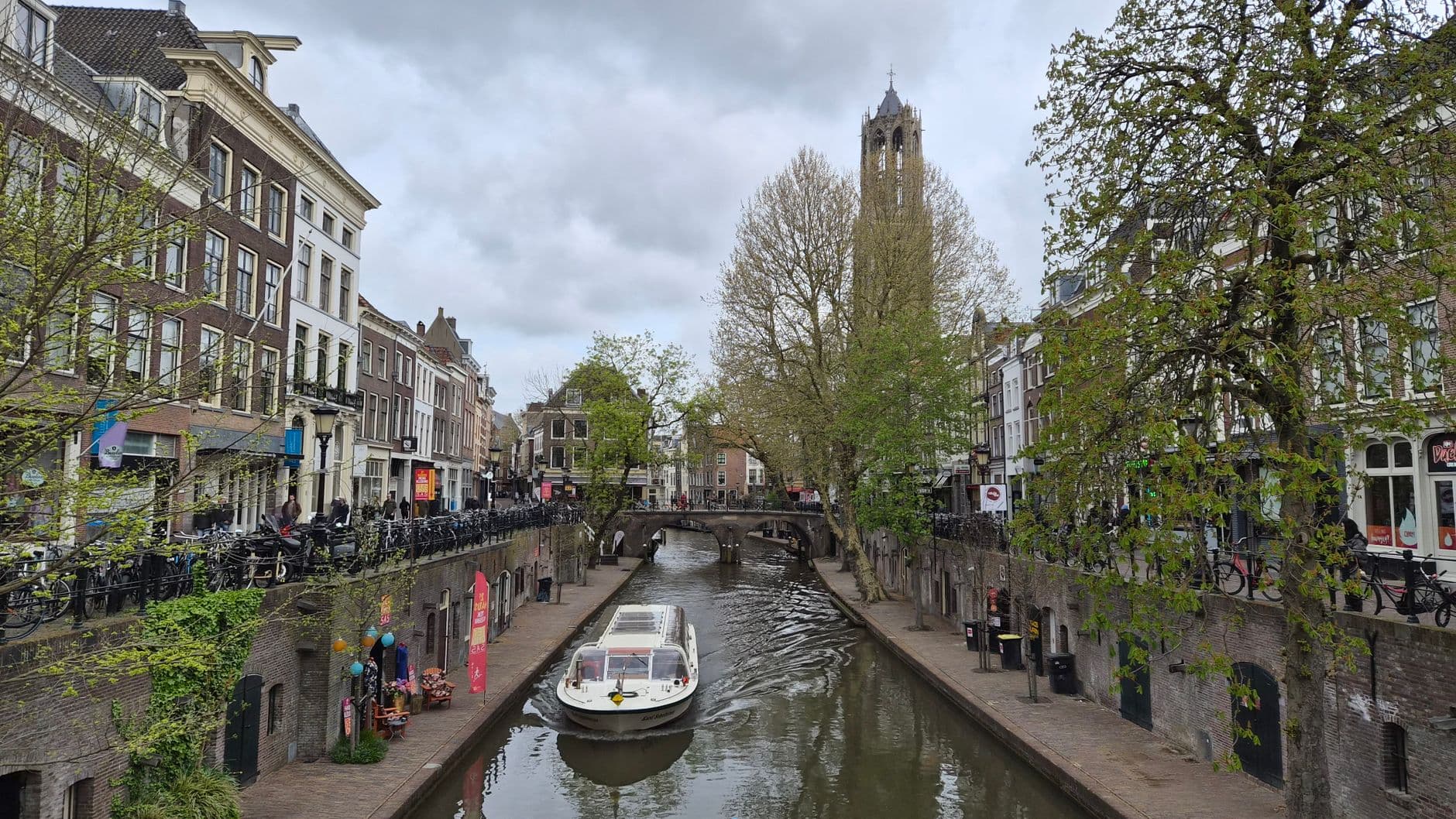
Flora's Hof: the bishops' palace site
A hidden courtyard garden with a fine view up to the tower, standing where the medieval bishops' palace once ruled the church city.
Details
Best Time to Visit
Late morning or early afternoon on a clear day gives the best light on the tower across the Domplein and the widest access to the churches and gardens, which tend to keep daytime hours. Early morning is quietest for the cloister garden and Flora's Hof. Evenings can be atmospheric, when mist rises colored from the marked Roman fort outline in the square, though interiors will be closed.
Pro Tips
- •Everything on this walk is level and close together on one small hill, so wear comfortable shoes and take it slowly rather than rushing between stops.
- •The Domplein, the churches, the cloister garden, and Flora's Hof are all free to stand in or enter, so you can do the full walk without spending anything.
- •To see the Roman fort itself, book a timed ticket for the DOMunder undercroft in advance, since it descends below the square and sells limited slots.
- •The Dom Tower climb is a separate ticketed, guided experience of four hundred and sixty-five steps, so decide in advance whether you want to add it and reserve ahead.
- •Look down for the stainless steel ridges in the Domplein pavement that trace the Roman fort walls, and turn into the gate beside the church to find the easily missed Pandhof cloister garden.
- •For the classic photograph, walk into Flora's Hof off Servetstraat and look up, where the tower frames beautifully above the courtyard.
Safety & Precautions
- •Utrecht's canals have working wharves and water-level edges that often have no railings, so keep back from the edge, especially with children or in the dark.
- •Cyclists and trams have priority and move fast and almost silently, so look carefully both ways before stepping into any lane or crossing, and do not linger in bike paths.
- •The ground is uneven cobblestone throughout, and the churches and the tower have steep, narrow, worn stairs, so watch your footing and use handrails.
- •Bridges, wharves, and old stone steps become slippery when wet, and the churches expect modest dress and quiet, so cover up, lower your voice, and be respectful of services or concerts in progress.
Travel advisory: Exercise Increased Caution (Level 2).
Gallery
Related Reading
Go deeper on what you'll see, hear, and walk through.
Overview
Best Self-Guided Walking Tours in Utrecht (2026)
3 min
Overview
One Day in Utrecht: A Walkable Morning-to-Evening Itinerary
8 min
Overview
Utrecht Travel Guide: Days, Transport, Safety, and Budget
6 min
Thematic
Utrecht: The City That Keeps Its Story Below the Surface
7 min
Companion
The Dom Church of Utrecht and the Storm That Split It From Its Tower
7 min
Deep dive
Why Utrecht's Dom Tower Stands Alone
6 min
Read
What to Eat in Utrecht
7 min
Read the walk
The full story of Domtoren and Domplein: The Tower and the Church a Storm Took, in words. Prefer to listen? Play it narrated, from home or on location.
Introduction
The Domplein, the square at the center of Utrecht, in the Netherlands, is defined by what is not there. A tower rises on one side. A church stands on the other. Between them is open air, a public square where the middle of a building used to be. That gap is the whole tour. It is not a plaza someone designed. It is a wound that was never healed. This is a level walk of about seven stops, just over one kilometre, and it takes around ninety minutes at your own unhurried pace, with time to stop wherever you like. Plein means square, Kerk means church, Toren means tower, and Hof means courtyard or garden, and you will meet all four before you finish. The story runs deep here. Utrecht began as a Roman fort on the Rhine frontier, grew into the religious capital of the medieval Netherlands, and raised the tallest church tower in the country. Then, on the first of August in the year sixteen seventy-four, a violent storm tore the unfinished middle out of the cathedral and left the tower and the church standing apart forever. We will drop to the Roman layer beneath the pavement, rise to the tower, cross to the surviving church, and then move outward through the quiet church quarter that closes back around the gap. Take it slowly. When you arrive at the open Domplein between the tower and the church, begin with stop one.
1. Domplein: the Roman fort of Traiectum
You are standing on a Roman fort. Look down at the pavement and you may find stainless steel ridges running across the square in long straight lines. Those ridges trace the walls of a castellum, a Roman military fort, and on some evenings a faint mist rises from them, colored, marking where the ramparts once ran. The fort was called Traiectum, which is Latin for river crossing, or ford. It was founded around the year forty-seven, under the Emperor Claudius, on the southern bank of the Rhine. This was the frontier of the Roman world, the line they called the limes, and Traiectum was one of its crossing points. The first fort was earth and timber. The final version was stone, roughly one hundred and twenty-five metres by one hundred and fifty, holding around five hundred troops, with a headquarters building that even had underfloor heating. For nearly two centuries it was garrisoned, at one stretch by an auxiliary unit raised in Spain. This crossing is the origin of everything above it. Medieval Utrecht grew from this fort and the church that rose beside it, and the name Traiectum echoes on in the modern city. The Lower Germanic Limes, this site included, became a UNESCO World Heritage Site in the year twenty twenty-one. You will not see ruins standing above ground here. The cue at your feet is the marked outline and the mist. The actual Roman stones lie roughly four to five metres below, in an undercroft called DOMunder, where you can descend to walk among them. But stand still first, and let the layers settle. Two thousand years are stacked under your shoes.
2. Domtoren: the freestanding Dom Tower
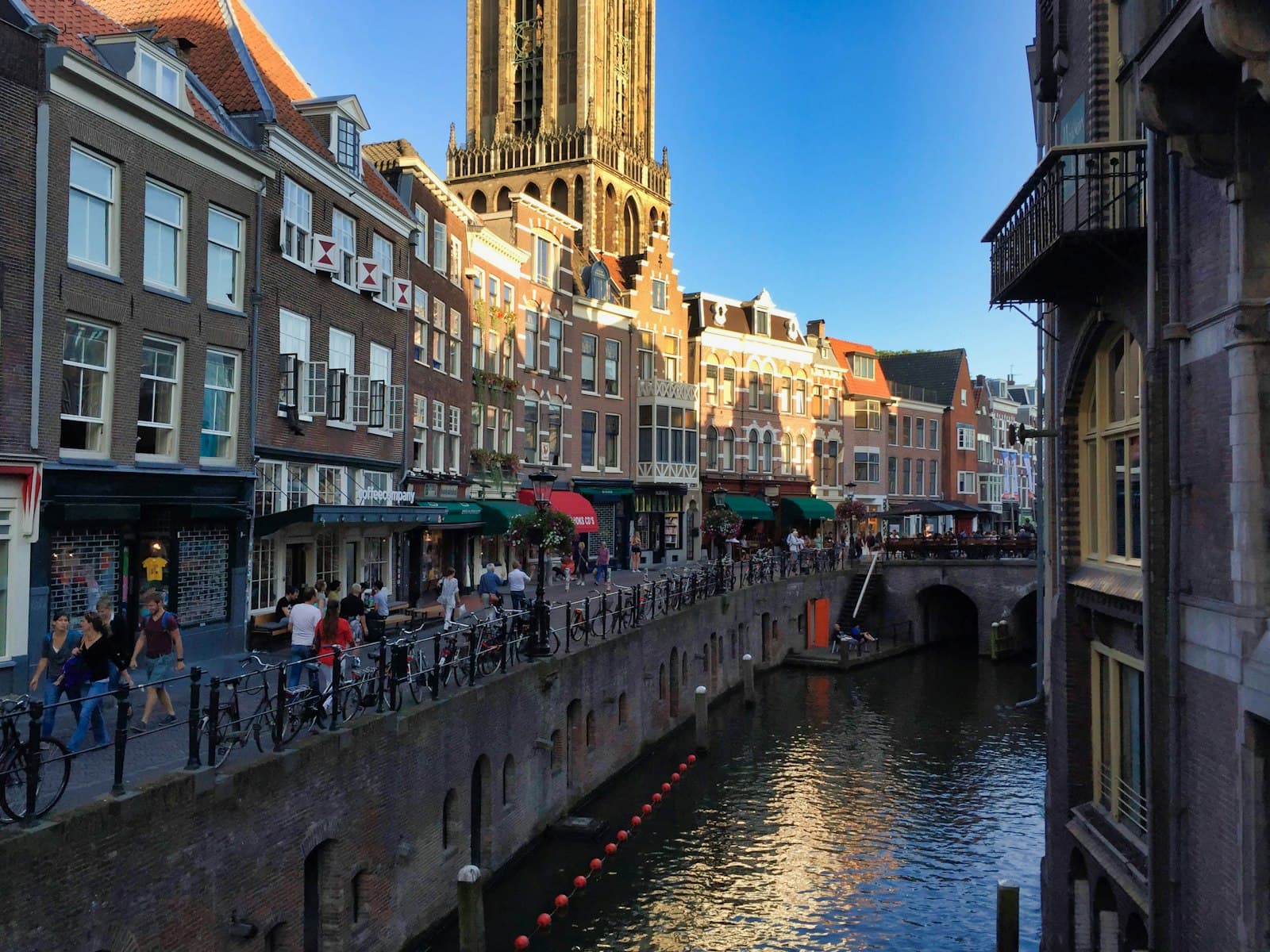
Now look up. The Domtoren, the Dom Tower, rises above you in Gothic stone. It was built over some sixty years, from about thirteen twenty-one to thirteen eighty-two, to the design of an architect recorded as John of Hainaut. It stands one hundred and twelve metres tall, and it is the tallest church tower in the Netherlands. For centuries it has been the hallmark of the city, the shape you see from far out across the flat land before Utrecht itself appears. But here is what makes it strange. This tower is freestanding. It is not attached to a church. It stands by itself, separated from the choir across the open square, and the two have never been reconnected. When you climb it, and it is a climb of four hundred and sixty-five steps, the reward on a clear day is a view that reaches all the way to Amsterdam and to Rotterdam. From the ground, though, the more interesting view is the one you already have. A bell tower belongs to a church. It rises out of the building, part of the same structure, the same silhouette. This one rises out of nothing. There is air where the church should meet it. Everything about the tower says it was meant to anchor a great cathedral, and everything about the square in front of it says that cathedral is no longer whole. Hold that thought. The reason the tower stands alone is the reason for this entire walk, and you are about to cross the empty ground toward the part of the building that survived. The tower kept its footing. The middle did not.
3. Domkerk: the church and its lost nave
This is the church, and this is the heart of the story. The Domkerk is dedicated to Saint Martin of Tours, and its Gothic rebuilding began in the year twelve fifty-four. It is the only pre-Reformation cathedral in the Netherlands, and it was once the largest church in the country. But look at its shape. What stands before you is the choir and the transept, the far end and the crossing of a cathedral. The long central hall that should join this church to the tower behind you is simply gone. On the first of August in the year sixteen seventy-four, a violent storm crossed the province of Utrecht. In Dutch it was remembered as Het Schrickelik Tempeest, the Terrible Tempest. It killed more than a thousand people across the Netherlands. The still unfinished nave of the cathedral, poorly supported, collapsed. It was never rebuilt. Its footprint is the open Domplein you have just crossed. Now, what exactly was that storm. This is where I want to be careful, because historians are. It was a derecho, a violent, long-lived, wide-spreading windstorm. Popular memory called it a tornado, or a waterhoos, a waterspout. But a modern reconstruction published in the Copernicus natural hazards journal argues the damage most likely came from straight-line derecho winds rather than a single tornado, and that the nave was especially vulnerable, lacking flying buttresses and carrying its roof on a wooden structure rather than a stone vault. So call it a violent storm, and know that scholars debate whether it was tornado or straight-line winds. Either way, the result is the paradox in front of you. The most famous view in Utrecht, the tower framed across the empty square, exists only because the middle of the building is missing.
4. Pandhof: the cloister garden of the Dom
Step through the gate beside the church and the noise of the square drops away. This is the Pandhof, the cloister garden of the Dom. Hof means courtyard or garden, and this one is enclosed on all sides by a Gothic cloister with delicate stone tracery in its windows. The garden…
Full narration for this stop unlocks with the tour.
5. Academiegebouw: the Union of Utrecht
On a corner of the Domplein stands the Academiegebouw, the main building of Utrecht University. The building you see is fairly young by the standards of this square. It was begun around the year eighteen ninety-one, in a neo-Renaissance style, to the design of the architect…
Full narration for this stop unlocks with the tour.
6. Pieterskerk and the church-cross
A short way east of the Dom stands the Pieterskerk, Saint Peter's church, and its stone is a different color of old. This is Romanesque, rounder and heavier than the pointed Gothic you have been walking through. Its construction began in the year ten thirty-nine, and it was…
Full narration for this stop unlocks with the tour.
7. Flora's Hof: the bishops' palace site
To finish, slip off Servetstraat into a hidden garden. Straat means street, and this small street southwest of the tower opens into Flora's Hof, a quiet walled courtyard where, if you turn and look up, the Dom Tower rises above the rooftops in one clean view. It is a lovely…
Full narration for this stop unlocks with the tour.