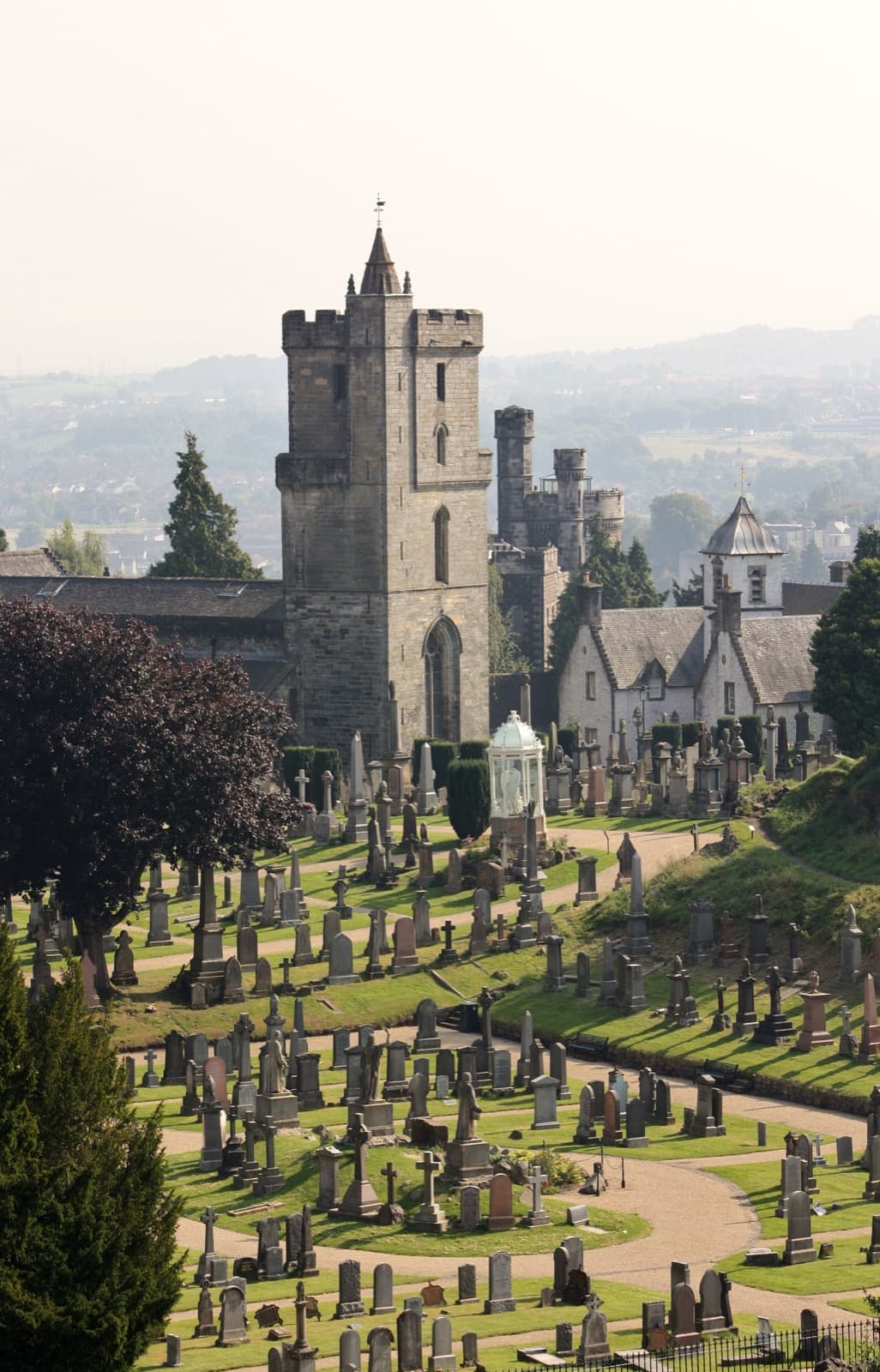
Old Town: Castle to the Holy Rude
90 min · 1.3 km · moderate
If you want to eat like a local in Stirling, start with the plate that defines the region: haggis with neeps and tatties, the peppery oatmeal-and-offal pudding served alongside mashed turnip and mashed potato. Around it sit the other pillars of central Scotland's table: creamy Cullen skink soup, a hot Scotch pie in the hand, haggis-stuffed Balmoral chicken in the pubs, and cranachan for dessert. Order these in the Old Town's traditional pubs and bistros, pair them with a local single malt from the hills just north of town, and you have eaten the honest food of a royal burgh that sits where the Lowlands meet the Highlands.
Stirling is not a coastal town with its own signature catch, and it does not pretend to be. What it offers instead is a compact, walkable version of the Scottish national menu, cooked in kitchens a few minutes apart on the slope below the castle. Here is what to order, where the dishes come from, and how to ask for them without hesitating.
Haggis, neeps and tatties: the plate to try first
Haggis is Scotland's national dish, a savoury pudding of sheep offal, oatmeal, onion, suet and spices, traditionally cooked in a sheep's stomach. It arrives most often as "haggis, neeps and tatties." Neeps is the Scots word for mashed turnip (specifically what North Americans call rutabaga or swede), and tatties means mashed potatoes. The three together are the standard, and you will see them on almost every traditional menu in Stirling's Old Town.
The dish carries a literary weight worth knowing. Robert Burns wrote his poem "Address to a Haggis" in 1786, and at a Burns Supper the haggis is still piped in and toasted before it is cut. The first Burns Supper is dated to 1801, when friends of the poet gathered to mark the anniversary of his death. You do not need to wait for Burns Night on 25 January to eat it, though. Haggis is served year round, and most kitchens offer a vegetarian version made with pulses, oats and vegetables, so the dish is not off-limits if you do not eat meat.
One point that surprises visitors from the United States: traditional haggis has been effectively banned from import there since 1971, because a federal rule prohibits livestock lungs as human food. That is exactly why eating it in Scotland is the point. This is a dish many travellers can only try here.
How to order like a local: ask for "haggis, neeps and tatties," and if you want the classic finish, request a dram of whisky on the side rather than poured over the plate. A small jug of whisky or peppercorn sauce is common and welcome.
Cullen skink and Scotch broth: the soups
Hear a stop from this walk
Stirling Castle: The Fortress on the Crag
Cullen skink is the soup to seek out. It is a thick, creamy chowder of smoked haddock, potatoes and onion, and it comes from the fishing village of Cullen on the Moray Firth in northeast Scotland. The word "skink" is old Scots for a soup or stew. The dish began as a way for fishing families to make the most of a plentiful catch of smoked haddock, and it has stayed on Scottish menus ever since. Served with buttered bread, a bowl is a light meal in itself.
If Cullen skink is unavailable, the fallback is Scotch broth, a hearty soup of barley, root vegetables and mutton or lamb. Cock-a-leekie, a chicken and leek soup, is the third of the traditional trio. Any of these makes a sensible starter before a heavier main.
Scotch pie and Balmoral chicken: the everyday and the pub classic
For food on the move, the Scotch pie is the local institution. It is a small, straight-sided double-crust pastry filled with spiced minced mutton or beef, built to be portable and to keep. Scottish bakers are thought to have made them for around five hundred years. There is even a World Championship Scotch Pie Awards, run by the Scottish Bakers trade association since 1999, so the humble pie is taken seriously. Buy one warm from a bakery and eat it standing, the way it was designed to be eaten.
In the sit-down pubs, the dish to look for is Balmoral chicken, sometimes listed as chicken Balmoral. It is a chicken breast stuffed with haggis, wrapped in bacon and served with a creamy whisky sauce. It is named after Balmoral Castle in Aberdeenshire, though its exact origins are not documented. It is the gentler gateway to haggis: the flavour is there, folded into a familiar chicken-and-bacon plate, which makes it a good choice if the full pudding feels like a leap.
You will also find game on Stirling menus, venison in particular, sourced from the surrounding hills and glens. A venison dish is a reliable, local, non-haggis main.
Cranachan: the dessert to finish on
End with cranachan. It layers lightly whipped cream, toasted oatmeal, fresh raspberries, a splash of Scotch whisky and a drizzle of honey, ideally heather honey. The word is Gaelic and relates to churning, and the dish grew out of an older harvest-time dish of oats, cream and honey. It is often called the finest of Scottish desserts, and because Scottish raspberries peak in summer, a bowl eaten in July or August is at its best. If cranachan is not offered, look for shortbread or a slice of tablet, the very sweet Scottish fudge, alongside coffee.
What to drink, and where the whisky comes from
The natural pairing is whisky. Stirling sits close to the whisky country of the Trossachs, and the nearest distillery is Deanston, about eight miles north near Doune, housed in a former cotton mill on the River Teith. Its single malt is fruity with a malt-and-spice edge, and if you have time beyond the walking tours, the distillery runs tastings and has a cafe. In town, ask a bartender for a Lowland or Highland dram to suit your dish. If you are driving afterward, remember that Scotland's drink-drive limit is stricter than England's, so a soft option or a single dram with a meal is the safe call.
How this connects to your walk
Almost everything above is cooked within a short walk of the castle, in the Old Town's traditional pubs and bistros along the streets you will already be climbing. A sensible plan: walk the historic core first, then eat. Our self-guided Stirling walking tours take you up Broad Street and past the Church of the Holy Rude toward the castle esplanade at your own pace, with no group and no fixed lunch slot, so you can stop for a Scotch pie or a bowl of Cullen skink whenever hunger, not a schedule, decides. If you are pairing food with the wider Wallace and Bannockburn route, the same freedom applies: the battlefield loop is dispersed, so plan your meal in the town centre before or after rather than midway. See the full set of routes and practical details on the Stirling city page.
A note on cost and timing: entry fees for indoor attractions like Stirling Castle change year to year, and many pubs stop serving hot food in the mid-afternoon gap between lunch and dinner. Check current opening hours before you set out, and treat any price you read online as a guide rather than a fixed number.
Sources
Frequently asked questions
- What food is Stirling known for?
- Stirling serves the classic central-Scotland menu rather than one signature local dish. Expect haggis with neeps and tatties, Cullen skink soup, Scotch pies, haggis-stuffed Balmoral chicken, venison from the surrounding hills, and cranachan for dessert. Most of it is cooked in traditional pubs and bistros in the Old Town below the castle.
- What are neeps and tatties?
- Neeps is the Scots word for mashed turnip, specifically the vegetable North Americans call rutabaga or swede. Tatties means mashed potatoes. Together they are the traditional side served with haggis, making the full plate 'haggis, neeps and tatties.'
- Can vegetarians eat haggis in Stirling?
- Yes. Most kitchens in Scotland offer a vegetarian haggis made with pulses, oats, onions and vegetables instead of offal. It is widely available on Stirling menus year round, so vegetarians can order the same haggis, neeps and tatties plate.
- What is Cullen skink?
- Cullen skink is a thick, creamy Scottish soup of smoked haddock, potatoes and onion. It comes from the fishing village of Cullen on the Moray Firth in northeast Scotland, where 'skink' is old Scots for a soup or stew. It is usually served with buttered bread and works well as a starter or a light meal.
- Where can I try whisky near Stirling?
- The nearest distillery is Deanston, about eight miles north near Doune, housed in a former cotton mill on the River Teith. It produces a fruity Highland single malt and runs visitor tastings and a cafe. In town, ask a bartender for a Lowland or Highland dram to pair with your meal.
- Why is haggis worth trying in Scotland specifically?
- Traditional haggis contains sheep lung, which the United States has effectively banned from import since a 1971 federal rule prohibiting livestock lungs as human food. That means many travellers, especially Americans, can only eat the authentic version in Scotland, which makes Stirling a good place to try it.
Ready to experience it?
Old Town: Castle to the Holy Rude
90 min · 1.3 km · moderate
More from Stirling
Explore more at your own pace.

One Day in Stirling: A Walkable Castle-to-Battlefield Itinerary
Stirling Travel Guide: Days, Transport, Fees, and Safety

Stirling: The Rock That Held Scotland
Stirling Castle and the Walk Down a Royal Burgh
Bannockburn Battlefield and Monuments: The Field Where Bruce Broke an English Army