There is a particular angle on the road into Suchitoto where the town comes into view from the south. You see the cobbled streets running uphill, the white walls and terracotta roofs of the colonial center, and behind it all the long flat surface of Lake Suchitlán. The lake holds the town in place, visually and economically. It is also the reason the surrounding countryside looks the way it does, and the reason the town's hinterland is no longer where it used to be.
Almost everything you need to understand about Suchitoto is in that single view. The town is small and walkable. The lake is artificial. The colonial architecture survived because the town was poor and then was loved. The visible center carries the indigo era. The lake carries the modern era. And the filmmaker who connected the two is buried inside the town he refused to lose.
The lake
Lake Suchitlán did not exist before 1976. The flat surface you see from the town's miradors is the reservoir created by the Cerrón Grande Dam, completed that year on the Lempa River as the centerpiece of El Salvador's hydroelectric infrastructure. The dam raised the water level of the Lempa by roughly sixty metres and flooded an area of about a hundred and thirty square kilometres of valley land upstream. At the time, this was the largest body of water in El Salvador. It still is.
The flooding had consequences that the dam's planners either underestimated or accepted. About twelve thousand people were displaced from the lowland villages that the rising water erased. The agricultural economy of the surrounding region, mostly subsistence farming on the Lempa floodplain, was wiped out. The villages on what would become the lake's far shore lost their road connections to the towns on the near shore. Suchitoto, which sat on a hill above the new shoreline, found itself converted from an inland town with a hinterland to a lakeshore town without one.
This is a critical piece of why Suchitoto's colonial center survived the late twentieth century. The town had no economic base after the lake filled in. There was no money for new construction. There was nothing to demolish the colonial buildings for. The accidental preservation that had started with the collapse of the indigo trade in the 1880s continued, in modified form, into the 1970s and 1980s.
The lake itself is now a destination. Boats run from the Puerto San Juan, a small dock about three kilometres downhill from the town's plaza, to villages on the far shore that have only boat access. Migratory birds, including herons, egrets, and occasionally pelicans, use the lake's reedy edges. The view from the town's miradors is the dominant photograph that visitors take home. The lake is beautiful, in the way that artificial things sometimes are when they have been around long enough.
The church
Hear a stop from this walk
Centro de Arte para la Paz (Art Center for Peace) de Suchitoto, El Salvador
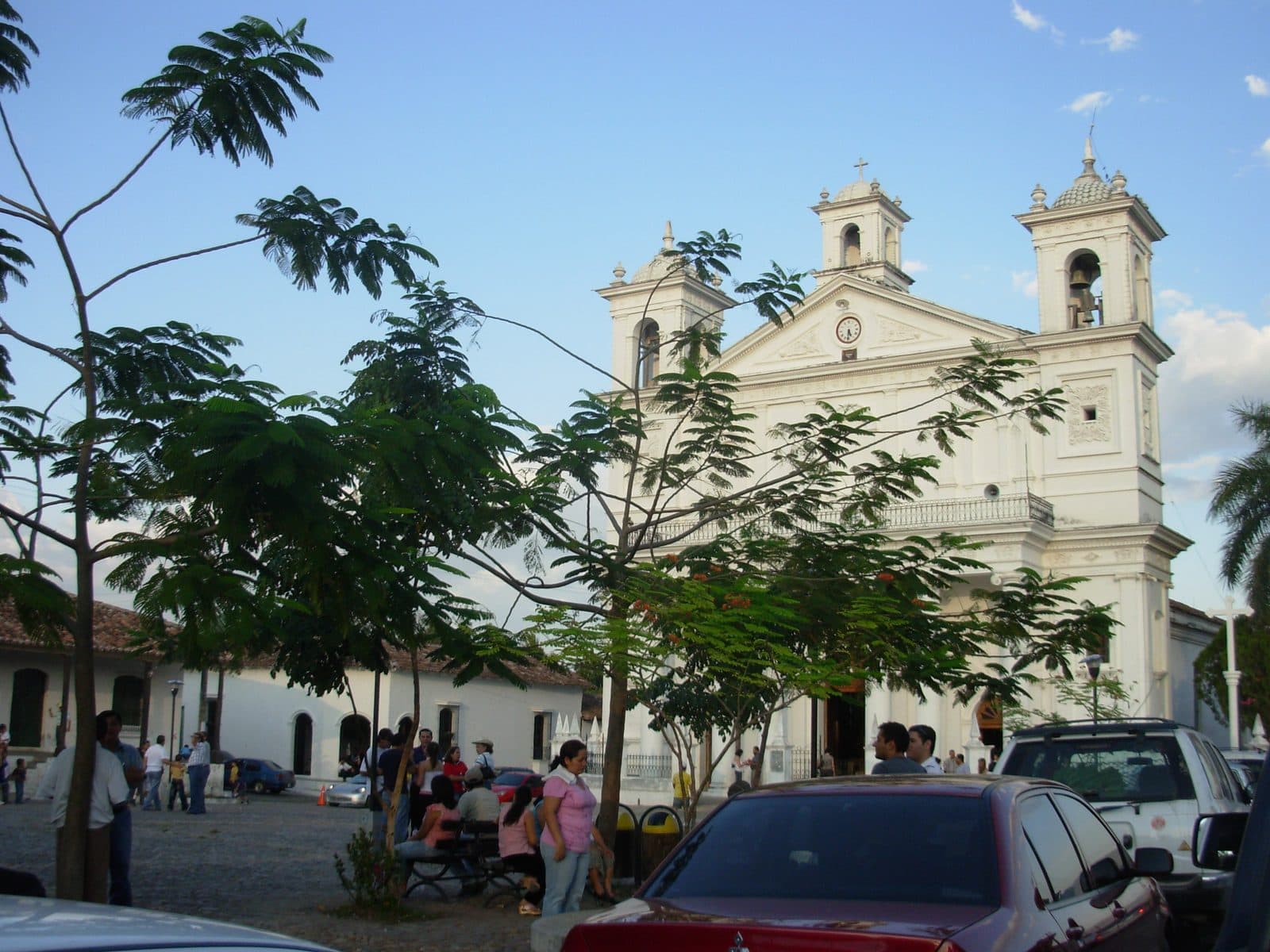
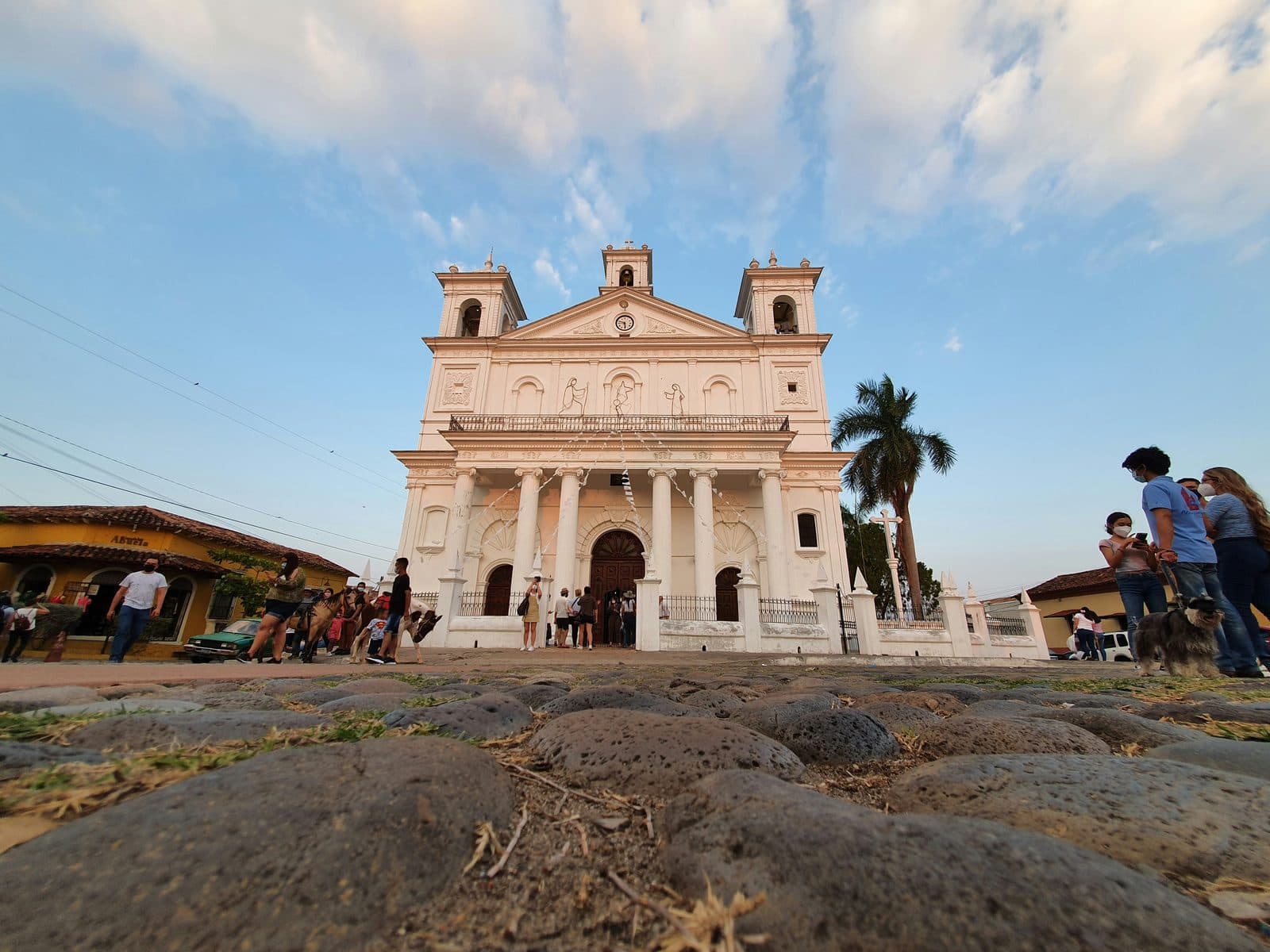
The Iglesia Santa Lucía sits on the east side of Suchitoto's central plaza. The building was finished in 1853, well after Spanish colonial rule had ended in El Salvador, but the architecture is what specialists call post-colonial baroque, a continuation of the Spanish colonial church-building tradition into the early republican period. The façade is white, symmetrical, with six Ionic columns supporting a portico and three arched openings. The bell tower rises from one side. The interior is austere by the standard of Mexican or Guatemalan colonial churches: white walls, a wooden ceiling, an altar that does not drip gold.
The austerity is honest. Suchitoto in the 1850s was a town whose economy was already in decline. The indigo trade was peaking, then collapsing. There was money to build a parish church, but not money to gild it. What remained was structural integrity, careful proportions, and the kind of restraint that is sometimes mistaken for poverty.
The church became, during the civil war years of the 1980s, something more than a parish. With the town partially evacuated and the surrounding villages emptied by displacement, Santa Lucía was one of the few institutions still functioning continuously. The parish priests housed displaced families, organized food distribution, and, in a few documented cases, brokered local truces between the army and the guerrilla forces operating in the surrounding hills. The bell tower's bells, which had called residents to mass for a hundred and thirty years, were used as warning signals when military activity approached the town. The building's role during the war is part of why post-war Suchitoto continued to think of itself as a town, rather than a former town.
The filmmaker
Alejandro Cotto, born in 1928, was the son of a wealthy Suchitoto family who left in his twenties to work in cinema. He spent two decades making films in Mexico City and in Europe, including, in the 1960s, work with the directors of the Mexican Golden Age cinema. His films, mostly forgotten now, were not the work for which he is remembered. The work he is remembered for is twenty years of practical preservation back in his hometown.
Cotto came back to Suchitoto in the 1980s, during the war years, against all reasonable advice. He spent the next three decades doing the slow work that nobody else was doing. He bought derelict colonial buildings cheaply and restored them. He embarrassed national ministries into funding paving projects and street lights. He founded the Festival Permanente de Arte y Cultura, an annual February cultural festival that has run since the 1990s and now brings several thousand visitors a year. He turned his own colonial-era house, on the road that leads down toward the lake, into a museum of Salvadoran cinema and painting. He cultivated a working community of artists, painters, sculptors, and craftspeople who moved to Suchitoto in part because Cotto persuaded them to.
He died in 2014. The house is now run as Casa de Alejandro Cotto. The Centro de Arte para la Paz, opened in his memory by his former collaborators, sits a few blocks from the plaza and continues the cultural and pedagogical work he started. It is the institution his presence implied.
The four elements together
A walk through Suchitoto reads these four elements at different stops. The plaza and Santa Lucía carry the indigo-era town. The cobbled streets that radiate from the plaza, laid in the eighteenth and early nineteenth century, carry the same era and survived because of what came after. The miradors above the lake carry the dam, the displacement, and the modern hinterland. The Casa de Alejandro Cotto and the Centro de Arte para la Paz carry the post-war preservation. The ruined façade of the Iglesia El Pilar, left exactly as the 1986 earthquake destroyed it, is the visible scar that the town deliberately did not heal.
The walk is short, about two and a half kilometres. Suchitoto is the kind of place where the story is not in any single building but in the sequence. The lake holds the town. The church anchors it. The filmmaker rebuilt it. The town that exists today is the result.
Ready to experience it?
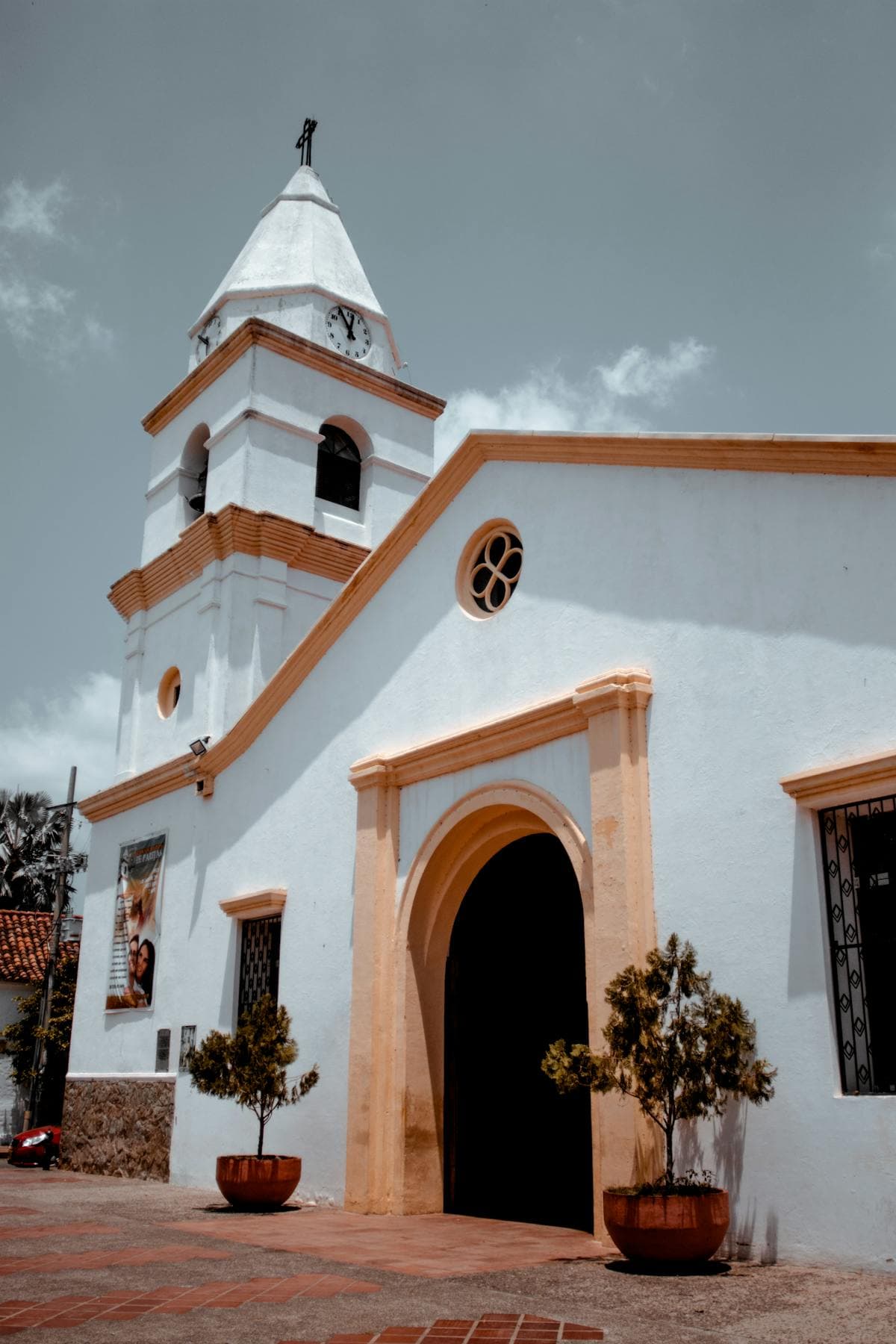
Suchitoto: The Town One Man Saved
90 min · 2.7 km · easy
More from Suchitoto
Explore more at your own pace.
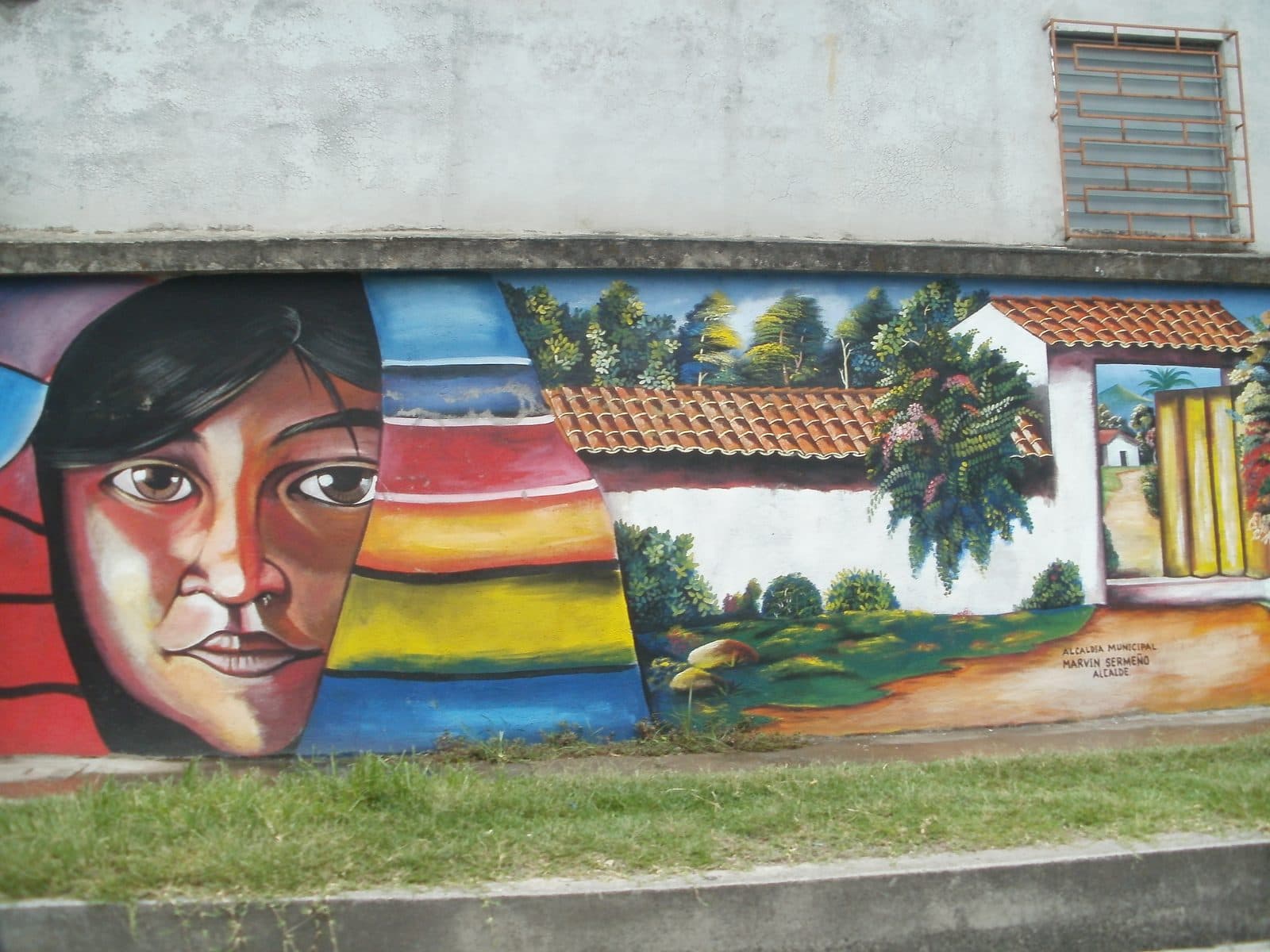
How to See Suchitoto: A Colonial Town That Refused to Die Twice
How to See Suchitoto: The Town One Man Refused to Let Die
One Day in Suchitoto: A Cobblestone Itinerary (2026)
Suchitoto Travel Guide: How Many Days, Getting Around, When to Go (2026)

What to Eat in Suchitoto: A Food Guide (2026)