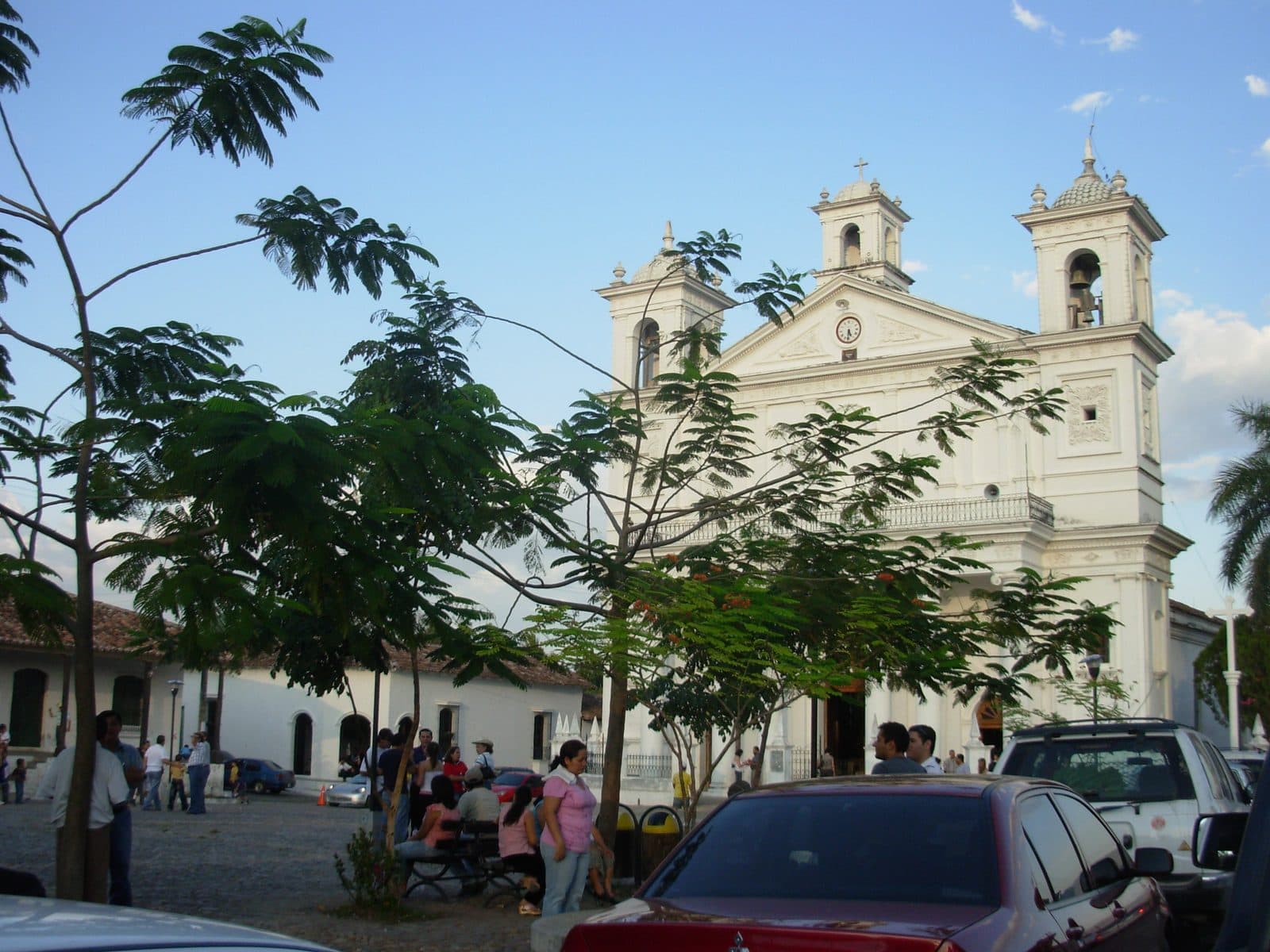
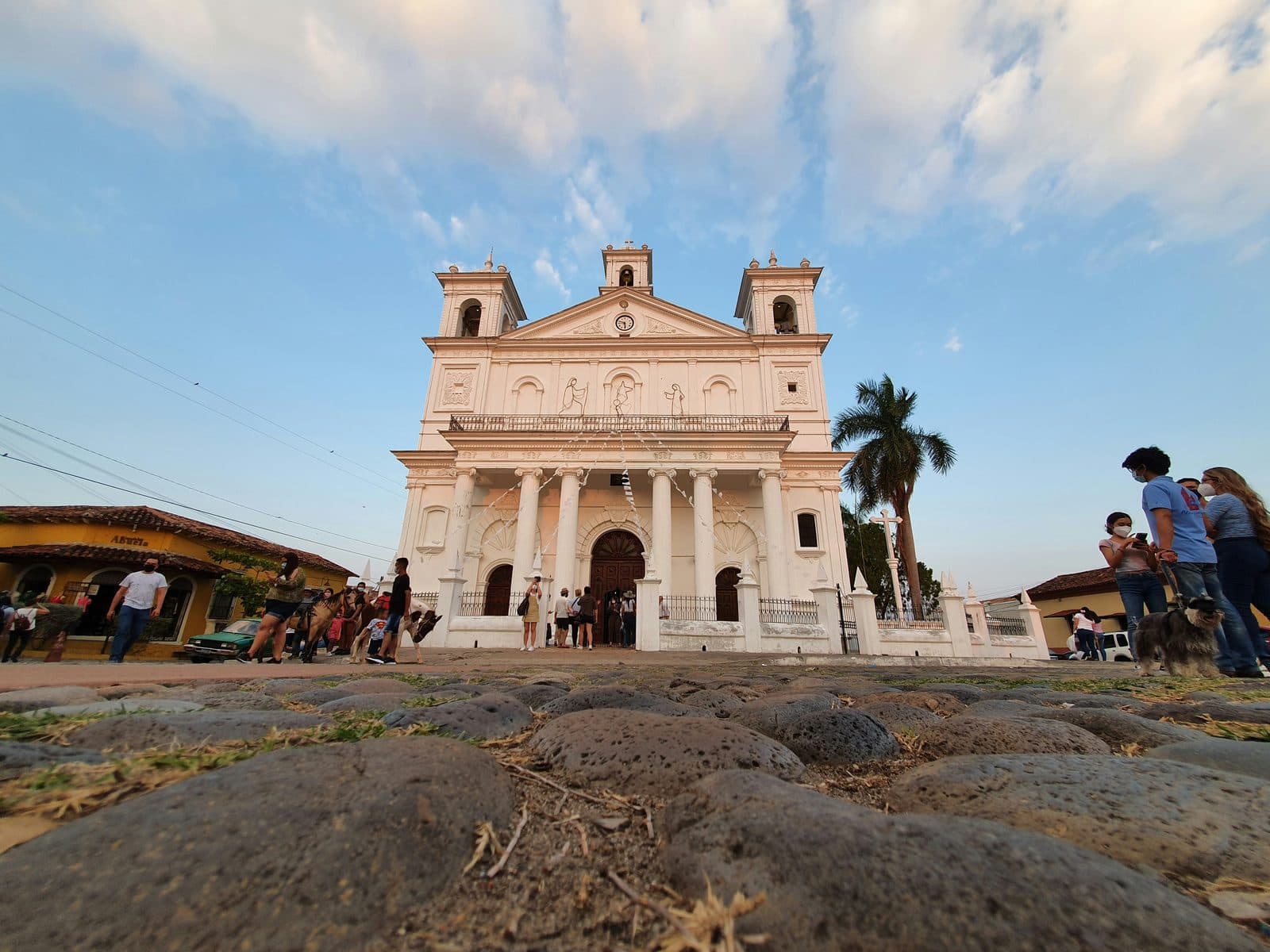
Suchitoto is a colonial town of about twenty thousand people, sitting above Lake Suchitlán in central El Salvador, ninety minutes by car north of the capital. The streets are cobbled. The single-storey houses are whitewashed with terracotta tile roofs. The central plaza is anchored by a baroque-style parish church finished in 1853. By the standards of preserved Spanish colonial towns in Latin America, Suchitoto is small, modest, and unspectacular. It is also, by a margin, the most thoroughly preserved town of its size in El Salvador.
The preservation is unusual because Suchitoto, by any reasonable accounting, should not be here. The town has nearly disappeared twice. The first time was an economic event. The second was a war. The reason it survived both is that, on each occasion, a small group of people who could have left chose to stay, and one of them, on the second occasion, made the survival of the town his life's work.
The first near-extinction
For the first century and a half of its colonial existence, Suchitoto was a stop on the indigo trade. The deep blue dye that European textile mills depended on for most of the eighteenth and nineteenth centuries was extracted from the Indigofera suffruticosa shrub, grown across the central valleys of what is now El Salvador and processed in obrajes scattered through the countryside. Suchitoto sat on the road between the indigo fields and the Pacific ports. The town's prosperity was indigo's prosperity.
In the late nineteenth century, two things ended that. The first was the German chemist Adolf von Baeyer synthesizing indigo dye in a laboratory in the 1880s, and the subsequent industrial production of synthetic indigo that collapsed the world price of the natural dye within about fifteen years. The second was the rise of coffee in the western highlands, which moved the country's economic gravity decisively away from the indigo regions and toward Santa Ana and Ahuachapán. Suchitoto, with neither indigo nor coffee, was suddenly a town with no obvious economic reason to exist.
What happened next is what usually happens. The wealthy families moved to the new capital of coffee, San Salvador or Santa Ana. The trade routes shifted west. The population stopped growing. The cobbled streets stopped getting paved. By the early twentieth century, Suchitoto had become what historians of the region politely call a backwater. Its buildings were intact mostly because nobody had the money to tear them down and replace them with anything newer.
This is the accidental first preservation. The town survived because it was poor enough to leave alone.
The second near-extinction
Hear a stop from this walk
Centro de Arte para la Paz (Art Center for Peace) de Suchitoto, El Salvador
In 1980, El Salvador's civil war reached Suchitoto. The town's location, on a hill above Lake Suchitlán with views across the surrounding countryside, made it strategically valuable. The Salvadoran army established a garrison there. For the next twelve years, until the 1992 Chapultepec Peace Accords ended the war, Suchitoto was a militarized town inside an active conflict zone.
What that meant in practice was that most of the civilian population left. People who could move to the capital did. People who could leave the country did. The villages around Suchitoto, on the lake's far shore and in the surrounding hills, were emptied by forced displacement, by guerrilla recruitment, or by the violence of the war itself. Buildings inside the town took bullet damage, mortar damage, and the kind of slow damage that comes from being lived in by people who do not own the property and are not planning to stay. The Iglesia El Pilar, a smaller parish church a few blocks from the plaza, was destroyed by an earthquake in 1986 in the middle of all this, and was not rebuilt afterward. Its ruined façade stands today exactly as the earthquake left it.
By the end of the war in 1992, Suchitoto had been a garrison town for twelve years. The civilian population had collapsed. The economic base, mostly subsistence farming, had been hollowed out by displacement. The town's buildings were structurally intact but socially empty.
The man who refused
Alejandro Cotto was a Salvadoran filmmaker, born in 1928, who had spent most of his career in San Salvador, Mexico City, and Europe. He had grown up in Suchitoto. After the war he came back, and he decided that the town was going to be saved, regardless of whether anyone else thought it was worth saving.
What Cotto did for the next twenty years was, in the practical sense, slow and unglamorous. He bought buildings cheaply. He restored them, sometimes with his own money and sometimes with grants he extracted from foundations and government ministries. He embarrassed national politicians into paying attention. He opened a cultural festival that ran every February, the Festival Permanente de Arte y Cultura, and used it to bring artists, writers, musicians, and tourists into the town. He persuaded other artists to move to Suchitoto and to set up galleries, workshops, and studios. He turned his own house, a colonial-era building near the lake, into a museum. He died in 2014, just short of his eighty-sixth birthday.
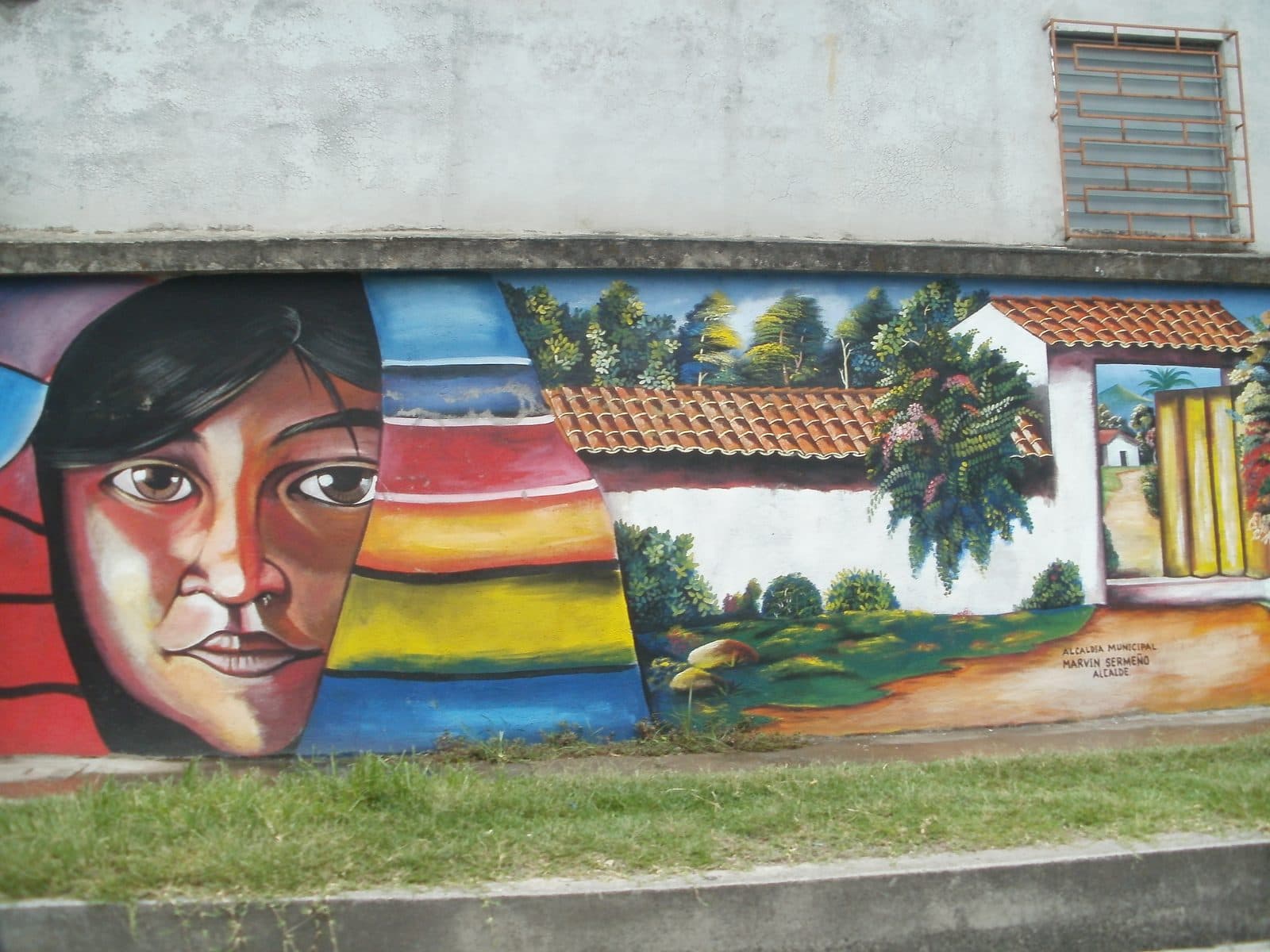
The story of post-war Suchitoto is, in large part, the story of one stubborn man who treated the town as a project. By the time Cotto died, Suchitoto was hosting somewhere around fifty thousand visitors a year, a working artist community had formed, the colonial center had been restored, and the town had become the closest thing El Salvador has to a cultural-tourism destination. The Centro de Arte para la Paz, the cultural institution that anchors the post-Cotto era, was built largely by his friends and collaborators after his death.
What you walk through
A walk through Suchitoto reads the town in those layers. The colonial plaza and the Santa Lucía church carry the indigo-era town. The cobbled streets that radiate out from the plaza carry the same era, preserved by the poverty that followed indigo's collapse. The Plaza de las Madres, a small memorial plaza near the church, carries the civil war. The ruined façade of the Iglesia El Pilar, left exactly as the earthquake destroyed it, carries the war and the deliberate decision not to rebuild. The Casa de Alejandro Cotto, now a museum, carries the man. The Centro de Arte para la Paz carries the institution his successors built.
The walk is about two and a half kilometres. The town is small, the lake is close, the cobblestones are old, and the story they tell is that survival is not automatic. Suchitoto exists because, twice in a hundred and fifty years, someone decided that letting it disappear was unacceptable. The town you walk through is the proof.
Frequently asked questions
- How many self-guided walking tours are there in Suchitoto?
- Roamer currently has 1 self-guided audio walking tour in Suchitoto. Every tour is free to start: the introduction and first stop play in full, and every later stop plays a short preview before you decide to buy.
- How much does a self-guided walking tour in Suchitoto cost?
- Each tour is free to preview and $4.99 for lifetime access. If you want more than one, a 7-day pass is $12.99 and a 30-day pass covering every tour is $19.99, which works out to well under a dollar a day.
- Can I do the Suchitoto tours offline?
- Yes. Tours can be downloaded in advance in the Roamer app and played with no signal, which is useful when you are travelling without mobile data.
- How long are the Suchitoto walking tours?
- They run about 90 minutes, covering 2.7 km on foot, with up to 10 stops on the longest route. You set the pace and can pause any time.
Ready to experience it?
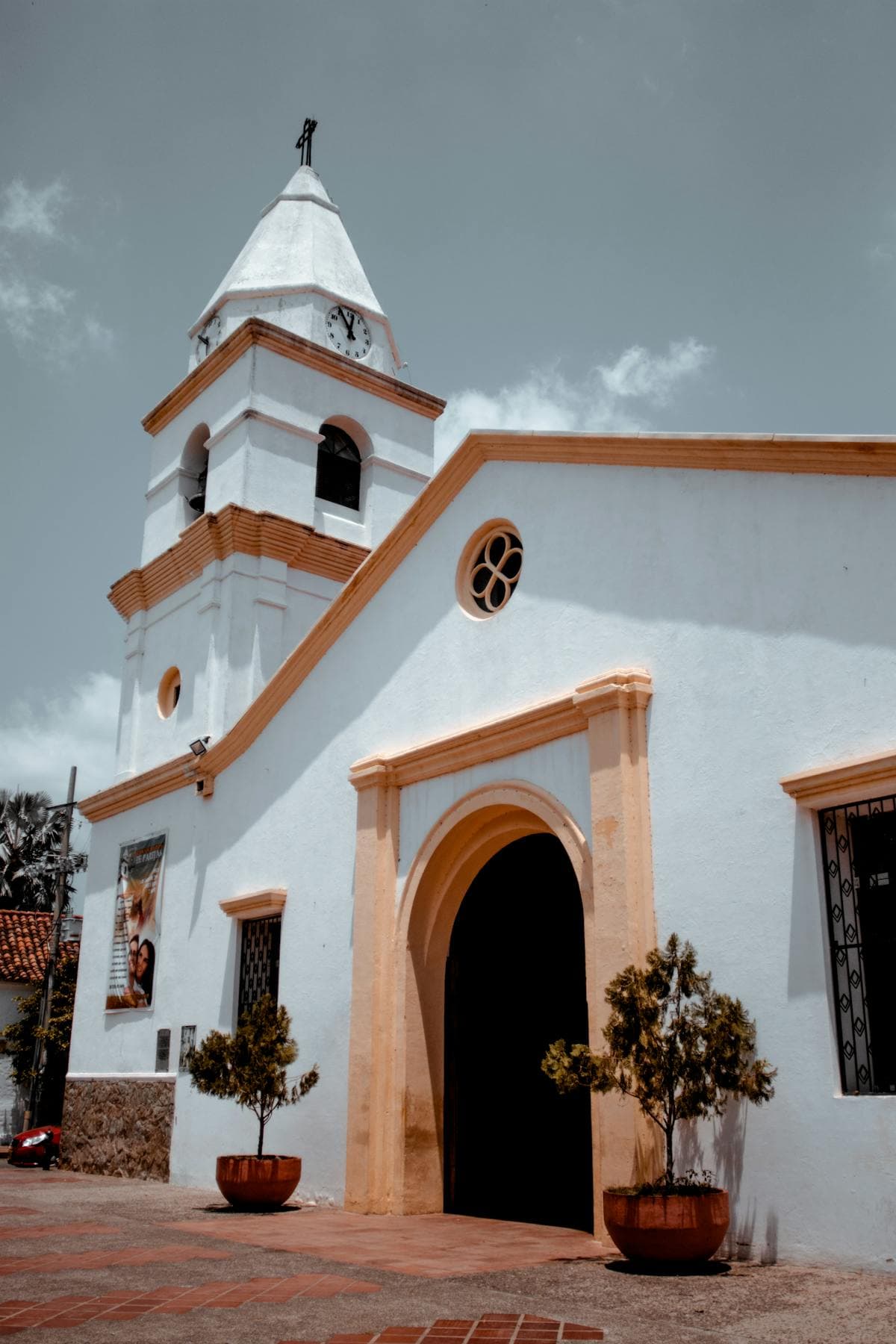
Suchitoto: The Town One Man Saved
90 min · 2.7 km · easy
More from Suchitoto
Explore more at your own pace.
How to See Suchitoto: The Town One Man Refused to Let Die
One Day in Suchitoto: A Cobblestone Itinerary (2026)
Suchitoto Travel Guide: How Many Days, Getting Around, When to Go (2026)

What to Eat in Suchitoto: A Food Guide (2026)
The Lake, the Church, and the Filmmaker: How Suchitoto Was Preserved