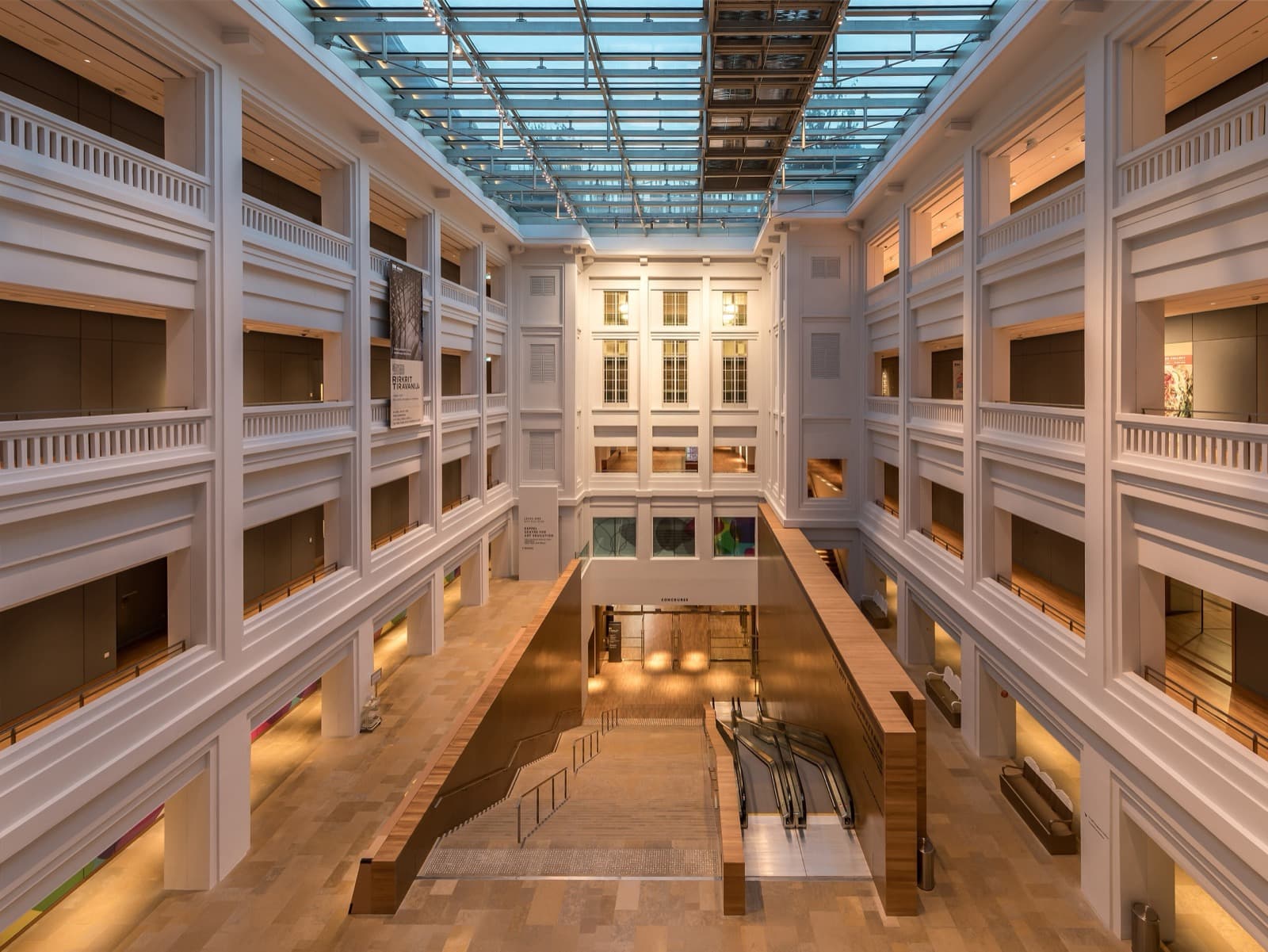
Two linked buildings facing an open field near the mouth of the Singapore River carry a fuller turn of history than almost anything else in the city. The former City Hall and Supreme Court, now the National Gallery Singapore, hold both an empire's surrender and a republic's birth on the same stone steps. That single reversal, colonial power giving way to a nation on the ground it once ruled, is the argument that runs through the whole Civic District walk. The Singapore Civic District tour uses these two buildings as its climax, and understanding what happened on their steps is the fastest way to understand why the entire square kilometre around them matters.
The twin temples of colonial power
City Hall, first called the Municipal Building, was completed in 1929. Beside it, the former Supreme Court opened in 1939, the last great classical building the British Empire raised in Singapore, crowned with a dome and lined with Corinthian columns. Together they were built as twin temples of colonial justice and government, deliberately grand, deliberately permanent, designed to project authority over a port the East India Company had opened little more than a century before.
Architecture like this is easy to admire and easy to misread. The columns and the dome say the empire meant to stay. They were the physical statement of a system that governed the many peoples of the port from behind stone facades. Holding the admiration for the craftsmanship alongside honesty about what the craftsmanship was for is the discipline this whole district asks of you.
Two of the heaviest moments in the nation's story, back to back
Hear a stop from this walk
Raffles Landing Site: Where the Colonial Town Began
Then the buildings did something no architect plans for. On the twelfth of September, 1945, Admiral Lord Louis Mountbatten accepted the formal Japanese surrender at City Hall, ending three and a half years of Occupation. The crowd stood on the Padang, the open field directly in front, the same field where, on the seventeenth of February, 1942, the Japanese had assembled the European population before marching them off to internment. Between those two dates lay an Occupation that included the Sook Ching massacre, in which thousands of Chinese civilians were killed. The surrender on these steps closed that chapter.
The steps were not finished. In the years that followed, proclamations of self-government were made here and the head of state was sworn in as Singapore moved from colony toward nation. The road ran through merger with Malaysia in 1963 and then separation, and on the ninth of August, 1965, Singapore became an independent republic. So the empire's surrender and the nation's birth were staged on the same stone, within twenty years of each other. Both buildings were made national monuments in 1992, and in 2015 they opened together as the National Gallery Singapore, holding the national collection of Singapore and Southeast Asian art. The place that once handed down colonial law now belongs to the country's own artists.
Why the anchor needs the rest of the route
Standing at the National Gallery gives you the ending of the story. The walk exists to give you the beginning and the middle, and the reversal only lands if you have walked the setup first.
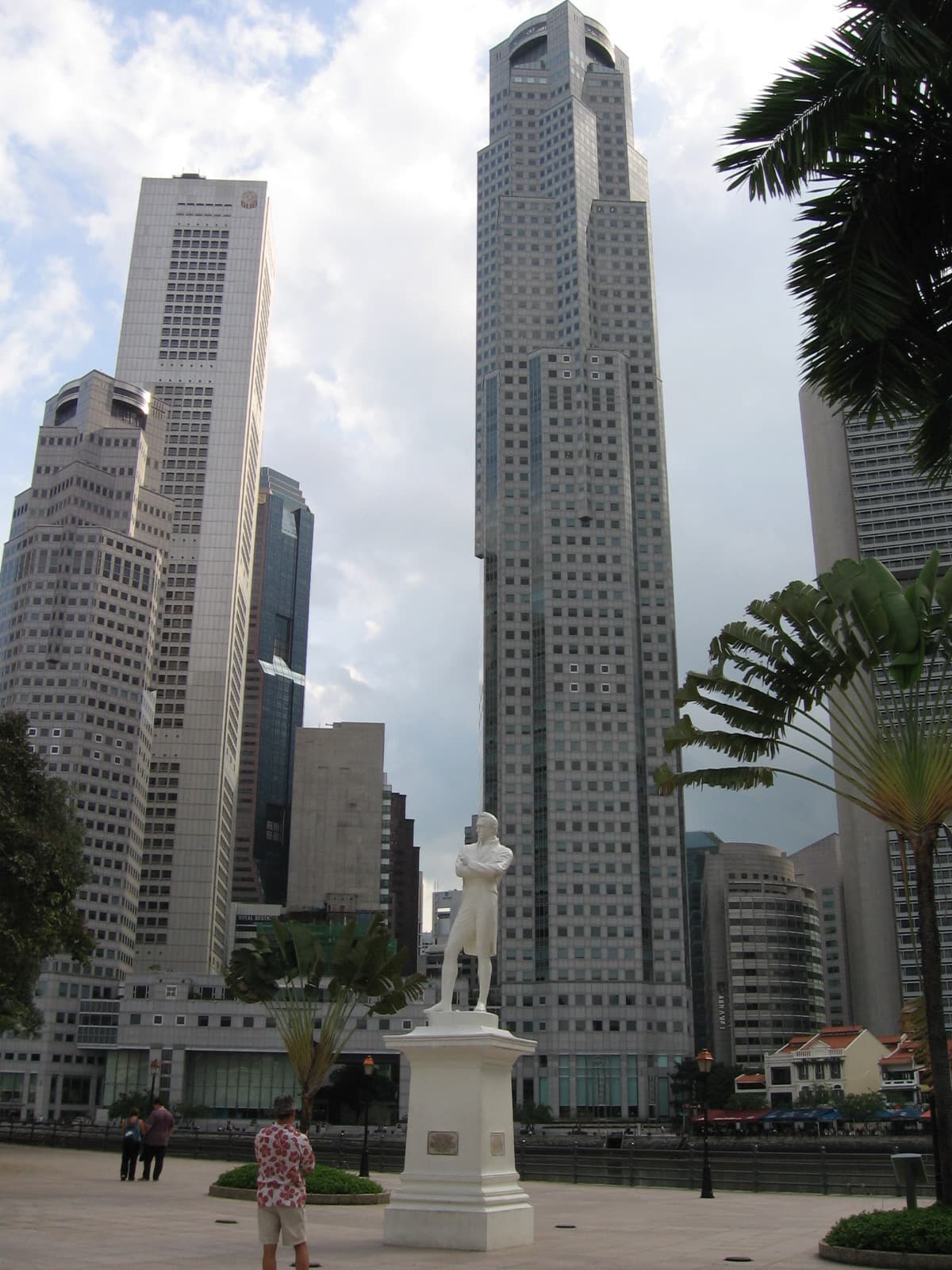
The route starts at the Raffles Landing Site on the north bank, where a white polymarble statue, unveiled in 1972, marks where tradition, not proof, says Stamford Raffles first came ashore in 1819 to establish a trading post. The honest version matters: the island already belonged to the Johor Sultanate, was home to roughly one thousand people, Orang Laut communities along with Malays and Chinese, and a fourteenth-century port called Temasek had risen and faded on the same ground centuries earlier. The founding was a new chapter written over an older one. The treaty that formalized it was signed on the sixth of February, 1819, with Temenggong Abdul Rahman and Sultan Hussein Shah of Johor, in exchange for annual payments of five thousand Spanish dollars to the Sultan and three thousand to the Temenggong.
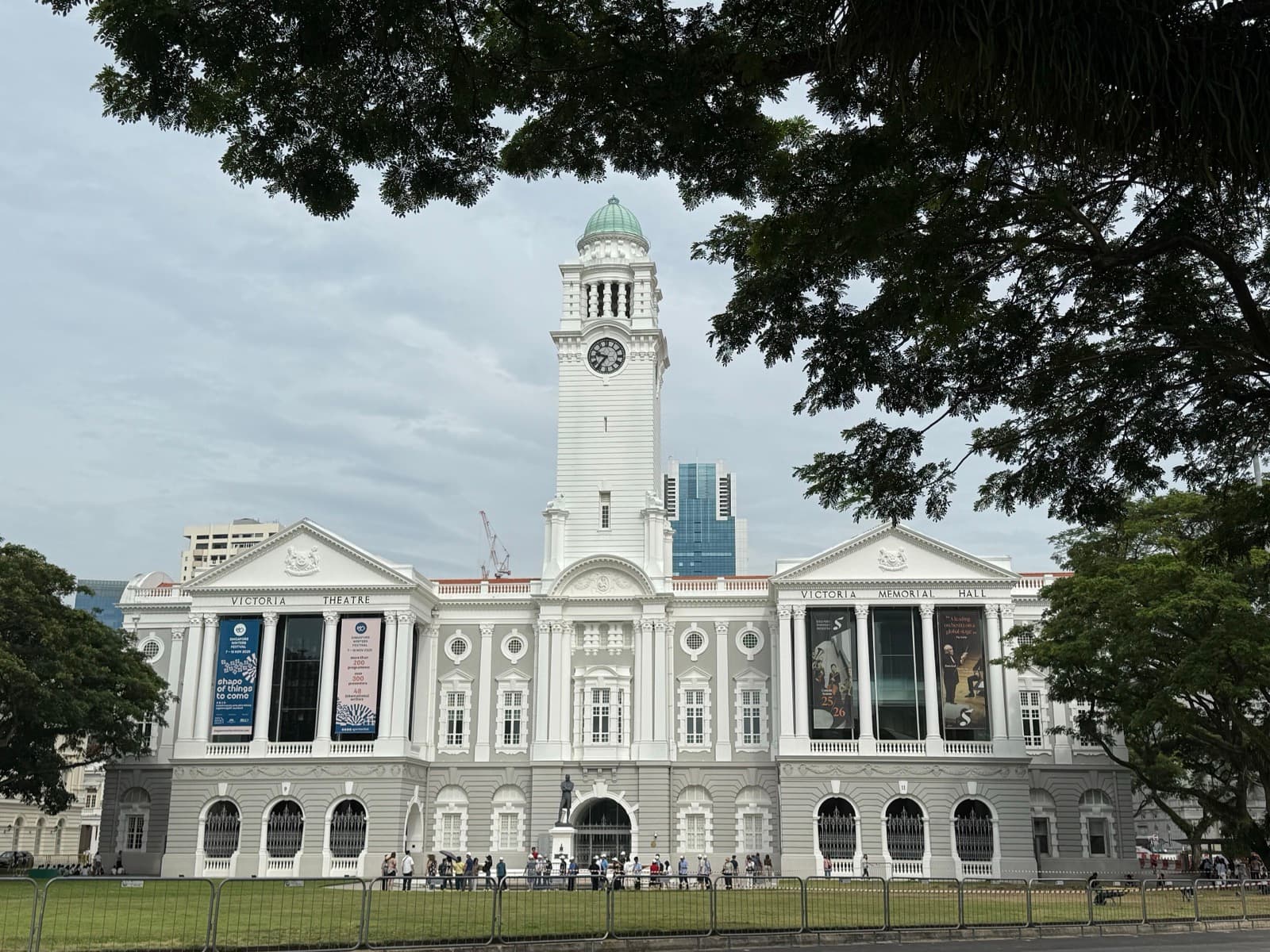
From there the walk reaches the Victoria Theatre and Concert Hall, where the People's Action Party was inaugurated on the twenty-first of November, 1954, before about fifteen hundred people, with Lee Kuan Yew as its first Secretary-General. A colonial concert hall became the room where a political future launched. Next comes the Asian Civilisations Museum in the old Empress Place Building, begun in 1864 and built with Indian convict labour, the same transported labour that raised much of the civic town. That building, once the colonial secretariat, now tells the story of the Asian peoples whose lives met in this port.
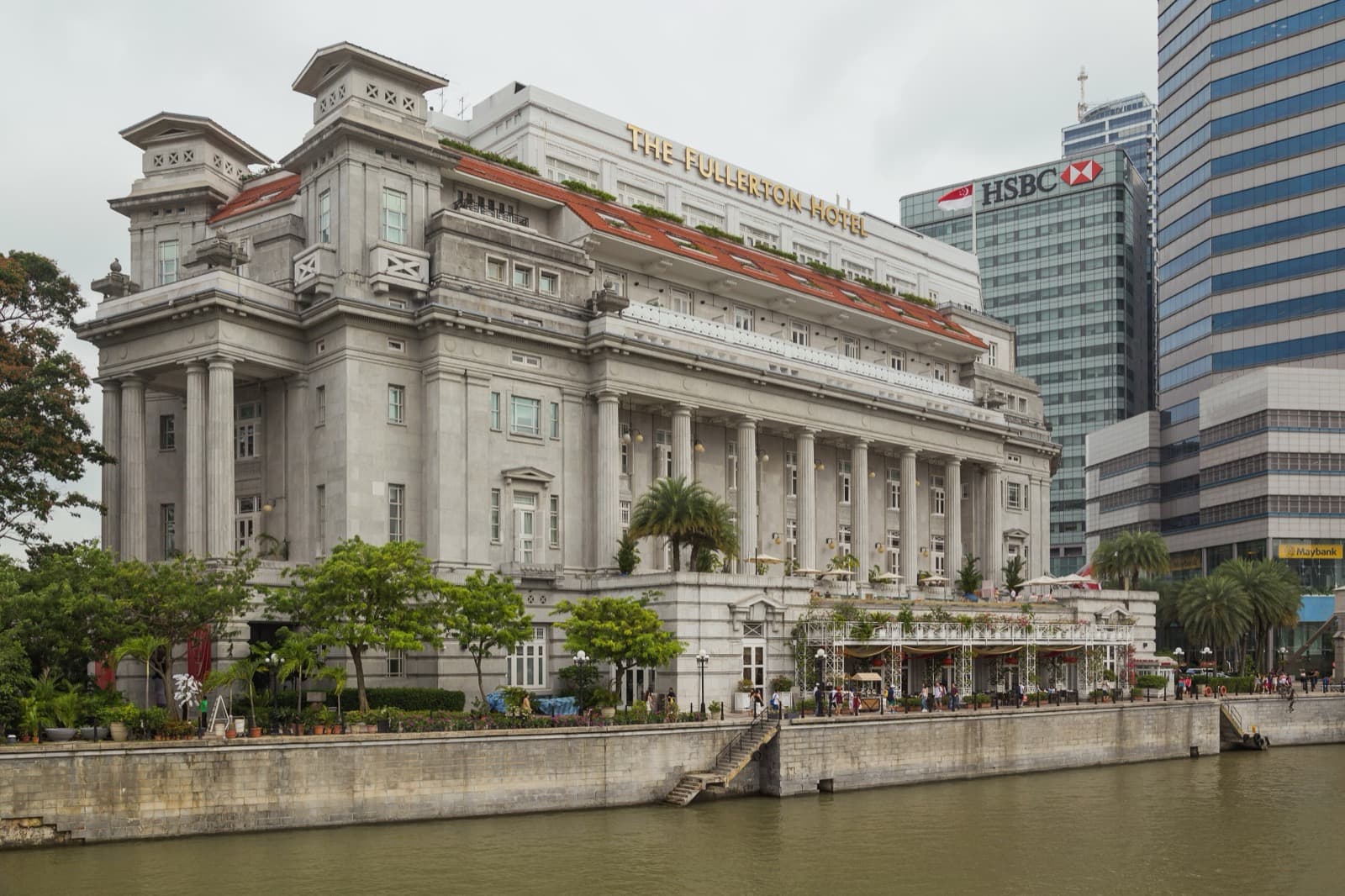
The Padang follows, the open green whose name is simply the Malay word for a field. It watched the conquest of 1942 and, on the ninth of August, 1966, hosted the first National Day Parade. It became Singapore's seventy-fifth national monument on the ninth of August, 2022. After the National Gallery, the walk reaches Saint Andrew's Cathedral, a white Gothic Revival church built by Indian convict labour between 1857 and 1862, its walls finished in Madras chunam, a lime plaster beaten with egg white and coarse sugar until it glows. It served as an emergency hospital in the days before Singapore fell in 1942. The route ends at the Fullerton Building, which opened in 1928 as the largest building in Singapore, and Cavenagh Bridge, opened in 1869 and cast in Glasgow, the oldest bridge in Singapore surviving in its original form.
Walking it well
The full route runs a little over three kilometres and takes about eighty minutes at an unhurried pace, flat the whole way. Singapore sits almost on the equator, so start early, around eight to ten in the morning, when the light on the white buildings is at its best and the heat has not yet built. Carry water and a small umbrella regardless of the forecast, because tropical downpours arrive fast. Pair the two air-conditioned museums, the Asian Civilisations Museum and the National Gallery, as cool resting points; both charge admission, though the Gallery is free for Singaporeans and permanent residents. For more routes across the city, see the full list of Singapore walking tours. The audio guide triggers each stop by GPS as you arrive, so you can walk at your own pace and let the founding legend, the surrender and the birth of a republic unfold in the order the city itself lived them.
Sources
- National Gallery Singapore, Our Architecture and History: official account of City Hall and the former Supreme Court and their conversion into the national art museum.
- Roots.gov.sg, Former City Hall and Supreme Court: Singapore's national heritage board record of the buildings' monument status and civic history.
- MCCY, The Padang Gazetted as Singapore's 75th National Monument: government release confirming the Padang's monument designation and ceremonial history.
- National Library Board Singapore, Infopedia and BiblioAsia: encyclopedic entries on Victoria Theatre and Concert Hall, Empress Place, and Saint Andrew's Cathedral.
- Cavenagh Bridge and Raffles's Landing Site, Wikipedia: cross-referenced encyclopedic detail on the bridge's Glasgow manufacture and the disputed landing site.
Ready to experience it?
Civic District: Where Singapore Was Founded
80 min · 3.2 km · easy
More from Singapore
Explore more at your own pace.
One Day in Singapore: A Walkable Morning-to-Evening Itinerary
Reading Singapore Neighbourhood by Neighbourhood: From the Founding River to the Supertrees
Istana Kampong Glam: The Sultan's Palace That Predates Colonial Singapore
Marina Bay Sands and the Skyline Singapore Built on Reclaimed Sea
Sri Veeramakaliamman Temple: The Mother Little India's Labourers Raised