Civic District: Where Singapore Was Founded
80 min · 3.2 km · easy
Singapore is a city-state at the tip of the Malay Peninsula, an island of roughly six million people where a colonial free port grew, within a single lifetime, into one of the wealthiest and most plural cities on earth. That whole arc is still legible neighbourhood by neighbourhood: the colonial Civic District at the mouth of the Singapore River, where the town began; Chinatown, where the immigrant city came ashore; Kampong Glam, the royal Malay and Muslim quarter around the golden dome of the Sultan Mosque; Little India, loud with gold and garlands along Serangoon Road; and Marina Bay, the deliberate skyline the state composed on ground it lifted out of the sea. Walk the island from the founding river to the supertrees and you read the same story five ways, at your own pace, in the order the city actually built itself.
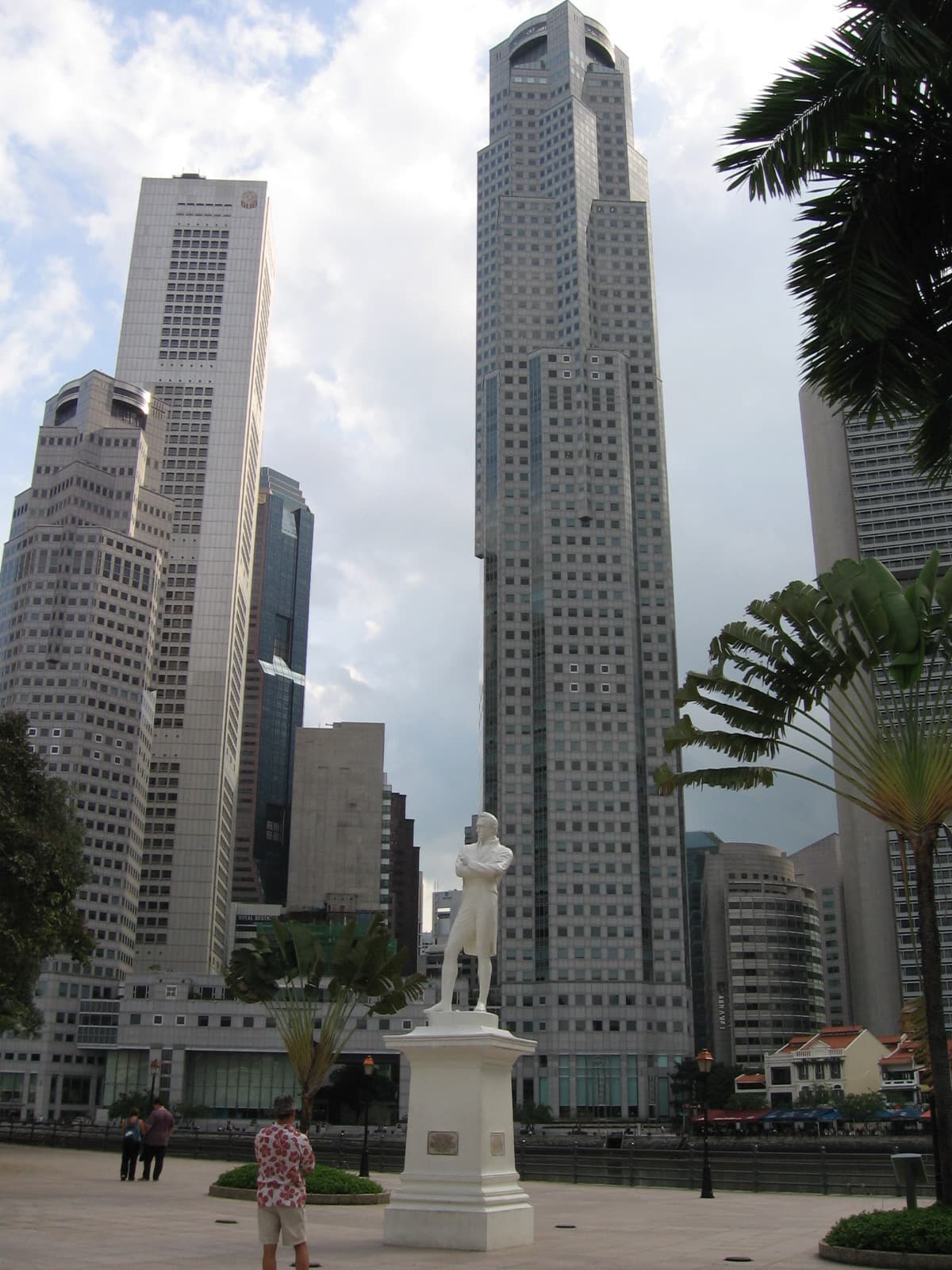
Start with the honest correction the city makes about its own beginning. The Civic District folds almost the entire founding legend into one square kilometre by the river mouth, and the first thing it tells you is that Singapore was never empty. A fourteenth-century trading port called Temasek, later Singapura, stood on this island, and in eighteen nineteen the island belonged to the Johor Sultanate and held roughly one thousand people, Orang Laut, Malays and Chinese, before any treaty was signed. On the sixth of February, eighteen nineteen, an agreement with Temenggong Abdul Rahman and Sultan Hussein Shah of Johor granted the East India Company its post in exchange for annual payments. This was a founding within empire, not from nothing. The white statue at Raffles Landing Site marks a landing that tradition, more than proof, assigns to Stamford Raffles.
The stone town and the labour that raised it
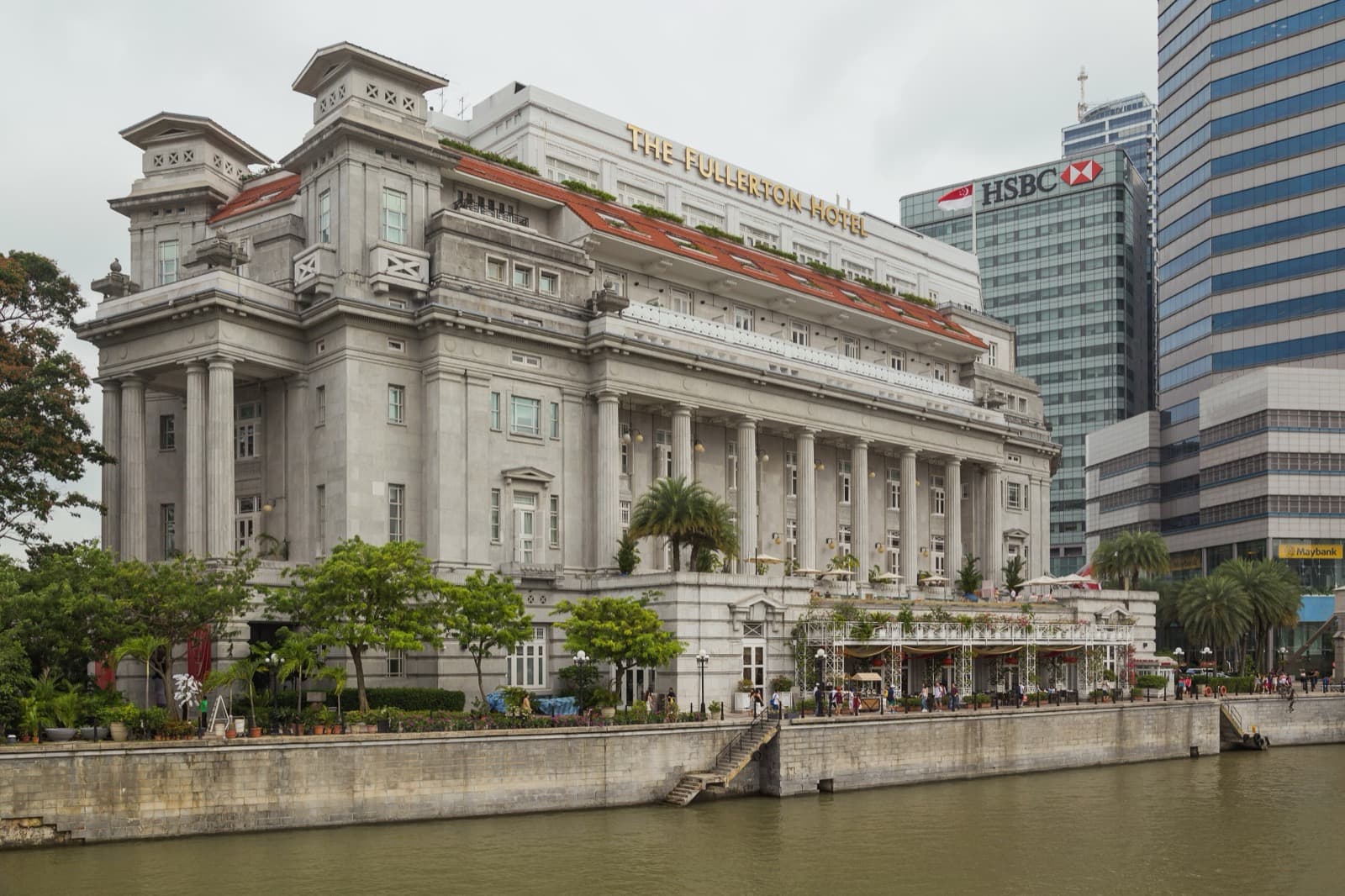
The Civic District is a museum of colonial power that keeps naming who actually built it. The old Empress Place Building, now the Asian Civilisations Museum, was begun in eighteen sixty-four with Indian convict labour under J.F.A. McNair. Saint Andrew's Cathedral, its white walls finished in Madras chunam plaster, was raised by the same transported labour, begun in eighteen fifty-seven and consecrated in eighteen sixty-two. Cavenagh Bridge, opened in eighteen sixty-nine and cast in Glasgow, was reassembled here by convict hands too. The grandeur and the coercion are inseparable, and the district says so plainly.
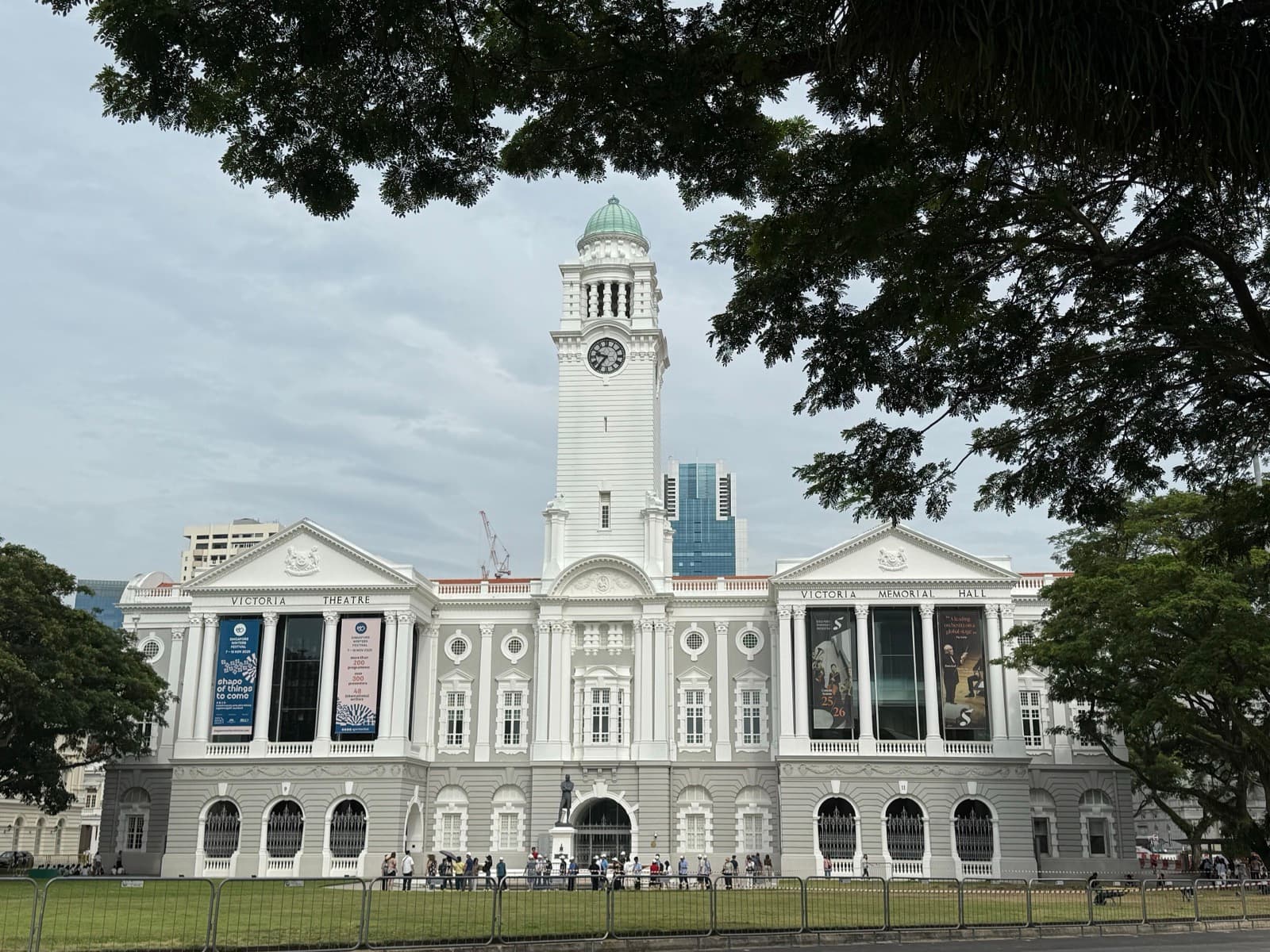
Those same steps carried the heaviest turns of the twentieth century. Singapore fell to Japan on the fifteenth of February, nineteen forty-two, the largest British surrender in history, and the Padang, whose name is simply the Malay word for a field, watched the European population assembled for internment two days later. The Occupation from nineteen forty-two to nineteen forty-five was brutal and included the Sook Ching massacre. Then, on the twelfth of September, nineteen forty-five, Admiral Lord Louis Mountbatten accepted the Japanese surrender at City Hall, and on these same steps the proclamations of self-government followed. City Hall and the former Supreme Court, twin temples of colonial rule, reopened together in two thousand and fifteen as the National Gallery Singapore. The empire's surrender and the nation's birth were staged on the same stone.
The immigrant city and its quarters of thanksgiving
Hear a stop from this walk
Raffles Landing Site: Where the Colonial Town Began
If the Civic District is where the colonial town began, Chinatown is where the immigrant city landed. In eighteen twenty-two the Telok Ayer area was set aside for Chinese settlement, and the free port drew Chinese, Indian and other labourers by the thousand, much of it indentured and convict labour that was hard and often deadly. Telok Ayer Street was once the shoreline itself, the first landfall, which is why the newcomers raised their temples of thanksgiving right there. Thian Hock Keng, Singapore's oldest Hokkien temple, was built between eighteen thirty-nine and eighteen forty-two in Fujian style, dedicated to Mazu, the goddess of the sea, in gratitude for safe passage. A few doors along stand Al-Abrar Mosque and Nagore Dargah, built by Tamil Muslim Chulias, proof this coast was plural from the start. Sri Mariamman, the oldest Hindu temple in Singapore, holds its ground in the middle of Chinatown. And Pagoda Street, restored and busy now, was a coolie station from the eighteen fifties to the eighteen eighties, where whole families shared a single partitioned cubicle. The Chinatown Heritage Centre does not prettify that.
Kampong Glam is the older sovereignty the colonial port grew beside. The East India Company granted this ground in eighteen nineteen to Sultan Hussein Shah of Johor, and around his palace grew a royal and religious capital in miniature. The Sultan Mosque, its present golden-domed building completed in nineteen thirty-two, rings the base of each dome with a belt made from the ends of glass bottles donated by the poor, so everyone could share in building it. Istana Kampong Glam, built between eighteen thirty-six and eighteen forty-three, still stands as the seat of the royal house the British found already established here. Bussorah Street was Kampong Kaji, the Pilgrim Village, where as many as ten thousand pilgrims a year waited for the ship to Mecca. And the Hajjah Fatimah Mosque, with its gently leaning tower, was built in the eighteen forties by a Malaccan-born businesswoman on the site of her own burned house, a rare monument that names a woman patron.
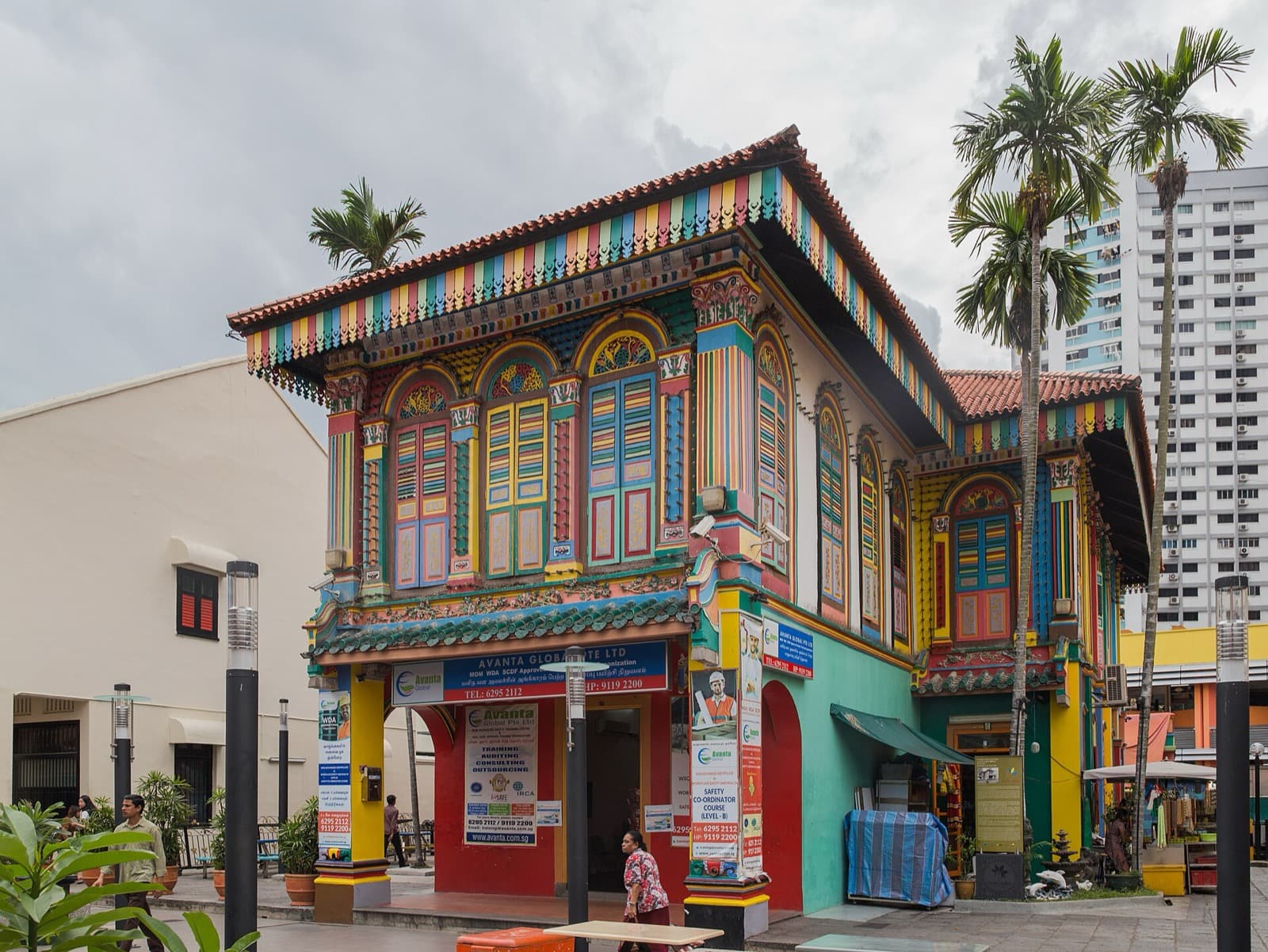
Little India, north up Serangoon Road, is the most living of the old quarters. Indians came from the very first colonial year, many as indentured labourers and transported convicts who worked the government lime pits and brick kilns that gave the road its old name, lime village. Sri Veeramakaliamman Temple, dedicated to the fierce goddess Kali, was raised by the very Tamil and Bengali labourers who built the quarter, its shrine dating to about eighteen fifty-five. Sri Srinivasa Perumal Temple, among the oldest Hindu temples in Singapore and dating to eighteen fifty-five, is the starting point of the annual Thaipusam procession, where devotees carry the kavadi on foot across the city. The rainbow-painted House of Tan Teng Niah, a Chinese villa of nineteen hundred, sits among the Tamil temples as cheerful proof that these neighbourhoods always overlapped.
The skyline the city composed for itself
The final chapter stands on ground that did not exist within living memory. Marina Bay is a skyline Singapore built on reclaimed sea, pushed out into the strait from the nineteen seventies and dammed into a freshwater reservoir in two thousand and eight. Around that invented bay the young republic raised icons all at once as a single planned composition. The Merlion, the lion-headed, fish-bodied emblem, was itself invented, designed in nineteen sixty-four and unveiled in nineteen seventy-two. The Esplanade wraps its domes in more than seven thousand aluminium sunshades against the equatorial sun. Marina Bay Sands, designed by Moshe Safdie and opened in stages in two thousand ten and two thousand eleven, carries a ship-like skyway two hundred metres up on about sixteen hectares of reclaimed land. Gardens by the Bay opened in two thousand and twelve with its grove of eighteen man-made supertrees. Independence came on the ninth of August, nineteen sixty-five, and this bay is the argument the republic makes about what it became: a plural port, built by immigrant and convict hands, that reclaimed both land and sea to compose a city on its own terms.
For the full set of routes and how they connect, see the Singapore walking tours hub.
Sources
- National Heritage Board, Roots.gov.sg, national monument and heritage-site records for Thian Hock Keng, Sri Mariamman, the Sultan Mosque, Istana Kampong Glam and Sri Srinivasa Perumal Temple
- National Library Board Singapore, Singapore Infopedia, entries on Raffles Landing Site, the Padang, Telok Ayer Street, Kampong Glam and Serangoon Road
- National Gallery Singapore, history of the former City Hall and Supreme Court buildings and the twelfth of September, nineteen forty-five Japanese surrender
- Urban Redevelopment Authority, conservation-area records for Chinatown, Kampong Glam and Little India
- Gardens by the Bay and Marina Bay Sands official histories of the reclaimed Marina Bay development
Frequently asked questions
- When was Singapore founded, and was the island empty before the British arrived?
- The British East India Company established a trading post through a treaty signed on the sixth of February, eighteen nineteen, with Temenggong Abdul Rahman and Sultan Hussein Shah of Johor. The island was not empty: it belonged to the Johor Sultanate and held roughly one thousand people, and centuries earlier a fourteenth-century port called Temasek, later Singapura, had stood there. The founding was an act within empire, not a founding from nothing.
- What are Singapore's main historic neighbourhoods to walk?
- The core historic quarters are the colonial Civic District at the mouth of the Singapore River, Chinatown around Telok Ayer Street, Kampong Glam around the Sultan Mosque, Little India along Serangoon Road, and Marina Bay. Each tells a distinct chapter: colonial government, Chinese immigration, the Malay Muslim royal quarter, the South Asian quarter, and the modern reclaimed skyline. Together they cover the full arc from the founding river to the supertrees.
- Why is Chinatown home to the oldest Hindu temple and to mosques?
- Telok Ayer Street was once Singapore's shoreline and the first landfall for immigrants, so newcomers of many faiths raised their temples and mosques of thanksgiving there. Thian Hock Keng, Singapore's oldest Hokkien temple, honours the sea goddess Mazu for safe passage. Sri Mariamman, the oldest Hindu temple in Singapore, and the Chulia-built Al-Abrar Mosque and Nagore Dargah all stand nearby, showing the immigrant coast was plural from the start.
- Is Marina Bay built on reclaimed land?
- Yes. Singapore pushed its shoreline into the strait beginning in the nineteen seventies and dammed the river mouth in two thousand and eight, turning a salt estuary into a freshwater reservoir. Marina Bay Sands stands on about sixteen hectares of reclaimed land, and Gardens by the Bay covers about a hundred hectares of made ground. The entire skyline was composed on land that was open sea within living memory.
- Where does the Thaipusam procession begin in Singapore?
- The annual Thaipusam procession begins at Sri Srinivasa Perumal Temple at three hundred ninety-seven Serangoon Road in Little India, one of the oldest Hindu temples in Singapore, dating to eighteen fifty-five. Devotees carry the kavadi on foot from its five-tiered gopuram gate across the city to the Chettiar Temple on Tank Road. It is an act of living Hindu devotion, not a spectacle.
Ready to experience it?
Civic District: Where Singapore Was Founded
80 min · 3.2 km · easy
More from Singapore
Explore more at your own pace.
One Day in Singapore: A Walkable Morning-to-Evening Itinerary
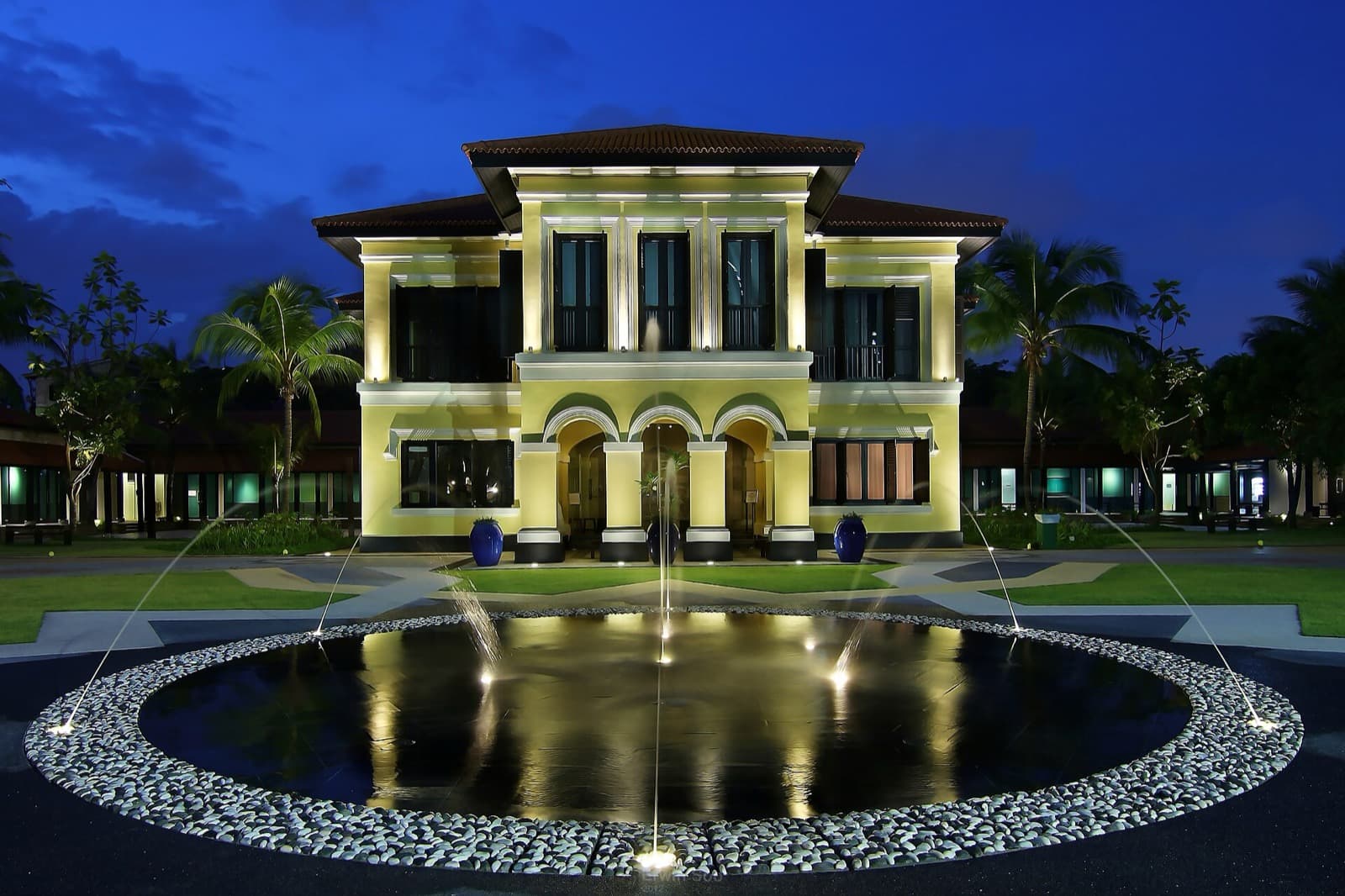
Istana Kampong Glam: The Sultan's Palace That Predates Colonial Singapore
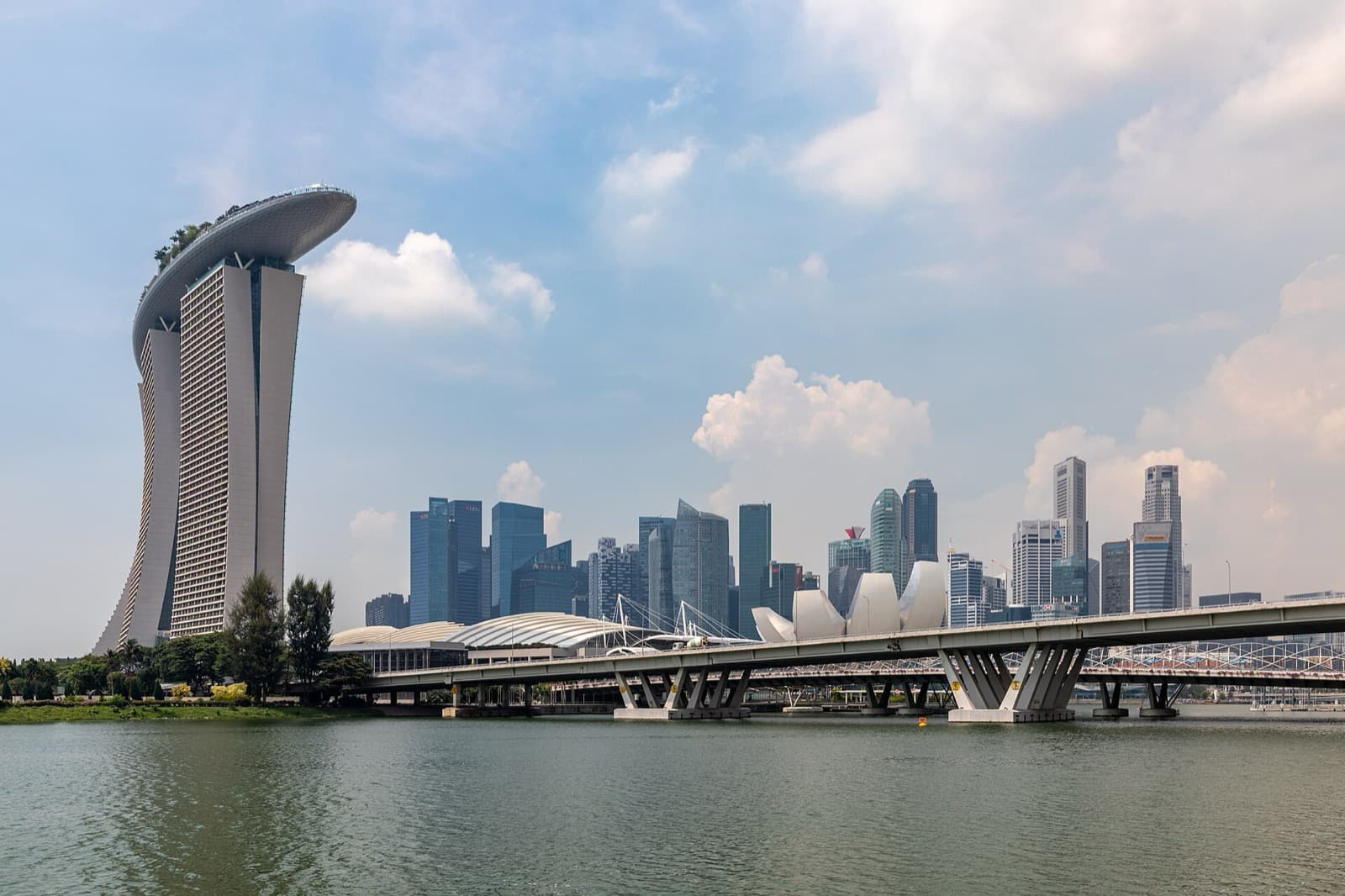
Marina Bay Sands and the Skyline Singapore Built on Reclaimed Sea
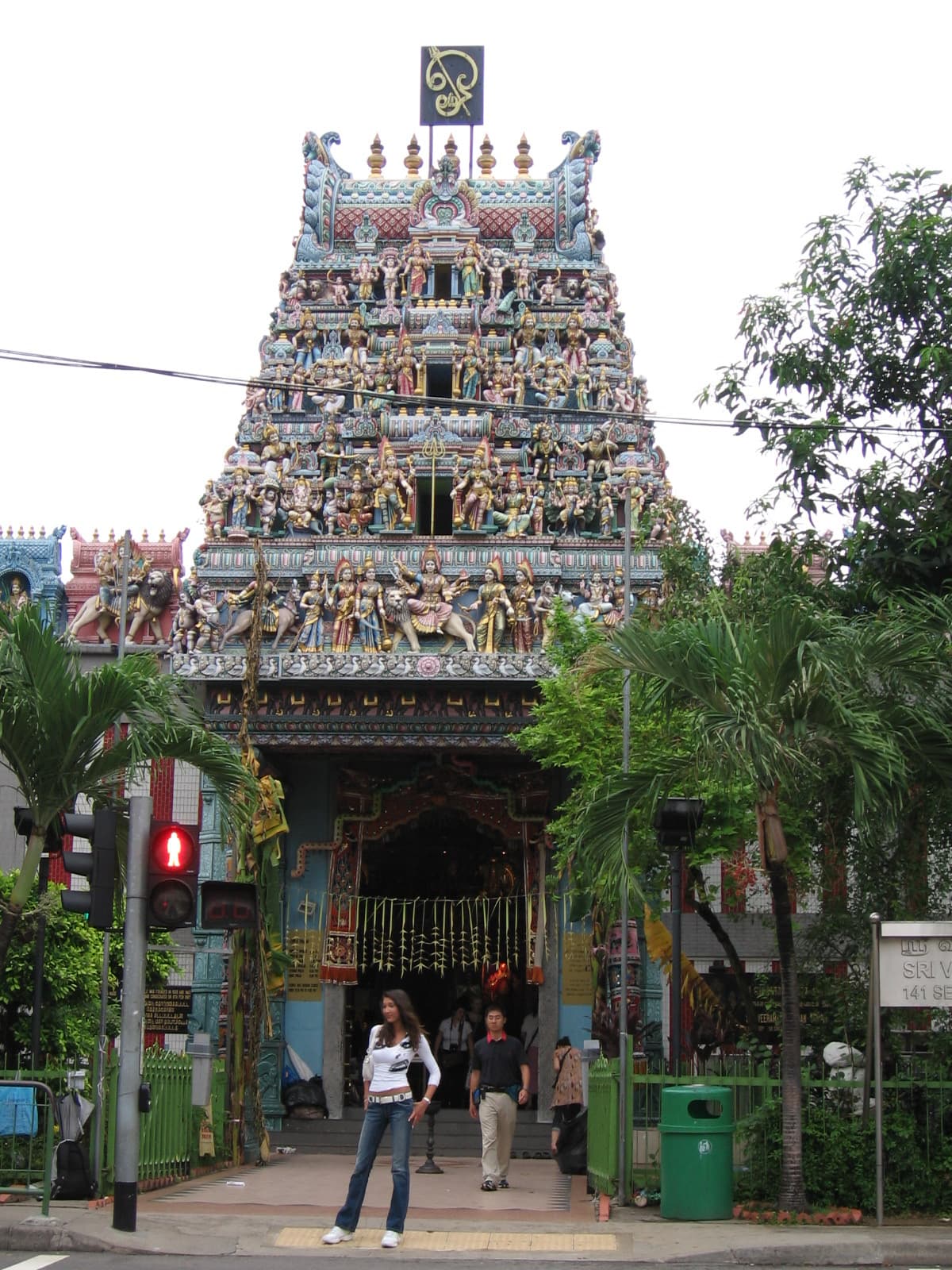
Sri Veeramakaliamman Temple: The Mother Little India's Labourers Raised
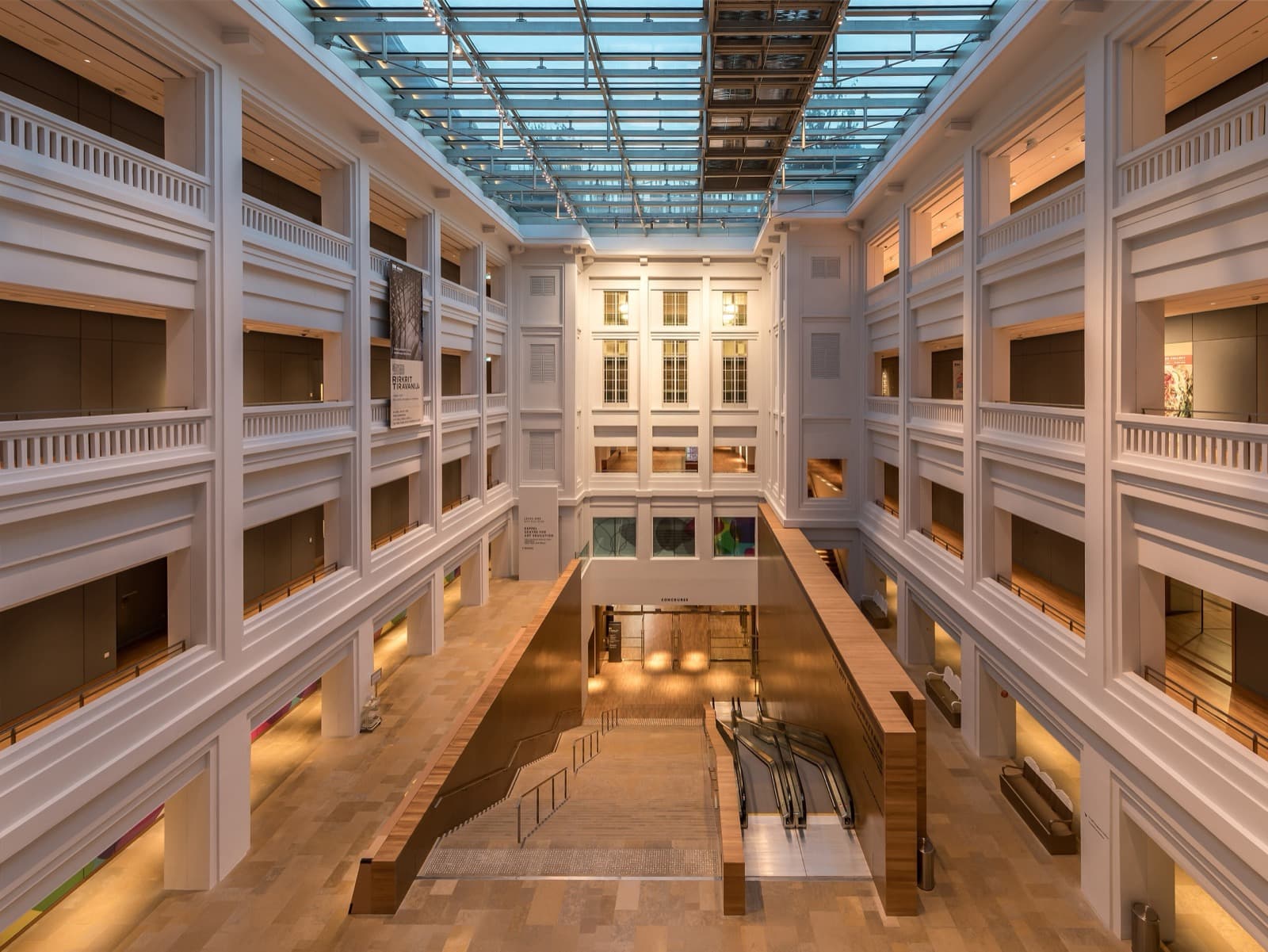
The National Gallery Singapore: Where an Empire Surrendered and a Nation Was Born