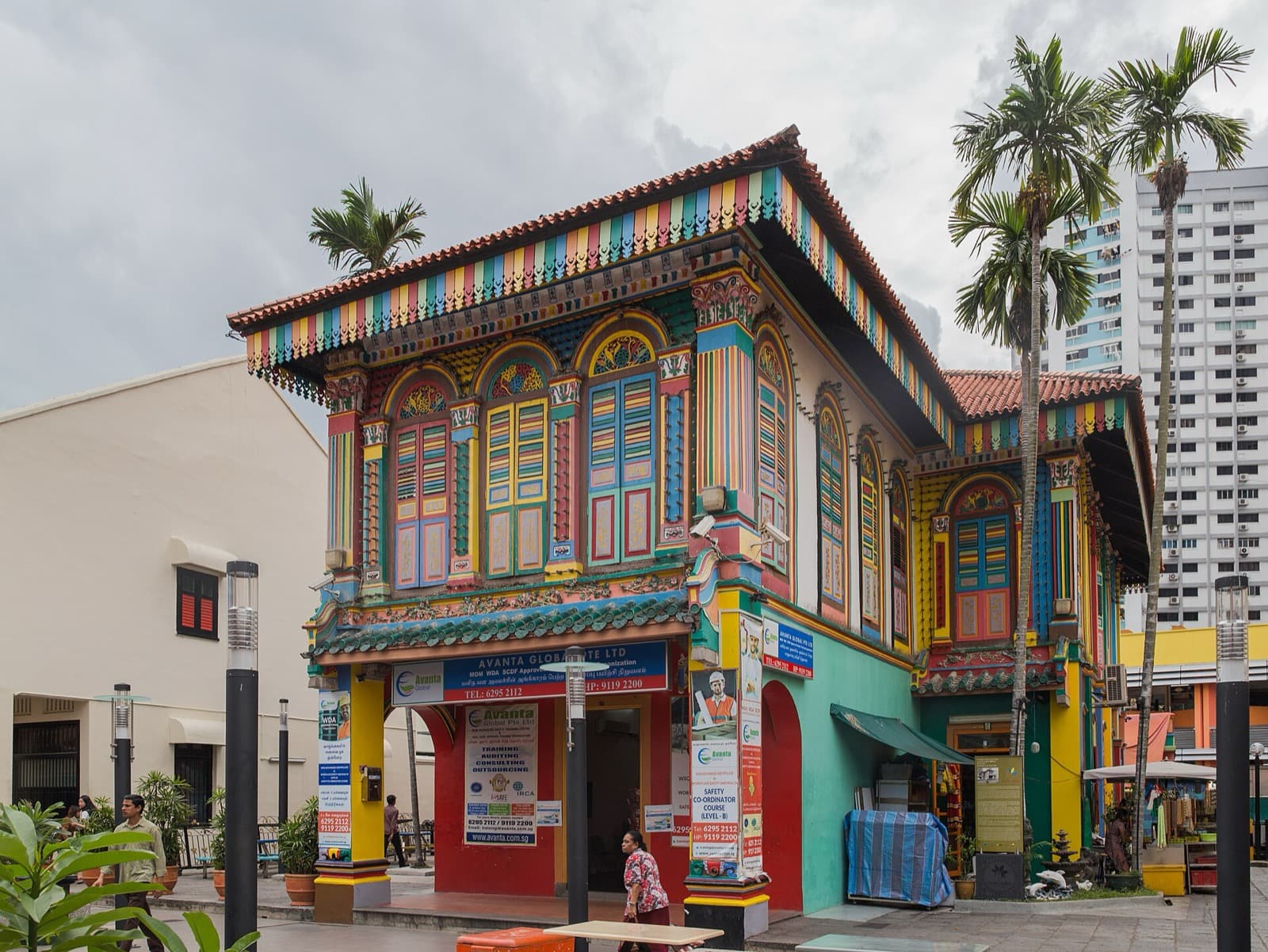
The House of Tan Teng Niah is a Chinese villa built in nineteen hundred on Kerbau Road, just off Serangoon Road, and it is the last surviving villa of its kind in Little India. Painted today in bright rainbow colours, it draws phones and cameras all day long. But the thing to understand while you stand in front of it has nothing to do with the paint. A Chinese businessman built his family mansion and his sweet-making works here, on a street of Tamil temples and spice shops, and that fact quietly rewrites the story most visitors carry into Little India: that the quarter was ever purely Indian.
A merchant's house among his neighbours
The villa was built for the family of Tan Teng Niah, a Chinese towkay, meaning a business owner of some standing. He ran several sweet-making factories along Serangoon Road that used sugarcane, and behind the house he kept a rubber smoke-house that burned the sugarcane by-product. So this was not a decorative folly or a rich man's retreat. It was the residence attached to a working industrial concern, planted in the middle of a district built around Indian labour and Indian worship.
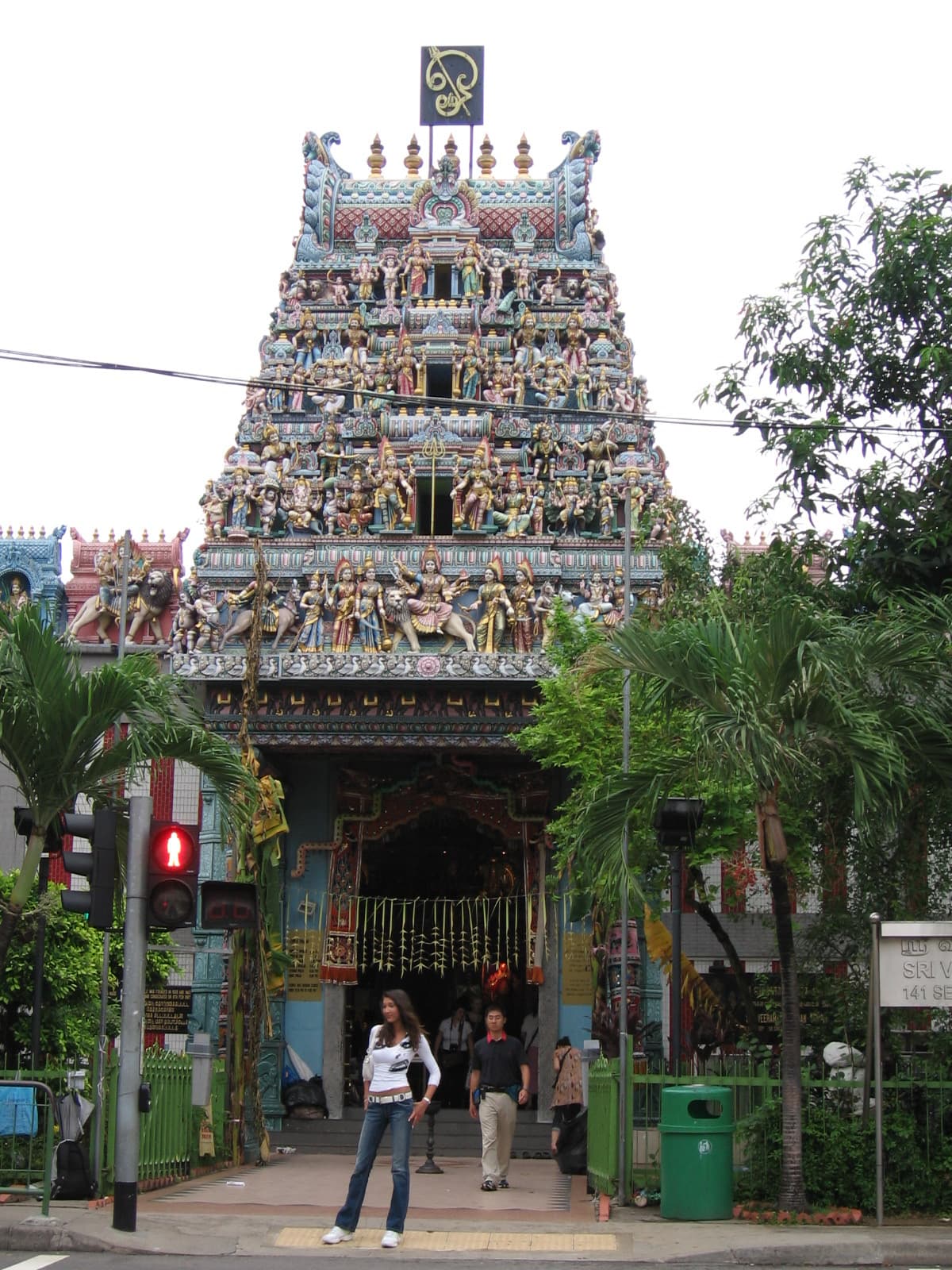
That placement is the whole point. In nineteen hundred, Serangoon Road and its lanes were the ground of Tamil workers, garland-makers, spice dealers and temple-goers. A few hundred metres south stands the Sri Veeramakaliamman Temple, raised in eighteen eighty-one by Bengali labourers for the fierce goddess Kali. A short walk in another direction is the Abdul Gafoor Mosque, built by and for the area's Tamil Muslims. And in among all of that, a Chinese confectioner built an eight-room mansion for his family. The rainbow villa is a small, cheerful piece of physical proof that the neighbourhoods here always overlapped, that the tidy ethnic labels applied to Singapore's old quarters were never as clean as the maps suggest.
Reading the building itself
Hear a stop from this walk
Serangoon Road: The Spine of the Quarter
Look past the colour and the house has a grammar worth reading slowly. It has eight rooms and blends Southern Chinese and European elements, the kind of hybrid that colonial-era Singapore produced constantly. The second storey overhangs the first to form a five-foot way, the covered walkway that runs along the fronts of shophouses across the district, shading pedestrians from equatorial sun and sudden rain. You will have already met the five-foot way at the Little India Arcade and along Serangoon Road, and here it appears again, folded into a private villa rather than a row of shops.
The details reward a closer look. The house keeps its carved pintu pagar, the swing half-doors that let air move through a room while marking a threshold, a feature of Straits-Chinese and Peranakan homes. Above sits a gilded nameplate reading Siew Song, which means elegant pine. The name is thought to honour Tan Teng Niah's wife, a small domestic dedication carried in gold across the front of a house that most people now photograph without ever noticing it.
The rainbow paint, the thing everyone comes for, is recent and has no historical claim on the building. The villa was restored in the nineteen eighties and received an architectural honourable mention in nineteen ninety-one. The saturated colours came later still, and they are the reason it has become one of the most photographed spots in the quarter. There is nothing wrong with enjoying that. It is genuinely lovely against a hot blue sky. But the paint is a modern gloss on a hundred-year-old structure, and the more interesting object is the one underneath it: a merchant villa that survived when every other Chinese villa in Little India did not.
Why the survivor matters
Singapore grew as a plural city. Chinese, Malay, Indian, Eurasian and Peranakan communities lived close together under colonial rule, sorted loosely into quarters but never sealed off from one another. Trade, work and daily life kept crossing the lines. The House of Tan Teng Niah is one of the few standing witnesses to that overlap in Little India specifically, because it is the last of its type left. Everything comparable is gone. When a single building carries the last physical memory of a whole pattern of settlement, it stops being a photo backdrop and becomes evidence.
Stand back and take in what it tells you. A Chinese confectioner's family home, its sweet factories once fed by sugarcane and its yard clouded by a rubber smoke-house, sitting among Tamil temples and Indian spice merchants on one of the oldest roads on the island. That is the real Little India: not a single-culture enclave but a working quarter where communities pressed up against each other and left their buildings side by side. The rainbow paint gets you to stop. The history is what keeps you standing there.
Walk the whole road
The House of Tan Teng Niah is the fourth of seven stops on Roamer's self-guided Little India audio walk, a route of about three and a half kilometres up Serangoon Road that takes roughly eighty-five minutes at an easy pace. On the tour, this villa is the turn in the story, the moment the quarter reveals that it was never only Indian, set between the labourer-built Kali temple before it and the Abdul Gafoor Mosque and the great Vishnu temple that follow.
The audio plays as you arrive, with no group to keep pace with and no schedule to catch, so you can linger at the gilded nameplate or duck out of a downpour without missing anything. If you want to plan the wider route first, browse the Singapore walking tours guide, or see everything on offer across the island on the Singapore city page. Come early for the cool of the morning, wear modest clothes and slip-on shoes so you can step into the temples, and let Serangoon Road lead you north from the belly of the market to the gate where Thaipusam begins.
Sources
- House of Tan Teng Niah, Wikipedia. Construction date, ownership, architectural features and restoration history of the villa.
- Former House of Tan Teng Niah, Roots.gov.sg (National Heritage Board). Heritage-trail entry on Kerbau Road covering the building's builder, use, Siew Song nameplate and the 1991 Singapore Institute of Architects Honourable Mention.
- Little India: A Cultural and Historical Precinct, Roots.gov.sg. Background on the quarter's plural settlement and overlapping communities.
- Roamer Little India tour transcript (fact-audited, 2026). Verified details on the villa's rooms, pintu pagar, Siew Song nameplate and rubber smoke-house.
Ready to experience it?
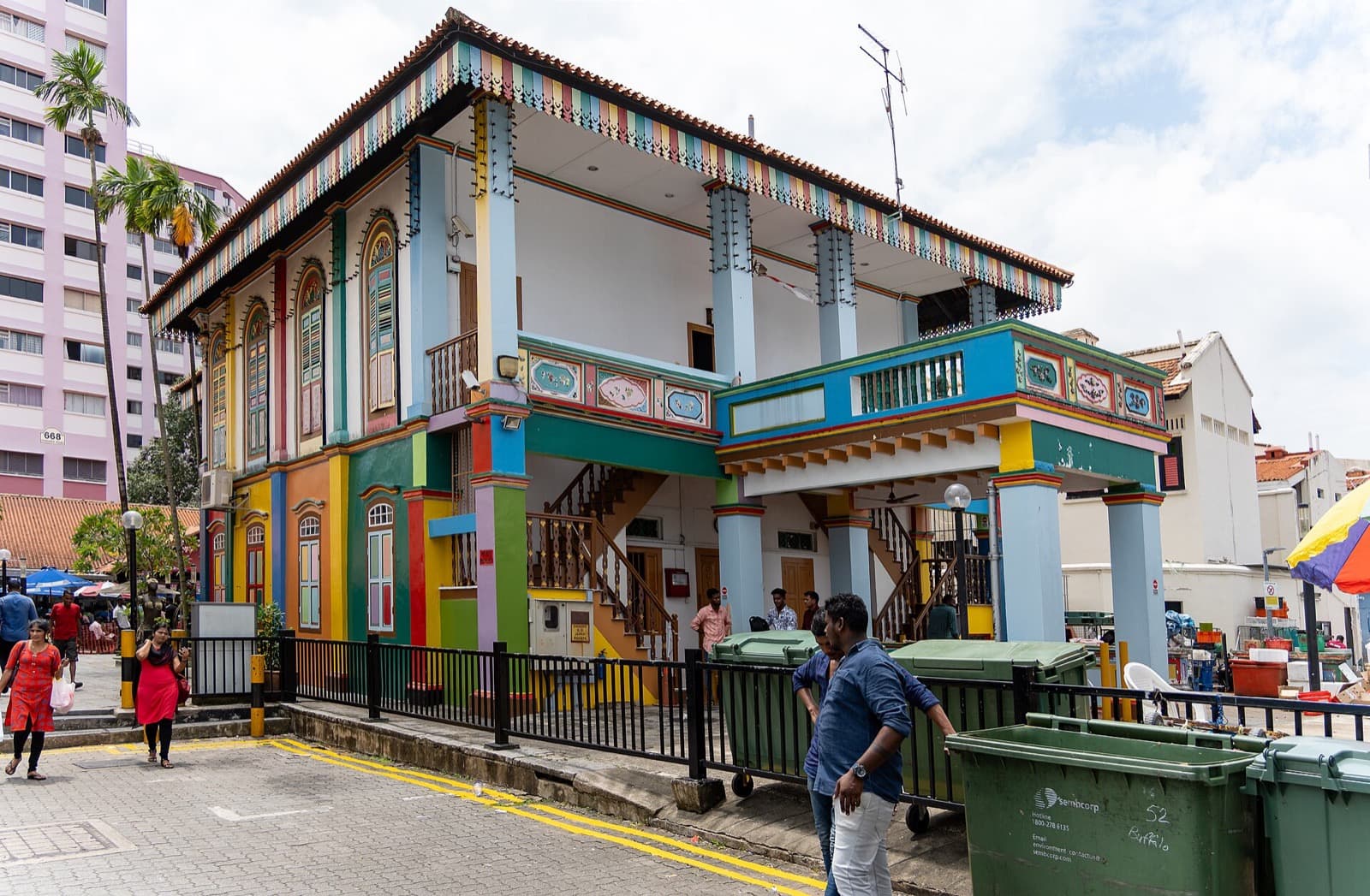
Little India: The Scent of the Subcontinent
85 min · 3.6 km · easy
More from Singapore
Explore more at your own pace.
One Day in Singapore: A Walkable Morning-to-Evening Itinerary
Reading Singapore Neighbourhood by Neighbourhood: From the Founding River to the Supertrees
Istana Kampong Glam: The Sultan's Palace That Predates Colonial Singapore
Marina Bay Sands and the Skyline Singapore Built on Reclaimed Sea
Sri Veeramakaliamman Temple: The Mother Little India's Labourers Raised