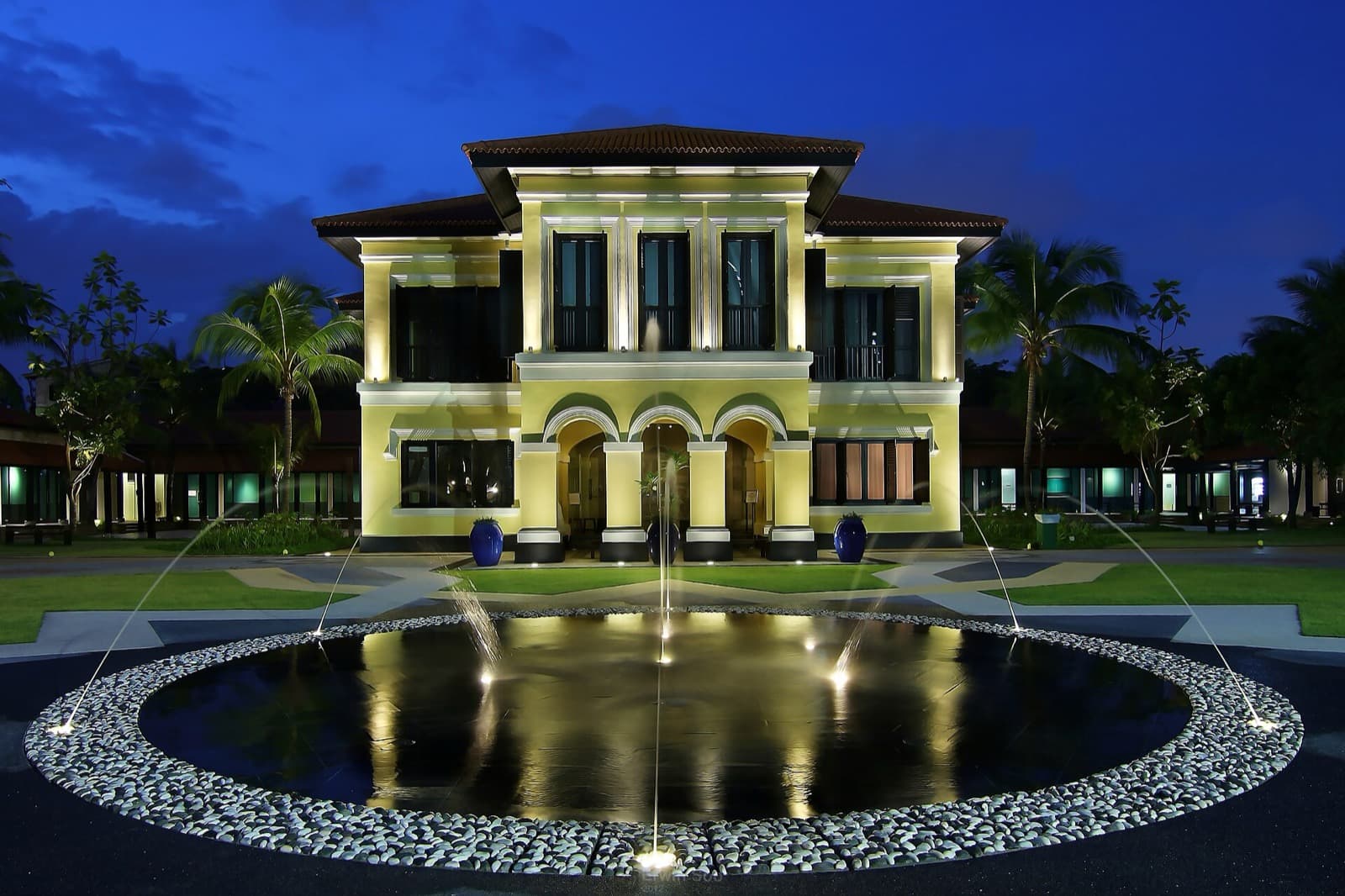
Behind a low gate on Sultan Gate, set back from the cafes and the crowds, stands a two-storey house built for the son of a Malay sultan. This is the Istana Kampong Glam, and istana simply means palace. It is the surviving seat of a royal court that ruled here before the name Raffles was written across this island. Read this palace first, and the whole quarter around it changes meaning: the golden mosque, the pilgrim streets, the merchant trade, and the leaning-towered mosque a woman built all fall into place around a court that was already here in 1819.
That year, the British East India Company signed a treaty with the Temenggong and Sultan Hussein Shah of Johor and set up a trading post on the island. As part of the arrangement, the Company granted the land of Kampong Glam to the sultan. This matters because it corrects a story most visitors arrive with. Singapore did not begin from nothing in 1819. Kampong Glam was the ground where a Malay sultanate kept its capital in miniature: a royal and religious town with its own rulers, its own history reaching back through Johor into the deep Malay past. Kampong means village, and this was the village of a sultan.
A palace built for a sultan's son
Sultan Hussein's first residence on this ground was a wooden building. The stately house you see now came later. It was constructed between 1836 and 1843 for Sultan Ali Iskandar Shah, the eldest son of Sultan Hussein Shah. It is believed to have been designed by the colonial architect George Drumgoole Coleman, who worked in a Palladian style softened here with traditional Malay motifs. There is no definitive record confirming him, so the attribution stays a careful "believed to be." The result is two storeys of quiet dignity rather than grandeur. There is no throne room theatrics, no sweeping colonnade meant to overwhelm. It reads as a well-made family house that happened to belong to royalty, and the sultan's descendants lived here for generations.
That restraint is worth pausing on. When you stand at the gate, you are not looking at a monument built to impress a visiting empire. You are looking at where a family lived, ate, prayed, and governed a small world. The scale is human. You can take in the whole compound in a few minutes on foot, and that smallness is the point. This was a real seat of Malay royalty, compact enough to walk around, sitting quietly inside a colonial port that would grow enormous around it.
From palace to heritage centre
Hear a stop from this walk
Hajjah Fatimah Mosque: The Mosque a Woman Built
The building was refurbished in 2004 and reopened around 2005 as the Malay Heritage Centre, a museum of Malay Singapore. On 6 August 2015, on the eve of the country's Golden Jubilee, it was gazetted a national monument. The timing was deliberate. As Singapore marked fifty years of independence, it put legal protection on the oldest royal house within the modern city, an acknowledgment that the island's story starts earlier and runs deeper than the colonial founding.
A practical note before you plan a visit. The galleries carry an admission fee, and the centre has gone through periods of revamp and closure, so it is worth checking whether it is open before you arrive expecting to go inside. The grounds and the exterior are always free to enjoy, and honestly the exterior is where the argument of this walk lives. You come here to stand at the gate and understand that this modest palace, not the colonial waterfront, is where the older story of Singapore keeps its seat.
Why the palace explains the quarter
Once you have read the istana, the rest of Kampong Glam stops feeling like a random collection of pretty streets and starts working as a single town. That is the reward the full tour is built around.
Just outside the palace, within the small royal enclave, stands a mansion painted the colour of egg yolk. This is Gedung Kuning, the Yellow Mansion at 73 Sultan Gate. It was painted yellow because yellow was the colour traditionally reserved for Malay royalty, so a yellow house here signalled a royal household. It was known first as the Bendahara House, a bendahara being a chief minister of the Malay court. The enclave, in other words, held not only a palace but the houses of the court that surrounded it. The merchant Haji Yusoff bought the mansion in 1912, and four generations of his family lived there until the government acquired it in 1999, a long thread of ordinary human continuity running straight through a royal compound.
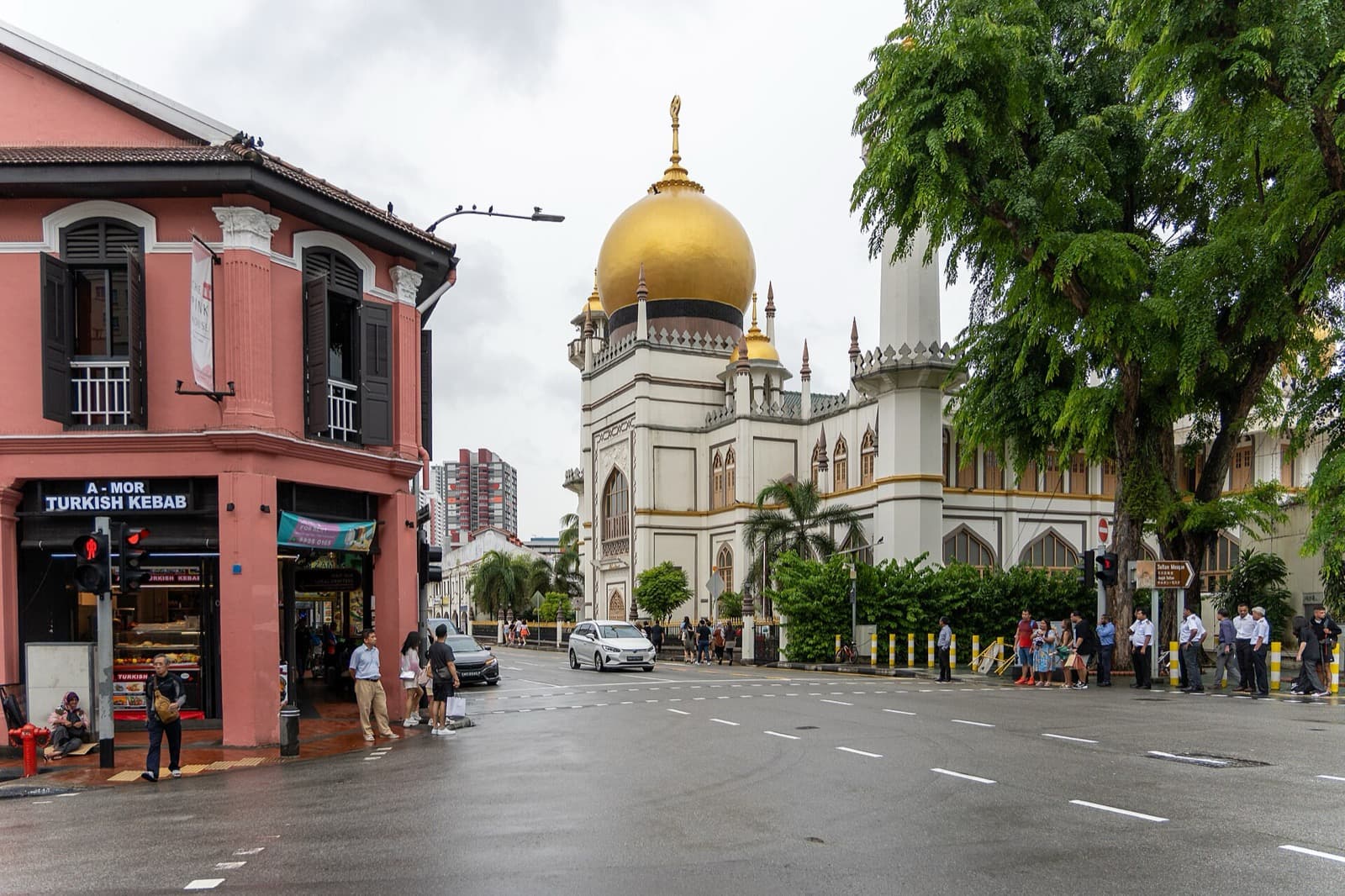
Walk a little further and the town keeps explaining itself. The golden Sultan Mosque nearby was the royal mosque of this same sultanate, its present building completed in 1932, with a belt around each dome base made from the ends of glass bottles donated by the poor so everyone could share in building it. Bussorah Street, framing the dome, was once Kampong Kaji, the Pilgrim Village, where travellers stayed while waiting for the pilgrim ship to Mecca. Arab Street was the trading spine, settled from 1822 by Hadhrami Arab merchant houses like the Aljunieds and Alsagoffs who endowed mosques and schools. Haji Lane, once lodging for pilgrims, is now the most photographed lane in the quarter, its old shophouse shells kept under conservation rules from 1989 while their interiors turned into boutiques and cafes. The walk ends at the Hajjah Fatimah Mosque, built in the 1840s by a Malaccan-born businesswoman on the site of her own house after it burned, its European-style minaret leaning gently enough to be nicknamed the Leaning Tower of Singapore.
Every one of those stops connects back to the palace. The mosque was the sultan's mosque. The pilgrim streets served the town the sultan anchored. The merchant fortunes and the mosque a woman built were made by real people who lived in the royal capital's orbit. Kampong Glam is a court and the village that grew around it, and the istana is where you learn to see it that way.
Walk it yourself
The full Roamer self-guided audio tour runs seven stops over about one and a half kilometres, an easy hour at an unhurried pace. It moves from the golden dome through the pilgrim streets to this palace, the yellow mansion, the merchant trade, the painted lane, and the leaning-towered mosque, telling the whole arc in order so the town reads as one story. You walk at your own pace, linger where you like, and the narration meets you at each gate. Browse more routes across the island on our Singapore walking tours hub, or start planning from the Singapore city page.
Sources
- Istana Kampong Gelam, ROOTS (National Heritage Board): official heritage listing covering the palace's construction, attribution, and national monument status.
- Istana Kampong Glam, Wikipedia: overview of the building's history and its conversion to the Malay Heritage Centre.
- Gedung Kuning: Memories of a Malay Childhood, BiblioAsia (National Library Board): the Yellow Mansion, the royal enclave, and the Haji Yusoff family.
- Sultan Mosque, ROOTS (National Heritage Board): the royal mosque's founding tie to Sultan Hussein Shah and its 1932 building.
- Kampong Glam Heritage Trail, ROOTS: the quarter's conservation history and the connections between its streets and the sultanate.
Ready to experience it?
Kampong Glam: The Sultan's Quarter
60 min · 1.4 km · easy
More from Singapore
Explore more at your own pace.
One Day in Singapore: A Walkable Morning-to-Evening Itinerary
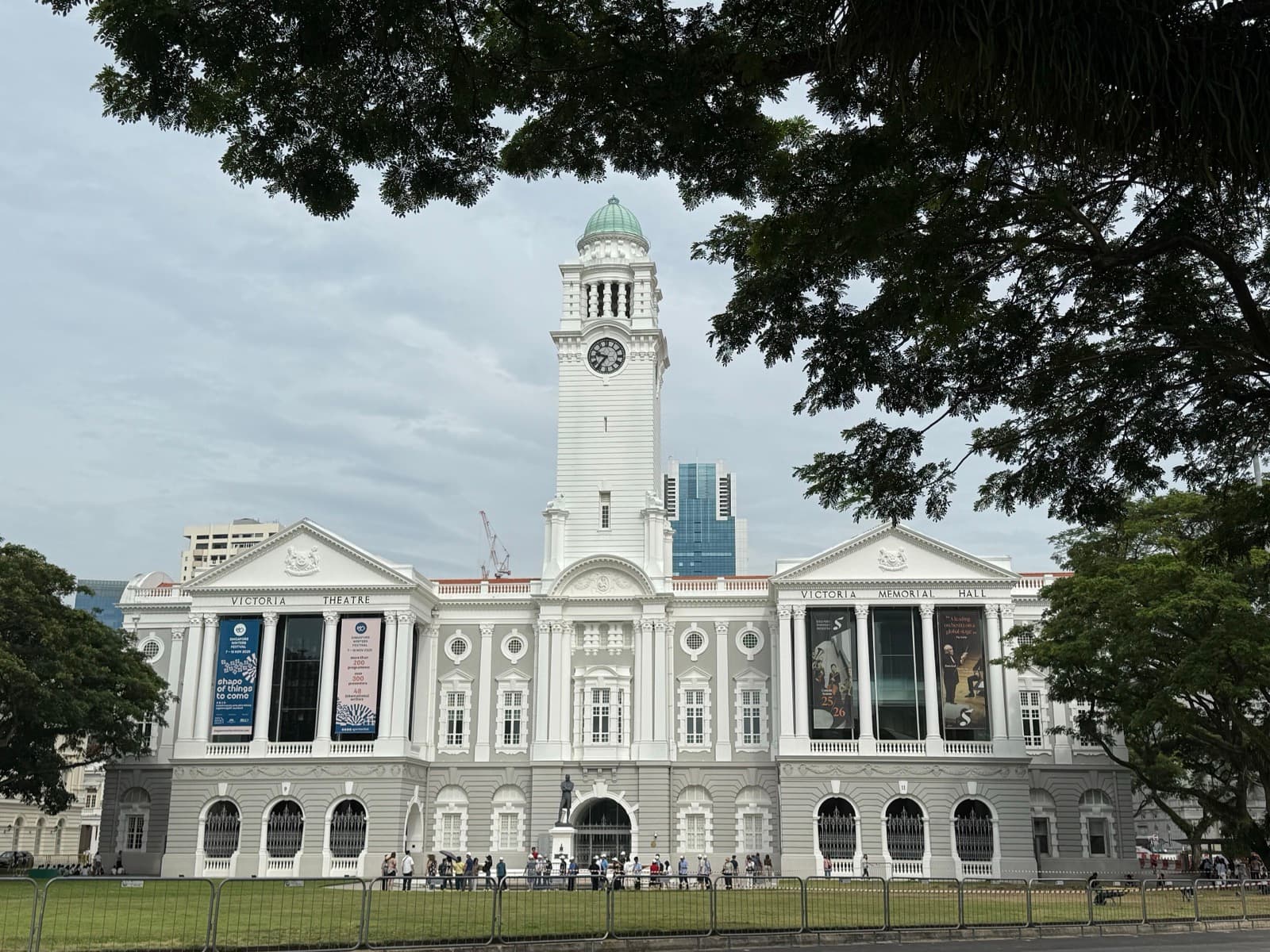
Reading Singapore Neighbourhood by Neighbourhood: From the Founding River to the Supertrees
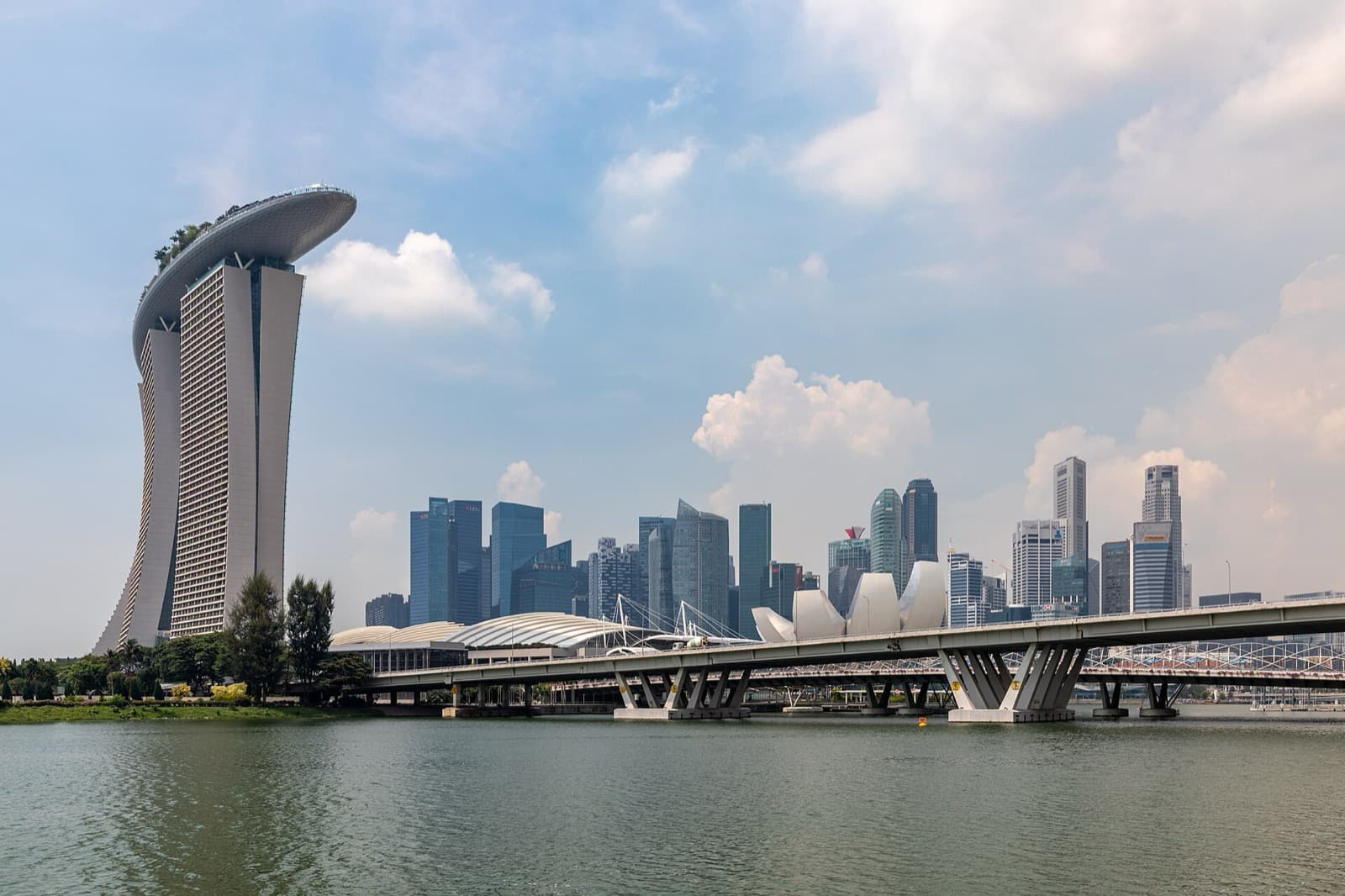
Marina Bay Sands and the Skyline Singapore Built on Reclaimed Sea
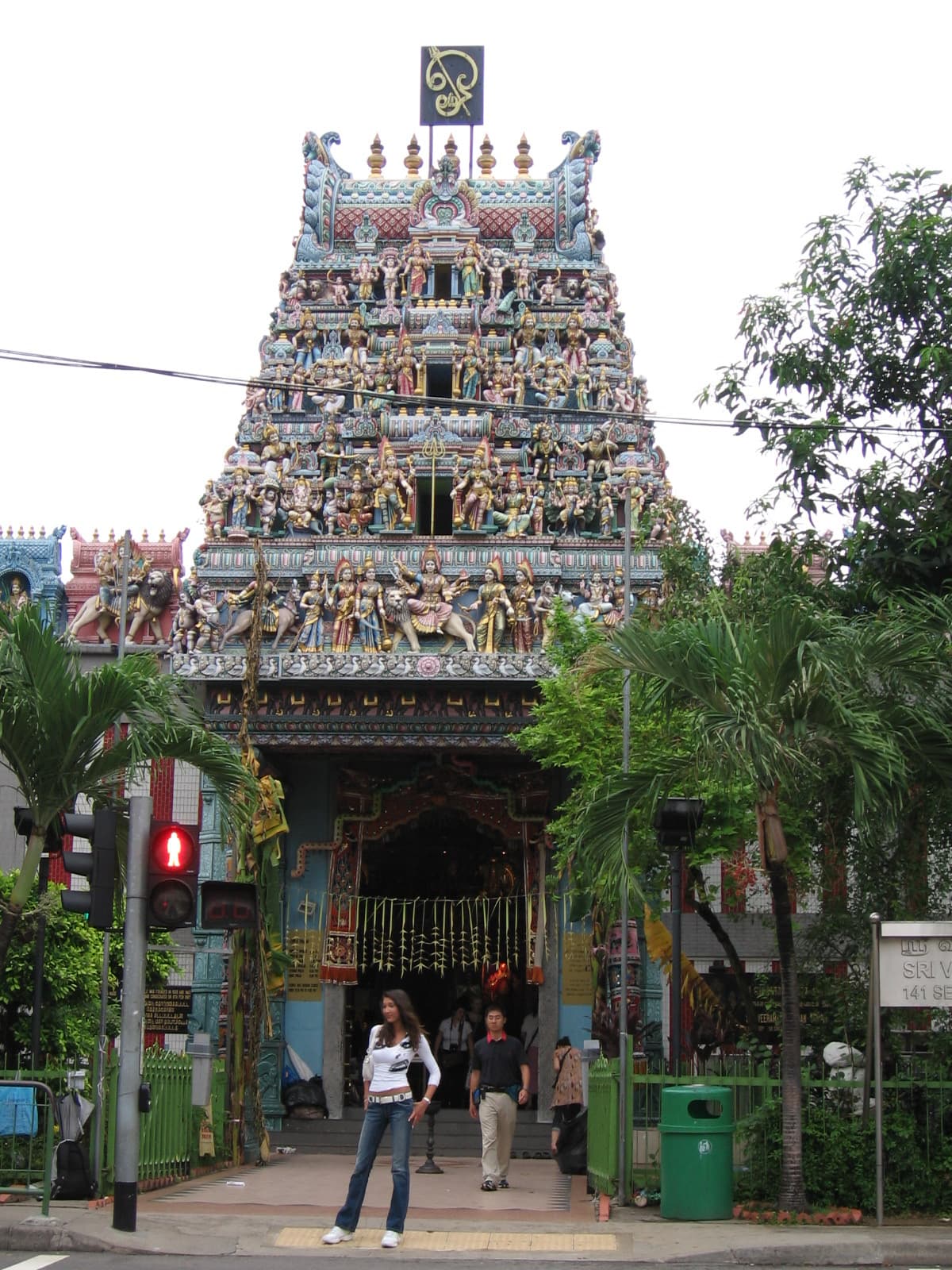
Sri Veeramakaliamman Temple: The Mother Little India's Labourers Raised
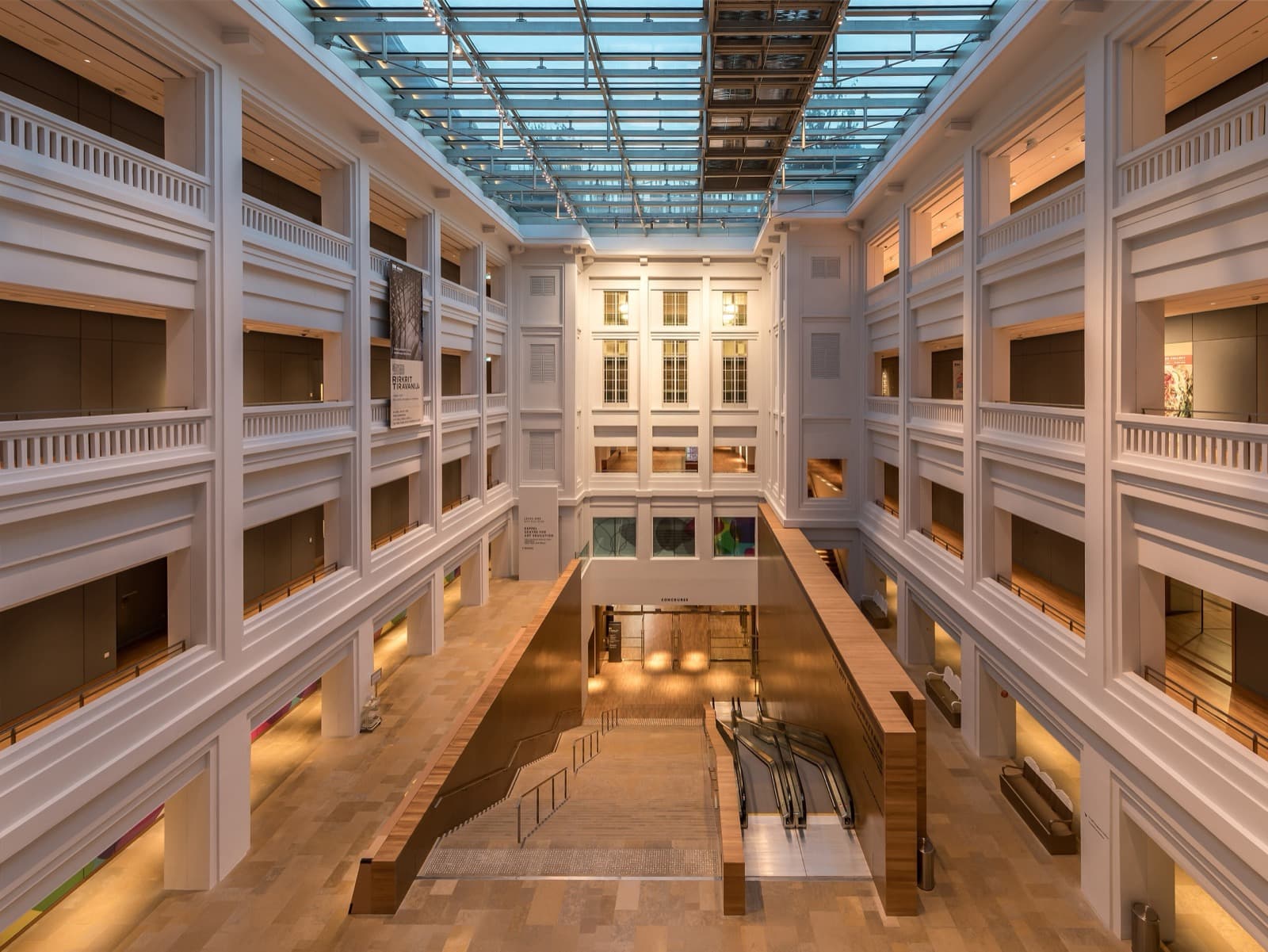
The National Gallery Singapore: Where an Empire Surrendered and a Nation Was Born