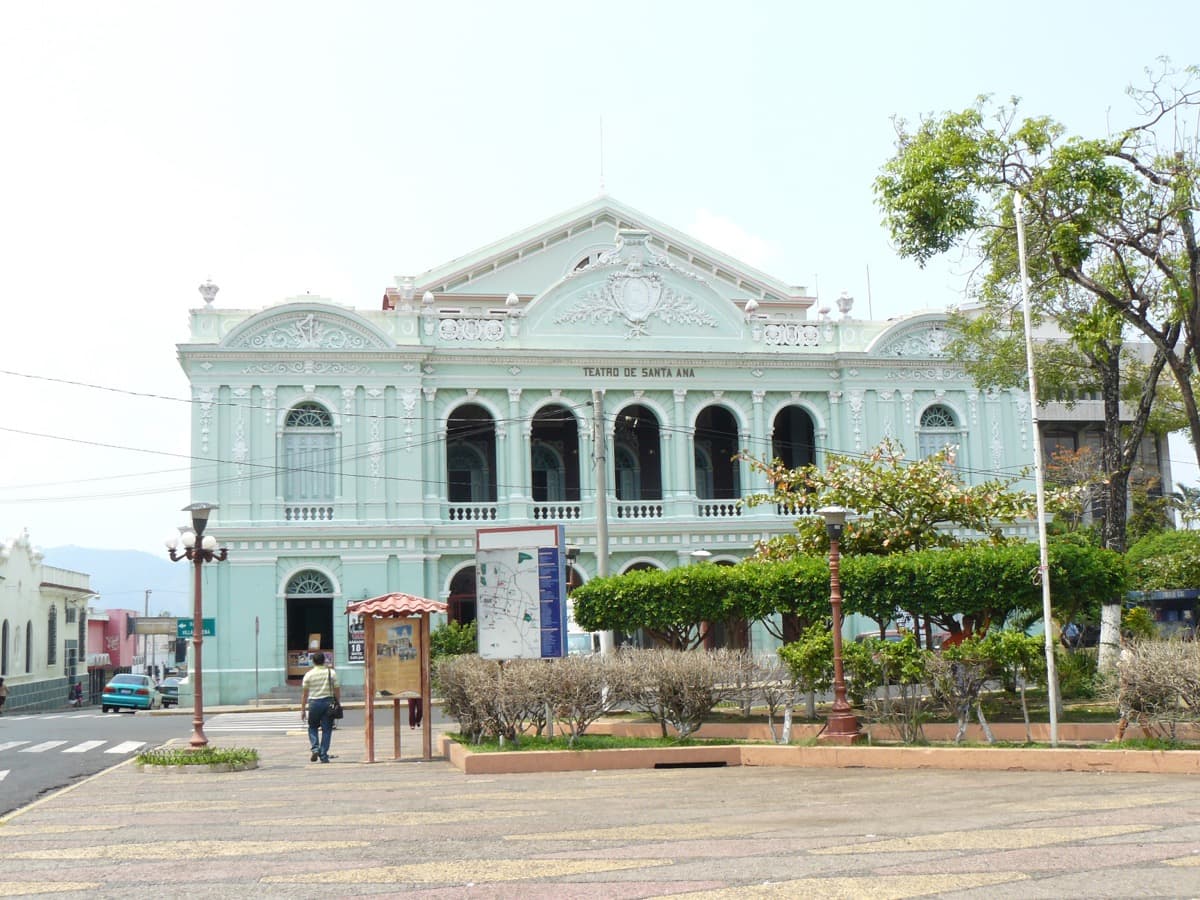
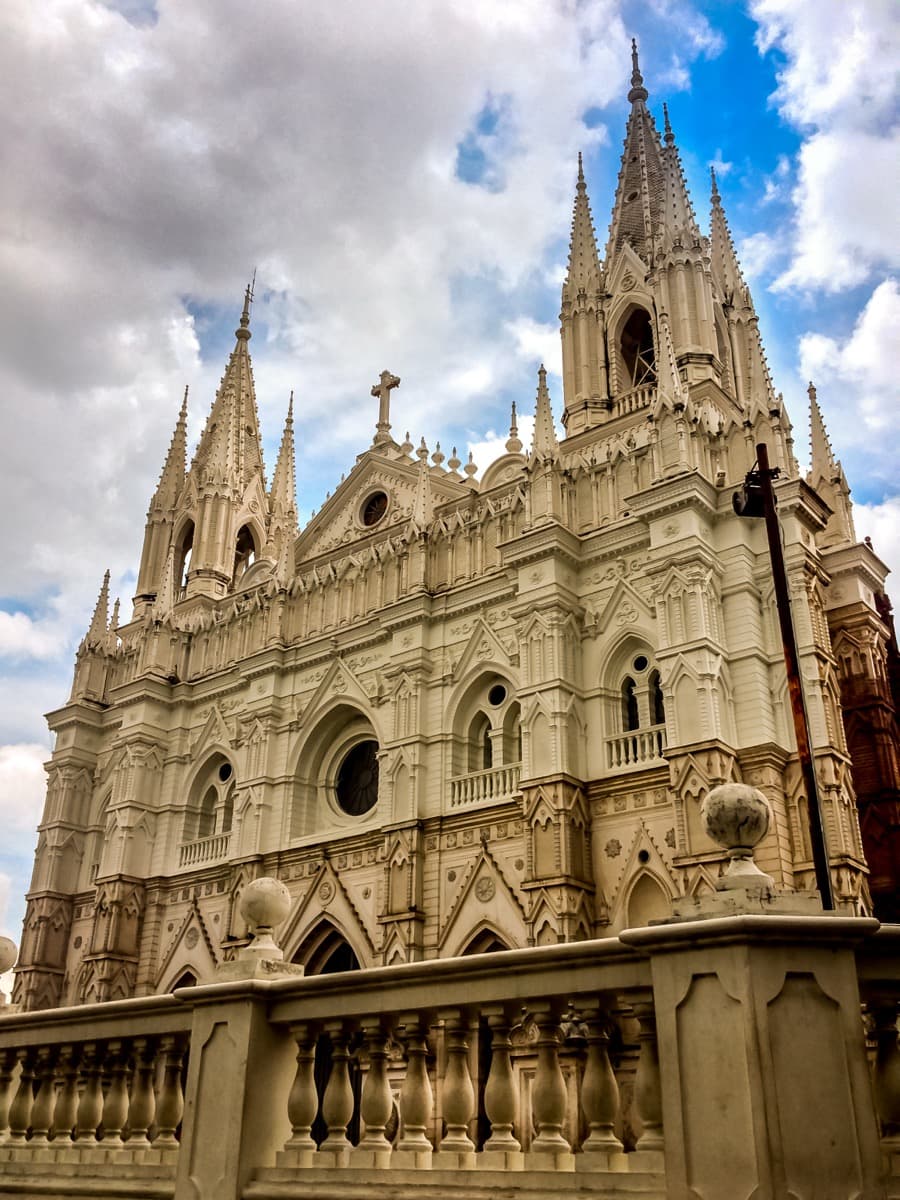
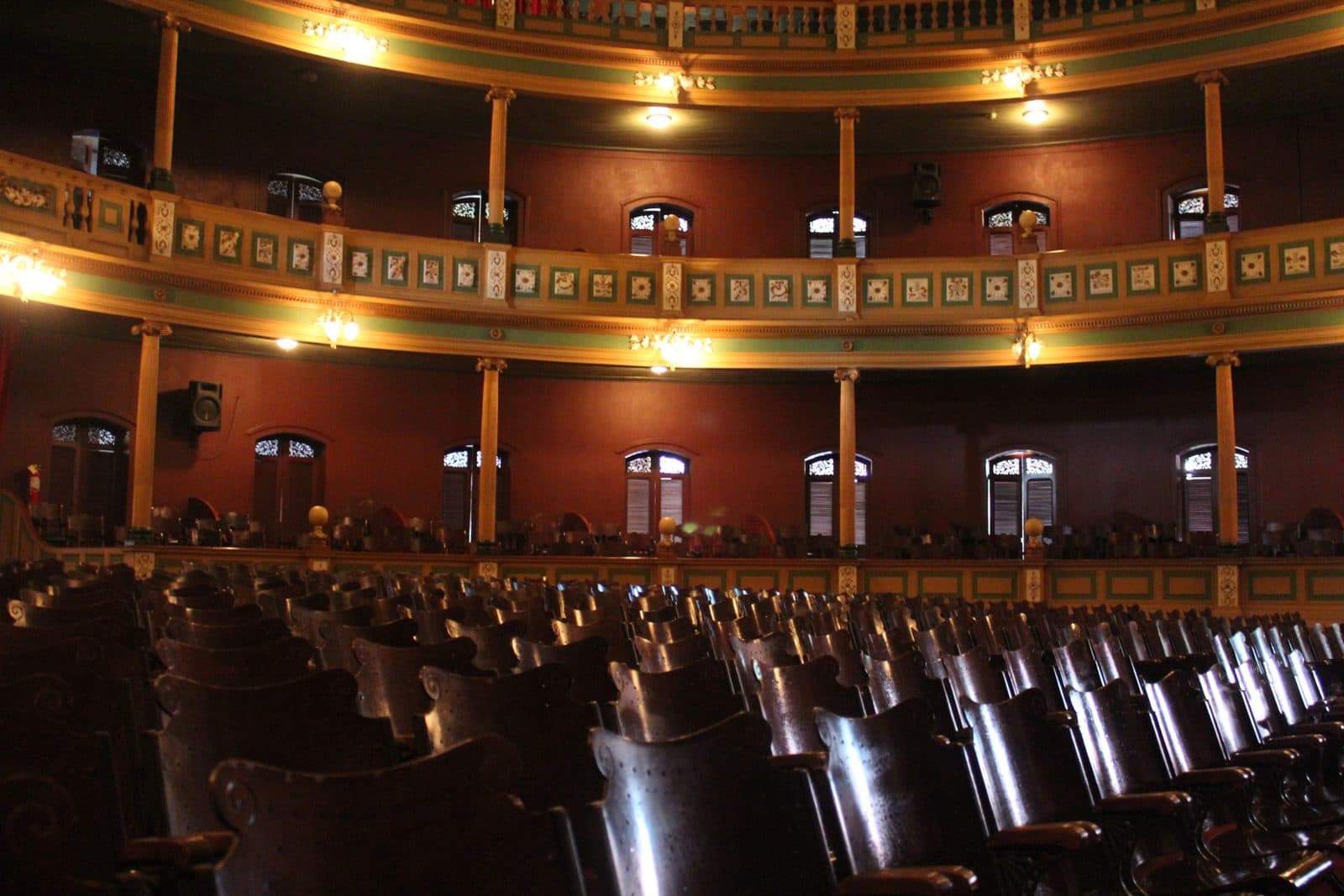
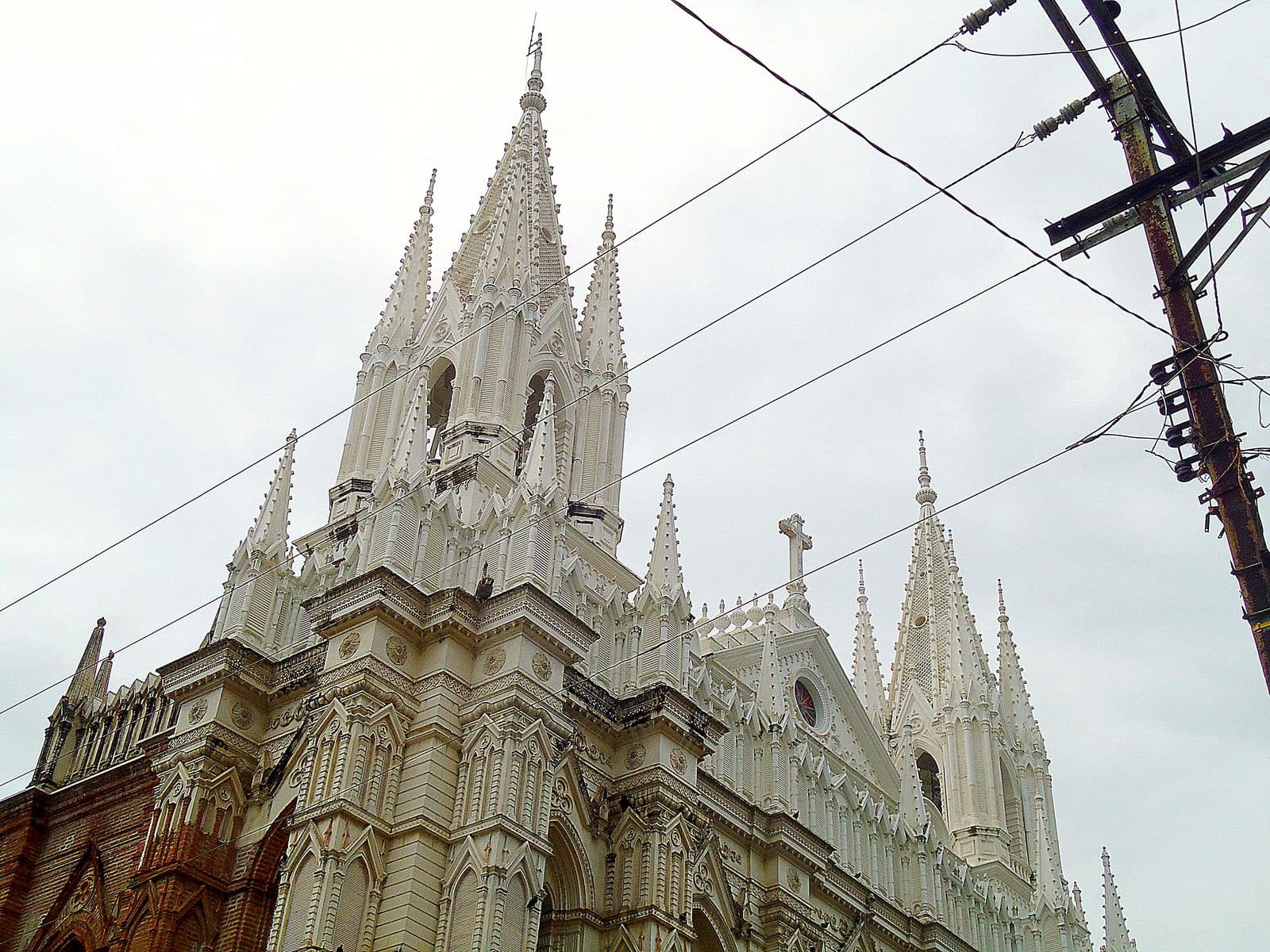
Stand at the center of Parque Libertad in Santa Ana and turn slowly. To the east are the twin spires of a neo-Gothic cathedral with carved stonework that would not look out of place in Cologne. To the north is a neoclassical theater inaugurated in 1910, painted pale cream, with a hand-painted dome interior. To the west is a city hall from 1874 with arched colonial corridors. To the south is what looks like a Parisian club: tall windows, ornamental ironwork, a building called the Casino Santaneco. Four sides of one city block, four different European centuries, all built within a single forty-year window.
This is what makes Santa Ana the most architecturally coherent city in El Salvador. It is also the question Santa Ana asks at every corner. Why is this building here?
The answer is coffee.
The arabica window
Coffee arrived in El Salvador in the 1850s as the indigo economy was collapsing. Synthetic dyes had been developed in German chemistry labs in the 1860s, and by the 1880s synthetic indigo had broken the Central American producers. The same elite that had grown rich on añil pivoted to coffee with remarkable speed. The land they needed was already theirs.
What they did not anticipate was how perfect the western Salvadoran highlands would turn out to be for arabica. Volcanic soil, replenished by ash from Izalco and Santa Ana's eponymous volcano, was naturally rich in the minerals coffee plants need. Altitudes between twelve hundred and eighteen hundred meters produced beans that ripened slowly, concentrated sugars, and developed the bright acidity that buyers in New York and Hamburg paid premiums for. By the 1890s, El Salvador was exporting some of the most valuable coffee on the world market on a per-acre basis. Santa Ana was the center of that economy.
The thirty-year stretch from roughly 1890 to 1920 is when the city was built. The cathedral on the east side of Parque Libertad began construction in 1906 and was finished in 1913, replacing an earlier colonial church that the new coffee fortunes considered too modest. The Teatro Nacional opened in 1910, two years before San Salvador's national theater opened in 1917. The Casino Santaneco filled in around the same time. The handful of families who paid for all of it, the same names you keep encountering in the older Salvadoran political histories, became the figures Salvadoran writers later called the Catorce Familias, the Fourteen Families.
The number is more rhetorical than literal. The actual coffee elite was probably forty or fifty households. The point of the number was the shape: a small enough group that it could meet in the Casino Santaneco of an evening and effectively decide national policy. By the 1890s, that is roughly what happened. Santa Ana's mayors and governors operated with authority that sometimes rivaled the national government. The city briefly served as the capital in 1894.
What the buildings remember and what they forget
Hear a stop from this walk
Iglesia El Carmen
Walk the four sides of Parque Libertad in sequence and the buildings read like a coordinated argument. The cathedral does Catholic Europe. The theater does the cultural sophistication of the European bourgeoisie. The city hall does colonial Spanish authority. The Casino does the private club life of Madrid and Paris. The argument is that Santa Ana, a small city in a small country, had every right to think of itself as one of the cultural capitals of the Americas.
What the buildings do not show is who picked the coffee. The labor that built the wealth that built the architecture was performed largely by indigenous peasants, mostly Pipil and Lenca communities, on land that had been taken from them under the 1882 abolition of communal ejidos. That abolition was not incidental to the coffee economy. It was the legal mechanism that made the coffee economy possible. The same families who paid for the cathedral wrote and ratified the land law that displaced the peasants who would then pick coffee on the land they had just lost.
The buildings remember the elite. The Regional Museum of the West, in the former Central Reserve Bank on the south side of the park, holds some of the records of what the buildings do not say. Currency exhibits show coins minted with images of the coffee economy. A separate room dedicates significant space to the poet Claribel Alegria, who grew up in Santa Ana in the 1920s and later wrote some of the most important Central American poetry of the twentieth century about what was missing from the public history.
The Matanza
In January 1932, the coffee economy crashed. World coffee prices had collapsed with the 1929 crisis and had not recovered. Wages on the fincas fell to subsistence levels. Indigenous and peasant workers in the western highlands rose up under several leaders, including the communist organizer Farabundo Martí, whose name would later be taken by the FMLN guerrilla coalition fifty years later. The uprising was poorly armed and lasted a few days.
The response from the military government of General Maximiliano Hernández Martínez killed somewhere between ten and forty thousand people in two weeks. Most of the dead were Pipil and other indigenous Salvadorans. Whole villages were emptied. Survivors hid their indigenous identity for the next two generations. The event is called La Matanza, the slaughter.
The Matanza is part of why Santa Ana looks like it does. It is also part of why so few Salvadorans today would identify as indigenous, even though the genetic data suggests a high proportion of the population descends from Pipil and Lenca communities. The Regional Museum addresses this; the coffee monuments do not. Walking Parque Libertad is walking the surface that hides this story.
How to walk it
The colonial tour through Santa Ana is short, seven stops, about a mile and a half on flat streets. It starts at Parque Libertad and circles the buildings on its perimeter before extending south to the Iglesia El Carmen, the oldest church in the city, consecrated in 1852. That last stop is the only structure on the route that predates the coffee boom.
Walk it in the morning when the cathedral roof is open. Pay the two-dollar fee and climb to the bell towers. From eighty feet above Parque Libertad you can see what the coffee elite was looking at when they decided to build. The Santa Ana volcano dominates the western horizon. The land at its base is still mostly coffee fincas. The economy that built the city is still the economy that supports it, scaled down, more modestly priced, and now in the hands of cooperatives rather than fourteen families.
The architecture is the part of the story that has held up best. The rest of the story is what you carry down from the tower.
Frequently asked questions
- How many self-guided walking tours are there in Santa Ana?
- Roamer currently has 1 self-guided audio walking tour in Santa Ana. Every tour is free to start: the introduction and first stop play in full, and every later stop plays a short preview before you decide to buy.
- How much does a self-guided walking tour in Santa Ana cost?
- Each tour is free to preview and $4.99 for lifetime access. If you want more than one, a 7-day pass is $12.99 and a 30-day pass covering every tour is $19.99, which works out to well under a dollar a day.
- Can I do the Santa Ana tours offline?
- Yes. Tours can be downloaded in advance in the Roamer app and played with no signal, which is useful when you are travelling without mobile data.
- How long are the Santa Ana walking tours?
- They run about 75 minutes, covering 1.8 km on foot, with up to 7 stops on the longest route. You set the pace and can pause any time.
Ready to experience it?
Santa Ana: The Coffee-Built Capital
75 min · 1.8 km · easy
More from Santa Ana
Explore more at your own pace.
How to See Santa Ana: Coffee, the Fourteen Families, and the Town Built on a Massacre
One Day in Santa Ana, El Salvador: A Walkable Center Itinerary (2026)
Santa Ana Travel Guide: How Many Days, Getting Around, Is It Safe (2026)
What to Eat in Santa Ana, El Salvador: A Food Guide (2026)
How Coffee Built Santa Ana's Skyline in Forty Years