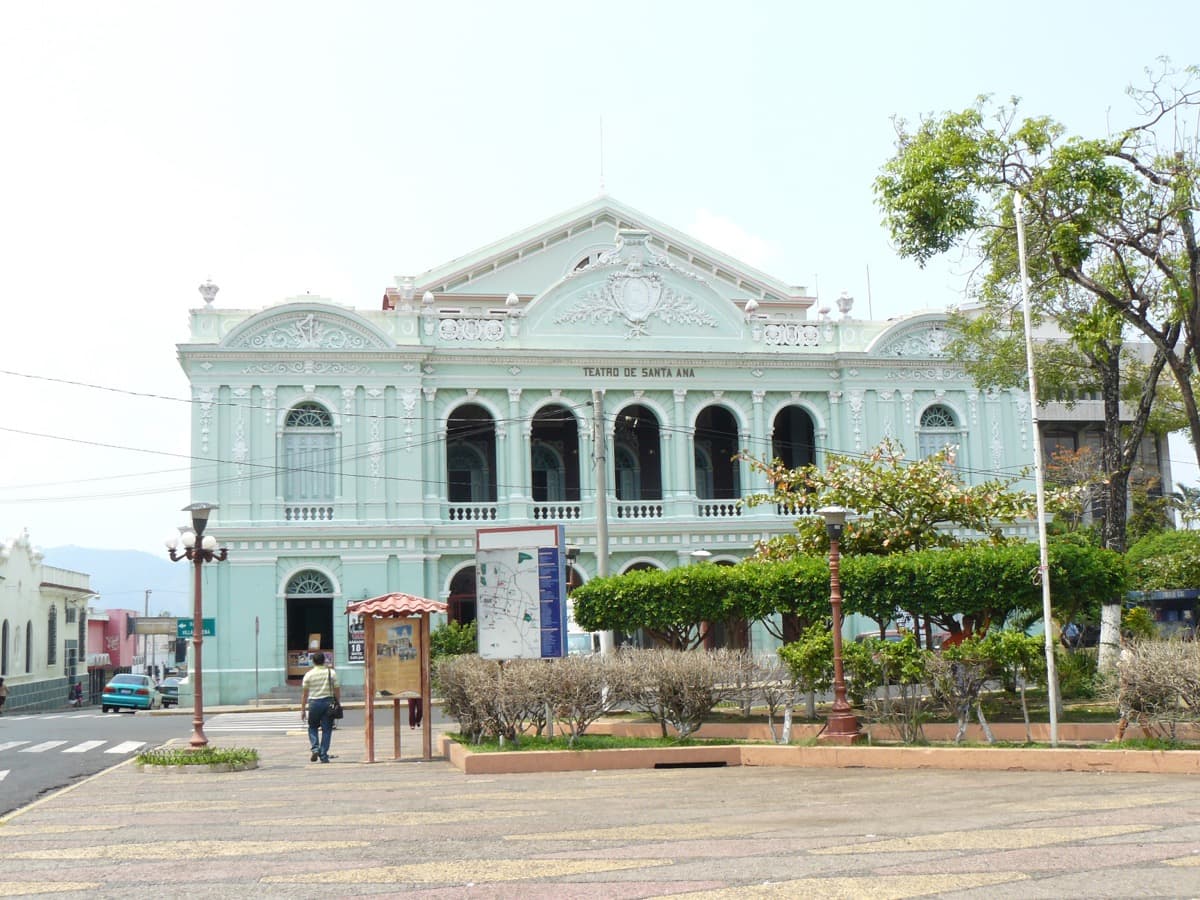
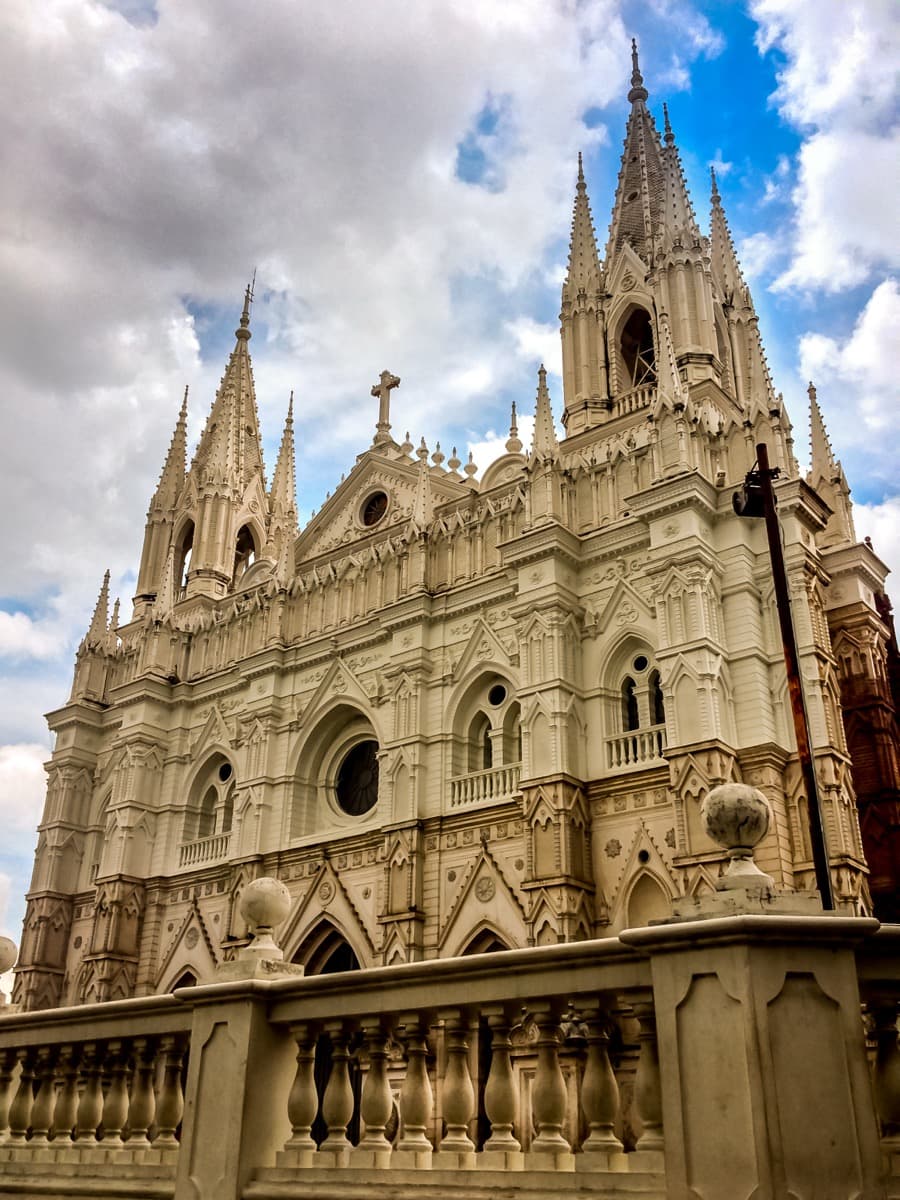
Santa Ana sits in the western highlands of El Salvador, about sixty kilometres from the capital, on the lower slopes of the Santa Ana Volcano. By any normal measure of urban grandeur it should not have what it has. The city has roughly a quarter of a million residents. It is a provincial capital, not a national one. It built no cathedral during the entire Spanish colonial era. And yet within a single block around Parque Libertad you can stand in front of a neo-Gothic cathedral finished in 1913, a Beaux-Arts theatre from around 1910, a private elite club from the same generation, and a city hall from the same generation, all of them substantial enough to anchor a much larger city.
This concentration is not an accident. Santa Ana is what coffee built in the fifty years it had to spend.
The coffee window
The economy of El Salvador in the colonial era ran on indigo, the deep blue dye extracted from a leafy shrub grown in the country's eastern and central valleys. By the middle of the nineteenth century, synthetic dyes invented in Germany had cratered the indigo market. The Salvadoran elite, looking for a successor crop, settled on coffee.
The conditions were close to perfect. The volcanic slopes around Santa Ana and the Apaneca-Ilamatepec mountain range produce a fine-grained, mineral-rich soil. The altitude, somewhere between a thousand and fifteen hundred metres for the best plantations, suits arabica. The dry season is reliable. The rainy season is reliable. Once the political class agreed to push the country in this direction, growth was fast.
The political class also rewrote the rules of land tenure to make the growth possible. Communal lands, mostly held by indigenous Pipil and ladino communities, were dissolved by laws passed in 1881 and 1882. The land was redistributed into private estates, most of it in the hands of a small number of families who already had access to capital, foreign connections, and political influence. The historians who came along later named the resulting concentration the Catorce Familias, the Fourteen, although the actual number was somewhere between fourteen and forty and shifted with each generation.
By the 1890s, coffee was producing somewhere around eighty percent of the country's export revenue. The wealth was concentrated in Santa Ana and a few other western towns. The Catorce Familias built the architecture you walk through. The Teatro de Santa Ana is named the National because, for a brief window, the city felt that it had earned that adjective.
What the buildings did
Hear a stop from this walk
Iglesia El Carmen
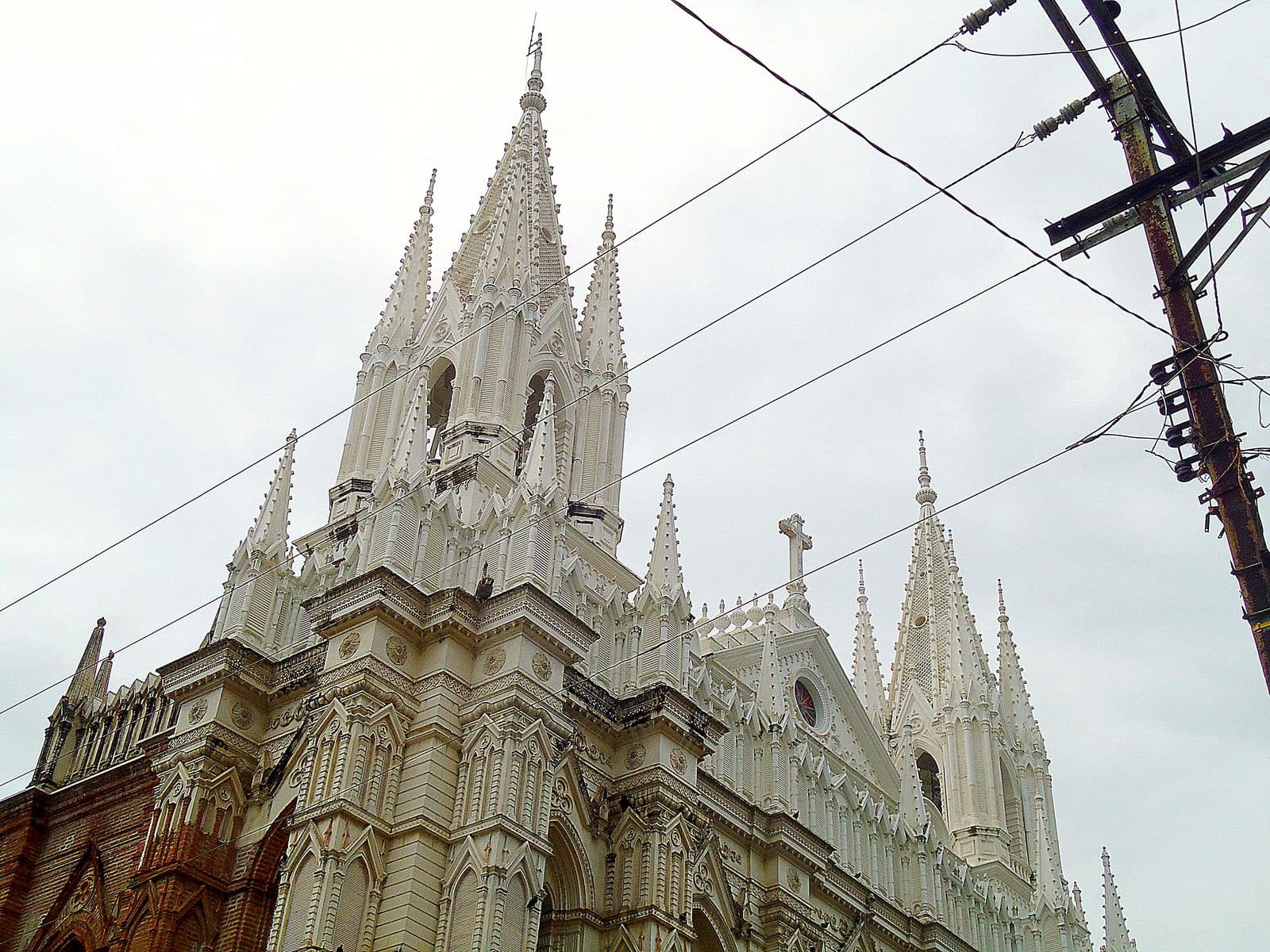
The Catedral de Santa Ana, finished in 1913, is the most legible piece of the boom. It is the only neo-Gothic cathedral of its scale in the country. The architectural vocabulary is Northern European, the spires modeled on cathedrals along the Rhine. The cathedral was finished a full four centuries after El Salvador's Spanish colonization began, but it looks like a building from the early years of that colonization, because the coffee families wanted Santa Ana to read as old, established, Catholic, European. The building is a claim of legitimacy.
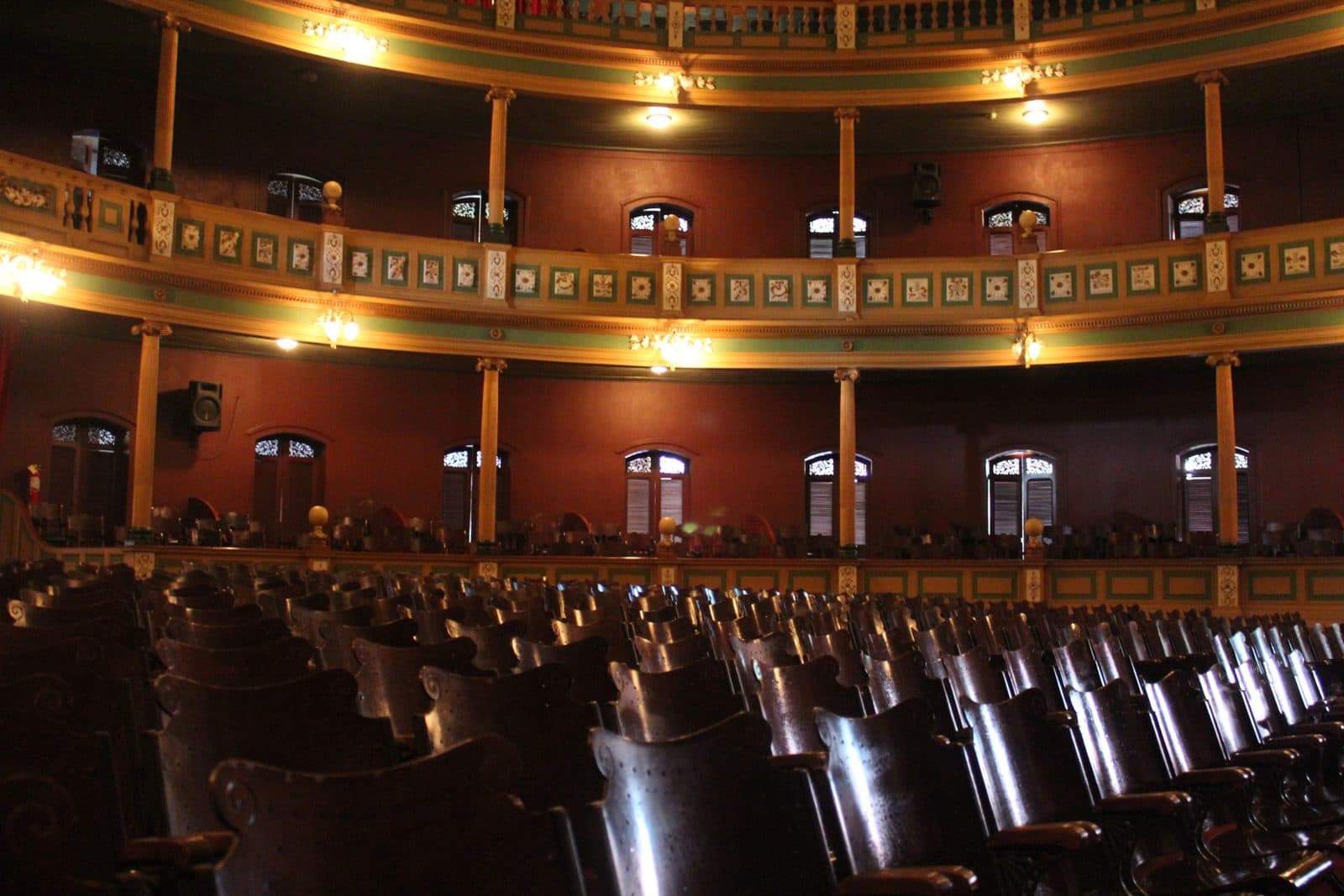
The Teatro Nacional de Santa Ana, finished around 1910, is the second claim. The exterior is Italian Renaissance Revival. The interior, with a horseshoe auditorium modeled on the European opera houses of the period, has a painted ceiling, a gilded proscenium, and crystal chandeliers. The construction was funded substantially by a tax on coffee exports. The coffee families wanted a venue where touring European opera companies could perform.
The Casino Santaneco, on the south side of the same plaza, is the third claim, and the most revealing. It is a private members' club where, for most of the early twentieth century, the coffee elite gathered to drink, to play cards, and to make the political decisions that the formal government would later ratify. The building's modest exterior contains a ballroom and a billiards room that have been compared, fairly, to the gentlemen's clubs of London. Membership was hereditary and limited to a few dozen families.
The Alcaldía Municipal, the city hall, is the fourth claim, and the oldest, with foundations going back into the colonial era. By the late nineteenth century it had been remodelled to match the new ambition of the city around it.
The cost
In January 1932, a peasant and indigenous uprising broke out in the coffee-growing region around Santa Ana, Sonsonate, and Ahuachapán. The immediate causes were several. Coffee prices had collapsed in the global depression. The Salvadoran government had recently been seized in a military coup. The Communist Party of El Salvador, led by Agustín Farabundo Martí, had been organizing in the countryside. And the indigenous communities whose communal land had been dissolved fifty years earlier had been pushed into wage labour on the same fields they once owned.
The uprising lasted a few days. The army's response, ordered by General Maximiliano Hernández Martínez, lasted weeks. Soldiers and paramilitary units killed somewhere between ten thousand and forty thousand people, most of them indigenous Pipil men, in towns and villages across the western highlands. The event is known as La Matanza, the massacre. Estimates vary because nobody counted. Mass graves were filled and unmarked.
La Matanza is the moment at which the architecture of Santa Ana stops being innocent. The cathedral, the theatre, the casino, the alcaldía, the coffee fortunes that built them, all of it depended on a labour regime that, when challenged, was defended with a slaughter. The Museo Regional de Occidente, on the south side of Parque Libertad, addresses La Matanza in its permanent exhibition. The cathedral and the theatre do not.
What survives
The coffee economy lasted, in attenuated form, until the 1980 land reform redistributed many of the largest estates. The Catorce Familias still exist as a group, although their wealth is now diversified into banking, retail, and media. The buildings on Parque Libertad are mostly intact, mostly restored, and mostly open to the public.
A walk through downtown Santa Ana is short, maybe two kilometres, and dense. It is the most architecturally extravagant block in El Salvador, built inside a window so narrow that you can date almost every façade to the same generation. Reading the block as a story requires holding two things at once. The grandeur is real. The labour system that paid for it produced the worst single event in El Salvador's twentieth century. Both belong on the same walk.
Frequently asked questions
- How many self-guided walking tours are there in Santa Ana?
- Roamer currently has 1 self-guided audio walking tour in Santa Ana. Every tour is free to start: the introduction and first stop play in full, and every later stop plays a short preview before you decide to buy.
- How much does a self-guided walking tour in Santa Ana cost?
- Each tour is free to preview and $4.99 for lifetime access. If you want more than one, a 7-day pass is $12.99 and a 30-day pass covering every tour is $19.99, which works out to well under a dollar a day.
- Can I do the Santa Ana tours offline?
- Yes. Tours can be downloaded in advance in the Roamer app and played with no signal, which is useful when you are travelling without mobile data.
- How long are the Santa Ana walking tours?
- They run about 75 minutes, covering 1.8 km on foot, with up to 7 stops on the longest route. You set the pace and can pause any time.
Ready to experience it?
Santa Ana: The Coffee-Built Capital
75 min · 1.8 km · easy
More from Santa Ana
Explore more at your own pace.
How to See Santa Ana: A City the Coffee Money Built and the Coffee Money Left
One Day in Santa Ana, El Salvador: A Walkable Center Itinerary (2026)
Santa Ana Travel Guide: How Many Days, Getting Around, Is It Safe (2026)
What to Eat in Santa Ana, El Salvador: A Food Guide (2026)
How Coffee Built Santa Ana's Skyline in Forty Years