The walking tour through Santa Ana covers seven buildings on a flat loop of about a mile and a half. The tour's audio narrates each building as a distinct landmark. Walked in that mode, the tour is a sampler. Walked with one more piece of context, the same seven buildings become a single architectural cycle, all built by the same group of people, with the same money, in the same forty-year window, for the same set of arguments. That context is the Salvadoran coffee economy of 1880 to 1930.
This article is the background the audio does not have time to lay out. It explains why these particular buildings are here, why they look the way they look, and what the buildings deliberately leave out.
The shape of the boom
Coffee was not native to El Salvador. The crop was introduced to Central America in the eighteenth century but only became commercially significant in El Salvador after the 1850s collapse of indigo. The collapse was external. Synthetic indigo, developed in German chemistry labs through the 1860s and industrialized by BASF in 1897, broke the Central American producers. The same elite families that had grown rich on indigo pivoted to coffee, and the western highlands around Santa Ana turned out to be one of the best high-altitude arabica regions on earth.
The boom was concentrated in a narrow window. Between roughly 1880 and 1930, El Salvador went from being a minor coffee exporter to being one of the world's most valuable per-hectare coffee producers. Most of the production was in the western departments of Santa Ana, Ahuachapán, and Sonsonate. The economic infrastructure that supported the boom was assembled in the same period: the rail line connecting Santa Ana to the port of Acajutla, the western telegraph network, the regional bank that later became the Central Reserve Bank branch building you see on the tour's sixth stop.
The labor that picked the coffee was largely indigenous and peasant, working on land that had previously been communal. The 1882 abolition of indigenous communal ejidos was the legal instrument that made the boom possible. The displaced peasants became the seasonal workforce on the new coffee fincas. The arrangement produced what historians later called the Catorce Familias, the Fourteen Families, a small wealthy class that effectively controlled national policy for half a century. The number is rhetorical. The reality was probably forty or fifty households. The Casino Santaneco, the fifth stop on the tour, was where many of them spent their evenings.
The buildings, in order
Hear a stop from this walk
Iglesia El Carmen
Parque Libertad, the first stop, predates the coffee boom by a century, but the current park layout, the iron benches, the central Liberty statue, and the surrounding mansions all date from the 1890s upgrade. The Liberty statue was installed in honor of Central American independence, but its position at the visual center of a coffee-money park is itself an argument: the indigenous peasants whose communal lands had just been abolished are not on the plinth.
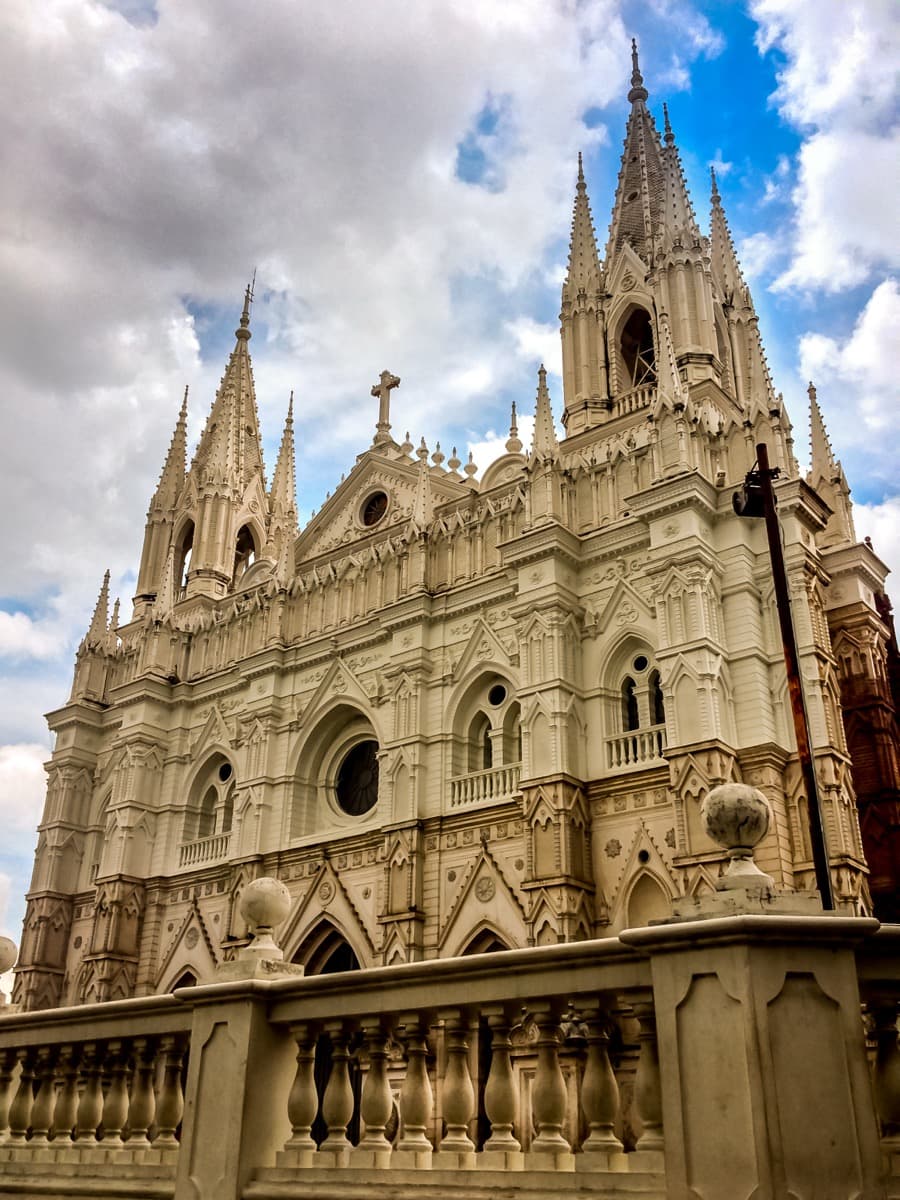
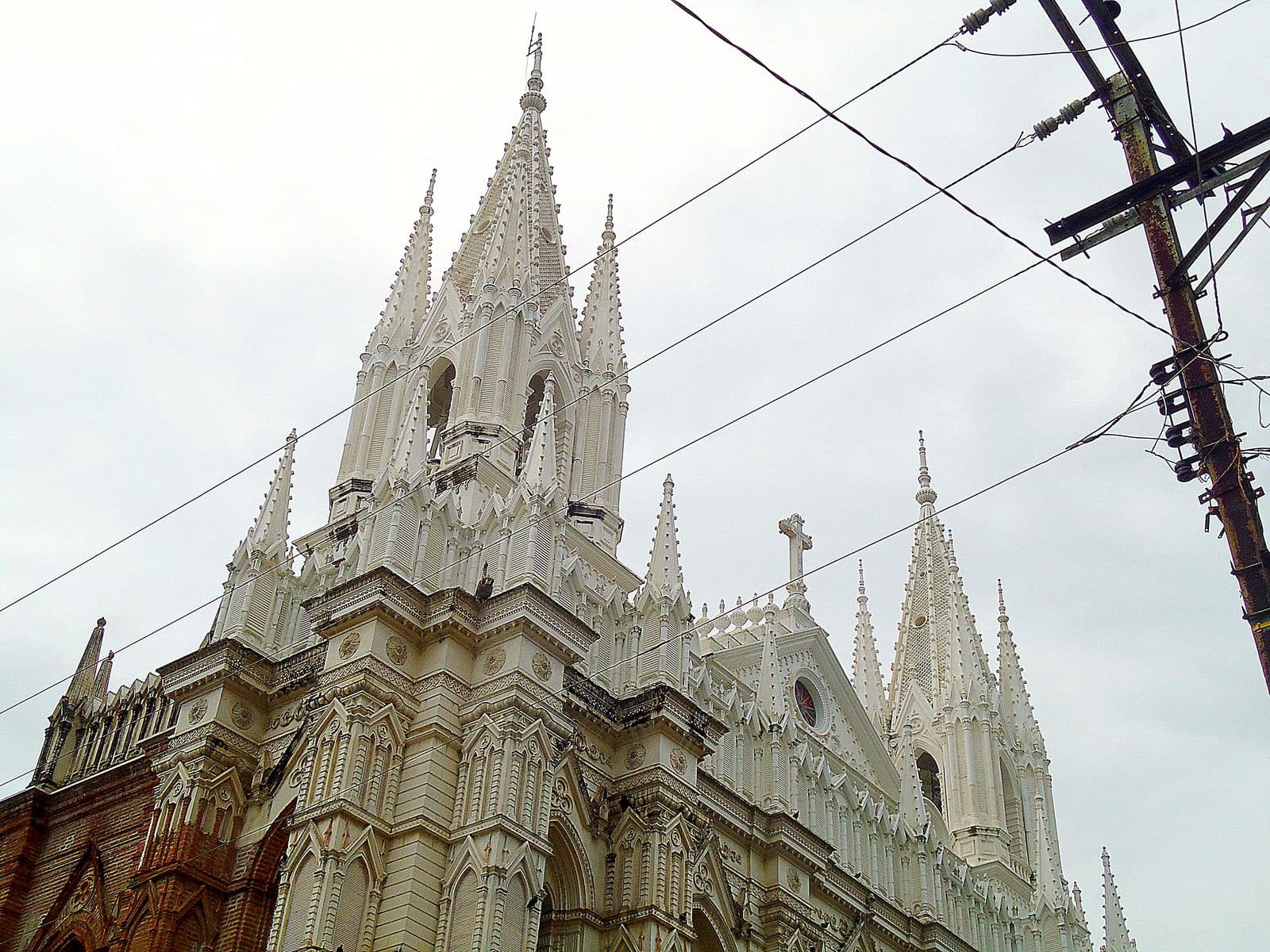
The Catedral de Santa Ana, the second stop, was built between 1906 and 1913. The architect was the Honduran-born Spaniard Eugenio Aragón, with significant later modification by the Italian Carlos Ferracuti. The neo-Gothic style was chosen deliberately to look European, to look specifically like the cathedrals of the Rhineland or northern Spain. The earlier colonial church on the same site, considered too modest by the coffee elite, was demolished to make room. The two-dollar roof access is worth taking. From the bell towers, the coffee fincas of the Sierra de Apaneca-Ilamatepec are visible to the west.
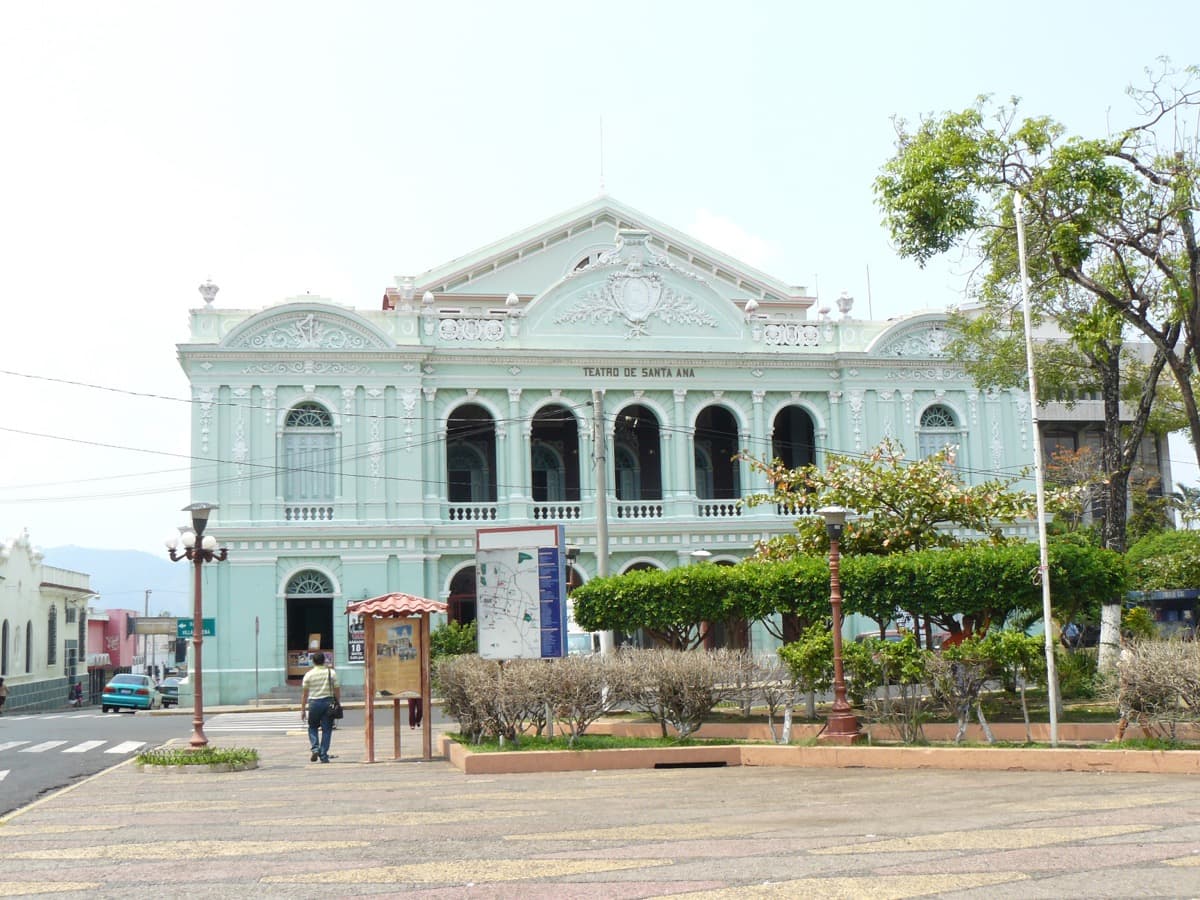
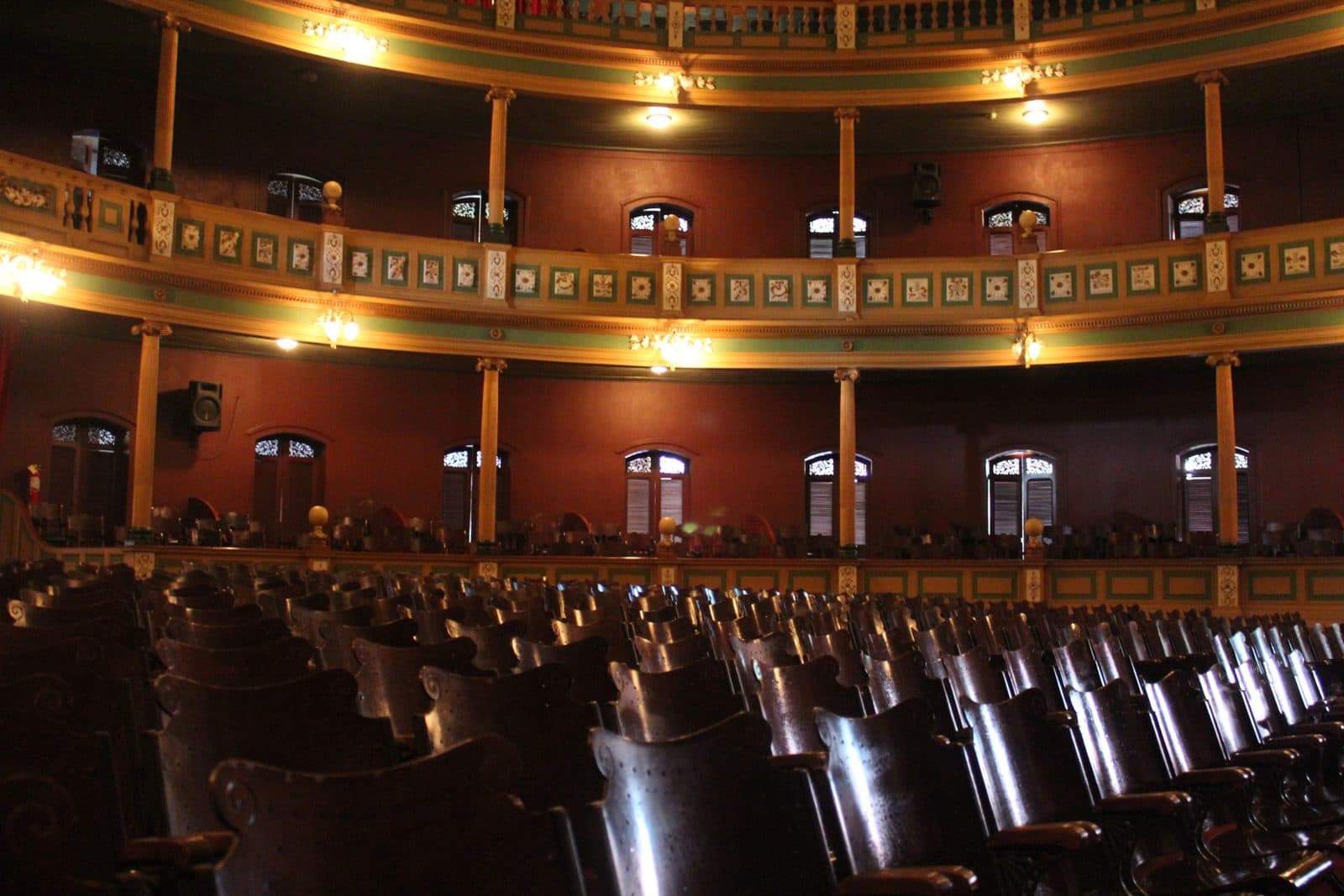
The Teatro Nacional, the third stop, was built between 1910 and 1912. The architect was the French-trained Salvadoran Daniel Beylard. The theater opened on February 27, 1912, five years before San Salvador's Teatro Nacional in 1917, making Santa Ana's the older of the two. The competition between the two cities for cultural prestige was open and explicit in the period. Coffee revenue gave Santa Ana the means to win the competition first. The seven-dollar guided tour of the interior is the only way to see the hand-painted dome.
The Alcaldía Municipal, the fourth stop, was completed in 1874, which makes it the earliest building on the tour and slightly predates the coffee boom proper. Its function was administrative; coffee revenues a decade later upgraded it with the ironwork and detailing you see today. The building remains the working city hall.
The Casino Santaneco, the fifth stop, was the private members' club of the coffee elite. The word casino in Latin American Spanish means social club, not gambling hall. Membership was restricted; sponsorship by existing members was required. Inside, the building housed ballrooms, reading rooms, dining halls, and a bar. The architecture is Spanish-eclectic with French ironwork. The interior is not generally open to non-members but the facade is the clearest single statement of the elite's self-image in the city.
The Museo Regional de Occidente, the sixth stop, occupies the former western branch of the Central Reserve Bank, a 1920s building added near the end of the coffee cycle. The museum was opened in 1999 and is one of the few places on the tour that explicitly addresses what the coffee economy displaced. The Pipil cultural exhibits and the dedicated room for the poet Claribel Alegría, who grew up in Santa Ana in the 1920s, narrate the parts of the city's history that the monumental buildings outside do not.
The Iglesia El Carmen, the final stop, is the oldest church in Santa Ana. Construction began in 1822 and was consecrated in 1852. The interior is austere, the structure is solid, and the building was small enough to survive the earthquakes that damaged larger churches. El Carmen is the tour's reminder that Santa Ana existed before coffee and will outlast it.
The 1932 ending and what it changed
The coffee economy did not end well. World coffee prices collapsed with the 1929 Wall Street crash and did not recover quickly. By 1931, wages on the western fincas had fallen to subsistence levels. In January 1932, indigenous and peasant workers in the western departments rose up under several organizers, including the communist leader Farabundo Martí.
The response from the military government of General Maximiliano Hernández Martínez killed somewhere between ten and forty thousand people in two weeks, mostly Pipil and other indigenous Salvadorans. The Matanza, the slaughter, ended large-scale indigenous-led organizing in El Salvador for the next fifty years. It also ended the coffee elite's open political control. Hernández Martínez and the military regimes that followed managed the country directly. The elite kept the land and the fincas, but lost the cultural pretension that had built the buildings on this tour. The Casino Santaneco hosted fewer dinners. The Teatro Nacional hosted fewer European touring companies. The city kept growing, but the boom-era ambition was over.
How to walk the tour with this in mind
The audio at each stop covers what you can see. The audio cannot easily cover what the buildings carefully omit. The omission is the point of the article. Walk the tour knowing that every building on the perimeter of Parque Libertad was paid for, more or less directly, by coffee profits that depended on the 1882 land law, that the Iglesia El Carmen is the only building on the route from before the boom, and that the Regional Museum is the only stop that explicitly addresses the boom's costs. The buildings are beautiful. They are also a particular era's argument about who deserved monuments. Both readings are true. The tour is more honest if you walk it holding both at once.
Ready to experience it?
Santa Ana: The Coffee-Built Capital
75 min · 1.8 km · easy
More from Santa Ana
Explore more at your own pace.
How to See Santa Ana: A City the Coffee Money Built and the Coffee Money Left
How to See Santa Ana: Coffee, the Fourteen Families, and the Town Built on a Massacre
One Day in Santa Ana, El Salvador: A Walkable Center Itinerary (2026)
Santa Ana Travel Guide: How Many Days, Getting Around, Is It Safe (2026)
What to Eat in Santa Ana, El Salvador: A Food Guide (2026)