Altstadt: The Sandstone City in the River's Loop
75 min · 1 km · moderate
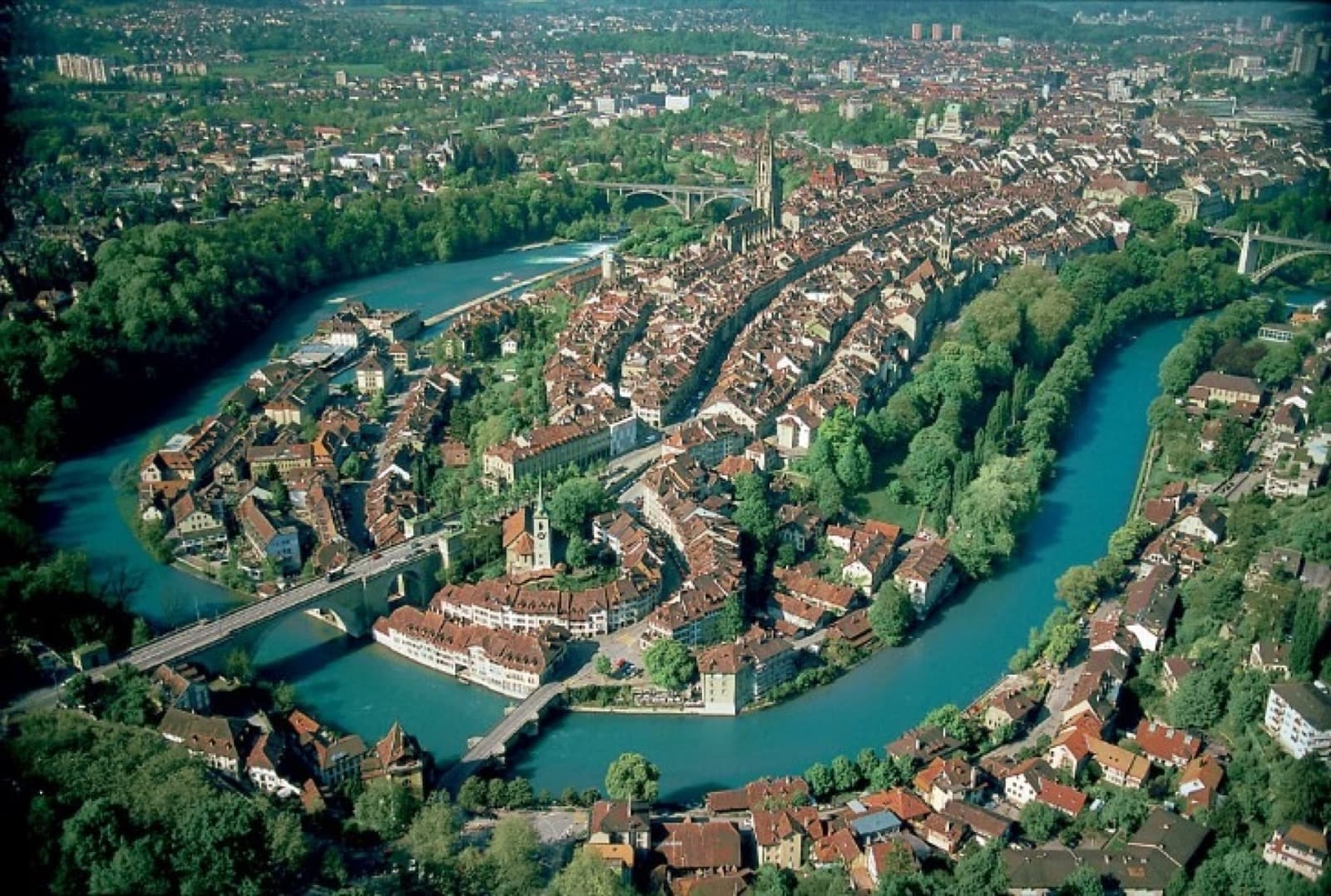
Bern is built to one legible rule, and once you learn to read it, the whole federal city opens up. A town of green sandstone grew westward in planned rings down a spur almost encircled by the River Aare, each old western gate left stranded inside the growing town and handed a new job. Above that grid rises the tallest cathedral spire in the country, below it live the bears that gave the city its name, and on the ridge sits the parliament of a young nation. The founding, the rebuilding after fire, the arcades, the painted fountains, the clock, the minster, and the bears are not a list of separate sights. They are one grammar, and the two Bern walking tours below teach you to read it at your own pace.
One material, one plan
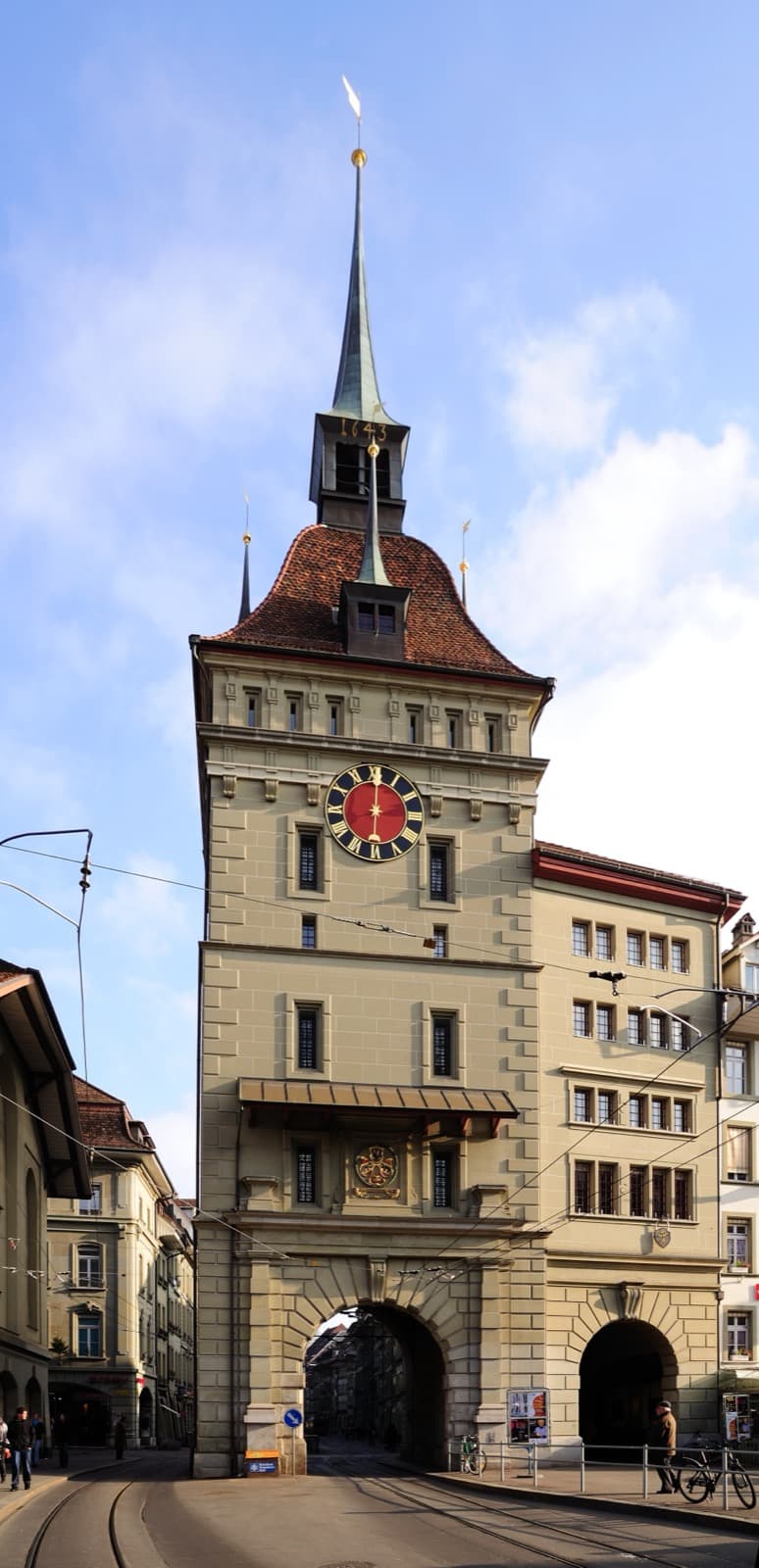
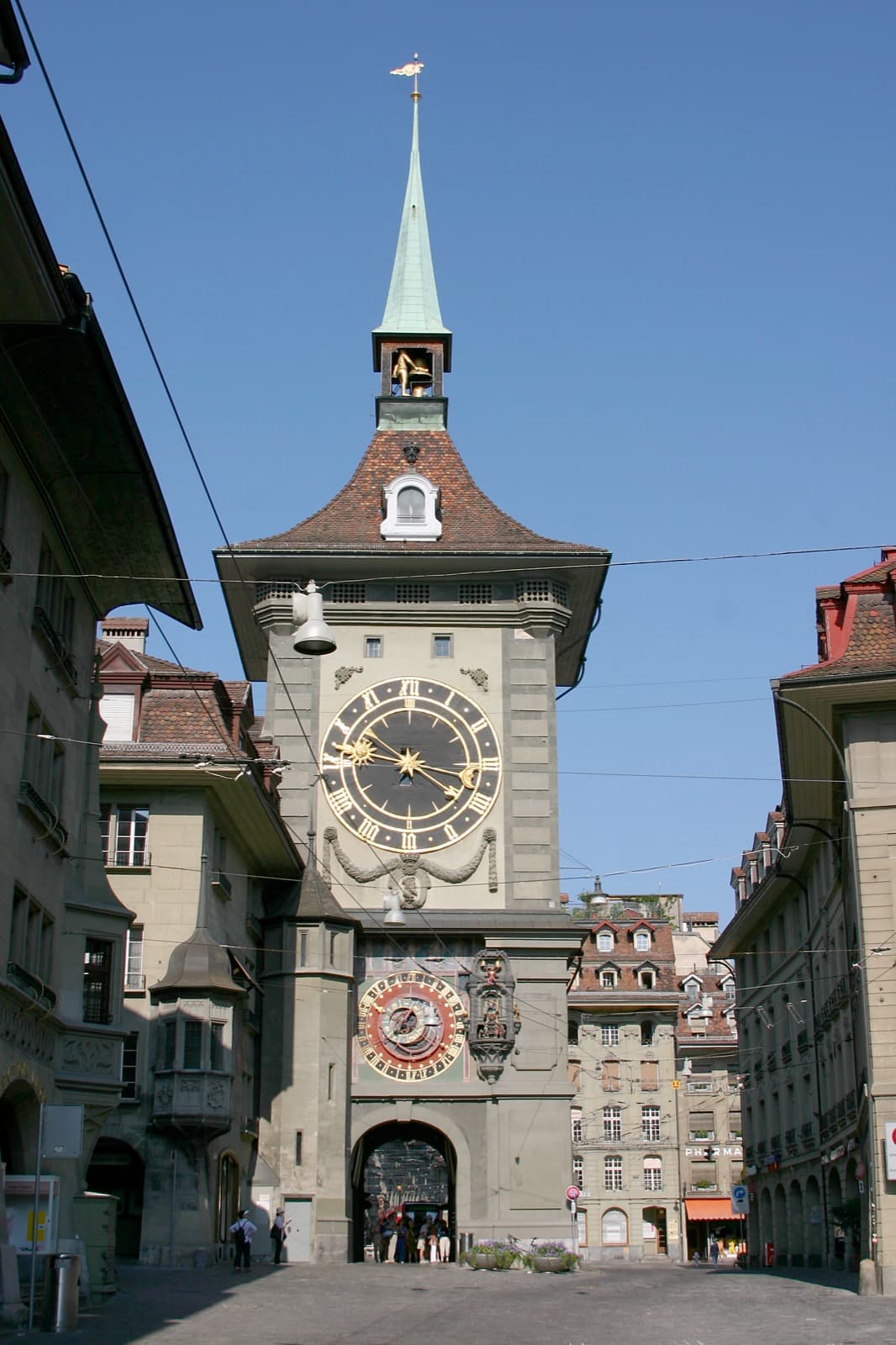
The unifying fact of Bern is repetition with a rule. The town was founded by tradition around eleven ninety-one by a duke of the House of Zaehringen, whose castle stood at the tip of the spur inside the great bend of the Aare. From there the city grew west in stages, and each stage was marked by a western gate tower. As Bern kept outgrowing its own walls, those gates were left inside the town and put to new use. The Altstadt: The Sandstone City in the River's Loop tour reads this pattern as a straight line west to east: the Kaefigturm, the Prison Tower, marks the second ring, where a gate stood from about twelve fifty-six; the Zytglogge marks the first ring, built about twelve eighteen to twelve twenty as the very first western gate. Both gates became prisons, then archives, then something civic. A gate becomes a prison becomes an archive, and the wall it once guarded becomes a street you walk straight down.
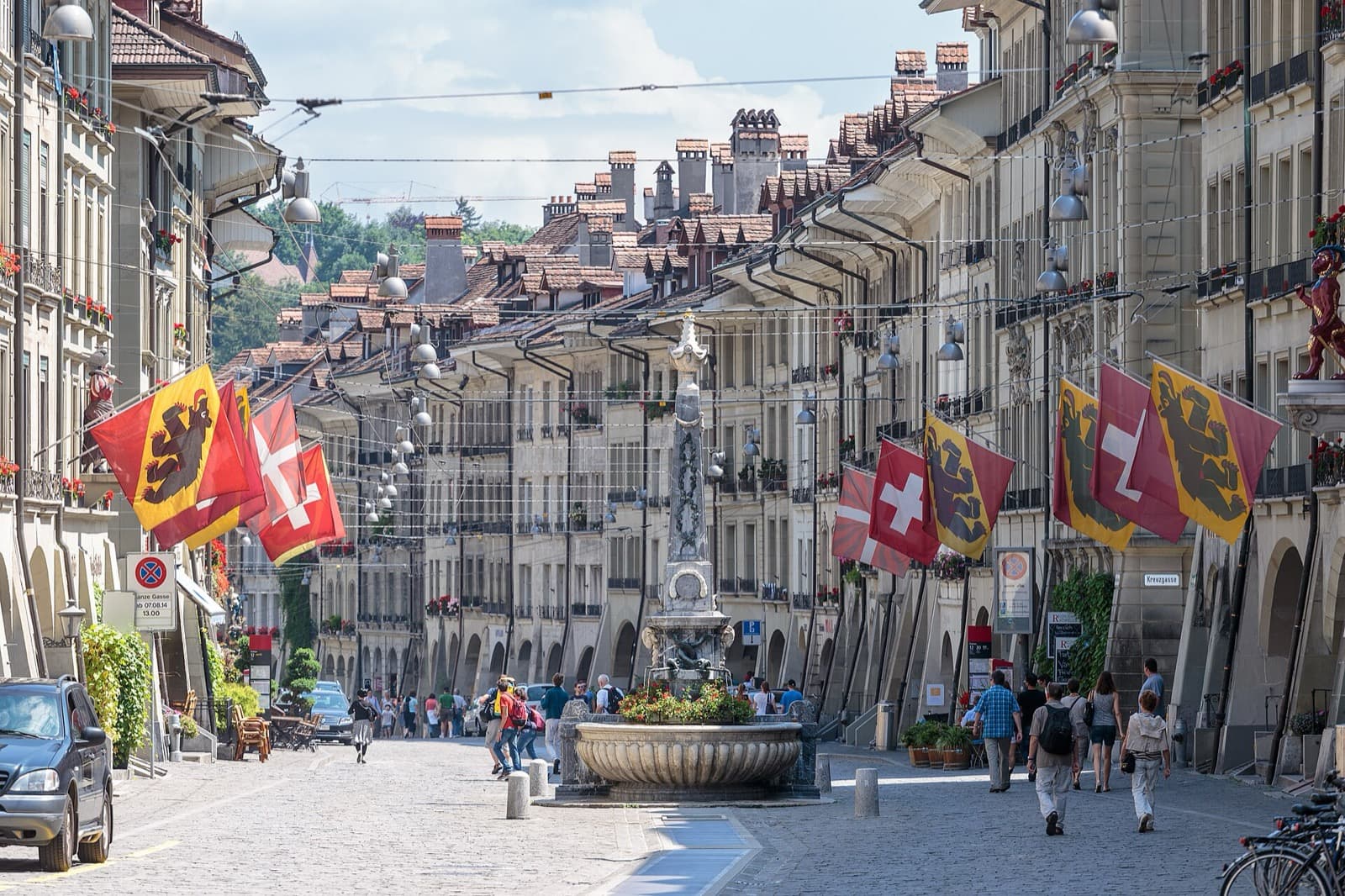
The second unifying fact is the color. After the great fire of fourteen hundred and five, the timber town was rebuilt in the green local sandstone that gives Bern its shade, so the whole city reads as one material. UNESCO inscribed the Old City of Bern on the World Heritage List in nineteen eighty-three for exactly this coherence: its planning, its kilometres of covered arcades, and its painted Renaissance fountains. The arcades, called Lauben, run for kilometres, roughly six of them, so you can cross much of the old town under cover in rain or sun. That is not decoration. It is the same one-rule logic carried into daily life.
The painted fountains and the human scale
Hear a stop from this walk
The Minster Terrace Over the Aare
Kramgasse is where the grammar becomes fully readable in a single view: arcades on both sides, painted fountains down the middle. Most of Bern's allegorical fountains date to the fifteen forties, so a street set its whole vocabulary within about one generation. The Zaehringen Fountain shows an armoured bear holding the founder's coat of arms, carved by the sculptor Hans Hiltbrand; the Samson Fountain, where Samson tears open a lion's mouth, is by the sculptor Hans Gieng. Gieng carved the Justice Fountain of fifteen forty-three on Gerechtigkeitsgasse too, and its Lady Justice wears a blindfold that was a novelty at the time and later became the standard way to show impartial justice. The original was destroyed by vandals in nineteen eighty-six and is now kept in the Bern Historical Museum; the figure on the street is a copy.
Inside this grand system sits one small window. At Kramgasse forty-nine, above the arcade, Albert Einstein lived from nineteen oh three to nineteen oh five while working at the federal patent office. From that ordinary second-floor flat, in the year later called the annus mirabilis, he wrote the papers that remade physics: special relativity, light quanta, Brownian motion, and the equivalence of mass and energy. The Albert Einstein Society made the apartment a museum in nineteen seventy-seven. The city's grammar made room for a junior clerk to change the world without anyone on the street below knowing.
The tallest spire, and the day the images fell
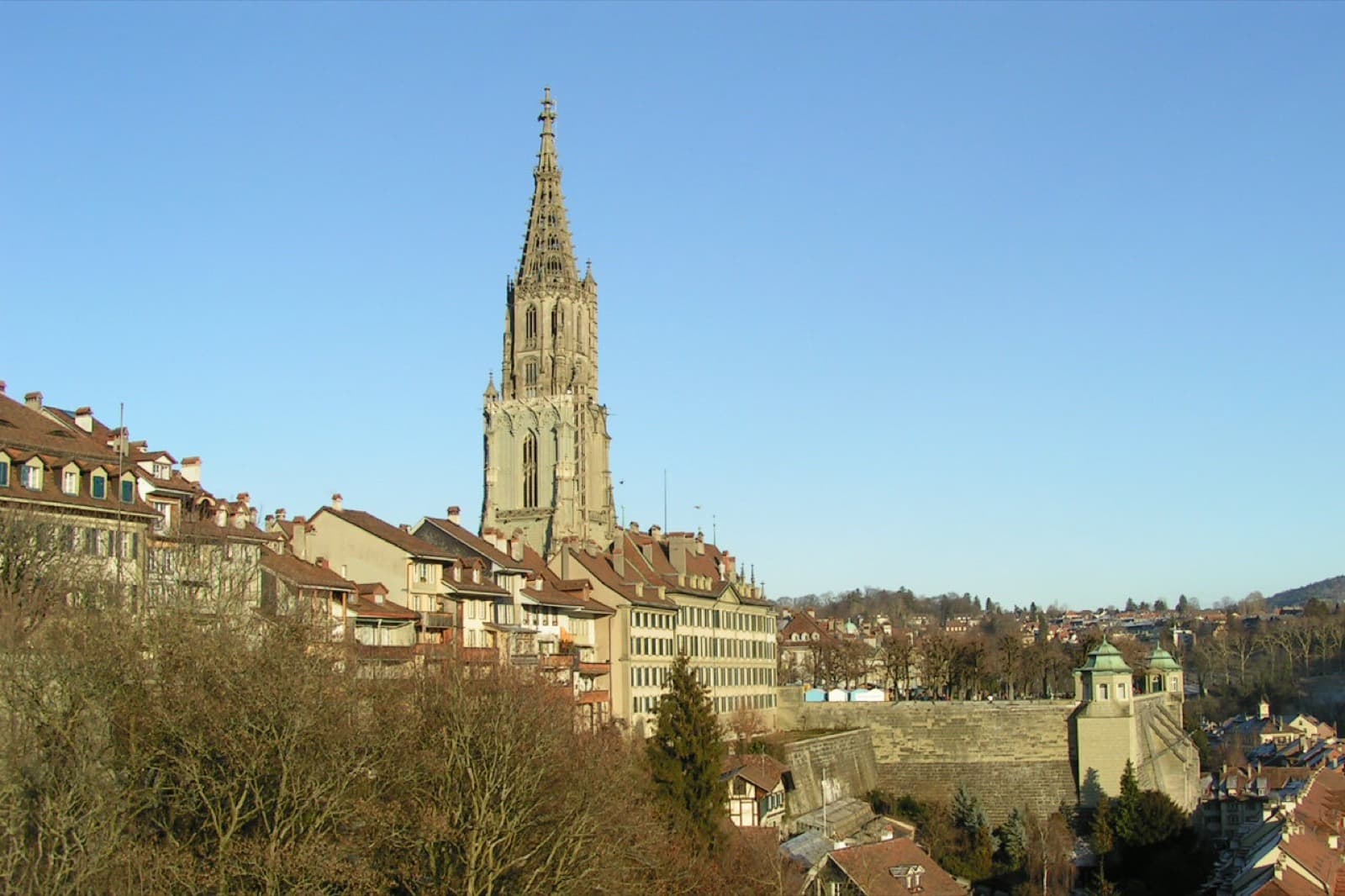
The Altstadt walk climbs to Bern Minster, whose construction began on the eleventh of March, fourteen twenty-one, and whose tower was completed only in eighteen ninety-three. At one hundred point six metres it is the tallest cathedral in Switzerland. The minster reads two ways at once. It is the most confident gesture in the sandstone city, and it is also a survivor. When the Reformation reached Bern in fifteen twenty-eight it brought iconoclasm, the systematic stripping of images from the churches, and the carved Last Judgement over the central portal was the only set of statues in the entire minster to survive that image-breaking.
Behind the church, the Muensterplattform closes the walk. Its supporting walls were completed by fifteen fourteen under master builder Erhart Kueng and stand about thirty-one and a half metres above the Badgasse below. From here you read the founding idea whole: a sandstone spur inside the river's loop, defended on three sides, grown westward ring by ring. A plaque recalls the theology student Theobald Weinzaepfli, thrown over the terrace wall in sixteen fifty-four when his horse bolted, who survived the fall into a garden below and later became a pastor.
The bear and the federal city
The second walk holds two ideas at once. The Bundeshaus: The Bear and the Federal City tour reads Bern as the seat of a young nation and as the city of its oldest symbol, and it does so by descending from power to origin. It begins at the Bundeshaus, the Federal Palace, built between eighteen ninety-four and nineteen oh two to plans by the architect Hans Wilhelm Auer, inaugurated on the first of April, nineteen oh two, its copper dome weathered to turquoise sixty-four metres above the city. In front of it the Bundesplatz, a car park until the two thousand and four redesign, now runs a fountain of twenty-six jets, one for each Swiss canton. Bern became Switzerland's federal city on the twenty-eighth of November, eighteen forty-eight, chosen by the Federal Assembly of the new federal state.
From the parliament the walk descends through the oldest lanes to the Nydegg Church, at the eastern tip of the spur, standing on the ground where the Nydegg castle of the Zaehringen dukes once stood, the founding spot of the town. The famous bear-naming legend belongs here: the duke was said to have vowed to name the town for the first animal killed in the hunt, and that animal was a bear, a Baer. The city has carried the bear on its arms for centuries, though scholars since the nineteen eighties lean toward a Celtic origin for the name. Then the route crosses the Untertorbruecke, Bern's oldest bridge, built in stone between fourteen sixty-one and fourteen eighty-nine and for centuries the only fixed crossing of the Aare, to the BaerenPark, where the living bears have been kept by tradition since fifteen thirteen. The walk ends at the Rosengarten, a former cemetery turned rose garden, where the whole sandstone city is seen curled inside its river, with a bronze Einstein resting on a bench facing the view.
Read both tours and the same city answers twice: gate, ring, arcade, painted fountain, sandstone, spire, bear, all of it wrapped in the loop of the Aare. For the full set of routes, see the Bern walking tours hub, and walk the federal city at your own unhurried pace.
Sources
- UNESCO World Heritage Centre, Old City of Bern (inscribed nineteen eighty-three).
- Roamer tour transcript, Altstadt: The Sandstone City in the River's Loop (fact-audited).
- Roamer tour transcript, Bundeshaus: The Bear and the Federal City (fact-audited).
- Bern Historical Museum, on the original Justice Fountain figure.
- Albert Einstein Society, Einstein House at Kramgasse forty-nine.
Frequently asked questions
- Why is Bern a UNESCO World Heritage Site?
- The Old City of Bern was inscribed on the UNESCO World Heritage List in nineteen eighty-three for its coherent medieval planning, its kilometres of covered arcades, and its painted Renaissance fountains. After a great fire in fourteen hundred and five, the town was rebuilt in local green sandstone, giving the whole city one unified material and appearance. Its medieval street plan inside the loop of the Aare has stayed essentially unchanged since the twelfth to fifteenth century.
- Why does Bern have bears, and where can you see them?
- By tradition the town was named after a bear killed on the founder's hunt, and Bern has carried the bear on its coat of arms for centuries and kept living bears since about fifteen thirteen. Today the bears live in the BaerenPark, a riverside enclosure of about six thousand square metres that opened in two thousand and nine on the far bank of the Aare, replacing the old bear pit of eighteen fifty-seven. Scholars now lean toward a Celtic origin for the city's name, so the bear-naming story is best held as legend.
- How tall is Bern Minster and what makes it notable?
- Bern Minster is the tallest cathedral in Switzerland, with a spire standing one hundred point six metres high. Construction began on the eleventh of March, fourteen twenty-one, but the tower was only completed in eighteen ninety-three. The carved Last Judgement over its central portal was the only set of statues in the whole minster to survive the image-stripping of the Reformation, which reached Bern in fifteen twenty-eight.
- Did Albert Einstein live in Bern?
- Yes. Einstein lived at Kramgasse forty-nine, in a second-floor flat above the arcade, from nineteen oh three to nineteen oh five while working at the Swiss federal patent office. From there, in nineteen oh five, he wrote the papers on special relativity, light quanta, Brownian motion, and mass-energy equivalence. The apartment has been a museum since nineteen seventy-seven, and a bronze statue of Einstein sits on a bench in the Rosengarten.
- When did Bern become the capital of Switzerland?
- Bern became the federal city of Switzerland on the twenty-eighth of November, eighteen forty-eight, chosen by the Federal Assembly of the new federal state. The Federal Palace that houses parliament was built between eighteen ninety-four and nineteen oh two and inaugurated on the first of April, nineteen oh two. Its copper dome, weathered to turquoise, rises sixty-four metres above the city on the ridge over the Aare.
Ready to experience it?
Altstadt: The Sandstone City in the River's Loop
75 min · 1 km · moderate
More from Bern
Explore more at your own pace.
Bern Travel Guide: How Many Days, Getting Around, Best Time, and Safety
One Day in Bern: A Walkable Morning-to-Evening Itinerary
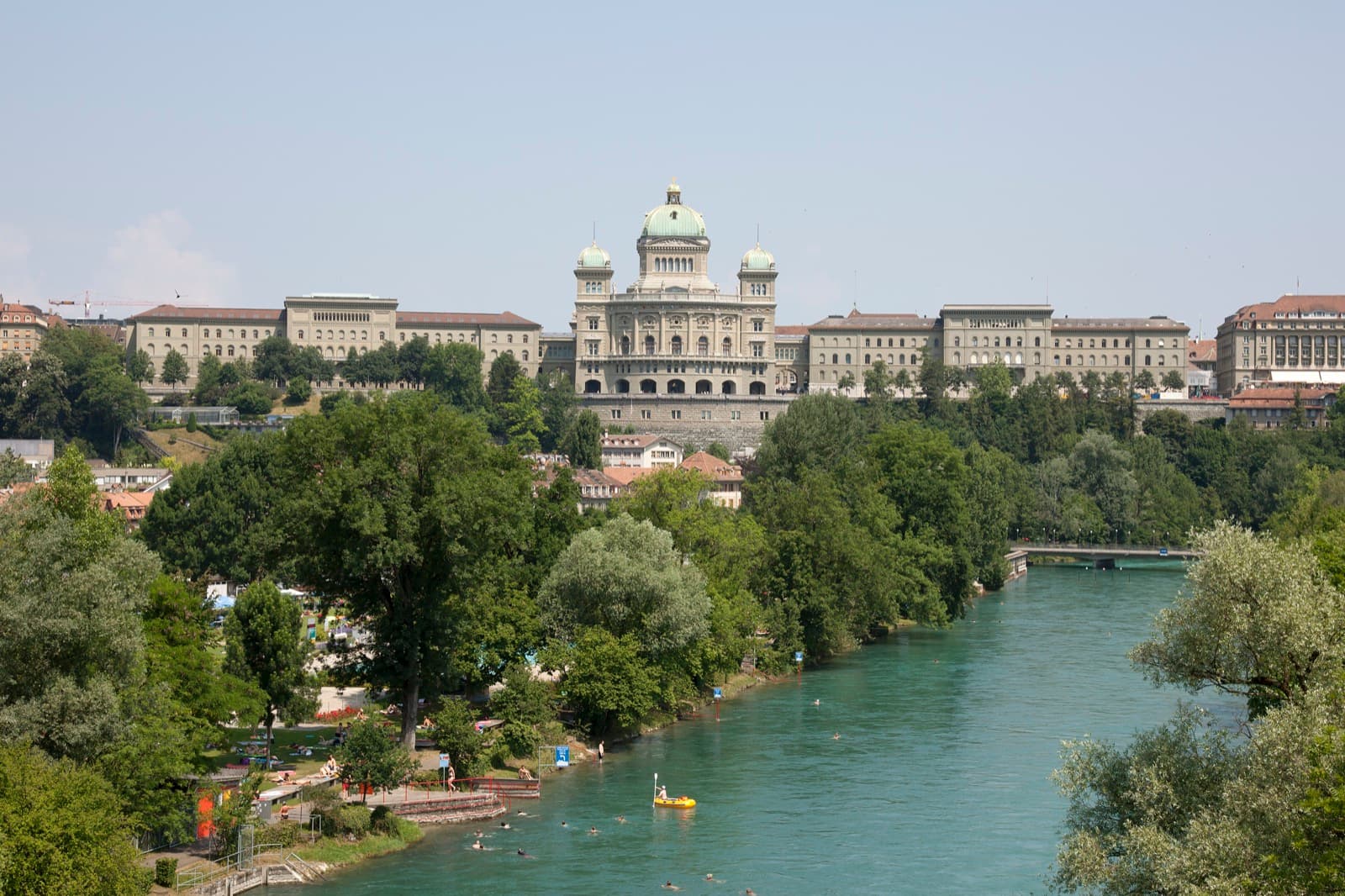
The Federal Palace and Bundesplatz: Where Bern's Two Stories Share One Rock
The Zytglogge: How Bern's First City Gate Became a Clock
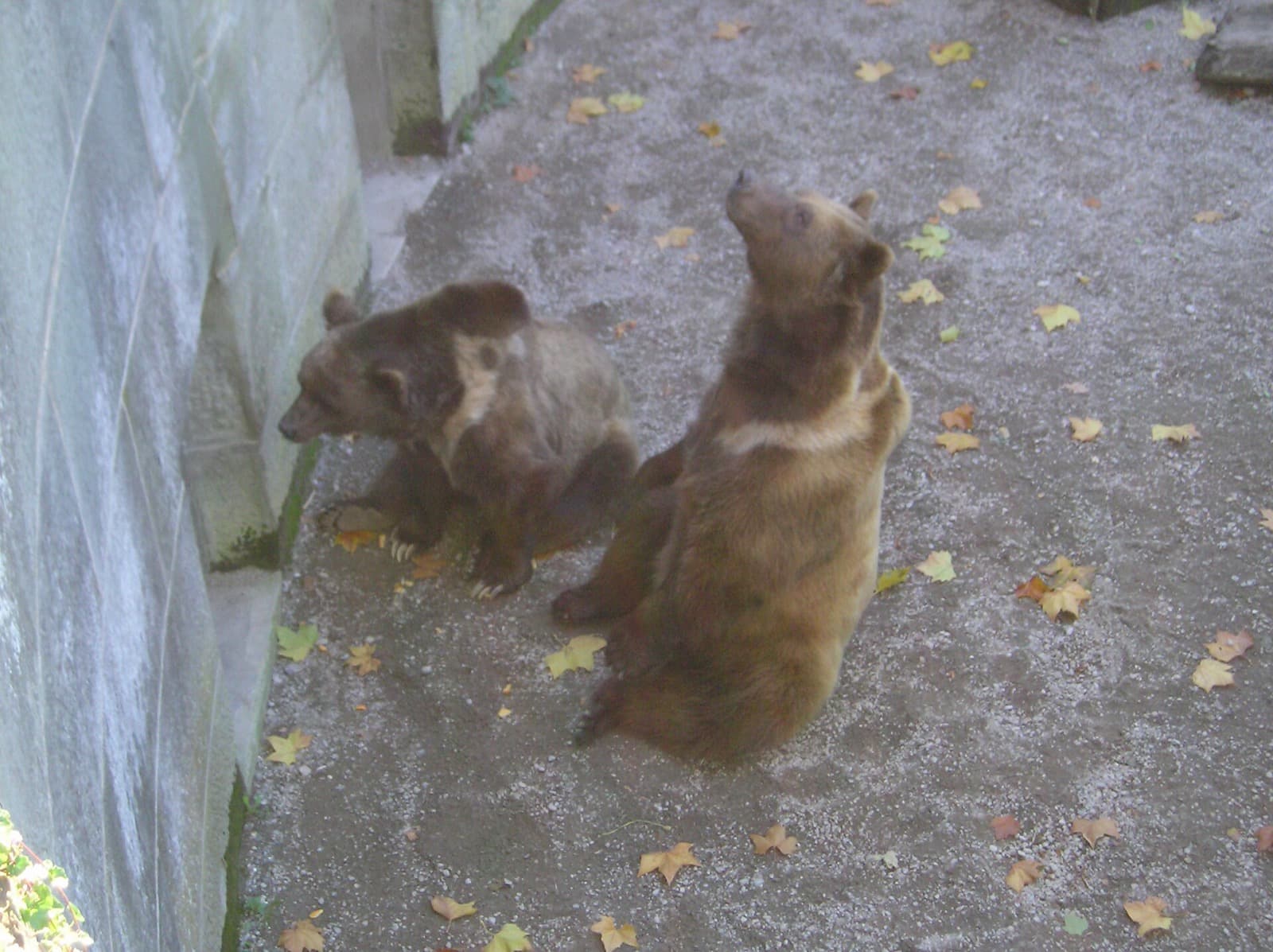
BaerenPark in Bern: How a Founding Legend Became Living Bears