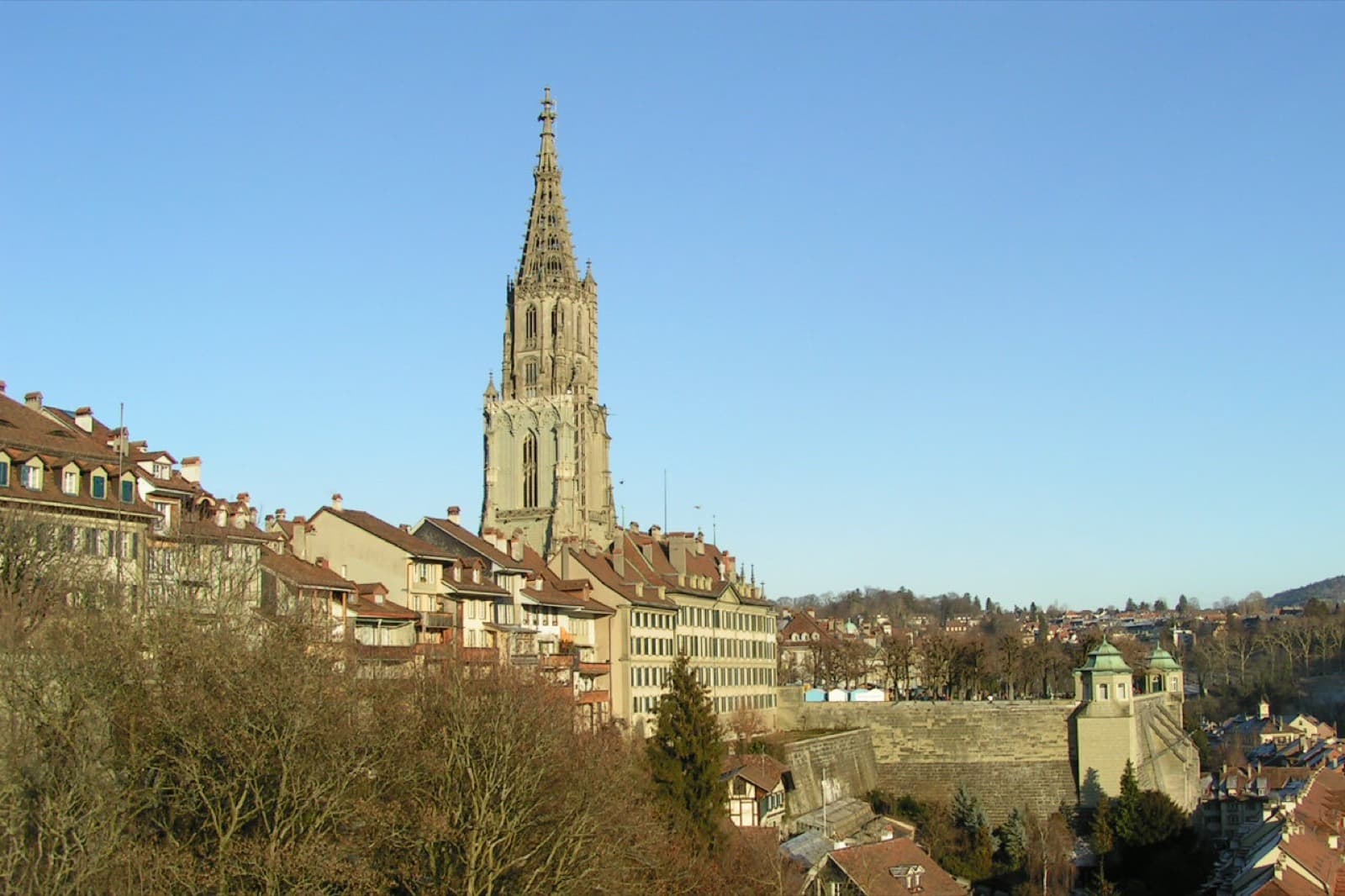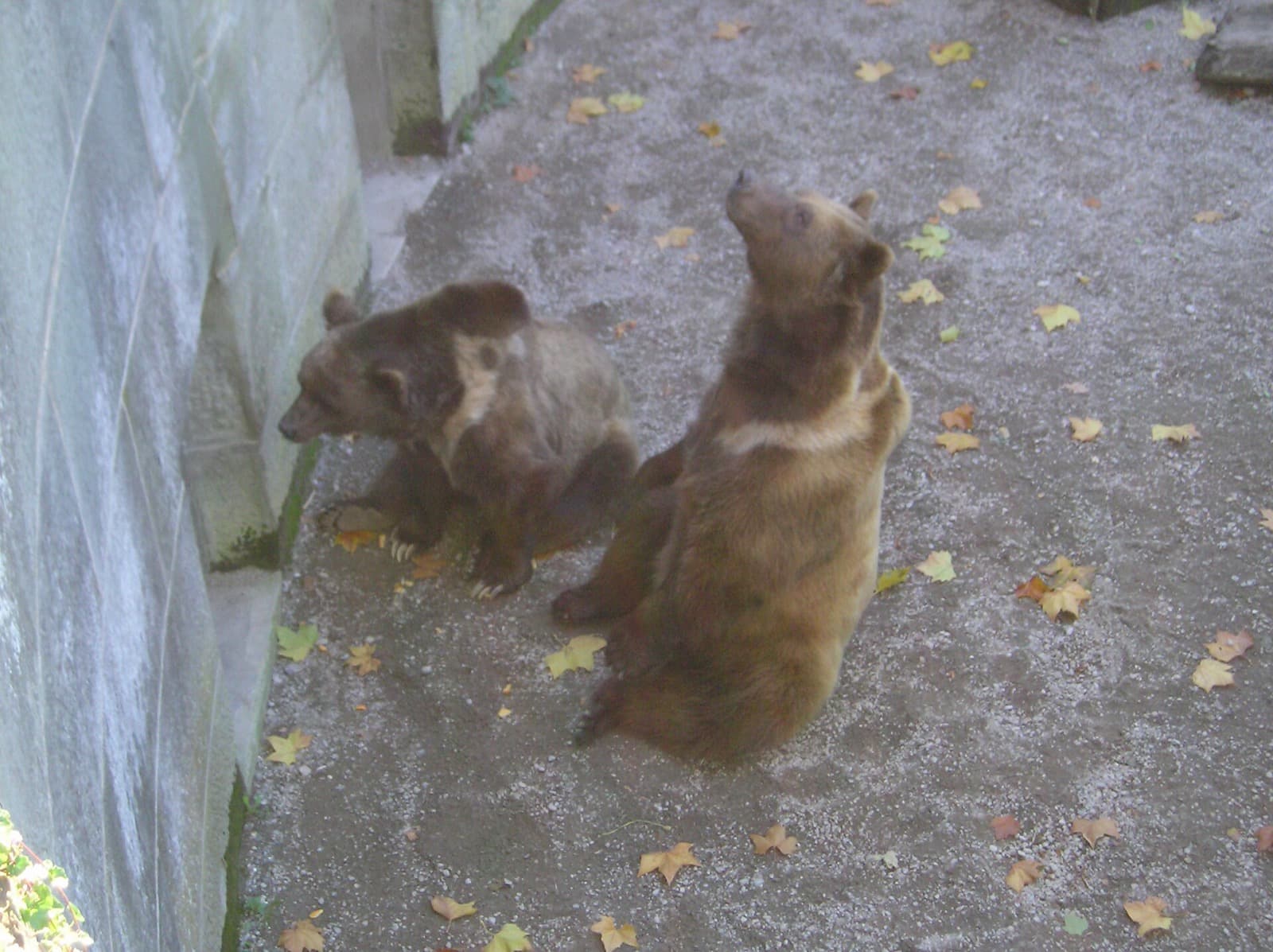
The BaerenPark in Bern is the place where a founding legend becomes a living animal: a sloped riverside enclosure on the far bank of the Aare where the city keeps the bears it has carried on its coat of arms for centuries. To stand at the railing here is to stand at the end of a very long thread. The bear runs from a medieval naming story, through the heraldry painted on the old town's fountains, down to the real creatures moving on the grass below you. Understanding that thread, and how the way Bern houses these animals has changed, is the single most useful thing to carry to this stop.
From legend to living emblem
The story Bern tells about itself begins with a hunt. By tradition the town was founded around 1191 by Berthold the Fifth of the House of Zaehringen, whose castle stood on the rocky spur inside the great bend of the river. The old story says the duke promised to name his new town for the first animal killed in the hunt, and that animal was a bear, a Baer in the local tongue, so the town became Bern. It is a good story, and the city has carried the bear on its coat of arms for centuries.
It is worth being clear that this is legend, not documented fact. Since the 1980s scholars have doubted the bear etymology, and many favour a Celtic origin for the name instead, from a word meaning cleft or ravine that fits the river's bend. That does not weaken the bear's grip on the city. Whatever the true source of the name, Bern chose the bear, put it on its shield, and then did something few cities do: it kept real bears to match. The animal in front of you is not decoration. It is the continuation of a civic identity that has held for centuries.
Five centuries of keeping bears
Hear a stop from this walk
The Nydegg Church and the First Castle
The first records of bears kept in the city date to 1513, when Bernese soldiers were said to have brought a bear home from the Battle of Novara in northern Italy, a fight of the Italian wars of that period. The first bear pit followed soon after. From that point the city housed bears more or less continuously, moving them through a series of enclosures over the centuries. This is the fact that sets the BaerenPark apart from any ordinary zoo exhibit. The tradition is older than the modern Swiss state, older than the parliament that sits on the ridge above the old town, older than most of the sandstone facades you passed walking down to the river.
The enclosure most people still picture is the Baerengraben, the bear pit. Graben means pit or ditch, and the name is exact. The last historic pit opened in 1857, a deep stone hollow that visitors looked down into from a railing above. For a century and a half that was how Bern showed its bears to the world: from above, peering into a hole. By any modern measure it was cramped. The animals had stone under their feet and a wall around them, and the whole arrangement asked the bear to perform its captivity for a crowd looking down.
What changed in 2009
The reason this stop matters, rather than being a quaint photo opportunity, is the distance between the old pit and the park you are looking at. In 2009 the city opened this open riverside park, a sloped enclosure of about six thousand square metres running down to the Aare, connected to the old pit by a tunnel so the bears can use both spaces. The change was not cosmetic. It reflected a real shift in thinking about how such animals should be kept, giving them room, slope, water and shade rather than a stone hole. The bears can move down to the river, climb the bank, find shade, and behave in ways the pit never allowed.
Hold the two images together as you watch: the pit of 1857 and the park of 2009. The gap between them measures how ideas of animal welfare changed across a century and a half. Bern did not abandon its oldest tradition when standards shifted. It kept the bears and rebuilt their home around a better idea of what they need. That is the quiet argument the BaerenPark makes without a single sign explaining it. The city that will not give up its bear was also willing to admit the old pit was wrong.
The old Baerengraben is still there, connected to the new park, so the physical history is legible on the ground. You can see the deep stone form that held the animals until recently, and then the green slope that holds them now. Few places let you read a change in values so directly, standing in one spot.
Standing at the railing
The best way to use this stop is not to hurry it. Watch the bears at your own pace, without a schedule pulling you along, which is the whole point of walking Bern on your own clock rather than in a group that forms up and leaves. Look for how the animals use the slope, the way they favour shade or water, the fact that they can withdraw from view if they choose. That ability to withdraw is itself the difference between the pit and the park.
From here the geography of the walk closes neatly. Behind you across the Untertorbruecke rises the tip of the old town, the founding ground where the legend began. Above you on the height sits the Rosengarten, where the whole sandstone city can be seen curled inside its river loop. The bear stands at the low point between origin and overview, the emblem made flesh at the water's edge. The park sits on the public riverside, so you can linger as long as the animals hold your attention.
If you want the full arc of this idea, from the parliament on the ridge to the castle ground at the spur and across the old bridge to the bears, this stop is the sixth on the self-guided Bern tour "Bundeshaus: The Bear and the Federal City," a roughly two-kilometre walk that reads the city as both the federal capital and the city of the bear. For more routes through the arcaded old town, see our guide to Bern walking tours. Walk it at your own pace, and let the BaerenPark be the stop where the oldest symbol in the city stops being a symbol and starts breathing.
Sources
- Tierpark Bern, "Bern and bears" (official park page): confirms the 1513 Battle of Novara bear, the pit-to-park history, and the roughly six-thousand-square-metre park opened in 2009.
- Wikipedia, "Baerengraben": documents the 1857 pit, the 2009 BaerenPark on steeply sloping riverside land connected to the old pit by a tunnel, and the first records of bears in the city from 1513.
- Roamer tour transcript, "Bundeshaus: The Bear and the Federal City" (fact-audited): the founding legend, the Zaehringen dukes, and the bear's line from legend to coat of arms to living animal.
- UNESCO World Heritage listing, "Old City of Berne": context for the medieval old town, inscribed since 1983, that the bear tradition sits within.
- Switzerland Tourism, myswitzerland.com: background on Bern's old town, bridges, and riverside setting.
Ready to experience it?
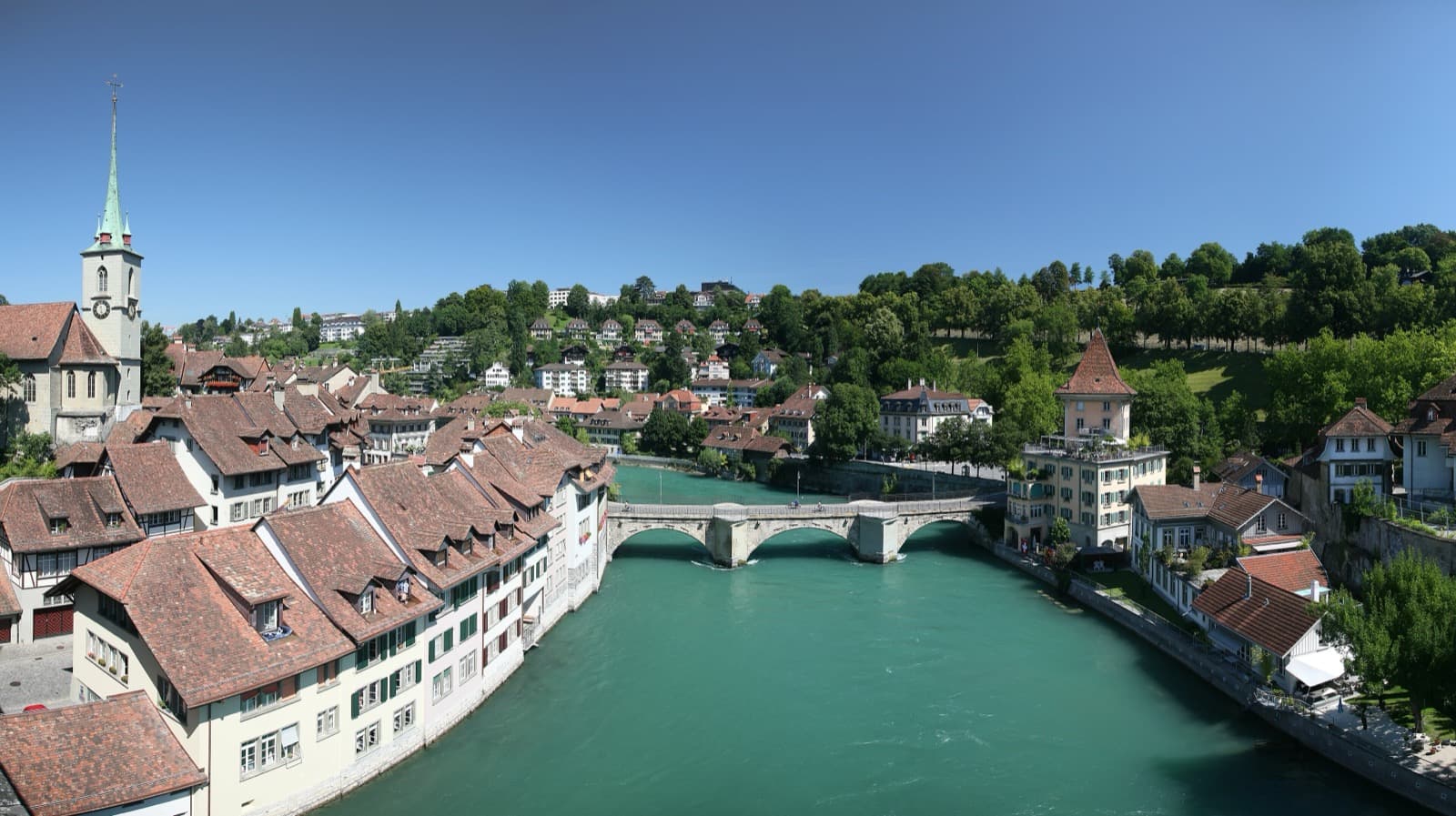
Bundeshaus: The Bear and the Federal City
85 min · 2 km · moderate
More from Bern
Explore more at your own pace.
Bern Travel Guide: How Many Days, Getting Around, Best Time, and Safety
One Day in Bern: A Walkable Morning-to-Evening Itinerary
Reading Bern: The Sandstone City Built to One Rule
The Federal Palace and Bundesplatz: Where Bern's Two Stories Share One Rock
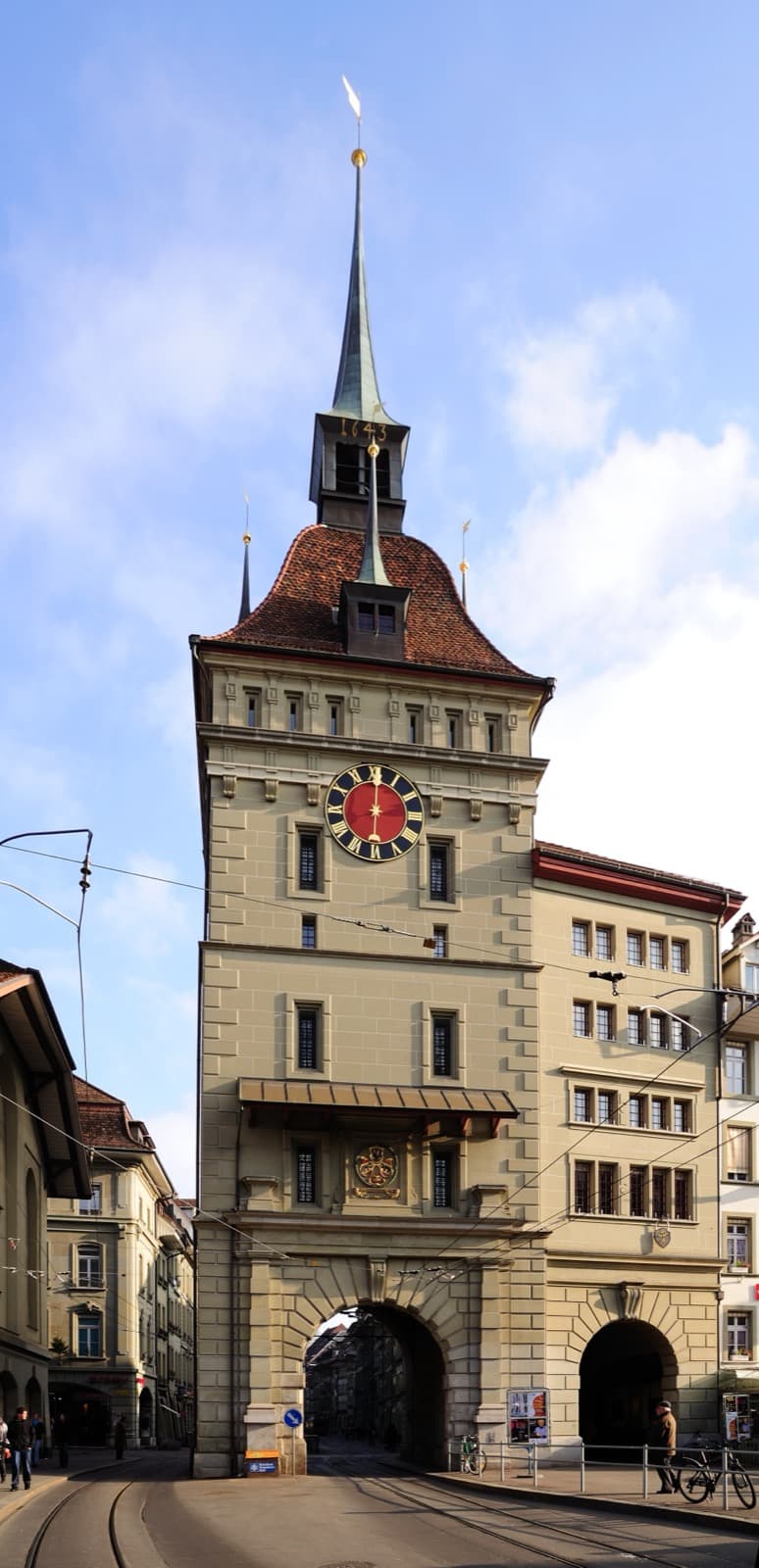
The Zytglogge: How Bern's First City Gate Became a Clock