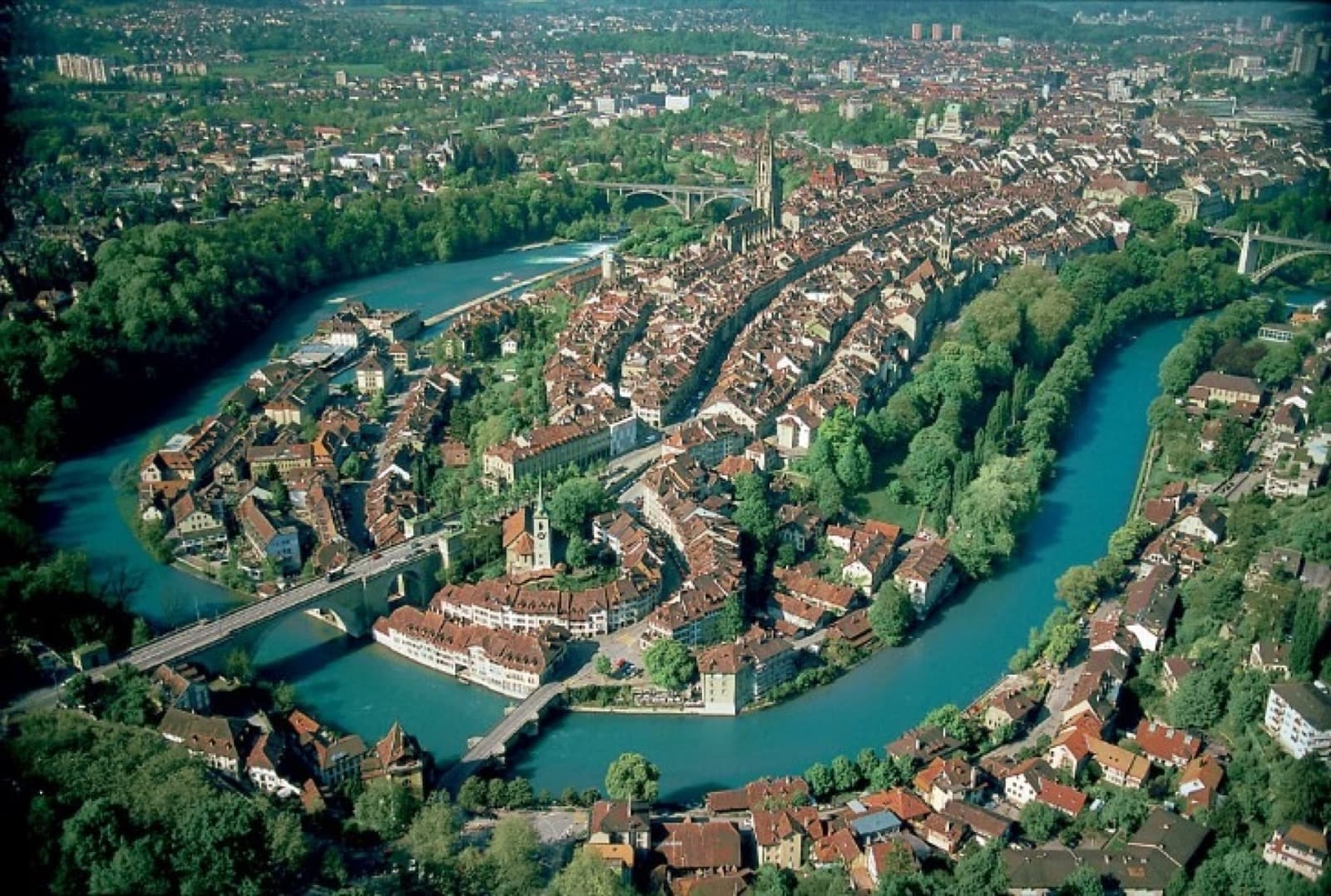
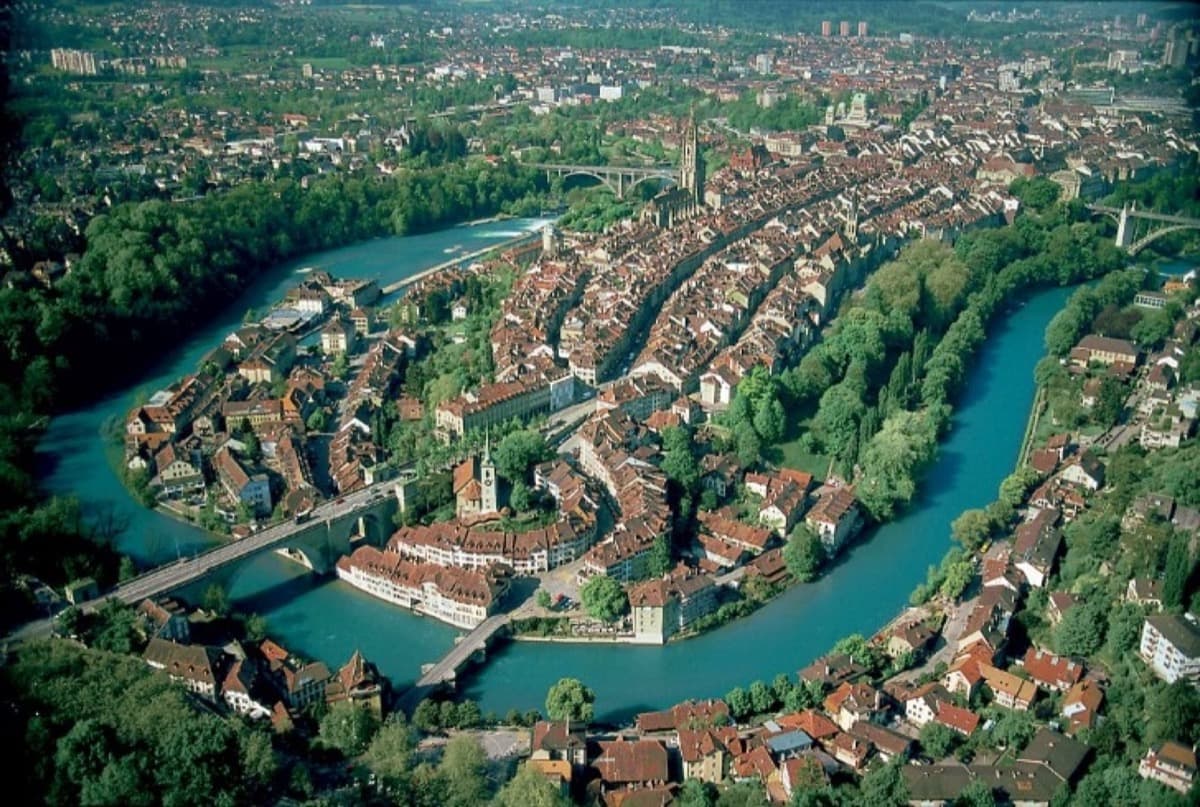
One of the best-preserved medieval capitals in Europe, read stop by stop: how a town of green sandstone grew westward in planned rings, each old gate turned to a new use, from the Prison Tower down the arcaded spine to the minster above the Aare.
Start · The Prison Tower: Bern's Second Western Gate
DirectionsStops
- 1
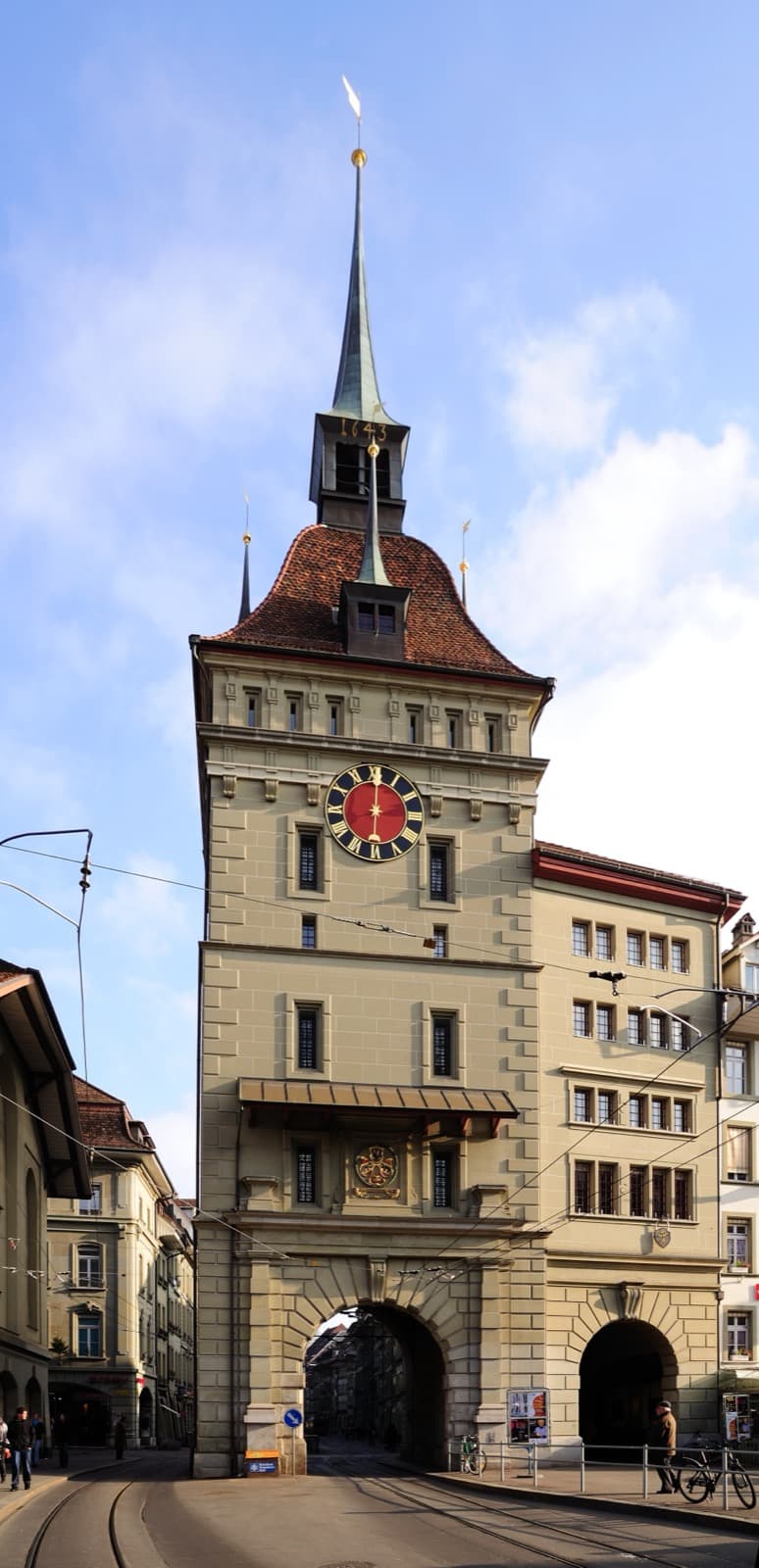
The Prison Tower: Bern's Second Western Gate
The stout sandstone Kaefigturm was once Bern's second western city gate and later its prison. It marks the ring the town outgrew and the start of the arcaded spine.
- 2
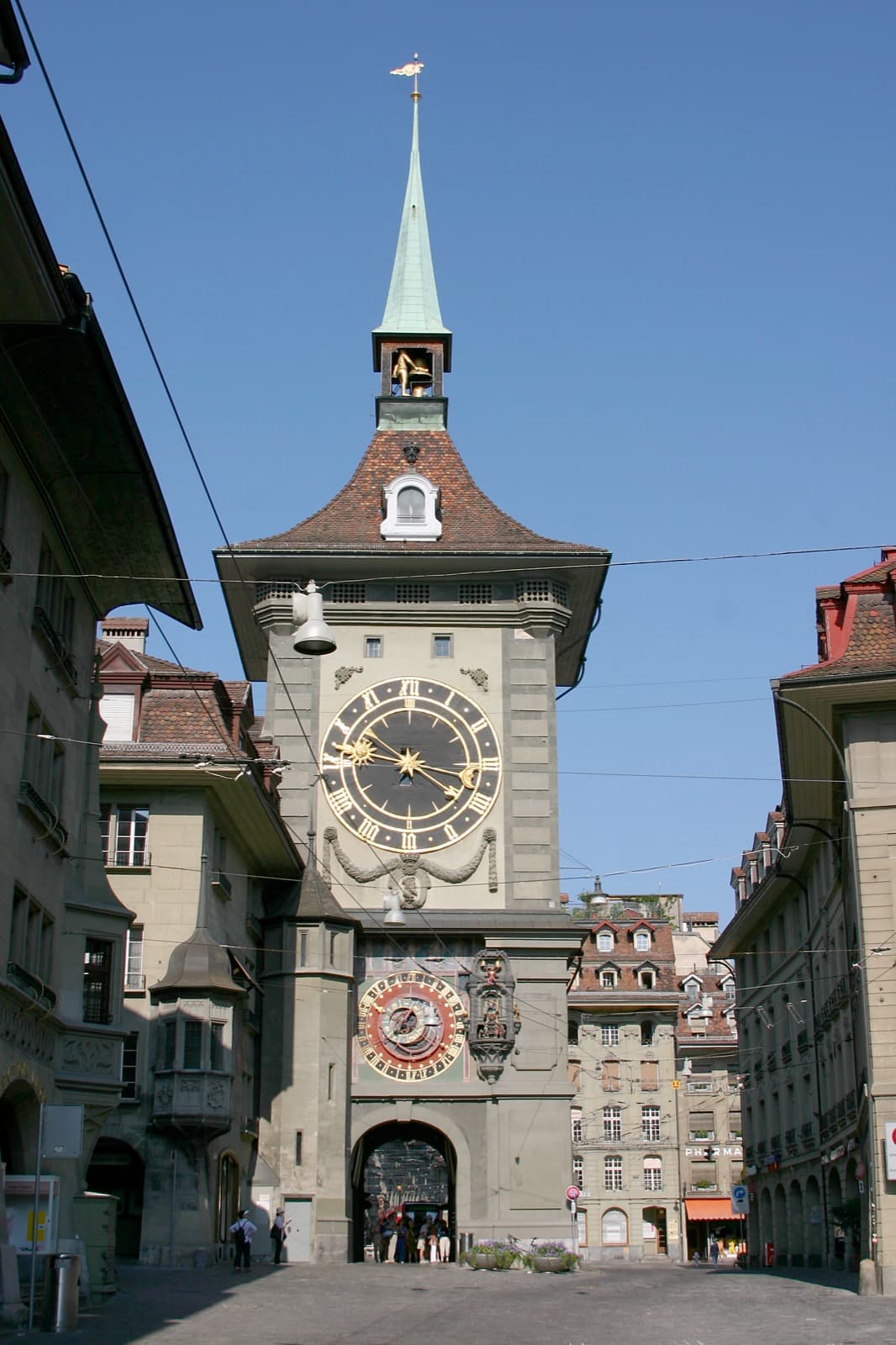
The Zytglogge: The Gate That Became a Clock
Bern's oldest monument began as the town's first western gate. The Zytglogge then became its clock tower, with a mechanical figure play that runs about four minutes before every hour.
- 3
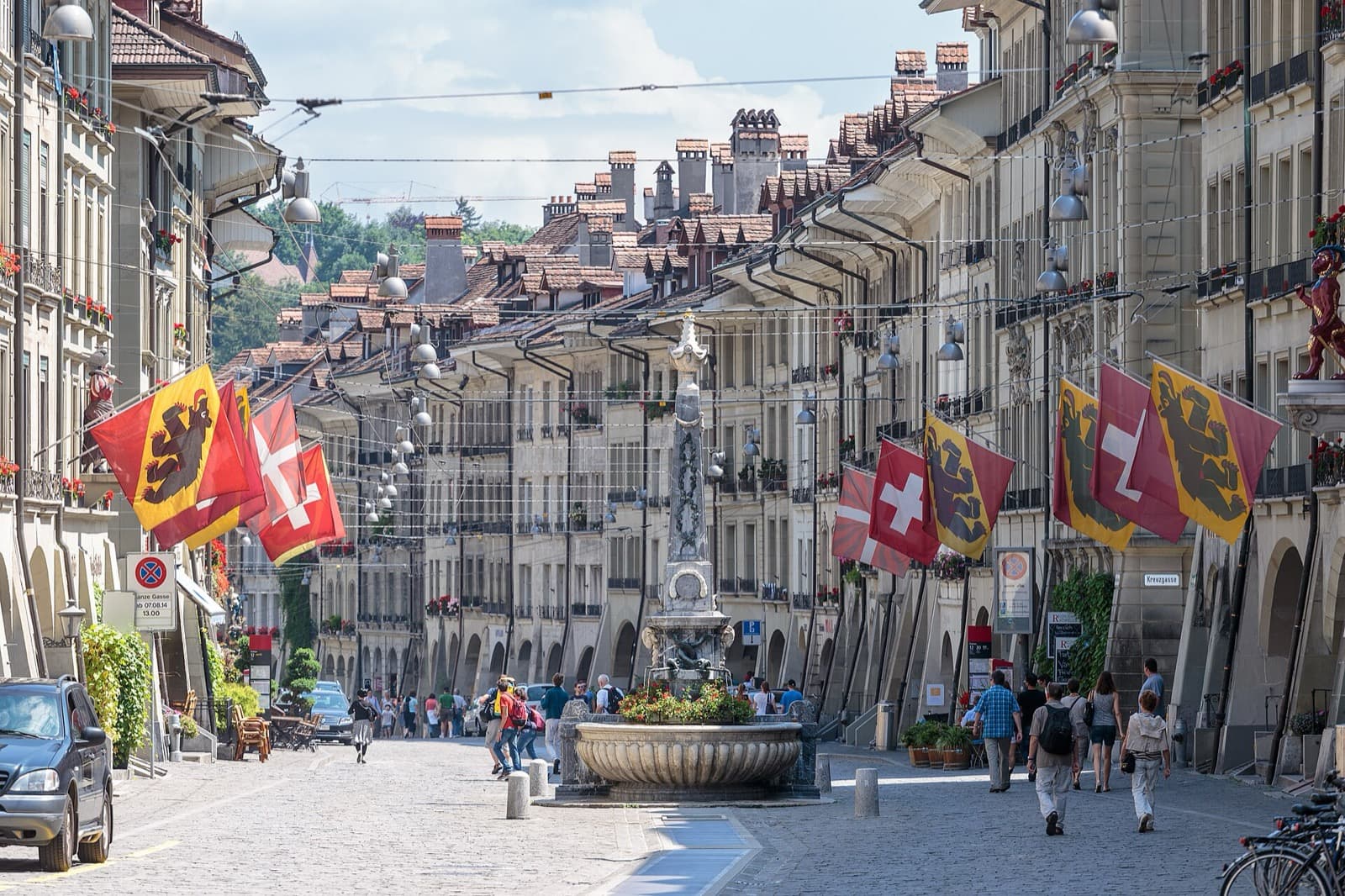
Kramgasse: The Arcaded Street of Painted Fountains
Kramgasse is Bern's broad main street, where the whole visual grammar of the old town is on display at once: covered sandstone arcades and painted Renaissance fountains.
- 4
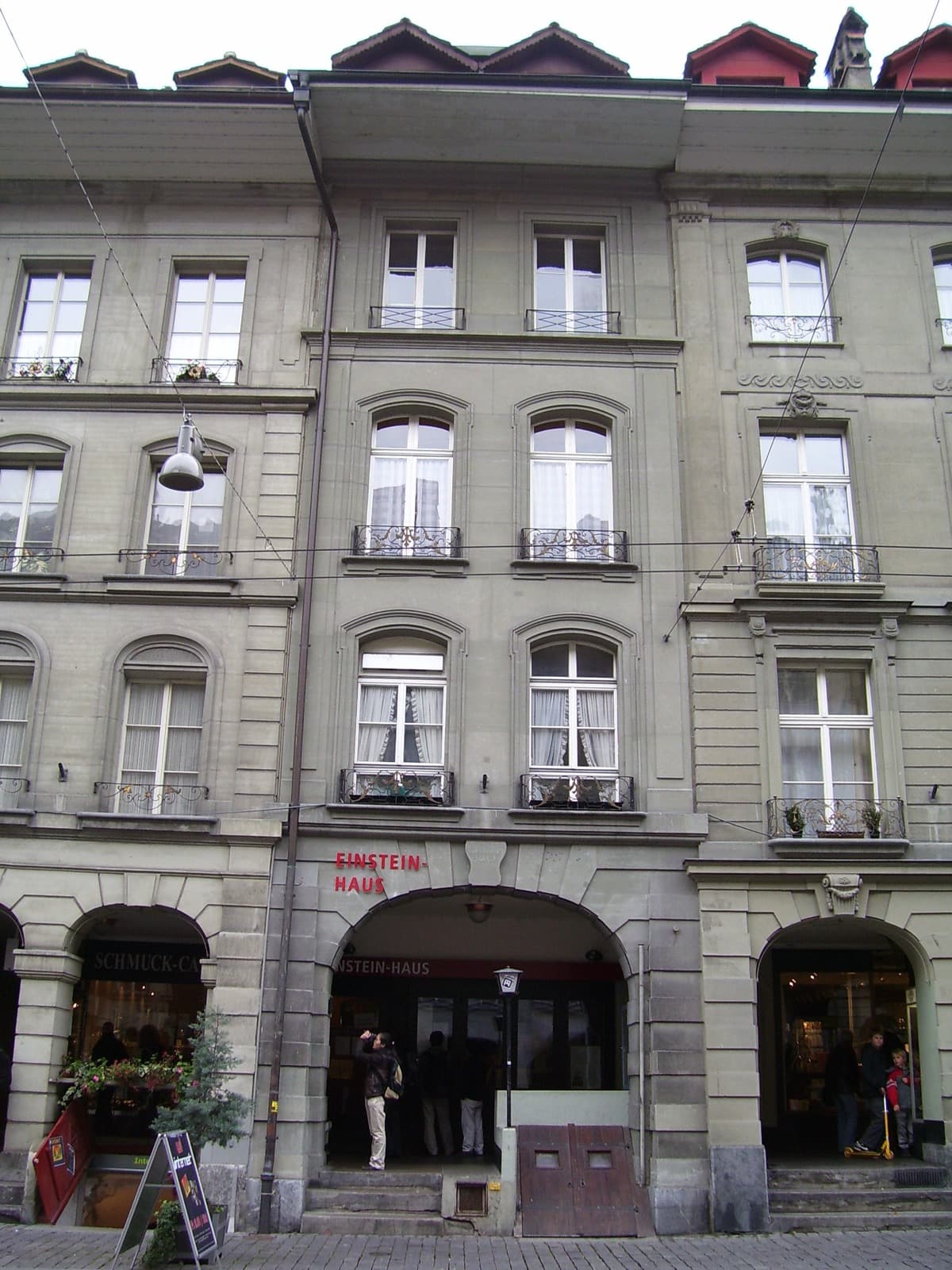
Einstein House on Kramgasse: The Flat Over the Arcade
The second-floor flat where Albert Einstein lived is now a small museum. It is at Kramgasse forty-nine, where he lived from nineteen oh three to nineteen oh five and wrote his nineteen oh five papers.
- 5
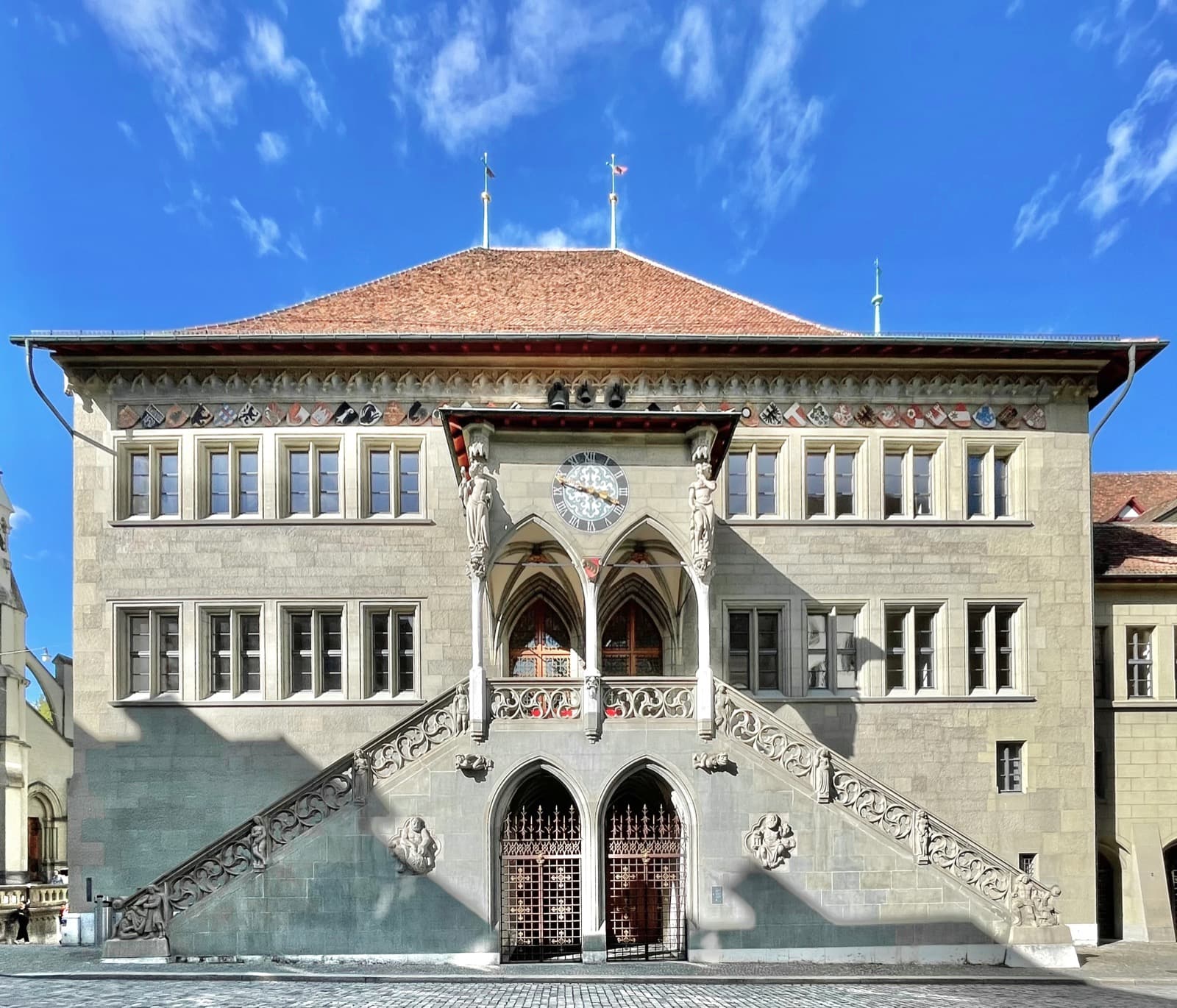
The Town Hall and the Street of Justice
Bern's late-Gothic Rathaus is the seat of city and cantonal government. It has held that role since the early fifteenth century. Nearby stands the Justice Fountain with its early blindfolded Lady Justice.
- 6
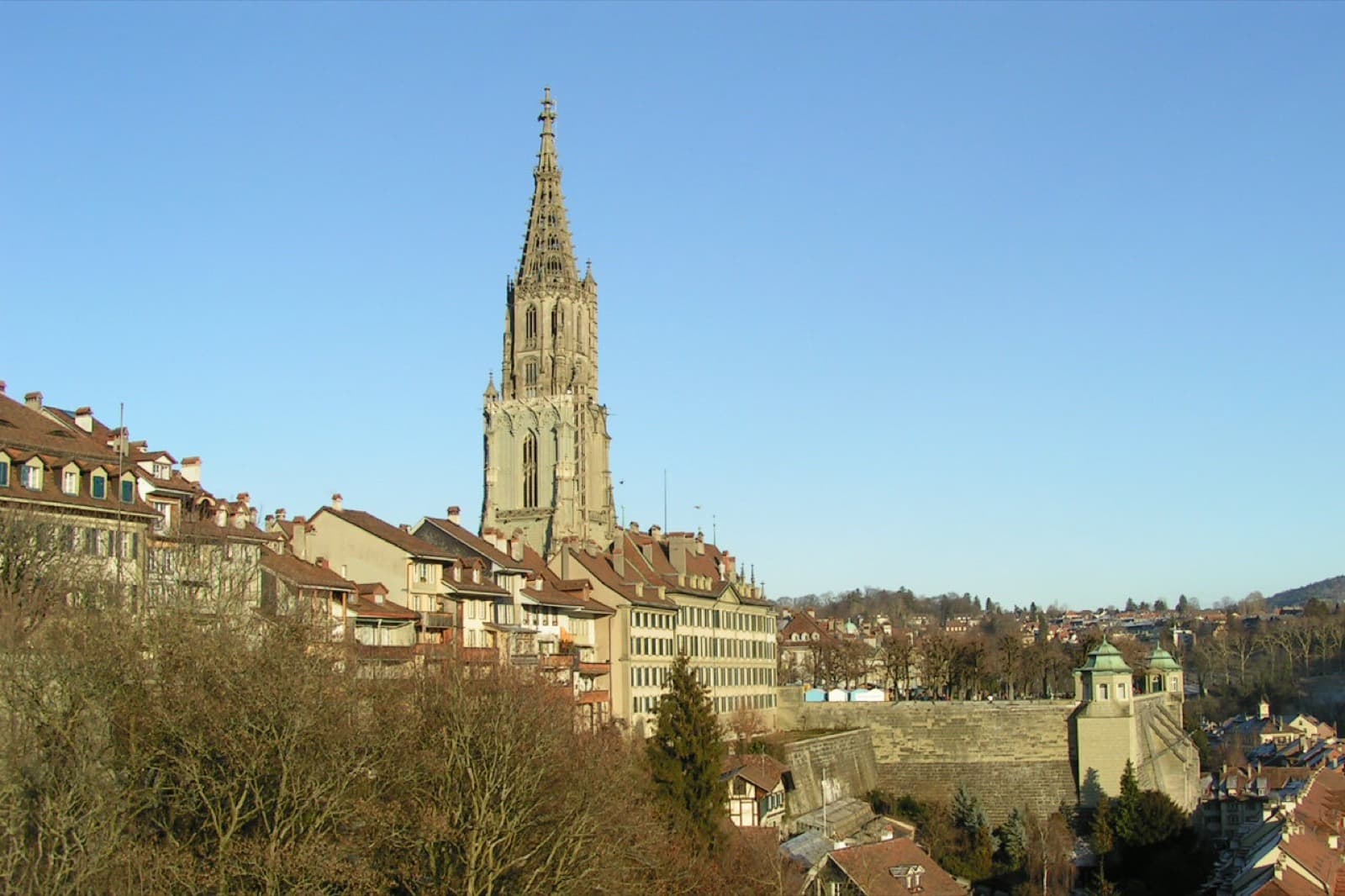
Bern Minster: The Tallest Spire in Switzerland
The great late-Gothic Bern Minster, begun in fourteen twenty-one, whose spire is the tallest of any cathedral in Switzerland and whose Last Judgement portal survived the Reformation.
- 7
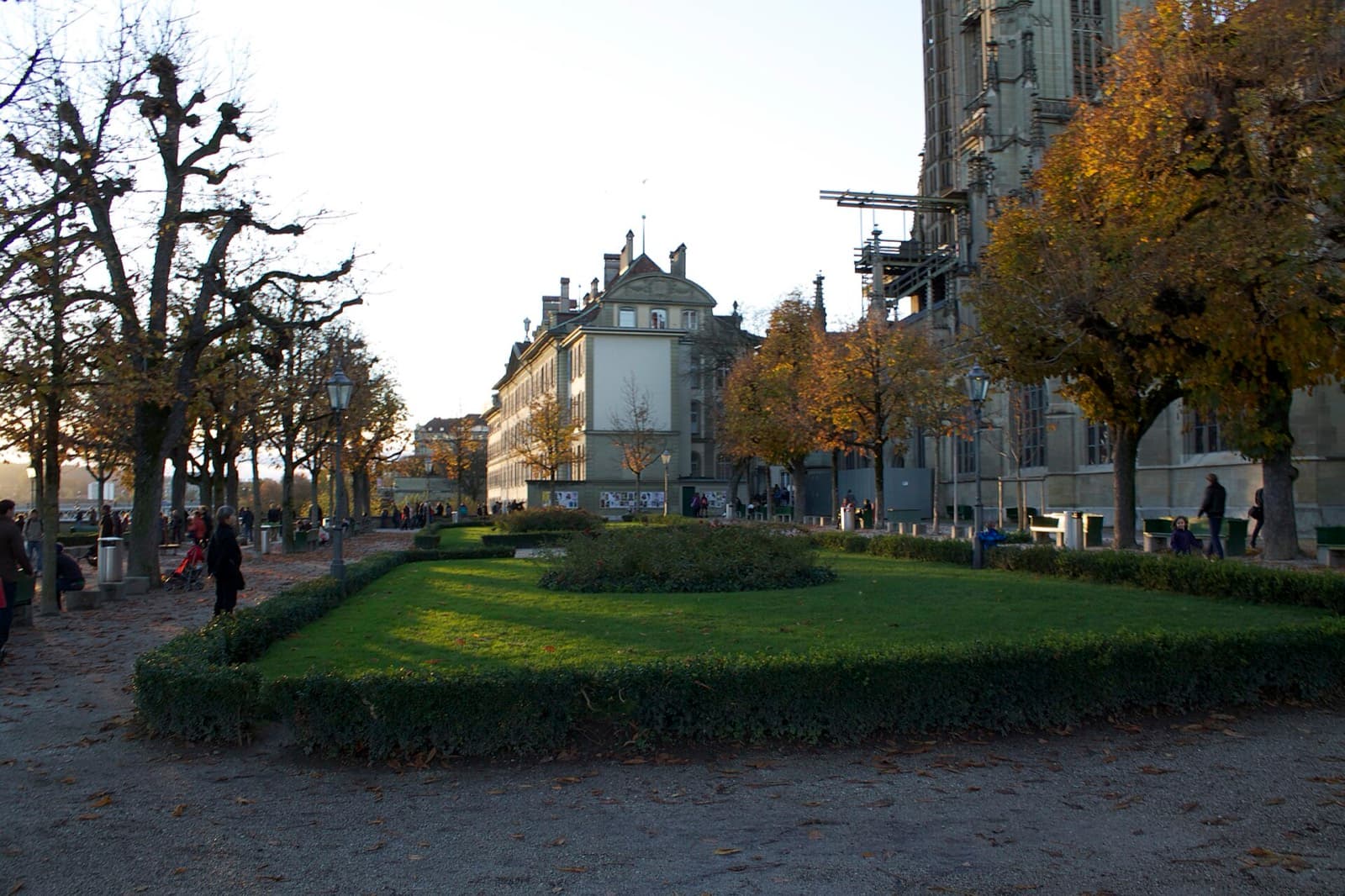
The Minster Terrace Over the Aare
The raised sandstone Muensterplattform beside the cathedral, a green terrace high above the loop of the River Aare where the arcaded city meets the water that shaped it.
Details
Best Time to Visit
Late spring through early autumn gives the longest daylight and the fullest use of the terrace and arcades, though the covered walkways make Bern rewarding in rain or cold too. Come to the Zytglogge a few minutes before any hour to catch the figure play, and aim for a weekday morning if you want the arcades and the minster tower with fewer scheduled groups. Early evening light on the green sandstone, seen from the Minster Terrace over the Aare, is especially fine.
Pro Tips
- •Be at the Zytglogge about five minutes before the hour, since the figure play begins roughly four minutes before it strikes and is over quickly.
- •The arcades run for kilometres, so if the weather turns you can keep most of this walk under cover rather than cutting it short.
- •If you want to climb the minster tower, judge the queue yourself and go when it looks thin; there is no group timetable forcing your hand.
- •Carry a small amount of Swiss francs for tower climbs and museum entries, since prices are in francs, not euros, and some small sites are cash-friendly.
- •Linger on the Minster Terrace at the end rather than rushing back; it is where the whole city plan, spur, rings, and river, finally reads clearly.
- •Every stop here is short and skippable, so shape the order and the pace to your own energy instead of a fixed circuit.
Safety & Precautions
- •The old town is paved in cobbles with arcade steps and gentle slopes down toward the river, so wear sturdy, comfortable shoes and take care where the stone is worn or wet.
- •The River Aare runs fast and cold around the old town; admire it from the terrace and quays, and do not underestimate the current if you see swimmers, as it is strong.
- •The minster tower and the Zytglogge involve real climbs and can queue, so pace yourself, and skip the towers if stairs or heights are difficult for you.
- •The minster is a working church, so dress modestly and keep your voice low inside; pack sun protection and a light waterproof, since Alpine weather can change fast, and keep valuables discreet in busier arcades.
Travel advisory: Exercise Normal Precautions (Level 1).
Gallery
Related Reading
Go deeper on what you'll see, hear, and walk through.
Overview
Bern Travel Guide: How Many Days, Getting Around, Best Time, and Safety
6 min
Overview
Best Self-Guided Walking Tours in Bern (2026)
4 min
Overview
One Day in Bern: A Walkable Morning-to-Evening Itinerary
6 min
Thematic
Best History Walking Tours in Bern (2026)
2 min
Thematic
Reading Bern: The Sandstone City Built to One Rule
7 min
Companion
The Zytglogge: How Bern's First City Gate Became a Clock
6 min
Deep dive
Bern Minster: The Tallest Spire in Switzerland and the Portal That Survived the Reformation
6 min
Read
What to Eat in Bern: Dishes, Origins, and How to Order
7 min
Read the walk
The full story of Altstadt: The Sandstone City in the River's Loop, in words. Prefer to listen? Play it narrated, from home or on location.
Introduction
The old town of Bern, in Switzerland, is a lesson in how a city can be built to a single legible rule, and this walk teaches you to read it. Seven stops, about one kilometre, and roughly seventy-five minutes at an unhurried pace carry you west to east down a sandstone spur almost encircled by the River Aare. UNESCO records that the Old City of Bern was inscribed on the World Heritage List in nineteen eighty-three for its coherent medieval planning, its kilometres of covered arcades, and its painted Renaissance fountains. The town was founded, by tradition, by Duke Berchtold the Fifth of Zaehringen in eleven ninety-one, and it grew outward in stages, each stage marked by a western gate tower that the growing city then left stranded inside itself and put to a new use. So this route is chronological and geographical at once. You move forward through the centuries as you move east, from the second ring's Prison Tower, past the first ring's clock tower, to the minster begun in fourteen twenty-one. After the great fire of fourteen hundred and five, the timber town was rebuilt in the green local sandstone that gives Bern its colour, so the whole city reads as one material. This is heavily scheduled-group territory, yet every stop here is short, skippable, and yours to linger on. No guide waits, no clock but your own. When you arrive at the Prison Tower, the Kaefigturm, begin with stop one.
1. The Prison Tower: Bern's Second Western Gate
Here at the Kaefigturm, the Prison Tower, the walk begins where the old town once ended. Kaefig means cage, and turm means tower. The city's own history documents that a gate stood on this spot from about twelve fifty-six, built during Bern's second westward expansion, when it marked the new western boundary, the second ring of a town that kept outgrowing its own walls. The tower you see is not that original. The old gate had fallen into disrepair and was pulled down in sixteen forty, then rebuilt on the same spot between sixteen forty-one and sixteen forty-four. It served as a prison from the seventeenth century until eighteen ninety-seven, when the inmates were moved to a district prison. After that it became an archive tower, and since nineteen ninety-nine it has housed the Confederation's Political Forum, with exhibitions inside. Notice how it now stands not at an edge but in the middle of things, arcades running past its base, open squares opening beside it to the west. That is the whole pattern of Bern in one building. A gate becomes a prison becomes an archive becomes a forum, and the wall it once guarded is now a street you can walk straight down. Take your time here. There is no group forming up, no schedule pulling you east. From this tower the arcaded main street runs ahead of you toward the heart of the city, and each thing you pass will add one more rule to the grammar of how Bern was made. When you are ready, follow the arcades east.
2. The Zytglogge: The Gate That Became a Clock
This is the Zytglogge, Swiss German for time bell, and it is the same idea as the last tower carried back another lifetime. It was built about twelve eighteen to twelve twenty as the town's very first western gate, marking the first ring. As Bern pushed west, this gate too was left stranded inside the growing town, and it was handed one new job after another: guard tower, women's prison, archive. It was damaged in the great fire of fourteen hundred and five and rebuilt. Only later did it become the clock. The astronomical calendar clock's present mechanism dates to about fifteen twenty-seven to fifteen thirty, and the city calls the Zytglogge the oldest monument in Bern. The reason people gather here is the figure play. It begins about four minutes before each hour, so you want to be in position a little early. A gilded rooster crows and flaps first. Then a procession of little bears, the symbol of Bern, parades around, a jester rings his bells, and the figure of Chronos, nicknamed Hans von Thann, turns his hourglass and strikes the hour bell. Here is the autonomy of this walk in one moment. This corner is heavily worked by scheduled group tours, herded into place on someone else's timetable. You are not on that clock. Watch the whole sequence once, then watch it again from another angle if you like, or move on before the hour if you would rather. The old gate turned timekeeper will keep its own time whether or not a crowd is waiting. When you have seen it, walk east under the tower into Kramgasse.
3. Kramgasse: The Arcaded Street of Painted Fountains
Kramgasse means the lane of goods or wares, and it is where Bern's grammar becomes fully readable in a single view. Look at the sides of the street. Those covered sandstone walkways are the arcades, called Lauben, and they are the city's signature. They were added through the fifteenth century and run for kilometres through the old town, so you can cross much of Bern under cover. UNESCO records that the Old City of Bern was inscribed as a World Heritage Site in nineteen eighty-three, cited for exactly this: its coherent planning, its arcades, and its sixteenth-century fountains. Two of those painted fountains stand along this street. One is the Zaehringen Fountain, an armoured bear holding the coat of arms of the Zaehringen family, honouring the founder Duke Berchtold the Fifth. That bear figure was made by the sculptor Hans Hiltbrand. The other is the Samson Fountain, where the biblical Samson tears open a lion's mouth, a figure by the sculptor Hans Gieng. Most of Bern's painted allegorical fountains date to the fifteen forties, so you are reading a street whose vocabulary was largely set within a single generation. There is a legend attached to the founding itself: that Duke Berchtold vowed to name the town after the first animal his hunt took, and that animal was a bear. That is tradition, not documented history, but it is why bears appear again and again on the fountains and in the clock. Stand under the arcade a while. This is a living scene, not a museum set, and it is yours to linger in at your own pace. When you are ready, look for the tall narrow house at number forty-nine.
4. Einstein House on Kramgasse: The Flat Over the Arcade
This is the Einstein House, at Kramgasse forty-nine, and it is the human scale hidden inside the city's grand grammar. Albert Einstein came to Bern in nineteen oh two for a post at the federal patent office. From nineteen oh three to nineteen oh five he lived here, in the…
Full narration for this stop unlocks with the tour.
5. The Town Hall and the Street of Justice
Here the city governs itself, and it has done so from this same late-Gothic sandstone town hall, the Rathaus, since the early fifteenth century. Rathaus means town hall. It was built between fourteen oh six and fourteen seventeen, and the grand covered external double staircase…
Full narration for this stop unlocks with the tour.
6. Bern Minster: The Tallest Spire in Switzerland
This is Bern Minster, the Berner Muenster, muenster meaning minster or cathedral, and it is the climax of the walk. Construction began on the eleventh of March, fourteen twenty-one. The building rose slowly across the centuries, and the tower was only completed in eighteen…
Full narration for this stop unlocks with the tour.
7. The Minster Terrace Over the Aare
The walk ends here, on the Muensterplattform, the Minster Terrace, and it is where the whole city finally makes sense. This raised sandstone platform was built up over centuries beside and behind the cathedral. The groundstone was laid in thirteen thirty-four, and the great…
Full narration for this stop unlocks with the tour.