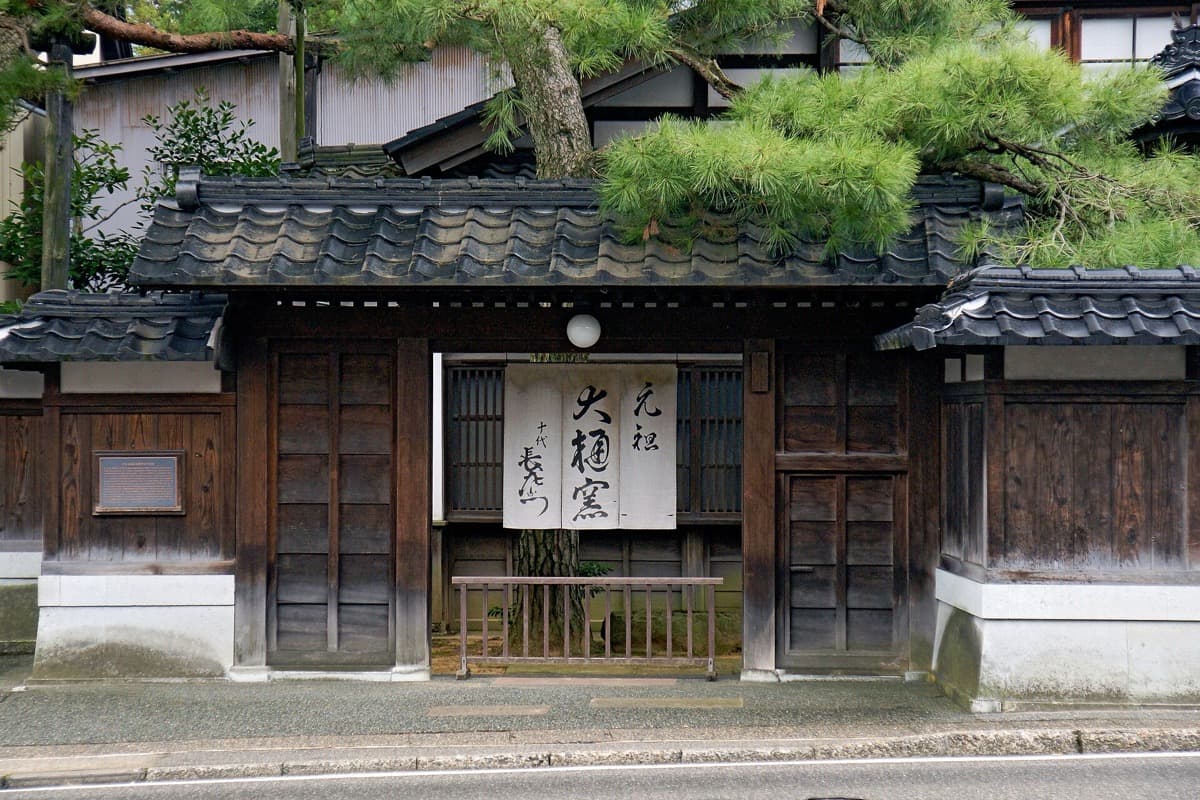
Ohi pottery survives in Kanazawa not by luck but because one family has hand-formed the same amber tea bowls without a break since 1666, sustained for centuries by the Maeda lords who paid, generation after generation, for the finest objects the tea ceremony required. Most stories about Kanazawa reach for the same easy explanation. The city escaped the wartime air raids that flattened other castle towns, so its walls and lanes stood. That is true, but it explains buildings, not skill. A tea bowl cannot be spared the way a street can. It has to be made again, by a living pair of hands, in every generation. Ohi ware is proof that Kanazawa preserved something rarer than architecture. It preserved a method, passed down without a gap for more than 360 years.
A potter arrives with a tea master
The founding reads almost like a footnote to someone else's visit. In 1666, the fourth head of the Urasenke school of tea, Senso Soshitsu, was invited to Kanazawa to preside over a tea gathering for the Kaga clan, under the fifth Maeda lord, Maeda Tsunanori. He did not travel alone. He brought a potter from Kyoto named Chozaemon, and Chozaemon stayed.
That decision to remain is the entire origin of Ohi ware. The potter settled, took clay from a village called Ohi in an area outside the city, and gave the pottery its name from that place. He became the first Ohi Chozaemon. Every generation since has carried the same working name, a title handed down like the technique itself.
The Kyoto connection matters more than a line of travel. According to the Ohi Museum, the founder trained in the raku tradition as a disciple of Ichinyu, who descended from Raku Chojiro, the sixteenth-century potter credited with the very first raku tea bowls. So the skill that arrived in Kanazawa in 1666 was not improvised. It was a direct transmission from the founding lineage of raku ware, carried north and replanted in Kaga soil, where the Maeda demand for tea utensils gave it a reason to grow.
Bowls made by hand, not by wheel
Hear a stop from this walk
Nomura Family Samurai House: Eleven Generations
Ohi tea bowls are strange objects if you are used to symmetrical, wheel-spun ceramics. They are not thrown on a wheel at all. Each bowl is shaped by hand, pinched and coaxed from a lump of clay, then fired at low temperature. The result is warm to hold and slightly irregular, which is the point. A tea bowl in the Japanese tradition is meant to be cradled in the palm, and a hand-formed vessel answers the hand.
The signature is the glaze, a rich amber the color of caramel that sets Ohi ware apart from other raku pottery. Low firing keeps the clay soft and porous, so the bowl holds warmth from the tea inside it. None of this is decoration for a display case. These were working utensils, made to be used in the tea gatherings the Maeda household hosted, and by the end of the feudal era the ware was in regular use by the Maeda for the ceremony.
Hold that fact against the usual tourist reflex, which is to admire craft as something finished and framed. Ohi ware was never finished. It was a supply, and the supply had a patron.
Why patronage is the real preservative
This is the argument the whole Nagamachi walk builds toward, and Ohi pottery lands it. The Maeda ruled the Kaga domain from Kanazawa for nearly three centuries, and they spent their enormous wealth on refinement rather than war. Steady demand from the top is what kept craft knowledge alive as a working profession instead of a museum display. Someone with money wanted beautiful things, and kept wanting them, so the skill had a reason to survive.
Silk dyeing survived that way. Tea ware survived that way. Ohi pottery is the clearest case because you can point to a single family and count the generations. When patronage vanished at the Meiji Restoration in the late 1860s, the feudal system that had sustained samurai families collapsed, and many crafts across Japan withered. Ohi ware did not. The family adapted and kept working, which is why the line reaches the present at all.
The line that never broke
Here is the detail that closes the circle. The current head of the family is the eleventh-generation Ohi Chozaemon, the artist Ohi Chozaemon Toshio, who is a member of the Japan Art Academy and continues to make work that fuses contemporary form with the inherited technique. Eleven generations, one unbroken succession, from 1666 to now.
Think about what that requires. It is not enough for a museum to keep old bowls behind glass. Someone had to be taught, in every generation, to pinch the clay, mix the amber glaze, and fire the kiln low, and then had to teach the next person before they died. Skip a single link and the chain is gone. Kanazawa did not skip a link.
That is the survival this city is really about. The intact samurai lanes and the earthen walls are the easy part to see, because stone and clay sit still and wait for you. The harder inheritance is a living potter, working today, shaping a bowl the way the first Chozaemon did more than three and a half centuries ago. Buildings can be spared. Hands have to be handed down.
Walk it yourself
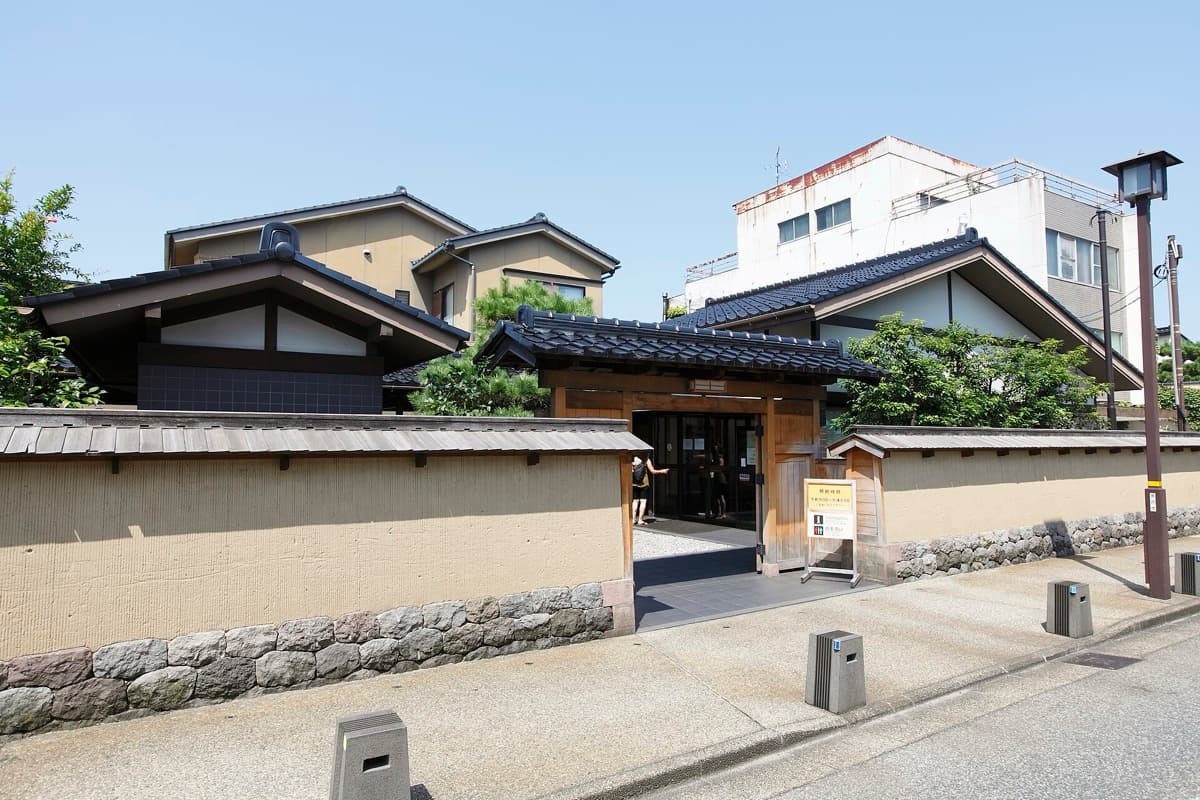
Ohi Pottery is the final stop on the Nagamachi and the Craft City walk, and it earns its place at the end. You reach it after the samurai houses, the silk dyeing, and Omicho Market, so by the time you arrive you already understand what patronage bought and why continuity here is not staged. The Ohi Museum sits east of the samurai district, admission around 700 yen, and it lets you see the bowls up close and follow the family line room by room. To trace the full logic of the craft city on foot, start in Kanazawa at the earthen walls of Nagamachi and let the walk carry you here.
Sources
- Ohi Museum, "History of the Ohi Chozaemon Kiln" (official): founding in 1666, the raku lineage through Ichinyu and Raku Chojiro, and the current eleventh-generation Ohi Chozaemon Toshio.
- Highlighting Japan, Government of Japan: context on Kaga crafts and Maeda-era patronage that sustained Kanazawa's traditional trades.
- VISIT KANAZAWA official guide: Nagamachi samurai district, the Maeda domain, and the city's craft heritage.
- japan-guide.com: Omicho Market and the wider layout of Kanazawa's historic quarters.
- Kanazawa Station travel guide, "Ohi Pottery Museum and Gallery": practical visitor detail for the museum and gallery.
Ready to experience it?
Nagamachi: The Craft City
90 min · 4 km · easy
More from Kanazawa
Explore more at your own pace.

Kanazawa Travel Guide: How Many Days, Getting There, When to Go (2026)
One Day in Kanazawa: A Walkable Castle-Town Itinerary (2026)
What to Eat in Kanazawa: A Food Guide (2026)

21st Century Museum: The Glass Circle That Made Kanazawa a Modern-Art City
Higashi Chaya: The Kanazawa Geisha District the War Never Touched