Back to Learn
Caranqui Under the Sugar: Reading Ibarra's Sweet Trail
Tour Companion

Caranqui Under the Sugar: Reading Ibarra's Sweet Trail

May 15, 2026
8 min read

The sweet trail is a food tour. It is also, underneath, a heritage tour. The two facts are easier to see if you take the food seriously.

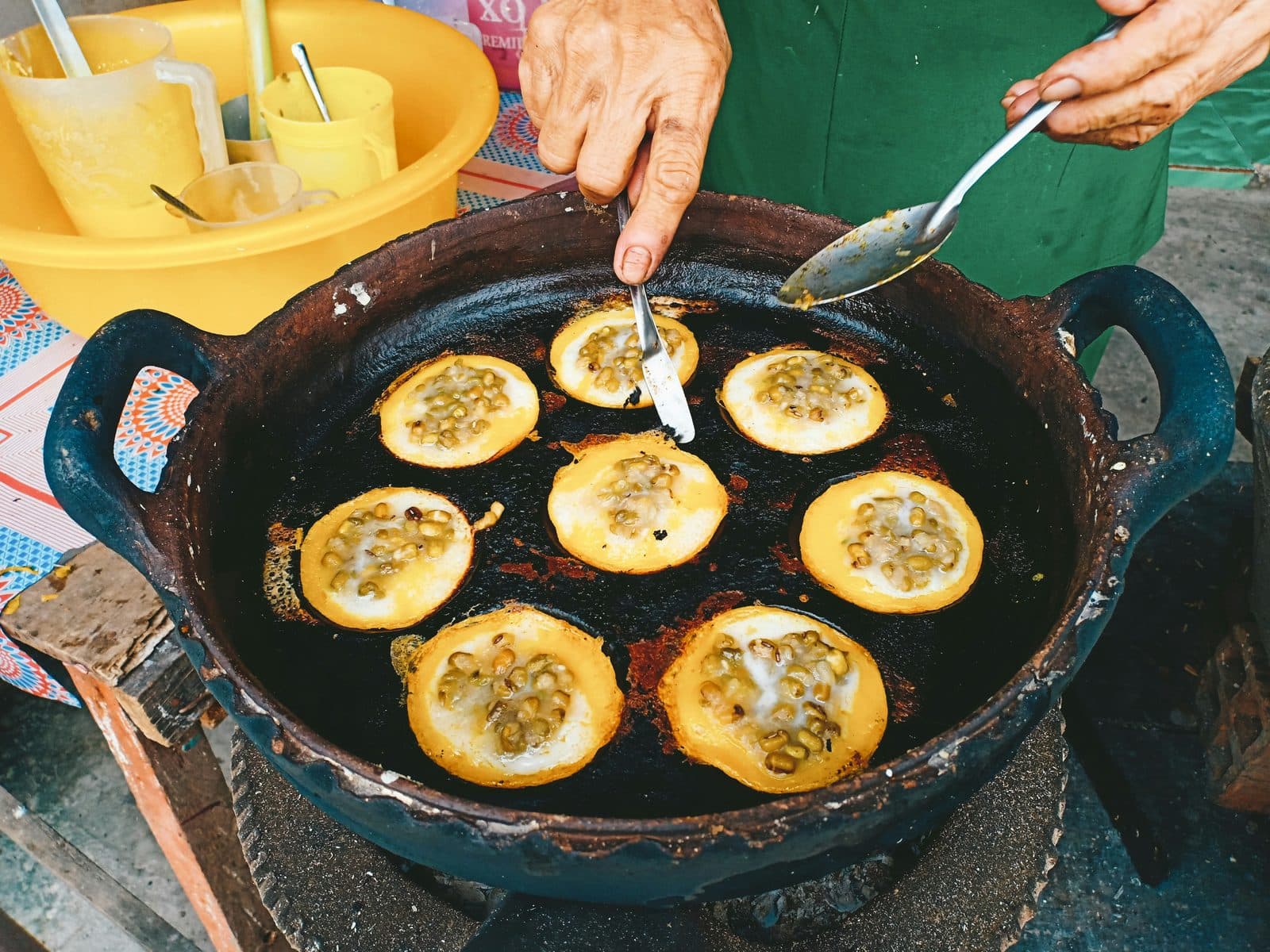
Walk down Calle Olmedo at any time on a weekday and you will find the same set of confections in nearly every shop window: blocks of nogadas in wax paper, dark jars of arrope de mora, soft pale rounds of cocadas, sometimes manjar de leche in glass jars with hand-written labels. Around the corner from La Merced, you will find vendors with the same products laid out on folding tables under the colonnade. At the heart of it all, in a storefront on the corner of Calle Olmedo and Calle Oviedo, the Rosalía Suárez family has been spinning helados de paila in copper bowls since 1896.

This is what Ibarra is known for in the rest of Ecuador. It is the sweet capital. The official line in tourist guides is that the tradition is colonial, which is half true. The sugar is colonial. The walnuts in the nogadas were planted by the Spanish. The dairy in the manjar de leche came from European cattle. But the techniques that hold these foods together are mostly older. Some are much older.

The sweet trail tour takes six stops to make this point. This article makes it once, more plainly.

What the paila does

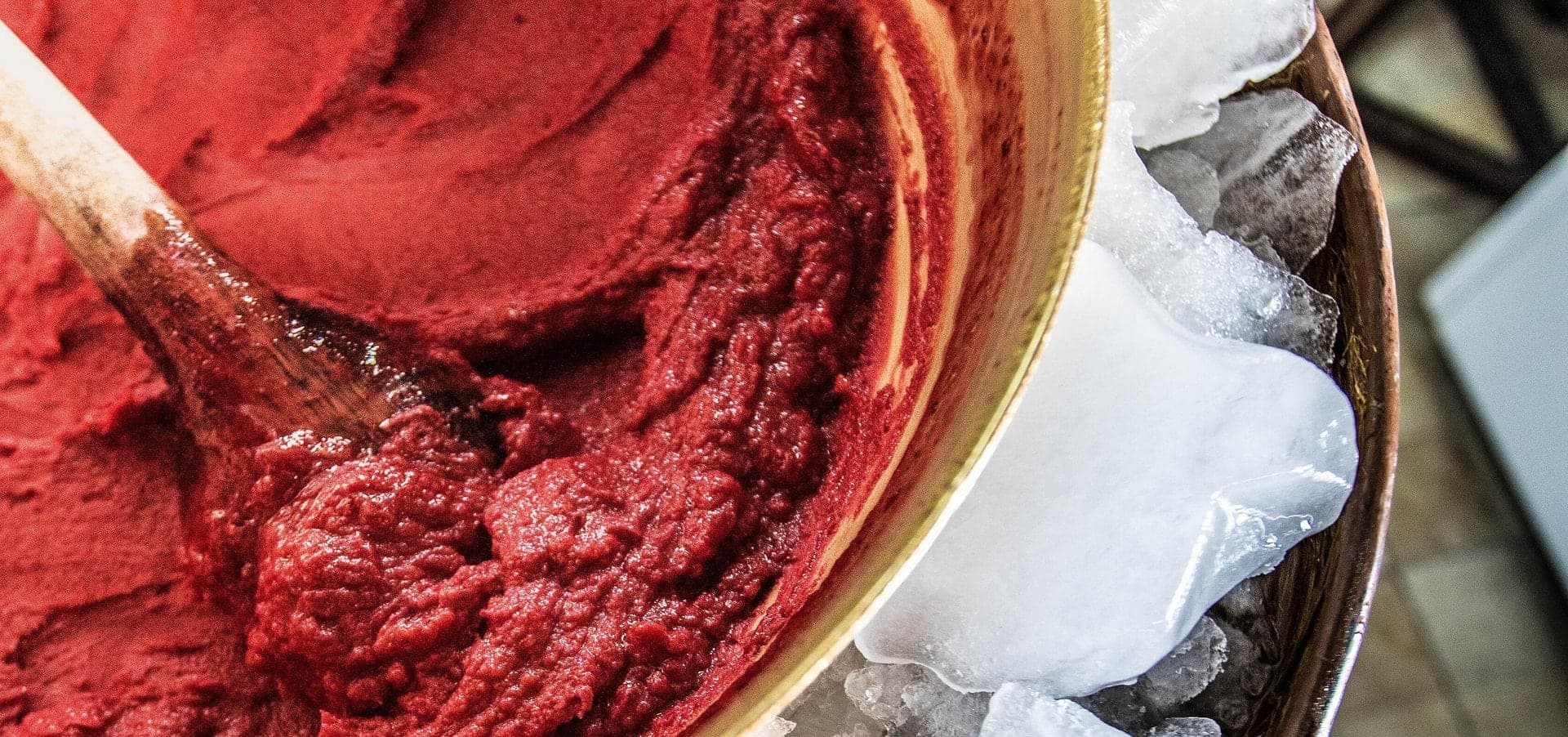
The flagship of Ibarra's sweet tradition is helado de paila. A copper bowl, the paila, sits in a bed of crushed ice mixed with rock salt and packed under straw for insulation. The ice melts slowly and the salt brings the temperature down below the freezing point of water, into the range where a sugar-and-fruit solution will solidify. Fresh fruit juice goes into the bowl. The bowl spins. The maker scrapes the freezing edge of the mixture back toward the centre, over and over, until the whole bowl has turned into sorbet.

The technique looks Italian if you have never thought about it. Granita uses a similar principle. Gelato is made on the same physical idea. The temptation is to assume that Italian immigrants brought the method to South America in the nineteenth century, the way they did with parts of Argentine and Uruguayan food culture. In Ibarra's case, the story does not work. There was no significant Italian community in the northern Ecuadorian highlands in the 1890s when Rosalía Suárez began selling paila helados at age fifteen. The technique came from somewhere else.

The somewhere else is the volcanoes. Imbabura and Cotacachi, the two volcanoes that frame the Ibarra valley, both held permanent ice fields at their summits well into the early twentieth century. The Caranqui, and before them the unnamed earlier highland cultures, harvested that ice. There was a specialized profession of high-altitude ice carrier, a hielero, who climbed above 4,000 metres to cut blocks of glacial ice from the summit fields and pack them down the mountain on his back wrapped in straw. The same ice was used for cold storage, for ritual purposes, and, in the simplest version of the chain, for chilling fruit juices.

Sweetened fruit ice spun in a metal bowl over harvested glacial ice is the recipe for paila helado. It does not require post-conquest technology. It does require the volcanic ice supply, the copper-working tradition that pre-dates the Spanish in the central Andes, and the fruit. All three were here.

Rosalía Suárez did not invent the technique in 1896. She commercialized it. What she did was take a household and ceremonial practice and make it into a storefront business that has now run, in the same family, for five generations.

What the morocho corn knows

The fifth stop on the tour is the empanada de morocho corner. Empanadas de morocho are made from a specific variety of starchy white corn called morocho, soaked overnight, ground to a paste, and shaped into thick crescents around a filling of seasoned pork or chicken before being fried.

The corn is the point. Morocho is a pre-Columbian crop. The Spanish brought wheat to South America in the sixteenth century, and across most of the colonial Andes, wheat displaced corn for most baked goods. The empanada itself is a Spanish form, originally a wheat-flour turnover with a savory filling. What you get in Ibarra is the Spanish form rebuilt around the corn that was already there.

If you bite into a morocho empanada, the shell has a faint sweetness and a chewier texture than a wheat-flour empanada. That is the corn doing what it has been doing in the northern Ecuadorian highlands for at least a thousand years. The same morocho variety also produces colada de morocho, a warm corn-and-milk drink with cinnamon that is sold at the markets and at street stands in the early evenings.

The empanada is the cleanest example of the pattern. The form looks Spanish. The substance is Caranqui.

What the arrope and the nogadas borrow

Arrope de mora, the thick blackberry syrup sold in dark jars at the La Merced vendors and along Calle Olmedo, is a slow reduction. Mora, the Andean blackberry, grows wild and cultivated across the highlands. The juice is cooked down for hours until the water evaporates and the sugars concentrate into a syrup with the consistency of jam.

Slow reduction of fruit juice as a preservation technique pre-dates the Spanish. Indigenous cultures across the Andes produced concentrated fruit syrups long before sugar arrived. What the Spanish added was cane sugar from the Chota Valley, the warm canyon to the north of Ibarra where colonial-era sugar plantations were worked, largely by enslaved Africans whose descendants still make up most of the population of Chota today. The sugar made the arrope sweeter and more shelf-stable. The reduction technique itself is the older layer.

Nogadas, the walnut nougats wrapped in wax paper, are a more complicated case. The walnut trees that supply Ibarra's nogadas were planted in the colonial period; Juglans regia is not native to South America. The whipped egg-white nougat form is unmistakably European, with parallels across the Mediterranean from the Spanish turrón to the French nougat. In this case, the technique came with the conquerors and most of the ingredients did too. The nogada is the most colonial of Ibarra's sweets.

But notice what is in it: walnuts, sugar, egg whites, milk, cinnamon. Cinnamon is the only ingredient that did not eventually become a local Ecuadorian crop. The Spanish brought the form and the trees, and the trees took. The nogada became part of Ibarra by the third generation.

Why the Caranqui neighborhood is the last stop

The tour ends in Caranqui, the neighborhood about two kilometres south of the historic centre that gave the pre-Inca culture its name. The archaeological site of Inca-Caranqui sits here. It is the southernmost imperial Inca administrative centre that has been excavated in northern Ecuador. The site has temple foundations, baths, and agricultural terraces from the brief Inca occupation that followed the conquest of the Caranqui around 1495. The Caranqui themselves had a settlement on this site for centuries before the Inca arrived.

Ending the food tour in Caranqui makes the point that the rest of the tour has been quietly making. The dishes you can order in the small restaurants of the neighborhood are the substrate that Ibarra's more famous sweets sit on. Locro de papa, the highland potato soup with cheese and avocado. Choclo con queso, large-kernel Andean corn served with fresh cheese. Chicha, the lightly fermented corn drink that pre-dates the Inca empire.

Eat a plate of locro in Caranqui and a paila helado in the centre of Ibarra on the same afternoon, and you can taste the geometry. The potato in the soup was domesticated in the Andes thousands of years ago. The mora in the helado is an Andean berry. The technique for the helado uses the volcanic ice that the Caranqui were already harvesting when the Spanish ships landed. The sugar is colonial. The bowl, the ice, the fruit, and the patience are not.

How to use the tour

The sweet trail is six stops over about an hour and a half. Most of the cost is in the food. Bring small bills. Order one of everything. The portions are small enough that you can taste the whole circuit without overdoing any single stop.

If you walk it after the white-city tour, the geometry doubles. You spend the morning seeing the colonial reconstruction that the 1868 earthquake forced, and you spend the afternoon seeing the older substrate that the reconstruction sat on top of. Both layers are still here. Both are still being maintained. Both are easier to see when you know which one you are looking at.

Explore Ibarra with Roamer

Take these audio tours to experience the stories mentioned in this guide