The Realejo is where the Nasrid royal gardens became Castilian Granada. On the southern slope under the Alhambra, the sultans kept garden estates inside the city walls, and the quarter's name is usually tied to those royal gardens. Within ten years of the surrender of 1492, the Catholic Monarchs had handed the estates and houses to friars, to nuns and to Castilian nobles. Walk down through it today and you find that the Nasrid work that survives is hidden inside later buildings, while the quarter's Jewish past survives only in what people wrote down.
Walls that show nothing
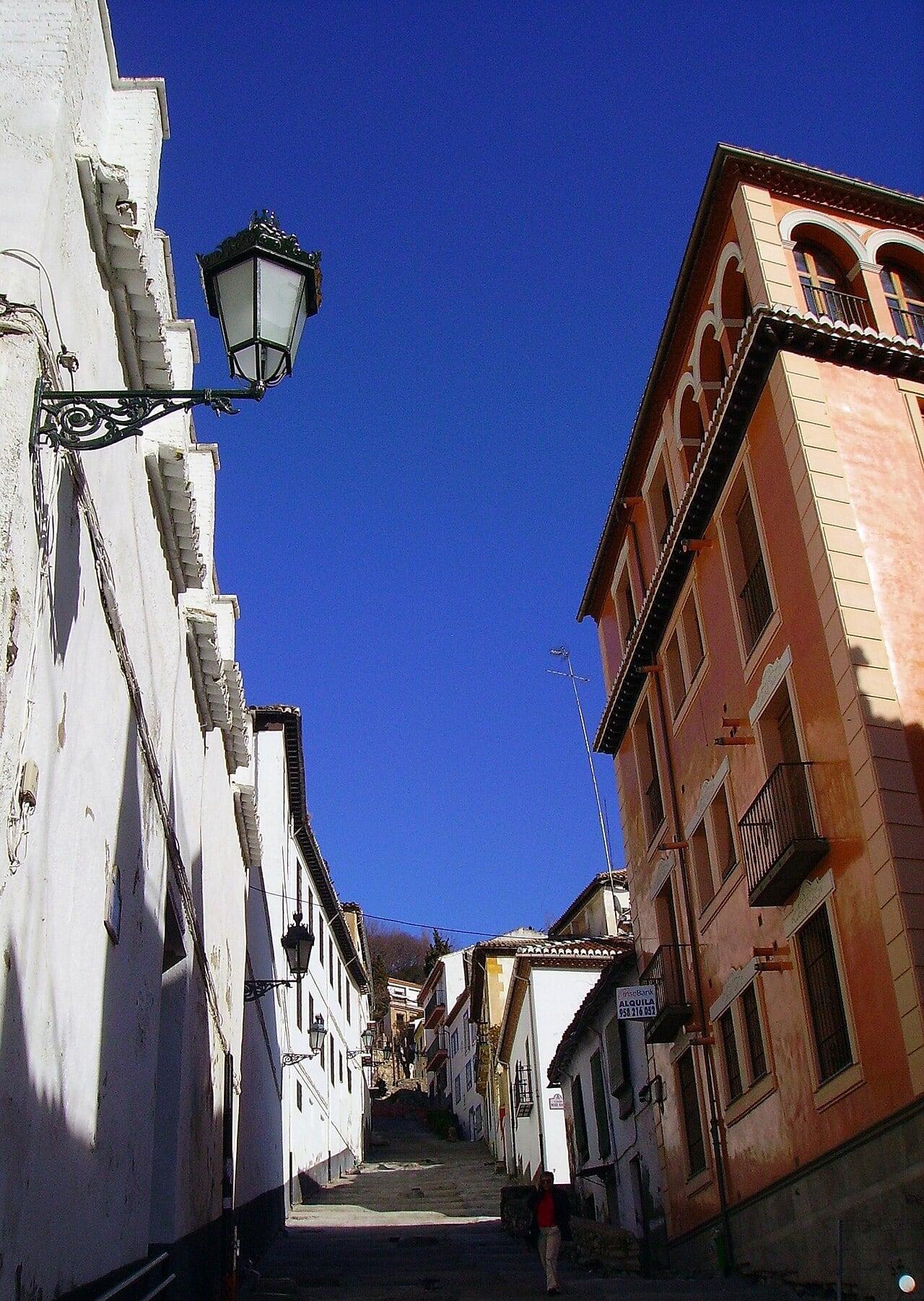
Start at the top, in the Antequeruela, and look along the lanes: white walls, high and mostly blank. Behind them Granada hides its carmenes, walled houses with terraced gardens kept out of sight of the street. Manuel de Falla, the composer, lived in one from the early 1920s until he left for Argentina in 1939, a small house on a dead-end lane rather than a palace. It is a city museum now.
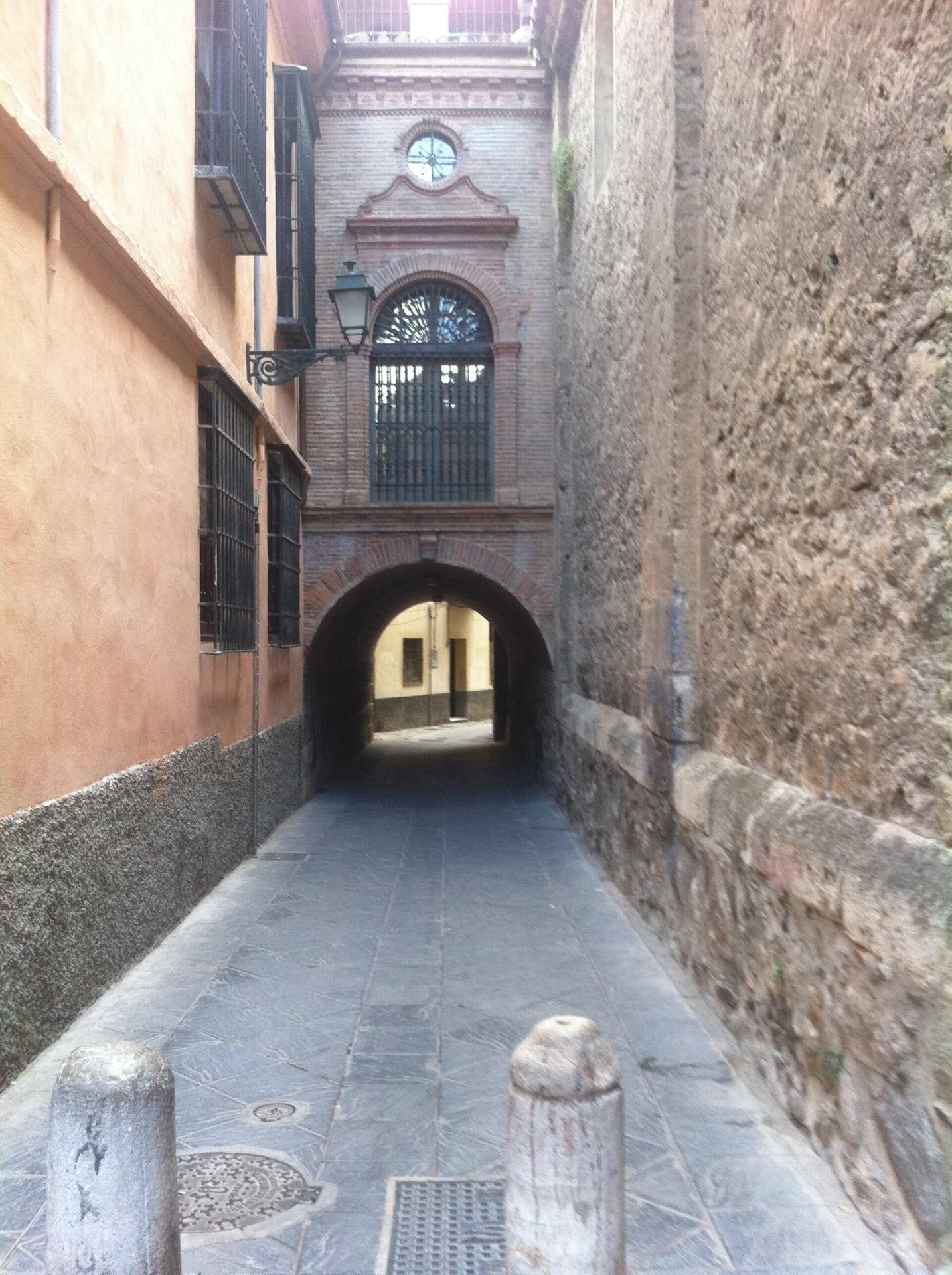
Blank walls are the quarter's design rule, and they are older than the Christians. A Nasrid house turned its back to the street and took its light from a patio inside. At the Casa de los Girones, a town house with a Nasrid core rebuilt many times, the restorer deliberately closed street windows to bring that blankness back. The lesson repeats all the way down the hill: from the street, a Granada house shows almost nothing.
The nuns, the friars and the nobles
Hear a stop from this walk
Yehuda ibn Tibbon: Granada's Translator
The handover happened fast, and the walk shows each of its three beneficiaries.
The parish came first. San Cecilio was founded in 1501, nine years after the surrender, on the city's eastern edge; its people, the records say, lived mostly by growing and working silk. Below it, in the Campo del Príncipe, stands the Cristo de los Favores, a stone cross that neighbors of that parish set up in 1640 in a square higher up and moved down here in 1682.
The nuns came next. The Comendadoras de Santiago were founded on 28 July 1501 by the Catholic Monarchs to keep a vow of the queen, to build a convent in the last city won from the Muslims, in houses where Granada's first archbishop and his family had lived. It is said to be the first convent for women in Christian Granada, and its long plain walls still give almost nothing away.
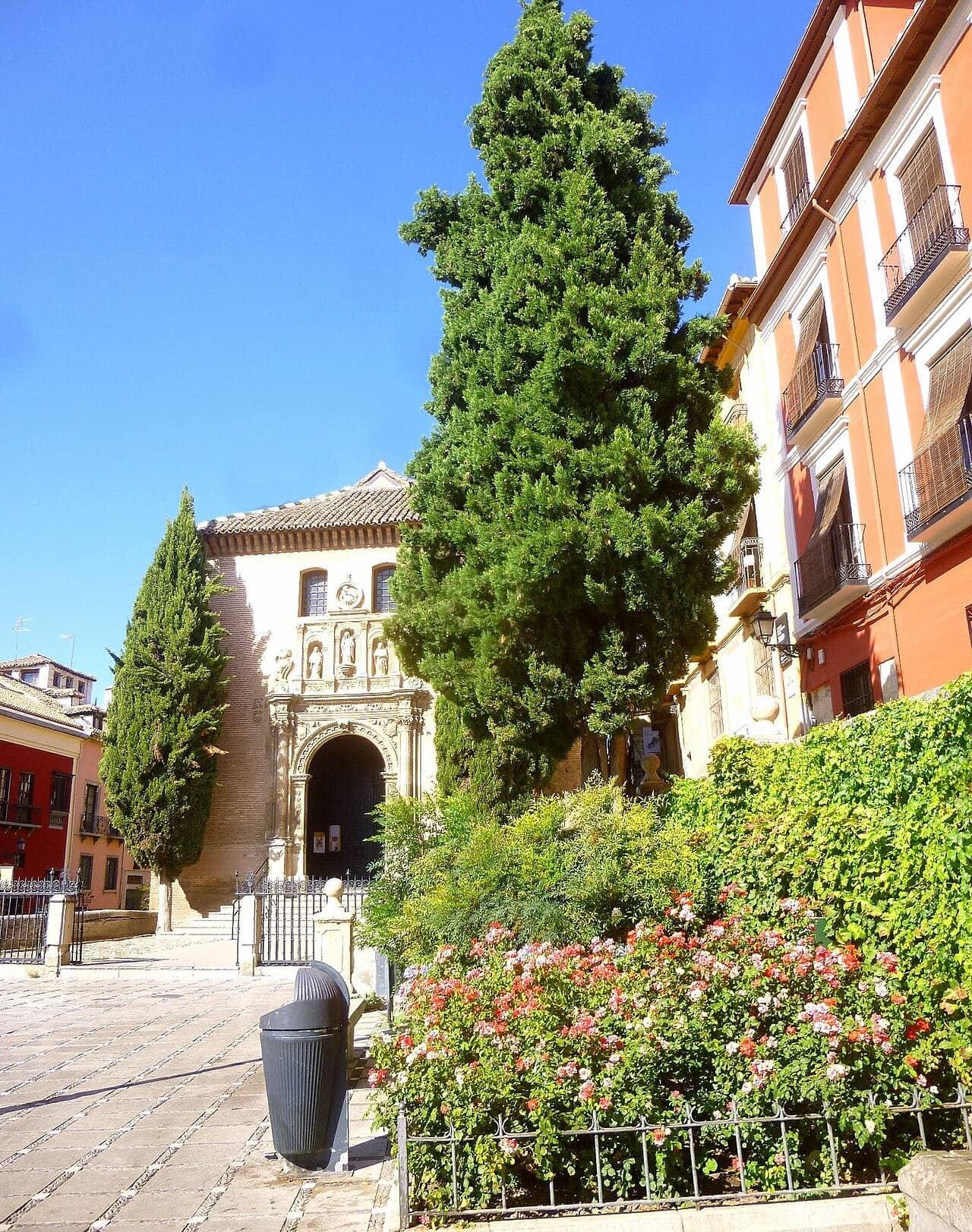
The friars took the richest prize. In March 1492, weeks after the surrender, the monarchs granted one of the sultans' garden estates to the prior of a new Dominican monastery, Santa Cruz la Real. The domed hall of the Cuarto Real de Santo Domingo became their first church, and in 1512 they began the church of Santo Domingo that now faces its square with a stone porch, a front built to be seen, unlike every blank wall above it.
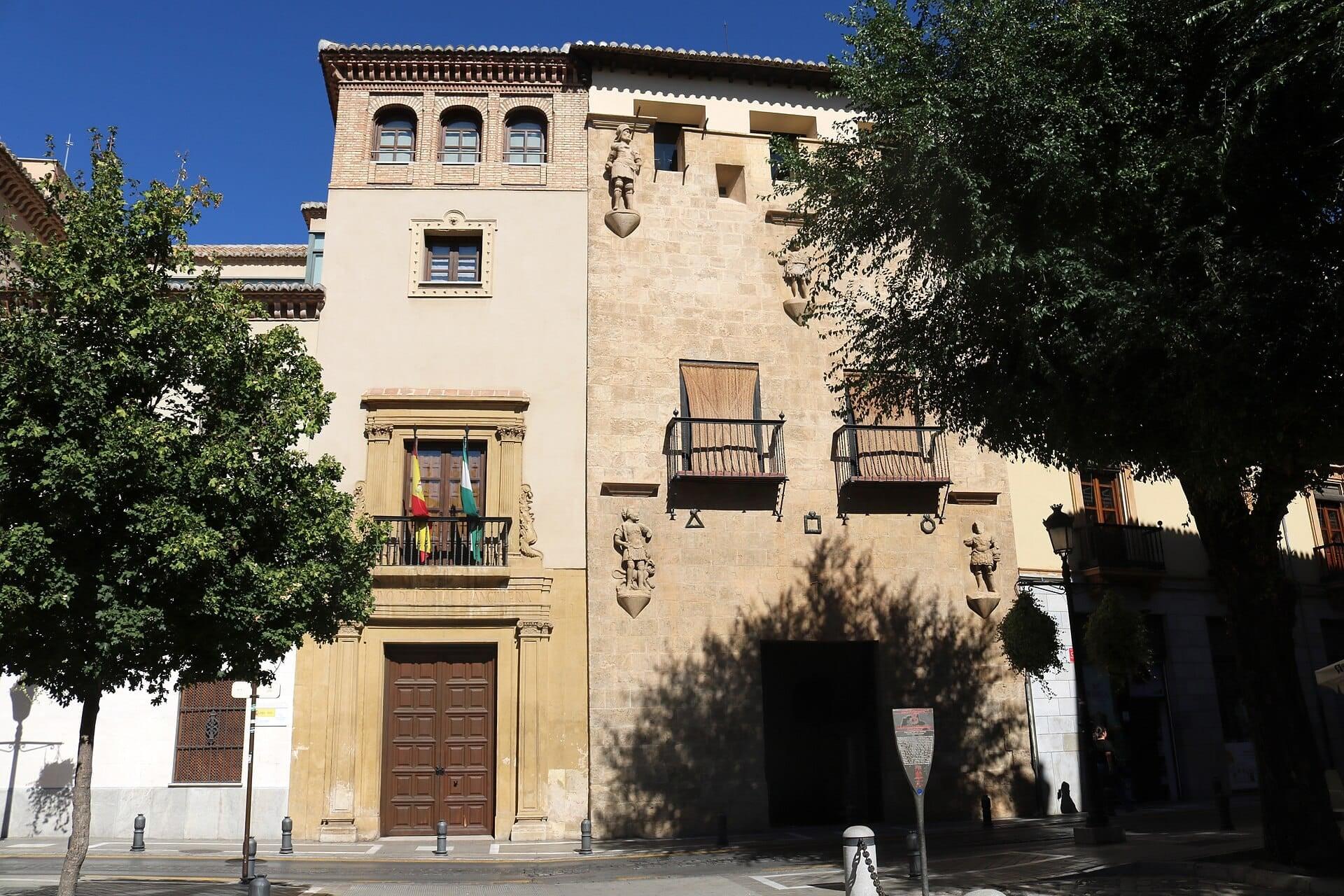
The nobles came last. The Casa de los Tiros, owned from 1526 by the Castilian commander Gil Vázquez Rengifo, passed by marriage to the Granada Venegas, a family of Nasrid descent who had become Christians, and was dressed with carved heroes as a castle.
A quarter kept on paper
The walk ends with a statue rather than a building. Yehuda ibn Tibbon was born in Granada about 1120 to a Jewish family, left when the Almohads took over, and founded in Provence a family of translators who turned Arabic works into Hebrew. Accounts written after the conquest, by the traveler Münzer in 1494 and the chronicler Mármol Carvajal in the 1500s, place Granada's Jewish quarter on this side of the Darro. By 1492 the community was small, about 110 households by one historian's count. That year royal edicts forced the Jews of Castile and Aragon to convert or leave, and Münzer wrote that the quarter was demolished. No synagogue or other Jewish building has been identified. The quarter's Jewish past is held only in what people wrote down.
Walking it
The walk is nine stops over about 1.6 kilometers and takes about fifty minutes, longer if you go into the two small museums. It runs mostly downhill on stone-paved lanes from Falla's lane to Calle Pavaneras, with one short flight of steps and a way round it. Take the Alhambra minibus up to the start, then go at your own pace, stepping aside for cars in lanes where people live, and lingering wherever a wall looks like it is hiding something. It usually is.
Begin at stop 1 of Realejo: Where the Sultans' Gardens Went. See all routes on the Granada page.
Sources
- Agencia Albaicín Granada, Cuarto Real de Santo Domingo: the royal almunia, the grant to the Dominicans, the domed hall as their first church, city ownership.
- Museo Casa de los Tiros, history: the museum opened in 1929 after the lawsuit over the Generalife, and Gil Vázquez Rengifo's transformation of the tower.
- José Luis Lacave, "Las juderías del Reino de Granada", Chronica Nova 20 (1992): that everything written about the Jewish quarter's location rests on Mármol Carvajal and Münzer (cited from the tour's fact dossier).
Ready to experience it?

Realejo: Where the Sultans' Gardens Went
50 min · 1.6 km · moderate
More from Granada
Explore more at your own pace.
Best Culture Walking Tours in Granada (2026)
Best History Walking Tours in Granada (2026)
Granada 1492: The Hinge Year You Are Standing On
Granada Cathedral and Royal Chapel: Ask What a Building Was Before
Casa de los Tiros: The Granada House Dressed as a Hero's Castle