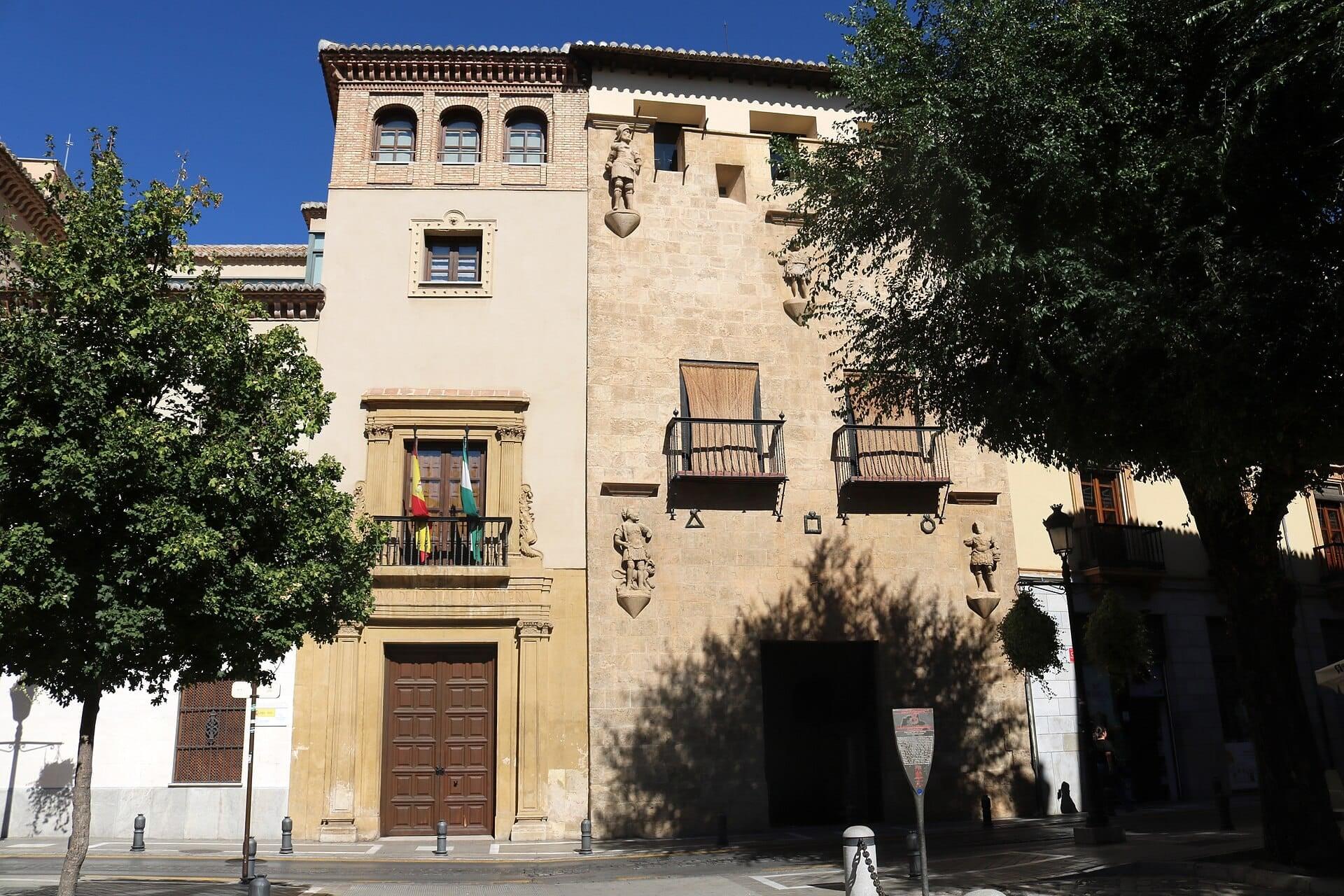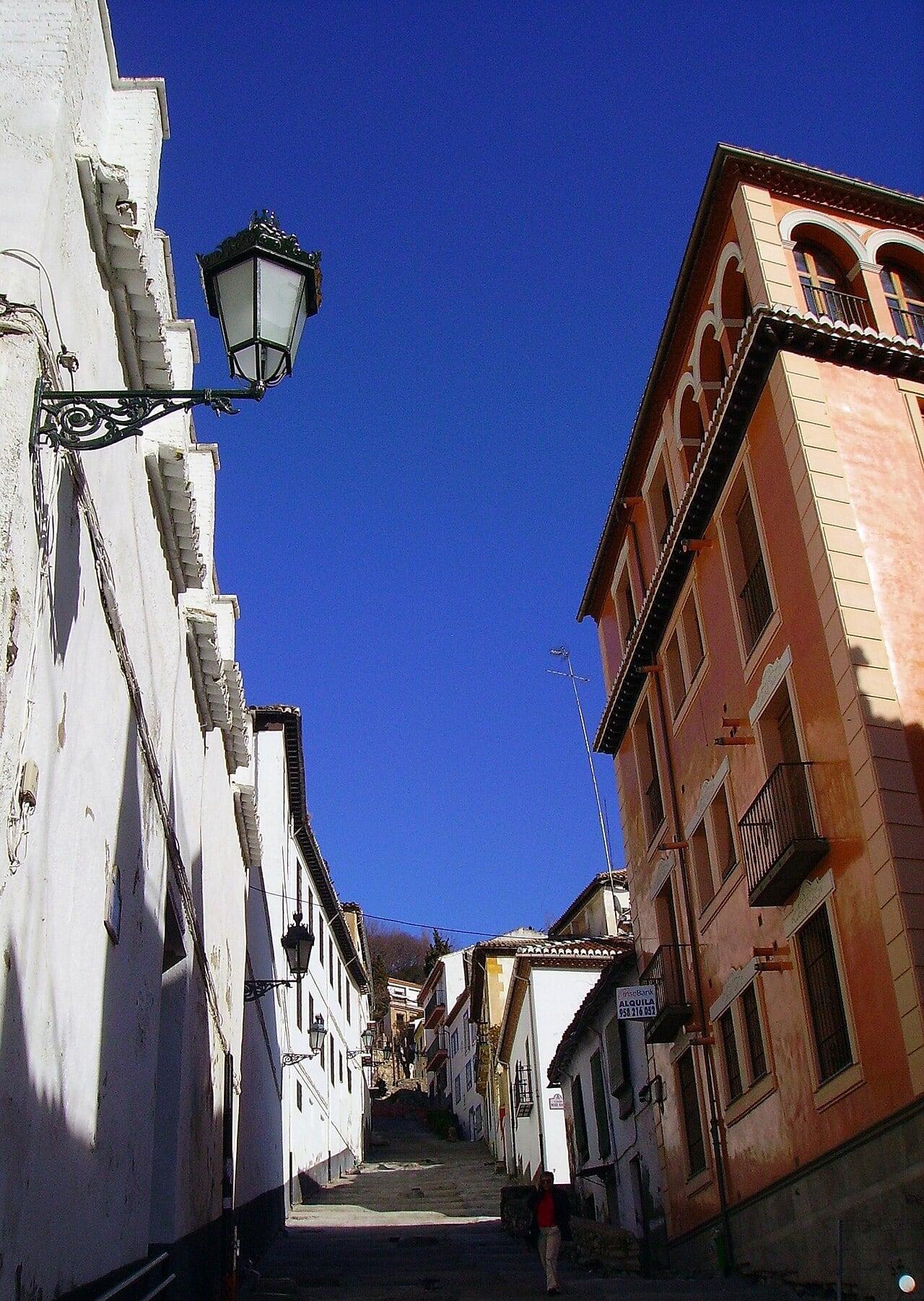
The Cuarto Real de Santo Domingo is a Nasrid royal garden estate that you cannot see from the street. Stand on the Cuesta de Aixa beside its long garden wall and you see a wall, trees, and a house built at the end of the 1800s. Inside that house is a domed hall that the city of Granada, which owns it, dates to the late 1200s and calls the direct forerunner of the Alhambra's palaces. It survived first as a friars' church and then as the main room of a later house, which is why nothing Nasrid shows from outside.
What an almunia was
The Cuarto Real was an almunia, a royal garden estate. The Nasrid sultans kept several of these on the slope south of the Alhambra, inside the city walls, and this is the one that survives. The city calls it the only royal garden estate preserved inside the old walls. Its builder is usually placed in the reign of Muhammad the Second, who ruled from 1273 to 1302.
The layout is the thing to imagine, because it was a single composition. The hall sat in a tower of the city wall, so its back was defensive and its face looked inward. In front of it ran a porch of five arches, with a small pavilion at each end. Beyond the porch lay an eight-sided pool, and beyond that a long rectangular garden with a walk down its middle. Hall, porch, water, garden: a sequence that moves from shade to open sky along one axis.
Why it reads as the Alhambra's ancestor
Hear a stop from this walk
Yehuda ibn Tibbon: Granada's Translator
That sequence is the reason the city calls it a forerunner. The palaces on the hill above use the same moves: a tower hall facing a court, a portico screening the hall from the light, water set on the axis. Here they appear earlier and on a smaller scale. The hall itself is a qubba, a square domed room, and if you go in, the details are the ones the Alhambra made famous: carved plaster arches and a wooden ceiling worked into a pattern of stars.
The defensive tower and the pleasure hall are the same structure. That fusion, a fortified wall that is also a garden room, is one of the ideas the Nasrids carried up the hill.
Friars, then a house
In 1492 the estate passed to the Catholic Monarchs, who gave it to Dominican friars founding the monastery of Santa Cruz la Real. The friars used what they found, and the domed hall became their first church until they began a new one in 1512, the church of Santo Domingo up the street.
The second change was worse for the estate and, oddly, better for the hall. At the end of the 1800s everything except the tower was pulled down to build the house that stands there now. The porch and pavilions went. The hall survived because it was useful: it became the house's main room. The city has owned the property since 1990, and remains of the Nasrid garden are known to lie beneath the present grounds.
Seeing it
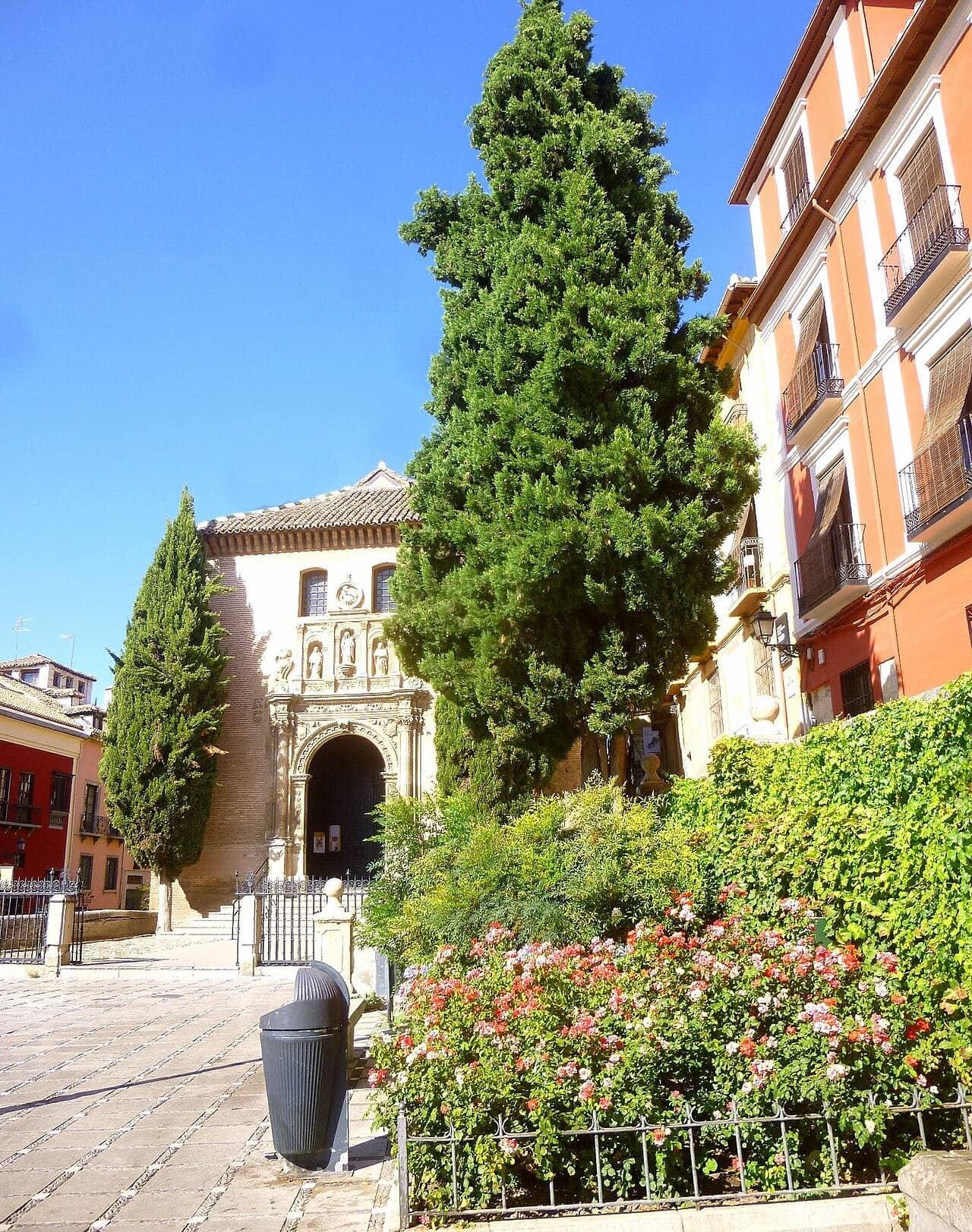
From the street, look at the length of the garden wall and picture the axis running behind it from the tower, through the lost porch and pool, down the garden. That blankness is part of the lesson the Realejo walk keeps returning to: in Granada, the street sees almost nothing, and the best rooms face inward. If the gate on Plaza de los Campos is open, you can go in for a small ticket, and it is free on Sundays.
The estate is stop 5 of Realejo: Where the Sultans' Gardens Went, a nine-stop walk downhill through the quarter that you can take at your own pace. The quarter's whole story is told in where the sultans' gardens went. See all routes on the Granada page.
Sources
- Agencia Albaicín Granada, Cuarto Real de Santo Domingo: built under Muhammad the Second (1273 to 1302), the only royal almunia preserved inside the Nasrid walls, the qubba inside the tower, the five-arched portico with a pavilion at each end, the octagonal pool and garden, the grant to the Dominicans and the hall as the convent's first church, the late nineteenth-century demolition, city ownership since 1990, the direct precursor of the Alhambra's solutions.
Ready to experience it?

Realejo: Where the Sultans' Gardens Went
50 min · 1.6 km · moderate
More from Granada
Explore more at your own pace.
Best Culture Walking Tours in Granada (2026)
Best History Walking Tours in Granada (2026)
Granada 1492: The Hinge Year You Are Standing On
Granada Cathedral and Royal Chapel: Ask What a Building Was Before
Realejo, Granada: Where the Sultans' Gardens Went