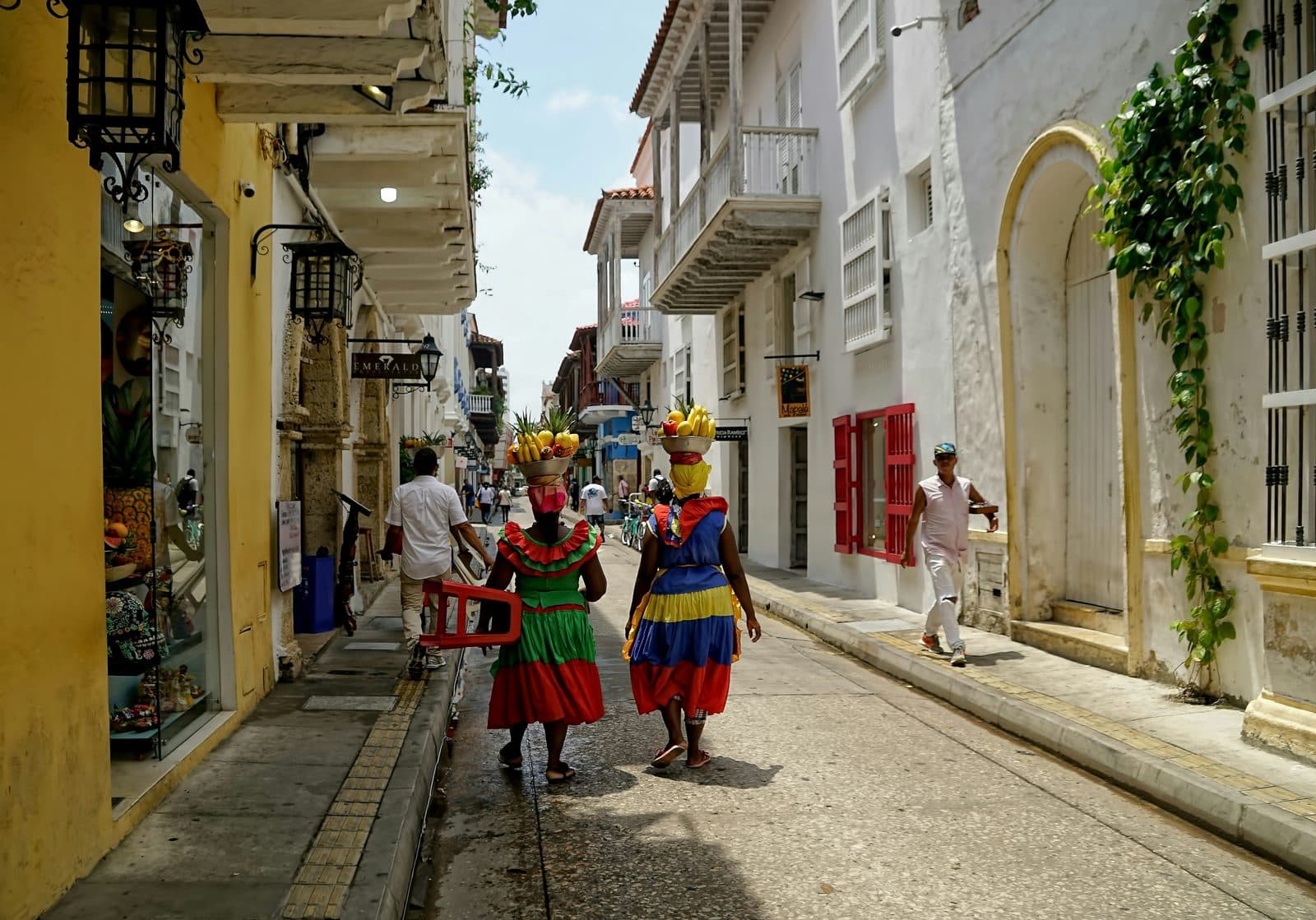
The first thing to know about Cartagena is that almost nothing about its postcard is accidental. The pastel facades, the eleven kilometres of coral-stone walls, the carriages rolling under the Clock Tower Gate, the candy arches, the cathedral with the fortress tower: every piece of the look was forced into existence by a specific failure. Cartagena got sacked. Then it got sacked again. Then it got sacked a third time. After each one, Spain spent another sixty years building thicker walls. The Cartagena a visitor sees today is what failure looked like once it had been engineered into success.
The second thing to know is that this beautiful, fortified city ran on the largest slave trade in Spanish South America for two and a half centuries, and the people who survived it built the neighborhood directly across the moat. So Cartagena is two cities. The walled centro that pulled the wealth in, and Getsemaní, the Free Black neighborhood that grew up outside the walls because it was not allowed inside them. Both are still here. They are about a hundred metres apart. Walk them together and the place stops being a Caribbean fantasy and starts being a real city with a real argument about itself.
The fortified port
Pedro de Heredia founded Cartagena in 1533 on a natural harbor the Carib people had been using for centuries. For about fifty years the city was lightly defended, mostly because the Spanish empire was too busy extracting silver from Potosí and gold from the New Granada interior to think about coastal walls. That ended in 1586. Sir Francis Drake arrived with twenty-three ships and a thousand men, burned much of the city, and held it for ransom. The cathedral, half-built, was used as a stable. King Philip the Second sent the Italian military engineer Bautista Antonelli to make sure it never happened again.
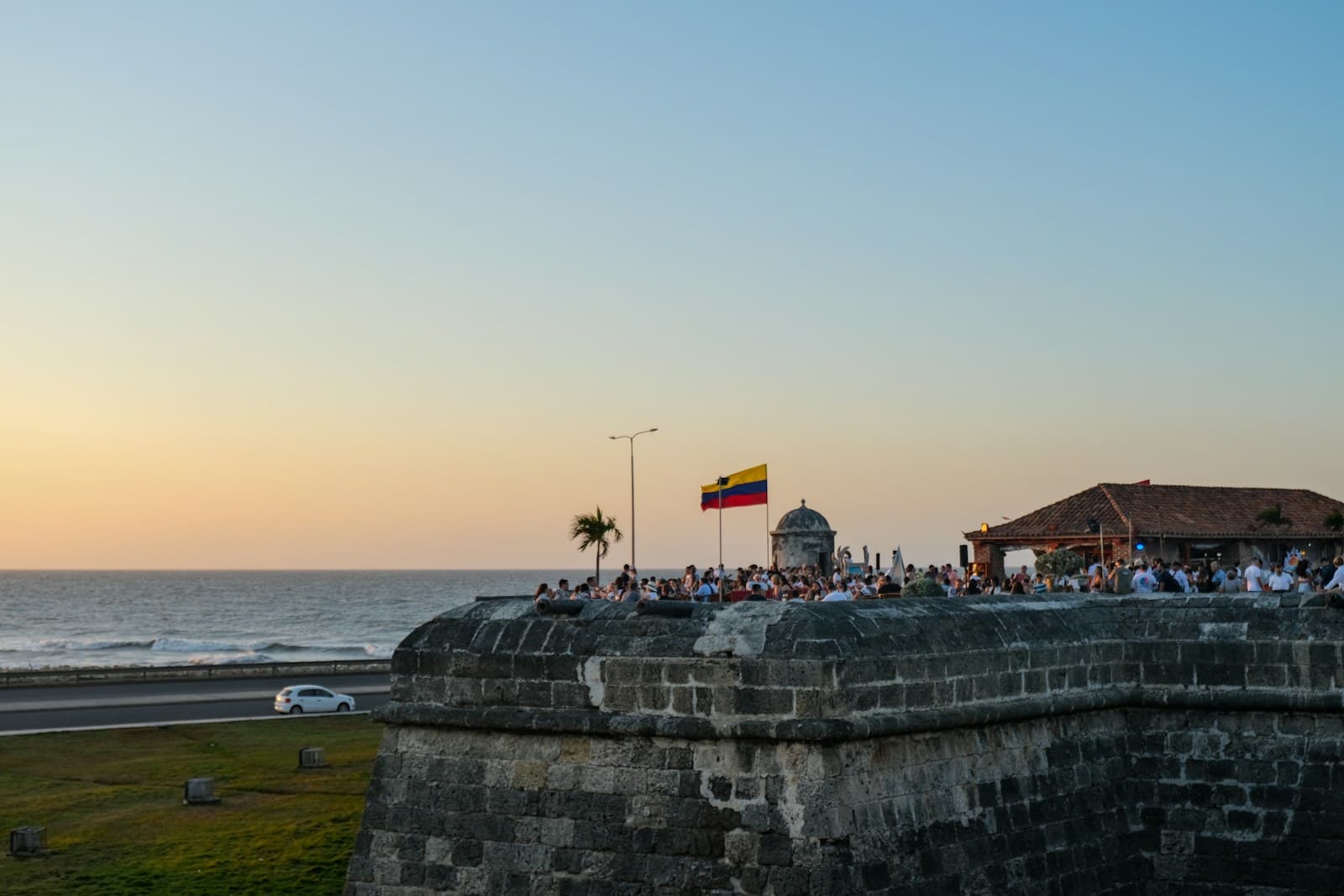
What Antonelli started, generations of engineers finished. Eleven kilometres of walls. Sixteen bastions. A dry moat. Underwater chains across the harbor entrance. The Castillo San Felipe de Barajas on a hill east of the city, the largest Spanish fort ever built in the Americas. The walls are built of coral stone quarried from nearby reefs, mortared with calicanto, a paste of seashells, ox blood, and animal hair. Look closely at any wall stretch and you can still see fossilized marine life pressed into the surface. The masonry is, in a literal sense, the sea pulled out of itself and stacked into a defensive line.
The walls were tested. The French privateer Bernard Desjean broke through them in 1697 and looted the city again. The British sent the largest amphibious force in history under Admiral Edward Vernon in 1741: one hundred and eighty-six ships, twenty-seven thousand men. Cartagena had perhaps three thousand defenders under Blas de Lezo, a one-eyed, one-armed, one-legged Spanish admiral who had been collecting wounds across thirty years of Mediterranean fighting. He held the city for sixty-seven days. Vernon withdrew with eighteen thousand casualties, having already shipped commemorative medals to London showing Lezo kneeling in surrender. It remained the worst British naval defeat for nearly two centuries.
After 1741 no foreign power seriously tried to take Cartagena again. The walls had finally caught up to the enemy.
The slave port
Hear a stop from this walk
Baluarte de Santo Domingo: Where the Wall Began
The same walls that defended Cartagena defended a slave trade. From the late 1500s through 1851, when Colombia finally abolished slavery, Cartagena was the principal port of entry for enslaved Africans into all of Spanish South America. Conservative estimates put the total at over one million people. The Atlantic crossing killed roughly one in five before the ships docked. The survivors were marched through the Clock Tower Gate and auctioned in the open air in the Plaza de los Coches, which was originally called the Plaza de los Esclavos and got renamed after abolition, when nobody wanted the old name on the maps.
The walled city was built by these people. So were the bastions, the cathedral, the Inquisition palace, the convents, the elegant balconies. The wealth that funded everything passed through their hands as forced labor and then as a sales tax on their bodies. Cartagena does not hide this history, but the city has had to learn how to tell it. The Plaza de los Coches today sells fresh juices under arches where people were once oiled to look healthier at auction. The Portal de los Dulces sells coconut sweets that came directly from West African kitchens four hundred years ago. The history is in the food, the music, the language, the architecture. It is not separate from the postcard. It is the postcard.
The Inquisition tribunal sat on the Plaza de Bolívar from 1610 to 1821. It conducted over eight hundred cases. Its main targets were crypto-Jews, women accused of witchcraft (usually Black or Indigenous healers), and enslaved Africans who kept practicing Yoruba and Kongolese spirituality. Cruelty operated next to baroque carving without contradiction. That juxtaposition is something Cartagena has always done well, and it is something a visitor has to be willing to see.
The Free Black city outside the walls
The Free Black community in Cartagena, formed by escaped slaves, freed slaves, and freeborn descendants, was not allowed to live inside the walls. It grew up immediately outside them, on the marshy ground between the centro and the harbor. That neighborhood is Getsemaní. It has been Black, working-class, and culturally independent for almost as long as Cartagena has existed.
Getsemaní is also where Colombian independence was actually declared. On November 11, 1811, while the creole elites in the cabildo were stalling, a Black blacksmith and militia leader named Pedro Romero led the Getsemaní lanceros to the governor's palace and forced the issue. Cartagena became the first city in what is now Colombia to declare absolute independence from Spain. The holiday is still observed on that date. The narrative of educated white revolutionaries borrowing from Paris and Philadelphia covers most of Latin American independence. Cartagena's version started in a Black neighborhood, with weapons made by hand.
In the early 2000s Getsemaní was considered too dangerous for tourists. By 2020 it was on every travel magazine's short list, partly because of an enormous outdoor street-art movement led by the collective Vertigo Graffiti, partly because of the champeta music scene built on towering picó sound systems, partly because Gabriel García Márquez wrote about Cartagena in a way that put the African inheritance at the center of the city's literary identity. Of Love and Other Demons came out of a skeleton he covered as a young reporter in 1949: a colonial-era girl found in the crypt of the Santa Clara convent with twenty-two metres of copper-coloured hair still attached. The book made the colonial-African collision of Cartagena legible to readers worldwide. The convent is now a Sofitel. That sentence is also Cartagena in miniature.
How to walk the city
There is no neutral route through Cartagena. Every route is also an argument. Our Walled City: The People Who Built It Lived Outside tour makes its argument with its own shape: it begins outside the walls in Getsemaní, where the artisans who built the fortifications lived, comes in through the Puerta del Reloj, and ends on the bastion where the city first built in stone. The slave market at the Plaza de los Coches and the Jesuit church of San Pedro Claver sit in the middle of it, because a walk about who the wall was for cannot avoid either.
The practical advice is small. Cartagena is hot. Walk early. The cobblestones are uneven. Drink water. Most stops are free. The Inquisition palace and the cathedral charge small entry fees. The Convento de Santa Clara will let curious visitors into the lobby. The street art is best in late afternoon when the light angles in low under the murals.
The harder advice is to walk both cities. The walled one and the one across the moat. The postcard and the people who built it. Cartagena only really makes sense as the relationship between the two.
Frequently asked questions
- How many self-guided walking tours are there in Cartagena?
- Roamer currently has 2 self-guided audio walking tours in Cartagena. Every tour is free to start: the introduction and first stop play in full, and every later stop plays a short preview before you decide to buy.
- How much does a self-guided walking tour in Cartagena cost?
- Each tour is free to preview and $4.99 for lifetime access. If you want more than one, a 7-day pass is $12.99 and a 30-day pass covering every tour is $19.99, which works out to well under a dollar a day.
- Can I do the Cartagena tours offline?
- Yes. Tours can be downloaded in advance in the Roamer app and played with no signal, which is useful when you are travelling without mobile data.
- How long are the Cartagena walking tours?
- They run about 85 to 90 minutes, covering 2.0 to 2.5 km on foot, with up to 7 stops on the longest route. You set the pace and can pause any time.
Colombia eSIM· 10% off with ROAMER10
Ready to experience it?
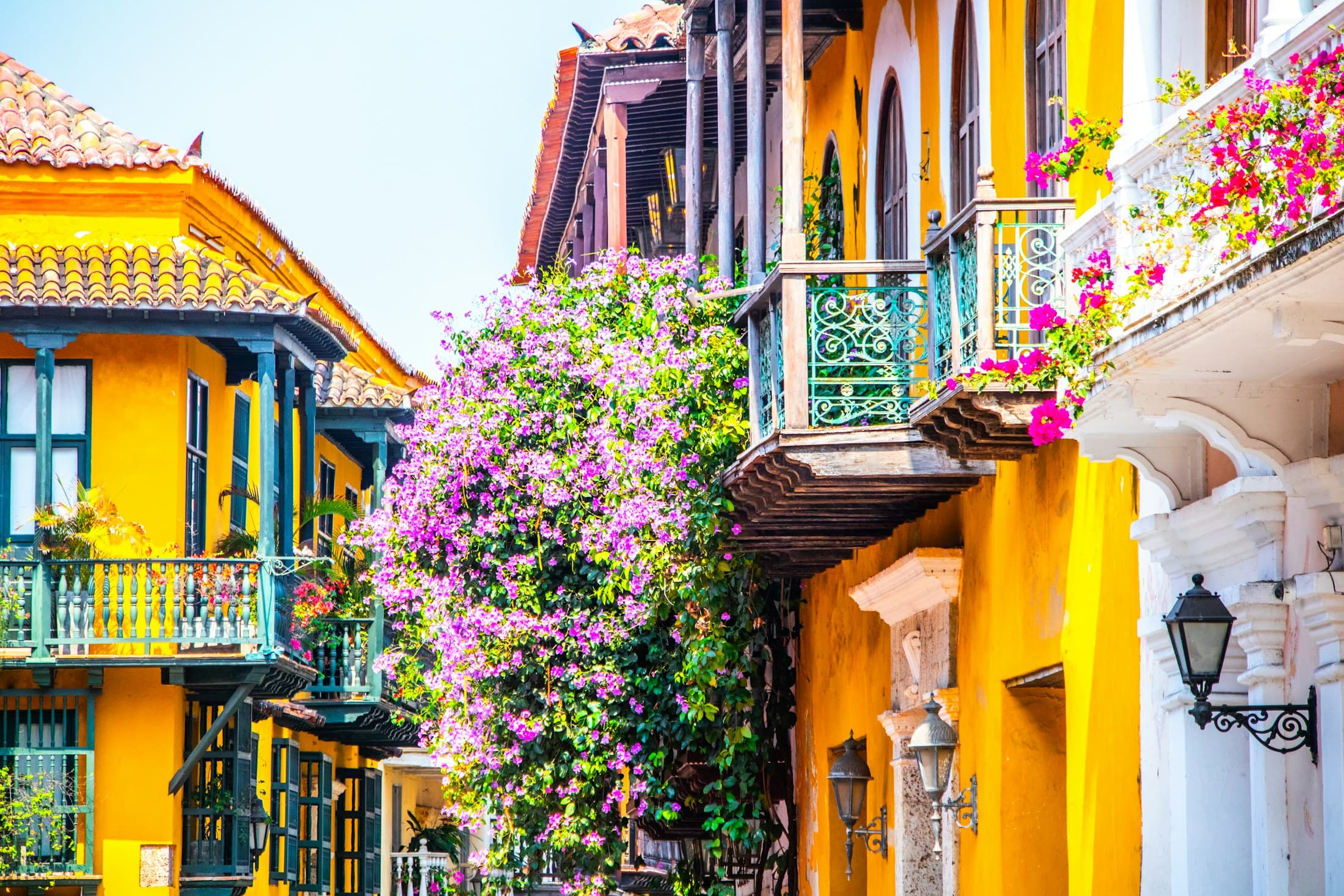
Walled City: The People Who Built It Lived Outside
90 min · 2.1 km · easy
More from Cartagena
Explore more at your own pace.
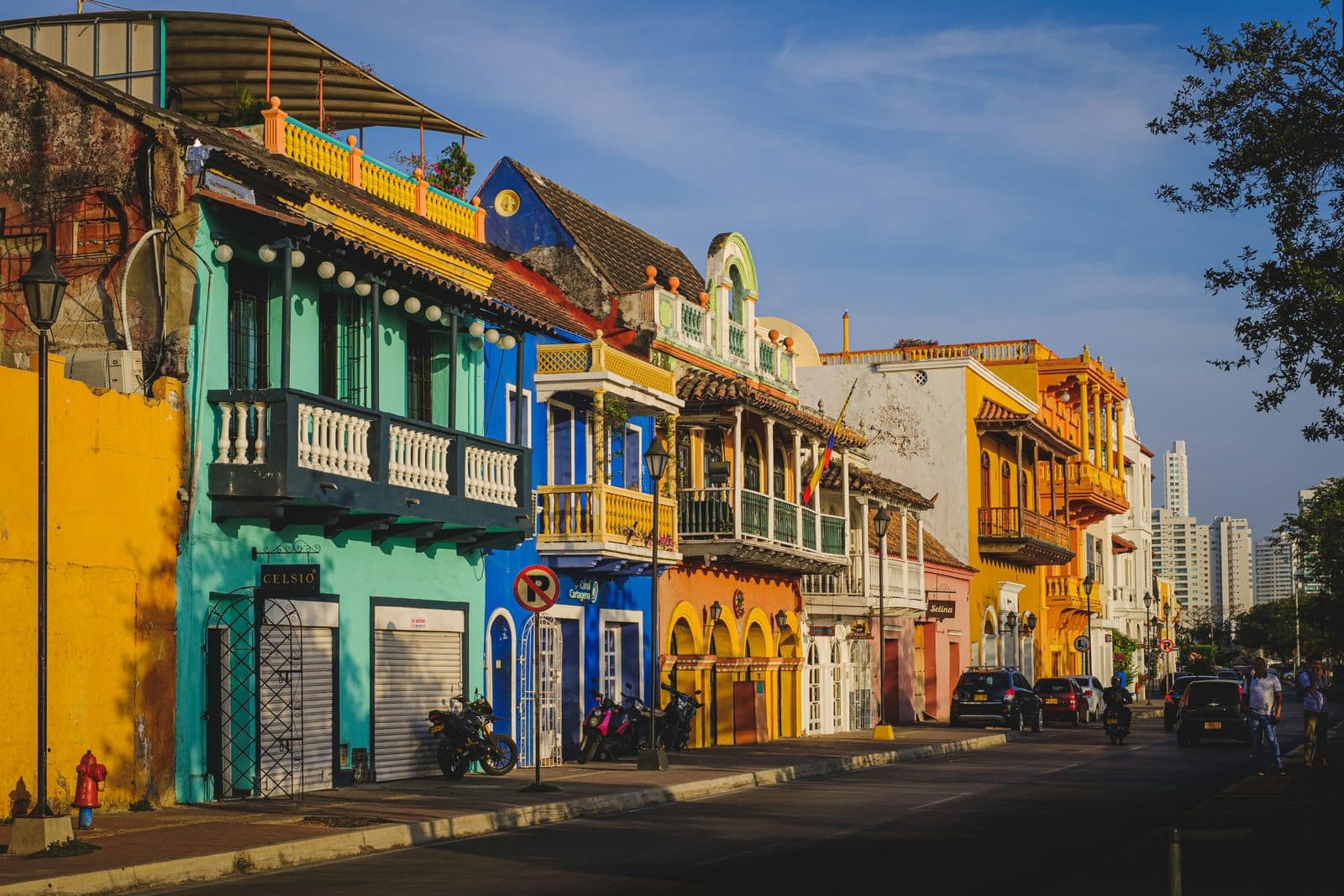
Cartagena Travel Guide: How Many Days, Getting Around, When to Go, Is It Safe (2026)
One Day in Cartagena: A Walkable Old City Itinerary (2026)

What to Eat in Cartagena: A Caribbean-Colombian Food Guide (2026)
Walls Built From Failure: How Cartagena Got Fortified
Blas de Lezo and the Siege of 1741: Cartagena's Most Important Battle