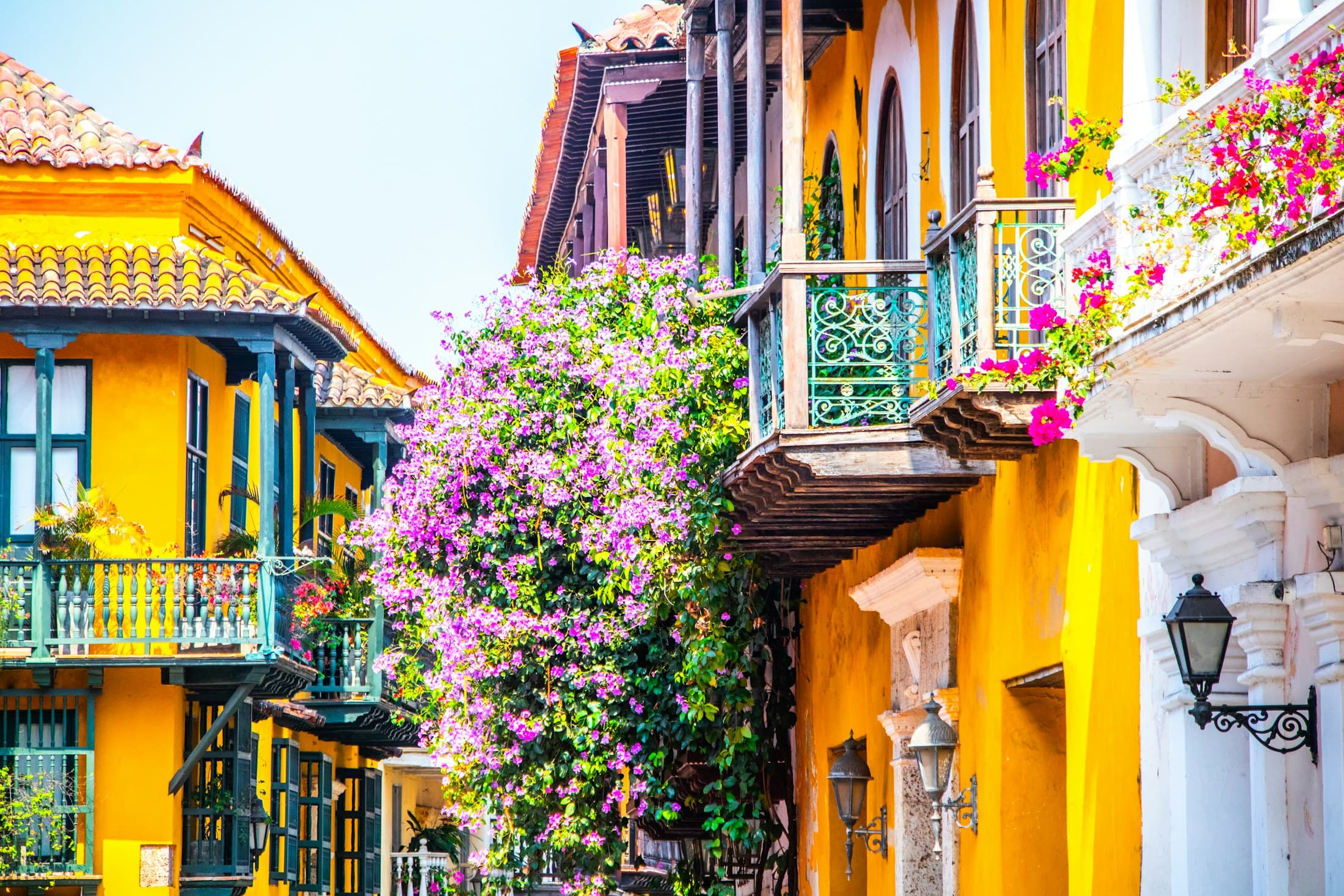
Cartagena built a wall to keep the world out. The artisans who built it lived outside it in Getsemani, and in 1811 they came in through the gate and forced the city to declare independence.
Start · Plaza de la Trinidad: The Square Outside the Wall
DirectionsStops
- 1
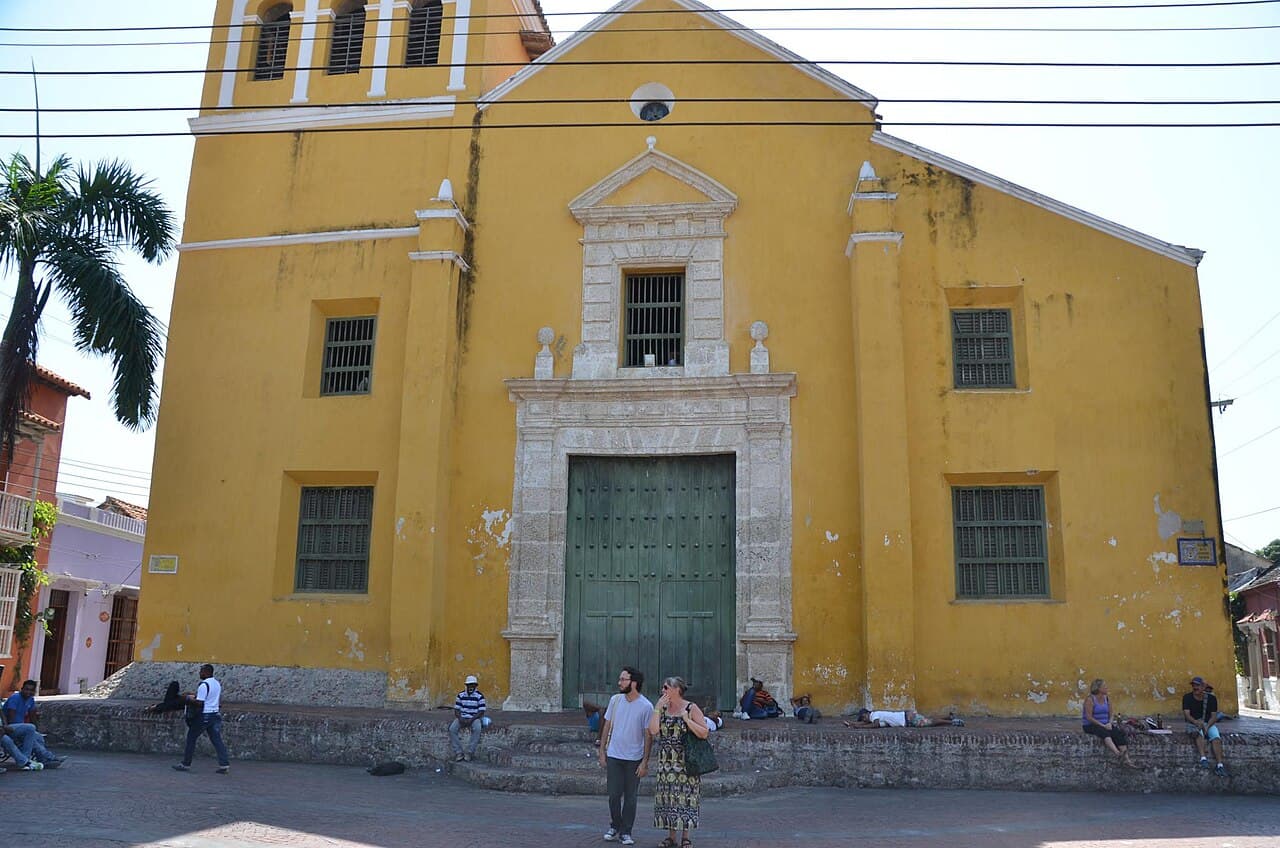
Plaza de la Trinidad: The Square Outside the Wall
The square Getsemani still treats as its living room, in the suburb that spent its first century outside the walls.
- 2
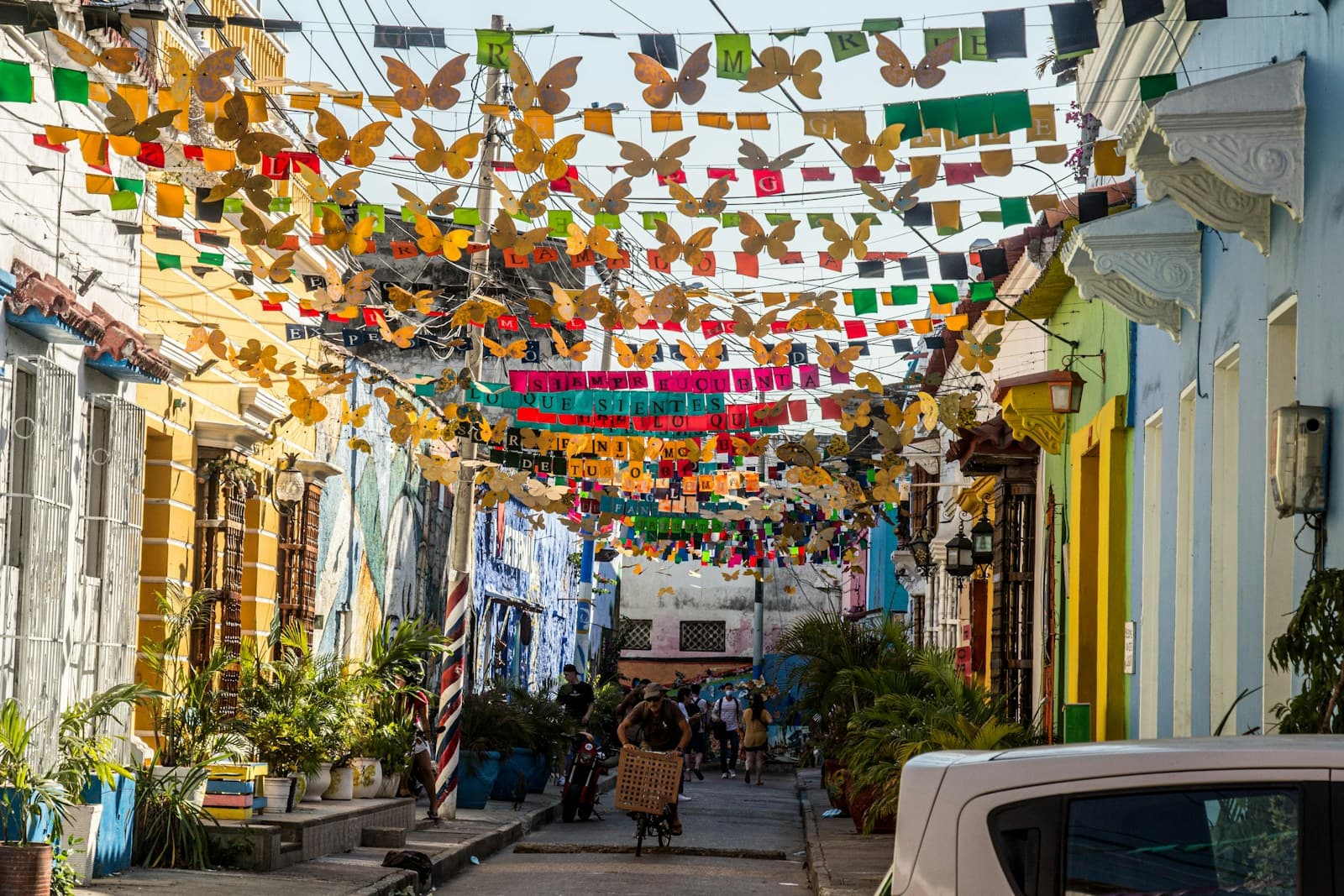
Calle Larga: The Street the Lanceros Came From
The street where Pedro Romero lived, and where the artisans who built the fortifications organised themselves into a militia.
- 3
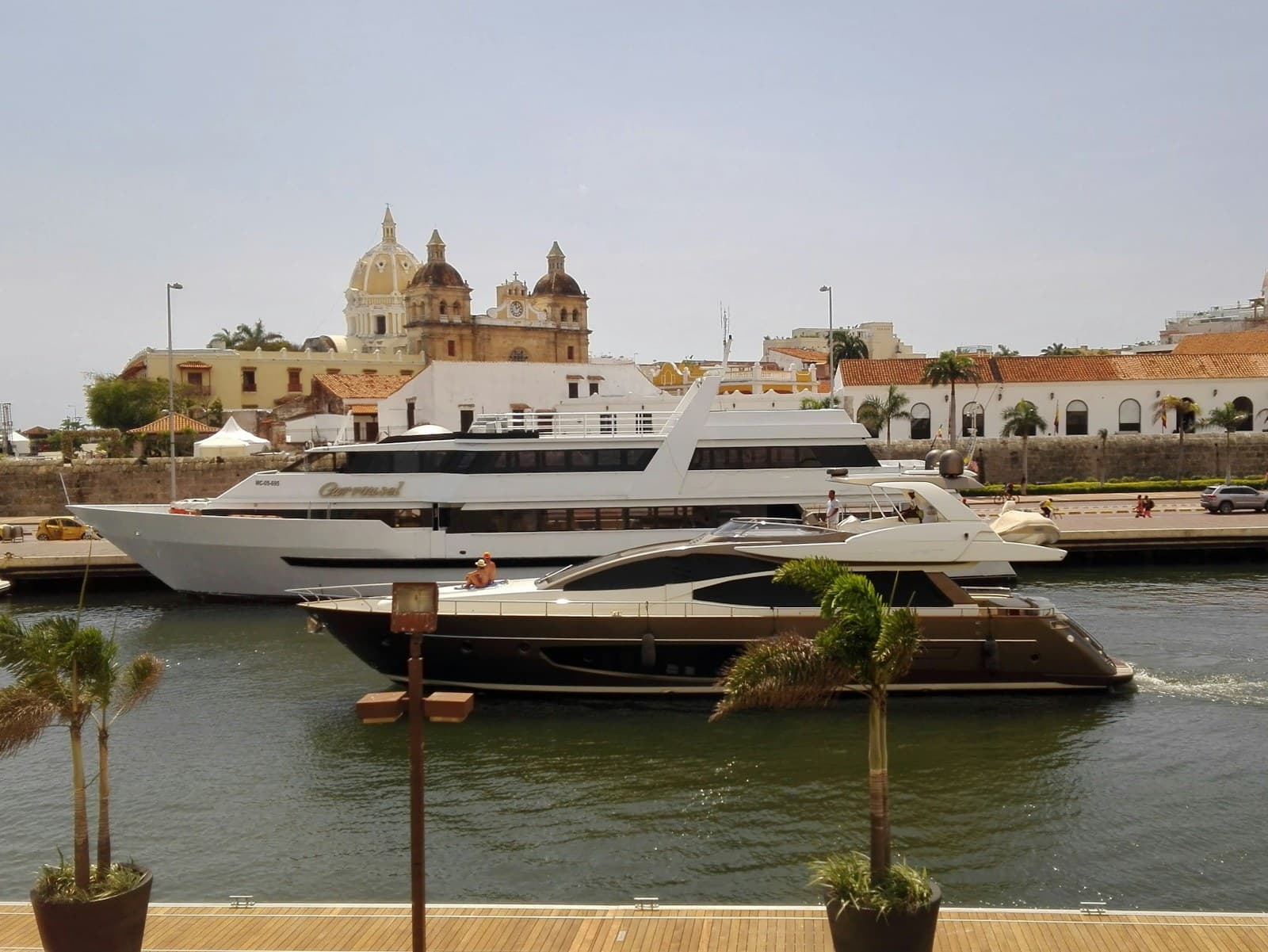
Muelle de los Pegasos: The Water Everything Came In By
The old harbour where the port landed its cargo, and thousands of enslaved Africans with it.
- 4
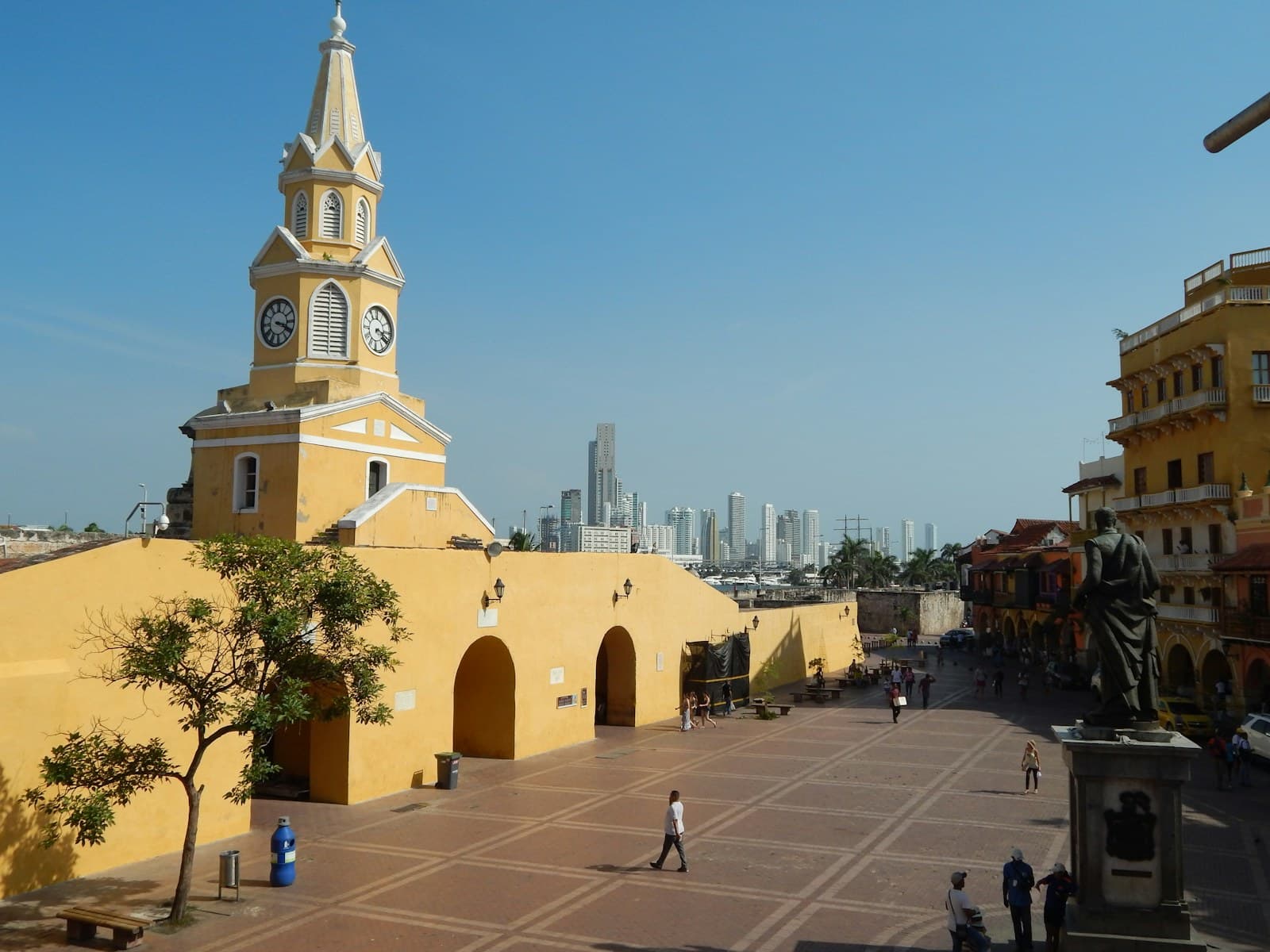
Puerta del Reloj and Plaza de los Coches: The Gate and the Auction Block
The city's main gate stood here, reached from Getsemani by drawbridge, beside the square where enslaved people were sold.
- 5

Plaza de la Aduana: Where the Crown Counted
The largest square in the walled city, built for administration, and the route the Inquisition's processions took.
- 6
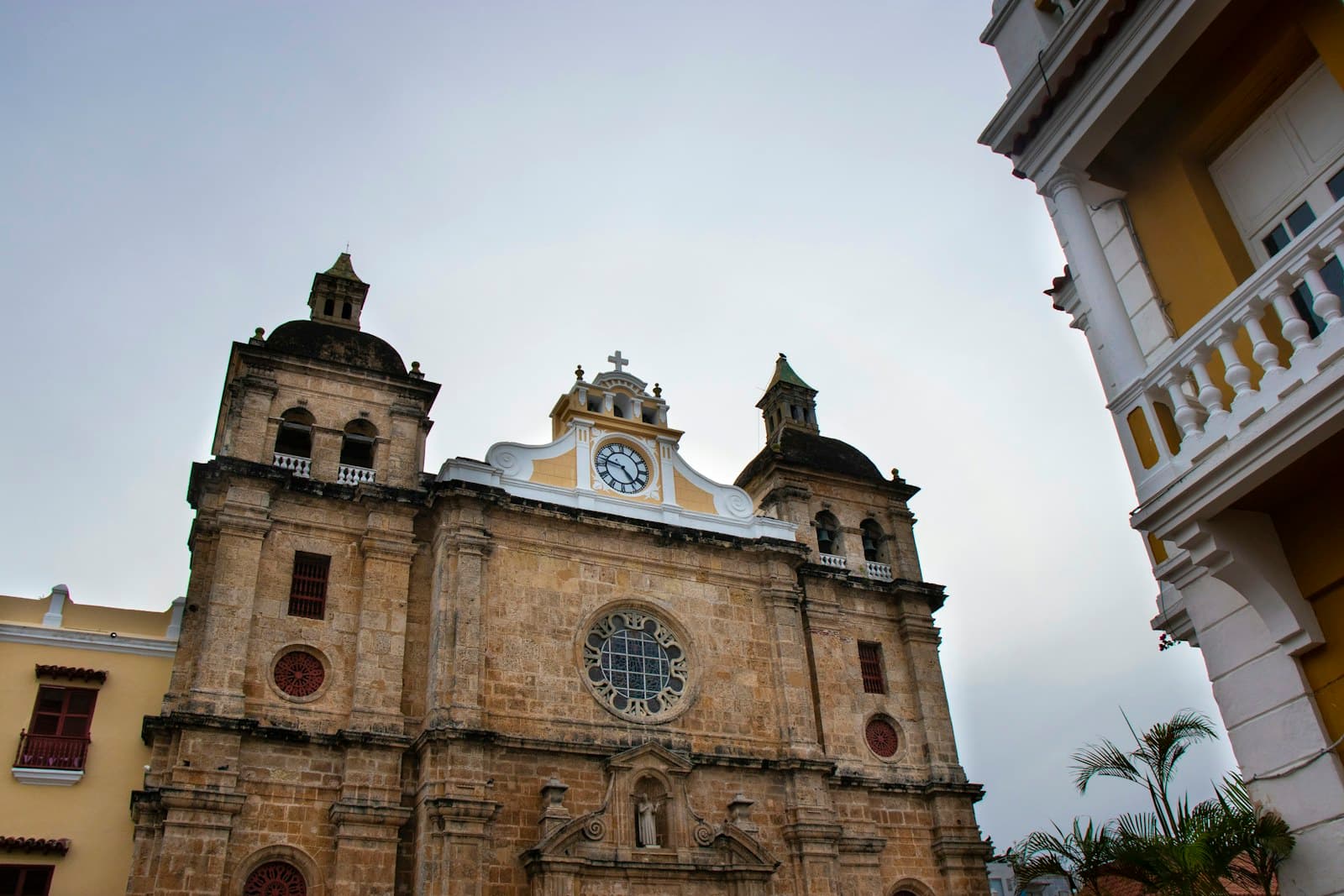
San Pedro Claver: The Slave of the Slaves Forever
The Jesuit church where Pedro Claver is buried, named for the priest who spent forty years with the people landed at the port.
- 7
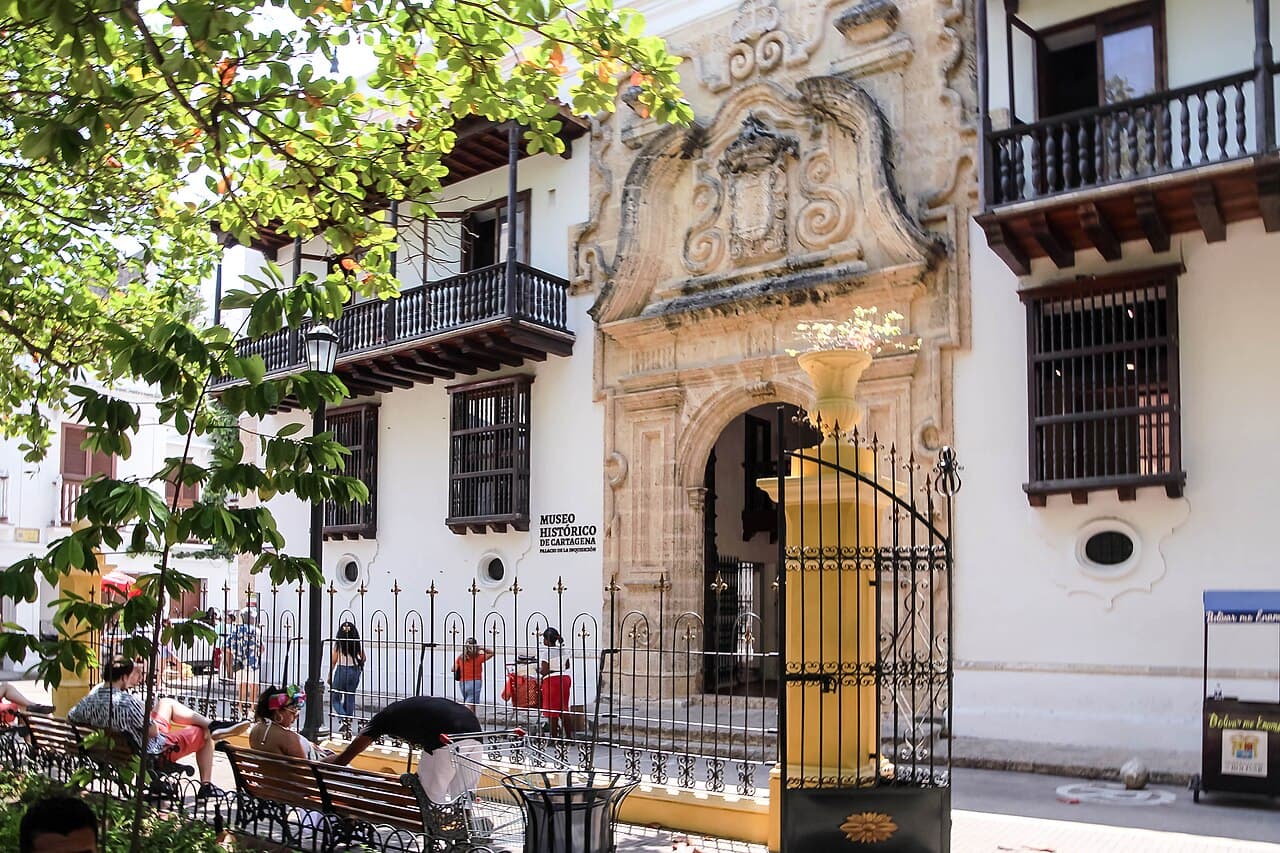
Palacio de la Inquisicion: The Building They Demanded Be Closed
The Holy Office's headquarters on the main square, and one of the things the men from Getsemani came to abolish.
- 8
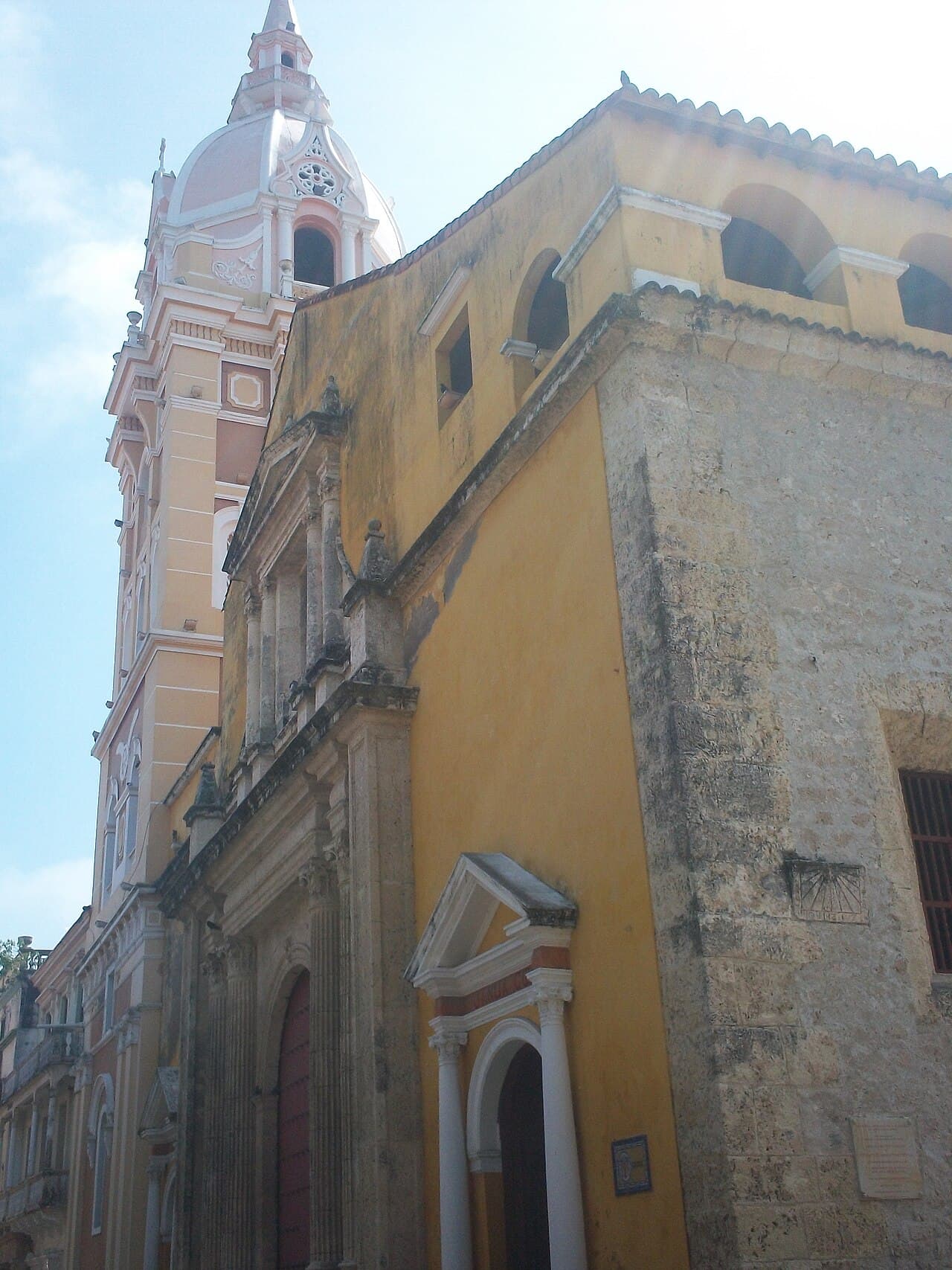
Plaza de la Proclamacion: Drake's Warning Shot
The square beside the cathedral, and the 1586 attack that started the two centuries of building in stone.
- 9
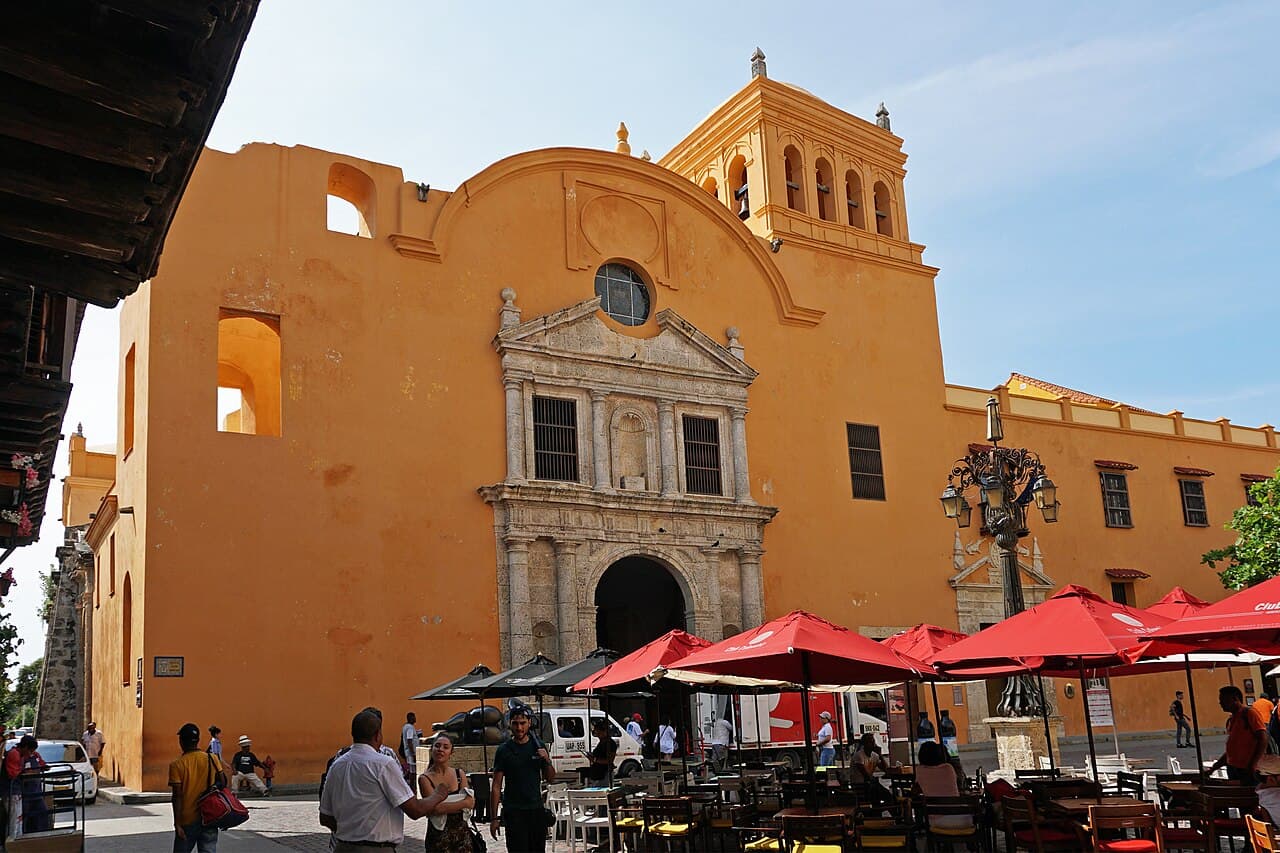
Plaza de Santo Domingo: Gertrudis and the Friars
A sixteenth century religious foundation, a reclining bronze by Botero, and the most comfortable square in the city.
- 10
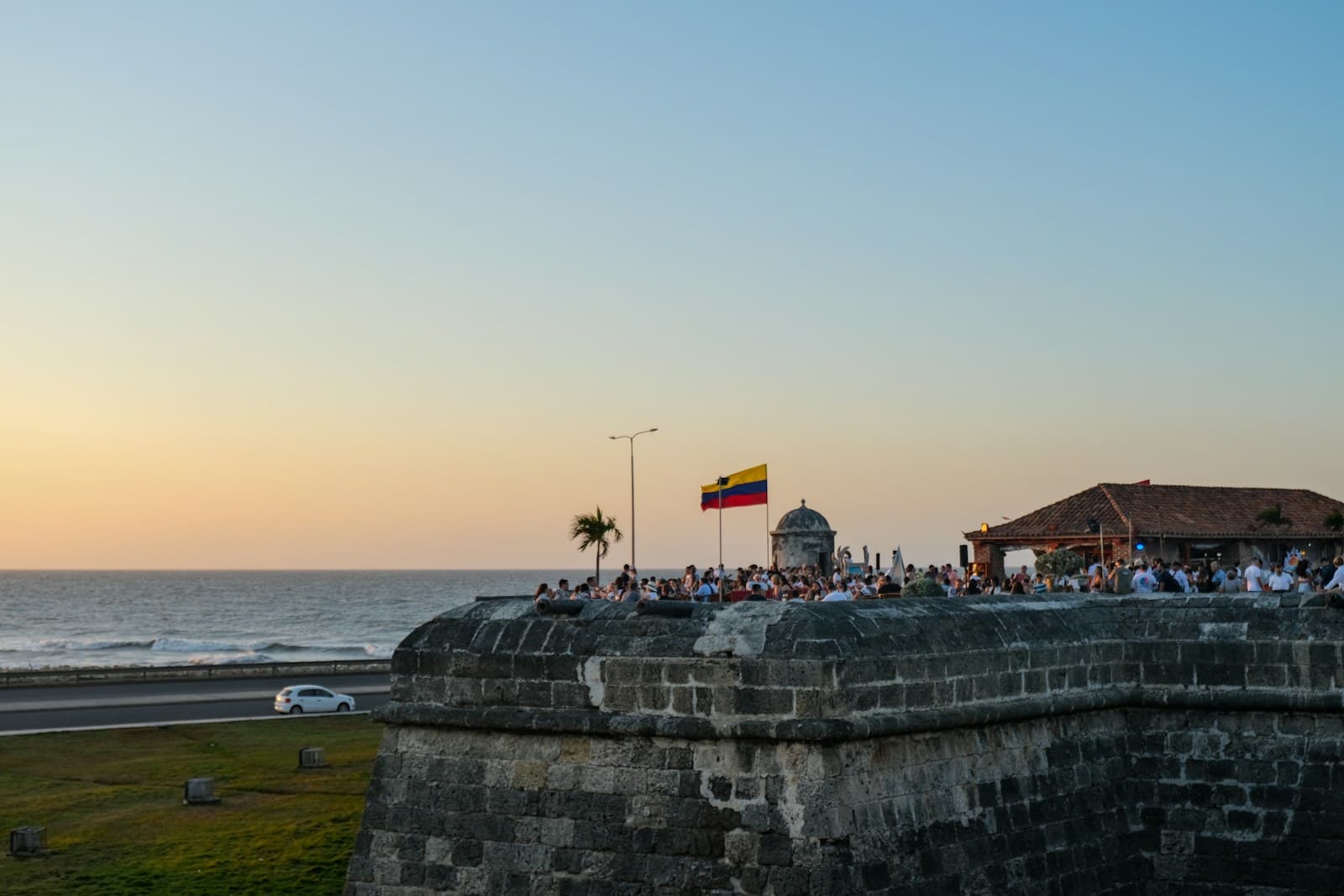
Baluarte de Santo Domingo: Where the Wall Began
The bastion where the city first built in stone after Drake, and the end of the walk on top of the wall.
Details
Best Time to Visit
Early morning or the last two hours before sunset. Cartagena is hot and humid all year and the middle of the day inside the walls is hard work. The bastion at the end faces west, so a late afternoon start puts you on the wall for the sunset.
Pro Tips
- •The Museo Historico de Cartagena, in the Palacio de la Inquisicion at stop 7, opens Monday to Saturday 09:00 to 18:00 and Sunday and holidays 10:00 to 16:00. Children under five enter free. Checked 19 September 2026 on muhca.gov.co.
- •The Santuario y Museo de San Pedro Claver at stop 6 opens Monday to Friday 09:00 to 16:30 and Saturday, Sunday and holidays 10:00 to 16:00. Checked 19 September 2026 on jesuitas.co.
- •Carry water and start with a full bottle. The walk is short but there is very little shade on the bastion at the end.
- •The walk begins in Getsemani and ends at the sea wall, about 1.3 km apart, so plan how you are getting back if you are staying on the Getsemani side.
- •Stops 6 and 7 are both worth going inside if you have the time. Doing both adds roughly an hour and a half to the walk.
Safety & Precautions
- •This is a working city rather than an open air museum. Keep your phone in your hand rather than in a back pocket, particularly on the busier squares.
- •You will be offered sunglasses, hats, massages and photographs at almost every stop. A clear no thank you is normal and is not taken badly.
- •The top of the wall has uneven stone and few railings. Watch your footing and take particular care with children after dark.
- •Cartagena's afternoon rain in the wet season comes fast and the paving gets slippery. If it starts, the arcades at stops 4 and 5 are the nearest cover.
Travel advisory: Reconsider Travel (Level 3).
Gallery
Read the walk
The full story of Walled City: The People Who Built It Lived Outside, in words. Prefer to listen? Play it narrated, from home or on location.
Introduction
Cartagena's old town, on Colombia's Caribbean coast, is wrapped in stone. The wall runs all the way round it, and the crown kept adding to it for generations.
Here is what the stone does not tell you. After Francis Drake's fleet took this city in 1586, the first permanent work in stone went up on a bastion at the sea, and the wall grew outward from there. But the men who cut and carried that stone, the carpenters and masons and shoemakers of the suburb called Getsemani, lived on the other side of it, across a drawbridge, outside the gate that closed at night.
In November 1811 those same men picked up lances, came in through that gate, and forced their way into the room where the city's governing junta was sitting. They demanded absolute independence from Spain, and they got it.
So this walk goes in their direction. Ten stops over about two kilometres, roughly ninety minutes at an easy pace: it begins outside the wall where they lived, comes in through the gate they used, crosses the squares where the city did its business, and ends on top of the wall itself.
When you arrive at Plaza de la Trinidad in Getsemani, begin with stop one. Take your time. Nobody is waiting for you.
1. Plaza de la Trinidad: The Square Outside the Wall
You are in Getsemani, on the square this neighbourhood still treats as its living room.
This was an island. A dean of the cathedral named it Getsemani, after the garden where Jesus prayed, and for the first century of the city's life it sat outside the walls: close enough to be useful, far enough to be a problem. Between 1625 and 1634 the crown enclosed it. Getsemani became part of the walled city without ever quite becoming part of the city.
Look at who lived here. A census taken in 1777 counted carpenters, masons, tailors and shoemakers. Free Black and mixed race families, artisans with workshops, people with trades and standing who were still not the people the Centro was built for.
The church on the square is the Iglesia de la Trinidad. In the evening the paving in front of it fills with people selling, playing, dancing and drinking, and none of it is arranged for visitors. It is the oldest continuous habit in the neighbourhood. This is where Getsemani meets itself.
Carry one thing with you as we walk. Everything you are about to see on the other side of the wall was built, in part, by people who lived on this side of it.
2. Calle Larga: The Street the Lanceros Came From
This street is Calle Larga, and in 1810 one of the men living on it was Pedro Romero.
Romero was an artisan, and he had done what a number of free men of colour in Getsemani managed to do: build a trade, a household and a reputation on a street where that was possible. The men around him worked in their own workshops, and they also worked on the fortifications and in the naval arsenal. They were the hands that built the wall.
In the second half of 1810 they began organising. The company they formed is remembered as the Lanceros de Getsemani, and Romero led it. The name is not decorative. They were armed with what working men could carry, and their discipline came from the work gangs of the arsenal.
The city's creole gentlemen wanted a careful, negotiated kind of autonomy, the sort that leaves everyone's furniture where it stands. The men on this street wanted the whole thing, and unlike the gentlemen they were organised in companies.
Keep walking. You are going the way they went.
3. Muelle de los Pegasos: The Water Everything Came In By
You are on the bay of Las Animas, and this water is what the whole city was built to control.
The oldest wharf in Cartagena was just along there, behind the customs house. Through it came the traffic that made this the great port of the Spanish Main: merchandise by the ton, and thousands of enslaved Africans, landed and sold. That is not a footnote to the city's wealth. That was the business.
The winged horses beside you are the Pegasos, and the quay is named for them. The group you are looking at is not an exact copy of the originals. The sculptor who remade them gave the port its emblem back rather than a facsimile, and the difference is a reminder that a city has to keep choosing to look after this stuff.
Now look at the two ways in. The bay, for cargo and for the crown's business, watched by forts you cannot see from here. And the gate behind you, for people, with a drawbridge that came up at night.
We are about to use the gate.
4. Puerta del Reloj and Plaza de los Coches: The Gate and the Auction Block
Go through the arch and stop. You have just done the thing this walk is about. This gate has been called the Puerta del Reloj, the Puerta del Puente and the Boca del Puente, the mouth of the bridge, because it was reached from Getsemani across a drawbridge. From the moment the…
Full narration for this stop unlocks with the tour.
5. Plaza de la Aduana: Where the Crown Counted
This is the biggest square inside the walls, and it has the least atmosphere of any of them, which tells you exactly what it was for. Administration. The long arcaded building was the customs house, the aduana, where the crown counted what came off the ships and took its share.…
Full narration for this stop unlocks with the tour.
6. San Pedro Claver: The Slave of the Slaves Forever
The stone front in front of you belongs to a Jesuit church, and the man it is named for is buried inside it. Pedro Claver was born in 1580 and spent his working life in this city. For about forty years he gave himself to the people arriving in the holds of the slave ships:…
Full narration for this stop unlocks with the tour.
7. Palacio de la Inquisicion: The Building They Demanded Be Closed
The stone doorway on this side of the square is the finest piece of civil architecture the eighteenth century left in Cartagena, and it belonged to the Holy Office. The Inquisition began work in Cartagena in 1610, renting houses on this corner. In 1630 it acquired them, pulled…
Full narration for this stop unlocks with the tour.
8. Plaza de la Proclamacion: Drake's Warning Shot
The cathedral beside you carries a scar from the worst year the young city had. In 1586 Francis Drake came into the bay with a fleet of as many as twenty three warships and more than three thousand men, and took Cartagena. It was the heaviest blow struck against a Spanish…
Full narration for this stop unlocks with the tour.
9. Plaza de Santo Domingo: Gertrudis and the Friars
Two things share this square, and they could hardly be less alike. The church belongs to the Dominicans. Their first house in Cartagena stood back at the Plaza de los Coches and burned in 1552. This church carries the order's name, and the square takes its name from the…
Full narration for this stop unlocks with the tour.
10. Baluarte de Santo Domingo: Where the Wall Began
Last stop, and we are standing on the thing itself. This bastion is where the stone began. After Drake, the city started fortifying in earnest, and the first permanent work went up here, on a bastion then called San Felipe. It was renamed Santo Domingo in the middle of the…
Full narration for this stop unlocks with the tour.
- The Iglesia de la Trinidad on Plaza de la Trinidad, Getsemani — Joe Ross from Lansing, Michigan, CC BY-SA 2.0 · source
- A Getsemani street under strung flags — Luis Desiro, Unsplash License · source
- The bay of Las Animas with the old city behind — Sergio Rodríguez, Unsplash License · source
- The Torre del Reloj over the Puerta del Reloj — Carlos Sarmiento, Unsplash License · source
- The arcaded customs house on the Plaza de la Aduana — Bernard Gagnon, CC BY-SA 4.0 · source
- The stone front of the church of San Pedro Claver — Evy Prentice, Unsplash License · source
- The baroque stone portal of the Palacio de la Inquisicion — © Dr. Thomas Liptak, CC BY-SA 4.0 · source
- The cathedral of Santa Catalina de Alejandria — KennethCartagena, CC BY-SA 3.0 · source
- The Dominican church on the Plaza de Santo Domingo — Mariordo (Mario Roberto Durán Ortiz), CC BY-SA 4.0 · source
- The city wall at sunset above the Caribbean — Jaime Bishara, Unsplash License · source
- Balconies and bougainvillea in the walled city — Jimmy Hu, Unsplash License · source
Images may be cropped or resized. Other photos via Unsplash and Pexels.