
Stand on the Baluarte de Santo Domingo and look down at the wall stretching east toward the Clock Tower Gate. Five metres of coral stone under your feet. Twenty-six bastions like this one strung around the old city. Eleven kilometres of perimeter. The largest Spanish fortress ever built in the Americas, the Castillo San Felipe de Barajas, sitting on a hill across the bay to the east. This is not how a Spanish colonial port normally looked. Most of them had a fort, a few cannon, and a wall around the customs house. Cartagena got something closer to a Renaissance Italian city-state's defensive system, scaled up and dropped onto a Caribbean reef.
It got that system because it kept losing.
The first failure: Drake, 1586
Cartagena was founded in 1533 by Pedro de Heredia. For the first half century the city had no proper walls, partly because Spain assumed the Caribbean was a Spanish lake and partly because the imperial budget was being consumed by silver convoys, not coastal masonry. That illusion ended when Sir Francis Drake sailed into the harbor in February 1586 with twenty-three ships and approximately a thousand men.
Drake was not a freelance pirate. He was an English admiral operating with Elizabeth the First's blessing during the long undeclared war that preceded the Spanish Armada of 1588. His instructions were to disrupt Spanish shipping and to extract money. Cartagena was on the route home from his Caribbean campaign and was effectively undefended. Drake burned the cathedral, occupied the city for one hundred days, and accepted a ransom of approximately one hundred thousand ducats to leave (the often-quoted ten million figure is unreliable; contemporary Spanish accounts settle in the lower range). The damage was small compared to the message. Spain's Caribbean was not a Spanish lake. Anyone with cannon and nerve could walk through it.
King Philip the Second responded by commissioning the Italian military engineer Bautista Antonelli to design proper fortifications. Antonelli arrived in Cartagena in 1595. What he started would not be finished for two hundred years.
The system Antonelli began
Hear a stop from this walk
Baluarte de Santo Domingo: Where the Wall Began
Italian military engineering in the late 1500s had inherited the lessons of a century of artillery siege warfare in Europe. Medieval high walls were obsolete: round cannonballs concentrated force at a single point and brought thin stone down. The replacement was the trace italienne, the star-shaped fortress with low, thick, angled walls and projecting bastions at each corner. From a bastion, defenders could fire down the wall in both directions, which meant attackers approaching the wall were always in someone's crossfire. The dry moat in front of the wall was not for water defense. It was so attackers had to climb up to the wall from below, exposing themselves on the slope.
Antonelli adapted this template to Cartagena's geography. The harbor entrance is naturally constricted by two narrow channels, Bocagrande and Bocachica. Antonelli began the chain of forts that would seal them. The walls of the city itself were laid out to follow the natural defensive line of the coast, with bastions at each angle. The construction material was coral stone, quarried from the reefs offshore, mortared with calicanto: a paste of seashells, ox blood, and animal hair that hardened into something close to concrete. Calicanto turned out to be unusually resilient against earthquake, which the engineers had not designed for but the Caribbean delivered anyway.
Most of the actual building was done by enslaved Africans and Indigenous laborers, working in tropical heat with limited tools. The death toll was not recorded. Historians estimate it in the thousands across the full two centuries of construction. The walls that saved Cartagena were built on their bodies. There is no other accurate way to say it.
The second failure: Desjean, 1697
Antonelli's walls were partial when the French privateer Bernard Desjean (Baron de Pointis) arrived in May 1697 with a fleet of about twenty ships and roughly four thousand soldiers. He had been hired by Louis the Fourteenth's government to disrupt Spanish shipping during the Nine Years' War. He had also pre-sold the expedition to French private investors as a profit-making venture, which is part of why the Cartagena attack happened: he needed loot to pay back his shareholders.
Desjean broke through near the Boca Chica fort, attacked the city from a less-defended angle, and held it for a month. He stripped the cathedral, the churches, and the private houses. His personal share is estimated at the equivalent of several million current dollars; the soldiers got significantly less, which led to a near-mutiny on the trip home.
After Desjean, Spain understood that partial fortification was worse than none. The next round of building was systematic. The full encircling wall around the old city was completed. The Castillo San Felipe de Barajas was expanded on the hill east of the city, eventually becoming the largest Spanish fort in the New World. The bastions were thickened. By 1740 Cartagena had something close to the eleven-kilometre system that survives today.
The third failure that turned into a victory: Vernon, 1741
In March 1741 the British sent Admiral Edward Vernon with the largest amphibious force assembled before D-Day. One hundred and eighty-six ships. Approximately twenty-seven thousand men, including six battalions of American colonial troops (one of whose officers was Lawrence Washington, half-brother of George; their estate in Virginia would later be named Mount Vernon after the admiral, before the defeat made the name slightly awkward).
Cartagena had perhaps three thousand defenders under Blas de Lezo, a Spanish admiral with a battle record so improbable it sounds invented. He had lost his left leg to a cannonball at age fifteen, his left eye at the siege of Toulon, and the use of his right arm at Barcelona. He commanded six ships and the city's walls, against an enemy with a fifteen-to-one numerical advantage at sea.
Vernon's plan was to take the harbor forts, sail into the bay, land troops, and storm the city. The plan ran into Lezo's defensive doctrine, which used the geography against the size of the British force. Lezo flooded approaches, used underwater chains and scuttled ships to block the harbor channels, and concentrated his cannon on the bottleneck where the British had to come through. He counted on the tropical climate to do the rest, and it did. Yellow fever and dysentery cut through the British force at a rate that contemporary medicine could not slow.
The siege lasted sixty-seven days. Vernon withdrew in May 1741 with approximately eighteen thousand casualties. The defeat was so politically toxic in London that King George the Second reportedly banned discussion of it. Vernon had already commissioned commemorative medals showing Lezo kneeling in surrender. The medals had been shipped to London before the battle was decided. They survive today in British museums as a study in what happens when you announce a victory you have not won yet.
Blas de Lezo died of his wounds and an infected wound a few months after the battle, in September 1741, barely acknowledged by the Spanish Crown he had saved. Spain did not erect a statue to him in Cartagena until 2009.
The walls today
After 1741, no foreign power seriously attempted to take Cartagena again. The British had spent the largest expeditionary force of the eighteenth century to lose to a man with one leg, one eye, and one arm. The fortification system had finally caught up to the threat.
The walls were inscribed on the UNESCO World Heritage list in 1984, along with the Castillo, the harbor forts, and the entire walled old city. What is preserved is not just stone. It is the record of a specific strategic logic: every wall stretch represents an attack that succeeded, and every bastion represents the engineering response to the next one. Walk the perimeter and the system reads as a sequence of corrections in chronological order. Antonelli's late-1500s sections at the southern end. The post-Desjean infill from the early 1700s. The post-1741 reinforcements at the most exposed angles.
The tour walks seven of the most narratively dense stops inside this system. The Clock Tower Gate is the formal entry point: it sits where the original drawbridge crossed the moat to Getsemaní. The Plaza de los Coches is the first plaza inside the walls, which is exactly why it became the slave-market site. San Pedro Claver is the Jesuit church around the priest who tried to honor the people the port treated as cargo. The Plaza de Bolívar holds the Inquisition palace. The cathedral is the building Drake's cannons partially destroyed in 1586. The Plaza de Santo Domingo holds the city's oldest surviving church and a 2000 Botero sculpture that has been rubbed bronze-smooth by tourists. The Baluarte de Santo Domingo is where the tour ends, walking on top of the masonry itself, looking at the Caribbean from the side of the wall the British never got past.
The walls are evidence of failure made into success, in three rounds, over two centuries. They are also a record of who paid the cost. Both readings sit in the same stone.
Colombia eSIM· 10% off with ROAMER10
Ready to experience it?
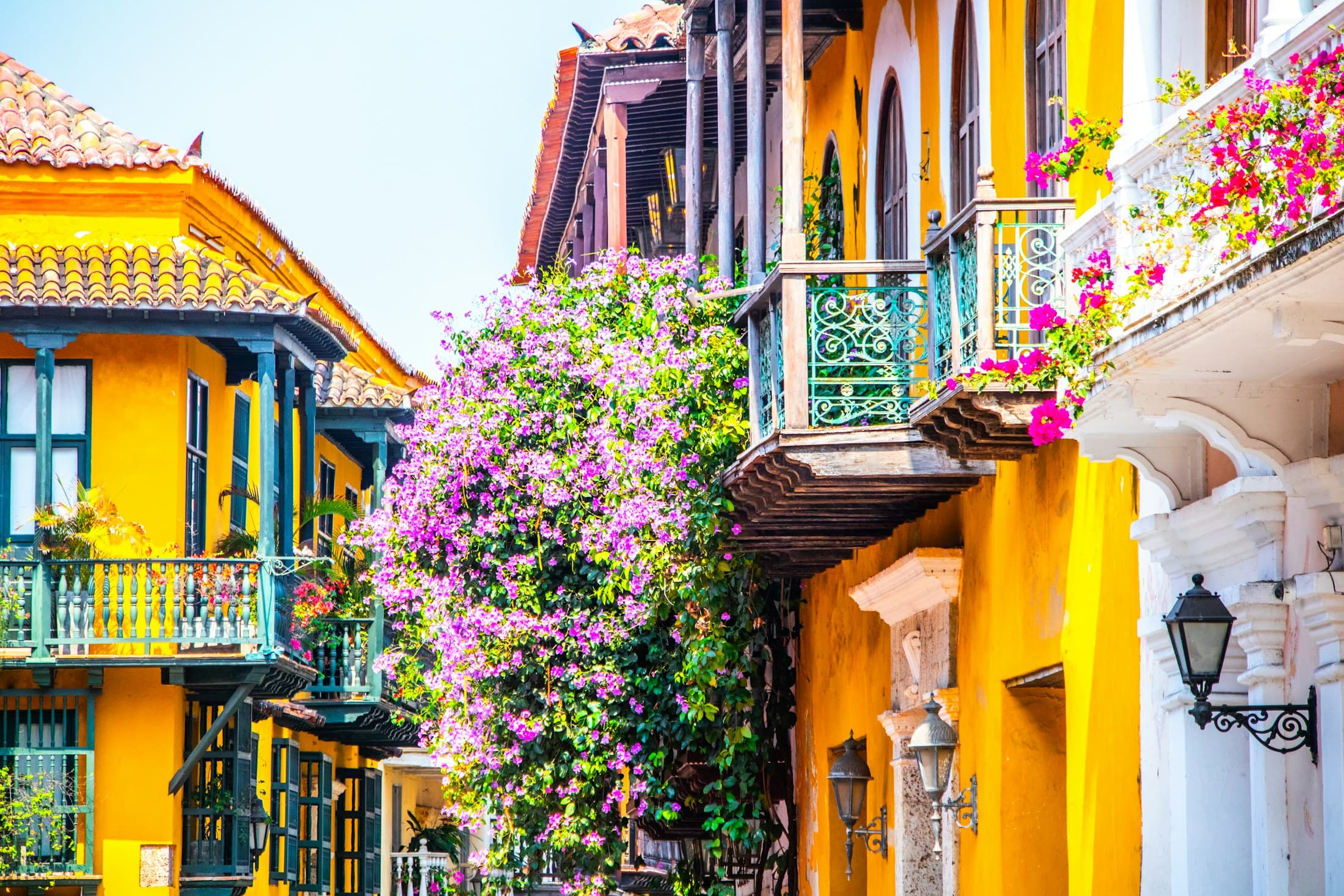
Walled City: The People Who Built It Lived Outside
90 min · 2.1 km · easy
More from Cartagena
Explore more at your own pace.
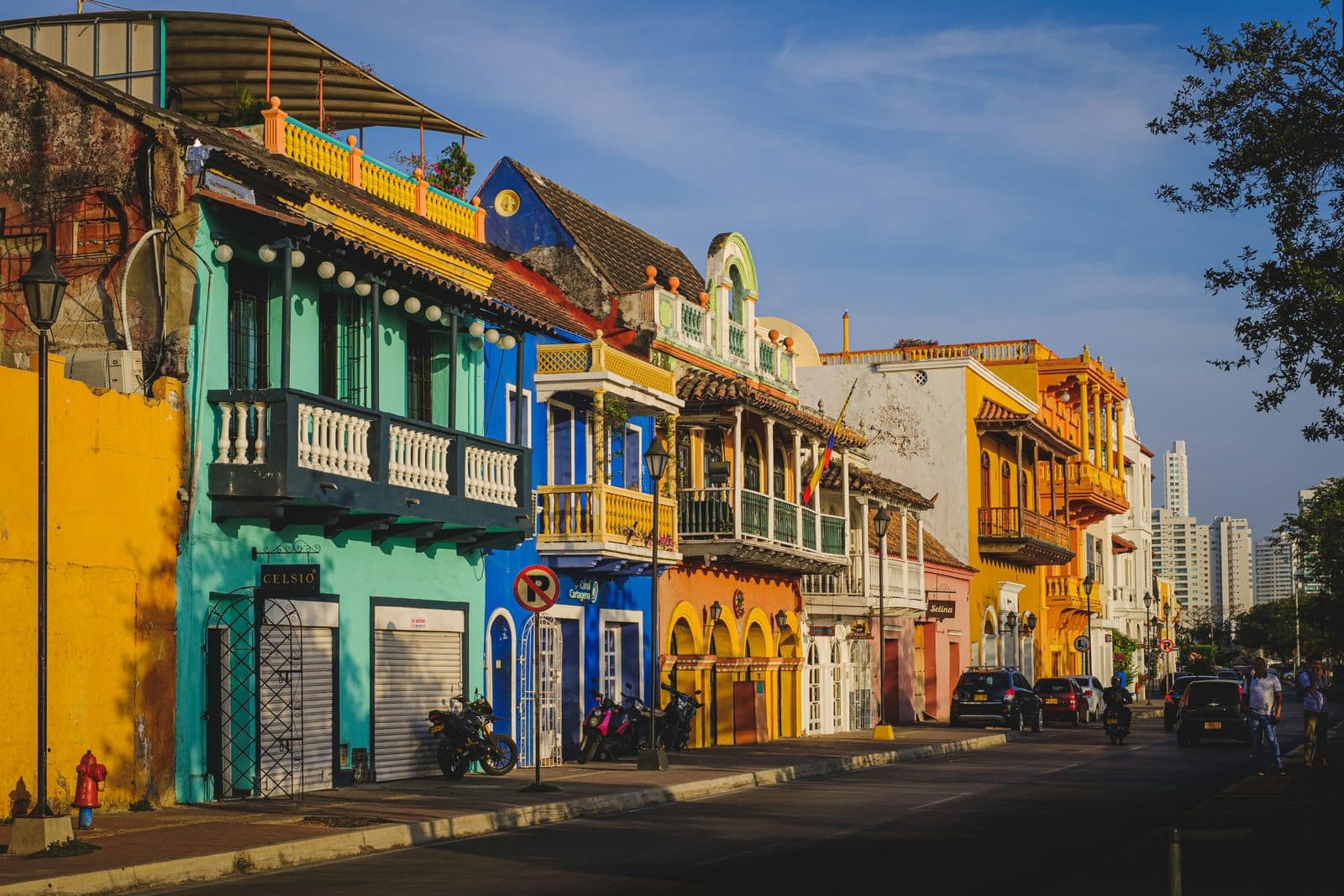
Cartagena Travel Guide: How Many Days, Getting Around, When to Go, Is It Safe (2026)
One Day in Cartagena: A Walkable Old City Itinerary (2026)

What to Eat in Cartagena: A Caribbean-Colombian Food Guide (2026)
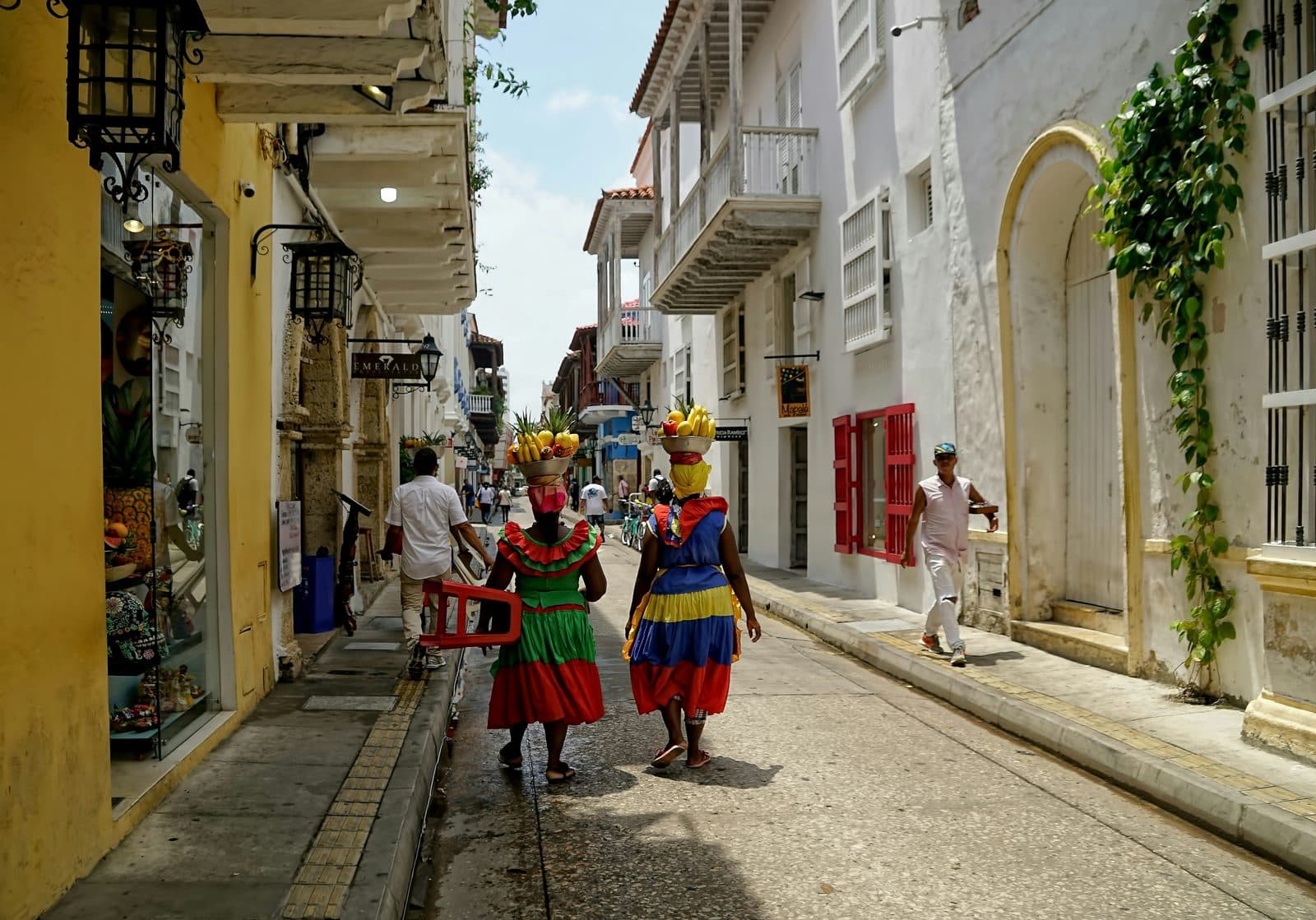
The Other City Across One Street: Getsemaní and the Soul of Cartagena
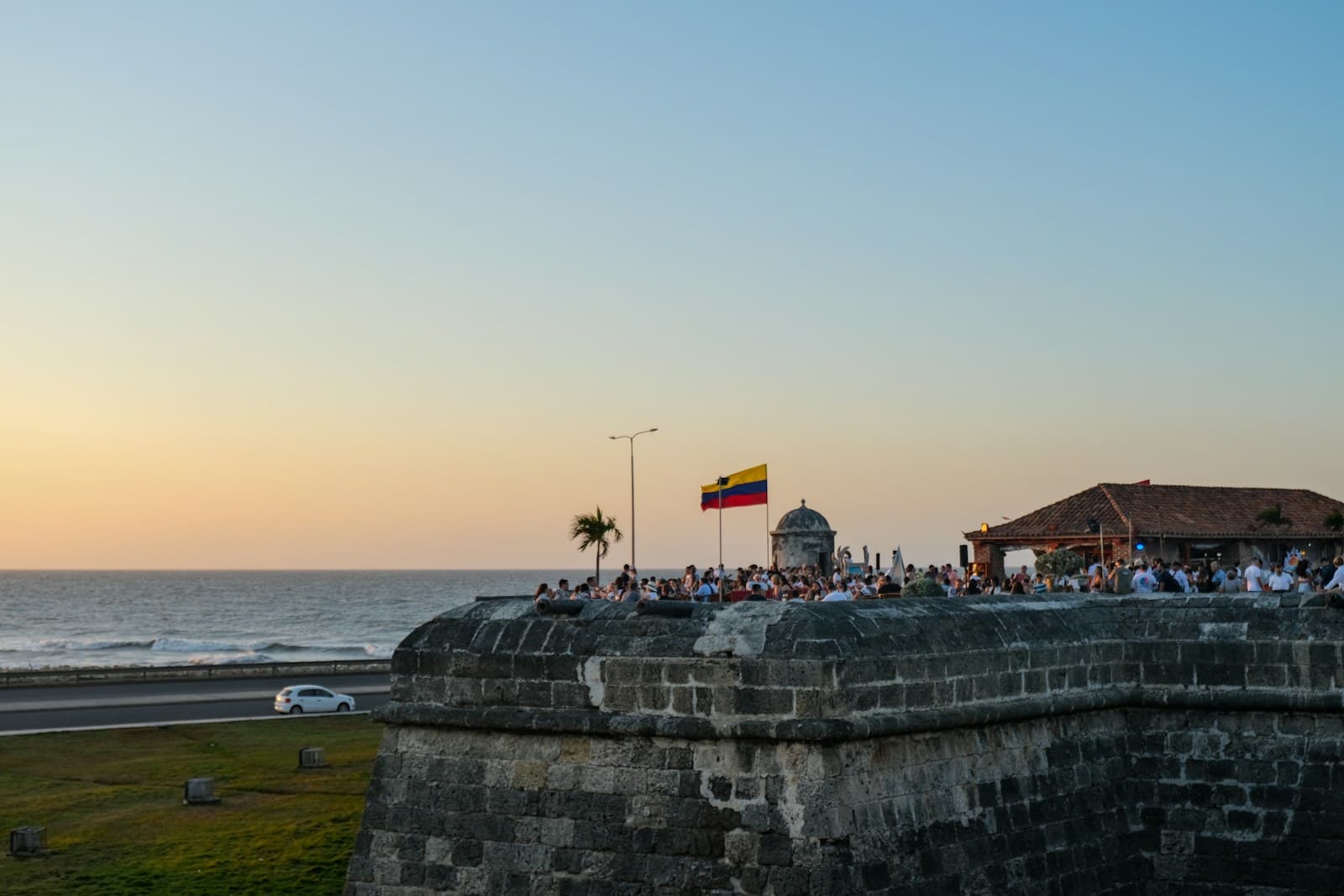
Blas de Lezo and the Siege of 1741: Cartagena's Most Important Battle