Museum Island and Unter den Linden: Stone Where It Shows
75 min · 1.8 km · easy
Berlin's grand center was built as a stage. Real stone often goes only on the faces meant to be seen; elsewhere there is render, a coat of plaster scored and painted to pass for stone. And the fronts themselves were raised for show, then burned, bombed, demolished and put back, down to palace fronts rebuilt for a modern museum and a museum ruin repaired with its scars left showing. Roamer's walk follows the old royal avenue, Unter den Linden, from the Gendarmenmarkt to Museum Island in the Spree, twelve stops over about 1.8 kilometers, and asks the same question of every building: what is real, and what is scenery?
Towers added as scenery
The walk opens with the clearest case. The Gendarmenmarkt's French church and German church were built in the first decade of the 1700s without towers. Some eighty years later, from 1780 to 1785, Frederick the Second had Carl von Gontard add the two great domed tower buildings beside them, purely to dress the square, on the model of the paired churches on Rome's Piazza del Popolo. The towers are not the churches. They are a backdrop for them. Between them stands Karl Friedrich Schinkel's theater of 1818 to 1821, which was rendered at first to save money and only clad in sandstone in 1883 and 1884. All three burned out in the Second World War and were rebuilt between 1976 and 1996.
A square away, Bebelplatz holds another piece of borrowed scenery. The Alte Bibliothek, the old royal library of 1775 to 1780, copies a design made in 1725 for a wing of the Vienna Hofburg. Vienna only completed its own wing in the 1890s, to a changed plan, so Berlin built the front more than a century before the city that designed it. In the middle of the square, under a glass plate set in the paving, Micha Ullman's memorial to the book burning of 10 May 1933 shows a room of empty shelves.
The avenue as one line
Hear a stop from this walk
Gendarmenmarkt: Towers Built as Scenery
Schinkel's Neue Wache, finished in 1818 as a royal guardhouse, was, in his own words, roughly modeled on a Roman fort, hence its four corner towers. Next door, the Zeughaus, the old Prussian arsenal begun in 1695, is the oldest building on the avenue: a rendered ground floor in bands over a sandstone plinth, with keystones over the arches carved as warriors' helmets.
Then comes the piece that made the avenue read as one. Schinkel's Schlossbrücke, built from 1821 to 1824 to replace a wooden bridge, was widened to the full breadth of the street, so that Unter den Linden ran without a break to the island. Its eight marble groups of a young warrior's life, stored during the war, came back in the 1980s. Across the road stands the clearest case of a front put back: the royal palace, gutted in 1945 and demolished in 1950, whose three baroque fronts were rebuilt for the Humboldt Forum, paid for by 80 million euros of donations.
A lawn to square the crooked
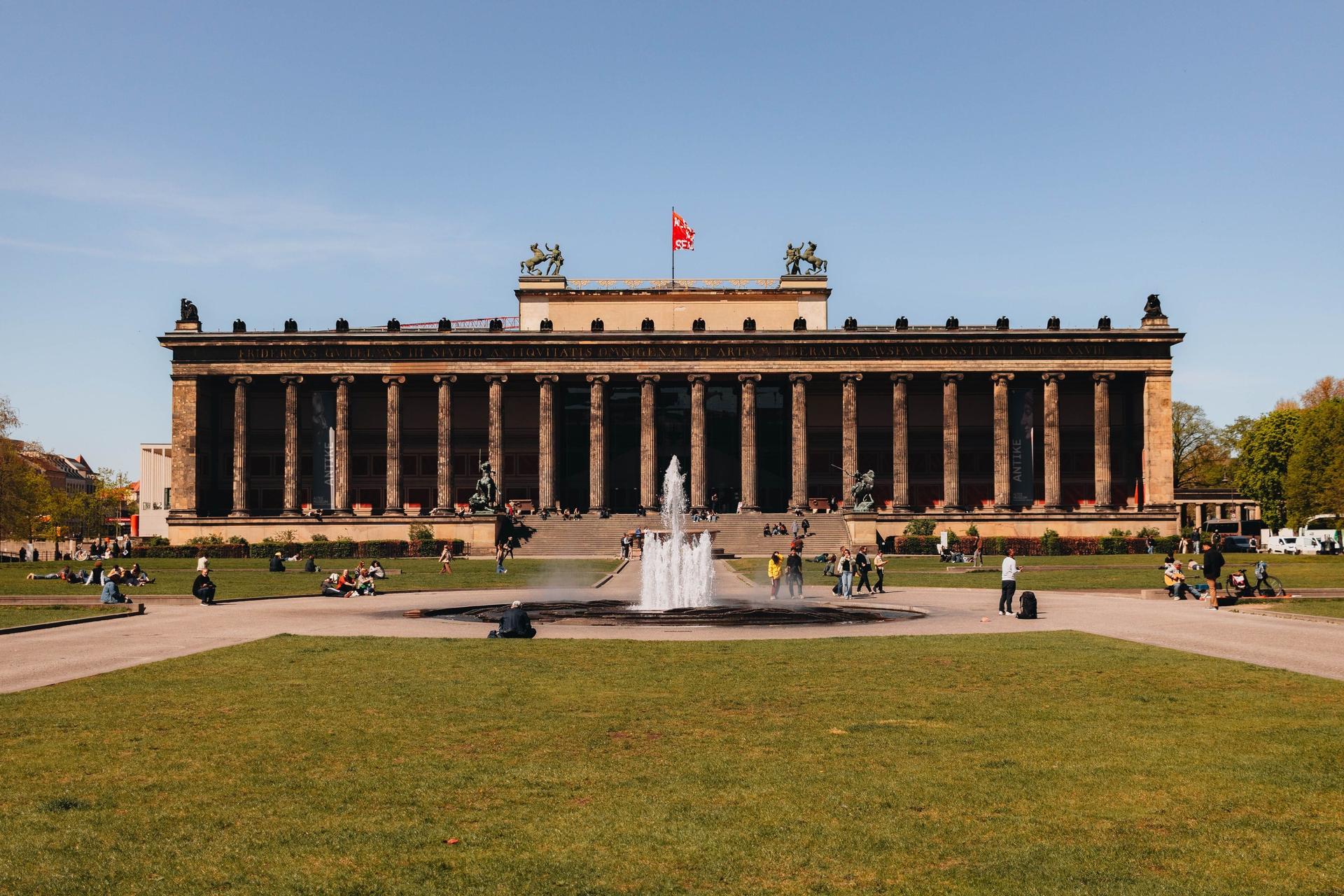
The Lustgarten in front of the island shows scenery at the scale of a whole site. After his Altes Museum went up, Schinkel redesigned the garden from 1828 to 1833 to make his museum, the old cathedral and the palace look like one composition despite their irregular positions. The museum itself is the walk's best lesson in where stone goes. It is a rendered cube on a high plinth, and its long front opens as a hall of eighteen Ionic columns in sandstone: the real stone is concentrated exactly where the building meets the public. In front of it sits a granite bowl nearly seven meters across, cut from a single boulder and ground and polished for two and a half years with a steam engine.
The scars left showing
On the island the story turns from scenery to repair. The Neues Museum by Friedrich August Stüler, opened in 1856, was the most war-damaged building on the island and stayed a ruin until reunification. David Chipperfield Architects rebuilt it, and it was handed over in March 2009 with the new work clearly recognizable and the traces of damage left visible. It is the opposite of the palace across the water: not a front put back, but a wound left readable.
Beside it, Chipperfield's James-Simon-Galerie of 2019 turns Stüler's colonnades into a modern form. It stands over a mud-filled hollow 40 meters deep, on more than 1,200 steel piles. The colonnade courtyard behind it leads to the Alte Nationalgalerie, a temple on a high base clad in sandstone.
The walk ends across the river, where the island reads as one composition. From James-Simon-Park you see the apse of the Nationalgalerie, the colonnade and the Pergamonmuseum. Berlin's heritage register traces this temple-like design to King Frederick William the Fourth, who in 1841 decreed the island a sanctuary for art and science, and calls the ensemble Berlin's city crown. Museum Island became a UNESCO World Heritage Site in 1999. The last stop faces the Bode Museum, rising in sandstone straight out of the water at the island's tip.
Walking it
The route is level all the way, with a few short flights of steps on the island. Walk it at your own speed: you can stop at every facade and test it for stone or plaster, or skip ahead to the island and take the colonnade slowly.
The walk is Museum Island and Unter den Linden: Stone Where It Shows, twelve stops from the Gendarmenmarkt to the riverside park facing the Bode Museum. It joins up with the walk of the Nikolaiviertel and Alexanderplatz across the river. See every route on the Berlin page.
Sources
- Landesdenkmalamt Berlin, Denkmaldatenbank: Schauspielhaus (09065015): Schinkel's theater, its render and later sandstone cladding, aligned on the domed towers.
- Landesdenkmalamt Berlin, Denkmaldatenbank: Museumsinsel (09030065): the 1841 decree, the acropolis-like design and the island as Berlin's city crown.
- Landesdenkmalamt Berlin, Denkmaldatenbank: Alte Nationalgalerie (09030057): Stüler's design, the temple on a rusticated base in sandstone.
- Staatliche Museen zu Berlin, Neues Museum profile: Stüler's museum, its war damage and Chipperfield's restoration.
- Staatliche Museen zu Berlin, Museum Island profile: the island's museums and its World Heritage status.
Ready to experience it?
Museum Island and Unter den Linden: Stone Where It Shows
75 min · 1.8 km · easy
More from Berlin
Explore more at your own pace.
Best Architecture Walking Tours in Berlin (2026)
Brandenburg Gate, Tiergarten and Reichstag: Three Places Every Regime Re-Read
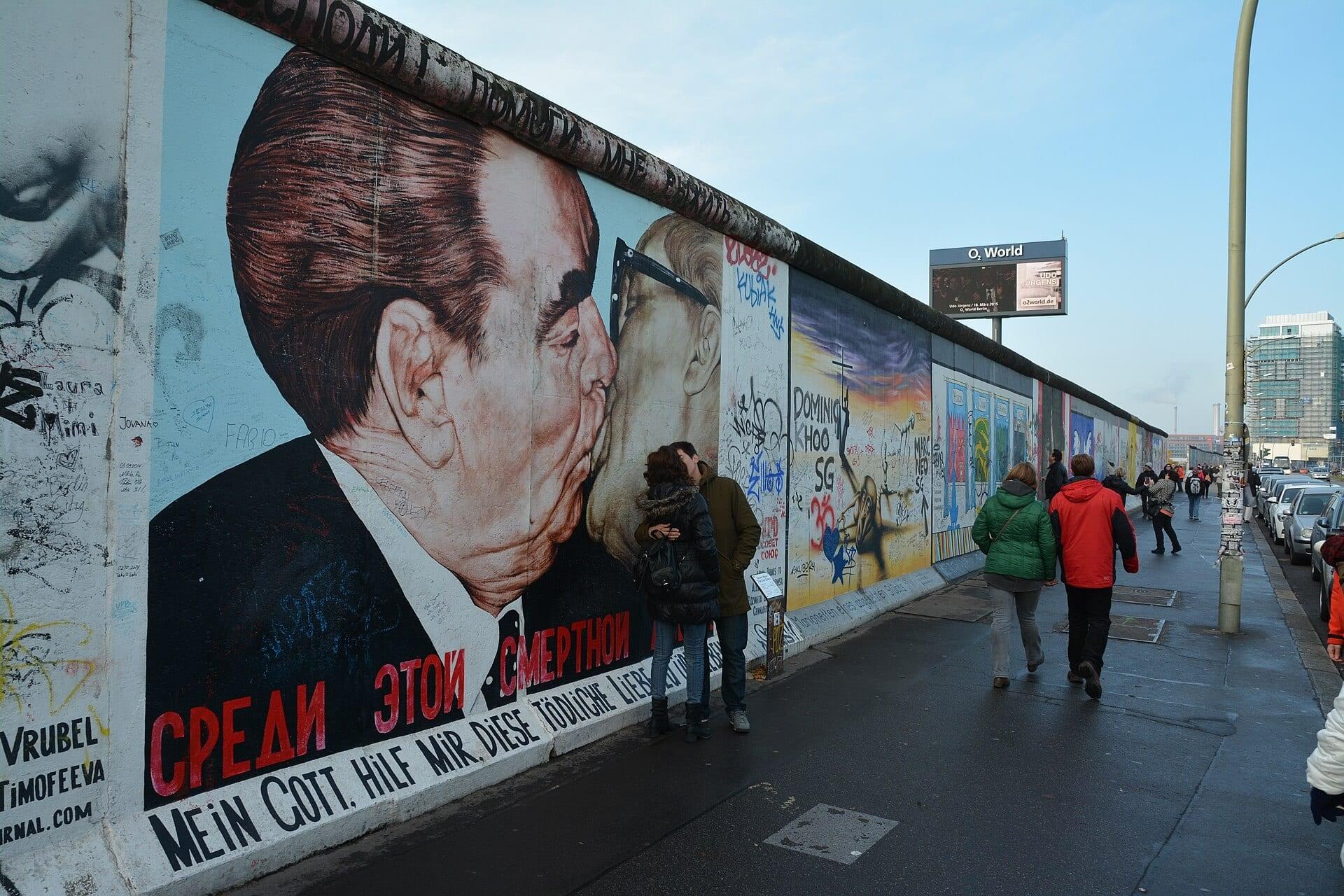
East Side Gallery: Painted on the Back of the Border
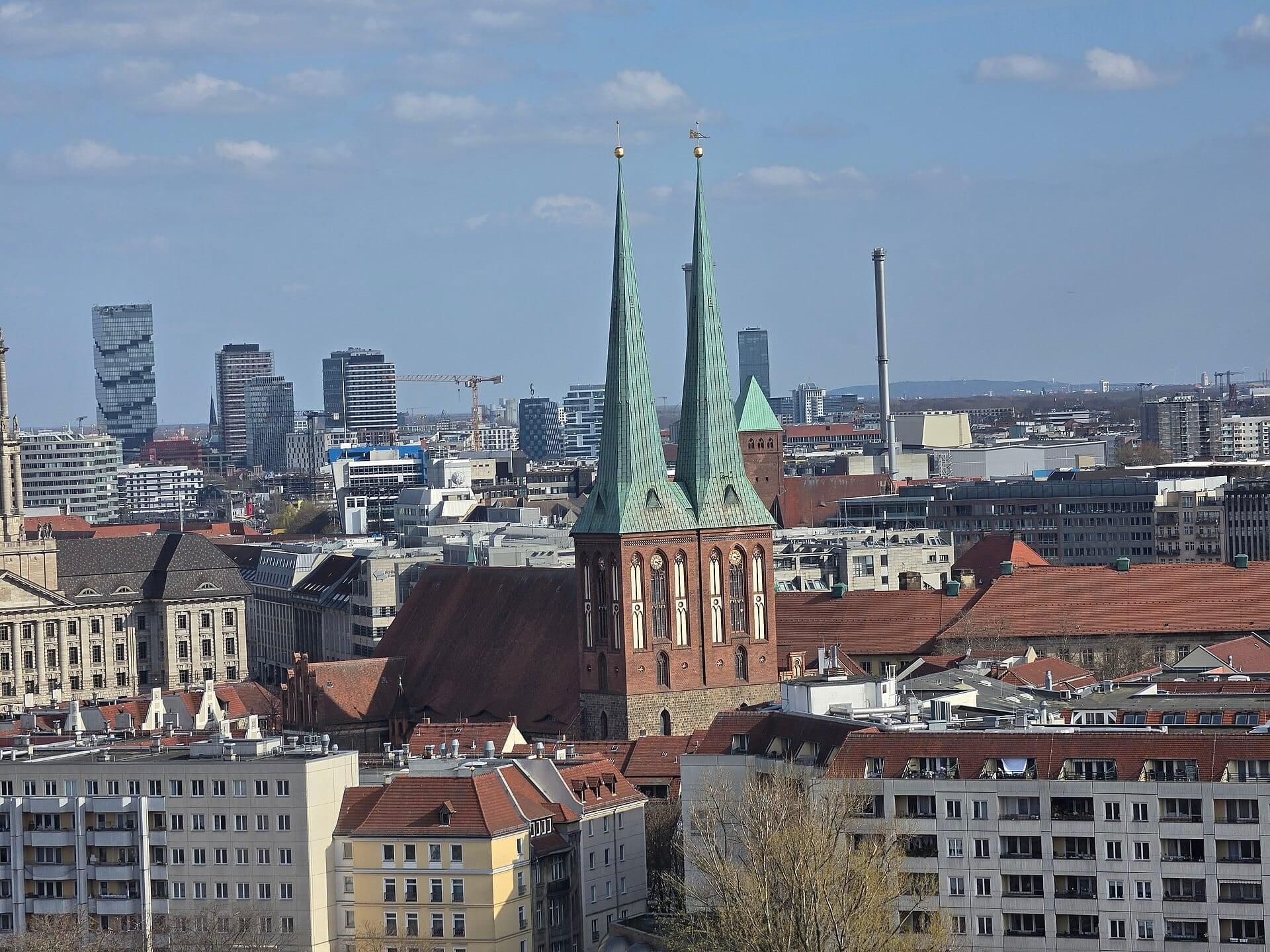
Nikolaiviertel to Alexanderplatz: Four Churches, Four Answers to One War
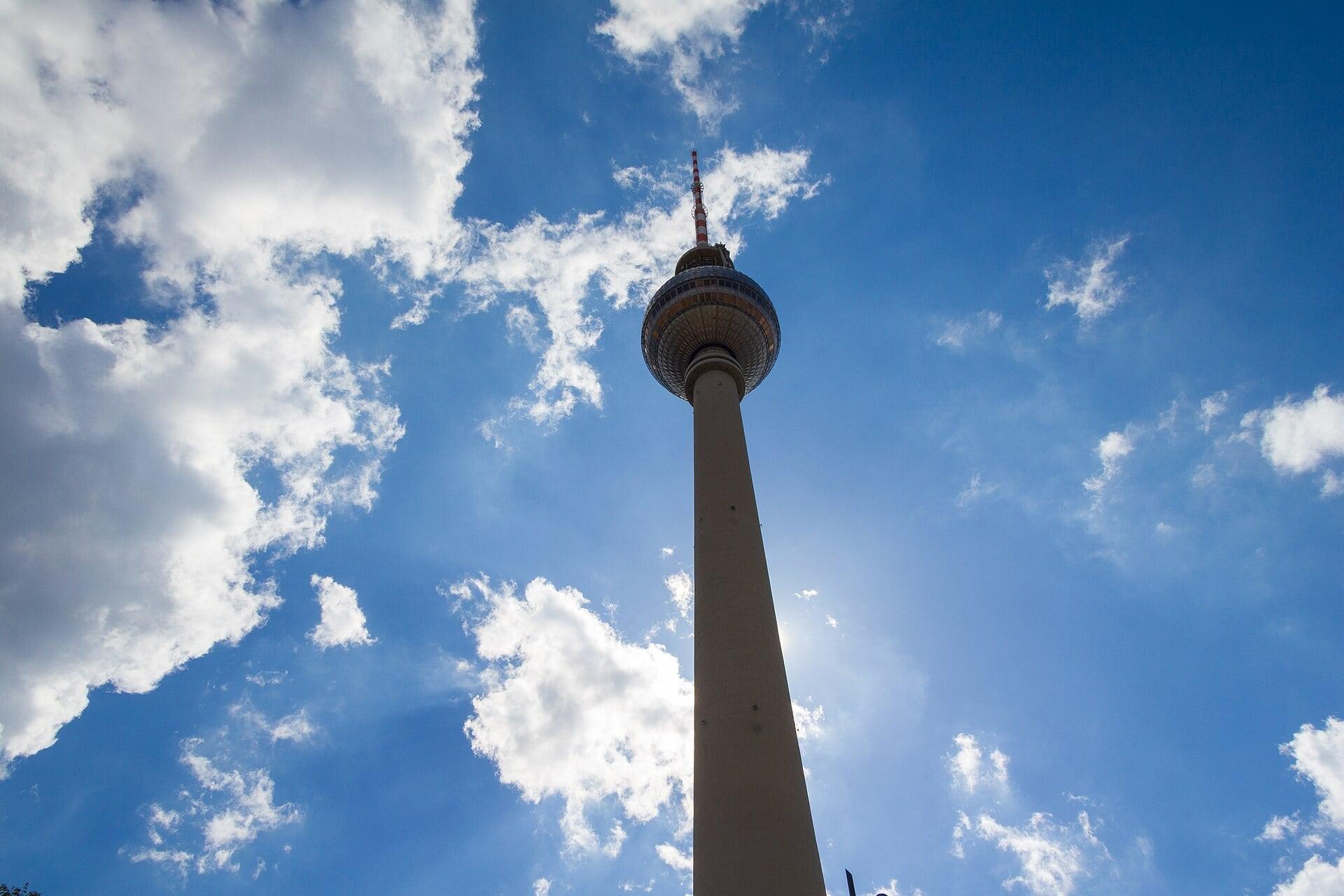
Berlin TV Tower: The Steel Ball That Throws a Cross