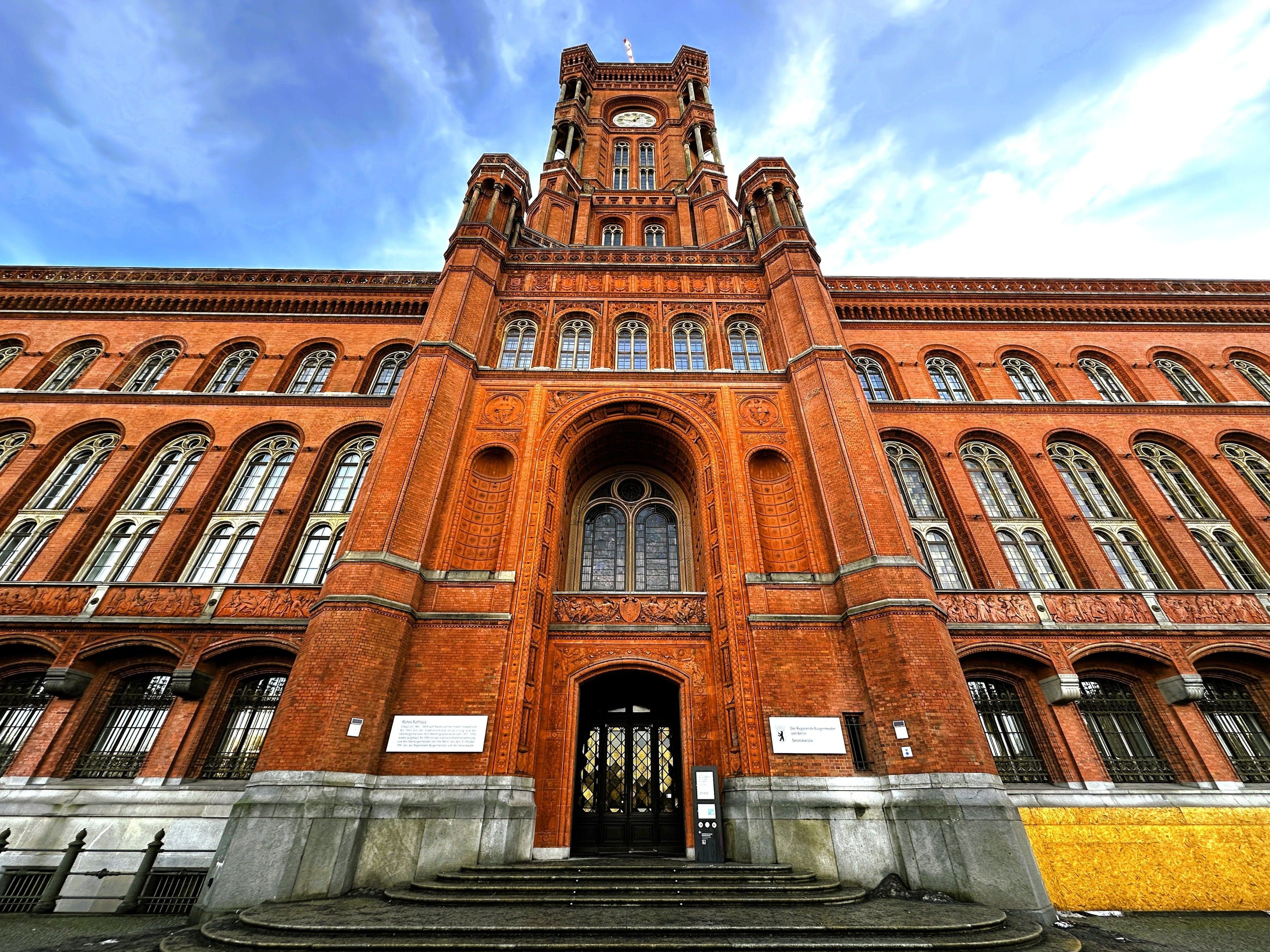
Walk old Berlin from its last stretch of medieval town wall past four churches, the rebuilt Nikolaiviertel and the Red Town Hall to the TV Tower, the World Time Clock and the mosaic on Alexanderplatz.
Start · Town Wall on Waisenstrasse: Kept by the Houses
DirectionsStops
- 1
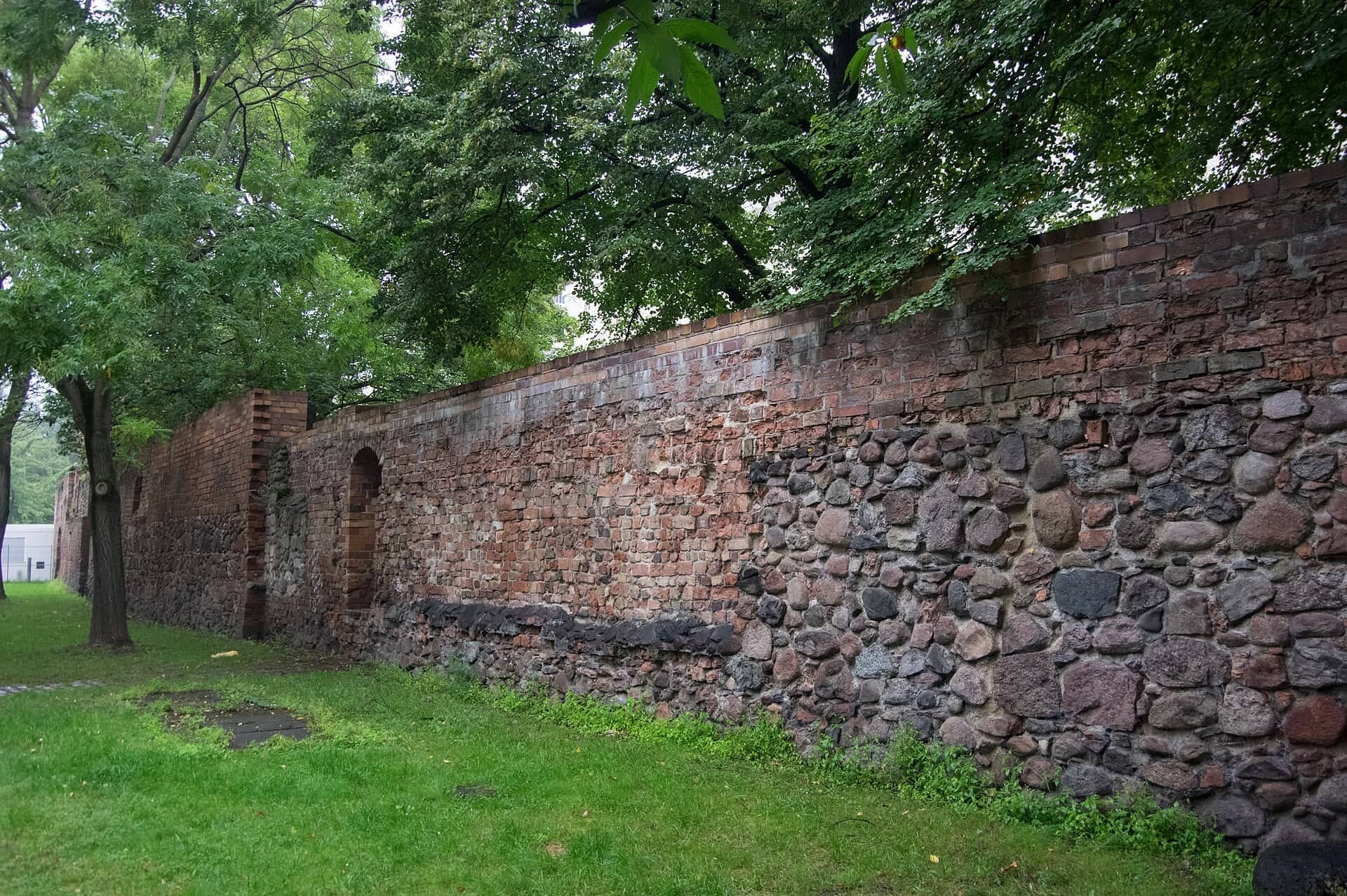
Town Wall on Waisenstrasse: Kept by the Houses
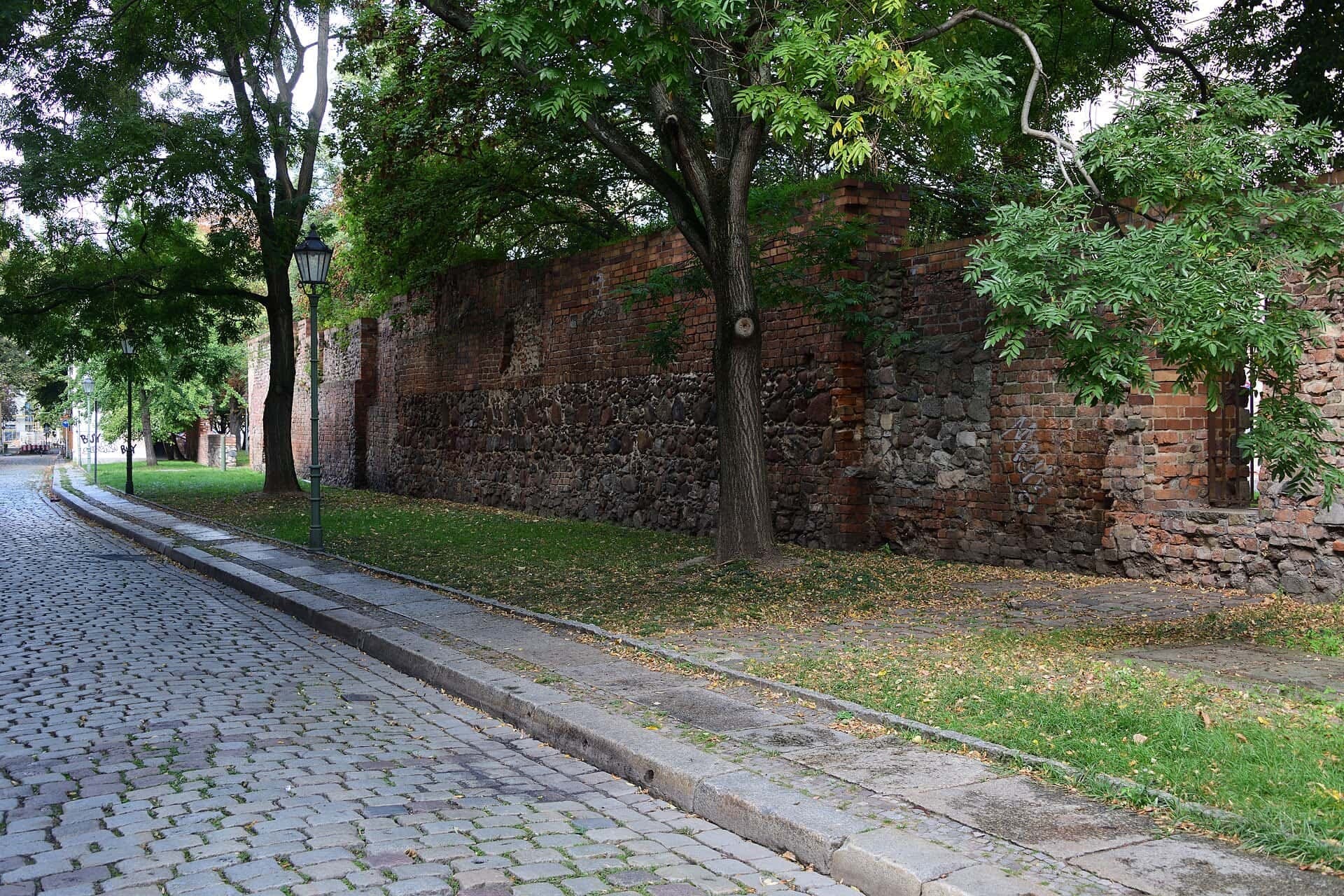
The last stretch of Berlin's first town wall. Field stone of the 1200s, patched in brick, that survived because houses were built against it and used it as their back wall.
- 2
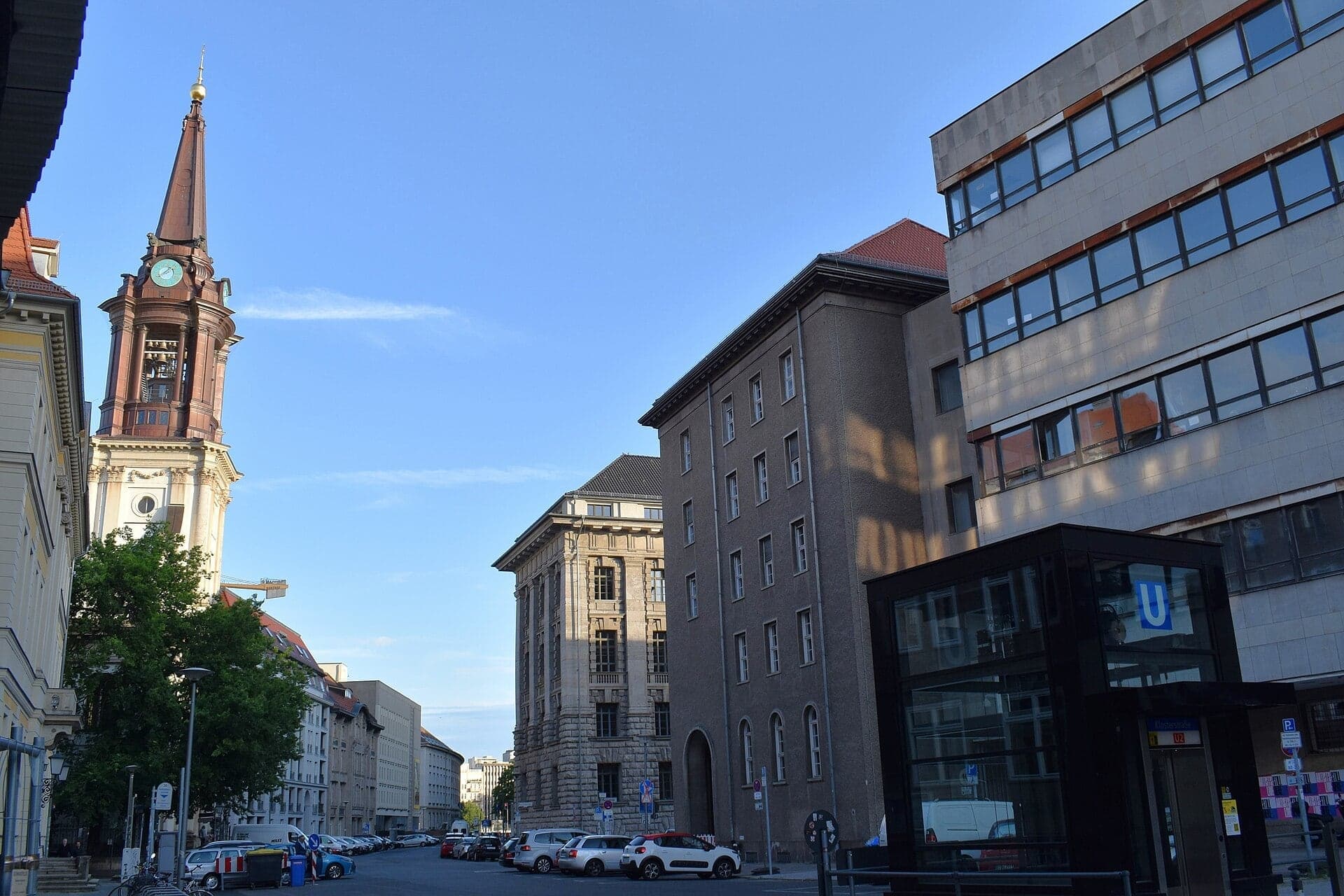
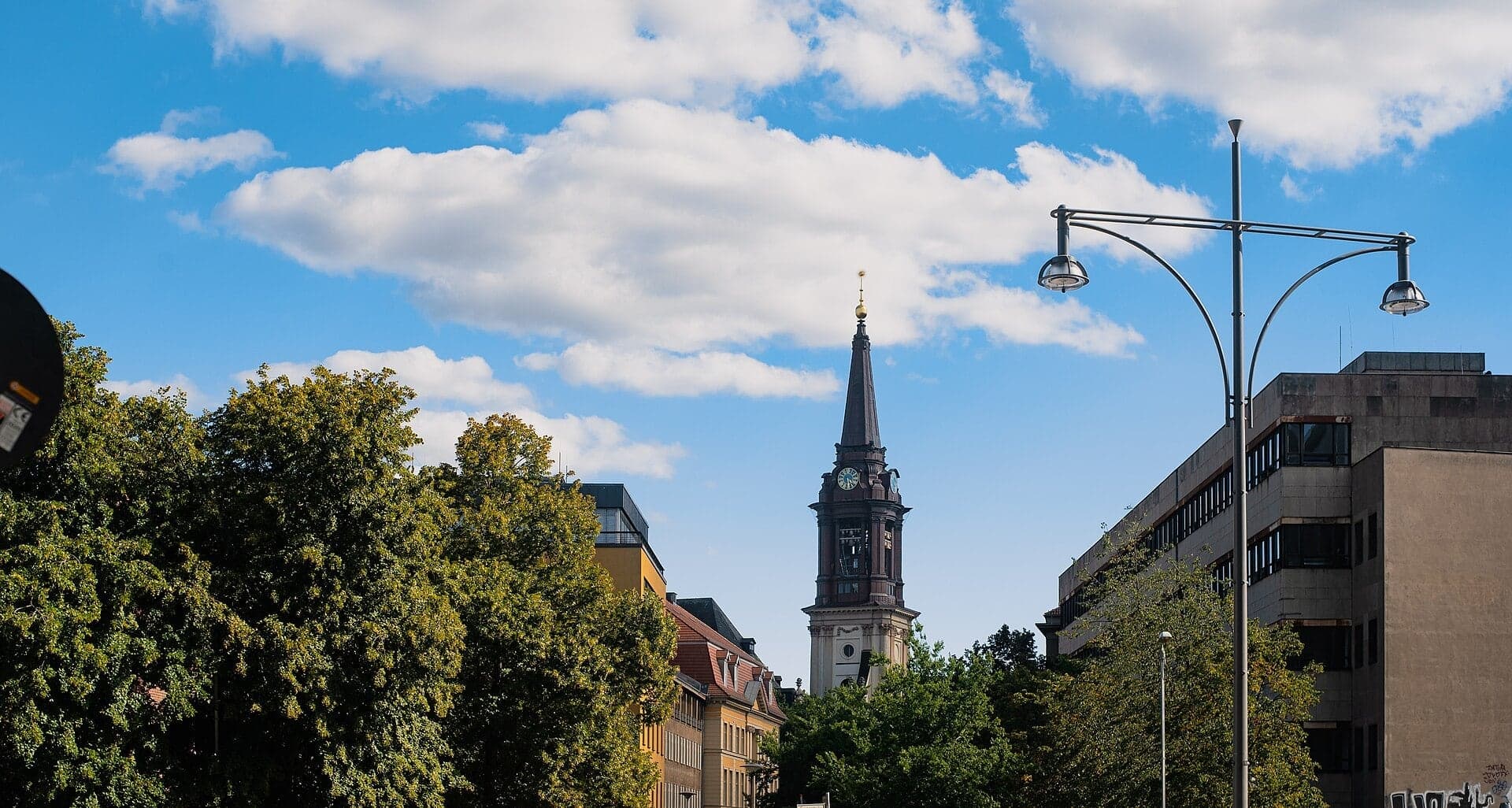
Parochialkirche: Wounds Left Showing
A baroque church that kept its war wounds. Burned out in May 1944, roofed again in 1950-51 and restored so the damage stays readable; its copper spire came back in 2016.
- 3
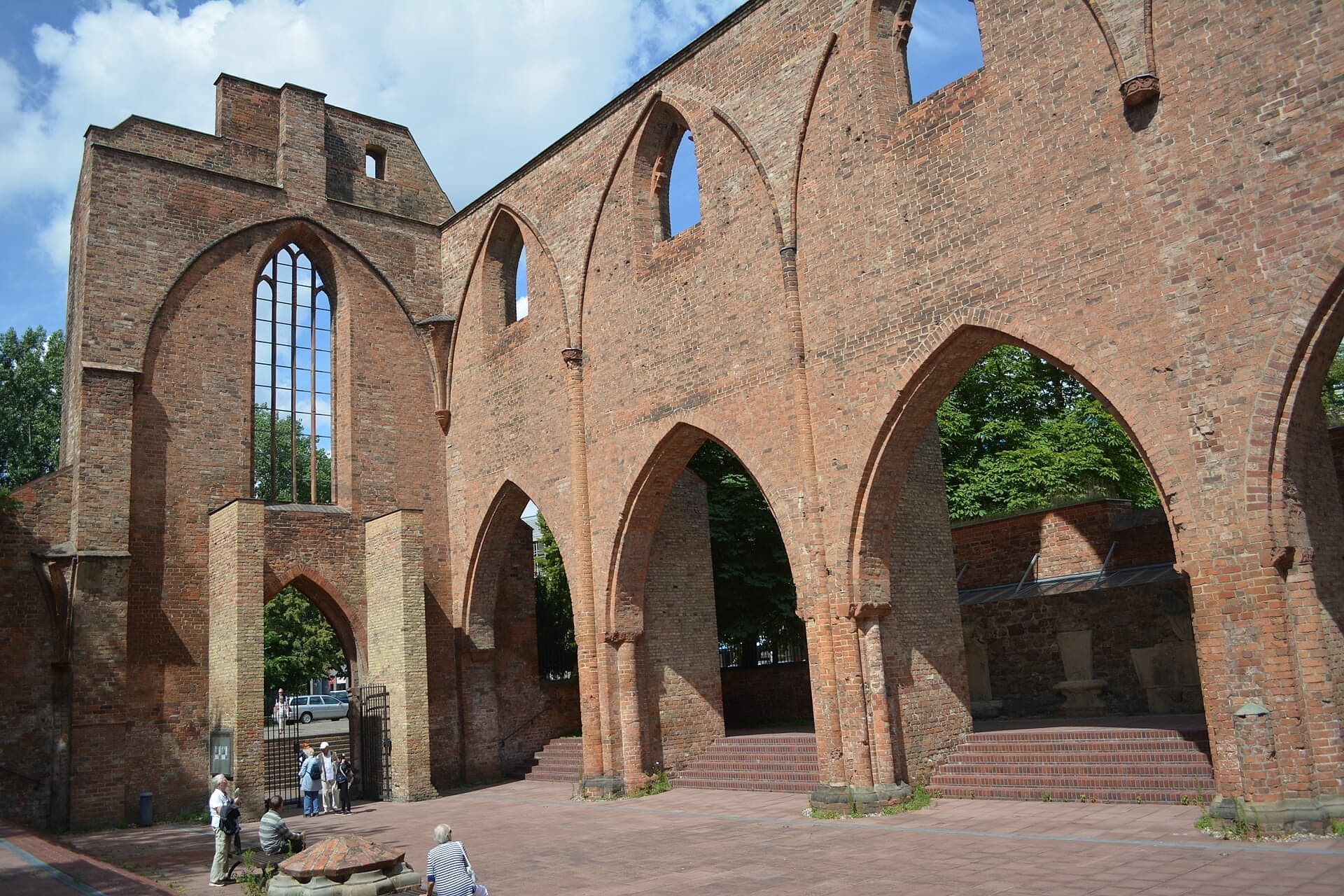
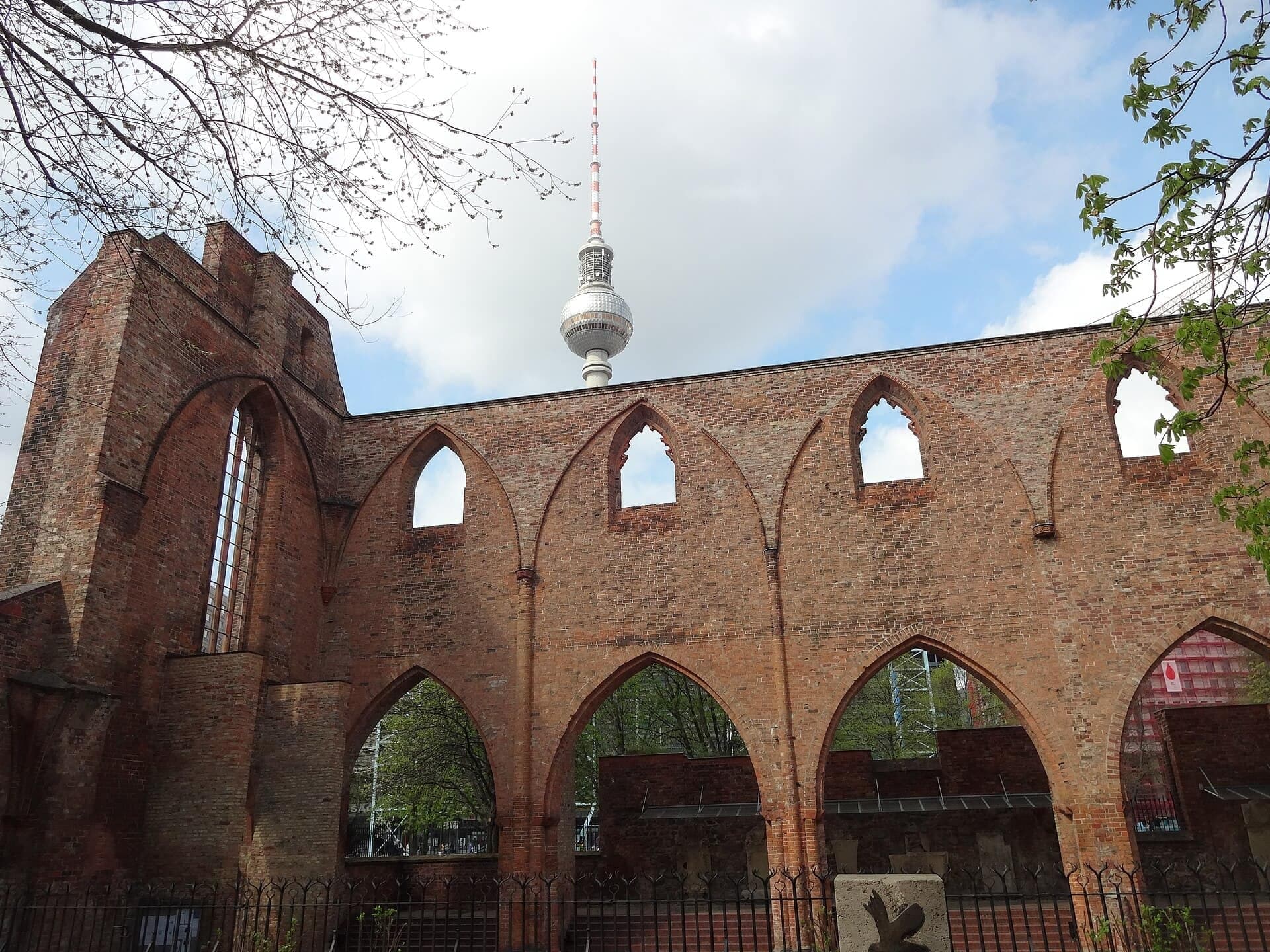
Franciscan Friary Church: The Ruin the Road Left
A Franciscan church kept as a ruin. Bombed in 1945, its friary pulled down in 1968 for a wider road, the brick shell now stands in a green strip and shows art.
- 4
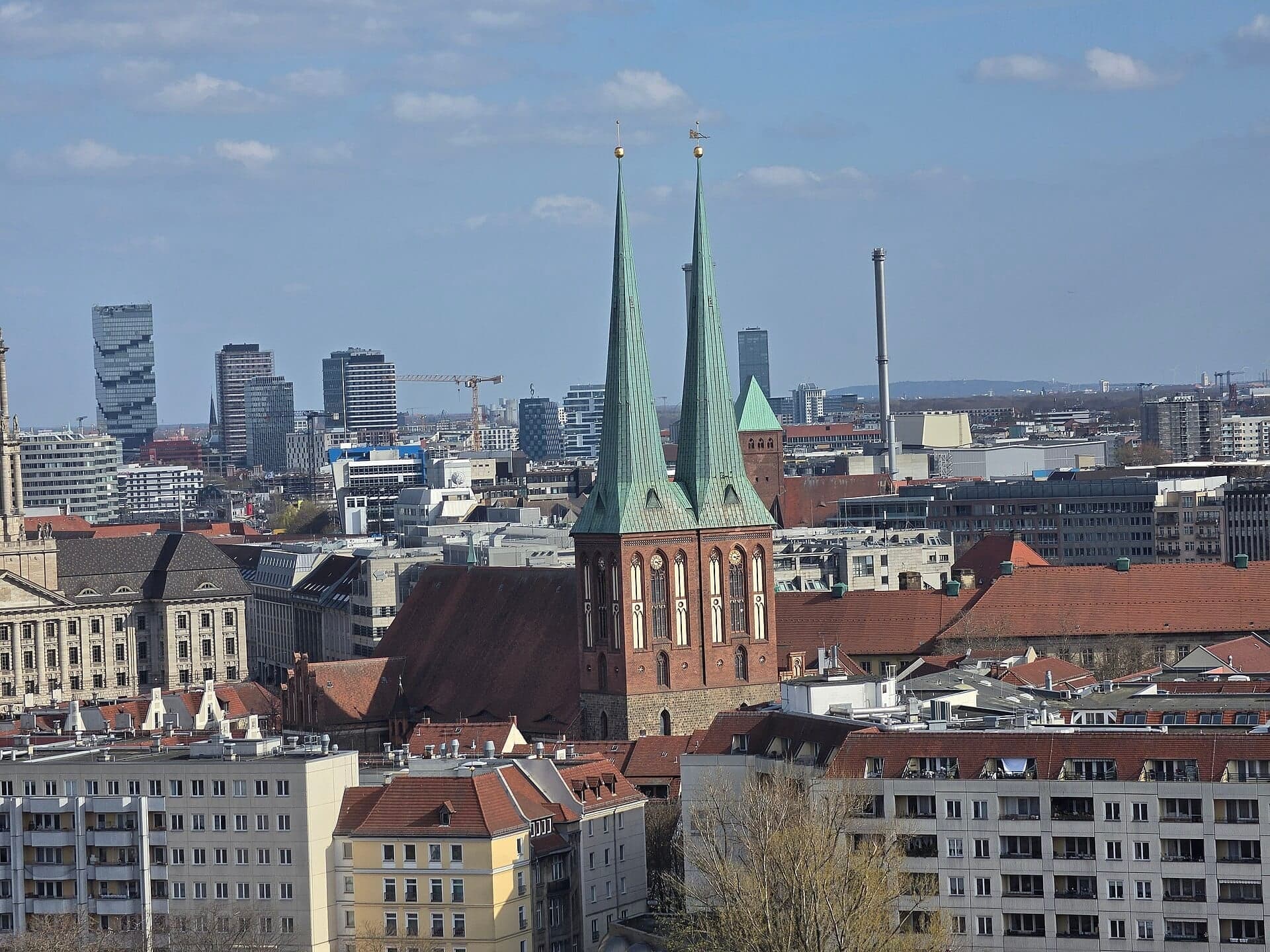
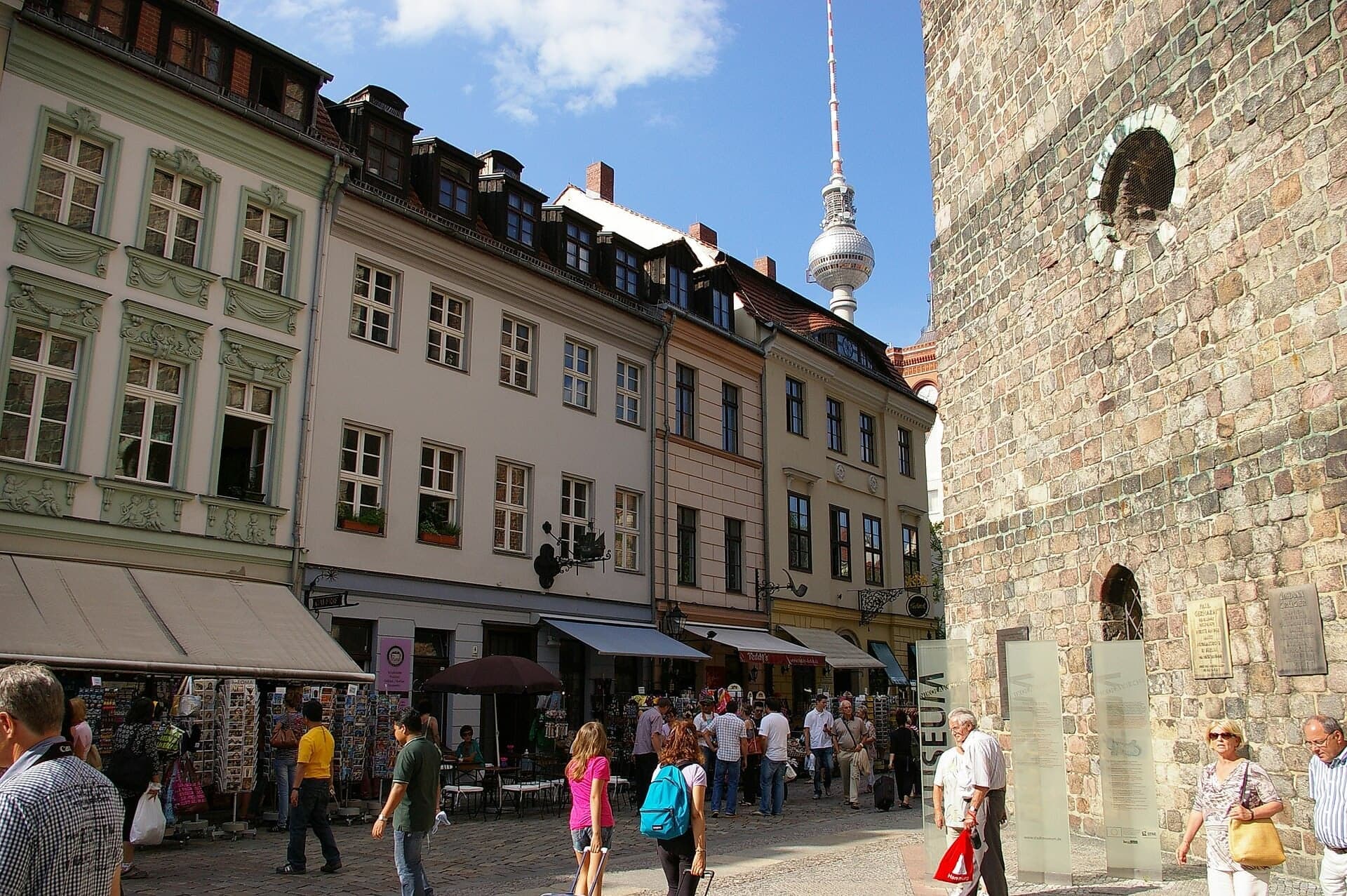
Nikolaikirche: An Old Town Made New
A gutted church inside a rebuilt old town. The Nikolaikirche's walls and granite tower base are old; its interior and the panel-built quarter around it date from 1979 to 1987.
- 5
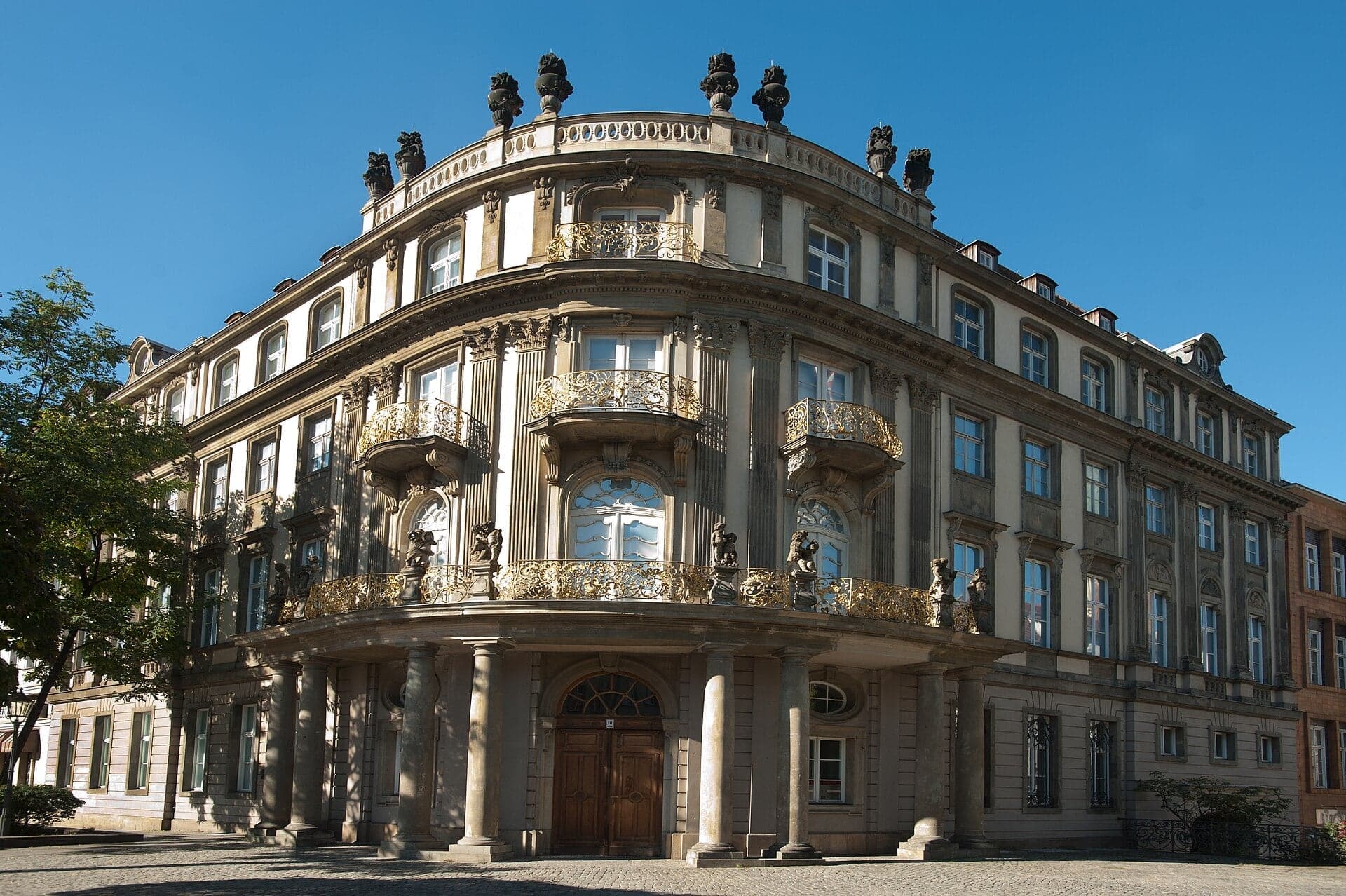
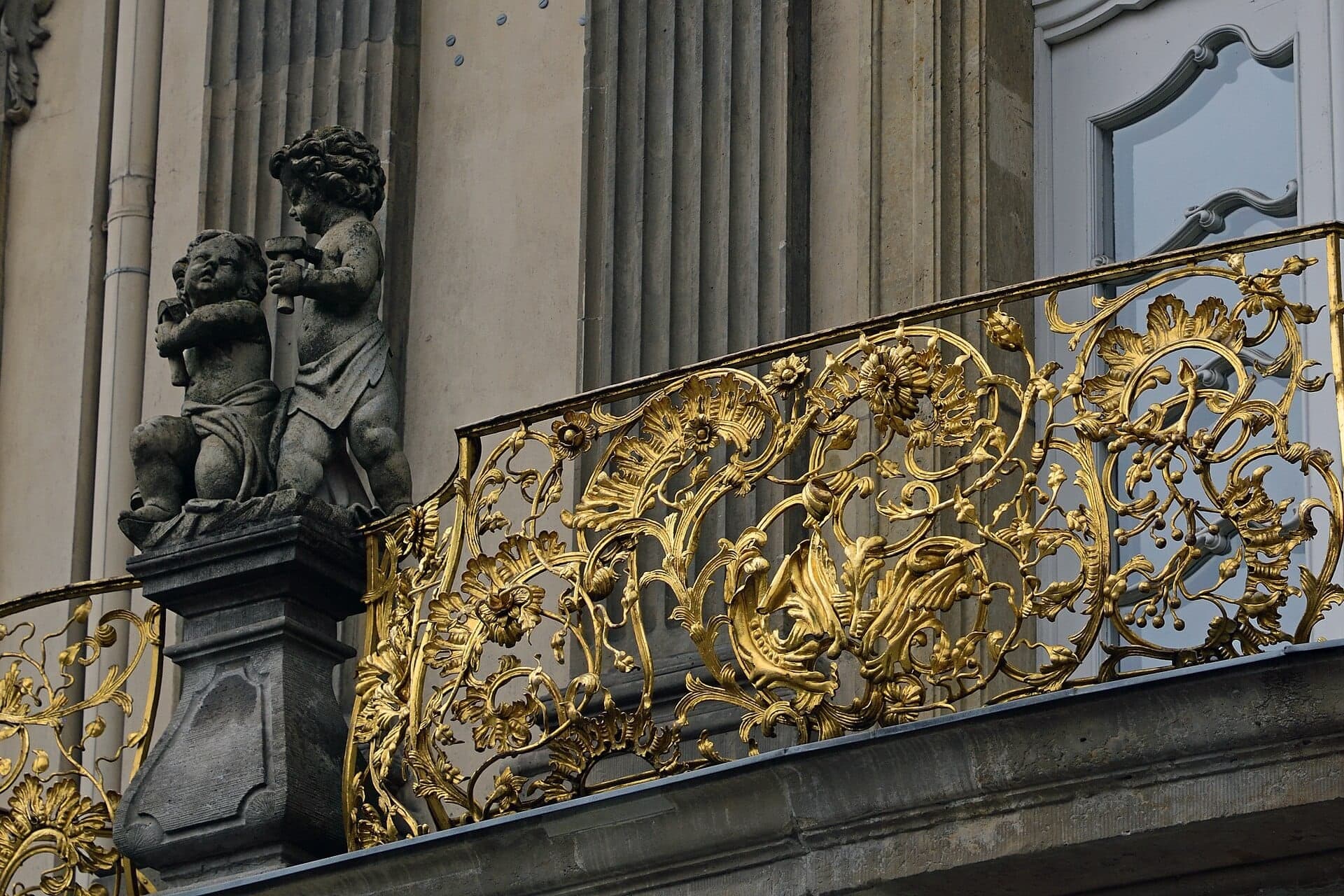
Ephraim-Palais: Three Thousand Stored Stones
A Rococo palace rebuilt from its stored stones. Pulled down in 1936 for a new bridge and lock, its stones were stored and it was rebuilt about 12 meters from its old site.
- 6
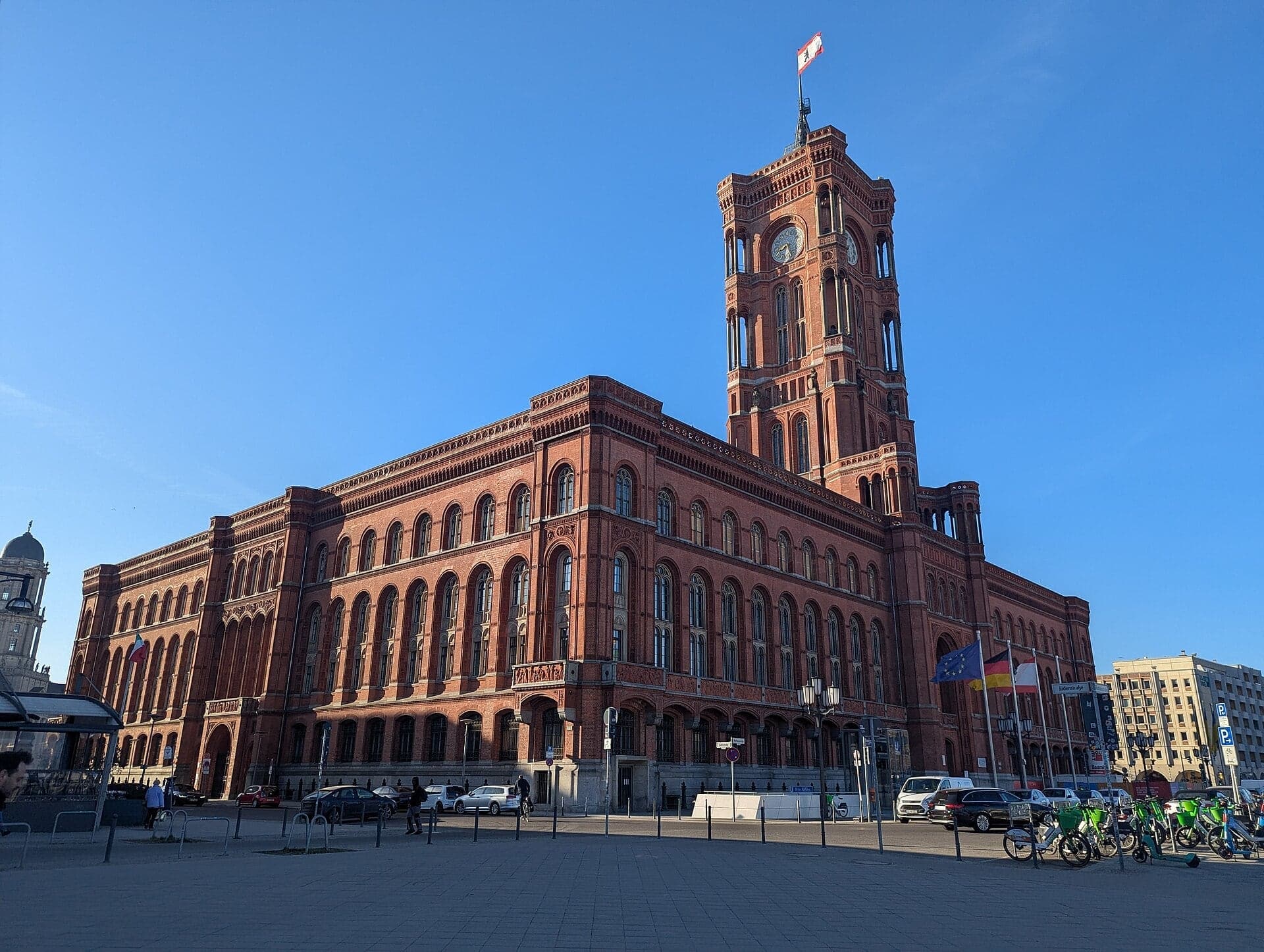
Rotes Rathaus: Red for the Brick
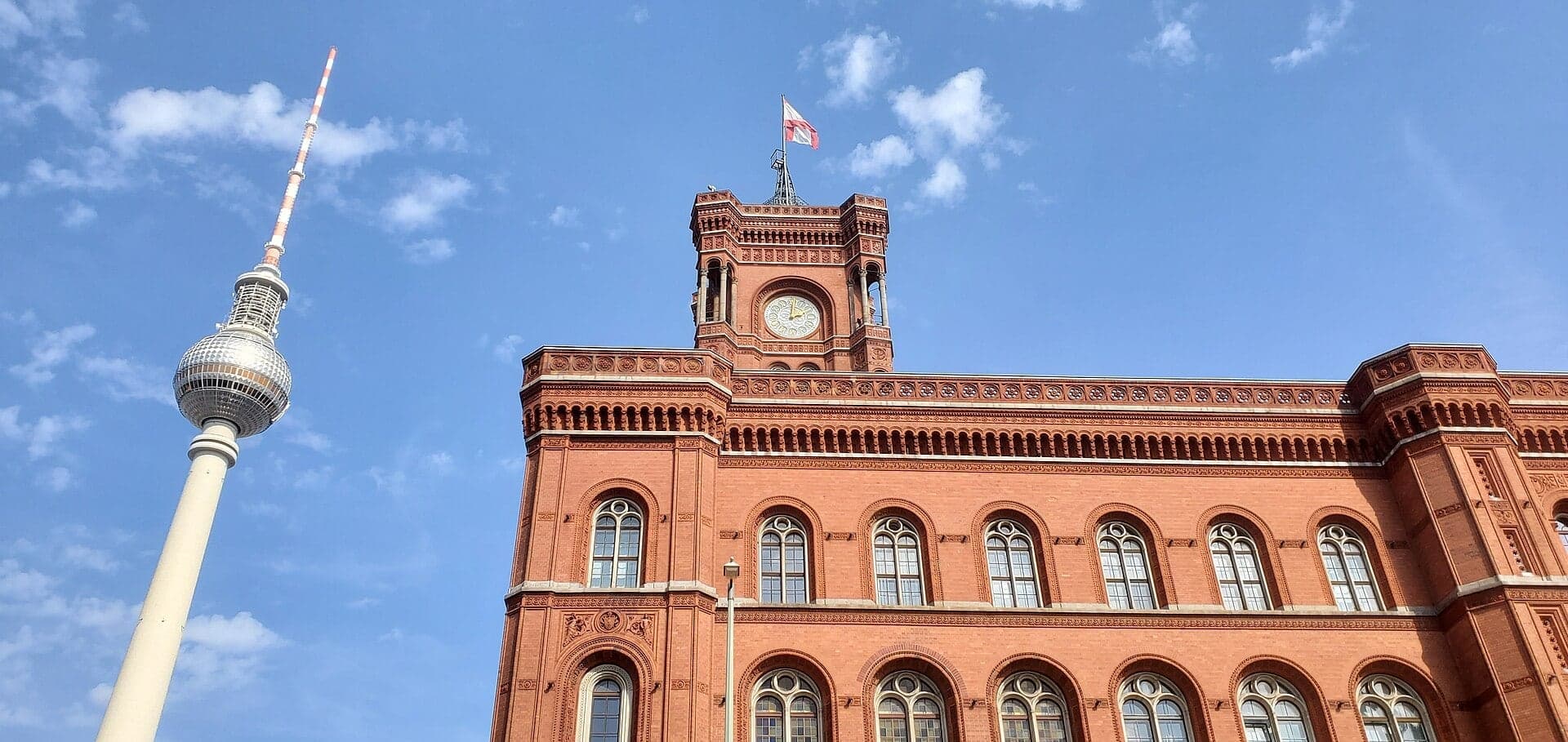
A town hall red for its brick. Berlin's seat of government, rebuilt by 1958, with a terracotta frieze of city history and the walk's best view of the whole TV Tower.
- 7
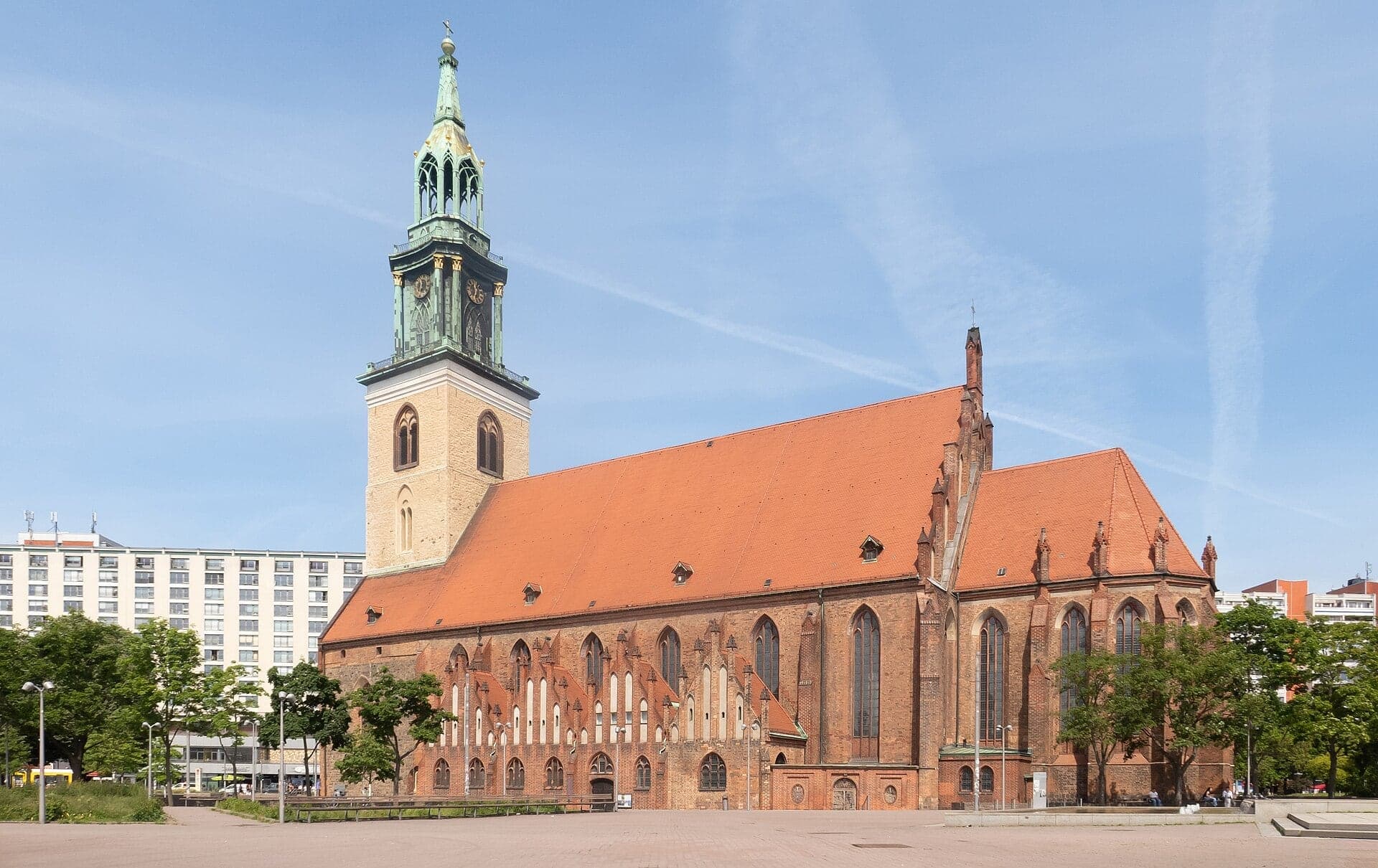
Marienkirche: The Church That Stayed a Church
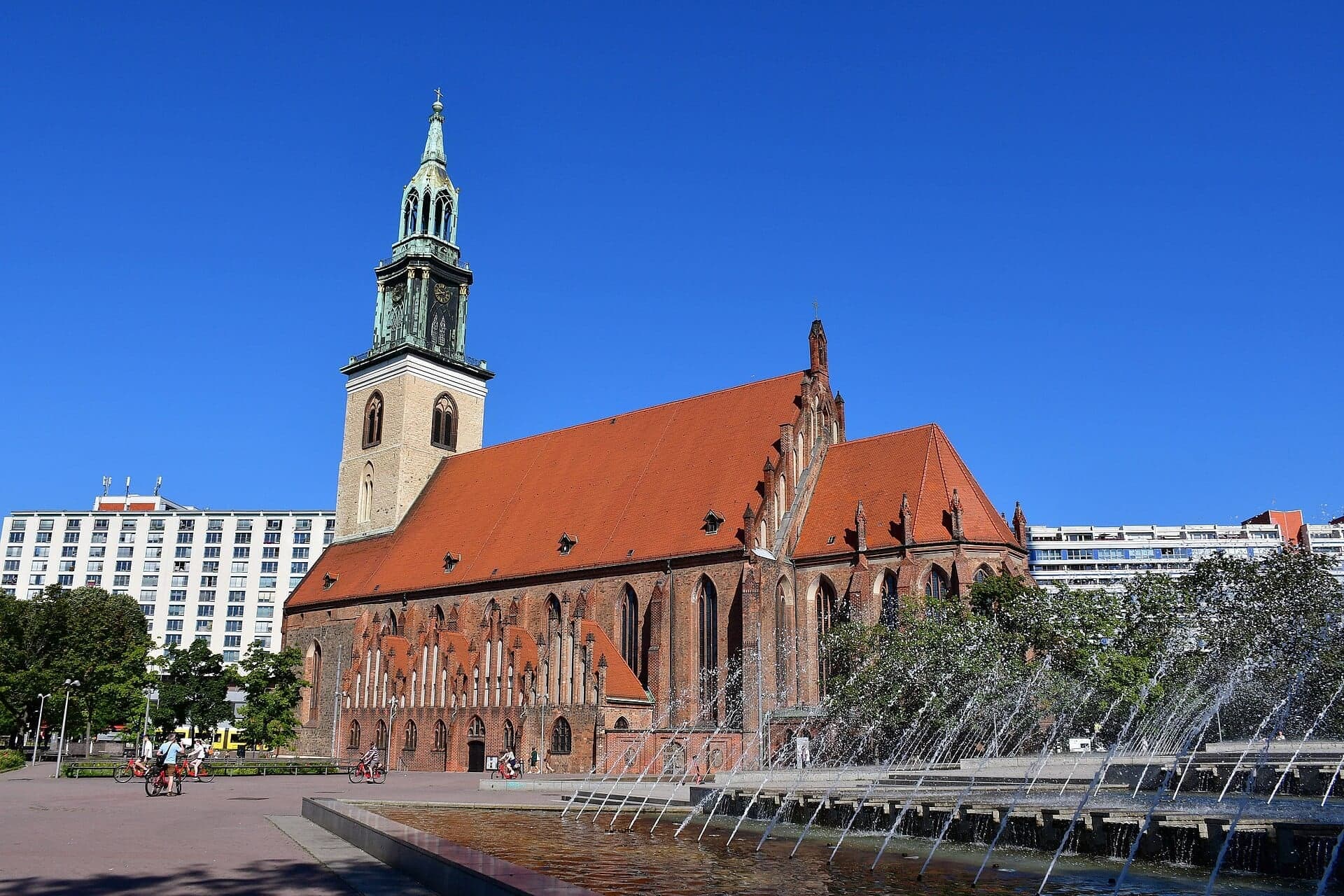
The church that stayed a church. Saint Mary's, lightly damaged in the war and repaired by 1950, stands alone on a lawn whose paths were laid out to fit its angle.
- 8
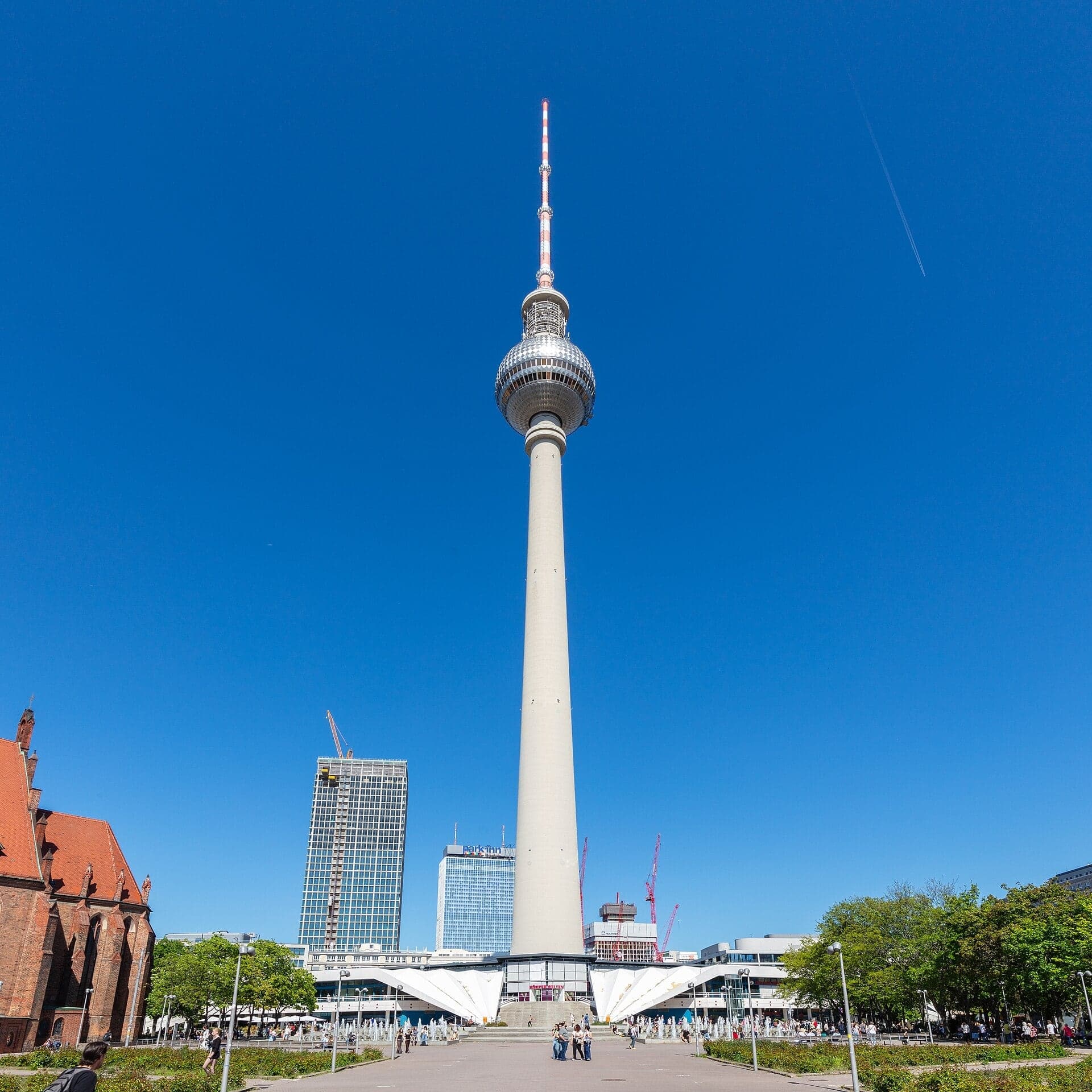
TV Tower: The Cross on the Steel Ball
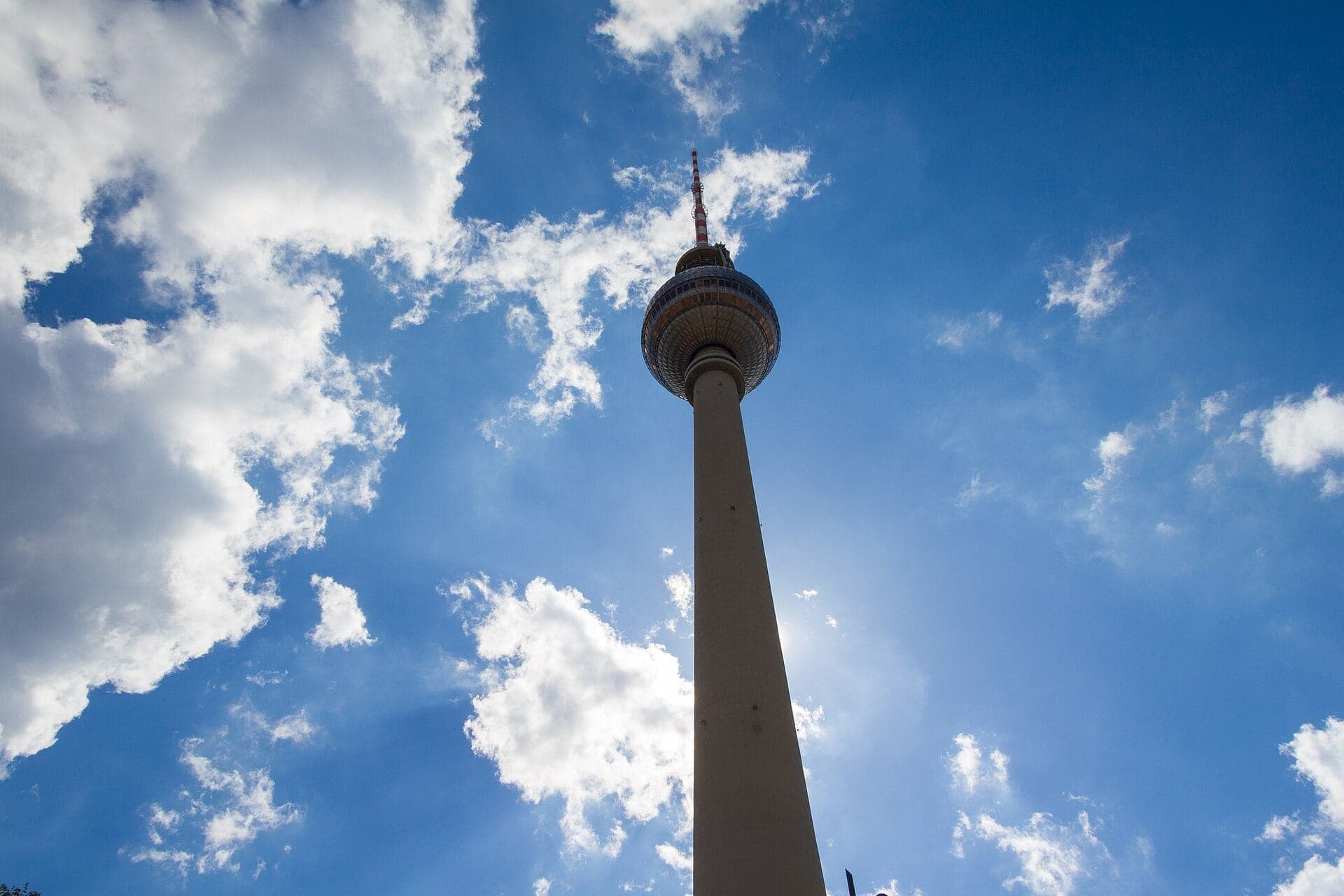
A steel ball that throws a cross. The TV Tower of 1965-69, more than 360 meters high, whose faceted sphere shows a cross of light in the sun.
- 9
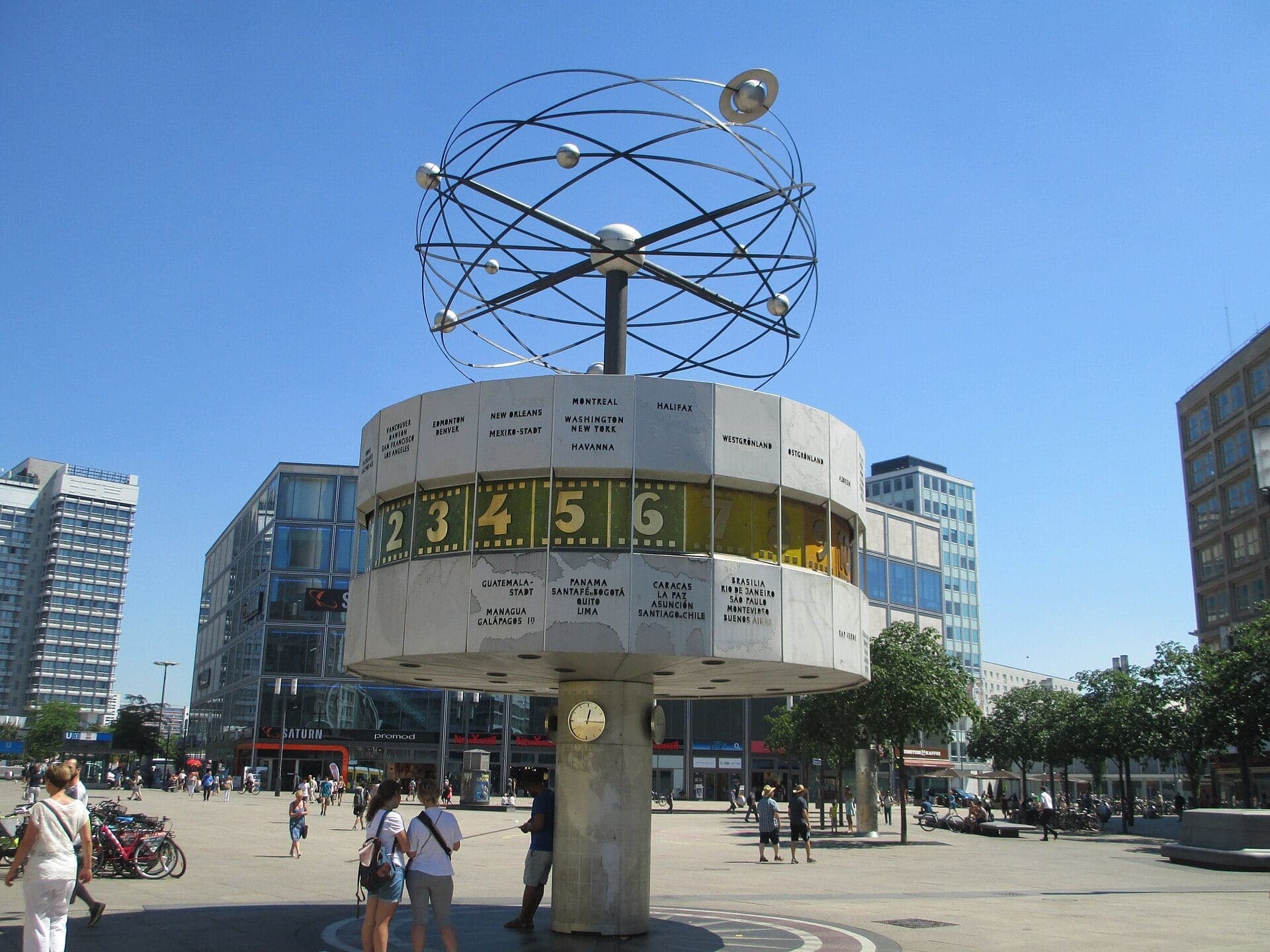
World Time Clock: Twenty-Four Zones and a Trabant
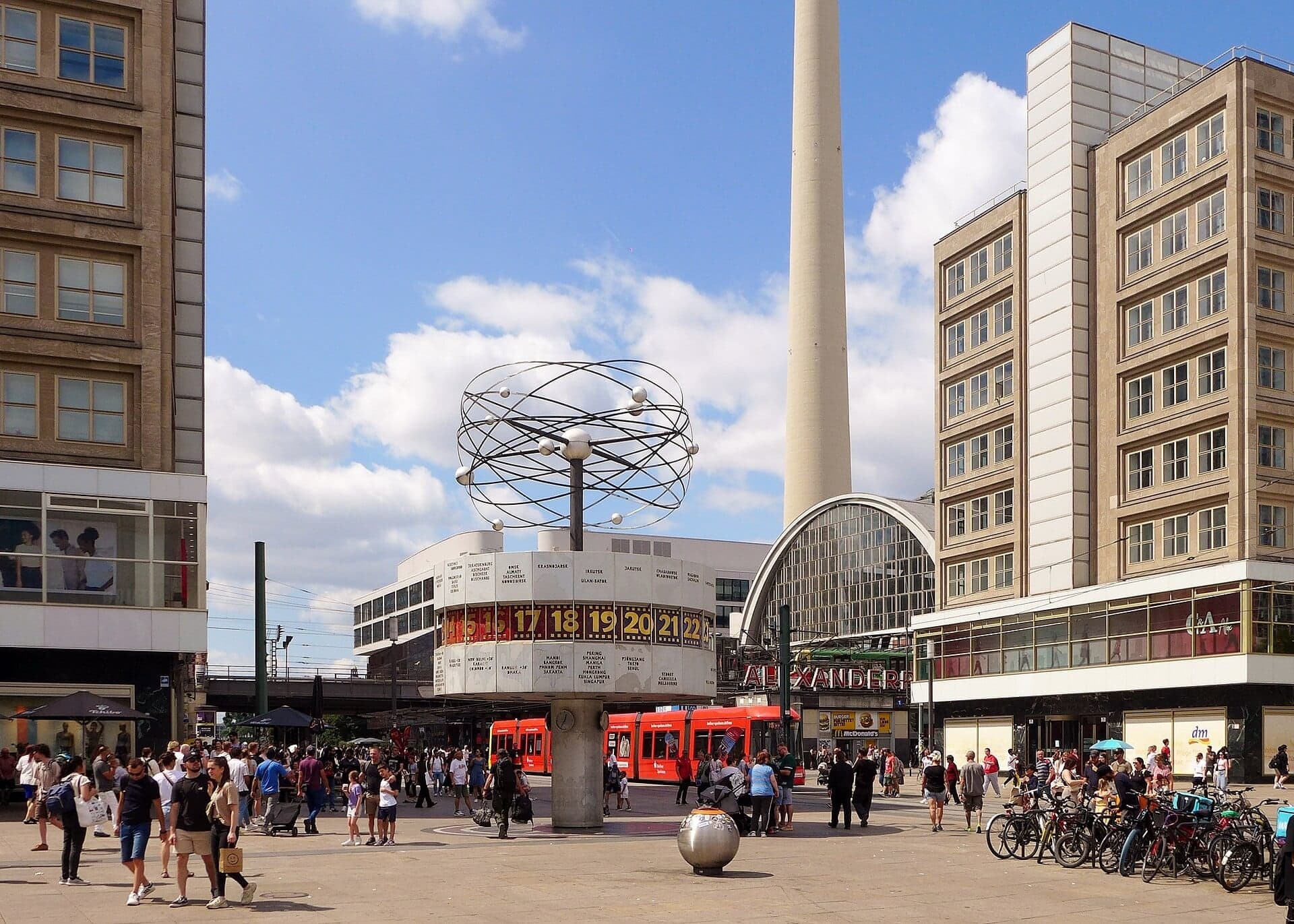
A clock for twenty-four time zones. Erich John's World Time Clock of 1969 on Alexanderplatz, turned by a Trabant gearbox, near Walter Womacka's spiral fountain.
- 10
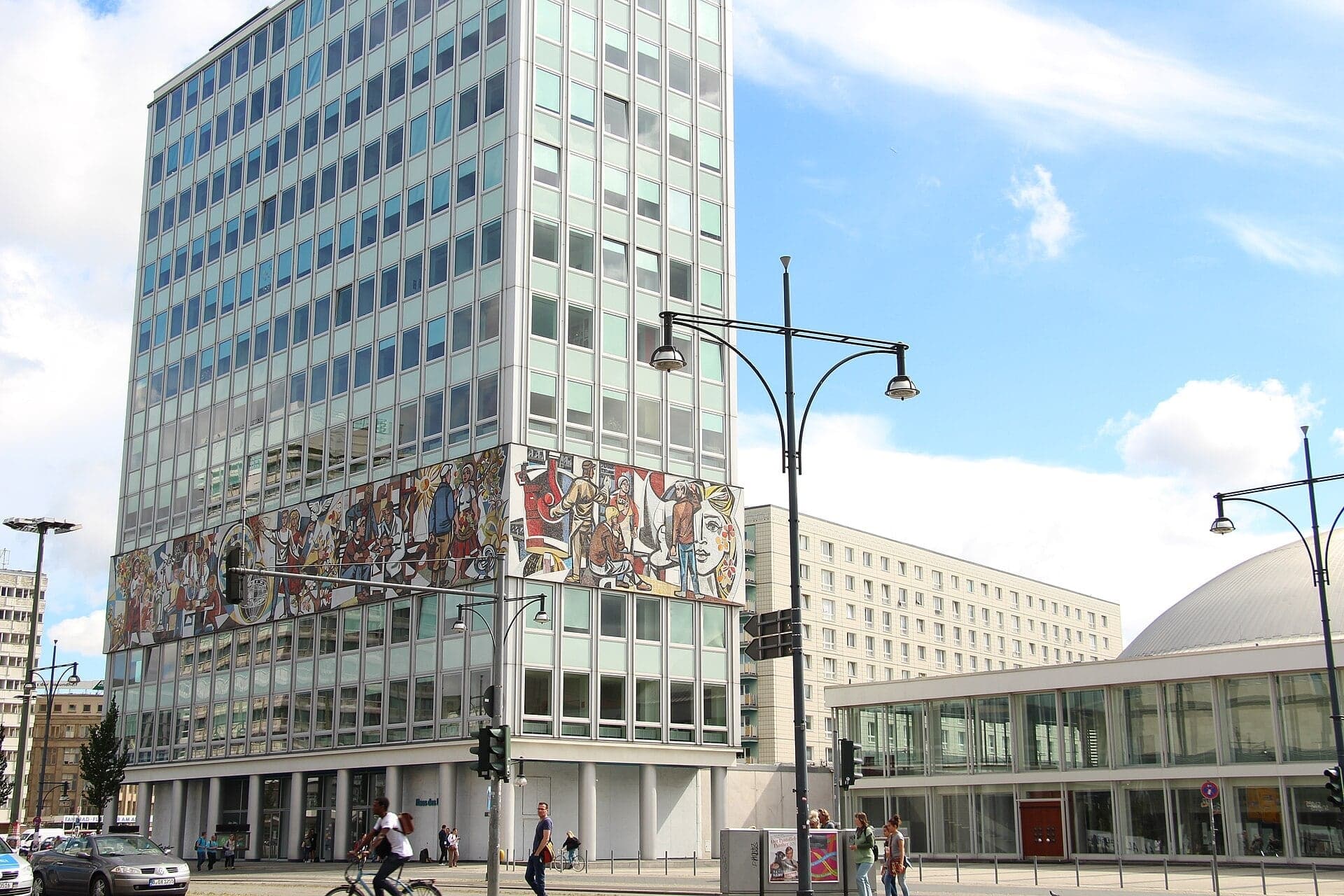
Haus des Lehrers: A Picture Where the Books Were
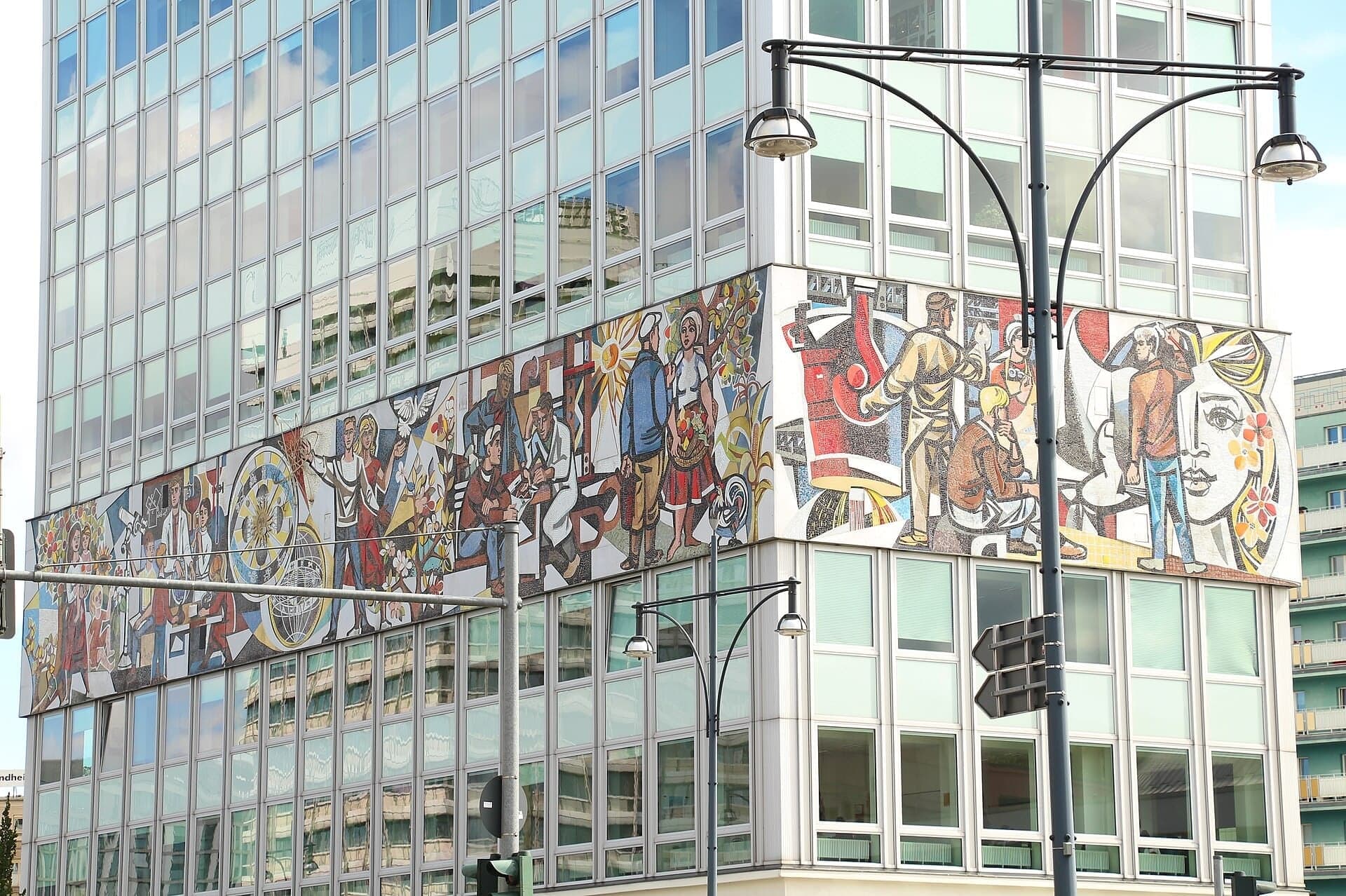
A mosaic band wrapped round a library. The Haus des Lehrers of 1961-64 carries Walter Womacka's 125-meter mosaic Our Life at the level of its book stacks.
Details
Best Time to Visit
A weekday from about 10am, when the Parochialkirche (Monday to Friday, 9am to 2pm), the Red Town Hall (Monday to Friday, 9am to 6pm) and the Marienkirche (daily, 10am to 6pm) are open; the Nikolaiviertel museums open at 10am (the Nikolaikirche at noon on Thursdays; the Ephraim-Palais is closed on Mondays). A sunny afternoon gives the best chance of the cross of light on the TV Tower's ball. In mid-October the trees are thinning, so the church walls show well. Alexanderplatz is crowded at weekends and in the evening rush. Checked 9 October 2026.
Pro Tips
- •Getting to the start: U-Bahn U2 to Klosterstrasse, the stop after Alexanderplatz; the town wall on Waisenstrasse is a short walk from the station. From Alexanderplatz (S3, S5, S7 and S9; U2, U5 and U8) take the U2 one stop or walk. Checked 9 October 2026 on bvg.de.
- •The walk ends at the Haus des Lehrers, beside Alexanderplatz station (S-Bahn and U2, U5, U8). The U5 also stops at Rotes Rathaus and runs to the main station, Hauptbahnhof. Checked 9 October 2026.
- •If you have more time, walk on along Karl-Marx-Allee: its second stretch, built from 1959 to 1965 in prefabricated slab blocks, holds the Kino International, opened in 1963 and reopened in 2026 after a renovation, and the former Café Moskau. Beyond Strausberger Platz begin the ornamented blocks of the first stretch, built in the 1950s, when the street was called Stalinallee. The U5 stops at Schillingstrasse and Strausberger Platz. Checked 9 October 2026.
- •Nikolaiviertel museums: a 15-euro combined ticket covers the Nikolaikirche, the Ephraim-Palais and the Knoblauchhaus on two consecutive days. The Nikolaikirche is open daily (Thursday noon to 8pm from 2 October 2026 to 18 April 2027); the Ephraim-Palais is closed on Mondays. Checked 9 October 2026 at stadtmuseum.de.
- •The Parochialkirche is usually open Monday to Friday, 9am to 2pm, except on event days; its carillon plays set tunes at 9am, noon, 3pm and 6pm from 9 September to the first Sunday of Advent. Checked 9 October 2026 with the parish.
- •The Marienkirche is free and open daily 10am to 6pm; visits are limited during services and concerts. A prayer for peace is held on Fridays at noon and the Sunday service is at 10.30am. The Dance of Death is in the tower hall. Checked 9 October 2026 with the parish.
- •The Red Town Hall is open Monday to Friday 9am to 6pm, free, except on public holidays; short closures for official business are possible, so call 030 9026 2032 to check on the day. Checked 9 October 2026 on berlin.de.
- •The Franciscan church ruin is open inside, free, from May to September, 10am to 6pm. From October 2026 to April 2027 its art installation is visible only from outside. Checked 9 October 2026 at klosterruine.berlin.
Safety & Precautions
- •Building works around the Red Town Hall: part of the lawns between Spandauer Strasse and the Neptune Fountain has been fenced since 7 September 2026 for pipe laying, with pedestrians still able to cross; works continue into 2027. The Neptune Fountain is under scaffolding for restoration, planned to finish at the end of 2026. The Marx-Engels-Forum is fenced and the Spree bank path beside it closed. A playground is being built on Rathausstrasse opposite the Nikolaiviertel until the second half of 2027. If a path on the route is fenced, follow the signed pedestrian way. Checked 9 October 2026 with Grün Berlin and the Mitte district office.
- •The stretch from the Franciscan ruin to the Nikolaiviertel runs beside Grunerstrasse and the Mühlendamm, a busy main road, past the Molkenmarkt archaeological dig and its hoardings. Cross the quiet end of Klosterstrasse with care, and the main road only at the lights. Checked 9 October 2026.
- •Waisenstrasse and Parochialstrasse have little or no separate pavement: keep to the edge and watch for cars.
- •Cycle lanes run beside and across the promenades near the TV Tower, at Alexanderplatz and beside the Haus des Lehrers: look both ways and keep off the red cycle tracks. Trams cross Alexanderplatz.
- •Alexanderplatz and the TV Tower forecourt are crowded: watch your bags, and walk on past shell games and petition sellers. The station is a long-running building site, so expect hoardings and noise.
- •The paving in the Nikolaiviertel lanes is uneven in places, and slippery when wet.
Travel advisory: Exercise Increased Caution (Level 2).
Gallery
Related Reading
Go deeper on what you'll see, hear, and walk through.
Read the walk
The full story of Nikolaiviertel and Alexanderplatz: Four Churches, One War, in words. Prefer to listen? Play it narrated, from home or on location.
Introduction
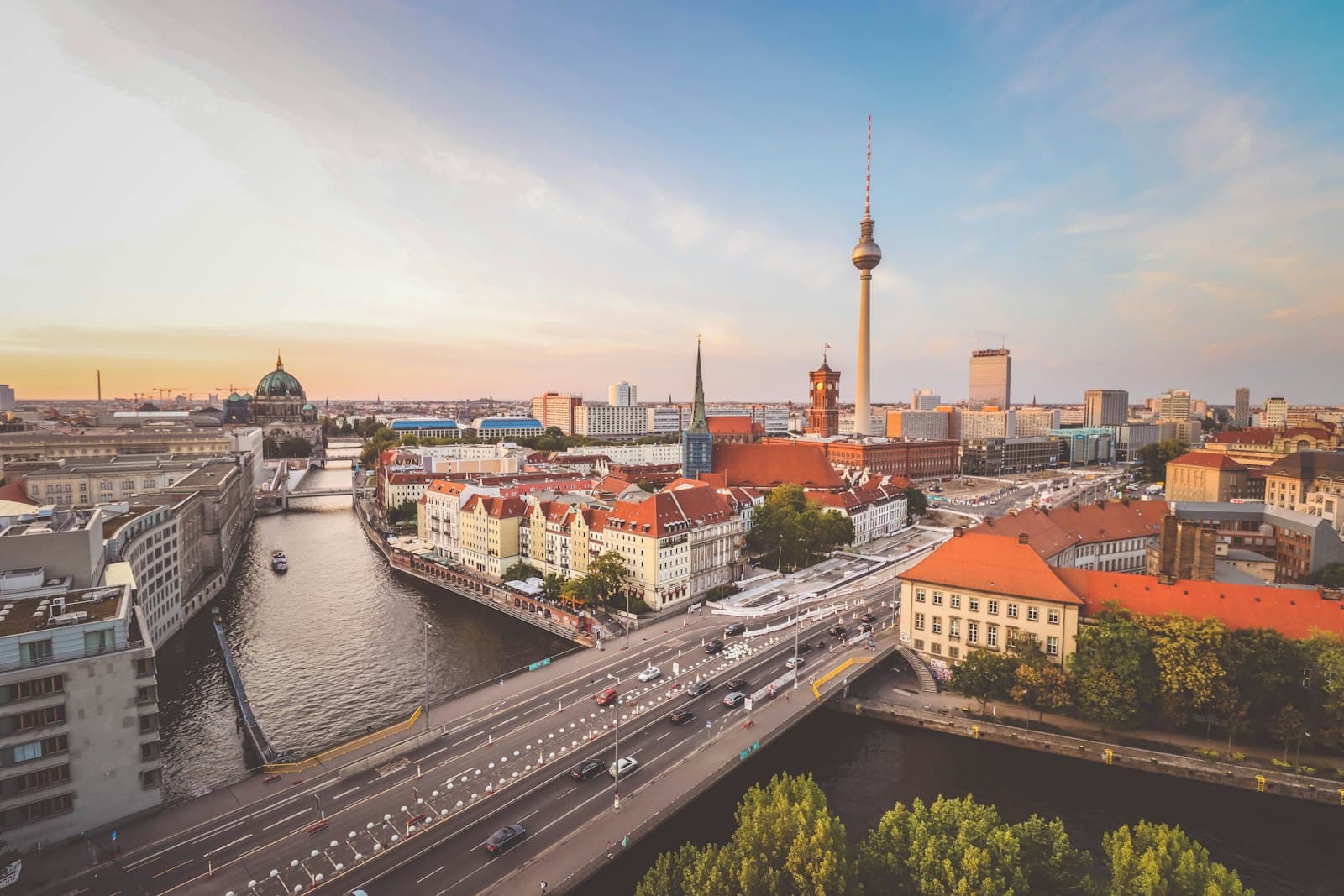
Berlin, the capital of Germany, is a city of almost four million people. It grew from two small medieval towns on the river Spree: Berlin on the east bank, and Cölln on an island across the water. This walk covers old Berlin's side, from the last stretch of its town wall to Alexanderplatz.
Four churches stand along the way, and the Second World War reached all four. Each got a different answer afterward. One was roofed again with its damage left on view. One was kept as a bare shell. One was rebuilt inside its old walls, in the middle of a whole old town made new in the nineteen eighties. And one was simply repaired, and is still a working church. Around them, East Germany built a new capital center: a brick town hall it chose to keep, a television tower, a world clock and a picture the size of a building.
Three people appear along the way. Veitel Heine Ephraim, a banker whose palace was taken apart stone by stone. Erich John, a master metalworker who designed that clock. And Walter Womacka, an artist who wrapped a building in a band of mosaic.
The walk is ten stops over about two point two kilometers, about a mile and a third, and takes about seventy-five minutes. It is level, crosses busy roads at the lights, and ends just off Alexanderplatz.
1. Town Wall on Waisenstrasse: Kept by the Houses
Welcome to the oldest edge of Berlin. Walk on along the path through this small green strip, and stop where you can see the low, rough wall beside it.
Look at what it is made of. Most of it is field stone: stones gathered from the land around and laid unevenly, with no neat courses. Look for brick among them too. Berlin's heritage office dates the field stone to between about twelve fifty and twelve ninety. Outside it there was a rampart and two ditches. In the thirteen hundreds the town repaired the wall in brick and raised it to about four meters. The first written mention of the town's fortifications comes in thirteen nineteen.
This was the wall of Berlin, the town on the east bank of the Spree. Its twin, Cölln, on the island across the river, had a wall of its own.
So why does any of it survive, when the rest is gone? Because people built against it. In the late sixteen hundreds, once the town had a new ring of fortifications further out, houses were built along this old wall, and they used it as their back wall. For about two hundred and fifty years it was hidden inside other people's homes. In nineteen forty-eight, during the clearing up after the war, it was found again, more than a hundred meters of it. The one freestanding piece was made safe and set in grass.
The street just beyond the wall, which the route takes next, still has a row of those houses that lean on it. And Berlin's planners say the whole southern old town could once be crossed on foot, from the old mill dam on the river to this wall, in a few minutes. You are about to do much the same.
Follow the route along the street of old houses, keeping to the edge, to a church tower with a copper spire.
2. Parochialkirche: Wounds Left Showing
Walk on to the corner where this street meets Klosterstrasse, and stop at the edge. The church on the corner beside you is the Parochialkirche, the parish church, with its tower set right on the street line and a copper spire on top.
Start with that tower. The church was designed in sixteen ninety-four with domes and stone columns. Then, in sixteen ninety-eight, while it was being built, the vault over its entrance hall collapsed. The builder moved the tower forward to the street, gave up the domes for a folded roof, and swapped the stone columns and carved trim for plain buttresses and flat wall panels. That simpler answer is still what you see along the walls. The tower was raised between seventeen thirteen and seventeen fifteen, built to carry a carillon, a set of tuned bells.
In May nineteen forty-four, incendiary bombs set the church alight. The parish records that the tower fell into the nave, everything inside burned, and the bells melted. A new roof went on in nineteen fifty and fifty-one, in the old shape. When the church was restored, from the late nineteen eighties and through the nineties, the brief was that the wounds the war struck should stay recognizable. So the walls are not made to look new.
That is the first of four answers to the war on this walk: repair it, but leave the damage readable.
The spire is the latest chapter. It was rebuilt in two thousand sixteen, with an open bell stage and a carillon, seventy-two years after it fell, paid for by an association and private donors. This autumn the bells play a tune every three hours in the daytime, so you may hear them.
Follow the route along Klosterstrasse to a roofless brick church in a strip of green.
3. Franciscan Friary Church: The Ruin the Road Left
Walk on along the pavement and stop where a path branches off into the green. Across the grass stands a church with no roof: tall brick walls, pointed openings, sky behind them. This is what is left of the church of Berlin's Franciscan friars.
It was built in the twelve hundreds, in brick, as a long church of three aisles under vaults, the middle one higher than the sides. Look for what it lacked: a proper tower. The friars' rule asked for none, and a small turret on the roof was enough. The ruin's own keepers call it the first building in the region made entirely of brick.
Bombs hit it in April nineteen forty-five and left mostly the outer walls. Then came the road. The wide street beside the ruin, Grunerstrasse, was widened in nineteen sixty-eight, and the remains of the friary buildings around the church were pulled down. So the walls you see stand alone, with nothing attached, beside the road that took the rest.
That is the second answer to the war: a ruin, kept as a ruin. The walls were made safe in the nineteen sixties, repaired in the eighties, and saved from decay by a large renovation in the early two thousands. Since nineteen eighty-two, artists have shown work inside. From October to April it is closed inside, and the art can be seen only from outside.
Ahead is the longest stretch of the walk, about five minutes along that wide road and round the corner of the Molkenmarkt. The main road here was rerouted a few years ago, and archaeologists are still working through the old town under the fenced ground beside it. Expect traffic and hoardings. Cross the quiet end of Klosterstrasse with care, and the main road only at the lights.
Follow the route along the road to the twin spires of the Nikolaikirche.
4. Nikolaikirche: An Old Town Made New
Walk on into the lanes of the Nikolaiviertel, the Saint Nicholas quarter, and stop by the rounded end of the big brick church, where its chapels curve around the back. This is the Nikolaikirche. It is a museum now, with a ticket: the details are on this stop's card. The oldest…
Full narration for this stop unlocks with the tour.
5. Ephraim-Palais: Three Thousand Stored Stones
Walk on to the end of the lane, where it opens onto Poststrasse, and stop. Find the pale stone palace on the rounded corner, with pairs of columns on the ground floor and balconies above. This is the Ephraim-Palais. It is a city history museum now, with a ticket: the details are…
Full narration for this stop unlocks with the tour.
6. Rotes Rathaus: Red for the Brick
Walk on along the wide promenade and stop when the big red brick building with a tall tower stands beside you. This is the Rotes Rathaus, the Red Town Hall, the seat of Berlin's government. On weekdays you can walk in for free. First, the name. The city itself is clear that it…
Full narration for this stop unlocks with the tour.
7. Marienkirche: The Church That Stayed a Church
Walk on to the meeting of paths on the lawn, and stop there. The brick church across the lawn, set at a slant, with a heavy stone tower at its far end and a green copper top, is the Marienkirche, Saint Mary's. It is free, and usually open every day. This is the fourth answer to…
Full narration for this stop unlocks with the tour.
8. TV Tower: The Cross on the Steel Ball
Walk on to the wide pavement in front of the shops and stop, then turn back to face the television tower, rising over the low pavilions at its foot. Its German name is the Fernsehturm. A lift goes up to a viewing floor in the ball, with a ticket: the details are on this stop's…
Full narration for this stop unlocks with the tour.
9. World Time Clock: Twenty-Four Zones and a Trabant
Walk on into Alexanderplatz, and stop beside the tall clock on its column: a drum of metal panels with a model of the planets on top. This is the World Time Clock. Keep a hand on your bag here: the square is busy, and pickpockets work the crowds. The clock was designed by Erich…
Full narration for this stop unlocks with the tour.
10. Haus des Lehrers: A Picture Where the Books Were
Walk on along the pavement beside the glass tower, keeping to the building side, away from the cycle track, and stop. Look up at the band of color wrapped around its lower floors. This is the Haus des Lehrers, the Teachers' House, built between nineteen sixty-one and nineteen…
Full narration for this stop unlocks with the tour.
- Berlin. Die Stadtmauer wurde um 1250/1290 erbaut. Es sind nur noch Reste vorhanden und die stark verändert. — Clemensfranz, CC BY-SA 4.0 · source
- A part of what few parts remain of the old city walls, originally from the second half of the 13th century, heigthened in the 14th. — Dosseman, CC BY-SA 4.0 · source
- View to the south along Klosterstraße in Berlin-Mitte: Palais Podewils on the far left, behind it the Parochial Church with the Zürgelbaum n — Bärbel Miemietz, CC BY-SA 4.0 · source
- Blick zum Turm der Parochialkirche in Berlin. — Flocci Nivis, CC BY 4.0 · source
- Denkmalgeschützte Ruine der ehemaligen Franziskaner-Klosterkirche in Berlin-Mitte in Südwestrichtung — Kvikk, CC BY-SA 4.0 · source
- This image was uploaded as part of Wiki Loves Monuments 2017. — Z thomas, CC BY-SA 4.0 · source
- Nikolaikirche in Berlin — Marek Kiersnowski, CC BY-SA 3.0 · source
- Museum Ephraim-Palais im Sommer | Foto: Oliver Ziebe — Presse Stadtmuseum, CC BY-SA 4.0 · source
- A Rococo-style building in Berlin, Germany, originally constructed in 1766. Despite the destruction of the palace in 1936 by Nazi Germany, t — Dosseman, CC BY-SA 4.0 · source
- Rådhuset i Berlin — AleWi, CC BY-SA 4.0 · source
- Rotes Rathaus — Rəcəb Yaxşı, CC BY 4.0 · source
- This is a picture of the Berliner Kulturdenkmal (cultural monument) with the ID — Michielverbeek, CC BY 4.0 · source
- Berlin, Germany. August 2024 — BugWarp, CC BY-SA 4.0 · source
- This is a picture of the Berliner Kulturdenkmal (cultural monument) with the ID — Diego Delso, CC BY-SA 4.0 · source
- השעון העולמי באלכסנדרפלאץ בברלין — Avi1111 dr. avishai teicher, CC BY-SA 4.0 · source
- View of the Alexanderplatz, Berlin-Mitte, with the World Clock near the centre of the image — Bahnfrend, CC BY-SA 4.0 · source
- Mitte. Alexanderplatz The Teacher's House, erected as a meeting place for pedagogues, including the Berlin Educators' Club, under the GDR. A — Fred Romero from Paris, France, CC BY 2.0 · source
- Mitte. Alexanderplatz The Teacher's House, erected as a meeting place for pedagogues, including the Berlin Educators' Club, under the GDR. A — Fred Romero from Paris, France, CC BY 2.0 · source
Images may be cropped or resized. Other photos via Unsplash and Pexels.