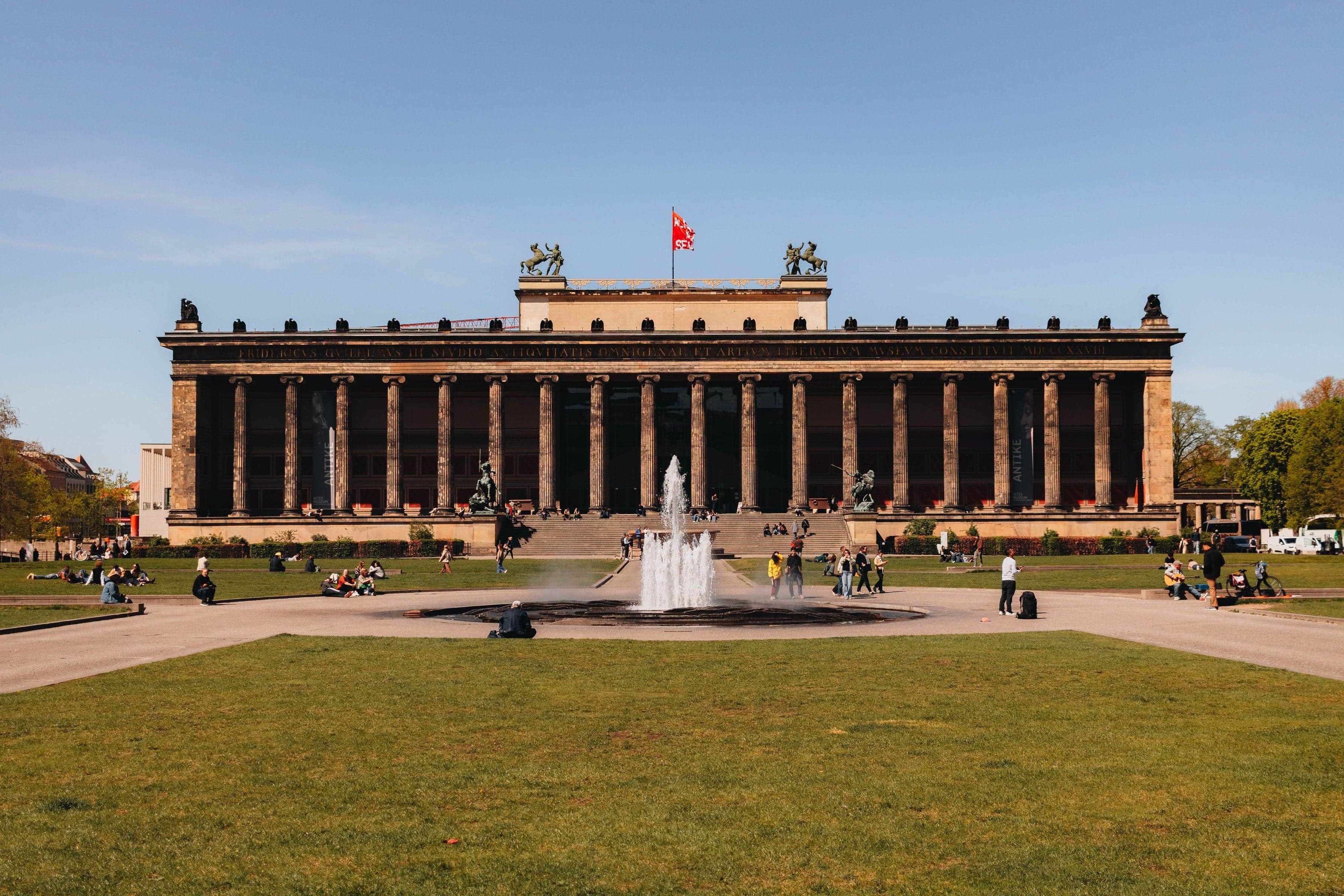
Walk Berlin's royal avenue from the Gendarmenmarkt past Bebelplatz, the Neue Wache and the Palace Bridge to the Lustgarten and the Berliner Dom, through Museum Island's colonnade and over the Spree to face the Bode Museum.
Start · Gendarmenmarkt: Towers Built as Scenery
DirectionsStops
- 1
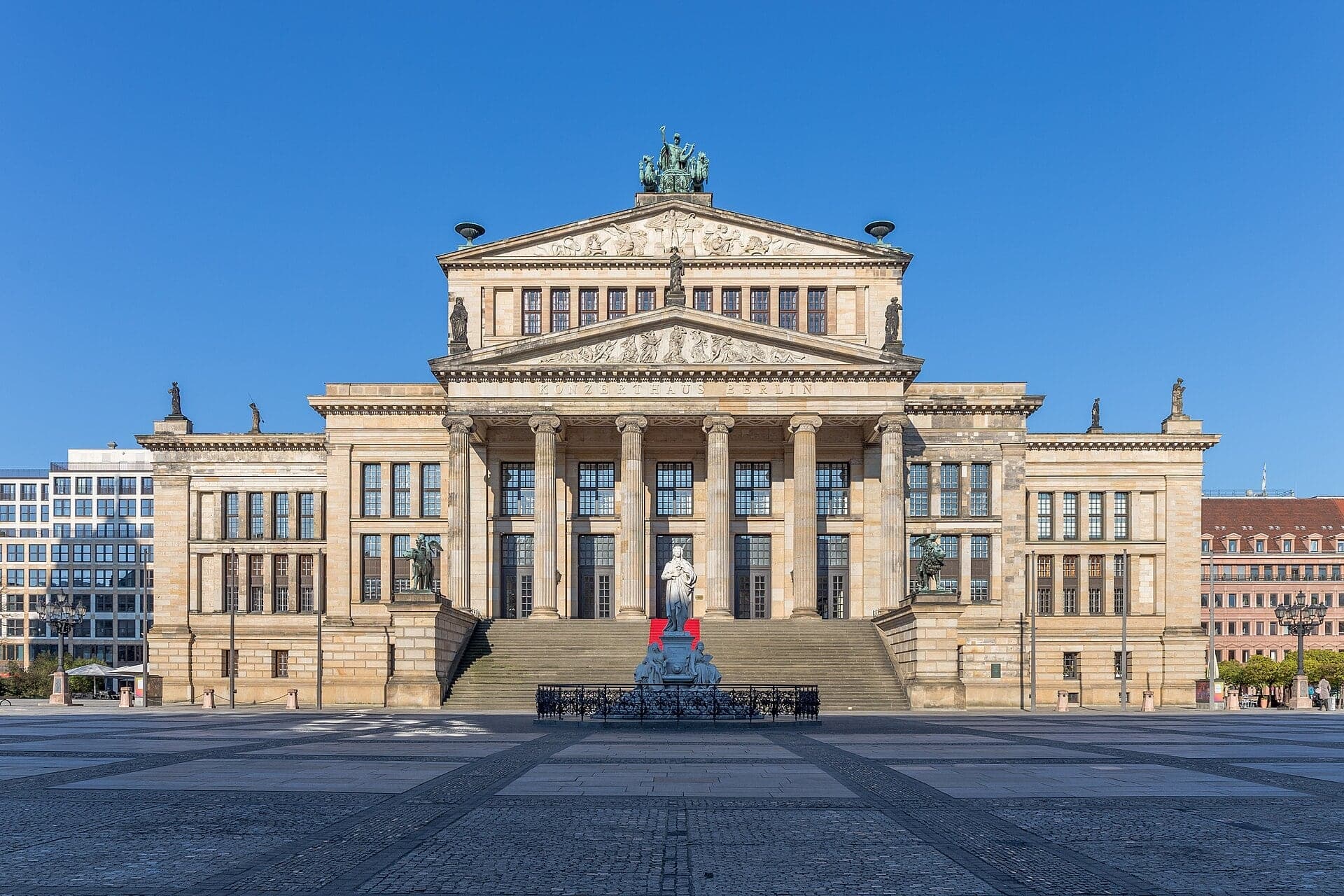
Gendarmenmarkt: Towers Built as Scenery
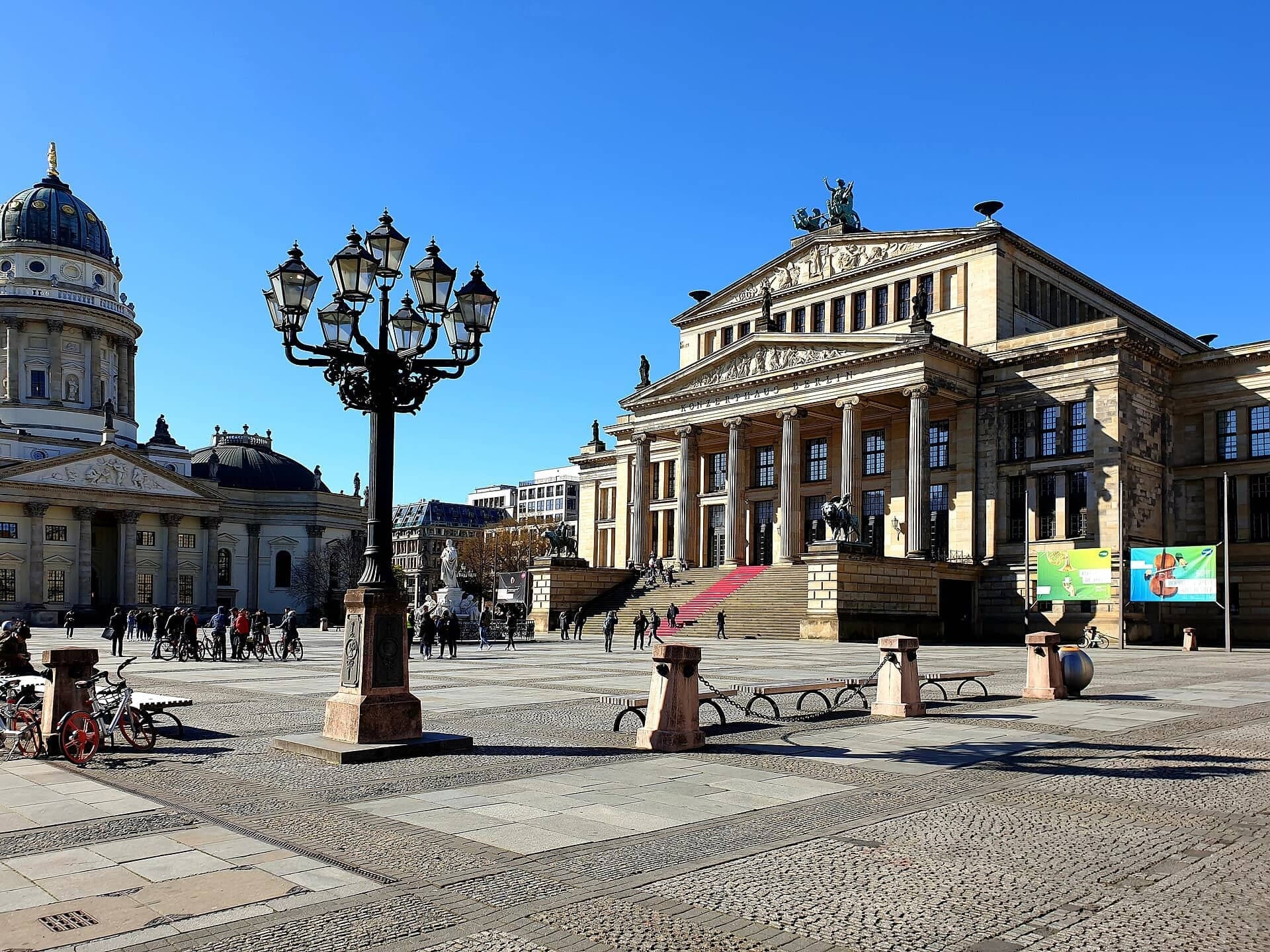
Two domed towers added purely for show. Frederick the Great dressed the square in 1780 to 1785 with towers modeled on Rome, and Schinkel set his theater between them in 1821; it got its sandstone only in 1883 to 1884.
- 2
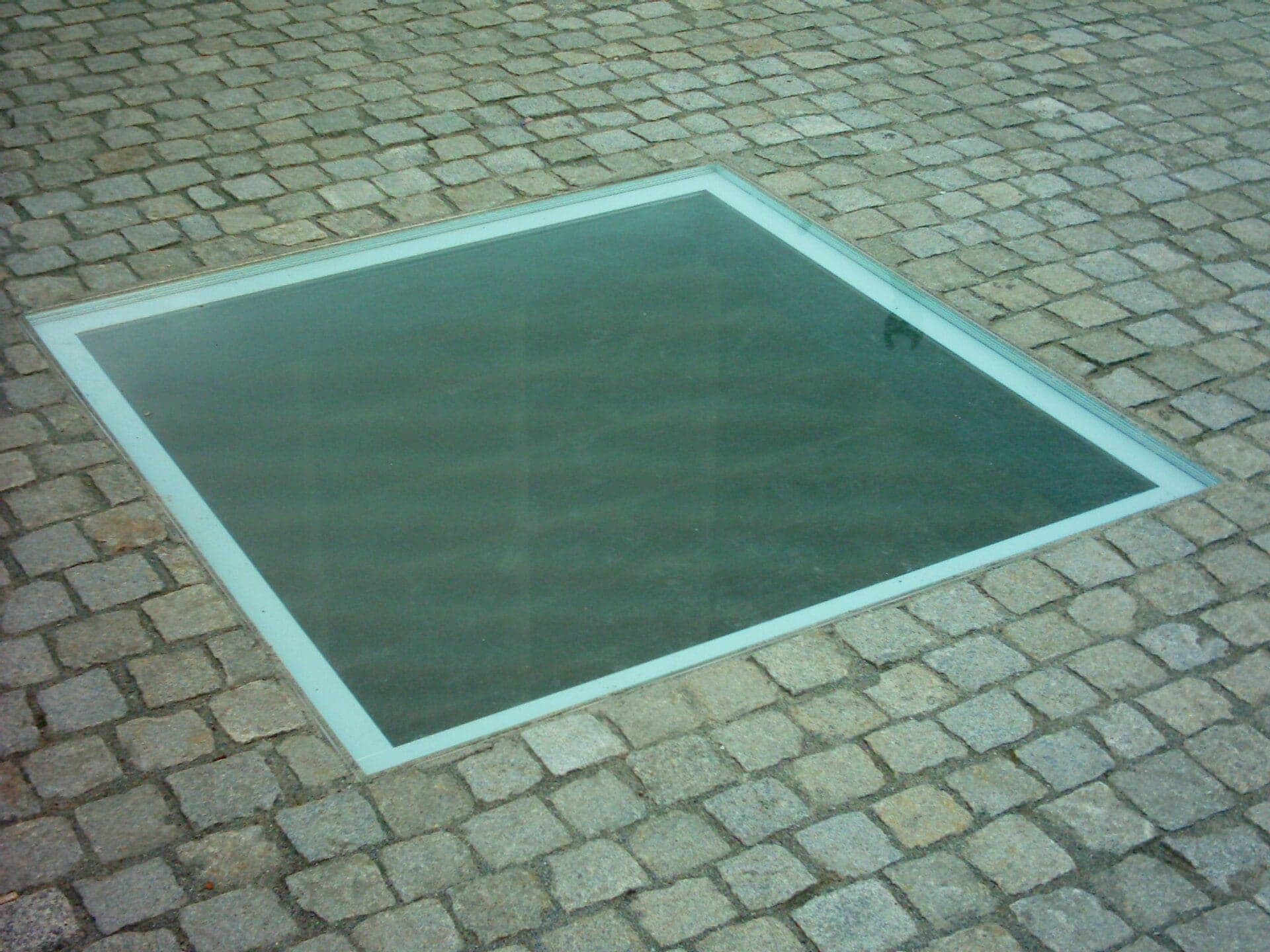
Bebelplatz: The Room of Empty Shelves
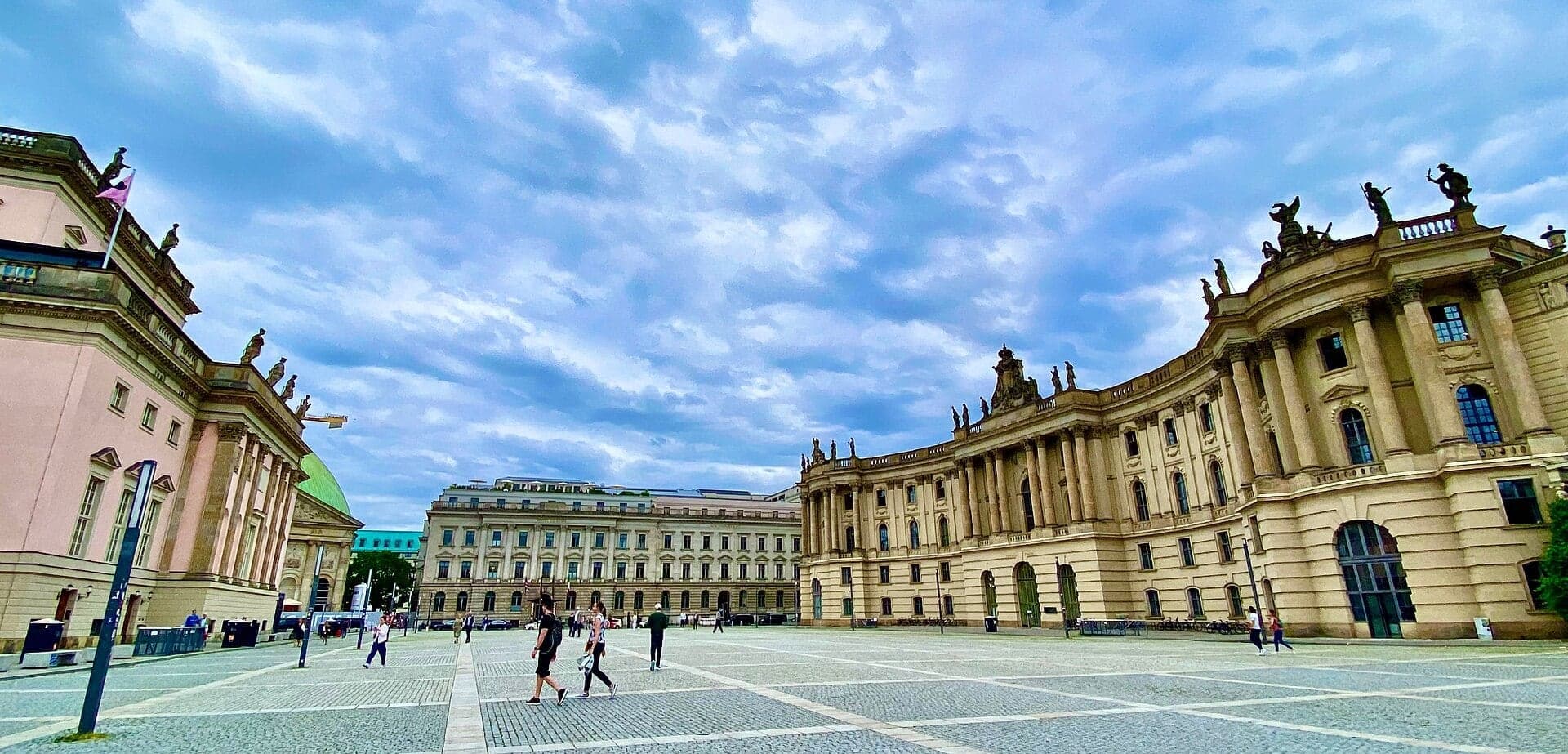
A sunken room of empty white shelves. Micha Ullman's 1995 memorial marks the book burning of 10 May 1933, in Frederick the Great's forum of the opera, a domed church and a library copied from Vienna.
- 3
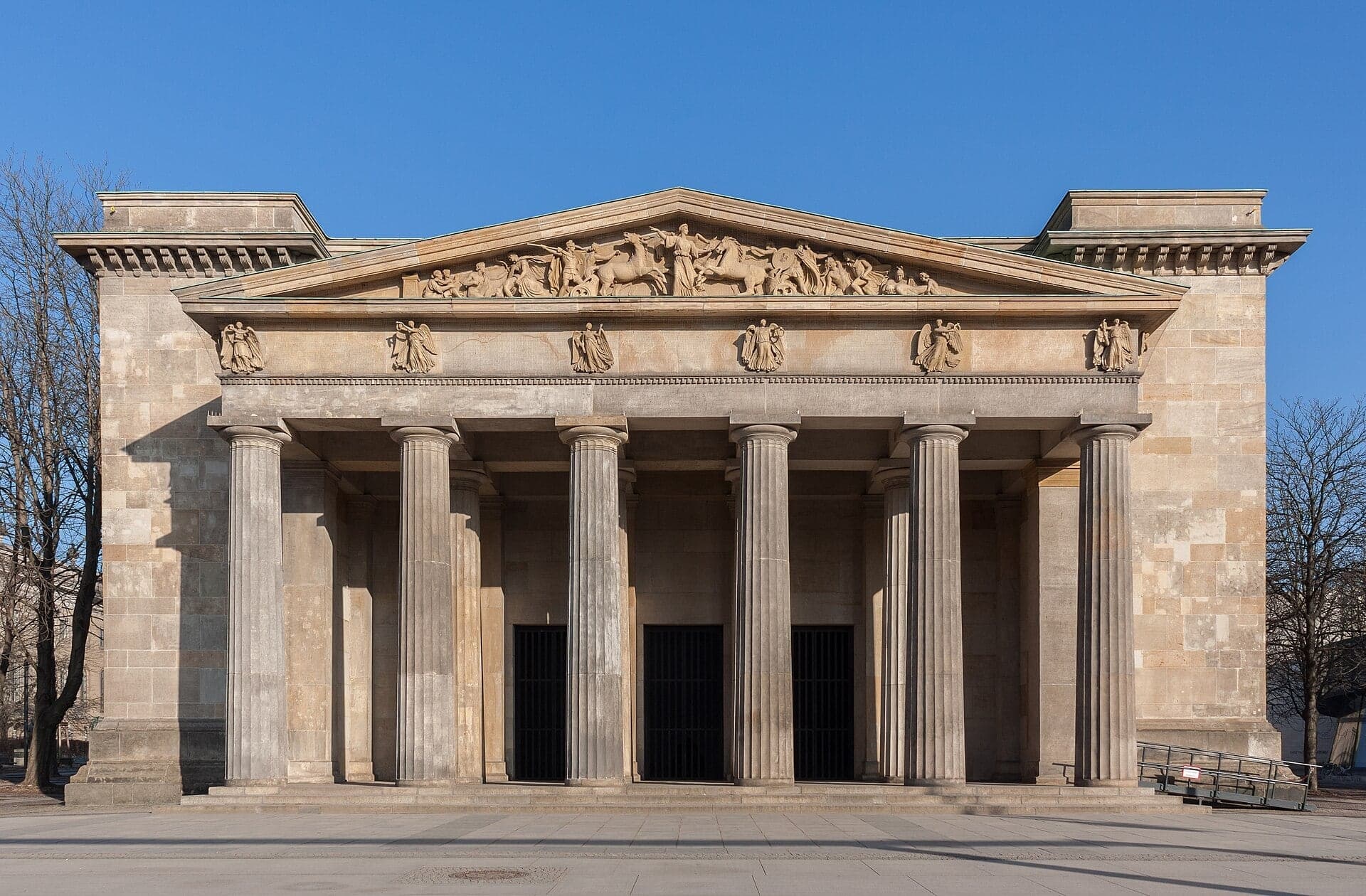
Neue Wache: A Roman Fort on the Avenue
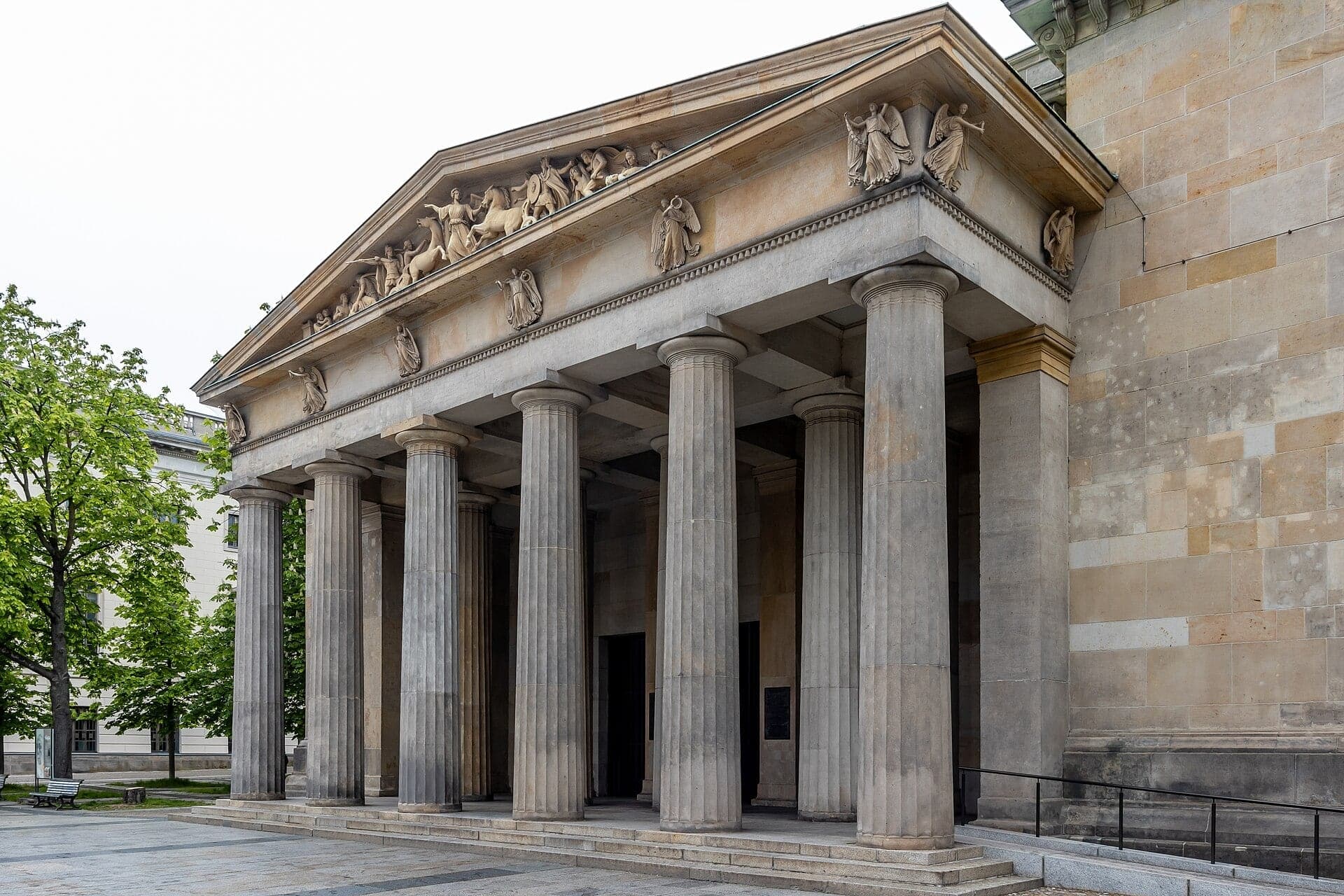
Schinkel's guardhouse modeled on a fort. Built in 1816 to 1818 for the king's guard, it has been Germany's central memorial to the victims of war and tyranny since 1993, with Käthe Kollwitz's mother and son inside.
- 4
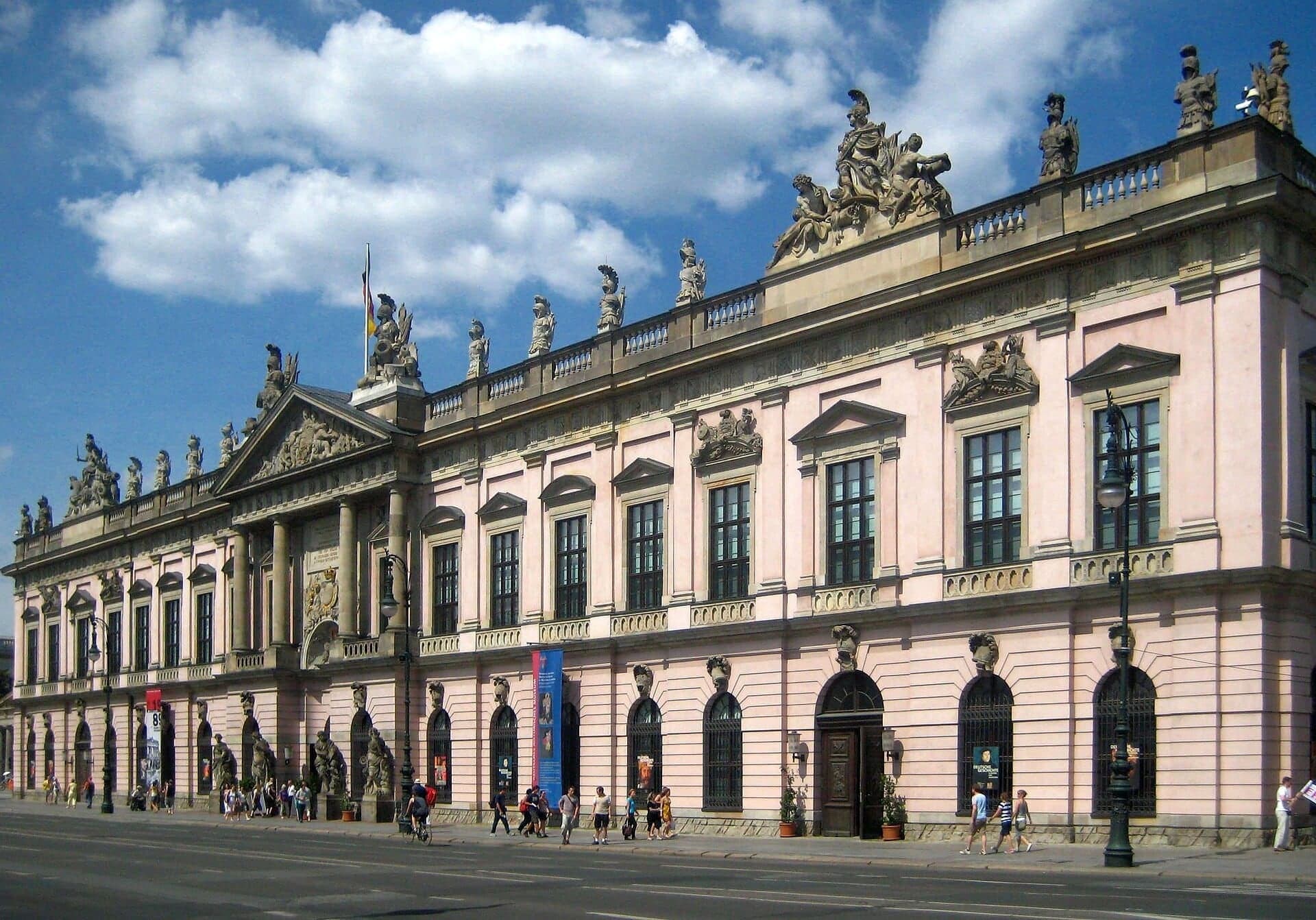
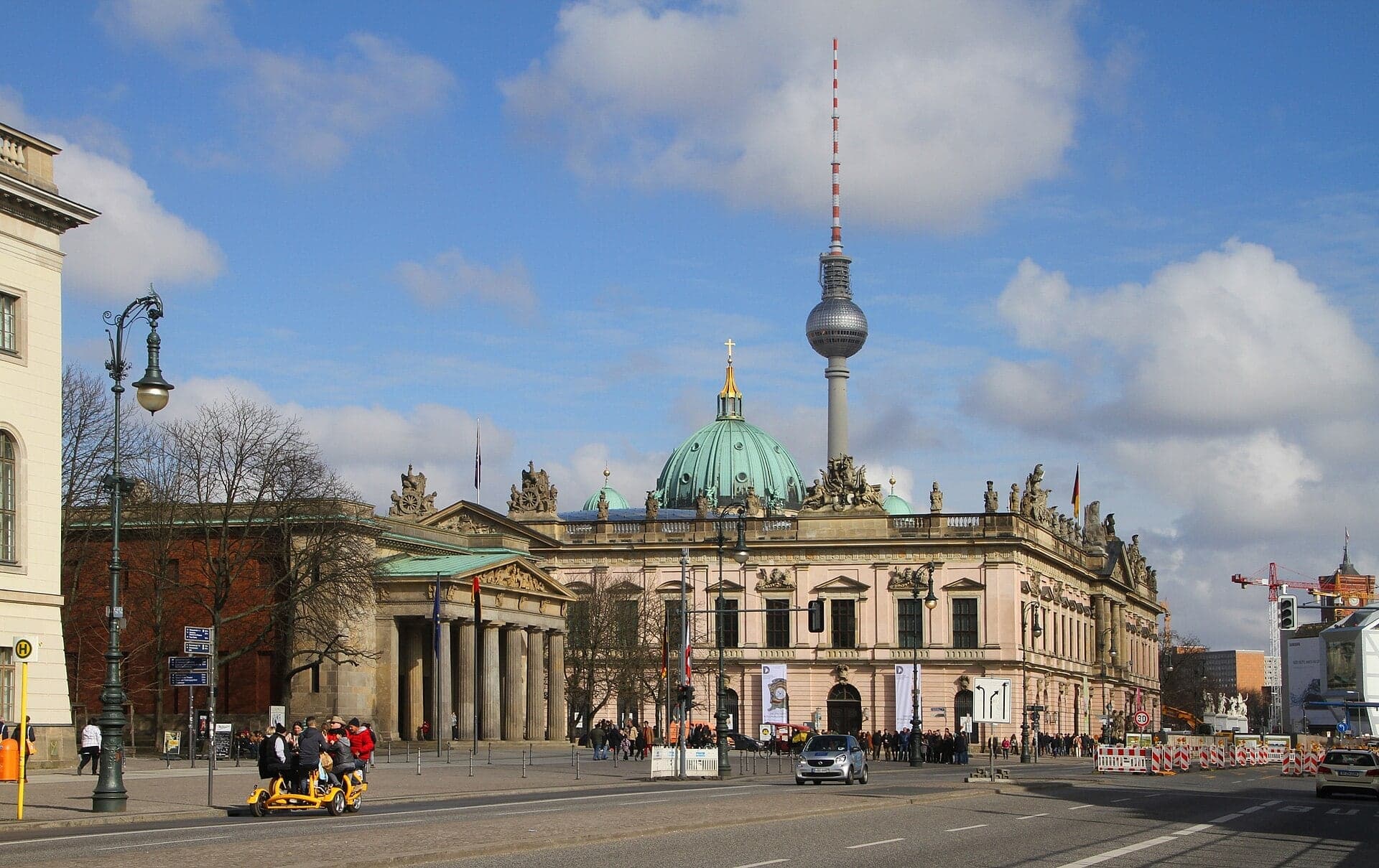
Zeughaus: Helmets Over Every Arch
The arsenal that wears helmets on its arches. Finished in 1706, it is the oldest building on Unter den Linden, a sandstone base under render banded to look like stone; it is closed inside for renovation.
- 5
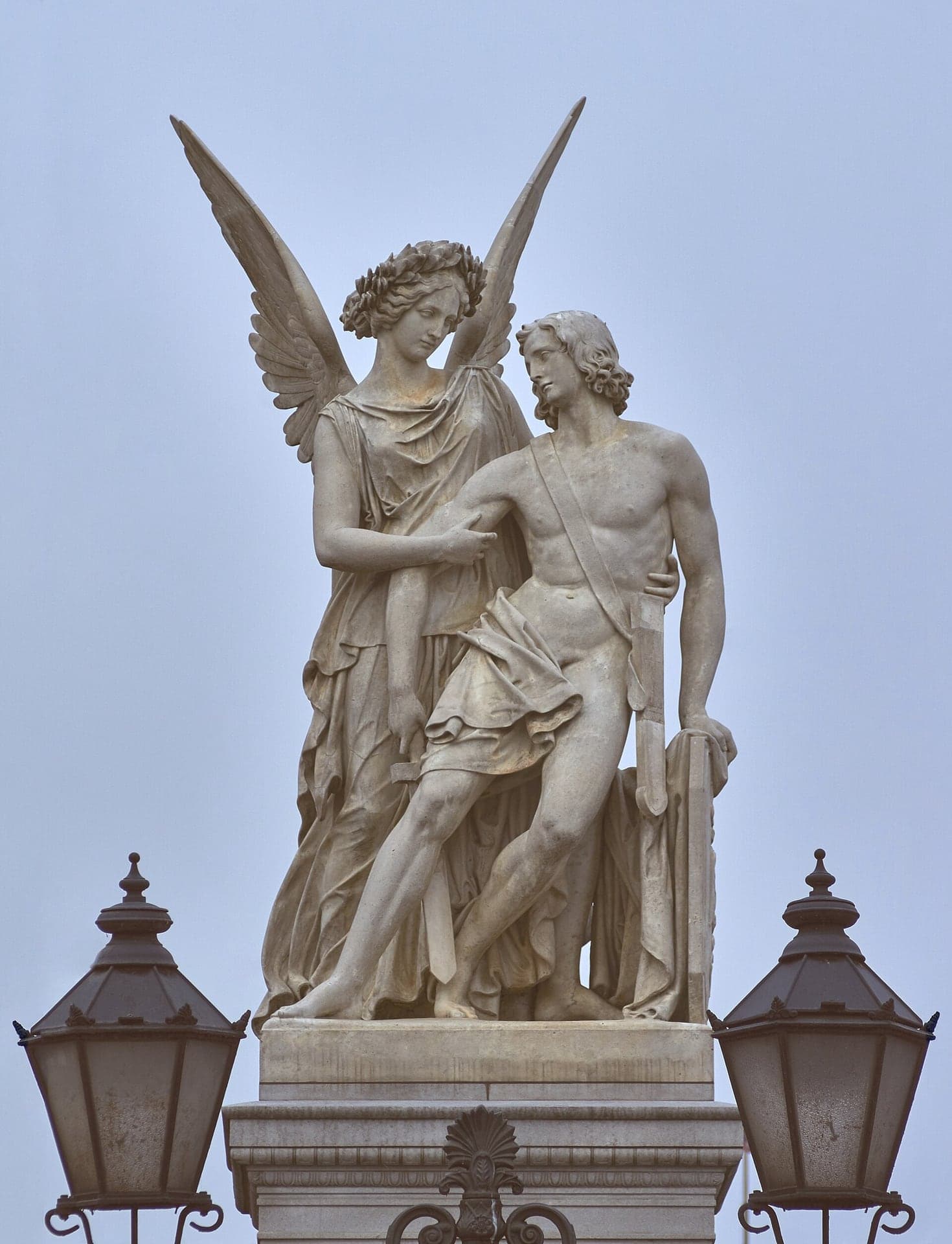
Schlossbrücke: The Bridge That Made the Avenue
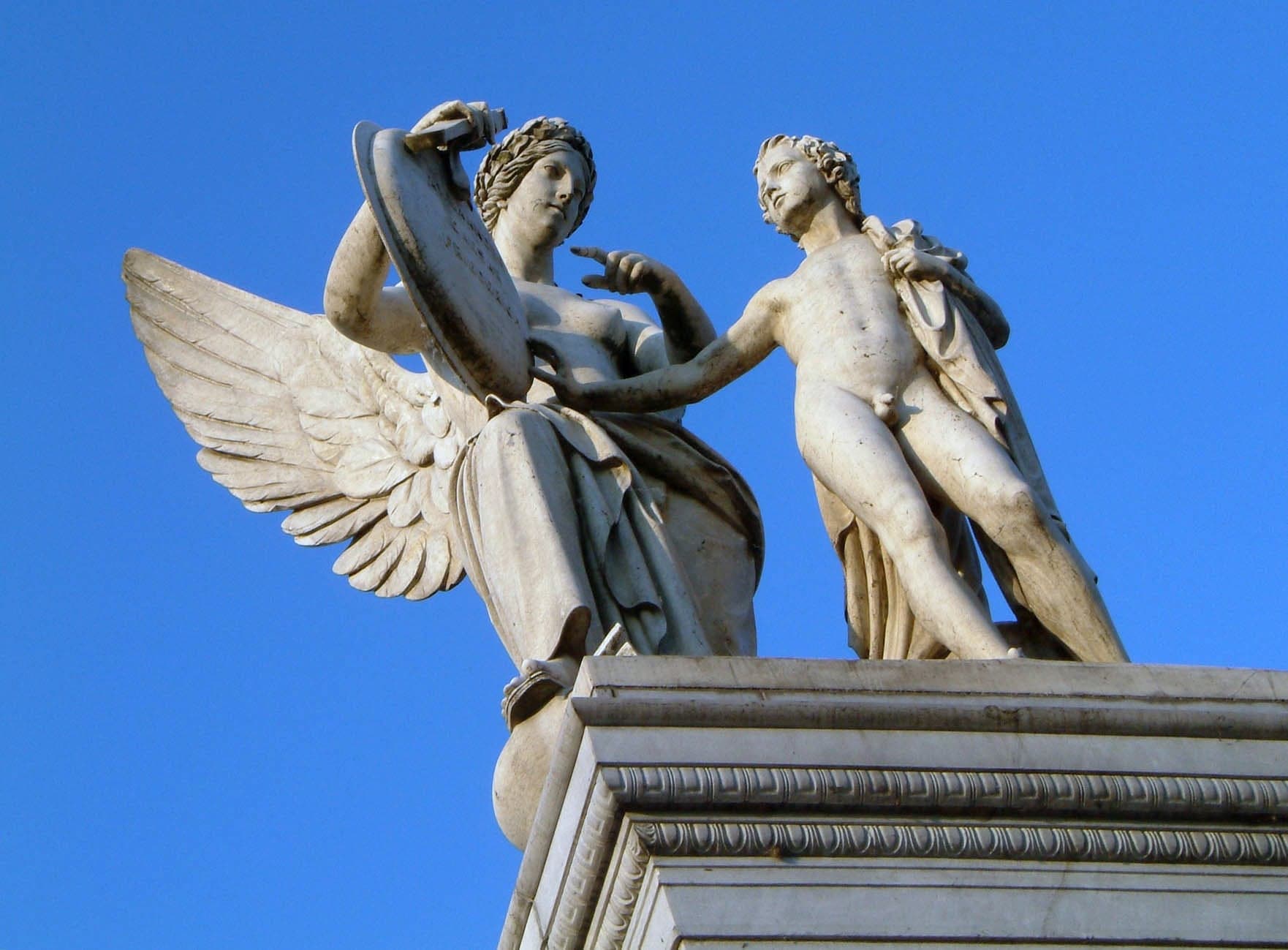
The bridge that joined avenue and island. Built in 1821 to 1824 as wide as the street, it carries eight marble groups telling one warrior's story, with the rebuilt palace fronts of the Humboldt Forum ahead.
- 6
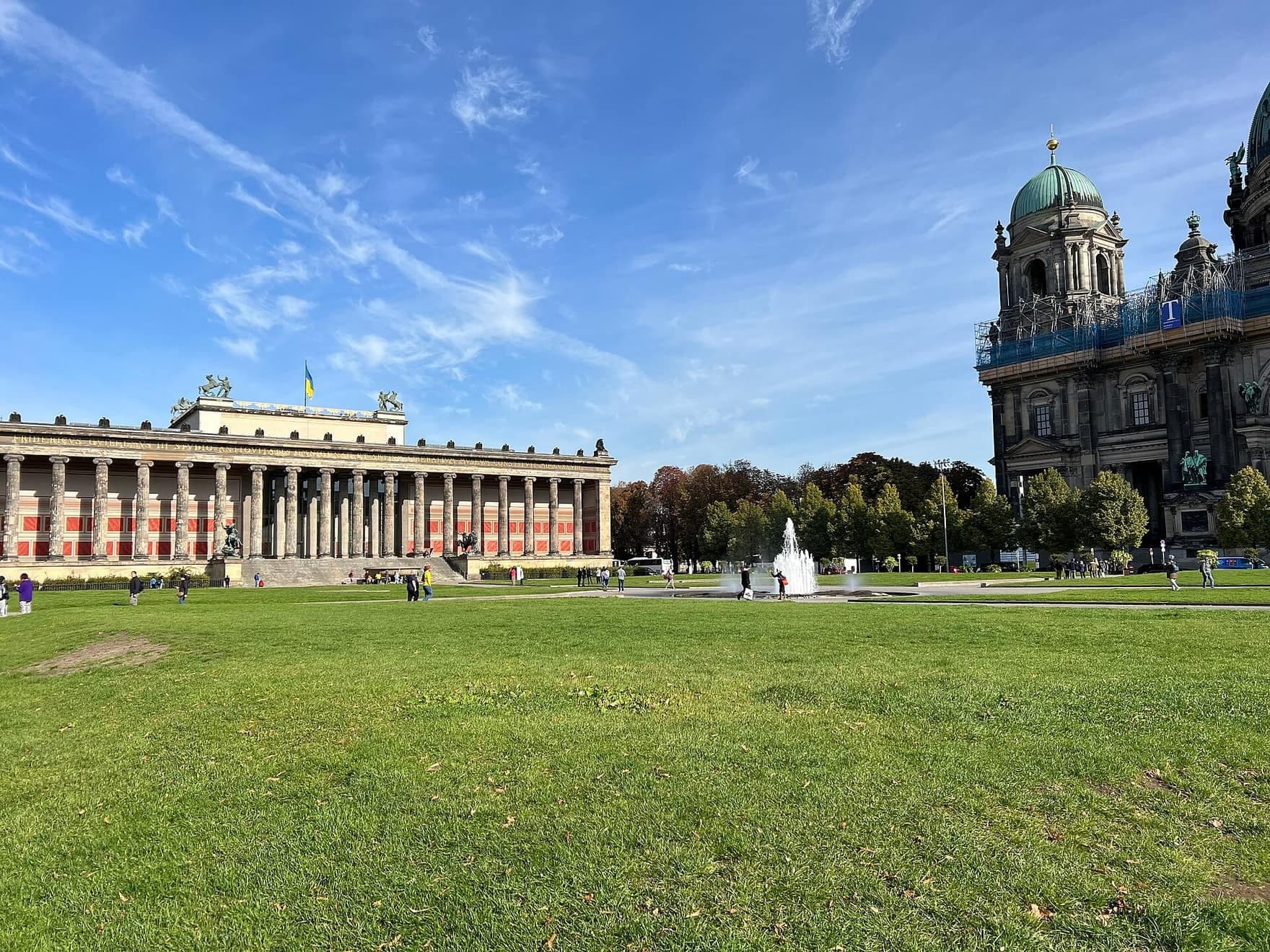
Lustgarten and the Berliner Dom: A Lawn to Square the Crooked
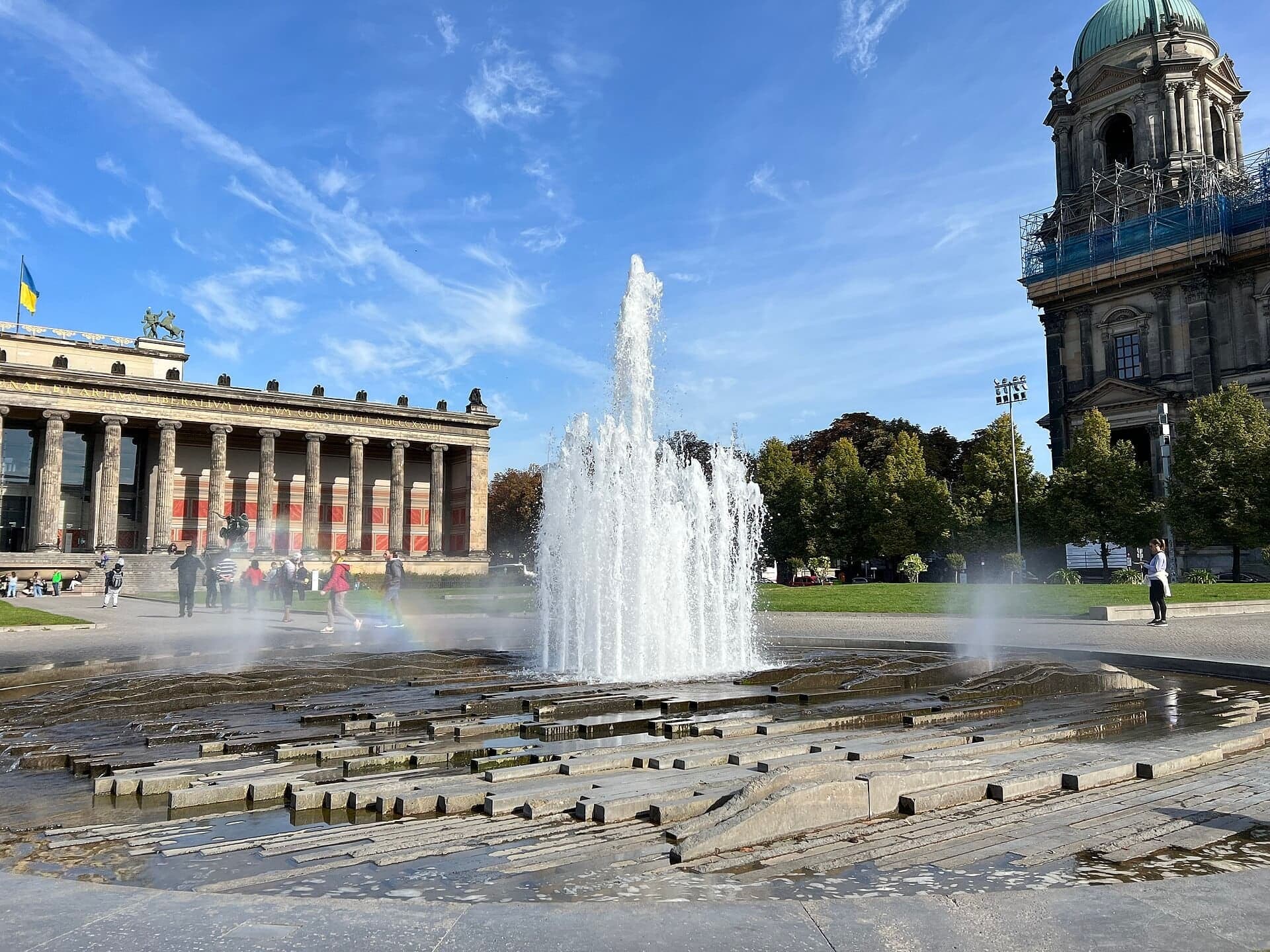
Schinkel's lawn ties three crooked buildings together. Count the Altes Museum's eighteen columns, then look up at the Berliner Dom of 1905, bombed in 1944, rebuilt with a plainer dome and faced in a hung skin of sandstone.
- 7
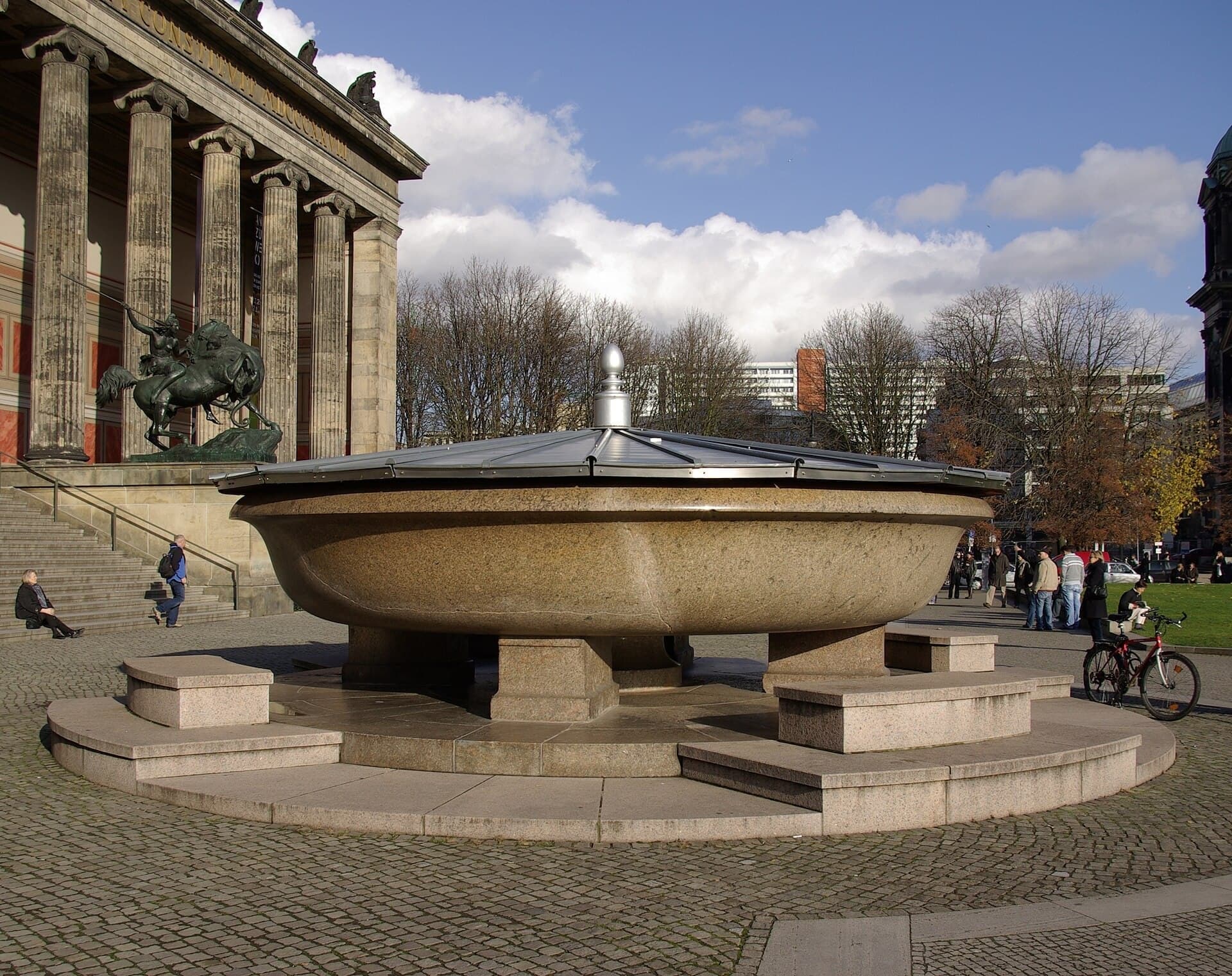
Altes Museum: A Bowl Ground by Steam
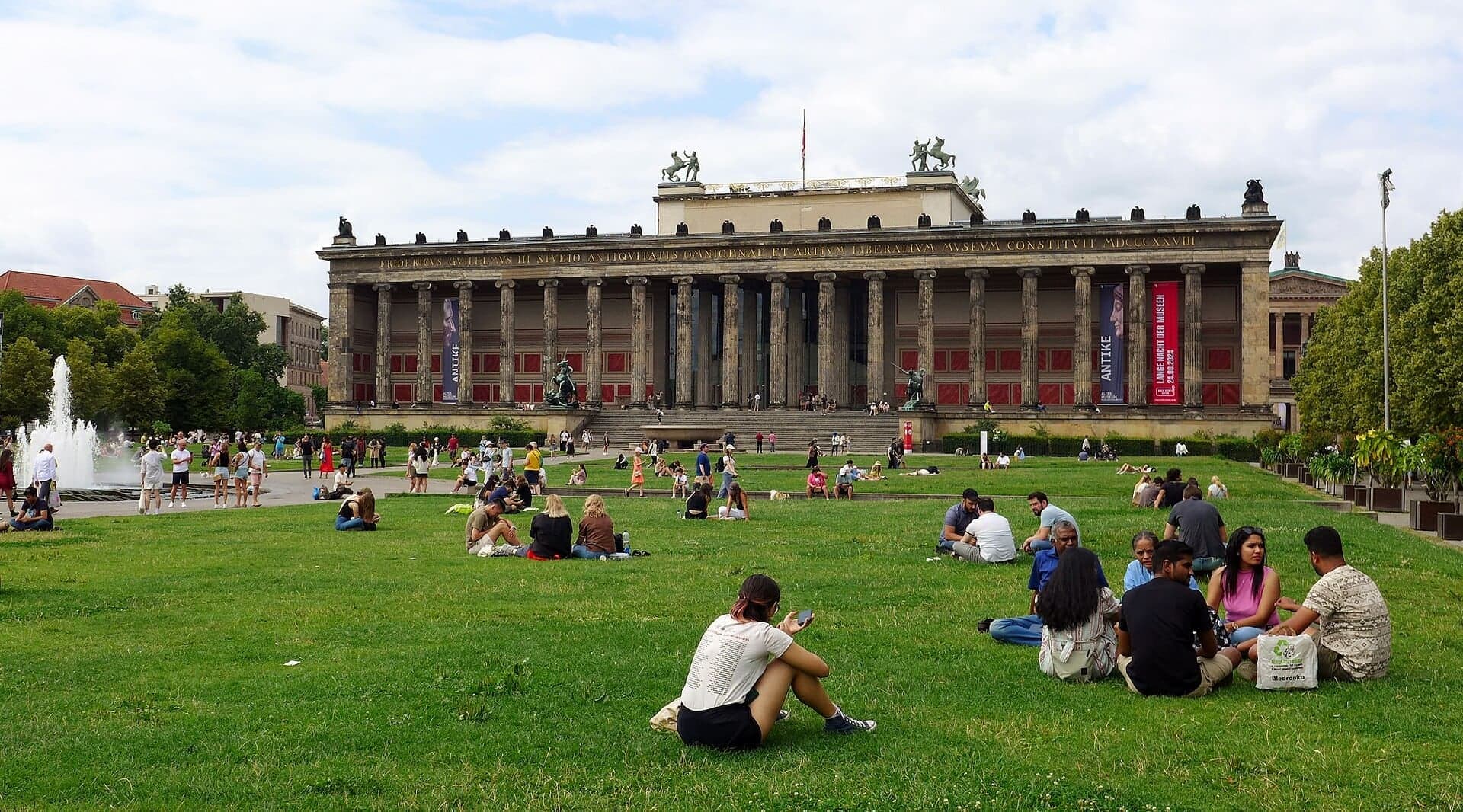
A granite bowl ground out by steam. Cut from one boulder and polished for two and a half years, it stands before Schinkel's Altes Museum of 1830, a rendered box behind eighteen sandstone columns.
- 8
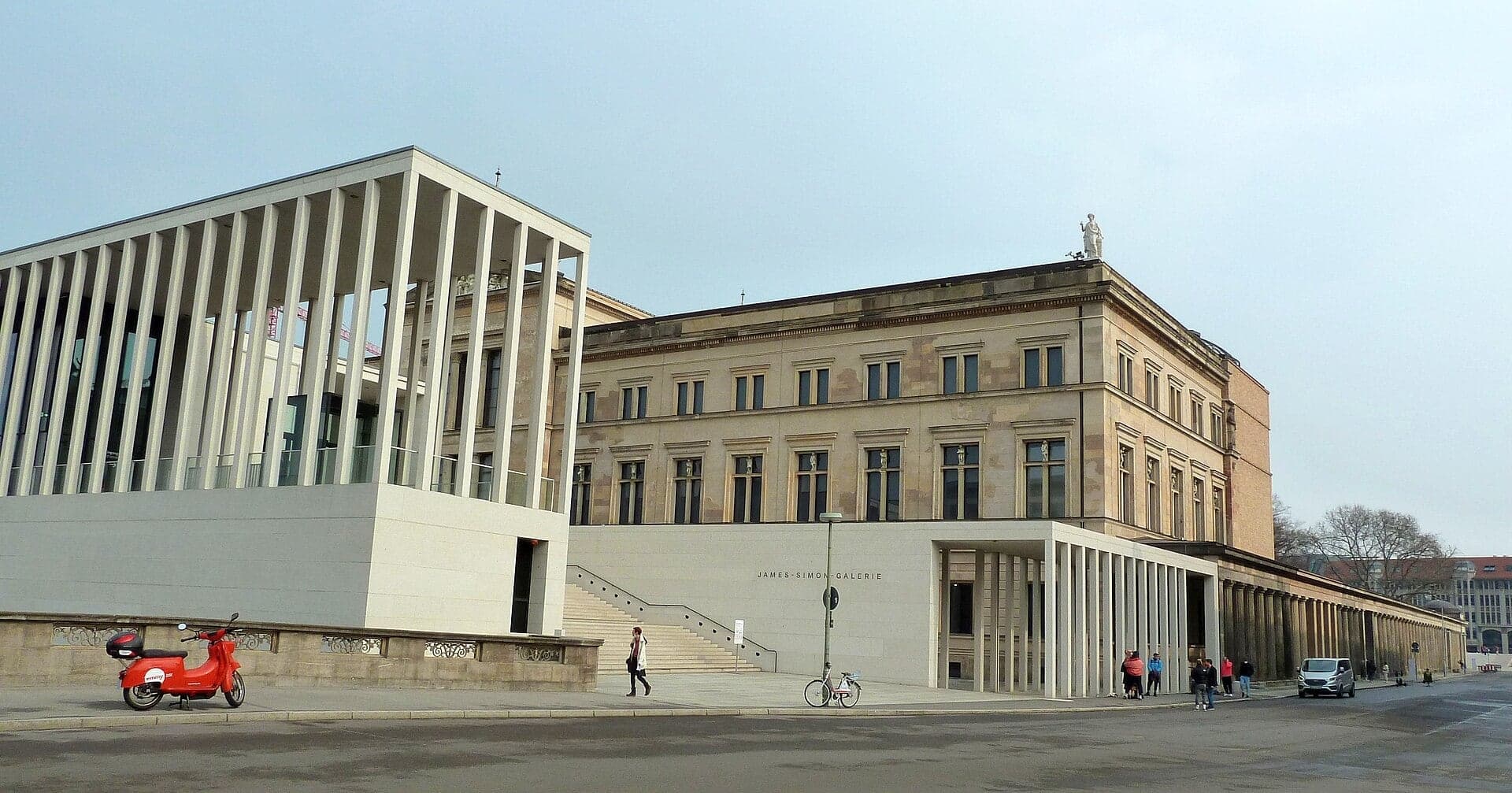
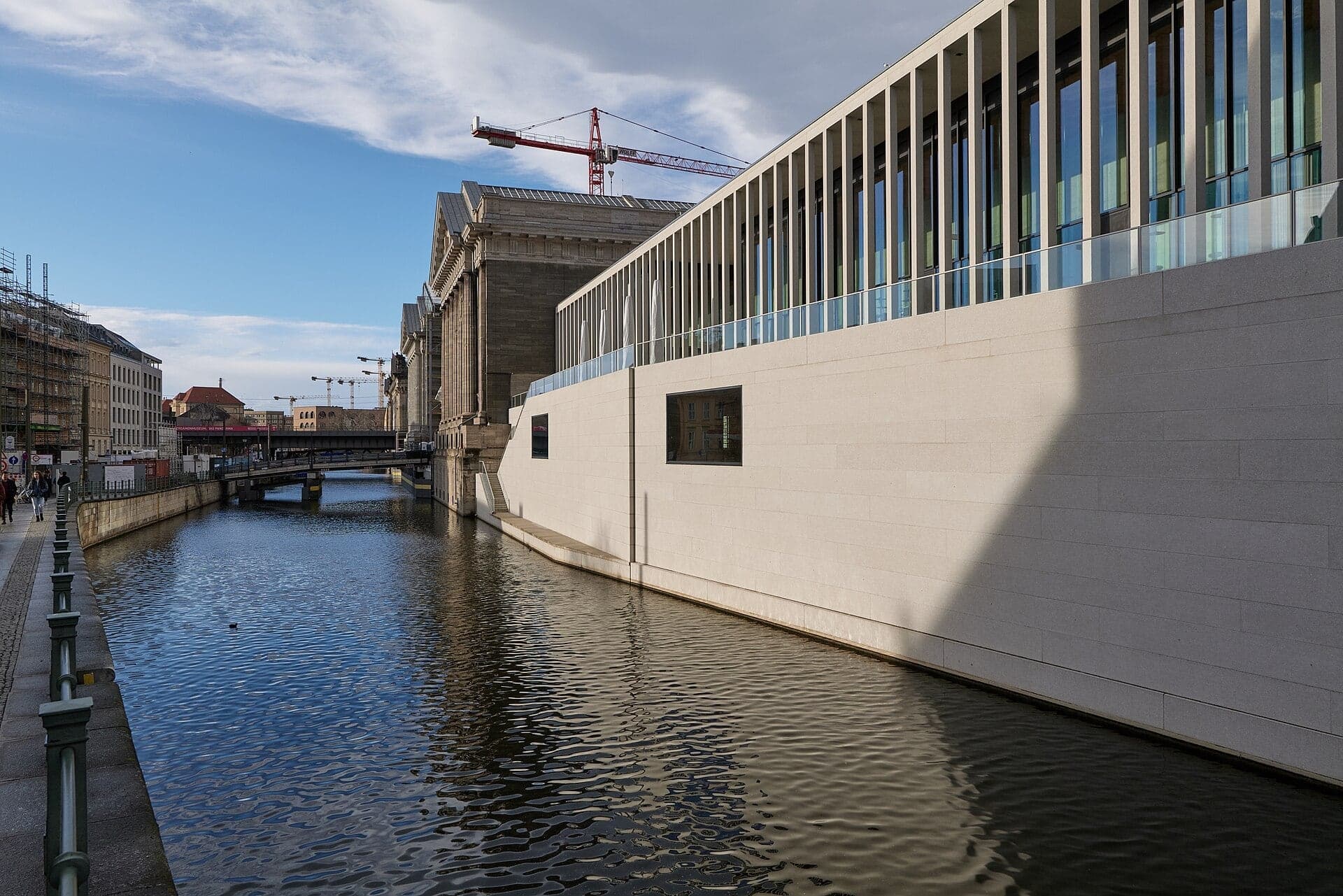
James-Simon-Galerie: Built on Mud
The island's newest building stands on mud. David Chipperfield's entrance building of 2019 rests on more than 1,200 steel piles and will be the only way into the Pergamon Museum when it reopens.
- 9
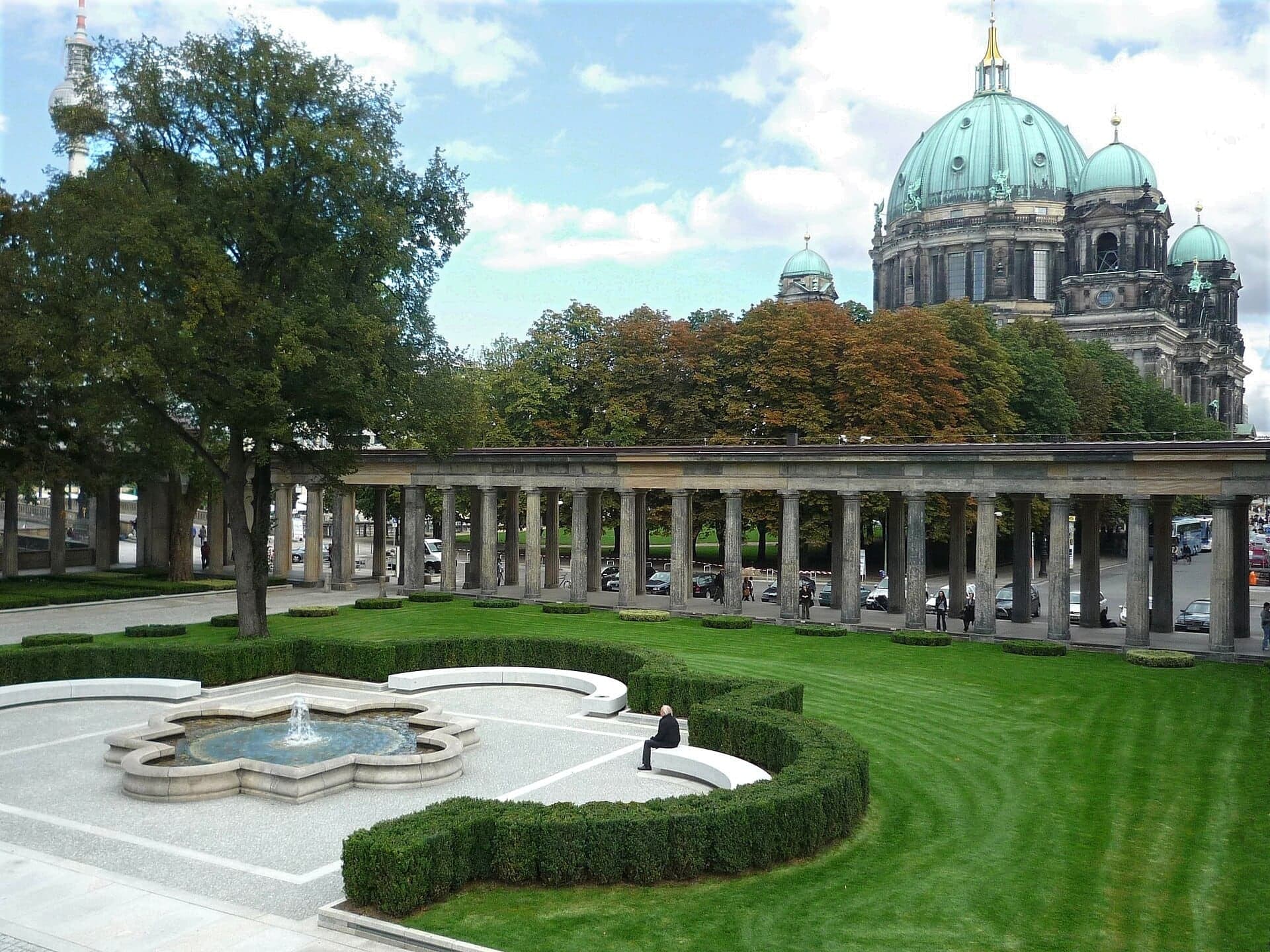
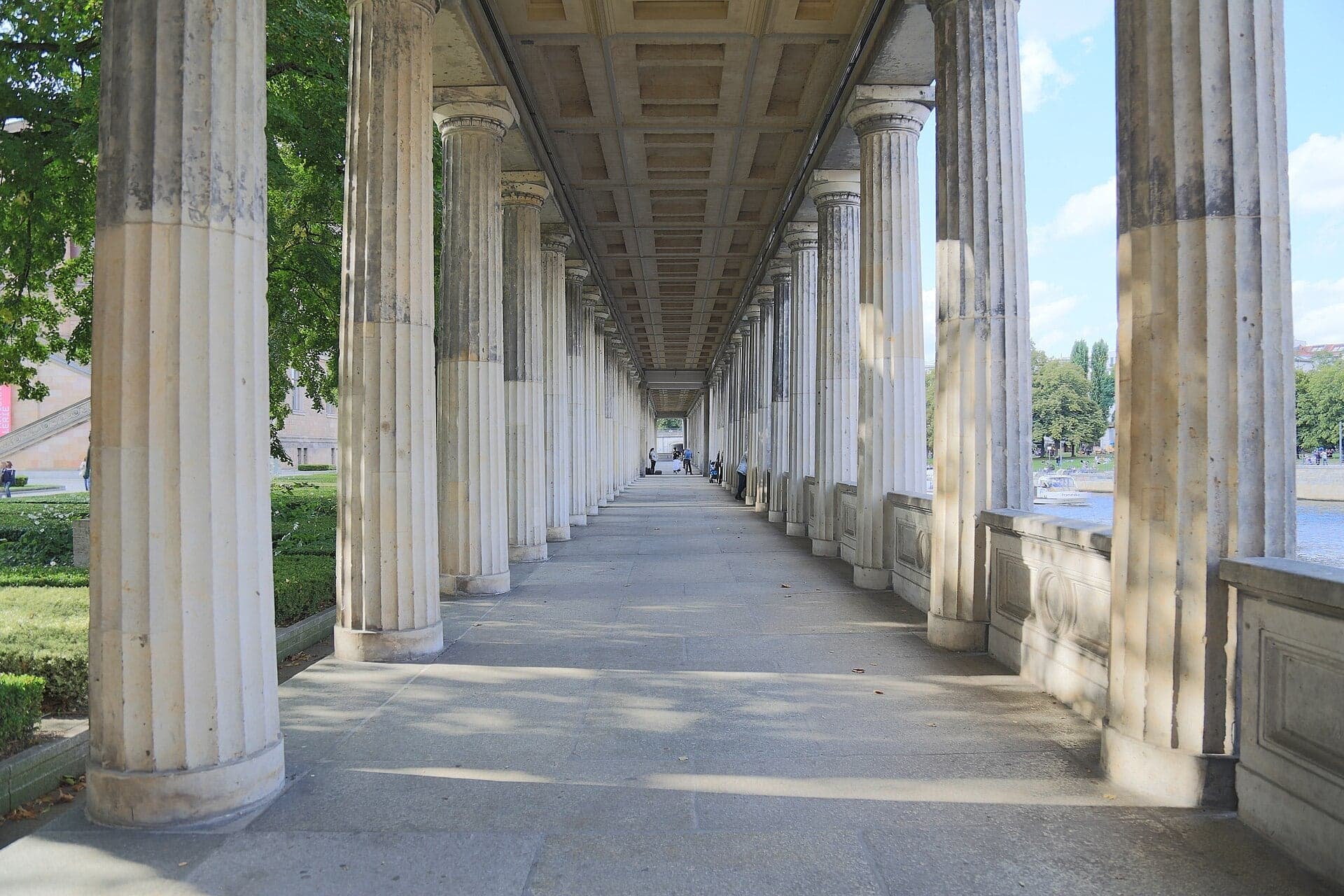
Kolonnadenhof: The Repairs Left Showing
A colonnade courtyard between two museums. The Alte Nationalgalerie rises like a temple above its stair, and the Neues Museum was rebuilt from a ruin by David Chipperfield's firm in 2009 with its scars left visible.
- 10
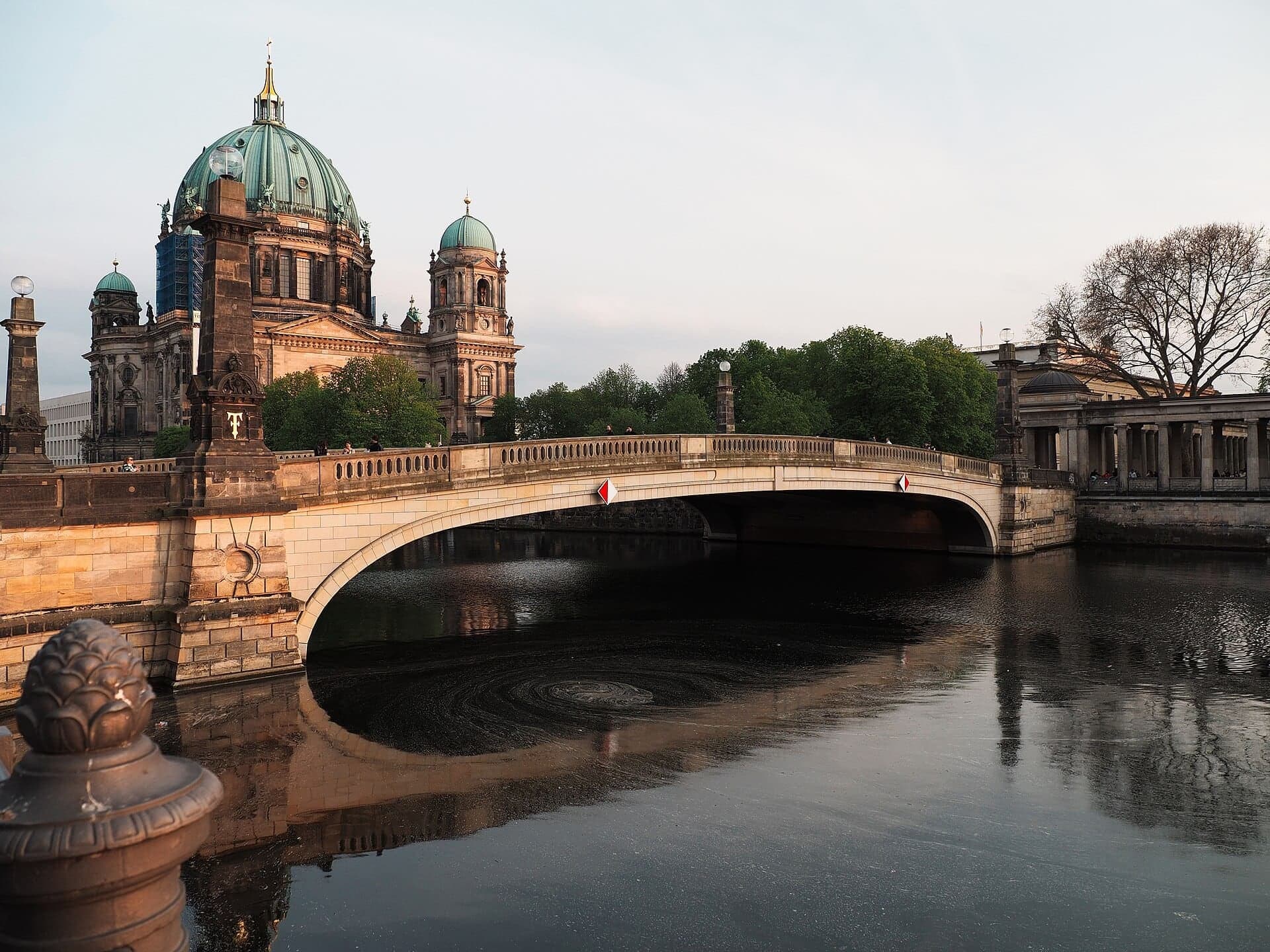
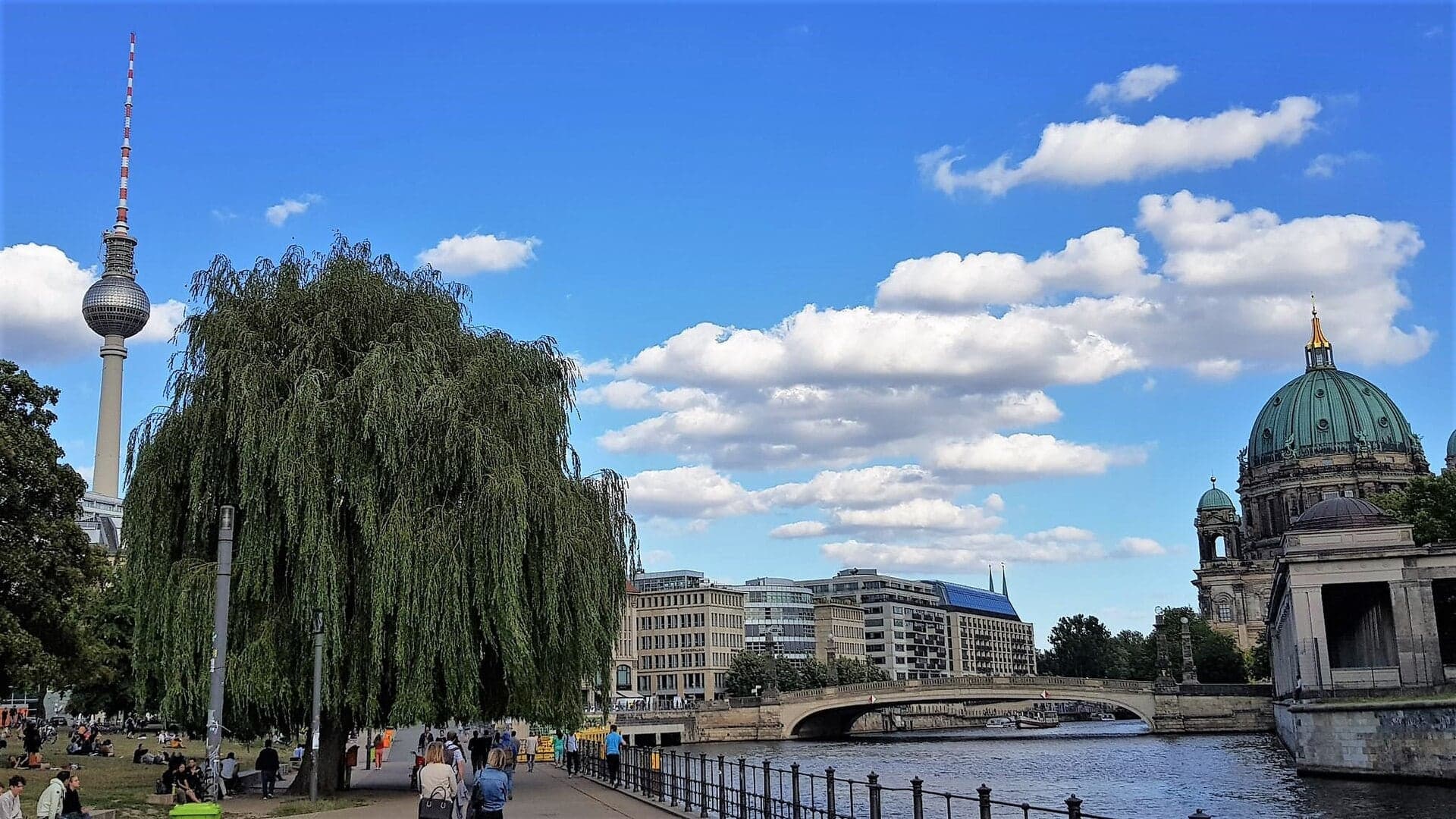
Friedrichsbrücke: The Dom From Behind
The Berliner Dom seen from behind. From the footbridge you face the Dom's north end, where its memorial church stood until 1975.
- 11
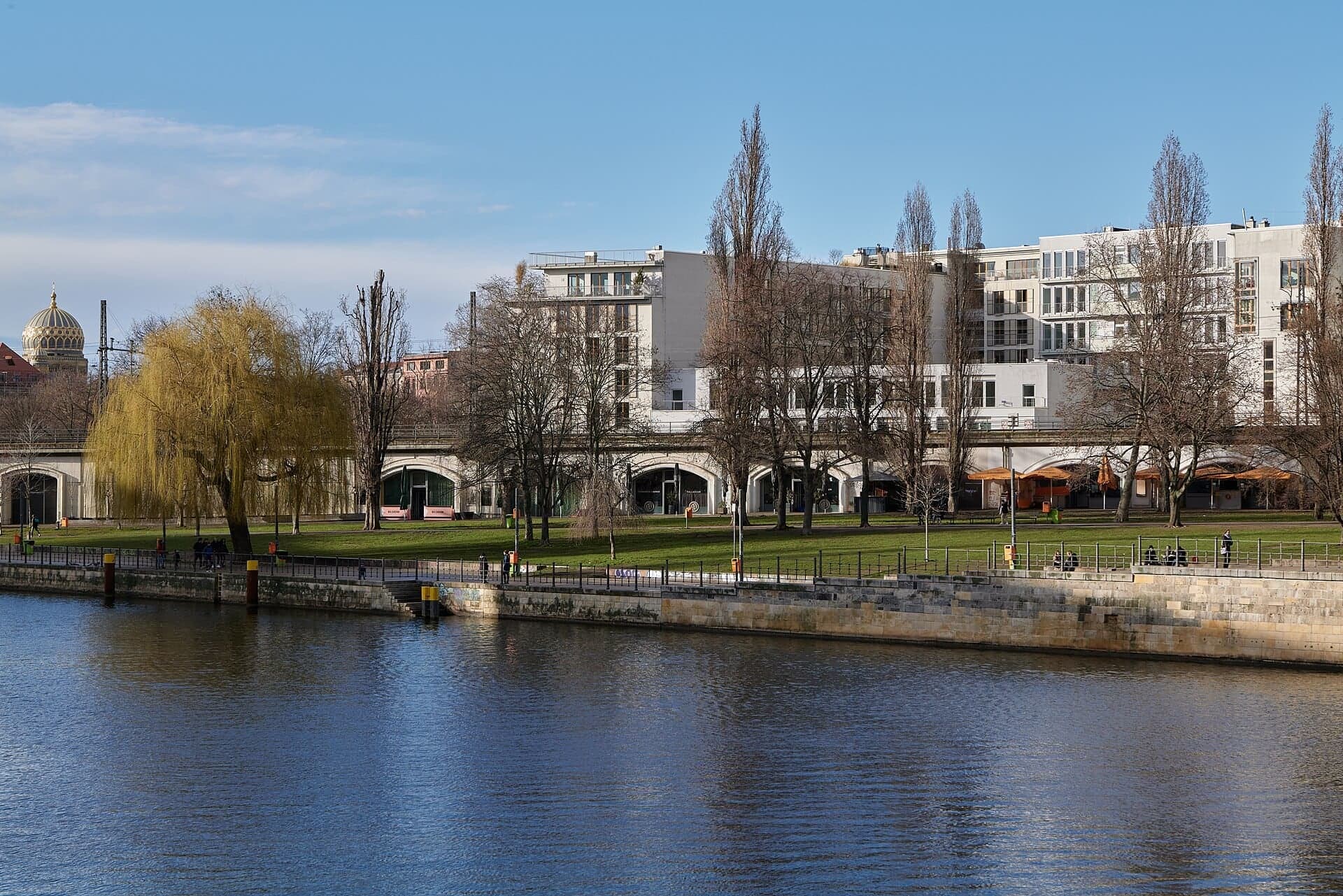
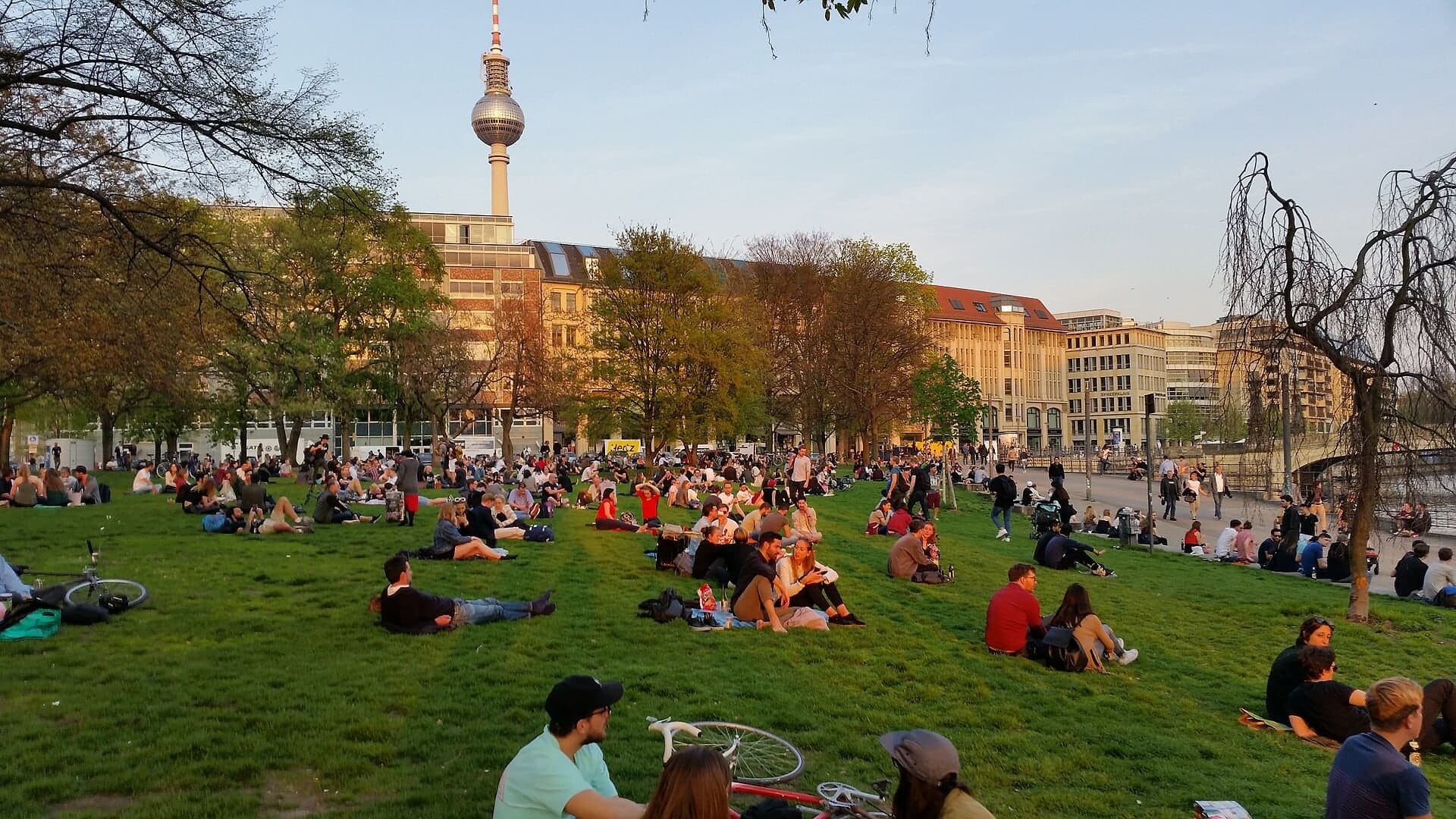
James-Simon-Park: An Acropolis Across the Water
Museum Island seen as one composition. From the riverbank the temples and colonnade read as the acropolis a Prussian king sketched in pencil in 1841.
- 12
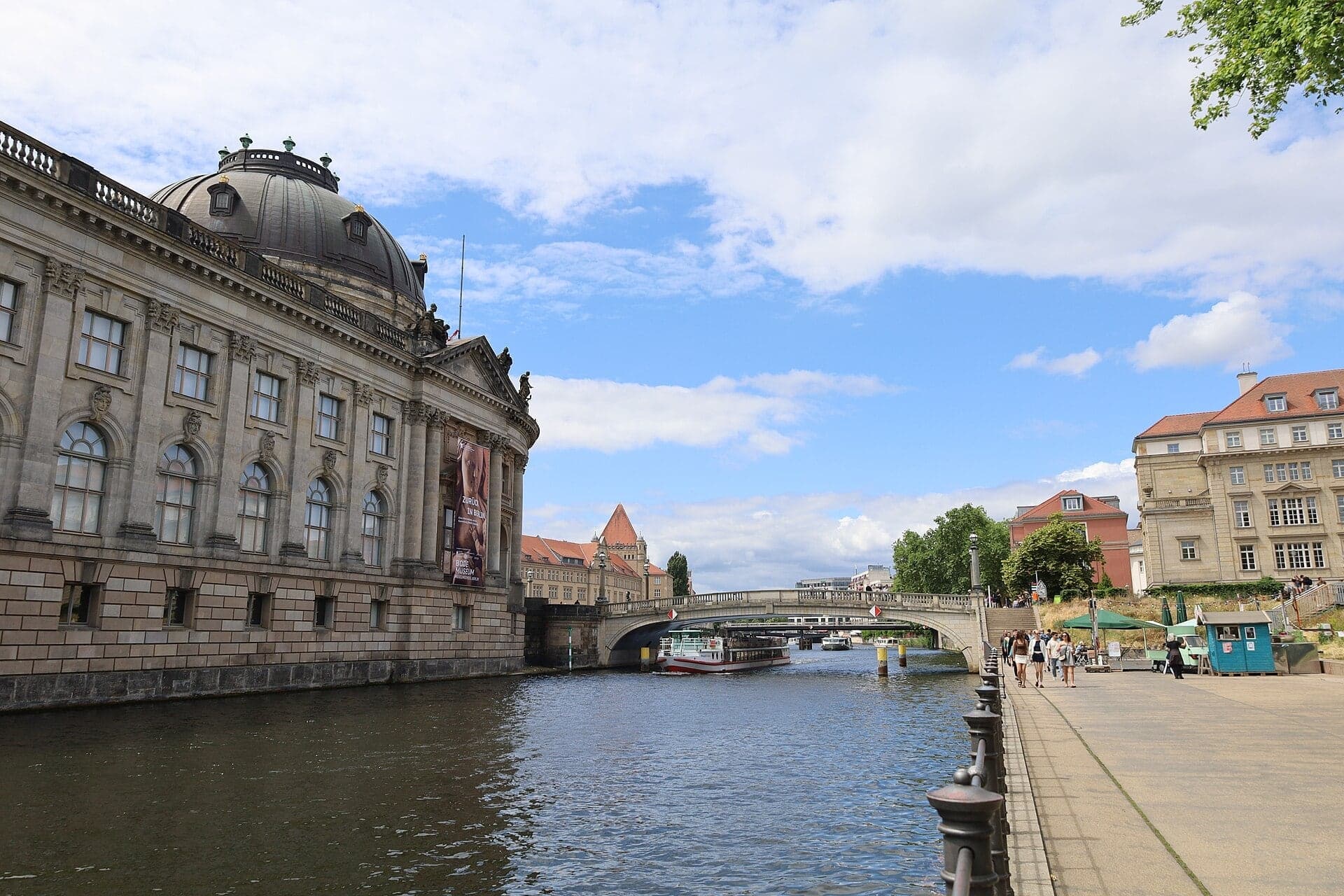
Monbijoupark and the Bode Museum: The Island's Prow
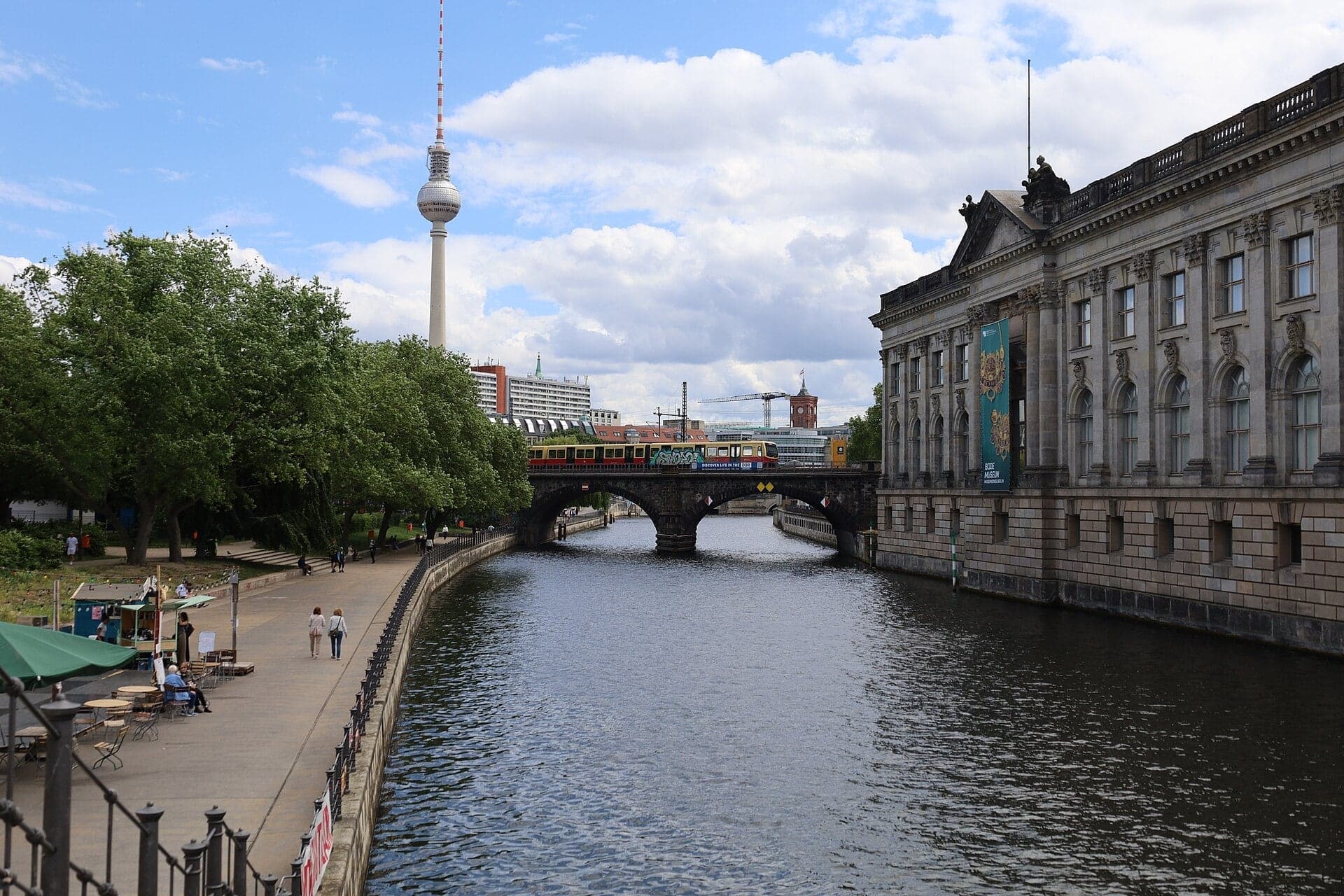
A museum built to fit the island's tip. The Bode Museum of 1904 rises straight from the Spree, an uneven triangle in plan that looks symmetrical from its domed entrance, across from a park where a palace once stood.
Details
Best Time to Visit
Tuesday to Sunday, between about 10am and 5pm, when the Neue Wache (10am to 6pm daily) and the island's museums are open; most of the State Museums close on Mondays and the Humboldt Forum on Tuesdays. From May to October the lime trees along Unter den Linden and the Lustgarten hide the lower floors of the Dom; its dome and towers stay clear above them, and the facades show best once the leaves fall. During the Festival of Lights in October (listed for 9 to 18 October 2026) the island is lit at night and crowded at dusk. Checked 9 October 2026.
Pro Tips
- •Getting to the start: U-Bahn U2 to Stadtmitte or Hausvogteiplatz, U5 to Unter den Linden, or U6 to Stadtmitte or Unter den Linden; S-Bahn to Friedrichstrasse or Brandenburger Tor; buses M48, 100, 147, 200, 265 and 300 (the Konzerthaus's own directions). The old U6 station Französische Strasse closed in December 2020, so ignore it on older maps. Checked 9 October 2026.
- •The walk ends in Monbijoupark, a short walk from S-Bahn Hackescher Markt.
- •Museum Island ticket: 24 euros for one day, covering the Altes Museum, Neues Museum, Alte Nationalgalerie, Bode-Museum, Pergamonmuseum. Das Panorama and two more sites. The island's museums are closed on Mondays; the Neues Museum and the James-Simon-Galerie open Tuesday to Sunday 10am to 6pm, the Altes Museum and the Bode-Museum Tuesday to Friday 10am to 5pm (the Bode until 8pm on Thursdays) and weekends 10am to 6pm. Checked 9 October 2026. (smb.museum)
- •Berliner Dom (stop 6): 15 euros, reduced 12 euros, audio guide included; Monday to Saturday 9am to 6pm, Sunday noon to 6pm, last entry 5pm; 270 steps to the dome gallery. Services and events can change the hours. Checked 9 October 2026. (berlinerdom.de)
- •Neue Wache (stop 3): free, open daily 10am to 6pm, closed 24 December. Inside, mobile phones, music, food and dogs are not allowed, so play the stop outside first. Checked 9 October 2026. (dhm.de)
- •Humboldt Forum, in the rebuilt palace across the road from the Lustgarten: exhibitions Wednesday to Monday 10.30am to 6.30pm, closed Tuesdays. Checked 9 October 2026. (humboldtforum.org)
- •Pergamonmuseum: closed for renovation; the museums say the north wing and the altar hall reopen in summer 2027, and the south wing stays closed until about 2037. The Pergamonmuseum. Das Panorama, a separate building, is open Tuesday to Sunday 10am to 6pm. Checked 9 October 2026.
Safety & Precautions
- •Between stops 1 and 2 the route crosses Französische Strasse, a busy street with no lights and no zebra, then Behrenstrasse, a quiet one-way street: look both ways at both. Between stops 3 and 4 it crosses the side street Hinter dem Giesshaus, also without lights. Unter den Linden is crossed once, at the lights by the opera, in two stages with an island in the middle.
- •Steps: seven steps between stops 7 and 8, three into the colonnade before stop 9 and two out of it after; the museums say the colonnade has ramps inside (not checked on the ground). The Lustgarten paths and the colonnade floor are cobbled and bumpy.
- •Between stops 8 and 9 the route uses a short stretch of Bodestrasse, a street shared with cars: keep to the paved edge.
- •Cyclists share the Friedrichsbrücke, the riverside promenade and the paths of Monbijoupark: keep to one side.
- •The colonnade courtyard (stop 9) has no published opening hours. If it is closed, keep to the street outside the colonnade and rejoin the route at the footbridge over the Spree.
- •Works: the Zeughaus is closed inside for renovation, with demolition work expected to mid 2027 and no reopening date, and its front may carry scaffolding; the rebuilding of Unter den Linden's central promenade was announced to start in 2026, so fences may stand along the avenue. Scaffolding was photographed on the south end of the Konzerthaus front on 28 September 2026. Checked 9 October 2026.
- •Tour groups and crowds gather at the Neue Wache, the Lustgarten and the Dom steps: watch your bags and walk on past anyone collecting signatures for a petition.
- •This is a daytime walk. The railway underpass between stops 11 and 12 is dark at night, Monbijoupark sees evening drinking, and in 2021 the district closed James-Simon-Park from 8pm (whether any such order applies in 2026 is not confirmed).
- •Seasonal crowds: the Festival of Lights in October (listed for 9 to 18 October 2026) and the Christmas market on the Gendarmenmarkt from 23 November to 31 December 2026. Checked 9 October 2026.
Travel advisory: Exercise Increased Caution (Level 2).
Gallery
Related Reading
Go deeper on what you'll see, hear, and walk through.
Overview
Berlin Travel Guide: Days, Transport, Safety and Budget
7 min
Overview
Best Self-Guided Walking Tours in Berlin (2026)
5 min
Overview
One Day in Berlin: A Walkable Itinerary
8 min
Thematic
Best Architecture Walking Tours in Berlin (2026)
2 min
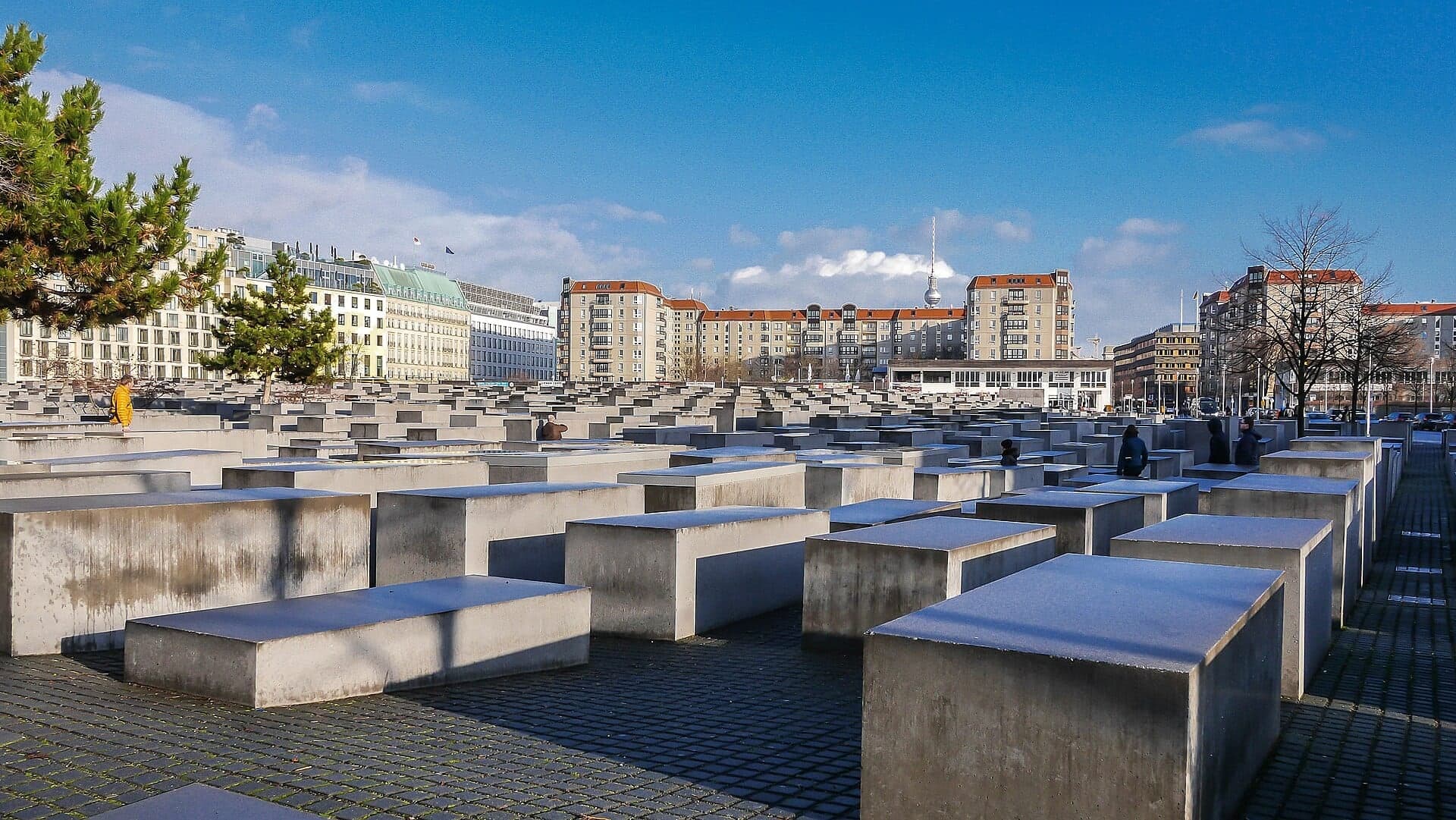
Companion
The Memorial to the Murdered Jews of Europe: How Berlin Reads Its Own Reckoning
7 min
Read the walk
The full story of Museum Island and Unter den Linden: Stone Where It Shows, in words. Prefer to listen? Play it narrated, from home or on location.
Introduction
Berlin, the capital of Germany, is a city of almost four million people. This walk follows the old royal avenue, Unter den Linden, from a square of domed towers to Museum Island in the river Spree.
Berlin's grandest buildings often carry real stone only on the side meant to be seen. Elsewhere there is render, a coat of plaster, scored and painted to pass for stone. Fronts here were raised for show, then burned, bombed, pulled down and put back, some of them more than once. Even the newest stone is often a skin.
Three people appear along the way. Frederick the Great, the Prussian king who dressed his squares like a stage in the eighteenth century. Karl Friedrich Schinkel, the architect who, a generation later, drew the avenue and the island together. And David Chipperfield, whose firm repaired a bombed museum on the island and left the damage showing.
The walk is twelve stops over about one point eight kilometers, just over a mile, and takes about seventy-five minutes. It is level all the way, with a few short flights of steps on the island, and it ends in a riverside park, across the water from the Bode Museum.
1. Gendarmenmarkt: Towers Built as Scenery
Welcome to the Gendarmenmarkt, one of the grand squares of Berlin. Find the building with the columned portico and the broad flight of steps facing you across the square. That is the Konzerthaus, the concert hall. A tall domed tower stands on either side of it: one close by, at this end of the square, the other far off at the opposite end.
They look like twin churches. They are not. Two churches were begun here in seventeen oh one, one for Berlin's Huguenots, the French Protestants, and one for the German congregation, and neither had a domed tower. Eighty years later, Frederick the Great decided to dress up the square. Berlin's heritage register says he had the towers built between seventeen eighty and seventeen eighty-five as an attraction for the square, with no real function. The model was the pair of domed churches on the Piazza del Popolo in Rome. One of the towers collapsed while it was being built, in seventeen eighty-one.
On the signs they are the Französischer Dom and the Deutscher Dom. Neither is a cathedral: here, Dom means the domed tower.
Then Karl Friedrich Schinkel set a theater between them, finished in eighteen twenty-one and lined up on the two towers. Look at the stone of its portico. For its first sixty years the building wore render, a coat of plaster, chosen, the register says, for economy. The sandstone went on only in eighteen eighty-three and eighty-four.
All three buildings burned out in the Second World War. Their outsides were rebuilt between the nineteen seventies and the nineteen nineties, the theater as a concert hall.
Towers for show, and real stone added where people would look: keep both in mind.
Follow the route along the edge of the square, past the nearer tower. There are no traffic lights at the first street, so look both ways.
2. Bebelplatz: The Room of Empty Shelves
Walk on into the open, paved square and look for a pane of glass set into the paving, near its middle. This is Bebelplatz, and under that glass is a room that no one can enter.
On the evening of the tenth of May, nineteen thirty-three, students, some of them in the uniforms of the Nazi SA and SS, burned books here by Jewish, socialist and liberal writers, about twenty thousand of them. The same night, there were fires in about twenty German university towns.
Look down through the glass. Below the paving is a white room lined with empty shelves, with space, Berlin's tourist board says, for about twenty thousand books. The Israeli artist Micha Ullman made it, and it was unveiled in March nineteen ninety-five. Nearby, plates in the paving say that here, National Socialist students burned the works of hundreds of free writers, journalists, philosophers and scientists. One carries a line from the poet Heinrich Heine, written in a play more than a century before the fire. Roughly: where they burn books, they will in the end burn people too.
Now look up at the square around it. Frederick the Great laid it out as a forum. The opera house, with its free-standing columned porch, came first, in the seventeen forties, and behind those columns it is a rendered building, rebuilt after fire and bombing. The round church with the low dome was modeled, at the king's order, on the Pantheon in Rome.
The long curved front across the square is the old royal library. Its design copies a plan drawn in seventeen twenty-five for the imperial palace in Vienna, a front that Vienna itself finished only in eighteen ninety-three.
Follow the route across the square and over the avenue at the lights by the opera. Press the button, and wait on the island halfway.
3. Neue Wache: A Roman Fort on the Avenue
Walk on along the pavement and stop by the small temple front among the chestnut trees. This is the Neue Wache, the New Guardhouse. It is the earliest of Karl Friedrich Schinkel's buildings in Berlin, finished in eighteen eighteen as the guardhouse of the Crown Prince's Palace.
Look at its shape: a portico of plain Doric columns, and behind it a solid block with a heavier tower at each corner. Schinkel said himself that he modeled the plan on a Roman fort, hence the four strong corner towers and the inner courtyard.
Berlin's tourist board says only the show front is real sandstone, and that the sides and the back were simply colored to match. It is a cousin of the concert hall's trick.
The shell has stayed the same while its meaning has changed again and again. It was a royal guardhouse until nineteen eighteen. In nineteen thirty-one the courtyard was roofed over, with a round opening in the roof, as a memorial to the dead of the First World War. East Germany rebuilt it by nineteen sixty as a memorial to the victims of fascism and militarism, and in nineteen sixty-nine the remains of an unknown soldier and of an unknown concentration-camp prisoner were buried under its floor. They are still there.
Since nineteen ninety-three it has been Germany's central memorial to the victims of war and tyranny. In the nearly empty room stands an enlarged copy of a sculpture by Käthe Kollwitz, a mother holding her dead son. She lost her son in the First World War and her grandson in the Second.
The room is open daily and free. Inside, phones are not allowed and visitors are asked to keep quiet, so listen here, then step in.
Follow the route on along the avenue to the long building next door. There is one quiet side street to cross first, so look both ways.
4. Zeughaus: Helmets Over Every Arch
Walk on beside the long building that runs right along the pavement, and stop about halfway along it. This is the Zeughaus, the arsenal, finished in seventeen oh six, and the oldest building on Unter den Linden.
Look up at the top of each arch on the ground floor. The keystone, the wedge-shaped stone that locks the arch, is carved as a warrior's helmet. A building made to store weapons wears them on its face. If scaffolding or hoardings cover part of the front, look for the helmets over any arch that is left clear.
Now read the wall. The building stands on a base of real sandstone. Above it, the ground floor is render, run in horizontal bands so that it looks like heavy blocks of stone. Upstairs there are flat pilasters and windows with pediments, and along the roofline a balustrade crowned with trophies.
The shell has outlived every government that used it. It was the Prussian arsenal, then from the eighteen seventies the army's museum, with a hall of fame. The German Historical Museum, which runs it today, says the Nazi regime appropriated it, and that again and again the rulers of the day used it to put their own view of German history on display. East Germany ran its museum of German history here from nineteen fifty, and the German Historical Museum took over in nineteen ninety.
Today the building is closed inside for renovation. The museum says the heavy demolition work inside is expected to run to about the middle of twenty twenty-seven, and it gives no date for reopening. The courtyard, with its carved heads of dying warriors, is closed with it. Temporary exhibitions carry on in the modern building behind.
Follow the route on along the avenue to the bridge.
5. Schlossbrücke: The Bridge That Made the Avenue
Walk on onto the bridge and stop beside the first of the white marble groups. This is the Schlossbrücke, the Palace Bridge, and it is the piece that turned Unter den Linden into one straight line. A wooden bridge stood here from the sixteenth century, known as the dog bridge.…
Full narration for this stop unlocks with the tour.
6. Lustgarten and the Berliner Dom: A Lawn to Square the Crooked
Walk on to the round fountain in the middle of the lawn, and stop on the path at its edge. From here the whole long columned front across the grass is in view. Count the columns. There are eighteen, Ionic, of real sandstone. That is the Altes Museum, the Old Museum, Schinkel's…
Full narration for this stop unlocks with the tour.
7. Altes Museum: A Bowl Ground by Steam
Walk on to the great polished granite bowl in front of the museum steps, and stop beside it. The Altes Museum behind it is ticketed and worth it, and so are the other museums on the island: the details are on this stop's card. Look up first. The eighteen columns you counted…
Full narration for this stop unlocks with the tour.
8. James-Simon-Galerie: Built on Mud
Walk on into the narrow street and stop at the corner. Just ahead rises a building of tall, slender pillars on a high base: the James-Simon-Galerie, the newest building on Museum Island, opened in July twenty nineteen. It is named for James Simon, one of the great patrons of…
Full narration for this stop unlocks with the tour.
9. Kolonnadenhof: The Repairs Left Showing
Walk on under the roof of the colonnade and stop with the open courtyard and its fountain beside you. This is the Kolonnadenhof, the colonnade courtyard. The museums around it are ticketed and worth it, and the details are on this stop's card; the courtyard itself is free to…
Full narration for this stop unlocks with the tour.
10. Friedrichsbrücke: The Dom From Behind
Walk on onto the footbridge over the river and stop near its far end. This is the Friedrichsbrücke, and the water under it is the Spree, one of the two arms of the river that make the museums an island. Turn and look back across the water to the great domed church. This is the…
Full narration for this stop unlocks with the tour.
11. James-Simon-Park: An Acropolis Across the Water
Walk on along the riverside promenade and stop where you have a clear view back across the water to the island. This is the James-Simon-Park, named for the same patron as the gallery. Across the river, above the low roof of the colonnade, you can see the rounded back of the…
Full narration for this stop unlocks with the tour.
12. Monbijoupark and the Bode Museum: The Island's Prow
Walk on into the park and stop on the path where the river opens up beside you, and a domed building rises straight out of the water on the far bank. This is the Bode Museum, at the very tip of Museum Island. It opened in nineteen oh four as the Kaiser Friedrich Museum, a…
Full narration for this stop unlocks with the tour.
- The concert hall is a central building on the Gendarmenmarkt. The classical building is one of the major works of the architect Karl Friedri — Ansgar Koreng, CC BY 3.0 · source
- Concert house at the Gendarmenmarkt Berlin — Anagoria, CC BY 3.0 · source
- Memorial for the book burning at Bebelplatz in Berlin, Germany — Jensen, CC BY-SA 3.0 · source
- Bebelplatz, Berlin, July 2024. — Steven1991, CC BY-SA 4.0 · source
- This is a picture of the Berliner Kulturdenkmal (cultural monument) with the ID — Ansgar Koreng, CC BY 3.0 · source
- Neue Wache, Berlin — Photograph by Mike Peel (www.mikepeel.net)., CC BY-SA 4.0 · source
- The facade of the Zeughaus (Old Arsenal), Unter den Linden, in Berlin-Mitte. — Jörg Zägel, CC BY-SA 3.0 · source
- Unter den Linden in Berlin — Gerd Eichmann, CC BY-SA 4.0 · source
- 'Nike assists the wounded warrior' by Ludwig Wilhelm Wichmann - stone sulpture dated 1853 — Virtual-Pano, CC BY-SA 4.0 · source
- stop-5b-v1.jpg — Tilman Harte, CC BY 3.0 · source
- Lustgarten in Berlin-Mitte mit dem Alten Museum (links) und dem Berliner Dom (rechts) — Lukas Beck, CC BY-SA 4.0 · source
- Springbrunnen im Lustgarten in Berlin-Mitte. Links steht das Alte Museum, rechts der Berliner Dom im Hintergrund — Lukas Beck, CC BY-SA 4.0 · source
- Exterior view of the Altes Museum, Berlin-Mitte, with the Lustgarten in the foreground — Bahnfrend, CC BY-SA 4.0 · source
- James-Simon-Galerie — Derbrauni, CC BY-SA 4.0 · source
- Berlin, Museumsinsel. The court-yard with colonnades in front of Neues Museum — Manfred Brückels, CC BY-SA 3.0 · source
- Nationalgalerie und Kolonnaden - Östlicher Säulengang des Kolonnadenhofs. — Pascal Volk, CC BY-SA 4.0 · source
- Mitte, Friedrichs Bridge. — Jorge Saturno, CC BY-SA 4.0 · source
- Blick auf Fernsehturm, Spree, Friedrichsbrücke und Berliner Dom. — Bärwinkel,Klaus, CC BY-SA 4.0 · source
- James-Simon-Park in Berlin, with people relaxing in the evening air. — Ich, CC BY-SA 4.0 · source
- Berlin cruise boat, sailing on the Spree between Monbijoupark and Bode Museum on the Museum Island, on a sunny Sunday afternoon. — Roy Zuo, CC BY-SA 4.0 · source
- River Spree around the Museum Island, Berlin — Roy Zuo, CC BY-SA 4.0 · source
Images may be cropped or resized. Other photos via Unsplash and Pexels.