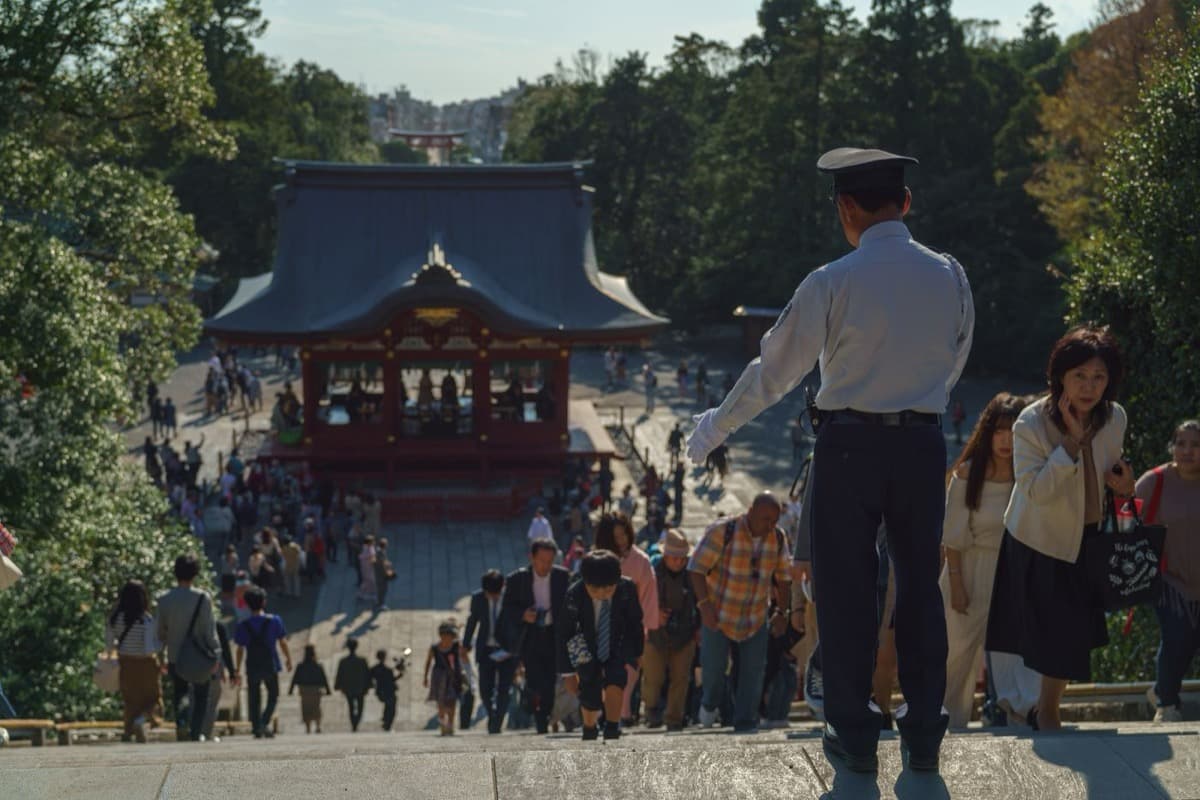
Climb the arrow-straight avenue that Japan's first samurai ruler drew from the sea to his war god's shrine, and read a serene cherry-lined approach as what it truly was: the engineered spine of the country's first warrior capital.
Start · Ichino-torii: The Avenue from the Sea
DirectionsStops
- 1
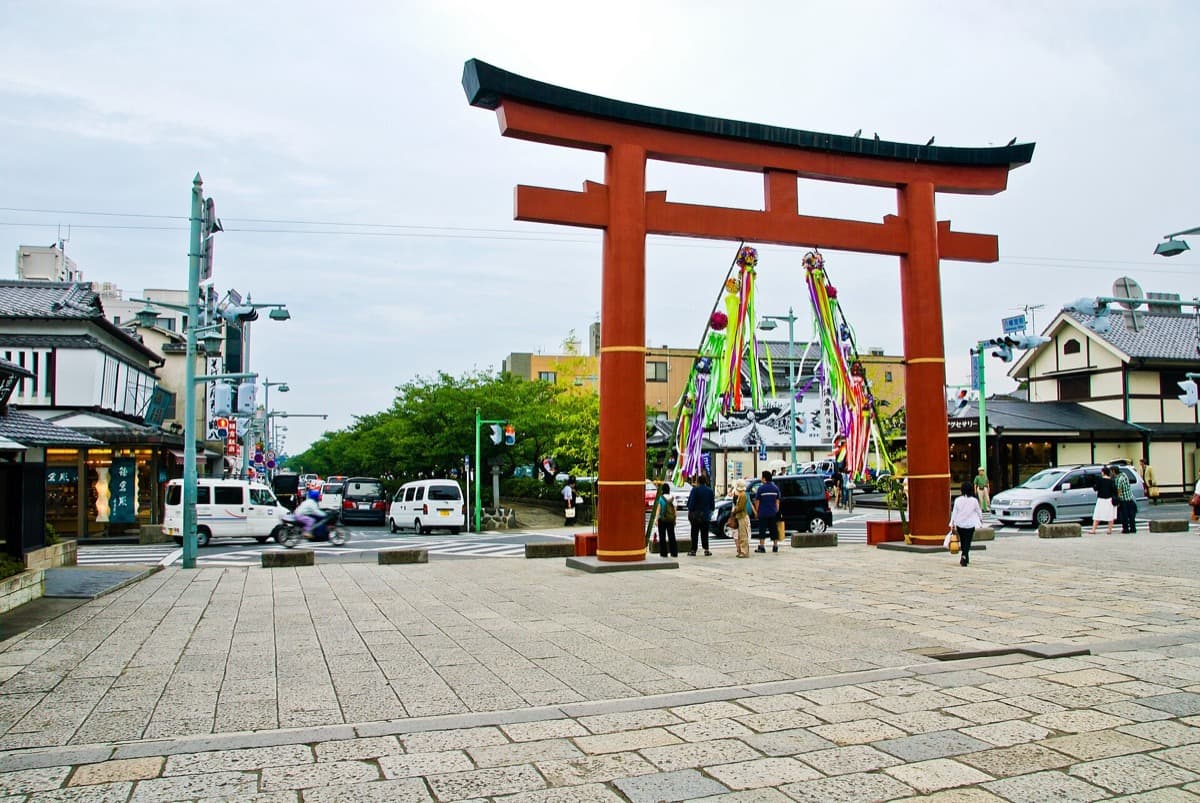
Ichino-torii: The Avenue from the Sea
The first great gateway at the beach end of Wakamiya-oji, where the ceremonial axis of the samurai capital meets the sea.
- 2
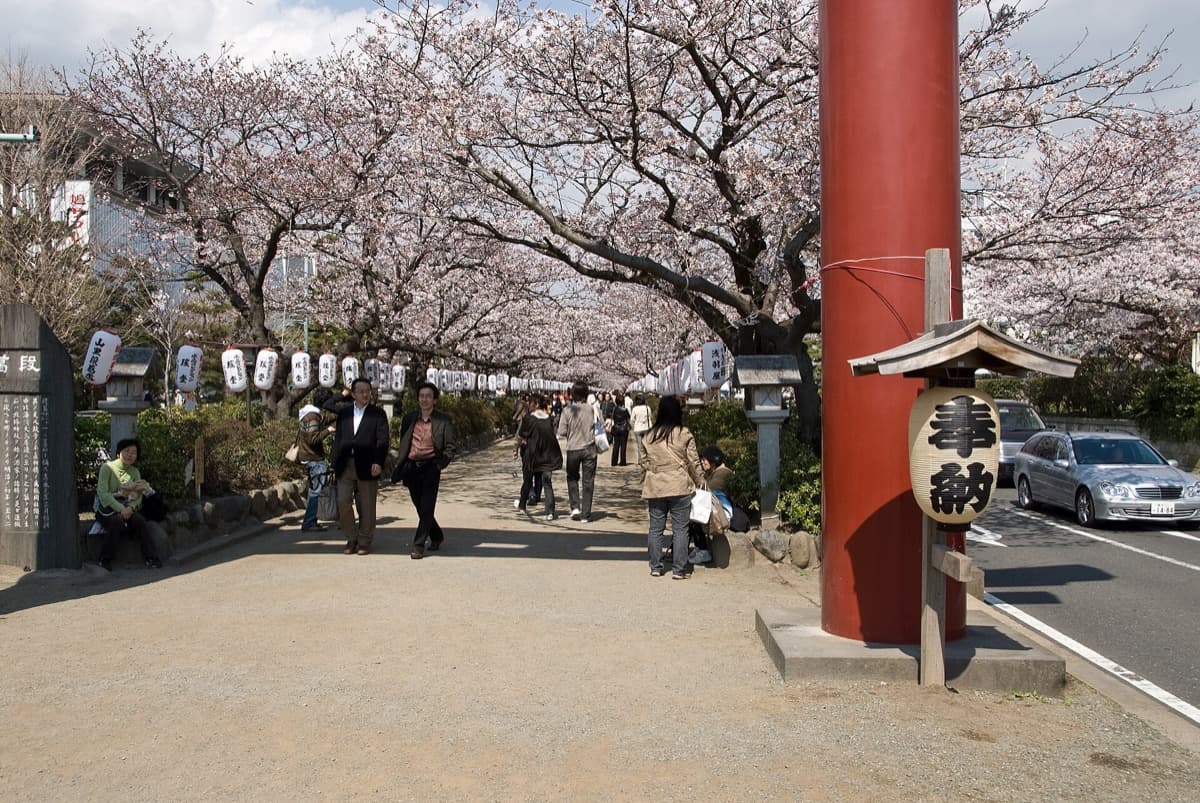
The Dankazura: The Raised Path
A raised central stone path up the middle of the avenue, tied by tradition to a shogun's prayer for a safe birth.
- 3
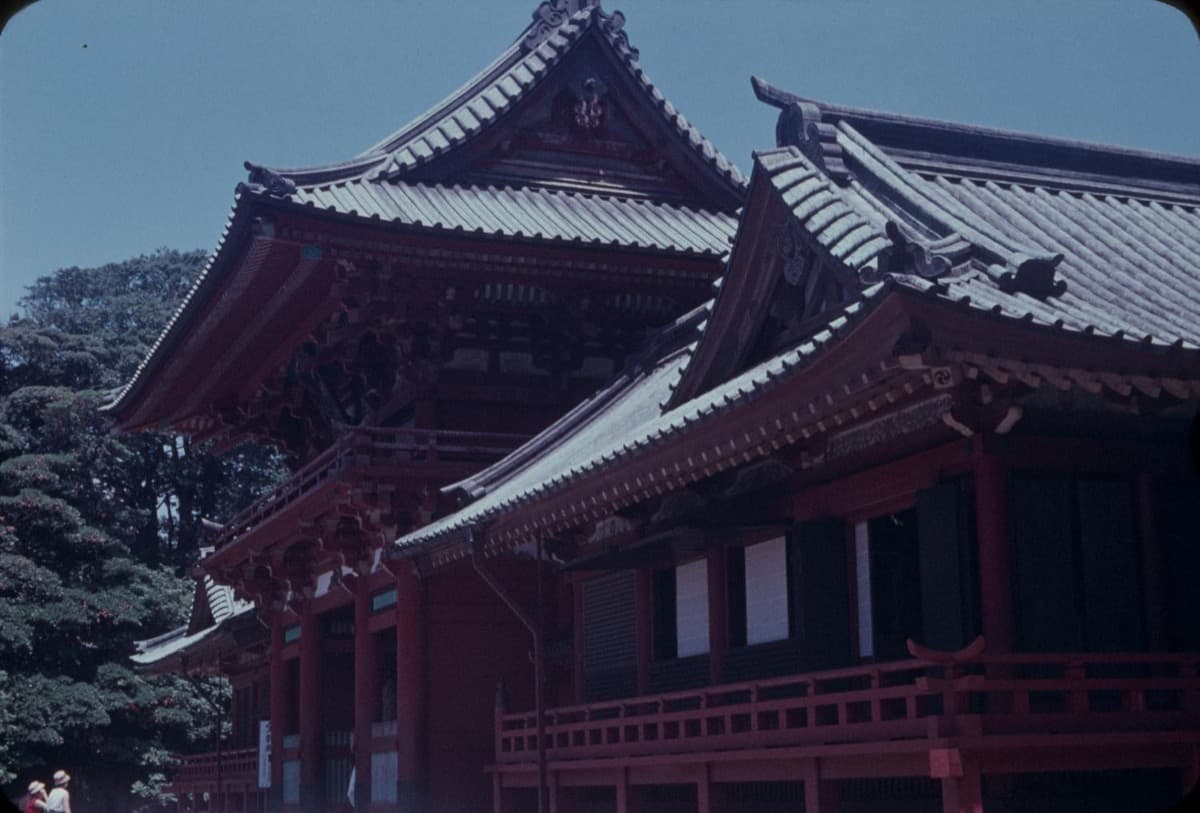
Tsurugaoka Hachimangu: Shrine of the War God
The central shrine at the head of the valley, where Yoritomo installed the war god Hachiman to guard his government.
- 4
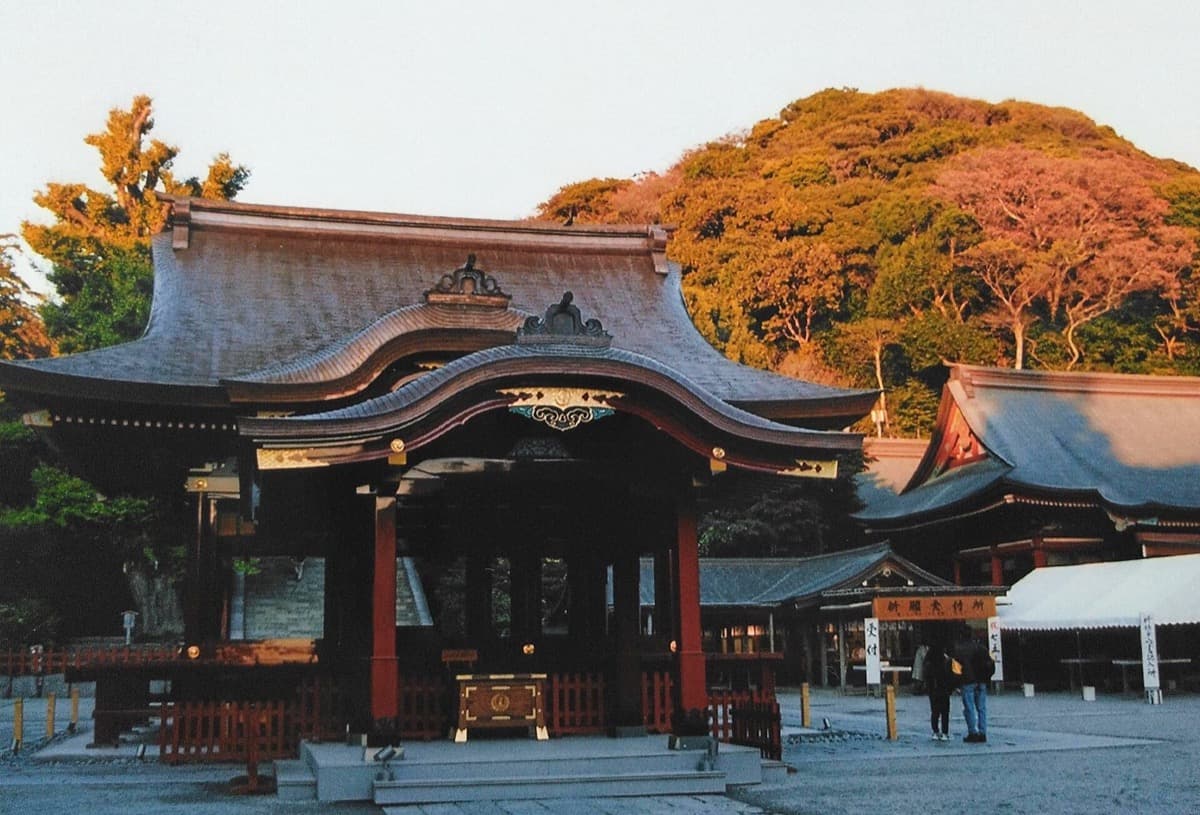
The Maiden: The Captured Dancer
An open dance stage in the lower precinct, remembered for a captive dancer's act of defiance before Yoritomo.
- 5
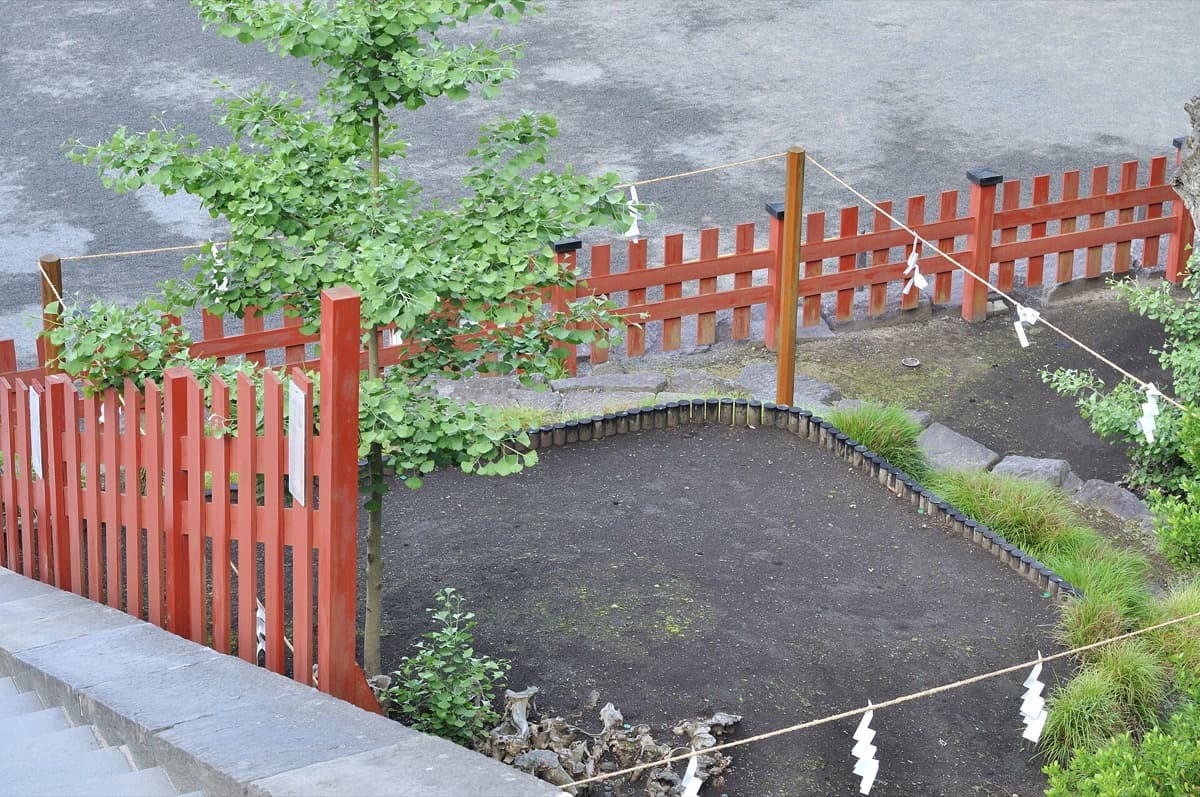
The Great Ginkgo: The Assassination on the Steps
A thousand-year-old ginkgo, toppled in a storm, marking the steps where the ruling clan destroyed its own line.
- 6
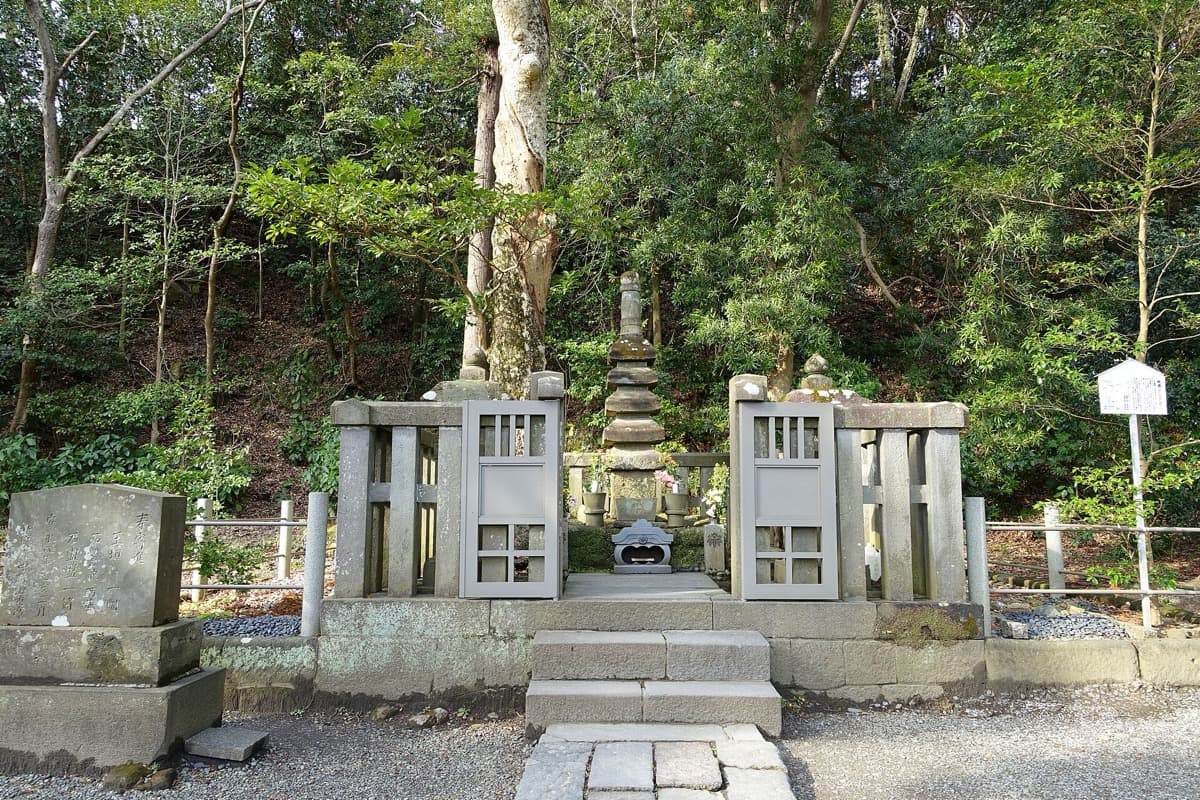
Minamoto no Yoritomo's Grave
The plain hillside tomb of the founder who designed the whole approach, the man behind the samurai capital.
Details
Best Time to Visit
Early morning on a weekday, ideally in the cooler months or in early April when the Dankazura cherries bloom. The avenue and shrine are quietest soon after sunrise, before day-trippers arrive from Tokyo, and the low light suits the long climb from the sea. Avoid midday on spring and autumn weekends, when the approach and steps grow crowded.
Pro Tips
- •Start at the beach end and walk inland so you climb the avenue the way it was designed to be read, from the sea up to the shrine.
- •The main sites on this walk, the avenue, the Dankazura, the shrine grounds, the dance stage, the ginkgo, and Yoritomo's grave, are all free to enter.
- •A separate peony and flower garden inside the shrine, near the Genpei ponds, charges a small fee, so budget for it only if you want the gardens.
- •Wear comfortable shoes: the shrine has a staircase of sixty-one steps, and the grave sits up its own flight of stone steps into the woods.
- •Carry water, especially in summer, since the open avenue offers little shade on the climb from the beach.
- •Give yourself extra time at the quieter grave at the end, since most visitors stop at the shrine and the founder's tomb is often peaceful.
Safety & Precautions
- •Tsurugaoka Hachimangu is an active place of worship. Keep your voice low near the halls, follow the posted etiquette at the purification basin, and be discreet with photography during ceremonies and weddings on the dance stage.
- •The shrine steps and the stone steps up to Yoritomo's grave can be steep and slick when wet, so take them slowly in rain and hold the rail where one exists.
- •In June, Kamakura's hydrangea season draws heavy crowds to the town's temples and to the Enoden line, so trains and popular paths can be packed. Travel early and allow extra time.
- •Summer on the exposed avenue gets hot and humid with little shade, so pace yourself, drink often, and rest in the shrine grounds if you feel the heat.
Travel advisory: Exercise Normal Precautions (Level 1).
Gallery
Related Reading
Go deeper on what you'll see, hear, and walk through.
Overview
Best Self-Guided Walking Tours in Kamakura (2026)
3 min
Overview
Kamakura Travel Guide: Day Trip from Tokyo, Getting Around, When to Go (2026)
5 min
Overview
One Day in Kamakura: The Perfect Day Trip from Tokyo (2026)
5 min
Thematic
What to Eat in Kamakura: A Food Guide (2026)
4 min
Deep dive
The Great Ginkgo of Tsurugaoka Hachimangu: The Tree, the Legend, and the Shogun Killed on the Steps
6 min
Read the walk
The full story of Tsurugaoka Hachimangu: The Samurai Capital, in words. Prefer to listen? Play it narrated, from home or on location.
Introduction
This walk follows a single straight line that a warrior drew across a small seaside town more than eight hundred years ago. Kamakura, on the coast south of Tokyo in Japan, became the country's first samurai capital when Minamoto no Yoritomo entered it in eleven eighty and built his government here, in a town ringed by steep hills on three sides and open to the sea on the fourth, a natural fortress far from the emperor's court in Kyoto. The route climbs the avenue he laid, Wakamiya-oji, running about three kilometres straight from the beach to the shrine of his clan's war god. There are six stops, and the full walk runs roughly ninety minutes at an easy pace, closer to two and a half kilometres once you reach the founder's grave on the hillside. You will begin at the sea and end at a quiet tomb, moving up in space, in time, and in power: from the first great torii at the water's edge, along a raised stone path and up to the shrine on its terrace, into the shrine's own darker memories, and out to the man who willed the whole design into being. Every stop is short and self-contained, so you can linger where a story catches you and skip what does not. Along the way I will show you where the record is solid and where a beloved tradition is really a later legend. Bring water and comfortable shoes, since the last stretch rises on stone steps into the woods. When you arrive at Ichino-torii near Yuigahama beach, begin with stop one.
1. Ichino-torii: The Avenue from the Sea
You are standing at the edge of what was once a fortress town, where the avenue meets the sea. This is Ichino-torii, the first of three great gateways set along Wakamiya-oji, the wide avenue that runs inland to the shrine. Look up the avenue and you are looking straight at the spine of a capital. When Minamoto no Yoritomo entered Kamakura in eleven eighty, he chose this town for its shape: steep hills close it on three sides, and the sea guards the fourth, a natural stronghold well away from the emperor's court in Kyoto. In eleven eighty-two, as part of his planning of the town, he had this avenue laid out, about one point eight kilometres long, running arrow-straight from the water inland to the shrine of his clan's protector. It was modeled on the grand ceremonial avenue of Kyoto, the capital he was quietly building an alternative to. So this street reads two ways at once. Today it feels like a serene, tree-lined approach to a place of worship, and it is exactly that. But it was also a deliberate axis through a military town, a stage for processions, and a line of sight a warrior government could control. The three gateways step you up toward the shrine in order: this one nearest the sea, then a second, then a third at the shrine's mouth. The stone gate in front of you has been rebuilt over the centuries, so do not read it as the original. What has lasted is the line itself, the decision to point everything from the sea toward the war god at the head of the valley. Walk that line now, and you walk the plan of Japan's first samurai capital.
2. The Dankazura: The Raised Path
Notice that the middle of the avenue lifts into a raised stone path, running about five hundred metres toward the shrine. This is the Dankazura. The word points to the raised section and the squared edge stones that hold it together. It is cherry-lined and azalea-lined, and in early April it becomes a tunnel of blossom, but its first purpose was plain and practical. The ground here was low and marshy, and lifting the walkway above the street kept the approach dry, with gutters along the sides carrying rain down toward the sea. It sits under the shrine's own administration to this day. There is a tender story attached to it. According to the stele beside the path, in the third month of eleven eighty-two Yoritomo had this raised approach built as a prayer, asking for the safe delivery of his wife, Hojo Masako, who was expecting their son. The same account says that her father, Hojo Tokimasa, and many Minamoto samurai carried the stones and earth with their own hands. It is a lovely image, powerful men hauling rock for the sake of an unborn child, and it is worth holding lightly. Treat it as tradition recorded on that stele rather than a fact the record fully settles. Either way, the political meaning is real. A birth in Yoritomo's house was a matter of the whole government, because an heir meant the warrior line would continue. As you climb, notice the path narrowing slightly toward the shrine. That taper draws your eye and your step upward, so the closer you come to the war god, the more the way itself seems to gather and rise.
3. Tsurugaoka Hachimangu: Shrine of the War God
Here at the head of the valley stands Tsurugaoka Hachimangu, the heart of Kamakura and the spiritual seat of its warrior government. It is dedicated to Hachiman, the guardian deity of warriors and the protecting spirit of Yoritomo's clan, the Minamoto. In formal terms the shrine…
Full narration for this stop unlocks with the tour.
4. The Maiden: The Captured Dancer
In the lower precinct, in front of the great staircase, stands an open stage called the Maiden, the dance hall of the shrine. Today it hosts weddings, music, and dance. Its most remembered performance, though, was not a celebration but a captive's act of defiance. The tradition,…
Full narration for this stop unlocks with the tour.
5. The Great Ginkgo: The Assassination on the Steps
Beside the great stone steps below the senior hall grew a giant ginkgo tree, once about a thousand years old. Early on the morning of March tenth, twenty ten, at forty minutes past four, a storm uprooted it completely and toppled it. It did not die. New shoots are rising from…
Full narration for this stop unlocks with the tour.
6. Minamoto no Yoritomo's Grave
The walk ends away from the crowds, on a wooded hillside east of the shrine, at the grave of the man behind everything you have seen. Minamoto no Yoritomo, born in eleven forty-seven, was the founder of the Kamakura government and the first shogun to rule from this town. He is…
Full narration for this stop unlocks with the tour.