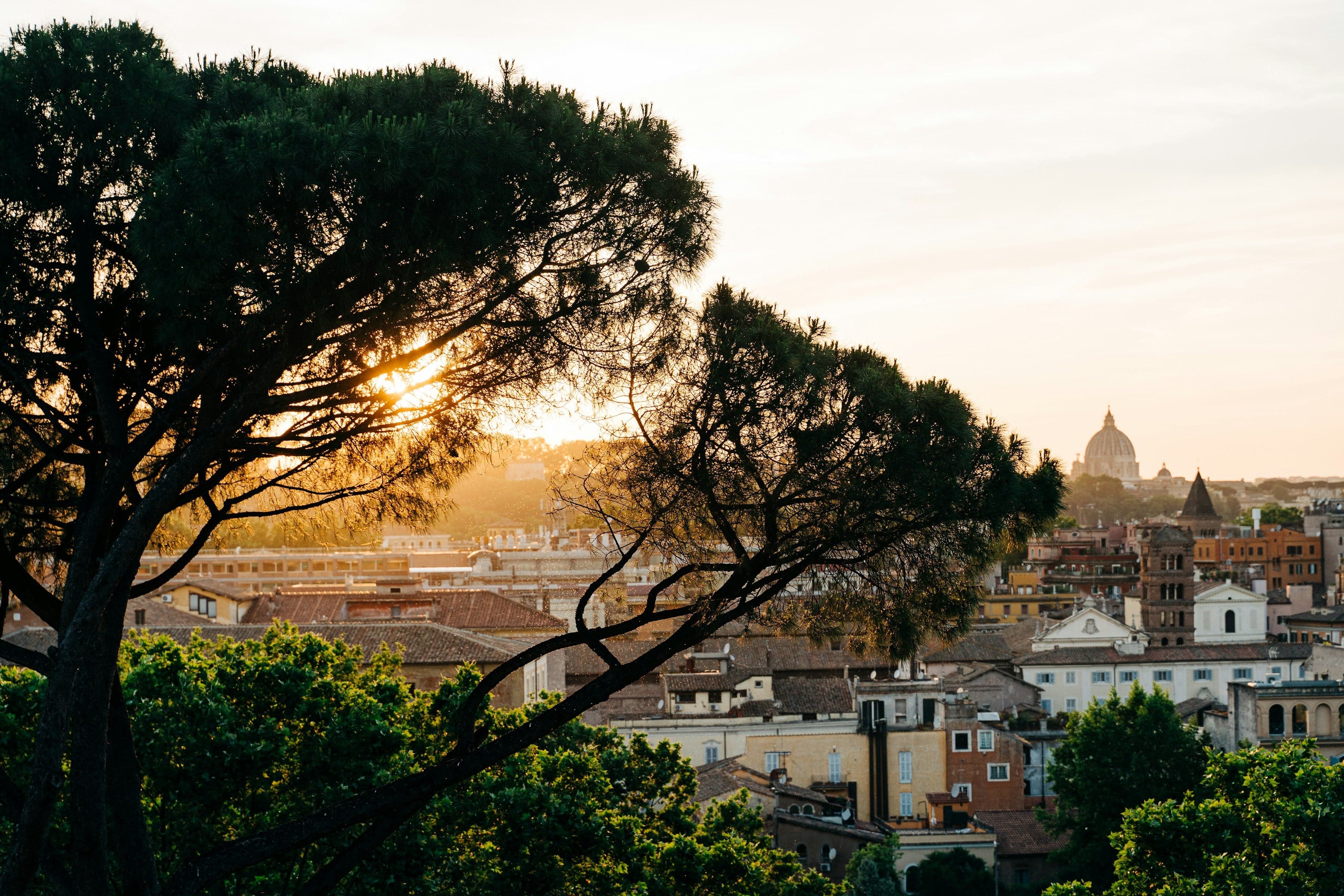
From the curved end of the Circus Maximus along its lawn to the Mouth of Truth and the round temple, then up a cobbled lane to the Orange Garden terrace, Santa Sabina and the Knights of Malta keyhole.
Start · Circus Maximus: The Curved End
DirectionsStops
- 1
Circus Maximus: The Curved End
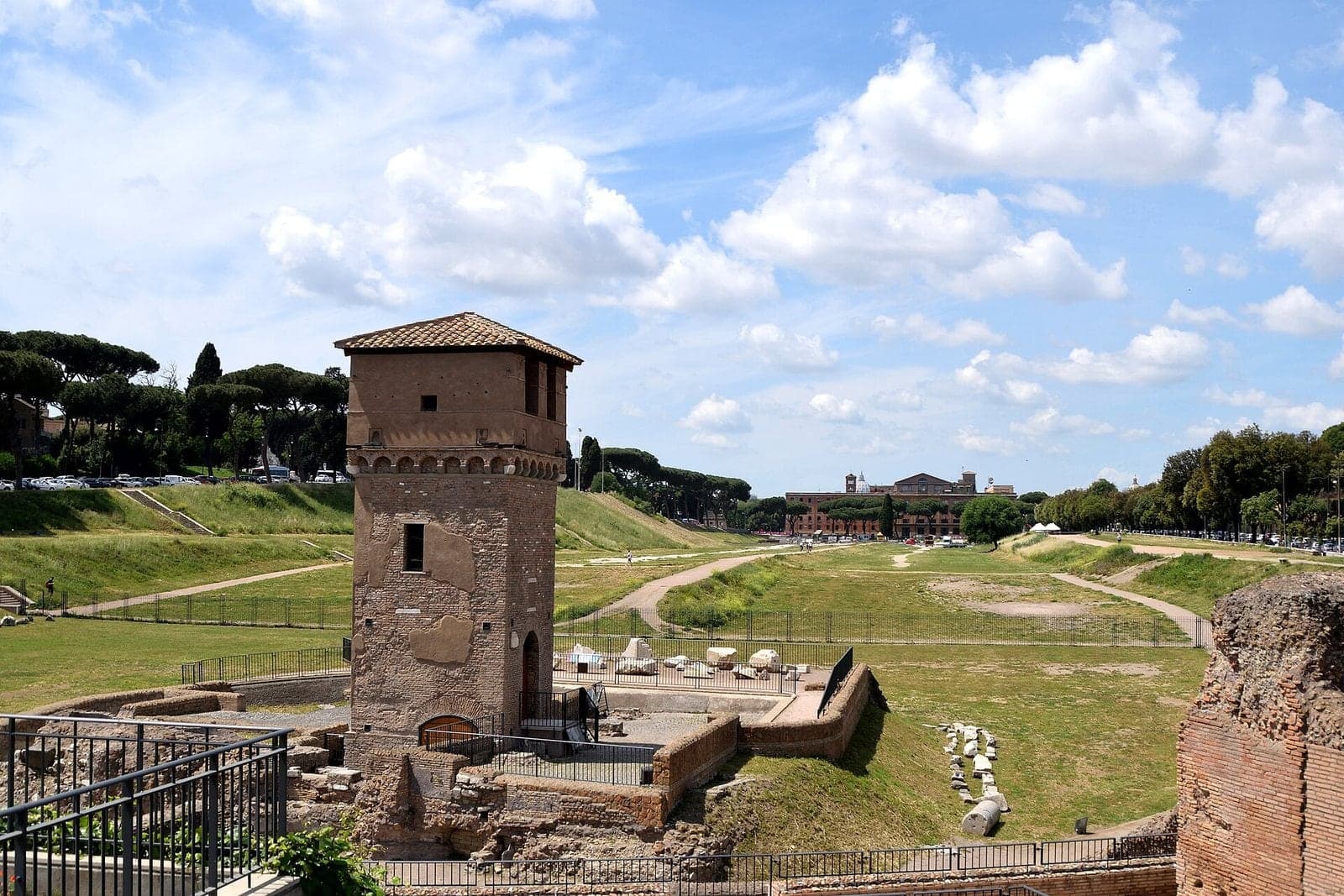
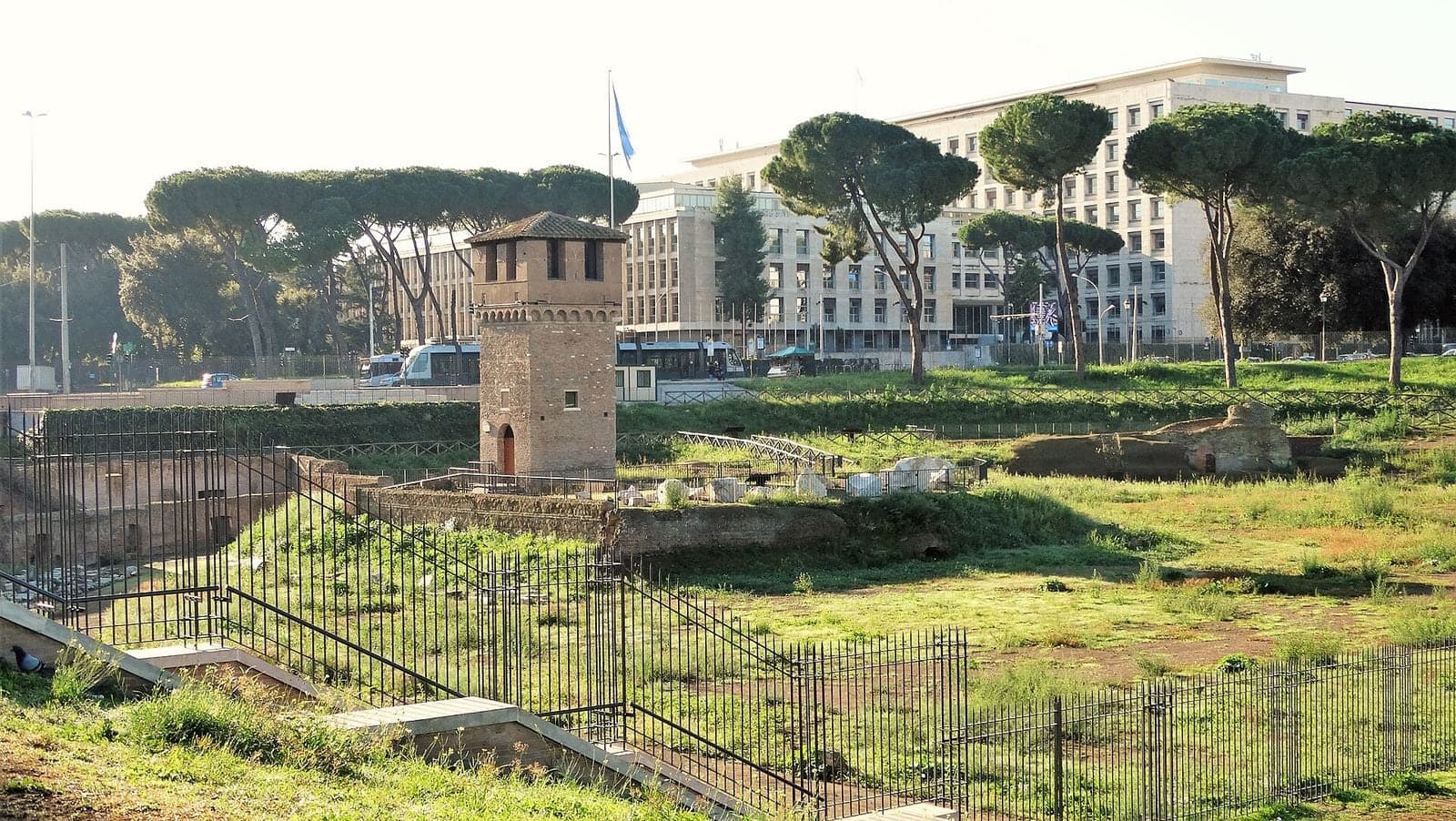
The curved end of Rome's great chariot track, seen from the park, with a medieval mill tower built into it.
- 2
Belvedere Romolo e Remo: The Whole Track
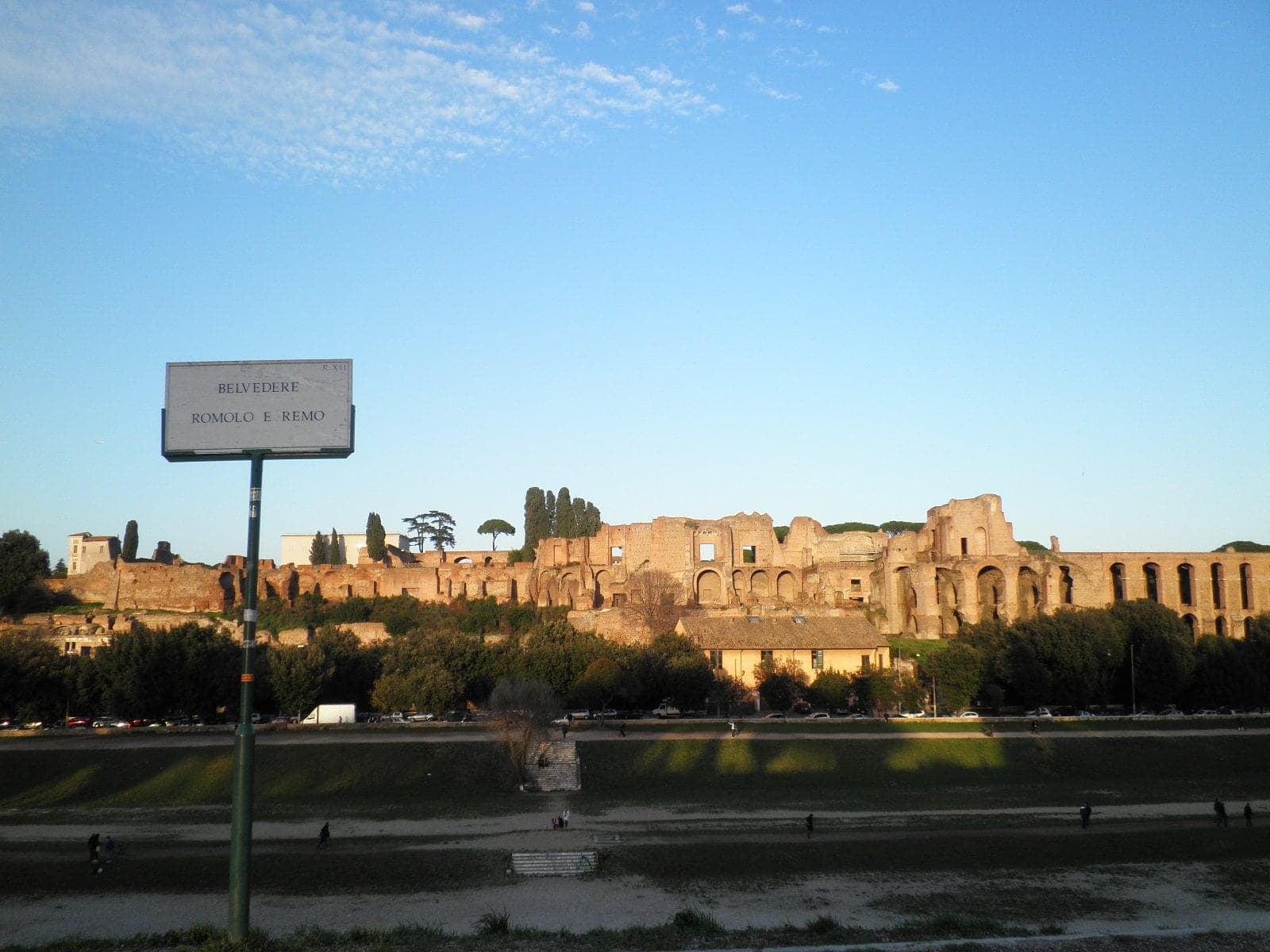
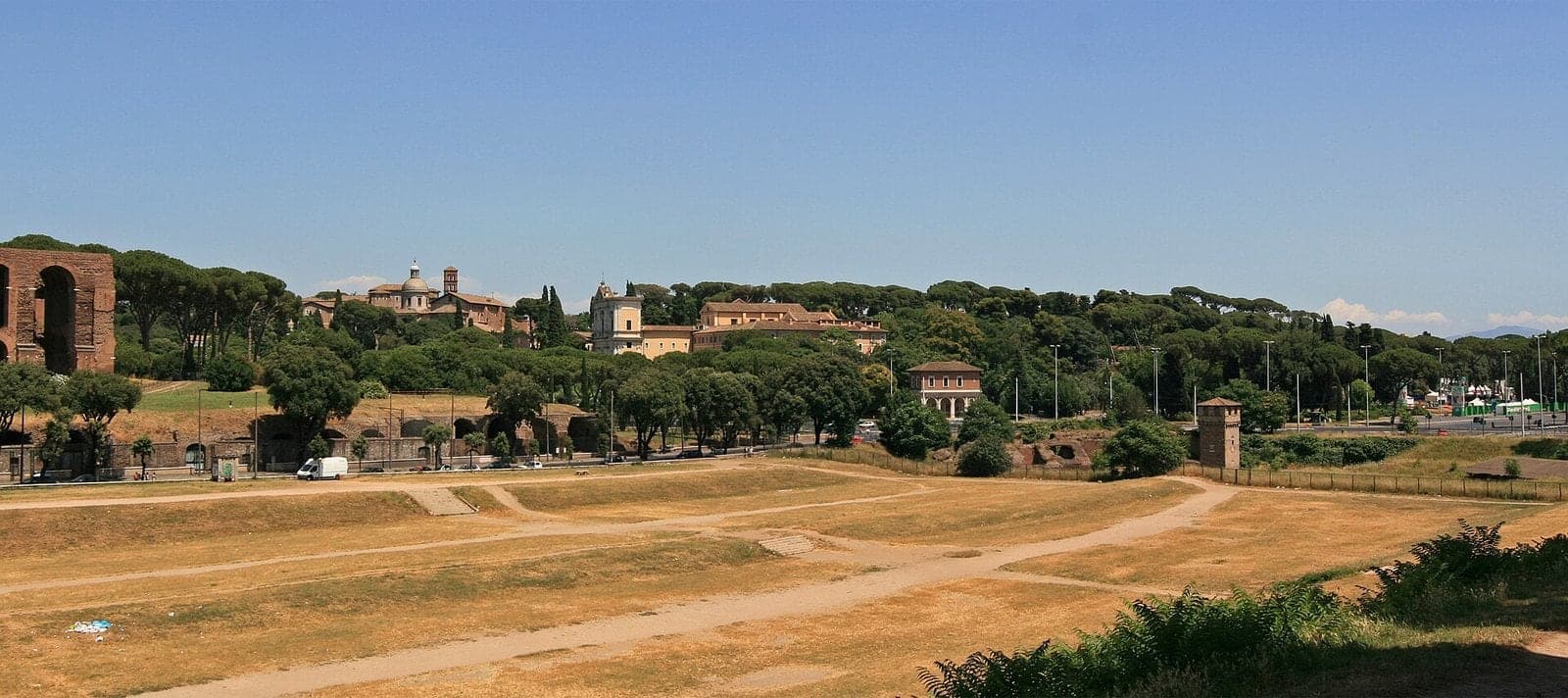
A viewpoint above the whole Circus Maximus, facing the Palatine across the valley.
- 3
Circus Maximus: The Starting Gates
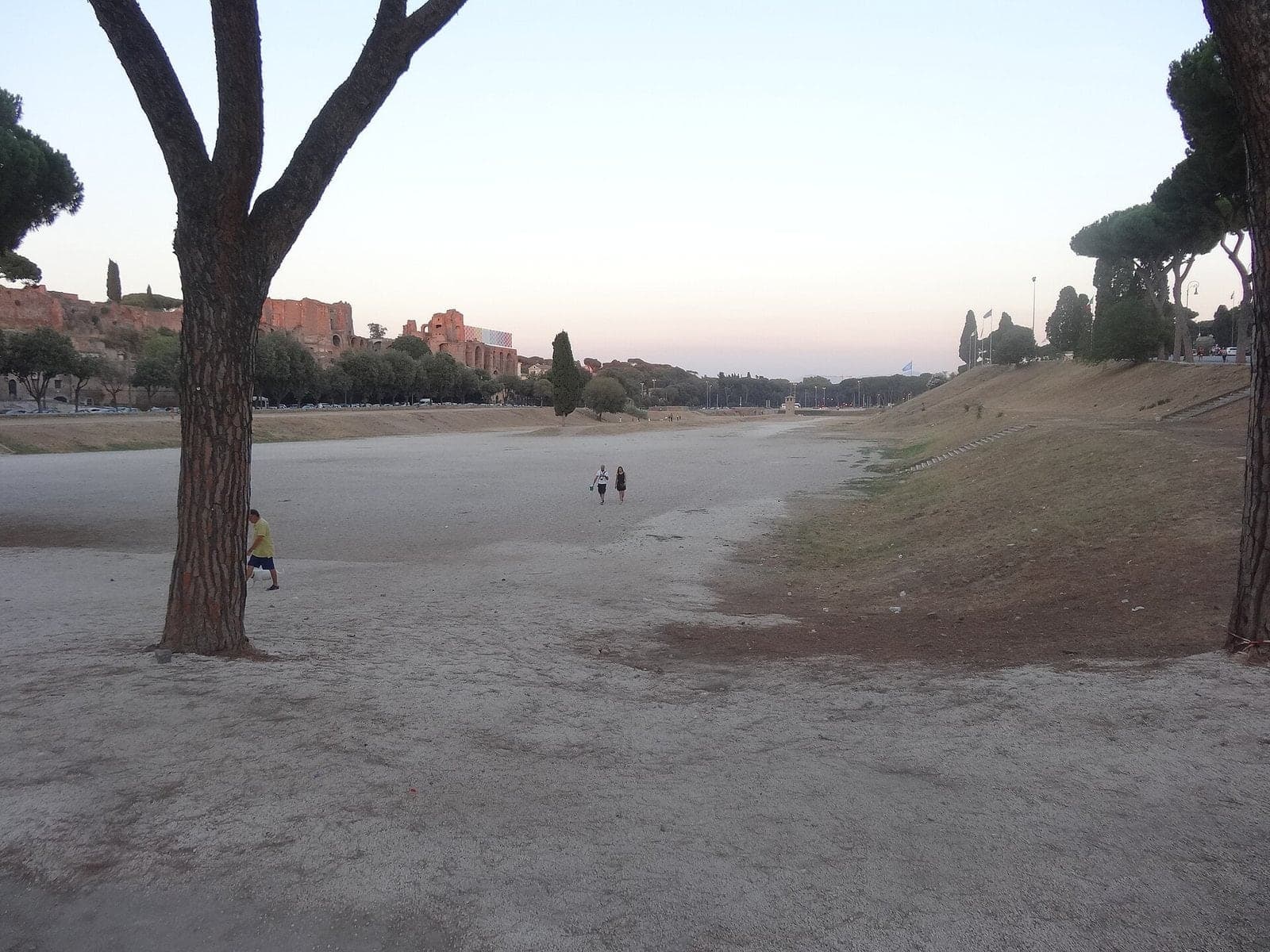
The river end of the Circus Maximus, where twelve starting gates once opened on a slanted line for a fair start.
- 4
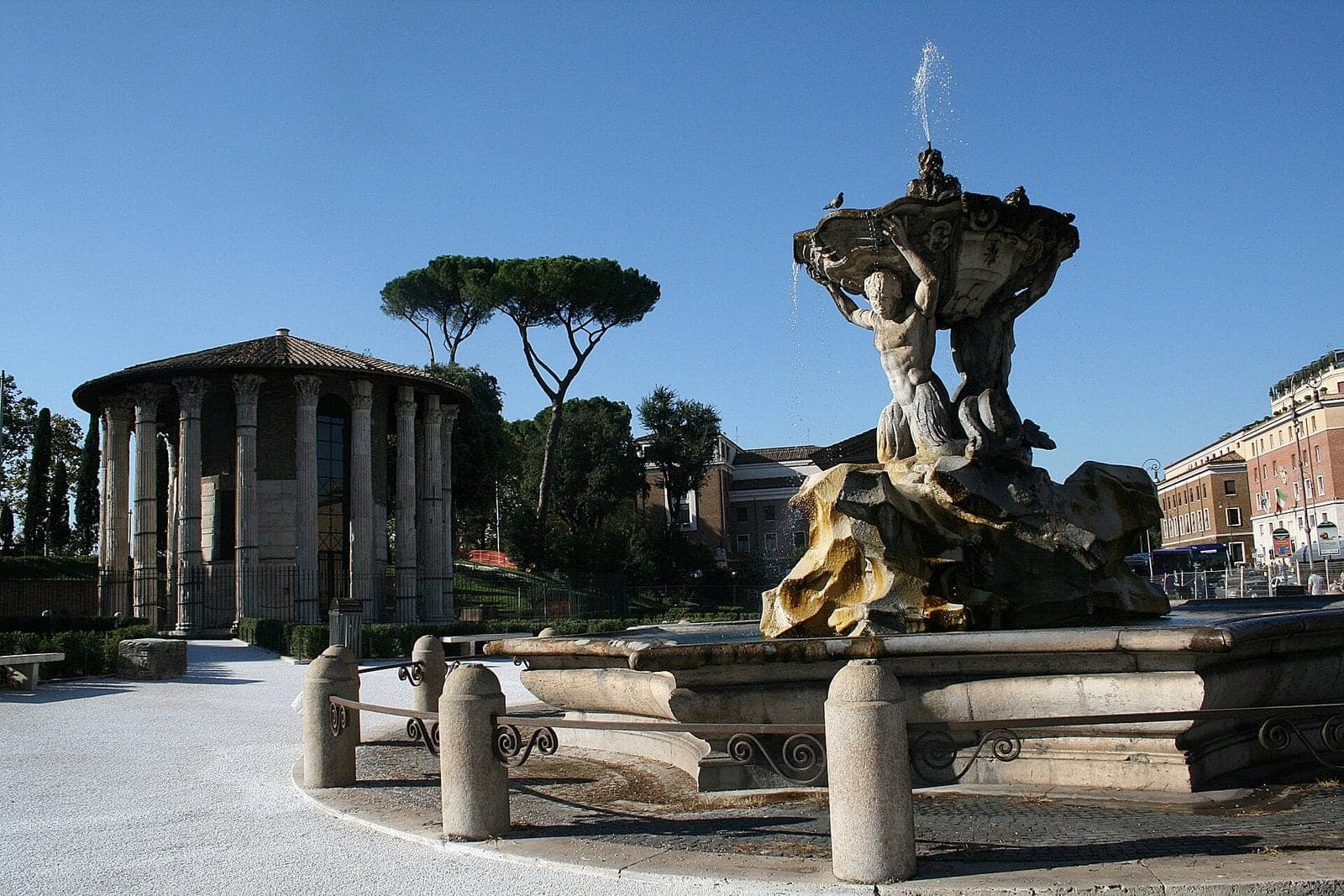
Piazza della Bocca della Verità: Temples Turned Churches
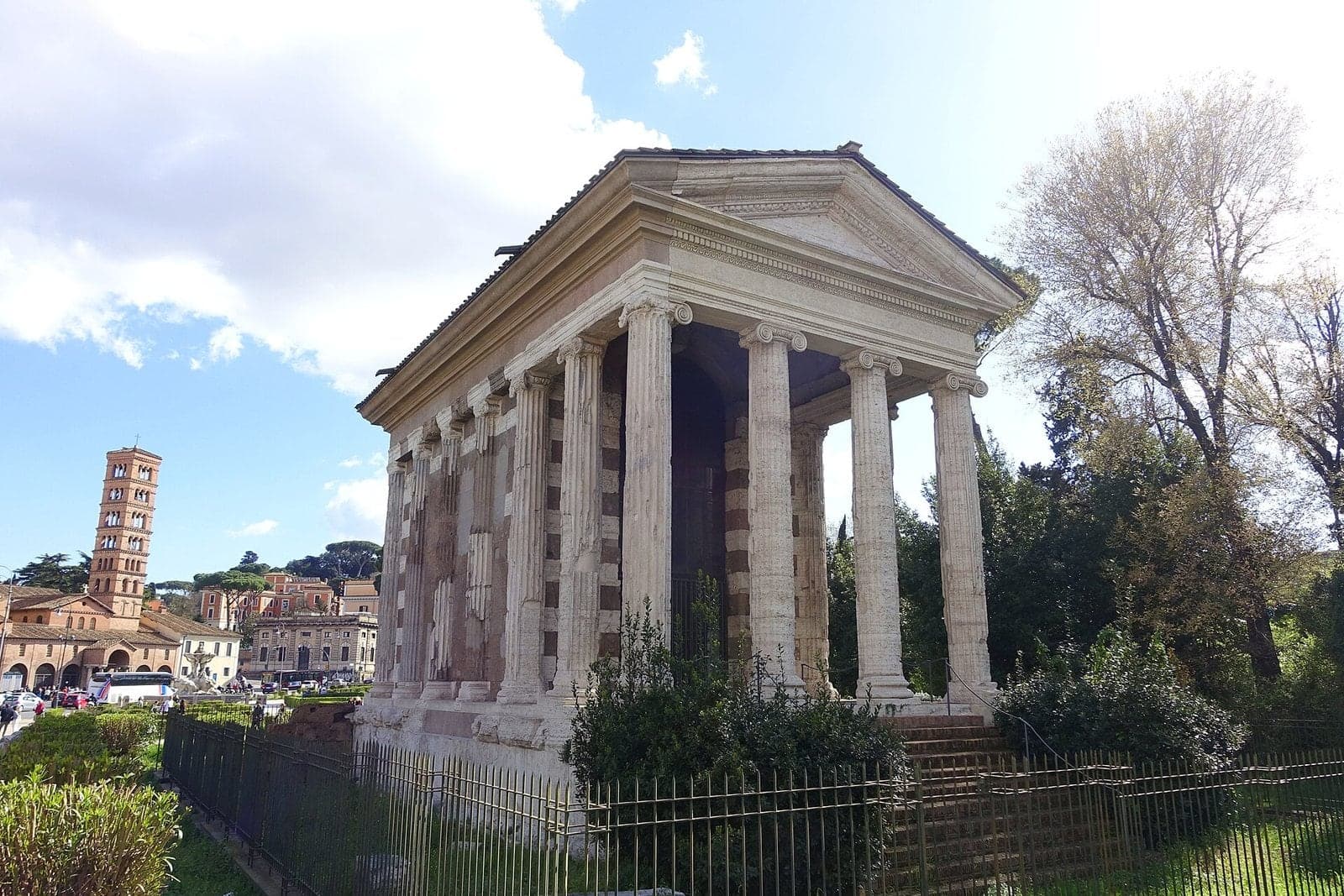
A riverside square with a bell tower, the Mouth of Truth and two Roman temples that became churches.
- 5
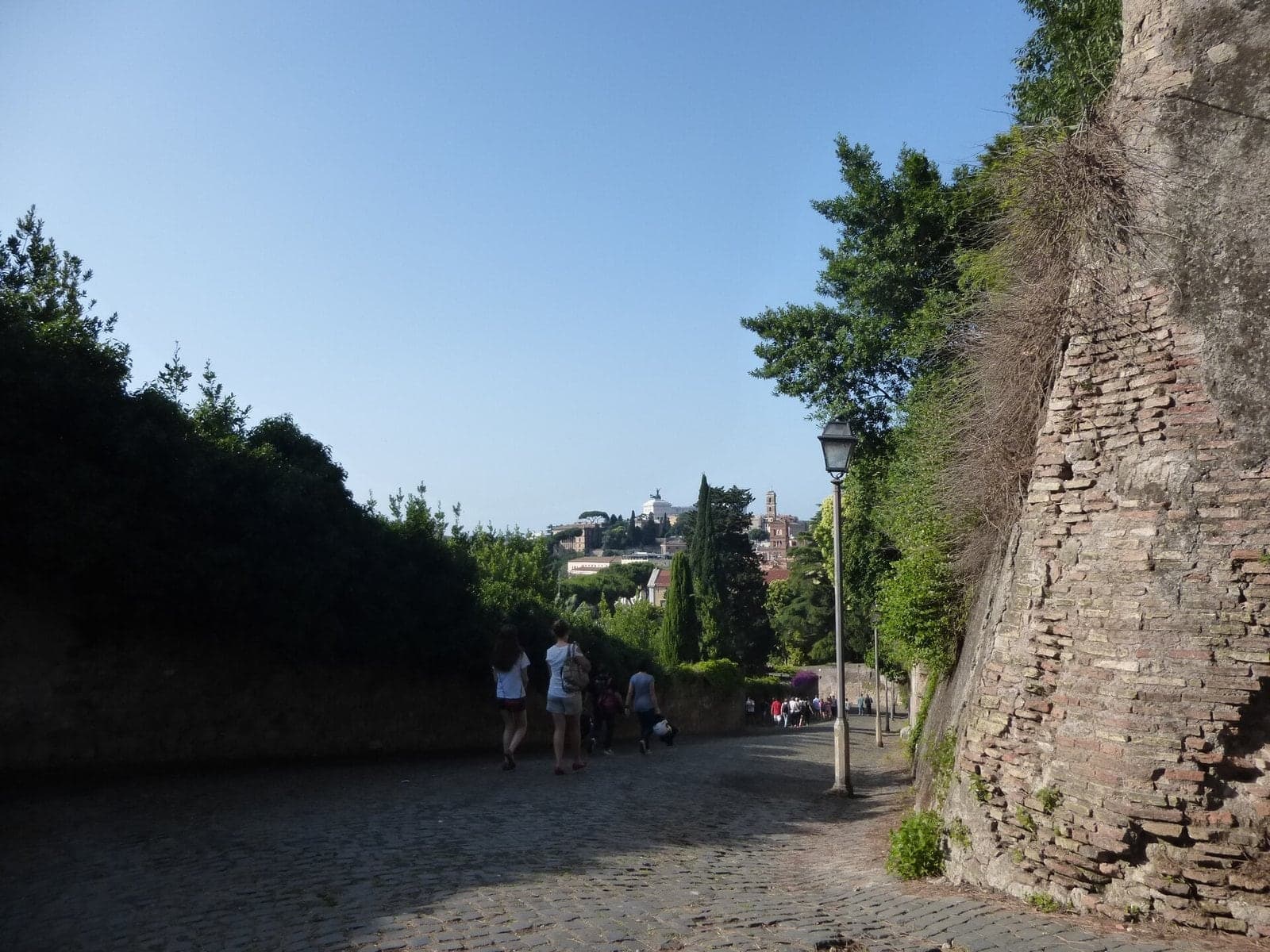
Clivo di Rocca Savella: The Fortress Lane
A cobbled lane under a fortress wall, which now holds a garden.
- 6
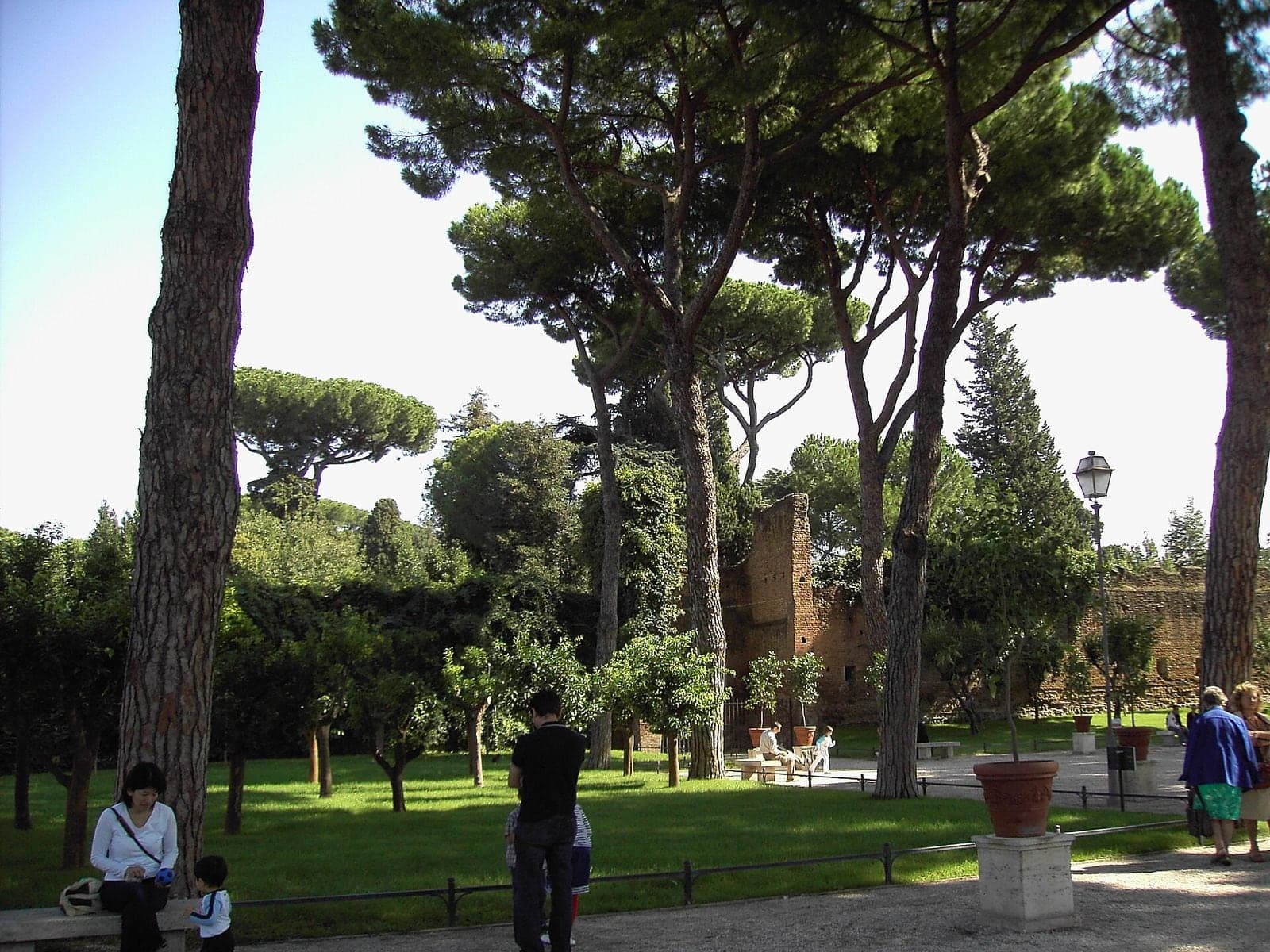
Orange Garden: A Castle Turned Inside Out
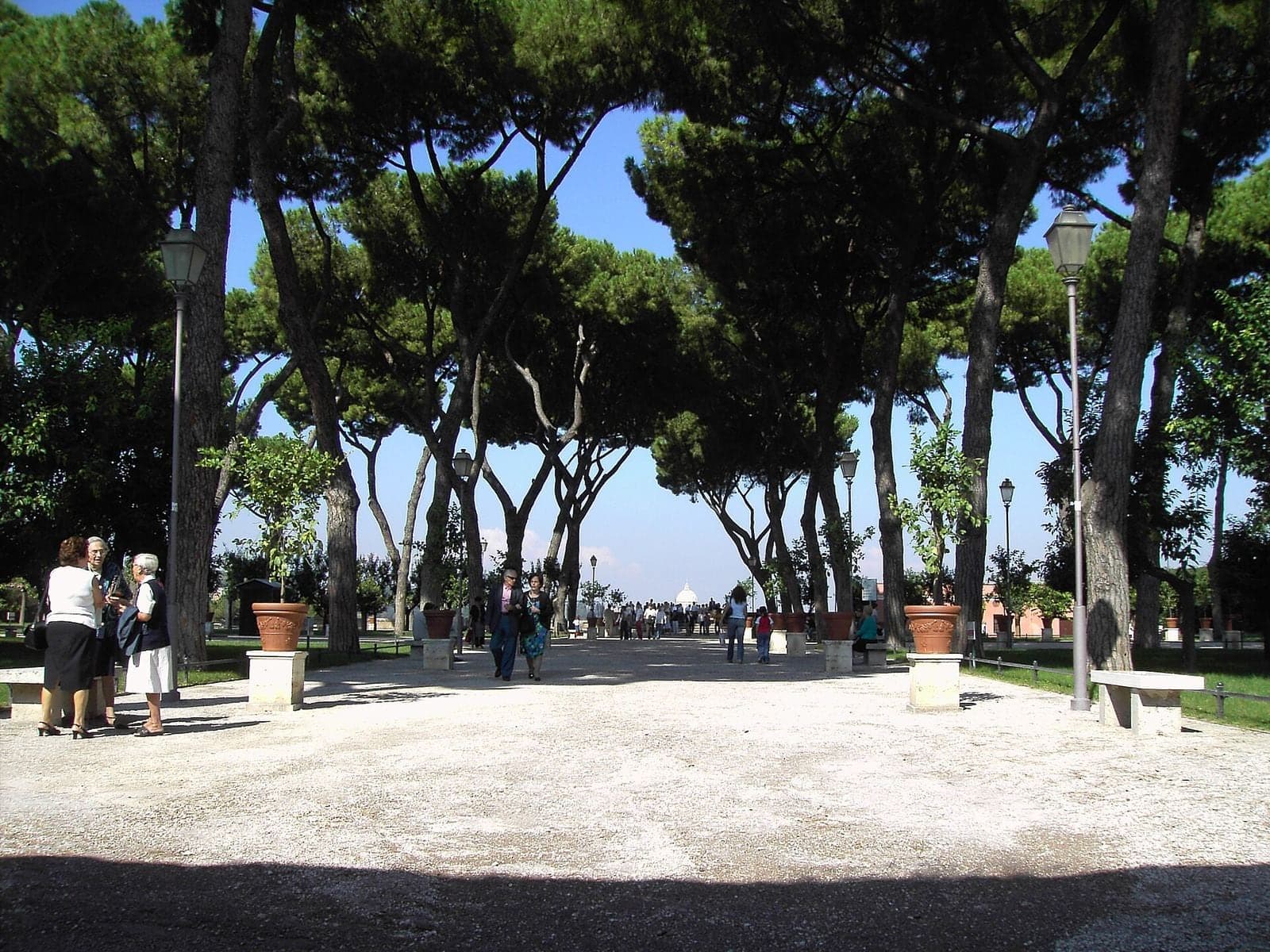
A garden of orange trees in a fortress, laid out in 1932, with a terrace over the Tiber.
- 7
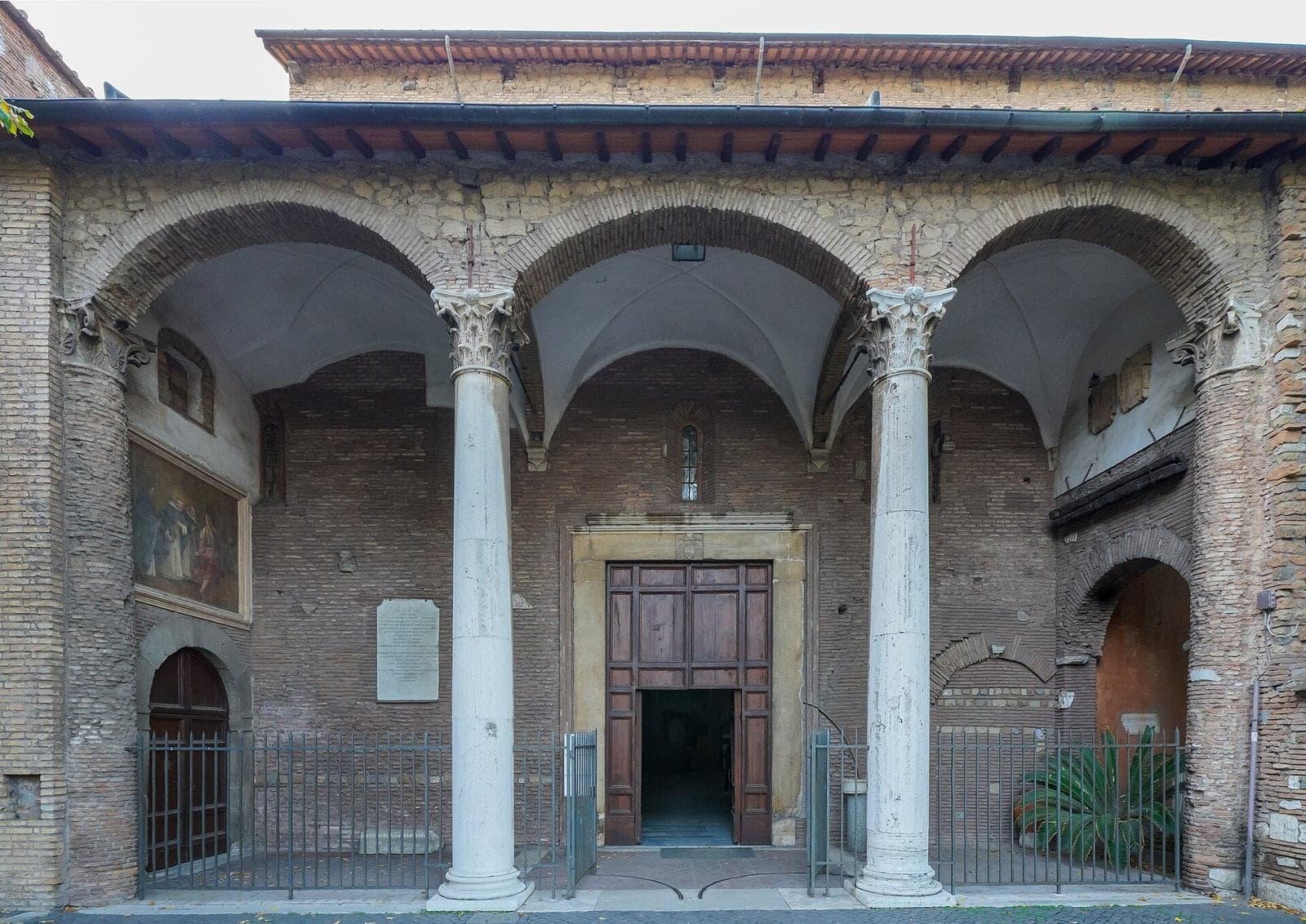
Santa Sabina: The Plain Basilica
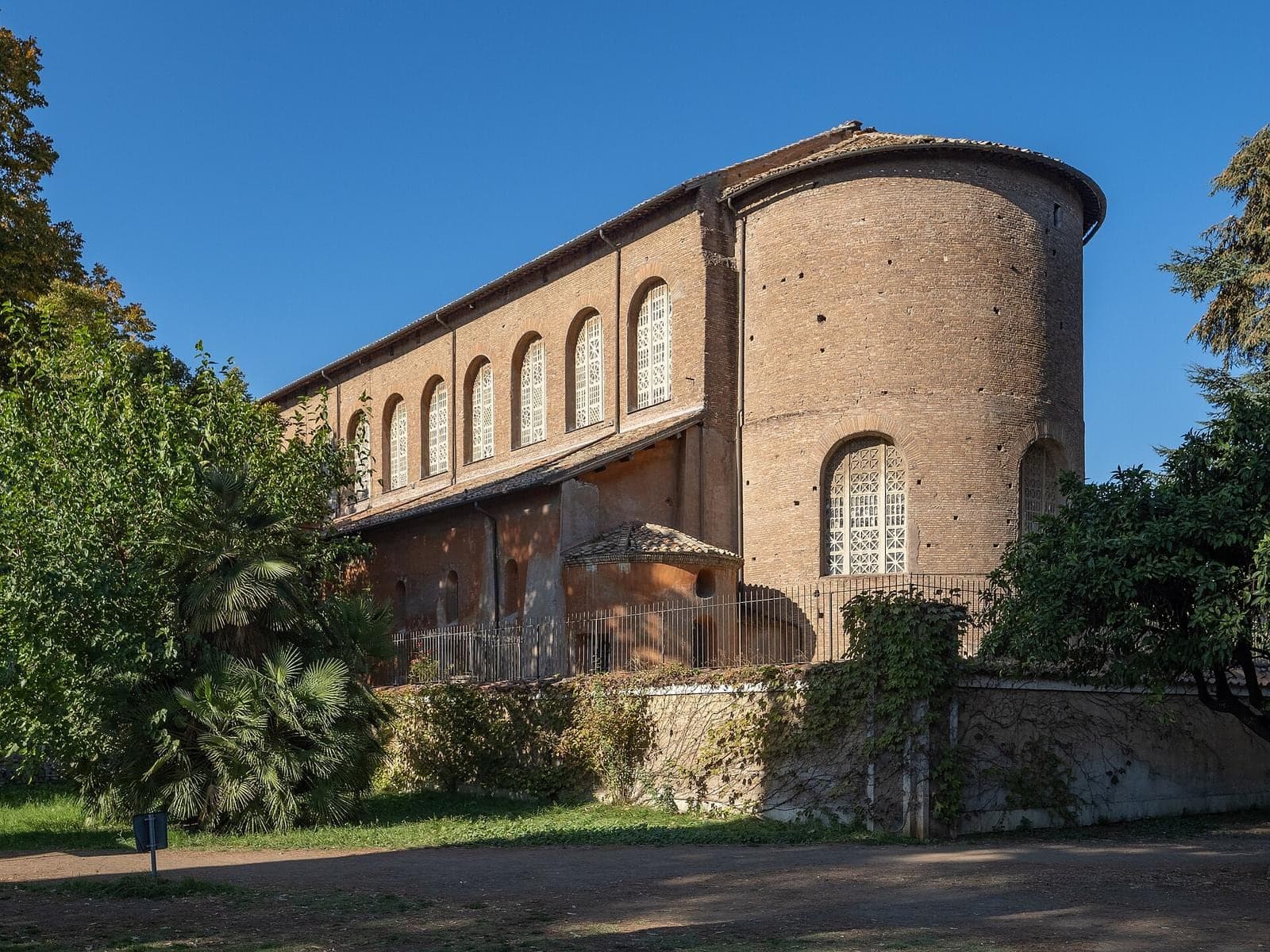
A fifth-century basilica of plain brick, with a porch of reused ancient columns and carved cypress-wood doors.
- 8
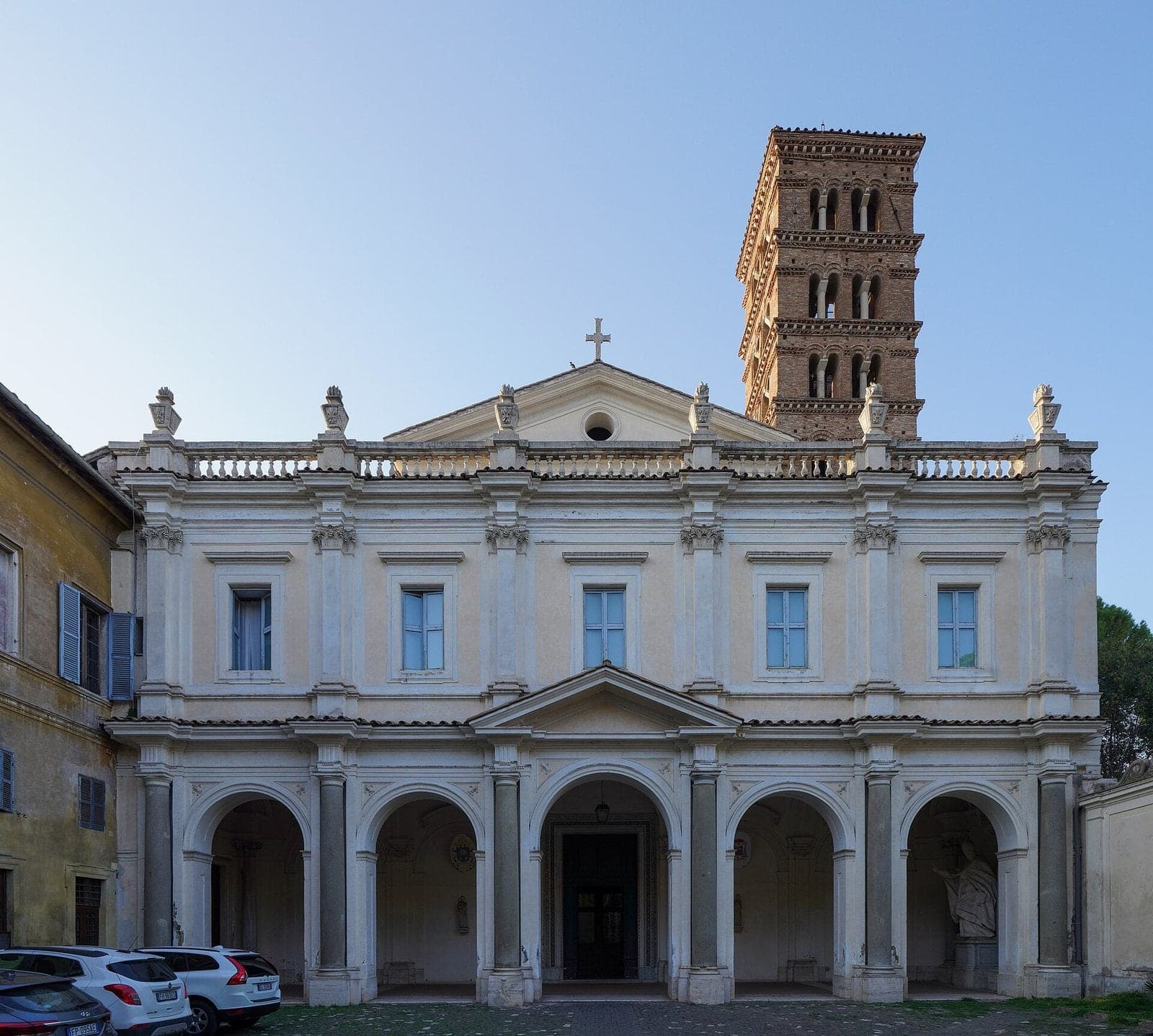
Piazza Sant'Alessio: A Fountain Moved Uphill
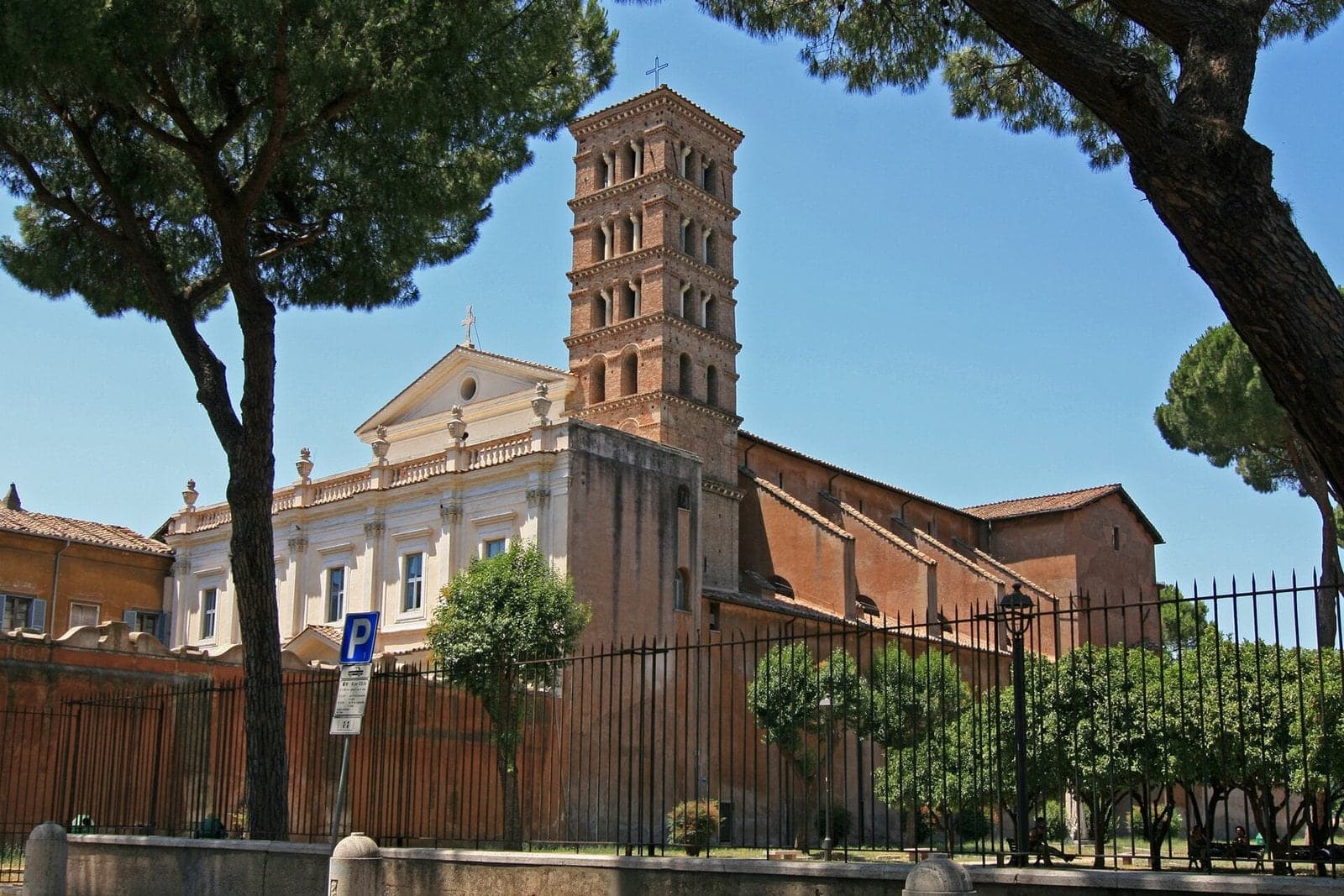
A quiet square with a medieval tower, and a small pine garden holding a relocated fountain.
- 9
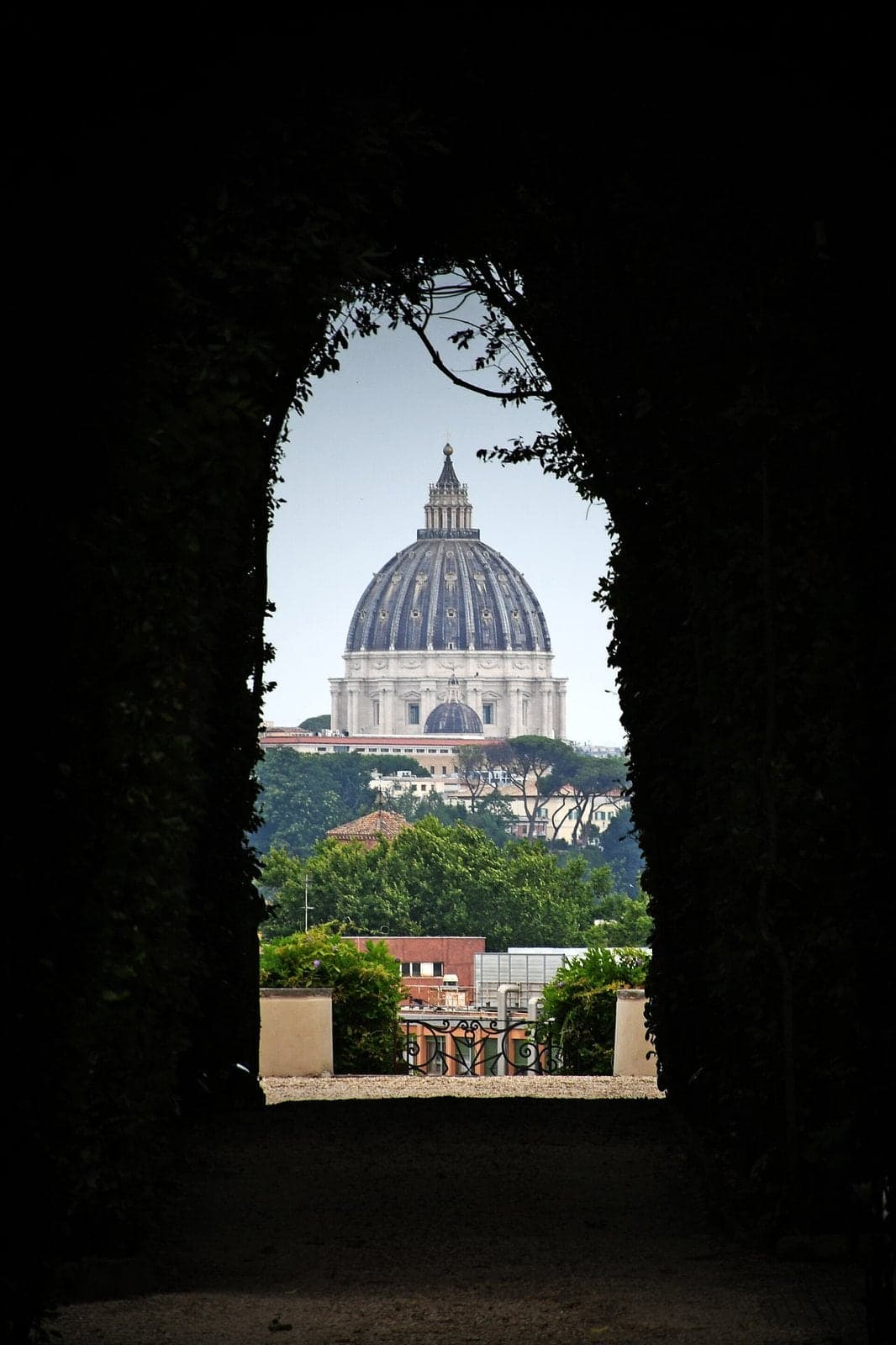
Knights of Malta Square: The Keyhole
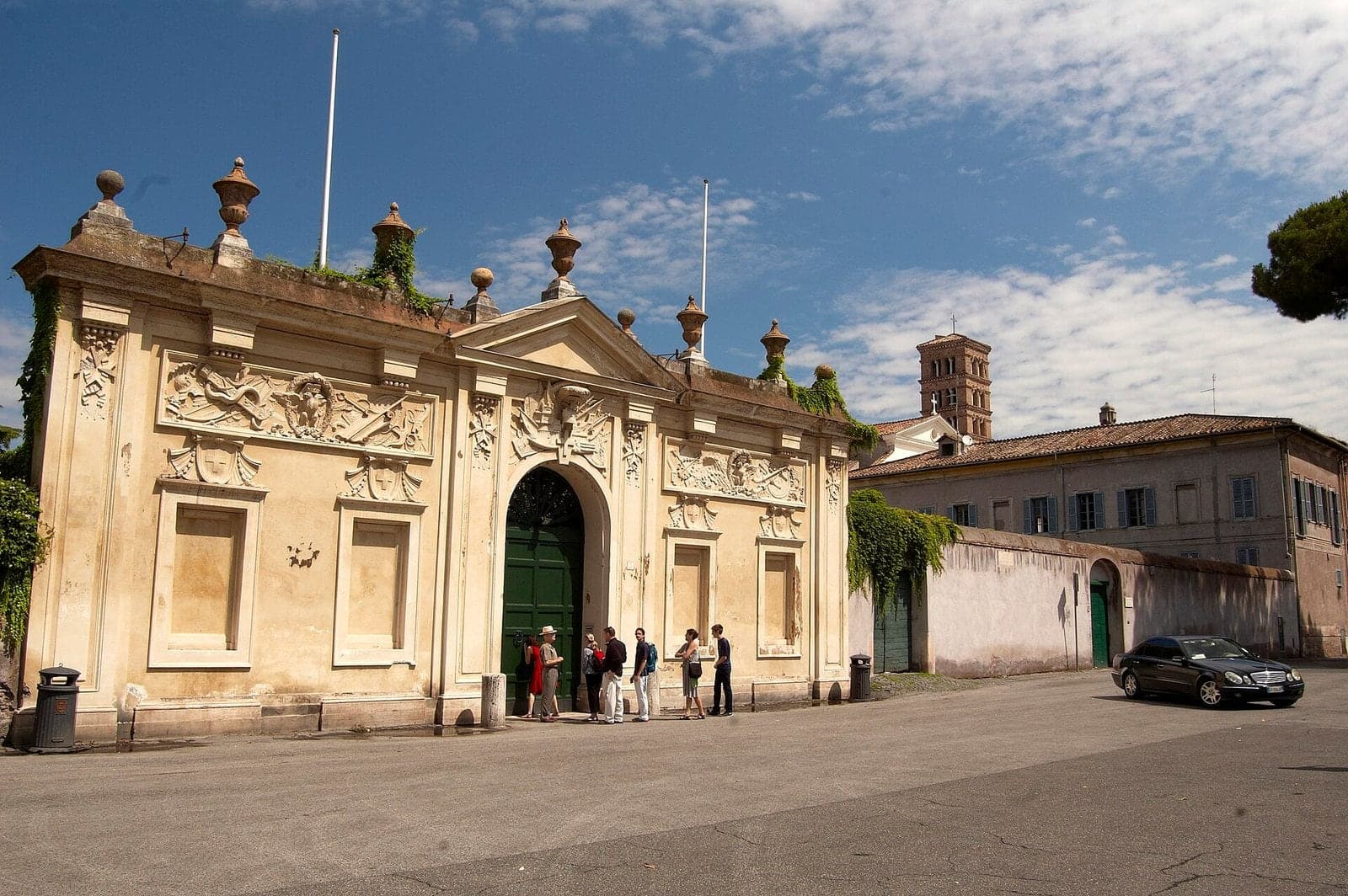
A small square laid out by Piranesi, where a keyhole in the Priory gate frames the dome of Saint Peter's.
Details
Best Time to Visit
A weekday morning or early afternoon, Tuesday to Sunday. The Orange Garden closes at 18:00 from October to February, before sunset, so start by about 16:30 at the latest; the gate shuts before sunset only in October until the clocks go back (25 October 2026); from November to February the sun sets before 18:00, and in the warmer months the garden stays open later. The Circus's ticketed excavation is closed on Mondays, and Santa Sabina's porch opens later on Sundays and Mondays. The keyhole queue is usually shortest early in the day.
Pro Tips
- •Getting to the start: Metro line B's Circo Massimo station is about 300 metres from stop 1: cross Via della Fonte di Fauno at the zebra, take the pavement above the park toward the river, and go down the short flights of steps onto the unpaved track at the curved end of the lawn. Stay outside the excavation wall. Since June 2026 the station is also the gateway to the FAO museum. After big concerts in the Circus the station has been closed from 22:00. Buses listed by Roma Capitale for the area include 118, 628, 85 and C3; check the ATAC journey planner. Checked 8 October 2026.
- •The Orange Garden (Parco Savello) is free and open every day: October to February 7:00 to 18:00, later from spring to summer (Roma Capitale). If you arrive after closing, follow the cobbled Clivo di Rocca Savella to its top at Via di Santa Sabina and walk down that street to Santa Sabina (stop 7): about 300 metres, no steps. Checked 8 October 2026.
- •The city rose garden (Roseto Comunale), above stop 2, opens only for short seasons: in spring (in 2026, 11 April to 14 June) and for about two weeks in October and November (in 2025, 18 October to 2 November). The 2026 autumn dates had not been published on 8 October 2026; check comune.roma.it or turismoroma.it. Entry is free. Checked 8 October 2026.
- •The Circo Maximo Experience, the fenced excavation of the curved end and the medieval tower (stop 1), is open Tuesday to Sunday, but official pages give different hours, so check the Turismo Roma / Sovrintendenza Capitolina page for the Torre della Moletta before you go; EUR 12 full or EUR 10 reduced, with an entry-only ticket available at the box office. Entrance at Piazza di Porta Capena. Checked 8 October 2026.
- •Santa Maria in Cosmedin and its porch with the Mouth of Truth (stop 4) are open every day 09:30 to 17:50 according to the basilica's own site, with a 13:00 to 14:00 closure according to Roma Capitale's tourism site; Sunday liturgy at 10:30. No fee has been confirmed by an official source; expect a queue. Checked 8 October 2026.
- •Santa Sabina (stop 7) is free and needs no booking. Its own site gives visiting hours of 08:00 to 19:00 Tuesday to Saturday and 12:00 to 19:00 on Sundays, Mondays and holy days, with no visits during services; the page is undated, so check before you go. Checked 8 October 2026.
- •The garden of Sant'Alessio (stop 8) is open from dawn to sunset (Turismo Roma). The keyhole (stop 9) can be looked through at any hour; the church and garden behind the gate are not open. Checked 8 October 2026.
- •This walk ends about a kilometre from Metro Circo Massimo. Roma Capitale also lists Metro line B's Piramide station for the Aventine. Our Trastevere walk begins a short walk north of the Mouth of Truth square (stop 4); our Colosseum and Roman Forum walk starts at the Arch of Constantine, about 800 metres beyond the curved end of the Circus Maximus.
Safety & Precautions
- •Steps and cobbles: about ten steps with no handrail near the foot of the Clivo di Rocca Savella, about twenty more with no handrail into the Orange Garden, and three steps (with a handrail) up to the terrace. The lane and much of the hilltop are paved with stone setts, slippery when wet. A step-free way up the hill is the Clivo dei Publicii, from the Mouth of Truth square to Santa Sabina (about 650 metres, gently rising, partly on the road edge); it skips stops 5 and 6.
- •Crossings: Via dell'Ara Massima di Ercole is crossed at two signalled crossings in a row (between stops 3 and 4), and Via della Greca, a wide road of six lanes, at signals in two stages (after stop 4). Then about 100 metres along Via di Santa Maria in Cosmedin, a busy main road, on a narrow pavement: keep to the pavement against the hill and go in single file.
- •The Aventine's lanes (Via di Santa Sabina, Piazza di Sant'Alessio, the last block to the Knights of Malta square) have slow one-way traffic and narrow or no pavements in places. Keep to the edge.
- •The Orange Garden's terrace was fenced off in 2019 after slight settling was found and has since been consolidated; whether any part is fenced or under works on the day is not confirmed. Do not lean on a fenced or taped balustrade. The garden gate at the top of the Clivo di Rocca Savella may be shut outside garden hours.
- •The Temple of Hercules (stop 4) is fenced and its visits are suspended for works; it is seen from the square. The Mouth of Truth is in the porch of a working church: keep voices down and avoid services. Keep bags closed in the crowd at the Mouth of Truth and in the keyhole queue.
- •Churches on the route are not entered as part of the walk. If you go in, avoid services and cover shoulders and knees.
- •The park tracks of the Circus Maximus are unpaved. The Circus is used for big concerts and events, when parts of it can be fenced off.
Travel advisory: Exercise Increased Caution (Level 2).
Gallery
Related Reading
Go deeper on what you'll see, hear, and walk through.
Overview
Best Self-Guided Walking Tours in Rome (2026)
4 min
Overview
Rome Travel Guide 2026: How Many Days, Getting Around, Costs, and Safety
7 min
Thematic
Best History Walking Tours in Rome (2026)
2 min
Thematic
Rome Keeps Nothing New: The City Built by Reusing Itself
6 min
Companion
The Aventine's Orange Garden and Keyhole: A Fortress That Became a View
5 min
Deep dive
Palatine Hill: Where Rome Says It Was Born
5 min
Read the walk
The full story of Circus Maximus and Aventine: Racetrack to Orange Garden, in words. Prefer to listen? Play it narrated, from home or on location.
Introduction
Rome, the capital of Italy, grew up on seven hills. This walk starts in the valley between two of them, the Palatine and the Aventine, and climbs onto the Aventine.
The valley is the Circus Maximus, where Rome raced chariots. Almost nothing along the way is what it was built to be. A valley was shaped into a racetrack. Two temples by the river became churches. A medieval fortress became a public garden of orange trees. And an old marble disc, perhaps a drain cover, became a legend about liars.
Two names come back on the hill: Raffaele De Vico, the architect who laid out the Orange Garden in nineteen thirty-two, and Saint Dominic, whose friars still live beside it. At the very end comes Giovanni Battista Piranesi, a famous engraver who, in effect, finished only one building, on a small square with a famous keyhole.
The walk is nine stops over about one and a half kilometers, just under a mile, and takes about an hour. It has one gentle climb of about thirty meters, up a cobbled lane and about thirty steps. One thing to plan around: the Orange Garden has gates, open from seven in the morning until six in the evening from October to February, and later in the warmer months. If the gate is shut, the walk goes around it. The walk ends on the hilltop, at the keyhole.
1. Circus Maximus: The Curved End
Welcome to the Circus Maximus, at its curved end. Stay on the park track, outside the wall. The dug-out ground behind it is a ticketed archaeological area, and the details are on this stop's card.
The Romans shaped this long, flat hollow between two hills into a racetrack for chariots. By the city's own figures, the Circus was about six hundred meters long and a hundred and forty wide. Ancient writers claimed it seated hundreds of thousands of people.
Here the stands bent round in a half circle. Beyond the wall, if the fence and the trees let you see, excavations brought this curve back to light: brick walls that held up the seats, and the big paving stones of a Roman street that ran around the outside. Under the stands, shops faced that street: inns, food stalls, and money-changers serving the betting on the races. The city's archaeologists say the great fire of the year sixty-four broke out at this end, among shops full of goods that burned.
At the curve stood an arch more than twenty meters tall, raised in the year eighty-one for the emperor Titus. It is not the one by the Forum, and only a few stone blocks and column bases are left of it.
Now find the square tower beyond the wall, if the trees let you, and look at its surface: small blocks of soft stone, chips of limestone and uneven rows of brick. It went up in the twelfth century, built into the end of the old Circus, and a water mill beside it gave it its name, the Torre della Moletta, the tower of the little mill.
In the eighteen hundreds it held gasworks and warehouses. After the Second World War it went back to green, the lawn in front of you.
Follow the route along the track beside the lawn, then up a short path to the road above.
2. Belvedere Romolo e Remo: The Whole Track
Walk on along the pavement above the Circus and stop where the whole valley opens up below you. This stretch of sidewalk, beside the traffic, is known as the Belvedere Romolo e Remo, the viewpoint of Romulus and Remus, the twins of Rome's founding legend. It is a pavement with a view, and the best place on the walk to see the Circus as a shape.
Look down at the long oval of grass. The valley did half the work: the track ran along its floor, between two hills. Roman tradition says Romulus himself held the first races down there, in honor of a god. Tradition, not proof.
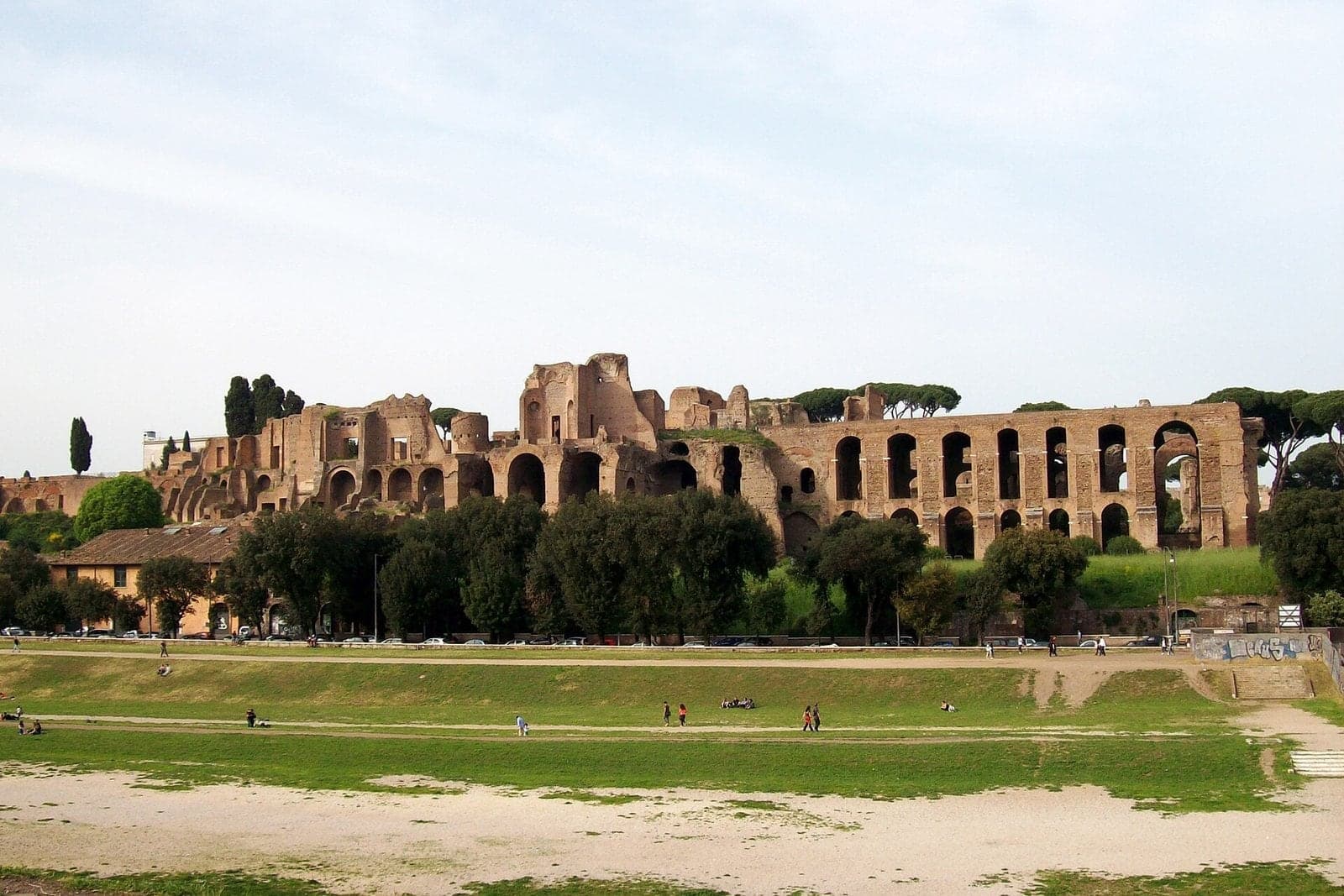
Now look across the valley to the hill opposite. That is the Palatine, the hill of the emperors' palaces. The big brick arches and walls high on its slope are the supports of the palace that stood on top. On that side of the track, the city's archaeologists say, stood a box shaped like a temple. Statues of the gods were carried into it in procession before the games, so that they could watch the races, and the emperor's family sat there too. Nobody can point to it today. The crowd sat by rank, with the seats divided by social position, so the gods, the emperor and the city all watched the same race from different places.
On the hill side of this road, up the slope, are the terraces of the city's rose garden. It was laid out in nineteen fifty on the site of the old Jewish cemetery, which was there from sixteen forty-five until nineteen thirty-four. Its paths are drawn in the shape of a menorah, the seven-branched lamp. The rose garden opens only for short seasons in spring and autumn, so check the dates before you go.
Follow the route down off the road and along the track to the far end of the Circus.
3. Circus Maximus: The Starting Gates
Walk on along the track to the end of the lawn nearest the river and stop there. This was the starting end of the Circus. Nothing of the gates shows now: it all lies under the grass. So picture the machine.
Across this end stood the starting gates, twelve of them. The first ones, in the fourth century BC, were made of wood. They were set out on a slightly slanted line, the city's archaeologists explain, to give every driver the same chance: from the outer gates and the inner ones, the run to the first turn came out fair. Twelve doors, opening together, so nobody had the inside track.
Down the middle of the track ran a long, raised barrier, with altars, statues and water basins along it, and a turning post at each end. A race was seven laps. To count them for the crowd, the Romans set up seven eggs and seven dolphins on the barrier. Four teams raced, in four colors: green, blue, red and white. The city's own panels read meanings into all of it: twelve gates like the twelve months, seven laps like the seven days of the week.
Two tall obelisks of red granite stood on that central barrier. They are not here anymore: both were moved. One was set up on the track in ten BC. In fifteen eighty-nine it was raised again in Piazza del Popolo, where it still stands. The other, set up in the year three hundred and fifty-seven, now stands at the Lateran.
Follow the route to the busy road and cross it at the lights, two crossings one after the other, toward the square with the tall bell tower.
4. Piazza della Bocca della Verità: Temples Turned Churches
Walk on along the sidewalk beside the church and stop before the corner, where the big crossing starts. This is Piazza della Bocca della Verità, the square of the Mouth of Truth. Start with the bell tower above you: seven stories of arched windows, about thirty-four meters…
Full narration for this stop unlocks with the tour.
5. Clivo di Rocca Savella: The Fortress Lane
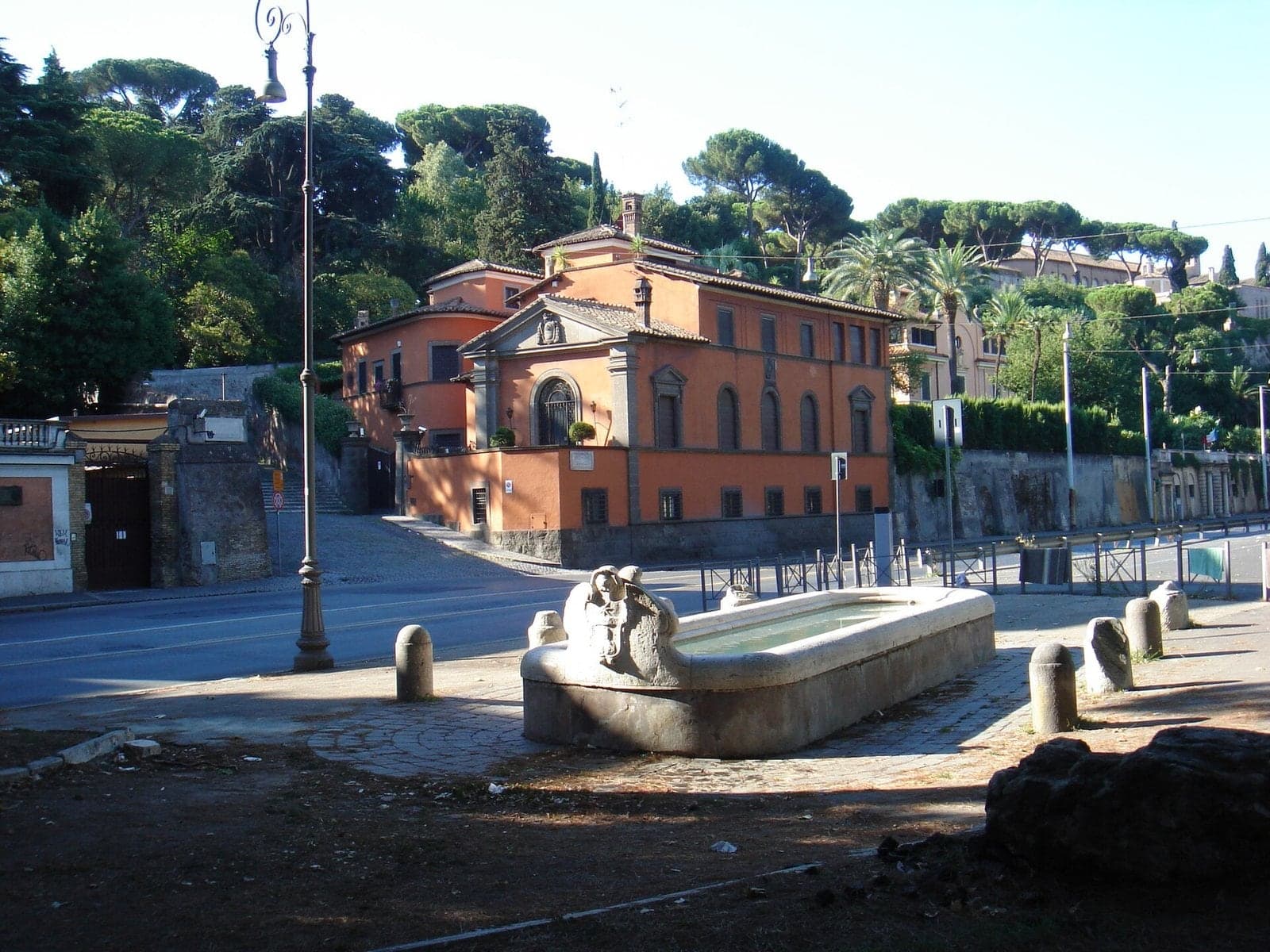
Walk on up the cobbled lane and stop partway up, where the high wall rises beside you. This is the Clivo di Rocca Savella, the lane of the Savelli fortress. Look down at the paving: small square blocks of stone, Rome's cobbles. They are slippery when wet. Now look at the wall.…
Full narration for this stop unlocks with the tour.
6. Orange Garden: A Castle Turned Inside Out
Walk on along the terrace at the garden's edge and stop there. If part of the terrace is fenced off for works, keep to the open side of the fence; the trees and the view still carry this stop. This is the Orange Garden, Parco Savello on the city's signs. Look at the trees…
Full narration for this stop unlocks with the tour.
7. Santa Sabina: The Plain Basilica
Walk on out of the garden into the little square and stop by the church's information board. The long, plain brick building beside the garden is Santa Sabina, a working church, free to enter when it is open. The plainness is the point. Santa Sabina was built between four…
Full narration for this stop unlocks with the tour.
8. Piazza Sant'Alessio: A Fountain Moved Uphill
Walk on along the street and stop in the small square where a church and a little garden open off one side. This is Piazza Sant'Alessio. Look for the bell tower: five tiers of paired arched windows, from the twelve hundreds. The church below it is the Basilica of Saints…
Full narration for this stop unlocks with the tour.
9. Knights of Malta Square: The Keyhole
Walk on into the small square at the end of the street and stop a few steps short of the big door in the wall ahead, where people may be queuing. This is Piazza dei Cavalieri di Malta, the Knights of Malta Square, and the last stop. You do not need to queue to hear it. Any line…
Full narration for this stop unlocks with the tour.
- Today's grounds of the Circus Maximus on the southeast curve — Rabax63, CC BY-SA 4.0 · source
- Circo Massimo, primi lavori nel VI sec. a.c., utilizzato fino al VI sec., Torre della Moletta o dei Frangipane 1145 — Luciano Tronati, CC BY-SA 4.0 · source
- Roma, Palatino dal Belvedere Romolo e Remo — Lalupa, CC BY-SA 4.0 · source
- Circus Maximus (Rome) — Jordiferrer, CC BY-SA 4.0 · source
- A view from the Circus Maximus of the Domus Augustana on the Palatine Hill in Rome — Blackcat, CC BY-SA 3.0 · source
- Fontana alla Bocca della Verità et Tempio di Ercole Vincitore ou temple d'Hercule Olivarius à Rome (Italie). — Jean-Pol GRANDMONT, CC BY 4.0 · source
- Roma, clivo di Rocca Savella, in discesa verso S. Maria in Cosmedin. — Lalupa, CC BY-SA 4.0 · source
- Roma, via di Santa Maria in Cosmedin: abbeveratoio e Clivo di Rocca Savella — user:Lalupa, CC BY-SA 3.0 · source
- Santa Sabina (Rome) - Entrata — Fiat 500e, CC BY-SA 4.0 · source
- basilica di Santa Sabina — C_messier, CC BY-SA 4.0 · source
- Basilica dei Santi Bonifacio e Alessio — Merulana, CC BY-SA 4.0 · source
- St. Peter's Basilica seen through the keyhole of the entrance door of the Villa del Priorato di Malta in Rome, Italy. — Phyrexian, CC BY-SA 4.0 · source
- Villa del Priorato di Malta — Kufareu, CC BY-SA 4.0 · source
Images may be cropped or resized. Other photos via Unsplash and Pexels.