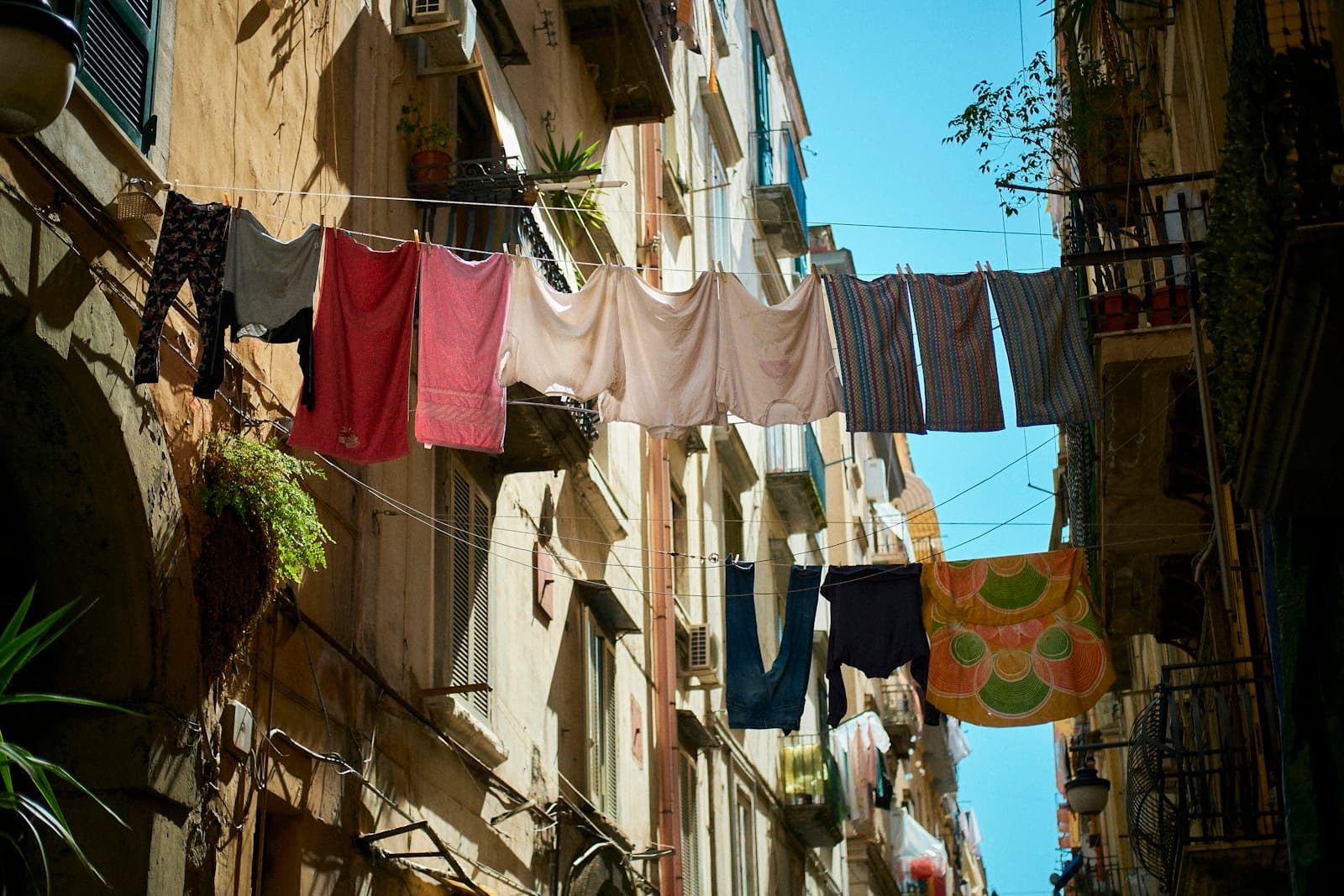
Naples once told outsiders to stay out of the Rione Sanita. This walk reads the quarter the city wrote off, now rewriting itself from below, through its catacombs, baroque staircases, and a bridge that cut it loose.
Start · Catacombe di San Gennaro: The Hill of the Dead
DirectionsStops
- 1
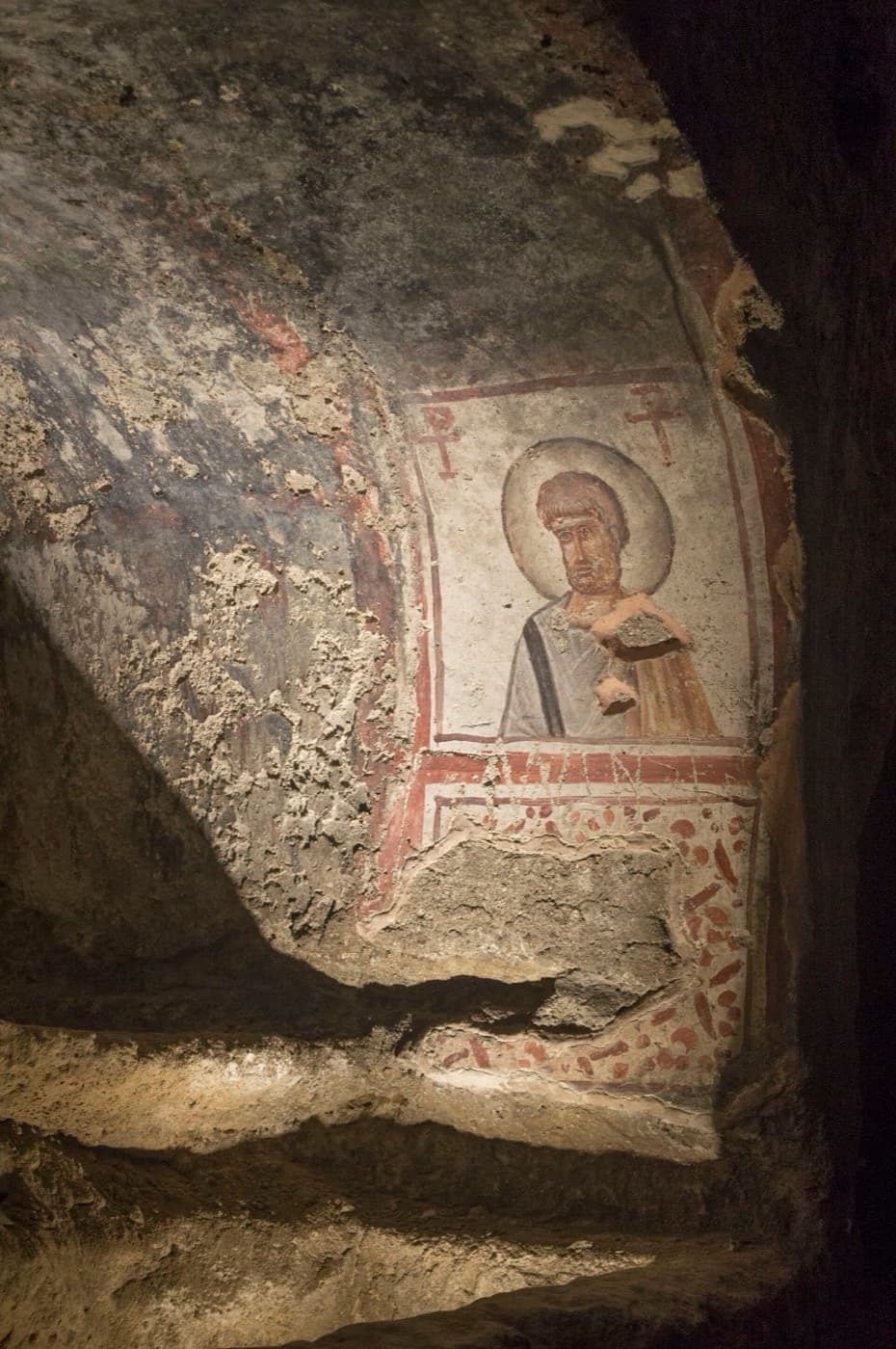
Catacombe di San Gennaro: The Hill of the Dead
An early Christian catacomb complex carved into the tuff of the Capodimonte hill, and the birthplace of the quarter's revival from below.
- 2
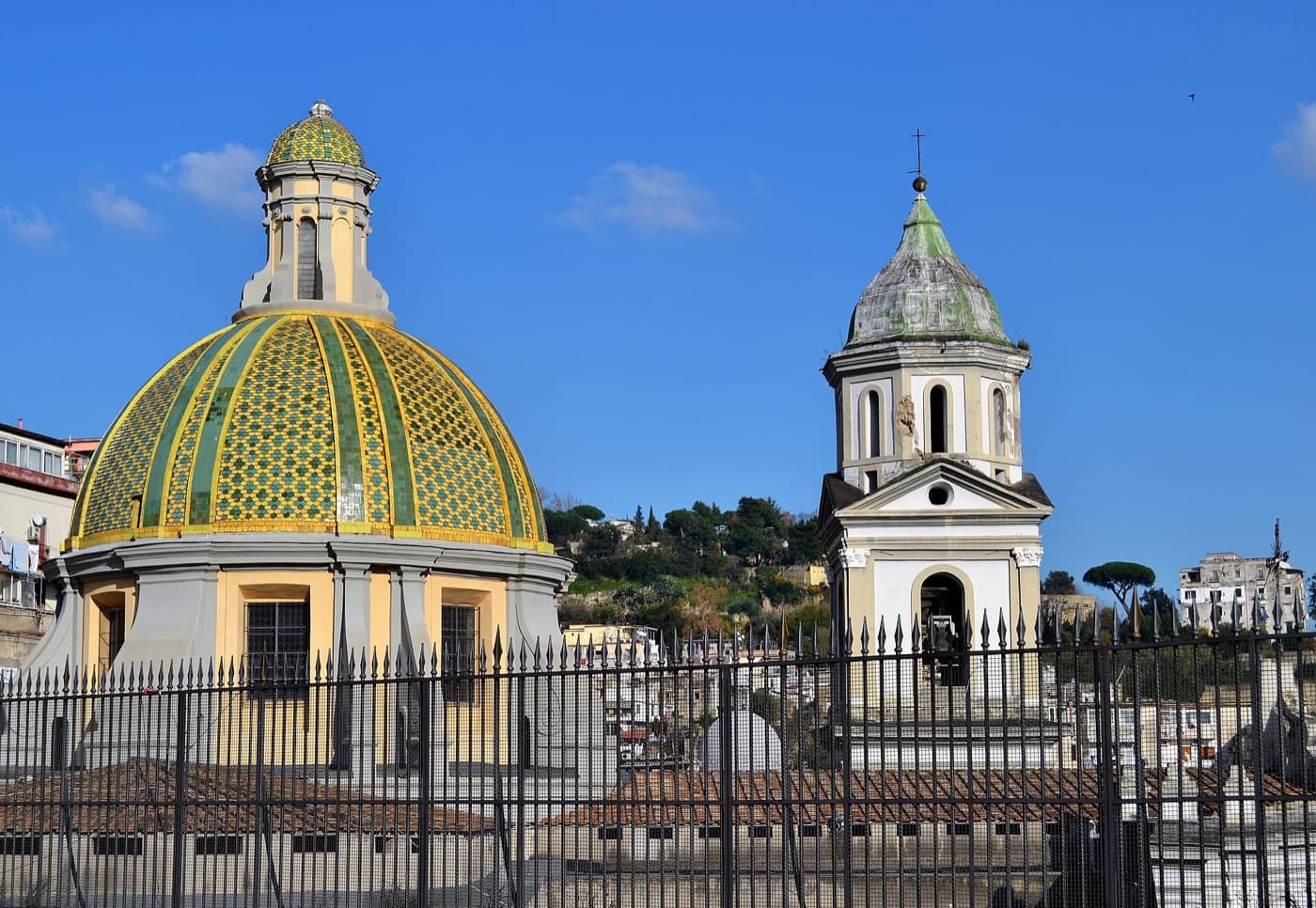
Basilica di Santa Maria della Sanita: The Church Over the Dead
A seventeenth century Greek-cross basilica with a majolica dome, built directly over a second early Christian catacomb.
- 3
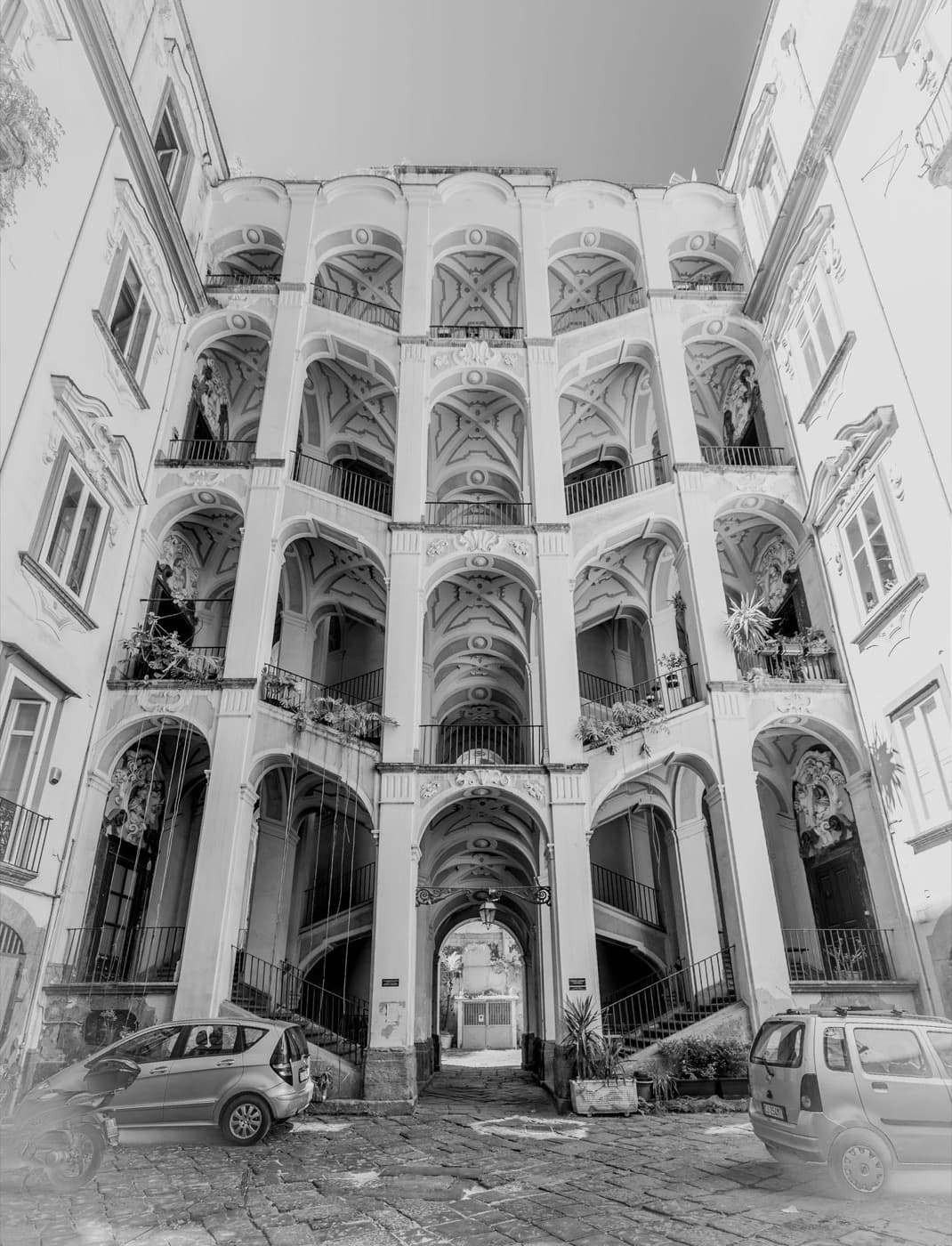
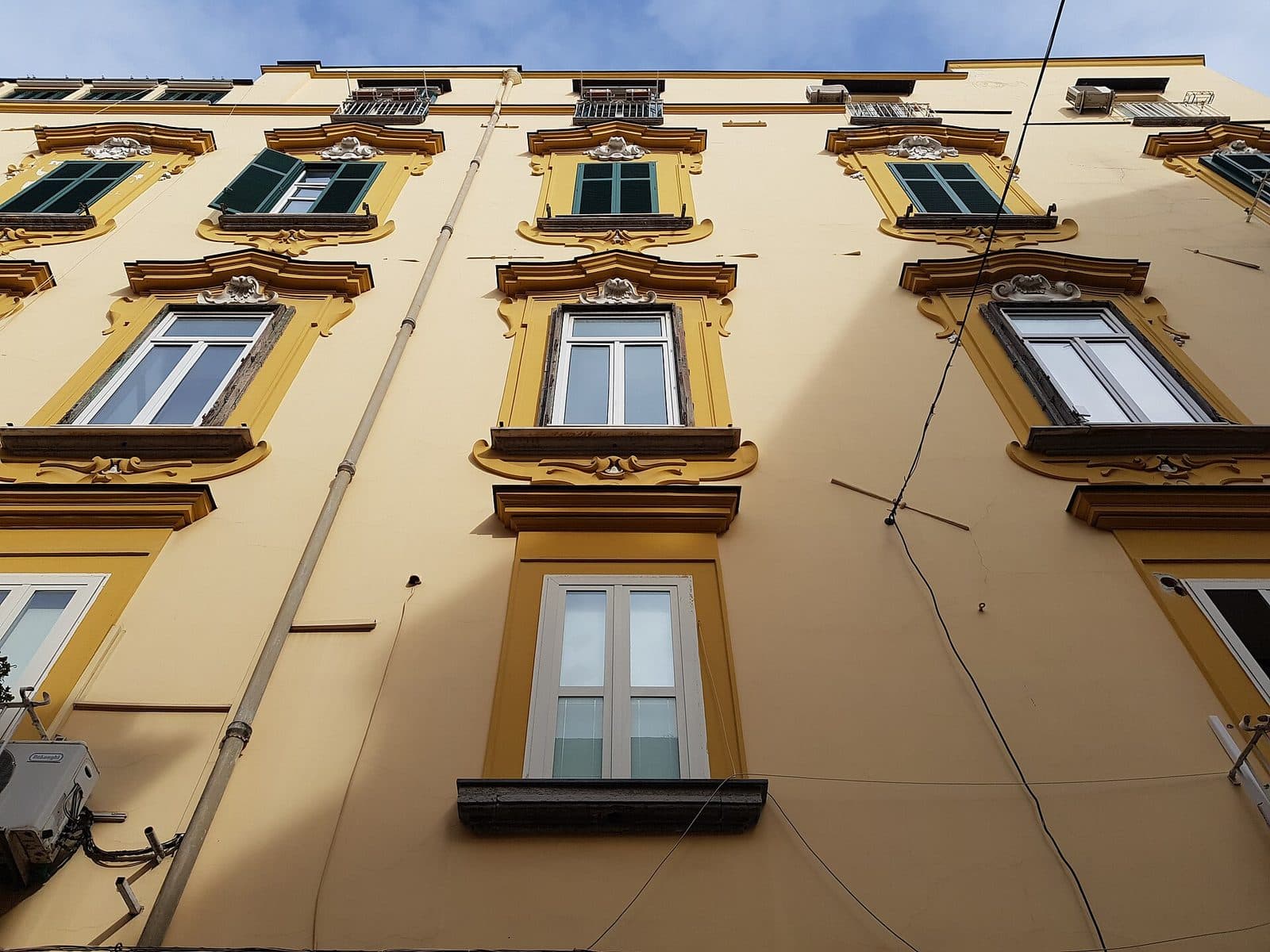
Palazzo dello Spagnolo: The Hawk-Wing Staircase
A rococo palace whose double-ramp courtyard staircase, nicknamed hawk wings, proves the quarter was once grand.
- 4
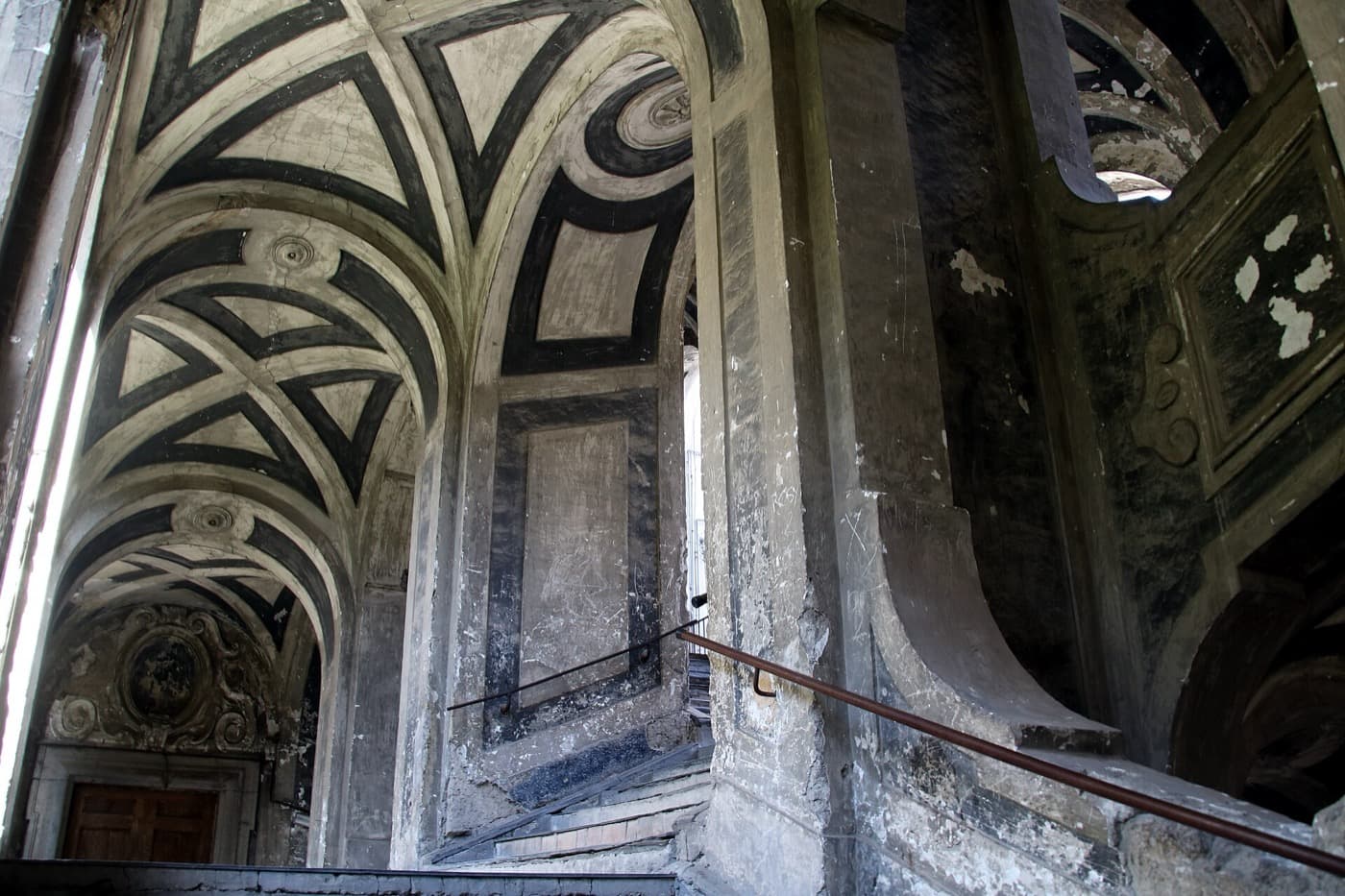
Palazzo Sanfelice: The Architect's Own House
The residence Ferdinando Sanfelice built for himself, whose daring staircase earned him a teasing Neapolitan nickname.
- 5
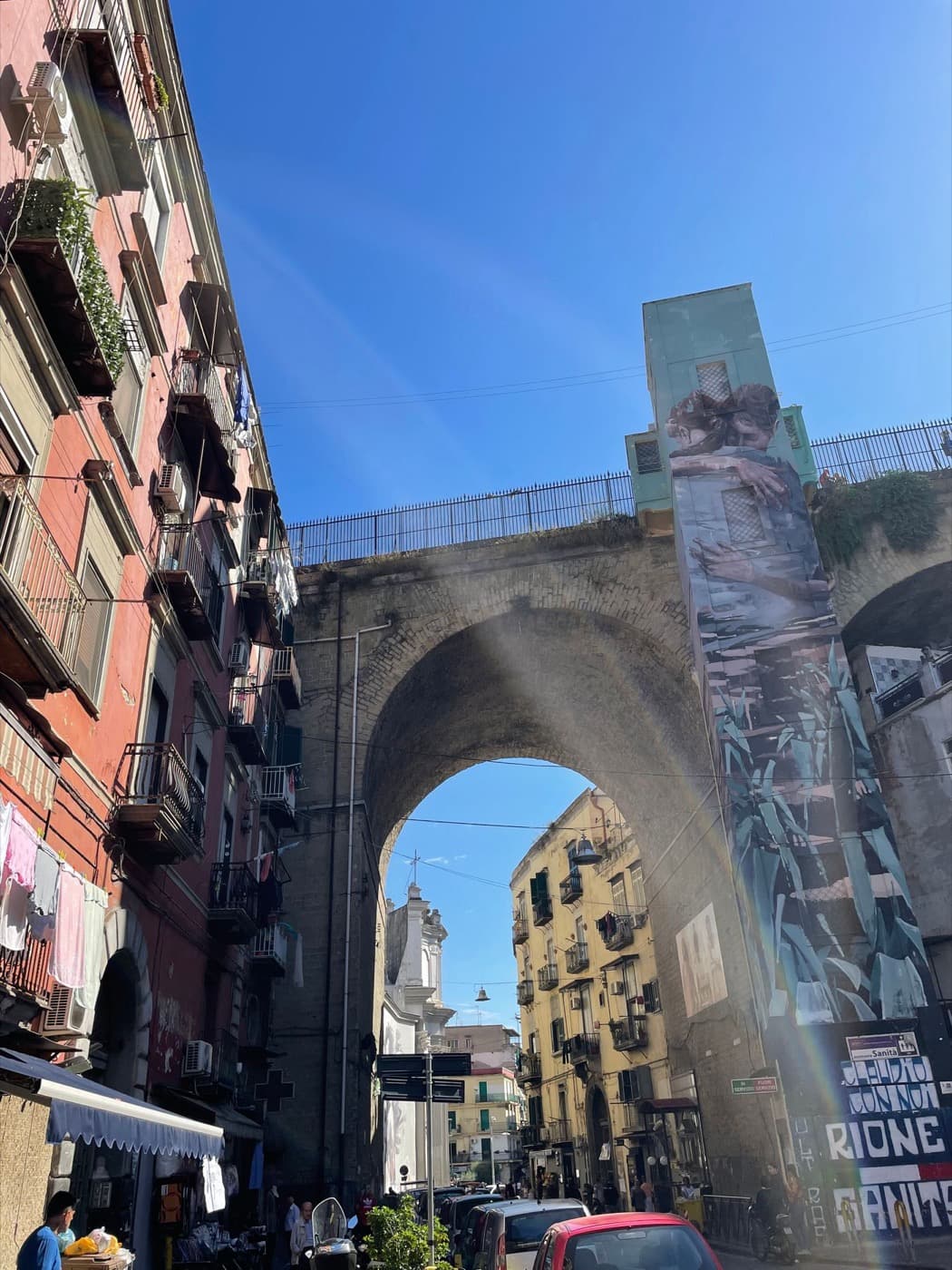
Ponte della Sanita: The Cut
A Napoleonic-era bridge, officially Ponte Maddalena Cerasuolo, whose construction vaulted over the valley and cut the quarter off from the city.
- 6
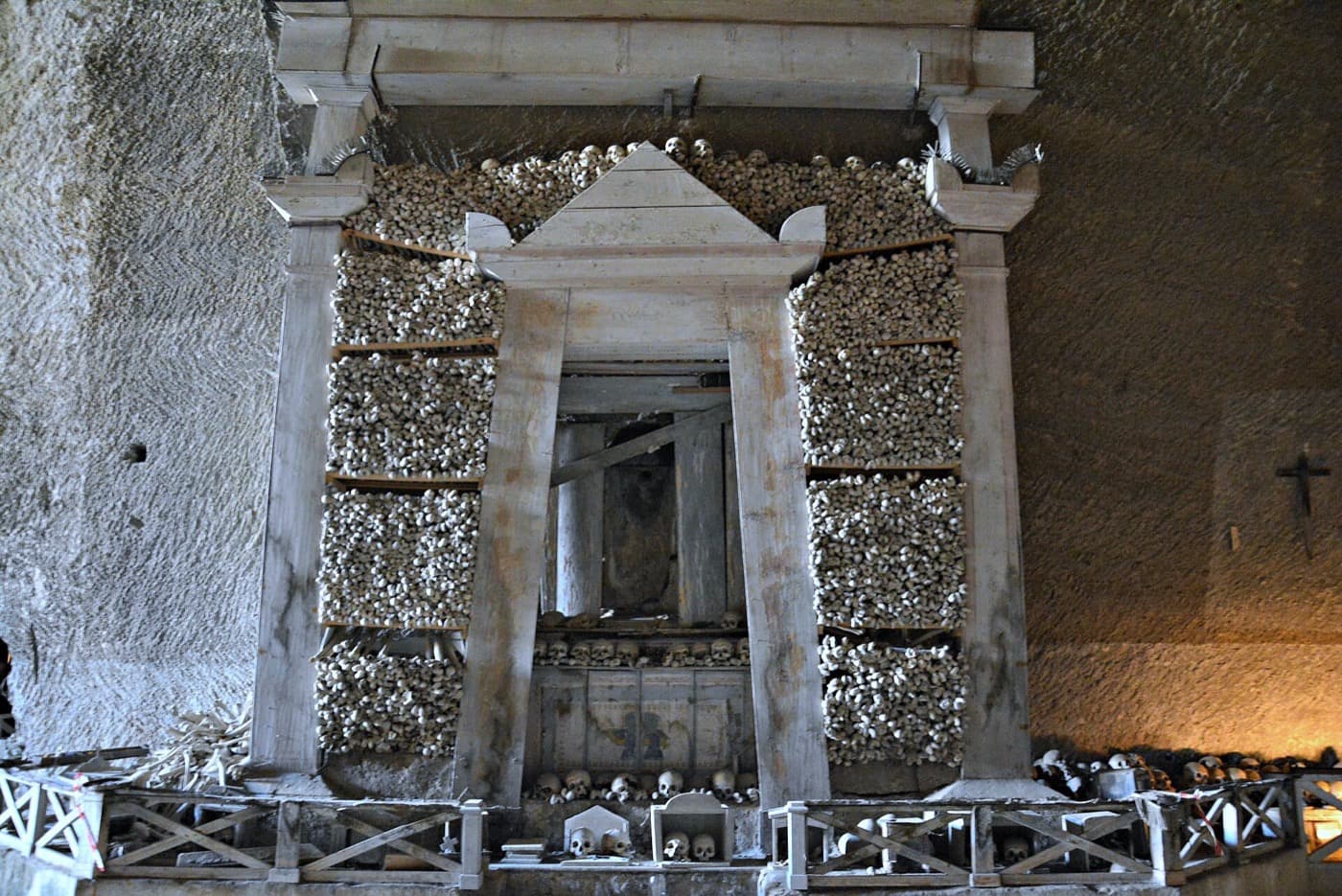
Cimitero delle Fontanelle: Keeping Faith With the Dead
An ossuary in a tuff cave, home to a Neapolitan devotion in which the living adopted and cared for anonymous skulls.
Details
Best Time to Visit
Mid-morning is ideal. Start around nine or ten in the morning so you can descend into the underground sites before the midday heat and be climbing to the Fontanelle in cooler light. Weekday mornings are quieter in the lanes and easier for the ticketed catacomb tours. Avoid the deep afternoon in high summer, when the valley traps heat and the climb to the ossuary is punishing. Spring and autumn give the kindest walking weather for the hills.
Pro Tips
- •Book the catacomb tours ahead. Both the Catacombe di San Gennaro and the San Gaudioso crypt under the basilica are guided and ticketed, and a combined ticket often covers both within twelve months, so buy them together if you plan to see both.
- •Do this walk downhill first. Start high at the San Gennaro catacombs on the Capodimonte slope, descend into the valley, and save the climb to the Fontanelle for the end so you are not fighting gravity twice.
- •The two palaces are free courtyards, not museums. Walk in through the entrance during daytime hours to see the staircases, keep your voice down since people live here, and do not wander into private stairwells or apartments.
- •Carry small change and a bottle of water. The lanes have public fountains and modest cafes, and the underground sites and the final climb make hydration matter more than you expect.
- •Confirm current Fontanelle access on the day. The ossuary reopened to regular public access in spring of two thousand and twenty-six after restoration and now uses timed booking, so check opening hours and any ticketing before you make the climb.
- •Let the quarter set your pace. The stops are short and skippable. If a courtyard or the basilica pulls you in, linger, and if a leg feels long, that transect between the palaces and the ossuary is meant to be walked slowly.
Safety & Precautions
- •Keep valuables secure and close to your body. Like any dense Neapolitan quarter and its approaches, busy lanes and transit points attract pickpockets, so use a zipped bag worn in front and stay aware in crowds.
- •Watch your footing throughout. The Rione Sanita has uneven cobbles, worn steps, and a real descent into the valley followed by a climb to the Fontanelle, so wear sturdy shoes and take the underground stairs slowly.
- •Dress respectfully for the church and crypts. The Basilica di Santa Maria della Sanita is an active place of worship, so cover shoulders and knees, and keep quiet inside the sacred and burial spaces.
- •Plan around the midday heat. The valley holds warmth and shade is uneven, so carry water, use the cooler underground sites in the hottest hours, and save the exposed climb for morning or late afternoon.
Travel advisory: Exercise Increased Caution (Level 2).
Gallery
Related Reading
Go deeper on what you'll see, hear, and walk through.
Overview
Best Self-Guided Walking Tours in Naples (2026)
3 min
Overview
Naples Travel Guide: Days, Transport, Timing, Safety, and Budget
7 min
Overview
One Day in Naples on Foot: A Walkable Morning-to-Evening Itinerary
6 min
Thematic
Naples Read in Section: The Vertical City Above and Below the Street
8 min
Companion
The Catacombs That Taught the Rione Sanità to Rewrite Itself
6 min
Deep dive
Cimitero delle Fontanelle: Naples' Cave Where the Living Adopted the Dead
6 min

Read
What to Eat in Naples: The Dishes, Their Origins, and How to Order
6 min
Read the walk
The full story of The Quarter They Feared, in words. Prefer to listen? Play it narrated, from home or on location.
Introduction
There is a valley in the middle of Naples, in Italy, that the city above once decided to forget. It is called the Rione Sanita, and for a long time you were told to stay out. Poverty lived here, and so, people said, did crime. But the Sanita has a habit of surprising the outsiders who fear it. The things that once marked it as a place of the dead, its early Christian catacombs, its hidden ossuary, are exactly the things its own young people turned into work and dignity. This walk follows that reversal. It runs about four kilometres over roughly two and a half to three hours, across six stops, and it has real hills. You will start high on the Capodimonte slope, descend into the crowded valley, and climb once more at the end. Bring water and shoes you trust on old stone. Expect narrow lanes, laundry strung overhead, and a warmth that has nothing to do with tourism. Two of your stops go underground and need tickets. Two are palace courtyards you simply walk into. One is a church, and one is a bridge you will read from beneath. Move at your own pace. Linger where you want, skip what you do not, and let the quarter reveal itself. When you arrive at the Catacombe di San Gennaro on the Capodimonte hill, begin with stop one.
1. Catacombe di San Gennaro: The Hill of the Dead
You begin above the valley, not in it, and that is deliberate. Cut into the soft tuff of the Capodimonte hill are the Catacombe di San Gennaro, the largest Christian catacomb complex in southern Italy. According to Wikipedia, that is the honest measure, southern Italy, not the whole country, and it is enormous enough. Two levels descend through the rock, San Gennaro Superiore and San Gennaro Inferiore. The lower level goes back to the third and fourth centuries, and the origins reach further still, to the second century, when this began as the tomb of a single noble family. On the walls are some of the earliest Christian frescoes in the region: lambs, peacocks, quiet symbols of a faith still learning how to picture itself. In the fifth century the complex was consecrated to San Gennaro, Saint Januarius, the patron saint of Naples, when his remains were entombed here. They did not stay. In the ninth century a bishop moved them up to the Cathedral, so do not come looking for the saint himself. What is here now matters more for our story. In the year two thousand and six, local young people formed a cooperative called La Paranza and set about recovering this place, working with the association l'Altra Napoli, to make jobs out of the quarter's buried inheritance. That is the whole thesis of this walk in one gesture. The people the city feared reached into the ground beneath their own feet and pulled up a future. Take the guided descent if you can. Then climb back into the light and start walking down, toward the dome and the valley below.
2. Basilica di Santa Maria della Sanita: The Church Over the Dead
Down in the heart of the valley stands a church that gives the whole quarter its name. The Basilica di Santa Maria della Sanita was built between the years sixteen oh two and sixteen thirteen, and it was designed by a Dominican architect, Giuseppe Nuvolo, known as Fra Nuvolo. He laid it out on a Greek cross plan, a centralized shape, ambitious and unusual, and crowned it with a majolica dome in yellow and green that you can spot from across the city. It is also called San Vincenzo della Sanita, after a venerated image of Saint Vincent Ferrer kept inside. Step in. The main altar rises on spiraling baroque staircases sheathed in colored marble, and there is a polychrome marble pulpit designed by Dionisio Lazzari. But the reason this church sits exactly here is beneath your feet. It was built over the Catacombs of San Gaudioso, one of the most important early Christian cemeteries in Naples after San Gennaro, and the burial place of Gaudioso, a bishop who had come from North Africa. The entrance to that crypt is under the altar. Notice the pattern. In this quarter, the living do not turn their backs on the dead. They build their brightest church directly on top of them, dome and all. There is also, kept here, an image of the Madonna della Sanita from the fifth or sixth century, cited as among the oldest depictions of the Virgin in the region of Campania. Sit a moment under that green and yellow dome. This is the middle of the valley, and everything else on this walk radiates from it.
3. Palazzo dello Spagnolo: The Hawk-Wing Staircase
If you came expecting only poverty, this courtyard corrects you. The Palazzo dello Spagnolo was built in the year seventeen thirty-eight, commissioned by Nicola Moscati, the Marchese di Poppano, and attributed to the architect Ferdinando Sanfelice. I say attributed, because that…
Full narration for this stop unlocks with the tour.
4. Palazzo Sanfelice: The Architect's Own House
A short walk brings you to a second great staircase, and this one the architect built for himself. The Palazzo Sanfelice, on Via Sanita, went up between the years seventeen twenty-four and seventeen twenty-six as the home of Ferdinando Sanfelice, architect and painter. He lived…
Full narration for this stop unlocks with the tour.
5. Ponte della Sanita: The Cut
Now stand beneath the bridge and understand why the Sanita became a world apart. The Ponte della Sanita was completed in the years around eighteen oh eight and eighteen oh nine, during the Napoleonic Kingdom of Naples under Joachim Murat. Not by Napoleon himself, that is a…
Full narration for this stop unlocks with the tour.
6. Cimitero delle Fontanelle: Keeping Faith With the Dead
You climb one last time to close the loop the catacombs opened. The Cimitero delle Fontanelle is an ossuary set inside a cave in the tuff hillside, at Via Fontanelle eighty, in the Materdei and Stella section. It was once a quarry, and it takes its name, Fontanelle, little…
Full narration for this stop unlocks with the tour.