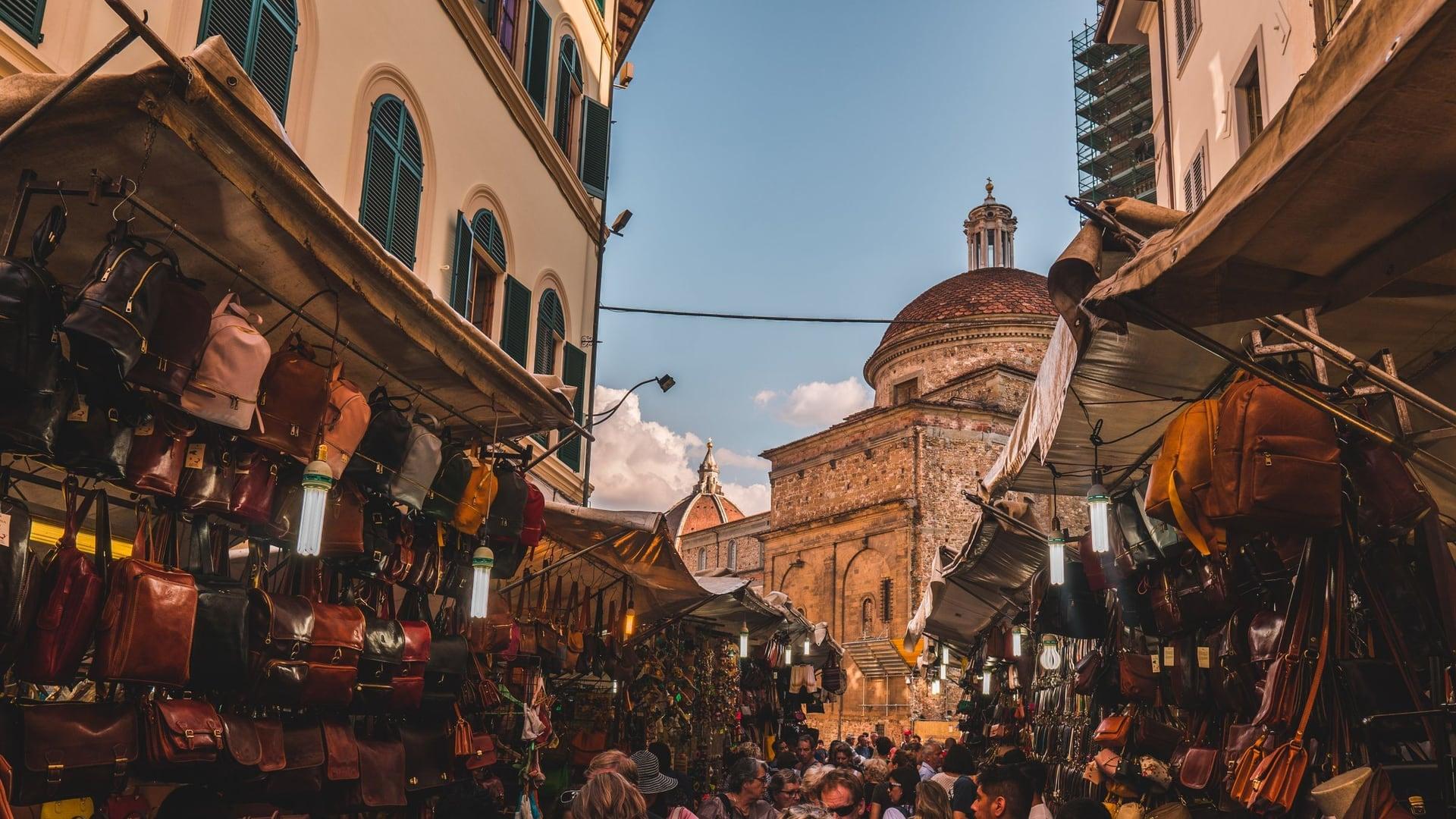
From the Mercato Centrale past the Medici Chapels, San Lorenzo and the Medici palace, up to the Accademia and San Marco, through the Innocenti's square to the Rotonda, ending on Via dei Servi facing the dome.
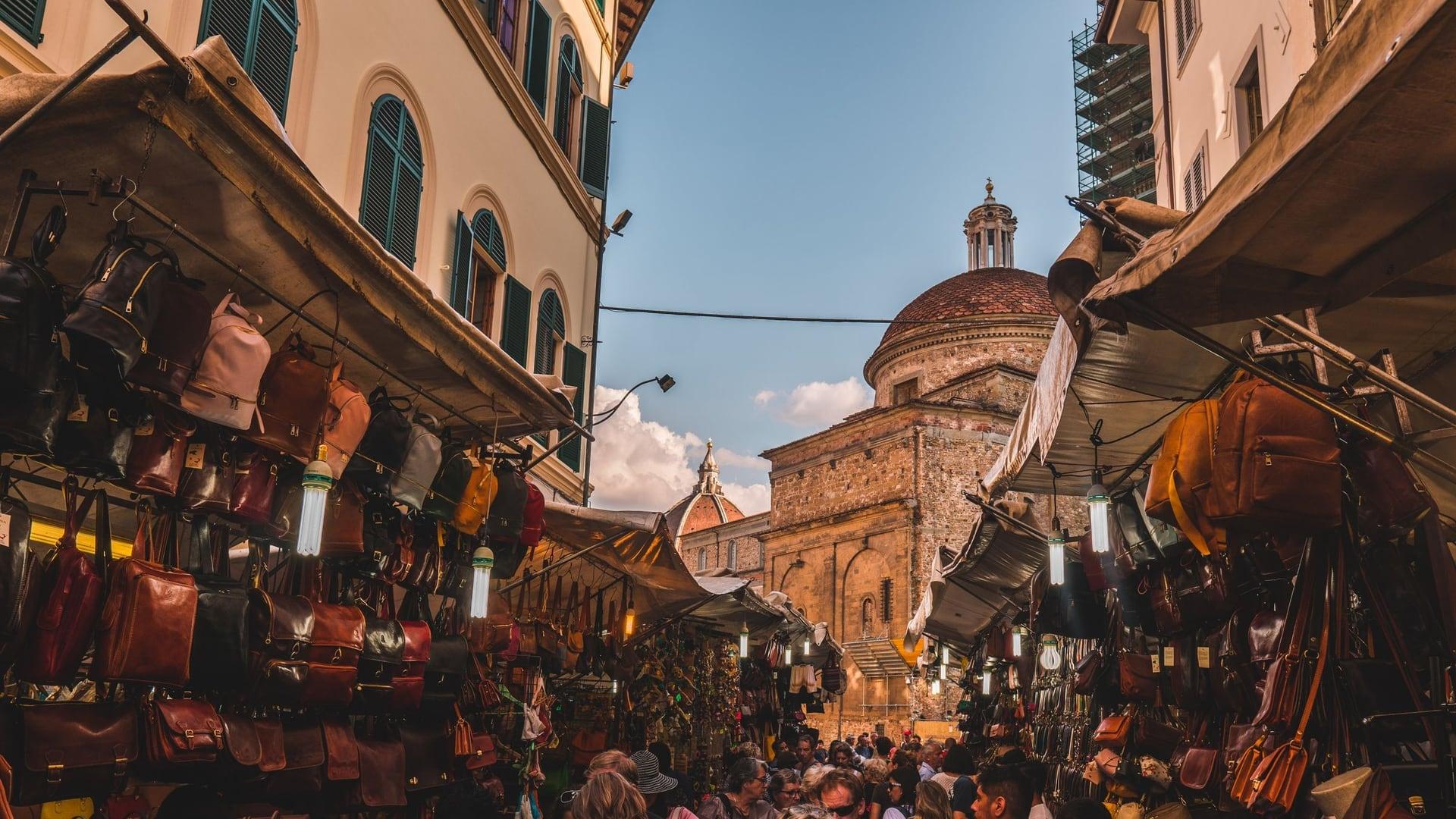
Start · Mercato Centrale: Iron and Glass
DirectionsStops
- 1
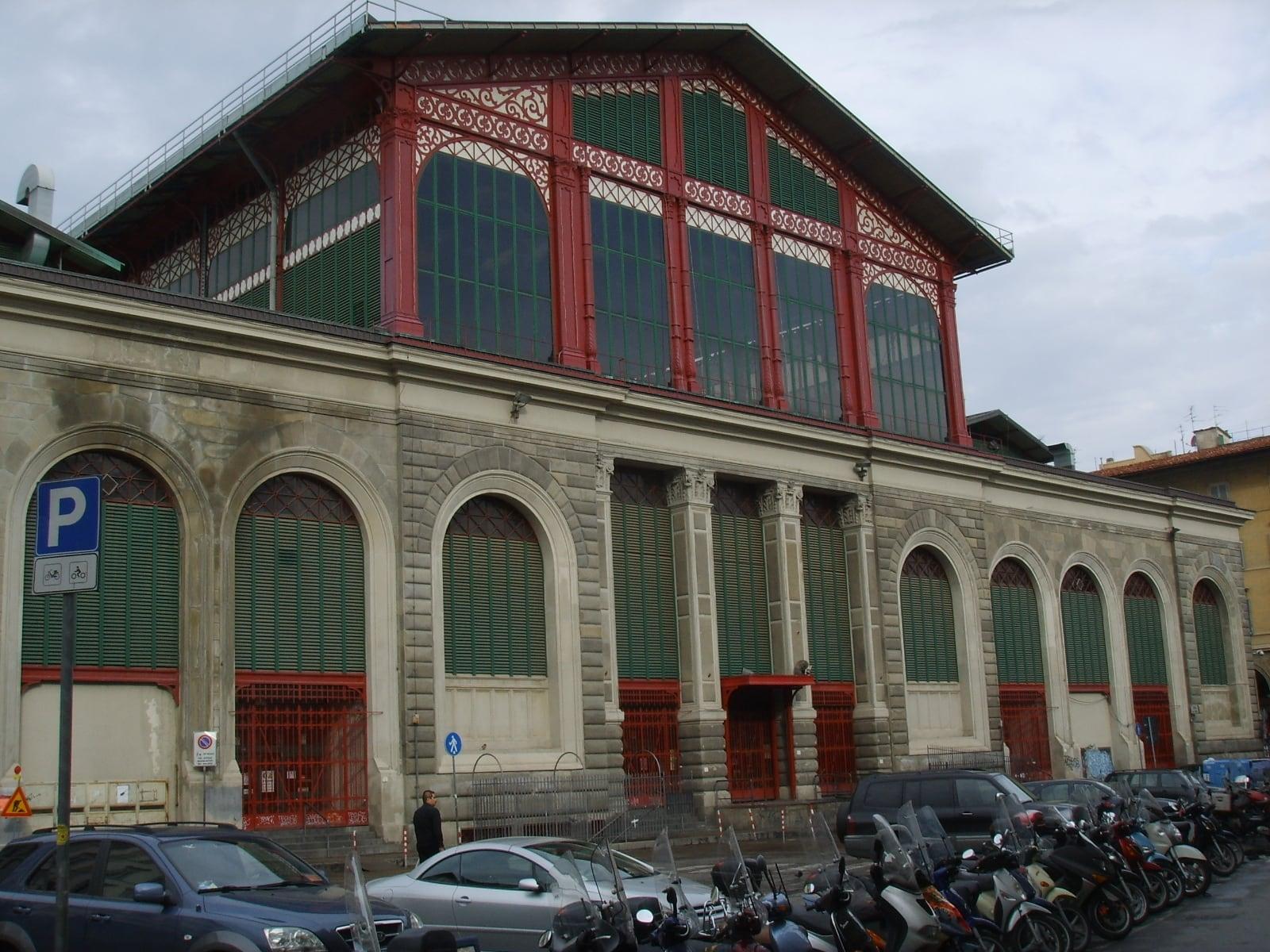
Mercato Centrale: Iron and Glass
An iron market hall copied from Paris. Florence's central market, opened in 1874 on the model of the Paris Halles, where the walk begins.
- 2
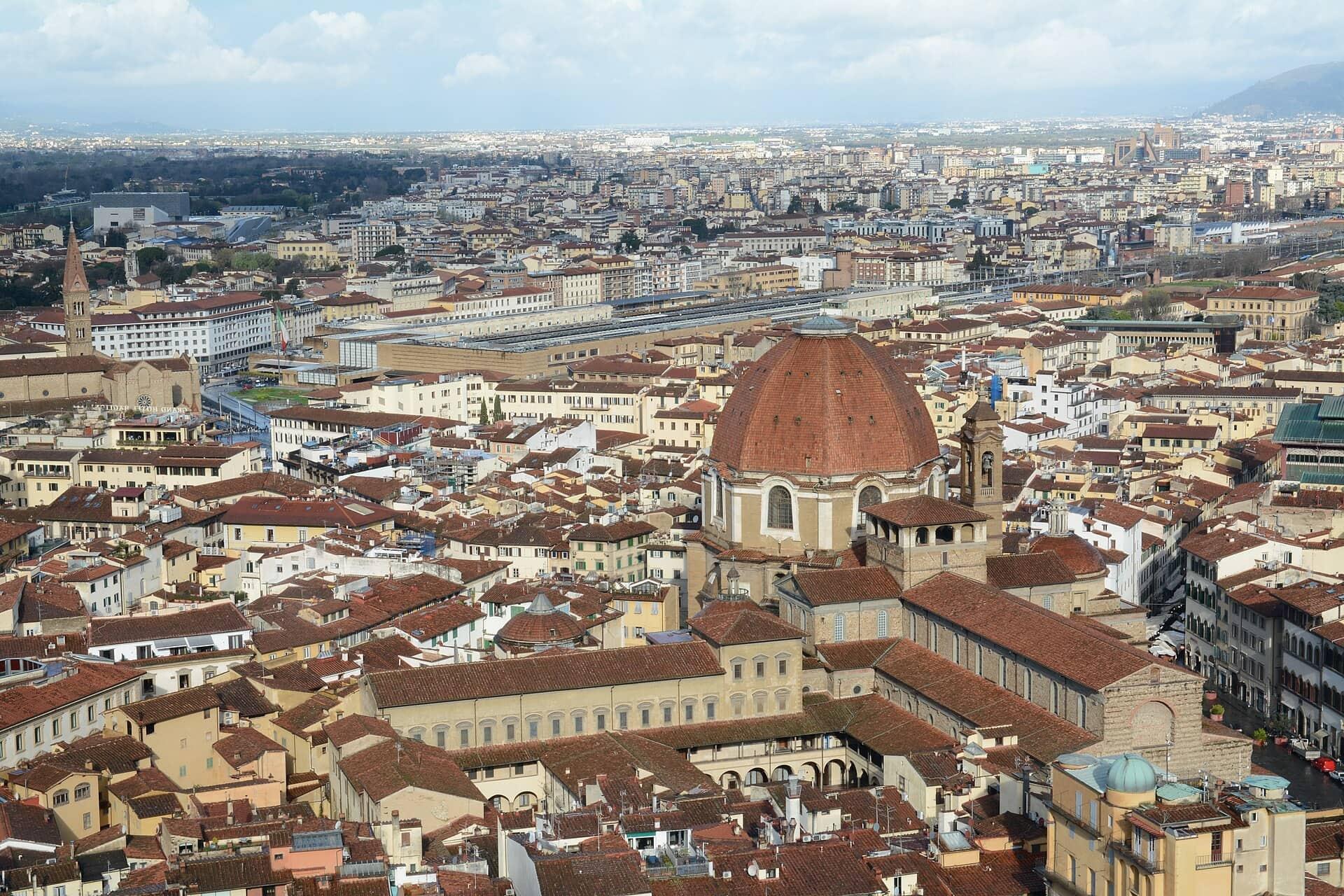
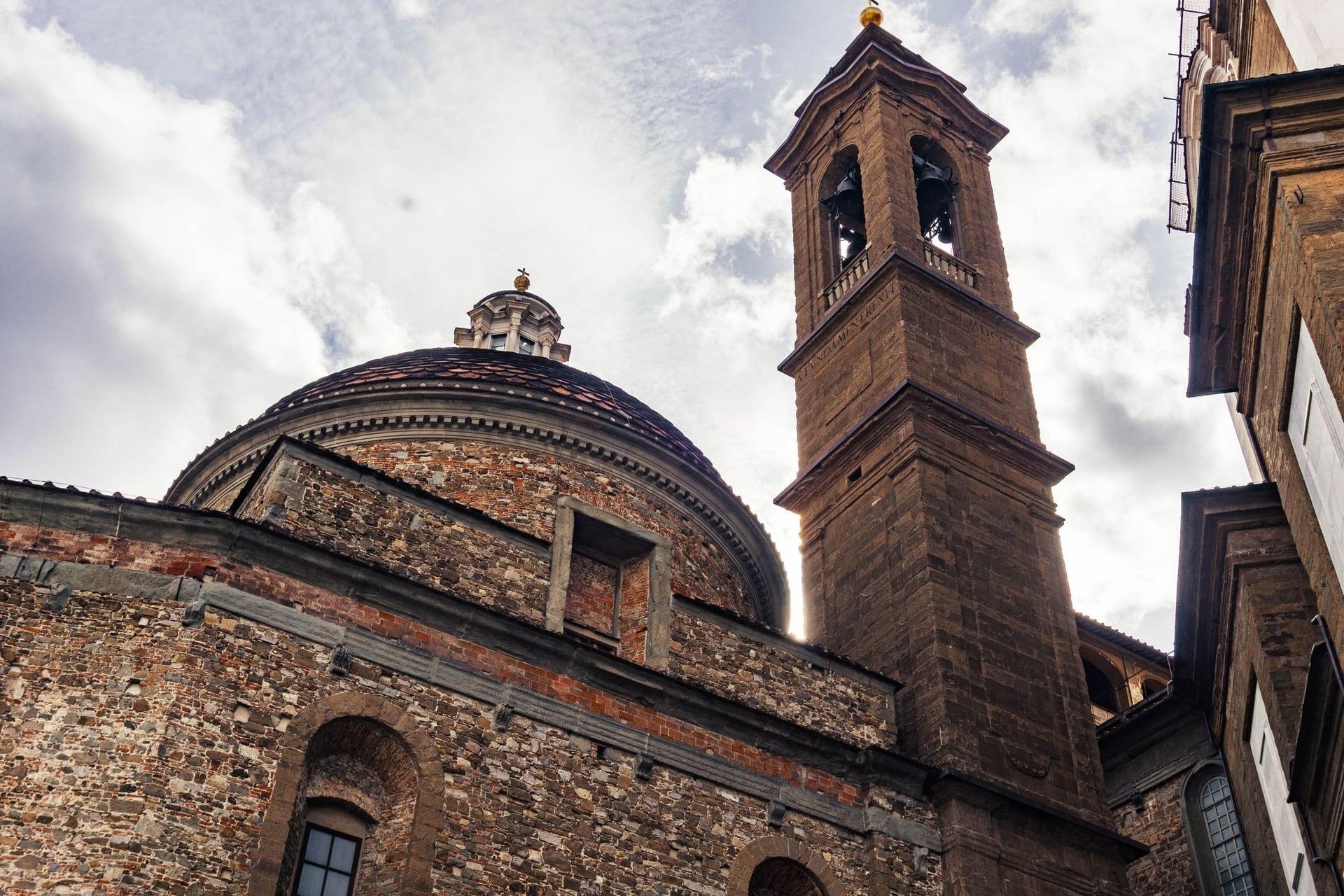
Medici Chapels: The Grand Dukes' Dome
The Medici grand dukes lie under this dome. The family's mausoleum and Michelangelo's New Sacristy, a tomb finished by the dynasty that came next.
- 3
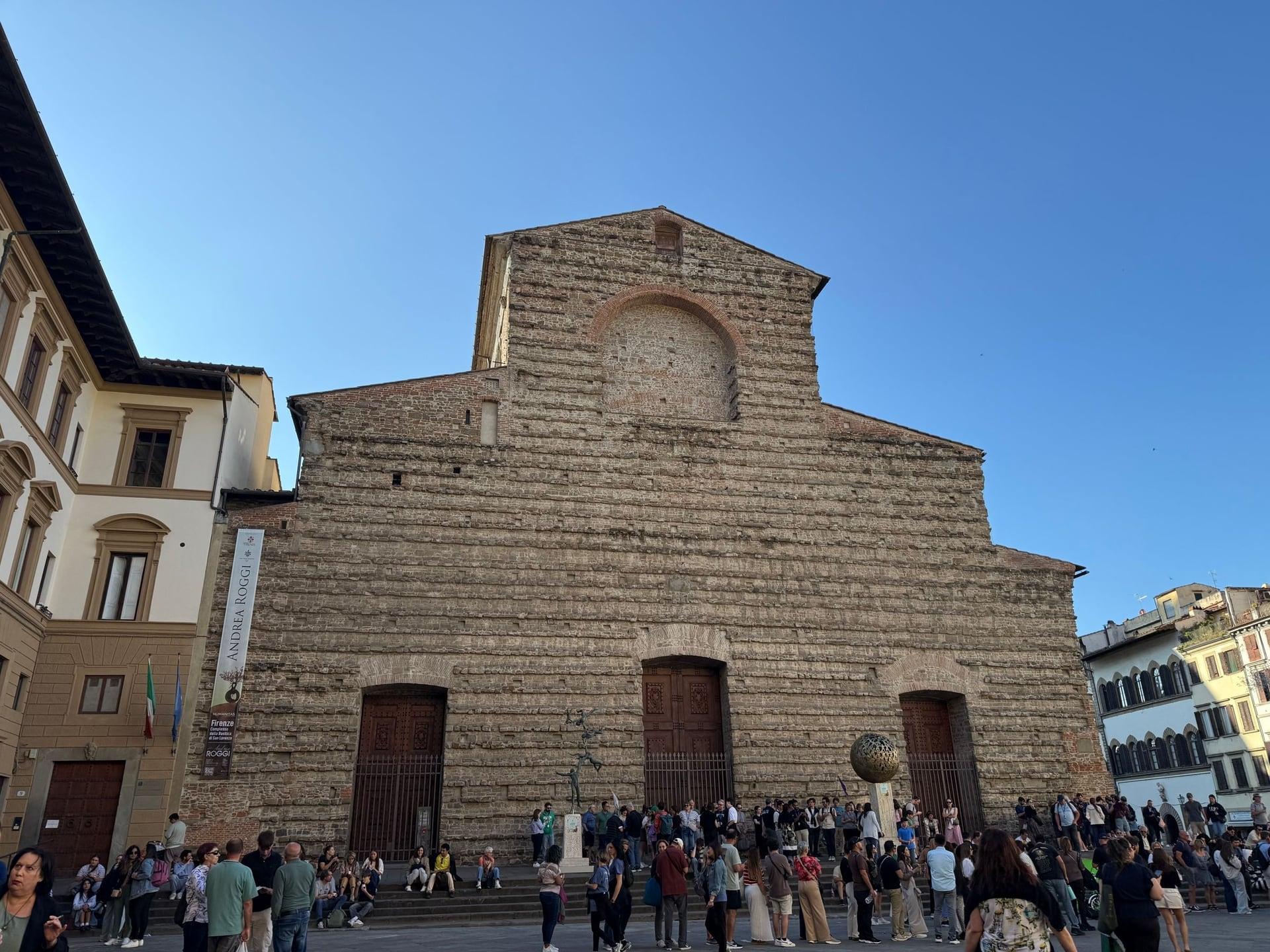
San Lorenzo: The Front Never Built
The church still waits for its marble front. Brunelleschi's Medici church, whose front Michelangelo designed in a wooden model and never built.
- 4
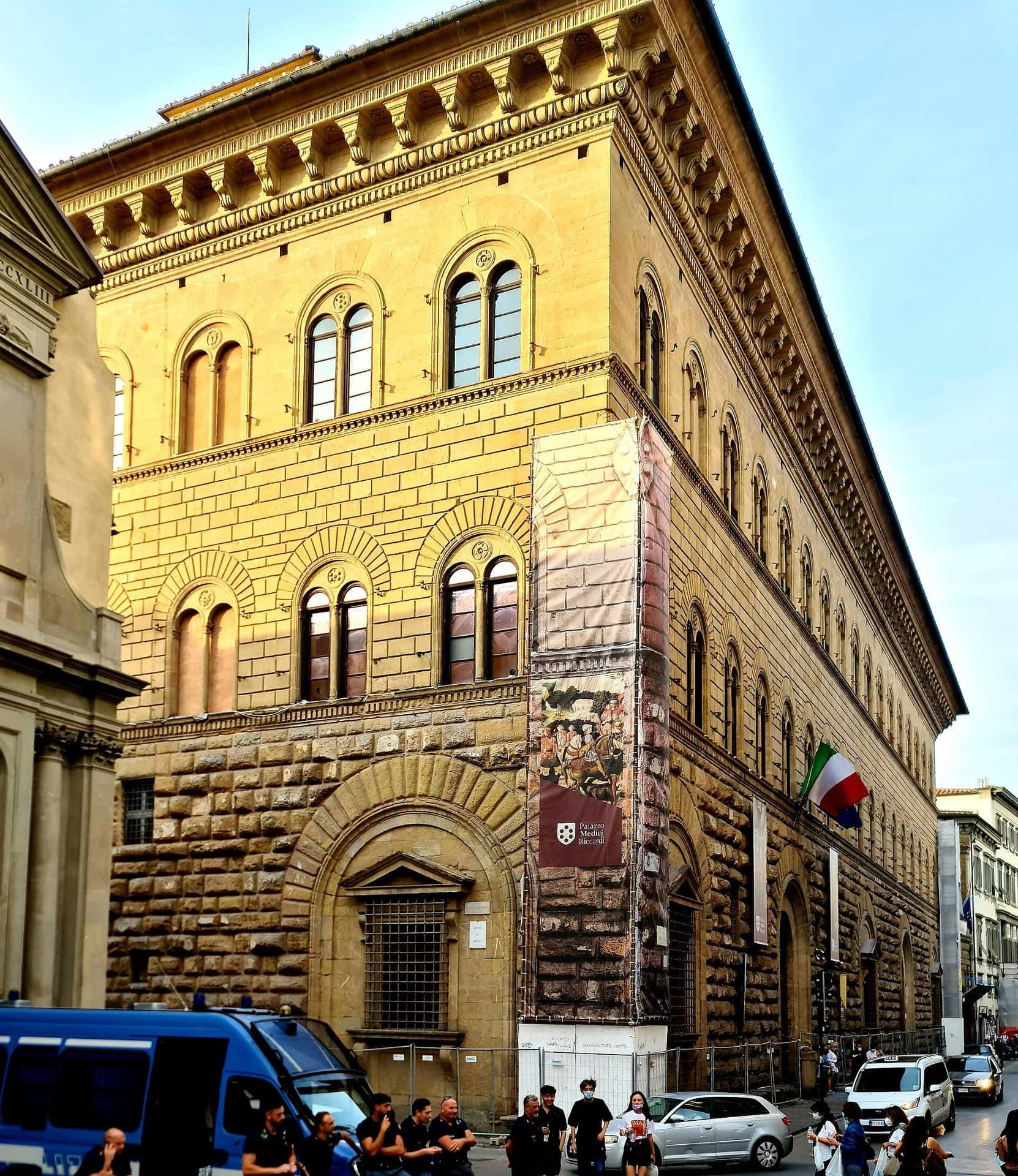
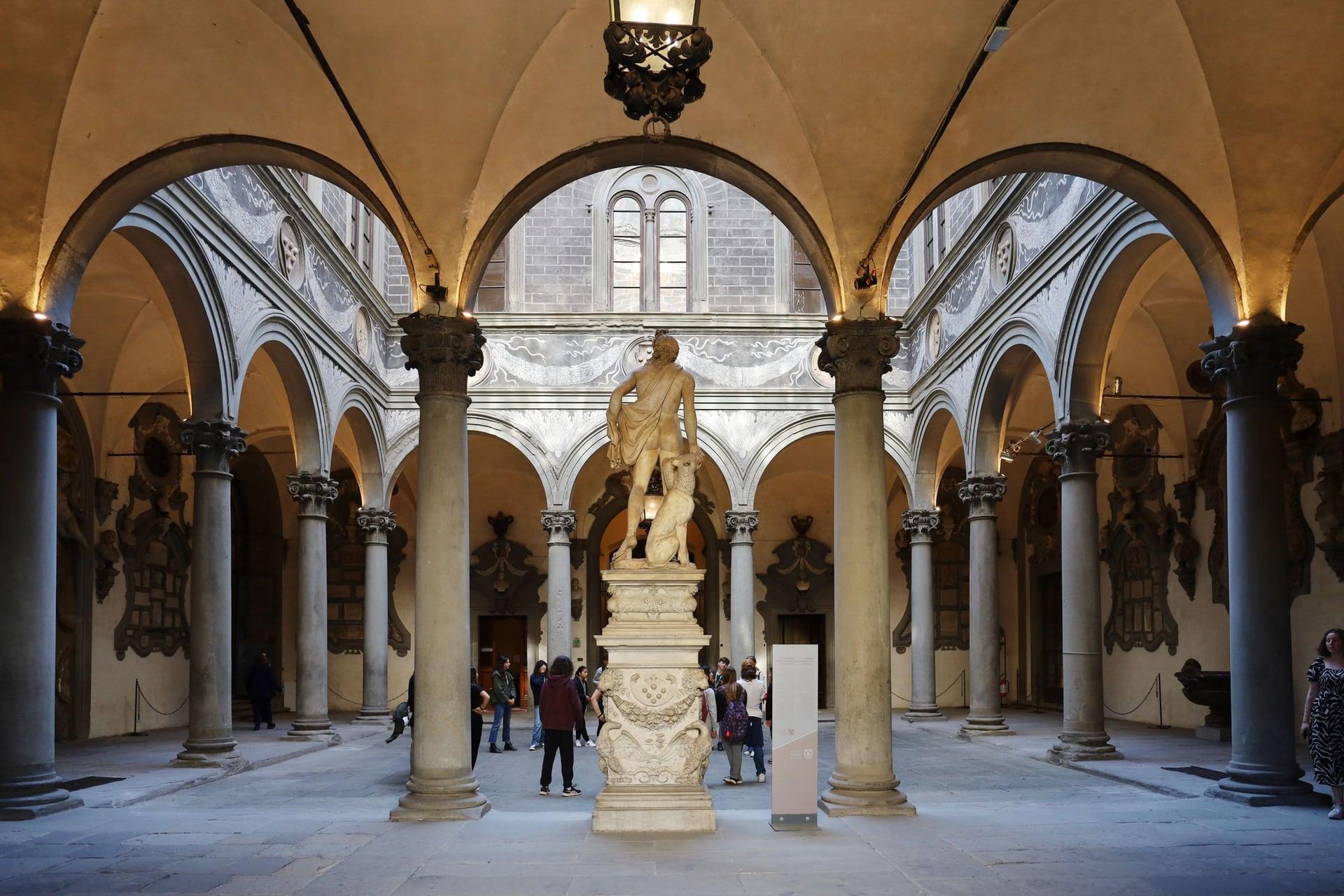
Palazzo Medici Riccardi: The Model Palace
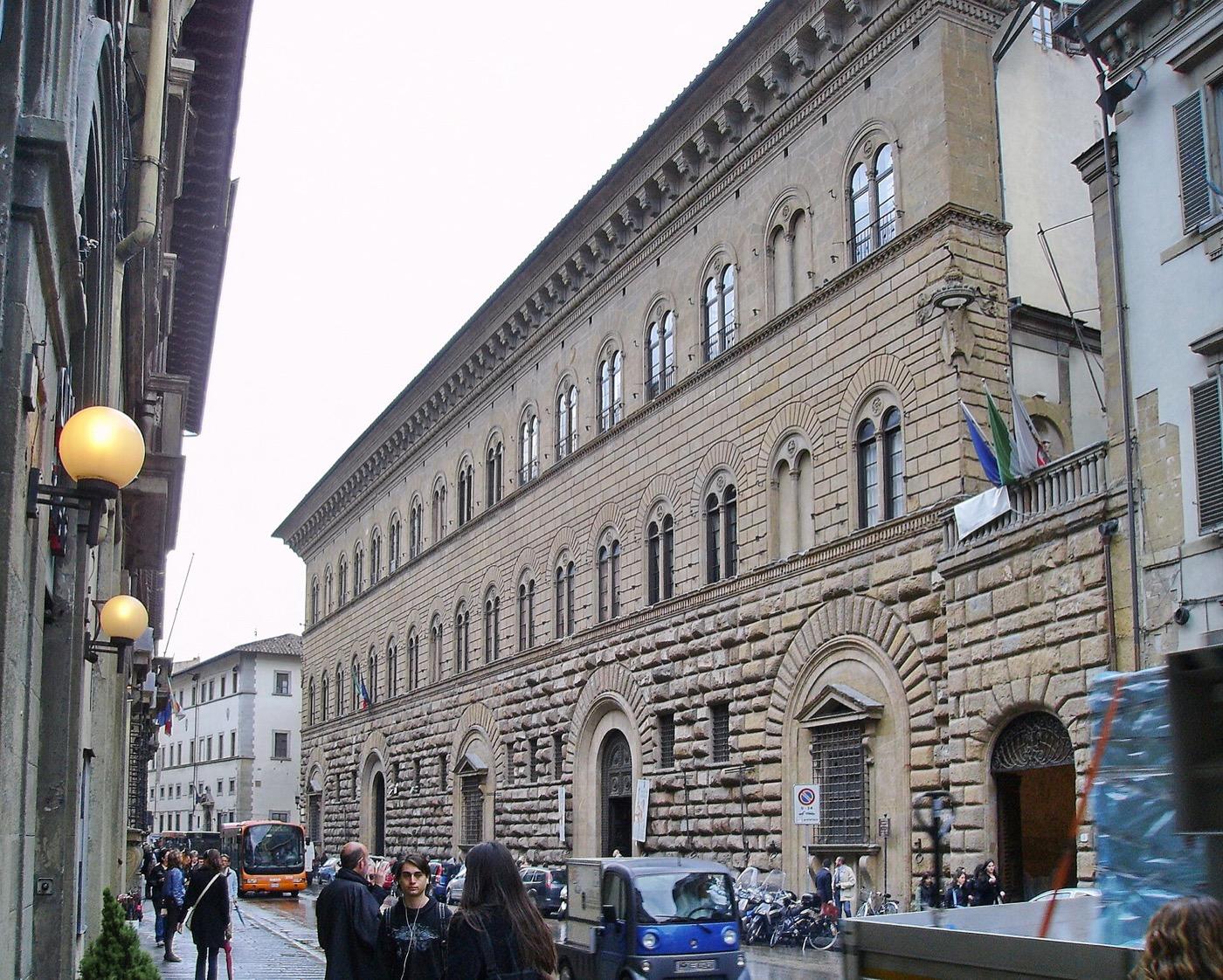
The palace Florence took as its model. Cosimo the Elder's palace, read from its corner: stone graded rough to smooth and the kneeling windows.
- 5
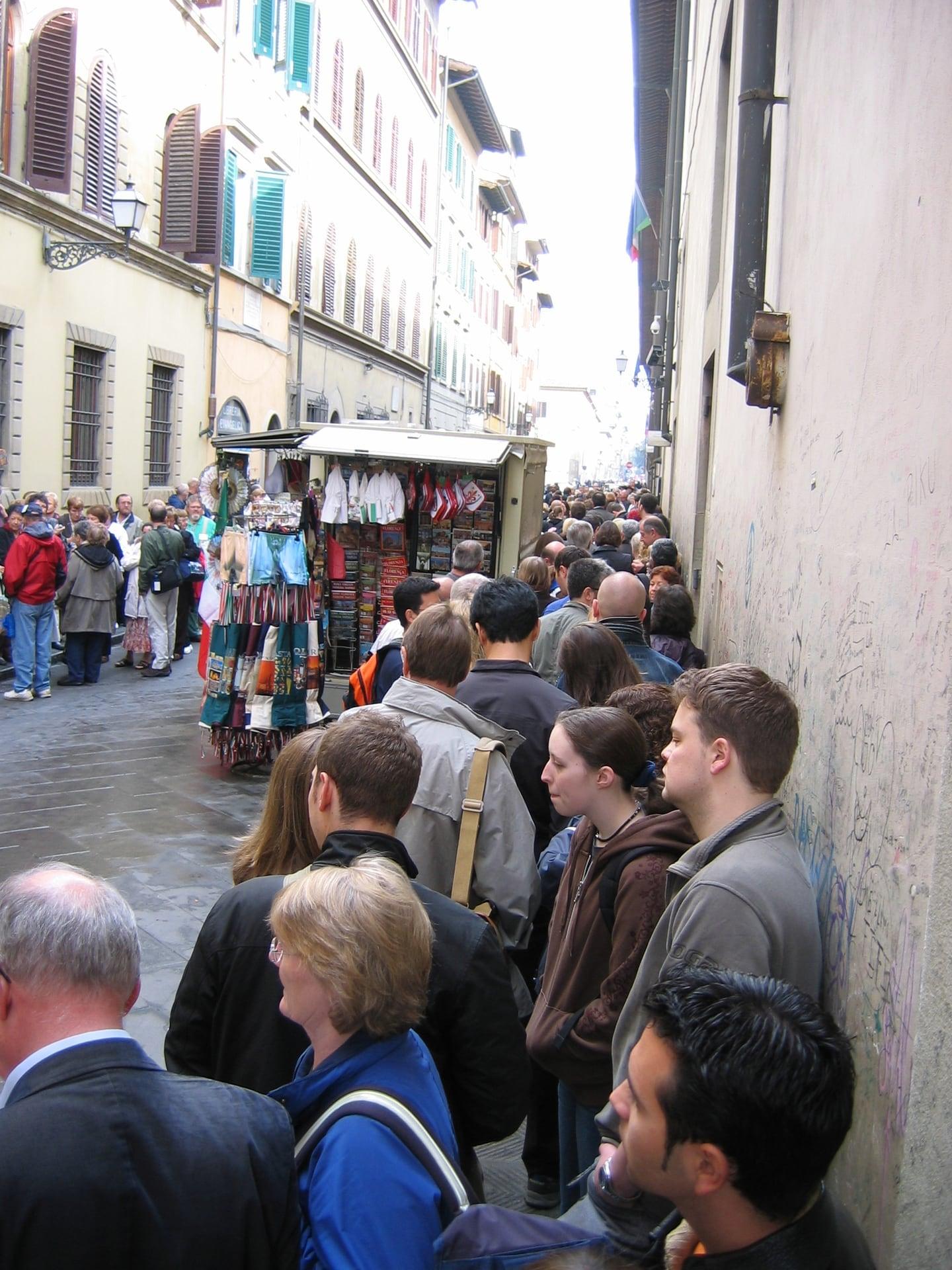
Galleria dell'Accademia: David's Door
The door where the David waits inside. Why Michelangelo's statue, made for the cathedral, left Piazza della Signoria for this street in 1873.
- 6
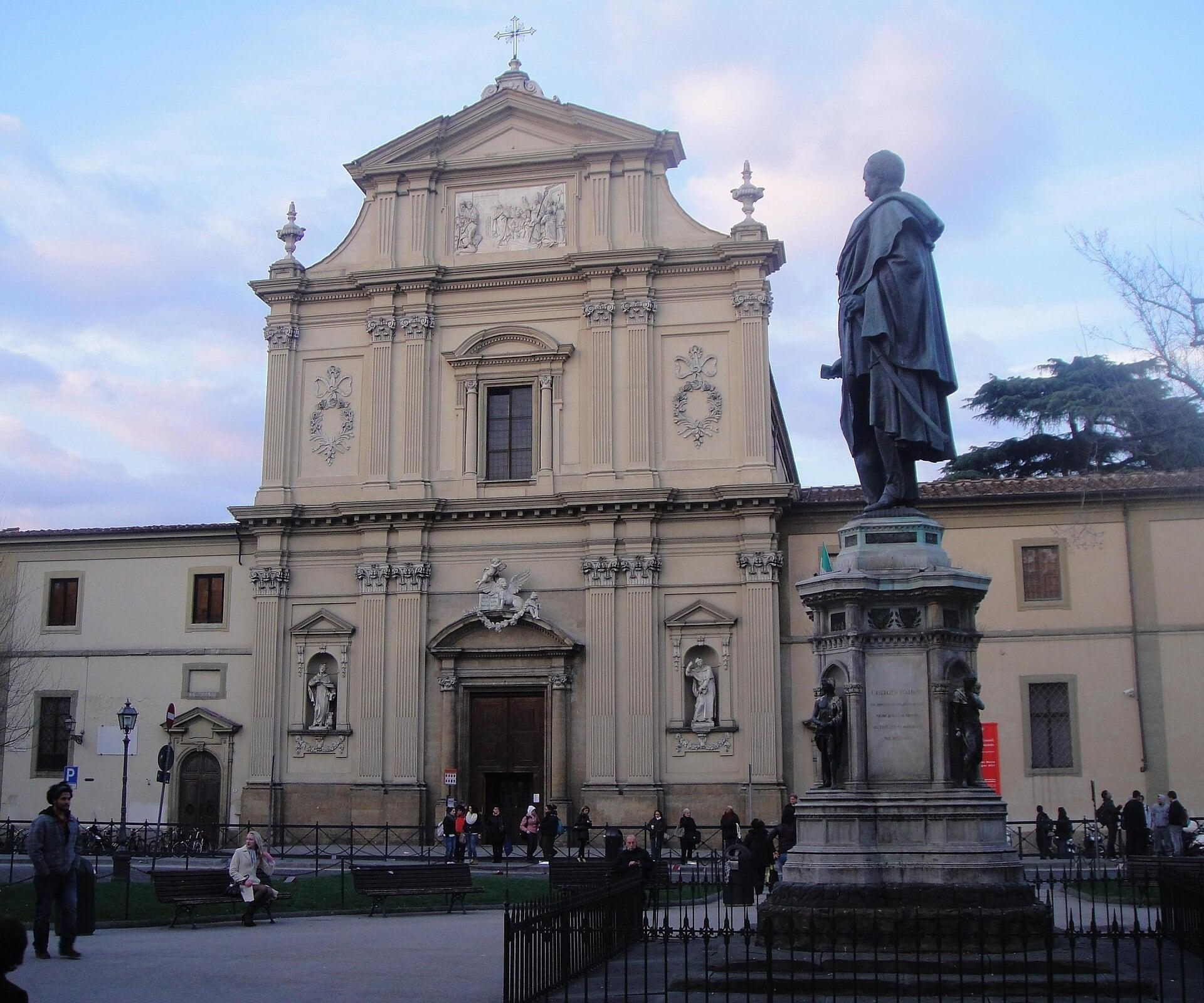
San Marco: The Painter and the Preacher
Cosimo paid for this convent of friars. San Marco, where Fra Angelico painted the cells and Savonarola was prior until his arrest in 1498.
- 7
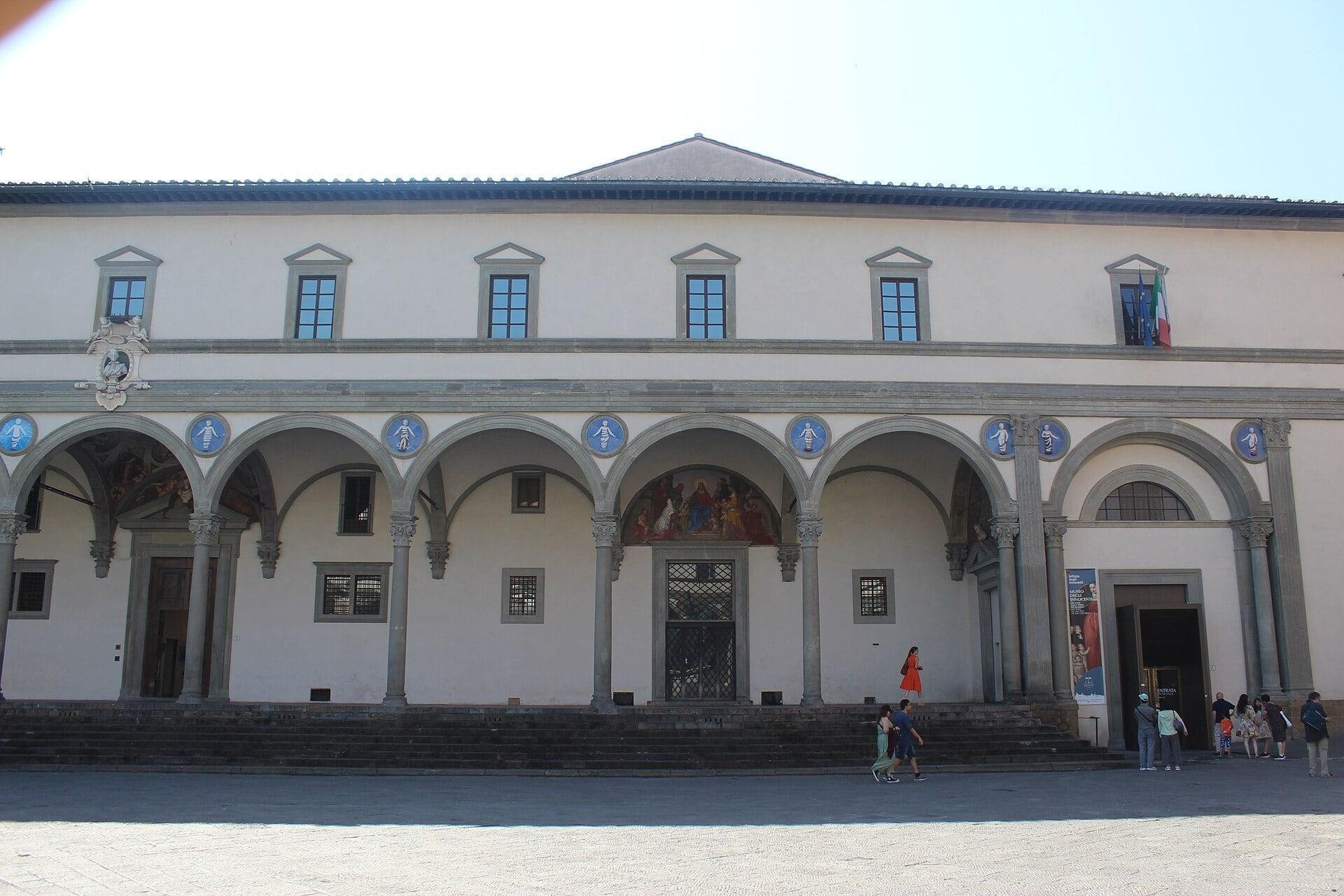
Spedale degli Innocenti: Arcade for Foundlings
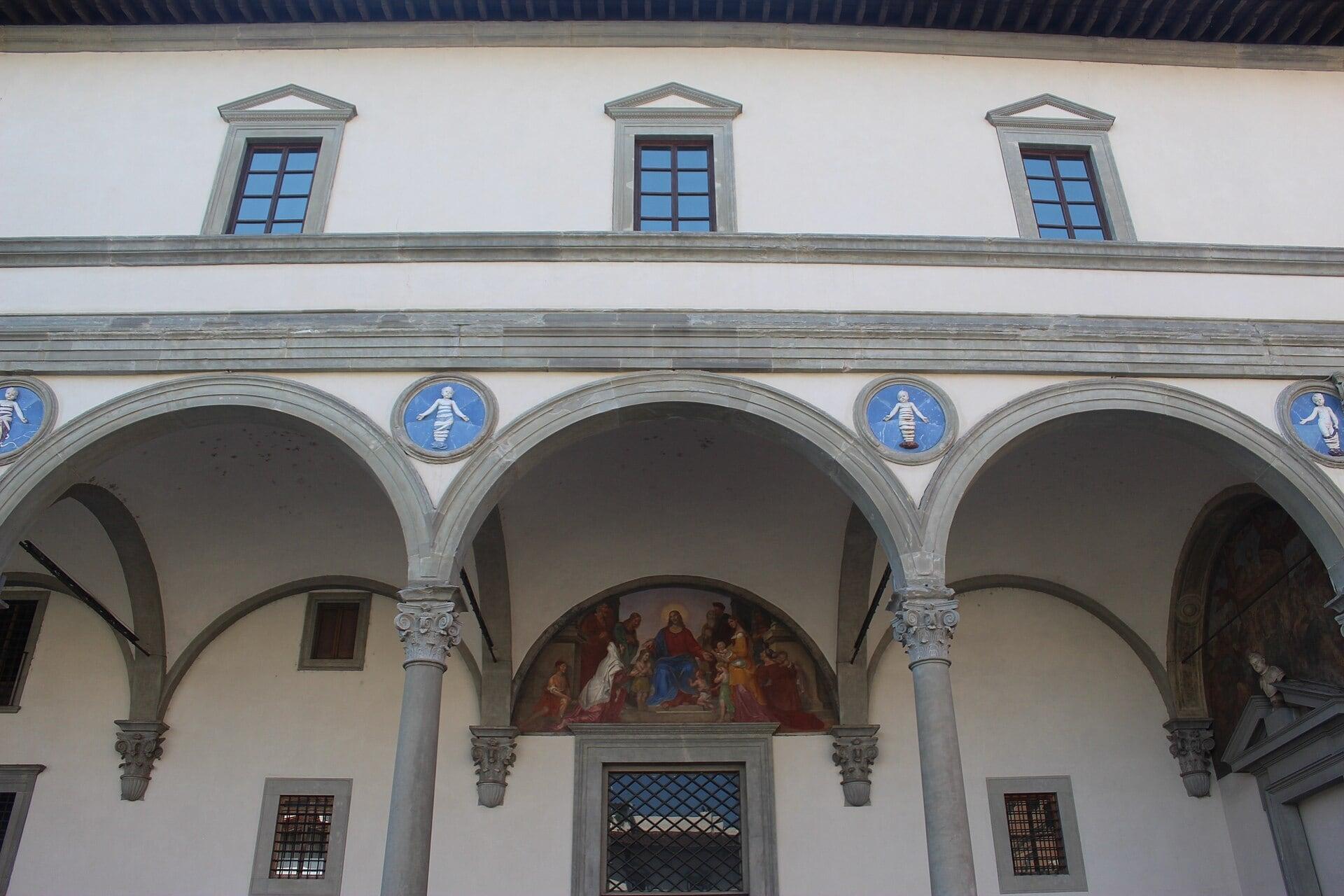
Brunelleschi built this arcade for foundlings. The silk guild's hospital for abandoned children, with its blue roundels and barred window.
- 8
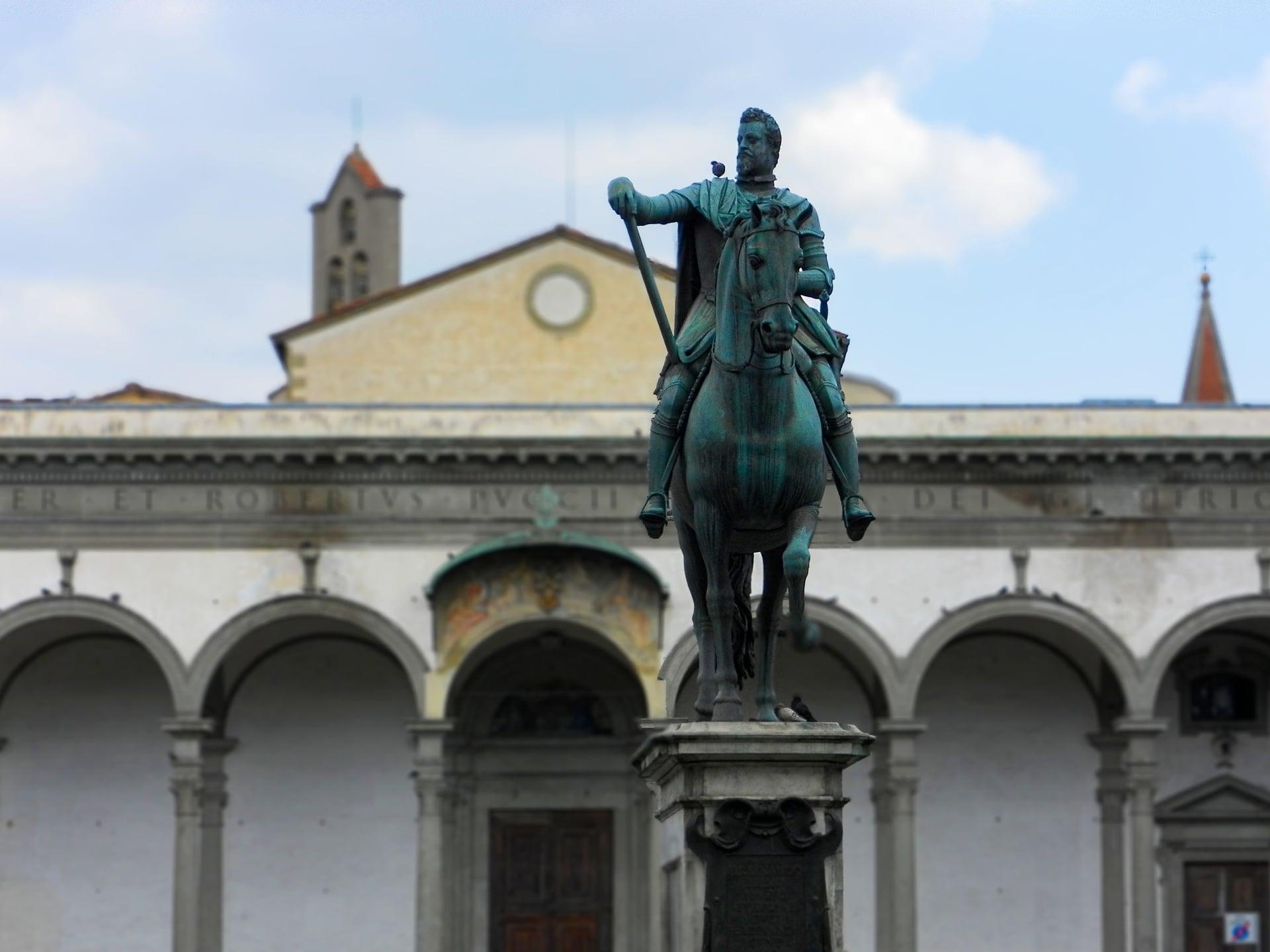
Piazza della Santissima Annunziata: The Copied Arcade
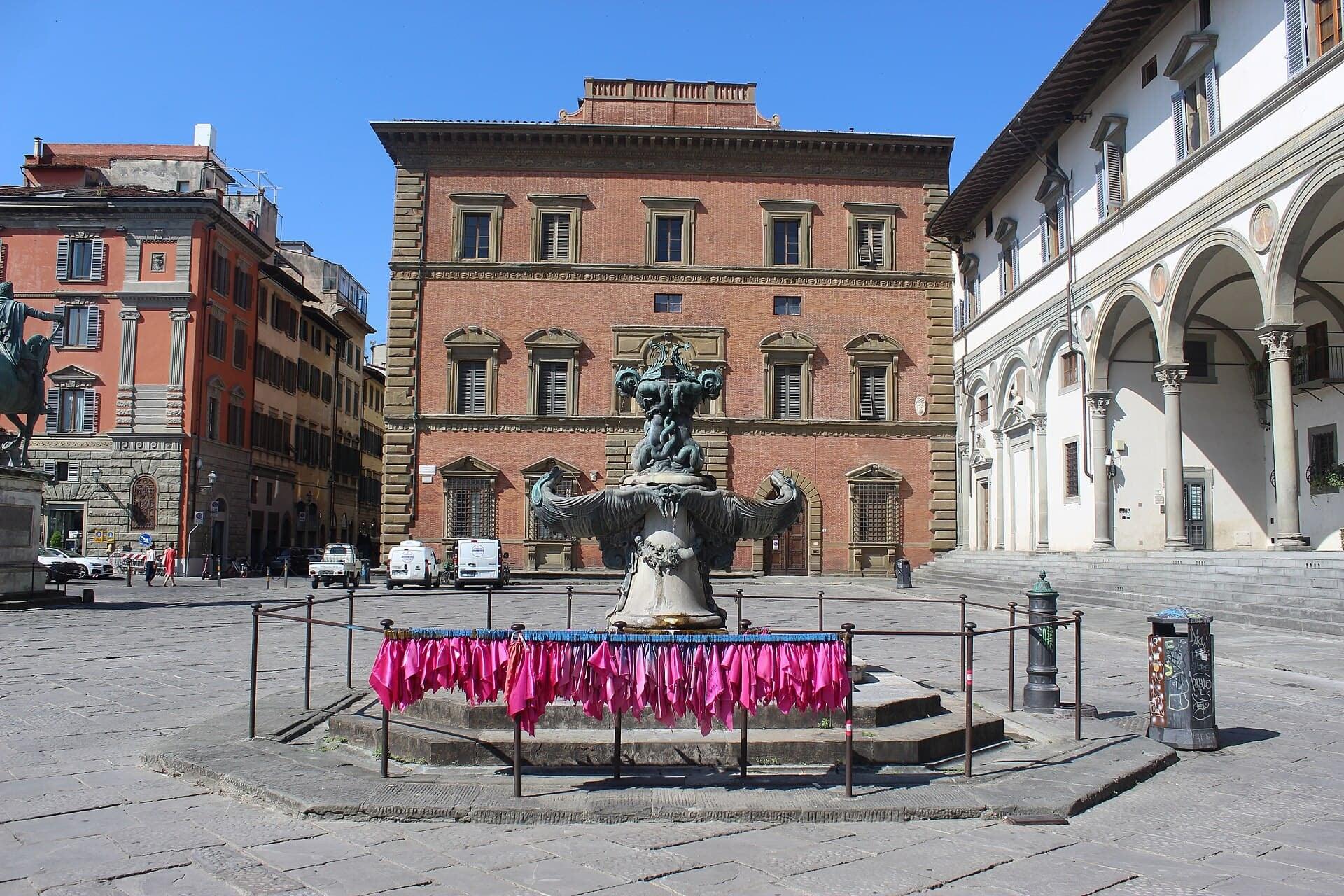
A whole square copied one arcade. Three matching arcades over two centuries, a grand duke on horseback and a first view of the dome.
- 9
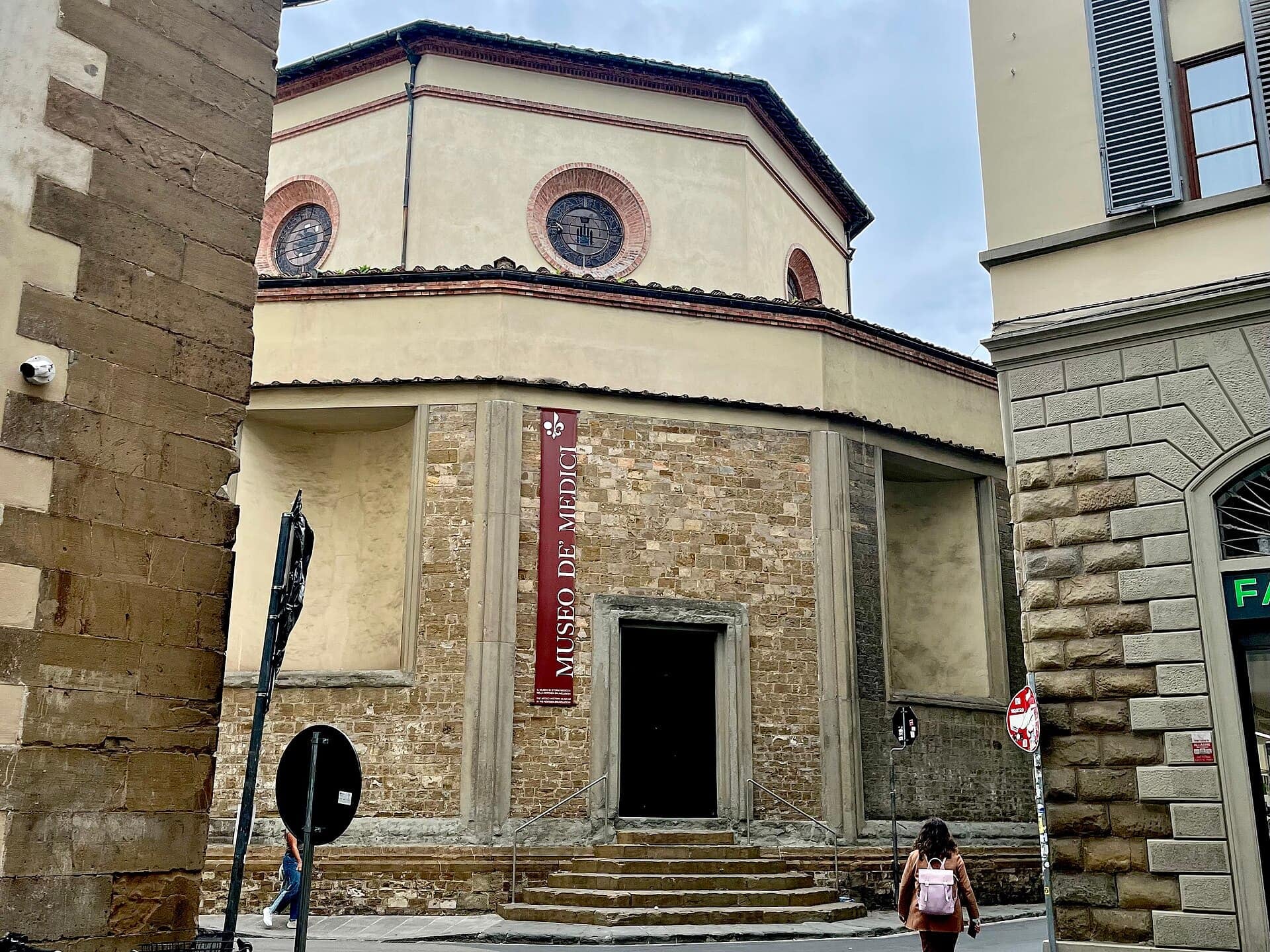
Rotonda di Brunelleschi: Five Centuries Unfinished
This eight-sided church waited five centuries. Brunelleschi's church, halted in 1437 and finished in 1937, now the Museo de' Medici.
- 10
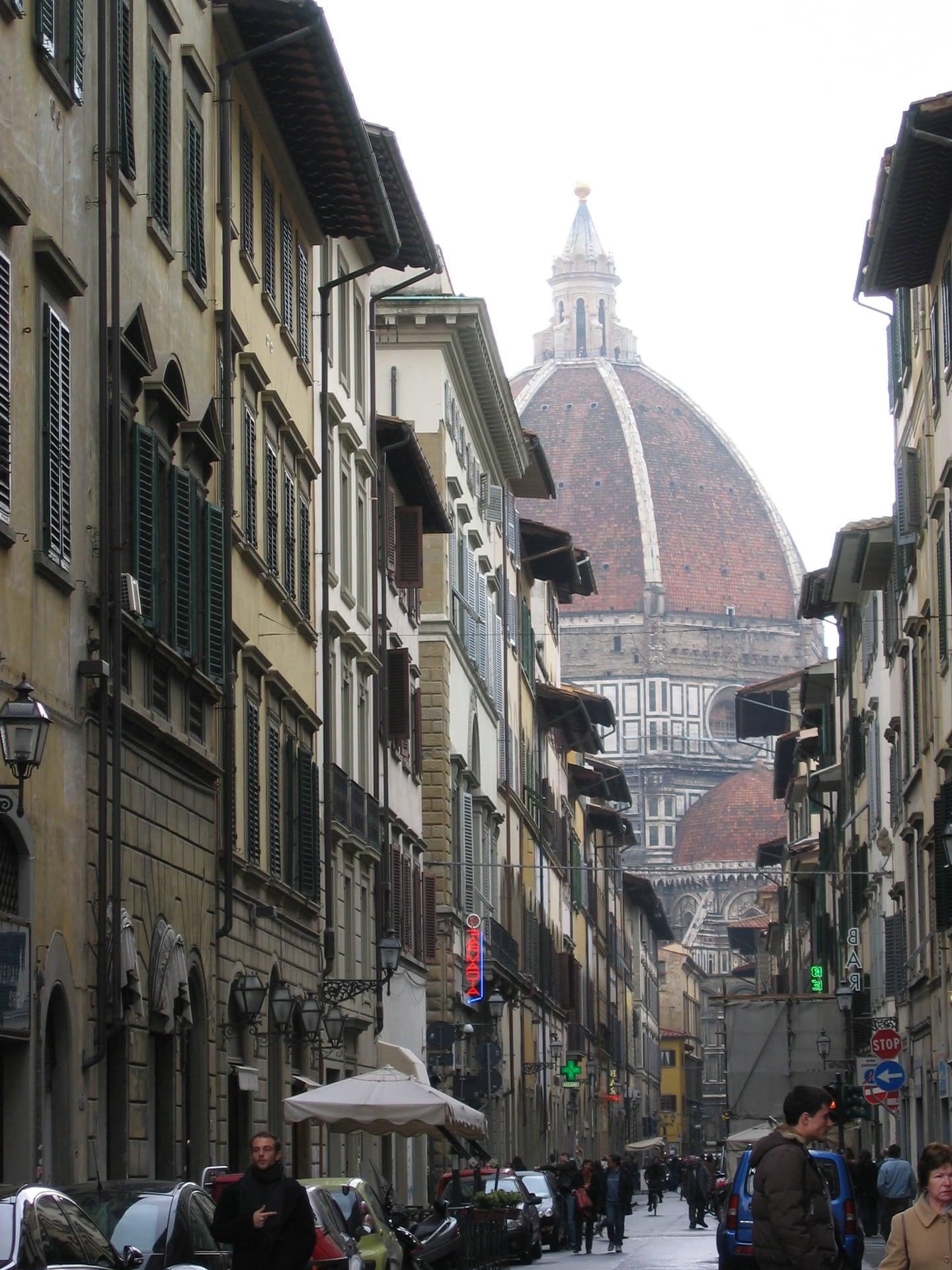
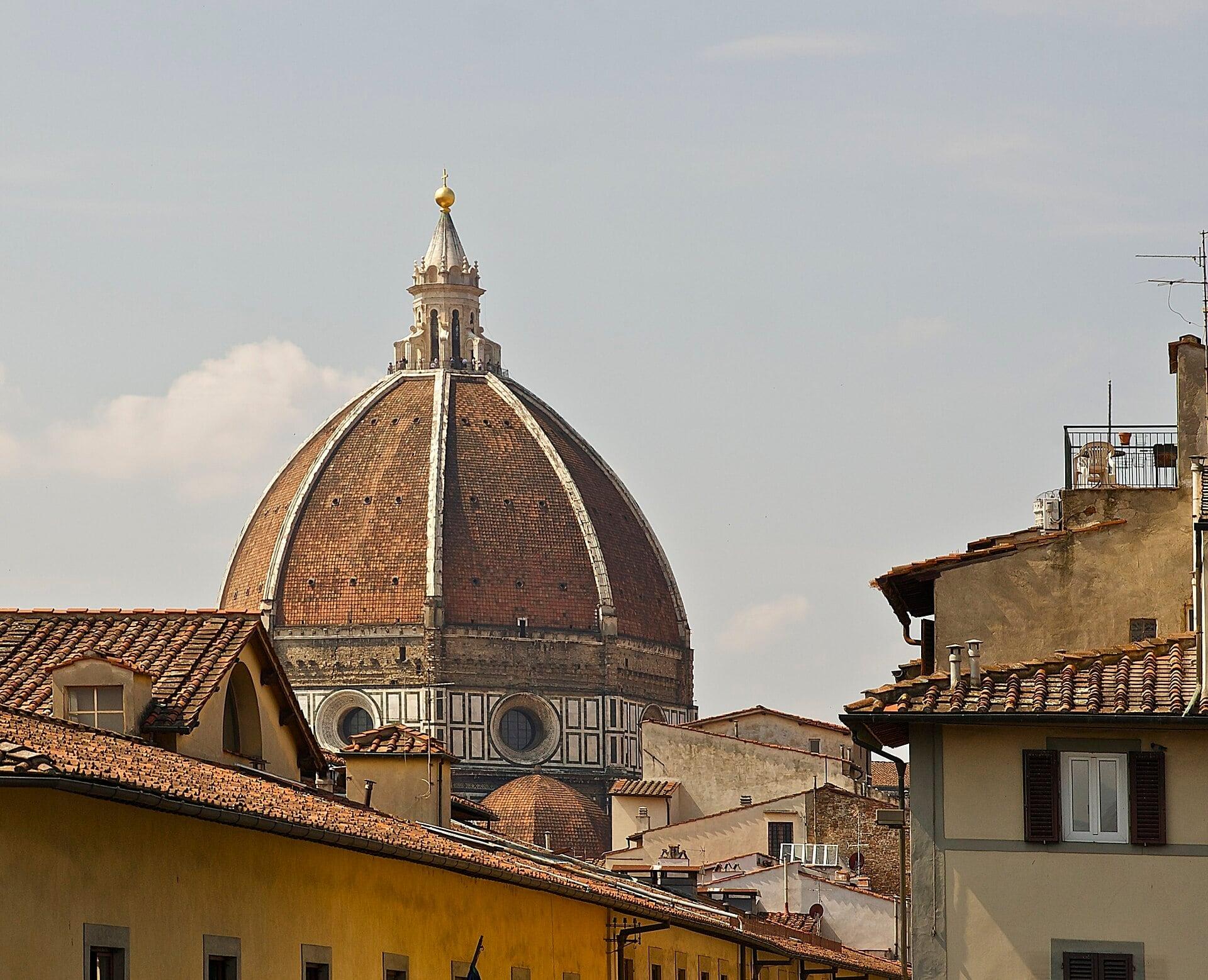
Via dei Servi: The Dome at the End
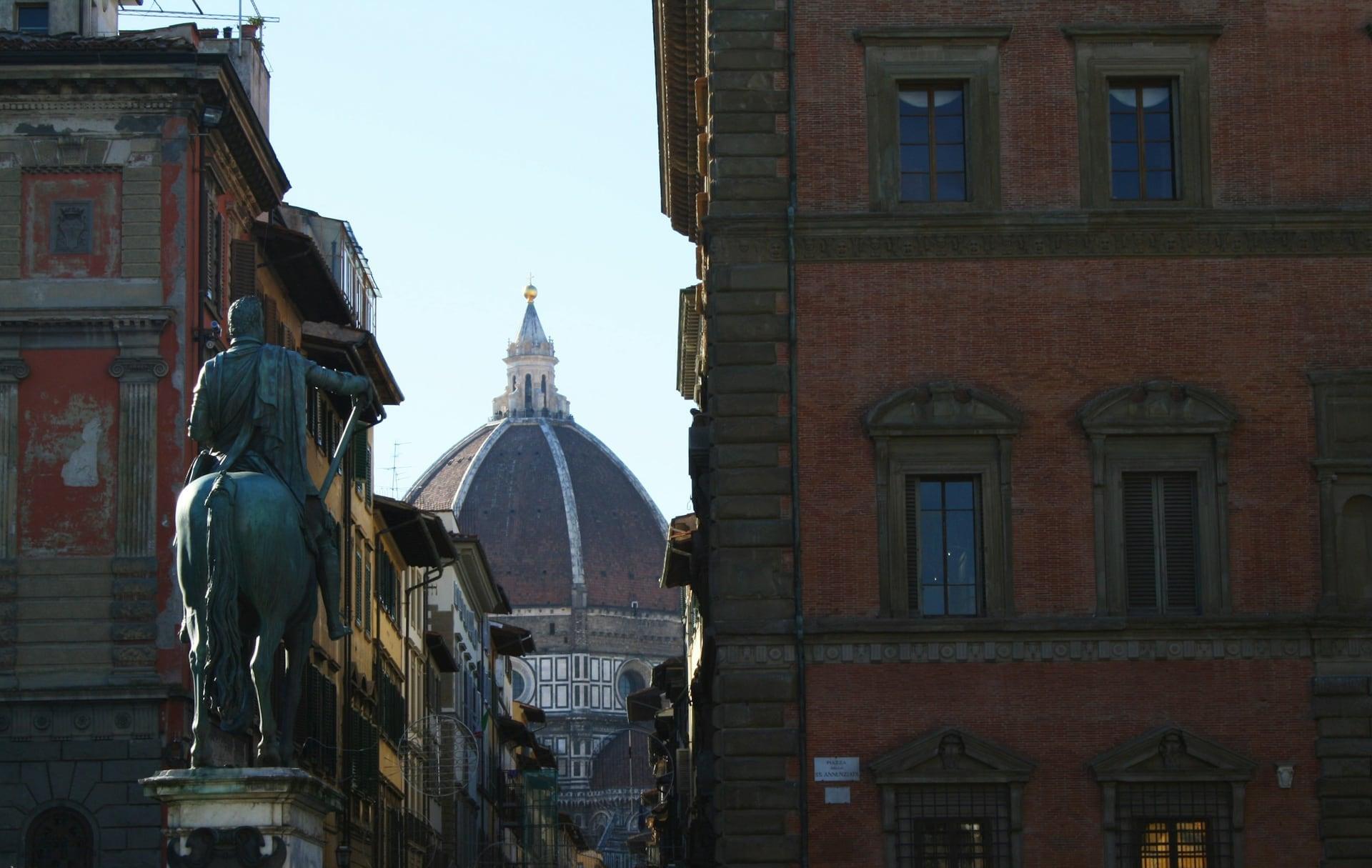
The walk ends with the dome ahead. A straight street laid out in the 1250s, older than the cathedral, with a church at each end.
Details
Best Time to Visit
Tuesday to Saturday, starting by 9:30: the Museo di San Marco opens mornings only (to 13:50), the Accademia and the Medici Chapels close on Mondays, the Palazzo Medici Riccardi closes on Wednesdays, and San Lorenzo's basilica takes visitors Monday to Saturday only. The market streets and the Accademia queue are busiest late morning. In the late afternoon the walk works fully from outside, and the dome at the end catches the low light. Checked 8 November 2026.
Pro Tips
- •Getting to the start: the Mercato Centrale is a 7 to 10 minute walk north-east of Santa Maria Novella station. Trams T1 and T2 both stop at Valfonda Stazione S.M. Novella and Alamanni Stazione S.M. Novella (Gest stop diagram); the Unità stop is served on limited runs only. Checked 8 November 2026.
- •Getting away from the end: the cathedral square is about 110 meters on down Via dei Servi, over the zebra on Via Bufalini. Tram T2 starts and ends at San Marco Università, on the walk at stop 6, every 4 to 5 minutes from 6:30 to 20:30 on weekdays (Gest timetable). Checked 8 November 2026.
- •The Mercato Centrale's upstairs food hall is open every day from 9:00 to 23:00 (operator's page). Checked 8 November 2026.
- •One ticket for several stops: the 72-hour ticket of the Accademia and Bargello system (38 EUR) covers the Accademia (stop 5) and the Medici Chapels (stop 2), among six museums. Book the Accademia (4 EUR) to avoid the queue. Checked 8 November 2026.
- •Free first Sundays: the Accademia, the Medici Chapels and the Museo di San Marco are free on the first Sunday of the month (expect queues, no booking); the Innocenti museum is not. Checked 8 November 2026.
- •The Palazzo Medici Riccardi shows 'Per le vie di Firenze, dopo l'Alluvione', for the sixtieth anniversary of the 1966 flood, from 5 to 17 November 2026 (museum home page). Checked 8 November 2026.
- •The Rotonda's Museo de' Medici is free for residents of the Comune di Firenze. Checked 8 November 2026.
Safety & Precautions
- •Narrow pavements beside buses: Via de' Gori (the small C1 electric bus, before stop 4), Via de' Pucci (a pavement about a meter wide with buses 14, 18, 23 and C1, after stop 4: walk single file) and Via Cesare Battisti (buses in both directions, after stop 6: keep to the wider pavement and cross on the zebra at its far end). The C1 also runs through the pedestrian streets around stop 2: step aside when it comes. Bus line numbers are from OpenStreetMap, not checked at Autolinee Toscane.
- •You cross the tram tracks twice in Piazza San Marco, both times at signalled crossings: wait for the lights.
- •The sandstone paving is slippery when wet.
- •Pickpockets work the San Lorenzo market streets (between stops 1 and 3) and the Accademia queue (stop 5): keep bags closed and in front of you.
- •San Lorenzo, San Marco and the Santissima Annunziata are working churches: dress modestly to go in, and keep voices low during services. Keep church steps clear.
- •Via dei Fibbiai (before stop 9) is a narrow residential street: walk in single file and keep noise down.
- •On Mondays the Accademia and the Medici Chapels are closed, and the Museo di San Marco is closed every Monday and in the afternoons; the walk still works from outside.
Travel advisory: Exercise Increased Caution (Level 2).
Gallery
Related Reading
Go deeper on what you'll see, hear, and walk through.
Overview
One Day in Florence: A Walkable Morning-to-Evening Itinerary
7 min
Thematic
Best History Walking Tours in Florence (2026)
2 min
Thematic
How Money and Competition Built the Renaissance in Florence
9 min
Companion
Palazzo Medici Riccardi: How to Read a Banker's Balance Sheet in Stone
8 min
Read
What to Eat in Florence: Dishes, Origins, and How to Order Like a Local
6 min
Read the walk
The full story of San Lorenzo and San Marco: The Models Florence Copied, in words. Prefer to listen? Play it narrated, from home or on location.
Introduction
Florence, in the heart of Tuscany, drew its models in a few streets near the cathedral, and then copied them for centuries. This walk crosses that quarter, the streets where the Medici built, from the market by San Lorenzo to the Santissima Annunziata.
You will see the palace the city took as its model, a window shape that went onto ground floors across Florence and Tuscany, an arcade that a whole square copied for two hundred years, a church front that exists only as a wooden model, and an eight-sided church that stood half built for five hundred years.
Three people shape it. Cosimo de' Medici, called the Elder, the banker who paid for a palace, a convent and a church. Michelangelo, who worked for the family here after he carved the David that waits behind a door on this route. And Filippo Brunelleschi, whose dome closes the view at the end.
The walk is ten stops over about one point nine kilometers, a little over a mile, and takes about seventy-five minutes. It is flat, with no steps. A few short stretches run on narrow pavements beside buses, and the sandstone paving is slippery when wet. Most of the buildings charge to go in, and every stop works from outside. The walk ends on Via dei Servi, a short walk from the cathedral square. When you arrive at the Mercato Centrale, begin with stop one.
1. Mercato Centrale: Iron and Glass
Welcome to the Mercato Centrale, Florence's central market, where this walk begins. Find a spot in the square with the end of the market hall in front of you: a wall of iron and glass, and a long flank running away down the street.
A Florentine survey of the city's historic buildings calls this one of the most significant iron-and-glass buildings of the eighteen hundreds. It was built between eighteen seventy and eighteen seventy-four, and it opened on the first of May eighteen seventy-four. The work began while Florence was the capital of Italy, and to make room the city cleared a block of poor houses that stood here.
Look at its two levels. Low down, a ground floor under a pitched roof. Above it, a taller central body, glazed all the way along over the stalls. Inside, the aisles run like covered streets. And the whole idea came from abroad: the hall was designed on the model of the great market halls of Paris.
Keep that word, model, in mind. The quarter you are about to walk is where Florence drew its own models, a palace, a window, an arcade, and then copied them for centuries. Here, at the start, it is the other way round: Florence copying Paris.
The ground floor is still a market. Upstairs, since twenty fourteen, a food hall stays open every day until eleven at night.
The streets ahead are lined with market stalls by day, and crowds draw pickpockets, so keep your bag closed and in front of you.
Follow the route along the side of the hall, through the stalls. Next is the Medici family's tomb, under a dome.
2. Medici Chapels: The Grand Dukes' Dome
Walk on until the market street opens into a small square, and look up over the roofs: a great dome on a tall drum. That is the Chapel of the Princes, the burial chapel of the Medici grand dukes. The door in front of you, at number six, is the Medici Chapels museum. It charges to go in and is closed on Mondays; the details are on this stop's card.
Inside are three things. Below, the crypts, where the grand dukes of the family lie, down to the last of the line, who died in seventeen thirty-seven, when the dynasty died out. Above them, the chapel under the dome, which the museum describes as blazing with marble and hardstone, cut and fitted by the grand dukes' own workshop. And the New Sacristy, where Michelangelo designed both the building and its sculpture. Two Medici popes wanted it, and he worked on it from fifteen nineteen until fifteen thirty-four. You will meet him again at the next three stops.
Now look at the dome again, and think about who finished it. The paintings inside it date from eighteen twenty-eight to eighteen thirty-seven, about ninety years after the last Medici grand duke died. The museum says the chapel was completed under the Habsburg-Lorraine, the family that followed the Medici as rulers of Tuscany. So the great monument of a dynasty was finished by the dynasty that replaced it.
Small electric buses cross this square and use the next street, so step aside when one comes.
Follow the route past the back of the chapels. Next is the church the Medici paid for, and the front it never got.
3. San Lorenzo: The Front Never Built
Walk on past the seated statue at the corner and a little way along the edge of the square, then turn to face the church across it: a tall, bare front, with no marble on it at all. This is San Lorenzo, the Medici family's parish church. The church charges to go in, Monday to Saturday; the details are on this stop's card.
Work on this church began in fourteen twenty-one, with Filippo Brunelleschi as its architect. The Medici paid first for a sacristy inside, Brunelleschi's Old Sacristy, built in the fourteen twenties and still there, on the church's ticket. Then, after fourteen forty-one, Cosimo de' Medici, called the Elder, took on almost the whole cost of the church. In fourteen sixty-four he was buried in front of its high altar.
And the front? In fifteen eighteen a Medici pope, Leo the Tenth, signed a contract with Michelangelo for a front of marble. A large wooden model of it, made to his design, survives in the Casa Buonarroti museum, a short walk from Santa Croce. Two years later, in fifteen twenty, the contract for the marble was dissolved, and the marble already gathered was set aside to pave the floor of the cathedral. The plan only died for good with the death of the second Medici pope, in fifteen thirty-four. Competitions for a new front went on as late as nineteen oh three. None was ever built.
So here is a model that never got its copy. What you are looking at is what a Renaissance church looks like before the marble goes on.
Michelangelo also designed the Laurentian Library inside, on its own ticket. Dress modestly: it is a working church, with Mass morning and evening, Monday to Saturday.
The little electric bus uses the street ahead, so keep to its pavement.
Follow the route to the corner of the square. Next is the Medici palace.
4. Palazzo Medici Riccardi: The Model Palace
Walk on along this pavement, with the long stone palace across the narrow street, to where it meets the wide crossroads, and stop on the paving there, on this side: buses turn here. Look across the little street at the palace's corner. This is the Palazzo Medici Riccardi.…
Full narration for this stop unlocks with the tour.
5. Galleria dell'Accademia: David's Door
Walk on up the street, past the crossing, to where a little square opens off it, and stop there, out of everyone's way. Up the street ahead, along the long front, is a door, and most days a queue. That is the Galleria dell'Accademia, and behind it stands Michelangelo's David. It…
Full narration for this stop unlocks with the tour.
6. San Marco: The Painter and the Preacher
Walk on through the garden to its far path, and stop facing the church across the road, with the long convent buildings beside it. This is San Marco, a convent of Dominican friars. The convent is now the Museo di San Marco: it charges to go in, opens mornings only and is closed…
Full narration for this stop unlocks with the tour.
7. Spedale degli Innocenti: Arcade for Foundlings
Walk on along the edge of the square to the street corner where a long arcade of gray columns with blue roundels begins, and stop there. Stay on the square's side: buses use the street at the corner. This is the Spedale degli Innocenti, the hospital of the innocents, built for…
Full narration for this stop unlocks with the tour.
8. Piazza della Santissima Annunziata: The Copied Arcade
Walk on across the square, past the bronze horseman, to the far corner where a long straight street leaves it, and stop in the middle of the street's line. Then turn round and look back up the square. This is Piazza della Santissima Annunziata, the square of the church of the…
Full narration for this stop unlocks with the tour.
9. Rotonda di Brunelleschi: Five Centuries Unfinished
Walk on down the narrow lane. Near its foot, ahead across the cross street, an eight-sided building comes into view. Cross the street at the foot of the lane and stop on the corner, with the building just across the side street. This is the Rotonda di Brunelleschi. Inside today…
Full narration for this stop unlocks with the tour.
10. Via dei Servi: The Dome at the End
Walk on down this side of the street, with the dome growing ahead, and stop where it fills the end of the street above the roofs. This side keeps the view. This is Via dei Servi, the street of the Servites, the friars whose church closes its other end, behind you. And ahead,…
Full narration for this stop unlocks with the tour.
- Palazzo Medici-Riccardi — Ricardalovesmonuments, CC BY-SA 4.0 · source
- Rotonda del Brunelleschi museo de medici — Ilpinguinotransalpino, CC BY 4.0 · source
Images may be cropped or resized. Other photos via Unsplash and Pexels.