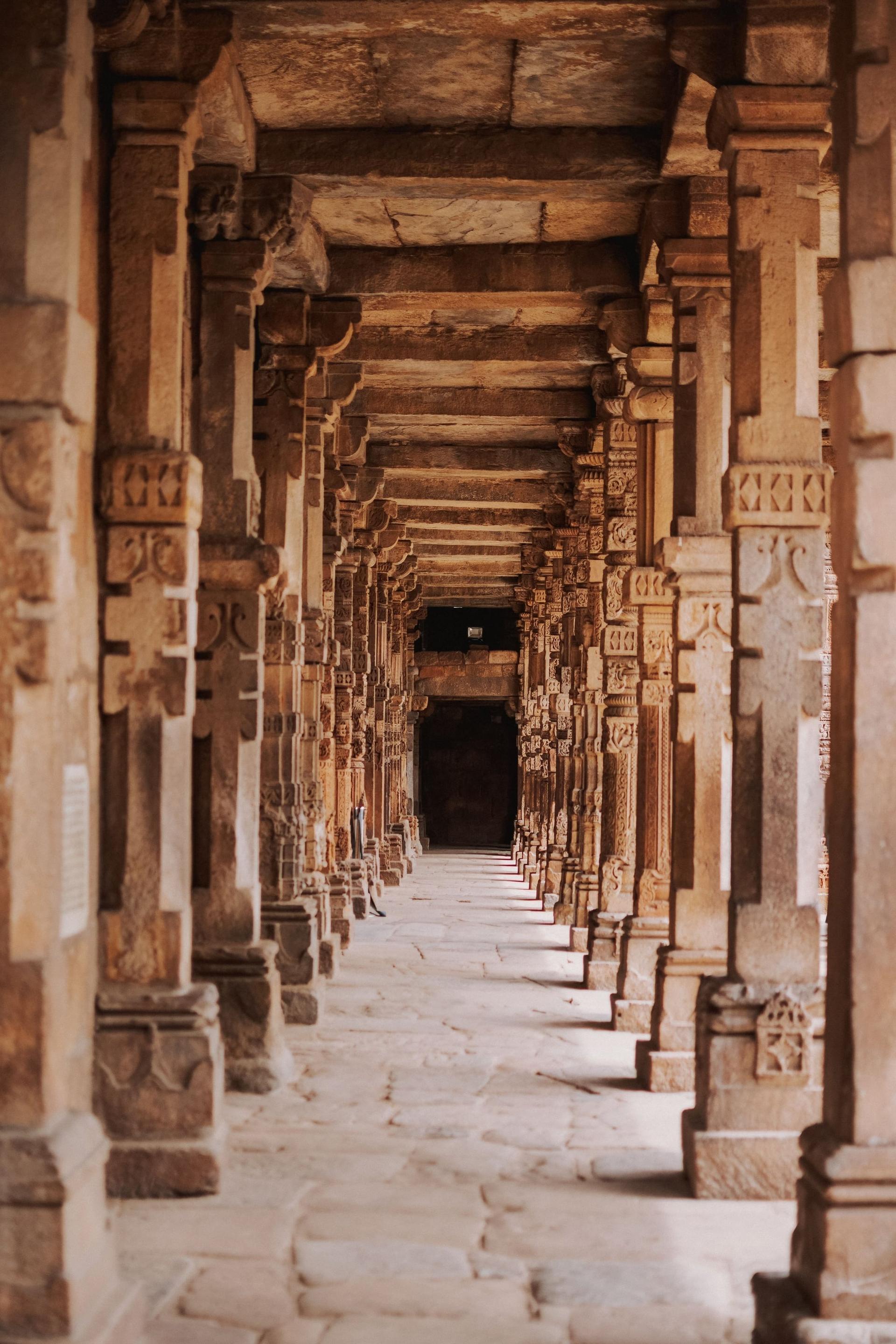
Inside the ticketed Qutub complex in Delhi: from the Mughal gateway past the unfinished Alai Minar, Iltutmish's tomb, Alauddin Khalji's madrasa and Iltutmish's screen to the Alai Darwaza, Smith's Folly and Imam Zamin's tomb, then the mosque's east gate, the foot of the Qutub Minar and the iron pillar in the court.
Start · Sarai Gate
DirectionsStops
- 1
Sarai Gate
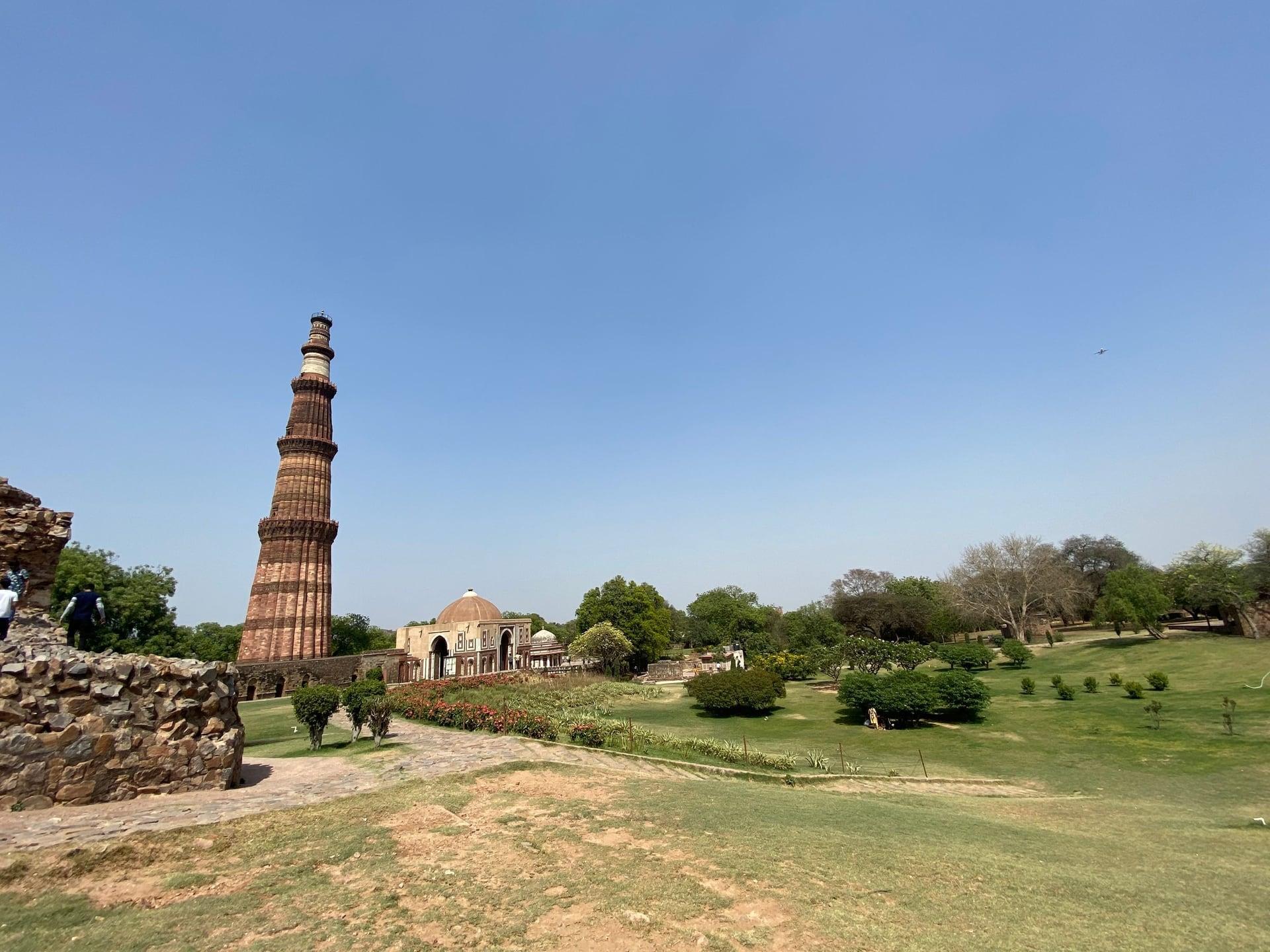
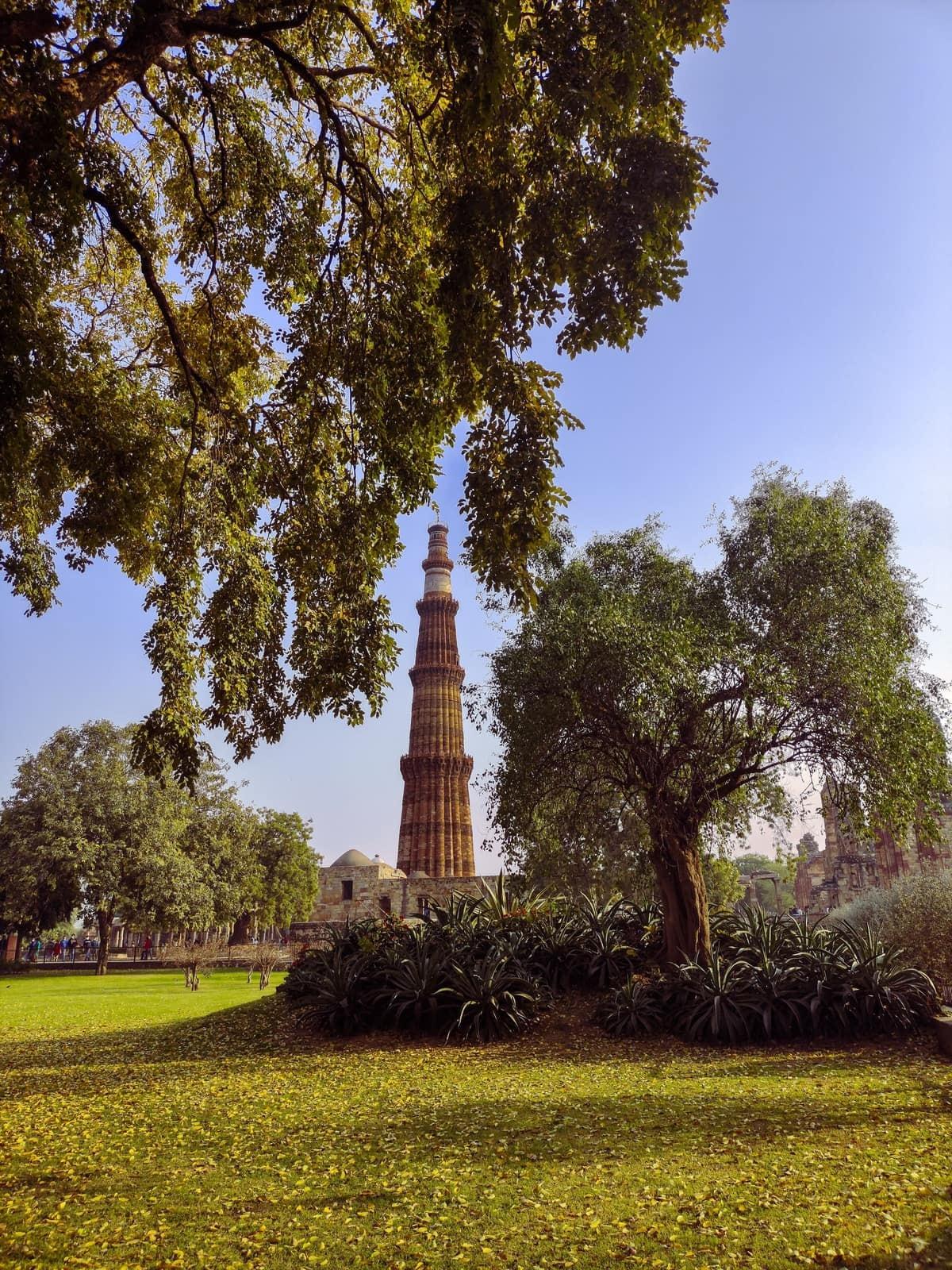
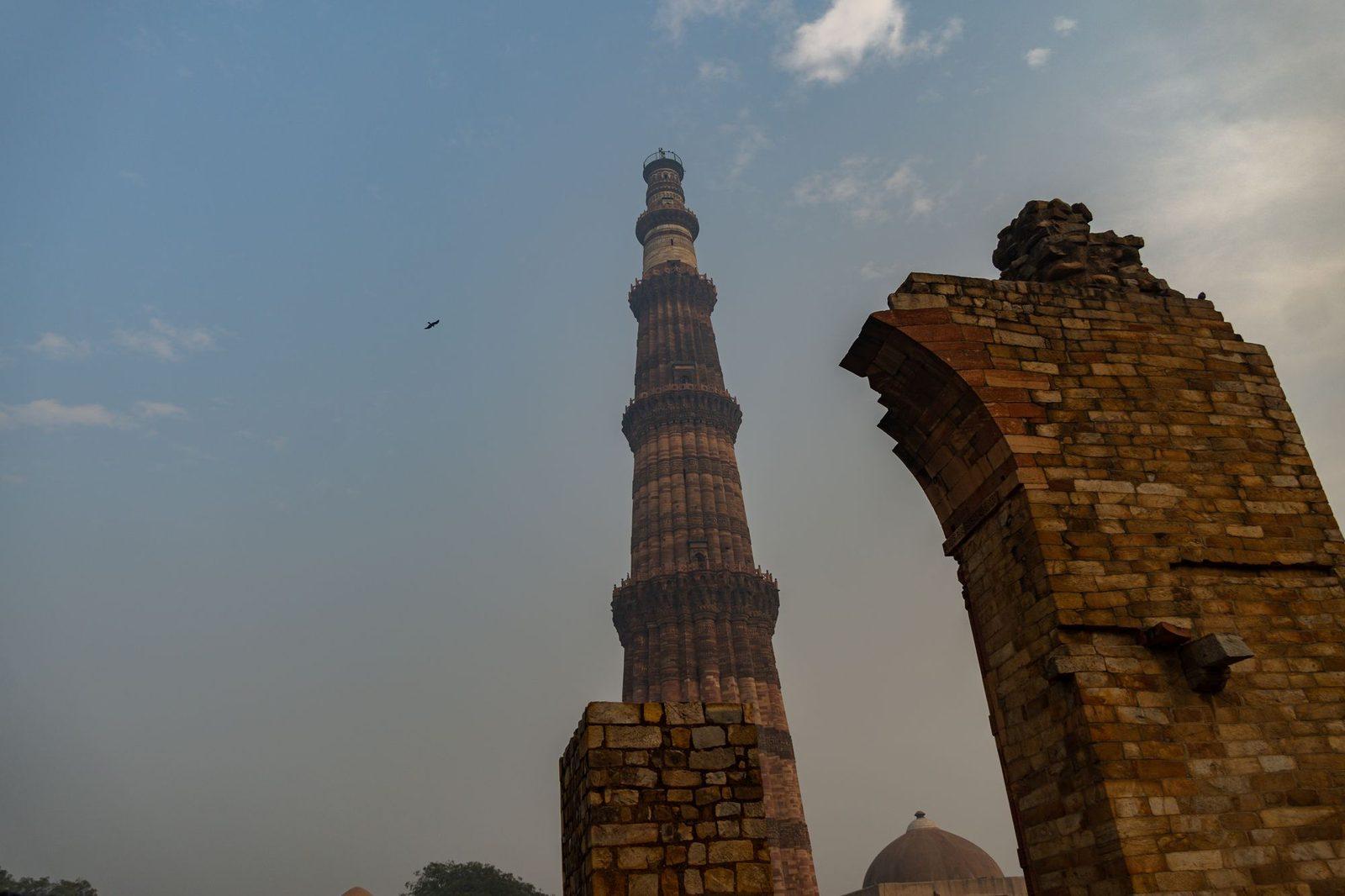
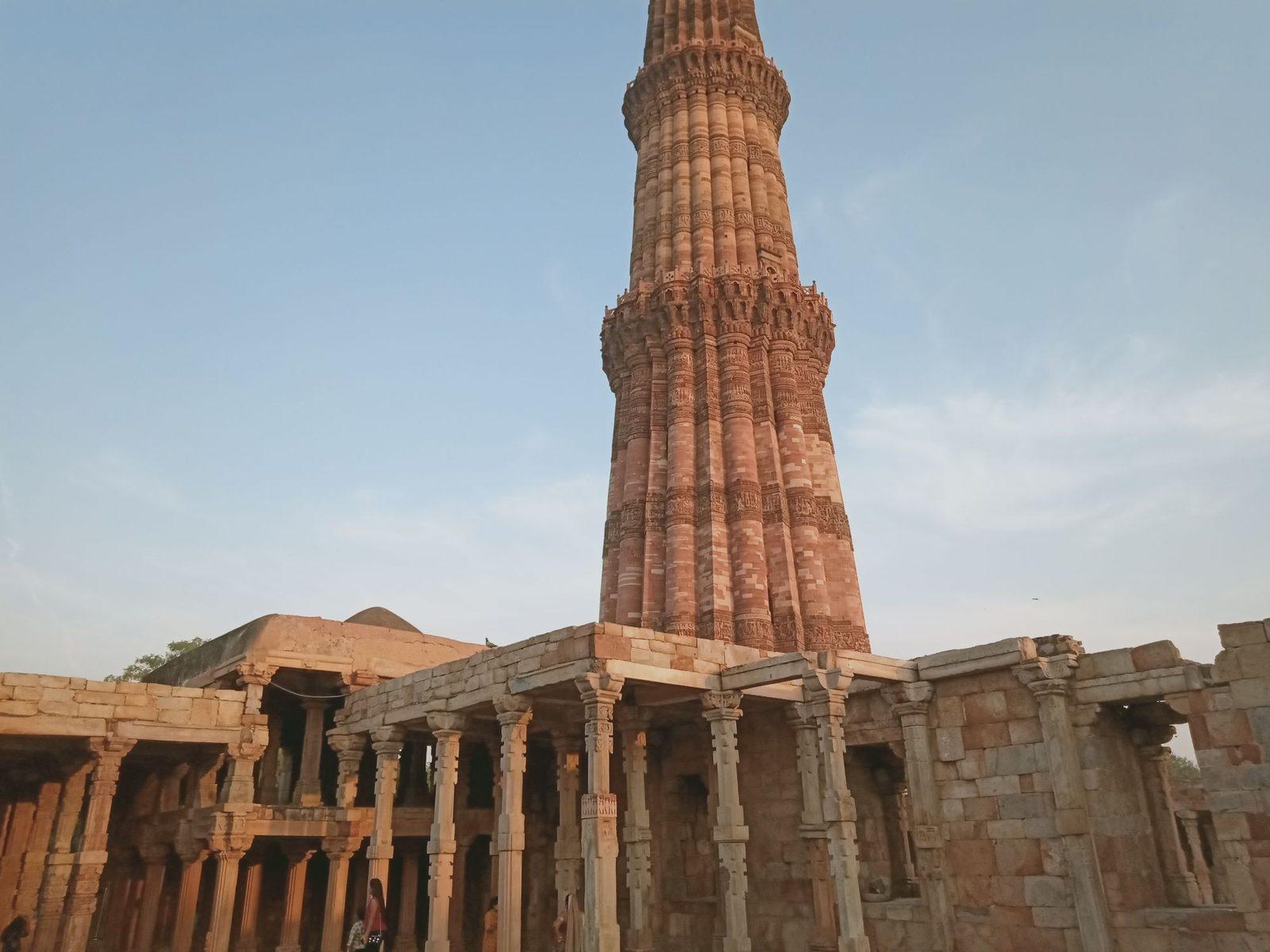
The tower comes into view here. The path just inside the Qutub complex, past a late Mughal sarai gateway, with the Qutub Minar of 1199 in full view over the garden court.
- 2
Alai Minar
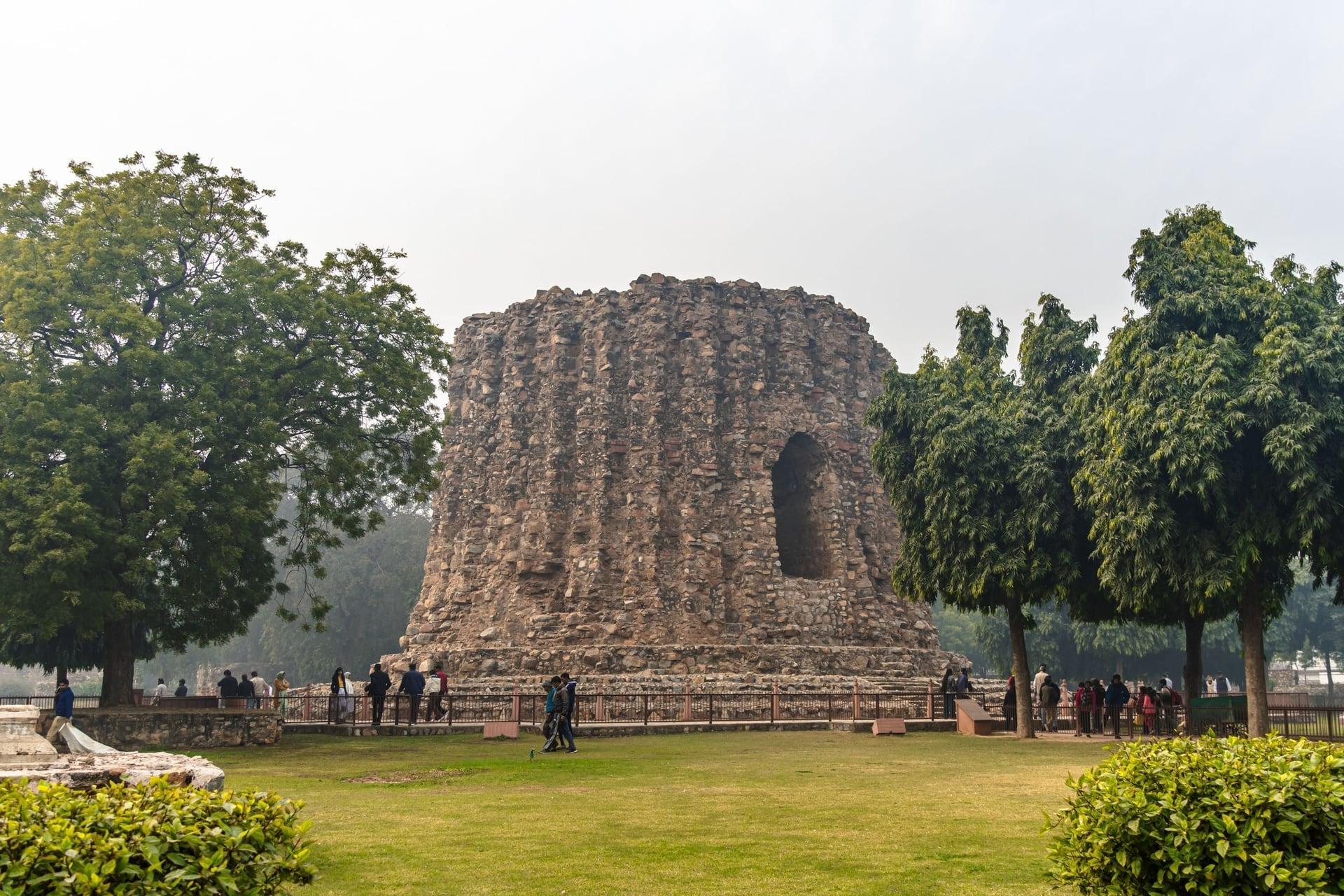
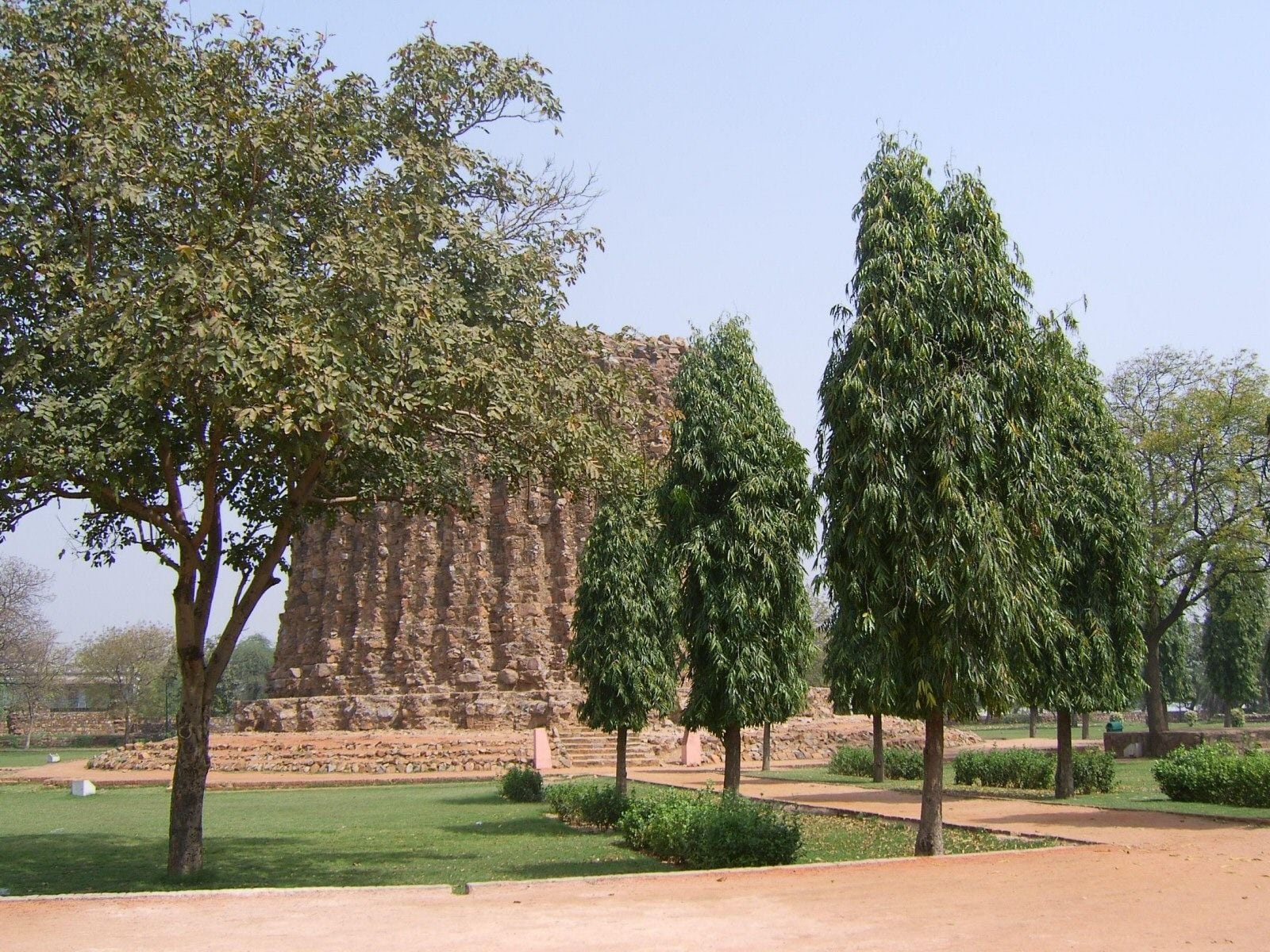
A rival tower stopped at one story. The rubble core of the Alai Minar, begun by Alauddin Khalji to be twice the size of the Qutub Minar and left at about 25 m when he died in 1316.
- 3
Iltutmish's Tomb
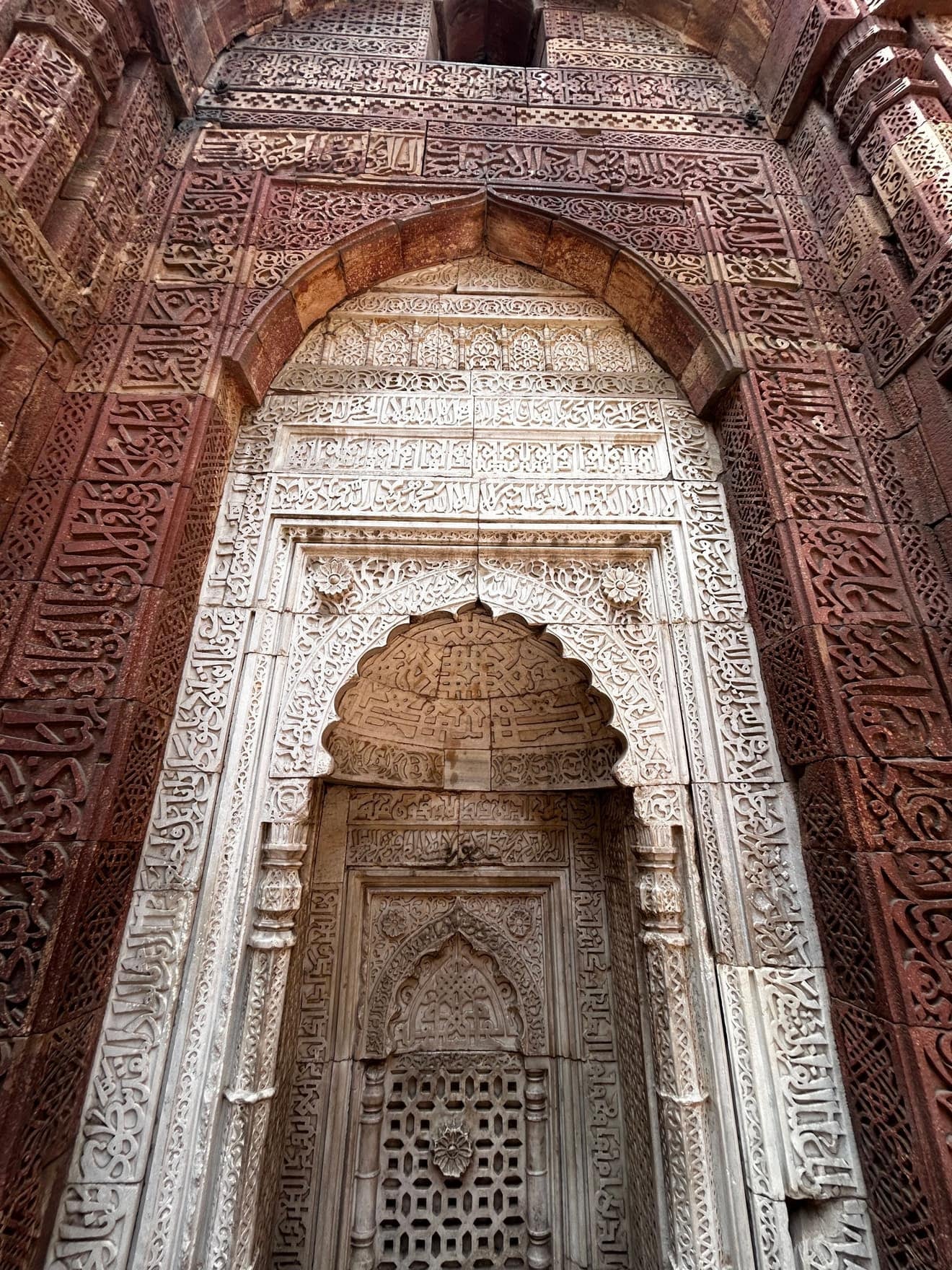
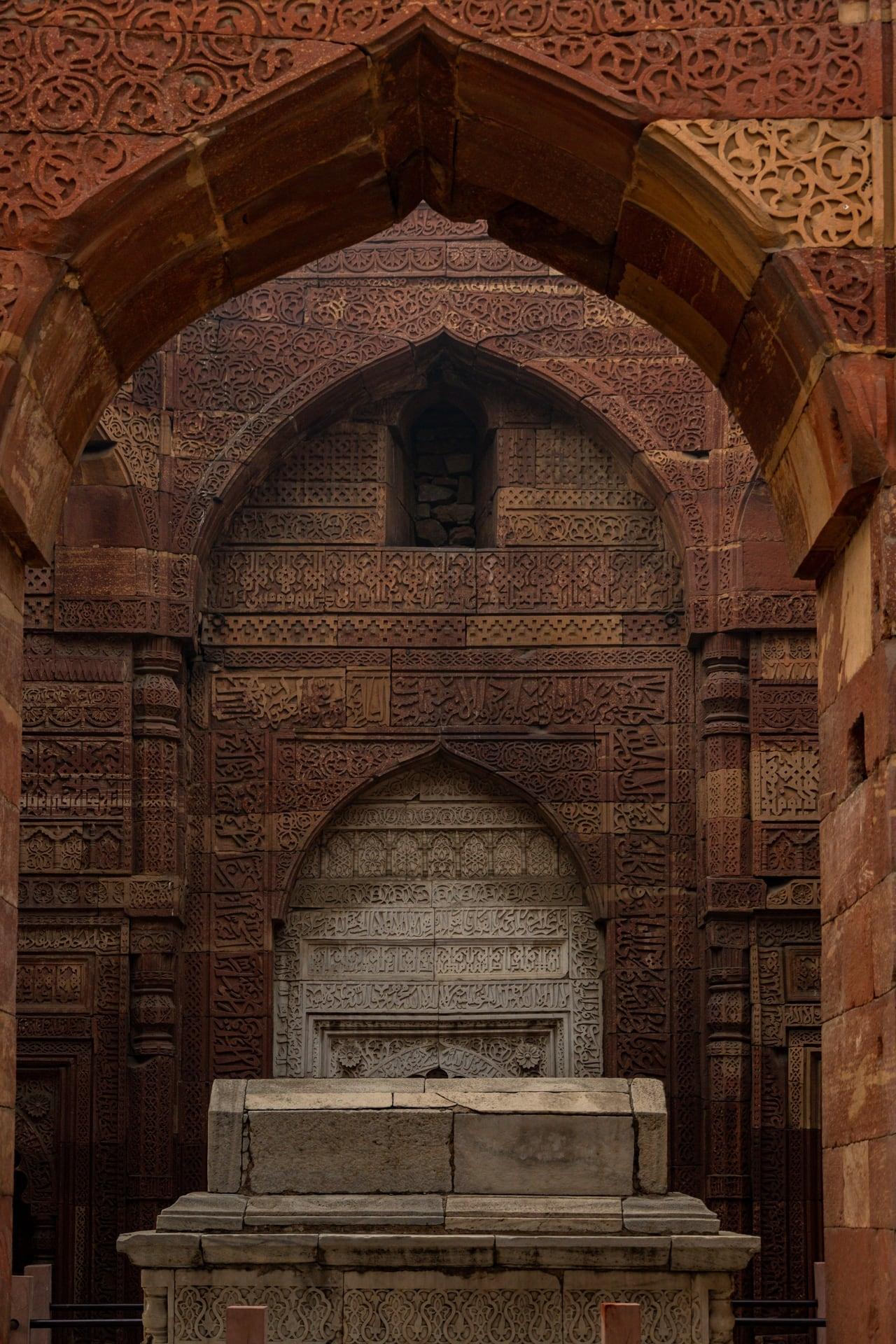
The man who finished the tower lies here. The tomb of Iltutmish, built about 1235: plain red sandstone outside, carved over every surface within, now open to the sky.
- 4
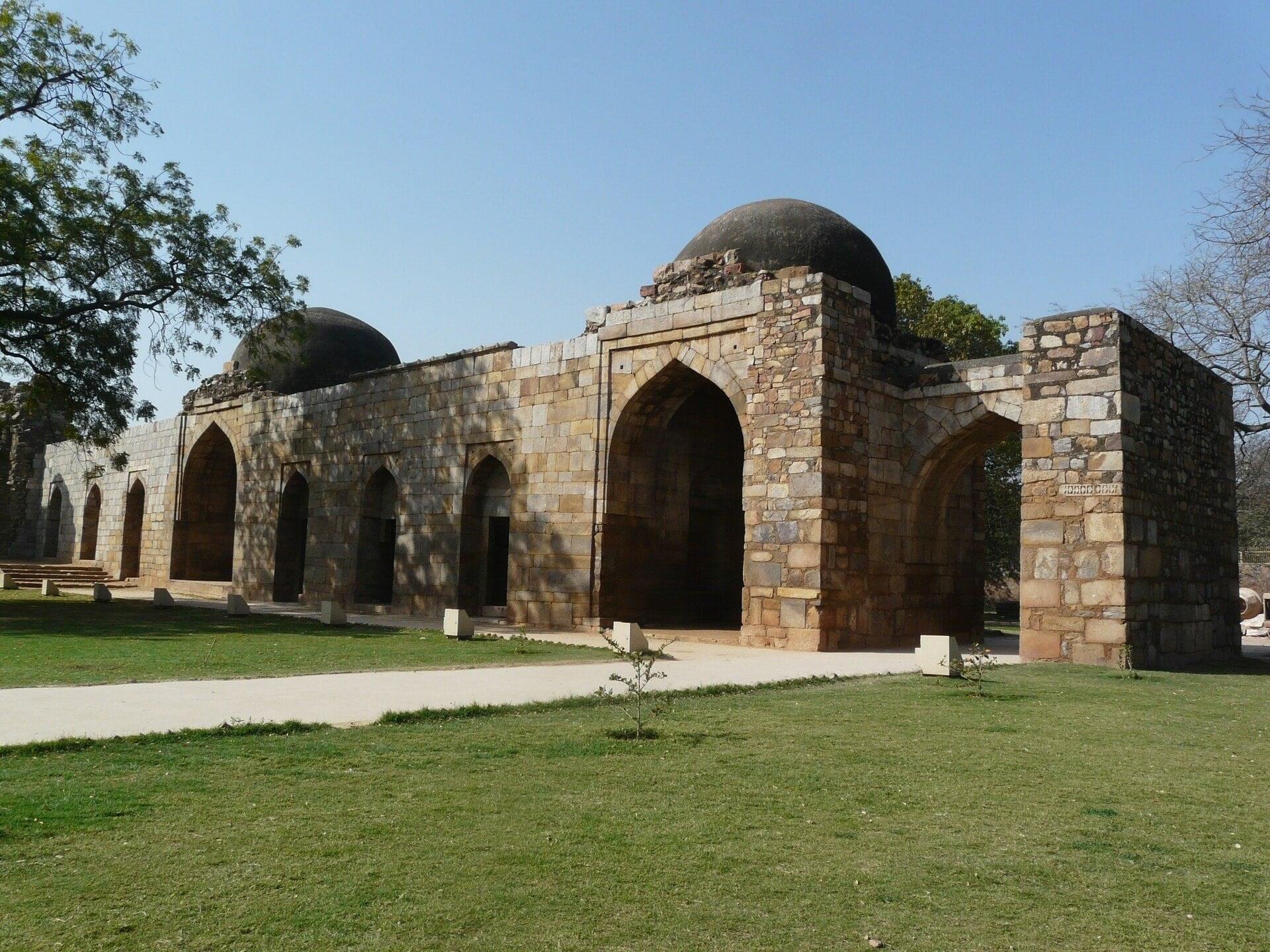
Alauddin's Madrasa
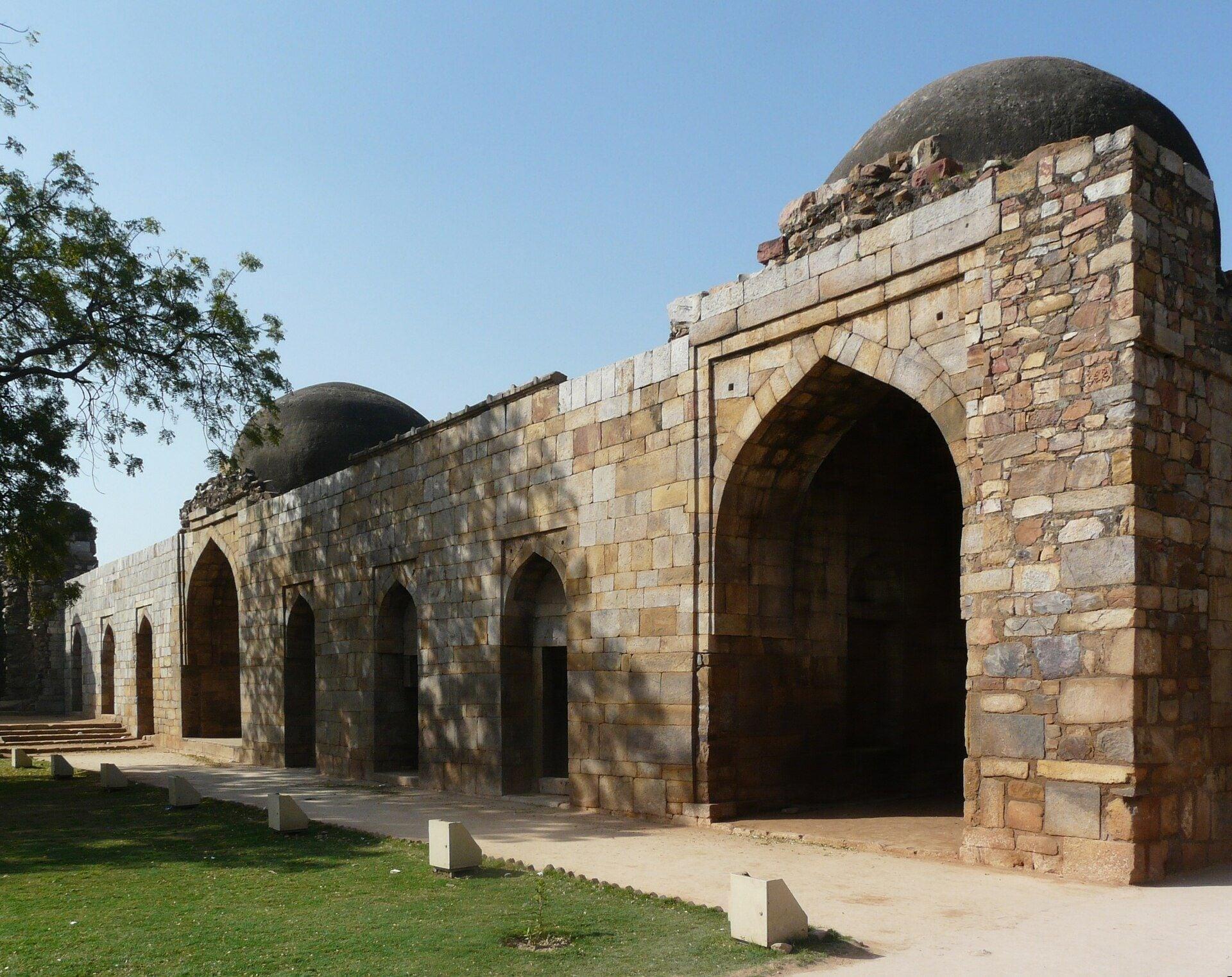
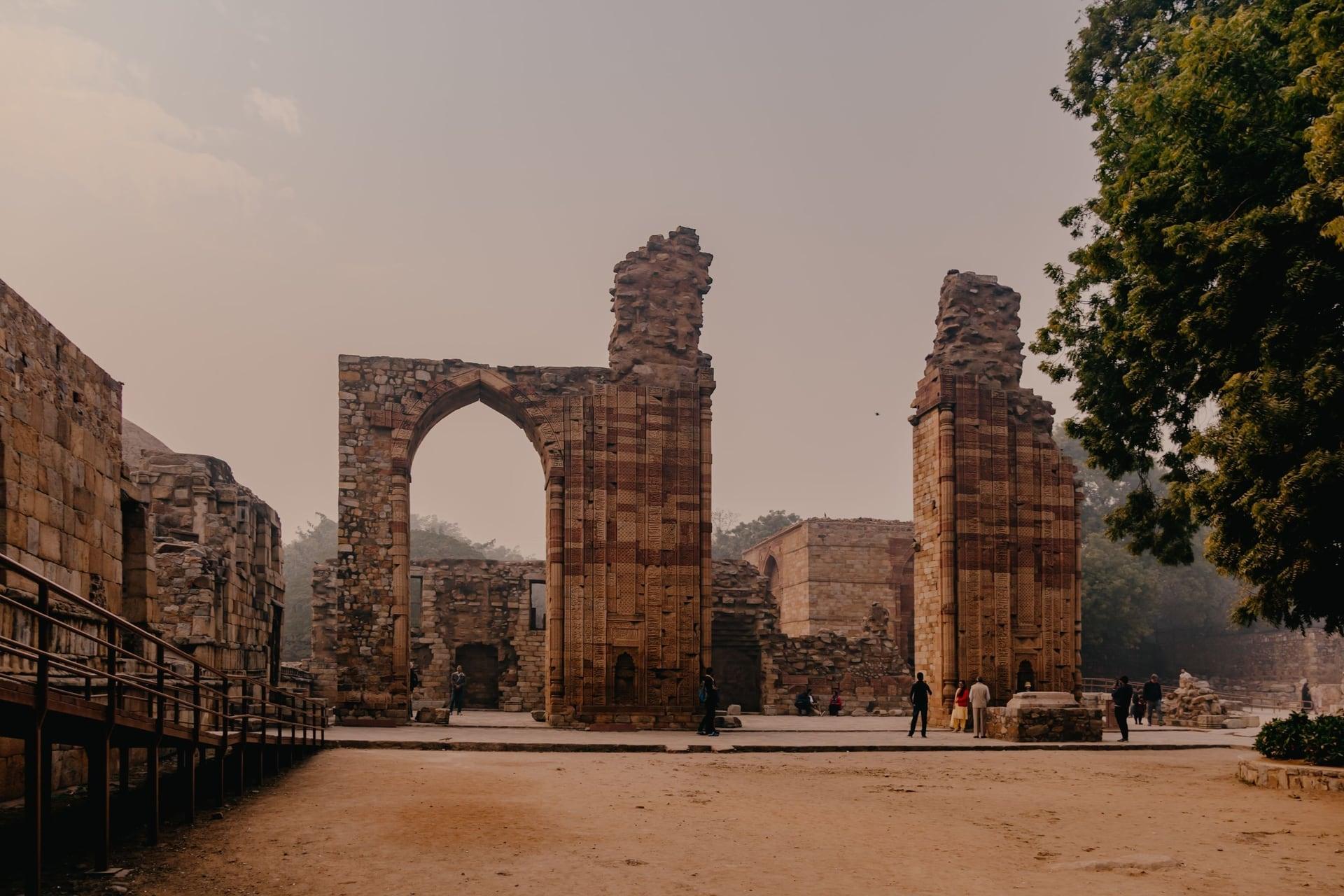
This may be a sultan's college and grave. The ruined L-shaped madrasa believed to be Alauddin Khalji's, with the domeless chamber on its south side that was perhaps his tomb.
- 5
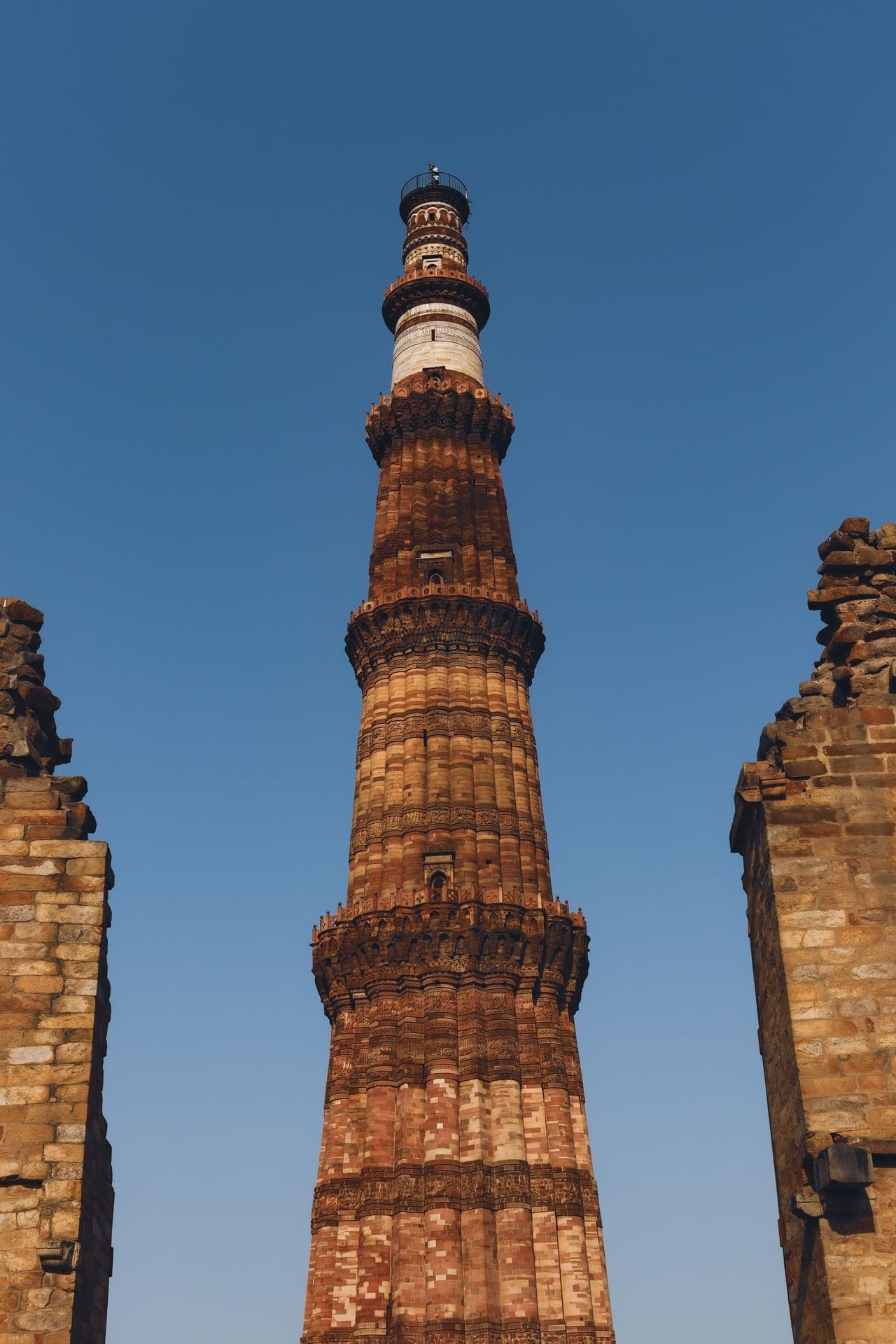
Iltutmish's Screen
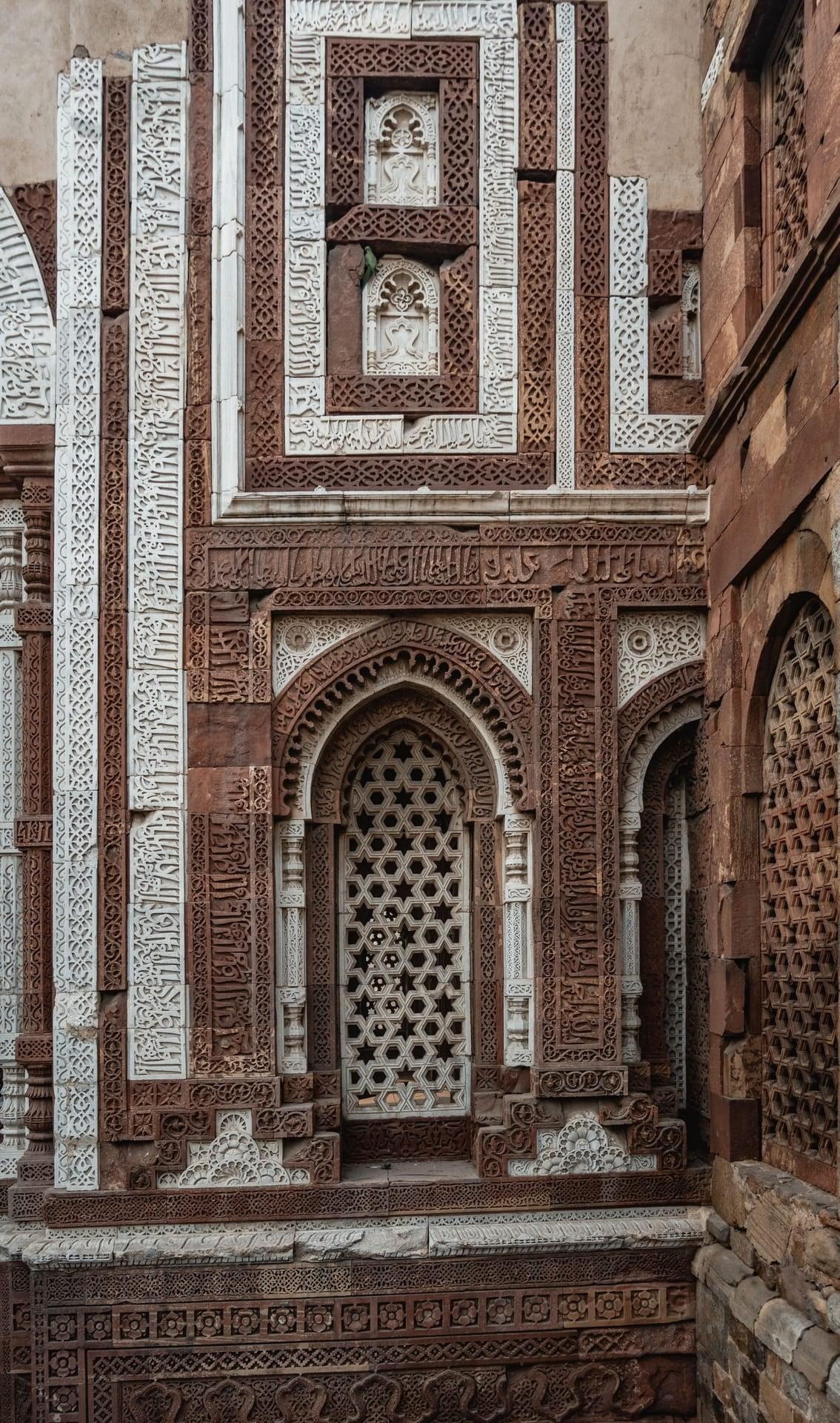
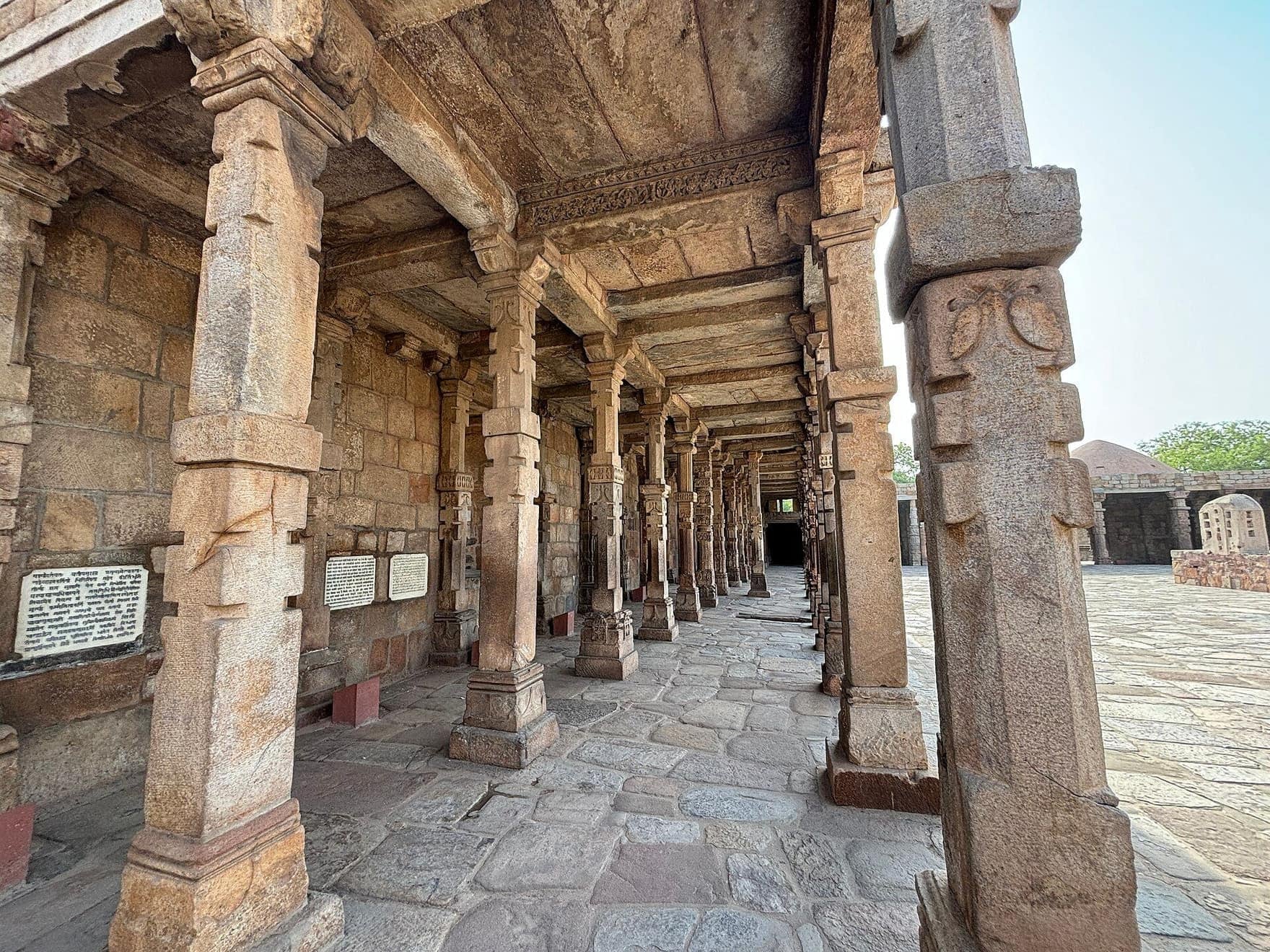
A finisher's arches extend the mosque. The southern extension of the great arched screen, added when Iltutmish doubled the mosque in 1230 and brought the Qutub Minar inside it.
- 6
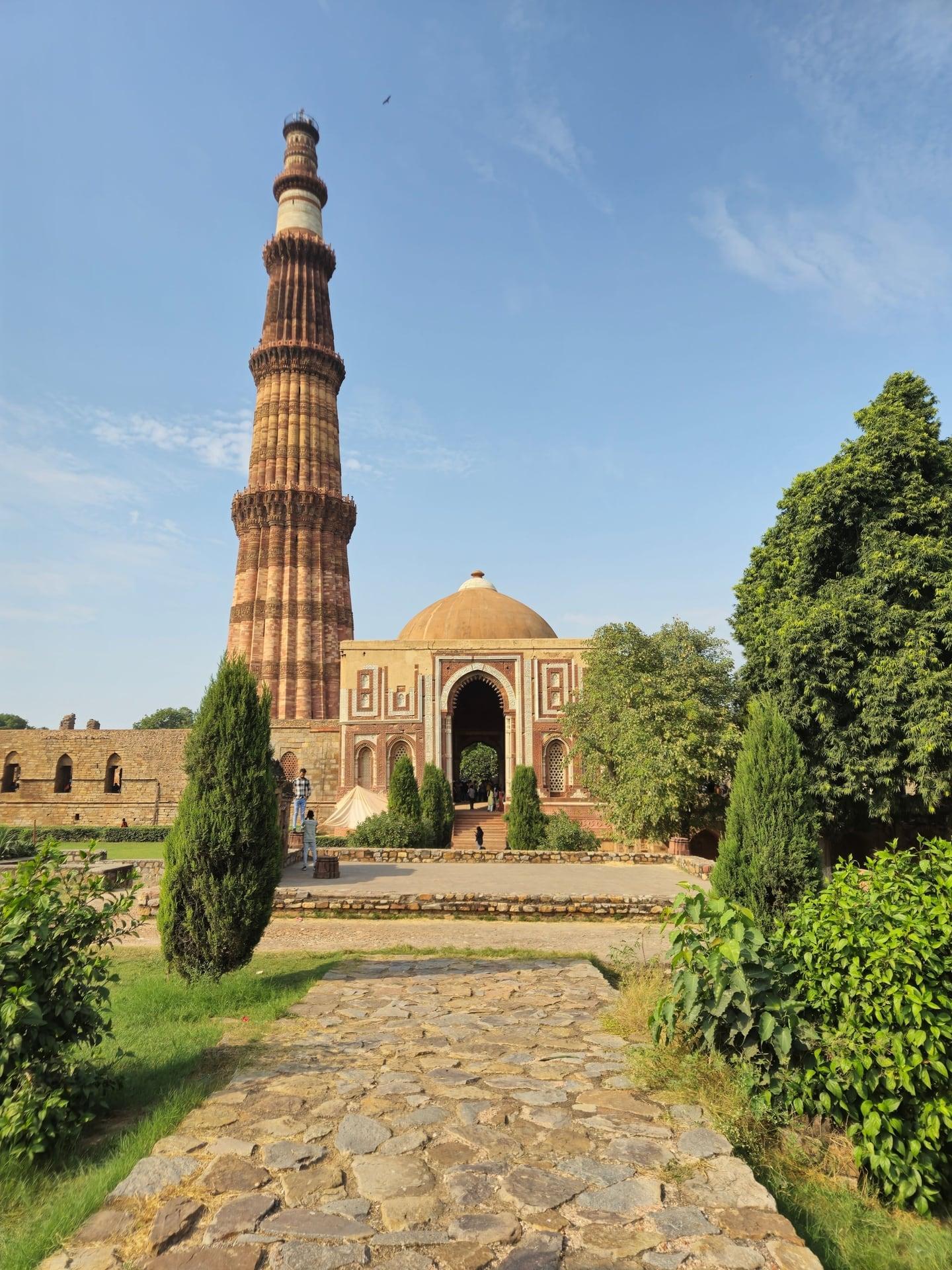
Alai Darwaza
This gate is built with true arches. The Alai Darwaza, the domed southern gateway Alauddin Khalji added to the mosque in 1311, its pointed arches built with radiating voussoirs.
- 7
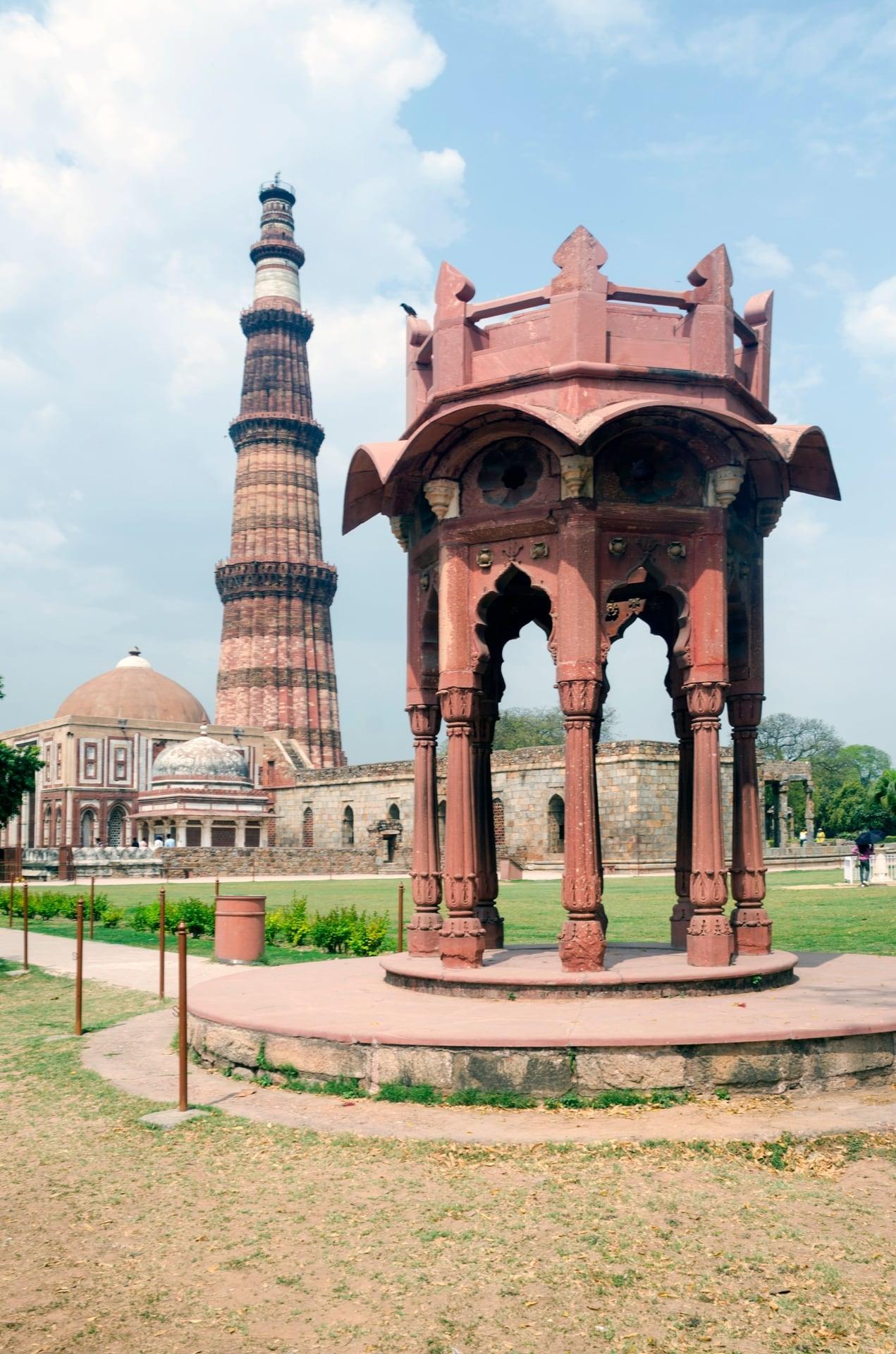
Smith's Folly
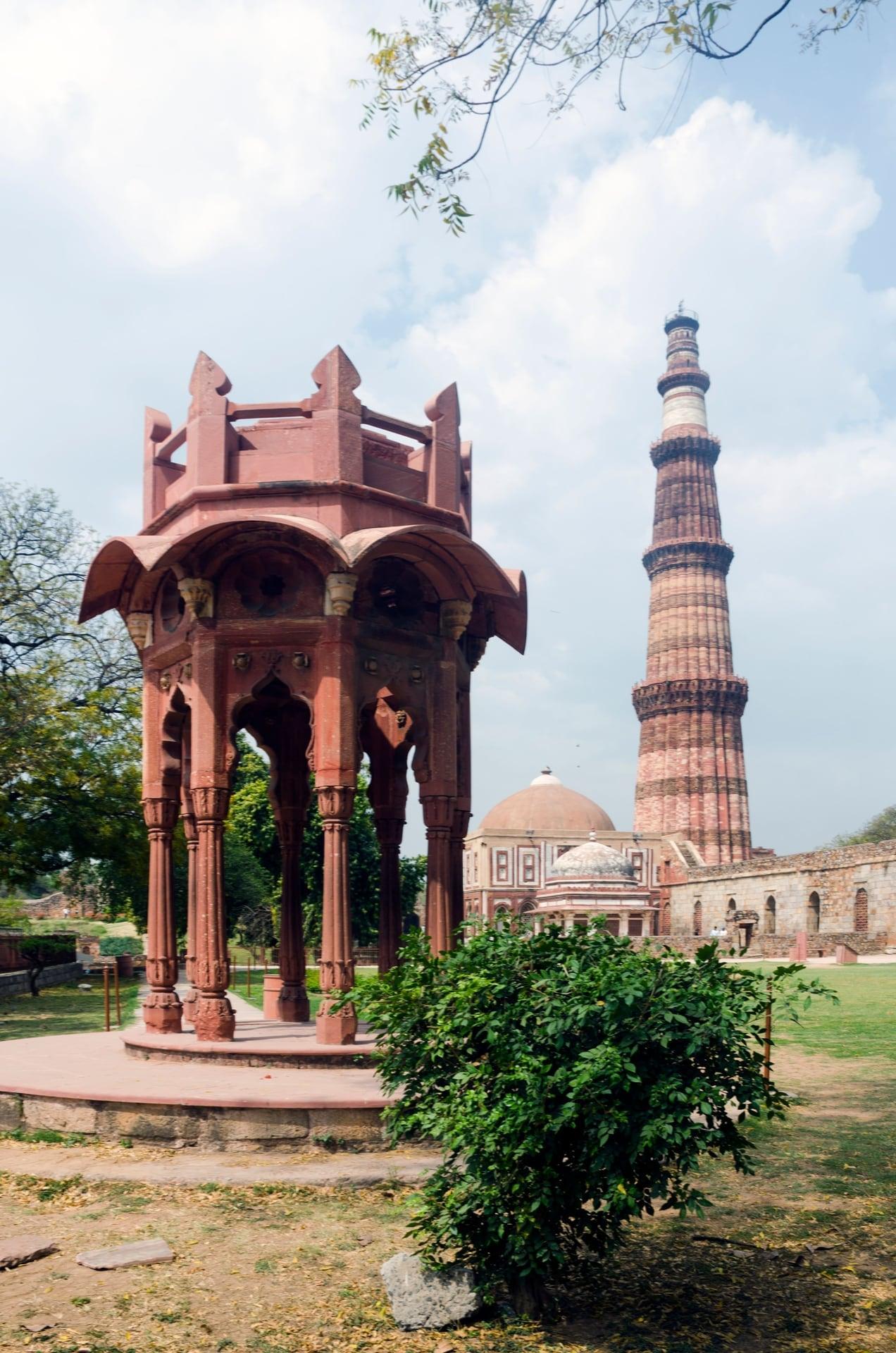
This cupola once crowned the tower. Smith's Folly, the red sandstone cupola a British engineer set on the Qutub Minar in the late 1820s, taken down in 1848, with the best view of the whole tower.
- 8
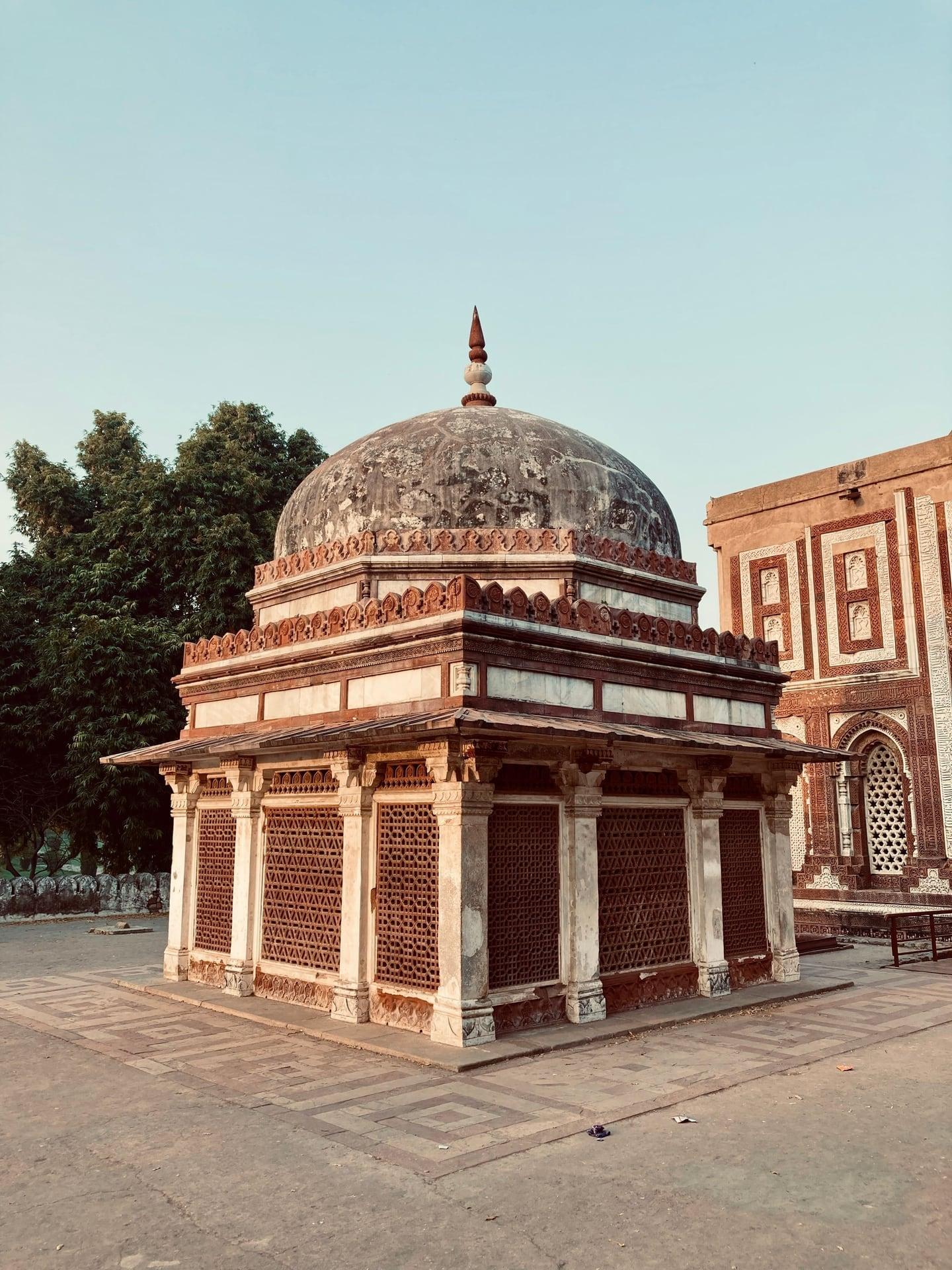
Imam Zamin's Tomb
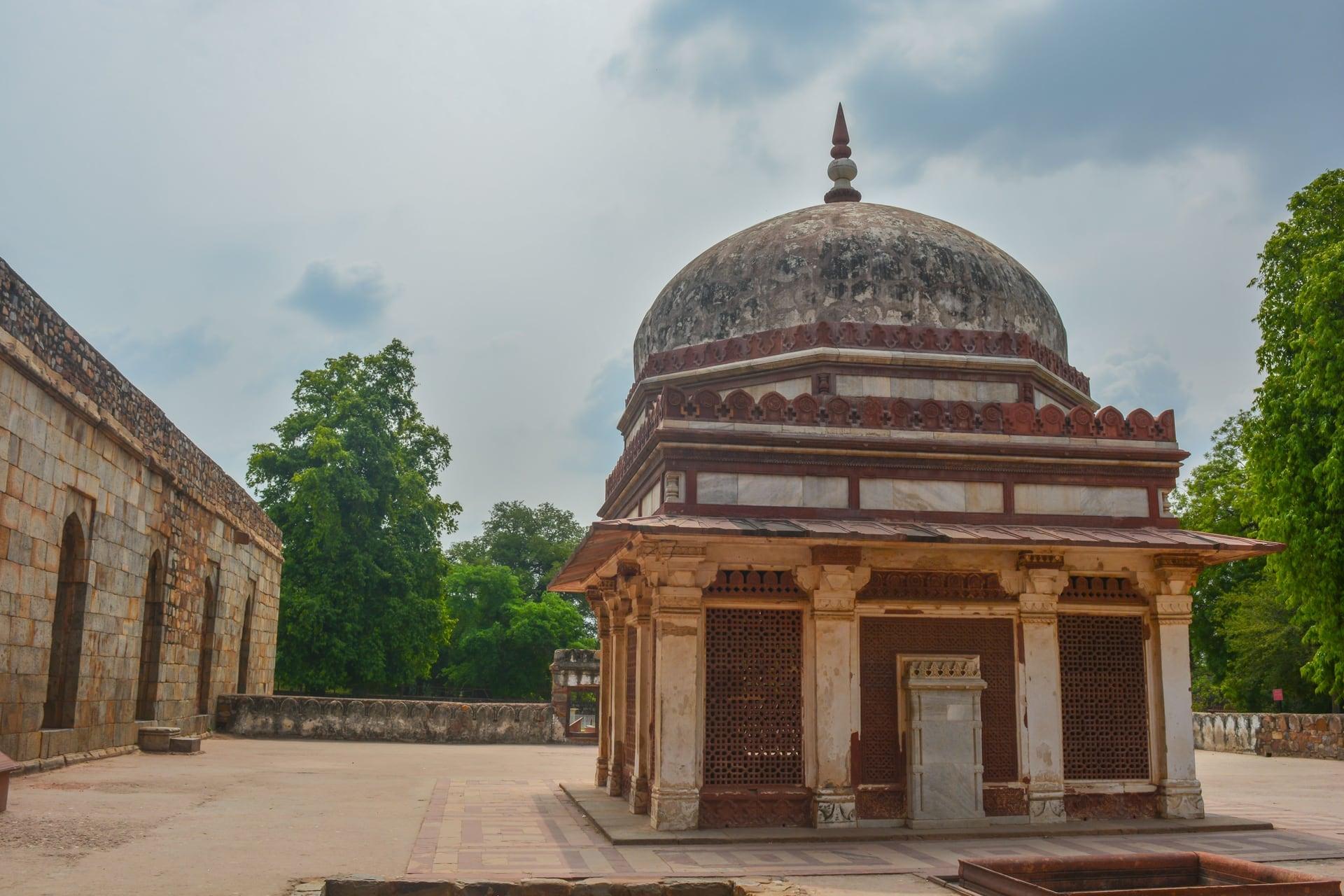
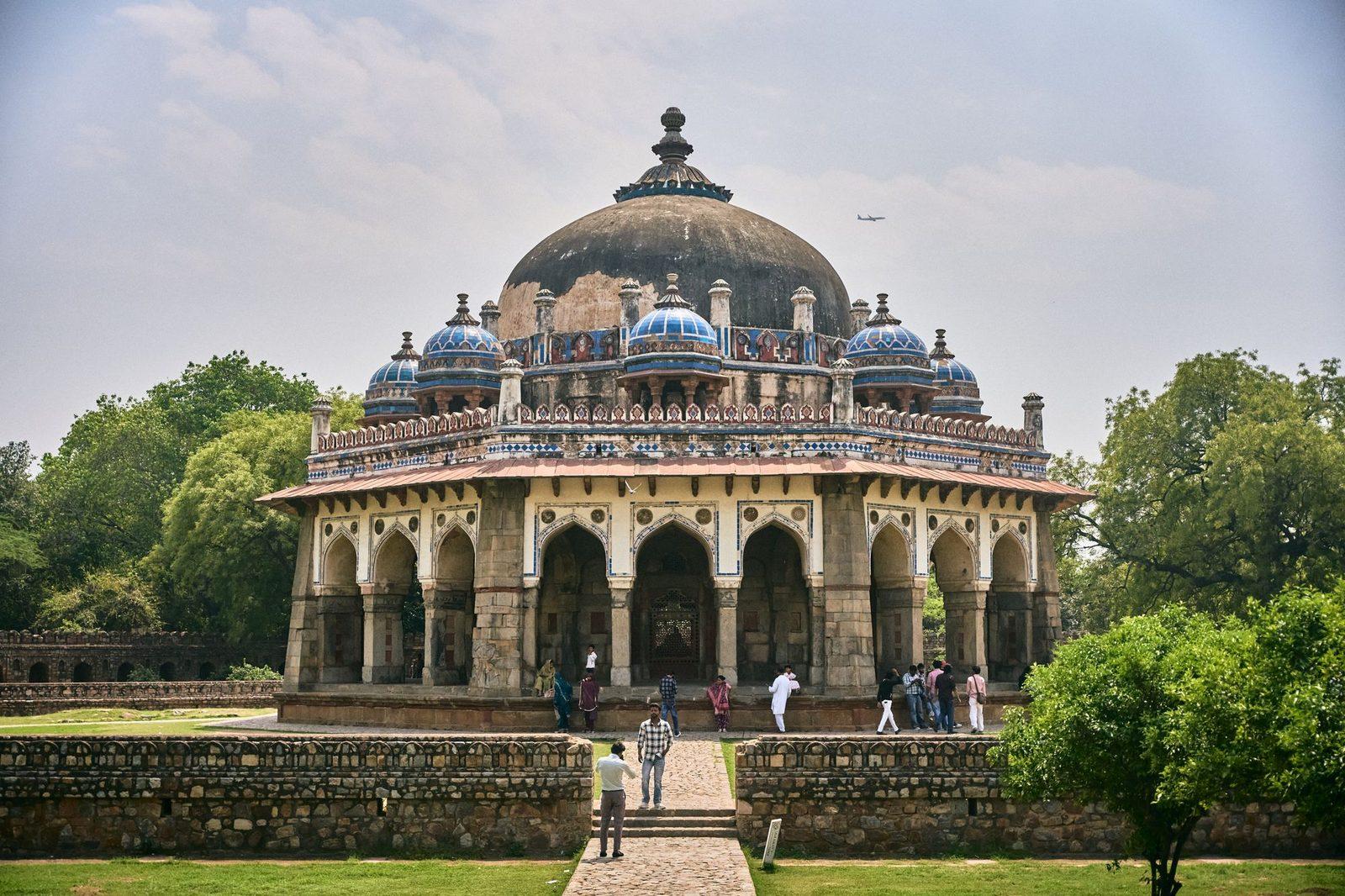
A saint lies beside the sultan's gate. The small domed tomb a Sufi saint from Turkestan built for himself in 1537 to 1538, set against the Alai Darwaza of 1311.
- 9
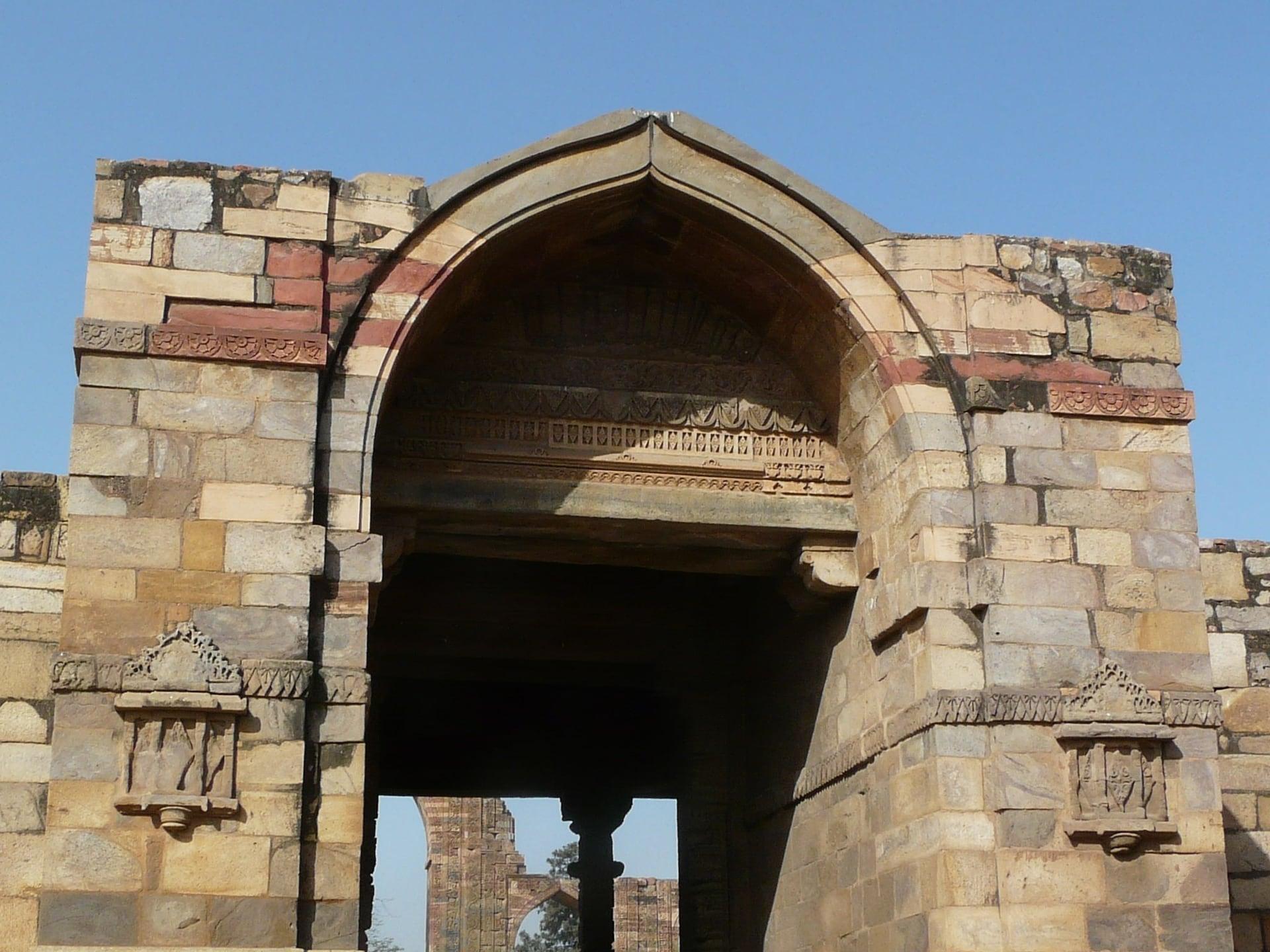
Mosque East Gate
The founder's words are carved here. The eastern gateway of the mosque begun in 1192, with the founding inscription on the inner face of its lintel.
- 10
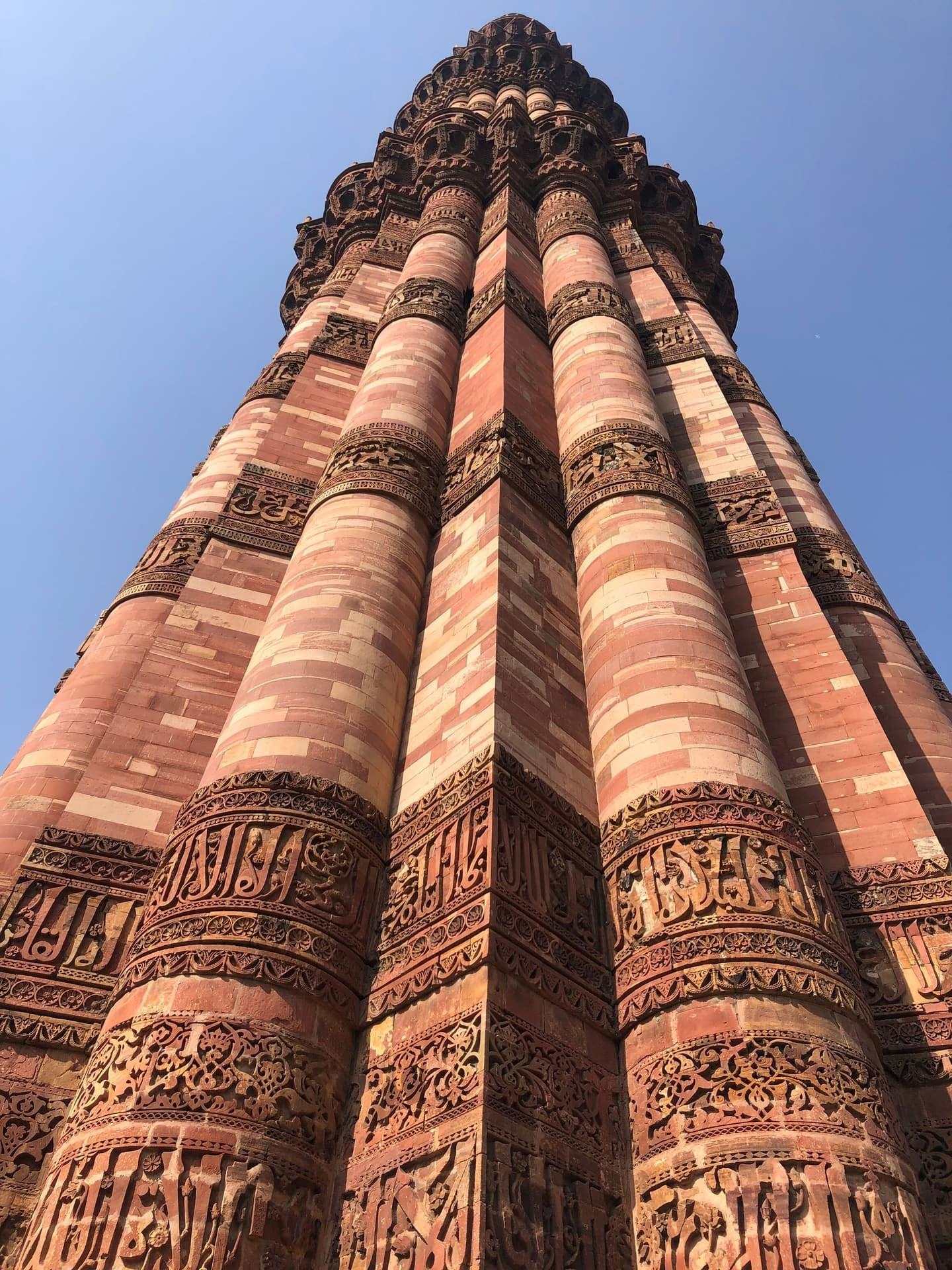
Qutub Minar
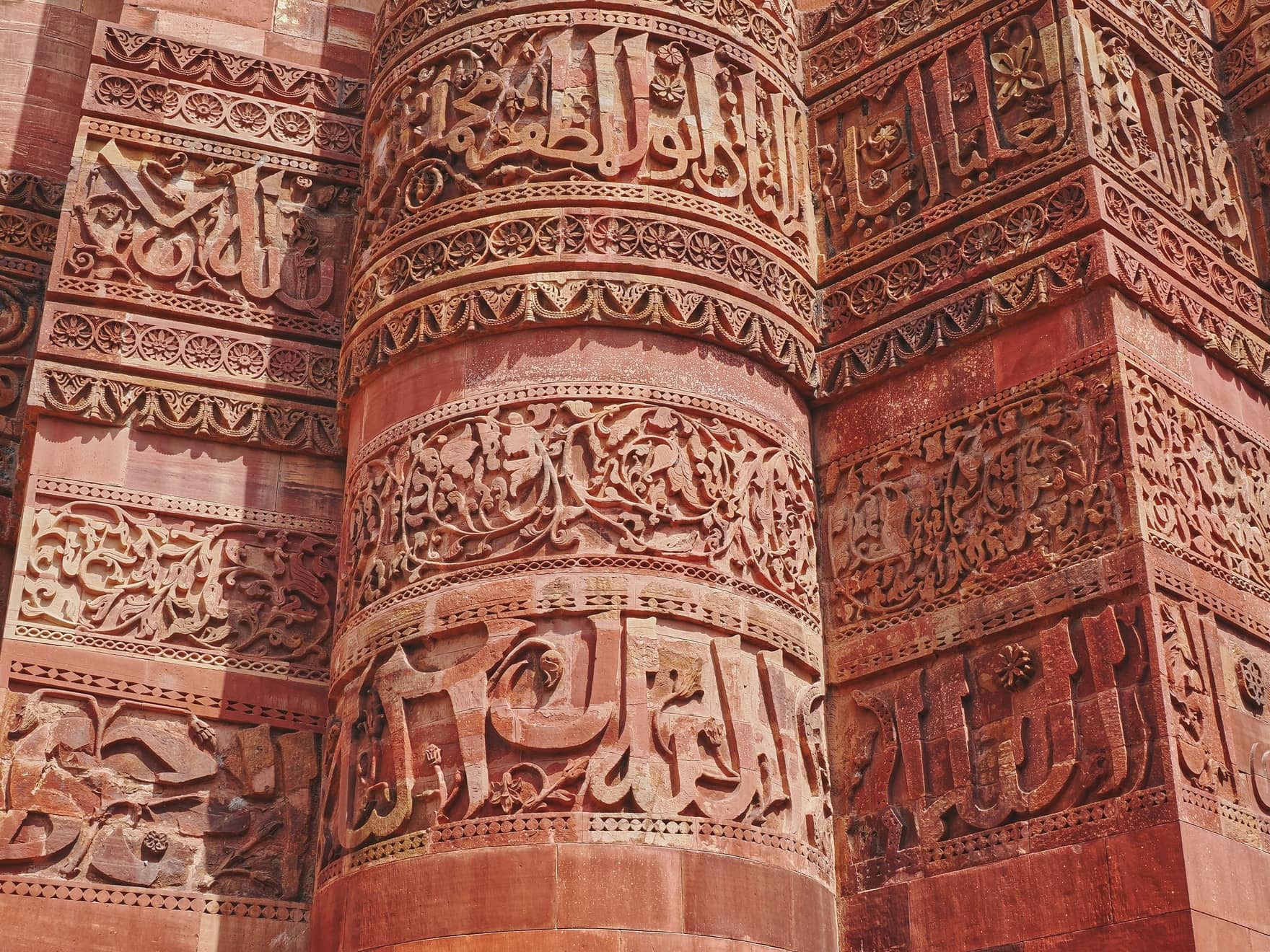
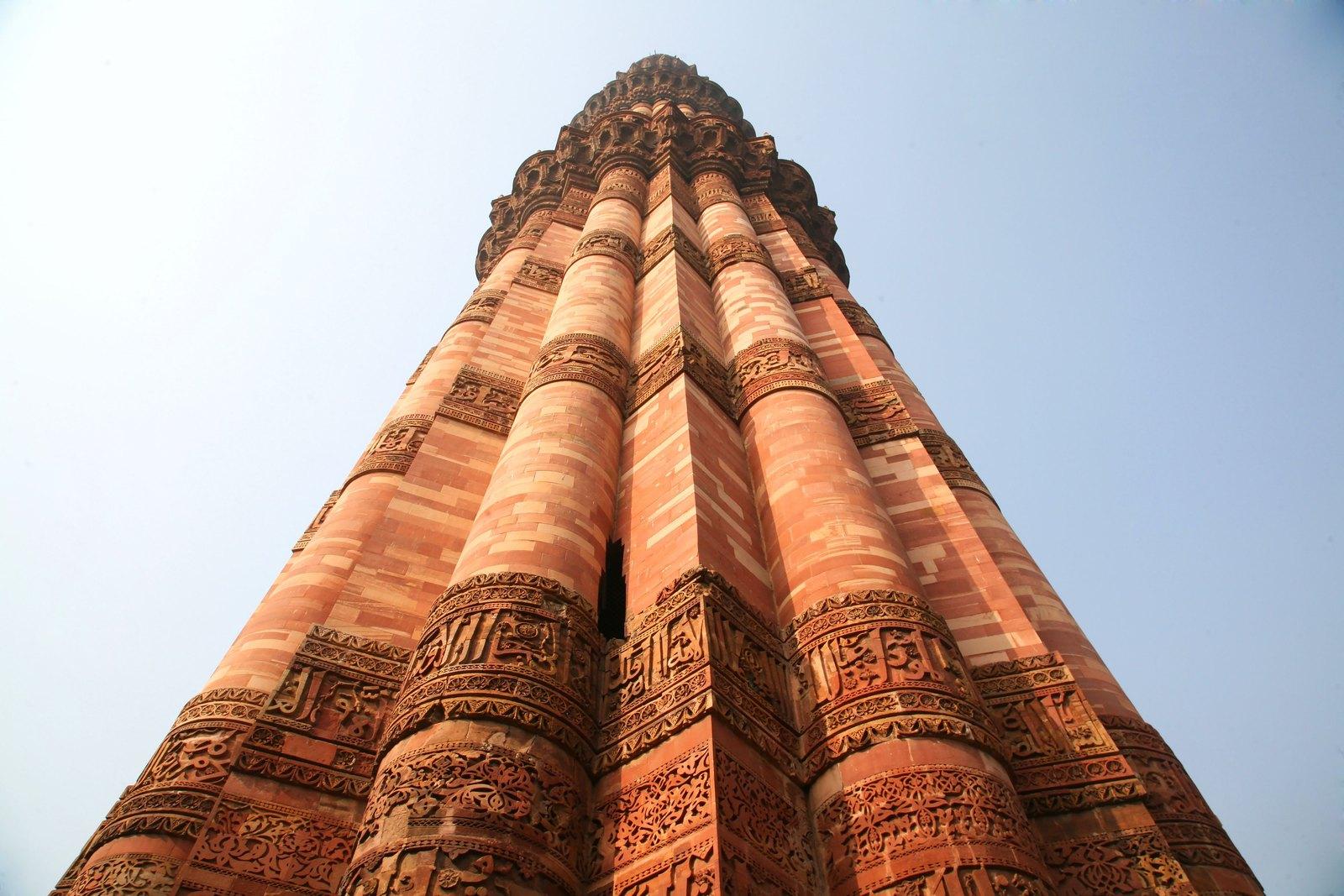
The tower rises straight above you. The east foot of the Qutub Minar, its first story of 1199 fluted in alternate angular and round flutes, closed to climbing since 1981.
- 11
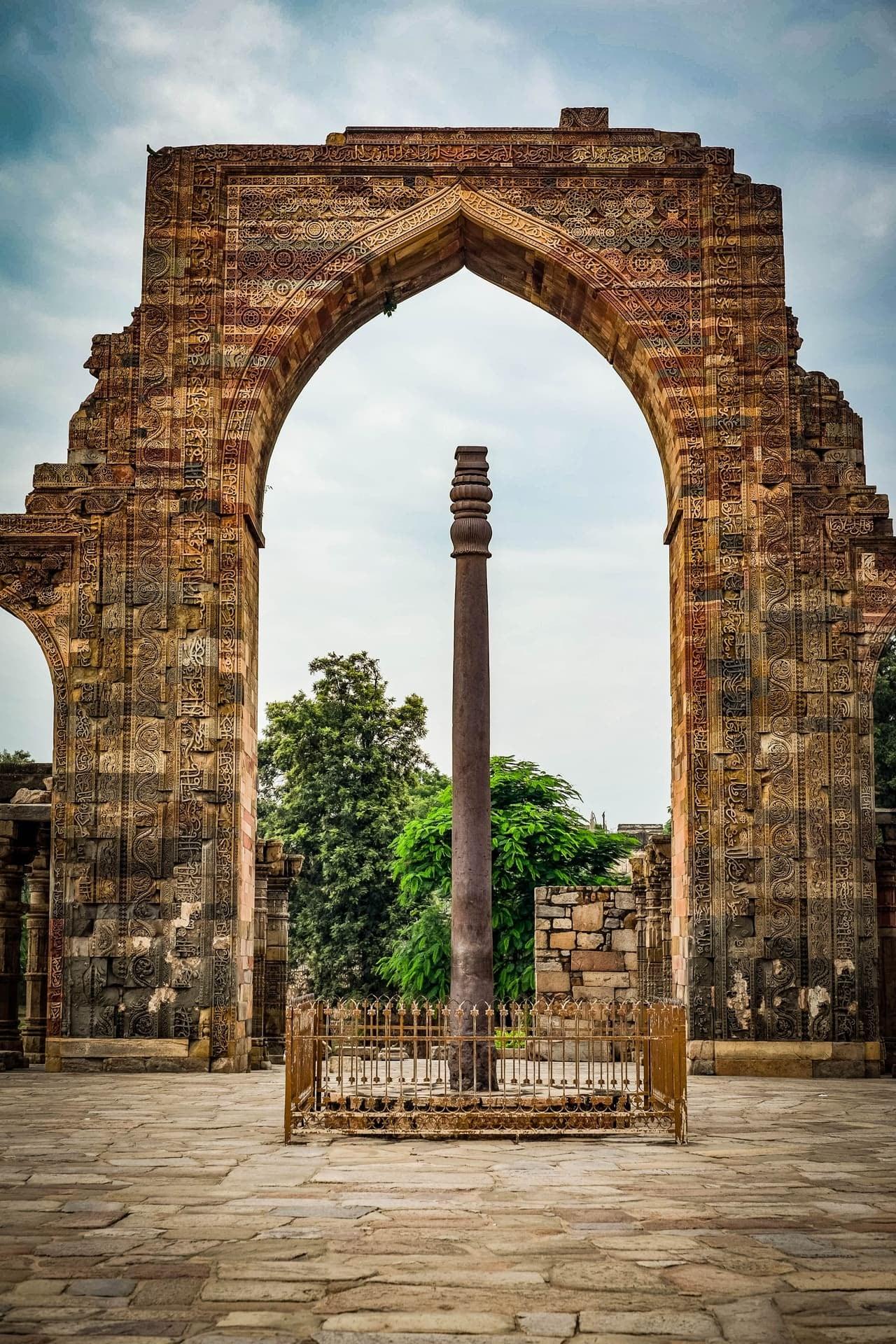
Iron Pillar
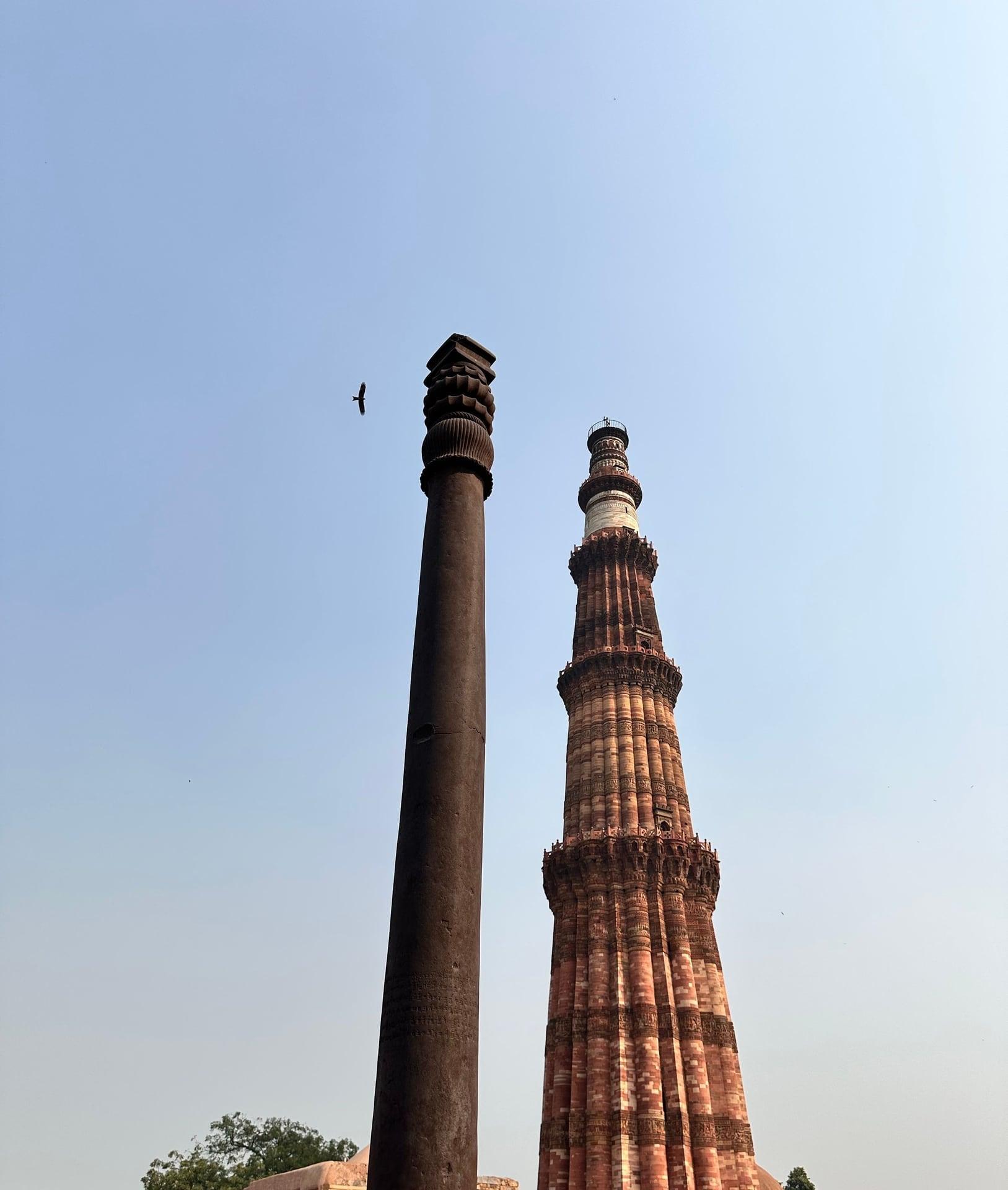
This iron pillar is older than the mosque. The fourth century iron pillar in the mosque's court, with its Sanskrit inscription, set before the great arched screen and its corbelled arches.
Details
Best Time to Visit
Morning after sunrise, or mid-afternoon to early evening: the complex is open daily from sunrise to 8:00 pm (ASI), Mondays and Fridays included, so the walk works later than the sunset-only parks. Weekday mornings bring school groups to the tower's foot, the east gate and the court. October to March is the season; December and January mornings are often foggy (about 20 fog days a month, IMD normals) and the top of the minar may stay hidden until late morning, and winter air is often poor; February and March are clear and warm. Sunset (computed for the Qutub) is about 17:24 on 1 December, 17:45 on 15 January and 18:10 on 15 February. Checked 11 November 2026.
Pro Tips
- •Start on the path just inside the Qutub complex, past the Mughal gateway, after the ticket counter and security. Taxi or auto rickshaw: ask for the Qutub Minar car park.
- •Getting there: Qutab Minar metro station (Yellow Line, per Delhi Tourism) is about 1.4 km in a straight line south of the ticket counter: take an auto rickshaw, e-rickshaw or taxi to the Qutub Minar car park off the approach road (Baba Shrichand Marg). City buses stop at 'Qutub Minar' on Kalka Das Marg, north of the complex. Checked 11 November 2026.
- •The entry ticket is not included. Buy it only at the official ASI counter beside the car park or online through the ASI's portals linked from asi.nic.in (asi.payumoney.com, which redirects to eticket.webfront.in/asi, and asi.paygov.org.in). Foreign visitors Rs 600 cash, Rs 550 online; SAARC and BIMSTEC Rs 50 cash, Rs 35 online; under 15 free; the ASI page's Indian-citizen line is missing, so check the portal. Decline unsolicited guides and ticket offers at the approach (Government of Canada travel advice, updated 6 November 2026). Checked 11 November 2026.
- •Steps: the only steps are a short flight on the way from Smith's Folly (stop 7) to Imam Zamin's tomb (stop 8). Step-free alternative, about 290 m: back west past the Alai Darwaza's west side, east along the minar's south side and back south to the tomb. The two wooden boardwalks on the route are at ground level.
- •The founding inscription is on the INNER face of the east gate's lintel: read it from inside the gateway (a few steps up from outside) or see the gate's inner face from the court at stop 11.
- •The exit is the way you came in: from the iron pillar, north up the court and east along the north path, about 110 m, to the Mughal gateway (not confirmed on an ASI page; follow the signs on the day). The free Mehrauli Archaeological Park next door is reached by its walking gate off the approach road, on the car-park side; the complex and the park are not connected inside. For our Lodhi Garden or Humayun's Tomb walks, about 15 km north, take a taxi or auto rickshaw.
- •Photography for personal use is allowed at ASI monuments (ASI order of 12 July 2018, The Tribune, 13 July 2018); tripods, stands and filming need ASI permission, and drones are not allowed.
Safety & Precautions
- •Closed: the minar's interior has been closed to climbing since the stampede of 4 December 1981, and the first floor of the 'Hindu Remains Corridor' and the Jamali Kamali tomb in the park next door are out of bounds (stampede: UPI, 4 December 1981; closures: ASI RTI reply, Daily Pioneer, 14 September 2026). Do not climb on the ruins, the Alai Minar's base or any plinth. Checked 11 November 2026.
- •From 4 December 2026 to 21 March 2027 the India Art, Architecture and Design Biennale uses the Qutub complex as one of its Delhi venues (Culture Ministry via PTI, Daily Excelsior, 2 October 2026; All India Radio News, 19 September 2026): temporary installations may stand on the lawns and courts and crowds will be larger. Check the day's opening before you go.
- •Underfoot: paving, setts and two ground-level boardwalks, with broken, uneven ground round the madrasa ruins (stop 4). One short flight of steps between stops 7 and 8 has a step-free way round.
- •Weather and air: in December and January highs are about 20 to 23 C and lows about 7 to 8 C, with fog on about 20 days a month (IMD normals, Safdarjung, 1991 to 2020). Winter air is often very poor (GRAP Stage III invoked across Delhi-NCR on 6 November 2026 at AQI 380, All India Radio News): check the day's AQI, a mask helps, and take care with asthma. The lawns have little shade at midday.
- •Respect: the tombs are graves; keep voices low. School groups and families crowd the tower's foot, the east gate and the court: ask before photographing anyone.
- •Mehrauli Archaeological Park (optional, after the walk): free, but it closes at sunset (Delhi Tourism), its paths are uneven earth, and the way to its walking gate runs about 300 m along the edge of the Qutub approach road, which has no footway and carries car-park traffic, buses, taxis and autos. Go in daylight and keep to the road's edge.
Travel advisory: Exercise Increased Caution (Level 2).
Gallery
Related Reading
Go deeper on what you'll see, hear, and walk through.
Overview
Delhi Monument Tickets, Hours and Closures (Checked November 2026)
4 min
Overview
Delhi Travel Guide: How Many Days, Getting Around, Best Time, and Safety
5 min
Thematic
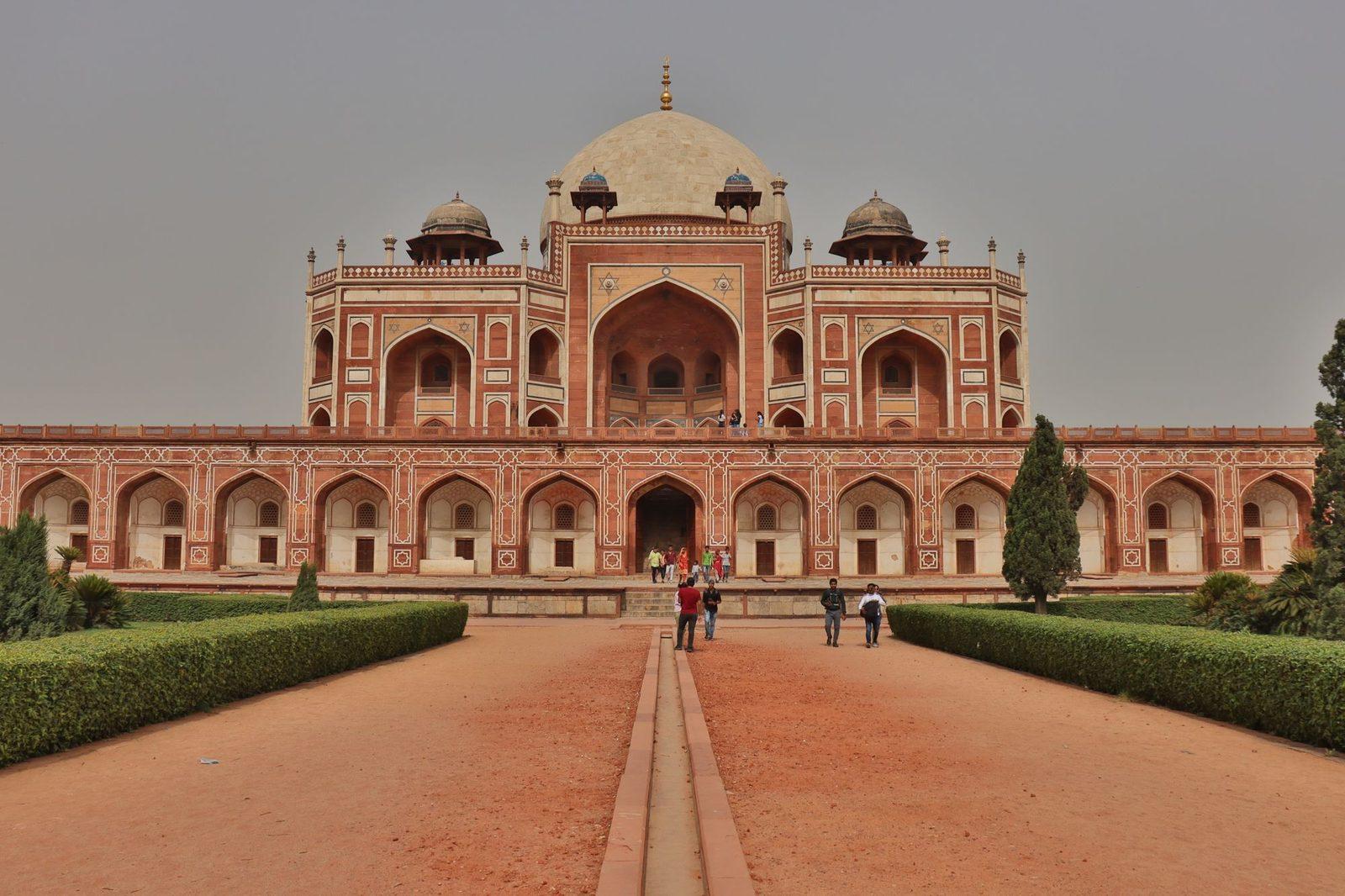
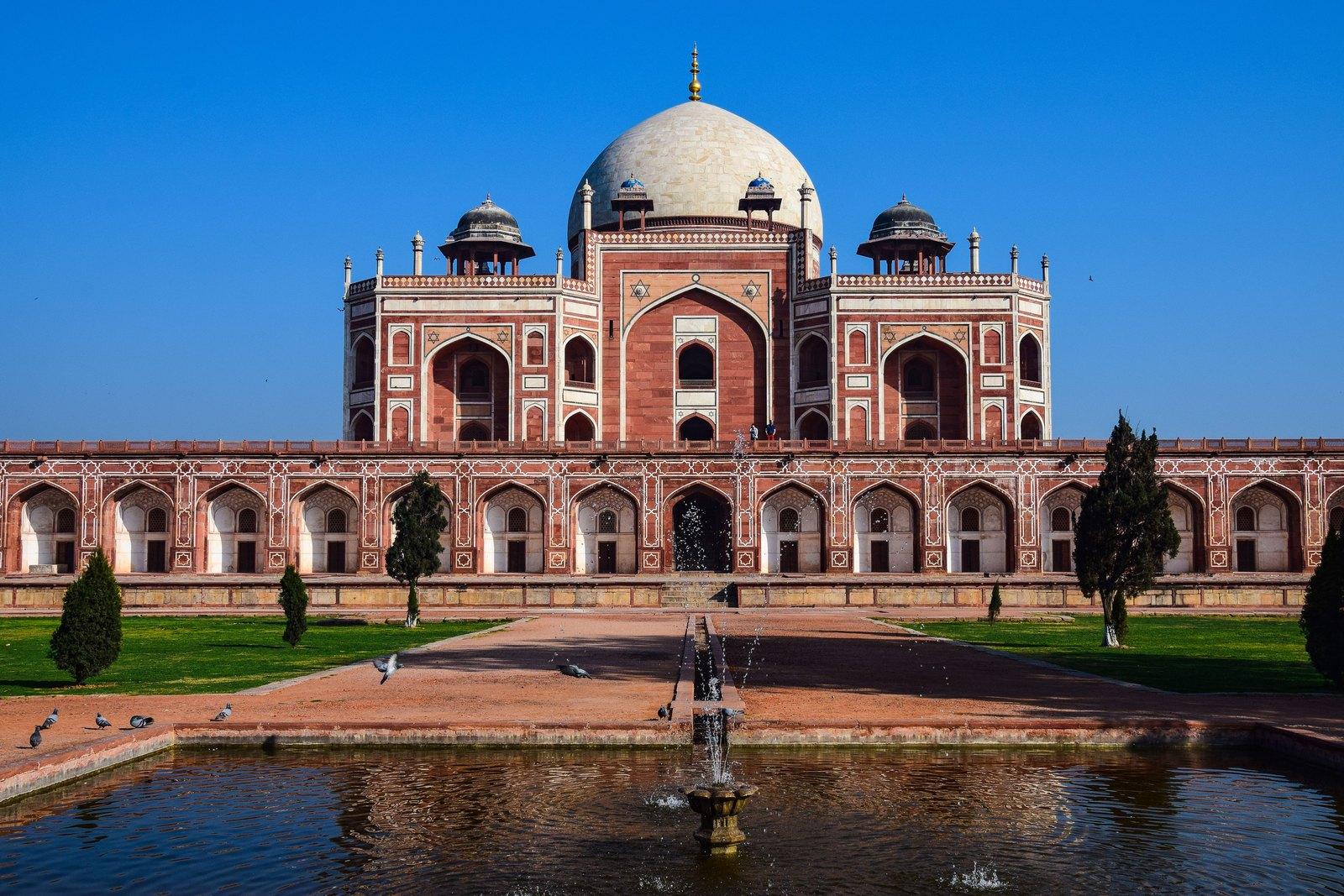
Delhi's Garden Tombs: From the Lodis to Humayun, in Four Steps
5 min
Thematic
How to Read Delhi on Foot: Six Walks, Eight Centuries
4 min
Thematic
The Seven Cities of Delhi: A Tradition, Not a Count
4 min
Companion
Qutub Minar: Seven Centuries of Builders Around One Tower
5 min
Read the walk
The full story of Qutub Minar: Seven Centuries of Builders, One Tower, in words. Prefer to listen? Play it narrated, from home or on location.
Introduction
Delhi's Qutub Minar is a tower that seven centuries of rulers and engineers kept working on. This walk is inside the ticketed Qutub complex, and the entry ticket is not included: buy it at the official counter or on the Archaeological Survey of India's website, and nowhere else. It is six hundred rupees for foreign visitors, a little less online.
A general raised the tower's first story in eleven ninety nine, beside a mosque he had begun seven years before. His successor finished the tower and doubled the mosque. A later sultan tried to outbuild them both and left a stump. Lightning, sultans, an earthquake and a British engineer all changed the top. Builder after builder reused this ground, finished it, rivaled it, repaired it and dressed it anew, and you can read every layer from the paths.
There are eleven stops over just under a kilometer, about half a mile, and it takes about an hour. The paths are flat and paved, with ground level boardwalks and one short flight of steps, which has a longer way round. No road is crossed.
The complex is open every day from sunrise to eight in the evening. The tower has been closed to climbers since nineteen eighty one, so every stop is told from the ground. Decline anyone at the gate who offers a ticket or a guide.
From December to February the days are mild and the mornings cold, and dense fog can hide the top of the tower until late morning. In winter Delhi's air is often very poor: check the day's air quality index, a mask helps, and take care if you have asthma.
The walk ends in the old mosque's court, beside a pillar of iron, a short way from the gate. When you arrive at Sarai Gate, begin with stop one.
1. Sarai Gate
Through the gateway, the Qutub Minar comes into view over the trees: a fluted tower of red and buff sandstone, ringed with balconies and bands of carved writing. It stands ahead of you and well to the left, a little over a hundred meters away.
First, the gateway you have just come through. It is not part of the medieval complex at all. The Archaeological Survey of India identifies it as the entrance to a sarai, an inn for travelers, of the late Mughal period. So the walk begins with one of the youngest buildings on this ground, and with the habit of this place: each new builder used what an earlier one had left.
Now the tower. Qutbuddin Aibak, the army commander who captured Delhi for his sultan, laid its foundation in eleven ninety nine and raised the first story. His successor and son in law, Iltutmish, added three more. It is seventy two and a half meters high. The Archaeological Survey calls it the highest tower in India, and UNESCO the tallest masonry tower in India. It was built for the muezzin, the crier, to give the call to prayer from the mosque beside it, and in the Survey's words it was possibly raised as a tower of victory too.
That is the first layer. The route goes round the old mosque, clockwise, and every stop adds another.
On a foggy winter morning the top of the tower may be lost in the gray. It comes back as the fog lifts.
Follow the route across the lawn. Next, a tower that was meant to be twice the size of this one.
2. Alai Minar
The great rough mound of stone beside the path is the Alai Minar. Turn so that it is in front of you. The finished tower is then at your back, across the mosque.
This was meant to be the bigger one. Alauddin Khalji, sultan of Delhi from twelve ninety six to thirteen sixteen, began it. He doubled the size of the mosque, and the Archaeological Survey says he meant this tower to be twice the size of the Qutub Minar, in proportion to his enlarged mosque. He completed only the first story. It stands about twenty five meters high, about a third of the height of the tower behind you. He died in thirteen sixteen, and no one went on with it.
What you see is the core, rough rubble on a raised base. The dressed stone facing that would have covered it, like the red and buff skin of the finished tower, was never added. So you are looking at the inside of a tower that was never dressed.
There is a twist. A later inscription on the Qutub Minar itself, in Nagari script, calls the old tower Alauddin's tower of victory. He may have repaired the old tower, even as he raised this rival to it.
Keep to the path round it. The base is not for climbing.
Follow the route toward the mosque's far corner. Next, the tomb of the man who finished the Qutub Minar.
3. Iltutmish's Tomb
The plain square building in front of you, with no roof, is the tomb of Iltutmish, sultan of Delhi from twelve eleven to twelve thirty six. Its doorway faces you.
Iltutmish is the finisher on this ground. He added three stories to the Qutub Minar. In twelve thirty he doubled the mosque. And the Archaeological Survey dates this tomb to about twelve thirty five, built by Iltutmish himself, shortly before his death.
From outside it is red sandstone and almost bare. Step to the doorway and look in, and it changes completely. Inside, a chamber nearly nine meters square is carved over its surfaces with inscriptions and with geometric and arabesque patterns. Some of the motifs, such as the wheel and the tassel, recall Hindu designs, the Survey notes. In the west wall are three mihrabs, the prayer niches that worshippers faced.
Look up into the corners. The dome is gone. It fell, and a replacement, believed to be a later sultan's, was lost again. The arches set across the corners to carry a dome are called squinches, and the Survey's handbook says they appear for the first time in this building.
UNESCO says this tomb marks the beginning of the tradition of building royal tombs here.
It is a grave. Keep your voice low, and leave the chamber as you find it.
Follow the route down the west side of the mosque. Next, a sultan's college, and perhaps his grave.
4. Alauddin's Madrasa
Beside the path, broken walls and rows of small rooms, open to the sky, surround a court and form one L shaped block. On the far, south side of that court stands a square chamber with no dome.
This is believed to be the madrasa, the college, of Alauddin Khalji, whose rival tower you saw. And the central room on the south side, that domeless chamber, was perhaps his tomb. Notice the words believed and perhaps. The Archaeological Survey's handbook uses them, and so do we. It was once suggested that Iltutmish built the college, but the archaeologist who wrote the Survey's memoir on this site in the nineteen twenties judged that the balance of probability rests with Alauddin.
If it is his, it is a striking idea: a ruler buried inside the school he founded. The handbook says a college and a tomb together appear here in India for the first time, perhaps inspired by Seljuk traditions from further west.
Alauddin ruled for twenty years, and he was the third great builder on this ground. He doubled the mosque again, and gave it new gateways, two on the east and one each on the north and south. You will see the south one soon, still standing whole.
The ground round the ruins is broken and uneven. Stay on the path.
Follow the route east onto the open paving. Next, a wall of tall arches.
5. Iltutmish's Screen
Turn round, so that the Qutub Minar is behind you. In front of you now, at the edge of the paving, stands a tall wall of broken arches. Start with the first mosque. Aibak began it in eleven ninety two, and its court lies beyond the long colonnade along the north side of this…
Full narration for this stop unlocks with the tour.
6. Alai Darwaza
Turn round to face the square, domed gate, with the Qutub Minar rising behind it. This is the Alai Darwaza, the Alai Gate: the southern gateway Alauddin Khalji added to his enlarged mosque. Inscriptions on it date it to thirteen eleven. UNESCO calls it the masterpiece of Indo…
Full narration for this stop unlocks with the tour.
7. Smith's Folly
The small red sandstone pavilion standing on the lawn in front of you once sat on top of the Qutub Minar. Look at it first. Then turn round, for the best view of the whole tower on this walk. The tower has been damaged and mended many times. Lightning struck it in thirteen…
Full narration for this stop unlocks with the tour.
8. Imam Zamin's Tomb
The small domed tomb just beside the Alai Darwaza, between you and the great gate's dome, is known as Imam Zamin's Tomb. Take a few steps along the short path toward it to see its sides. The saint buried in it was a Sufi from Turkestan who came here in the reign of a Lodi…
Full narration for this stop unlocks with the tour.
9. Mosque East Gate
The gateway ahead of you, with the Qutub Minar close by, was the main entrance to the first mosque on this ground. Aibak began the mosque in eleven ninety two. The Archaeological Survey calls it the earliest surviving mosque built by the Delhi sultans. Its founder called it the…
Full narration for this stop unlocks with the tour.
10. Qutub Minar
The Qutub Minar now rises close beside you. There is no need to see the top from here: the full view was at the cupola. This stop is about the stone in front of you. Look at the first story, Aibak's story, begun in eleven ninety nine. Its flutes alternate, angular and round,…
Full narration for this stop unlocks with the tour.
11. Iron Pillar
Close by, in the mosque's open court, stands a dark pillar of iron, with the great arched screen behind it. The pillar is older than anything else on this walk. It carries an inscription in Sanskrit, in a script of the Gupta age, from the fourth century. It says the pillar was…
Full narration for this stop unlocks with the tour.
- file title: Alauddin's Madrasa (3362834285).jpg (description: "Morning") — Varun Shiv Kapur from New Delhi, India, CC BY 2.0 · source
- file title: Alauddin's Madrasa, Qutb complex.jpg | description: Alauddin's Madrasa, Qutb complex, in the Morning — Varun Shiv Kapur, CC BY 2.0 · source
- file title: Smith's Cupola 4.jpg — Rangan Datta Wiki, CC BY-SA 4.0 · source
- file title: Smith's Cupola 3.jpg — Rangan Datta Wiki, CC BY-SA 4.0 · source
- file title: Imam Zamin's Tomb at Qutb Minar Complex.jpg | description: Imam Zamin's Tomb at Qutb Minar Complex, Delhi — Syed Sajidul Islam, CC BY-SA 4.0 · source
- file title: Qubbat-ul-Islam mosque entrance (3362791163).jpg (description: "Morning") — Varun Shiv Kapur from New Delhi, India, CC BY 2.0 · source
Images may be cropped or resized. Other photos via Unsplash and Pexels.