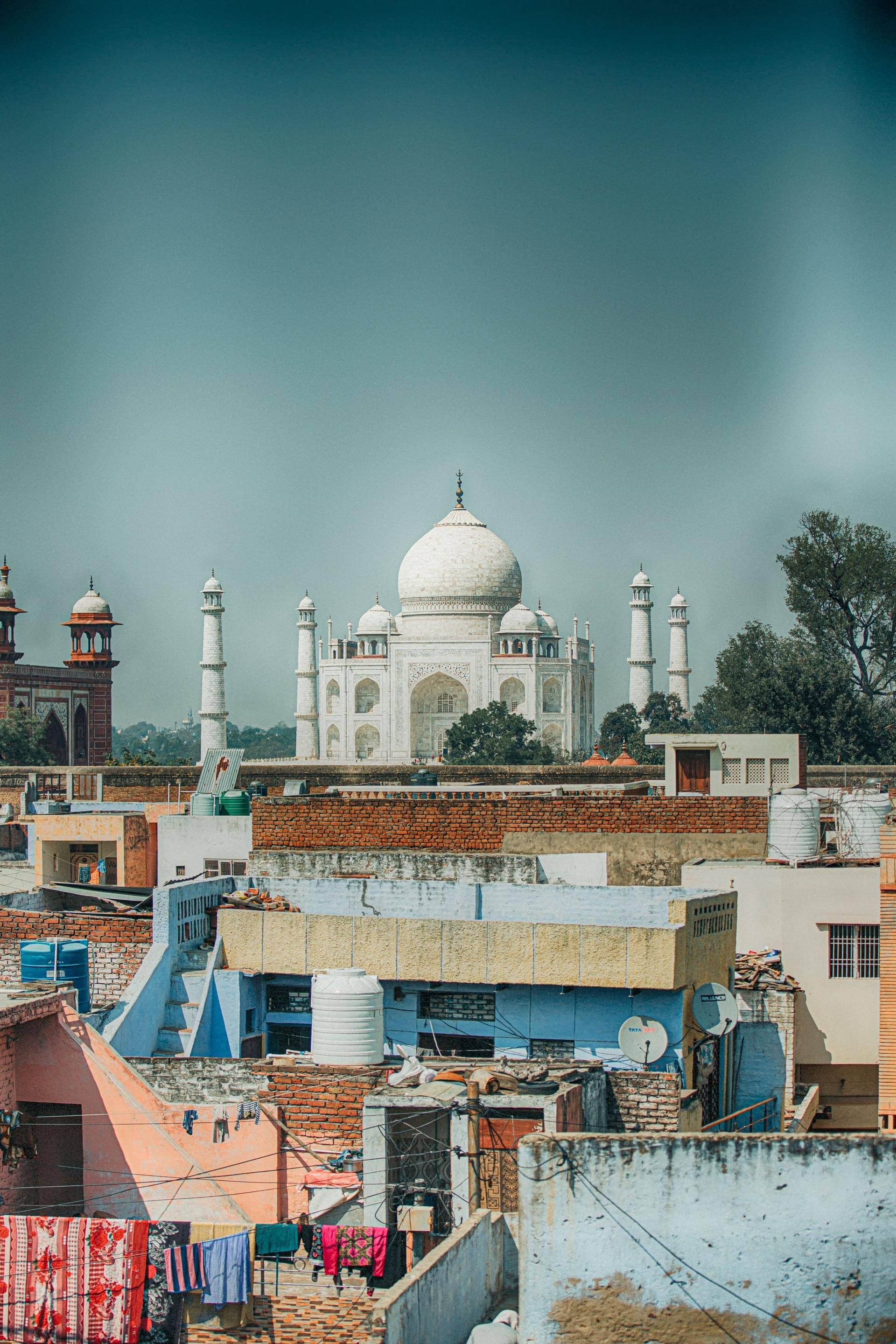
The free market town south of Agra's Taj Mahal, planned with the tomb in 1632. From the South Gate down the old axis lane, through the four quarters of the square and its surviving gates, past the Fatehpuri Masjid and the Dakhini Darwaza, to the East Gate and the quiet Kali Masjid.
Start · South Gate
DirectionsStops
- 1
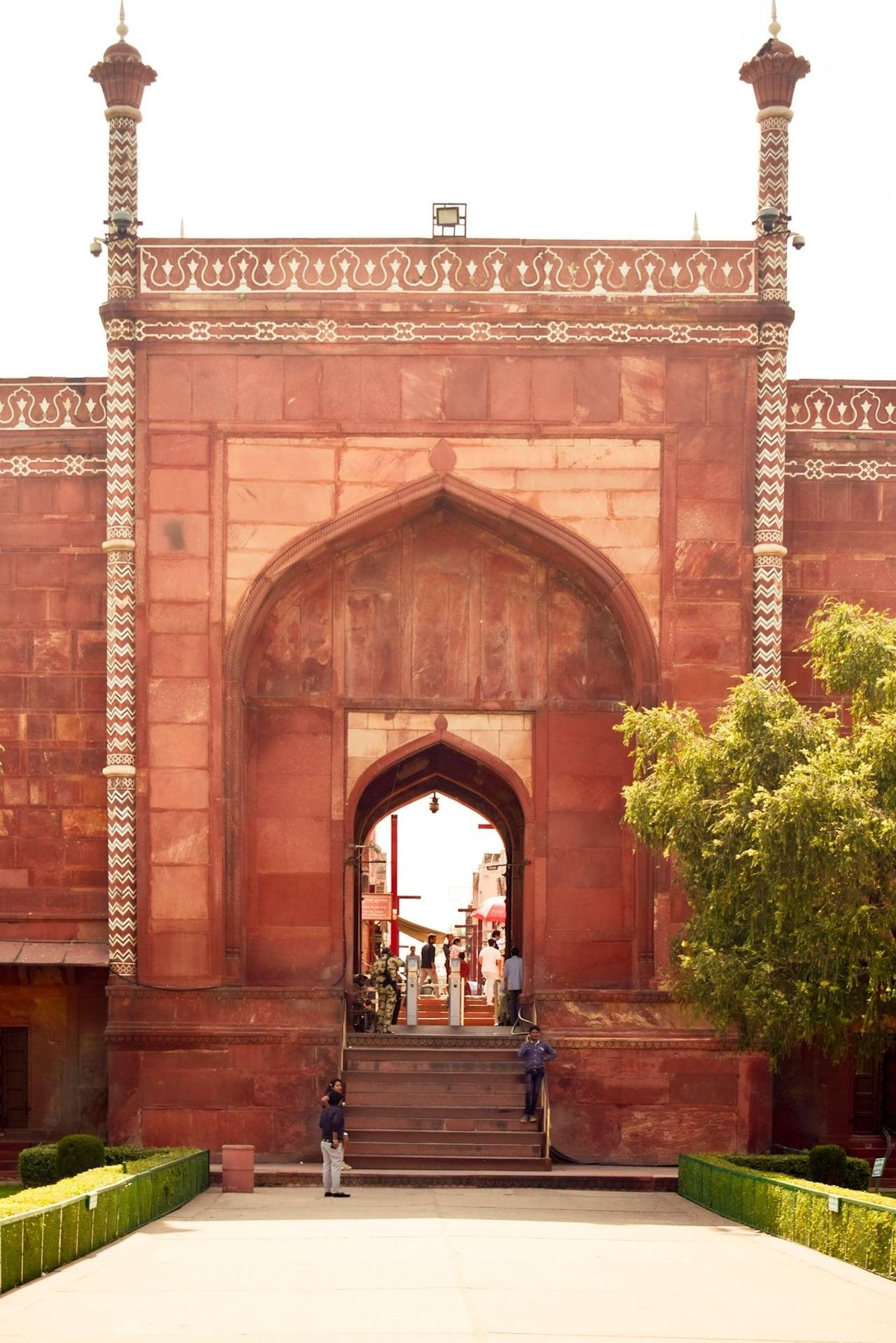
South Gate
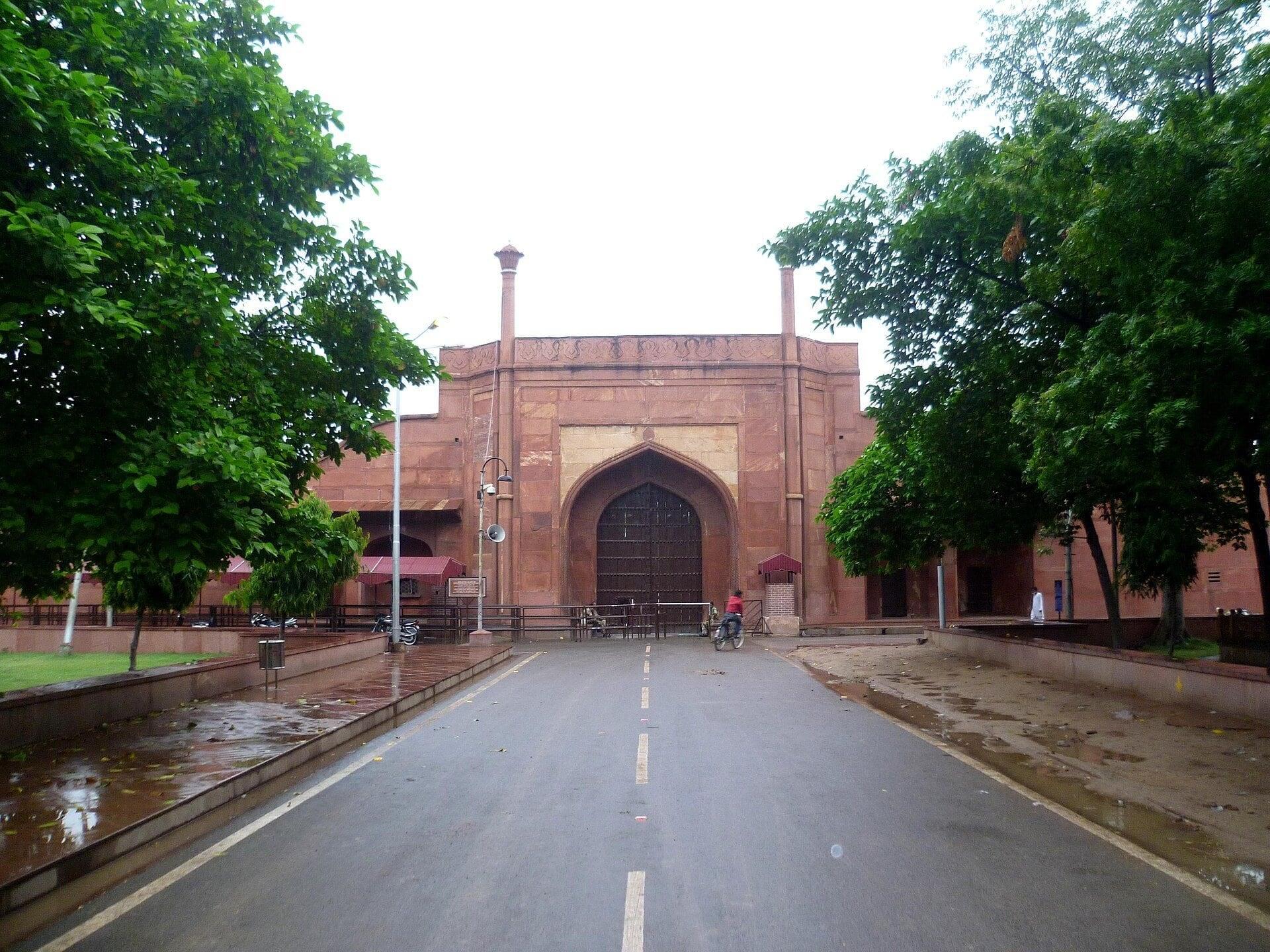
The town begins at the tomb's back gate. The Taj Mahal's South Gate, exit only today, where the town of Taj Ganj was laid out with the tomb in 1632.
- 2
Katra Omar Khan
An old gateway into a merchants' court. The protected gateway in the interior of Taj Ganj, the door to the northwest court that historians record as Katra Omar Khan.
- 3
Fatehpuri Masjid
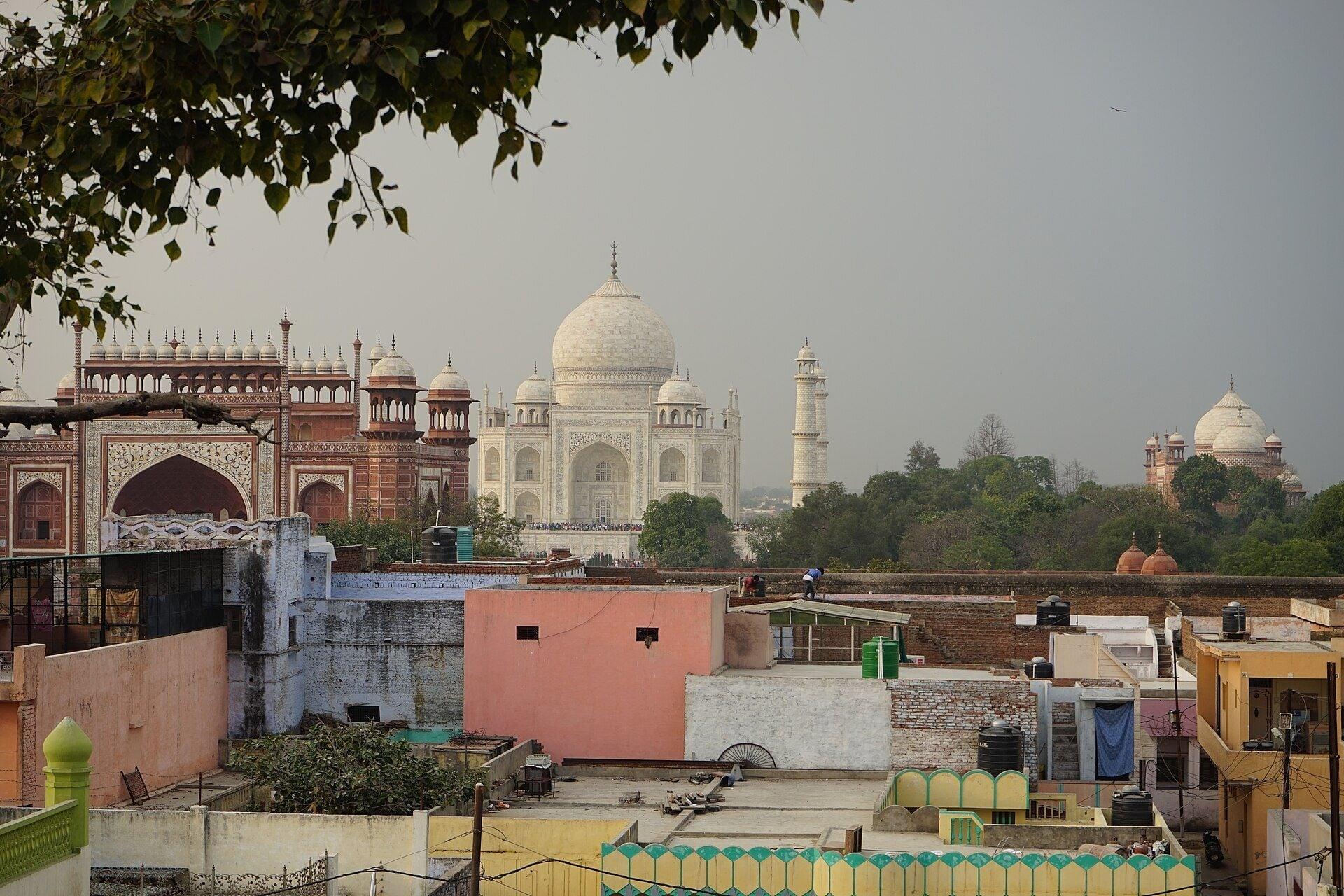
A wife's mosque beside the forecourt wall. The Fatehpuri Masjid on its raised platform, with a white tomb dome over the Taj's forecourt wall.
- 4
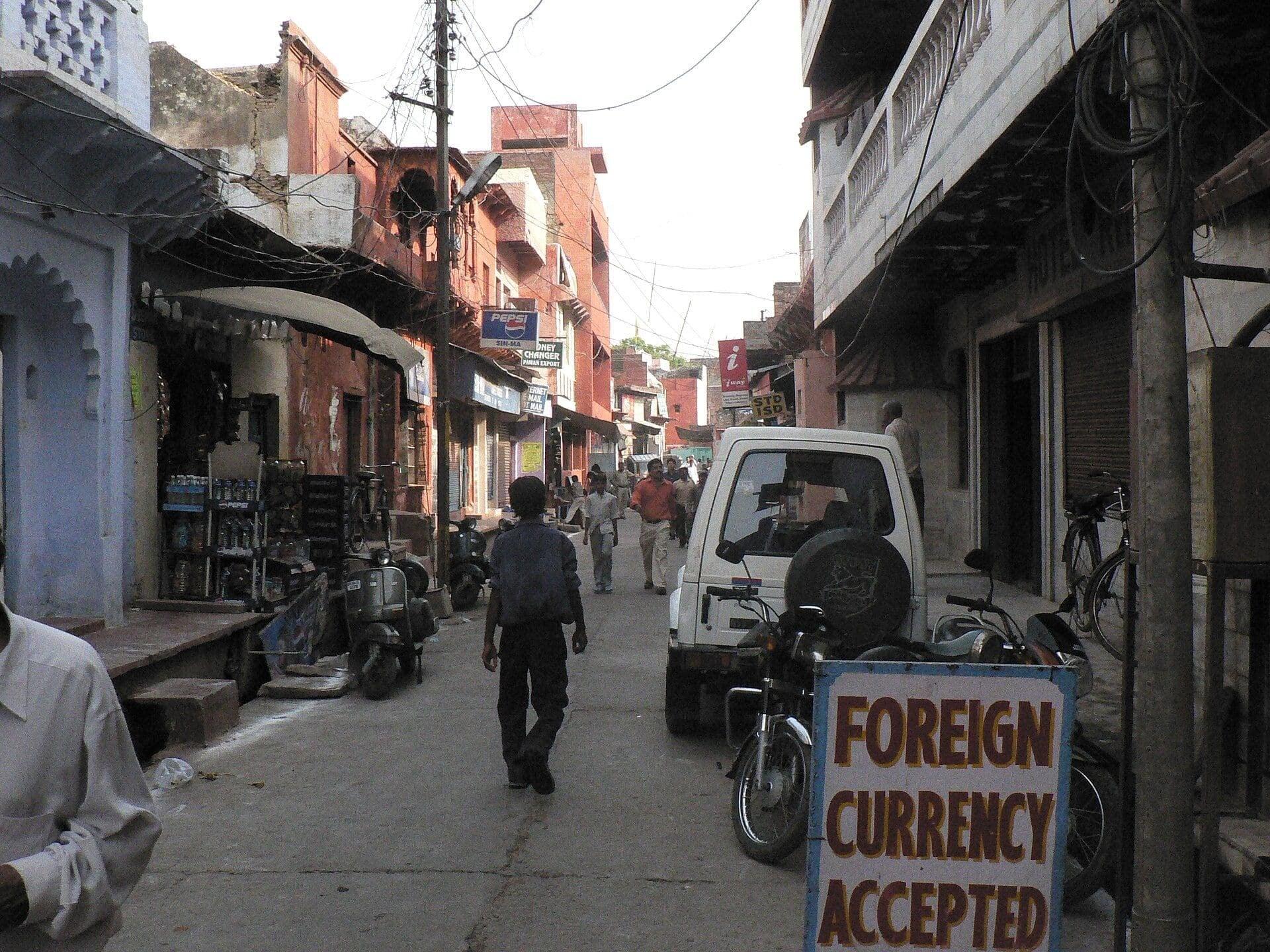
Katra Resham
The bazaar plan still lies under the street. The crossing of Taj Ganj's two bazaar streets, and a second old gateway into the court historians call the silk market.
- 5
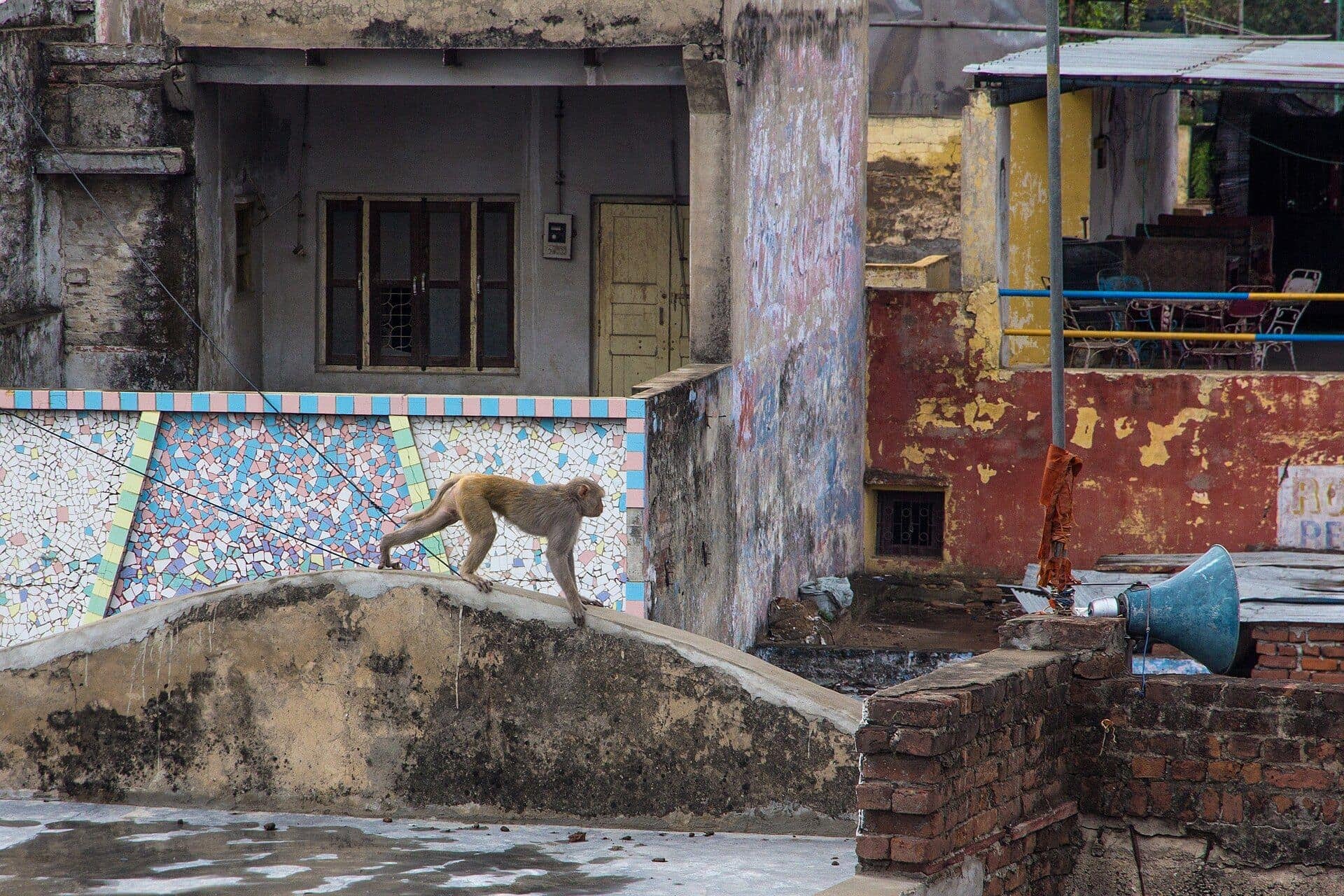
Dakhini Darwaza
The town's own southern gate still stands. The Dakhini Darwaza, protected by the ASI, very probably the south gate of the square planned with the Taj.
- 6
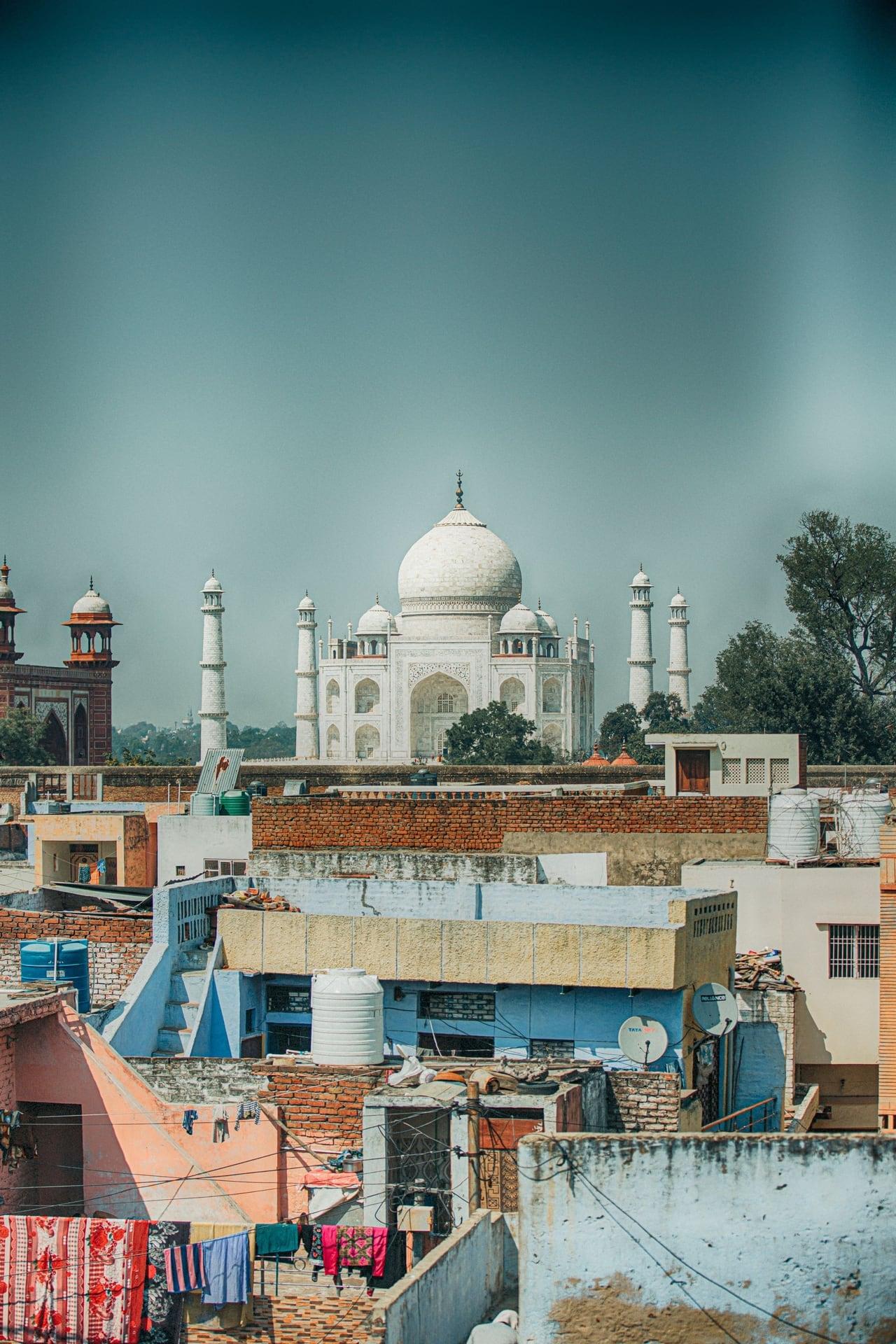
Katra Jogidas
The town outgrew the plan that made it. The southeast quarter, recorded as Katra Jogidas, where the planned town gave way to the town that lives here now.
- 7
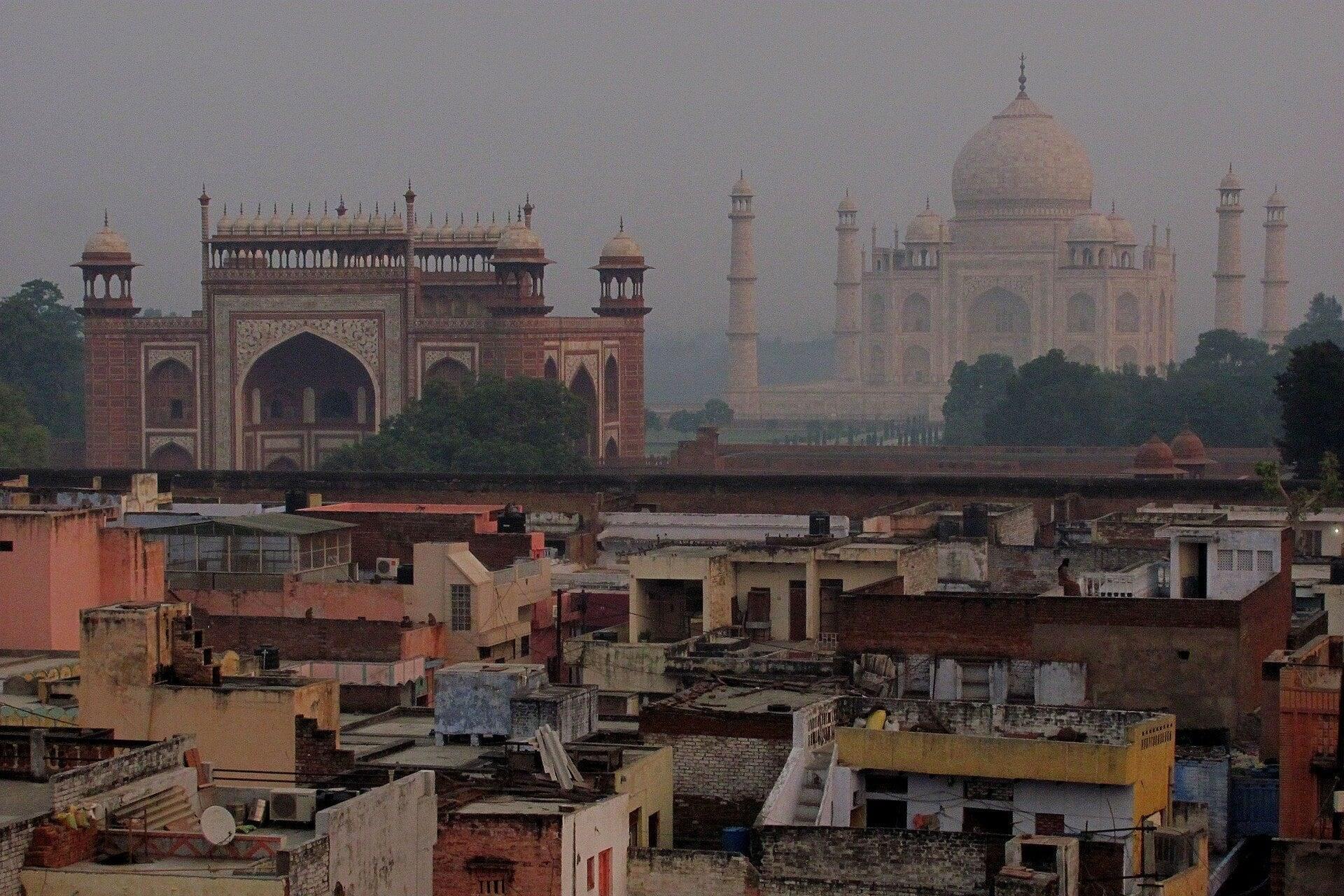
Katra Fulel
Perfume and silk were sold beside a tomb. The east arm of the old cross street, beside the northeast court that historians call the perfume market.
- 8
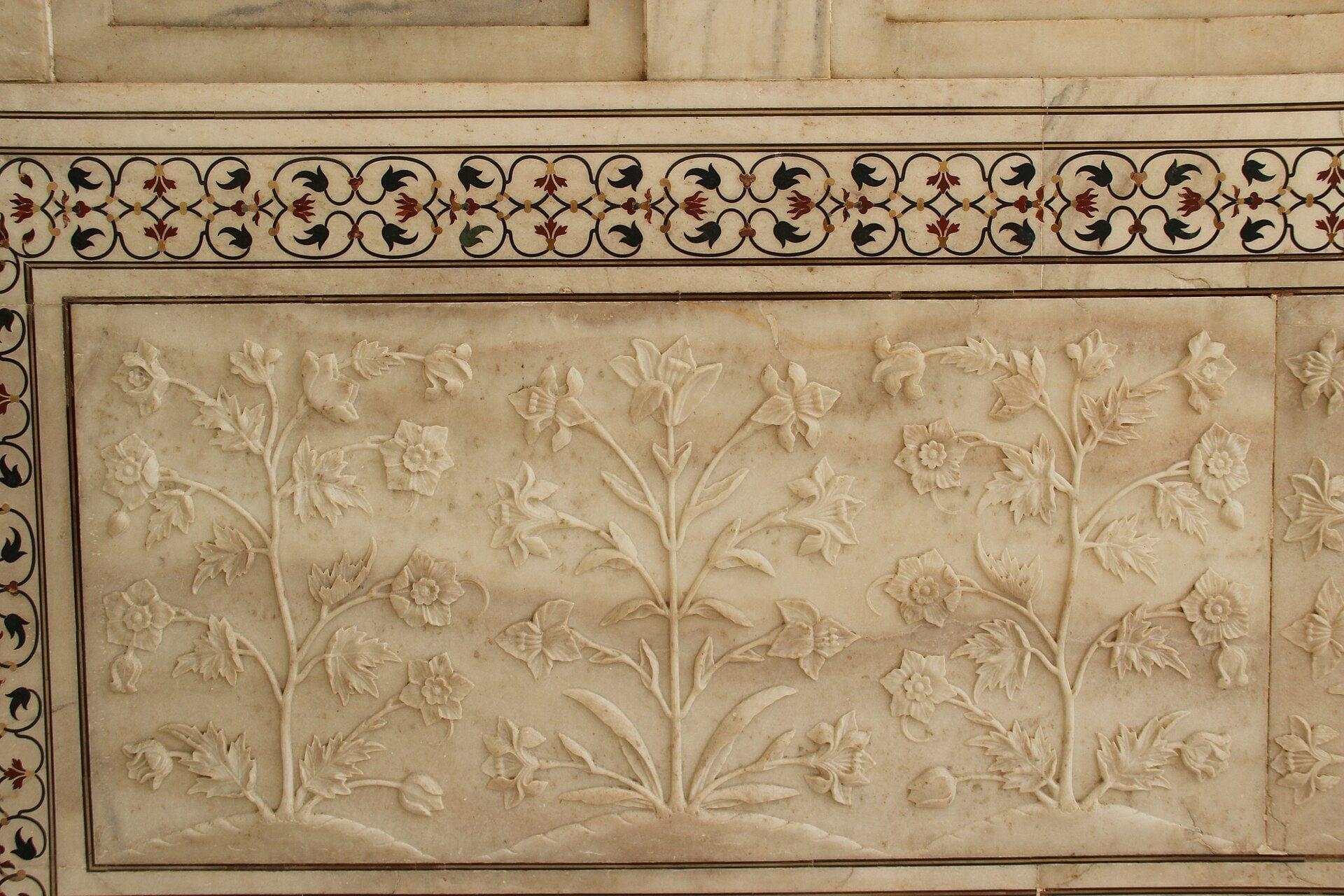
Marble Inlay Shops
The town still lives off the tomb. A lane of marble and inlay showrooms on the road to the East Gate, the trade Taj Ganj was founded for.
- 9
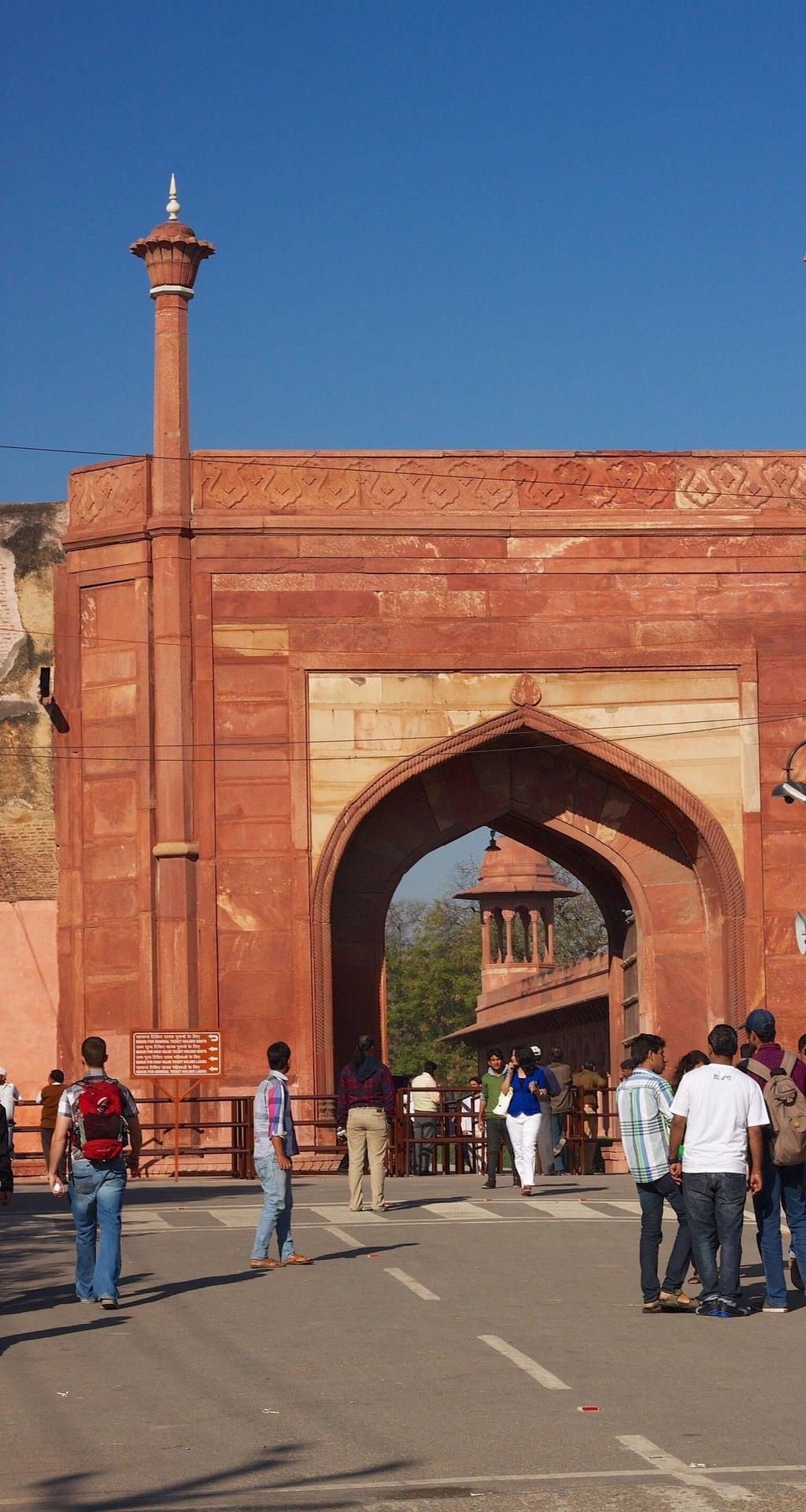
East Gate
Visitors go into the Taj by this gate. The Fatehabadi Darwaza, the Taj forecourt's East Gate, twin of the West Gate and named for the Fatehabad road.
- 10
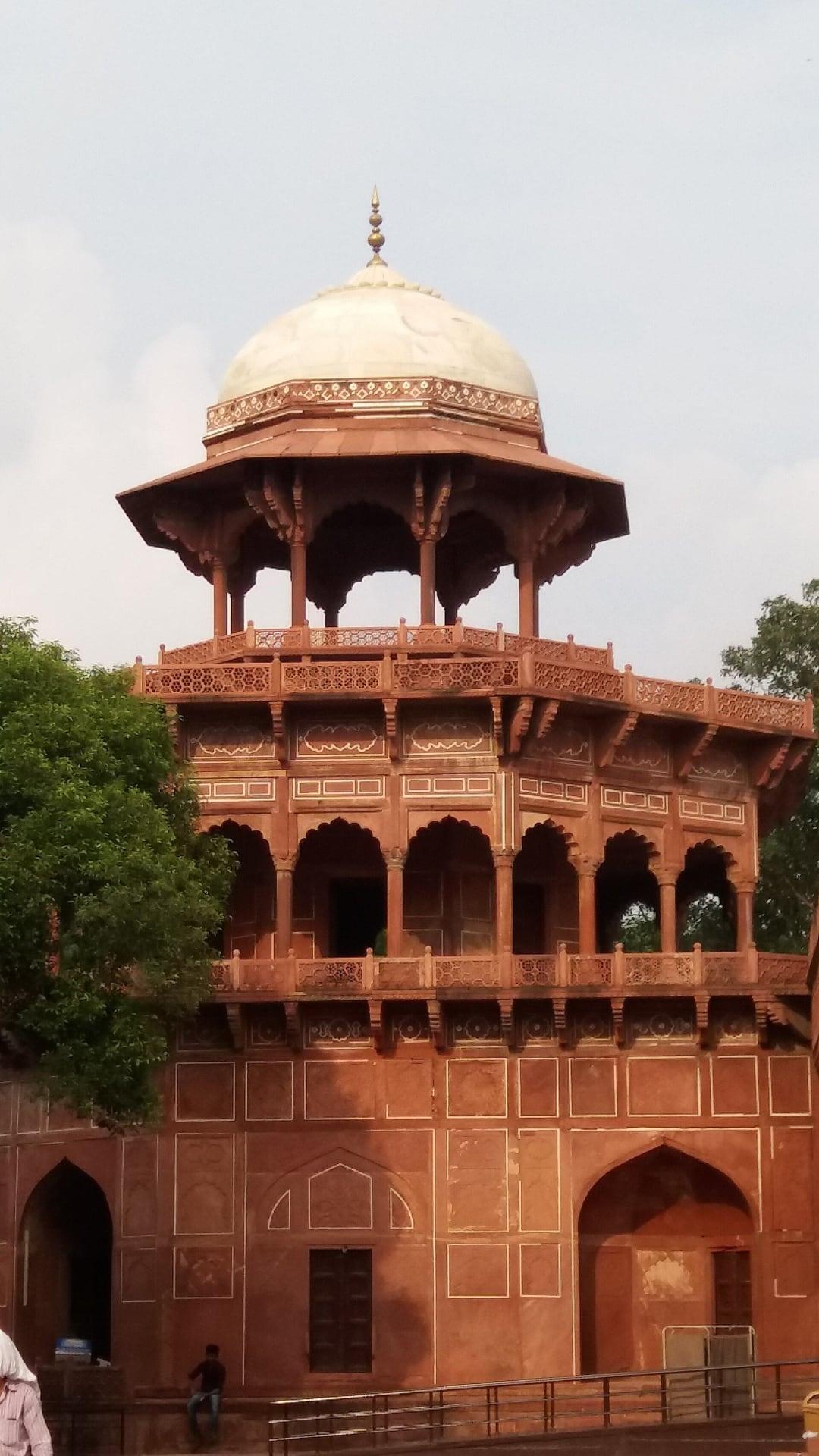
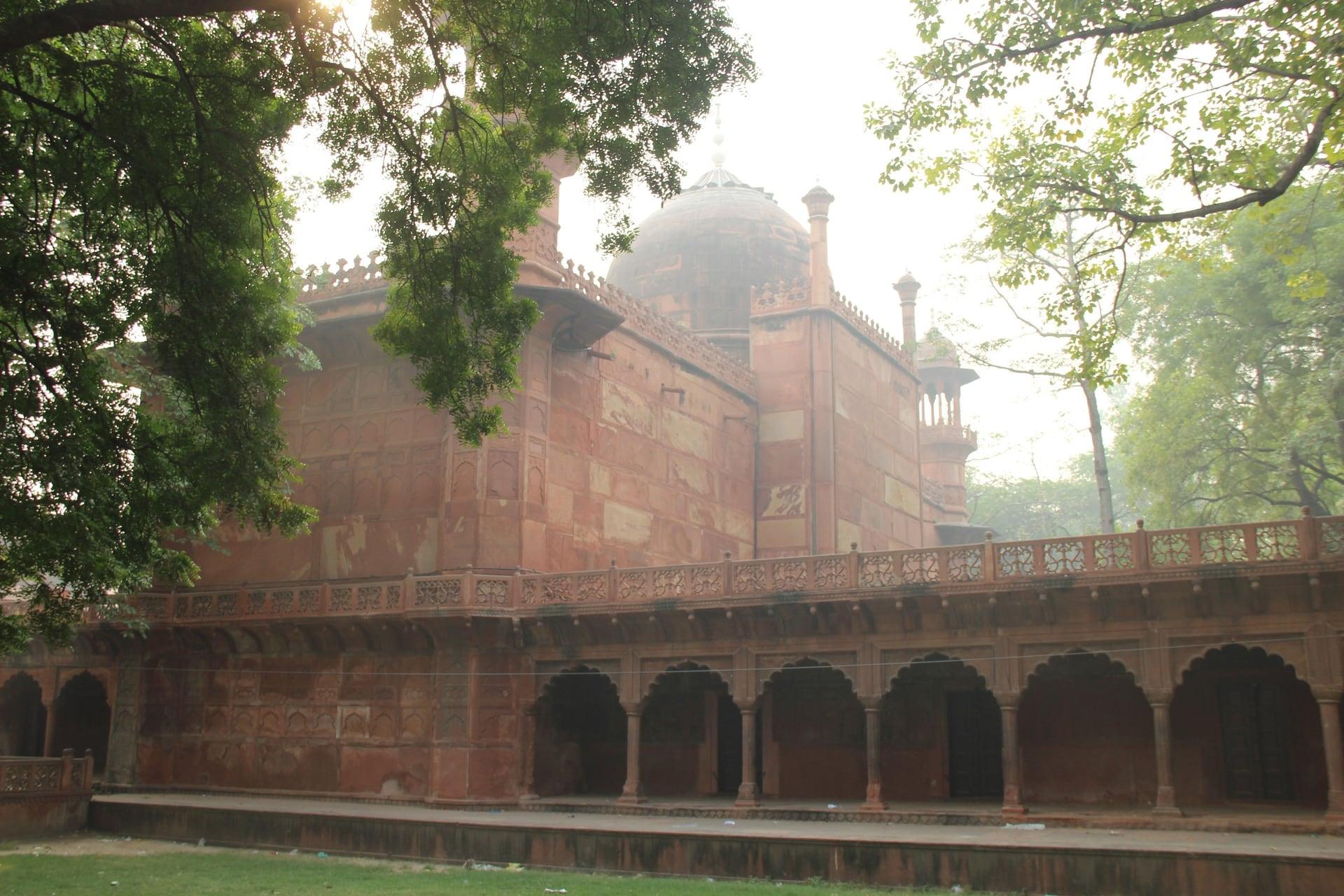
Kali Masjid
A quiet household tomb by the Taj's wall. The Kali Masjid, the Black Mosque, and its domed tomb in a quiet garden outside the Taj's east wall.
Details
Best Time to Visit
Early morning straight after a sunrise visit to the Taj (leave by the South Gate, exit only, and you are at stop 1), or mid-morning to mid-afternoon. Finish before dusk: the lanes near the monuments are poorly lit and the road at stop 10 is dark (sunset about 17:24 on 1 December, 17:34 on 1 January, 17:58 on 1 February, 18:18 on 1 March; computed). Fridays: the Taj is closed for general viewing, so nobody exits at the South Gate and the East Gate corner is quiet; Taj Ganj stays open and the walk works, with worshippers in the lanes around midday (the Taj's mosque opens for prayer 12 to 2 pm). Season October to March: December and January highs about 22 to 24 °C, lows about 7 to 8 °C, mornings often misty or hazy (IMD Agra normals 1991 to 2020). Crowds: Christmas and New Year; Shah Jahan's Urs at the Taj (estimated about 5 to 7 January 2027, announced by the ASI); Taj Mahotsav at Shilpgram by the East Gate (February 2027, days not yet announced); Ramadan evenings (from about 8 February 2027) and Id-ul-Fitr (Wednesday 10 March 2027). Holi (Tuesday 23 March 2027): many shops shut and color in the lanes; avoid that morning. Checked 22 November 2026.
Pro Tips
- •Start in the lane just outside the Taj Mahal's South Gate (exit only). After a Taj visit, leave by the South Gate and you are at stop 1.
- •Getting there from outside the Taj: no polluting vehicles run within 500 m of the Taj (tajmahal.gov.in). Taxi or auto-rickshaw to the West Gate parking at Amrood ka Teela or to Shilpgram, then the battery bus or golf cart to the gates, or walk: from the West Gate side the lanes lead south to the chowk, then up the straight lane to the South Gate. The Agra Metro's Taj Mahal station (Yellow Line, open since March 2024) is about 700 to 800 m west of the South Gate through Taj Ganj; check current service before you go. Take taxis from an official stand or a trusted app and agree the fare first (Government of Canada advisory, updated 6 November 2026). Checked 22 November 2026.
- •The walk is free and needs no ticket. The Taj Mahal's ticket is sold at the East and West Gate counters (one hour before sunrise to 45 minutes before sunset) and online at asi.payumoney.com or www.asiagracircle.in; our Taj Mahal walk covers the visit inside. The Taj is closed on Fridays. Checked 22 November 2026.
- •The walk finishes about 130 m north of the Taj's East Gate: the ticket counter and the electric shuttles to Shilpgram are back along the same road.
- •The Fatehpuri Masjid (stop 3) and the Kali Masjid (stop 10) are places of worship: the walk stays in the lane and on the road. If you go into a mosque, cover shoulders and knees, take off your shoes where asked, and never photograph people at prayer.
- •GPS can fire late in the narrow lanes (stops 1, 2, 4, 5 and 6); if a stop has not started, tap it on the map.
Safety & Precautions
- •Traffic drives on the left. The walk's one road crossing is Taj East Gate Road at the East Gate's corner (leg 9 to 10): no cars, but battery buses, golf carts, e-rickshaws and queues. There are no signals on the route. 'Be very careful when crossing the street, even at pedestrian crossings' (Government of Canada advisory, updated 6 November 2026).
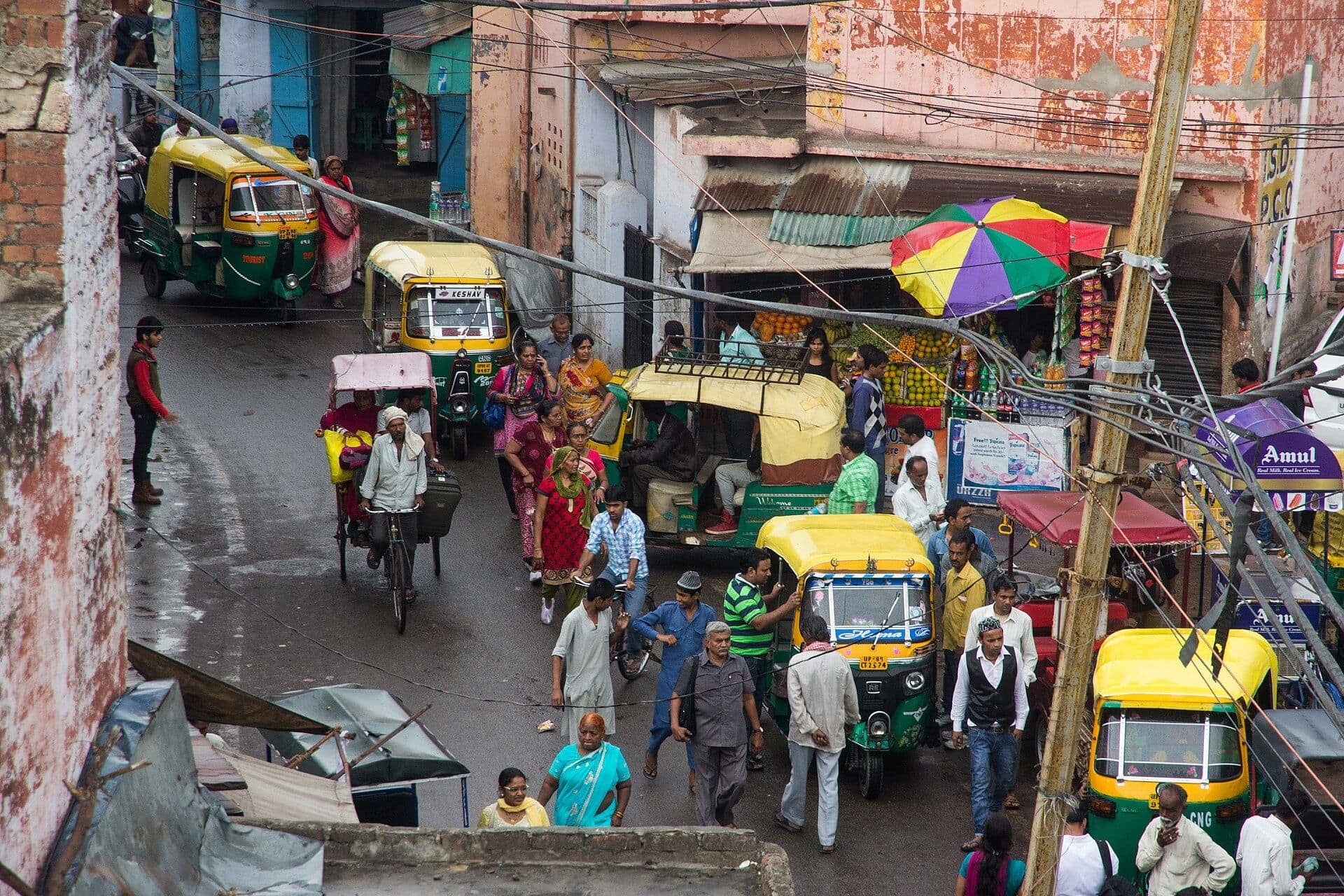
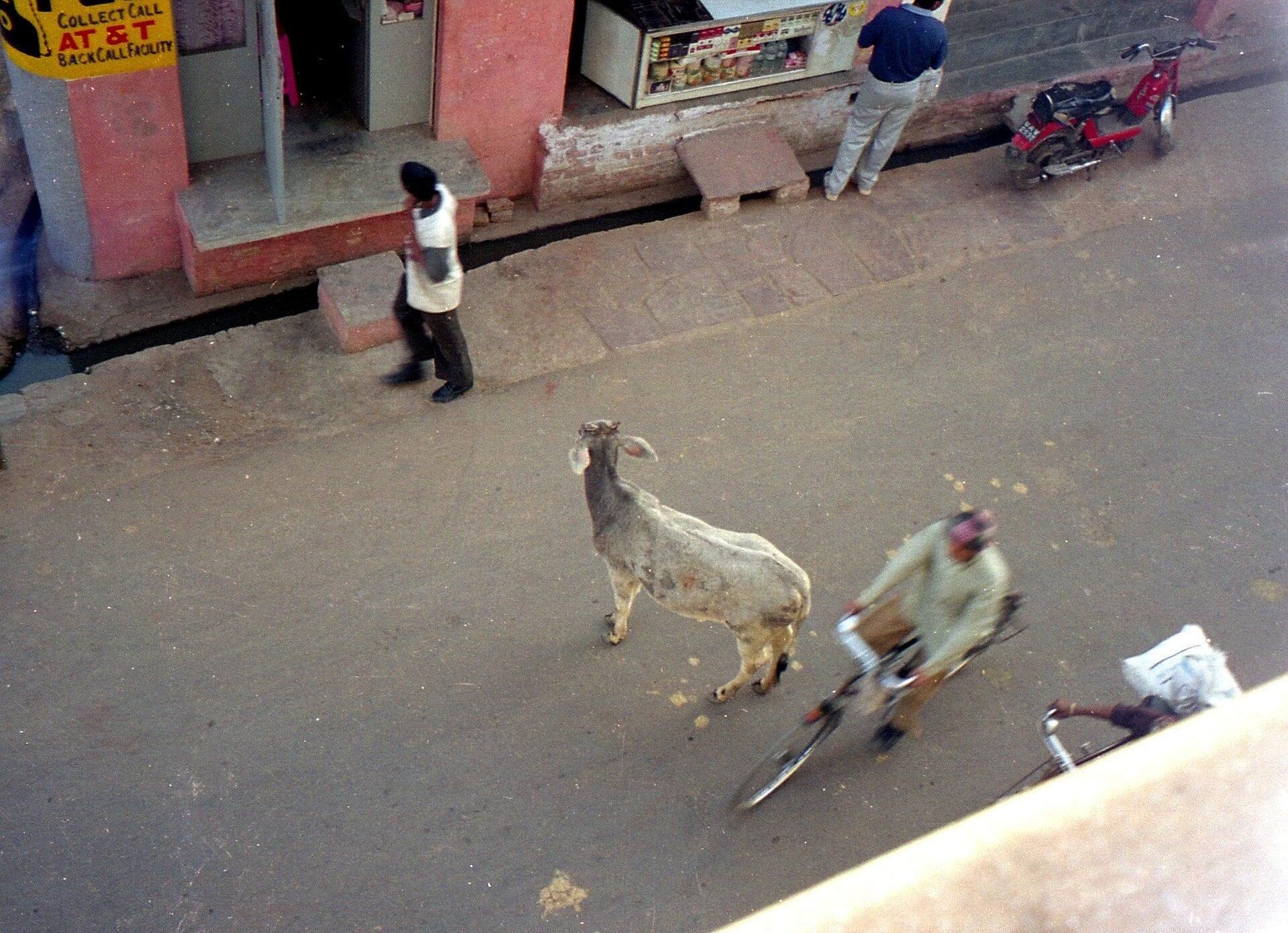
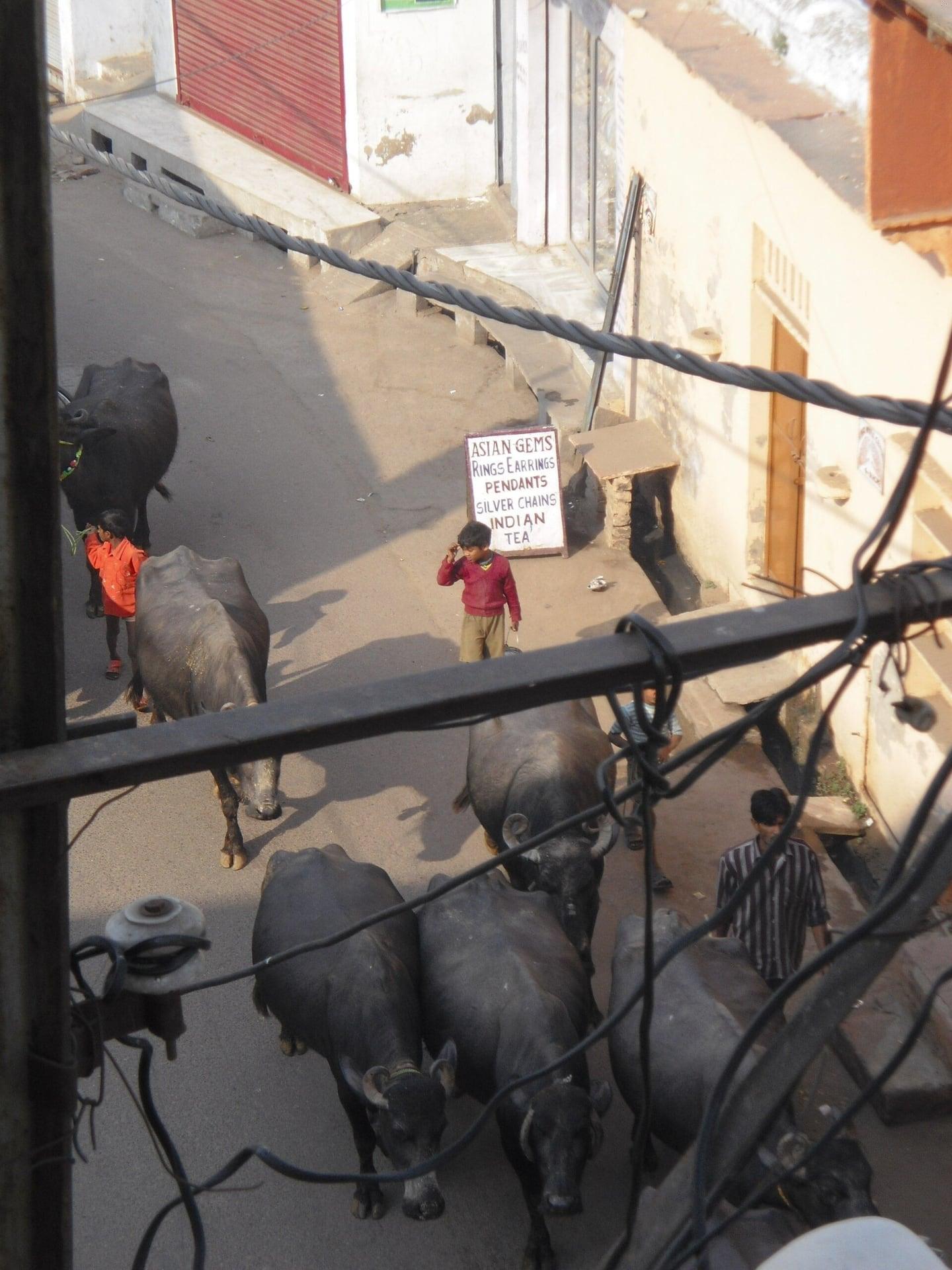
- •Taj Ganj's lanes are 3 to 5 m wide with no sidewalks, shared with residents' motorbikes, handcarts and e-rickshaws: keep to the edge and step into a doorway to let them pass. One short flight of steps on leg 2 to 3.
- •Touts and showrooms: be wary of unsolicited guided tours, cheap transport offers and 'special price' shop visits; 'Scams involving the exportation of jewels, gemstones, carpets, and other items have occurred' (Government of Canada advisory, updated 6 November 2026). Hire only approved guides who show identity cards (UP Tourism). No shop is part of this walk. Buy Taj tickets only at the official counter or website.
- •This is a daylight walk: lanes near the monuments are poorly lit, and the road at stop 10 is dark after dusk.
- •Residents live in these lanes: ask before photographing anyone, never photograph people at prayer, and do not photograph security posts or checks at the Taj's gates.
- •Air: winter haze and smog are common (Agra AQI 189, 'Moderate', with haze over the Taj on 9 November 2026, CPCB as reported by newkerala). Check the day's air quality index; a mask helps if you have asthma. Checked 22 November 2026.
- •Holi (Tuesday 23 March 2027): many shops shut and colored powder and water are thrown in the lanes; avoid the walk that morning.
Travel advisory: Exercise Increased Caution (Level 2).
Gallery
Related Reading
Go deeper on what you'll see, hear, and walk through.
Overview
Agra Monument Tickets, Hours and Closures (Checked November 2026)
5 min
Overview
Agra Travel Guide: How Many Days, Getting Around, and Staying Safe
4 min
Overview
One Day in Agra: A Walkable Itinerary from the Taj Mahal to Agra Fort
4 min
Companion
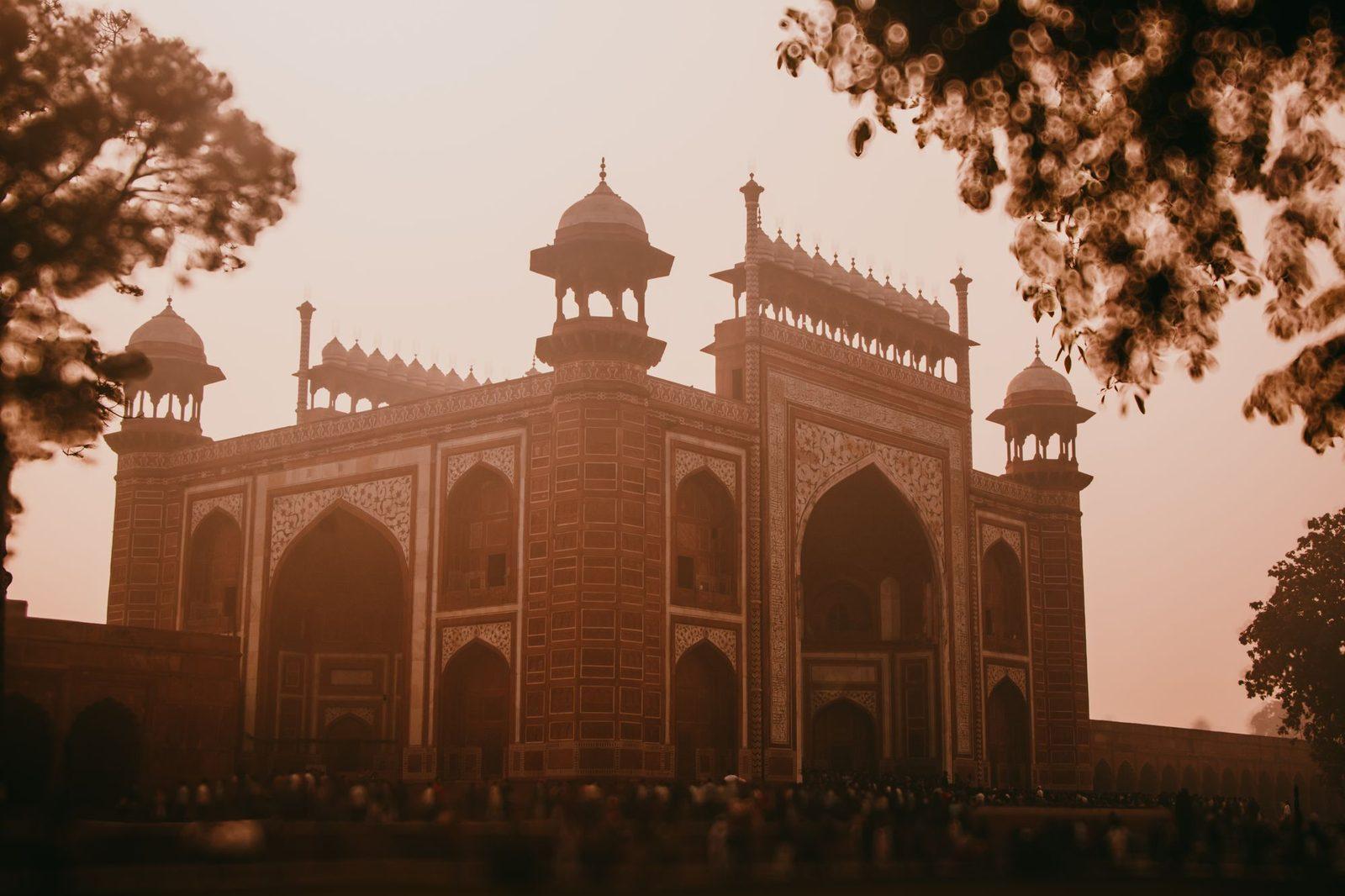
Taj Ganj, Agra: The Town Shah Jahan Planned With the Taj Mahal
4 min
Read
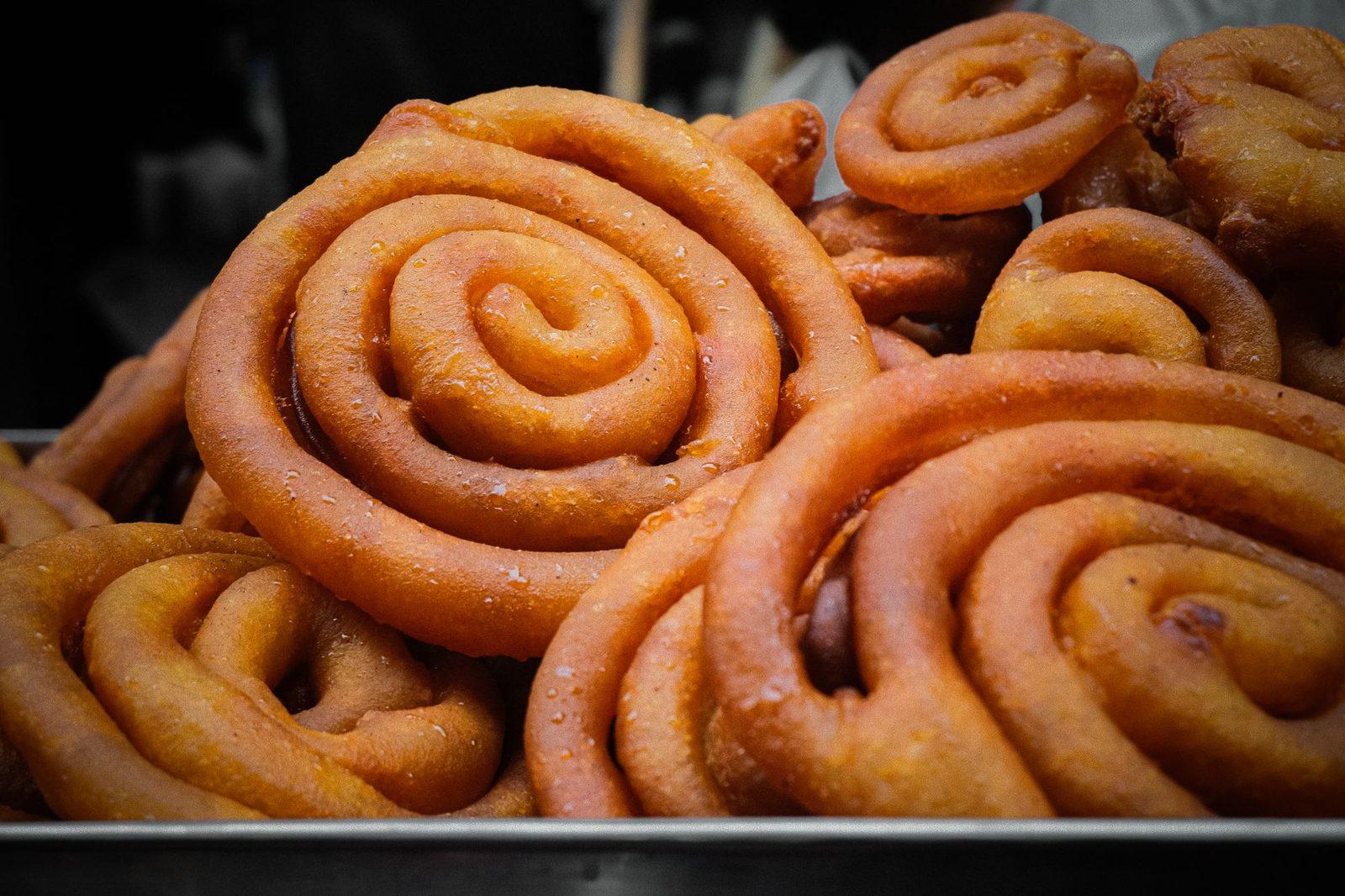
What to Eat in Agra: Petha, Bedai, and Mughlai Food
5 min
Read the walk
The full story of Taj Ganj: The Town Built for the Taj, in words. Prefer to listen? Play it narrated, from home or on location.
Introduction
In Agra, the Taj Mahal was never meant to stand alone. When the emperor Shah Jahan began the tomb in sixteen thirty two, he laid out a town beside it, on the same straight line, for the merchants, shopkeepers and craftsmen who would serve it. It was also known as Mumtazabad. Today it is Taj Ganj, the crowded neighborhood south of the tomb, and its lanes still follow the old plan. The Archaeological Survey of India protects its gates.
This walk is free and needs no ticket. It stays on the town's public lanes, outside the Taj's ticket check. The Taj's own ticket is bought separately, at the official counter or website, and our Taj Mahal walk covers the visit inside.
The walk starts at the Taj's South Gate, which today is an exit only, so it follows naturally after a visit to the Taj. It runs through the four quarters of the old square and two of its surviving gates, past a mosque and tombs of the emperor's household, and finishes beside the East Gate.
There are ten stops over about one point six kilometers, about a mile, and it takes about an hour. It is flat, with one short flight of steps, and it crosses one road near the end, used by battery buses and electric rickshaws.
The lanes are narrow and shared with motorbikes and handcarts. People live here, so ask before photographing anyone. The Taj is closed on Fridays; the town is quieter then, and the walk still works. Go in daylight, as some lanes are poorly lit.
December and January days are mild and the mornings cold, often misty or hazy. Check the day's air quality; a mask helps if you have asthma.
When you arrive at the South Gate, begin with stop one.
1. South Gate
At the top of the lane stands a gate of red sandstone, a tall arched frame with a short flight of steps. This is the South Gate of the Taj Mahal. The Archaeological Survey of India lists it as the Sirhi Darwaza. Sirhi means stair: this is the gate with the steps. Today it is an exit only: visitors leave the Taj this way, and nobody goes in. The great dome is beyond it, out of sight from this lane.
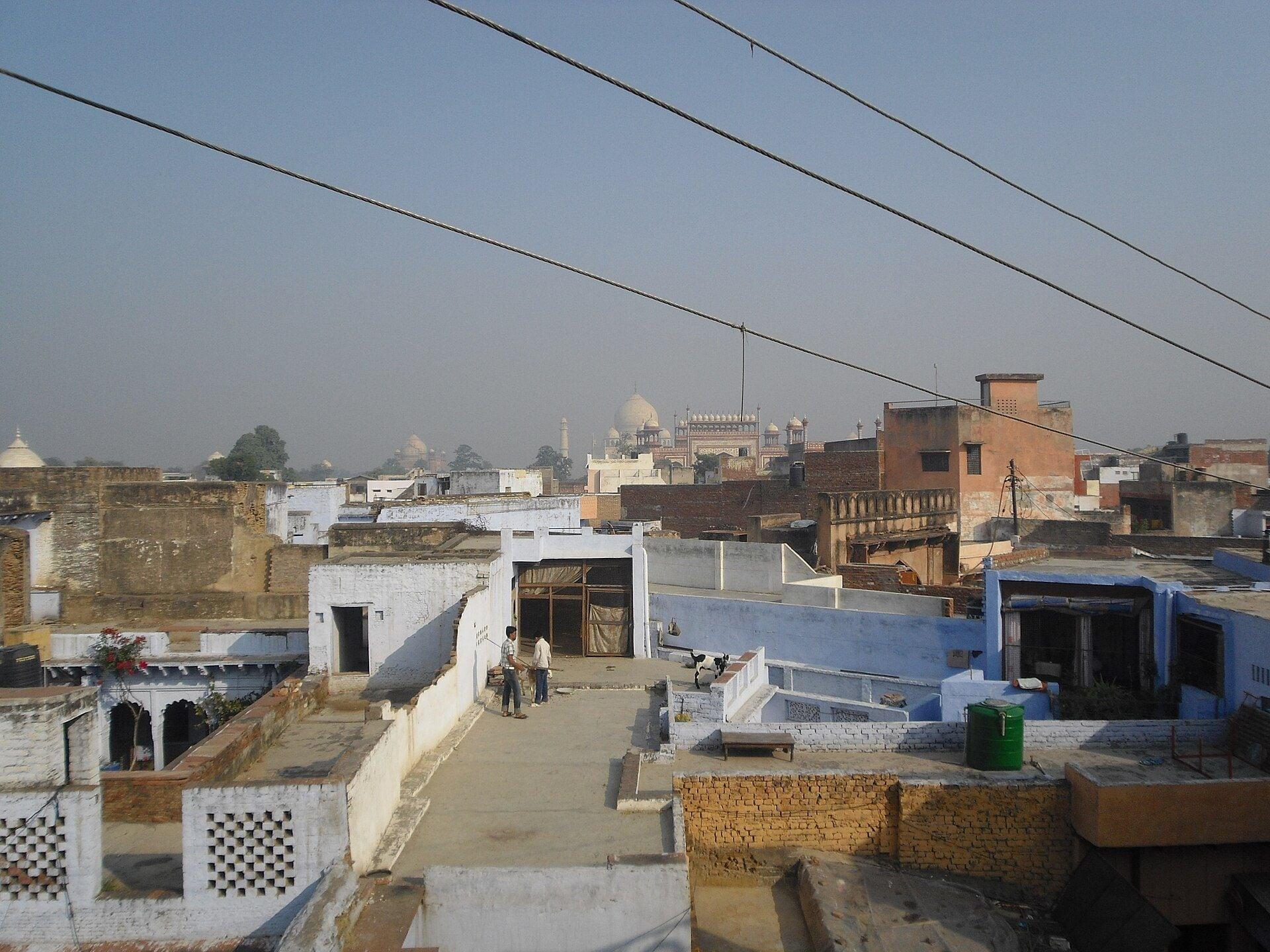
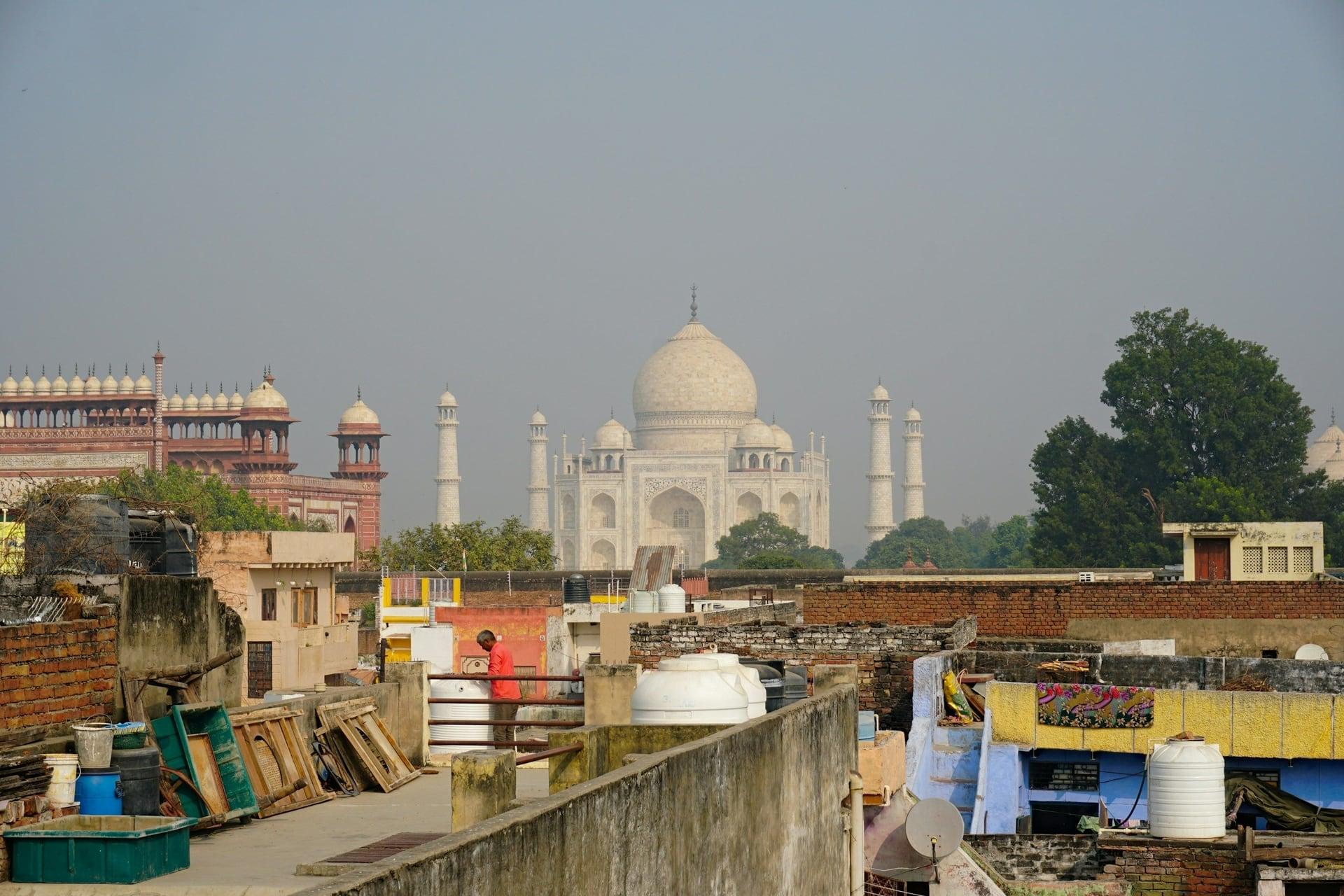
Now turn around and look down the lane, running straight away from the gate. This is Taj Ganj, and it is as old as the tomb. In sixteen thirty two an English merchant, Peter Mundy, was living in Agra while the emperor Shah Jahan began a tomb for his late wife, the empress. Mundy wrote that the emperor was having hills leveled so that they would not spoil the view, marking out places for streets, shops and houses, and ordering merchants, shopkeepers and craftsmen to come and live there. The new town, he wrote, was called by her name, Taj Ganj. It was also known as Mumtazabad.
So the town was part of the plan, and even the levels show it. This lane is about a meter higher than the foot of the gate's outer steps, and the gate stands more than two meters above the forecourt on the other side. From the town the ground steps down toward the river. The tourism department still describes this gate as the one meant for people on foot from the town.
Follow the route down the lane, away from the gate, to the crossroads at its foot.
2. Katra Omar Khan
You have just come through an old arched gateway. Turn around to look at it. The Archaeological Survey protects it simply as the gateway in the interior of Taj Ganj. It is thought to be the gate of the court beyond it: Katra Omar Khan.
A katra was a walled court of rooms around an open yard, entered by one gate from the main street. Traveling merchants lodged there, kept their animals and goods there, and traded. Historians of the Taj describe the town as a square with four of these courts, one in each quarter, opening off the place where the two main streets crossed. They record the four by name: Katra Omar Khan here, a court of perfume, a court of silk, and one called Jogidas. This walk passes through all four quarters.
The courts were also money. The editor of Mundy's journal wrote that the emperor founded the town to provide a revenue for the tomb's upkeep, and the rents of its shops and courts were part of what kept the tomb running.
Very little of the courts survives. Houses have filled the yards, and the gates are the main remains. Historians also notice that the writers of the time paid attention to the northern half of the town, and suggest that only this half was built with imperial money.
Follow the route on through this quarter's lanes. At the end, a short flight of steps leads down.
3. Fatehpuri Masjid
Go down the few steps ahead, to the lane that runs beside the trees and the long red wall. That wall encloses the Taj's forecourt.
Up this lane toward the trees, a mosque stands on a raised platform with a single dome. This is the Fatehpuri Masjid, a working mosque used by the people of Taj Ganj, with its own imam. The tourism department gives its paved court about forty meters across, with room for up to two hundred people at prayer. Please stay in the lane, and never photograph people at prayer.
The mosque carries the name of another of Shah Jahan's wives, Fatehpuri Begum. Whether she built it, or it was only named after her, is not certain.
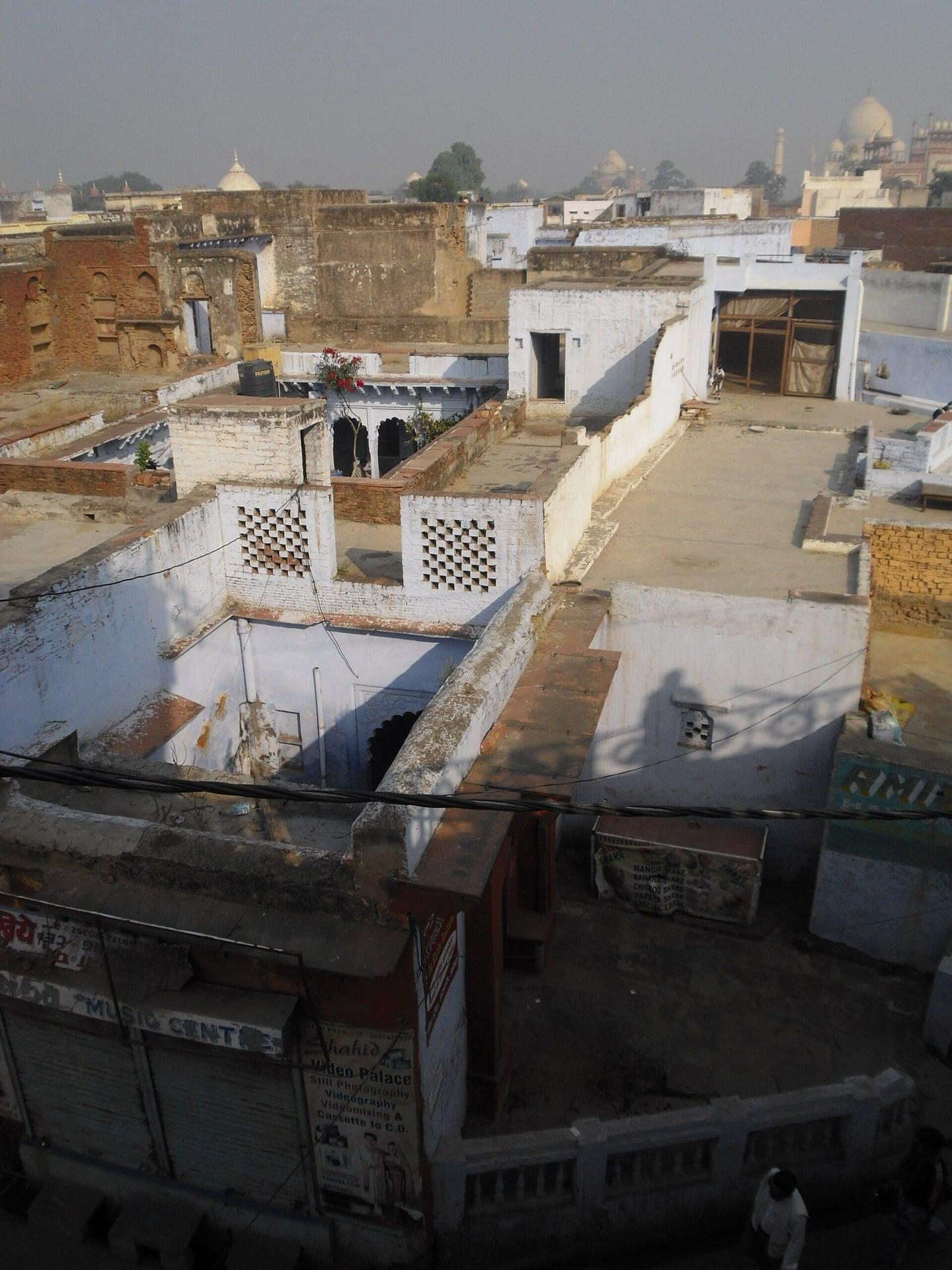
Now look over the forecourt wall for a white dome. It crowns one of two tombs at the forecourt's southern corners, traditionally called Saheli Burj, the tower of the companion. The Archaeological Survey gives this one to Fatehpuri Begum, and its twin, at the far corner, to another of the emperor's wives.
The empress lies at the center of the Taj. Others of the household lie around its edges: at the forecourt's corners, and outside its gates. You will meet one more at the end of this walk.
Her name travels, too. In Delhi, the mosque at the far end of Chandni Chowk is also called the Fatehpuri Masjid.
Follow the route along this lane, away from the mosque, and then east along the old cross street.
4. Katra Resham
Just behind you, the lanes cross at the center of the old town. That crossing was the chowk, the square where the plan's two bazaar streets met at right angles: one running south from the Taj's gate, the other running across the town from side to side. You have now walked part…
Full narration for this stop unlocks with the tour.
5. Dakhini Darwaza
Ahead, the lane runs straight through an old gate. This is the Dakhini Darwaza. Darwaza means gate, and dakhini means southern: the southern gate. The Archaeological Survey of India protects it under that name, the Dakhini Darwaza in Mohalla Taj Ganj, the Taj Ganj…
Full narration for this stop unlocks with the tour.
6. Katra Jogidas
You are now outside the old square, along its southern edge. The houses on the left stand in its southeast quarter, the court historians record as Katra Jogidas. What the name Jogidas meant has not been explained. Of the four court names, one is a man's, two are goods, perfume…
Full narration for this stop unlocks with the tour.
7. Katra Fulel
Here a street opens toward the west, back to the center of town. It is the east arm of the plan's cross street, running straight to the chowk you crossed earlier. The northeast quarter, between this street and the Taj, is the court historians record as Katra Fulel. Fulel is…
Full narration for this stop unlocks with the tour.
8. Marble Inlay Shops
On your right, the shopfronts change. Here they are showrooms of marble and inlaid stone: tabletops, boxes and souvenirs, set out for visitors on their way to the Taj's East Gate. It is the business the town was founded for. In sixteen thirty two Mundy recorded merchants,…
Full narration for this stop unlocks with the tour.
9. East Gate
Ahead and to your left, at the corner, is the Taj's East Gate. Its tall red front, a pointed arch set in a rectangular frame between slim pinnacles, matches the West Gate on the far side of the forecourt exactly. The tourism department calls this one the Fatehabadi Darwaza, the…
Full narration for this stop unlocks with the tour.
10. Kali Masjid
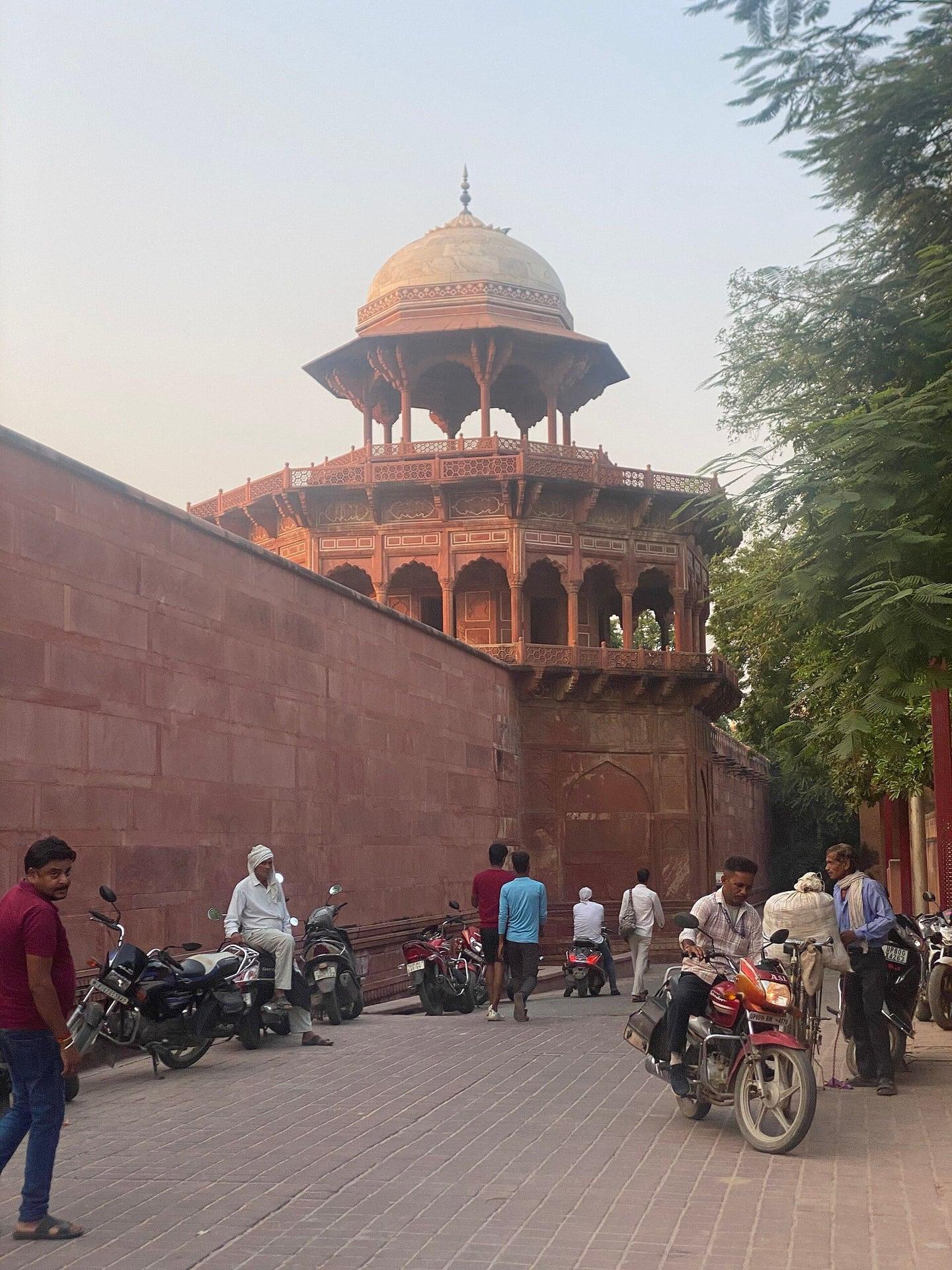
Ahead, where this road ends, two small monuments stand apart in a quiet garden. On the left, against the Taj's outer wall, a small building with low domes is very probably the mosque. On the right, in its own walled garden, is a tomb under a single dome. The Archaeological…
Full narration for this stop unlocks with the tour.
- Entrance gate of taj mahal — Mahi zahidi, CC BY-SA 4.0 · source
- This is a photo of ASI monument number — Divya Gupta, CC BY-SA 3.0 · source
- [s1] Agra — Alexey Komarov, CC BY 3.0 · source
- [s2] Agra, India. — Ryan from Toronto, Canada, CC BY 2.0 · source
- Taj Mahal - western gate, Agra, Uttar Pradesh, India — Radosław Botev, CC BY 3.0 · source
- [s1] Street In front of the Taj Mahal — JJ Harrison (https://www.jjharrison.com.au/), CC BY-SA 3.0 · source
- [s2] Buffaloes in the streets of Taj Ganj, Agra, 11/2009 — David M., CC BY 3.0 · source
- [s1] Agra — Alexey Komarov, CC BY 3.0 · source
- [s2] Roof terraces and Taj Mahal, Agra, 11/2009 — David M., CC BY 3.0 · source
- [s2] Roof terraces and Taj Mahal, Agra, 11/2009 — David M., CC BY 3.0 · source
- From a rooftop - nice to have a famous neighbour — Piyal chatterjee, CC BY-SA 4.0 · source
- Eastern gate of the Taj Mahal compound... — Edmund Gall, CC BY-SA 2.0 · source
- [s9] Taj Mahal — Immanuelle, CC BY 4.0 · source
- This is a photo of ASI monument number — Girishathreya, CC BY-SA 4.0 · source
- DSC01595 — Jan Bockaert, CC BY-SA 2.0 · source
Images may be cropped or resized. Other photos via Unsplash and Pexels.