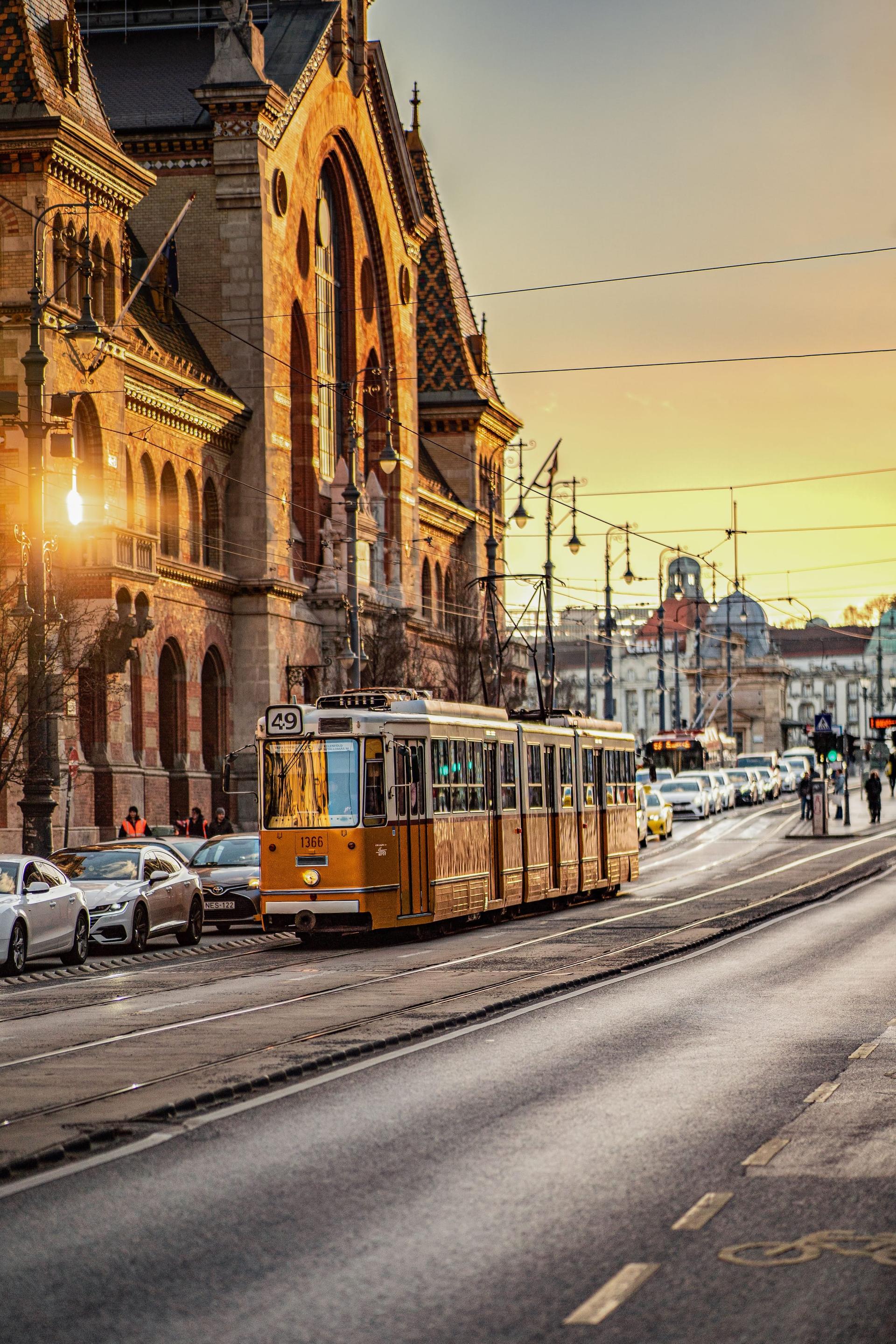
From the Chain Bridge's Pest end along the Danube Promenade, past the Vigadó, Vörösmarty tér and Váci utca, to a Roman fort, Pest's parish church and the Great Market Hall at the Liberty Bridge.
Start · Széchenyi István tér: Chain Bridge
DirectionsStops
- 1
Széchenyi István tér: Chain Bridge
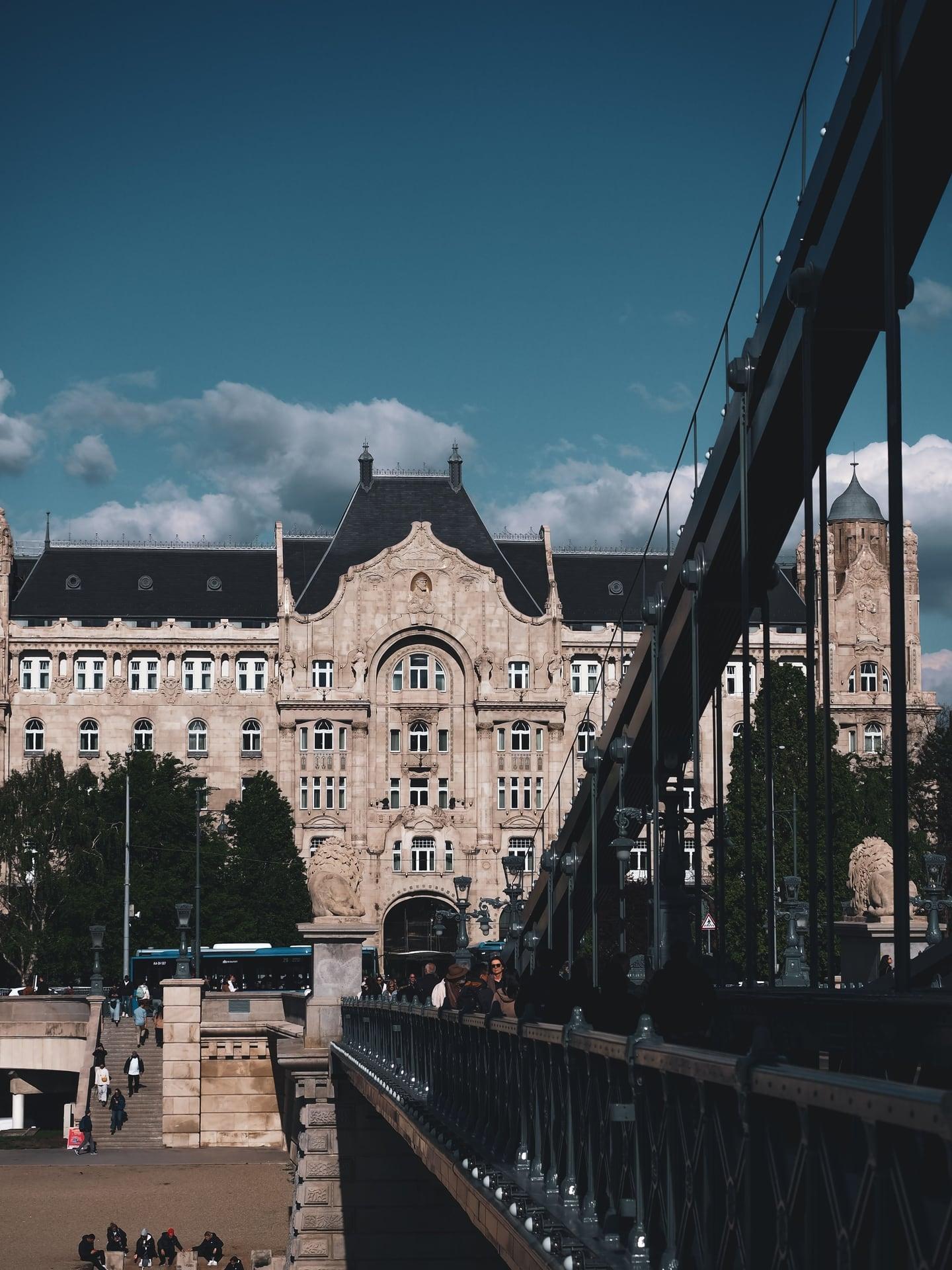
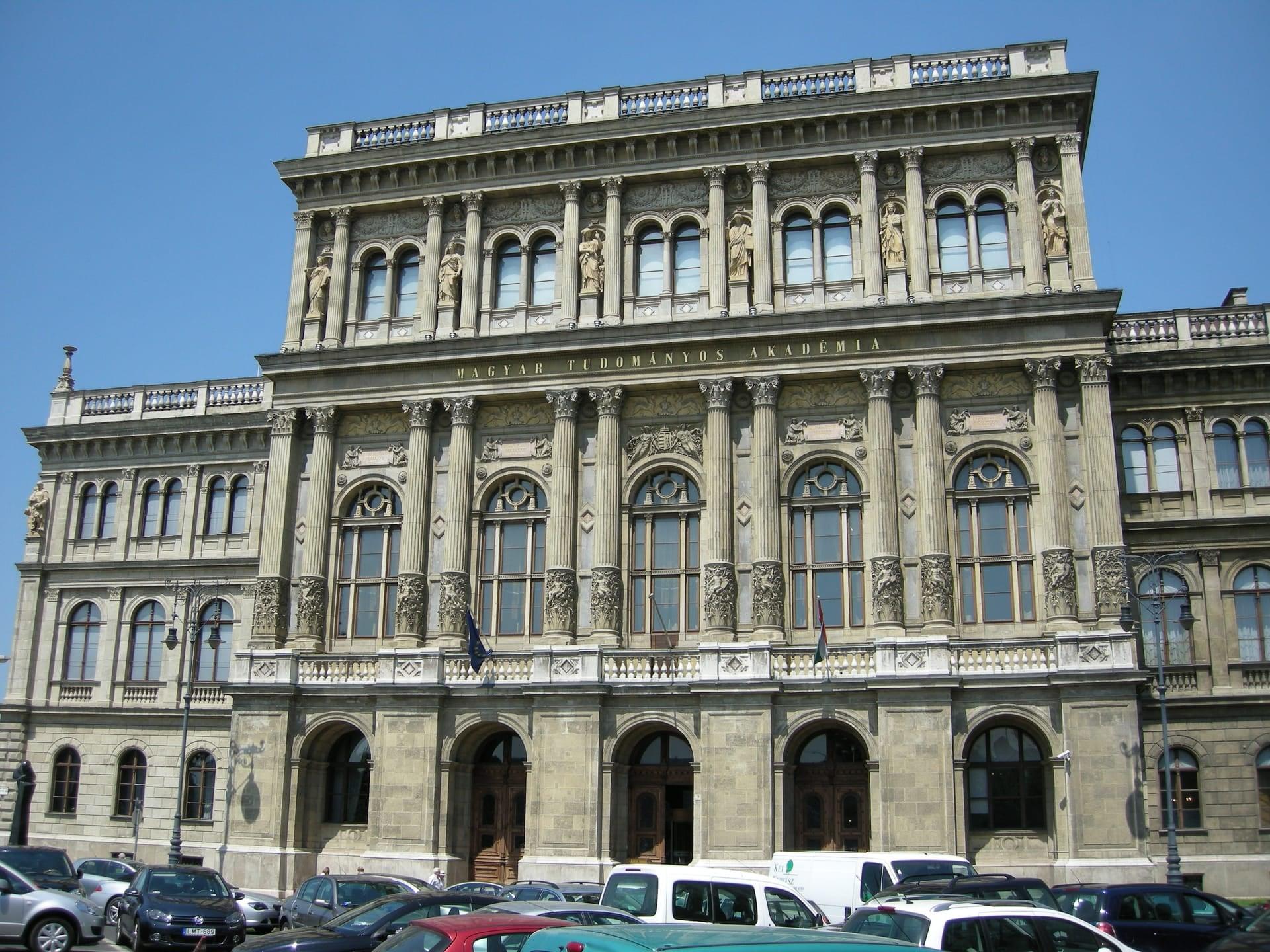
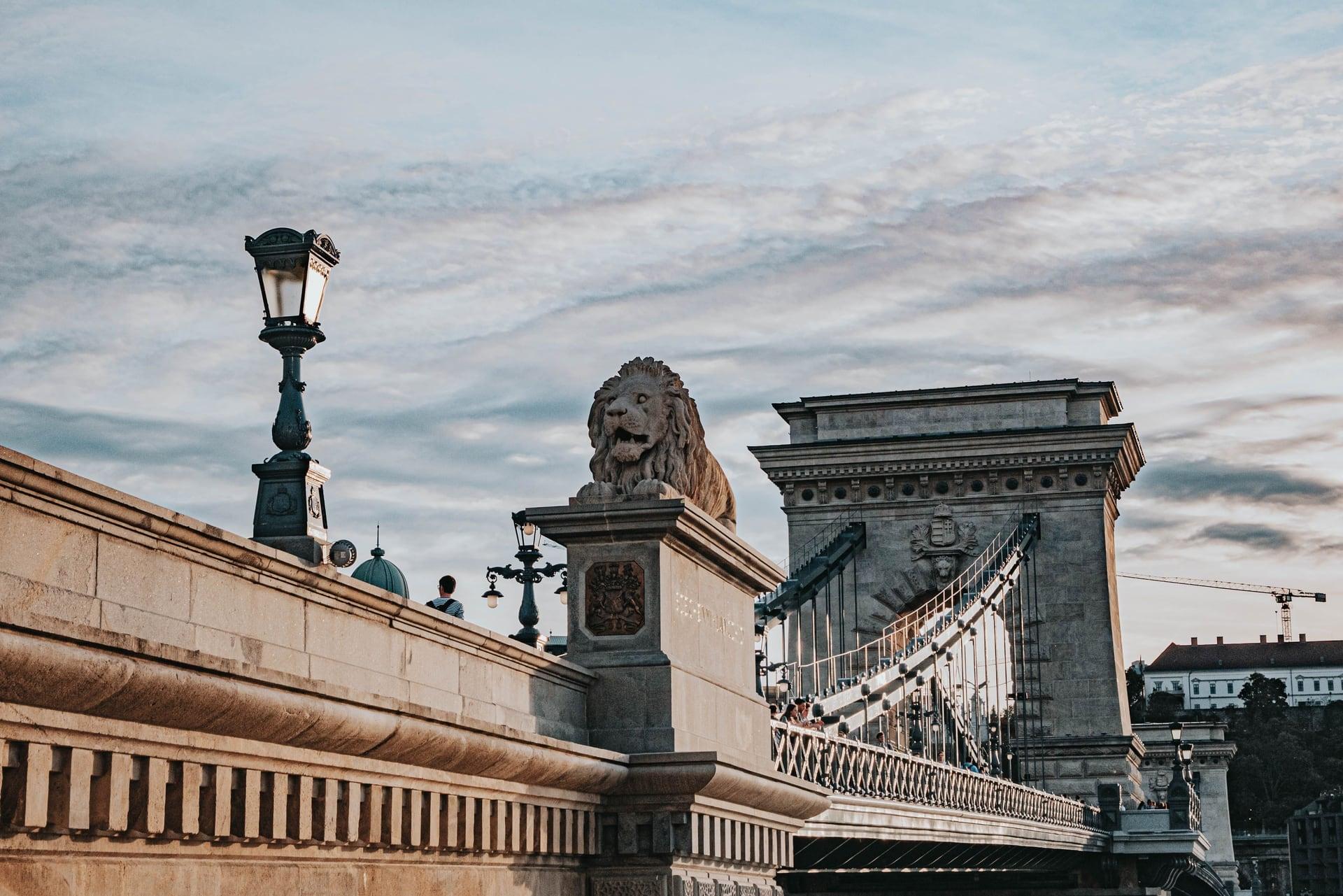
The Chain Bridge lands here. Opened in 1849 when Pest and Buda were still two towns, it was blown up in 1945 and reopened on its hundredth birthday; the Academy of Sciences closes the square.
- 2
Dunakorzó: Lost Hotels
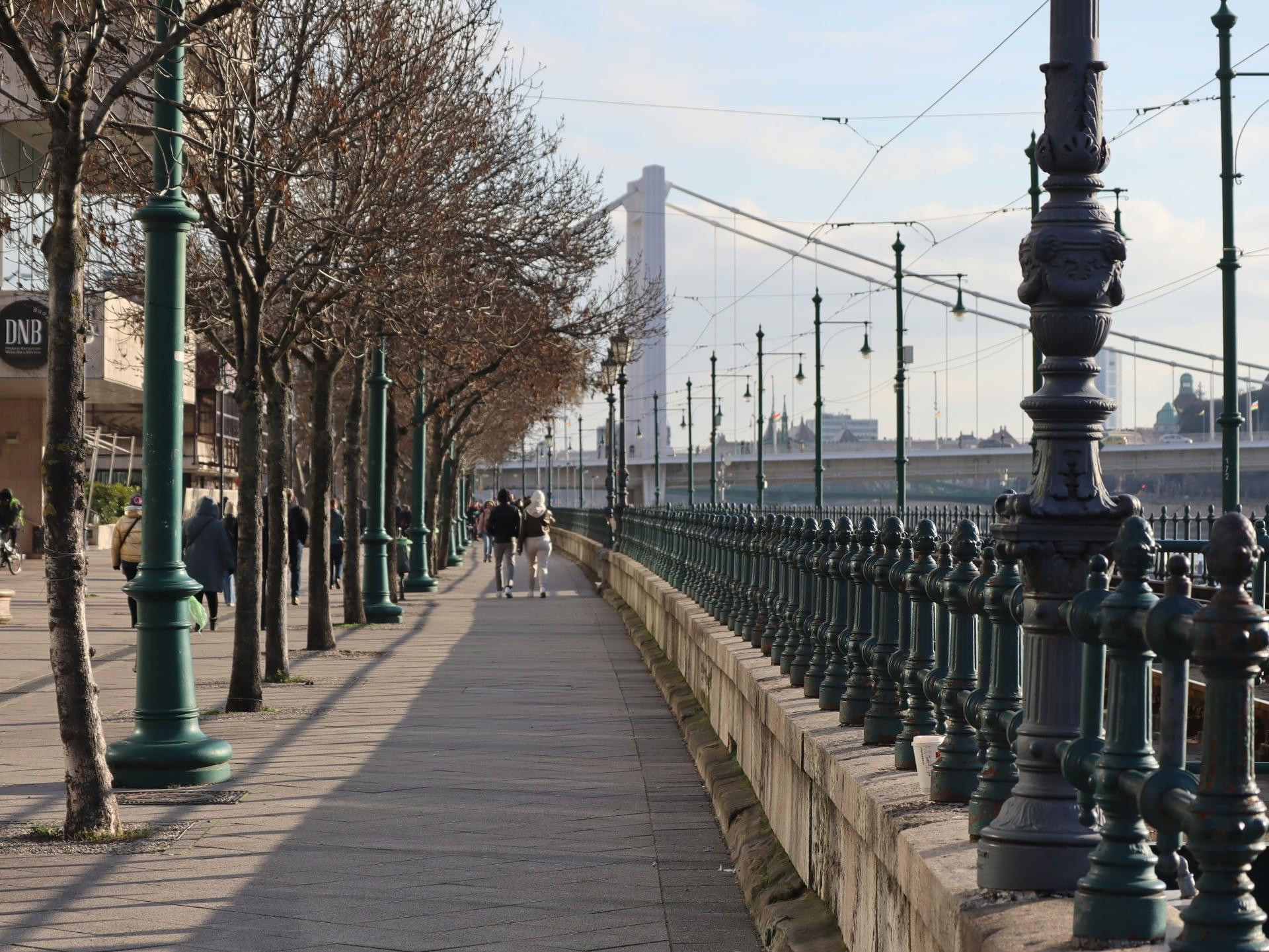
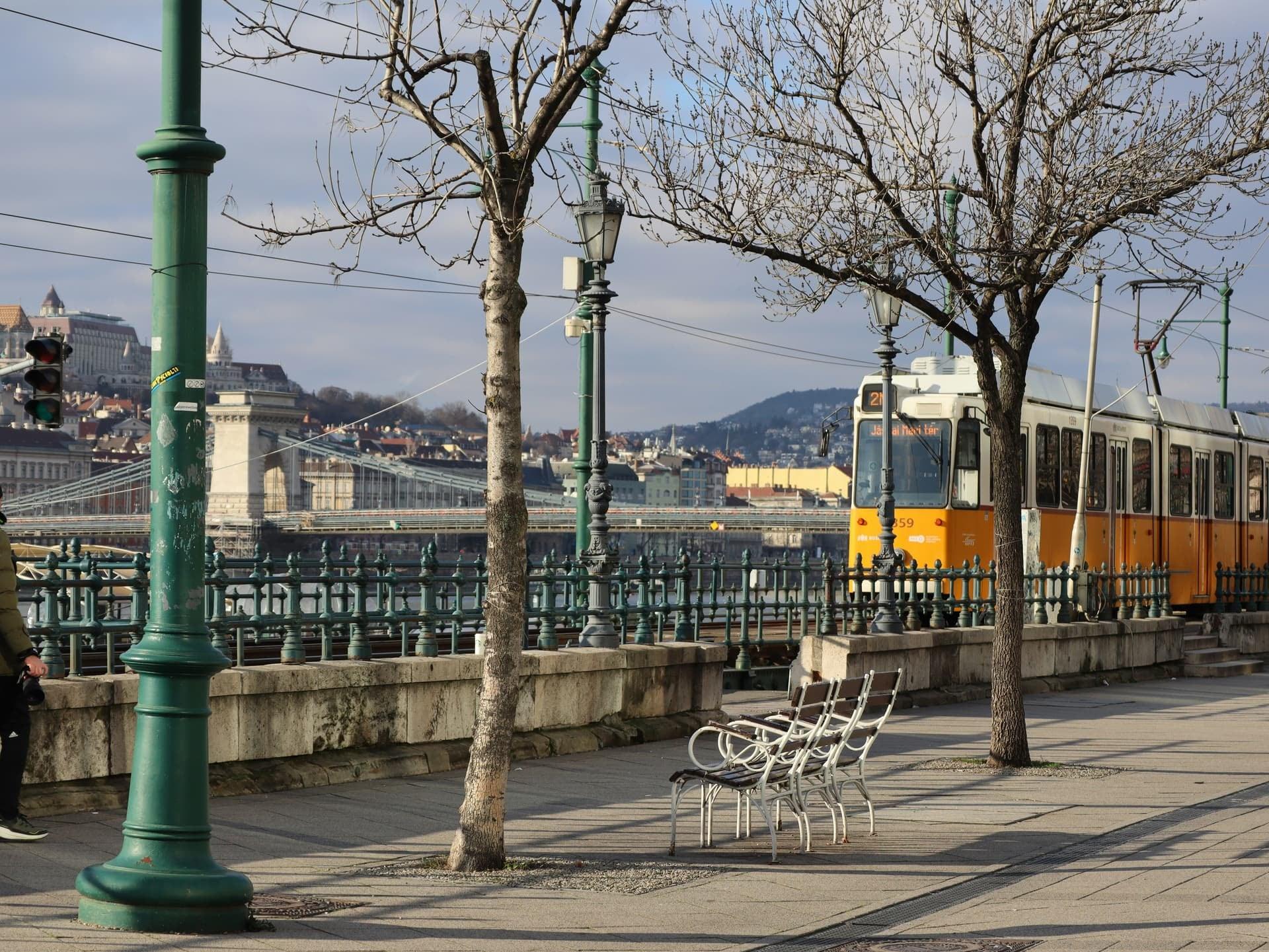
Grand hotels once lined it. The promenade faces Castle Hill; the Ritz opposite was hit in January 1945 and the rest of the row went the same way.
- 3
Vigadó tér: Feszl's Hall
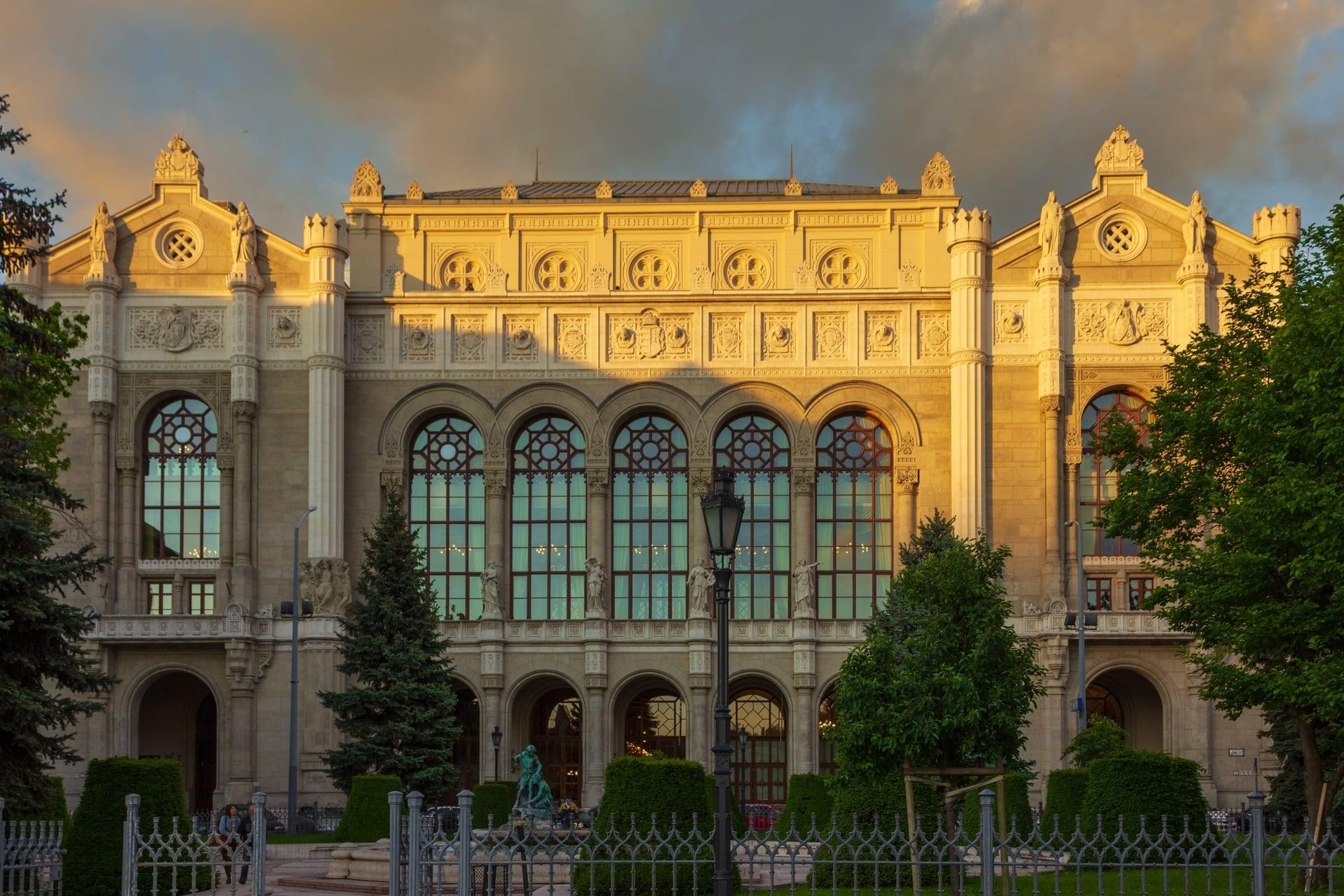
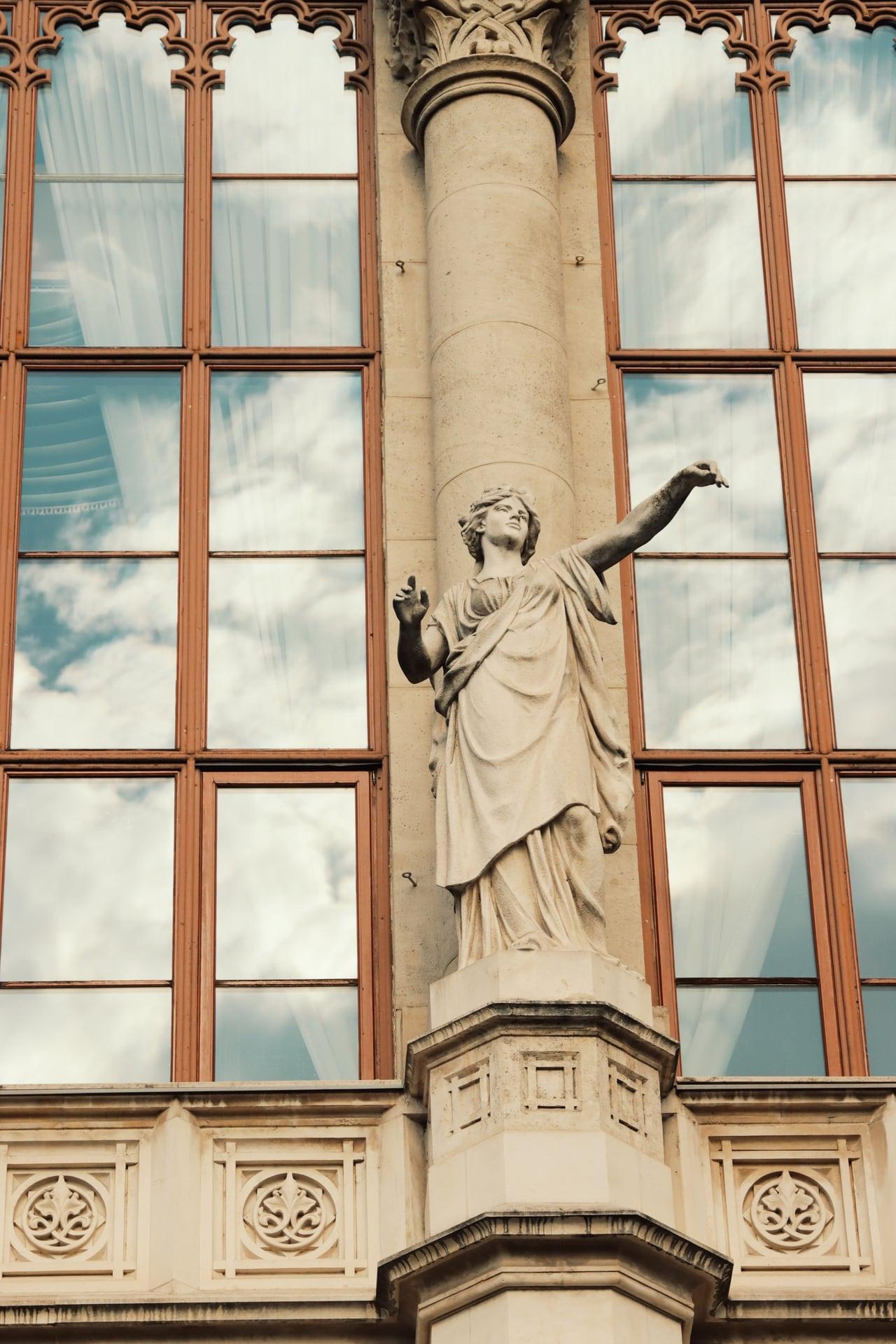
A hall rebuilt after 1849. Pest's concert hall stands on the town's old edge; shelled from the castle, it was rebuilt by Frigyes Feszl in a style meant to be Hungarian and opened in 1865.
- 4
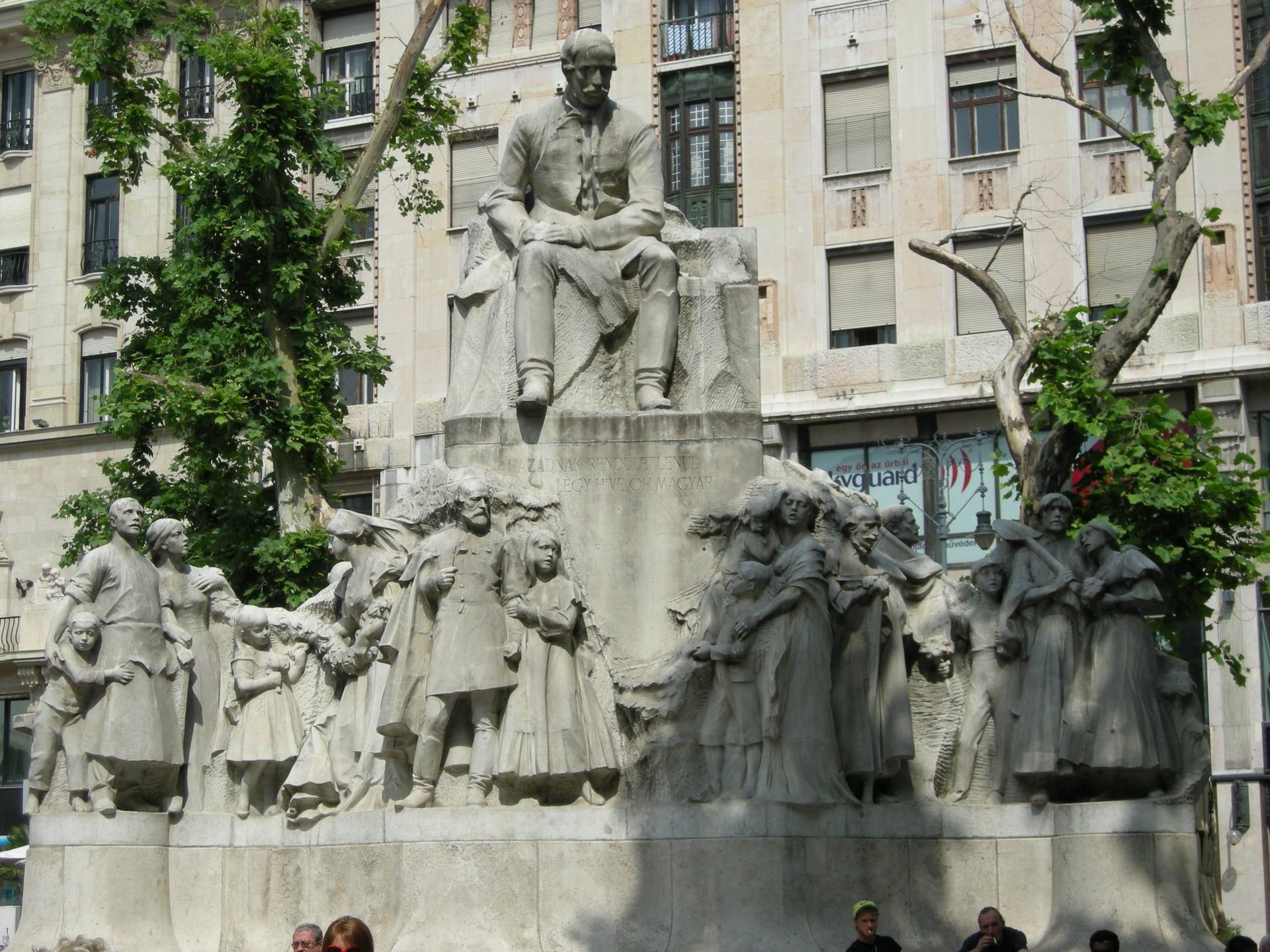
Vörösmarty tér: Gerbeaud
The 1896 metro began here. The square is also home to the Gerbeaud café house and a monument unveiled in 1908; in winter it fills with a Christmas market.
- 5
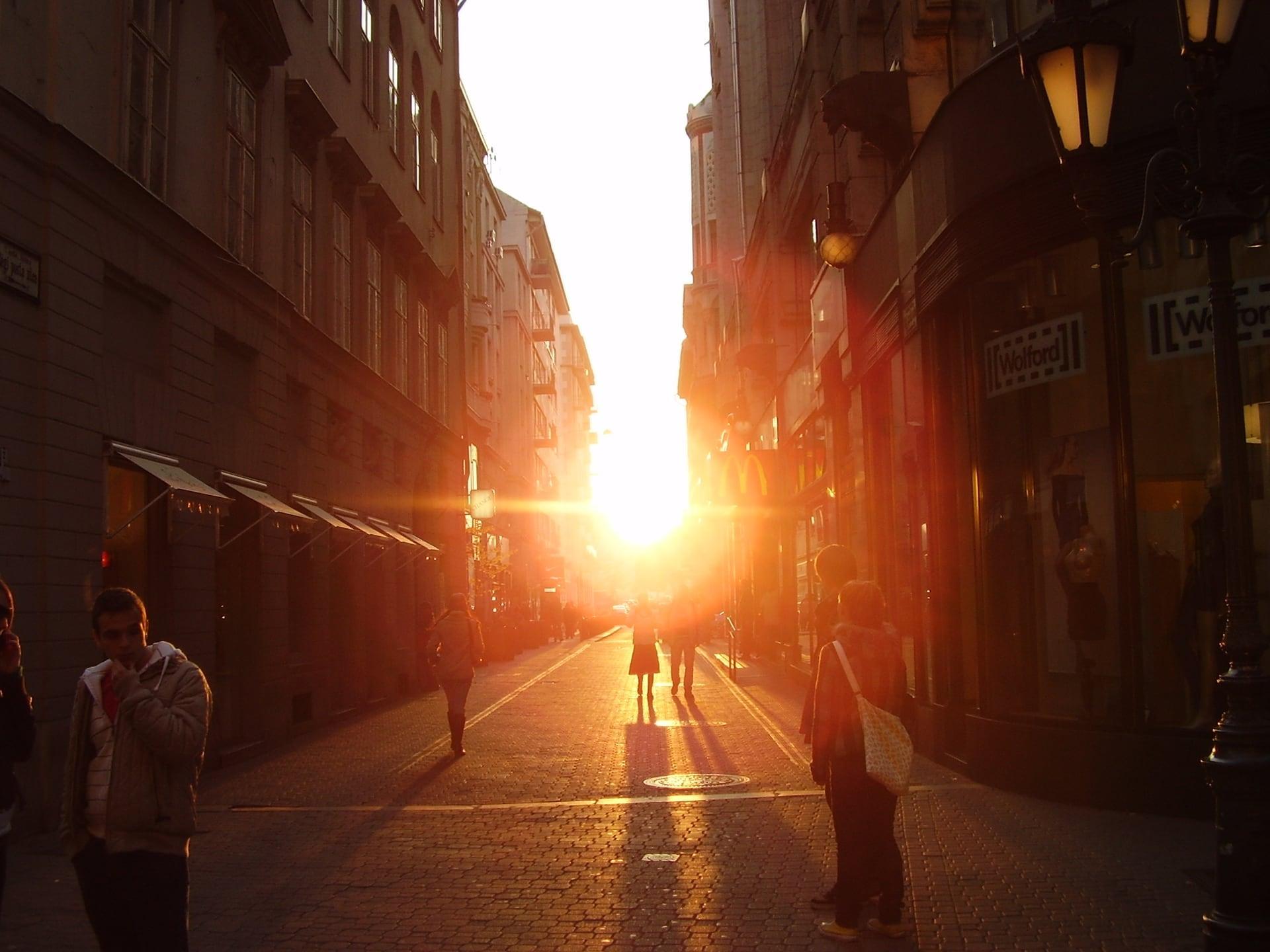
Váci utca: Road to Vác
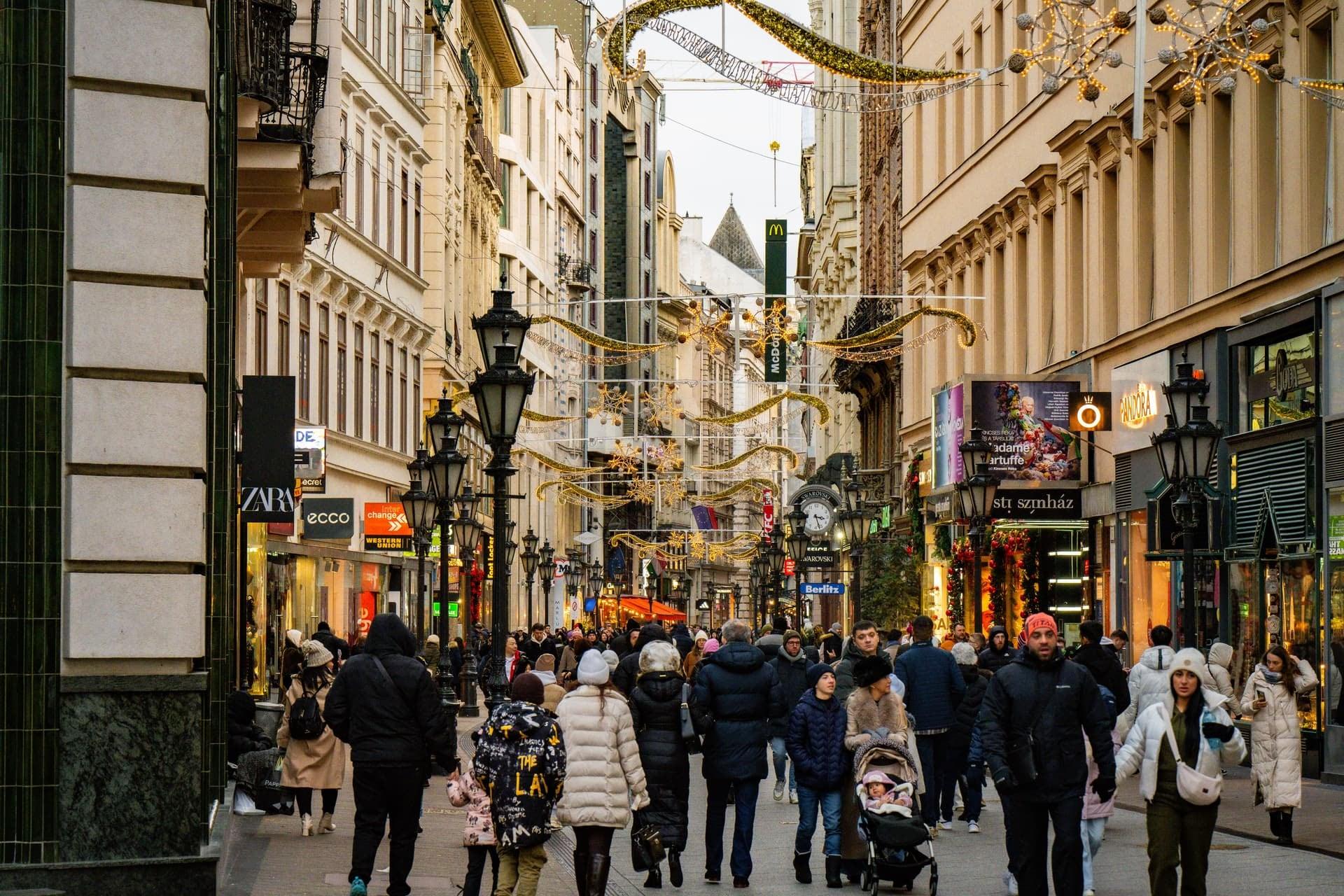
Named for the Vác road. Pest's shopping street keeps the name of a road out of town, through the old wall's Vác Gate, which came down in 1789.
- 6
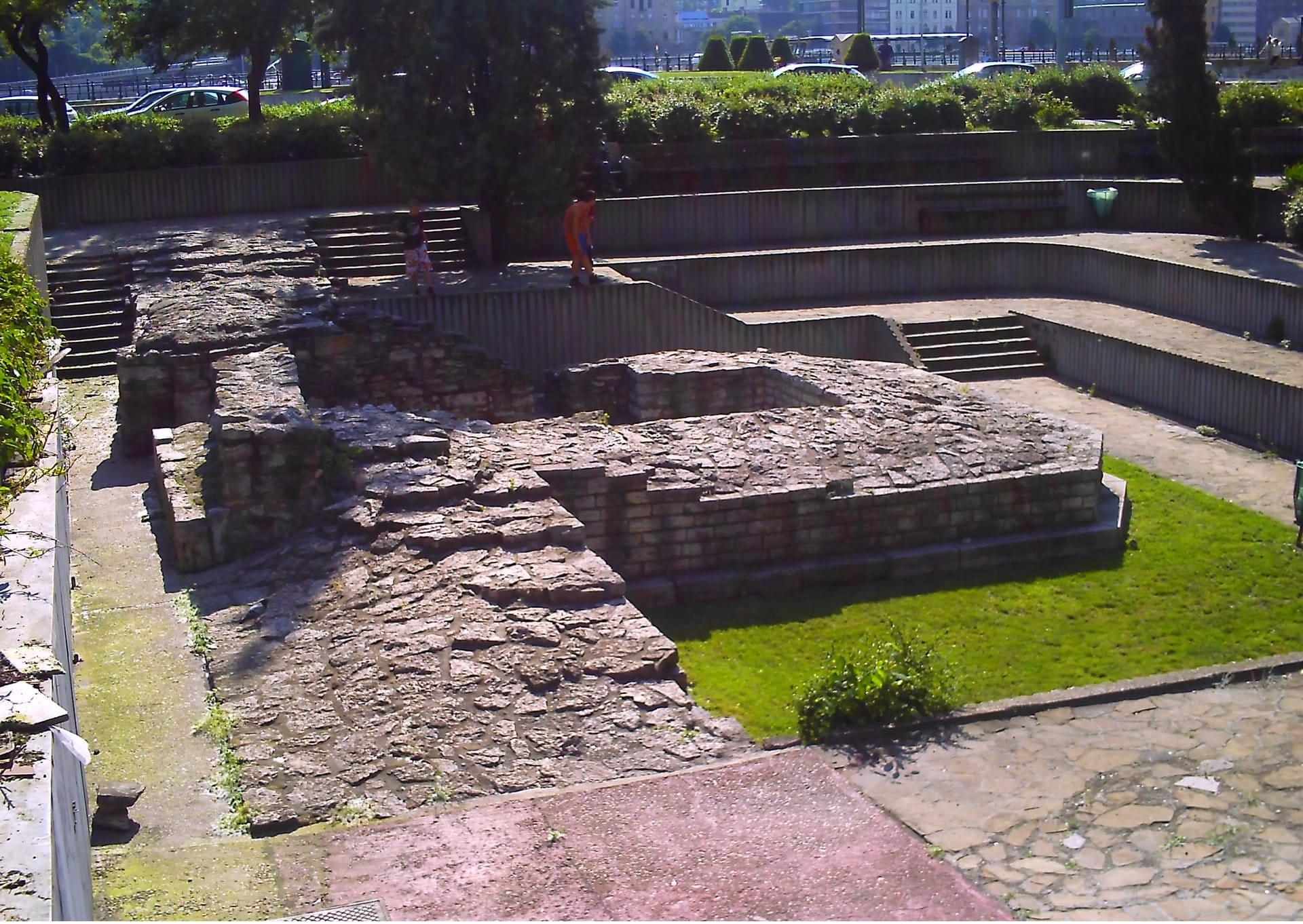
Március 15. tér: Roman Fort
A Roman fort lies below. Contra-Aquincum was built in its final form about AD 350, and Pest's parish church rose in its corner.
- 7
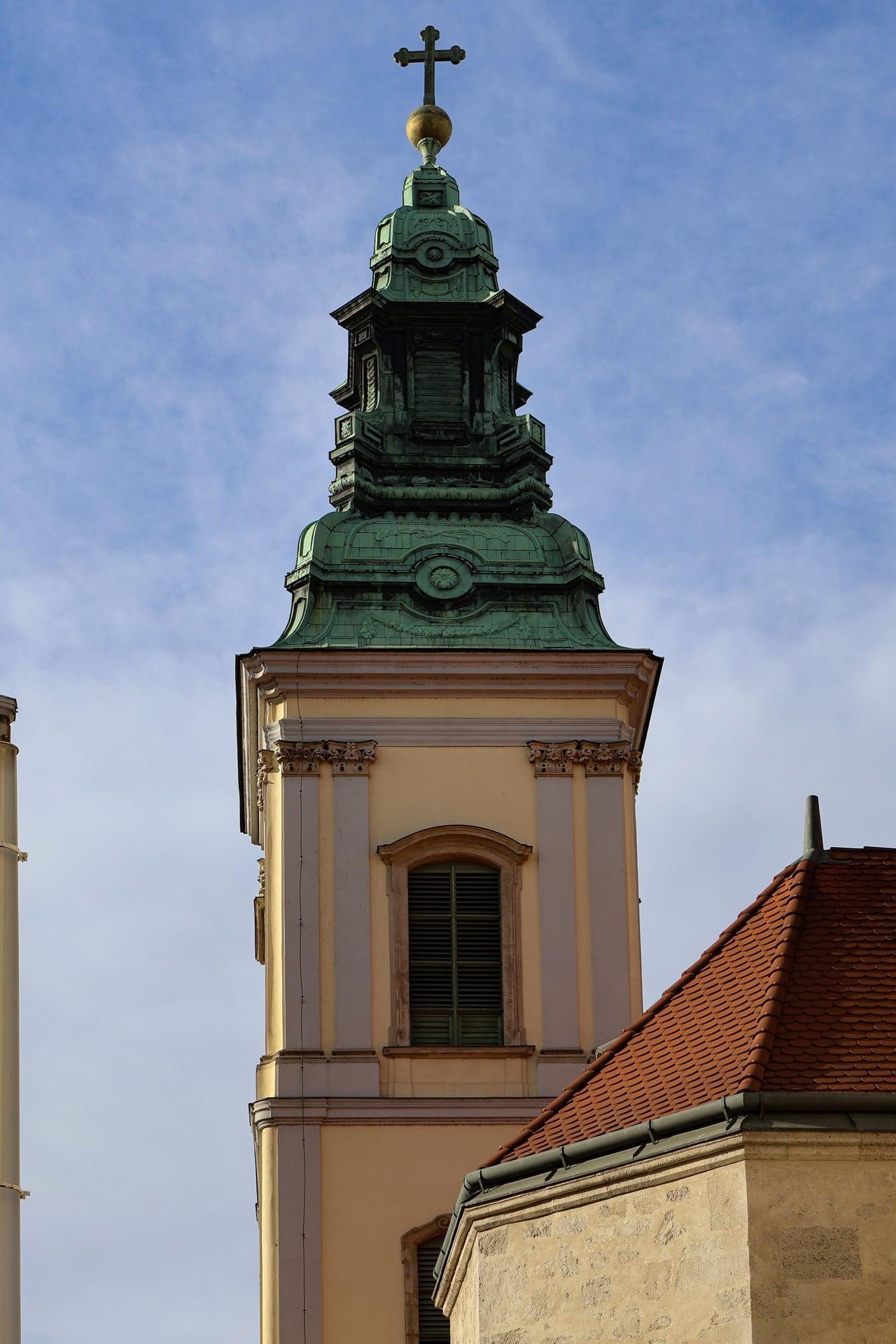
Inner City Parish Church
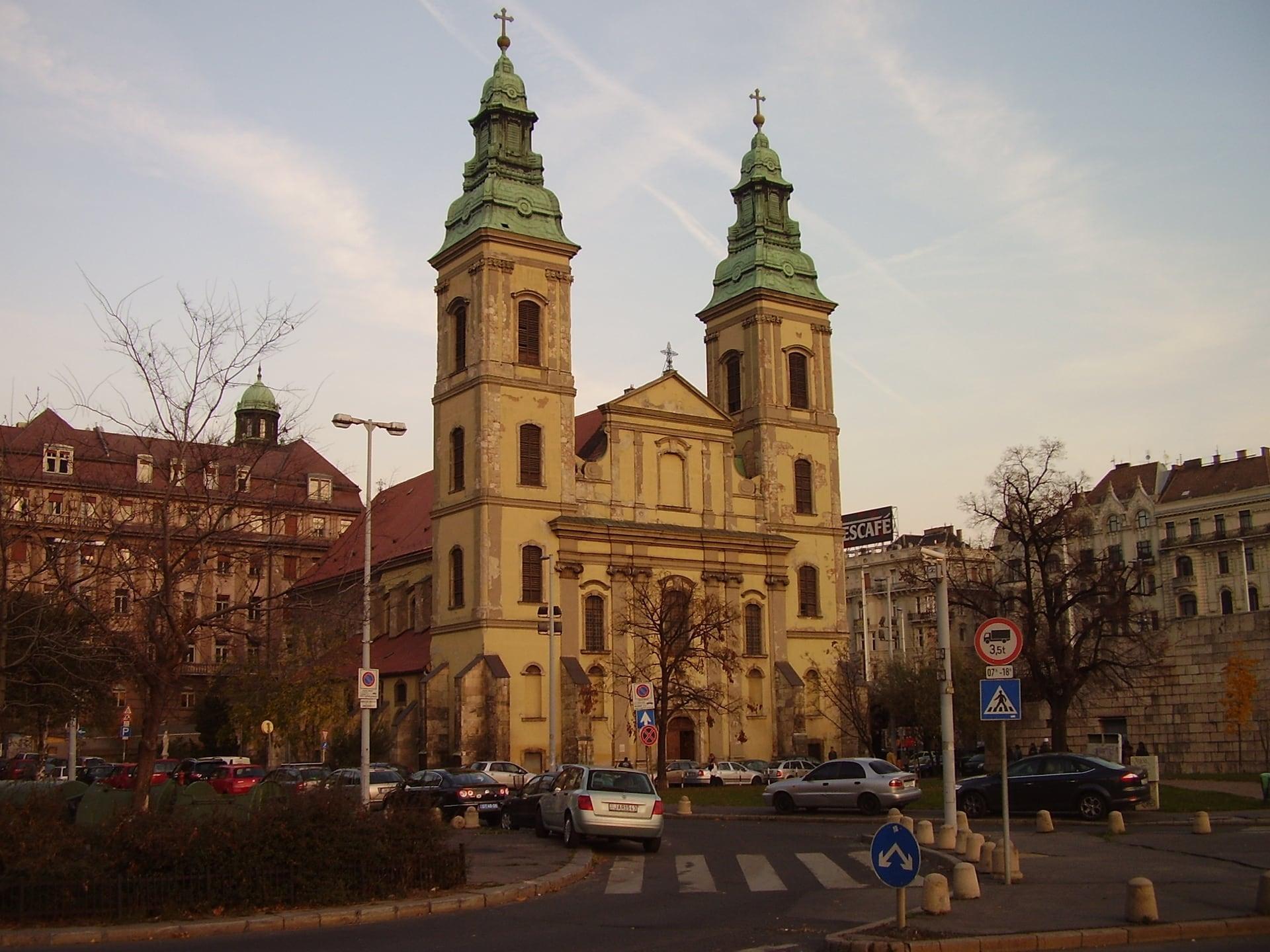
A bridge nearly removed it. Pest's oldest church: from 1895 to 1937 the city weighed demolishing or moving it for the Elisabeth Bridge; it stayed, the bridge ramp at its side.
- 8
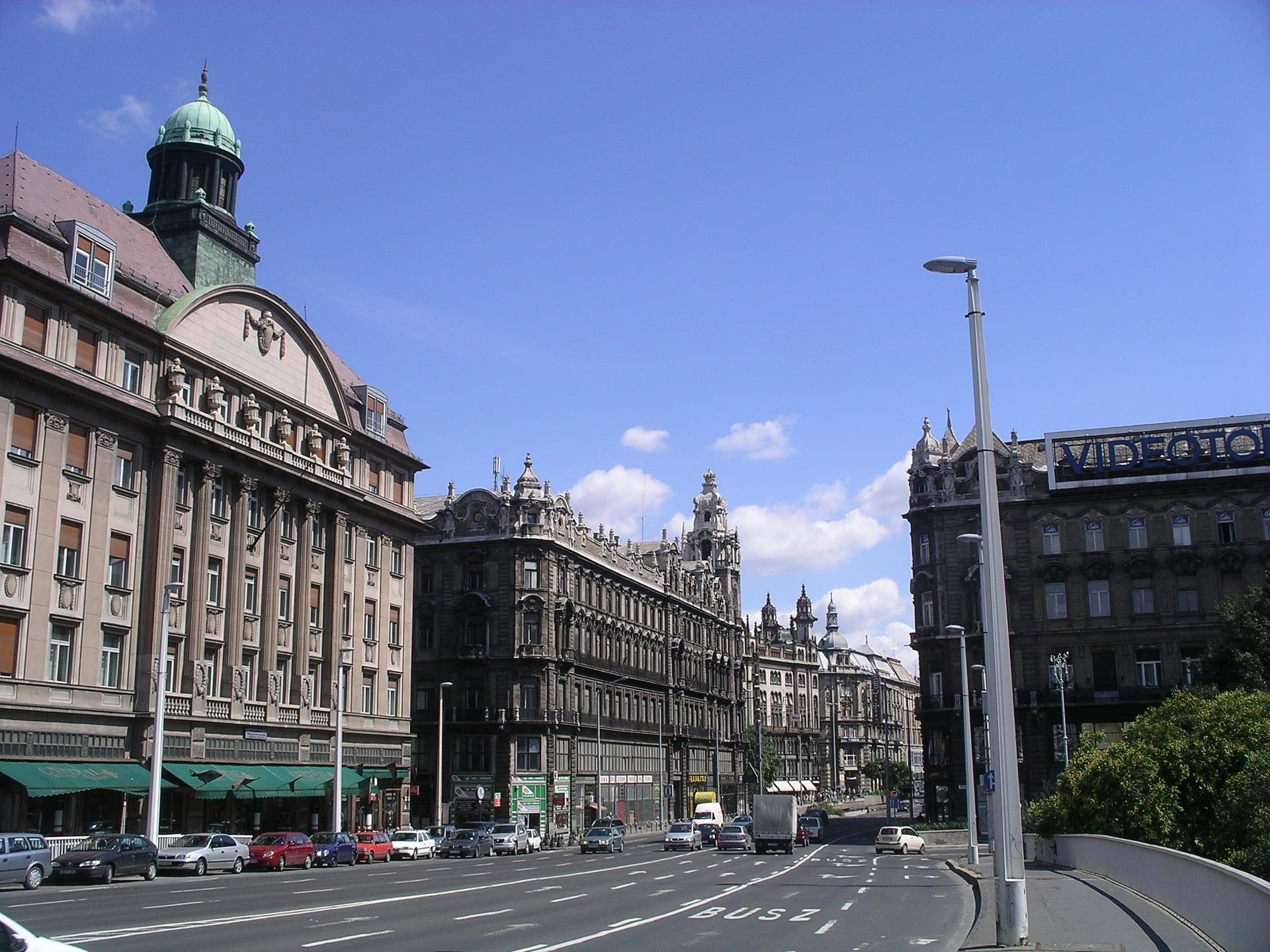
Ferenciek tere: Bridge Avenue
Twin palaces frame the avenue. They lead to the Elisabeth Bridge; the Franciscans' square has an 1835 fountain, and around the church's corner a relief recalls the flood of 1838.
- 9
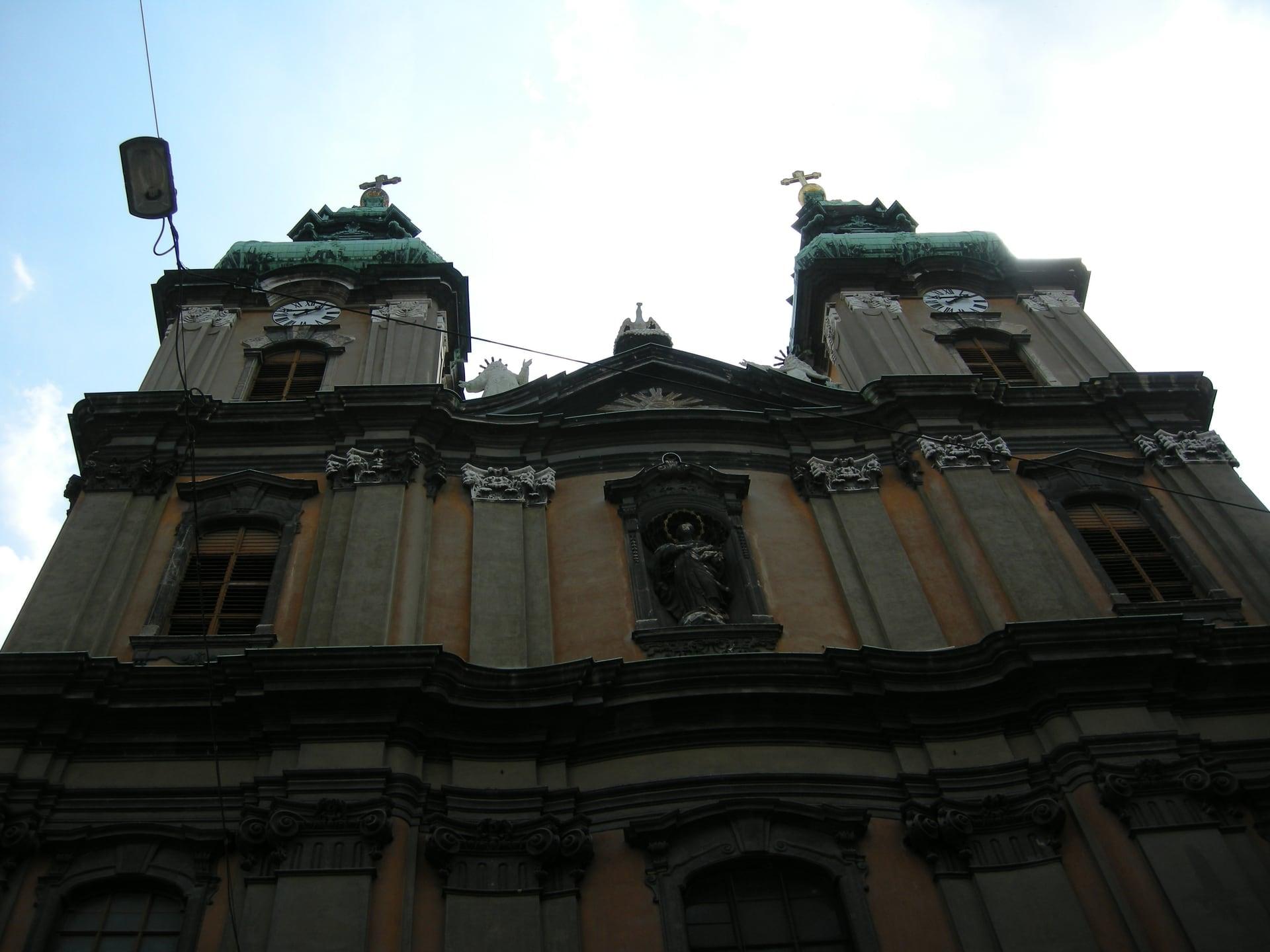
Egyetem tér: University Church
A Baroque church for monks. Built for the Pauline order in the 1700s, it was later given to the university and stands among the law faculty's buildings.
- 10
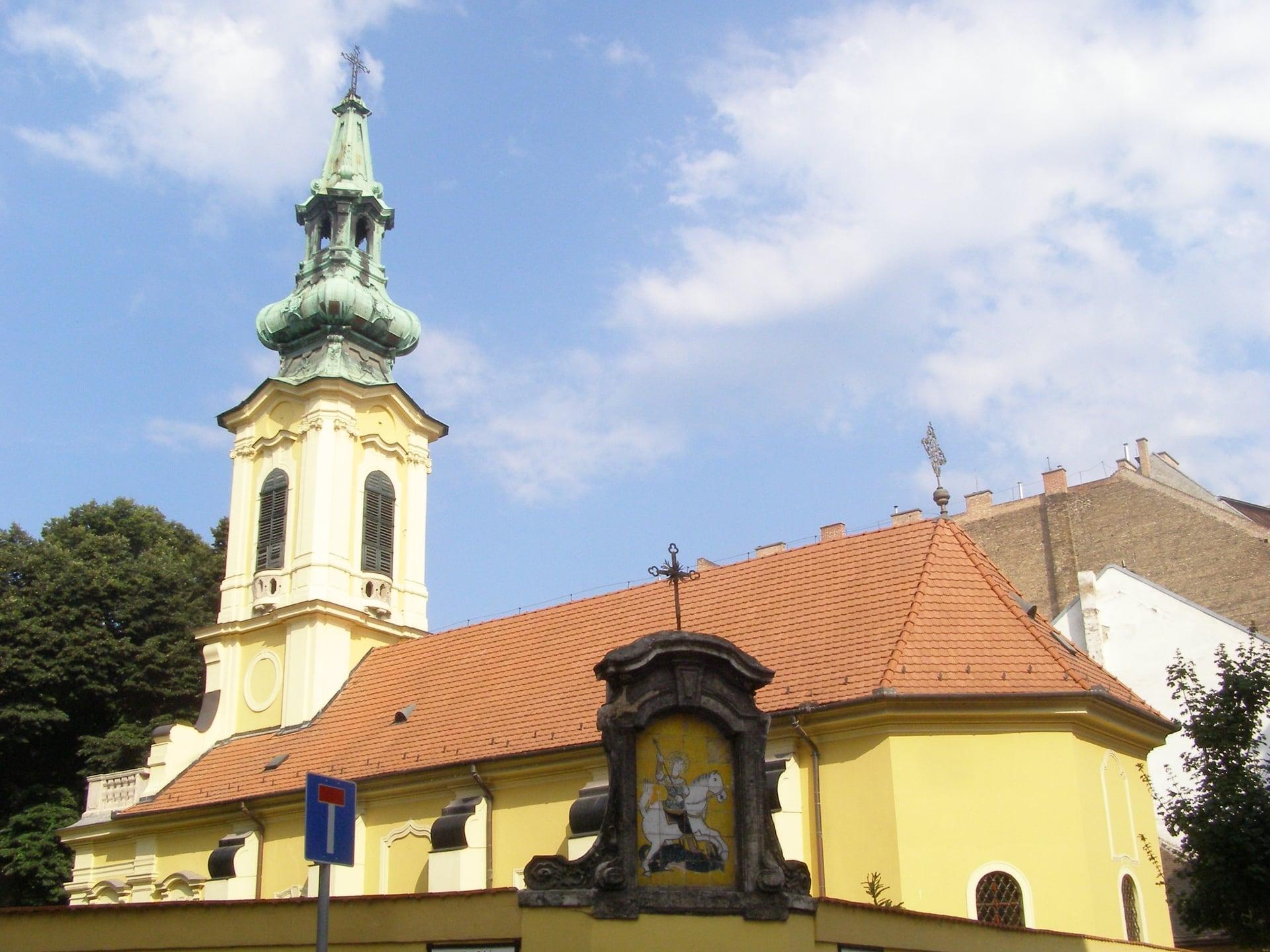
Szerb utca: Serbian Church
A church of Serbian merchants. They settled in Pest after the Ottoman wars; the church was rebuilt from the 1730s and gave the street its name.
- 11
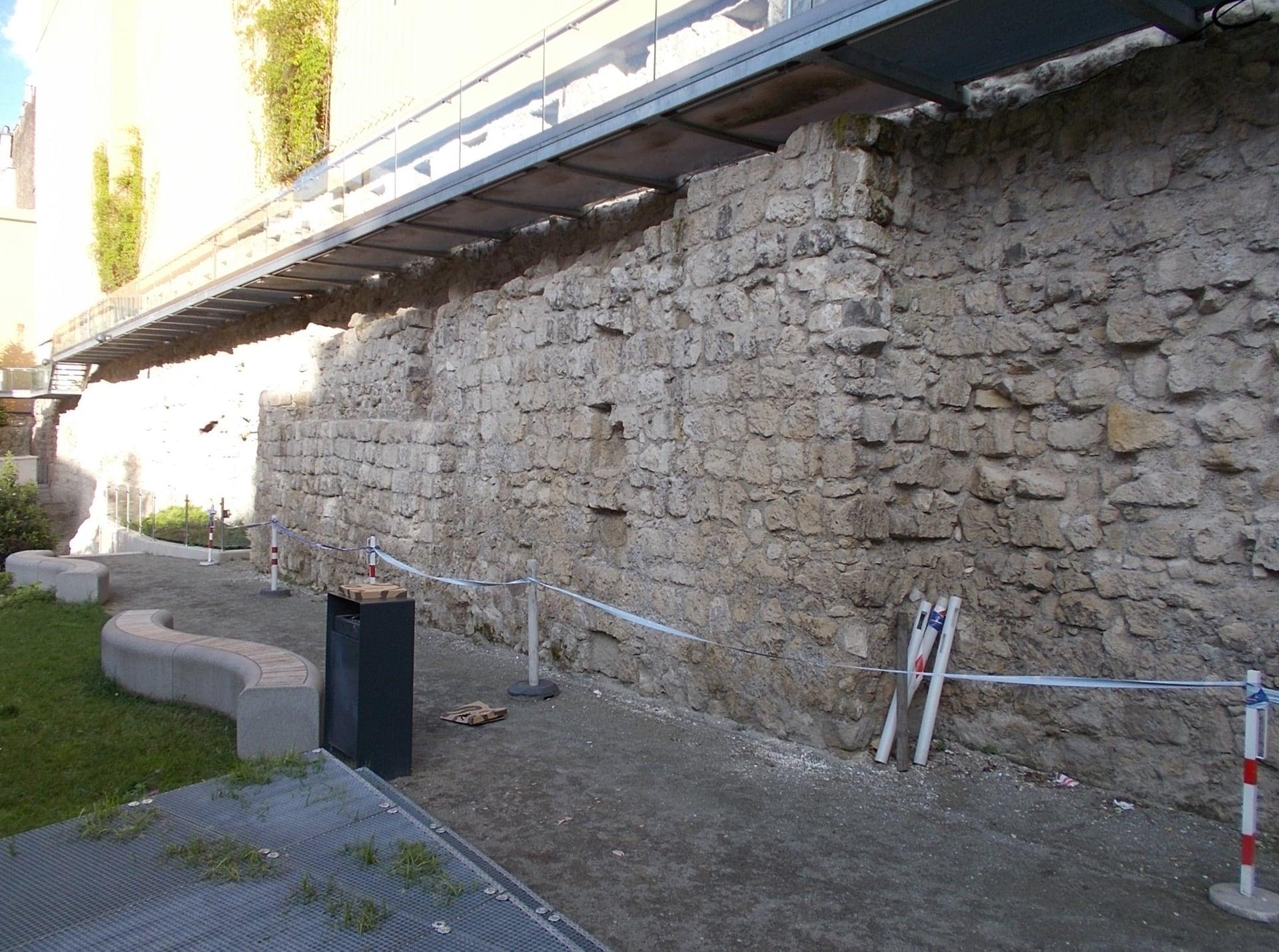
Bástya utca: Town Wall
Pest's town wall is here. Bástya park opened in 2022 around the longest surviving stretch, with a rebuilt wall-walk and a lookout.
- 12
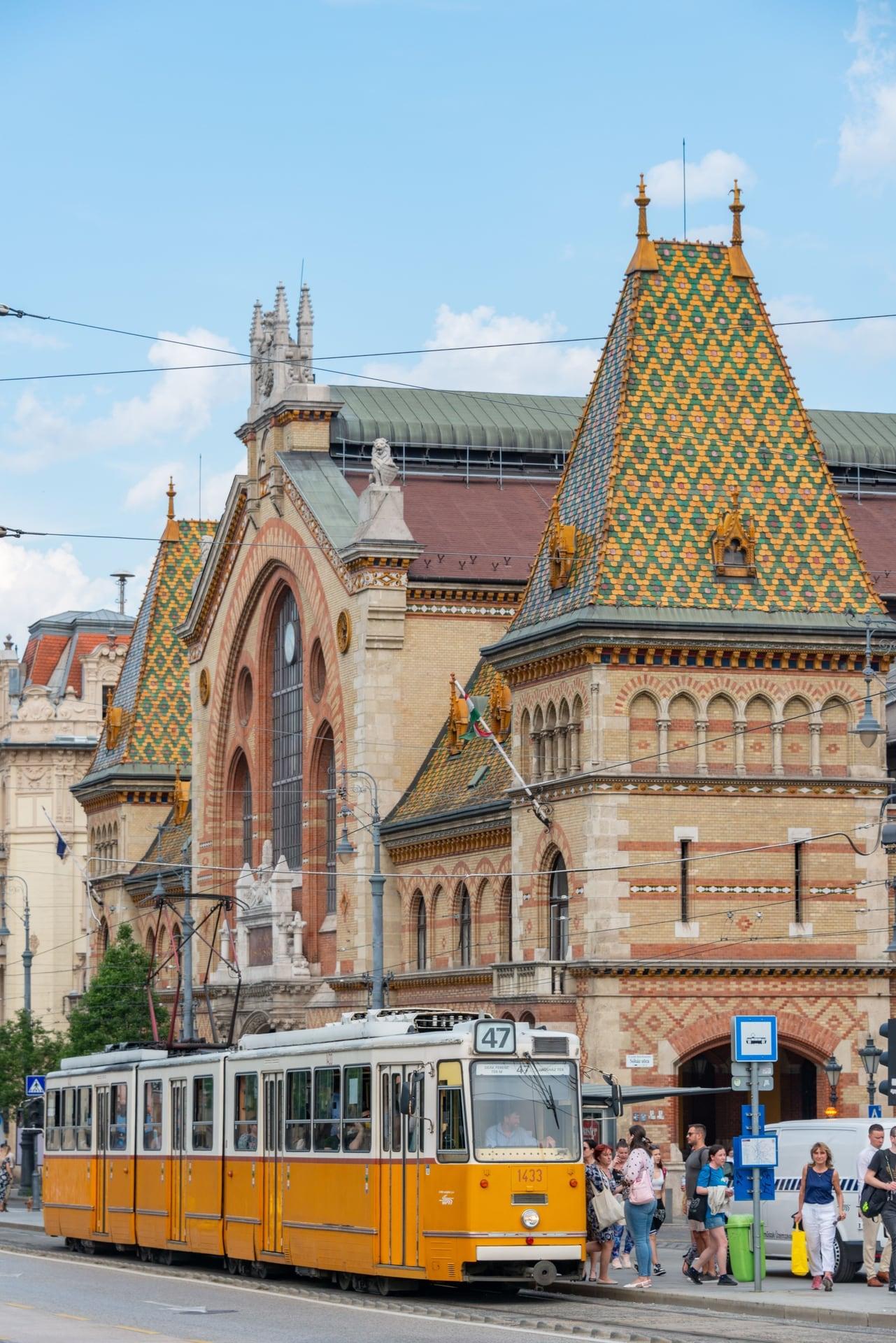
Great Market Hall: Fire Before Opening
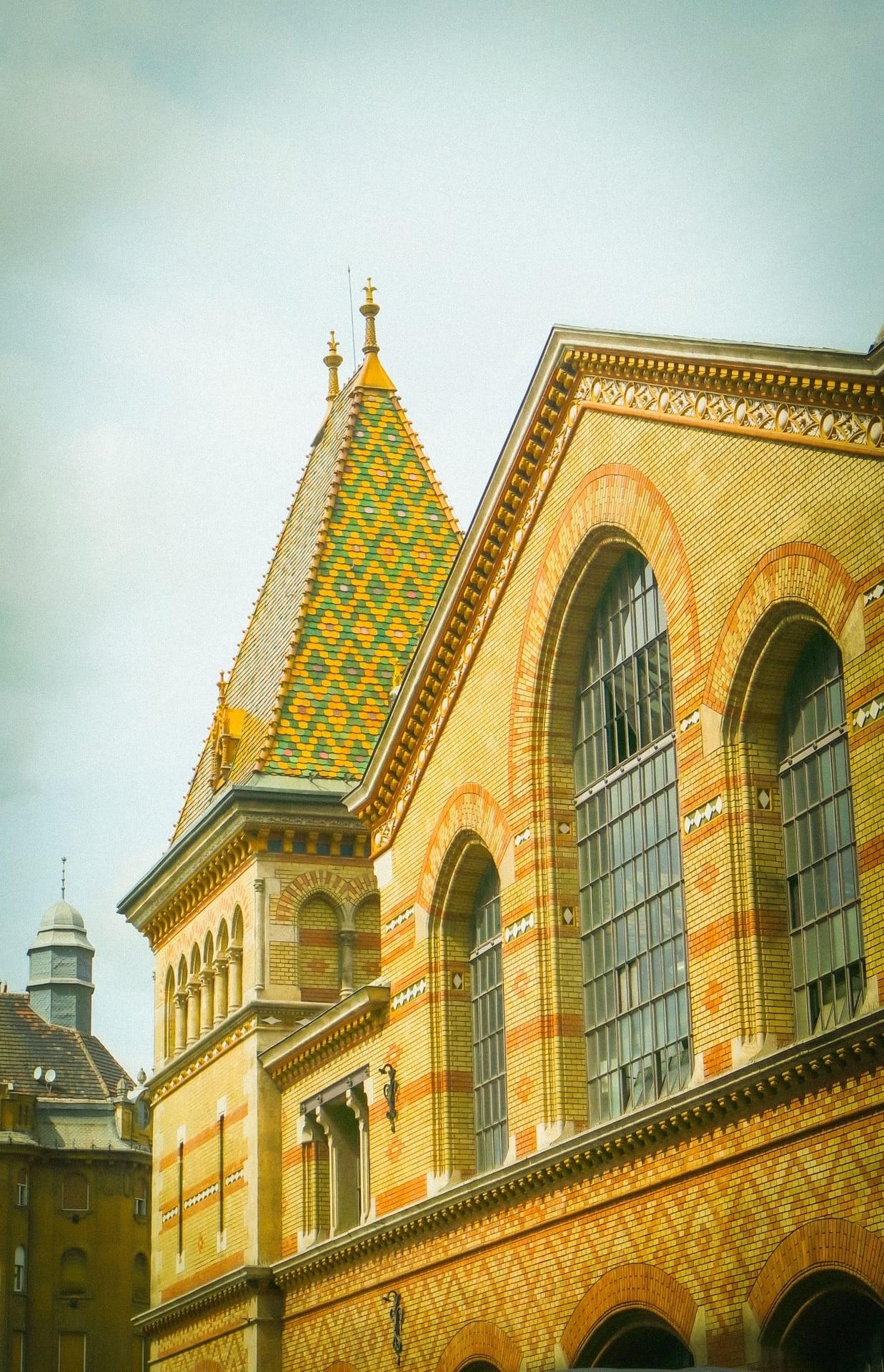
It burned before it opened. Fire struck Samu Pecz's nearly finished hall in June 1896; it opened on 15 February 1897, by the Liberty Bridge.
Details
Best Time to Visit
Daytime, Monday to Saturday, to find the Great Market Hall open at the end (Monday to Friday 06:00 to 18:00, Saturday 06:00 to 16:00) and Bástya park's wall open by day; on Sundays the hall opens 10:00 to 16:00, and it closes on official public holidays. Every stop is on public ground at all hours, but the route from stop 11 to stop 12 crosses Bástya park, which is closed at night: after dark, take the way around given at stop 11 (the town wall is hard to see then too). The promenade is busiest at sunset; Vörösmarty tér is crowded during its Christmas market from 13 November 2026. Checked 9 November 2026.
Pro Tips
- •Getting to the start: the walk begins on the garden sidewalk of Széchenyi István tér, at the Pest end of the Chain Bridge. On foot from M1 Vörösmarty tér it is about 450 meters along the Dunakorzó. Tram 2 runs along the river beside the square (stops Eötvös tér and Széchenyi István tér in OpenStreetMap; check names at bkk.hu), and buses 16 and 105 cross the Chain Bridge (BKK, 2023). Checked 9 November 2026.
- •Step-free route between stops 6 and 7: instead of the 43 steps beside the Elisabeth Bridge, go back up Piarista utca and down the Váci utca sidewalk to the church's Gothic end (about 300 meters, re-walking part of the previous leg).
- •Great Market Hall (stop 12): free entry; Monday to Friday 06:00 to 18:00, Saturday 06:00 to 16:00, Sunday 10:00 to 16:00; closed on official public holidays and rest days (operator, piaconline.hu). At the end: trams 2, 47, 47B, 48 and 49, trolleybus 83, buses 15 and 115 and the M4 stop at Fővám tér (operator's list). Checked 9 November 2026.
- •Inner City Parish Church (stop 7): an active parish with a ticketed tourist visit outside services. Masses daily at 17:00, Sundays at 10:00 and 18:00 (English) per the parish website as archived on 15 October 2026; visiting hours and the ticket price were not confirmed, so check at the church. The church's tower lookouts have been open since 2020. Checked 9 November 2026.
- •Pesti Vigadó (stop 3): the building, its exhibitions and performances are ticketed; it has a sixth-floor roof terrace. Details at pestivigado.hu. Checked 9 November 2026.
- •Bástya park (stop 11) is open by day and closed at night; the town wall is best seen in daylight from the park railing or inside the park. The route to stop 12 crosses the park; when it is shut, walk back along Bástya utca to Veres Pálné utca and follow it and Só utca down to Vámház körút (only a few steps longer).
Safety & Precautions
- •Tram 2 runs on its own track beside Széchenyi István tér and below the Danube Promenade: stay on the sidewalk and the promenade, never on the track.
- •Between stops 7 and 8 you cross three busy streets: the side street at the bottom of the bridge ramp, Petőfi Sándor utca and Kossuth Lajos utca. Cross each only at the lights.
- •Between stops 8 and 9, bus 15 uses the Ferenciek tere lane and Károlyi utca, quiet one-lane streets: keep to the sidewalk. Szerb utca and Veres Pálné utca are narrow lanes with occasional cars.
- •The flood relief at stop 8 is on the church's side wall facing Kossuth Lajos utca, a six-lane road, on a narrow sidewalk with a railing: look, don't linger.
- •Between stops 6 and 7 the route climbs 43 steps with a handrail onto the Elisabeth Bridge's sidewalk; the step-free way is in the tips.
- •Paving stones on the promenade and Váci utca are slippery when wet.
- •Vörösmarty tér hosts a Christmas market from 13 November 2026 (Vörösmarty Classic Xmas): stop 4 stands among the stalls and the square is crowded. Checked 9 November 2026.
- •The Inner City Parish Church, the Franciscan church, the University Church and the Serbian church are places of worship: services take precedence, dress modestly and keep voices low.
- •The Great Market Hall is closed on official public holidays; the stop still works from across the road.
Travel advisory: Exercise Normal Precautions (Level 1).
Gallery
Related Reading
Go deeper on what you'll see, hear, and walk through.
Overview
Budapest in One Day: A Walkable Morning-to-Evening Itinerary
9 min
Overview
Budapest Travel Guide: How Many Days, Getting Around, Best Time, Safety, and Budget
7 min
Thematic
Two Cities Across the Danube: How to Read Budapest on Foot
9 min
Read
What to Eat in Budapest: Dishes, Origins, and How to Order
7 min
Read the walk
The full story of Historic Center: Pest Between the Bridges, in words. Prefer to listen? Play it narrated, from home or on location.
Introduction
Budapest, the capital of Hungary, was three separate towns until eighteen seventy-three: Pest on one bank of the Danube, Buda and Óbuda on the other. This walk crosses the old center of Pest, from one bridge to another, and shows how the city rebuilt itself around its crossings.
You will see the bridge that first joined Pest to Buda for good, a promenade whose grand hotels the siege destroyed, a concert hall shelled in eighteen forty-nine and rebuilt in a style meant to be Hungarian, a Roman fort under a square, a church the Elisabeth Bridge nearly swept away, and a market hall that caught fire ten days before it was due to open.
Three people shape what you will see. István Széchenyi, the count whose gift founded the Academy of Sciences. Frigyes Feszl, who rebuilt the concert hall. And Samu Pecz, who designed the market hall.
The walk is twelve stops over about two point six kilometers, a mile and a half, and takes about seventy-five minutes. It is flat, apart from one flight of forty-three steps with a handrail, and there is a step-free way around. Near the Elisabeth Bridge you cross three busy streets, each at the lights. Every stop is outdoors and free. The walk ends at the Great Market Hall, by the Liberty Bridge. It starts at the Pest end of the Chain Bridge. When you arrive at Széchenyi István tér, begin with stop one.
1. Széchenyi István tér: Chain Bridge
Welcome to Széchenyi István tér, the square at the Pest end of the Chain Bridge. Stay on the sidewalk here: tram two runs on its own track just beside it.
Find the bridge, with its two stone lions guarding the near end and the hills of Buda beyond. When it opened, on the twentieth of November, eighteen forty-nine, Pest and Buda were still separate towns, and it was the first permanent bridge across the Danube here. Budapest's transport authority puts it simply: from the day it was built, the bridge was a symbol of progress, because it foreshadowed the union of Pest and Buda. That union came by law in eighteen seventy-two, and the united city began in eighteen seventy-three. The lions were added in eighteen fifty-two.
Keep that bridge in mind, because Pest keeps rebuilding itself around its crossings, and this one too. Retreating German troops blew it up on the eighteenth of January, nineteen forty-five, and it reopened on its hundredth birthday, in nineteen forty-nine. Since its renovation, finished in twenty twenty-three, private cars have been kept off it.
Now find the palace closing the far end of the square. That is the Hungarian Academy of Sciences, and it belongs to the first of our three people, Count István Széchenyi, whose name the square carries and whose statue stands at the garden's far end. He offered one year's income from his estate to found a learned society. The palace was inaugurated in eighteen sixty-five, and the words on its front say it was raised by the nation's contribution.
Across the garden, the building with the richly decorated front is the Gresham Palace, built in the first years of the nineteen hundreds for a London insurance company, and a hotel today.
Follow the route along the garden and across the slip roads at the zebras. Next is the riverside promenade.
2. Dunakorzó: Lost Hotels
This is the Dunakorzó, the Danube Promenade, and the reason for it is the view. Go to the railing and look across the river.
The long palace on the hill opposite is the Royal Palace, under its dome, and the slim spire farther along the ridge belongs to the Matthias Church. Back the way you came is the Chain Bridge. Our Buda Castle District walk tells the story of that hill, and it begins at the bridge's far end. Below the railing, tram two runs along the river on its own track, and the walk stays up here on the promenade.
Now turn your back to the water and find the big hotel on the land side. Where it stands there was once the Ritz, a grand hotel built between nineteen ten and nineteen thirteen. It was one of a row of grand hotels along this promenade, all facing the same view. Those hotels were wrecked in the siege of nineteen forty-four to forty-five. The Ritz was hit on the fifteenth of January, nineteen forty-five, a bomb that sealed its fate, and its ruins were not cleared until nineteen forty-seven. The rest of the hotel row went the same way. The hotels on this bank today are later buildings on the old hotel row.
So the view is older than the hotels that face it. The buildings behind you came down and went up again; the view across the water is the one the Ritz was built for.
It gets crowded here at sunset, for good reason. On wet days the paving stones are slippery, so take it slowly.
Follow the route along the promenade with the river beside you. Next is a small bronze girl sitting on the railing.
3. Vigadó tér: Feszl's Hall
On the railing just ahead sits a small bronze girl in a paper crown, the Little Princess. She was placed here in nineteen ninety. She is a modern counterpoint to the old hall behind her.
Now turn from the river and find the long front across the little garden. That is the Pesti Vigadó, Pest's hall for concerts and balls.
This corner was once the edge of Pest itself. The town's northern bastion stood here, and the hall's own history calls it Pest's northern limit. The bastion was pulled down from seventeen eighty-nine, and in its place Pest built a hall for balls and concerts, which held its first ball in January eighteen thirty-three. After the great flood of eighteen thirty-eight, a benefit concert was given there.
In May eighteen forty-nine, cannon fire from the Austrian garrison in the castle across the river largely destroyed it. Look back over the railing at the hill, and you can see how close the guns were.
The rebuilding went to the second of our three people, the architect Frigyes Feszl, in eighteen fifty-nine. The hall's history says that with it he wanted to create a Hungarian style. It opened in eighteen sixty-five. The Second World War damaged it badly. It was listed as a monument in nineteen fifty-four, and when it finally reopened, in nineteen eighty, the main hall's ceiling came back five meters lower than before.
Today the building belongs to the Hungarian Academy of Arts. Its exhibitions and performances are ticketed, and there is a roof terrace on the sixth floor; the front is free to look at for as long as you like.
Follow the route across Vigadó tér at the zebra and up the side street. Next is the square at the top of Pest's shopping street.
4. Vörösmarty tér: Gerbeaud
Vörösmarty tér opens out here. Find two landmarks: the monument in the middle of the square, and the tall corner building with the café on its ground floor, the Gerbeaud house. In winter the square fills with a Christmas market, and for a moment the stalls may hide both.
Look for the stairs going down near the Gerbeaud house. They lead to the underground, and this square was where the line began. The underground company's own records give the opening as the second of May, eighteen ninety-six, and name its two first termini: this square, then called Gizella tér, and the Artesian Bath at the far end of the line. Our Andrássy Avenue walk follows it above ground.
Now the café. As the house tells its story, it began in eighteen fifty-eight, with a confectioner whose first shop was a few streets away. By the firm's own timeline he moved here in eighteen seventy. He had no heir, so he brought in a successor, and it is the successor's surname that is still over the door. After the Second World War the business was nationalized and renamed Vörösmarty, like the square, and the old name came back in nineteen eighty-four.
The monument in the middle honors the man the square is named for. It was unveiled in nineteen oh eight.
Notice how this square works. The river and its promenade are behind you, Pest's main shopping street leaves from the far side, and the underground starts beneath it: a hinge between the riverside and the town.
Follow the route into Váci utca, the pedestrian street of shops leaving the square. Next is a stop a little way down it.
5. Váci utca: Road to Vác
You are on Váci utca, Pest's best-known shopping street. Behind you, at the little square you just walked through, is a fountain of a girl selling fish. The street's name is older than any of these shops. Pest was once a walled town, and its wall had a gate called the Vác Gate.…
Full narration for this stop unlocks with the tour.
6. Március 15. tér: Roman Fort
This square is named for the fifteenth of March. Ahead of you, beyond the open paving, rise the two towers of the Inner City Parish Church, and past them the white cables of the Elisabeth Bridge. Under this square lies a Roman fort. The parish next door describes it in detail:…
Full narration for this stop unlocks with the tour.
7. Inner City Parish Church
You have come down the ramp beside the bridge, and the stone apse just behind you is the Gothic end of the Inner City Parish Church. Turn around to face it. This is the parish Pest grew around, and Pest's oldest church. Research dates the three-aisled church to the eleven…
Full narration for this stop unlocks with the tour.
8. Ferenciek tere: Bridge Avenue
This is Ferenciek tere, the Square of the Franciscans. The church front facing the square is theirs, and the fountain in front of it, with its sea nymphs, dates from eighteen thirty-five. The square's present name became official in eighteen seventy-four. On the way in, while…
Full narration for this stop unlocks with the tour.
9. Egyetem tér: University Church
This is Egyetem tér, University Square. Find the church front facing the square: the University Church. It is a Baroque church built for the Pauline monks in the seventeen hundreds, and later given to the university. The buildings around the square belong to the university's…
Full narration for this stop unlocks with the tour.
10. Szerb utca: Serbian Church
This lane is Szerb utca, Serbian Street, and the reason for its name is behind the wall and the gate: the Serbian Orthodox church. Find its tower rising over the wall; through the gate, if it is open, you can see the front. This is the church of the Serbian merchants who…
Full narration for this stop unlocks with the tour.
11. Bástya utca: Town Wall
Bástya utca means Bastion Street, and the name is a clue. Go to the park railing beside you and look in. Inside Bástya park is the longest surviving stretch of Pest's medieval town wall. The park opened in March twenty twenty-two. Its wall-walk has been rebuilt in a modern…
Full narration for this stop unlocks with the tour.
12. Great Market Hall: Fire Before Opening
Find the great hall across the road and the tram tracks, with its patterned ceramic front. This is the Great Market Hall, the walk's last rebuilding, and it was rebuilt before it even opened. At the turn of the century, the city had forty-four markets, most of them in the open…
Full narration for this stop unlocks with the tour.
- Contra-Aquincum romjai 2010 májusában, Budapest — Hujber Tünde, CC BY-SA 4.0 · source
- Budapest - Serbian orthodox church of St. George — Andrzej Otrębski, CC BY-SA 3.0 · source
- Bástya Park. Is it next to the remains of a King Matthias' period historic city wall is the multi-level park operated by Downtown-Lipótváro — Globetrotter19, CC BY-SA 4.0 · source
Images may be cropped or resized. Other photos via Unsplash and Pexels.