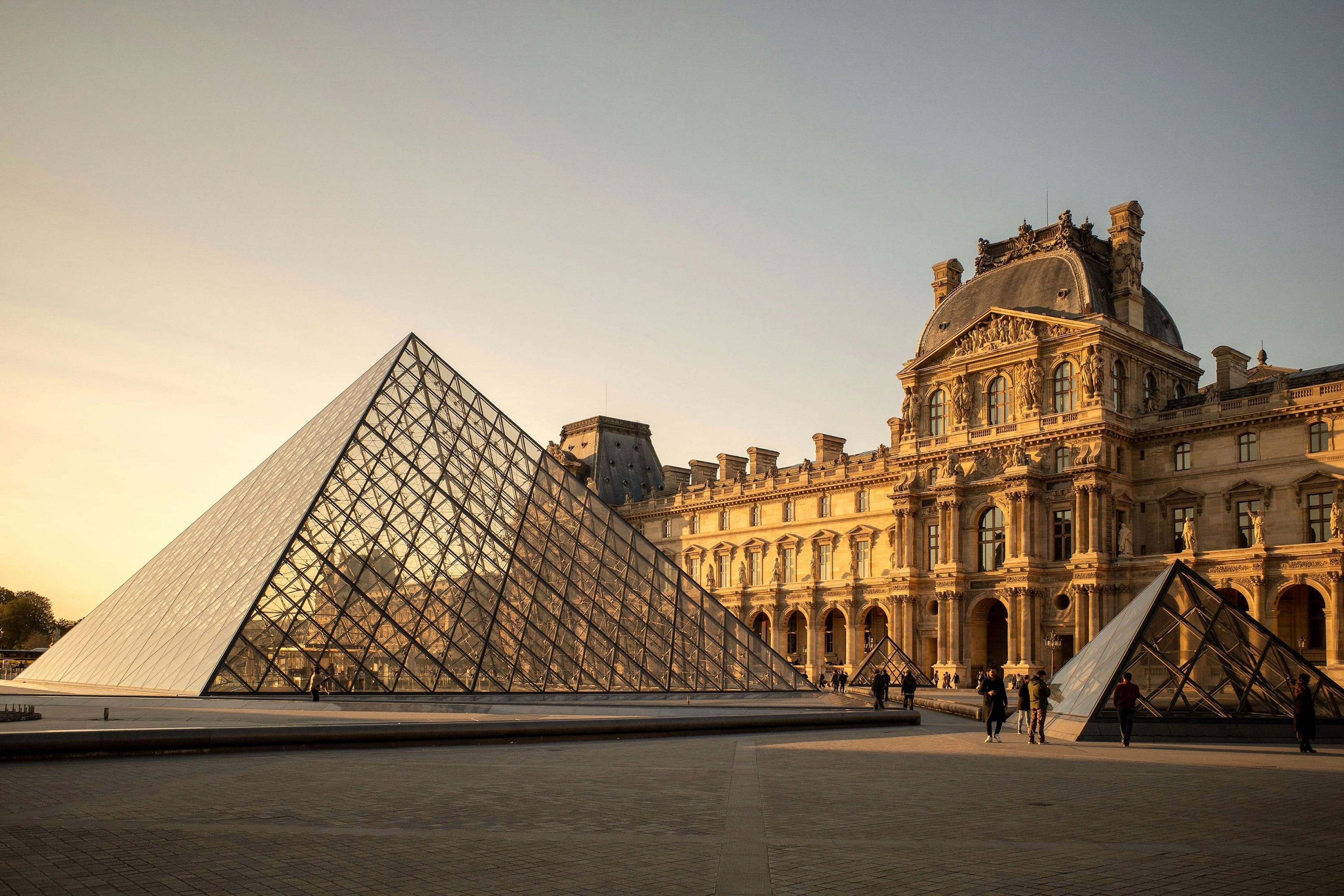
From the Louvre's Colonnade through the Cour Carrée, past the glass Pyramid and the Carrousel arch, along the Rue de Rivoli and down the central alley of the Tuileries garden to the obelisk on the Place de la Concorde.
Start · Louvre Colonnade: The Front the King Left
DirectionsStops
- 1
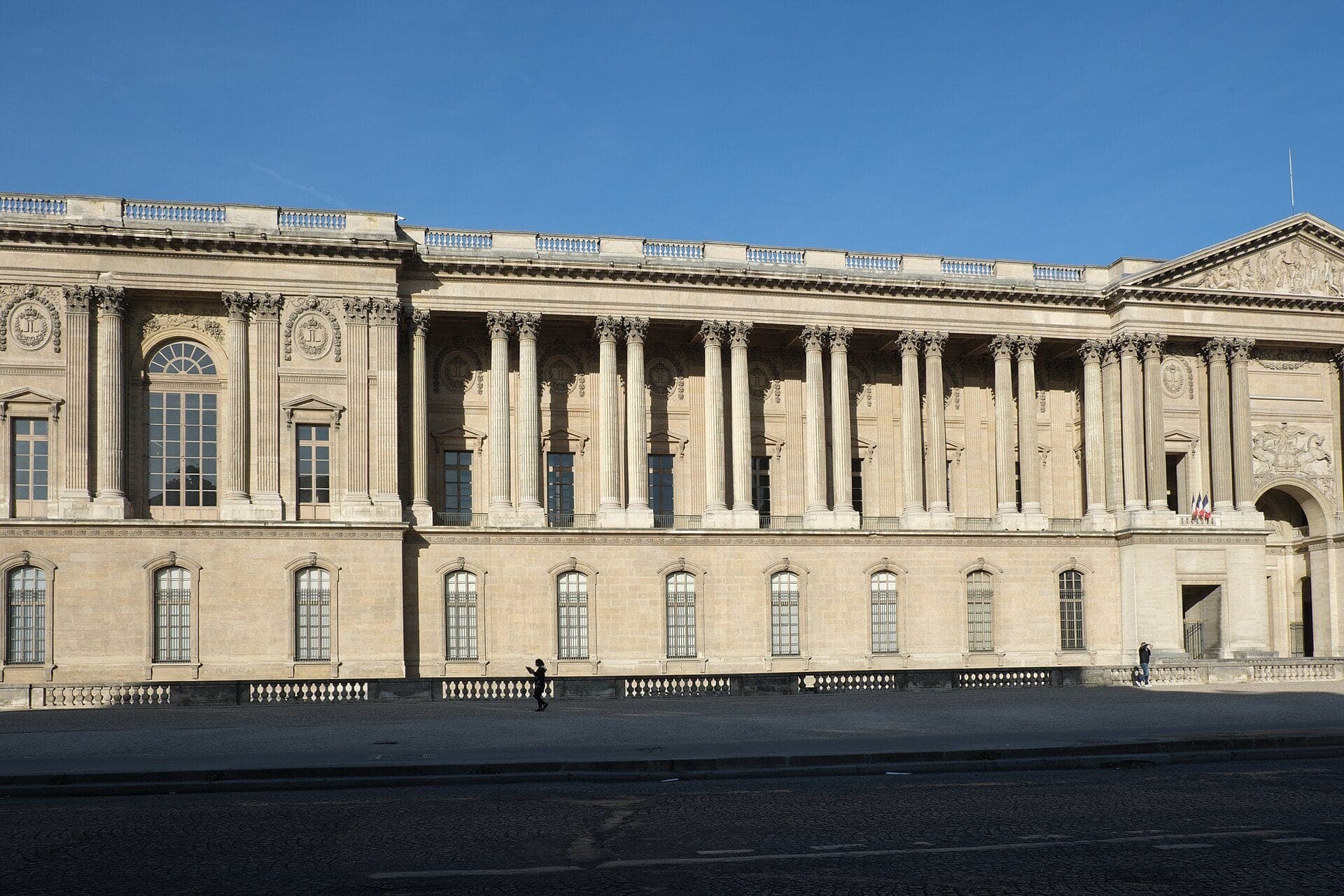
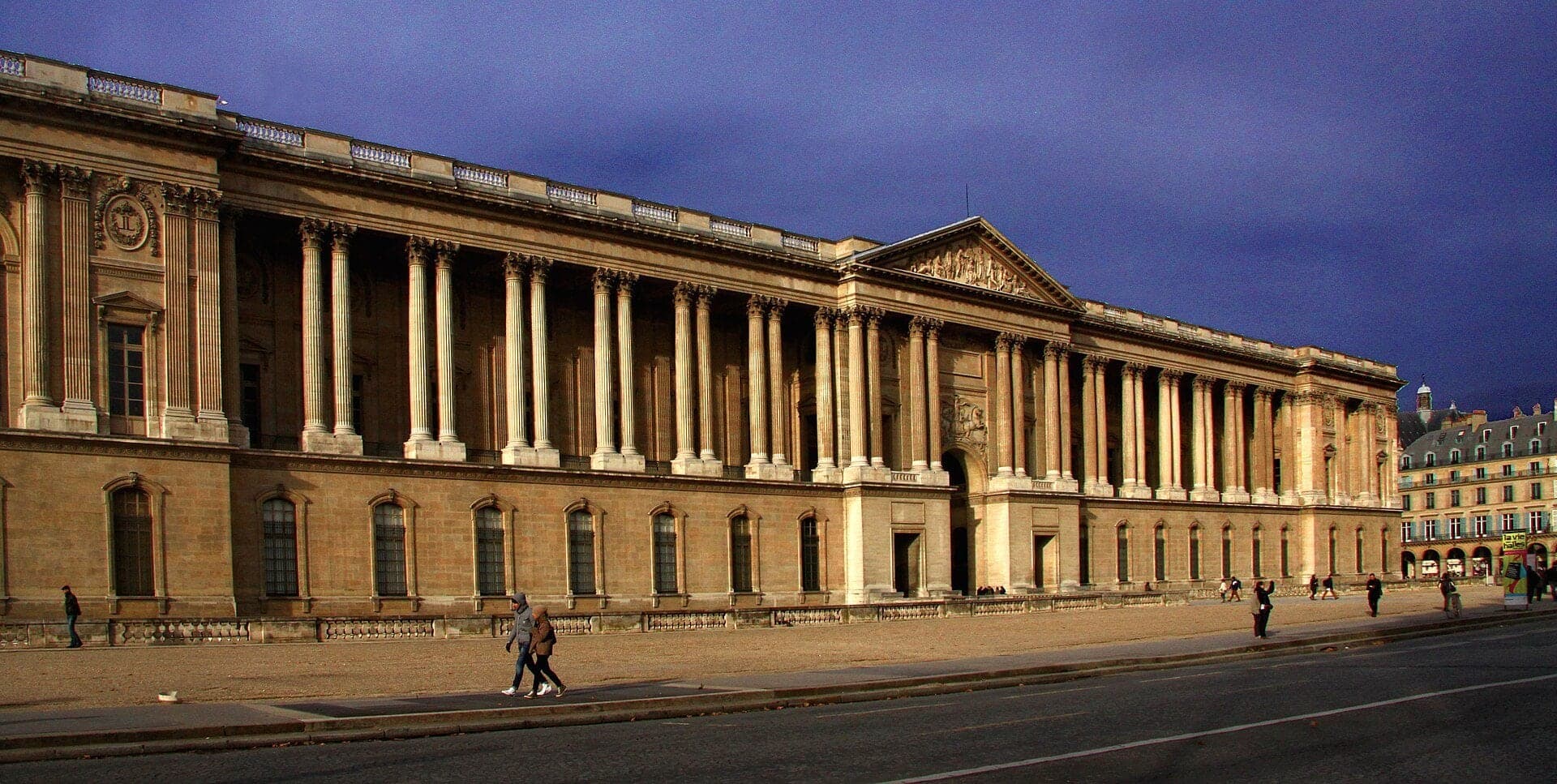
Louvre Colonnade: The Front the King Left
The king's front he never used. Begun in 1667 by a committee of three, the Colonnade is still called the museum's historic entrance, with Saint-Germain-l'Auxerrois across the road.
- 2
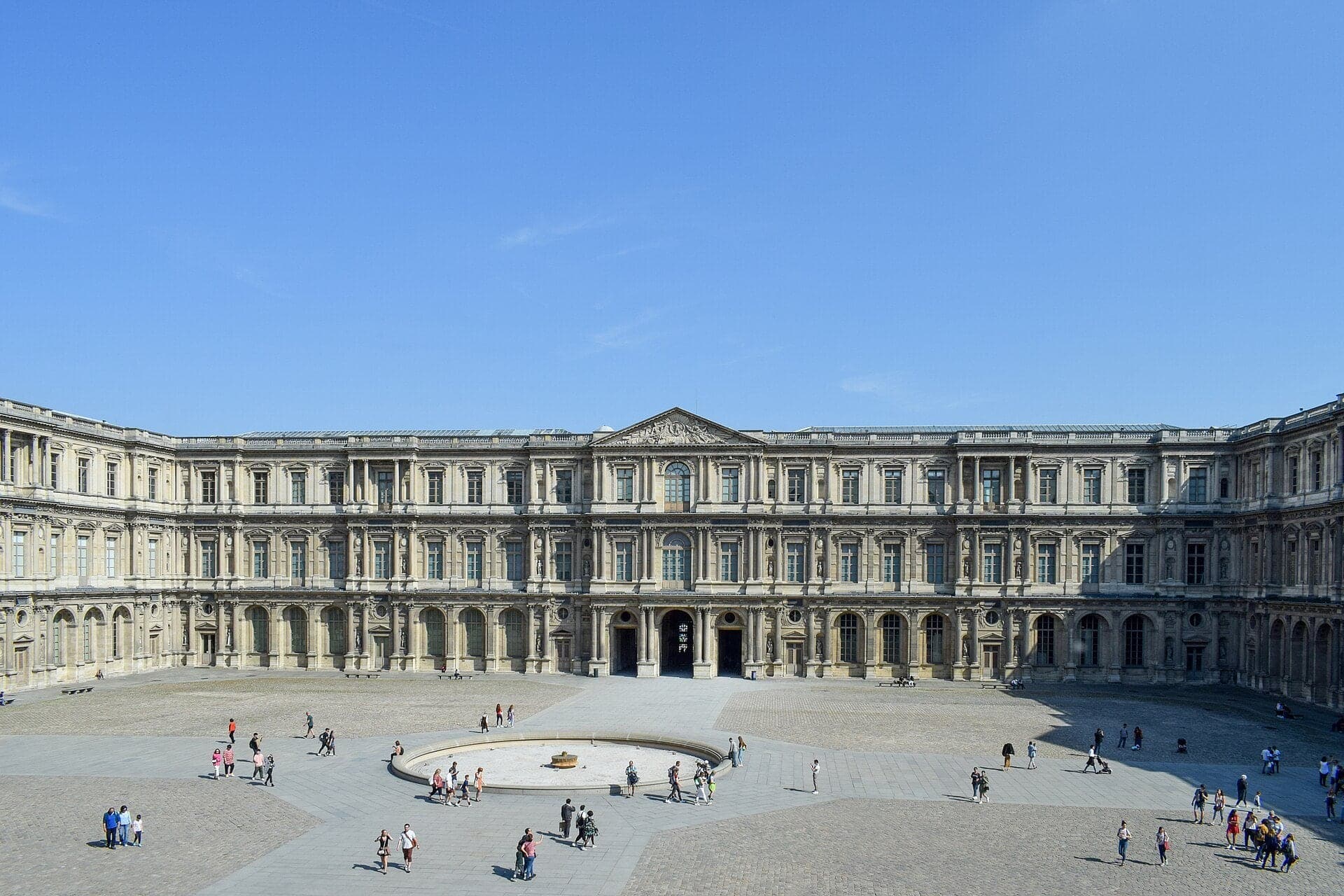
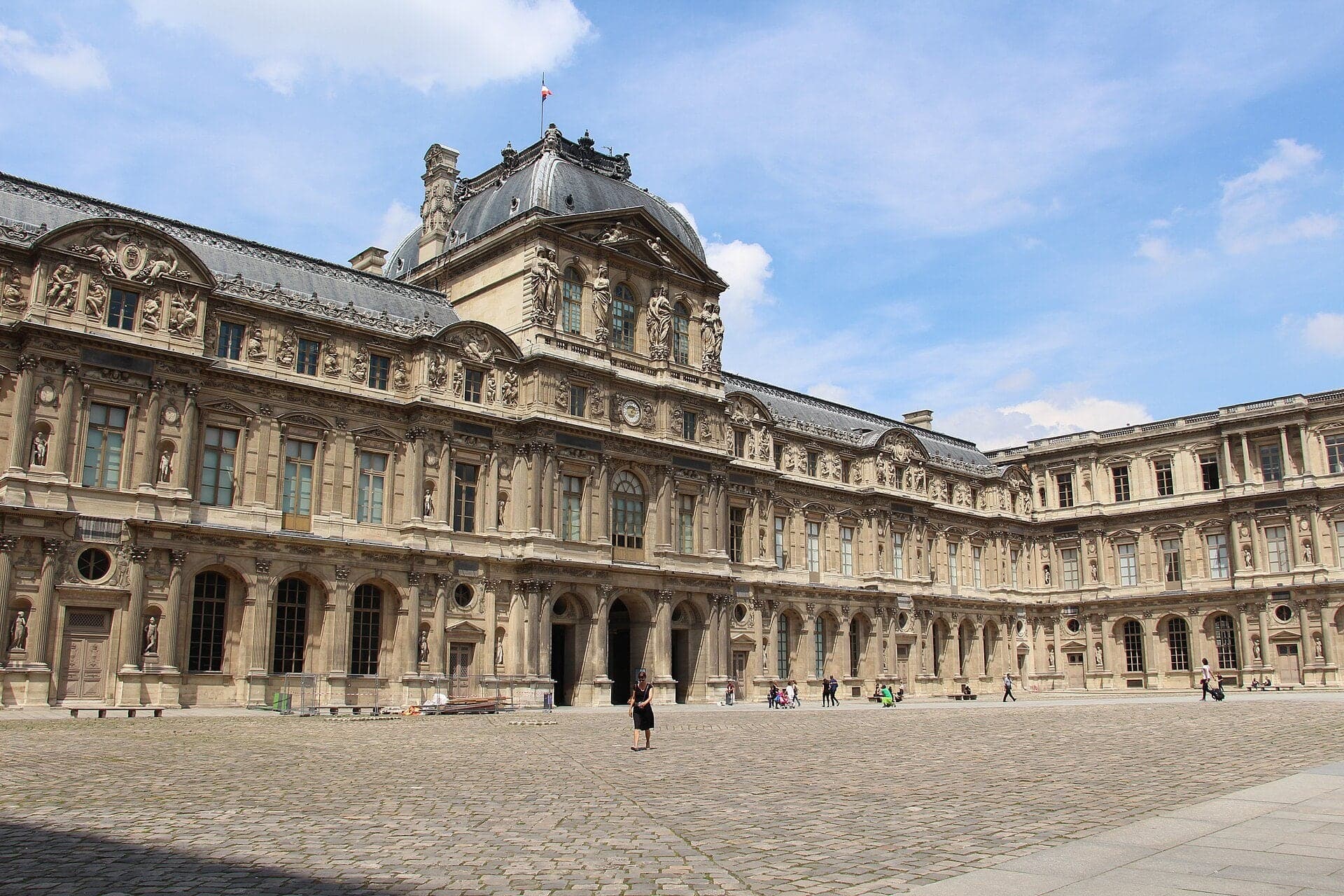
Cour Carrée: Fortress, Palace, Museum
The court where the Louvre began. Its medieval keep lies below ground, its oldest wing dates from the 1540s, and in 1624 the court was planned four times bigger.
- 3
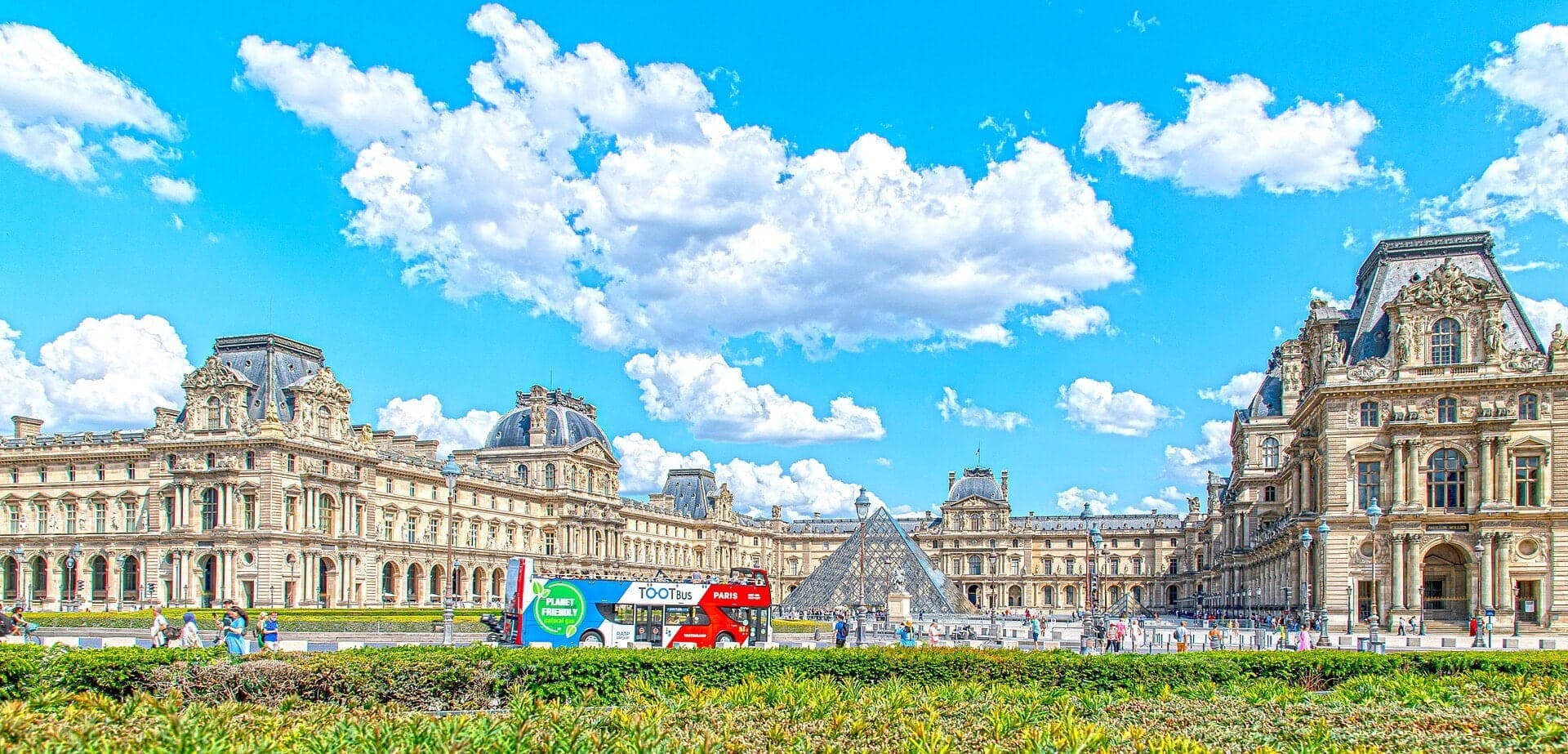
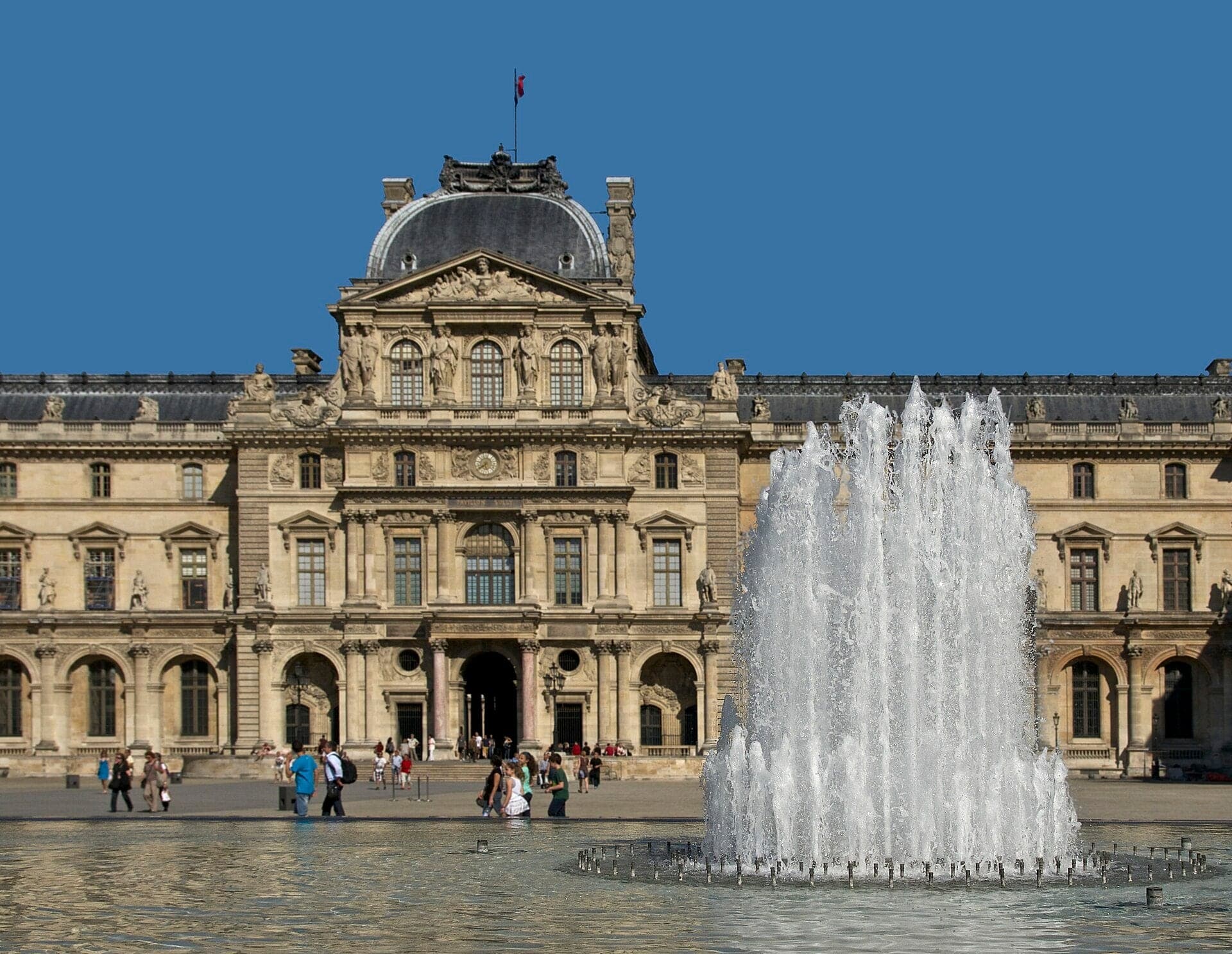
The Pyramid: Glass in the Cour Napoléon
Pei's glass door since 1989. Designed by I. M. Pei and about 21 metres high, it stands where a car park was, and the Louvre says it does not line up with the arch beyond.
- 4
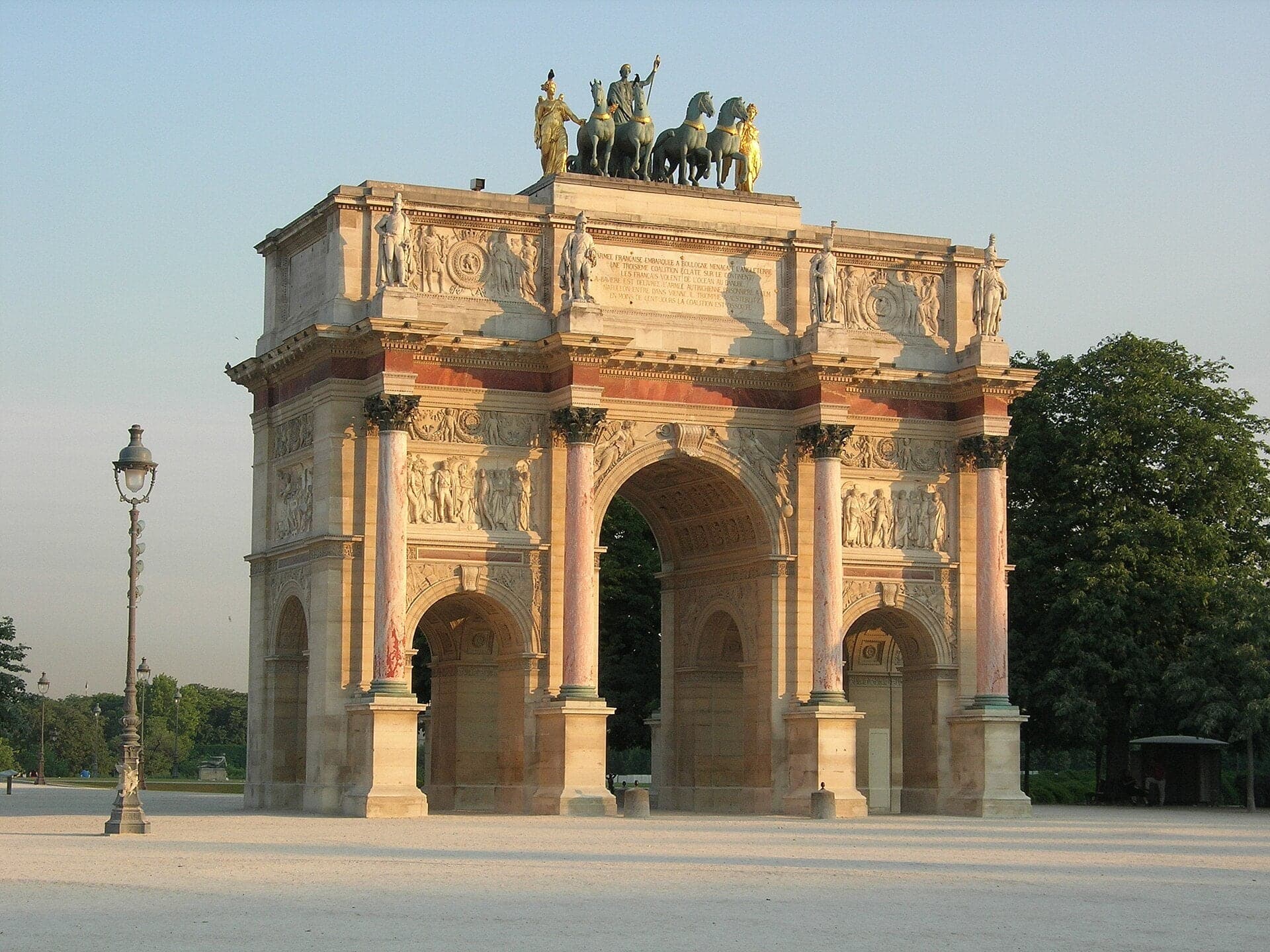
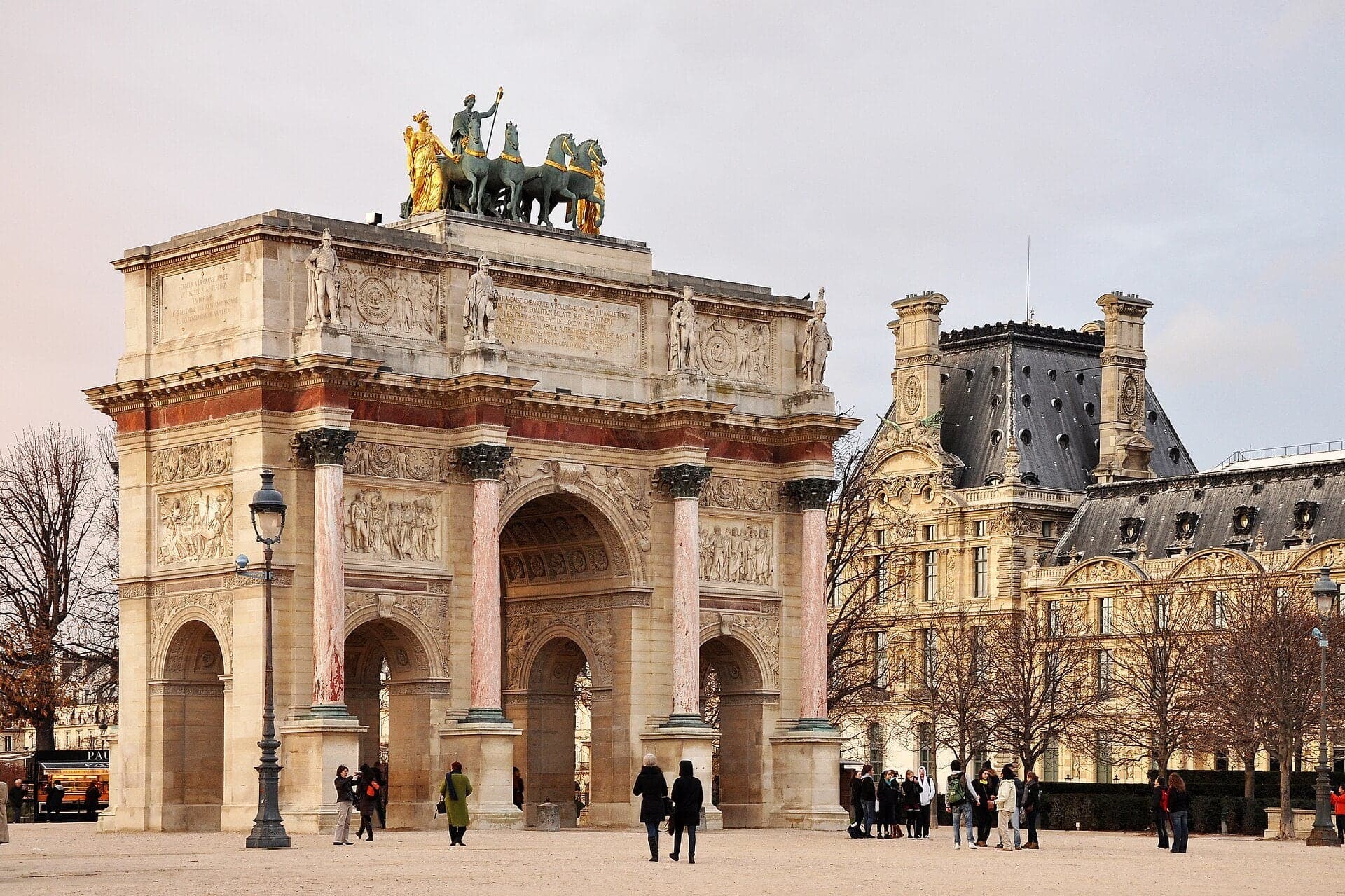
Arc du Carrousel: A Gate to a Vanished Palace
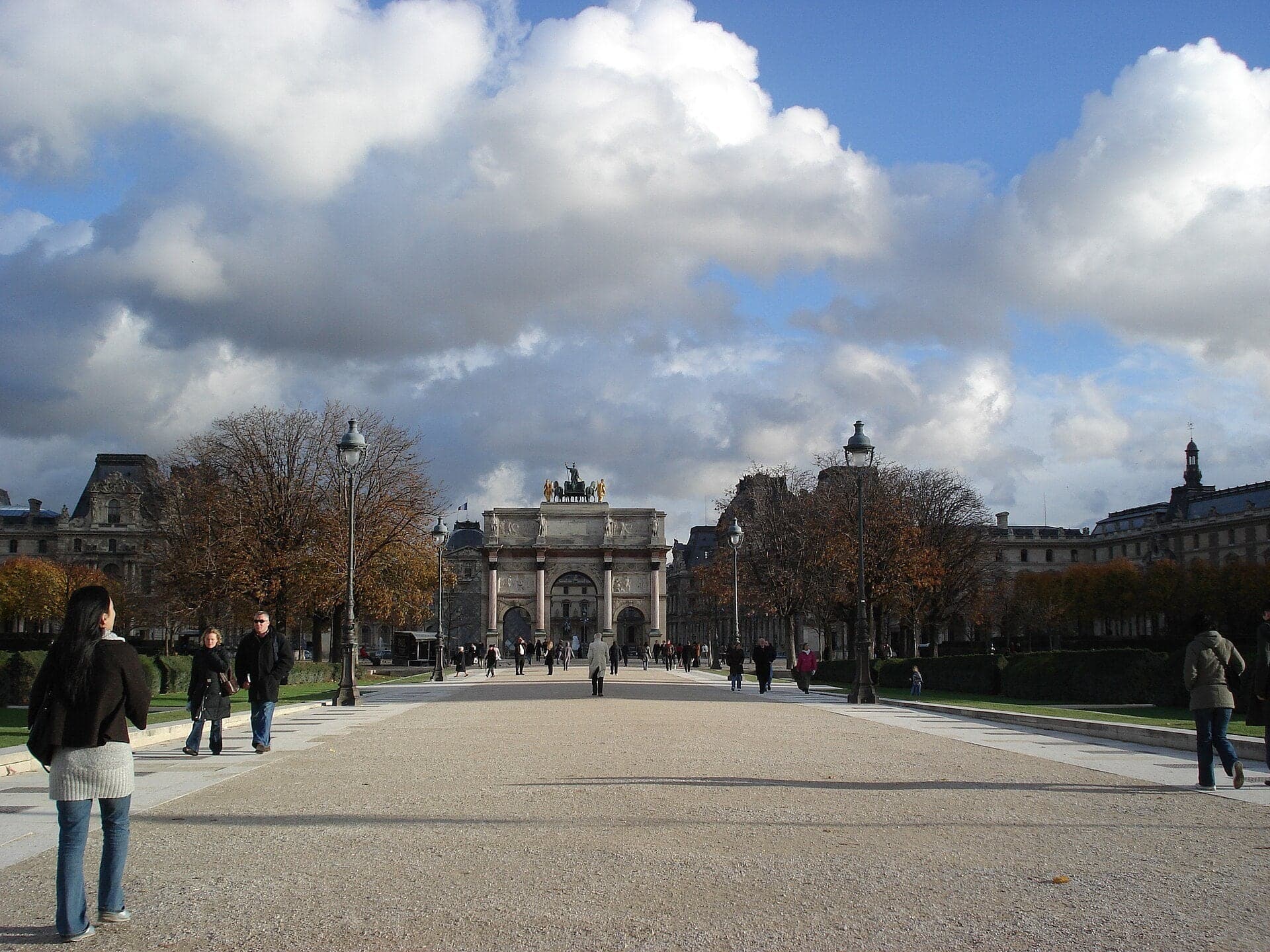
A gate to a burned palace. Built in 1806 to 1808, it fronted the Tuileries Palace, burned in 1871, and the Louvre says it does not line up with the Pyramid.
- 5
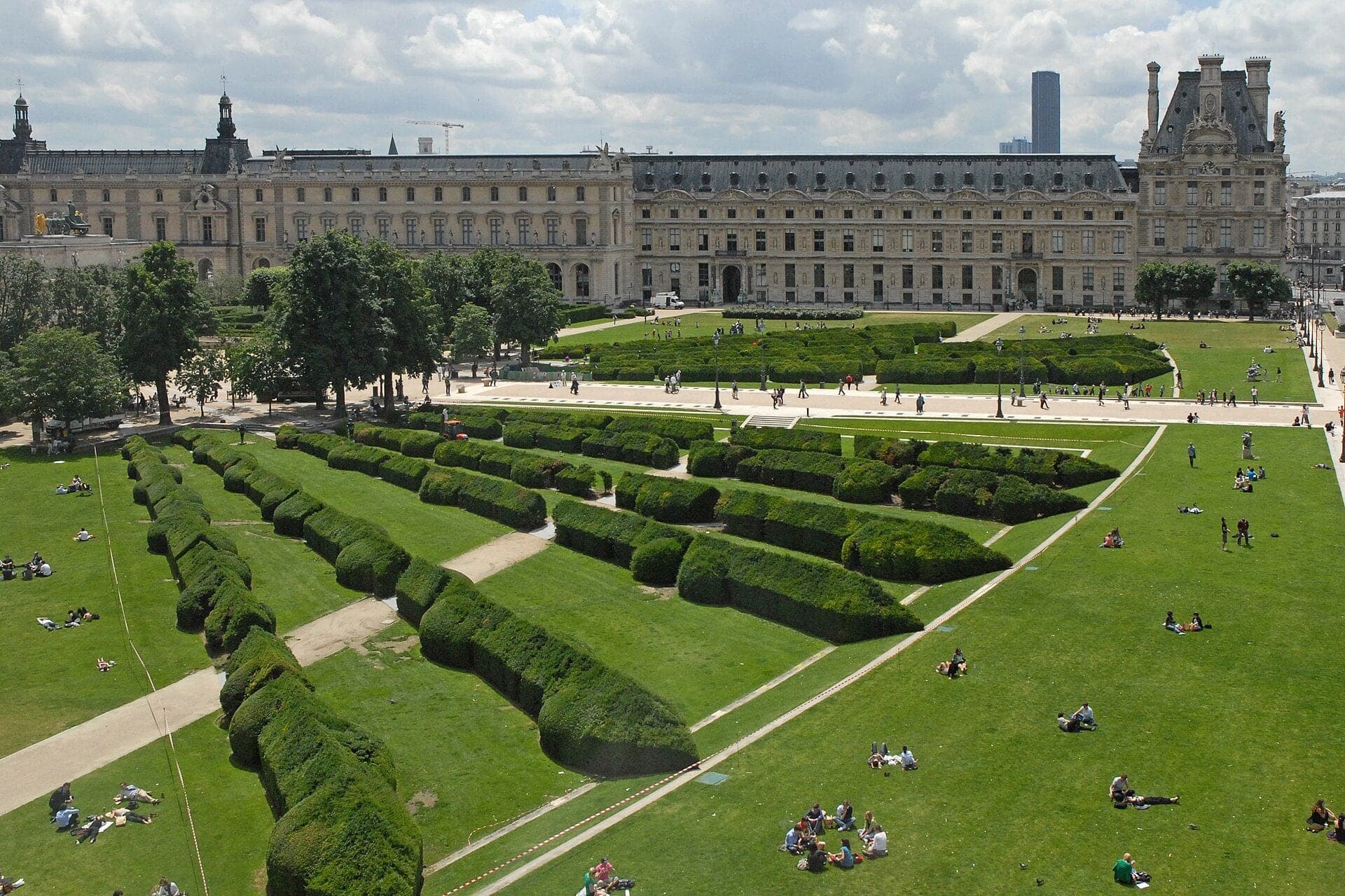
Carrousel Garden: Where the View Opens
The view west opens here. From here the long alley of the Tuileries runs toward the obelisk, over a garden of yew hedges and twenty Maillol bronzes.
- 6
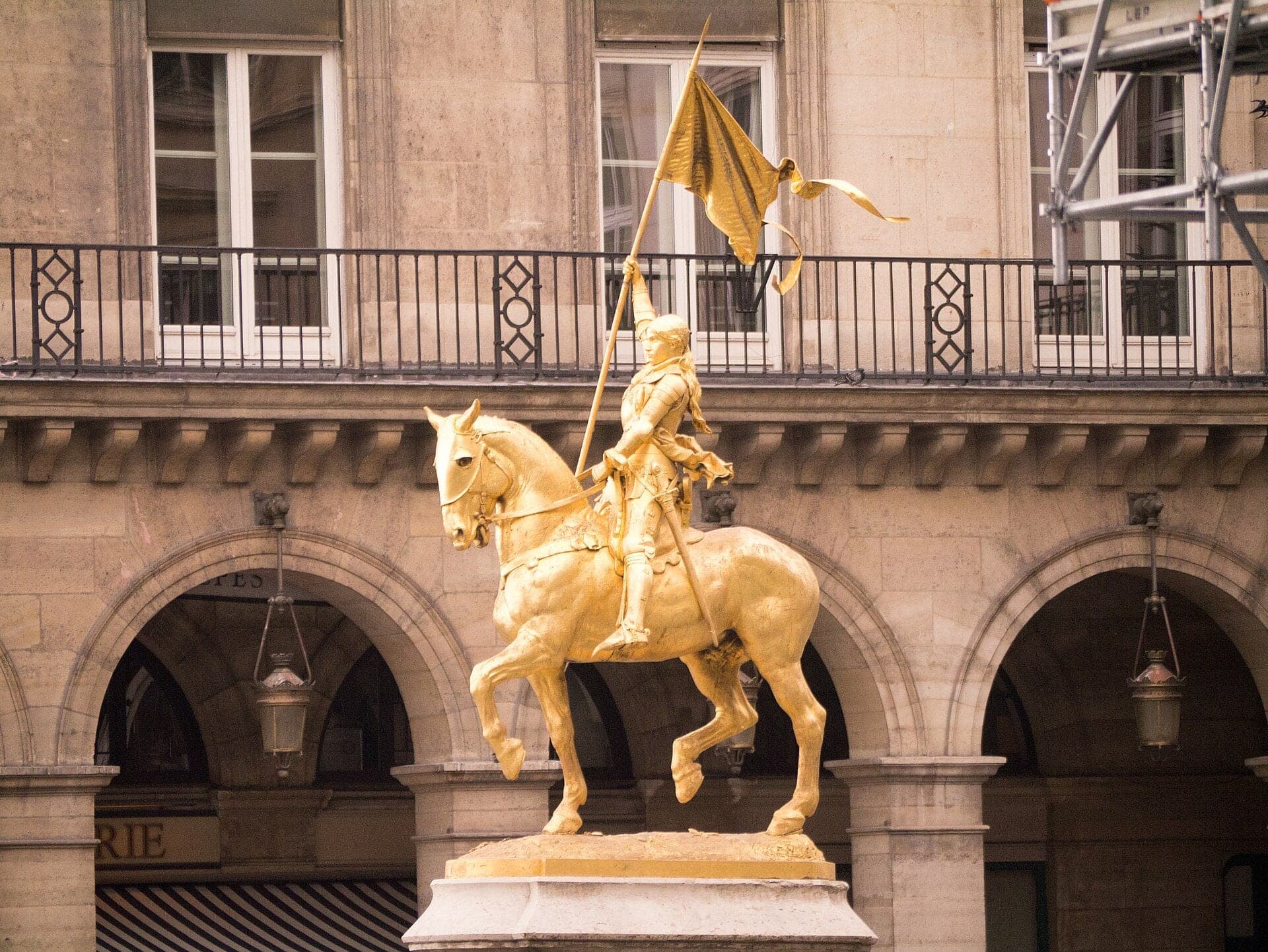
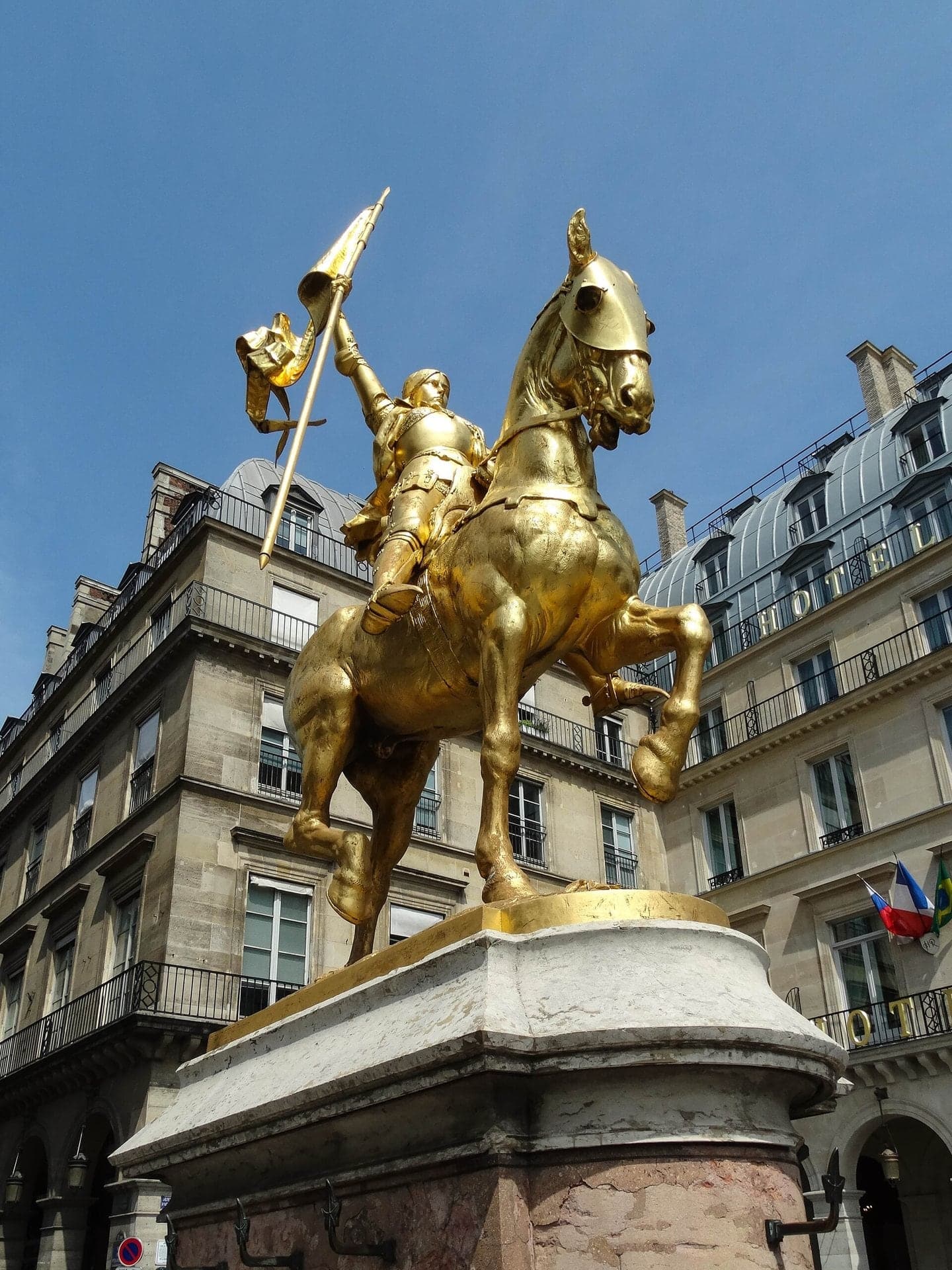
Place des Pyramides: Joan of Arc in Gold
A gilded Joan of Arc of 1874. Frémiet's statue of 1874 stands in a square named for Napoleon's Egyptian campaign, on the Rue de Rivoli.
- 7
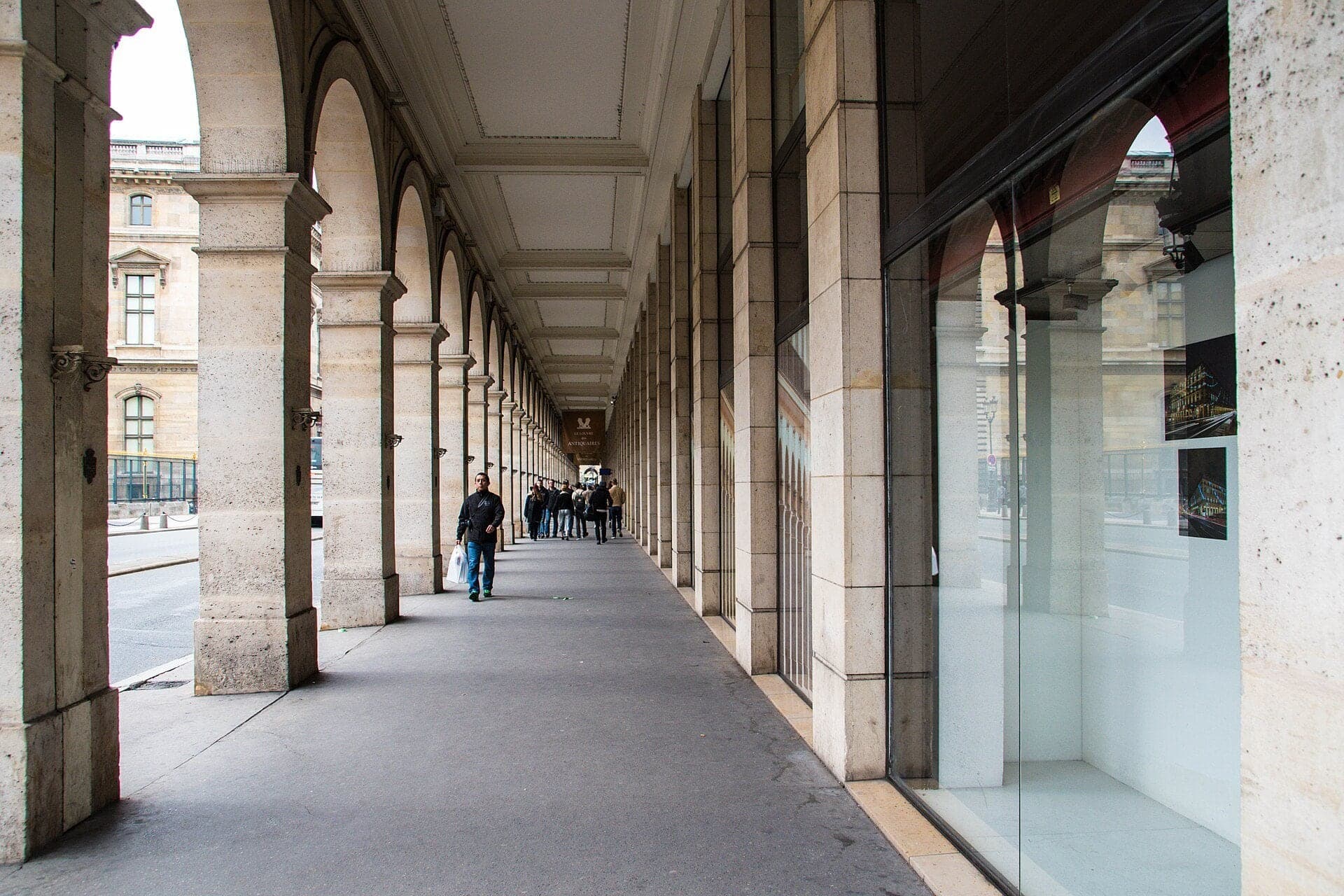
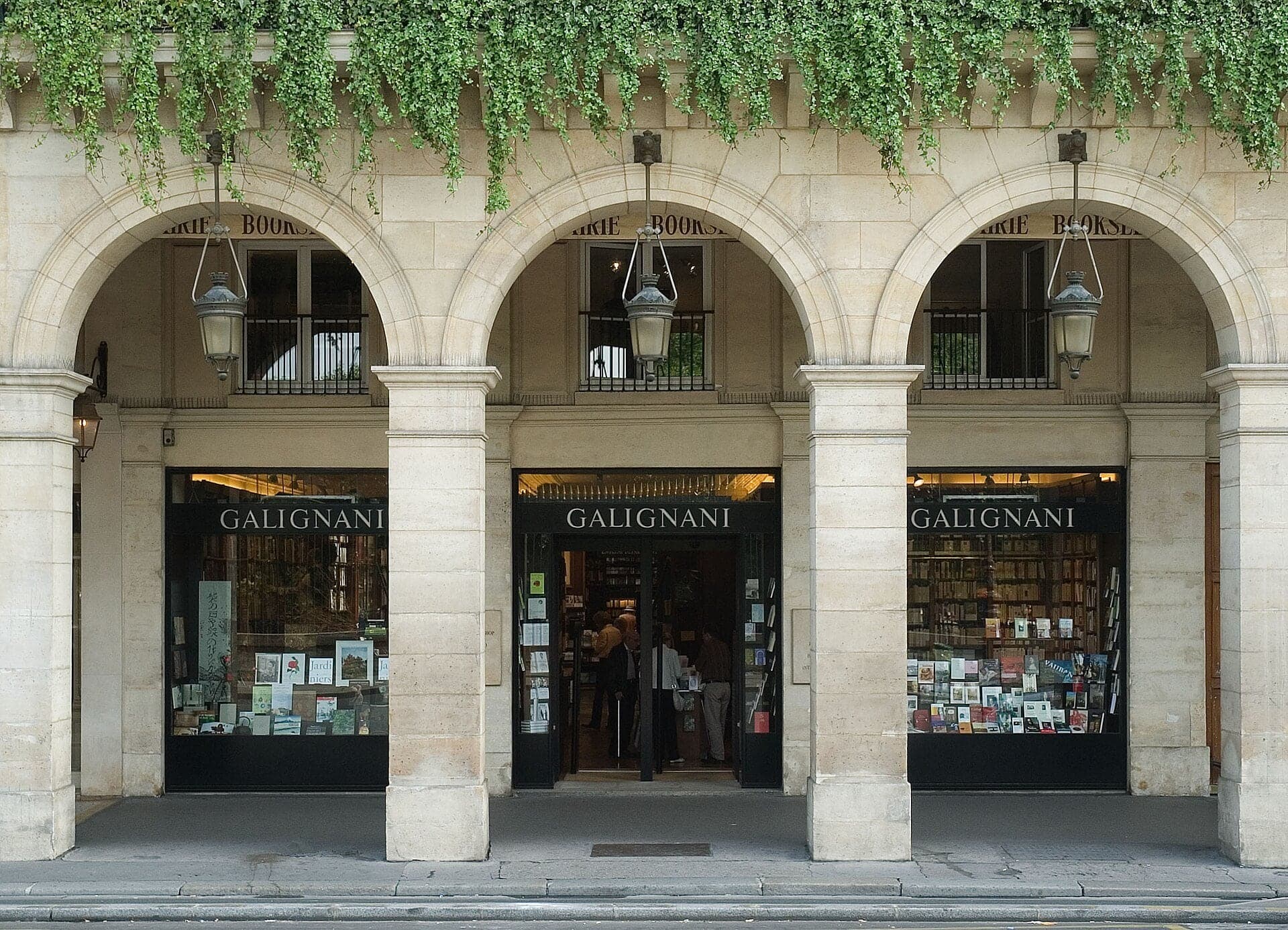
Rue de Rivoli: A Street Built to a Rulebook
One design for a whole street. Same stone, same arcades, same balconies, no ovens or hammers; only the roofs were left free, and they still step.
- 8
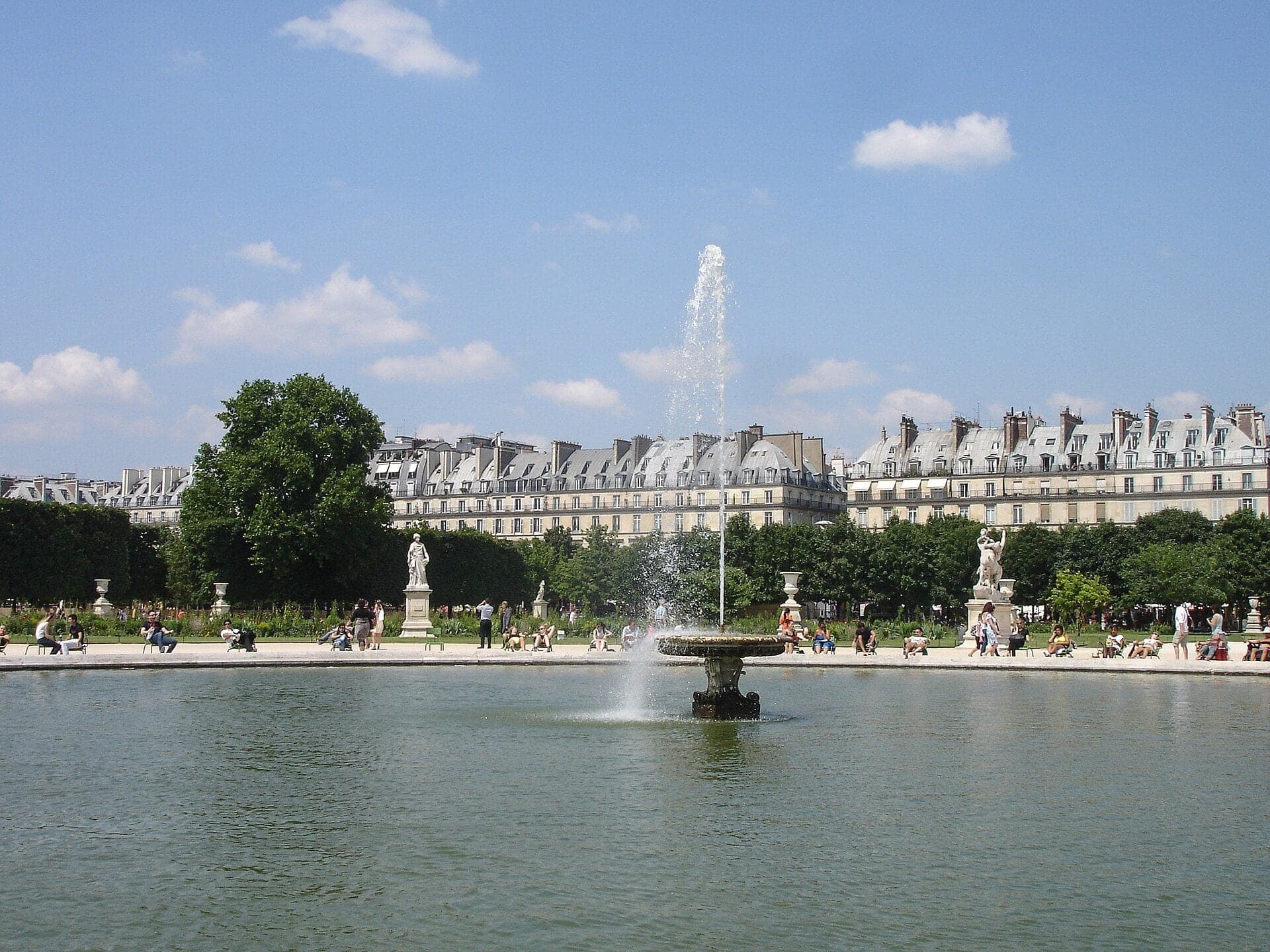
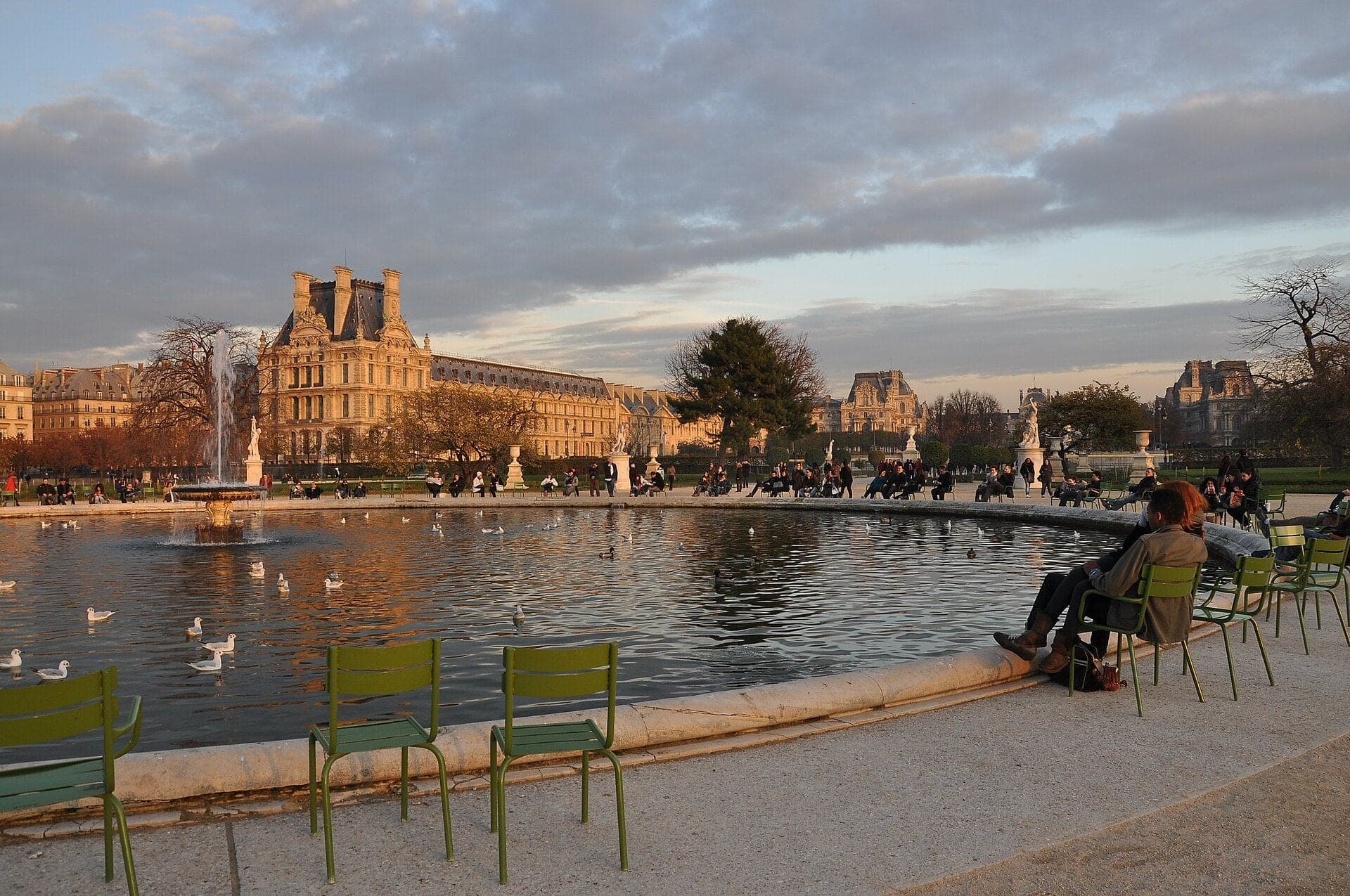
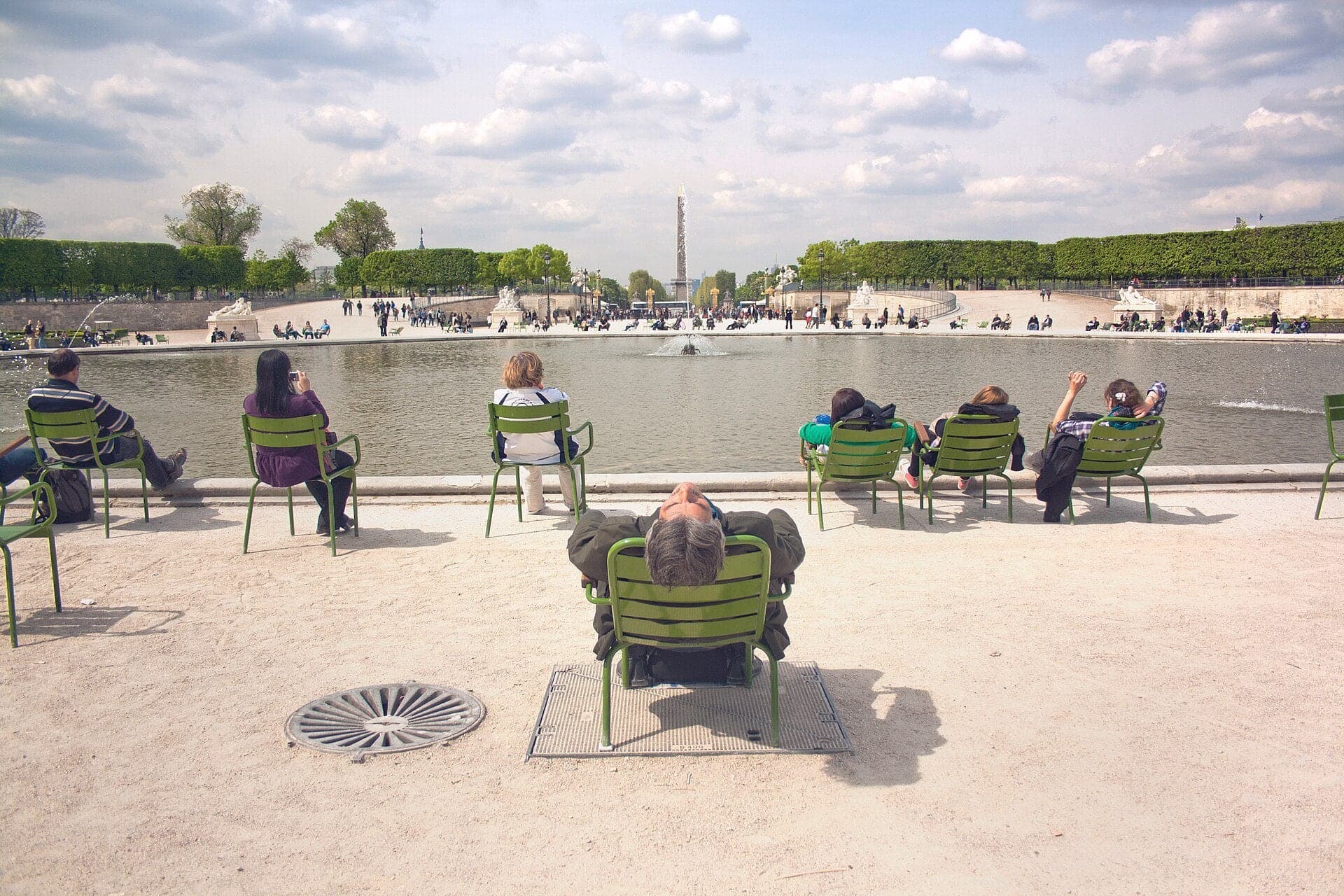
Grand Bassin Rond: Standing on the Line
A round pool on the garden's spine. Here the walk joins Le Nôtre's line through the Tuileries, with the Louvre at one end and an eight-sided pool at the other.
- 9
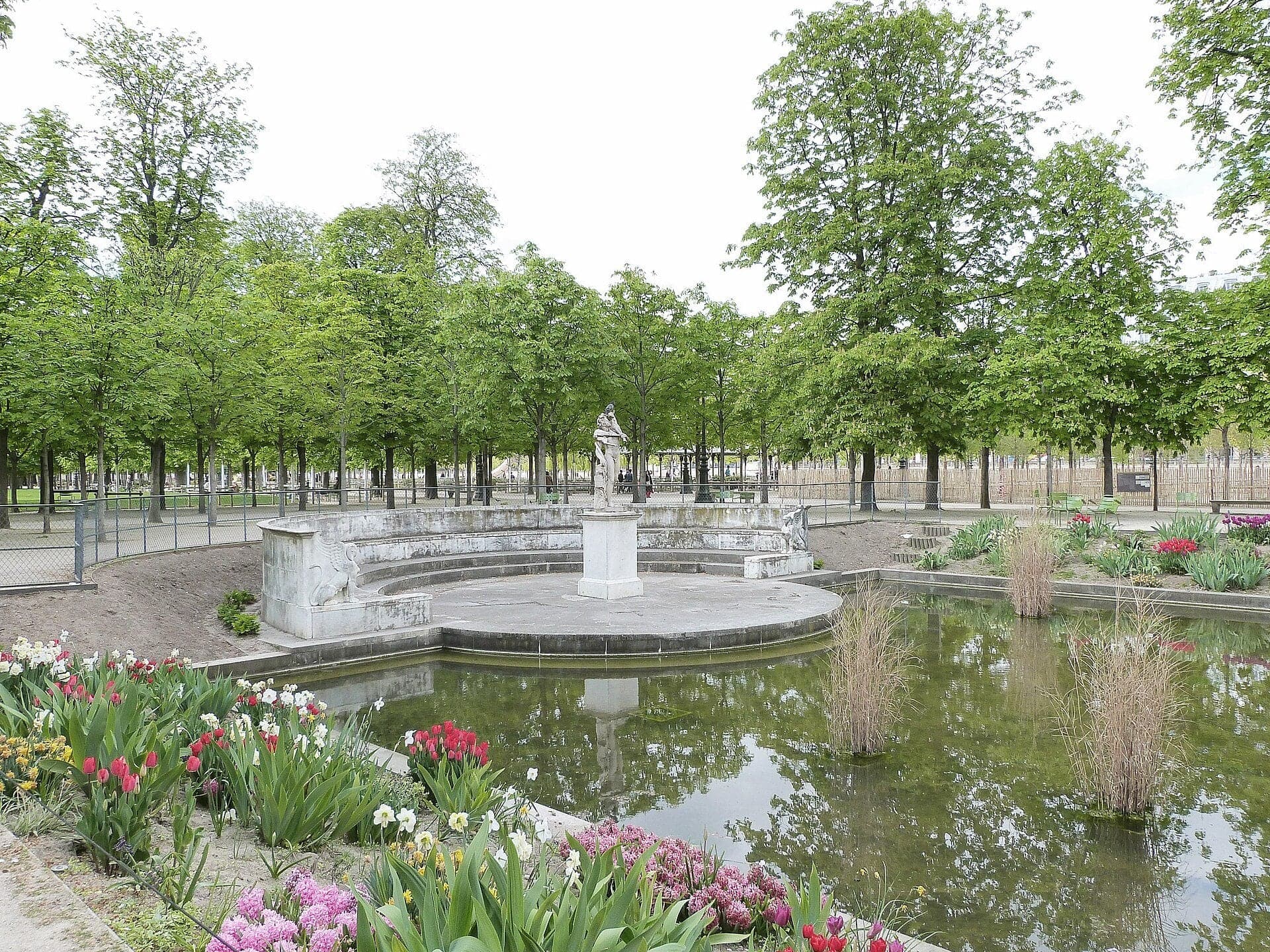
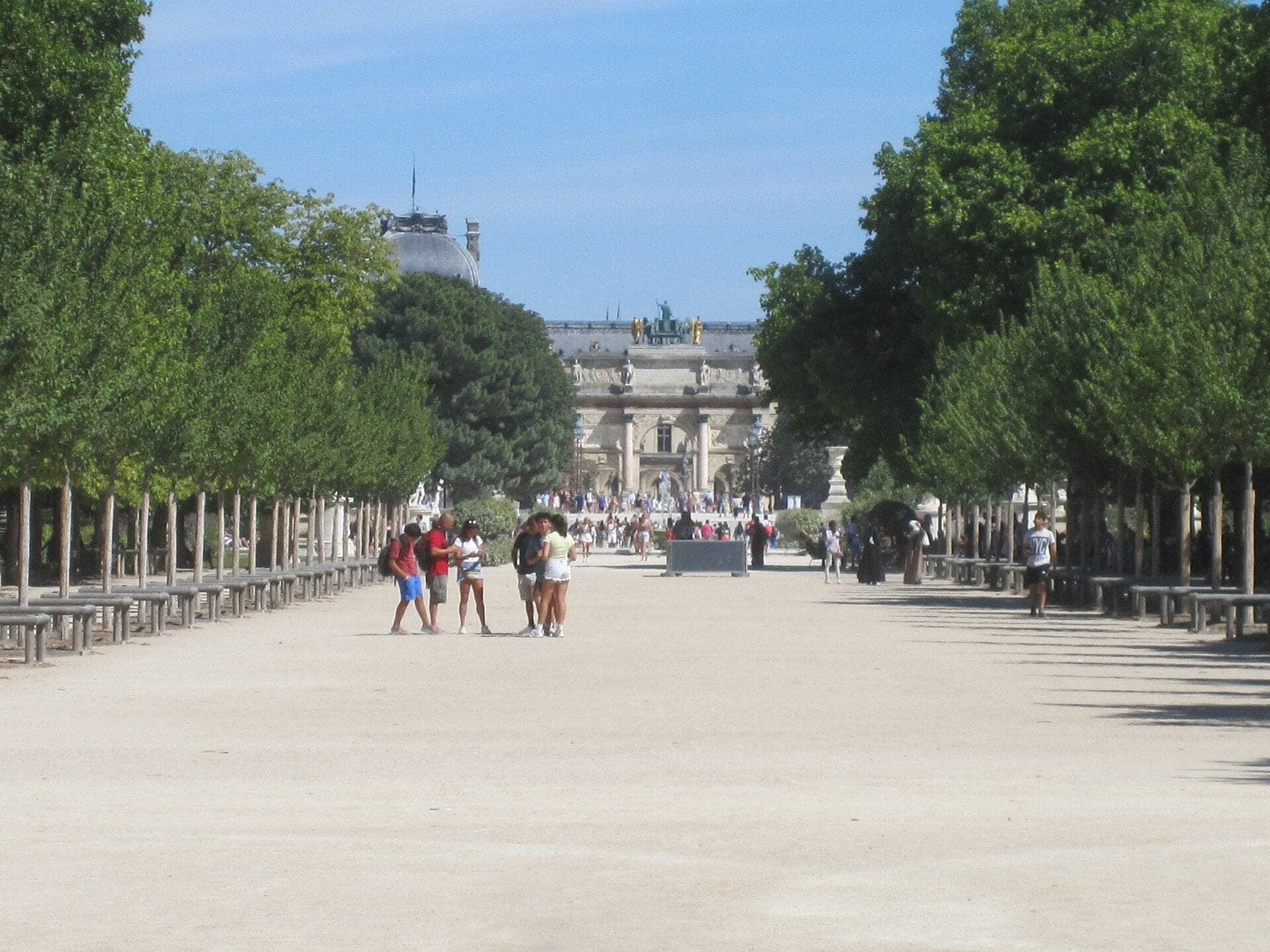
Central Alley: Where the Line Runs Straight
Marble half-circle benches on the central alley. Two white half-circles flank Le Nôtre's central alley, the one stretch of the line as straight as it looks.
- 10
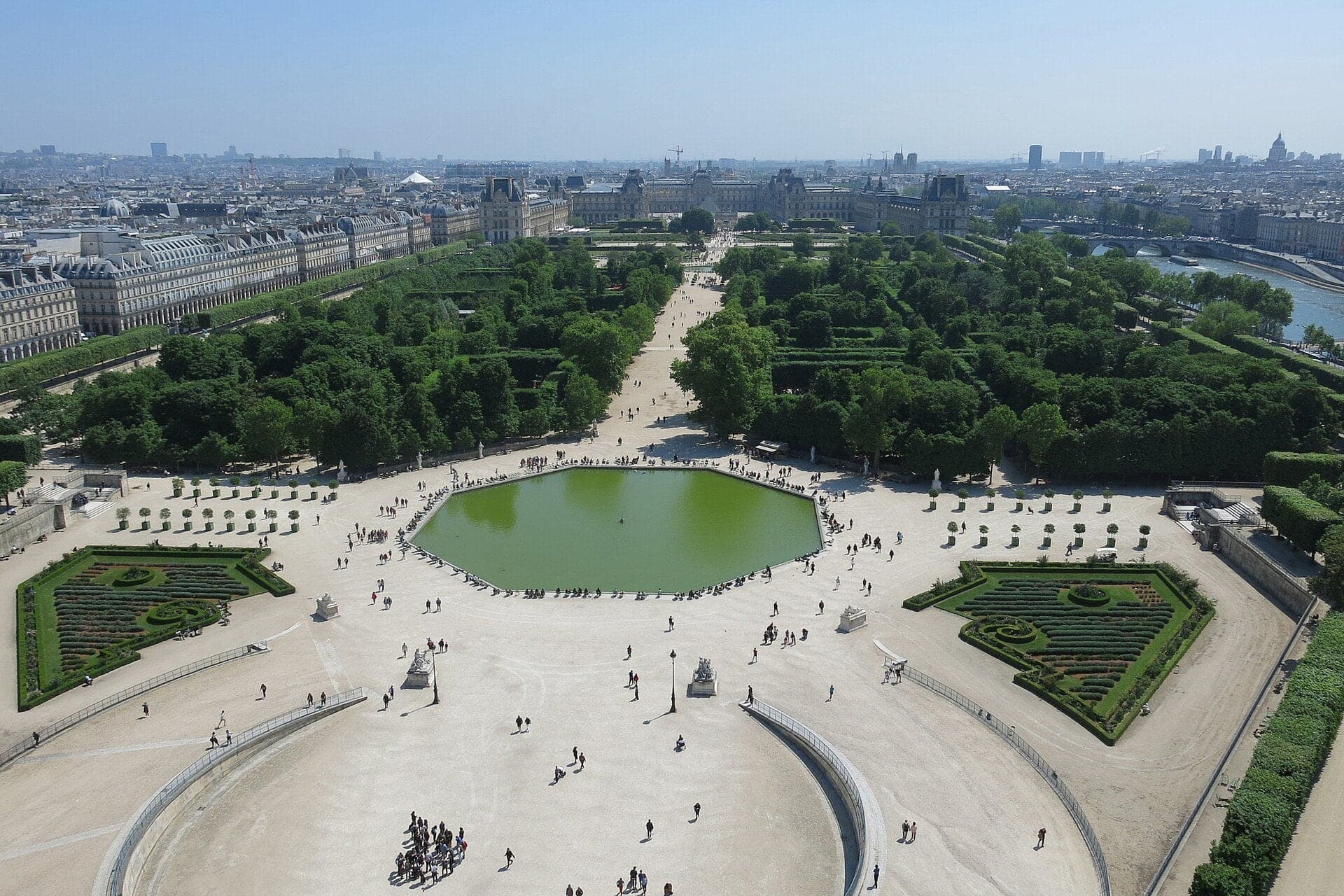
Octagonal Basin: A Trick for a Vanished Window
A pool that fools the eye. Seen from the vanished palace, the garden's pools looked equal; this one is twice the size of the round one up the alley, the Louvre says.
- 11
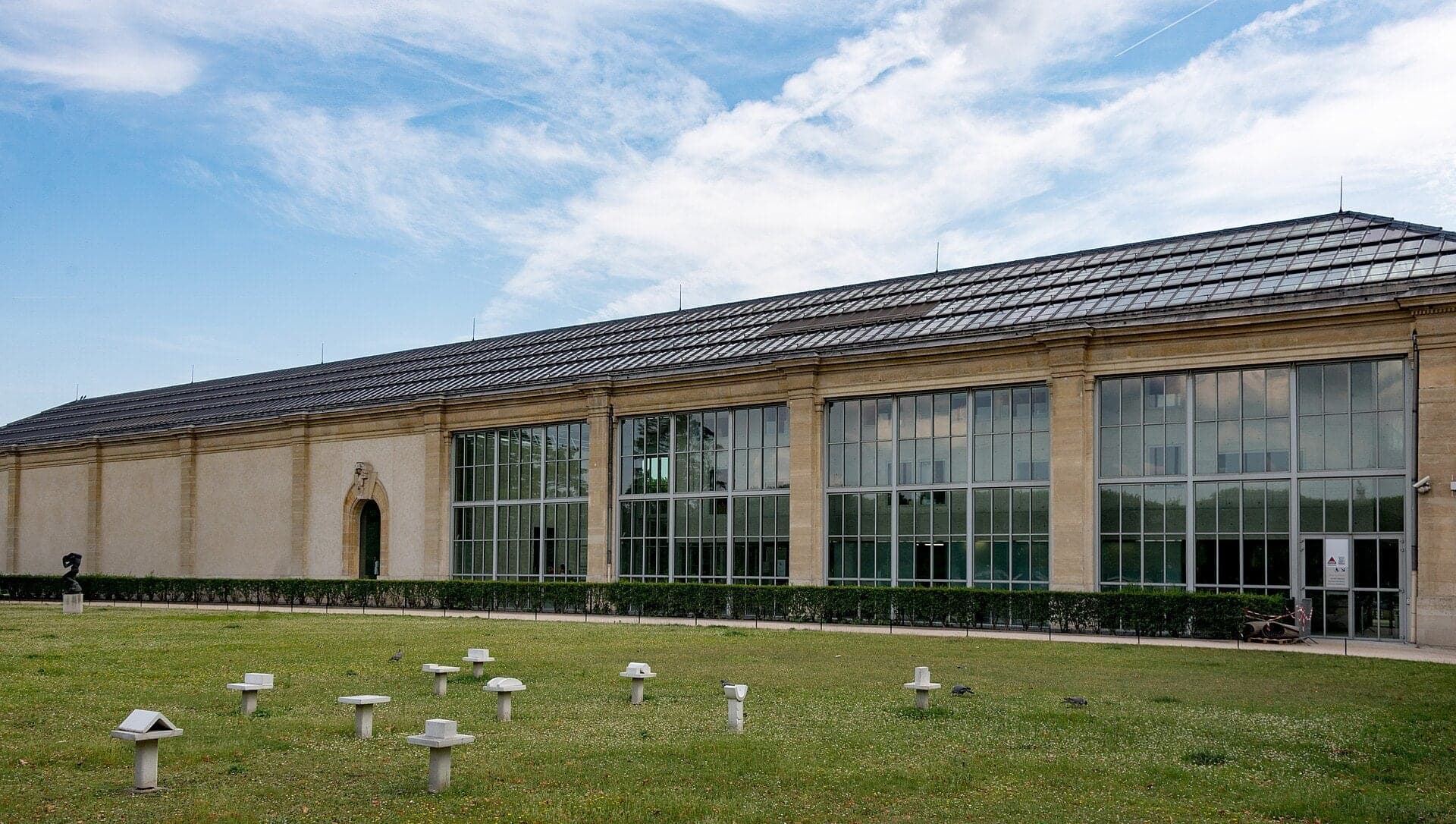
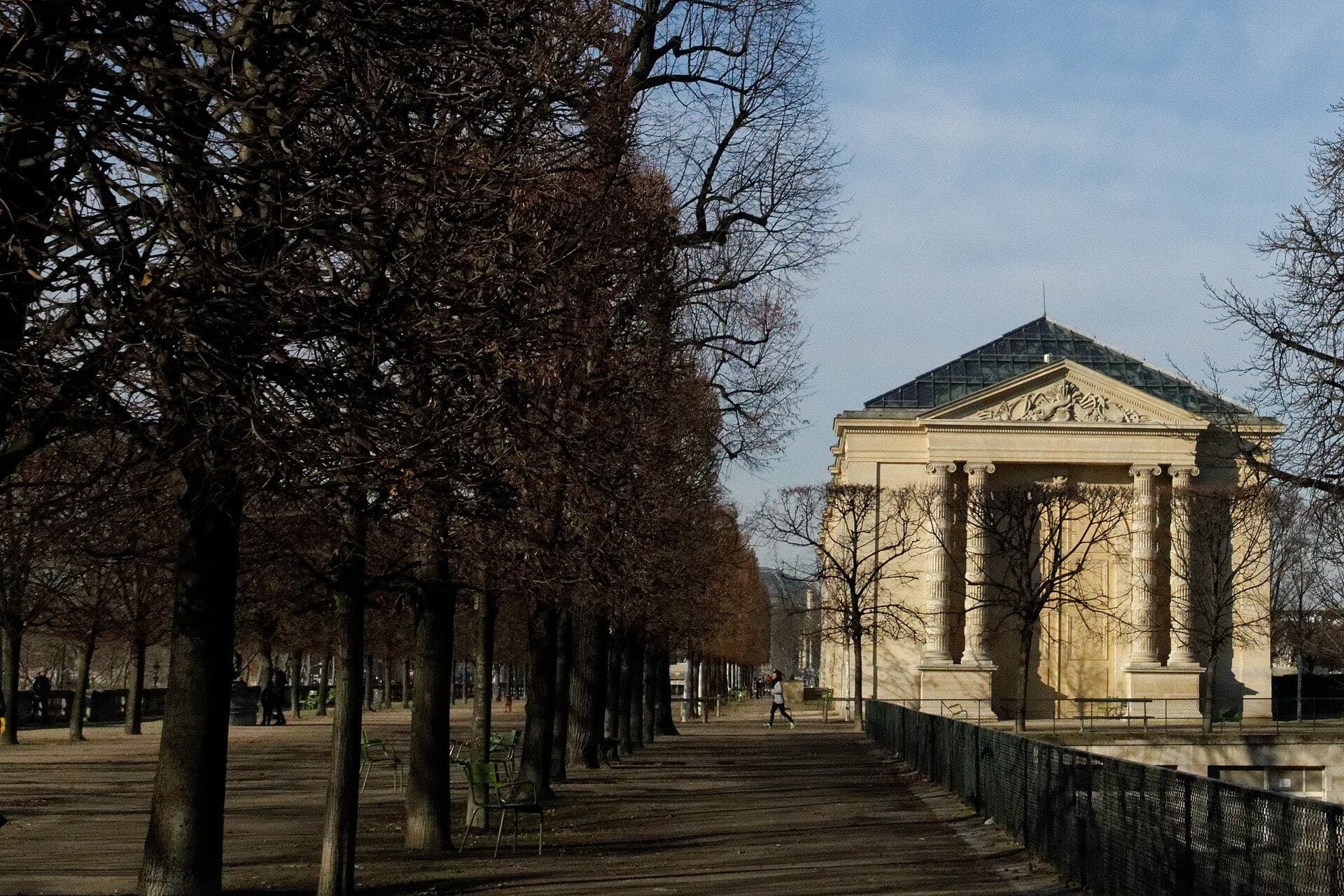
The Orangerie: From Orange Trees to Water Lilies
Orange trees then Monet's water lilies. Monet gave the panels in 1918, the day after the armistice; they were hung here in 1927, months after his death.
- 12
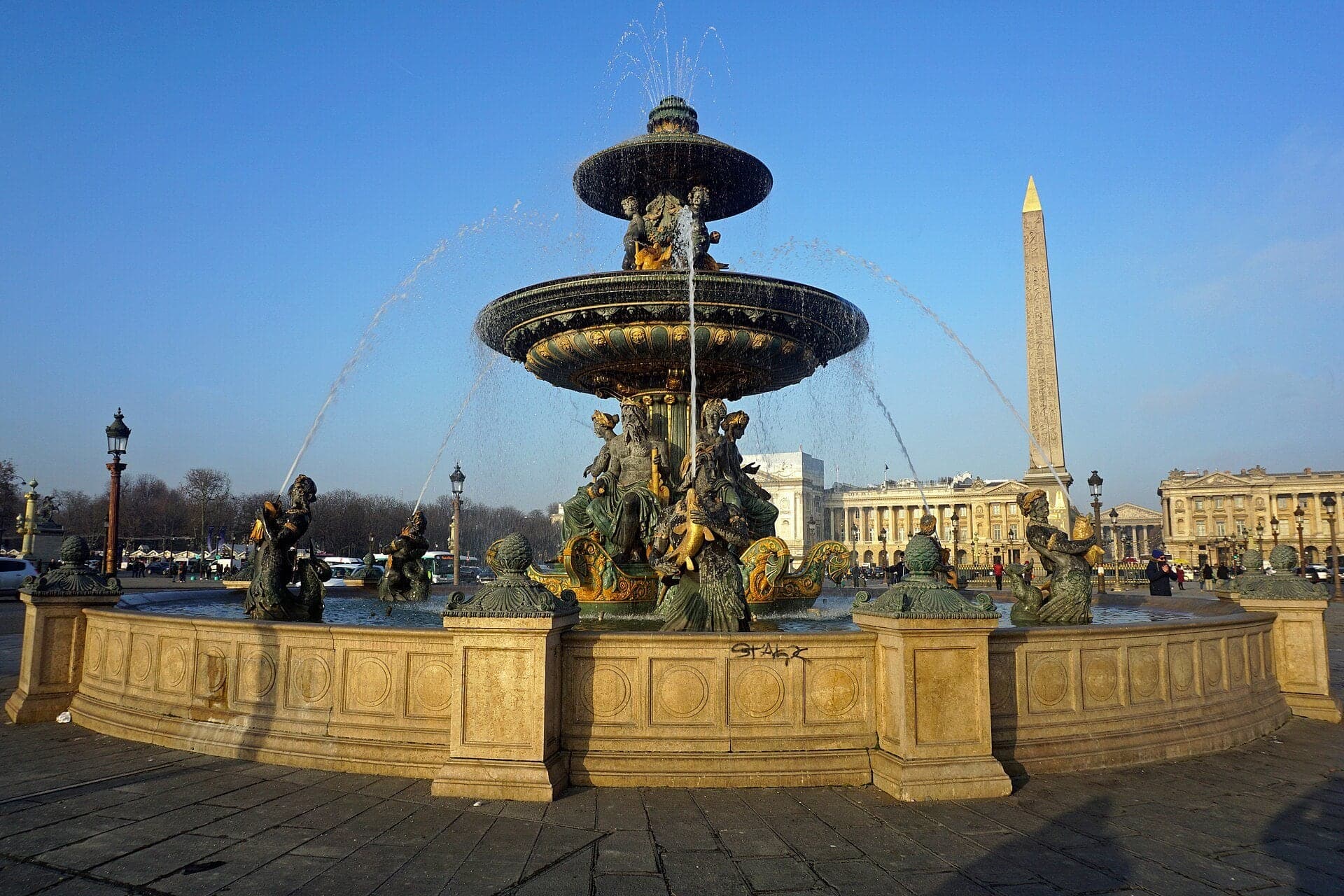
Place de la Concorde: The End of the Line
An obelisk that took no side. Raised in 1836 on the square where Louis XVI was executed, it marks the line running on from the Louvre to the Arc de Triomphe.
Details
Best Time to Visit
Daytime, any day of the week. The courts and gardens are free and open every day; start after 7.30am, when the Cour Carrée opens, and early enough to finish inside the Tuileries before the guards begin clearing it. In October the garden closes at 9pm with clearing from 8.30pm and the Cour Carrée closes at 7.45pm, so start by about 6.30pm at the latest; from November to March the garden closes at 7.30pm, so start by about 5pm. Mornings are quietest at the Pyramid. The Louvre and the Orangerie are closed on Tuesdays; if you want to go inside, avoid Tuesday. The walk enters the garden just after stop 7 and stays in it to stop 11. Hours checked 8 October 2026 on louvre.fr.
Pro Tips
- •Getting to the start: Louvre-Rivoli Metro station (line 1) is about two minutes' walk from the Colonnade; Palais Royal-Musée du Louvre (lines 1 and 7) and Pont Neuf (line 7) are close by. The walk ends beside Concorde station (lines 1, 8 and 12), with Tuileries (line 1) a short walk back along the Rue de Rivoli. Checked 7 October 2026.
- •The Louvre (stop 3): Monday, Thursday, Saturday and Sunday 9am to 6pm, Wednesday and Friday to 9pm, closed Tuesday; EUR 22 for European Economic Area residents and citizens, EUR 32 for others, free under 18. Book a timed ticket on louvre.fr and never buy from street sellers or look-alike websites. Checked 7 October 2026.
- •The Musée de l'Orangerie (stop 11) and Monet's Water Lilies: 9am to 6pm, closed Tuesday, EUR 12.50 online or EUR 11 at the door. Checked 7 October 2026.
- •The Hôtel de la Marine (stop 12): daily 10.30am to 7pm, Friday to 9.30pm; EUR 9 for the express route through the salons to the loggia over the square, EUR 17 for the full route. Same-day tickets only. Checked 7 October 2026.
- •Toy sailing boats on the Octagonal Basin (stop 10): EUR 6 for 30 minutes, usually Wednesday, Friday, Saturday, Sunday and holidays, 11am to 6pm outside school holidays; may change in the cold months. Checked 7 October 2026.
- •To stand at the foot of the obelisk after the walk, cross the Place de la Concorde only at the signalled crossings, with the lights.
- •To walk under the Rue de Rivoli arcades, cross the Rue de Rivoli at a signalled crossing before or after the tour; the walk itself stays on the garden side.
- •The Tuileries has public toilets by the Concorde entrance and by the Rivoli entrance opposite the Rue du 29 Juillet, which is the gate the walk takes into the garden after stop 7 (louvre.fr, checked 8 October 2026).
- •The Olympic cauldron of the Paris 2024 Games comes back to the Tuileries only in summer: in 2026 from 21 June to 14 September, with a last season planned from 21 June 2027 (Préfecture de police and EDF, 16 June 2026; checked 8 October 2026). Outside those dates it is not in the garden.
Safety & Precautions
- •The way from stop 1 into the Cour Carrée is the covered passage through the middle of the Colonnade. It is not confirmed open at all hours and may be open only in the daytime. If it is shut, walk round by the Rue de Rivoli side of the palace and through the Passage Richelieu into the Cour Napoléon (stop 3), then go east through the passage under the clock pavilion into the Cour Carrée for stop 2, and come back.
- •The Cour Carrée is open 7.30am to 7.45pm (checked 7 October 2026). Before or after those hours, start at stop 3 by the Pyramid.
- •The Tuileries garden (stops 8 to 11) is open 7am to 9pm in April, May, September and October, 7.30am to 7.30pm from November to March and 7am to 11pm from June to August (in summer 2026, while the Olympic cauldron was in the garden, it closed earlier, at 10.30pm until July and as early as 8.30pm in September); guards begin clearing it 30 minutes before closing, so in October be out by 8.30pm and from November by 7pm (louvre.fr, checked 8 October 2026). Do not enter after clearing has started. If the garden is closed, stay on the Rue de Rivoli sidewalk on the garden side after stop 7 and walk on along the railing to the Place de la Concorde, about 750 meters; you will see the garden only through it, and you can play stops 8 to 11 by hand from the sidewalk; they will not start on their own out there.
- •Steps: about seven steps at the end of the passage under the clock pavilion (between stops 2 and 3) and a flight of steps just inside the garden gate opposite the Rue du 29 Juillet (between stops 7 and 8). A ramp is mapped beside the steps at that gate, but we have not checked it on the ground; if you need a step-free way in, ask a garden guard. The straight way on from stop 5 along the central alley is not step-free: it has a flight of about twelve steps. Paths in the Tuileries are gravel, slow going for buggies and wheelchairs, and soft after rain.
- •On the Rue de Rivoli (stops 6 and 7) a busy bicycle lane runs along the curb; stand back from it.
- •Pickpockets work the queues at the Pyramid, the crowds at the Joan of Arc statue and the Place de la Concorde. Keep bags closed and in front of you.
- •Paths in the Tuileries, including those round the round pool and the octagonal pool (stops 8 and 10), can be fenced off for temporary events; follow the garden's own signs.
- •The Louvre's courts can be closed or fenced at short notice for security reasons or events.
- •The City of Paris chose a redesign of the Place de la Concorde in March 2025, with works planned to start from late 2025 or 2026 and run for several years (City of Paris, 27 March 2025). Expect fencing or diversions at stop 12, and stay on the sidewalks.
- •The Place de la Concorde is a busy traffic circle. The walk ends on the sidewalk outside the garden gate and crosses no road there. The only road the walk crosses is the bus and taxi road of the Place du Carrousel, between the pyramid and the arch, at the lights.
Travel advisory: Exercise Increased Caution (Level 2).
Gallery
Related Reading
Go deeper on what you'll see, hear, and walk through.
Overview
Best Self-Guided Walking Tours in Paris (2026)
4 min
Overview
One Day in Paris: A Walkable Right-Bank-to-Latin-Quarter Itinerary (2026)
5 min
Overview
Paris Travel Guide: How Many Days, Getting Around, When to Go (2026)
5 min
Thematic
Best Architecture Walking Tours in Paris (2026)
2 min
Thematic
Paris in Layers: How Five Centuries of Power Left the City We Walk
7 min
Thematic
The Palais Garnier: The Machine Behind the Marble
3 min
Companion
Mitterrand's Grand Louvre: A Republic Writes Itself in Glass
4 min
Companion
Reading Haussmann's Paris: A Field Guide to the Marks He Left
4 min
Deep dive
The Louvre Pyramid: Why a President Put Glass in a Palace, and Why Paris Argued
3 min
Read the walk
The full story of Louvre and Tuileries: The Line That Never Lined Up, in words. Prefer to listen? Play it narrated, from home or on location.
Introduction
Paris, the capital of France, has a famous straight line running through its middle. From the Louvre, once the palace of the French kings and now a museum, one long view runs west through the Tuileries garden to the obelisk on the Place de la Concorde, and on beyond it. It looks drawn with a ruler. It was not. The Louvre itself says that because of the bend of the Seine, the palace and its garden never quite lined up. For more than three hundred years, kings, an emperor, republics and a president kept adding pieces to the line and patching the joins.
This walk follows that line, from the palace's grand east front to the Place de la Concorde. On the way: a buried fortress, a glass pyramid, an arch with no palace behind it, a street built to a rulebook and a garden made to fool the eye.
Three people come back along the way. Louis the Fourteenth, the king who left the Louvre for good. André Le Nôtre, his gardener, who drew the long alley of the Tuileries. And I. M. Pei, the architect of the glass pyramid, who said he took his lead from Le Nôtre.
The walk is twelve stops over about two kilometers, about a mile and a quarter, and takes about seventy-five minutes. It is flat, with two short flights of steps and gravel paths in the garden.
1. Louvre Colonnade: The Front the King Left
Welcome to the Louvre, and to its grandest face. Stop on the paved space in front of the long row of columns, with the palace before you and a church across the road behind you. This east front is called the Colonnade. The museum inside is ticketed and well worth a visit; its main door is the glass pyramid, two stops on.
Look along the front: a long line of tall columns standing out from the wall, with shadow behind them. The Ministry of Culture calls it the historic entrance of the Louvre, and a masterpiece of French classical architecture.
Its design was a contest. A celebrated Italian sculptor was brought to Paris to design this front, and his plans were set aside. In sixteen sixty-seven a committee of three took over, and work began that same year. The outside was largely done by the middle of the sixteen seventies.
By then the king it was built for had gone. Louis the Fourteenth left the Louvre in sixteen sixty-six and never lived here again. Building here stopped in the late sixteen seventies, as the effort moved to Versailles. So the grandest door of the palace opened onto a palace its king had left.
It may open again. In May twenty twenty-six the Ministry of Culture chose a design for a new entrance to the museum through this front, with new planting in front of it. No date for the works has been given.
Behind you, across the road, stands the church of Saint-Germain-l'Auxerrois. Tradition says its bells gave the signal for the Saint Bartholomew's Day massacre, in fifteen seventy-two.
Follow the route through the passage in the middle of the colonnade, into the courtyard behind it. If that passage is shut, walk round to the glass pyramid, stop three, and visit this court from there.
2. Cour Carrée: Fortress, Palace, Museum
Walk on into the great courtyard and stop on the paving, facing the tall pavilion with the clock in the middle of the far side. This is the Cour Carrée, the Square Court. It is free, and open from half past seven in the morning to a quarter to eight at night.
The Louvre began here as a fortress. It went up from around eleven ninety, with a great round keep, a tower about fifteen meters across, ringed by a dry ditch. That whole castle fitted into one corner of this court. The keep was pulled down in fifteen twenty-eight, on the order of King Francis the First, to make way for a palace. When archaeologists dug here in the nineteen eighties, they found the keep's base still standing about seven meters high. You cannot see it from the court: it lies below ground, and is shown inside the museum.
The palace then grew, piece by piece. The oldest wing of this court, on the side of the clock pavilion, was begun in the fifteen forties. In sixteen twenty-four the crown decided to make the court four times as big as the old castle yard, and the clock pavilion itself was designed that year. In sixteen sixty, Louis the Fourteenth, the king of the colonnade, ordered a block of old houses beside the palace to be cleared. Six years later he left.
So this court has had three lives. A fortress, then a palace, and then, during the Revolution, from seventeen ninety-three, a museum, when the first rooms were opened to the public. The court around you was restored and reopened in nineteen eighty-six, early in the great works you will see at the next stop.
The tall pavilion is your way out. Follow the route through the passage under the clock to the glass pyramid. There are a few steps at the far end of the passage.
3. The Pyramid: Glass in the Cour Napoléon
Walk on out of the passage into the big open court, and stop with the glass pyramid ahead of you. This is the Cour Napoléon, and the pyramid is the museum's main door. The Louvre is ticketed, closed on Tuesdays, and worth a long visit; the details are on this stop's card.
Look at the glass. The pyramid is about twenty-one meters high and thirty-five meters wide at its base. The glass was made extra white and clear for it, after two years of research. It hangs on a web of thin steel bars and joints, about ninety-five tonnes of steel, put together by firms that rigged sailing boats. Around it, three small pyramids light the passages to the museum's three wings.
Before all this, the court held two small gardens and a car park, and the wing on the Rue de Rivoli side held the offices of the Finance Ministry. In nineteen eighty-one France's president announced that the ministry would leave and the whole palace would become the museum. In July nineteen eighty-three, with the president's backing, the architect I. M. Pei was chosen, and the pyramid was inaugurated on the twenty-ninth of March, nineteen eighty-nine. Pei said that he had worked more as a landscape designer than as an architect, and had followed Le Nôtre, the king's gardener, more than anyone else.
When the court was dug up for the works, archaeologists found a medieval neighborhood beneath it, with streets, a church and a hospital.
Pei also found a problem. The Louvre says that because of the bend of the Seine, the palace and the Tuileries garden never lined up, and so the triumphal arch in the next court and this pyramid do not line up either. Keep that in mind.
Follow the route past the pyramid toward the arch, and cross the road of the Place du Carrousel at the lights, one lane after the other.
4. Arc du Carrousel: A Gate to a Vanished Palace
Once you are safely across the road, walk on and stop with the arch straight ahead of you. This is the Arc du Carrousel. It is free and open air.
Look at its colors: three archways, columns of red marble, carved panels of battles, and on top two gilded figures, Victory and Peace, driving a chariot drawn by four horses. Napoleon had it built in eighteen oh six to eighteen oh eight, on the model of a Roman triumphal arch. The first horses on top were the famous bronze horses of Saint Mark's, brought from Venice; in eighteen fifteen they went home, and the present group has stood there since eighteen twenty-seven.
It was built as a gateway, to the parade court of the Tuileries Palace, which stood just beyond it and closed off this whole view. In eighteen seventy-one, during the Paris Commune, the palace was set on fire. It was never rebuilt. Its blackened walls stood for more than a decade, until the ruins were cleared in eighteen eighty-three. The arch was left standing on its own. Now it is a gate with nothing behind it but a garden.
Now turn round and look back toward the glass pyramid. On the paving between the two stands a statue of Louis the Fourteenth, the king who left the Louvre. The Louvre says that because the arch and the pyramid do not line up, Pei had the idea of setting the king's statue on that line instead, as the starting point of the view. A king's statue as the hinge between the old line and the new glass.
The court's name comes from a carrousel, a great horse ballet held here in sixteen sixty-two to celebrate the birth of Louis the Fourteenth's heir, with nearly thirteen hundred riders and ten to fifteen thousand people watching.
Follow the route past the arch into the garden beyond.
5. Carrousel Garden: Where the View Opens
Walk on past the arch into the garden and stop on the path, with the arch behind you. Ahead, clipped hedges step down the slope, and beyond them a long, straight alley of trees runs on into the Tuileries garden. On a clear day you may make out a small point far down it: the…
Full narration for this stop unlocks with the tour.
6. Place des Pyramides: Joan of Arc in Gold
Walk on to the corner of the Rue de Rivoli and stop on the sidewalk. Step back from the curb: bicycles use the lane beside it. Across the street, a gilded rider on horseback shines in a small square. That is Joan of Arc, in gilded bronze. The French Republic ordered her…
Full narration for this stop unlocks with the tour.
7. Rue de Rivoli: A Street Built to a Rulebook
Walk on along the sidewalk and stop by the garden railing, just before the garden gate, with the long arcaded street front across the road. Look across the street: arcades at street level, a low mezzanine floor tucked inside the arches, then floors of stone with a line of…
Full narration for this stop unlocks with the tour.
8. Grand Bassin Rond: Standing on the Line
Walk on down the alley and stop on the path at the edge of the big round pool, with the water in front of you and marble statues around its rim. This is the Grand Bassin Rond, the Great Round Basin, and this pool sits on the line itself. Turn toward the Louvre and look back…
Full narration for this stop unlocks with the tour.
9. Central Alley: Where the Line Runs Straight
Walk on along the central alley, into the shade of the trees, and stop halfway between two curved marble benches, one on each side of the alley. They are called exedras: half-circles of white marble, with statues standing in front of the trees behind them. This is the garden's…
Full narration for this stop unlocks with the tour.
10. Octagonal Basin: A Trick for a Vanished Window
Walk on round the edge of the big eight-sided pool, on the side toward the Rue de Rivoli, and stop there, with the water beside you. This is the Octagonal Basin, at the far end of the Tuileries' long central alley. Look back the way you came: the alley runs straight back toward…
Full narration for this stop unlocks with the tour.
11. The Orangerie: From Orange Trees to Water Lilies
Walk on up the ramp, step off onto the terrace path, and stop there. The building beyond the trees is the Orangerie. It is a museum now, ticketed, closed on Tuesdays, and worth it for one thing above all: Claude Monet's Water Lilies. The details are on this stop's card. As the…
Full narration for this stop unlocks with the tour.
12. Place de la Concorde: The End of the Line
Walk on through the garden gate and stop on the sidewalk outside, facing the obelisk across the traffic. This is the Place de la Concorde, and the end of the line. Look at the obelisk: one shaft of pink stone, its tip capped in gold. It came from Luxor's temple, a gift of…
Full narration for this stop unlocks with the tour.
- Kolonnadenfassade des Louvre im 1. Arrondissement in Paris (Île-de-France/Frankreich) — GFreihalter, CC BY-SA 4.0 · source
- La colonnade du Louvre, Paris. — Guillaume Baviere from Copenhagen, Denmark, CC BY-SA 2.0 · source
- Exterior of Louvre museum, Paris — Arunkumar Vijayan, CC BY-SA 4.0 · source
- (Saint-Germain l'Auxerrois) Cour Carée The Cour Carrée with the famous Clock Pavilion, first commissioned by Henri IV and finally built unde — Fred Romero from Paris, France, CC BY 2.0 · source
- Musée du Louvre-7809016-2 — Michael Gaylard from Horsham, UK, CC BY 2.0 · source
- The Arc de Triomphe du Carrousel, a triumphal arch in Paris, France. — Dan McKay, CC BY 2.0 · source
- Arc de Triomphe du Carrousel located in the 1st arrondissement of Paris in France. — Moonik, CC BY-SA 3.0 · source
- Le Jardin du Carrousel Image au format HD "Massifs et pelouses en labyrinthe de verdure forment un écrin autour d'une vingtaine de statues d — Jean-Pierre Dalbéra from Paris, France, CC BY 2.0 · source
- Allée centrale des Jardins du Carrousel en direction de l'est vers l'Arc de Triomphe du Carrousel, Ier arrondissement, Paris, France. — Vania Teofilo, CC BY-SA 3.0 · source
- Paris April 2014 — Schezar from New York City, USA, CC BY 2.0 · source
- An equestrian statue of Joan of Arc that stands upon a stone base, made by Emmanuel Fremiet and is found at the centre of Place des Pyramide — Eutouring, CC BY-SA 4.0 · source
- Paris, France — Maria Eklind, CC BY-SA 2.0 · source
- Librairie Galignani, au 224 rue de Rivoli, Paris. — Librairie Galignani, CC BY-SA 4.0 · source
- París, Francia. — Juanedc from Zaragoza, España, CC BY 2.0 · source
- 58415-Paris — xiquinhosilva from Cacau, CC BY 2.0 · source
- Paris 12-31-1-1 — KimonBerlin, CC BY-SA 2.0 · source
- Fontaine des Mers, Place de la Concorde, Paris, France. — Mariordo (Mario Roberto Durán Ortiz), CC BY-SA 4.0 · source
- Paris - Place de la Concorde - Fontaine des Mers — giggel, CC BY 3.0 · source
- The water fountain of the Grand Bassin Rond of the Tuileries Gardens, surrounded by chairs for visitors to use and relax on. — Eutouring, CC BY-SA 4.0 · source
- Large round basin in Jardin des Tuileries at the 1st arrondissement of Paris, France. — Moonik, CC BY-SA 3.0 · source
- Rectangular north basin of Jardin des Tuileries, Paris. — Flickr user 96272618@N08 (Commons upload, see page), CC BY 2.0 · source
- Jardin des Tuileries in Paris, France. — DiscoA340, CC BY-SA 4.0 · source
Images may be cropped or resized. Other photos via Unsplash and Pexels.