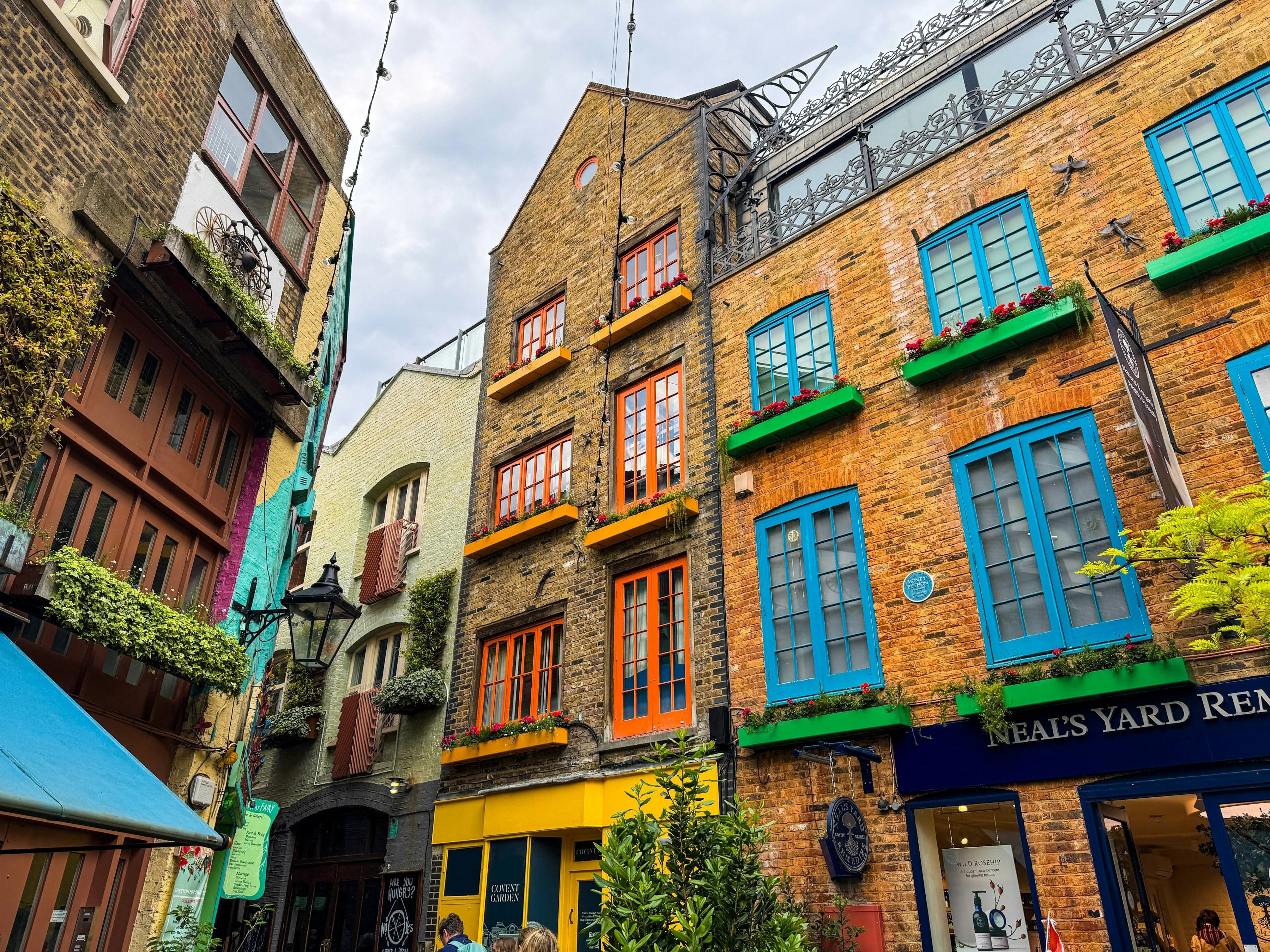
From Trafalgar Square past St Martin-in-the-Fields and Cecil Court's bookshops, through Leicester Square, Chinatown and Soho to Seven Dials, Neal's Yard, the Royal Opera House and the Covent Garden piazza.
Start · Trafalgar Square: The Column Barry Opposed
DirectionsStops
- 1
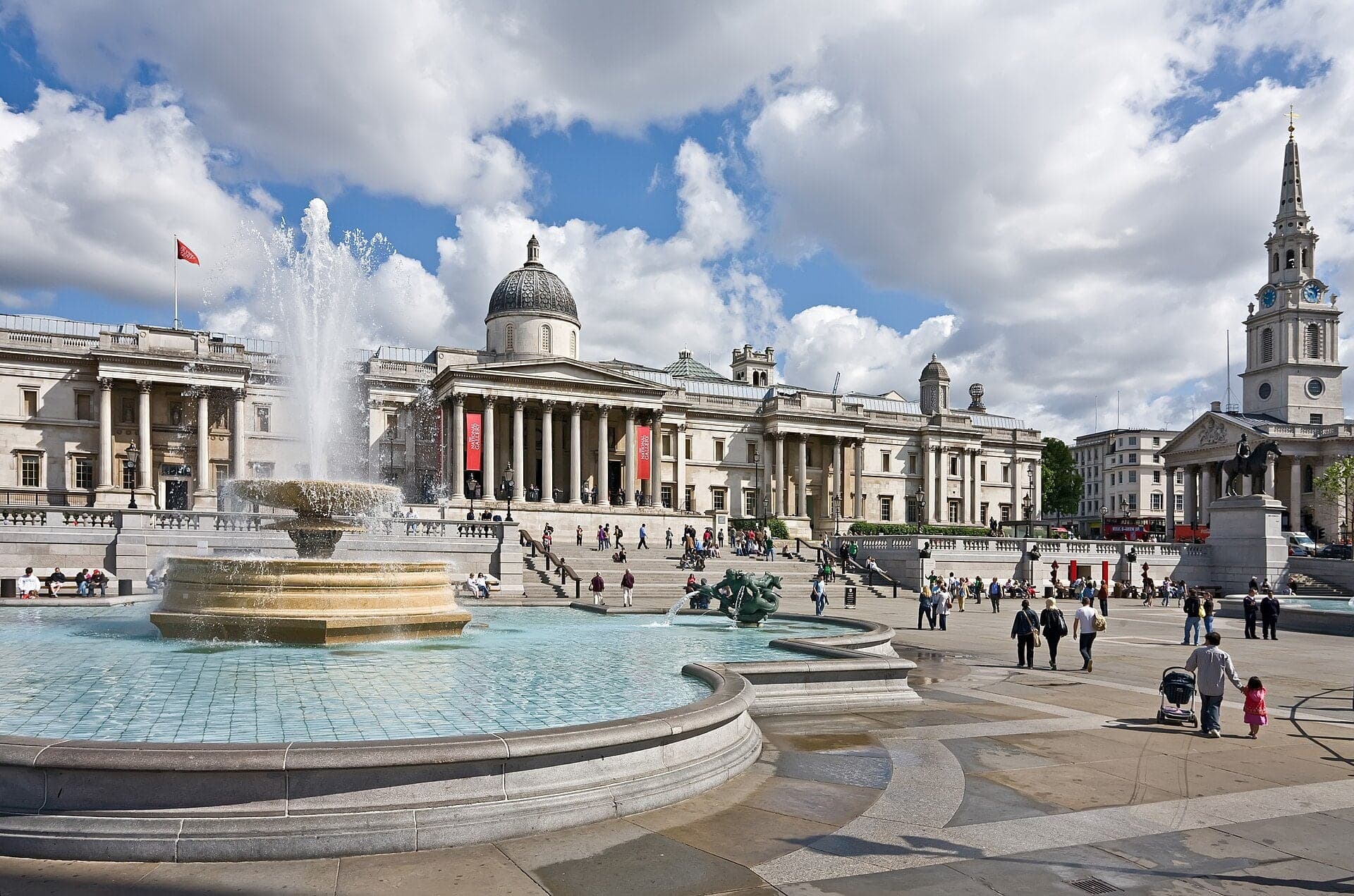
Trafalgar Square: The Column Barry Opposed
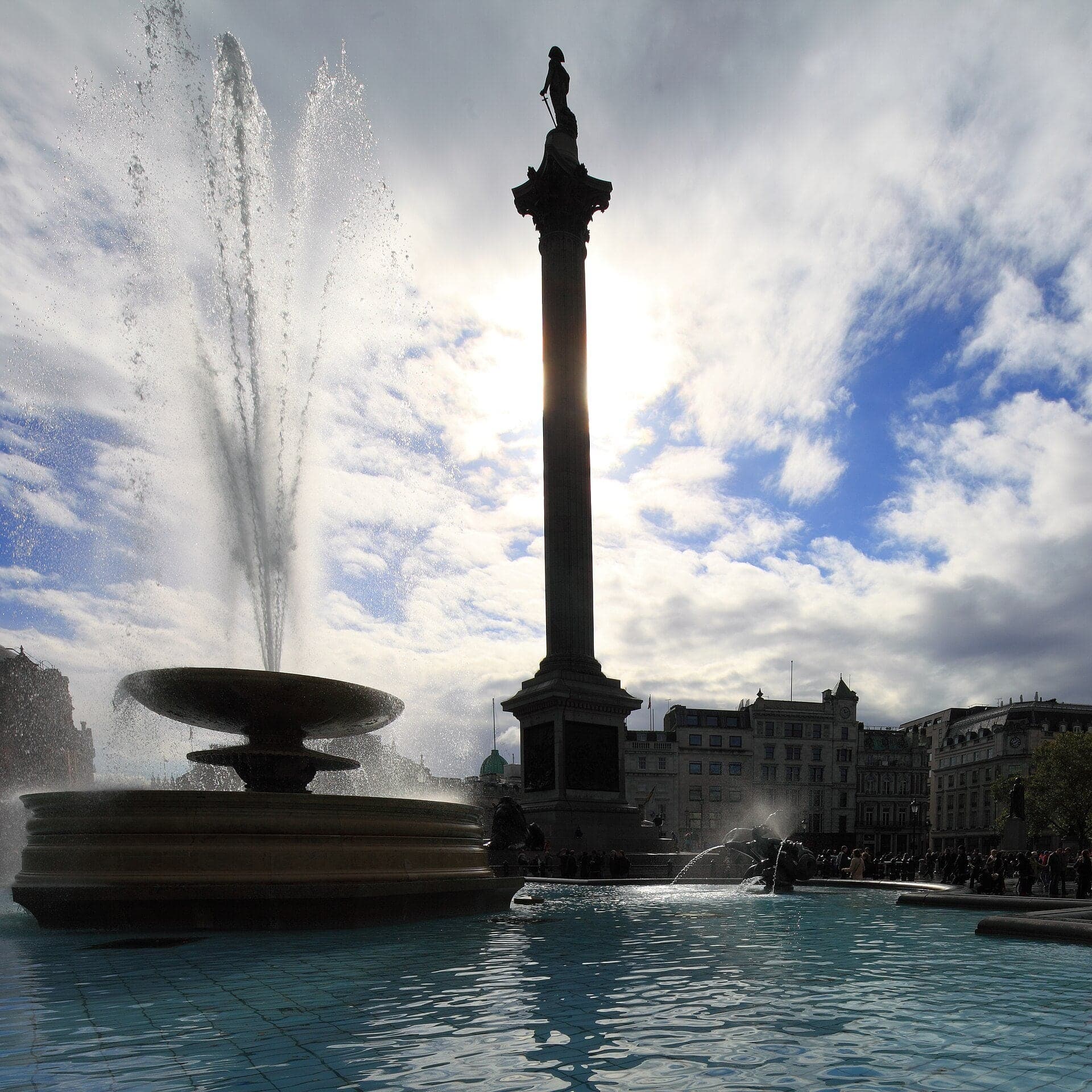
A square over the old stables, then redrawn. Nelson's Column went up over the objections of the architect who designed the terrace.
- 2
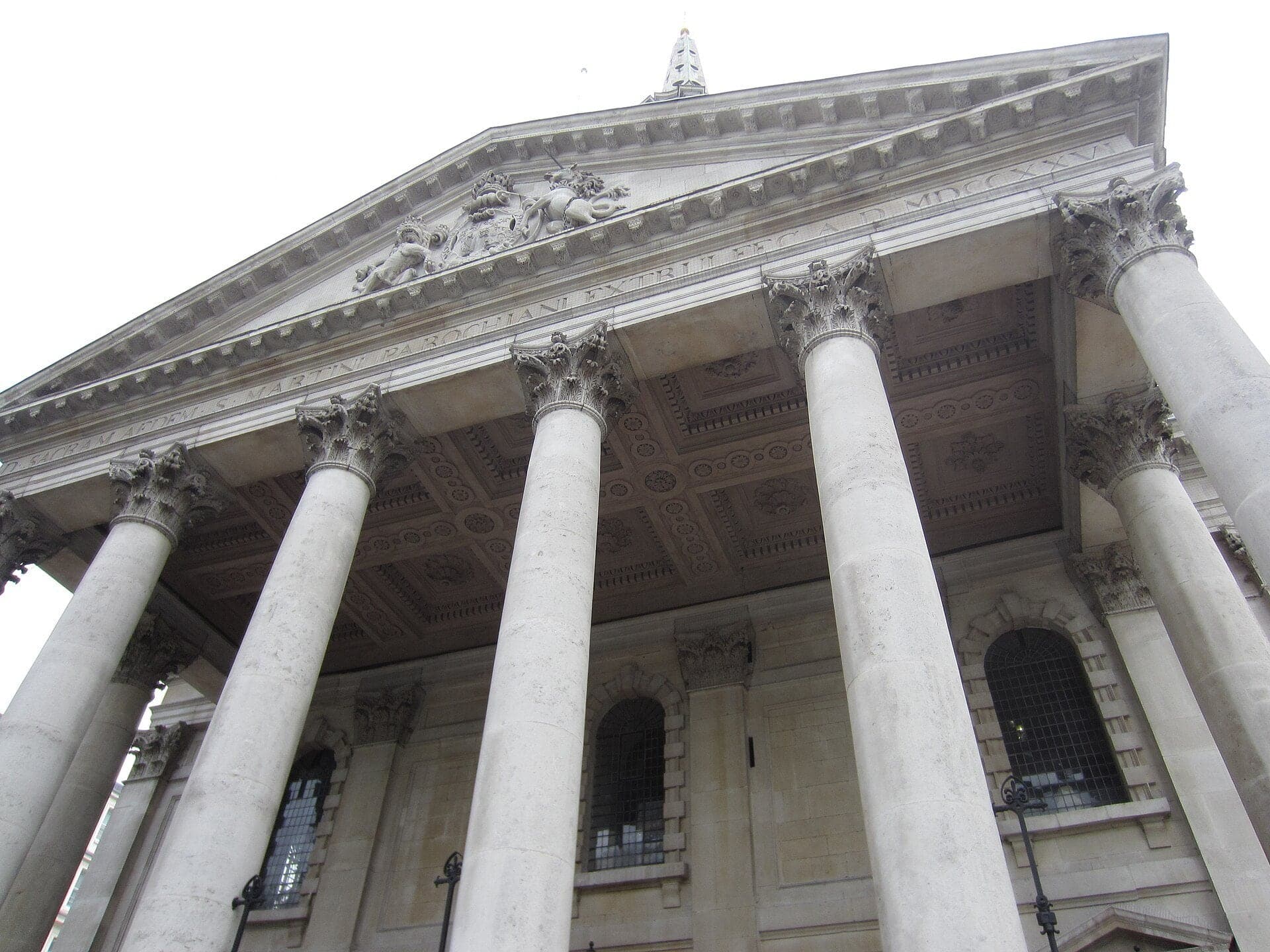
St Martin-in-the-Fields: Temple and Steeple
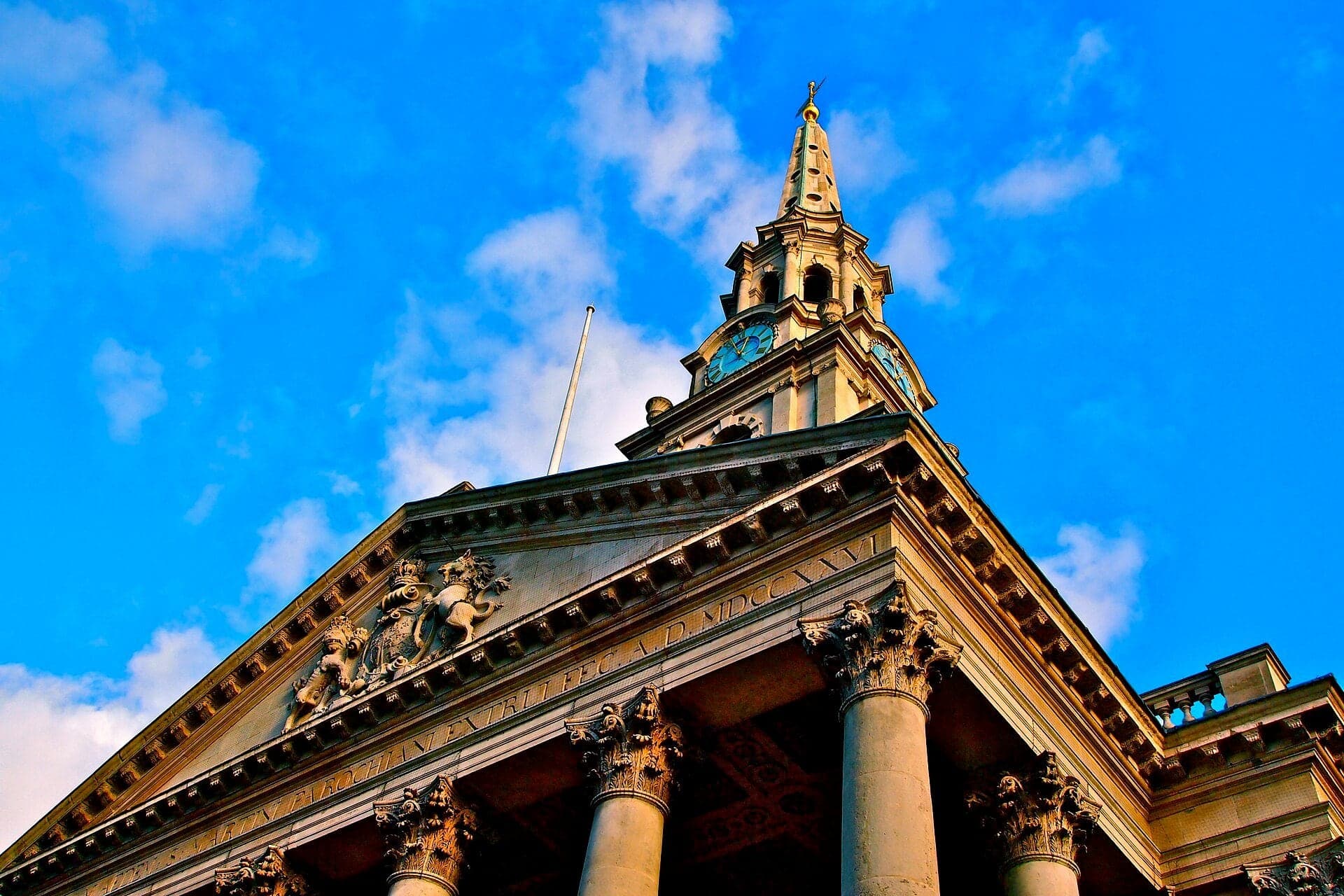
A temple front with a steeple. James Gibbs's church of 1722 to 1726 became a model copied as far away as the American colonies.
- 3
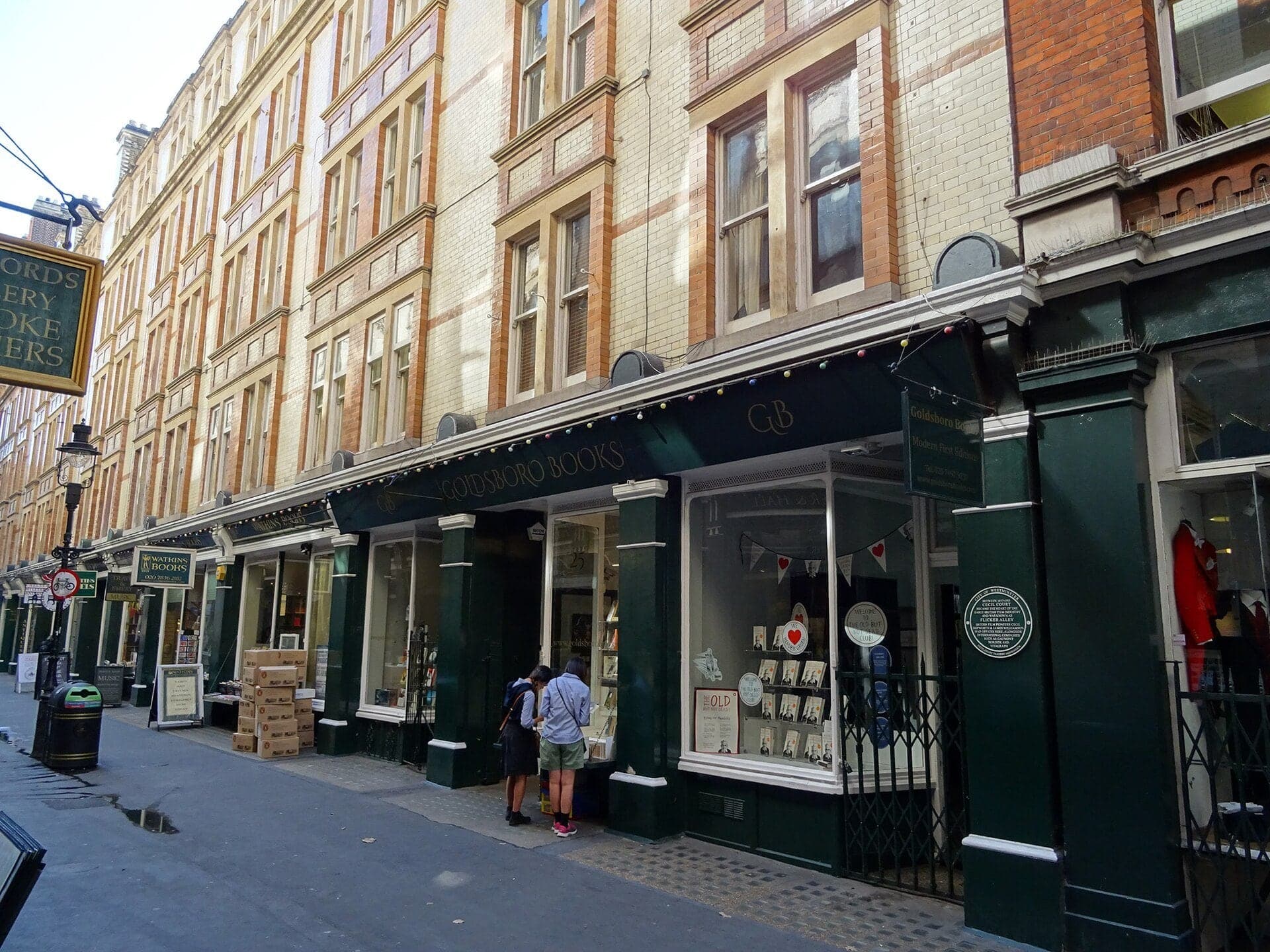
Cecil Court: Flicker Alley
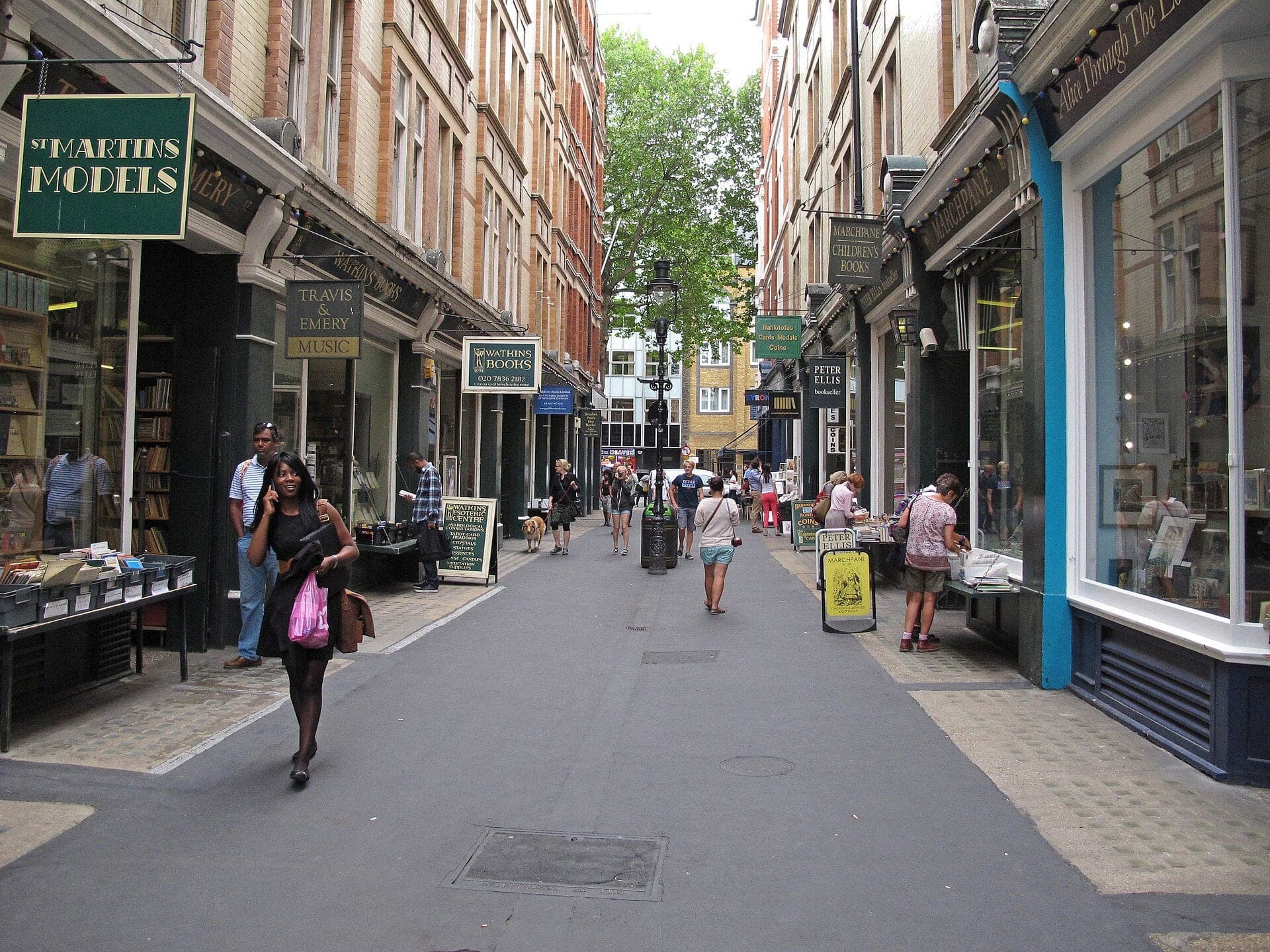
A lane of antiquarian booksellers. Before the books came the early British film trade, which gave the lane its nickname.
- 4
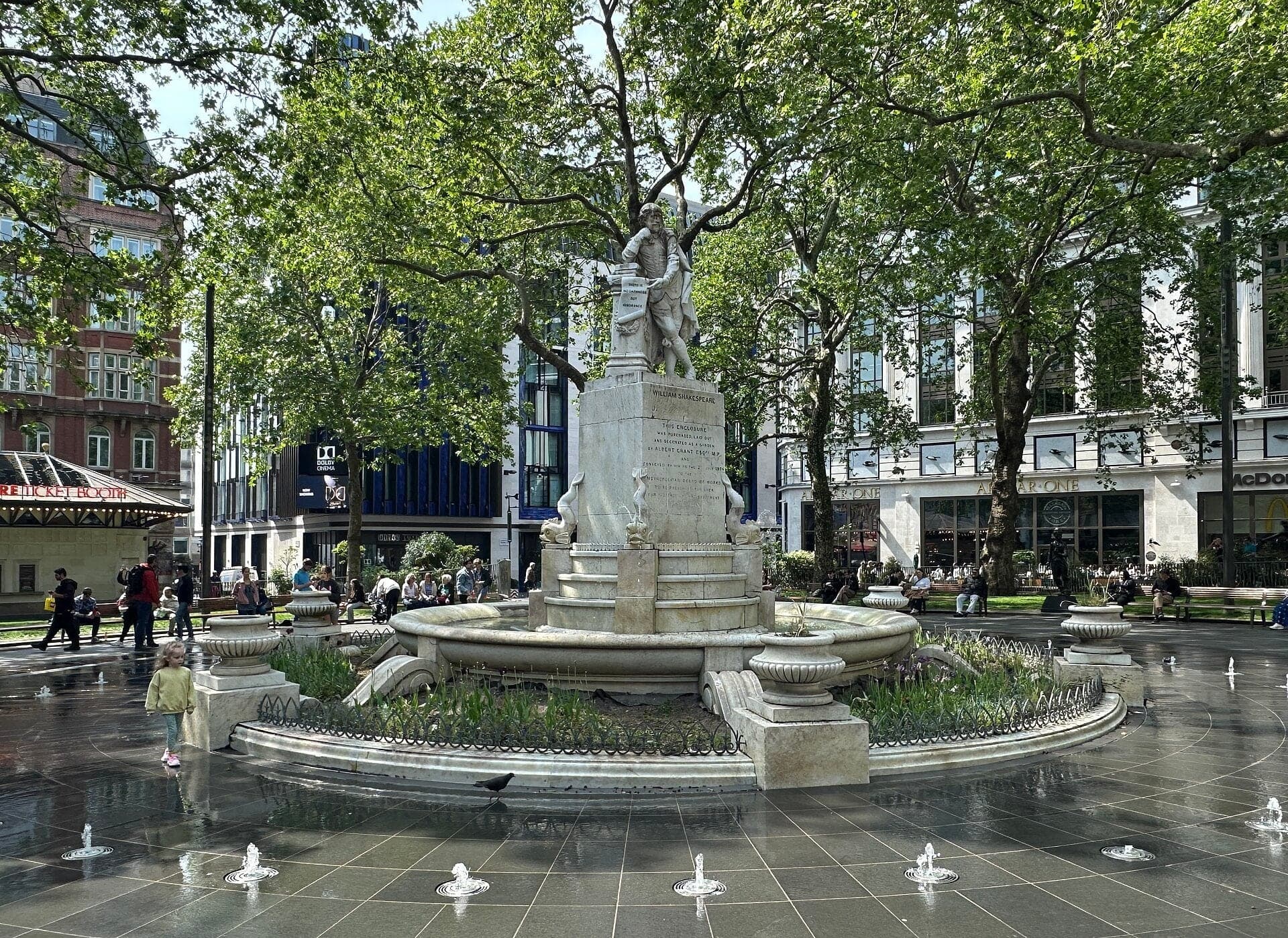
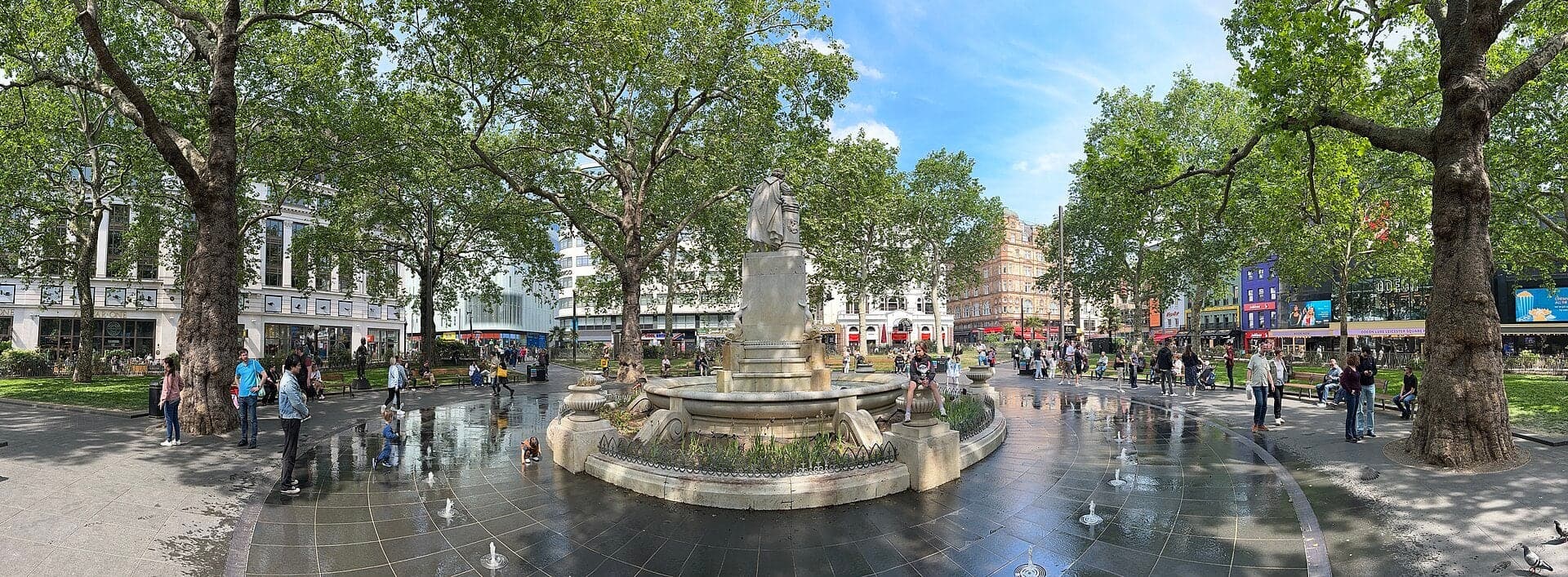
Leicester Square: The Garden a Court Saved
A 1670s square saved by a court. Its garden survives because a court in 1848 forbade building on it.
- 5
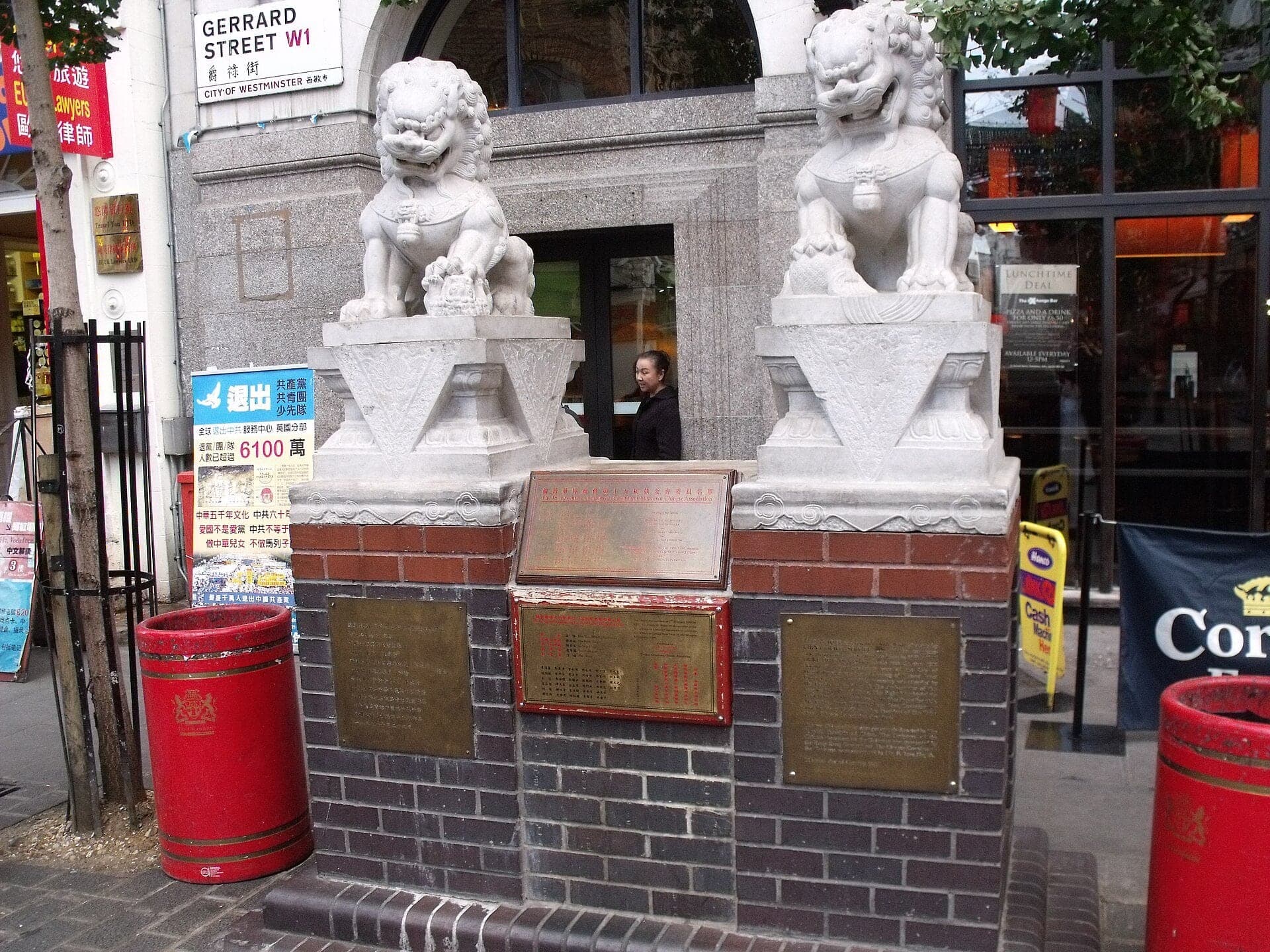
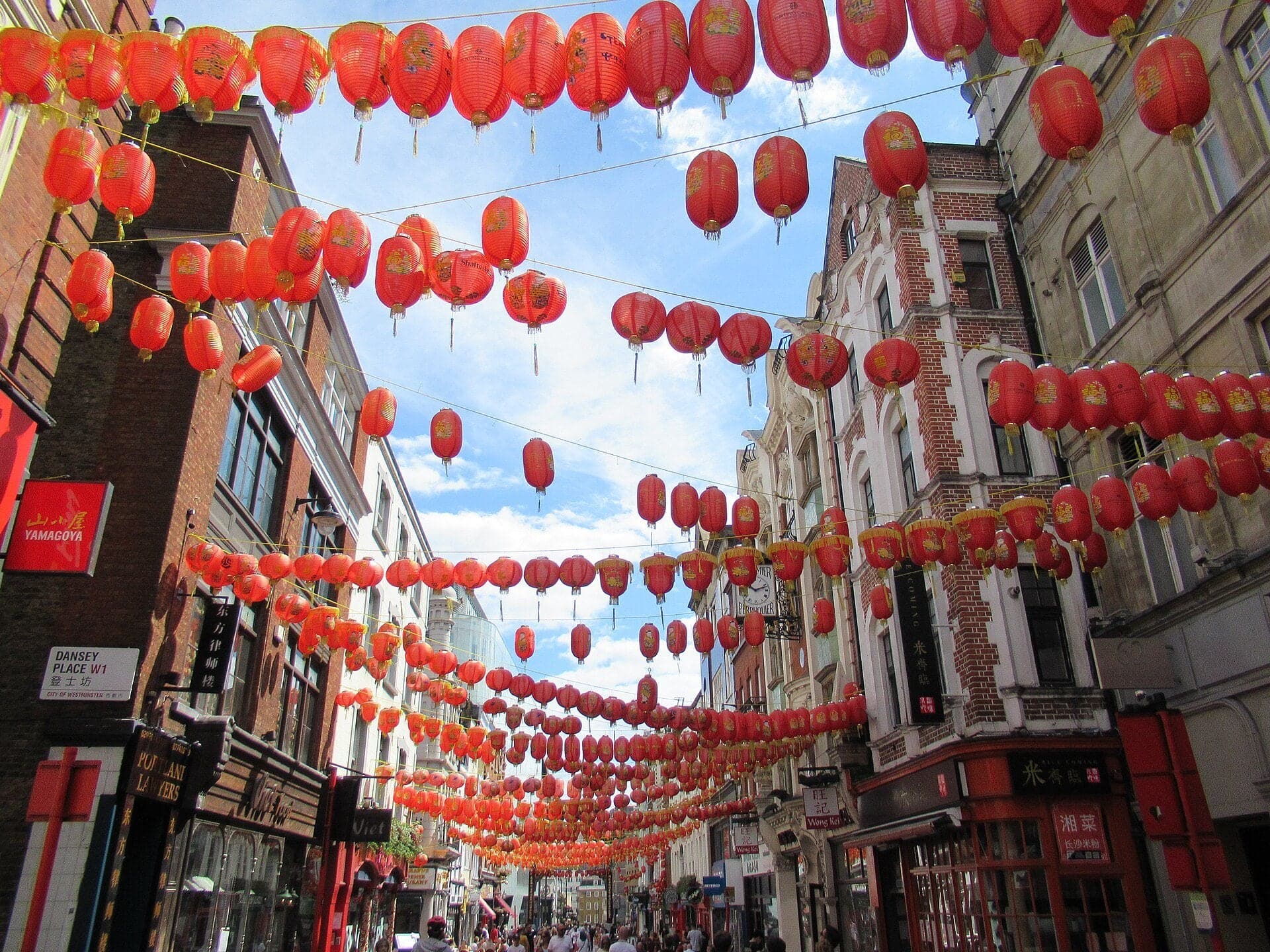
Chinatown: Gerrard Street's Opening Day
Gerrard Street and its Chinese lions. Its Chinese lions were unveiled as the formal opening on 29 October 1985.
- 6
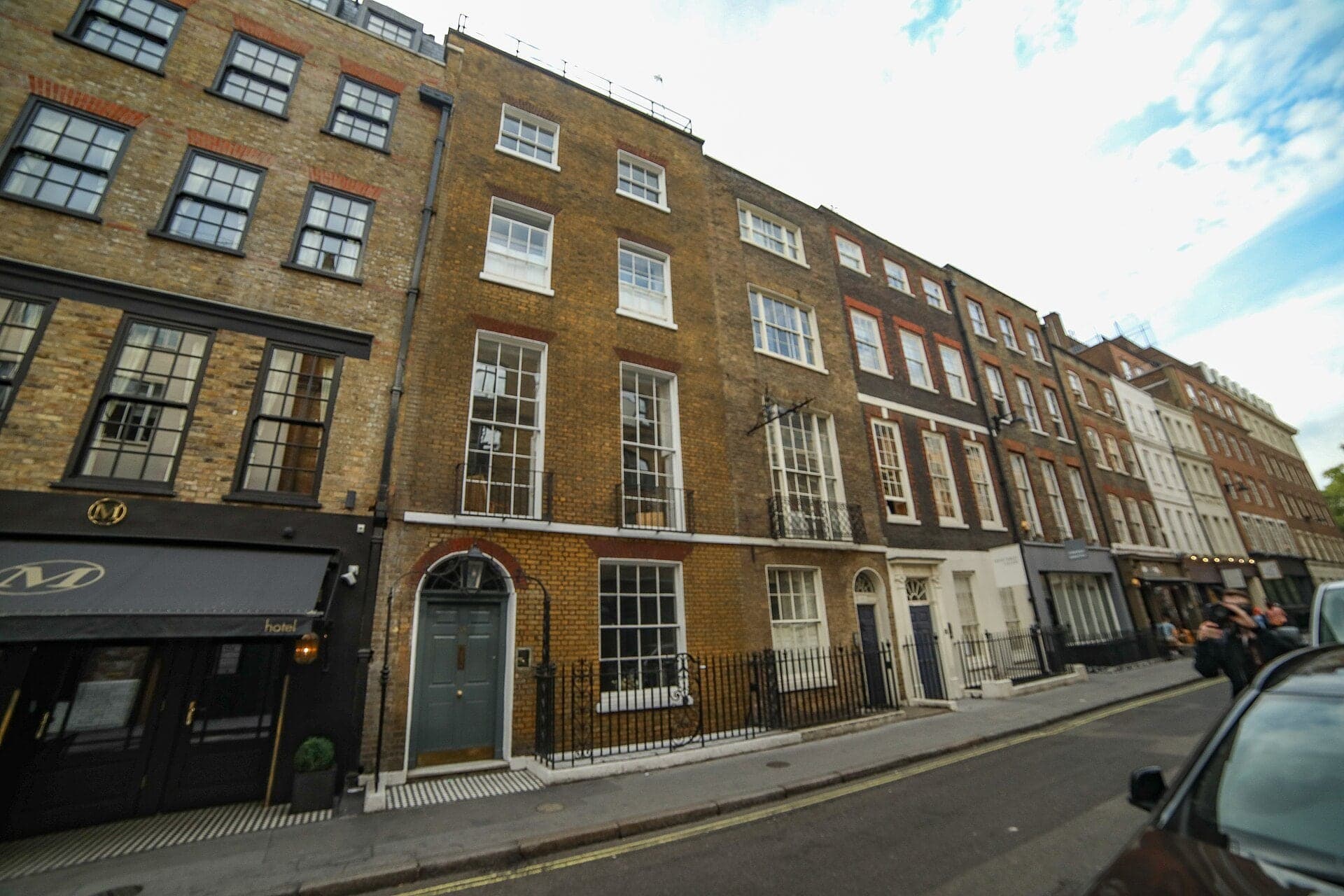
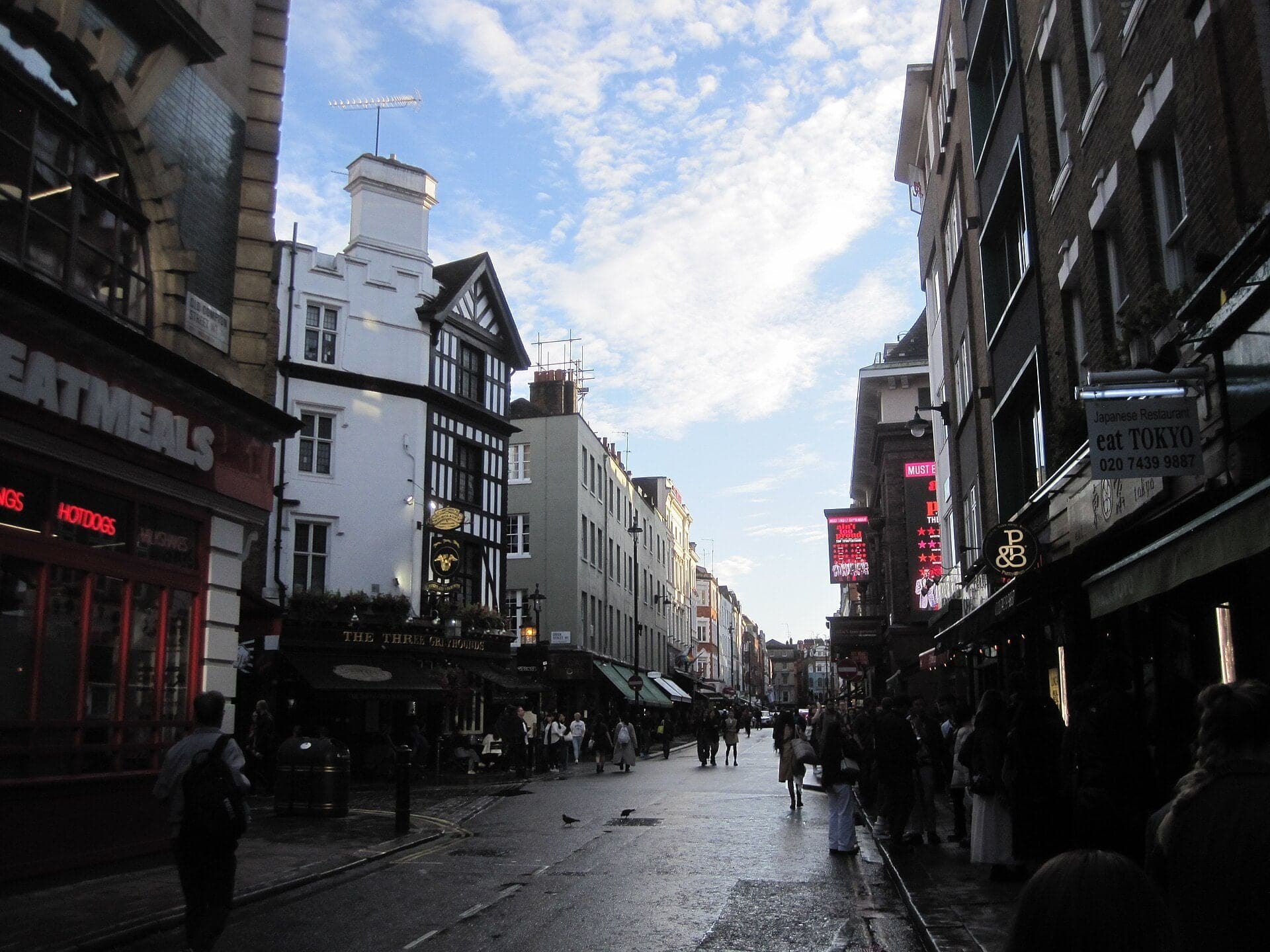
Old Compton Street: A Builder's Grid
Soho's grid laid by a bricklayer. Up Frith Street is the attic where television was first demonstrated in 1926.
- 7
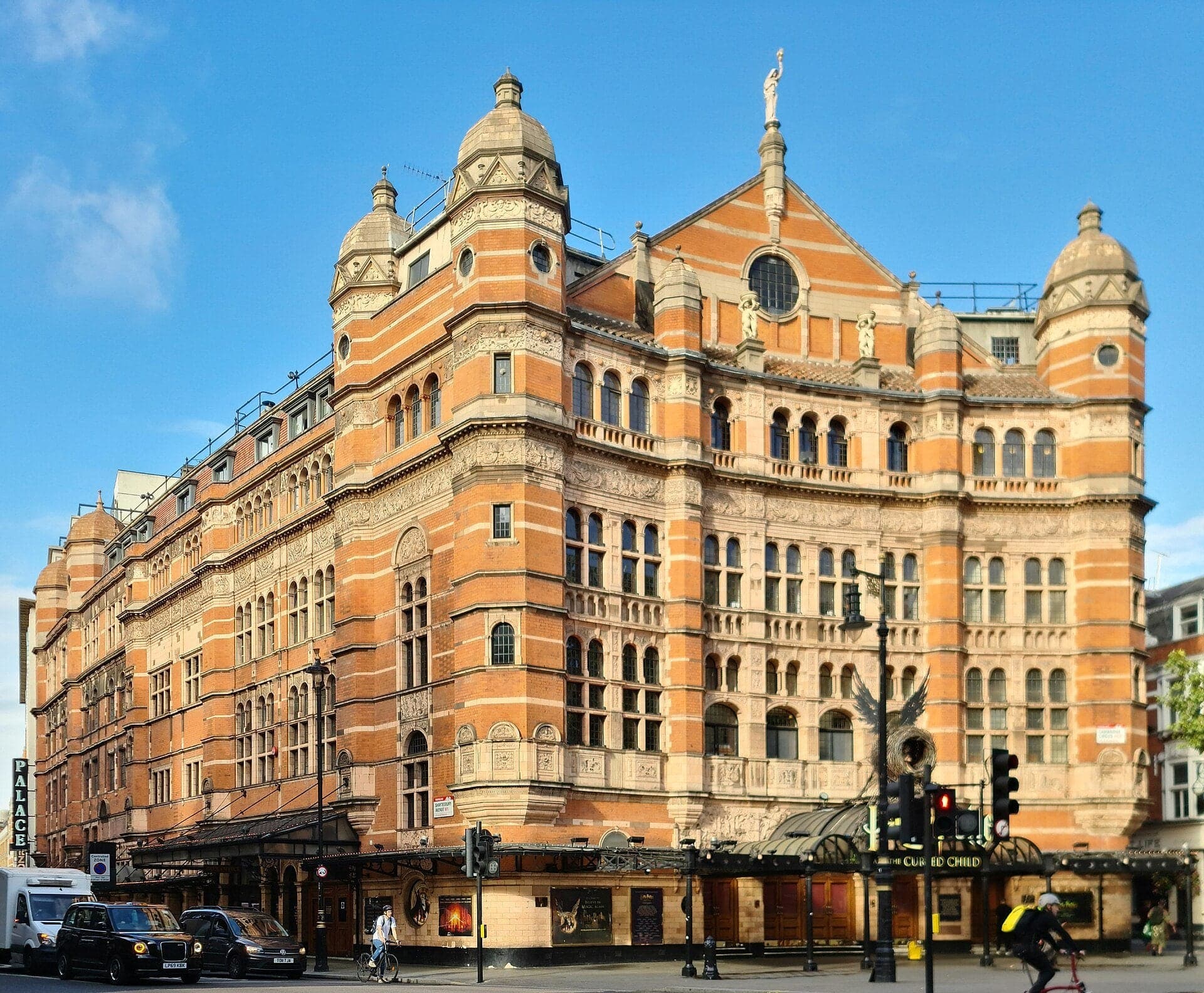
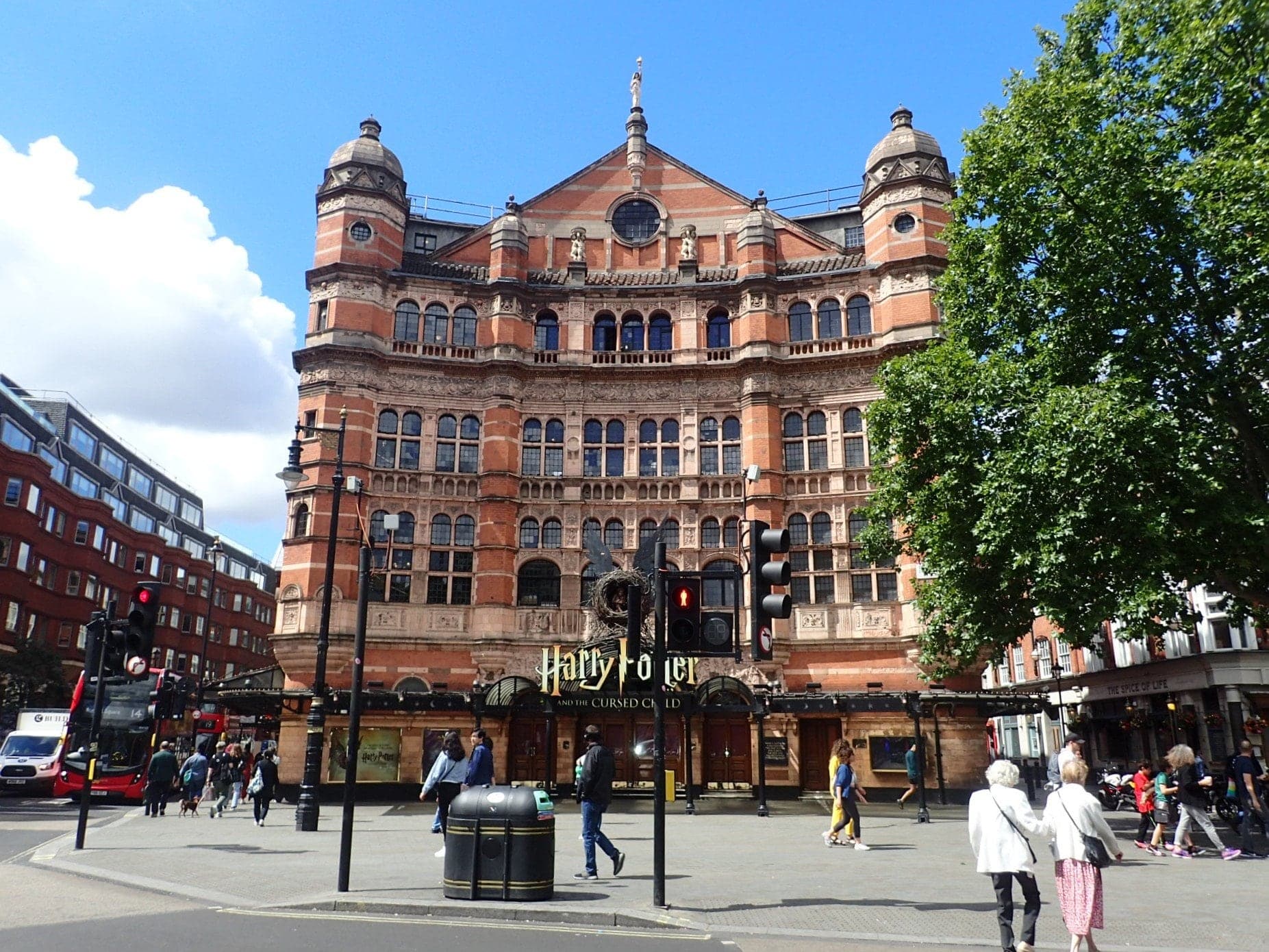
Cambridge Circus: Two Victorian Roads
Two Victorian roads at one junction, built only after new homes were. Across the circus, the Palace Theatre was built as an opera house.
- 8
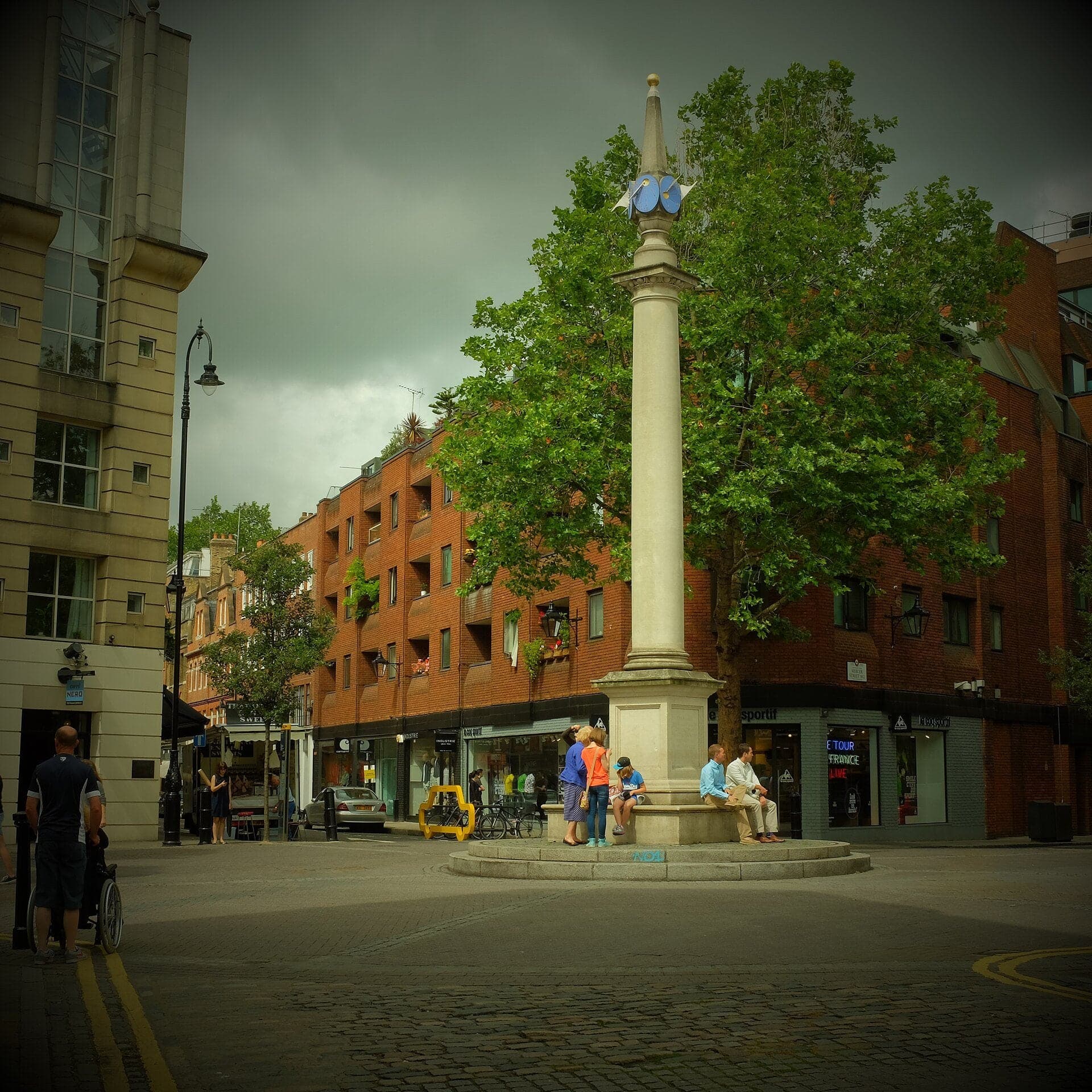
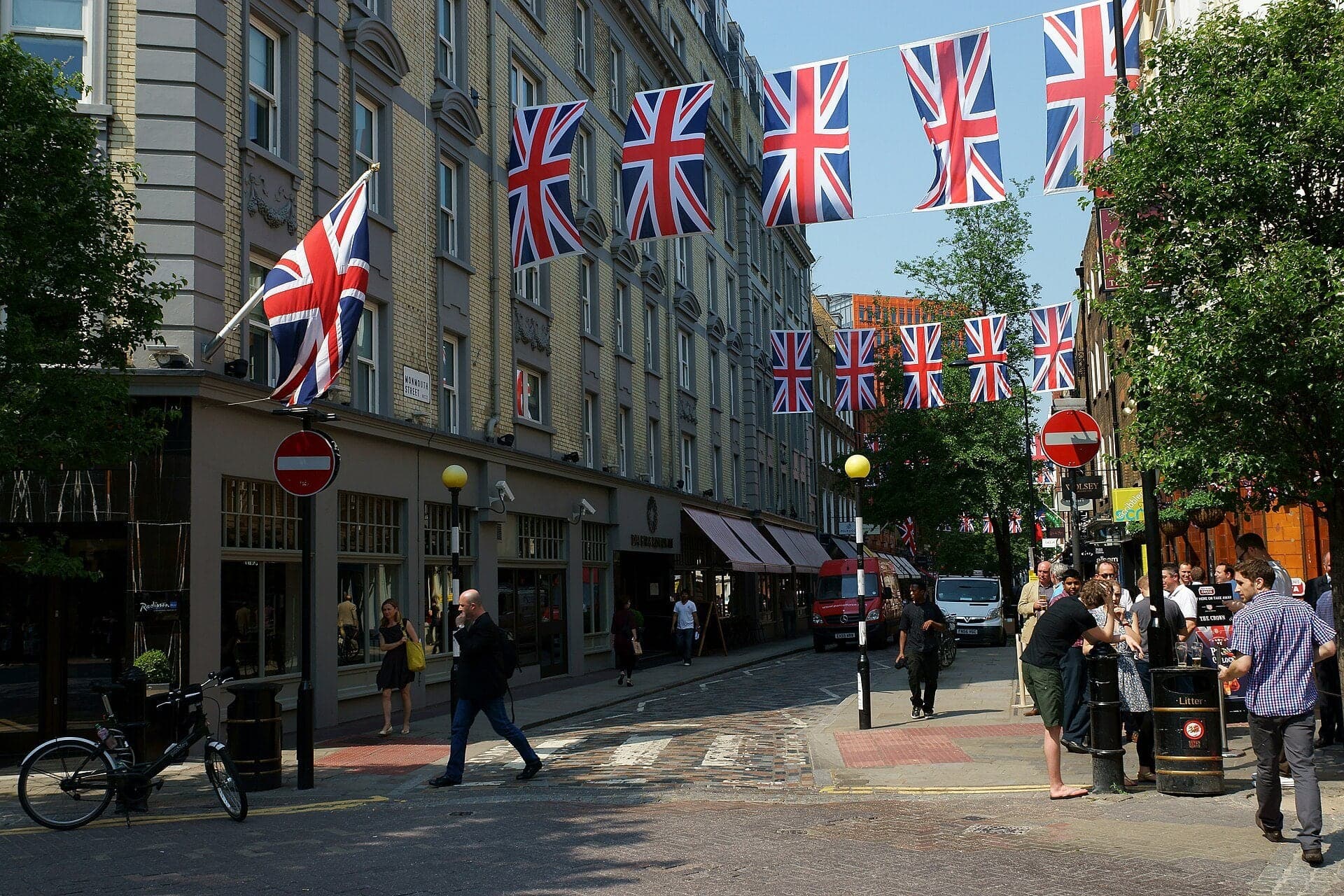
Seven Dials: Six Faces, Seven Streets
Seven streets round one pillar. The pillar has only six sundials, and the one here is a 1989 copy.
- 9
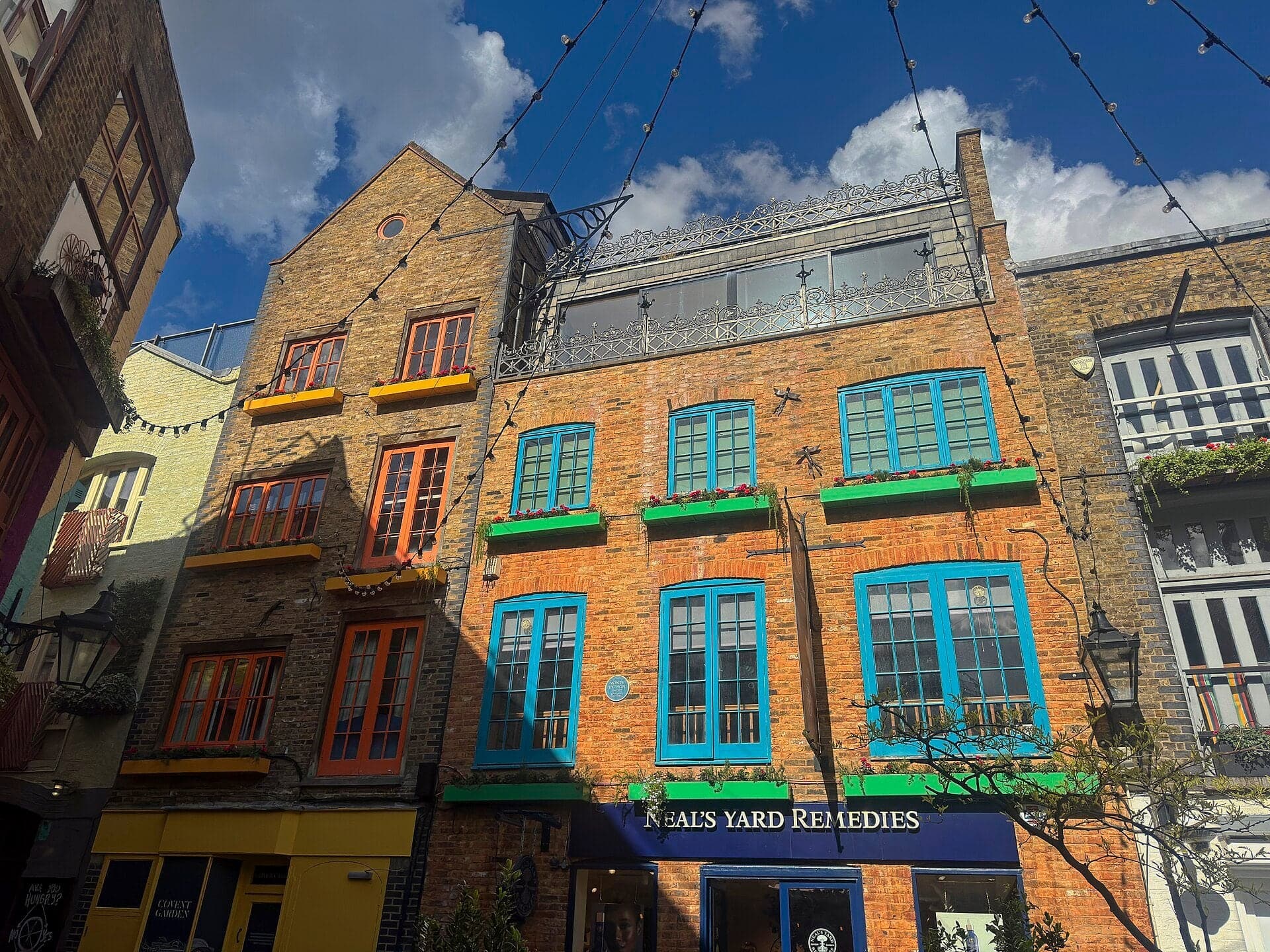
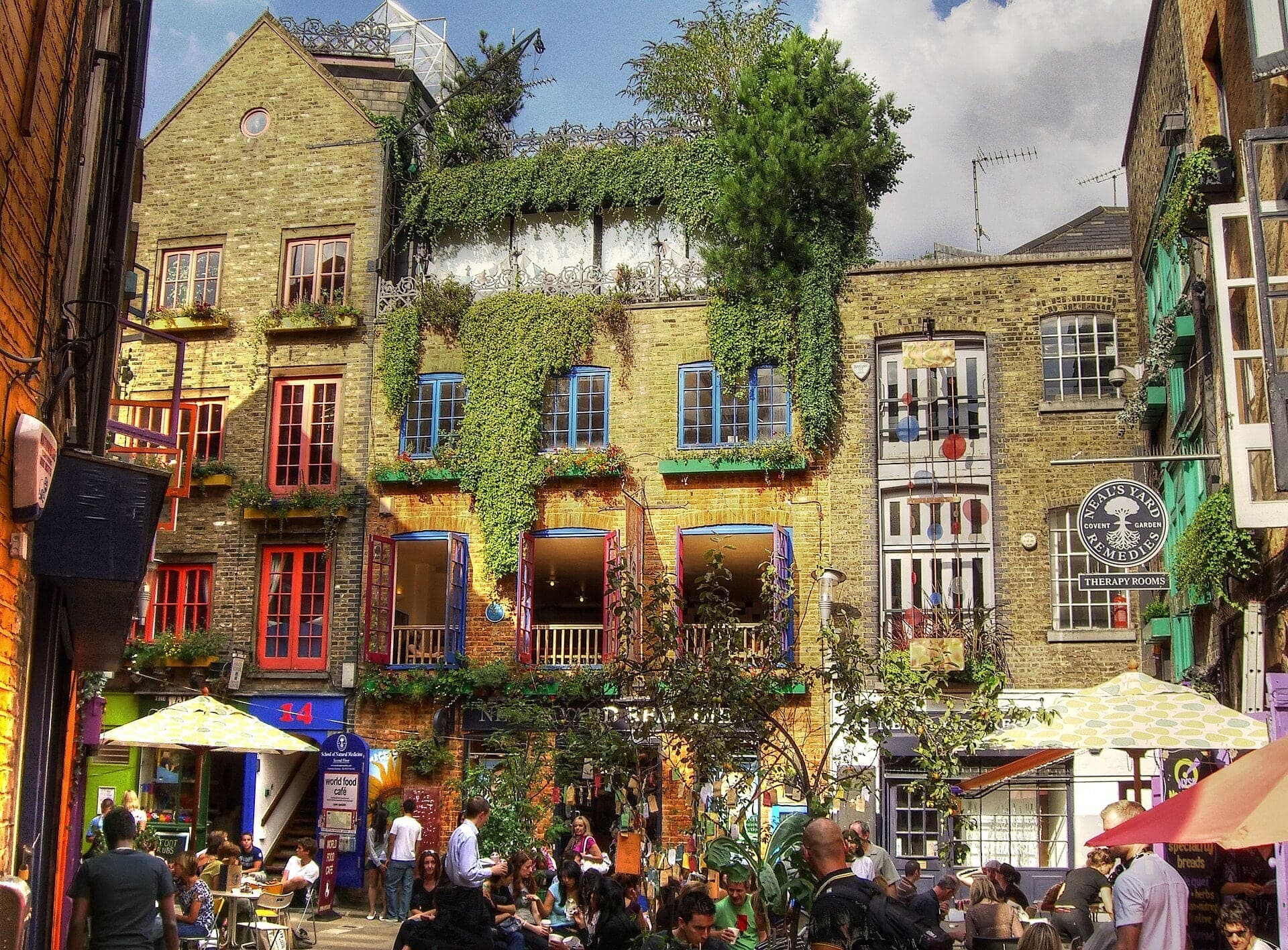
Neal's Yard: The Yard Nobody Drew
A derelict yard small shops revived. At its mouth, a water clock built to make flowers grow.
- 10
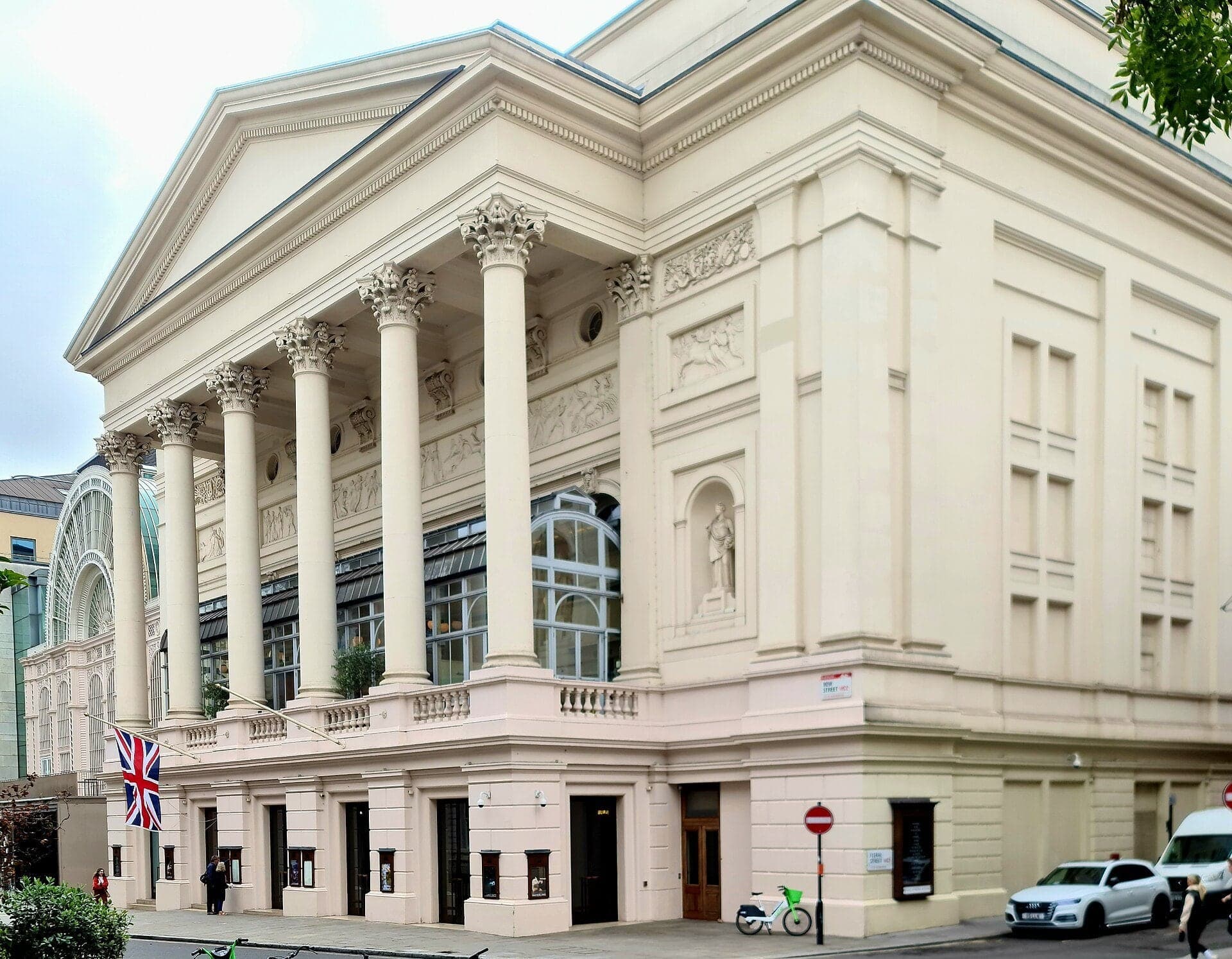
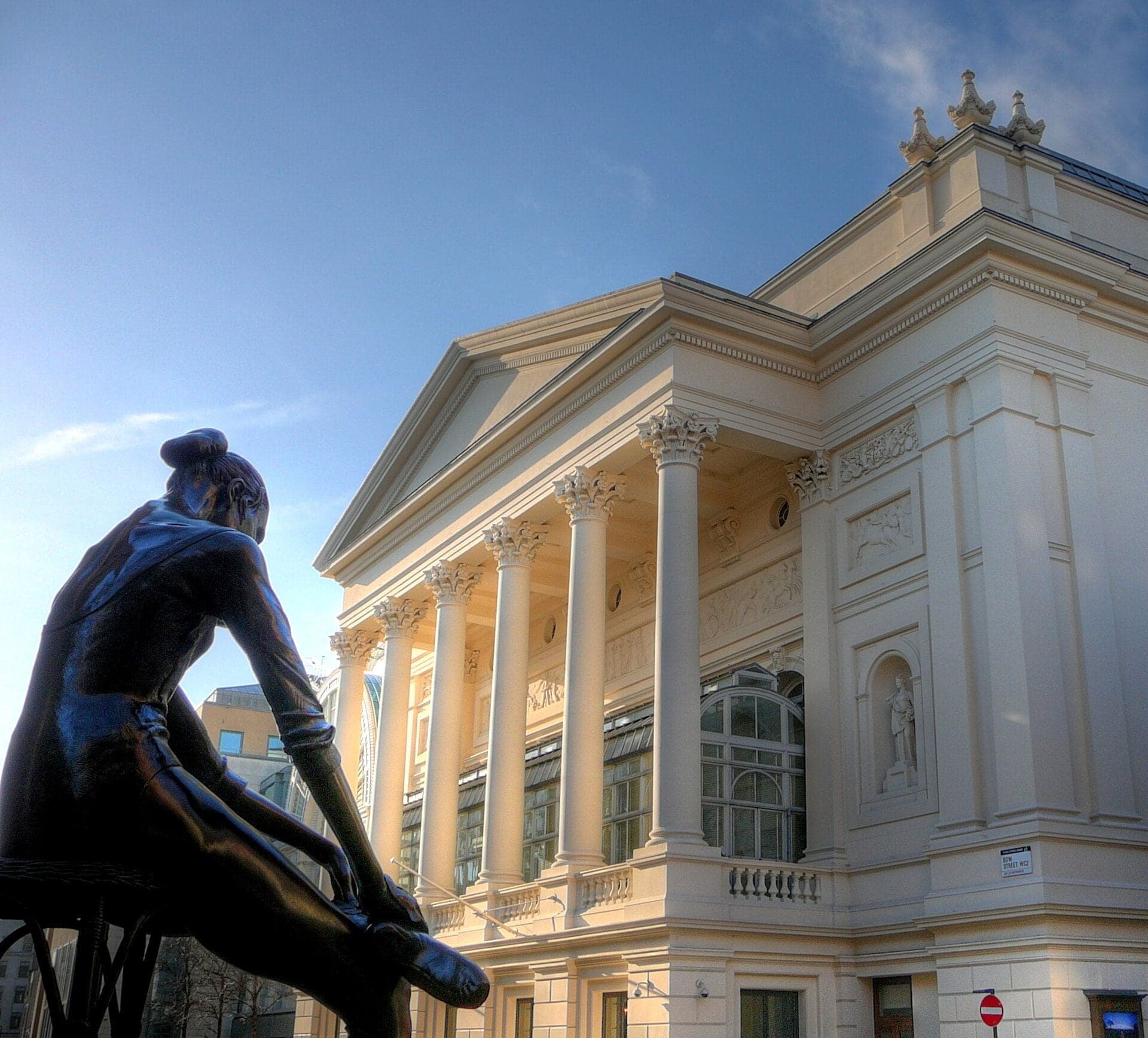
Royal Opera House: The Third Theatre
The third theatre on this spot, after two fires. It opened in 1858, and its front carries sculpture saved from the theatre before it.
- 11
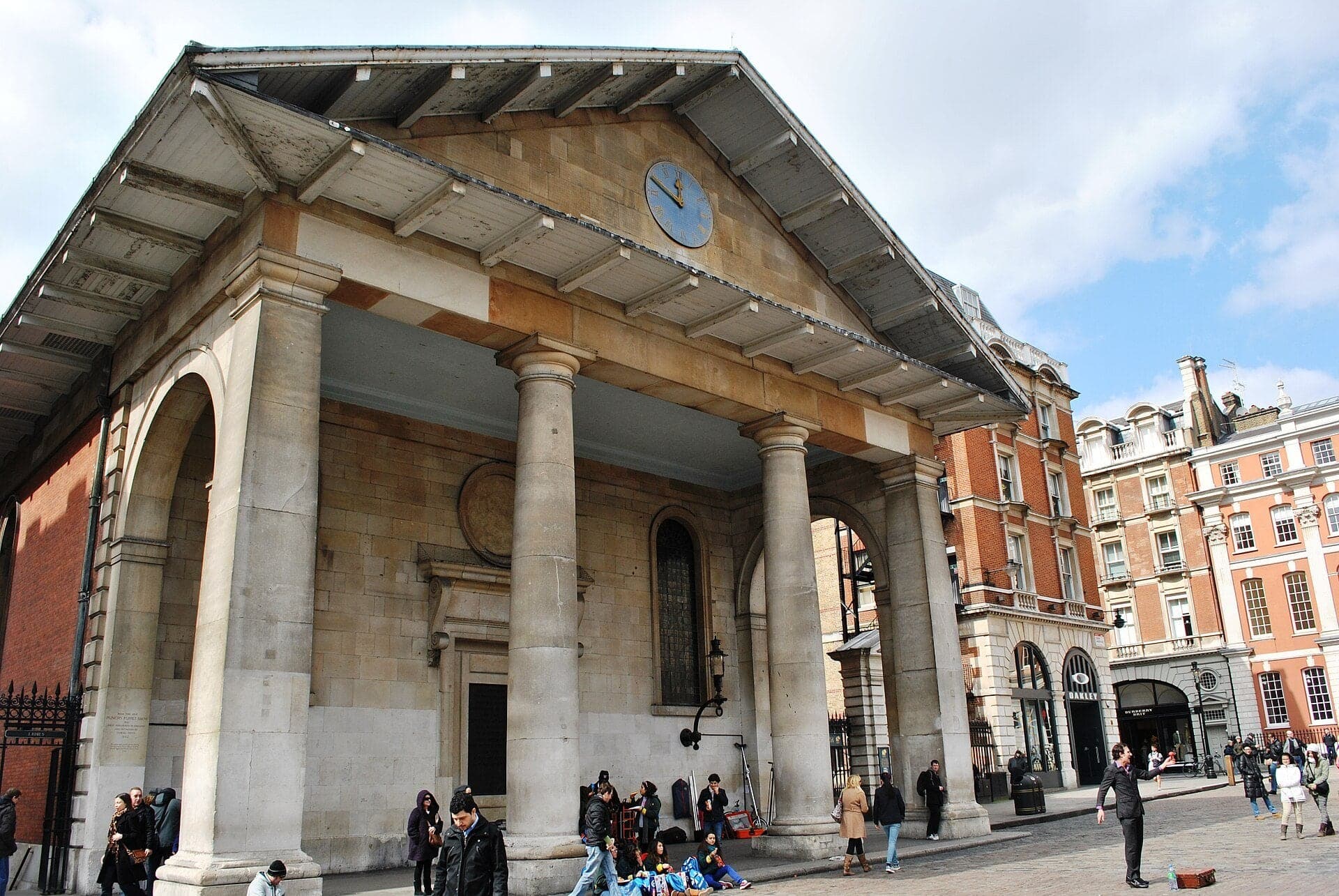
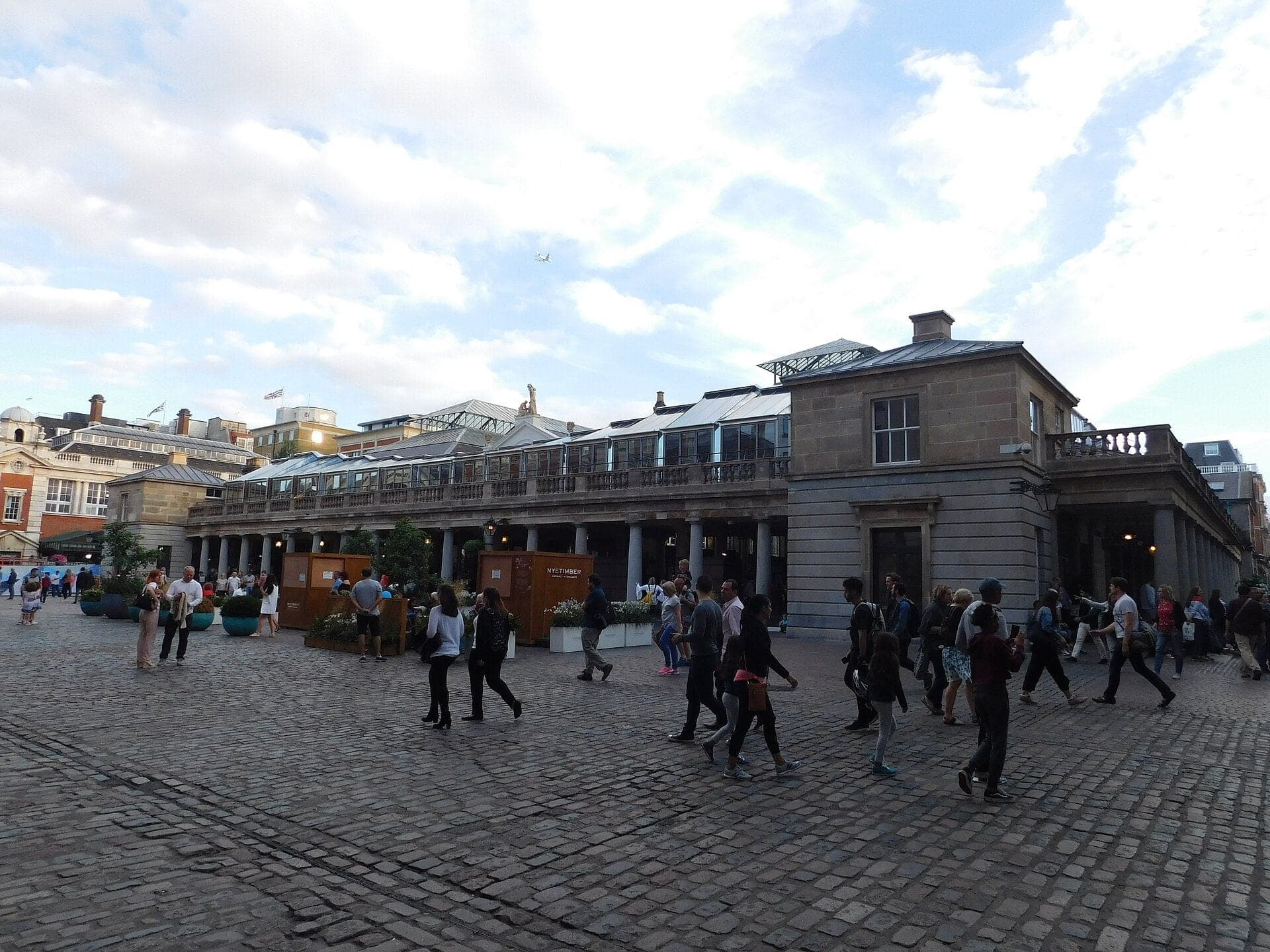
Covent Garden: The Square a King Redrew
The first residential London square, edited by a king. Inigo Jones laid it out, and its church's grand portico fronts a door that leads nowhere.
Details
Best Time to Visit
A weekday, starting between about 10:00 and 14:00, so the bookshops of Cecil Court are open and you reach the piazza while the street performers are working (Westminster's 2021 busking policy sets the Covent Garden pitches at 11:00 to 21:00; whether that still holds in 2026 is unconfirmed). Leicester Square, Chinatown and the piazza are at their most crowded on weekend afternoons and evenings, and Trafalgar Square often hosts rallies and events at weekends. Checked 7 October 2026.
Pro Tips
- •Getting to the start: Charing Cross station (Bakerloo and Northern lines, National Rail) is a couple of minutes' walk from the north side of Trafalgar Square; Embankment (Bakerloo, Circle, District, Northern) and Leicester Square (Northern, Piccadilly) are also close, and many bus routes stop around the square. On 7 October 2026 TfL reported severe delays on the Bakerloo line, so check TfL on the day. Checked 7 October 2026.
- •Getting home: Covent Garden station (Piccadilly line) is a few minutes from the piazza; TfL lists lifts and no escalators there. Leicester Square station is a short walk west. Checked 7 October 2026.
- •The Fourth Plinth (stop 1), at the square's north-west corner, shows a new sculpture every two years. Since 10 September 2026 it has carried Lady in Blue by Tschabalala Self, a bronze painted blue, until 2028 (Greater London Authority). Checked 7 October 2026.
- •St Martin-in-the-Fields (stop 2) is a working church whose opening hours change week by week: in the week from 5 October 2026 it opened Monday, Tuesday and Thursday 8:30 to 17:00, Wednesday to 19:30, Friday and Saturday 9:00 to 17:00 and Sunday 9:00 to 18:00. The Cafe in the Crypt has its own hours. Check stmartin-in-the-fields.org before you go. Checked 7 October 2026.
- •The National Gallery, behind stop 1, is free; its usual hours are 10:00 to 18:00, later on Fridays, but this could not be confirmed on the gallery's own site. Check nationalgallery.org.uk. Checked 7 October 2026.
- •John Snow's cholera pump: about ten minutes west of Chinatown, on Broadwick Street, stands a replica of the water pump that Snow linked to the 1854 cholera outbreak by mapping the cases, persuading the authorities to remove its handle (London Museum). A detour off the route, there and back.
- •Royal Opera House (stop 10): the building opens daily from 12:00 and stays open until after the evening performance; it is cashless and runs strict bag checks. Ticketed Behind the Scenes tours run from 8 October to 21 December 2026. Details at rbo.org.uk. Checked 7 October 2026.
- •Bow Street Museum of Crime and Justice (beside stop 10) is a small ticketed museum in the old police station, open Friday to Sunday 11:00 to 16:30 at about 8 pounds, booked in advance, according to a listing last checked in May 2026; confirm before you go. Checked 7 October 2026.
- •At stop 11 the way into St Paul's Church, the actors' church, is round the back through the churchyard from Bedford Street; the grand portico on the piazza has no door that opens.
Safety & Precautions
- •Leicester Square and Trafalgar Square are among the worst places in London for phone theft. Hold your phone firmly while you listen, and keep bags closed in the crowds.
- •Main roads: cross St Martin's Place, Charing Cross Road and Shaftesbury Avenue only at the lights (and the side arm by William IV Street at its zebras). On Long Acre, at the end of Neal Street, there are no lights: use the zebra crossing on the raised table a few steps to the west, beside Covent Garden station.
- •Film premieres can close parts of Leicester Square at short notice. If the corner at stop 4 is fenced off, listen from the pavement of Cranbourn Street and carry on.
- •The pavements at stops 2 and 10 are narrow and beside traffic: stay on the pavement and do not step into the road to look up.
- •Seven Dials, Neal Street and the Covent Garden piazza are paved with setts: step-free but uneven, so watch your footing with a pushchair or wheelchair.
- •Delivery vehicles use Neal Street and the piazza in the mornings until about 11:00. Keep to the route and watch for vans.
- •Neal's Yard is a courtyard of private shops with homes around it; keep noise down, especially in the evening.
- •The UK national terrorism threat level was raised to Severe on 30 April 2026 (gov.uk, 1 May 2026). Busy places carry extra security and bag checks; stay aware of your surroundings. Checked 7 October 2026.
Travel advisory: Exercise Increased Caution (Level 2).
Gallery
Related Reading
Go deeper on what you'll see, hear, and walk through.
Read the walk
The full story of Covent Garden and Soho: The Streets Somebody Drew, in words. Prefer to listen? Play it narrated, from home or on location.
Introduction
London, the capital of England and the United Kingdom, grew its West End on paper first. Between Trafalgar Square and Covent Garden, almost every street, square and corner was drawn by someone: a landowner, a builder working to a contract, a Victorian board of works, even a king. And almost every drawing came out a little differently on the ground. The difference is still there to see, in a portico, a pillar, a garden, a door.
Three names come back along the way. Inigo Jones, the architect who laid out Covent Garden in the sixteen thirties, the first of London's long line of residential squares. Charles Barry, who shaped Trafalgar Square in the eighteen forties and did not want the column that stands in it. And Thomas Neale, a speculator of the sixteen nineties, who set a star of streets around a single pillar.
This walk covers Covent Garden and Soho, in London, England. It is eleven stops and about two point three kilometres, a mile and a half, on level streets, and it takes about eighty-five minutes. It begins on the north side of Trafalgar Square, below the National Gallery, and runs past Saint Martin-in-the-Fields, along a lane of old bookshops, through Leicester Square, Chinatown and Soho, across to Seven Dials and Neal's Yard, past the Royal Opera House, and ends on the Covent Garden piazza.
1. Trafalgar Square: The Column Barry Opposed
Welcome to Trafalgar Square, and to the first plan on this walk. Before there was a square, this ground was the King's Mews. A mews was a house for falcons: the kings kept their hawks at Charing Cross from the twelve seventies. Later it was the royal stables, cleared away by eighteen thirty.
The first plan for an open space here had two sides of unequal lengths. In eighteen twenty-six the government's commissioners wrote that it would be a deformity, peculiarly striking, and told the architect John Nash to draw a much larger space.
The terrace below the National Gallery, with its walls and steps, is the work of Charles Barry, in the early eighteen forties. Barry did not want a column here. He thought it would dwarf the Gallery. But work on its foundations had already begun, and Barry had to give way.
So there it stands, the one tall thing in a low, open square. Nelson's statue, carved from stone, went up in November eighteen forty-three. The capital beneath him was cast from old guns, and the bronze panels round the base from captured ones. The lions came last, in January eighteen sixty-seven.
Just beyond the column, out of sight from here, a bronze King Charles the First on horseback stands on the old site of Charing Cross, the spot London measures its distances from. He survives because, when the republic's government sold him for scrap in the sixteen fifties, the brazier who bought him hid him instead of breaking him up. The story goes that he sold knife handles and spoons as relics.
At the corner of the square rises a pale stone steeple. Take a good look at it now. That is Saint Martin-in-the-Fields, and from its front door you will be too close to see it.
Follow the route along the top of the square to the church.
2. St Martin-in-the-Fields: Temple and Steeple
Walk on to the pavement across the road from the church's columned front, and stop there. This is Saint Martin-in-the-Fields, designed by James Gibbs. The first stone went down in March seventeen twenty-two, and the work was done by seventeen twenty-six.
Look at what Gibbs put together. In front, a temple: six tall Corinthian columns across the front, carrying a triangular pediment, all in Portland stone, the pale limestone you will meet again and again in London. And then, rising out of the roof behind the temple, a church steeple, the one you saw from the square. Historic England calls the pairing incongruous, and highly influential. Gibbs published the design in a book in seventeen twenty-eight, and builders in the American colonies used it for their own steepled churches with temple fronts.
It was not the parish's first choice of drawing. Gibbs offered two round designs first, and both were turned down because of the expense. The church as built cost about thirty-three thousand pounds.
Look into the triangle of the pediment: the carved coat of arms is that of King George the First. On the band below it, the date is cut in Roman numerals, seventeen twenty-six. And over the middle of the columns, if your eyes are sharp, the architect has carved his own name, in Latin.
For about a hundred years, houses crowded round this front and hid it. It was John Nash's improvements of the eighteen twenties and thirties that cleared the ground and joined the church to the new square. In twenty twenty-six, the church marked three hundred years of the building.
It is a working church. If the doors are open and no service is on, you can step inside.
Follow the route across the road at the lights and up Saint Martin's Lane. Next, a lane of old shopfronts.
3. Cecil Court: Flicker Alley
Walk on into the narrow lane of shopfronts and stop partway along. This is Cecil Court, named for the Cecil family, Earls of Salisbury, who bought this land in sixteen oh nine. The lane itself appears late in the sixteen hundreds, and the fronts you see now came with a rebuilding between eighteen eighty-nine and eighteen ninety-four.
Look along both sides. The shopfronts run on without a break, each with its painted name board and its window of books, prints or maps. The plan was simple, one row of small shops facing another, and over the years each new trade has moved in and filled it.
In seventeen sixty-four an eight-year-old boy named Wolfgang Amadeus Mozart lodged here with his family, in the house of a hair cutter, during their visit to London. Hold on to him: his family turns up again in Soho.
From eighteen ninety-seven into the nineteen tens, the trade was film. British film pioneers had offices on this lane, and so did international companies such as Gaumont, Nordisk and Vitagraph. People called it Flicker Alley. Look for the small plaques on the fronts; several remember individual film firms.
Then the books. In nineteen oh four the Foyle brothers opened their first West End bookshop at number sixteen, for sixty pounds a year, and two years later they moved round the corner to Charing Cross Road. The antiquarian booksellers who line the lane today are the trade that stayed.
Follow the route out of the far end of the lane, and cross Charing Cross Road at the lights. Next, Leicester Square.
4. Leicester Square: The Garden a Court Saved
Walk on into the corner of Leicester Square and stop on the paving, where the garden opens up. Out in the middle, on its fountain among the trees, stands a statue of Shakespeare.
This square was drawn by contract. The Earl of Leicester built his great house across the north side in the sixteen thirties, and in the sixteen seventies he laid out the square in front of it. His builders signed up to put up continuous rows, ranged in straight lines, within two years: every house of three stories, besides cellars and cocklofts, with the thickness of its walls written into the deal. Covent Garden, where this walk ends, had begun London's long line of residential squares some forty years before.
The part of the plan that matters most today is the part nobody built on. In eighteen oh eight the owner of the garden, Charles Tulk, sold it for two hundred and ten pounds, on condition that it stay uncovered by buildings. Forty years later a new owner cut down its trees. Tulk took him to court, and in December eighteen forty-eight the court ordered that the ground stay an open garden. Lawyers still learn the case, Tulk against Moxhay, as the classic case on restrictive covenants, promises about land that bind whoever owns it next.
The garden was first laid out as a public garden at the expense of a company promoter, known as Baron Grant, who handed it over to London's Metropolitan Board of Works in July eighteen seventy-four. The Shakespeare is a copy of the one in Westminster Abbey. Within four years Grant was bankrupt.
By then the square had turned from great houses to entertainment: a giant globe in the garden in eighteen fifty-one, then theaters, and by the late nineteen thirties, picture palaces.
Follow the route back to the corner, and on into Chinatown.
5. Chinatown: Gerrard Street's Opening Day
Walk on along Gerrard Street and stop about halfway, among the restaurants. This is the heart of London's Chinatown, and it was formally opened on a single day. On the twenty-ninth of October nineteen eighty-five, a royal duke unveiled a pair of Chinese lions on this street, as…
Full narration for this stop unlocks with the tour.
6. Old Compton Street: A Builder's Grid
Walk on to the corner where Frith Street runs off Old Compton Street, and stop there. This is the middle of Soho, and Soho began as a builder's grid. From sixteen seventy-seven a bricklayer called Richard Frith and his partners laid out these fields in streets of narrow house…
Full narration for this stop unlocks with the tour.
7. Cambridge Circus: Two Victorian Roads
Cross Shaftesbury Avenue at the lights to the corner of the big junction, and stop there, with the striped red brick theater across the traffic. This is where two Victorian roads meet, both drawn by the Metropolitan Board of Works under an Act of eighteen seventy-seven.…
Full narration for this stop unlocks with the tour.
8. Seven Dials: Six Faces, Seven Streets
Walk on to the little round junction where the streets meet, and stop at the corner, by the pillar. This is Seven Dials, and it is the plainest drawing on the whole walk: a ring, with streets running out of it like the spokes of a wheel. It was drawn by Thomas Neale, the…
Full narration for this stop unlocks with the tour.
9. Neal's Yard: The Yard Nobody Drew
Walk on along Short's Gardens and stop under the curious clock on the wall, by the mouth of a narrow passage. Through that passage is Neal's Yard, named for Thomas Neale, whose star of streets you have just left. Nobody drew this one. Until the mid nineteen seventies the yard…
Full narration for this stop unlocks with the tour.
10. Royal Opera House: The Third Theatre
Walk on down Bow Street and stop on the pavement opposite the tall columned front of the Royal Opera House. The street is narrow, so stay on the pavement, and look up and across. This is the third theater on this spot. The first, the Theatre Royal of seventeen thirty-two,…
Full narration for this stop unlocks with the tour.
11. Covent Garden: The Square a King Redrew
Walk on across the piazza to the corner of the church with the plain columned portico, and stop there. If a performer is drawing a crowd, step back toward the market building. This is where London's long line of squares began. In sixteen thirty-one the Earl of Bedford got a…
Full narration for this stop unlocks with the tour.
- Trafalgar Square: Nelson's Column — Quentin UK, CC BY 3.0 · source
- A perspective corrected image of Trafalgar Square in London, England. Taken by me with a Canon 5D and 17-40mm f/4L lens. — Diliff, CC BY-SA 3.0 · source
- Location: Trafalgar Square, City of Westminster, London. The present church was built 1722 - 1724 replacing the church built for King Henry — Mickyflick, CC BY-SA 3.0 · source
- St Martin-in-the-Fields, London (2014) — Another Believer, CC BY-SA 4.0 · source
- Cecil Court, Covent Garden — Free Man, CC BY-SA 2.0 · source
- 23-27 Cecil Court, London WC2N 4EZ - "Between 1897-1915 Cecil Court became the heart of the early British film industry and was known as Fli — Spudgun67, CC BY-SA 4.0 · source
- Statue of William Shakespeare, Leicester Square, London — APK, CC BY 4.0 · source
- Leicester Square Garden — APK, CC BY 4.0 · source
- Walking down Gerrard Street in Chinatown, London (Soho area of City of Westminster). A pair of stone lions on Gerrard Street in Chinatown, — Elliott Brown, CC BY 2.0 · source
- 58 And 59, Frith Street W1 .mw-parser-output .messagebox{margin:4px 0;width:auto;border-collapse:collapse;border:2px solid var(--border-colo — Jwslubbock, CC BY-SA 4.0 · source
- Old Compton Street in London, England, United Kingdom. — DiscoA340, CC BY-SA 4.0 · source
- London-Soho — Ricardalovesmonuments, CC BY-SA 4.0 · source
- The Palace Theatre at Cambridge Circus — Marathon, CC BY-SA 2.0 · source
- Seven Dials - Covent Garden London — Anthony Webb, CC BY-SA 3.0 · source
- Monmouth Street, Seven Dials, London — Peter Trimming, CC BY-SA 2.0 · source
- Neal's Yard, London — Bex Walton, CC BY 4.0 · source
- Encontramos este lugar siguiendo un post del blog de Andoni Munduate, MunduJr en flickr. Un Ataundarra con mucho mundo al que merece la pena — Mikel Ortega, CC BY-SA 2.0 · source
- Buildings in the City of Westminster — Ricardalovesmonuments, CC BY-SA 4.0 · source
- The Royal Opera House, Bow Street frontage, with the statue of Royal Ballerina Katie Pianoff in the foreground — Russ London (talk), CC BY-SA 3.0 · source
- East portico of St Paul's parish church, Covent Garden, London WC2, seen from the southeast — Elisa.rolle, CC BY-SA 4.0 · source
- Covent Garden Market Building .mw-parser-output .messagebox{margin:4px 0;width:auto;border-collapse:collapse;border:2px solid var(--border-c — Paul the Archivist, CC BY-SA 4.0 · source
Images may be cropped or resized. Other photos via Unsplash and Pexels.