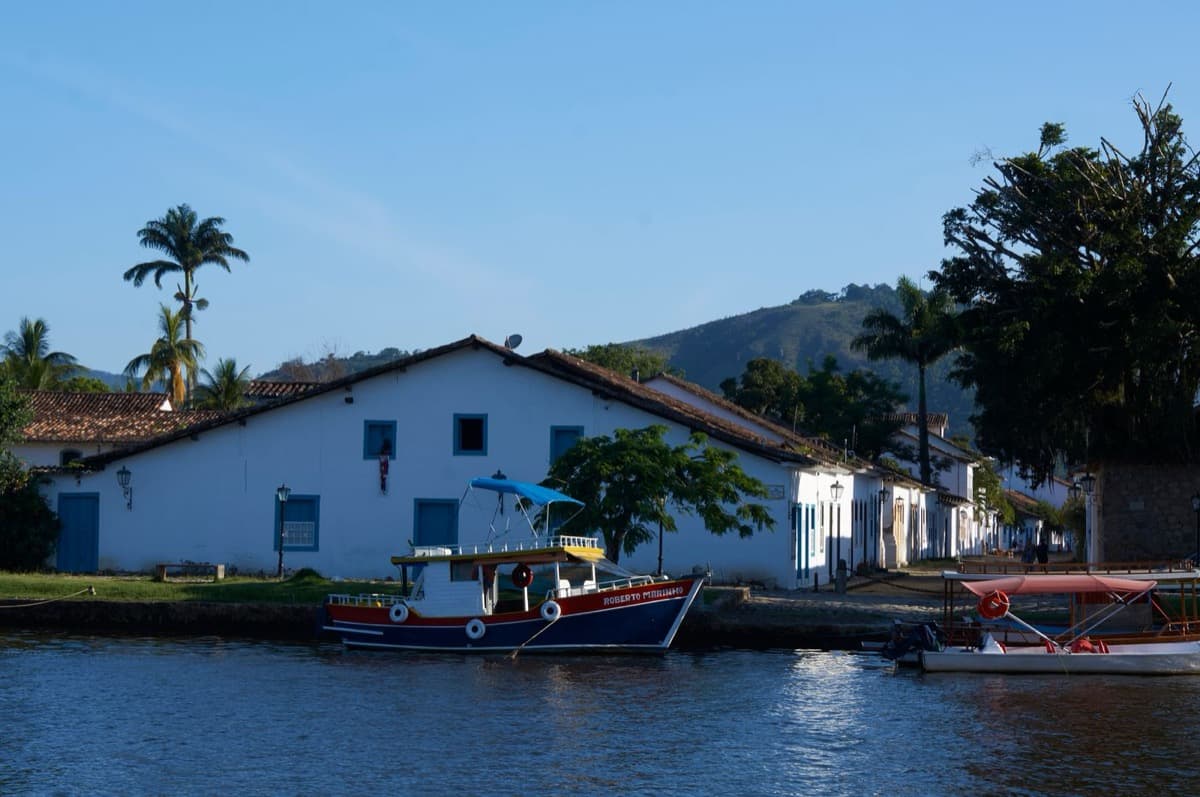
Paraty is a whitewashed colonial town that exists because of gold: the Atlantic port where a mountain fortune was loaded for Lisbon, then forgotten so completely it survived almost perfectly intact. Walk the old treasure port from quay to hilltop fort and read a whole boom and bust written into the streets.
Start · Cais de Paraty: The Old Port
DirectionsStops
- 1
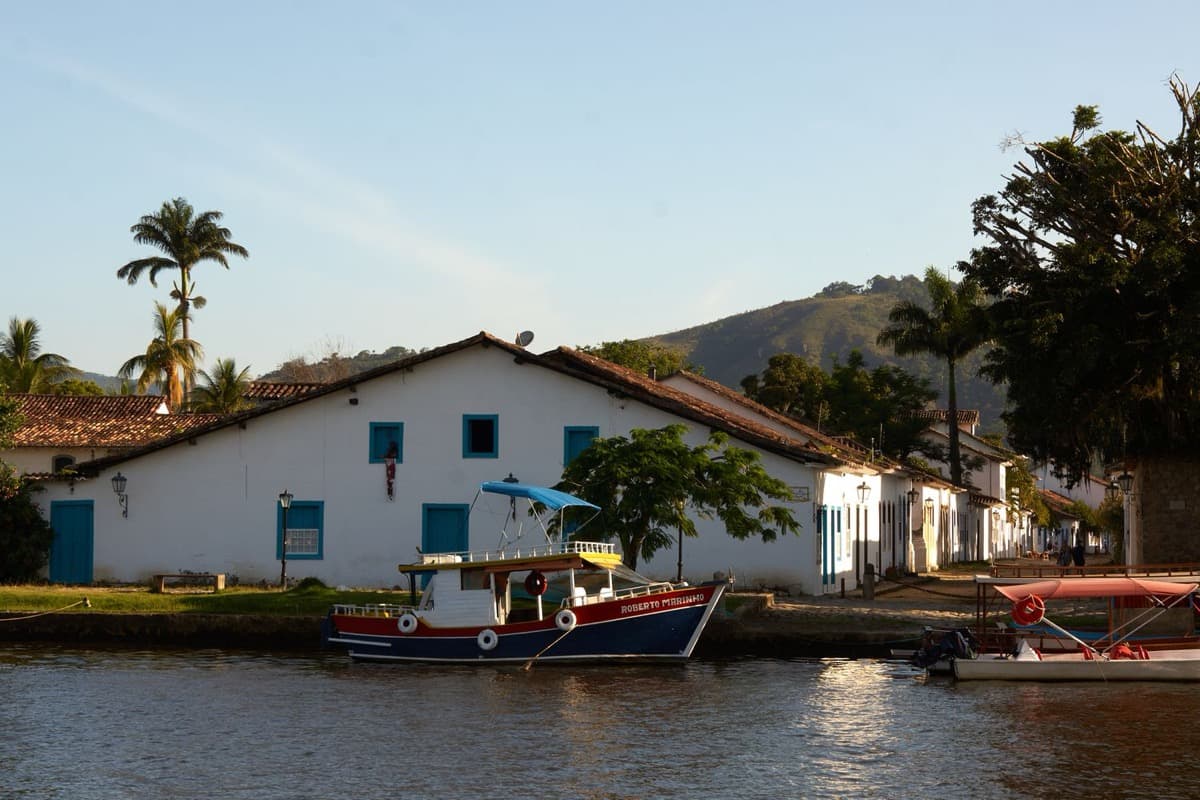
Cais de Paraty: The Old Port
The waterfront where a mountain fortune met the sea, the literal reason the town exists and the barometer of its every boom and bust.
- 2
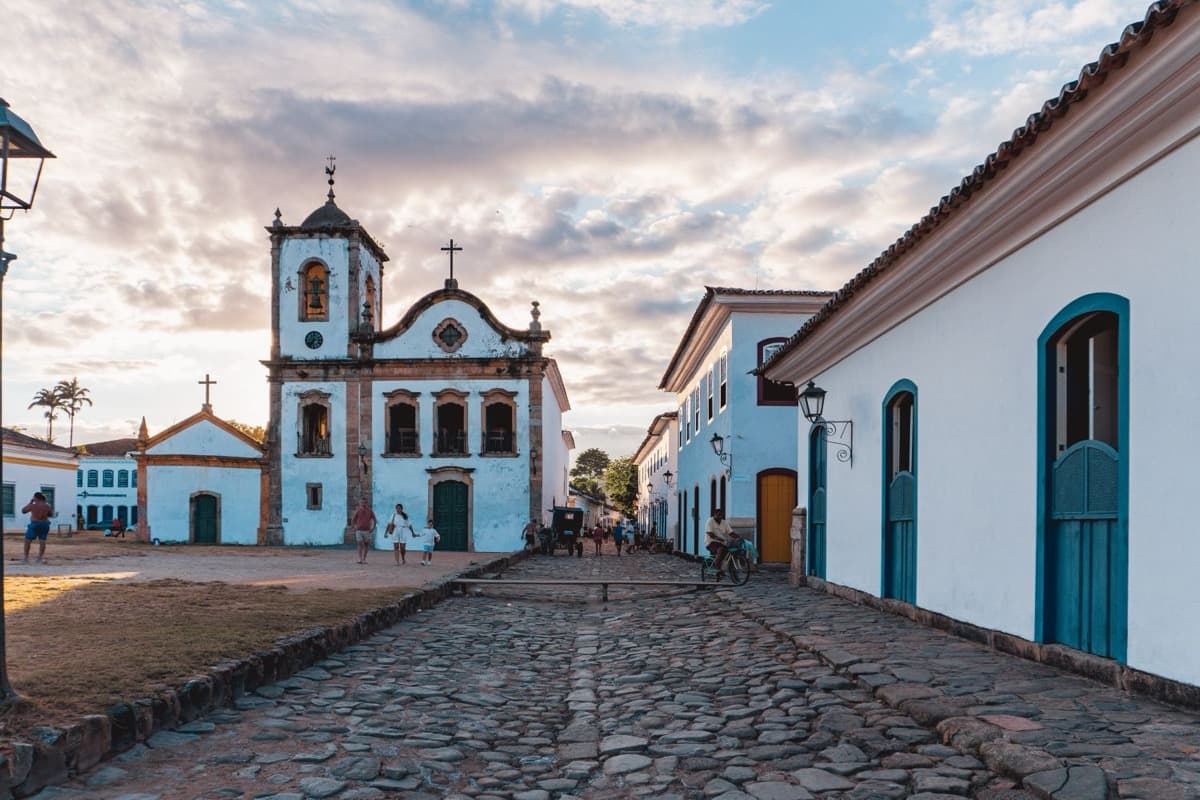
Igreja de Santa Rita: The Town's Conscience
Paraty's oldest surviving church, built by and for freed people barred from the main church, and now the classic postcard at the water's edge.
- 3
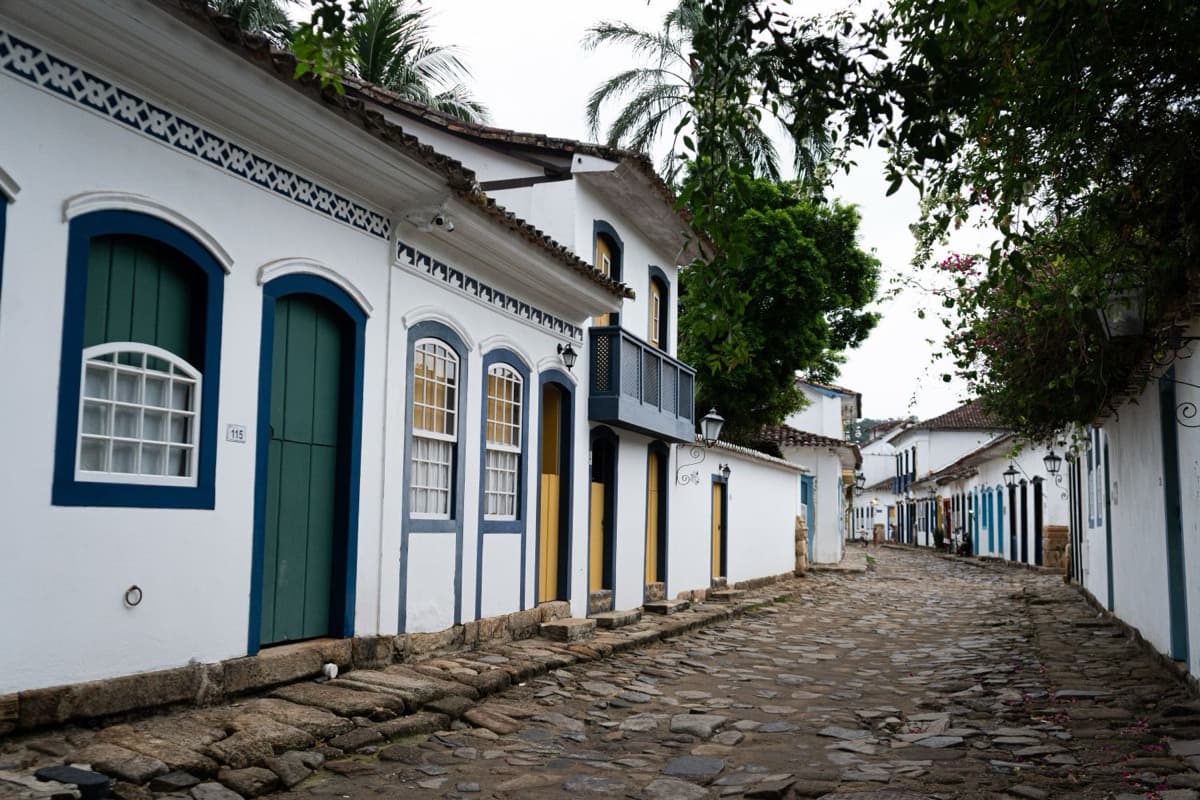
Rua do Comercio and the Pe de Moleque Cobbles
The old commercial spine of the town, paved with irregular stones engineered so the tide floods in and drains back out, washing the streets clean.
- 4
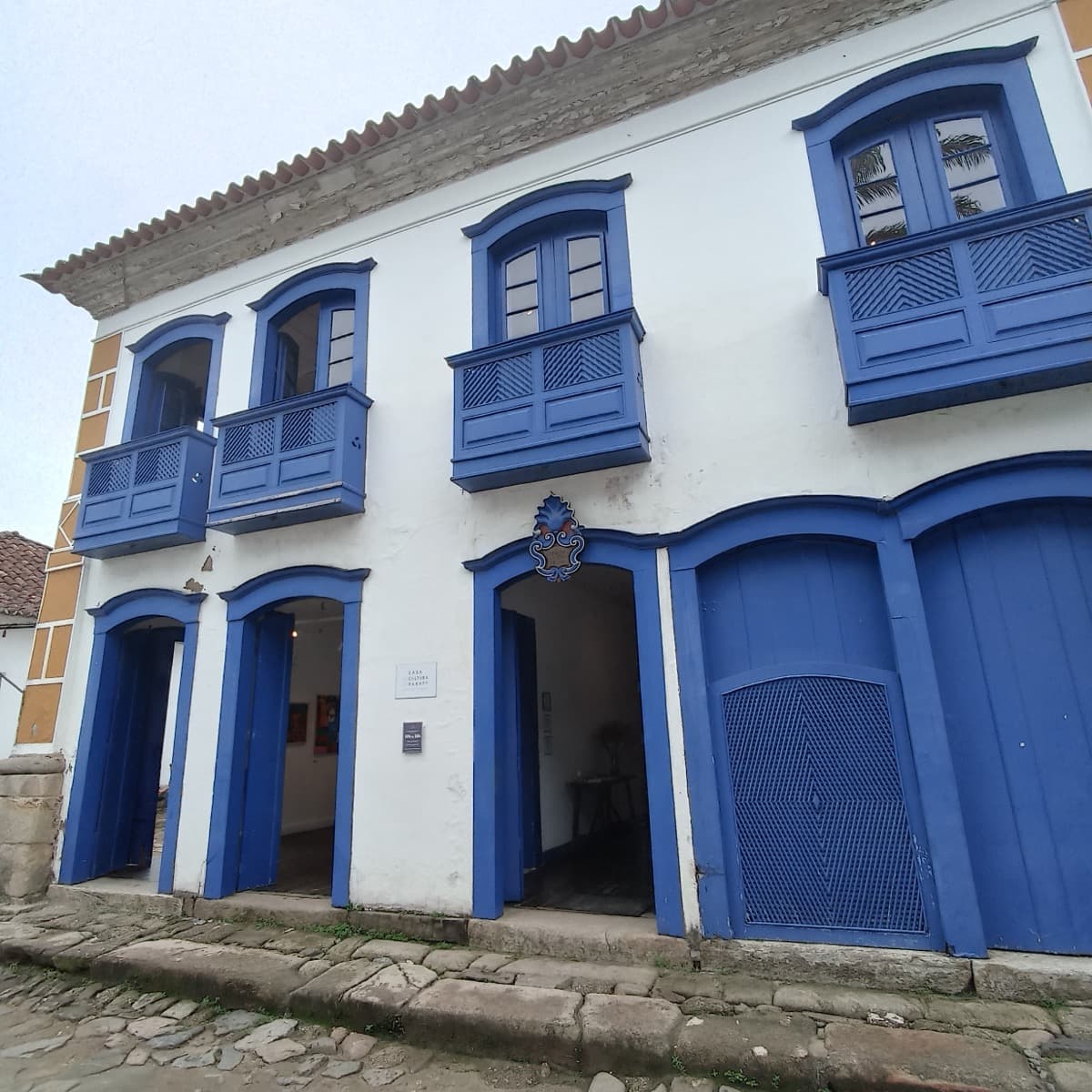
Casa da Cultura de Paraty
A surviving eighteenth-century colonial mansion, the perfect vantage point from which to tell the story of the mule trail that carried the gold down to the sea.
- 5
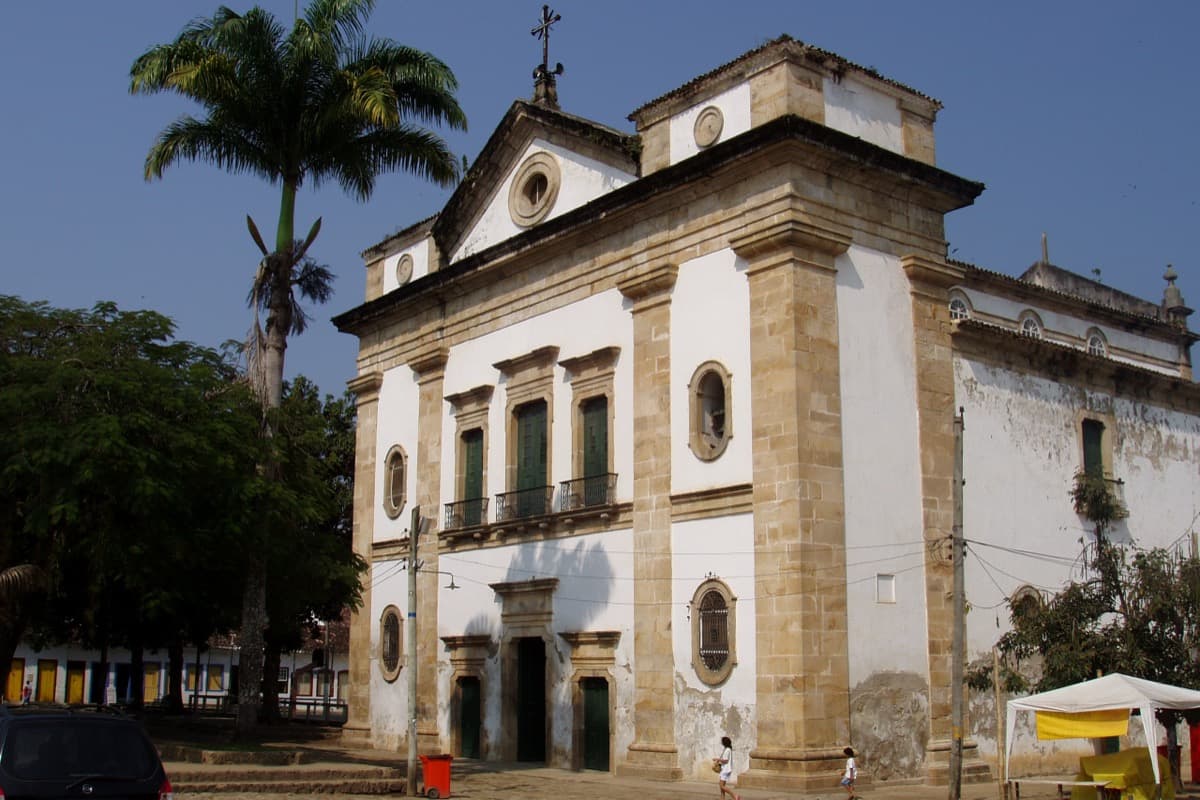
Igreja Matriz de Nossa Senhora dos Remedios
The town's mother church and namesake, whose unfinished towers quietly record a boom that ran out before the ambition did.
- 6
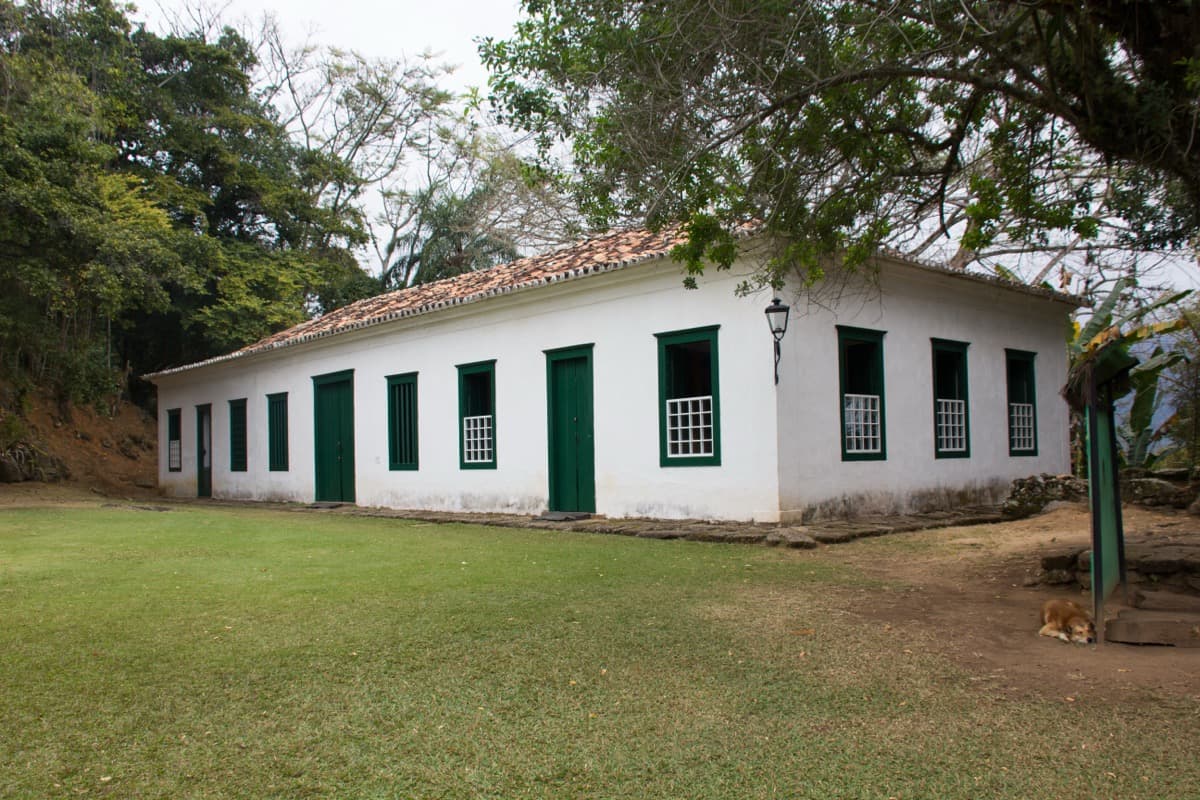
Forte Defensor Perpetuo
The hilltop fort that guarded the treasure port, and the closing view over a bay that went quiet once the gold found a faster road inland.
Details
Best Time to Visit
Come in the cooler, gentler light of early morning or late afternoon, when the whitewash glows and the day's heat eases. If you can, time your visit to a spring tide or a full moon and watch the streets flood and drain, the town's ancient cleaning system quietly at work. The drier season, roughly April through September, brings less rain than the humid summer months of December through February, when sudden downpours are common.
Pro Tips
- •Wear sturdy, closed shoes with good grip. The pe de moleque cobbles are gorgeous and genuinely ankle-turning, and they can be slick when wet.
- •Check the tide before you wander. On high tides parts of the historic center flood by design, so plan your route and your footwear around the water.
- •The historic center is small and flat, so go slowly and let yourself get pleasantly lost. The fort is the one real climb, reached over a footbridge on the far side of the river north of the grid.
- •Carry small bills in Brazilian reais for the modest museum fees at Santa Rita and the fort, and verify opening hours locally, since they shift with the season.
- •To actually walk the Caminho do Ouro stone trail inland, arrange an authorized local guide. The trailhead is about ten kilometers out of town near the Igreja da Penha, not in the center.
- •Early morning is the quietest and coolest time to photograph the waterside churches, before the day-trippers and tour boats arrive.
Safety & Precautions
- •The coastal heat and sun are strong. Carry water, wear a hat and sunscreen, and take shade breaks, especially at the exposed port and the hilltop fort.
- •Summer brings sudden heavy rain and high humidity, and rain makes the cobbles slippery. Watch your footing and give yourself extra time on wet stones.
- •These churches and their sacred-art collections are active places of devotion and heritage. Dress modestly inside, keep your voice low, and ask before photographing services or objects.
- •Paraty's historic center is generally calm, but use ordinary city sense. Keep valuables secure and close, stay aware on the quieter unlit lanes after dark, and mind your step on the uneven paving.
Travel advisory: Exercise Increased Caution (Level 2).
Gallery
Related Reading
Go deeper on what you'll see, hear, and walk through.
Overview
Best Self-Guided Walking Tours in Paraty (2026)
3 min
Overview
One Day in Paraty: A Walkable Colonial-Port Itinerary (2026)
5 min
Overview
Paraty Travel Guide: How Many Days, Getting There, When to Go (2026)
5 min
Deep dive
Forte Defensor Perpetuo: The Fort Built to Guard Paraty's Gold
5 min
Deep dive
The Streets of Paraty Are Cleaned by the Moon
6 min
Read the walk
The full story of Historic Center: The Gold Trail Port, in words. Prefer to listen? Play it narrated, from home or on location.
Introduction
On the coast of Rio de Janeiro state, in Brazil, sits a small colonial town that owes its entire existence to gold. This walk through Paraty covers six stops, runs roughly ninety minutes at an easy pace, and travels about two and three quarter kilometers over whitewashed streets and one gentle climb. The story it tells is simple and a little tragic. Gold arrived, gold left, and the town was forgotten into the near perfect state you will find it in today. In sixteen ninety-three, gold was discovered inland in the mountains of Minas Gerais, and Paraty became the Atlantic doorway where that wealth was loaded onto ships for Lisbon. For a generation the town mattered enormously. Then, in the early seventeen hundreds, a more direct road opened between the mines and Rio de Janeiro, the gold found a faster way out, and Paraty's whole reason for being quietly expired while it was still young. The neglect that followed is exactly what preserved it. You will read that story in the built environment itself. In a port that measured every boom and bust. In the oldest church, raised by the very people the boom excluded. In streets paved to let the tide wash them clean. In a colonial mansion that anchors the tale of the mule trail. In a grand parish church whose towers were never finished. And finally in a fort on the hill that guarded a treasure the town would lose. Go at your own speed. Linger where you like and skip what you do not. When you arrive at the old port, the Cais de Paraty, begin with stop one.
1. Cais de Paraty: The Old Port
Stand at the water and you are standing at the reason Paraty exists. This waterfront was the port, the point where a whole inland fortune reached the sea. In sixteen ninety-three, gold was found in the mountains of Minas Gerais, far to the northwest, and there had to be a way to get it out of the country and onto ships bound for Lisbon. That way ran down to right here. Mule trains came off the mountains loaded with gold, and at this frontage it was weighed, taxed, and loaded onto vessels for the crossing to Portugal. The same ships that carried gold out carried tools and enslaved Africans in, people forced onward to the mines. UNESCO's citation describes Paraty as the Atlantic end point of the gold route, and that is the plainest way to understand the town. Everything here grew up to serve this quay. Read this water as a barometer. When the gold flowed, the port was rich. When a more direct road to Rio de Janeiro opened in the early seventeen hundreds and the gold found a faster way out, this frontage went quiet, and the town had to find something else to ship. For a while that was cachaca, the sugarcane spirit. In the early eighteen hundreds it was coffee, hauled down from the Paraiba valley, until a railway in that valley routed the coffee straight to Rio and left Paraty behind again. Every rise and fall of the town is written in the traffic at this pier. Schooners still tie up here today. Watch them a moment, and picture the gold.
2. Igreja de Santa Rita: The Town's Conscience
This little church at the water's edge is the oldest one still standing in Paraty, built in seventeen twenty-two. It is also the town's conscience. The gold that raised Paraty was pulled out of the ground and carried down the trail by enslaved Africans, and the society that gold built was rigidly ranked. Those ranks were written into the architecture. This church was raised by and for a brotherhood of freed pardos, mixed race free people, who were not allowed to worship in the town's main, white church. So they built their own, here, and dedicated it to Saint Rita of Cascia, remembered as the patron of desperate and impossible causes. Consider that dedication, chosen by people the boom deliberately excluded. Architecturally it is modest and honest. Stone and lime, whitewashed, a single tower, none of the grandeur the wealthy churches reached for. That restraint is part of what makes it beautiful. Set right against the bay, its white face reflected in the water, it has become the image most people carry home from Paraty. Inside today you will find the Museum of Sacred Art, with religious sculpture, paintings, silver, and liturgical pieces gathered from the region. There is a small fee to enter the museum, though the square and the waterside view cost nothing. Stand here and hold two things at once. The postcard, and the reason it exists. A community shut out of the main church made this quiet, lovely place their own, and it outlasted every grander ambition around it.
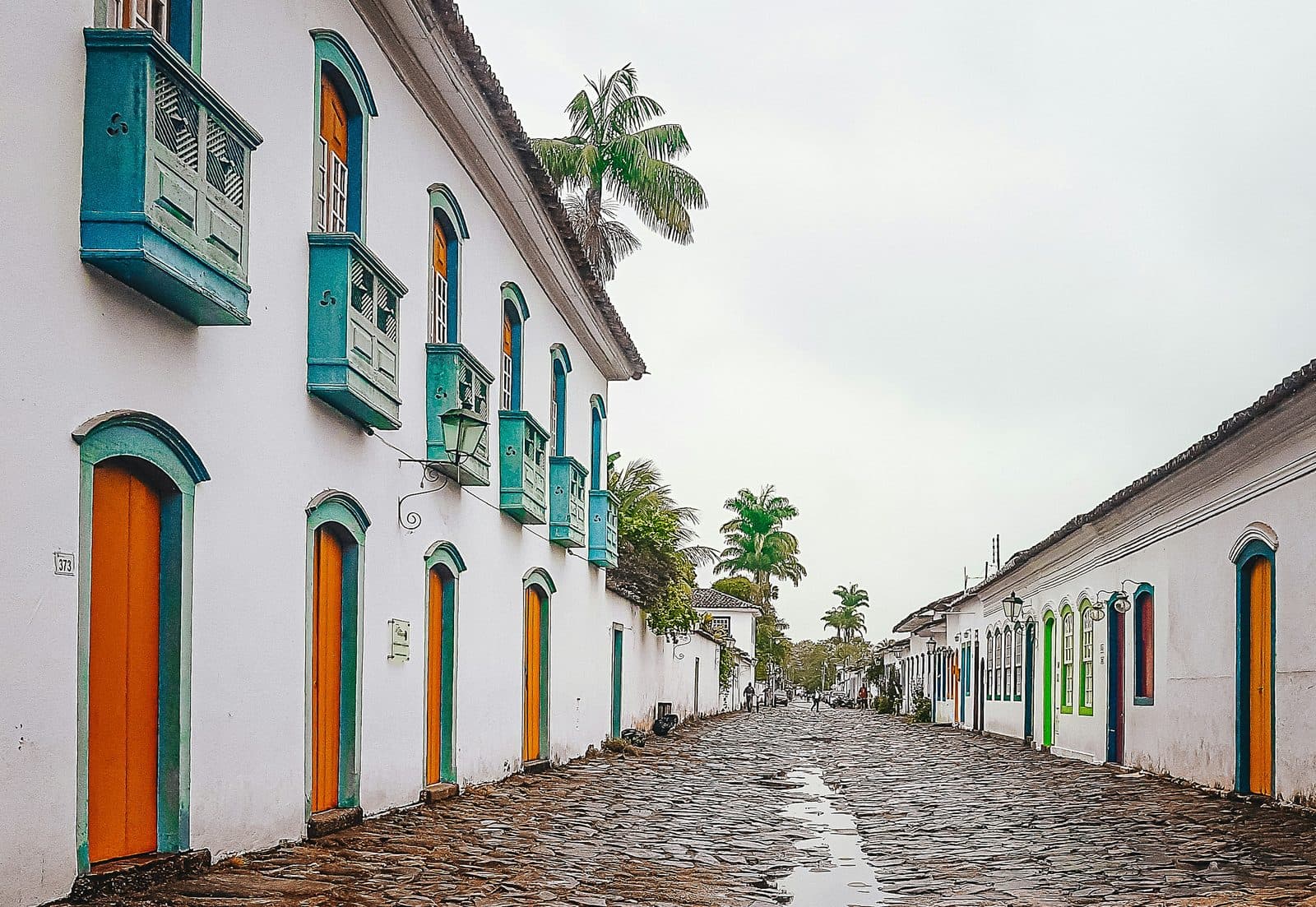
3. Rua do Comercio and the Pe de Moleque Cobbles
This is the old commercial spine of the town, the street of commerce, lined with colonial fronts that have barely changed in centuries. Look down, though, because the real genius of Paraty is under your feet. The whole historic grid is paved with big, irregular stones the locals…
Full narration for this stop unlocks with the tour.
4. Casa da Cultura de Paraty
This handsome colonial mansion gives us the perfect place to tell the story of how the gold actually got here, because none of it arrived by sea from inland. It came overland, on muleback, down a stone road called the Caminho do Ouro, the gold trail. That trail was cut and paved…
Full narration for this stop unlocks with the tour.
5. Igreja Matriz de Nossa Senhora dos Remedios
Here is the town's mother church, its matriz, standing over the main square. Its full colonial name gave the town its own formal title. The settlement was chartered as the village of Our Lady of the Remedies of Paraty. So this dedication is, in a sense, the town's namesake. What…
Full narration for this stop unlocks with the tour.
6. Forte Defensor Perpetuo
You have climbed a little to reach this fort on the hill north of the old town, and the climb is the point, because from up here you can see what all of it was for. This rise is where the first Portuguese occupation of the area stood back in the sixteen hundreds, marked by an…
Full narration for this stop unlocks with the tour.