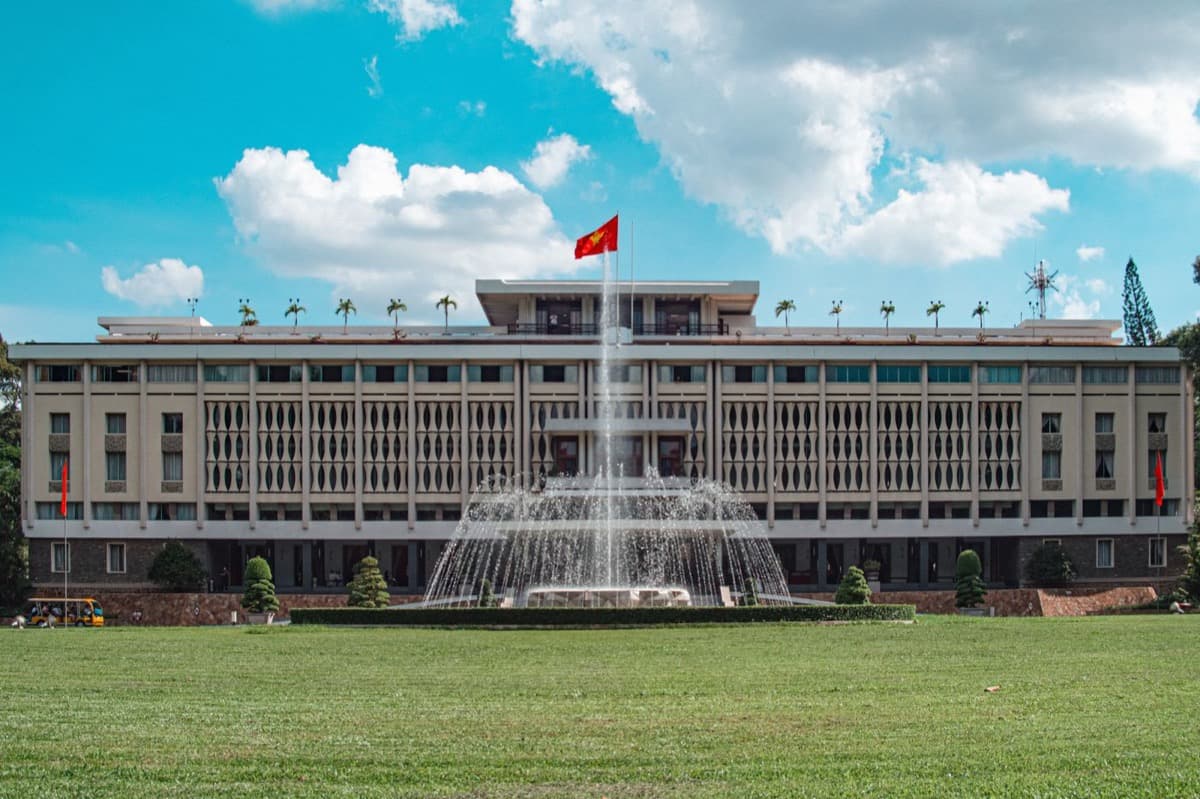
Retrace the last hours of the Republic of Vietnam on the morning of April thirtieth, nineteen seventy-five, through the palace where the war ended, the museum that holds its evidence, and the old press hotels where the world learned a republic had fallen. A calm, factual walk about the end of one Vietnam and the start of another.
Start · Independence Palace: Where the War Ended
DirectionsStops
- 1
Independence Palace: Where the War Ended
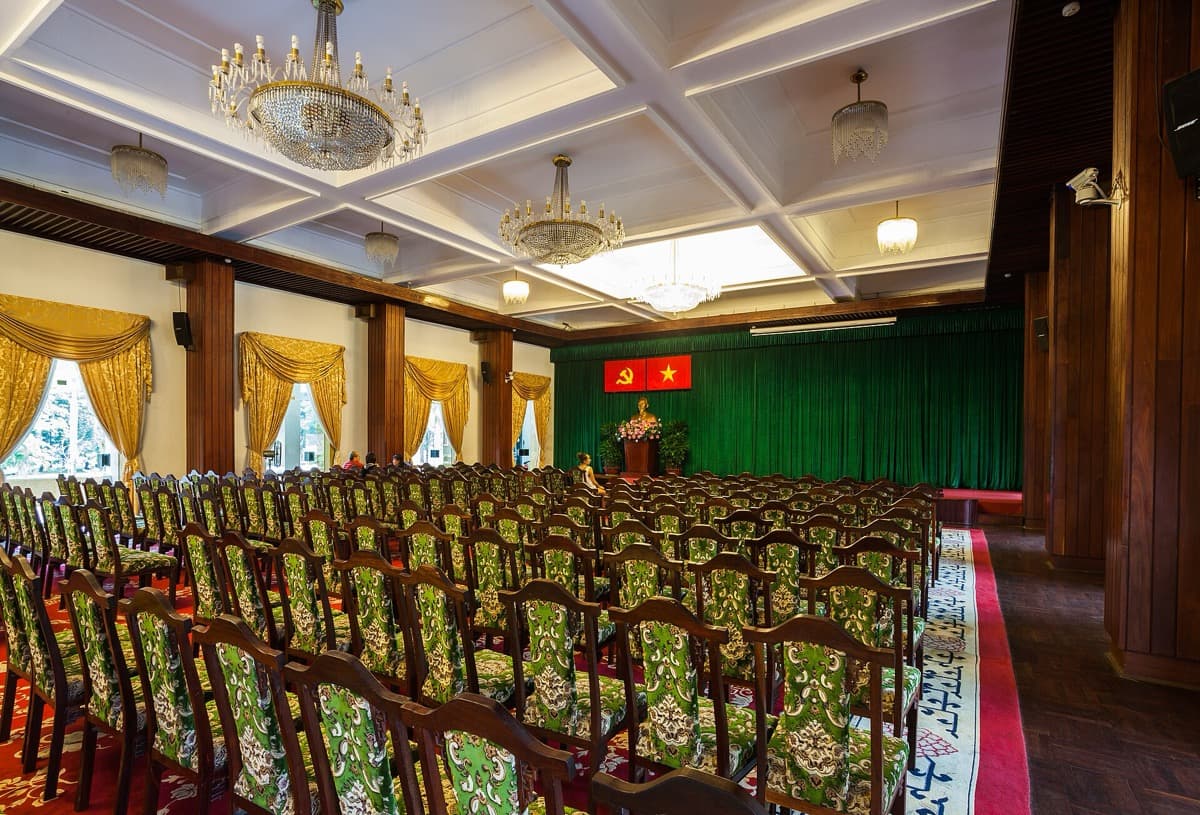
The preserved modernist palace of the South Vietnamese president, kept much as it was the morning the tanks broke the gate.
- 2
War Remnants Museum: The Physical Evidence
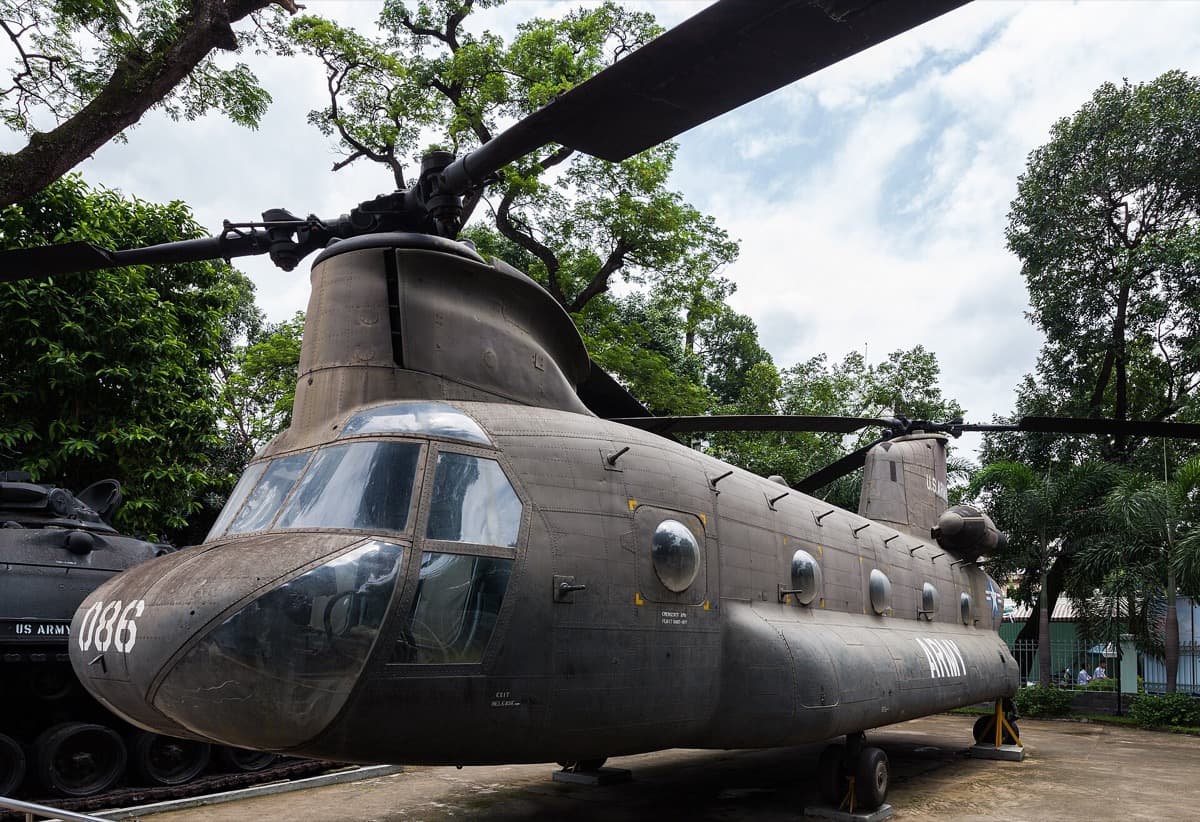
The museum that documents the human cost of the war, from Agent Orange to the aircraft left behind in its courtyard.
- 3
Turtle Lake: A Breath in the Old City
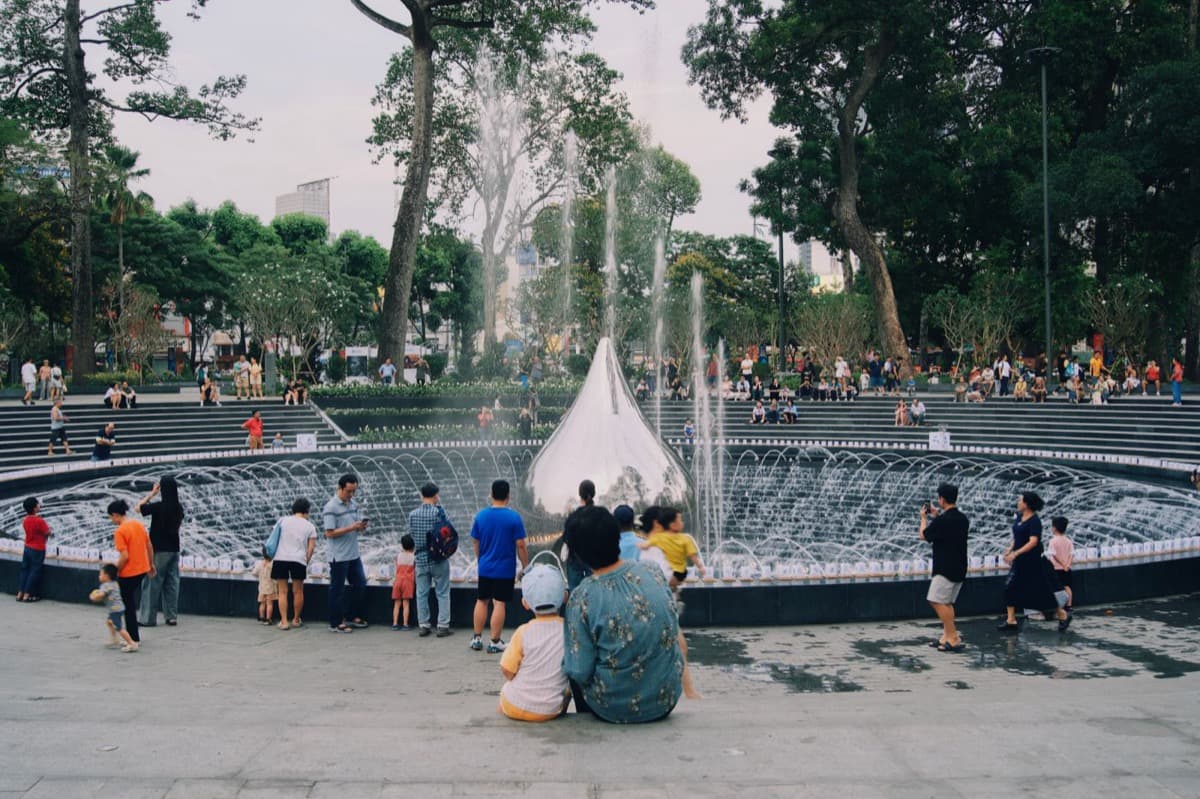
A modernist fountain plaza from the republic's final years, an everyday corner of the war-era city that outlived the government that built it.
- 4
Former US Embassy Site: The Empty Roof
The site of the American chancery, hub of the Tet attack in nineteen sixty-eight and the helicopter evacuation of nineteen seventy-five.
- 5
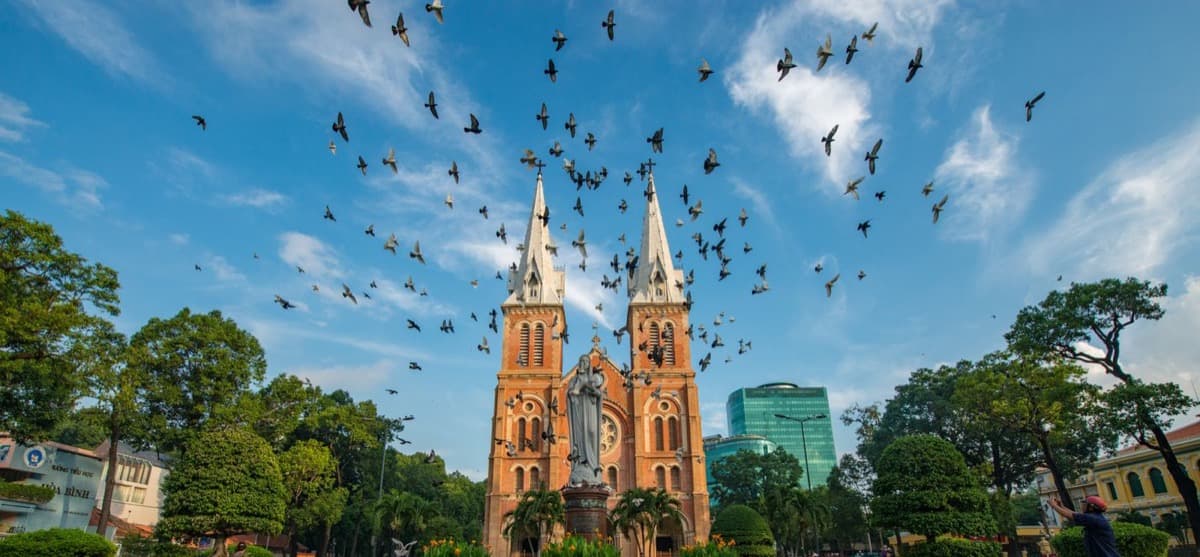
Saigon Notre-Dame Cathedral Square: The Calm Witness
The French-built cathedral that stood through colony, republic, and reunification, a fixed point at the center of the city.
- 6
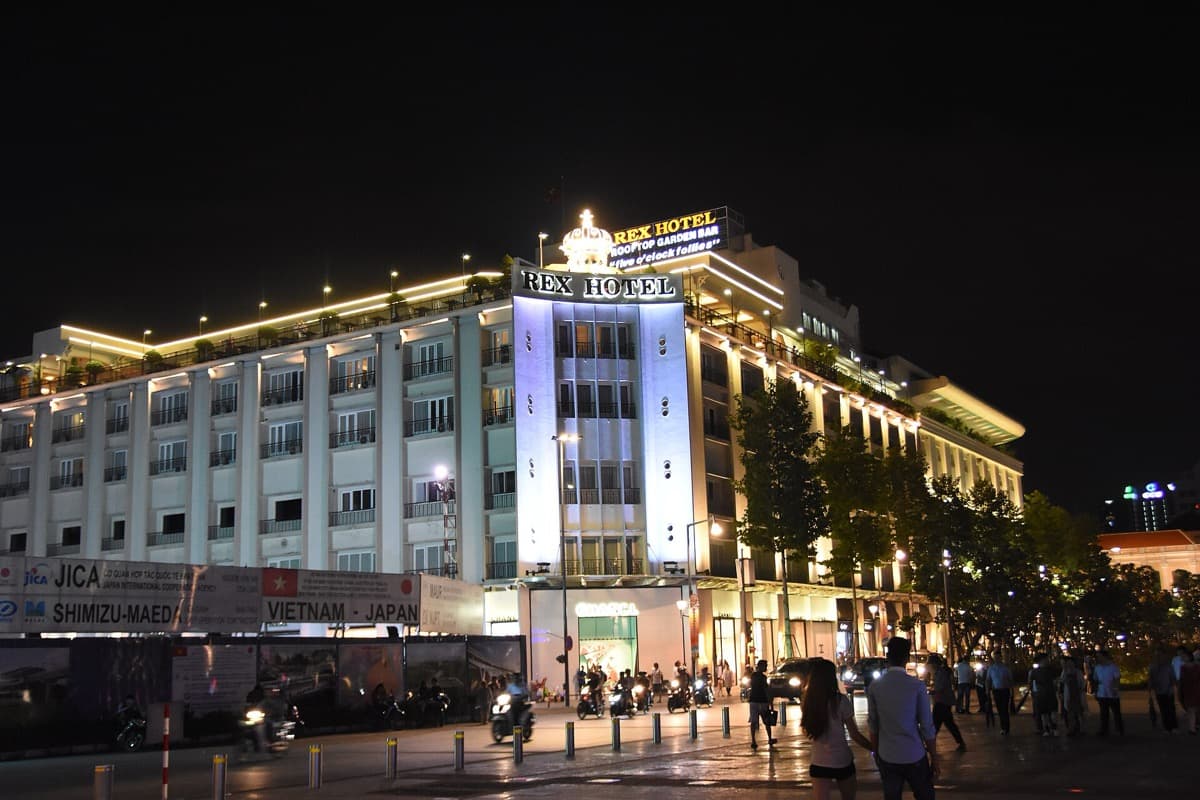
Hotel Continental and the Rex: Where the News Was Filed
The colonial press hotels by the opera house, where the world's correspondents watched and reported the fall of the republic.
Details
Best Time to Visit
The cool of early morning, from about eight o'clock when the Independence Palace opens its gates, is the best time to start. You will beat the midday heat for the outdoor stops and reach the War Remnants Museum before the tour groups fill its halls. The dry season, from roughly December to April, brings the clearest weather. From May to November, aim for mornings to stay ahead of the afternoon monsoon downpours.
Pro Tips
- •Buy your palace ticket at the gate for about forty thousand dong, and consider the combined ticket if you want the extra exhibition hall.
- •Give the War Remnants Museum at least an hour; it is a demanding stop, and rushing it does it no justice.
- •Carry small dong notes for entry fees, water, and iced drinks, since not every counter takes cards.
- •The stops are close together, but the museum can be emotionally heavy, so pace yourself and use Turtle Lake as a genuine rest.
- •Start early to keep the outdoor stops, the plaza, the embassy site, and the cathedral square, in morning shade.
- •The cathedral has been under long restoration, so plan to enjoy it from the square rather than counting on going inside.
Safety & Precautions
- •Traffic is constant and motorbikes rarely stop, so cross the street slowly and steadily, keep a predictable pace, and let the riders flow around you rather than darting or freezing.
- •The heat and humidity are serious; wear light clothing, use sun protection, and drink water often, especially between the outdoor stops.
- •From May to November, sudden monsoon downpours can arrive in minutes, so carry a compact rain layer and be ready to shelter in a museum or cafe.
- •In busy squares and near the markets, keep your bag zipped and worn across your front, and hold your phone firmly near traffic where snatch thefts can happen.
- •The cathedral is an active place of worship, so dress modestly at the shoulders and knees and keep your voice low if services are underway.
Travel advisory: Exercise Normal Precautions (Level 1).
Gallery
Related Reading
Go deeper on what you'll see, hear, and walk through.
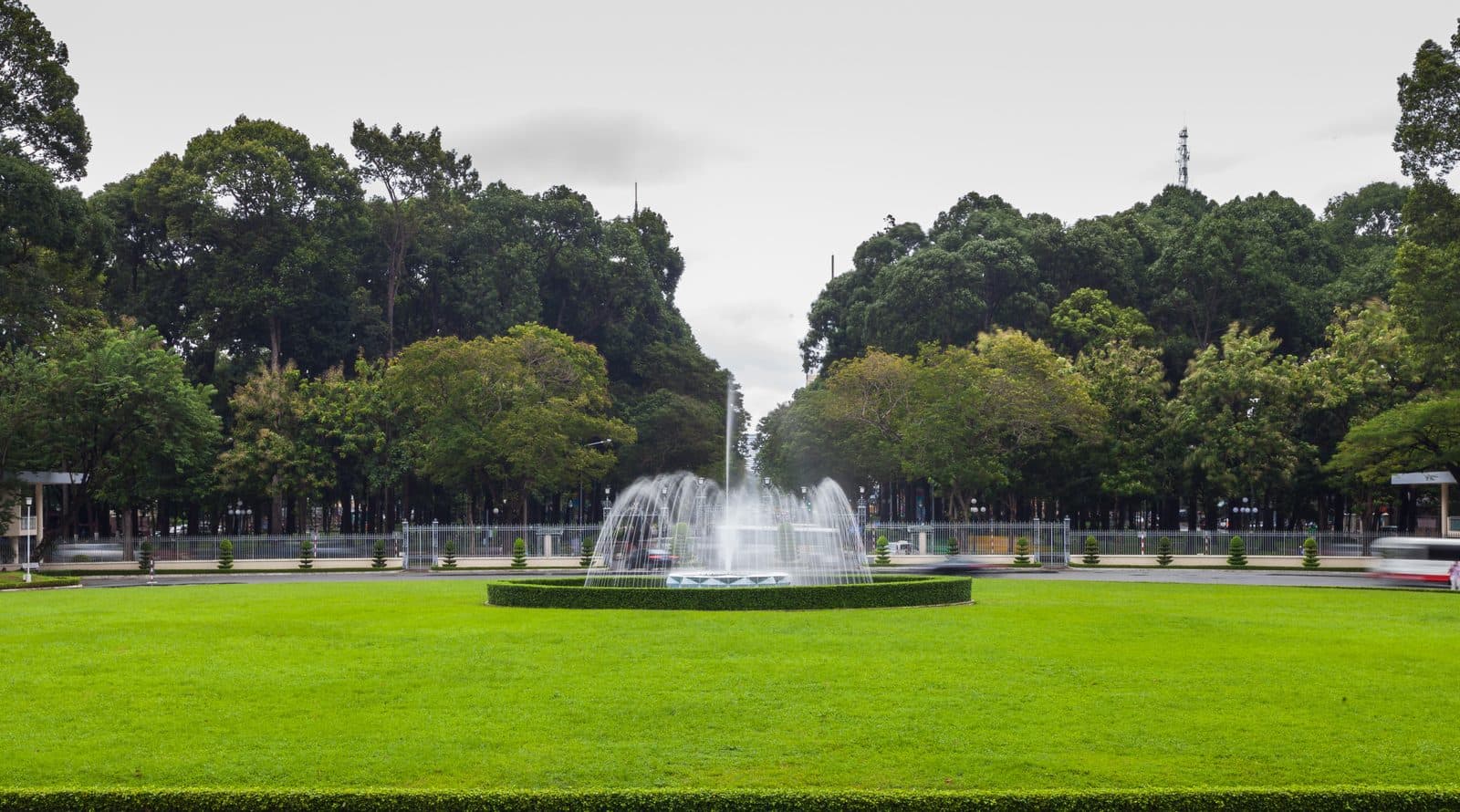
Overview
Best Self-Guided Walking Tours in Ho Chi Minh City (2026)
4 min
Overview
Ho Chi Minh City Travel Guide: How Many Days, Getting Around, When to Go (2026)
5 min
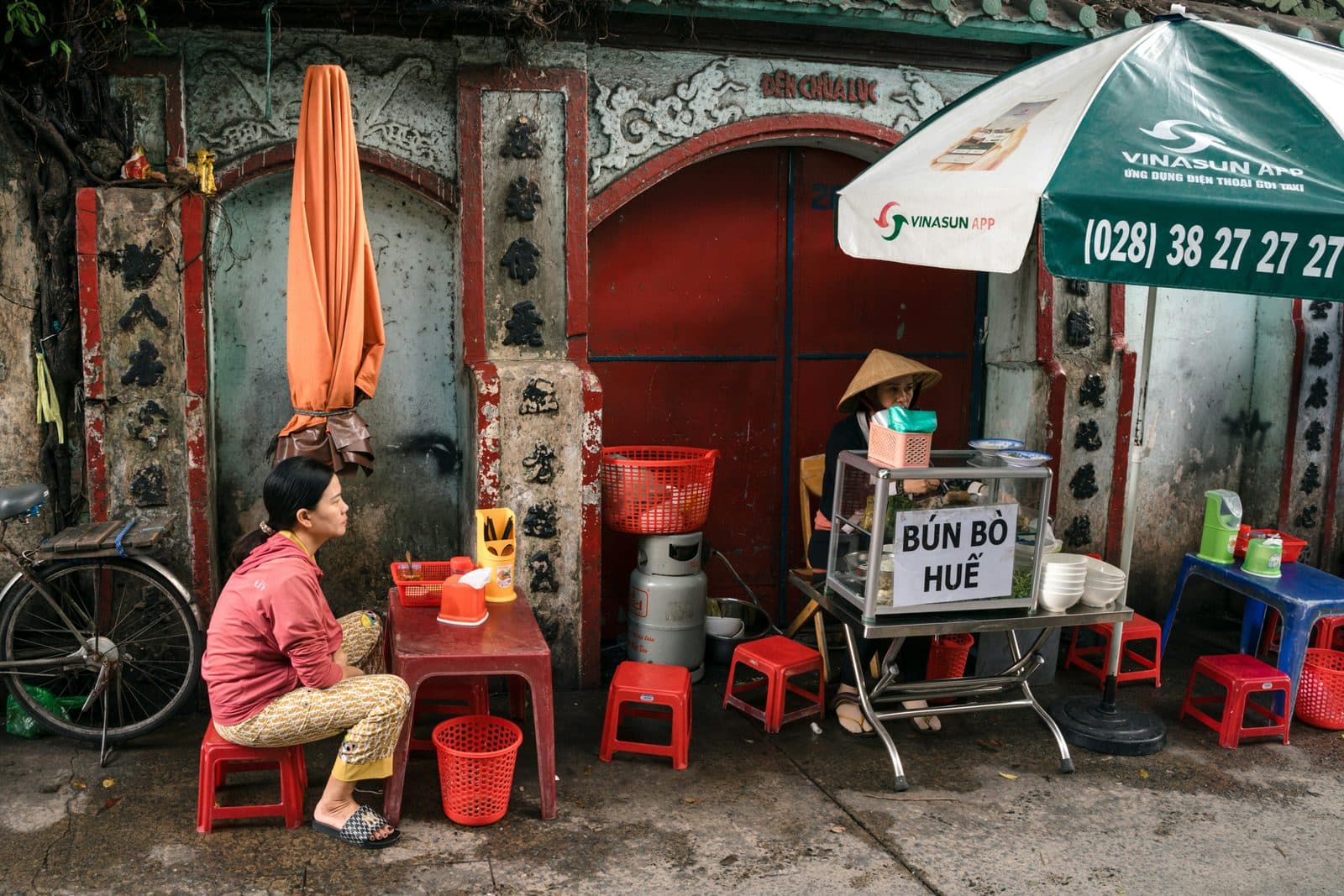
Overview
How to See Saigon: A City of Kept Frames
6 min
Overview
One Day in Ho Chi Minh City: A Walkable Saigon Itinerary (2026)
6 min
Companion
The City That Did Not Burn: Saigon on the Last Day
7 min
Deep dive
The Last Morning: What Happened at Independence Palace
7 min
Read the walk
The full story of Reunification Palace: The Last Day, in words. Prefer to listen? Play it narrated, from home or on location.
Introduction
On the morning of April thirtieth, nineteen seventy-five, the Vietnam War ended in a single quiet morning in this city. This walk follows the last hours of the Republic of Vietnam through six stops across District One and District Three, a loop of roughly five kilometres that takes about two and a half hours at your own unhurried pace, with time to linger or skip a stop as you like. You are in Ho Chi Minh City, Vietnam, the metropolis that most of the world still knew as Saigon on the day the war closed. The counter-intuitive truth of that day is that Saigon did not burn. The city changed hands in one morning and survived almost whole, which is exactly why you can still walk it now. You will begin at the palace where the war ended, move to the museum that holds its physical evidence, pass a modernist fountain plaza from the republic's final years, stand before the site of the empty embassy, rest in the square of the old cathedral that watched it all, and finish at the colonial hotels where the world's press filed the news that a republic had fallen. This is a walk about an ending and a beginning, told plainly and without triumph, honoring the dead of all sides. Wear light clothes and good shoes, carry water for the heat, and take the street crossings slowly. Each stop stands on its own, so you can pause, rest, or step inside a museum whenever you wish. When you arrive at the Independence Palace, begin with stop one.
1. Independence Palace: Where the War Ended
You are standing at the place where the Vietnam War ended. This is the Independence Palace, also called the Reunification Palace, designed by the Vietnamese architect Ngo Viet Thu, who had won the Grand Prix de Rome in the year nineteen fifty-five. It was built between nineteen sixty-two and nineteen sixty-six and completed on the thirty-first of October, nineteen sixty-six, as the home and office of the president of the Republic of Vietnam, the country the world called South Vietnam. On the morning of the thirtieth of April, nineteen seventy-five, at about a quarter to eleven, a tank of the North Vietnamese army broke through the palace gate, and with that the war was over. Vietnamese museum records document the two tanks by number. Tank number eight four three, commanded by Bui Quang Than of the two hundred third Armored Brigade, struck a side gate, and tank number three ninety, led by the political commissar Vu Dang Toan, crashed the main gate. Both were declared national treasures in the year twenty twelve. The tanks you see parked on the lawn today are replicas. The originals rest in military museums. Inside, the last president of the republic, Duong Van Minh, who had held office only since the twenty-eighth of April, waited and then surrendered. What makes this building rare is that it was kept almost exactly as it was that morning. The war command rooms, the rooftop helipad, the nineteen sixties furnishings, all of it preserved. Walk the halls at your own pace. The plainness of the rooms carries the weight better than any monument could.
2. War Remnants Museum: The Physical Evidence
A short walk northwest of the palace brings you to the War Remnants Museum, which opened on the fourth of September, nineteen seventy-five, only months after the war ended. Its name has changed with the times. It began as the Exhibition House for United States and Puppet Crimes, was renamed in nineteen ninety, and became the neutral War Remnants Museum in nineteen ninety-five, the same year the United States and Vietnam normalized relations. The museum documents the human cost of the war, and it does not soften it. Inside you will find exhibits on Agent Orange and the chemical defoliants sprayed across the countryside and their effects on people, halls on the My Lai massacre, and reproductions of the tiger cage prison cells. In the outdoor courtyard sits captured and abandoned American military hardware: a Bell U-H-one helicopter, a Northrop F-five fighter, an M forty-eight Patton tank, a Douglas A-one Skyraider, and a Cessna A-thirty-seven Dragonfly. This is a hard stop, and an honest one. It is fair to say the museum tells the war largely from one country's point of view, and it is also fair to let the objects speak for the losses that every side carried home. Take it at your own pace, and step outside to the courtyard when you need air. Roughly two-thirds of the museum's visitors come from outside Vietnam, which means people from many nations, including the one whose aircraft sit in the yard, walk these halls each day. Whatever you carry in, give yourself a quiet moment before you move on.
3. Turtle Lake: A Breath in the Old City
After the weight of the museum, this stop is meant to be a breath. You are at Turtle Lake, in Vietnamese Ho Con Rua, which means turtle lake, though its official name is International Square. It is a modernist fountain and monument set in the middle of a busy traffic circle in…
Full narration for this stop unlocks with the tour.
4. Former US Embassy Site: The Empty Roof
You are looking at the site of the former United States Embassy. The chancery that stood here served from nineteen sixty-seven to nineteen seventy-five, and two moments made it famous. The first came during the Tet Offensive, on the thirty-first of January, nineteen sixty-eight,…
Full narration for this stop unlocks with the tour.
5. Saigon Notre-Dame Cathedral Square: The Calm Witness
Now the walk brings you to a fixed point that has watched over Saigon through every change of flag: the Notre-Dame Cathedral, properly the Cathedral Basilica of Our Lady, built by the French. Its story reaches back to the year eighteen sixty-three. Ground was broken in eighteen…
Full narration for this stop unlocks with the tour.
6. Hotel Continental and the Rex: Where the News Was Filed
The walk ends where the news of the ending was written and filed: the old press hotels beside the opera house, the Saigon Municipal Theatre, on Lam Son Square. In front of you stands the Hotel Continental, built between eighteen seventy-eight and eighteen eighty by Pierre…
Full narration for this stop unlocks with the tour.