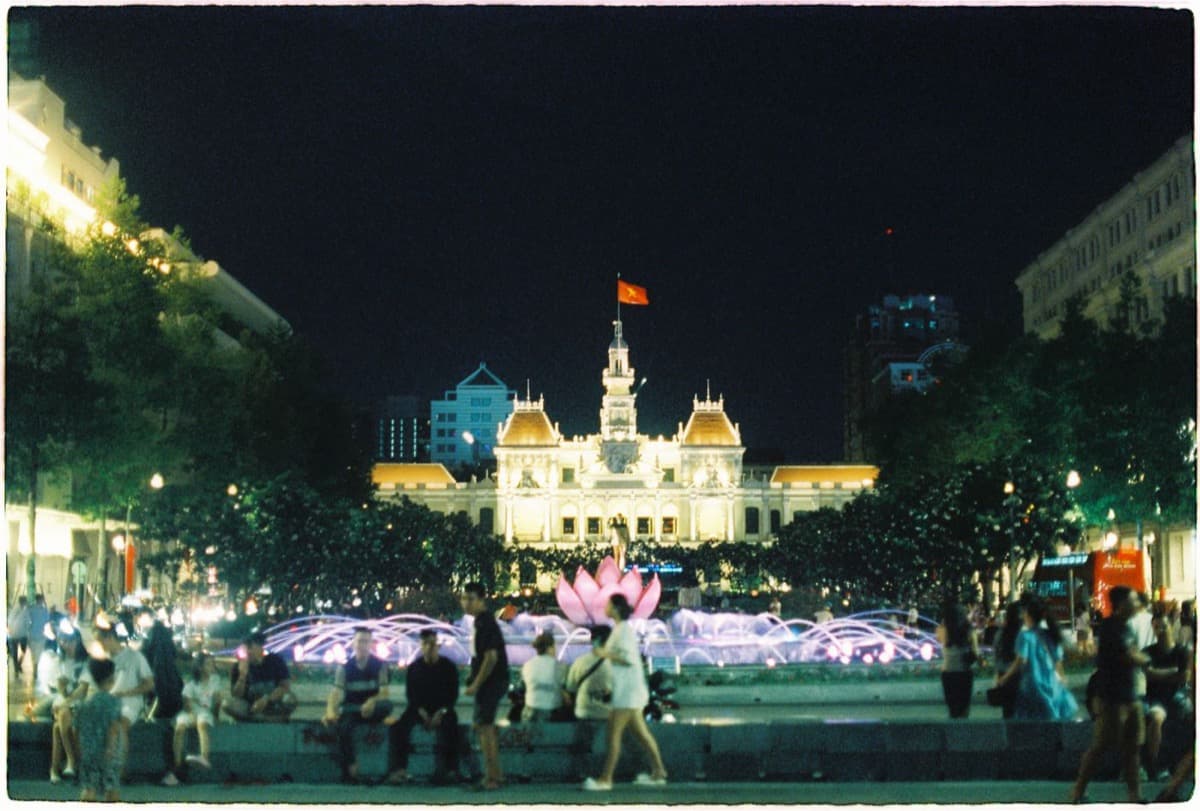
The Pearl of the Orient
The colonial heart of old Saigon reads as a single argument in stone: a cathedral, a post office, an opera house, a city hall, and a boulevard built to make an empire look eternal. This walk follows a Vietnamese city that kept every one of them and made them entirely its own.
4.38|100 minutes|2 km|7 Stops
Start
Saigon Notre-Dame Cathedral Basilica: Bricks From Toulouse
1
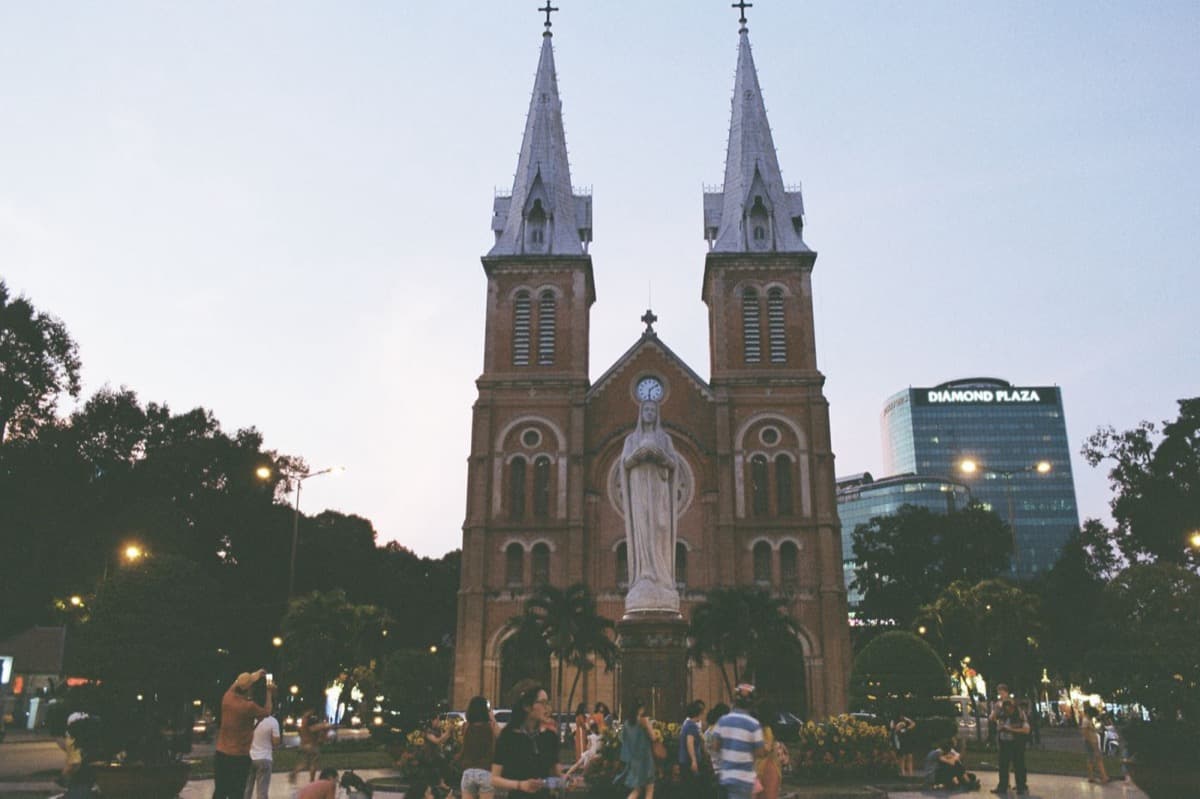
Saigon Notre-Dame Cathedral Basilica: Bricks From Toulouse
A red brick cathedral whose imported French materials still glow unfaded more than a century after it was completed.
2
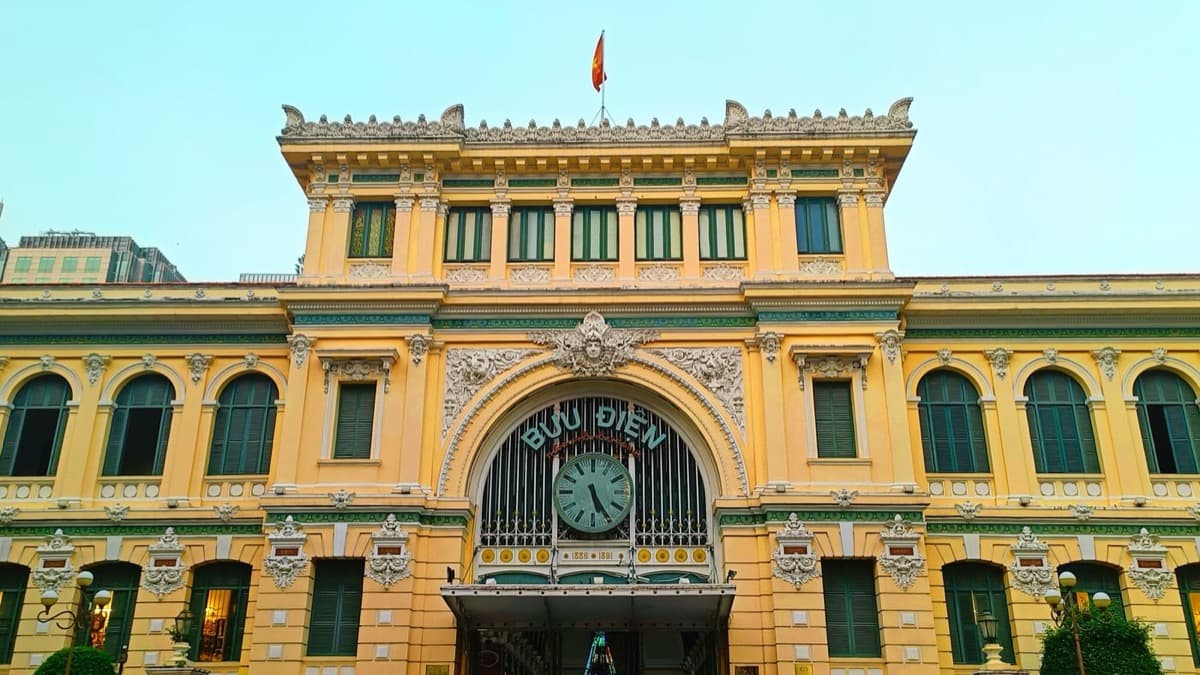
Saigon Central Post Office: The Eiffel Myth
A working post office, popularly but wrongly credited to Gustave Eiffel, whose vaulted hall still charts the empire's telegraph lines.
3
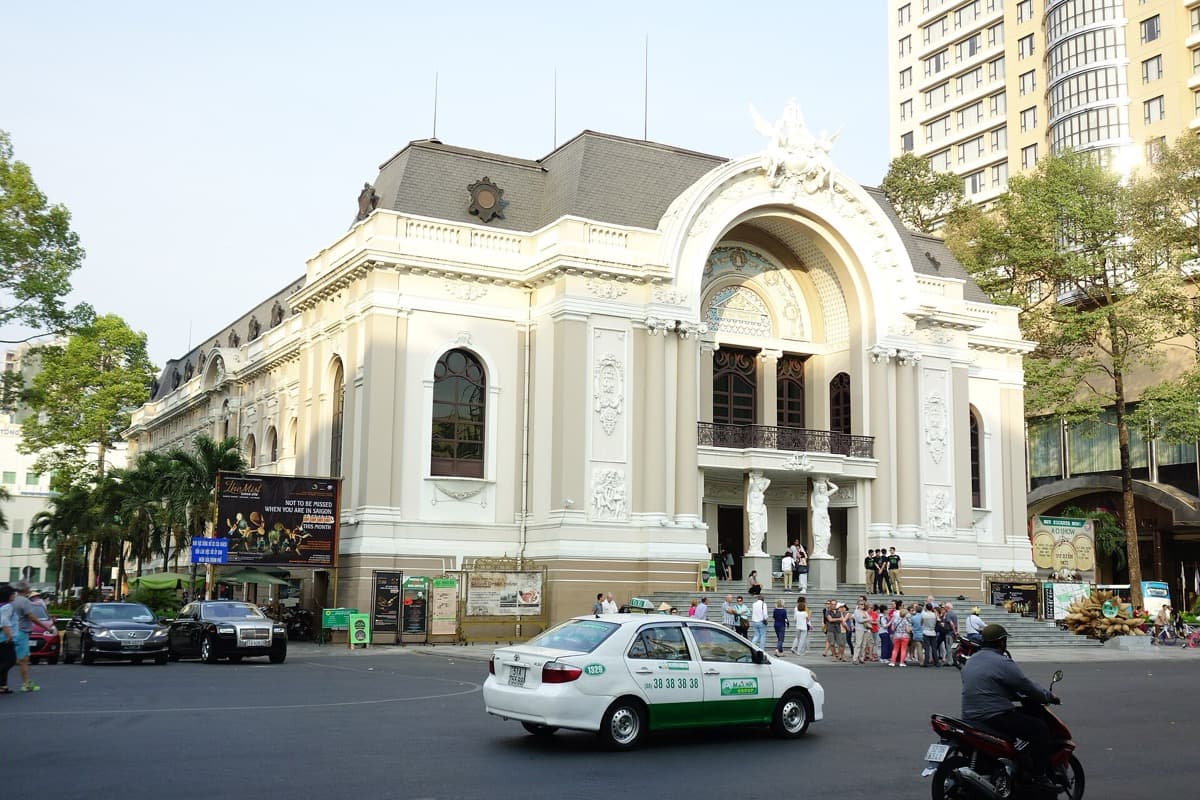
Saigon Opera House: From Arias to Parliament
A flamboyant Municipal Theatre that spent two decades as the parliament of South Vietnam before returning to the stage.
4
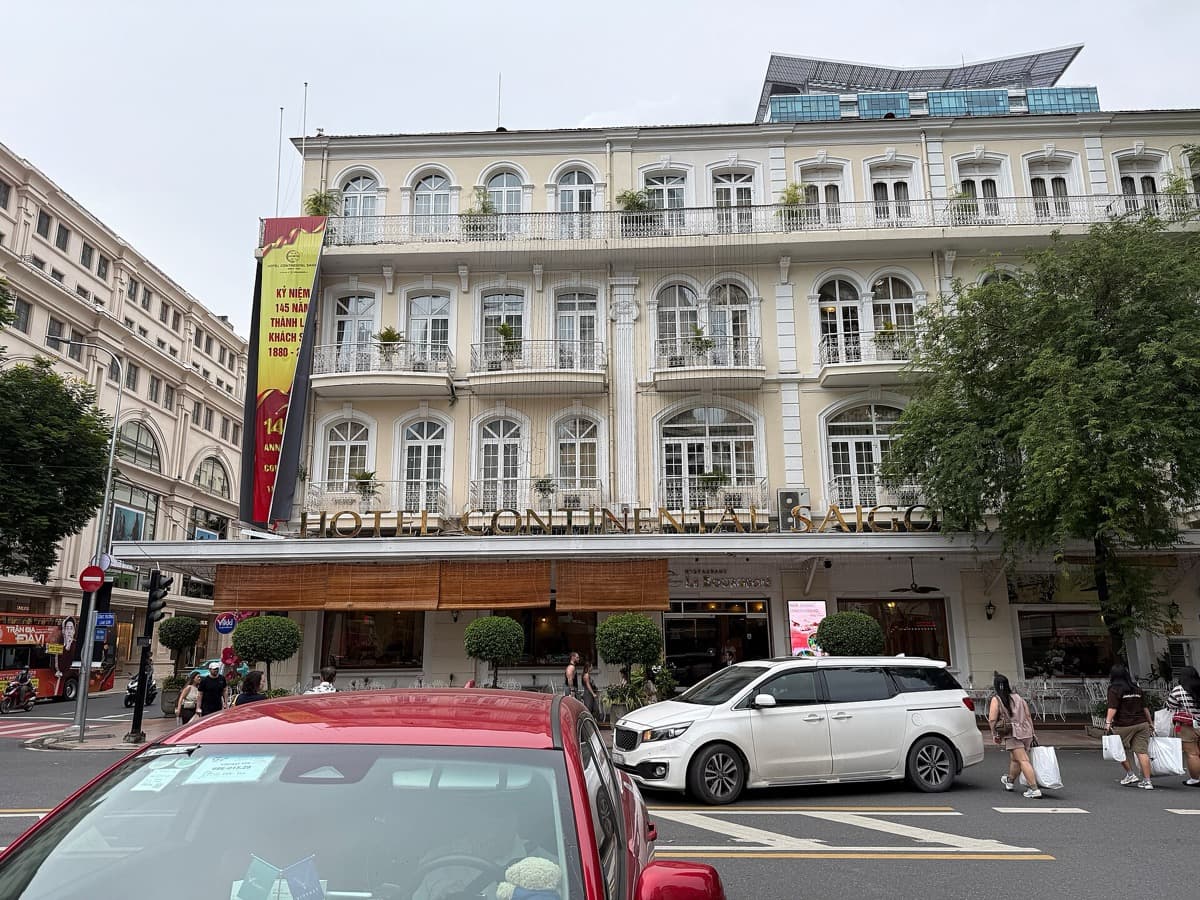
Hotel Continental Saigon: Radio Catinat
An eighteen eighty hotel that became a wartime press rendezvous and the birthplace of Graham Greene's The Quiet American.
5
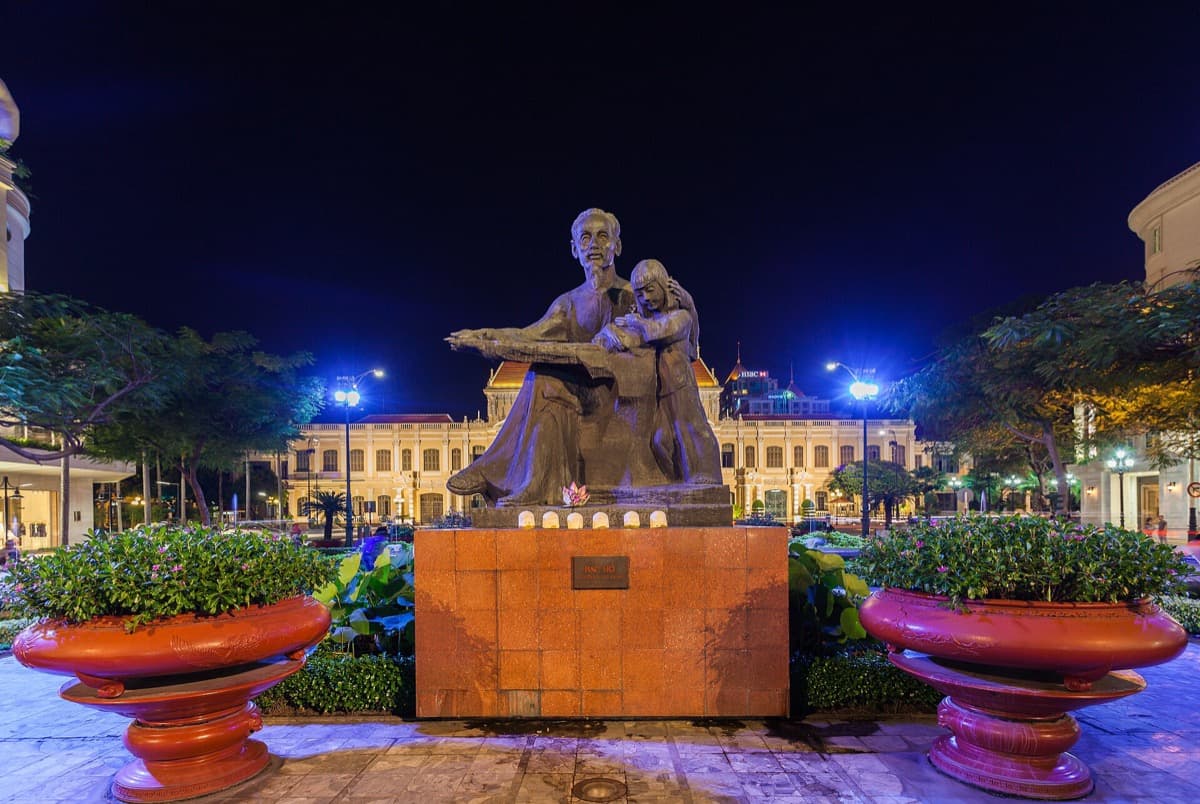
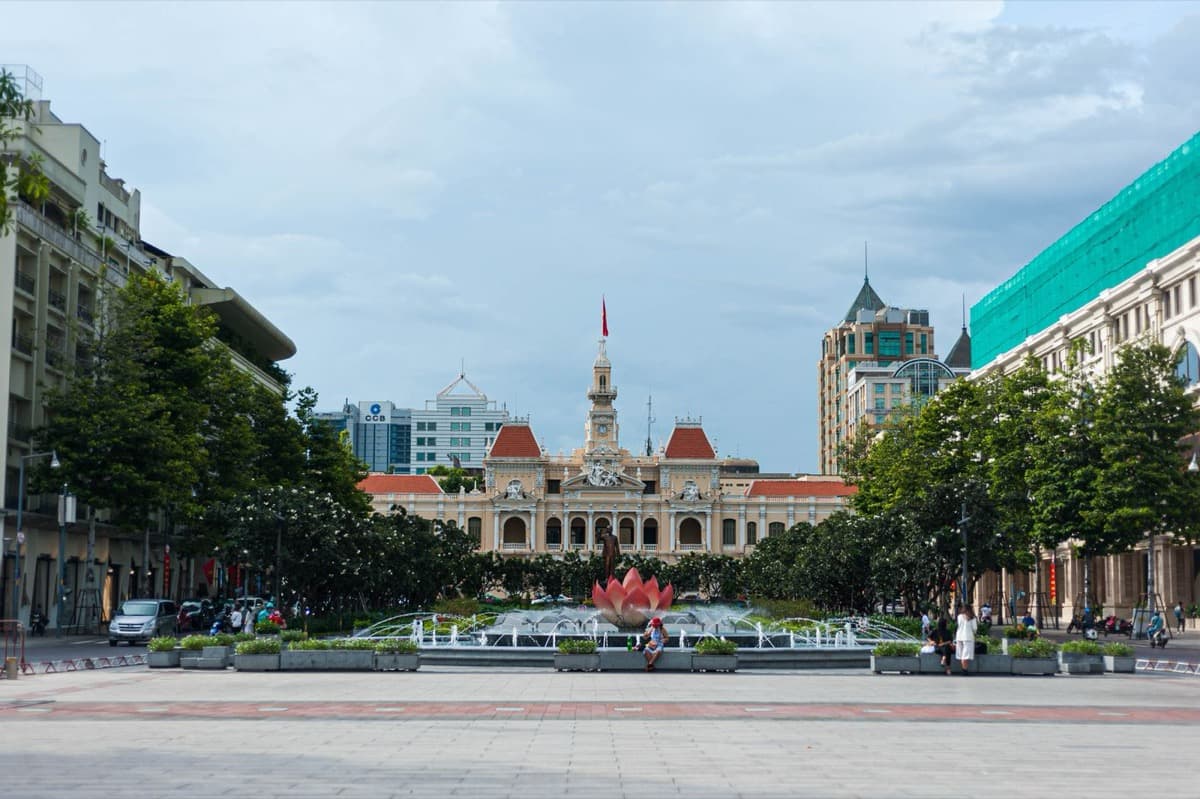
Ho Chi Minh City Hall: The Former Hotel de Ville
A cream and gold former French town hall that now serves as the seat of the city's People's Committee.
6
Nguyen Hue Boulevard: The Reclaimed Canal
A grand pedestrian promenade that was once a colonial canal, then a colonial boulevard, and is now a Vietnamese public square.
7
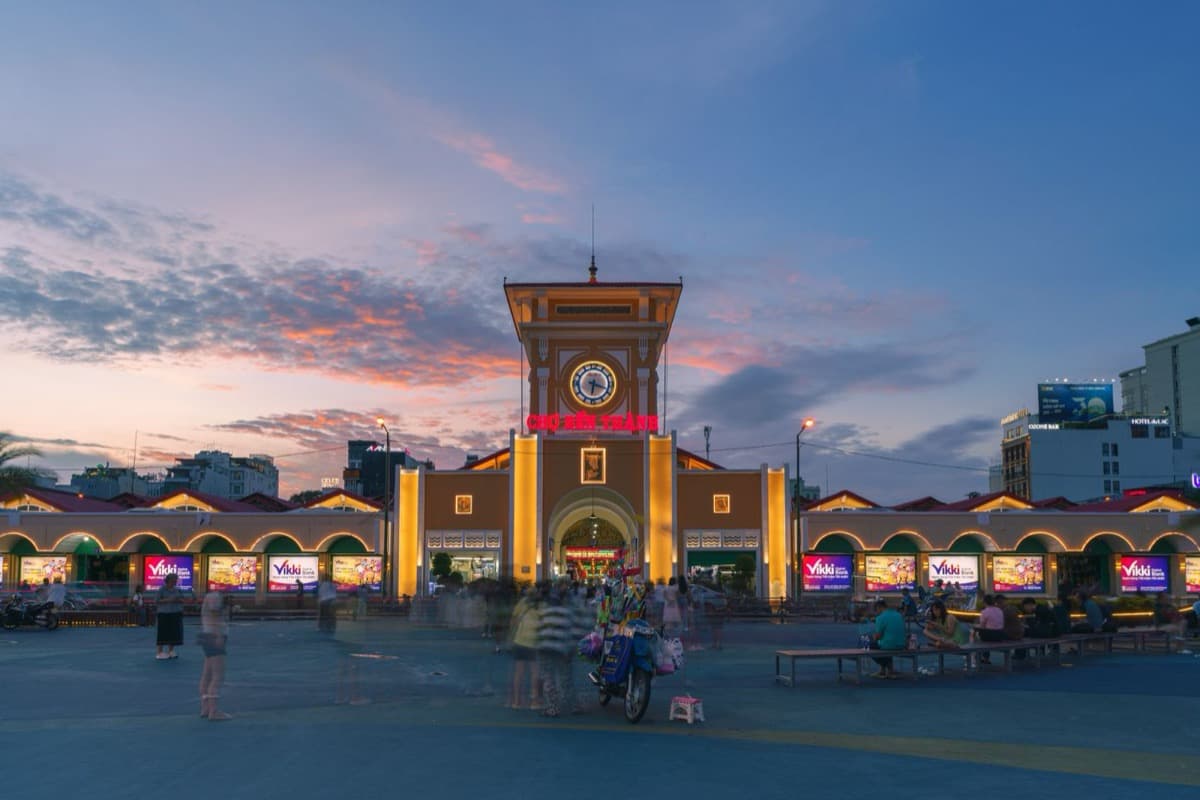
Ben Thanh Market: Where the Grid Dissolves
A landmark market whose colonial-era building simply gave a roof to trade that had gathered here for centuries.
Best Time to Visit
Come in the cooler hours, either from around eight in the morning to eleven, or after four in the afternoon when the heat eases and the buildings turn gold in the low light. The colonial core is at its most beautiful in the early evening, when the city hall and opera house are lit and Nguyen Hue Boulevard fills with families. Avoid the midday hours from about eleven to two, when the sun and humidity are punishing. If you can, save the boulevard and the market for dusk.
Pro Tips
- •Start at the cathedral and post office early, before the tour groups arrive and while the post office hall is still quiet enough to take in the painted maps.
- •Wear light, breathable clothing and carry water. The whole route is under two kilometres, but the heat makes shade and hydration matter.
- •The post office is a working one, so buy a postcard and mail it from inside. It is the one souvenir that is also the building doing its job.
- •At Ben Thanh Market, bargaining is expected and friendly. Ask the price, offer less, and settle somewhere in between with a smile.
- •Do not count on going inside the city hall or the opera house. Both are best appreciated from outside unless you have a performance ticket or a rare open day.
- •Save Nguyen Hue Boulevard for the evening, when it becomes a pedestrian promenade full of local life rather than a place to pass through.
Safety & Precautions
- Traffic is intense and motorbikes are constant. Cross streets slowly and steadily, keep a predictable pace, and let the riders flow around you rather than stopping suddenly or darting.
- The heat and humidity are serious, and monsoon downpours arrive fast in the wet season, roughly May through November. Carry water, take shade breaks, pace yourself at midday, and keep a light rain layer so you can shelter under an awning during a short, heavy burst.
- The cathedral is an active place of worship. If a Mass is underway or you enter the grounds, dress modestly, keep your voice low, and be respectful of people praying.
- In crowds, especially inside Ben Thanh Market and along the busy boulevard, keep bags zipped and worn in front, and stay aware of your phone and wallet.
Gallery
Related Reading
Go deeper on what you'll see, hear, and walk through.
Overview
Best Self-Guided Walking Tours in Ho Chi Minh City (2026)
4 min
Overview
Ho Chi Minh City Travel Guide: How Many Days, Getting Around, When to Go (2026)
5 min
Overview
How to See Saigon: A City of Kept Frames
6 min
Overview
One Day in Ho Chi Minh City: A Walkable Saigon Itinerary (2026)
5 min
Thematic
What to Eat in Ho Chi Minh City: A Saigon Food Guide (2026)
5 min
Companion
Empire in Stone: How Saigon Kept the Buildings and Changed Their Meaning
7 min
Deep dive
The Eiffel Myth: Who Actually Built the Saigon Central Post Office
6 min