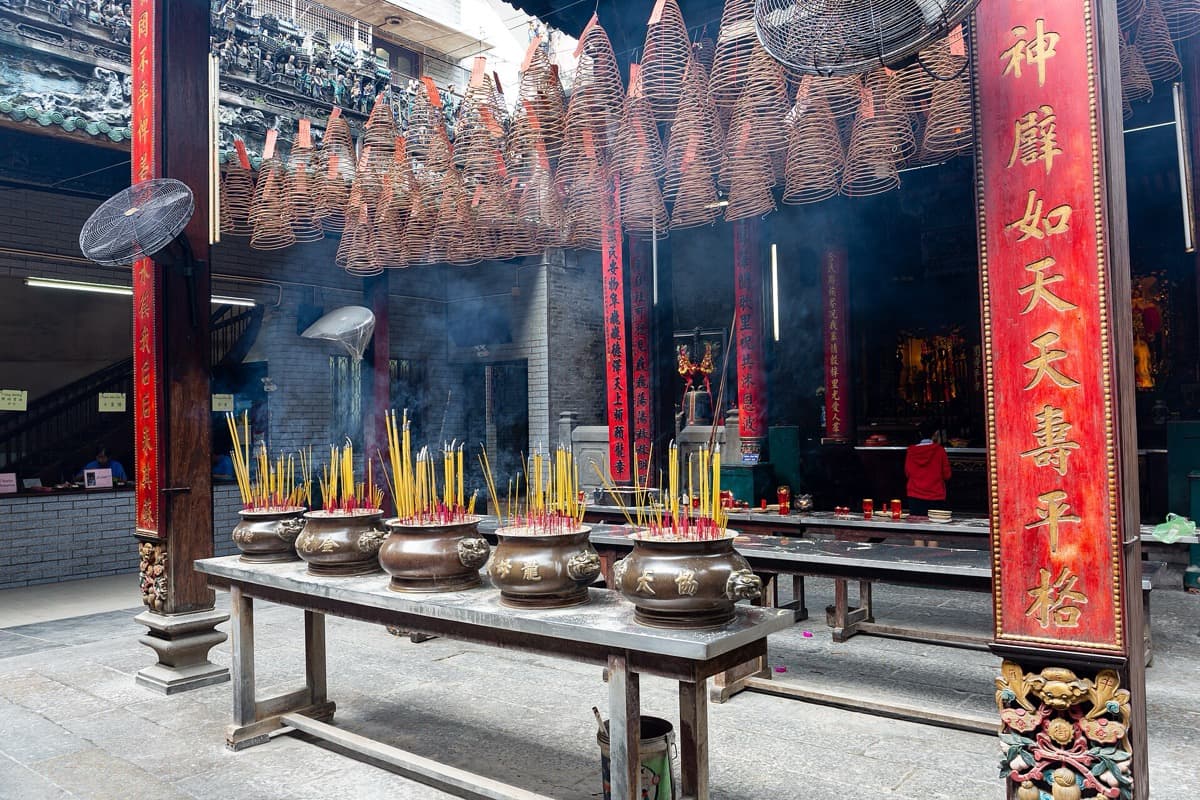
Two miles west of the French boulevards lies Cho Lon, whose name means big market: one of the oldest overseas-Chinese quarters in the world, a city of sea-goddess temples and merchant assembly halls that grew up beside Saigon.
Start · Binh Tay Market: The Merchant's Gift
DirectionsStops
- 1
Binh Tay Market: The Merchant's Gift
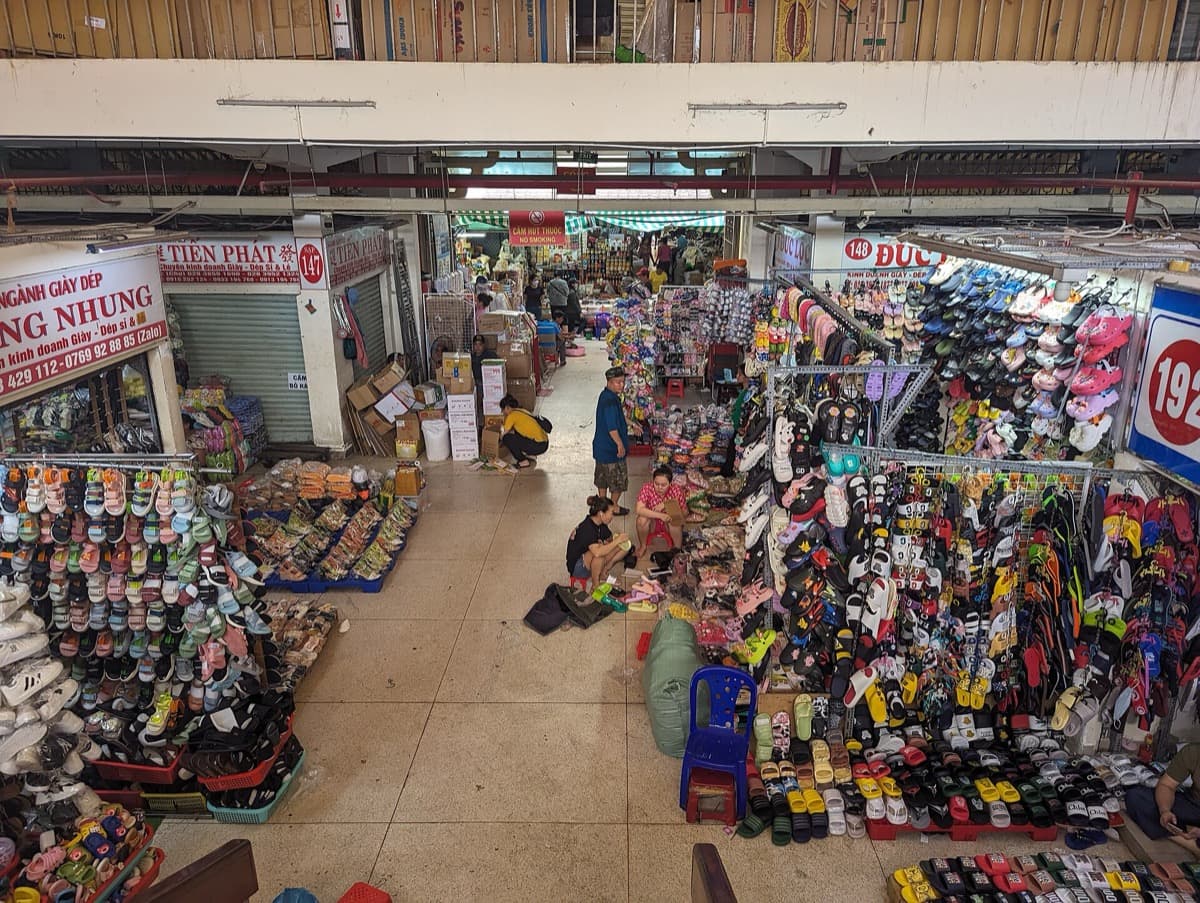
The grand clock-towered central market of Cho Lon, financed by a self-made Teochew merchant who died before it ever opened.
- 2
Cha Tam Church: Saint Francis Xavier
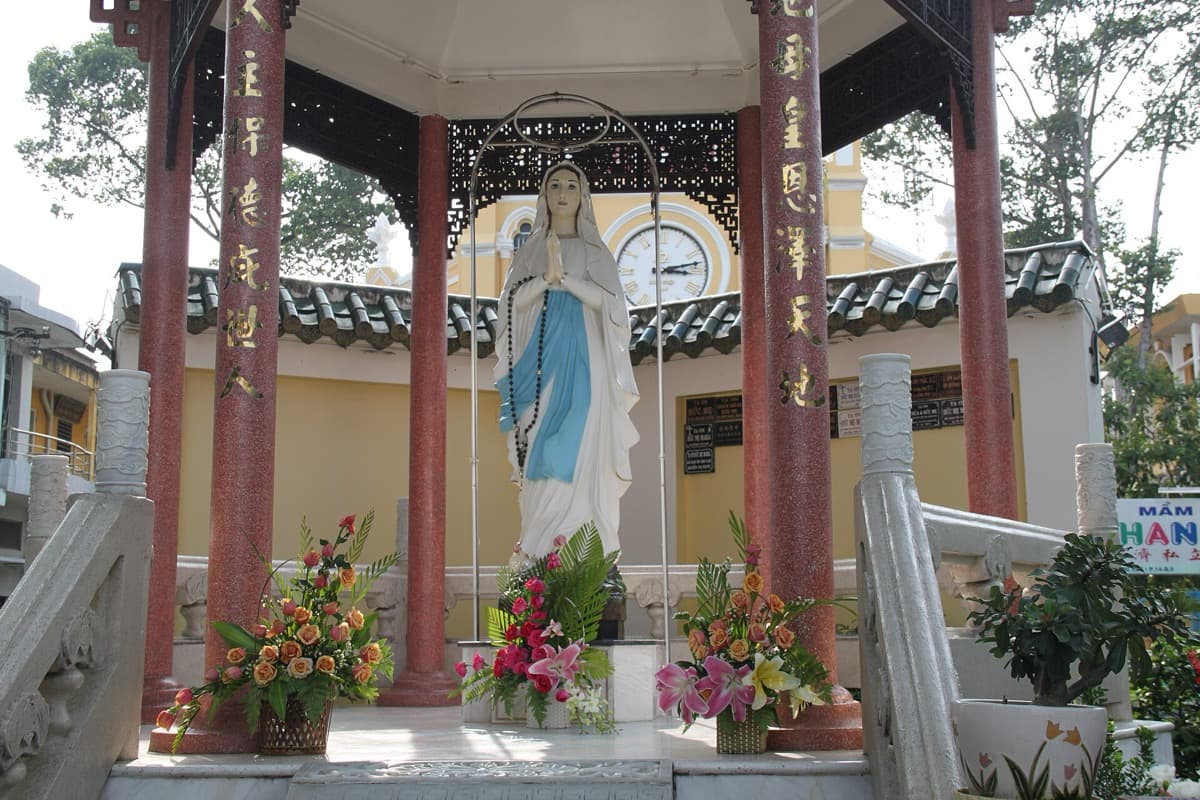
A church built for Cho Lon's Chinese Catholic minority that carries the scar of a single night in November nineteen sixty-three.
- 3
Ong Bon Pagoda: The Temple of the Two Prefectures
The parent Fujian temple of Cho Lon, dedicated to the guardian god of land and community, and among the oldest Chinese temples in the city.
- 4
Ha Chuong Hoi Quan: The Zhangzhou Hall
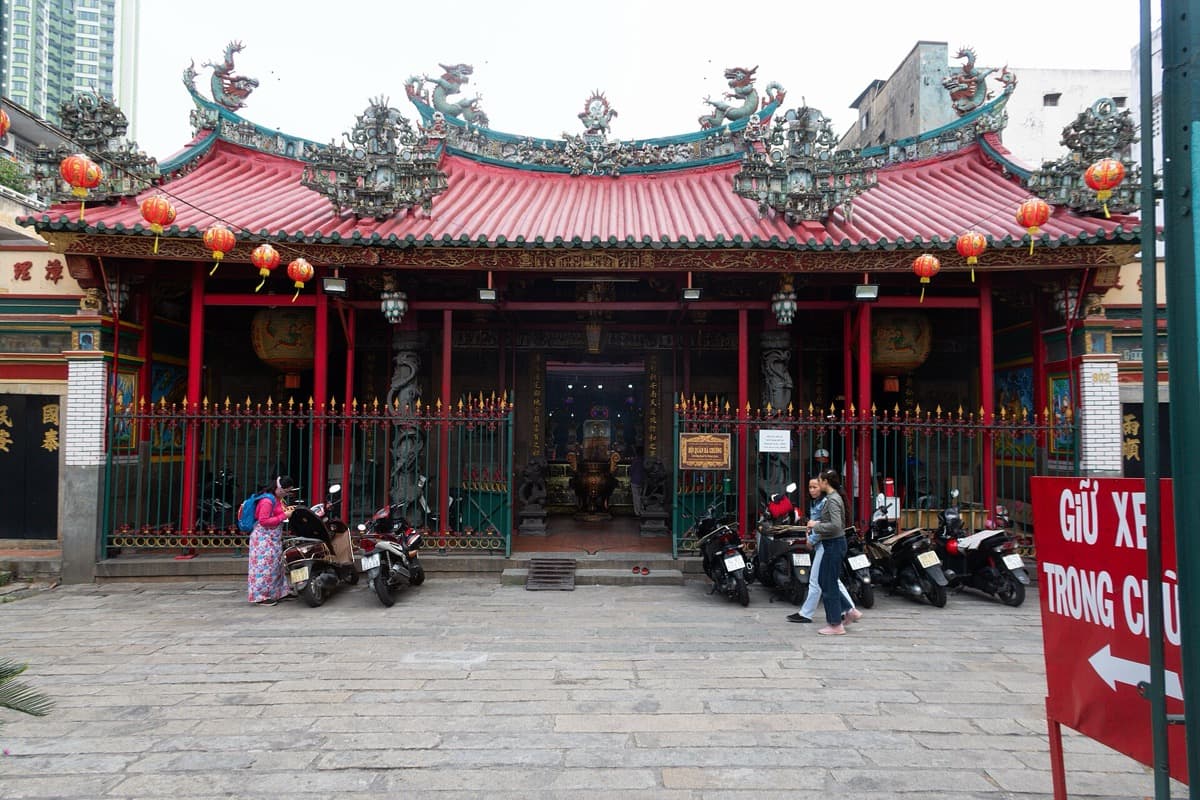
The assembly hall of Cho Lon's Zhangzhou community, famous for four monolithic stone dragon pillars carved in China and shipped across the sea.
- 5
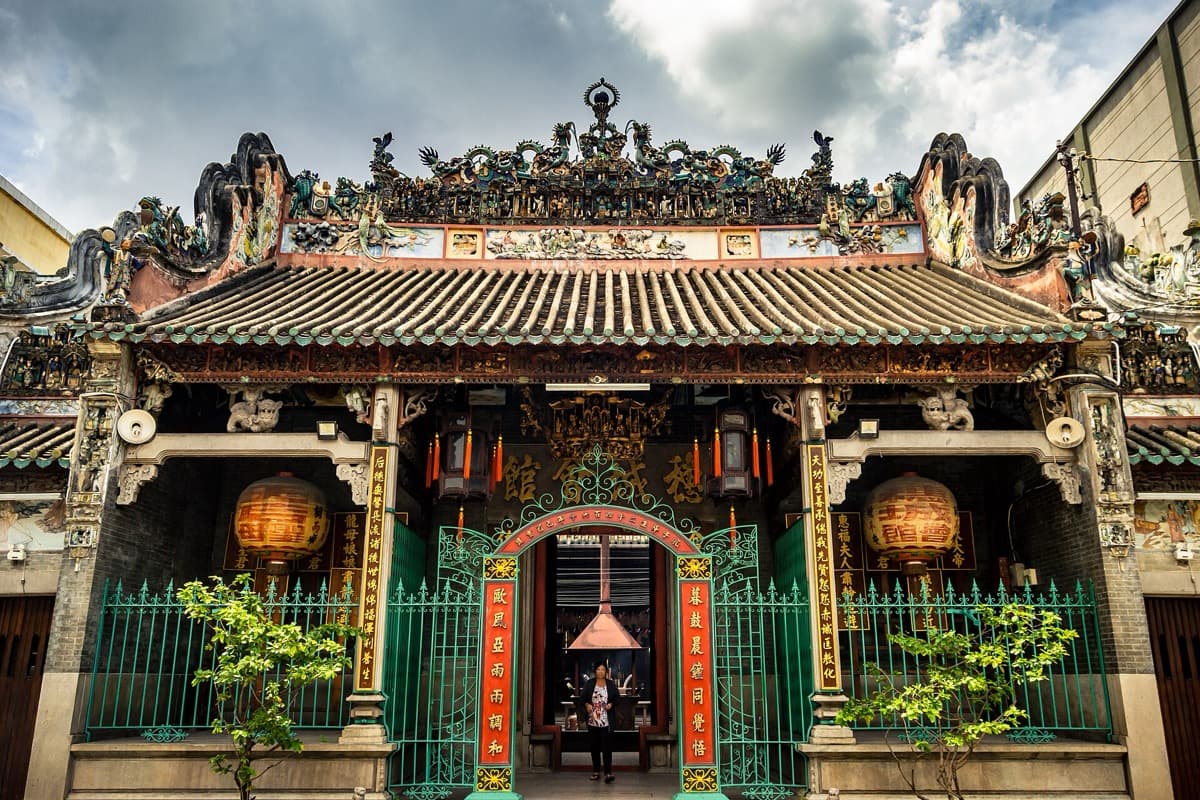
Thien Hau Temple: The Sea Goddess and the Hanging Coils
The Cantonese temple to Thien Hau, empress of heaven and goddess of the sea, famous for meter-wide incense coils that carry prayers upward for weeks.
- 6
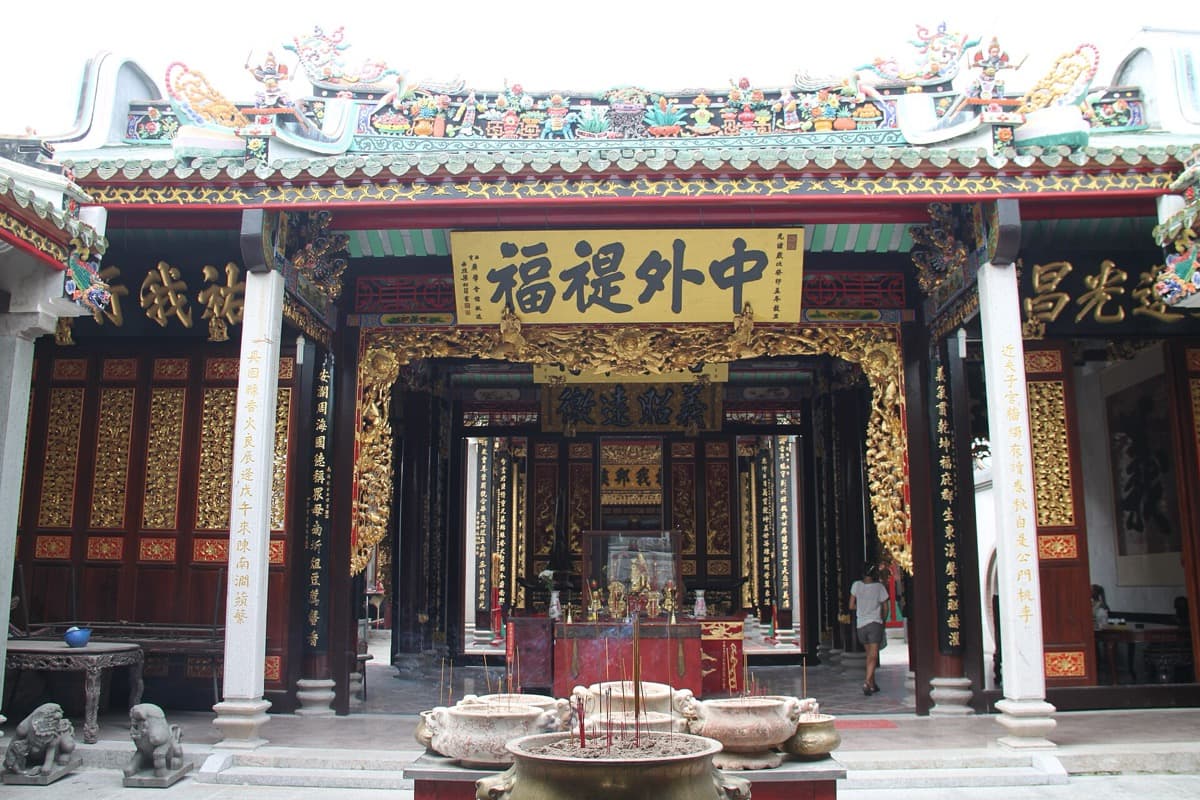
Nghia An Hoi Quan: The Merchant God's Hall
The Teochew assembly hall of Guan Yu, worshipped as god of both war and commerce, home to a famous red horse that devotees crawl beneath for a blessing.
Details
Best Time to Visit
Early to mid-morning, roughly eight to eleven, is ideal. The market is fully awake and lively, the temples are quiet and freshly filled with incense before the midday crowds, and you beat the worst of the afternoon heat. Aim to finish before the early afternoon sun peaks, and if you are walking in the rainy season from about May to November, morning also gives you the best chance of dodging the daily downpour.
Pro Tips
- •Wear comfortable shoes you can slip off easily, since some temple thresholds and inner halls ask you to remove footwear, and dress modestly with shoulders and knees covered out of respect at every temple.
- •Carry small bills of Vietnamese dong. Entry to the market and all the temples is free, but small denominations are handy if you choose to buy incense, a hanging coil, or a snack, and vendors rarely have change for large notes.
- •Give your eyes a moment to adjust in each temple. The best carvings, the rooftop porcelain figures, and the hanging incense coils reward looking up and looking closely rather than a quick glance.
- •The whole walk is a gentle west-to-east line of about two kilometers, but the streets are dense and busy, so build in extra time and treat the ninety-minute estimate as a floor, not a target.
- •Bring water and a hand fan or small towel. The combination of tropical heat and thick temple incense smoke can feel intense, so step into a shaded courtyard to cool down whenever you need to.
- •Photography is generally welcome in the courtyards, but pause and be discreet around people who are actively praying or making offerings, and avoid pointing your camera directly at altars during worship.
Safety & Precautions
- •Traffic in Ho Chi Minh City is heavy and constant, with motorbikes flowing even against the light. Cross slowly and steadily at a predictable pace so drivers can read you and flow around you, never stop suddenly or dash, and use marked crossings where you can.
- •Heat and humidity are serious here. Drink water often, take shade breaks in the temple courtyards, and be aware that thick incense smoke in enclosed halls can irritate your eyes and throat, so step outside for fresh air if it becomes too much.
- •Observe temple etiquette. These are living places of worship, not attractions. Dress modestly, remove your shoes where asked, keep your voice low, do not touch altars or offerings, and step around anyone who is praying.
- •In the rainy season, roughly May to November, expect sudden heavy downpours, usually in the afternoon. Carry a compact rain layer, and if the sky opens, use it as an excuse to shelter under a temple roof rather than pressing on. Keep your bag zipped and worn in front in the market crowds, where dense foot traffic can hide opportunistic pickpockets.
Travel advisory: Exercise Normal Precautions (Level 1).
Gallery
Related Reading
Go deeper on what you'll see, hear, and walk through.
Overview
Best Self-Guided Walking Tours in Ho Chi Minh City (2026)
4 min
Overview
Ho Chi Minh City Travel Guide: How Many Days, Getting Around, When to Go (2026)
5 min
Overview
How to See Saigon: A City of Kept Frames
6 min
Overview
One Day in Ho Chi Minh City: A Walkable Saigon Itinerary (2026)
6 min
Thematic
What to Eat in Ho Chi Minh City: A Saigon Food Guide (2026)
5 min
Companion
The City Beside the City: Reading Cho Lon's Assembly Halls
7 min
Deep dive
The Sea Goddess of Cho Lon: Inside Thien Hau Temple
6 min
Read the walk
The full story of The Other City: Cholon, in words. Prefer to listen? Play it narrated, from home or on location.
Introduction
Two miles west of the French boulevards of central Ho Chi Minh City, in Vietnam, sits a district the guidebooks tend to skip. Its name is Cho Lon, and in Vietnamese that simply means big market: cho for market, lon for big. For roughly three centuries, merchants from Fujian, from Guangdong, and from the Teochew coast of southern China built temples, assembly halls, and a vast trading market here, and ran much of Saigon's commerce from behind their own gates. This is one of the oldest and largest overseas-Chinese quarters anywhere in the world. This walk steps out of the Saigon of postcards and into that other city. You will move from the loud, visible engine of the market inward and backward in time, through the private institutions the community built for itself: clan halls where dialect communities organized worship, trade, and mutual aid. The thread running underneath is autonomy, a community that quietly governed its own affairs. There are six stops across roughly two kilometers, an easy, gentle line you can walk in about ninety minutes to two hours at your own pace. Every stop is free to enter, and every stop stands on its own, so linger where something catches you and skip what does not. You will meet a market financed by one man's fortune, a Chinese Catholic church that carries a scar from a single night in nineteen sixty-three, and progressively older temples to land-guardians, sea-goddesses, and the merchant god of war. When you arrive at Binh Tay Market, begin with stop one.
1. Binh Tay Market: The Merchant's Gift
Stand in front of Binh Tay Market and look up at the clock tower and the sweeping tiled roofs. This is the visible engine of Cho Lon, the big market that gives the whole district its name. It is a working public market, free to walk into, built around an open central courtyard, a sky-well of light in the middle of all the trade. The building you are looking at was financed by a merchant named Quach Dam, known by his Chinese name Guo Tan. According to Wikipedia's account, he was born in the year eighteen sixty-three in Chaozhou, in Guangdong, part of the Teochew community. He arrived with nothing, is said to have started by recycling used material and refuse, and built that into a fortune in trade. When he paid to build this market, he did not simply hand it over. He donated the deed to local officials in exchange for a few plots of land and permission to place a statue of himself at the very center. Here is the detail that lingers. The market was completed and opened around the year nineteen thirty, but Quach Dam had died in May of nineteen twenty-seven. He never saw it finished. He built a monument to his own success and did not live to walk beneath its clock tower. A life-size bronze figure of him once stood in the courtyard, ringed by bronze lions and dragons spouting water into a fountain. Everything you can hear from here, the calling of prices, the movement of goods that has always fed this whole region, is the sound of the city he wanted his name attached to, echoing on without him.
2. Cha Tam Church: Saint Francis Xavier
This is the Church of Saint Francis Xavier, though almost everyone here calls it Cha Tam. That nickname comes from the parish's first vicar, a priest named Pierre d'Assou, known in Vietnamese as Cha Tam. Construction began on December third, nineteen hundred, the feast day of Saint Francis Xavier, and the church was inaugurated on January tenth, nineteen oh two. It was built for a community you might not expect to find here: the Chinese Catholics of Cho Lon, a minority within a minority. Notice how the architecture blends European Gothic lines with touches of Chinese temple styling, two worlds meeting in one building. This quiet parish carries a scar from national history. During the military coup of November nineteen sixty-three, President Ngo Dinh Diem and his brother and adviser Ngo Dinh Nhu fled the presidential palace and took refuge overnight here in Cho Lon. In the morning they prayed and attended mass in this church. It was from here that they made their final phone call to the coup's leaders, agreeing to surrender. They were captured shortly afterward, and both men were killed soon after that. It is a heavy thing to stand with, so stand with it plainly: two lives ended in the hours after a mass said in this ordinary, beautiful room. The church did not choose that role. It was simply the last quiet place two frightened men could reach. Today it is what it has always been, an active parish, free to enter, where the Chinese Catholic community of Cho Lon still gathers to pray.
3. Ong Bon Pagoda: The Temple of the Two Prefectures
You have stepped from the market's noise into one of the oldest roots of Cho Lon. This is the Ong Bon Pagoda, also called Nhi Phu Temple, which translates as the Temple of the Two Prefectures. It was founded around the years seventeen thirty to seventeen forty by settlers from…
Full narration for this stop unlocks with the tour.
4. Ha Chuong Hoi Quan: The Zhangzhou Hall
This is Ha Chuong Hoi Quan, the assembly hall of the Zhangzhou community, sometimes called Chuong Chau. Remember the parent temple at the last stop, the one founded by settlers from two Fujian prefectures. This is one of the halls that grew out of that split. According to…
Full narration for this stop unlocks with the tour.
5. Thien Hau Temple: The Sea Goddess and the Hanging Coils
This is the emotional heart of the walk. Thien Hau Temple, officially the Tue Thanh Assembly Hall, was erected around the year seventeen sixty by the Cantonese community of the city, and repaired and expanded many times after that, in eighteen hundred, in the eighteen forties,…
Full narration for this stop unlocks with the tour.
6. Nghia An Hoi Quan: The Merchant God's Hall
You end the walk where the commerce thesis comes full circle. This is Nghia An Hoi Quan, also called Chua Ong, the assembly hall of the Teochew community, built with Hakka participation around the years eighteen nineteen to eighteen twenty. The main deity here is Quan Cong, the…
Full narration for this stop unlocks with the tour.