
From Phung Hung's railway arches south along the line on the old citadel's east edge, to Train Street's two public level crossings, Le Duan and the tracks of Hanoi Station, then west past the scholars' street names to the Temple of Literature's wall and Great Portico, ending opposite Van Lake, all from public sidewalks.
Start · Phung Hung Viaduct: The Railway on Arches
DirectionsStops
- 1
Phung Hung Viaduct: The Railway on Arches
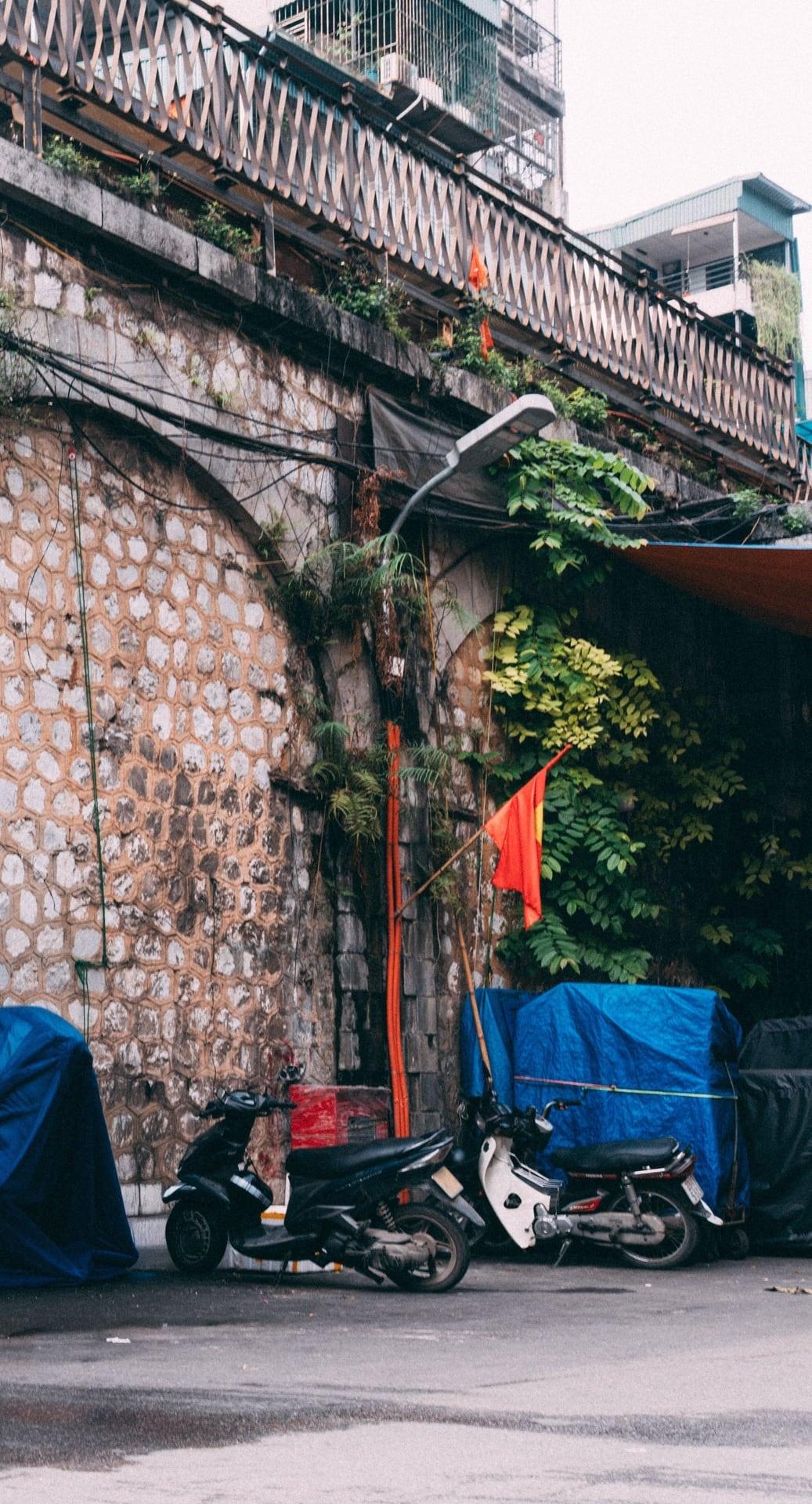
The railway enters on brick arches. The masonry viaduct on Phung Hung Street at the Old Quarter's west edge, its vaults numbered and walled up, carrying the line from the Long Bien Bridge toward Hanoi Station.
- 2
Cua Dong: The East Gate
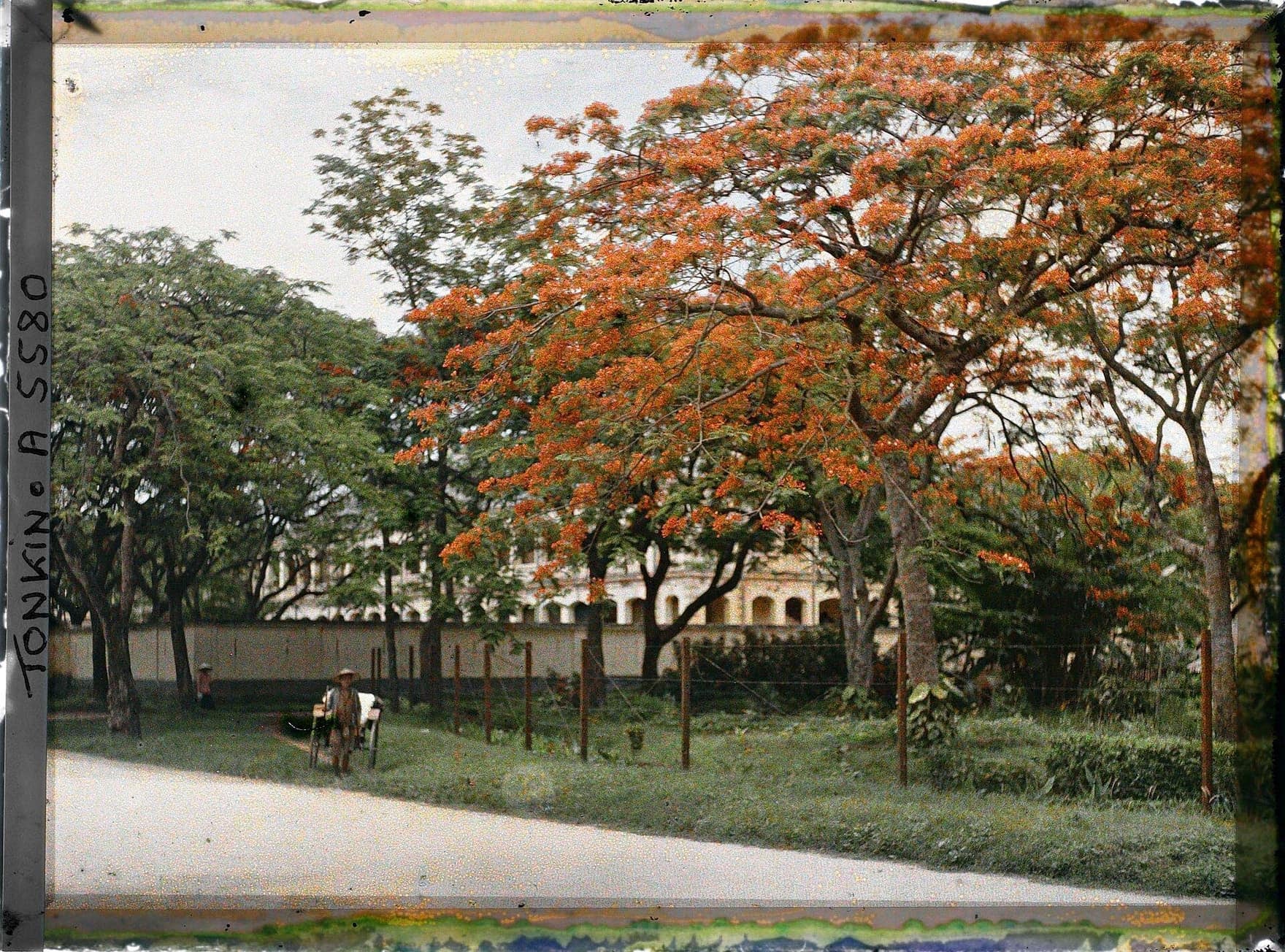
A street keeps the east gate's name. Cua Dong Street passing under a railway span off Phung Hung, its name, East Gate, kept from the Nguyen citadel whose wall the railway now follows.
- 3
Phung Hung Street: One Side Only
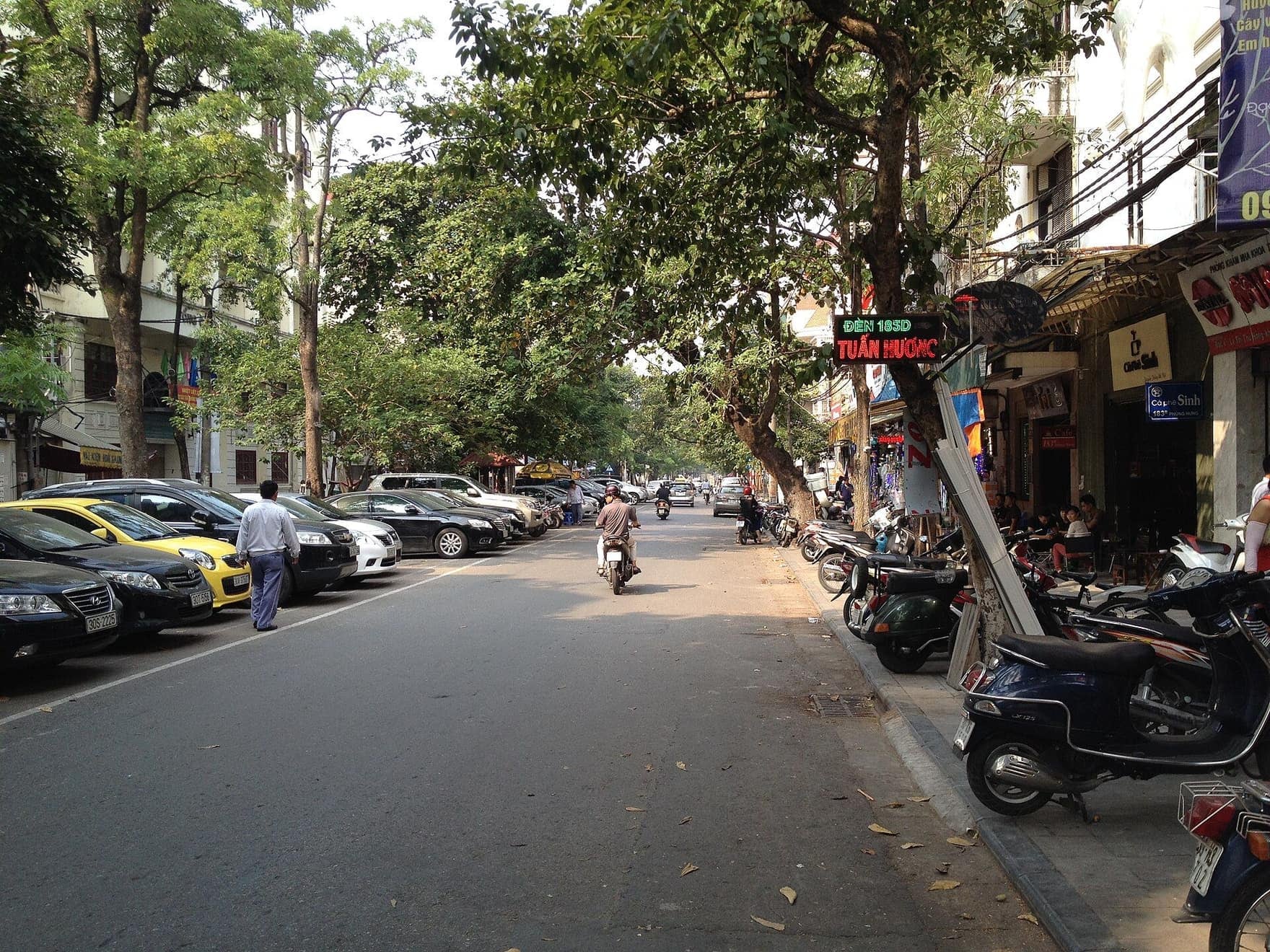
This street has houses on one side. Phung Hung's straight stretch, the trace of the old citadel's east wall and moat, with the railway bank along one side and houses only on the other.
- 4
Tran Phu Crossing: Train Street
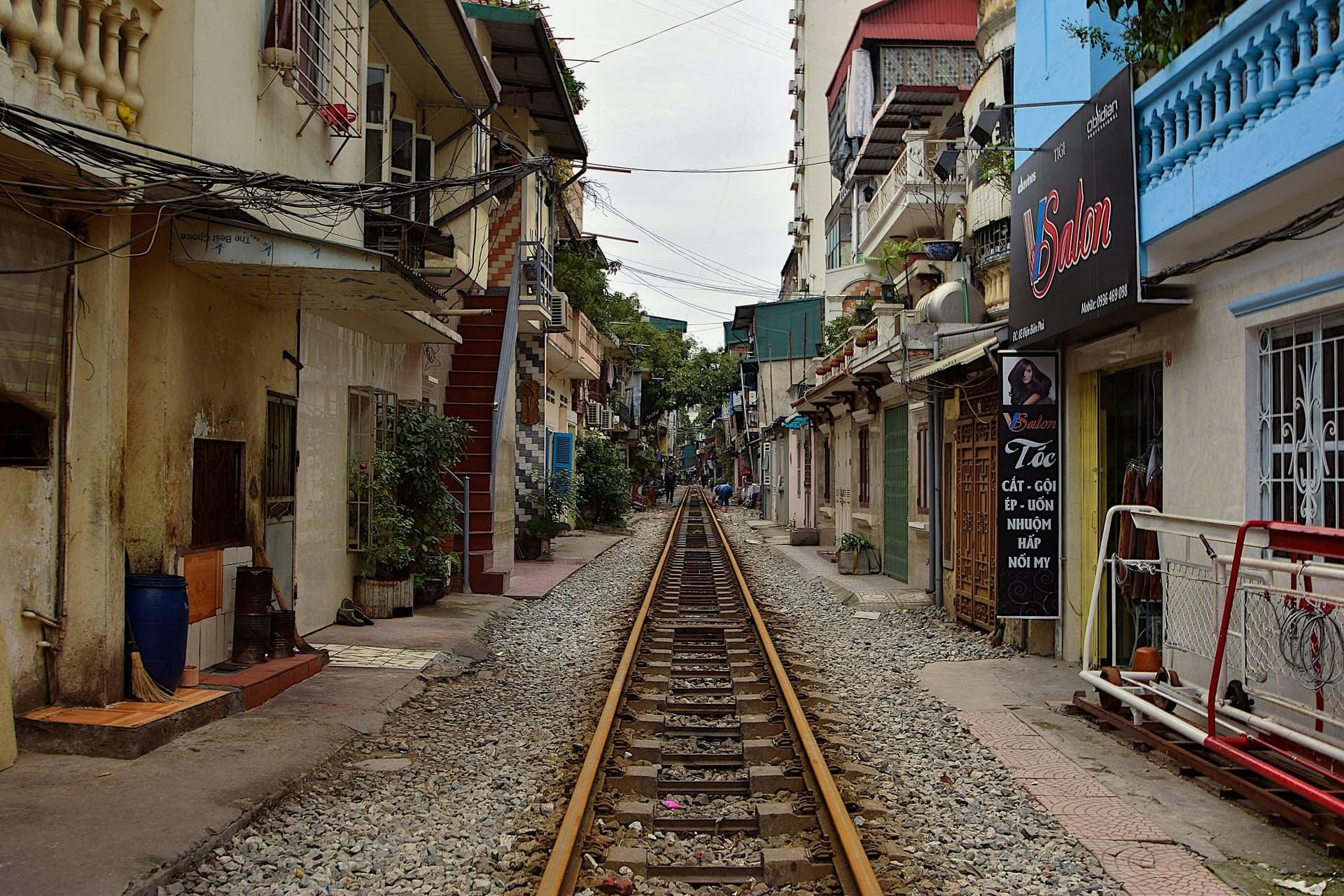
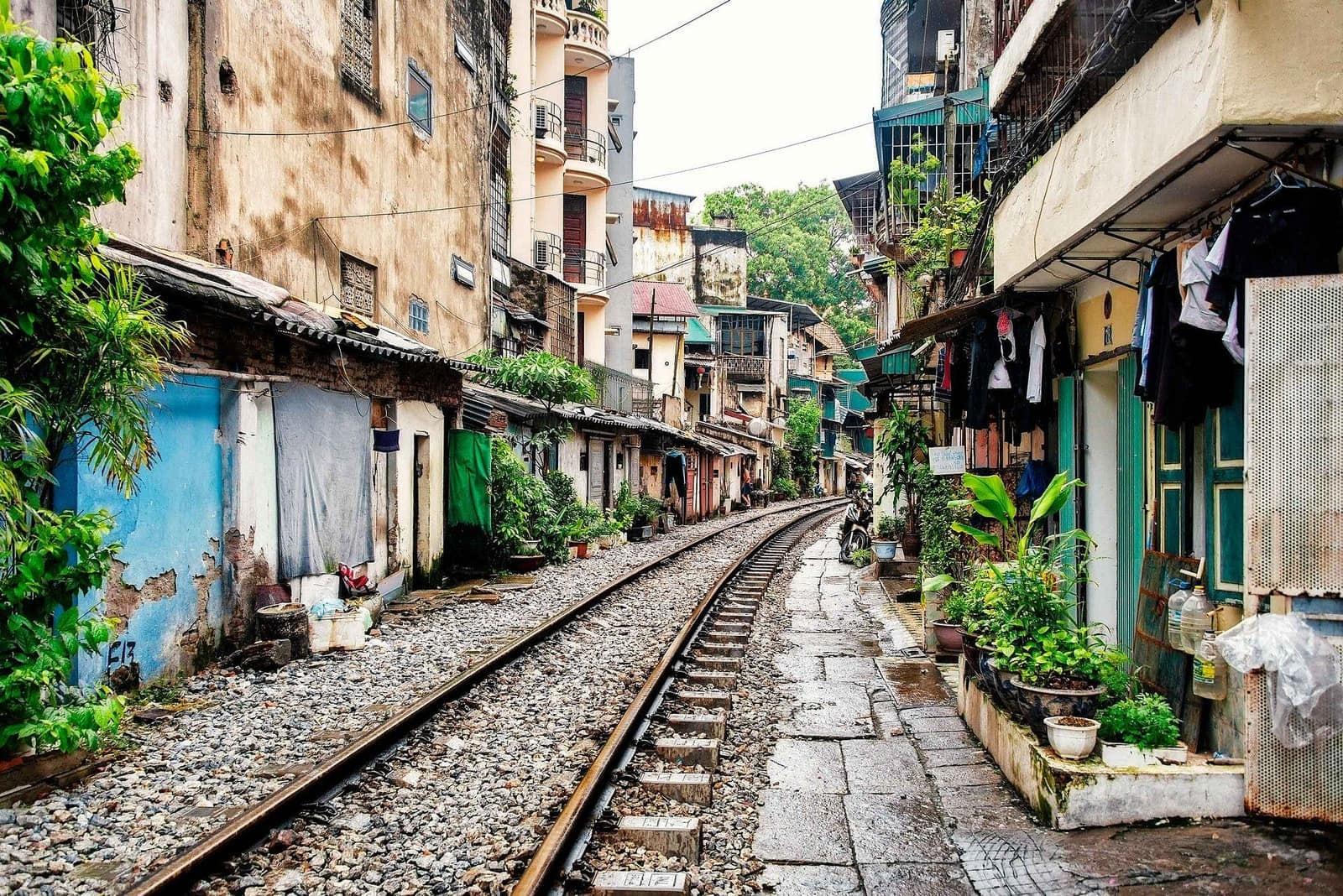
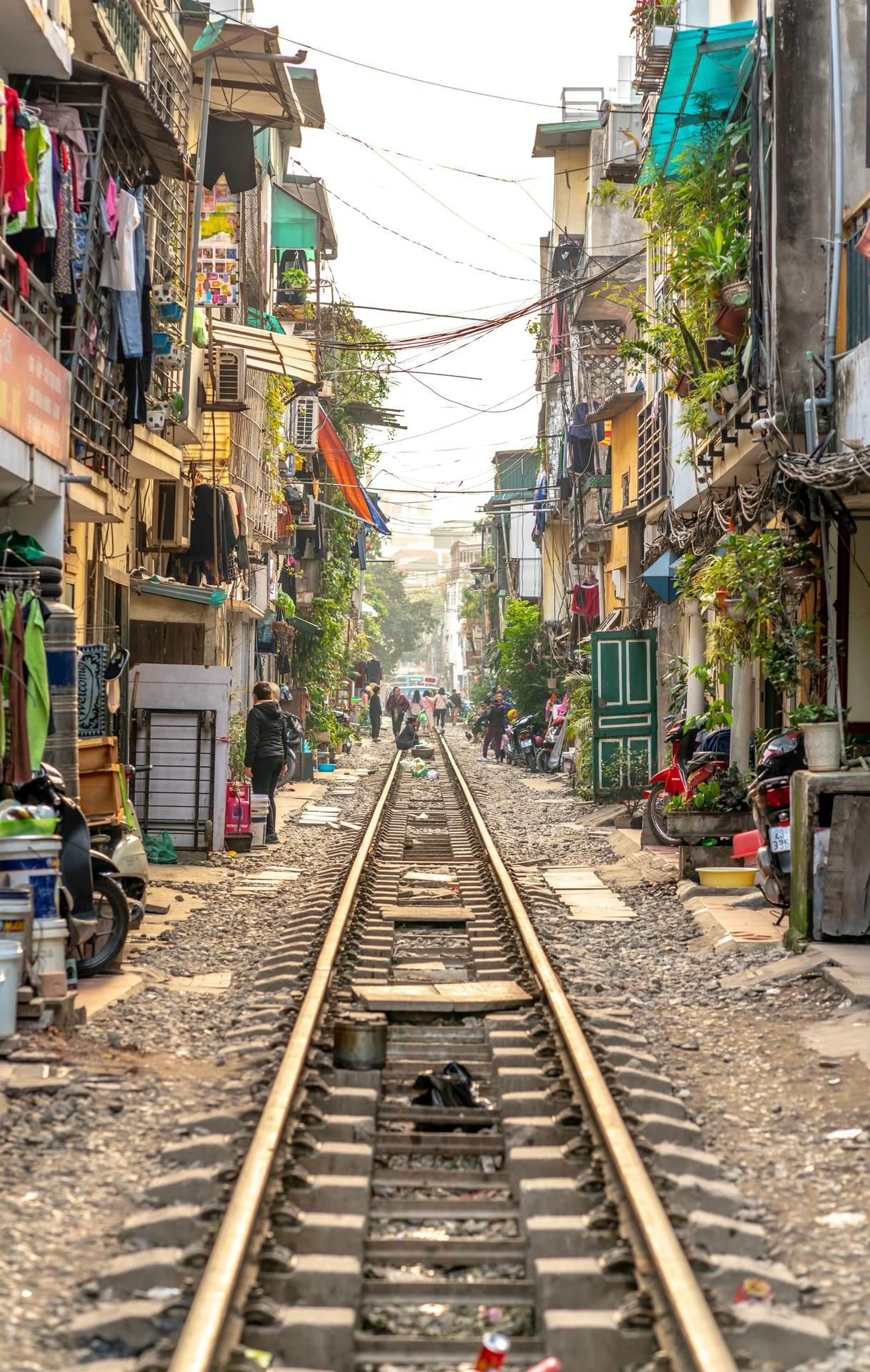
Train Street begins at this crossing. The Tran Phu level crossing, where the track leaves the road between houses and cafes, seen from the public sidewalk, never from the rails.
- 5
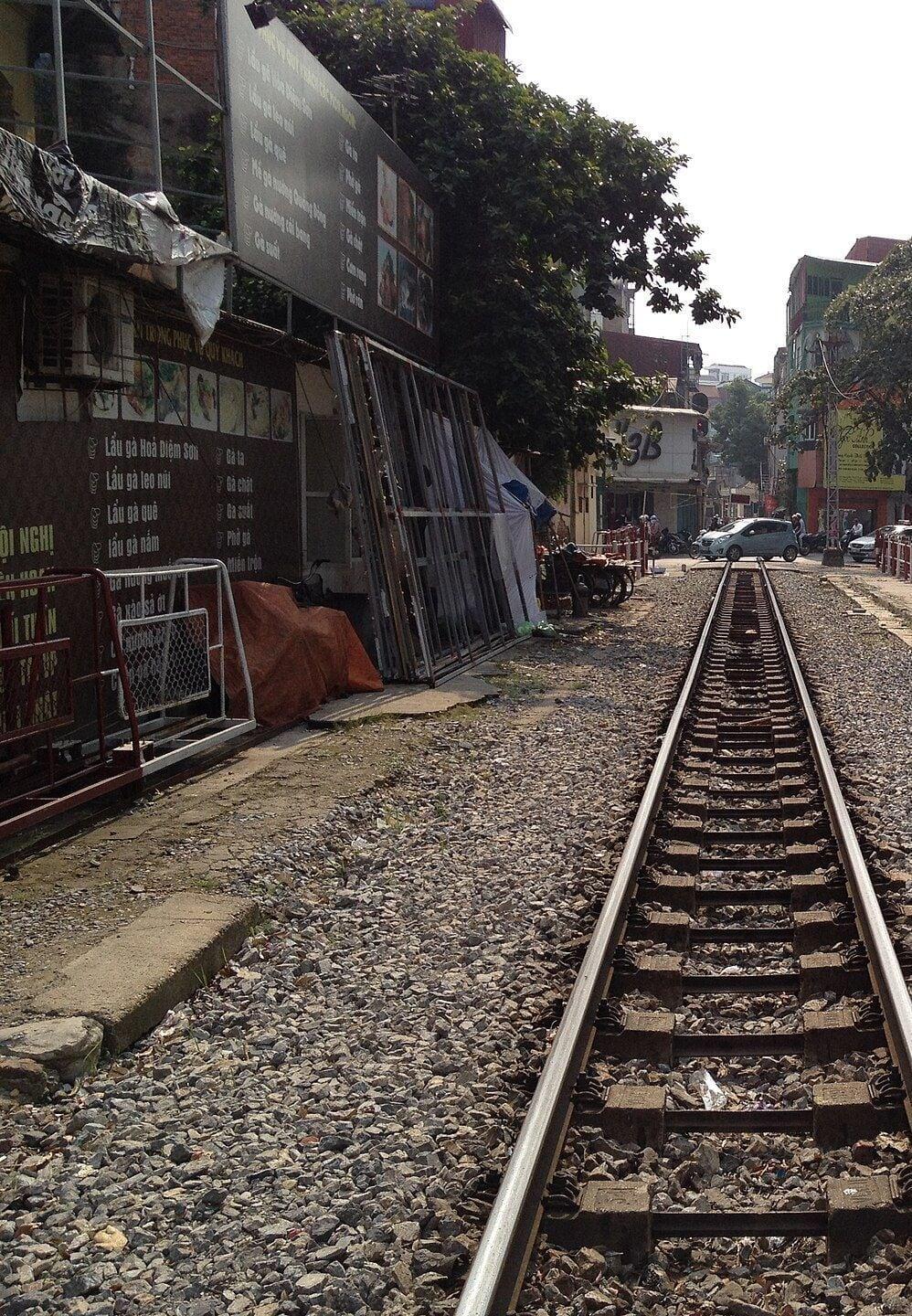
Dien Bien Phu Crossing: Barrier Four
Train Street meets the road again. The Dien Bien Phu level crossing, barrier number four, where the trackside stretch comes out between the houses, near the Cua Nam junction.
- 6
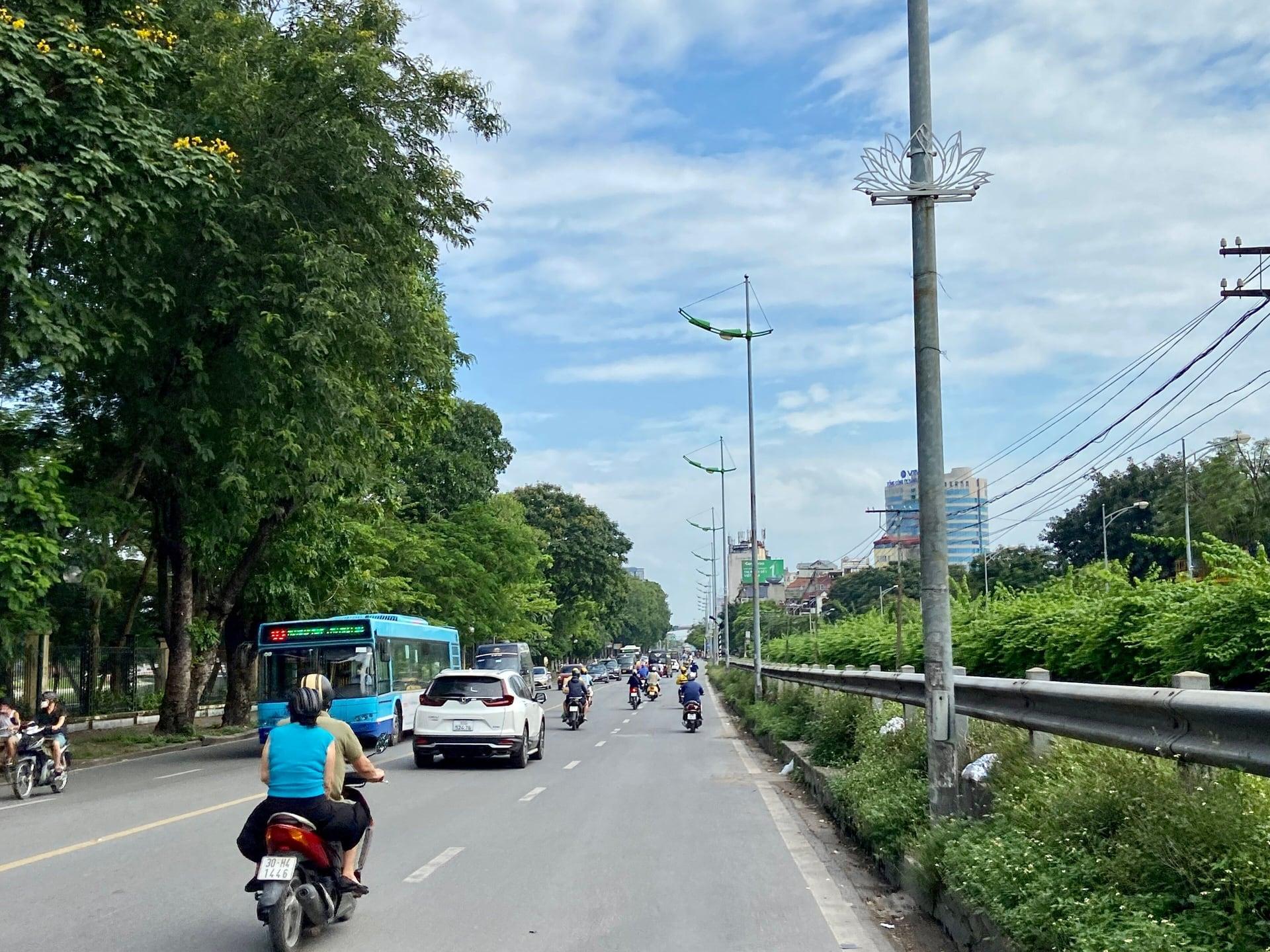
Le Duan Crossing: Into the Station
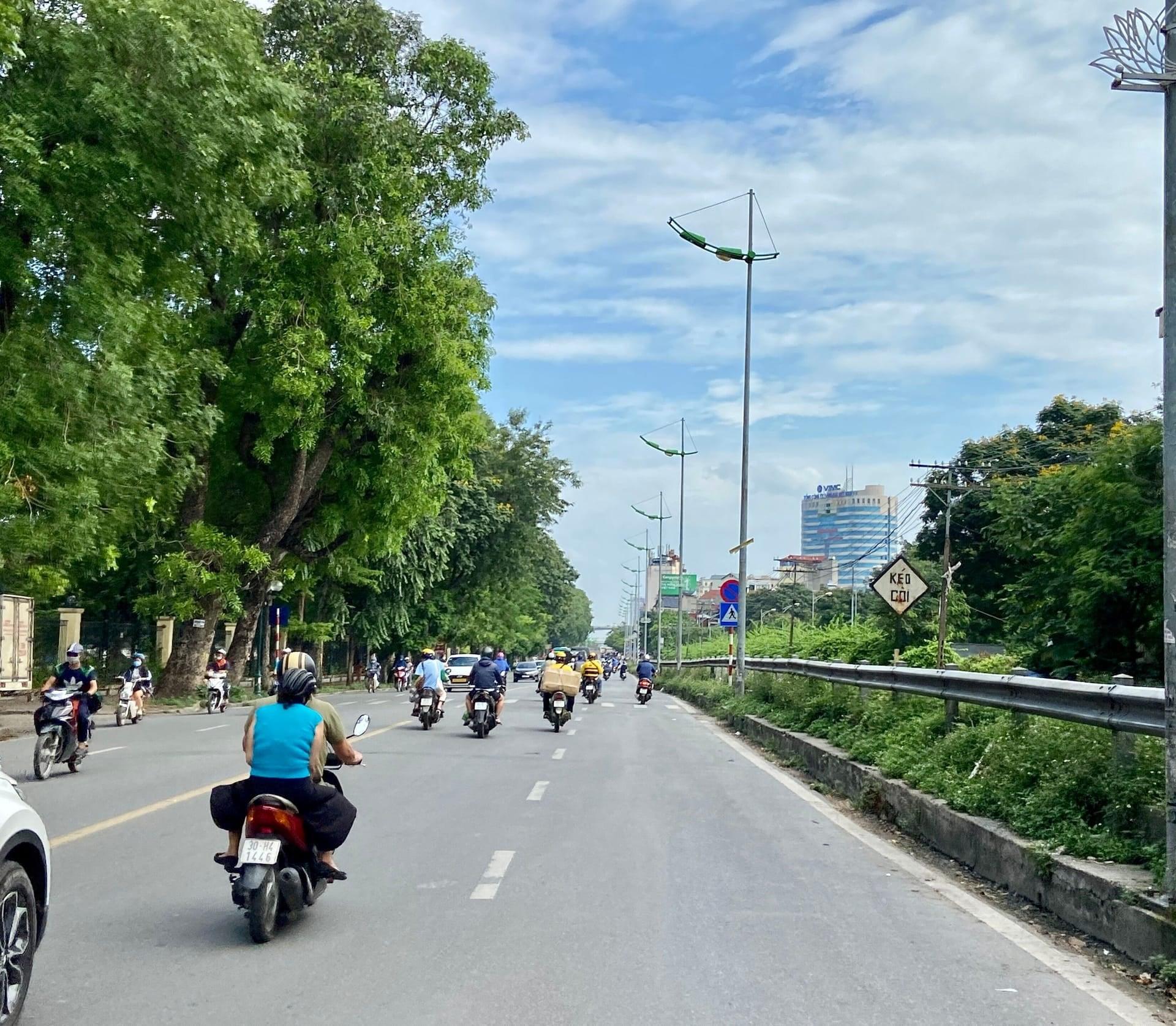
The line curves into the station here. Le Duan Road at the traffic lights, where barrier number two closes the road and the track curves across it into Hanoi Station.
- 7
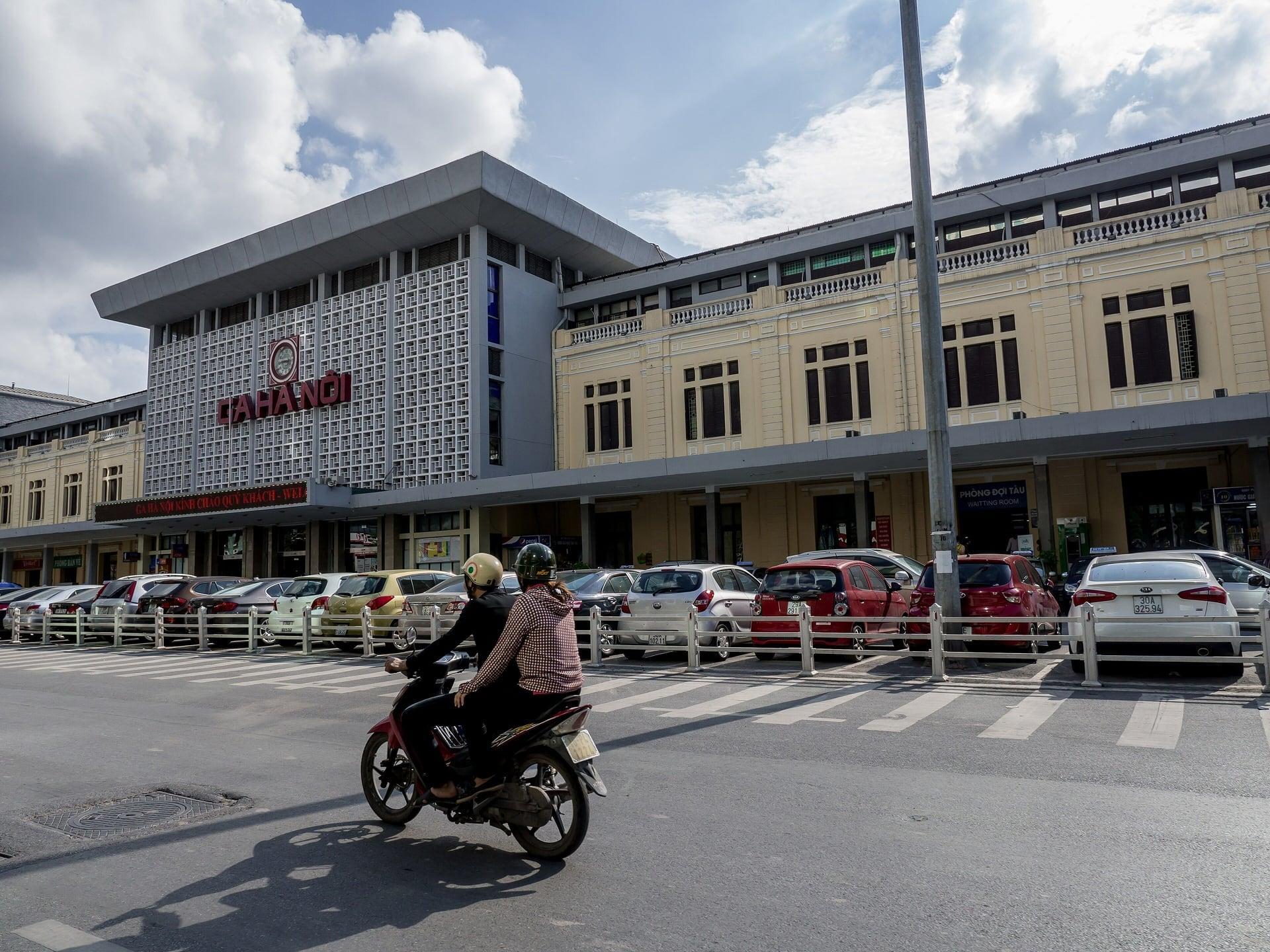
Hanoi Station: The Station of 1902
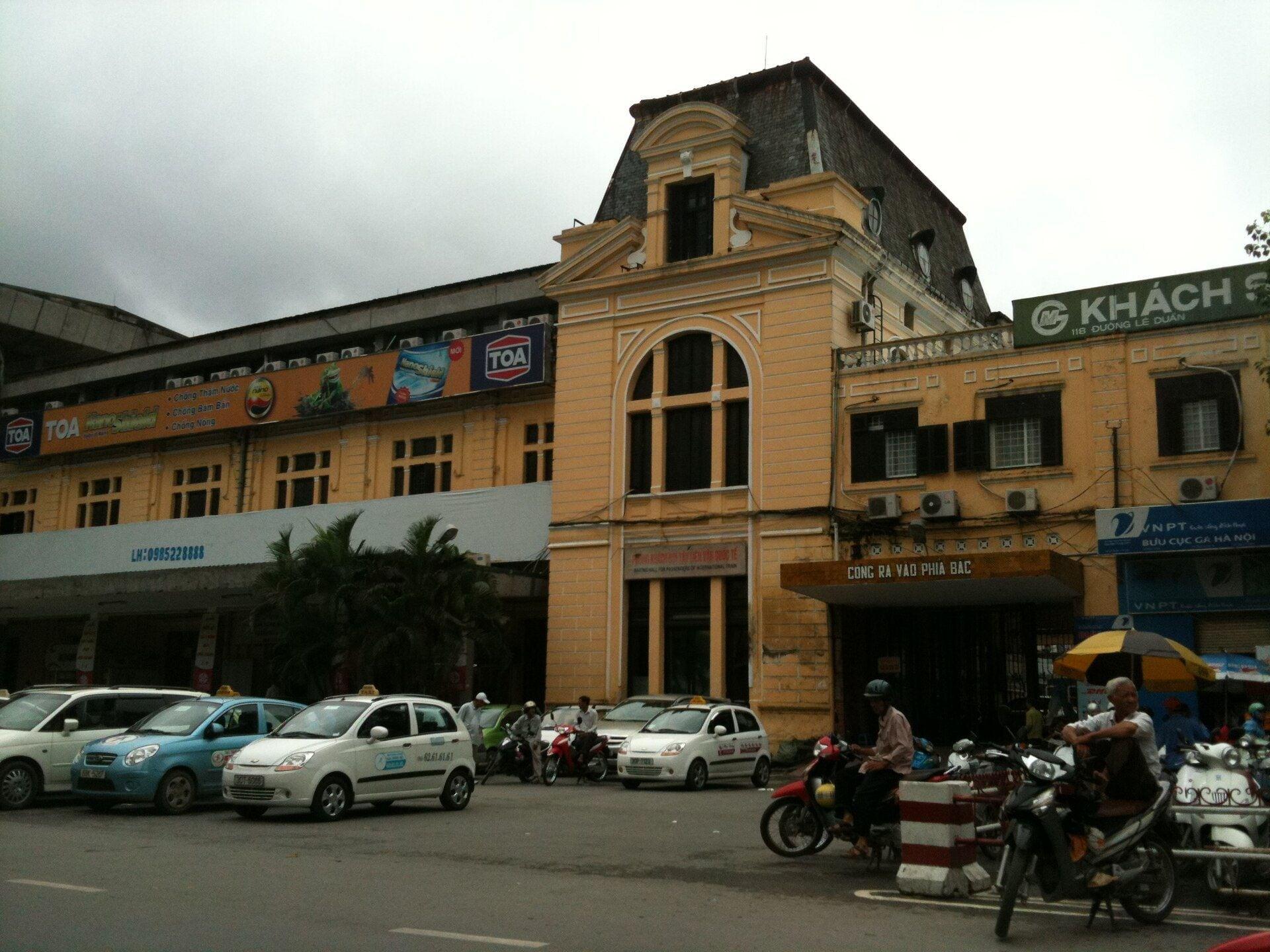
Hanoi's terminus opened in 1902. The station throat across Nguyen Khuyen Street, where the tracks fan toward the platforms; the 1902 building, rebuilt at its center after December 1972, faces Le Duan out of sight.
- 8
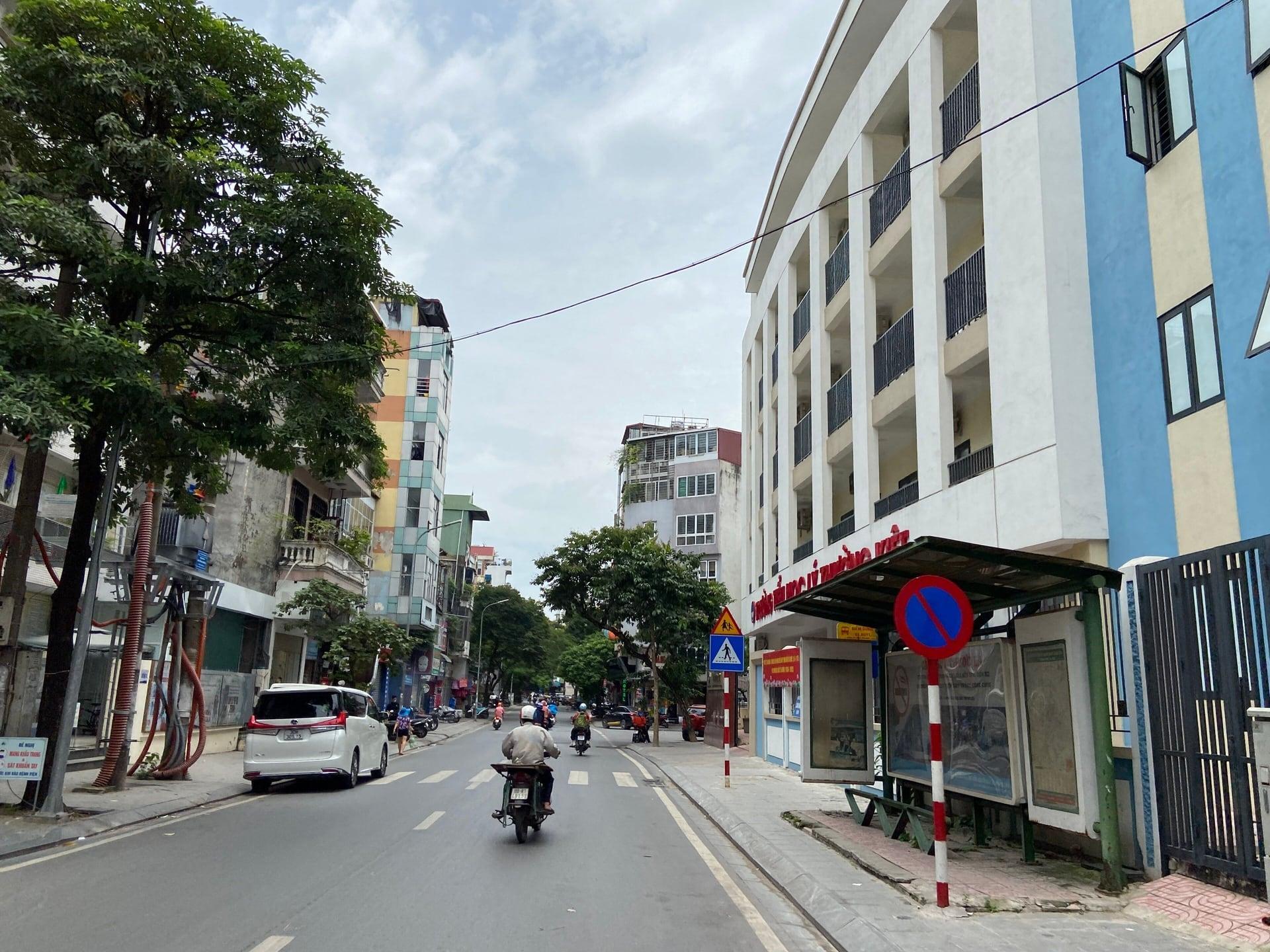
Ngo Sy Lien Street: The Historian's Corner
A scholar's name marks this corner. Nguyen Khuyen Street at Ngo Sy Lien Street, named for a laureate of the 1442 examination, the earliest recorded on the Temple of Literature's stelae.
- 9
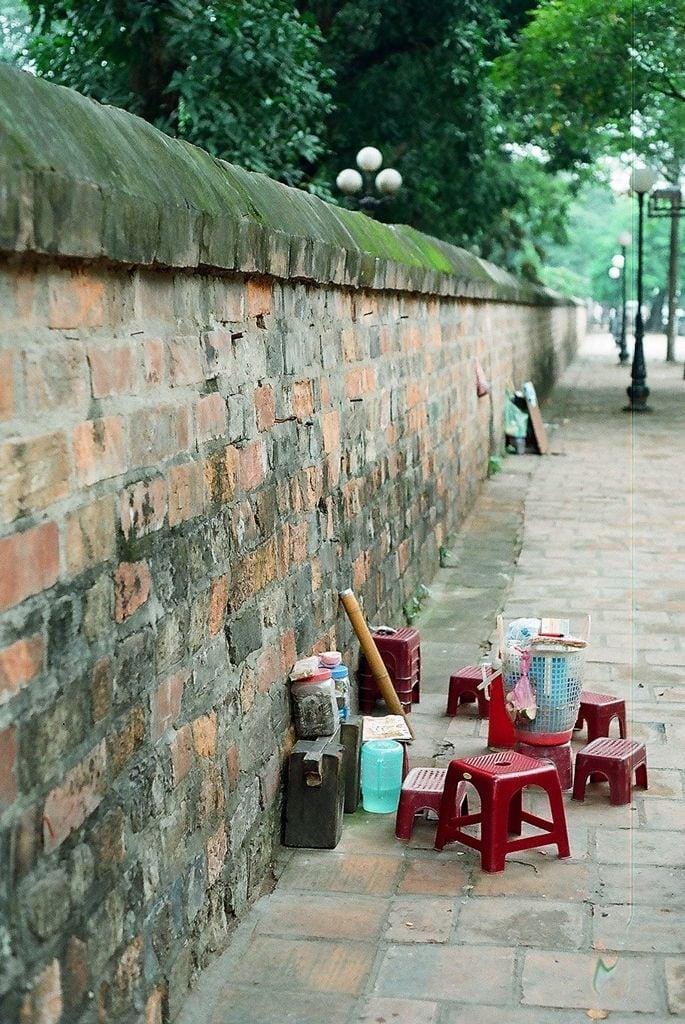
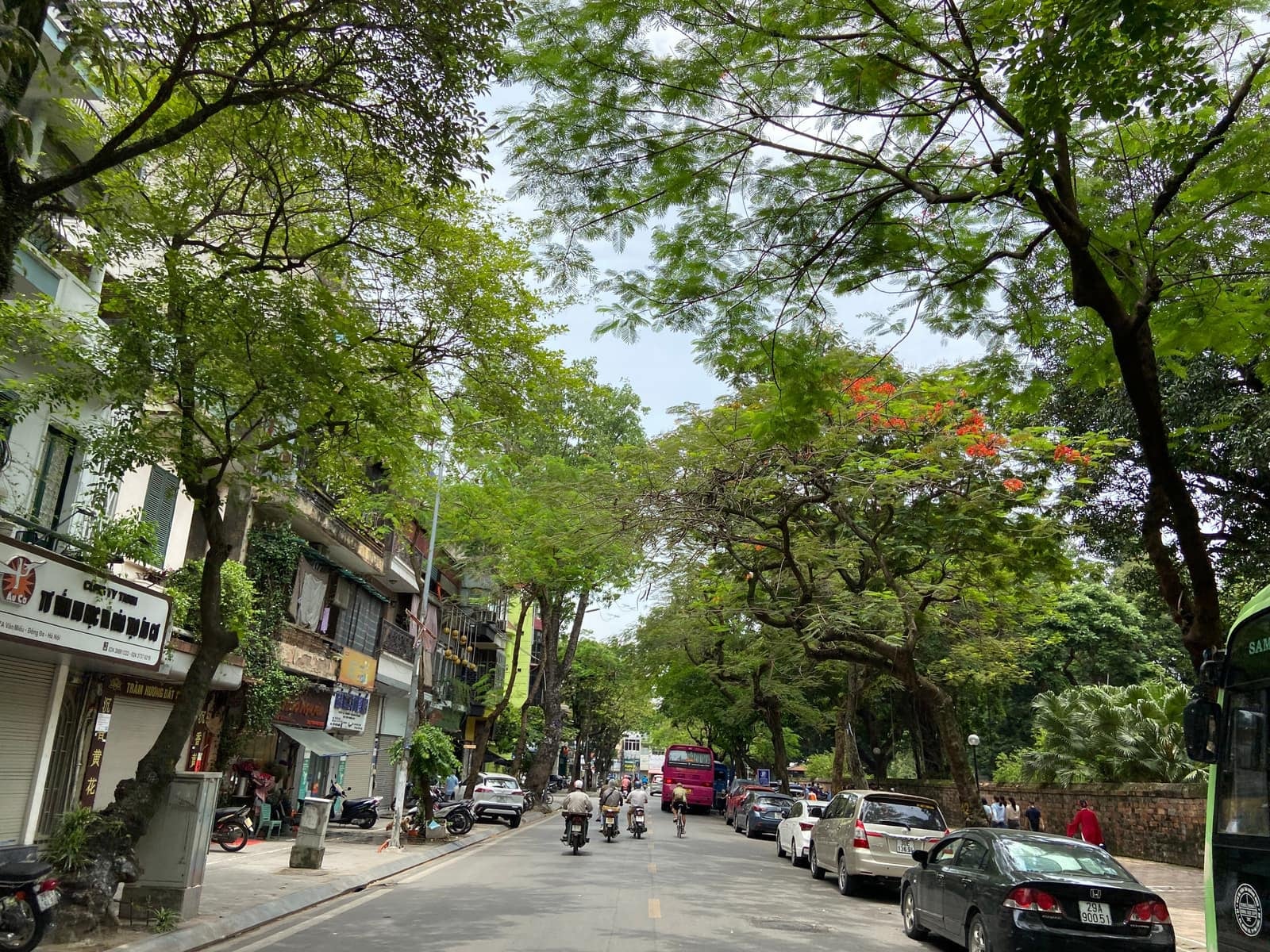
Van Mieu Street: The Academy Wall
The academy's long wall stands here. The Temple of Literature's east wall across Van Mieu Street: the temple of 1070, the Imperial Academy of 1076, and the visitors' exit gate.
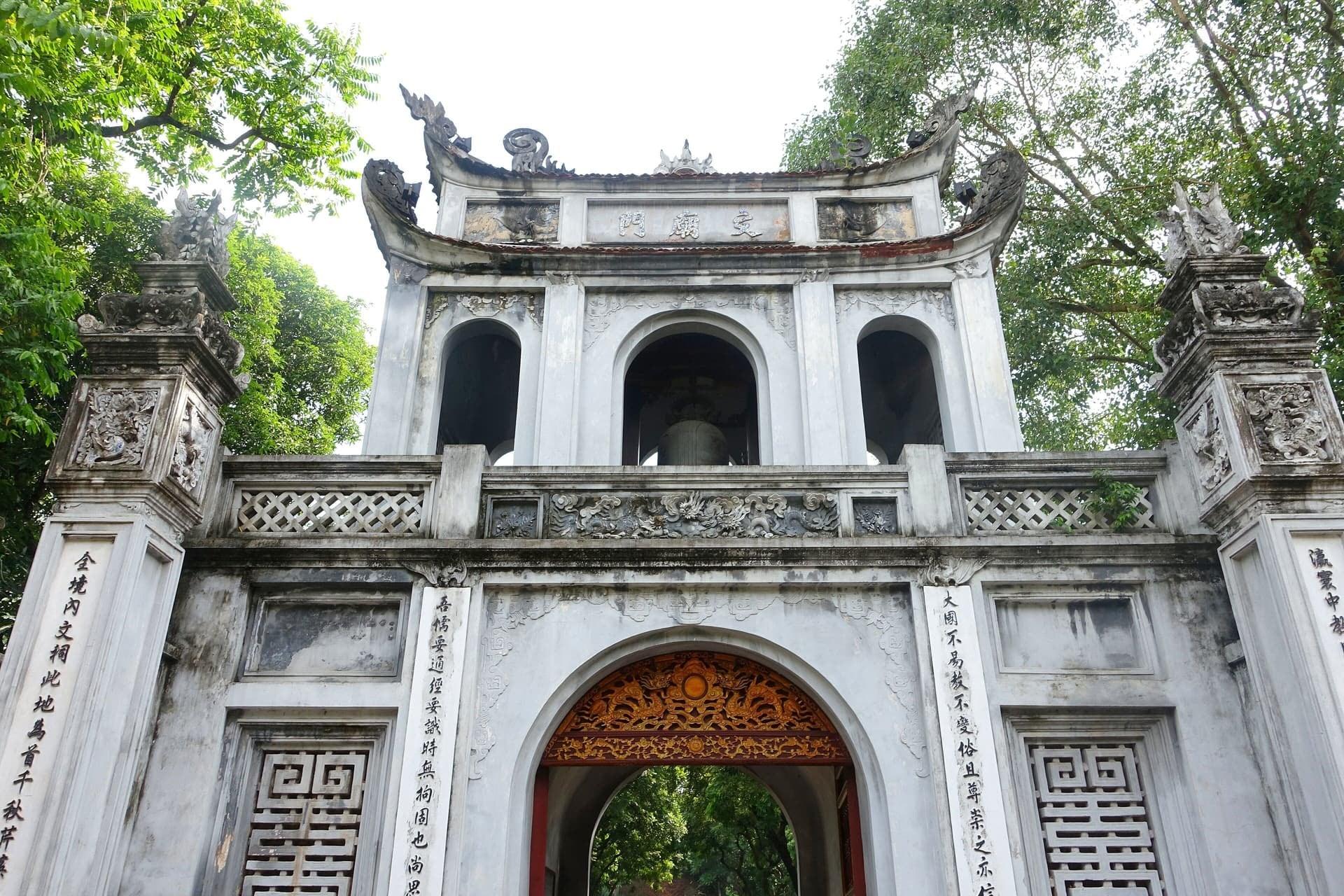
- 10
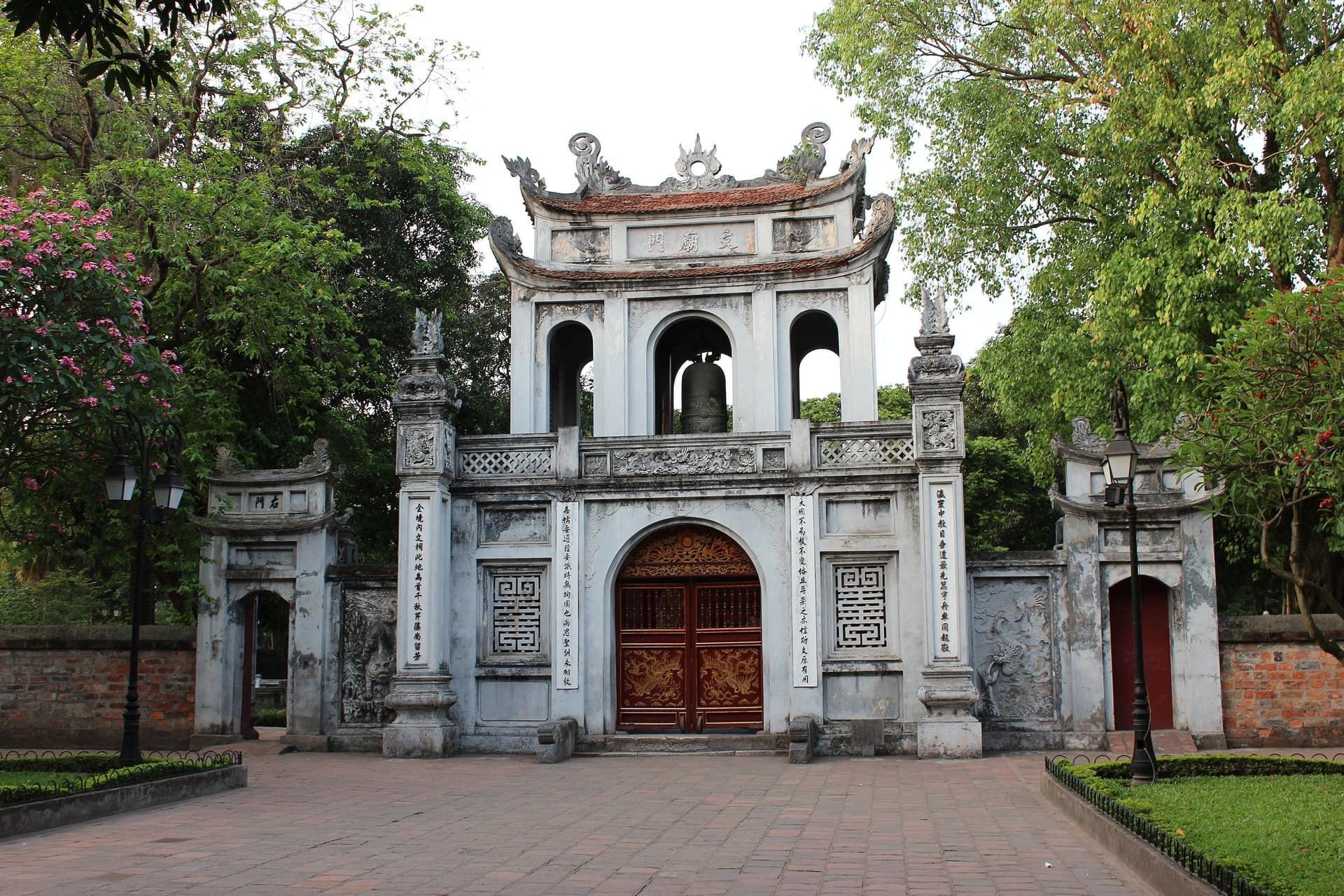
Great Portico: The Way In
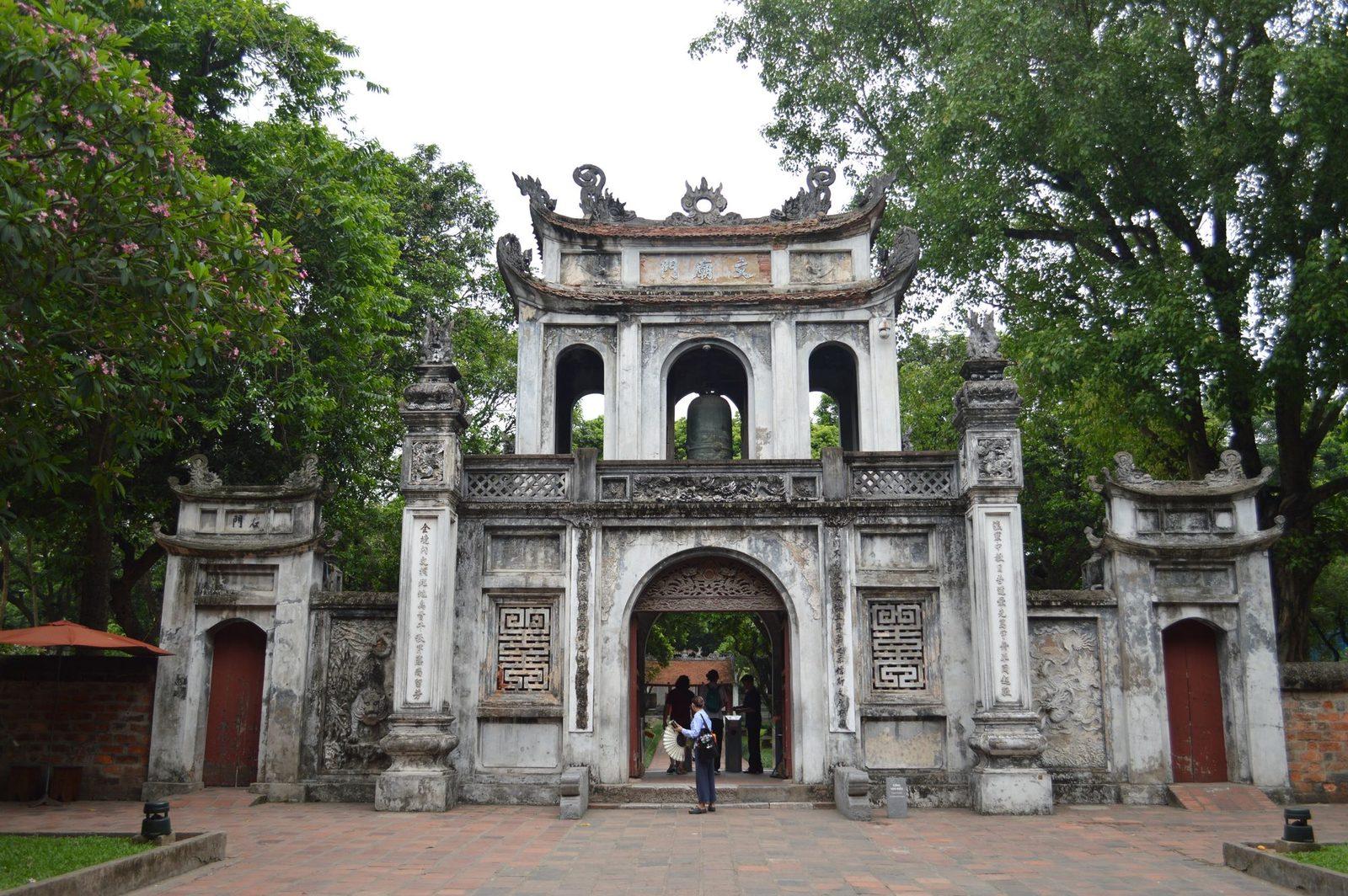
This gate leads to the stelae. The Temple of Literature's outer gate and Great Portico on Quoc Tu Giam Street, the ticketed way in to the 82 doctoral stelae on their stone tortoises.
- 11
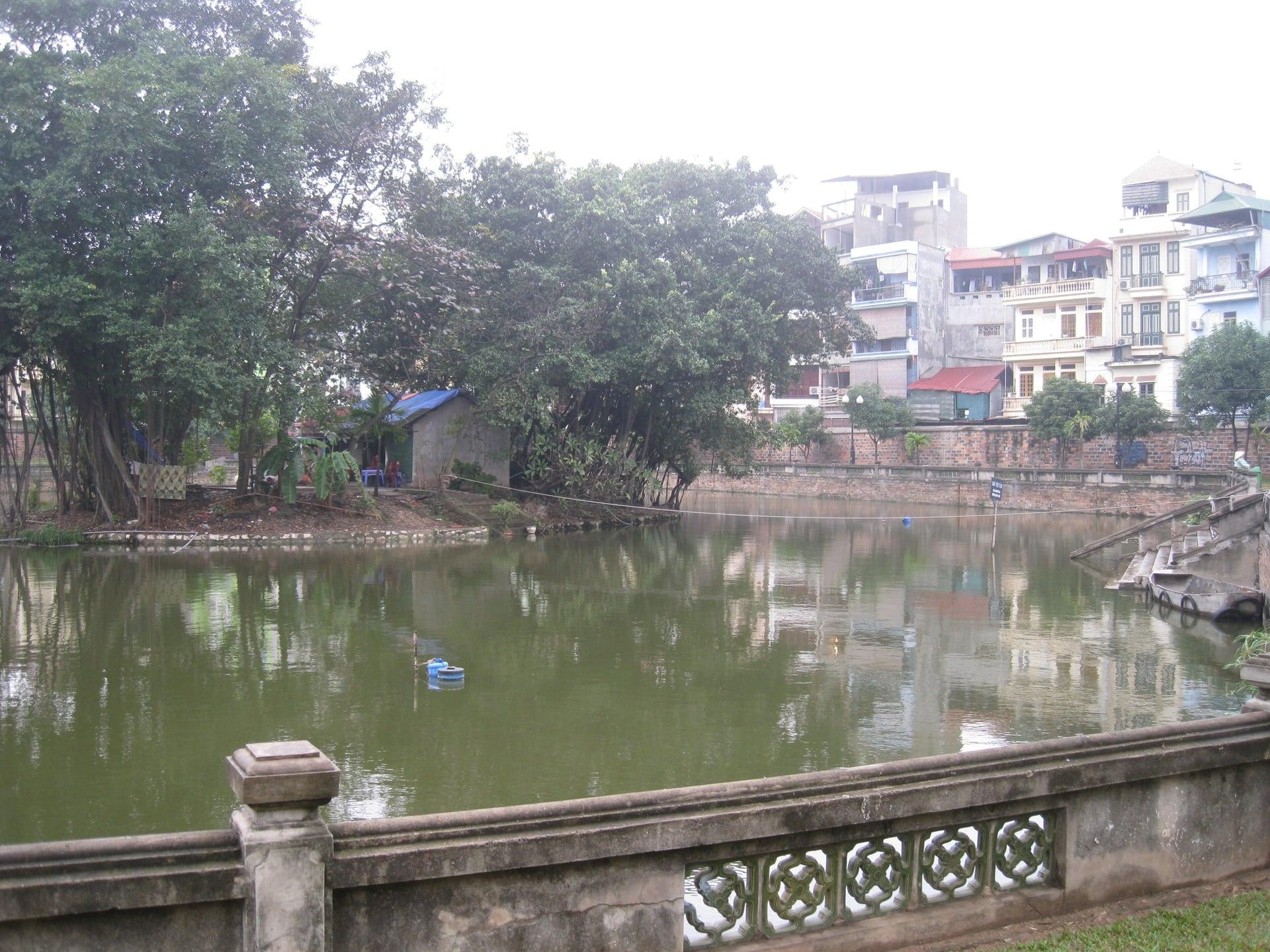
Van Lake: First in the Plan
The Temple's lake lies across the road. Van Lake across Quoc Tu Giam Street, with a new pavilion at its center, the first part of the Temple's site plan, open daily 08:00 to 20:00.
Details
Best Time to Visit
Mid-morning or mid-afternoon, finishing by 17:00 if you want to go into the Temple of Literature (08:00 to 17:00 daily; evening tours 18:00 to 22:00 on Wednesday, Saturday and Sunday per the English page, from 18:30 per the Vietnamese page: vanmieu.gov.vn). Train Street is crowded from about 8 am and at train times (Tuoi Tre News, 11 August 2026); the Tong Duy Tan lane fills with food stalls in the evening. Every stop is on public streets, so the walk works after dark with the Temple shut; Van Lake's garden is open to 20:00 (Viet Nam News, 9 July 2026). December to February is cool and often gray with fine drizzle; sunset is about 17:17 in mid-November and mid-December, 17:34 in mid-January and 17:54 in mid-February (computed). Avoid the evening of Saturday 14 November 2026: the national ceremony for the academy's 950th anniversary (19:30, Thai Hoc courtyard; program 5 to 15 November: Dai bieu Nhan dan, 2 November 2026) may bring crowds and restrictions round the Temple. Around Tet (first day Saturday 6 February 2027) many shops close for several days. Checked 11 November 2026.
Pro Tips
- •Start on Phung Hung Street beside the railway arches, just south of the Hang Ma corner. Taxi: ask for Phung Hung mural street. On foot: about 1 km from Hoan Kiem Lake.
- •On foot from Hoan Kiem Lake: about 1 km north-west through the Old Quarter, up Hang Dao and along Hang Ma. Our Old Quarter walk ends near Dong Xuan Market, about 400 m from the start. No metro line serves the start in 2026.
- •To visit the Temple of Literature: entrance at 58 Quoc Tu Giam (stop 10), 08:00 to 17:00 daily; adults 70,000 VND, students and over-60s 35,000, under 16 free; evening tours 18:00 to 22:00 on Wednesday, Saturday and Sunday per the English page (the Vietnamese page says from 18:30), with a separate ticket. The exit is at 19 to 21 Van Mieu Street, near stop 9 (vanmieu.gov.vn). Checked 11 November 2026.
- •Hanoi Station's main building (Ga Ha Noi A, 120 Le Duan) is about 300 m south of stop 6 along Le Duan: an out-and-back of about ten minutes if you want to see its front.
- •Home from the end: buses 02, 41, E08 and E09 stop opposite 40 Ton Duc Thang, about 60 m west of stop 11, and route 38 at 58 Quoc Tu Giam (vanmieu.gov.vn). The Flag Tower, on our Ba Dinh and the Imperial Citadel walk, is about 700 m north. Checked 11 November 2026.
- •Van Lake (Ho Van), across the street from stops 10 and 11, is open daily 08:00 to 20:00 as a cultural space (Viet Nam News, 9 July 2026); no fee is published. The Vietnam Fine Arts Museum is at 66 Nguyen Thai Hoc, at the Temple's north-east corner: check its hours before you go.
Safety & Precautions
- •Traffic drives on the right, but motorbikes also ride the wrong way on one-way streets and on sidewalks. Two crossings have signals (the Cua Nam junction and Le Duan Road); the rest are zebras or side-street mouths without them, including Tran Phu Street. Cross slowly and steadily; never run or step back.
- •Train Street (stops 4 and 5) is railway land. Stay on the public sidewalk, off the rails and behind the barriers. The city has told tour firms not to bring groups (Tuoi Tre News, 9 March 2025) and police cleared tourists on 14 June 2025; passenger trains were agreed to be reduced on 27 February 2026 (Vietcetera), but trains still passed daily in August 2026 (Tuoi Tre News). Timetables change: no train is promised. Checked 11 November 2026.
- •Cross the rails only on a road's sidewalk (the route does so once, at the Nguyen Thai Hoc barrier between stops 5 and 6), never when the barriers are down, and never stop on the tracks.
- •People live along the line and in the Tong Duy Tan lane: ask before photographing anyone, and do not photograph into homes.
- •About 600 m of the route (the Tong Duy Tan lane and Nguyen Khuyen Street) has no proper sidewalk: keep to the edge, and in Tong Duy Tan in the evening step round stools and cooking.
- •Walled compounds border the railway in places: obey any no-photography sign, and keep your camera on the arches, the street and the tracks seen from the sidewalk.
- •Phone and bag snatching by passing motorbikes is common in tourist areas, and worse around Tet (Government of Canada travel advisory, updated 19 October 2026): hold your phone on the side away from the traffic.
- •In the Temple of Literature: do not touch the stelae, artifacts or buildings; no smoking; respectful dress in the shrines and quiet in the sacred areas (site regulations, vanmieu.gov.vn).
- •Cool season: often gray with fine drizzle, and wet tiles are slippery. Air pollution can be high in winter: check a live air-quality reading on the day (Government of Canada advisory, 19 October 2026).
- •Events and works: national ceremony for the academy's 950th anniversary on the evening of 14 November 2026 (expect crowds and possible restrictions round the Temple); restoration of the main gate was planned from August 2026 (Phap Luat, 28 February 2026), so it may be under scaffolding; Metro Line 3 station works near Hanoi Station and on Quoc Tu Giam, opening targeted 2027. Tet 2027 begins Saturday 6 February. Checked 11 November 2026.
Travel advisory: Exercise Normal Precautions (Level 1).
Gallery
Related Reading
Go deeper on what you'll see, hear, and walk through.

Overview
Hanoi Travel Guide: How Many Days, Getting Around, When to Go (2026)
8 min

Overview
How to See Hanoi: A Capital Built on Top of Itself
5 min

Overview
One Day in Hanoi: A Walkable Old-Quarter-to-Lake Itinerary (2026)
8 min
Thematic
Best History Walking Tours in Hanoi (2026)
2 min
Thematic
Hanoi's Railway Through the City: From Long Bien Bridge to Train Street
4 min
Companion
Temple of Literature and Train Street: The Wall That Fell and the Wall That Stands
5 min
Read the walk
The full story of Temple of Literature and Train Street: Rails to the Academy, in words. Prefer to listen? Play it narrated, from home or on location.
Introduction
Hanoi's railway comes into the old city on brick arches, and it runs where a citadel wall once stood. This walk follows the line south from Phung Hung Street, past the two ends of what visitors call Train Street, to the tracks of Hanoi Station. Then it steps off the line to the Temple of Literature, the walled academy whose stone tablets carry the names of the country's top scholars.
There are eleven stops over about two point three kilometers, about one and a half miles, and it takes about seventy minutes. It is flat, with no steps. Two crossings have traffic signals; the others are zebras and side streets without them. About six hundred meters of the route runs along a lane and a street with no proper sidewalk, so keep to the edge there.
Train Street is railway land, and the city discourages visits. This walk looks at it only from the public sidewalks at its two ends, never from the track. Trains still run on this line, on a timetable that changes, so no train is promised.
The Temple of Literature is ticketed, and open from eight in the morning to five in the afternoon every day. The walk stays outside its walls and works when the gate is shut. If you go in, dress respectfully for its shrines. On the evening of Saturday the fourteenth of November twenty twenty six, a national ceremony at the Temple may bring crowds and restrictions around it. Around Tet, the lunar new year, many shops close for several days.
From December to February the days are cool and often gray, with a fine drizzle that makes the tiles slippery. Check the air quality on the day.
The walk ends on Quoc Tu Giam Street, across the road from Van Lake. When you arrive at Phung Hung Viaduct, begin with stop one.
1. Phung Hung Viaduct: The Railway on Arches
This is Phung Hung Street, at the western edge of the Old Quarter. Face the brick arches beside the sidewalk. They carry the railway, on a masonry viaduct built under French rule to bring the line in from the Long Bien Bridge. The bridge opened in nineteen oh two, and these arches belong to the same works.
The viaduct runs from here through Gam Cau Street to Long Bien station, and its vaults are numbered: more than a hundred of them. Most of their openings are filled in. In the late nineteen sixties and early seventies, dozens of families lived inside these vaults; later they held tea stalls and workshops. The last of them to be closed, in nineteen eighty two, partly for security, was one facing Hang Ma Street, close to where you stand.
Across the street are the Old Quarter's tube houses. The corner just behind you, Hang Ma, sells paper offerings, and our Old Quarter walk tells that street's story. On this walk the railway is your guide. It runs on from here to Hanoi Station, and the route follows it most of the way, then steps off to the Temple of Literature, the walled academy that honored the country's scholars in stone.
A railway needs a long, straight, open line through a city. Here it found one ready made, and the next two stops show you why.
This sidewalk doubles as parking, so expect to step round motorbikes, and be considerate of the people who live and work along it. On the next stretch, some of the filled arches carry painted panels from a street art project of twenty seventeen and twenty eighteen.
Follow the route along the arches. There are two side streets to cross, without signals, and motorbikes turn in and out of both.
2. Cua Dong: The East Gate
Stop just past the side street, Cua Dong. Turn toward the railway and look up. The line crosses the mouth of the street on a span, and the street runs underneath it. Then find the street sign. Cua Dong means East Gate.
The name is older than the railway. Hanoi's last citadel, the Nguyen dynasty's fortress, rebuilt from the early eighteen hundreds, had its walls and gates along this edge of the city. This street keeps the name of its east gate. Exactly where that gate stood has not been settled, so the name is what survives.
From the eighteen nineties, the French took most of the citadel down. Then the railway came, and it came along the line where the east wall had been. So the span above you marks a crossing much older than the trains: a street going in through the wall.
The citadel itself, and the layers of older cities under it, belong to our Ba Dinh and the Imperial Citadel walk. Here you only need the outline: a wall, a gate, and a railway laid where the wall had stood.
Across Phung Hung, Cua Dong runs the other way, into the Old Quarter's lanes.
Follow the route on along this side of Phung Hung. Ahead, the arches give way to a raised bank.
3. Phung Hung Street: One Side Only
Here the railway runs on a raised bank instead of arches. Stop at the corner of the side street, and look along Phung Hung.
Notice something odd about it. The houses stand only on the far side. This side has the railway and nothing else. Phung Hung is a street with one side.
The reason is underneath it. Vietnam's architecture journal, Kien Truc, describes this straight stretch as the trace of the brick wall and the moat on the east side of old Hanoi's citadel. The wall came down. The railway took its line, on its bridge of arches and its bank. And the street runs along the old edge, with houses facing the railway from one side only.
So the straightness you are looking down is the wall's straightness. It runs dead straight for a long way because it follows a fortification.
The street is about one and a quarter kilometers long, and has carried its present name since nineteen forty five.
Follow the route to Tran Phu Street. You cross it on a zebra with no signal, the first busy road of the walk. Traffic drives on the right, so look left first, and remember that motorbikes also come the wrong way. Cross slowly and at a steady pace, never run, and never step back, so riders can judge your path. Then cross the mouth of the lane on the far side, and stop on its corner.
4. Tran Phu Crossing: Train Street
Stop on this corner, short of the railway. A little further along Tran Phu, the line crosses the street behind barriers. From those barriers, follow the track with your eyes to the left, on this side of the street, as it leaves the road and runs off between the houses. That narrow stretch, from here to the next stop, is what visitors call Train Street.
The houses stand at the edge of a working line, on railway land, and many front rooms have become cafes. Hanoi has tried more than once to stop the crowds. In October twenty nineteen the city ordered the trackside businesses to stop, and the cafes have come back more than once since. In twenty twenty two came barriers. In twenty twenty three, and again in March twenty twenty five, the city's tourism department told travel companies not to bring tours here, and in June twenty twenty five police asked hundreds of tourists and locals to leave, for their safety. In February twenty twenty six, the Ministry of Construction and the city agreed to reduce passenger trains on this stretch and suspend freight. Yet in August twenty twenty six, Tuoi Tre News found the cafes open, trains still passing, and a traffic police officer walking the line to keep people back from the rails.
So this walk looks from the public sidewalk. The rule is plain: stay off the rails and behind the barriers. Trains still run, on a timetable that changes, so no one can promise you one, and no one should be on the track when it comes.
People live along this line. Ask before you photograph anyone, and keep your voice down at their doors.
Follow the route down Tong Duy Tan, the lane on this corner. It is closed to motor traffic, and in the evening it is a food lane.
5. Dien Bien Phu Crossing: Barrier Four
As you come out of the lane onto Dien Bien Phu, stop on the corner. Look along this sidewalk, away from the big junction, to the barriers across the road. That is the other end of Train Street. The track comes out from behind the houses on this side of the road and crosses…
Full narration for this stop unlocks with the tour.
6. Le Duan Crossing: Into the Station
You have just turned the corner onto Le Duan Road. Stop at the traffic lights, and look down Le Duan, the wide road beside you, in the direction you have just turned. A short way down, the railway crosses the road behind barrier number two, then curves across it into the…
Full narration for this stop unlocks with the tour.
7. Hanoi Station: The Station of 1902
Stop a little past the crossing, and turn round to face it. To the right of the barriers, across the street, the tracks spread apart toward the platforms of Hanoi Station. The station's rear building stands on that side too, on Tran Quy Cap Street. The station opened in…
Full narration for this stop unlocks with the tour.
8. Ngo Sy Lien Street: The Historian's Corner
Stop at this corner, and find the sign for the side street. It is named for Ngo Si Lien, a scholar of the fifteenth century. In fourteen forty two, thirty three candidates passed the royal examination for the highest degree, and Ngo Si Lien headed the list of the third class of…
Full narration for this stop unlocks with the tour.
9. Van Mieu Street: The Academy Wall
Stop at the end of the street, at the zebra. Across the one way street ahead stands a long wall with old trees behind it. That is the east wall of the Temple of Literature, Van Mieu. Its story begins in ten seventy, when King Ly Thanh Tong ordered the temple built. In ten…
Full narration for this stop unlocks with the tour.
10. Great Portico: The Way In
Stop in front of the gate, on the wall side of the street. This is the front of the Temple of Literature: a small outer gate at the sidewalk, and behind it the Great Portico, the Temple's main gate. This is the way in. Tickets are sold at the gate, seventy thousand dong for an…
Full narration for this stop unlocks with the tour.
11. Van Lake: First in the Plan
Stop here, and turn to face across the road. The water is Van Lake, Ho Van. The Temple's own site map puts it first, ahead of the gate: the lake is part of the plan. It once covered a much larger area. At its center stood a mound, Kim Chau, with a pavilion called Phan Thuy…
Full narration for this stop unlocks with the tour.
- Hà Nội, Việt Nam. — Phan Minh Tuấn, CC BY-SA 4.0 · source
- Hà Nội, Việt Nam. — Phan Minh Tuấn, CC BY-SA 4.0 · source
- North Vietnam — Rod Waddington from Kergunyah, Australia, CC BY-SA 2.0 · source
- Hà Nội, Việt Nam. — Phan Minh Tuấn, CC BY-SA 4.0 · source
- Lê Duẩn Road, Hanoi — Ltn12345, CC BY-SA 4.0 · source
- Lê Duẩn Road, Hanoi — Ltn12345, CC BY-SA 4.0 · source
- La estación está dividida en dos edificios: A y B. La estación A es la principal, y se encuentra sobre la calle Le Duan, a menos de dos kiló — Edgardo W. Olivera from Montevideo, Uruguay, CC BY 2.0 · source
- The northern wing of Hanoi Railway Station. — Dragfyre, CC BY-SA 3.0 · source
- Nguyễn Khuyến Street, Hanoi — Ltn12345, CC BY-SA 4.0 · source
- A typical street tea stall in Hanoi, an owner, usually elders, serves a cup of tea at price VND1.000 (~US$0.055). — Tuan Anh Nguyen, CC BY 2.0 · source
- Văn Miếu Street, Hanoi — Ltn12345, CC BY-SA 4.0 · source
- Main gate of the Temple of Literature, Hanoi — Grayswoodsurrey, CC BY-SA 4.0 · source
- Lake of Literature. — Nguyễn Thanh Quang, CC BY-SA 3.0 · source
Images may be cropped or resized. Other photos via Unsplash and Pexels.