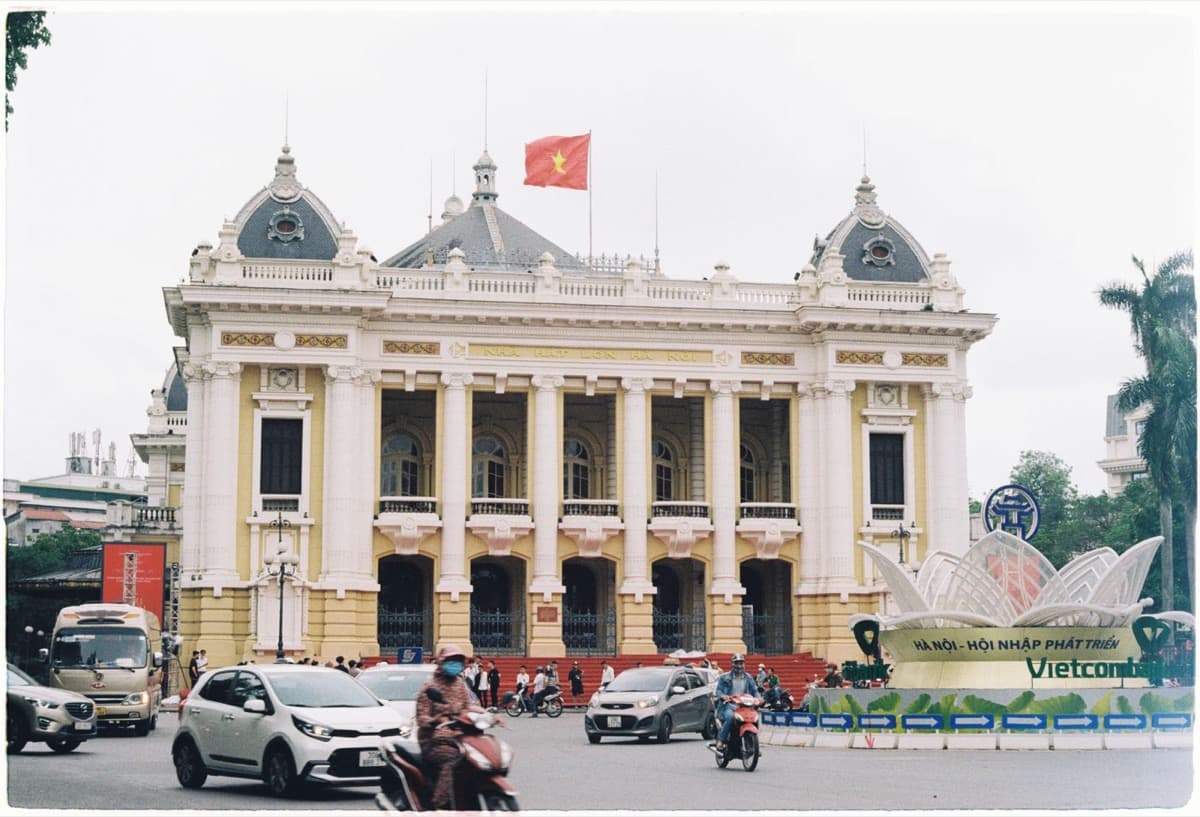
Read Hanoi's French colonial quarter as a paradox in stone: buildings raised to overawe a colonized city, then seized within a single lifetime to stage its independence. A chronological walk from a Gothic cathedral to a river bridge that outlived the empire that built it.
Start · St Joseph's Cathedral: Empire Written in Stone
DirectionsStops
- 1
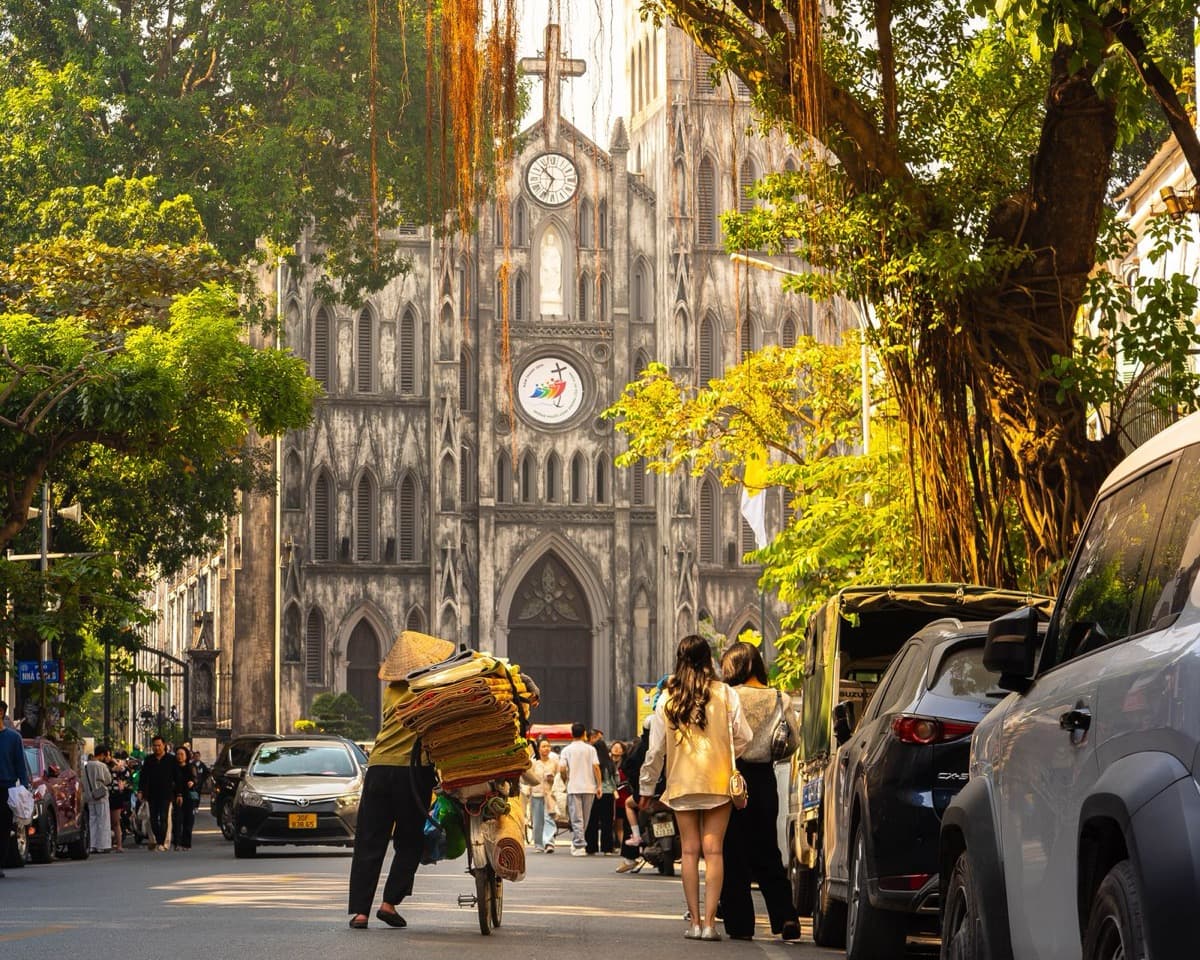
St Joseph's Cathedral: Empire Written in Stone
A neo-Gothic cathedral consecrated in eighteen eighty-six, built on the cleared site of a Buddhist pagoda: the thesis of the whole walk in a single building.
- 2
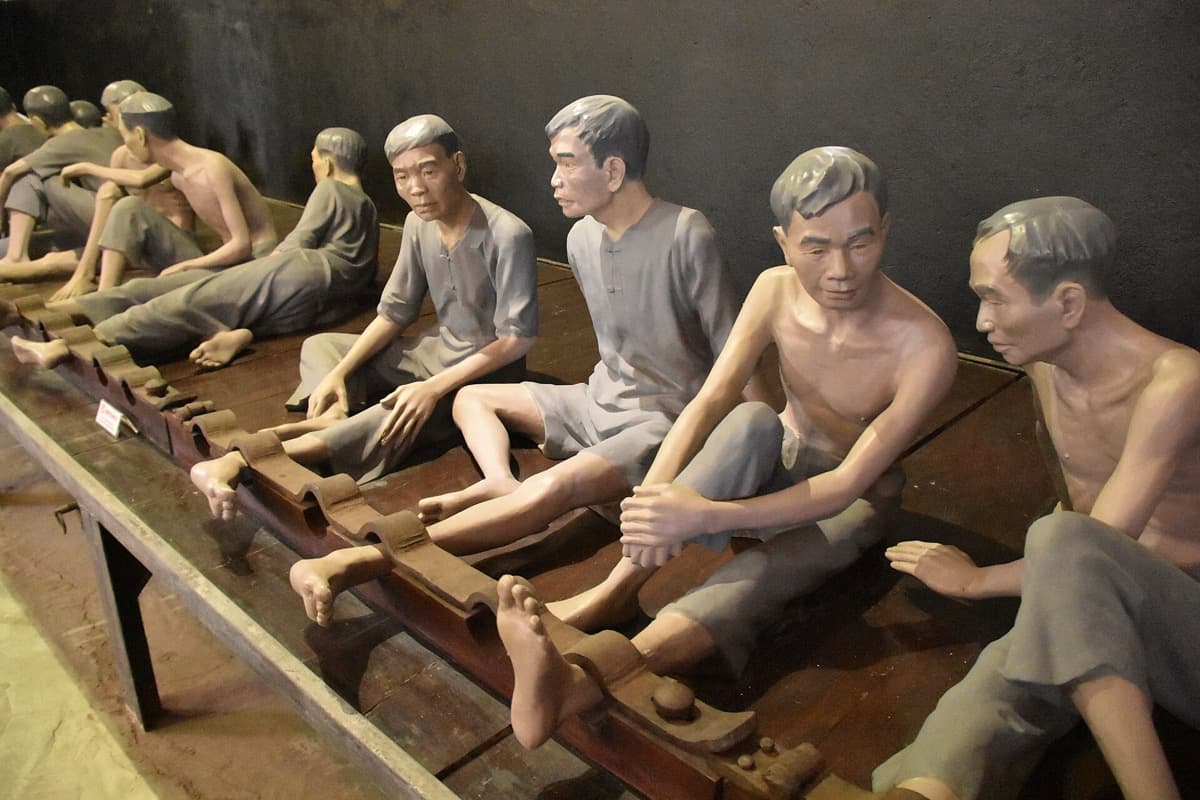
Hoa Lo Prison: The Maison Centrale
A French colonial prison built to break the independence movement that it instead helped forge, later nicknamed the Hanoi Hilton by American prisoners.
- 3
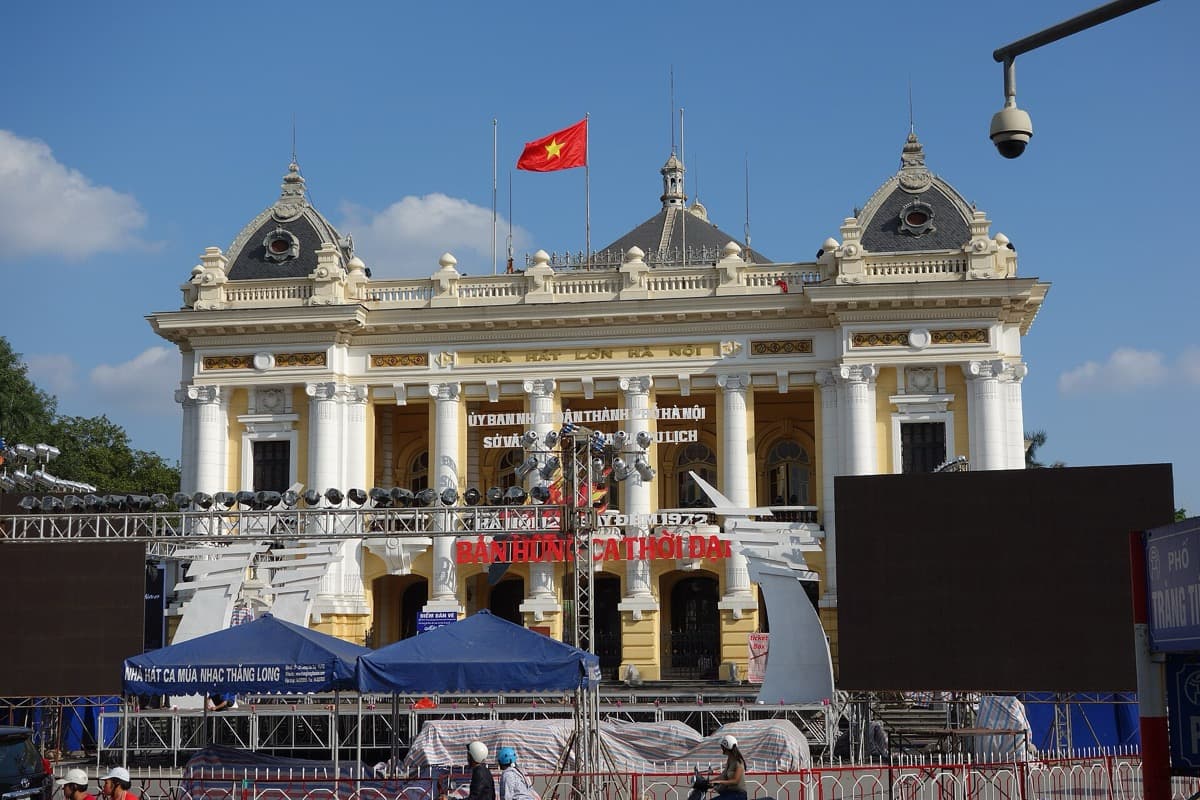
Hanoi Opera House: August Revolution Square
The opera house empire built to overawe, and the square where a rally of roughly two hundred thousand people launched the August Revolution in nineteen forty-five.
- 4
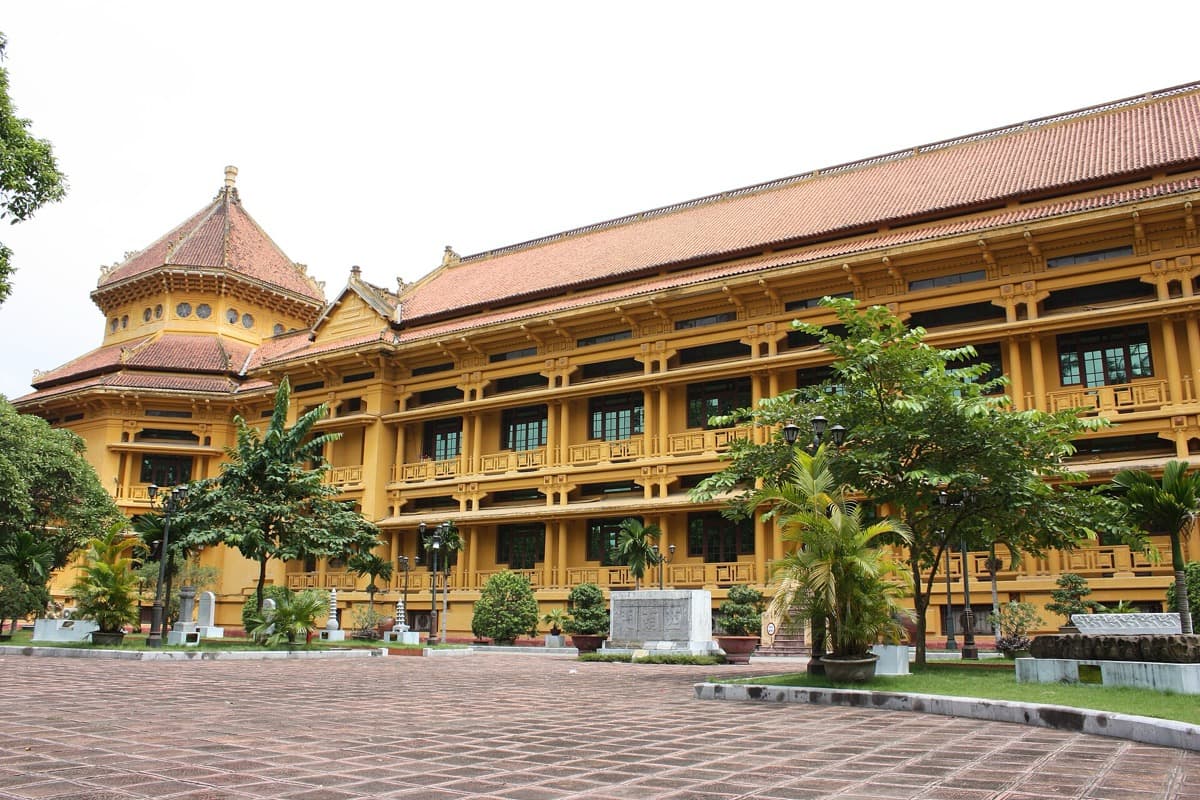
National Museum of Vietnamese History: The Former Louis Finot Museum
A graceful hybrid building, once a French colonial museum, now the National Museum of Vietnamese History, where the scholarship changed hands but stayed in place.
- 5
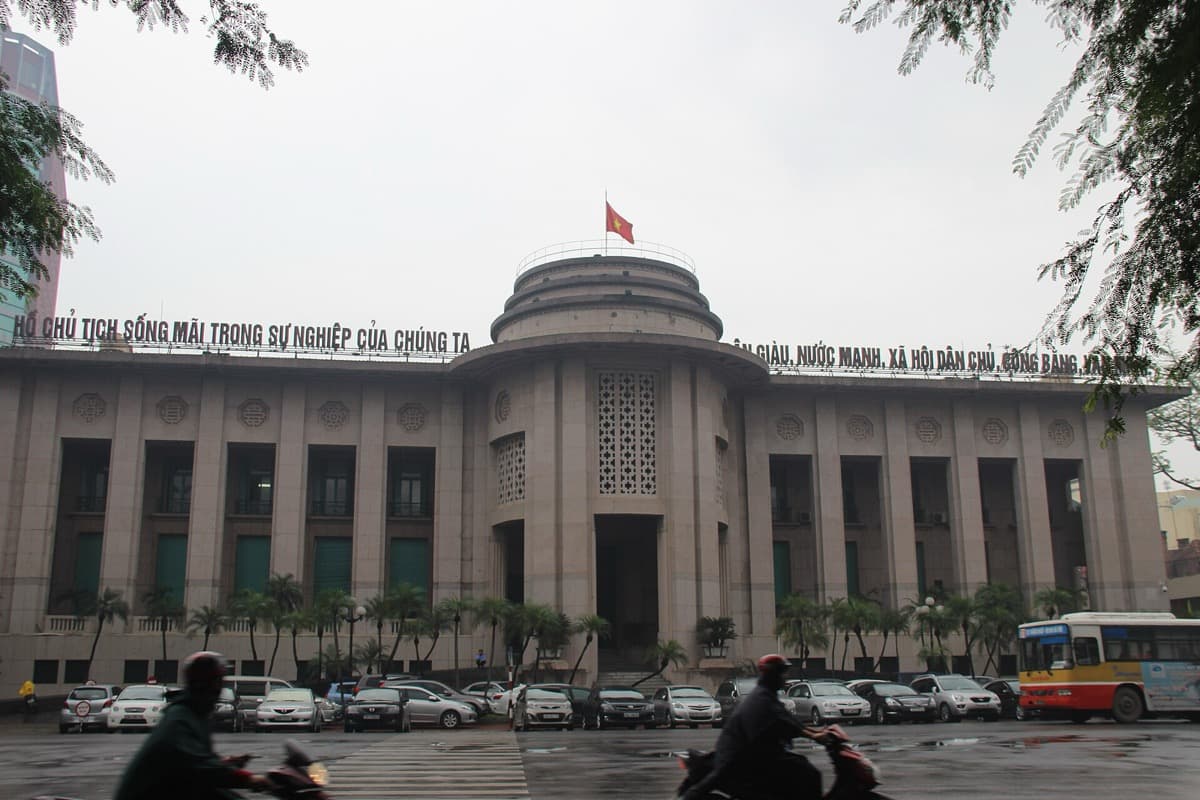
State Bank of Vietnam: The Former Bank of Indochina
The pink Art Deco headquarters of the Bank of Indochina, which issued the colony's piastre and now serves as the head office of Vietnam's central bank.
- 6
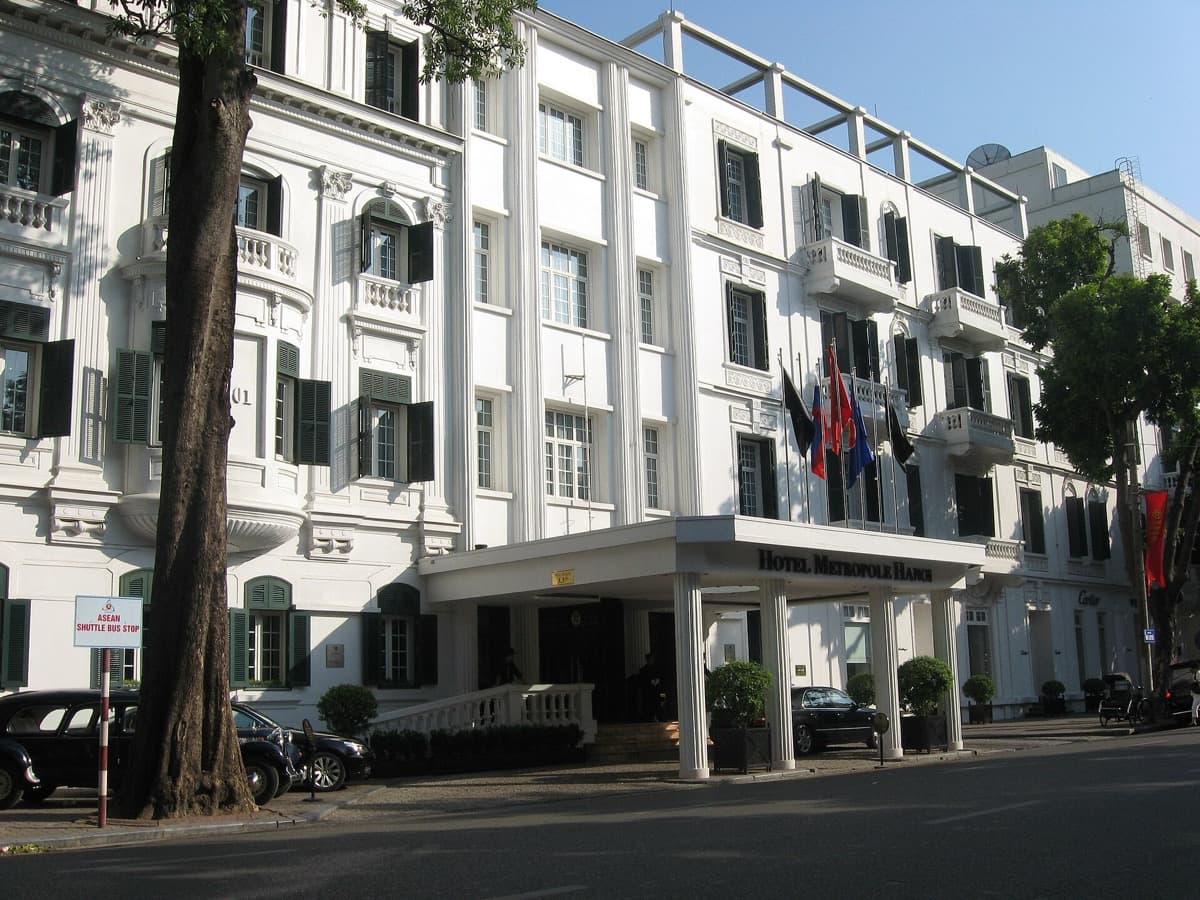
Sofitel Metropole Hotel: The Colonizers' Social World
A grand colonial hotel from the year nineteen oh-one, with a rediscovered wartime bomb shelter buried beneath its garden.
- 7
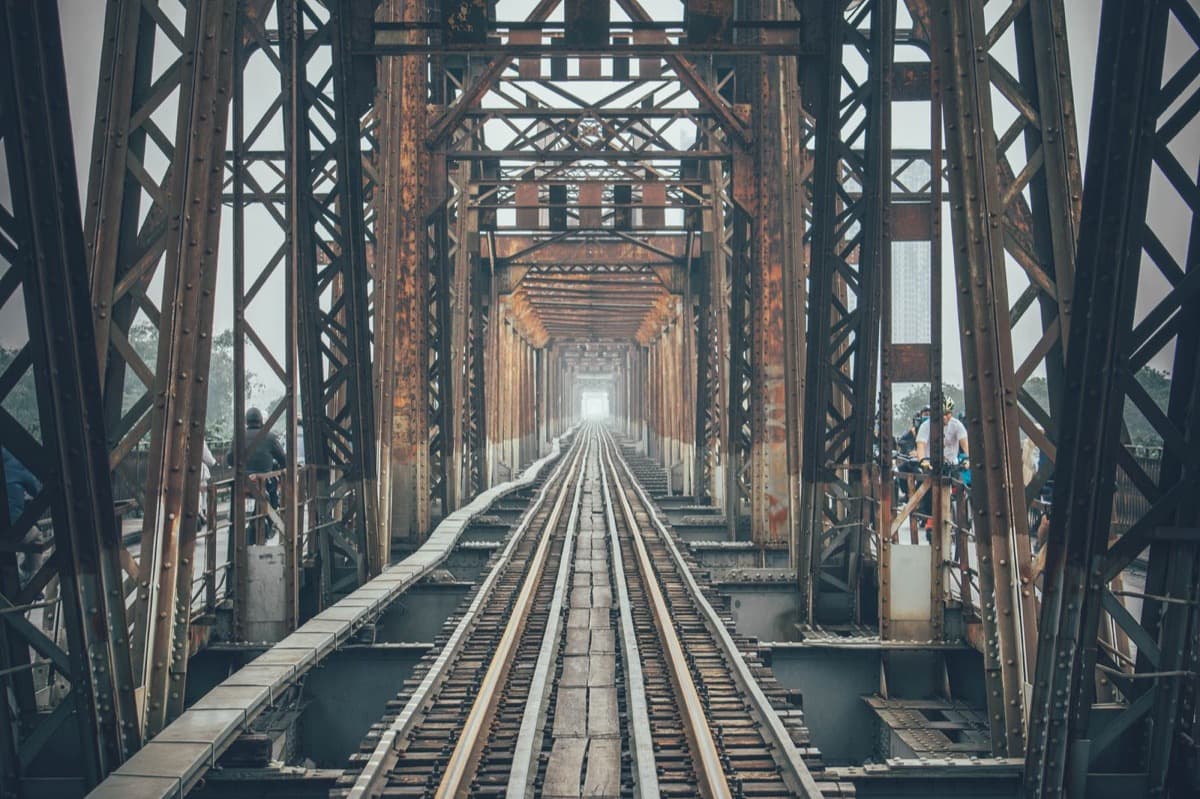
Long Bien Bridge: The Colony Outlives the Colonizer
A French-built river bridge, bombed and mended through the American war, still carrying Vietnamese commuters over the Red River.
Details
Best Time to Visit
Early morning or late afternoon, when the light is soft and the heat is bearable. The colonial quarter is quietest just after sunrise, and the walk north to Long Bien Bridge is loveliest in the golden hour before sunset. Avoid the midday sun from late spring through summer, and check the forecast in the rainy months from May through September.
Pro Tips
- •Go at your own pace and treat every stop as skippable. The first six sites cluster tightly around Hoan Kiem Lake, so you can linger at the ones that grab you and pass by the rest.
- •Carry small Vietnamese dong notes in cash. The two museum stops, Hoa Lo Prison and the history museum, charge only a dollar or two at the door, and small notes save you fuss.
- •Dress modestly for the cathedral, with shoulders and knees covered, and try to time your visit around Mass if you want to see the interior.
- •Enjoy the State Bank and the Metropole from the street. The bank is a working central bank with no public entry, and the hotel is a working hotel, so admire both as heritage rather than places to enter.
- •Save the walk to Long Bien Bridge for last and give it time. It sits about two kilometres north of the cluster, and the crossing is the emotional payoff of the whole route.
- •Pause for a Vietnamese coffee whenever you like. The lake's edge is full of cafes, and this walk is built for stopping, sitting, and letting a building sink in.
Safety & Precautions
- •Hanoi traffic is relentless, and mopeds flow constantly. To cross a street, step off slowly and steadily and keep a predictable pace so riders can flow around you. Do not stop suddenly or dart, and use marked crossings near the lake where you can.
- •The city is hot and very humid for much of the year. Carry water, wear a hat, seek shade between stops, and slow down if you feel lightheaded, especially on the longer stretch to the bridge.
- •From roughly May through September, monsoon downpours arrive fast and heavy. Carry a light rain layer, watch for slick pavement, and be ready to shelter in a cafe until a cloudburst passes.
- •At the cathedral, remember it is an active place of worship. Dress modestly, keep your voice low, and be discreet with photography during services.
- •Around Hoan Kiem Lake and along the busy boulevards, keep your phone held firmly and your bag zipped and worn on the side away from the road. Passing mopeds occasionally snatch phones or loose straps, so be especially mindful when you set a phone down at a lakeside cafe or step near moving traffic.
Travel advisory: Exercise Normal Precautions (Level 1).
Gallery
Related Reading
Go deeper on what you'll see, hear, and walk through.
Overview
Best Self-Guided Walking Tours in Hanoi (2026)
3 min
Overview
Hanoi Travel Guide: How Many Days, Getting Around, When to Go (2026)
7 min
Overview
How to See Hanoi: A Capital Built on Top of Itself
7 min
Overview
One Day in Hanoi: A Walkable Old-Quarter-to-Lake Itinerary (2026)
7 min

Thematic
What to Eat in Hanoi: A Food Guide (2026)
5 min
Companion
The Seized Stage: How Hanoi Turned Colonial Stone Against the Empire That Built It
7 min
Deep dive
Hoa Lo Prison: The Maison Centrale That Built the Rebellion It Was Meant to Break
6 min
Read the walk
The full story of French Quarter: The Paris of the East, in words. Prefer to listen? Play it narrated, from home or on location.
Introduction
The stones of Hanoi remember two stories at once. In the eighteen eighties, France set out to build a European capital on top of an Asian one, filling lakes to make boulevards and raising a Gothic cathedral where a Buddhist site had stood. The architecture was meant to overawe. Within a single lifetime, the Vietnamese people turned those same buildings into the stage for their own independence. This walk reads the French colonial quarter south and east of Hoan Kiem Lake, the shimmering green lake at the heart of Hanoi, Vietnam, as a story of stone meant to erase a city, and of the people who seized it instead.
There are seven stops. Expect to spend about two and a half hours at your own pace, covering roughly six kilometres, most of it flat, with one longer stretch north to the river at the end. You set the rhythm. Linger where a building holds you, skip what does not, and sit with a coffee whenever you like. Nothing here is on a schedule but you.
You will move from a cathedral to a colonial prison, to the opera square where a revolution began, to a museum, a bank, a grand hotel, and finally to a bridge over the Red River. Each is a beautiful object built to project permanence, and each was answered by the people it was built to impress. Read them slowly. The irony is in the stone, and it rewards a walker who notices.
When you arrive at St Joseph's Cathedral, begin with stop one.
1. St Joseph's Cathedral: Empire Written in Stone
Stand in the small square and look up at the twin bell towers. If they remind you of Notre-Dame de Paris, that is exactly the intention. This is St Joseph's Cathedral, and it was among the first structures the colonial government of French Indochina raised in Hanoi. Construction began in the year eighteen eighty-four, and the cathedral was consecrated on Christmas Eve, December twenty-fourth, eighteen eighty-six. In the neo-Gothic style, all pointed arches and vertical stone, it was built to make a European visitor feel at home and to make everyone else feel the reach of a distant empire.
Here is the detail that opens this entire walk. The cathedral stands on the cleared site of the Bao Thien pagoda, a Buddhist monument from the Ly dynasty. Its great tower had collapsed centuries earlier, in the year fifteen forty-two, and the ground had long been abandoned. So this is not a story of a living temple torn down in a day. It is subtler and, in a way, heavier: a European sacred form written directly over the memory of a Vietnamese one, on ground that already held centuries of history.
Notice the weathering. The stone has gone dark and grey with more than a century of Hanoi's monsoon damp, which only makes it look older and more permanent, exactly as it was meant to. Often described as the oldest church in the city, it set the template for everything the colonial planners would build next. Hold that idea. You will see it answered at every stop on this walk.
2. Hoa Lo Prison: The Maison Centrale
You are standing at what remains of Hoa Lo Prison. The French called it Maison Centrale, the Central House, and you can still read those words above the gate. It was built between the years eighteen ninety-six and nineteen oh-one, and it was designed for a single purpose: to hold the Vietnamese men and women who agitated for their country's independence. Inside these walls prisoners faced hard labor, torture, and in some cases execution.
Empire built this place to break the revolutionary movement. Instead, it concentrated it. Cell by cell, the prison became a kind of school. Political prisoners passed lessons and organization between them, and many who entered as detainees left as committed leaders. The machine of control manufactured the very thing it was built to destroy.
Decades later the prison took on a second life that many travelers know it for. During the American war it held captured United States pilots, who gave it a sardonic nickname. One of them, a naval aviator named Bob Shumaker, is credited with scratching the phrase Welcome to the Hanoi Hilton where a fellow prisoner would see it, and the grim joke stuck.
Most of the complex was demolished in the years nineteen ninety-three and nineteen ninety-four, and modern towers rose on the land. What survives is this gatehouse, kept as a museum. Walk the preserved corridors if you have time, or simply stand here and take in the paradox: a building meant to end a rebellion is remembered instead as the place that helped forge one.
3. Hanoi Opera House: August Revolution Square
This is the moment the whole walk turns. In front of you is the Hanoi Opera House, completed on December ninth, nineteen eleven, by the architects Broyer, V. Harley, and Francois Lagisquet. They modeled it on the Palais Garnier in Paris, shrunk to a smaller scale and finished with local materials. It was the social crown of the colonial city, a place of chandeliers and evening gowns built to display French culture at the far edge of empire.
Now look at the open square in front of it. On August nineteenth, nineteen forty-five, a crowd of roughly two hundred thousand people filled this space. The Viet Minh Uprising Committee read out the call to insurrection from here, and the crowd then moved to seize the Tonkin Governor's Palace, known as Bac Bo Phu, nearby. That day launched the August Revolution in Hanoi. The stage that empire built to overawe the colonized became the stage from which they announced they would rule themselves.
One careful note, because the dates matter. The famous Declaration of Independence, read by Ho Chi Minh, came two weeks later, on September second, nineteen forty-five, and it was delivered at Ba Dinh Square, not here. What happened on this spot was the rally that set everything in motion. The square today carries the name August Revolution Square, so the ground itself remembers.
Stand where those two hundred thousand stood. The building has not changed. Its meaning was seized whole, without a single wall being moved. That is the paradox at the heart of this walk, and here it is in the open.
4. National Museum of Vietnamese History: The Former Louis Finot Museum
This graceful building with its layered, pagoda-like roof and its octagonal cupola is the former Musee Louis Finot, today the National Museum of Vietnamese History. It was inaugurated in the year nineteen thirty-two as a branch of the French School of the Far East, an…
Full narration for this stop unlocks with the tour.
5. State Bank of Vietnam: The Former Bank of Indochina
On the east side of Hoan Kiem Lake, at number forty-nine Ly Thai To street, stands a heavy Art Deco building poured in pink concrete. This was the Hanoi headquarters of the Banque de l'Indochine, the Bank of Indochina, completed late in the year nineteen thirty and ceremonially…
Full narration for this stop unlocks with the tour.
6. Sofitel Metropole Hotel: The Colonizers' Social World
A little south of the bank, on Ngo Quyen street, sits the Metropole, a grand colonial hotel that opened its doors in the year nineteen oh-one. For the French community this was the center of social life, the place of long lunches, cocktails, and arrivals. Its guest book reads…
Full narration for this stop unlocks with the tour.
7. Long Bien Bridge: The Colony Outlives the Colonizer
Your last stop is a walk north to the river, and it is worth every step. The Long Bien Bridge is a long iron spine of cantilevered spans reaching across the Red River. It was built between the years eighteen ninety-nine and nineteen oh-two by the Paris firm Dayde and Pille, with…
Full narration for this stop unlocks with the tour.